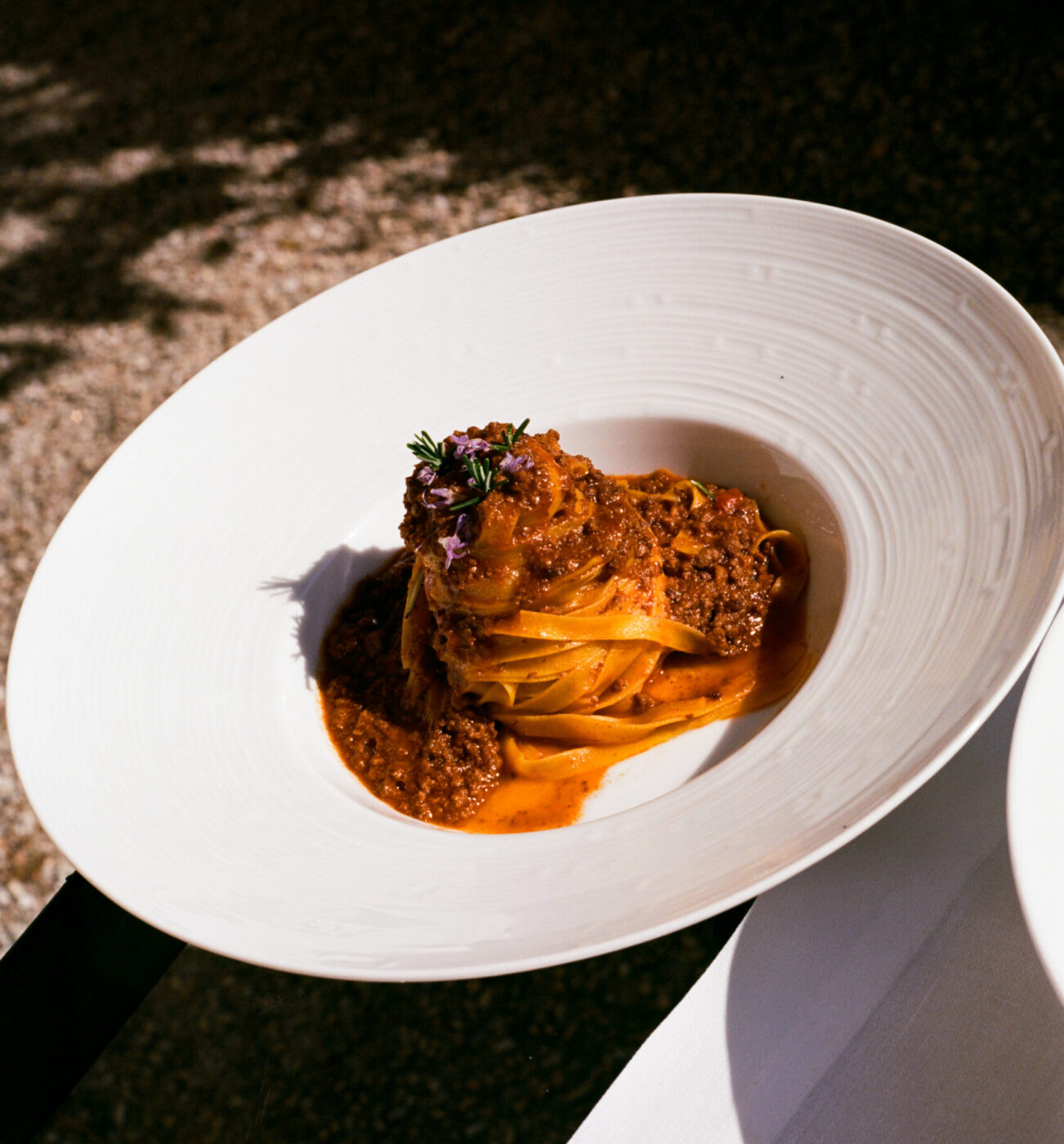
The one you keep bringing up in conversation, stuck in your head like a tormentone, and would gladly travel for just to have one more time?
Over the past year, the Italy Segreta team ate its way across Italy — and occasionally beyond it — from Roman trattorie and Florentine institutions to island bars, mountain huts and neighbourhood restaurants. There were plenty of exceptional meals, but these are the individual dishes that stayed with us.
None necessarily came from the fanciest dining room or was the most elaborate thing we ate. They’re simply the plates we found ourselves talking about weeks, or even months, later.
The ones we’d happily cross town, or the country, to eat again.
Spaghetto alla vignarola e guanciale — Da Cesare al Pellegrino, Rome
Let’s start with the fact that we eagerly wait all year for vignarola season in Rome. A traditional Roman spring dish of artichokes, fava beans and peas, gently stewed together with olive oil, it’s already high on our list of favourite things to eat. But when we had it tossed with pasta, crisp, fatty guanciale and pecorino, our obsession reached a whole new level.
It’s a plate that feels hearty and fresh at the same time — rich and saucy, but never heavy — as if the Roman countryside had landed right in the middle of the city. Green, savoury, seasonal and very hard to share.
OUR FAVORITE RESTAURANT IN ROME —>
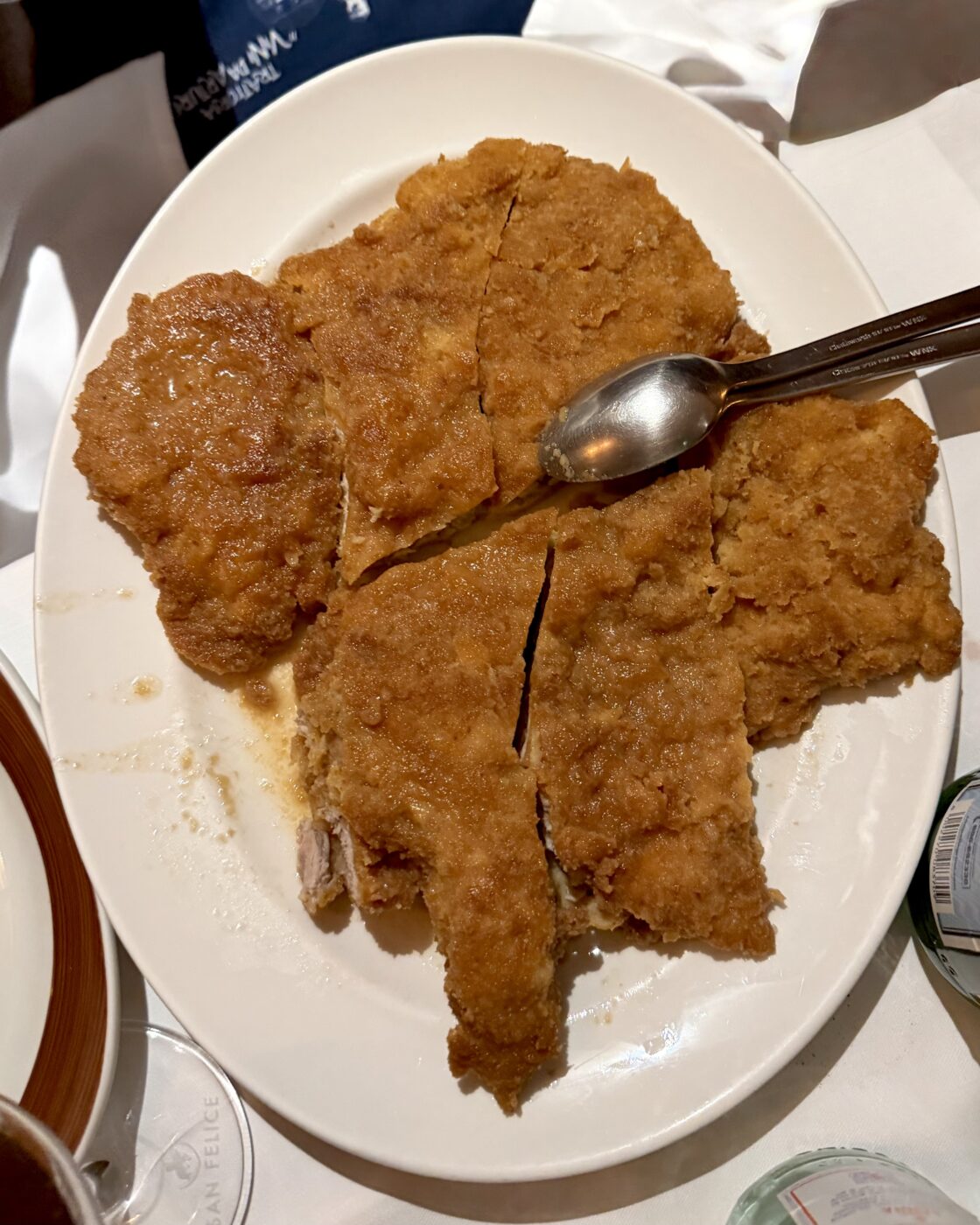
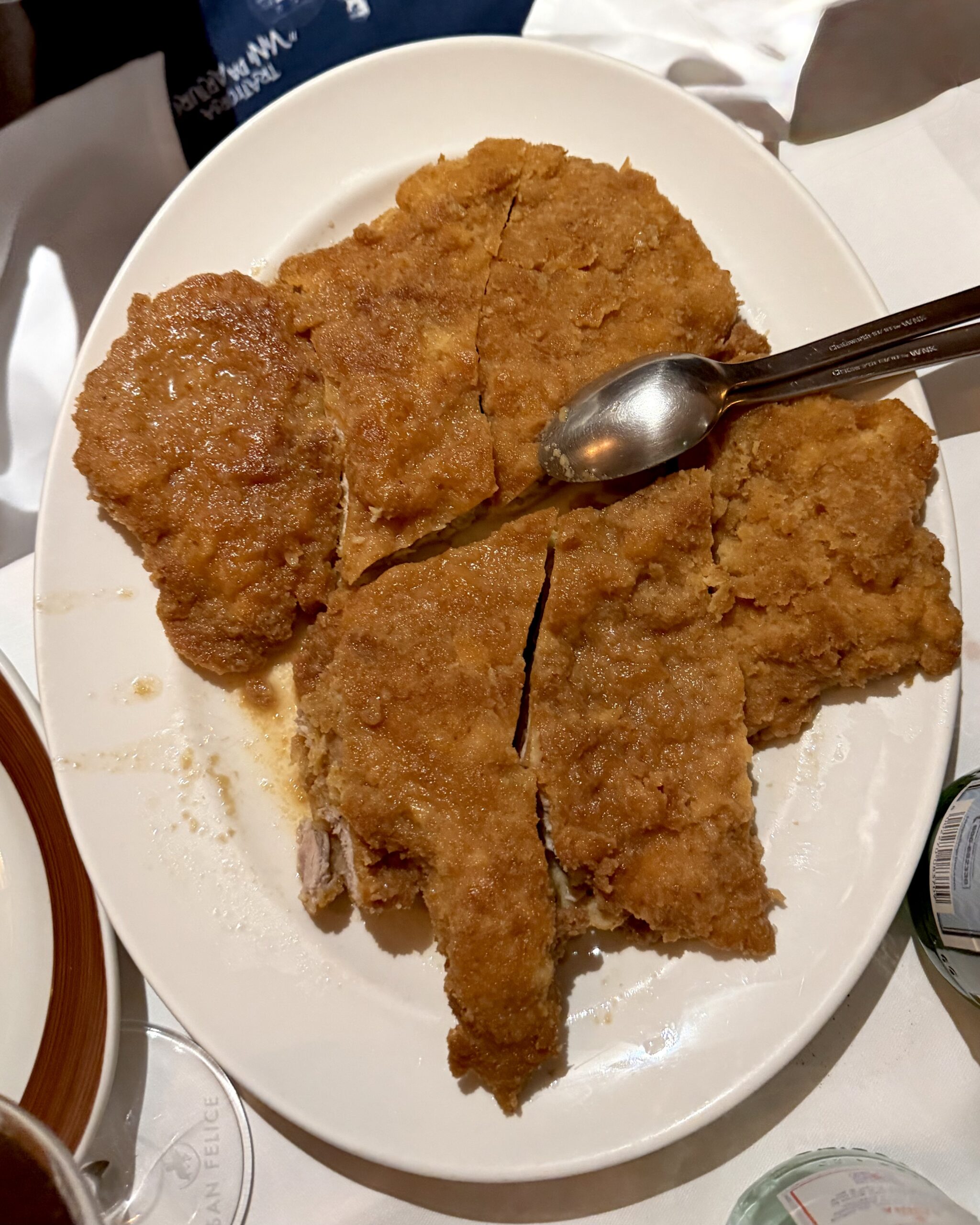
Braciola all’Arturo — Arturo, Venice
Wow, what a discovery.
The Braciola all’Arturo is chef Ernesto Ballarin’s signature dish: an enormous, thin breaded pork chop, fried until golden and finished with wine vinegar. Think costoletta impanata, but with a serious kick.
What makes it so good is the vinegar. The pork is crunchy, rich and fatty, and just when you think it might all become a little too much, that sharp hit of acidity comes through and sends you straight back in for another bite.
It is absolutely big enough to share. Whether you’ll actually want to is another question.
Torta di ricotta e castagne con gocce di cioccolato — Cantinetta dei Verrazzano, Florence
We have to be honest: with a few of us on the team recently discovering we’re lactose intolerant, dairy now has to be really worth the stomachache. So when a friend kept insisting that we had to try this ricotta and chestnut cake — and that we had to hurry because they only make it in November — eventually we gave in.
We bought a whole one. More than once. Trust us, we did the research, and the verdict was unanimous: una bomba a mano.
The filling is soft and delicate, with ricotta, chestnuts and chocolate chips, while the pasta frolla gives it just enough structure. Most importantly, it isn’t overly sweet. We had it with espresso after lunch, but it would be equally at home at breakfast or for merenda. Or, realistically, all three.
OUR ULTIMATE GUIDE TO FLORENCE —>
Arancine – Piccolo Bar, Modica
From the outside, non gli daresti due lire. You could very easily walk past Piccolo Bar without thinking twice.
Luckily, our Senior Editor had already been raving about it – and more specifically about its arancine – so we knew exactly what we were there for.
They came out warm and freshly made, with a properly crunchy golden shell and a generous centre of ragù, rice and just the right amount of peas. Nothing fancy or reinvented, just a very, very good arancina.
Now there are several of us raving about them. And while you’re there, get the scaccia too.
OUR LOCAL’S GUIDE TO MODICA —>
Granita di ricotta e capperi – Pa.Pe.Ro, Salina
On a dinghy from Panarea to Salina, our boatman told us that we had it all wrong. The best granita on the island wasn’t at Da Alfredo in Lingua, he said, but at Pa.Pe.Ro in Rinella.
And not just any granita. Ricotta and capers.
We laughed. A friend who grew up going to the Aeolian Islands was equally unconvinced. But the comment stayed in our heads, and curiosity eventually won.
So we rented a moped and crossed to the other side of Salina just to try it.
He was RIGHT. The ricotta makes it creamy and naturally sweet, while the capers in agrodolce come through salty, briny and slightly sweet-and-sour. On paper, it sounds a little odd. In reality, it makes perfect sense.
Best accompanied by a scoop of gelso.
Panino con guancia, carciofi e patate – Tripperia Pollini, Florence
Tripperia Pollini is known for its panini al lampredotto for good reason. But on one random Thursday, we spotted a handwritten sign that said: Oggi: guancia, carciofi e patate.
There was no chance we weren’t ordering it.
The potatoes had cooked in the beef juices until they were almost creamy, the guancia was so tender it practically fell apart, the tomatoes made everything juicy, and the artichokes brought that slightly bitter, earthy flavour that had drawn us to the panino in the first place.
Now, as soon as late autumn comes around and artichoke season begins, we start waiting for those Thursdays when it appears again. Preferably on a cold Florence day when something hot, messy and substantial is exactly what you want.
20 FOODS YOU MUST EAT IN FLORENCE AND WHERE —>
Mandilli al pesto – Trattoria La Concordia, Portofino
As we write this, we still find it slightly unbelievable that Portofino is where we had one of our favourite meals of the year.
We went there with very little hope of finding something genuinely local to eat. But we had a theory: the quattro gatti who live in Portofino year-round must have somewhere they actually go.
They do.
Hidden behind the parking lot, with no sea view and none of the usual Portofino fanfare, Trattoria La Concordia is where we found these mandilli al pesto.
The pasta is almost paper-thin, delicate enough to practically melt in your mouth, with just the right amount of pesto clinging to every sheet. Maybe part of the excitement was finding something so unshowy in a place where almost everything is on display. Or maybe the mandilli really were just that good.
We’ll need another trip to Portofino to confirm. 😉
Cecina – Rizzieri, Viareggio
What a merenda – although we’d happily eat this for colazione, pranzo e cena.
We’ve tried plenty of cecine over the years, but Rizzieri’s is genuinely addictive. They’ve been making it since 1938, and whatever the secret is – the quality of the chickpea flour, the proportions, the oven or simply almost ninety years of practice – they have it down.
There are basically four ingredients: chickpea flour, water, olive oil and salt.
Straight from the wood-fired oven, the cecina is impossibly thin and golden, crisp across the top while still soft and almost melting underneath. Eat it piping hot, with a lot of black pepper.
A reminder that the simplest things are often the hardest to get right.
OUR LOCAL’S GUIDE TO VERSILIA —>

Cecina makes the perfect snack
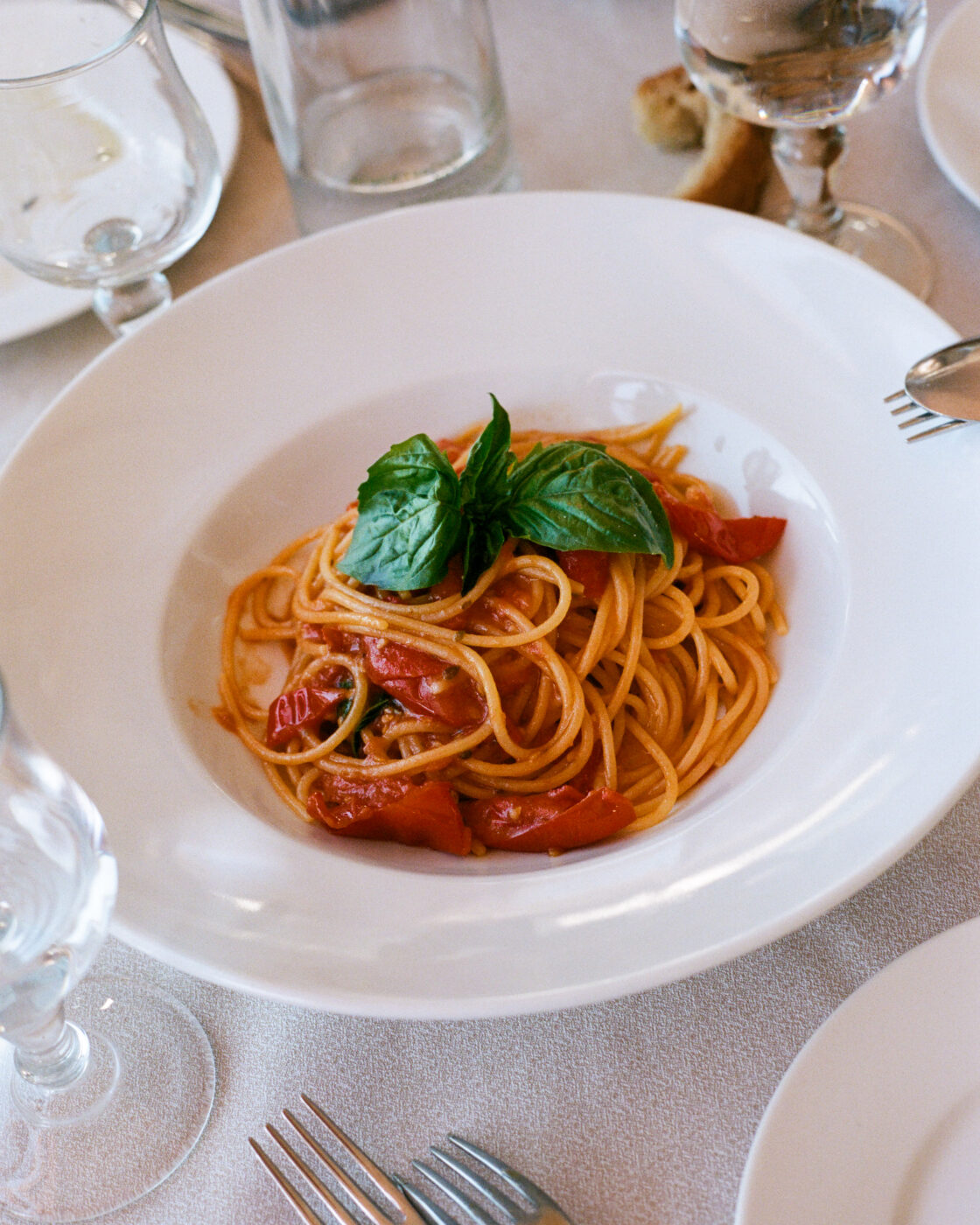
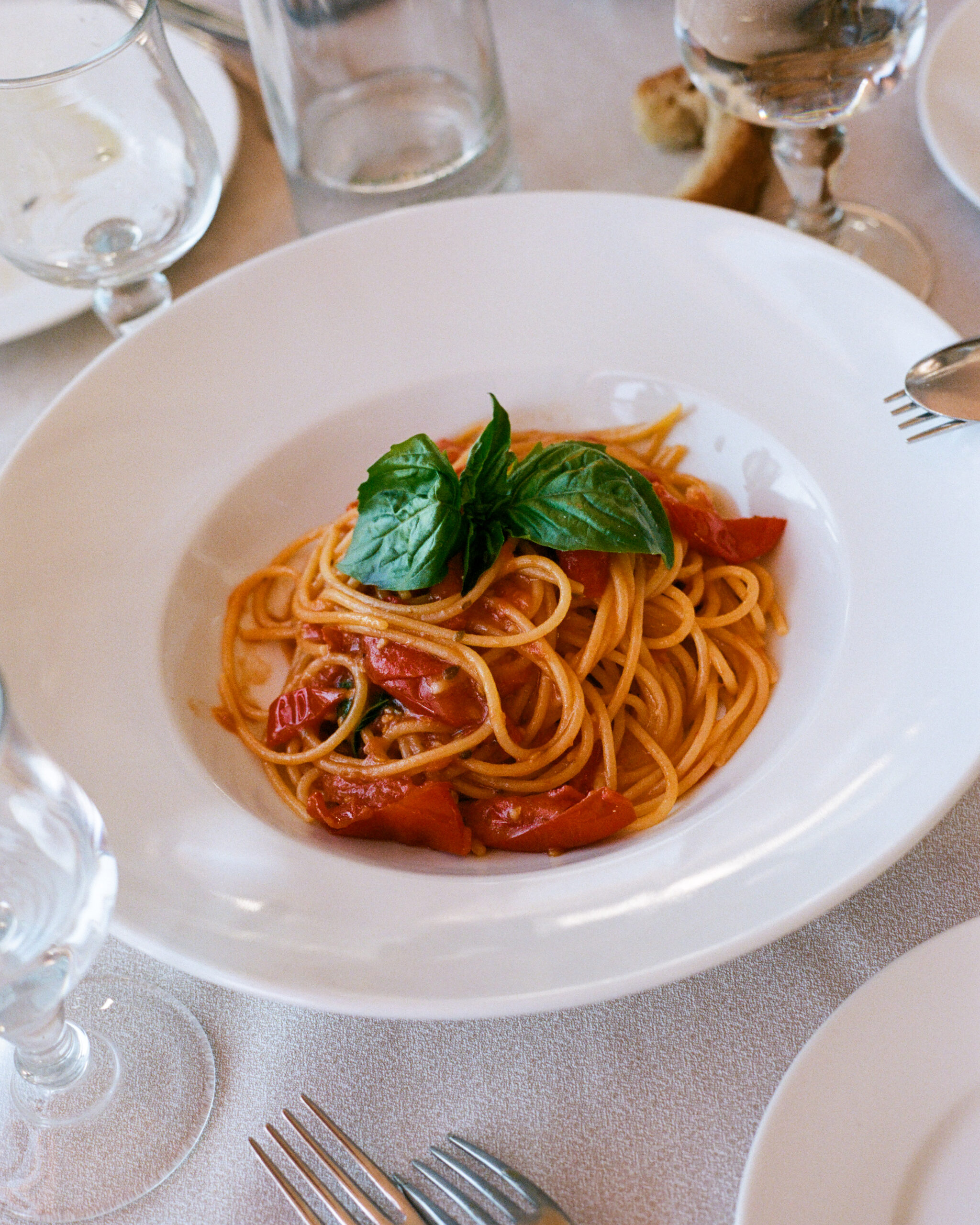
Spaghetto al pomodoro con pomodori “Fine del Mondo” – Lo Scoglio, Nerano
We’ve been coming to Lo Scoglio for years and have tried pretty much everything: their famous spaghetti alla Nerano, moscardini fritti, crudi, vegetable antipasti, vongole e bottarga, spaghetti with mussels and green peppers, sea urchin pasta. One thing better than the next.
But this time, after Peppino spotted us eating yet another plate of their tomatoes, he came over and said: “Tomorrow I’ll bring you the Fine del Mondo. We’ll make you a spaghetto, and then you’ll see.”
Well, the pomodorino lived up to its name.
Once cooked, it becomes so intensely sweet that we genuinely wondered, ma c’è lo zucchero in questa pasta? Then the slightly thicker skin brings back just enough acidity to balance everything out.
A little basilico, e via.
That’s it. Spaghetti al pomodoro, when done right, are almost impossible to beat.
AMALFI THROUGH THE EYES OF A LOCAL —>
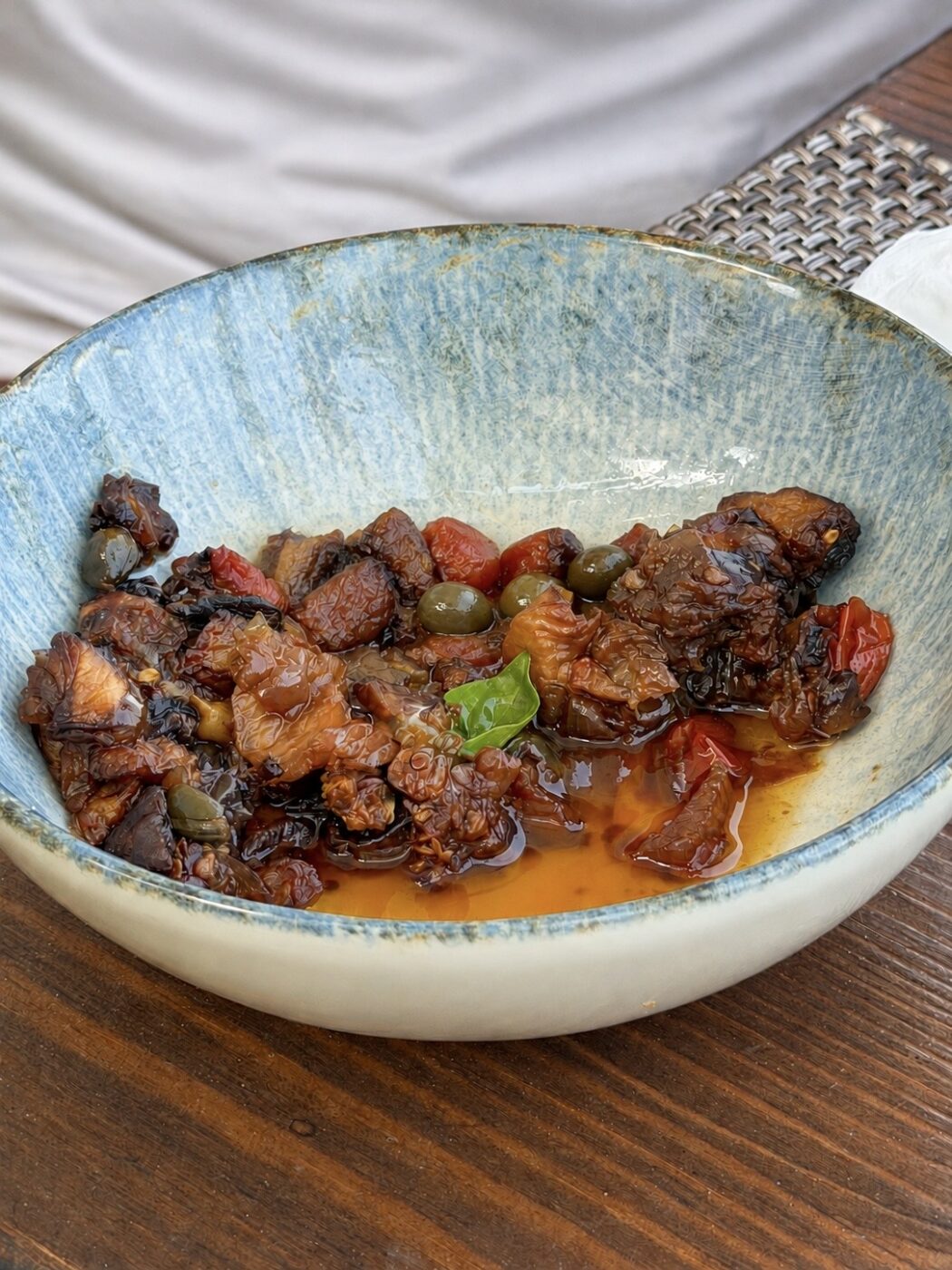
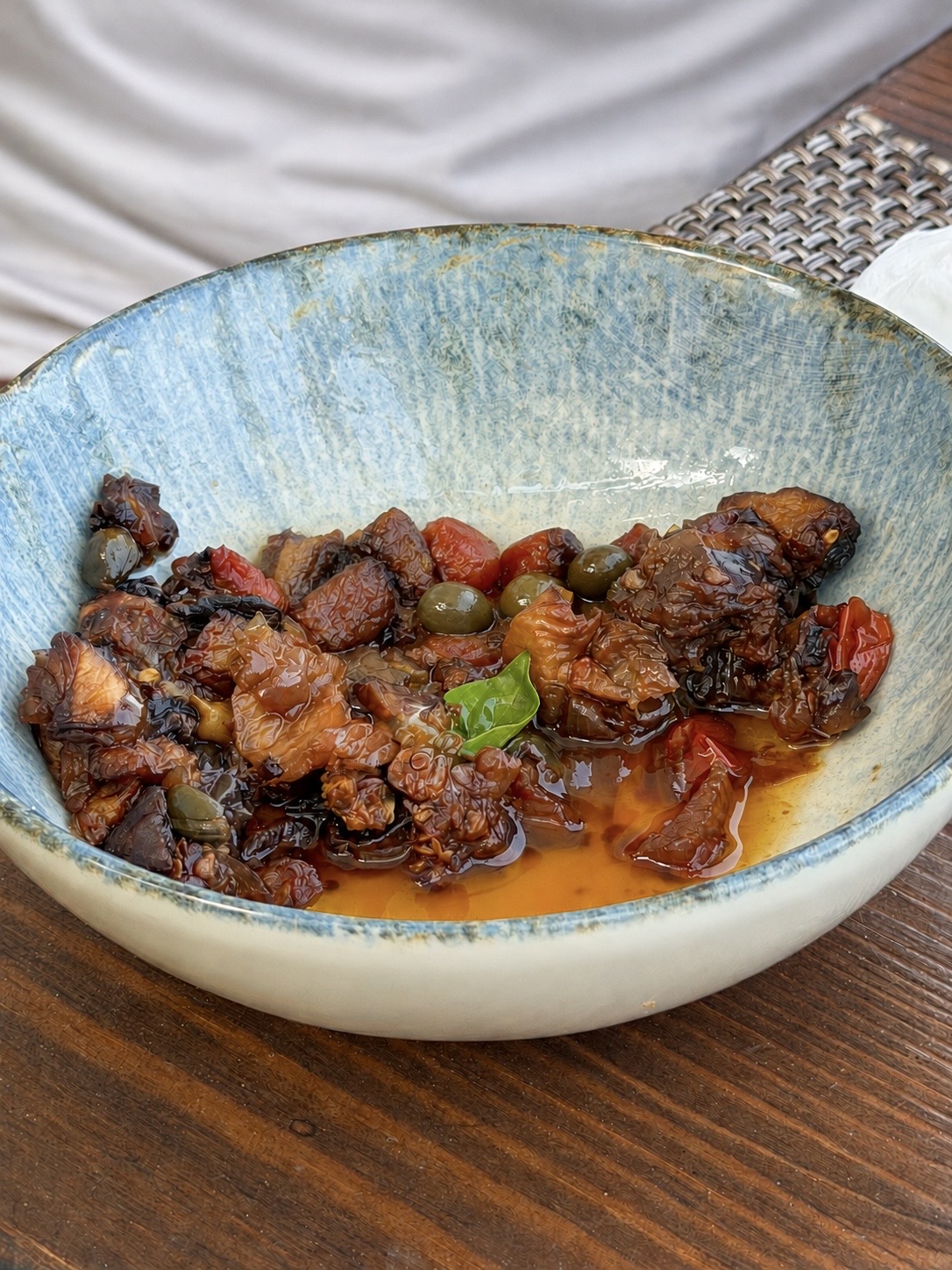
Caponata siciliana – Marechià, Lipari
In Lipari, we ate one of the best caponate of our lives.
It had that balance caponata needs between savoury, acidic and sweet, with aubergine, tomato, celery, olives, capers and raisins all doing their part. But there was something different in this one: fried swordfish.
Maybe that was what made it stand out from all the others we’d eaten before.
The fish gave it another layer of richness and saltiness, while the capers and vinegar kept pulling everything back. Every forkful tasted slightly different depending on what you picked up.
Aubergine, swordfish, raisin, caper. Then straight back in for another one.
Tagliolino alla colatura di alici cilentane – Masaniello Tourist, Castellabate
This one happened in the middle of the sea.
We were on a boat trip along the Cilento coast when the organiser’s son – who happens to be a chef – disappeared into a kitchen that couldn’t have been much bigger than one square metre and started making lunch.
Out came tagliolini with colatura di alici, garlic and parsley.
The pasta was properly al dente, the colatura gave the whole thing that deep, salty intensity you only need a little of, and there was nothing unnecessary added to it. A tiny kitchen, a handful of ingredients and the sea around us.
Simple, but very difficult to forget.
Bottarga e pomodoro – La Ruota, Borgo Foce, Imperia
Whenever we think about this plate, our immediate reaction is to look up trains to Imperia.
There really isn’t much to it: beautiful cuore di bue tomatoes from the Ligurian coast, bottarga cut into generous shavings and a very light Ligurian olive oil bringing the two together. Which, of course, means every ingredient has to be excellent.
The tomatoes are sweet, juicy and meaty enough to stand up to the saltiness of the bottarga, while the olive oil binds everything without taking over.
Then there’s the setting: a tiny restaurant in Borgo Foce, a cluster of houses right on the sea that still feels slightly removed from everything around it.
Tomatoes, bottarga, the sea. We’d take the train back for it tomorrow.
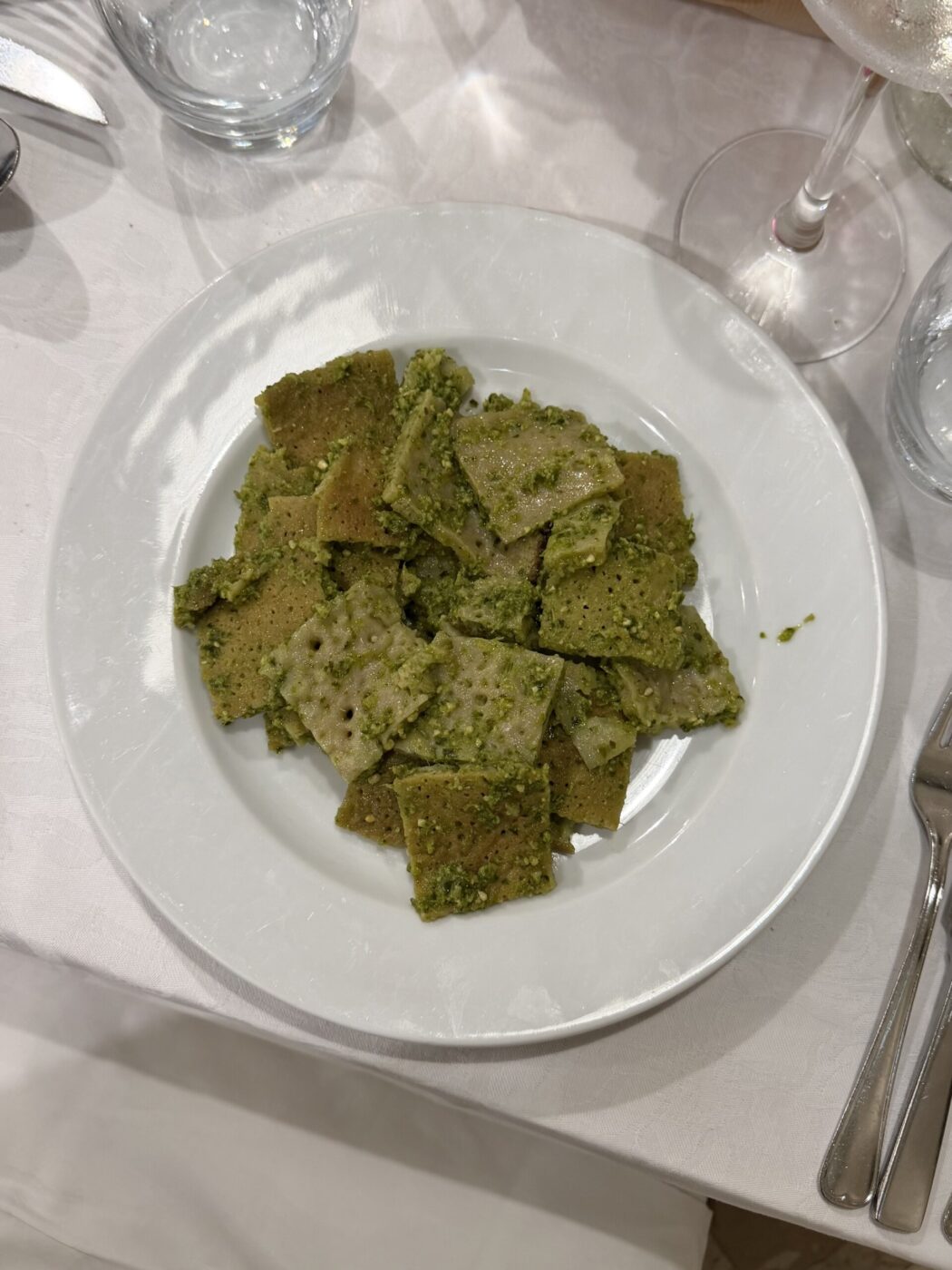
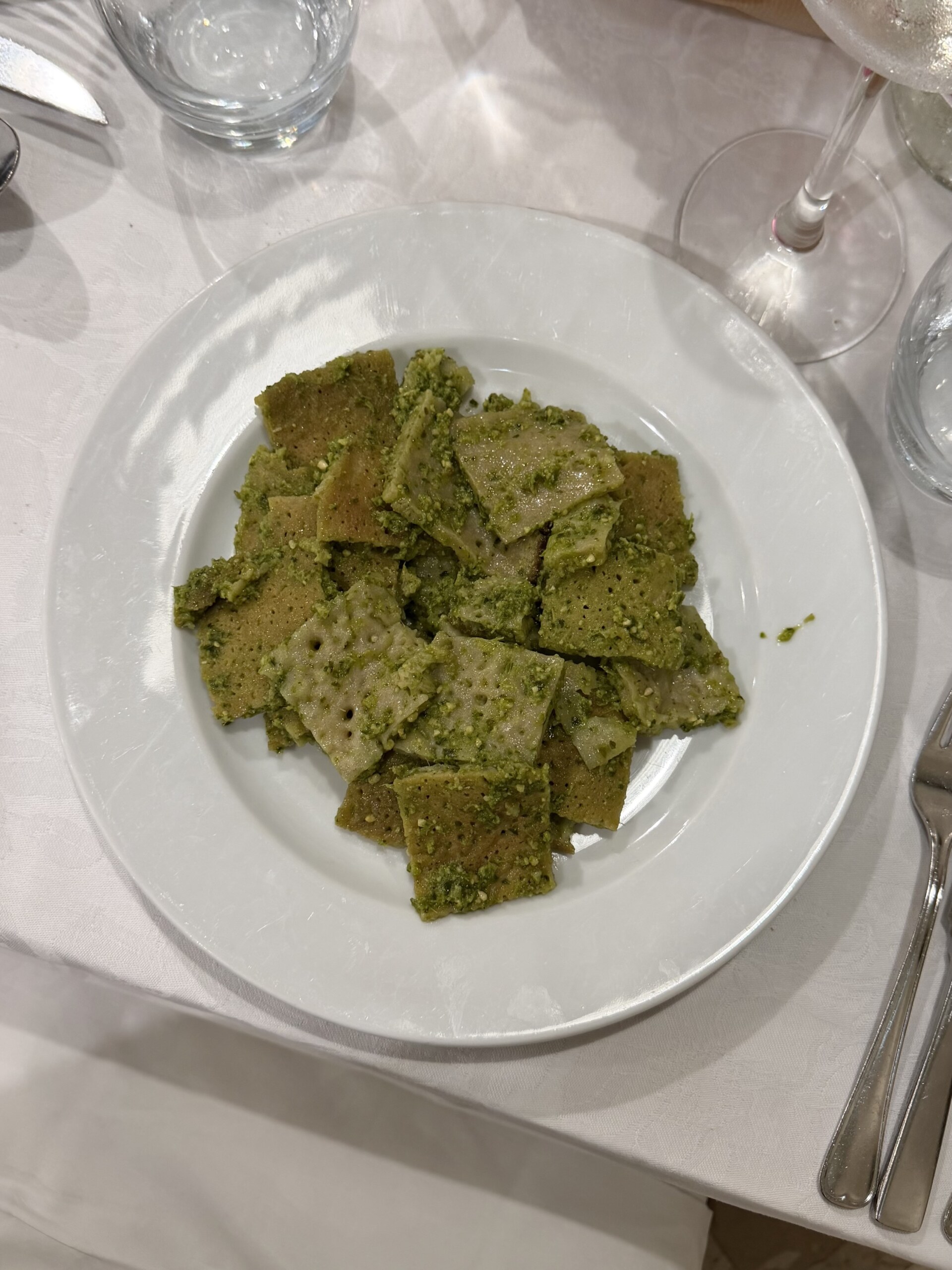
Testaroli al pesto – Trattoria da Giulio, Lucca
Somewhere between a pancake and pasta, roughly cut and not particularly interested in looking pretty, testaroli have one of those textures you either don’t understand at all or immediately become obsessed with.
We fall into the second camp. At Trattoria da Giulio, they come with pesto that is properly garlicky, properly salty and applied generously enough to get into all those soft, slightly chewy pieces of dough.
There’s nowhere to hide in a dish like this. No garnish, no elaborate plating, no ingredient added simply because someone thought the plate needed another colour.
Just testaroli and pesto. You go to Trattoria da Giulio expecting home-style food. What you don’t necessarily expect is to leave wondering why anyone bothers making food more complicated than this.
Spaghetti alle Arselle – Osteria del Mare, Forte dei Marmi
There are certain dishes we want to eat only in certain places, and spaghetti alle arselle belong firmly by the sea.
At Osteria del Mare, the pasta is cooked exactly as it should be, while the arselle – smaller and more delicate than the vongole most people are used to – are prepared in their own light, briny juices with olive oil and just enough pasta water to bring everything together.
There isn’t much sauce, because there shouldn’t be. Just that glossy coating around the spaghetti, lots of tiny shellfish and the taste of the sea.
It’s a dish that has been around forever and will probably be around forever.
We hope so, anyway.
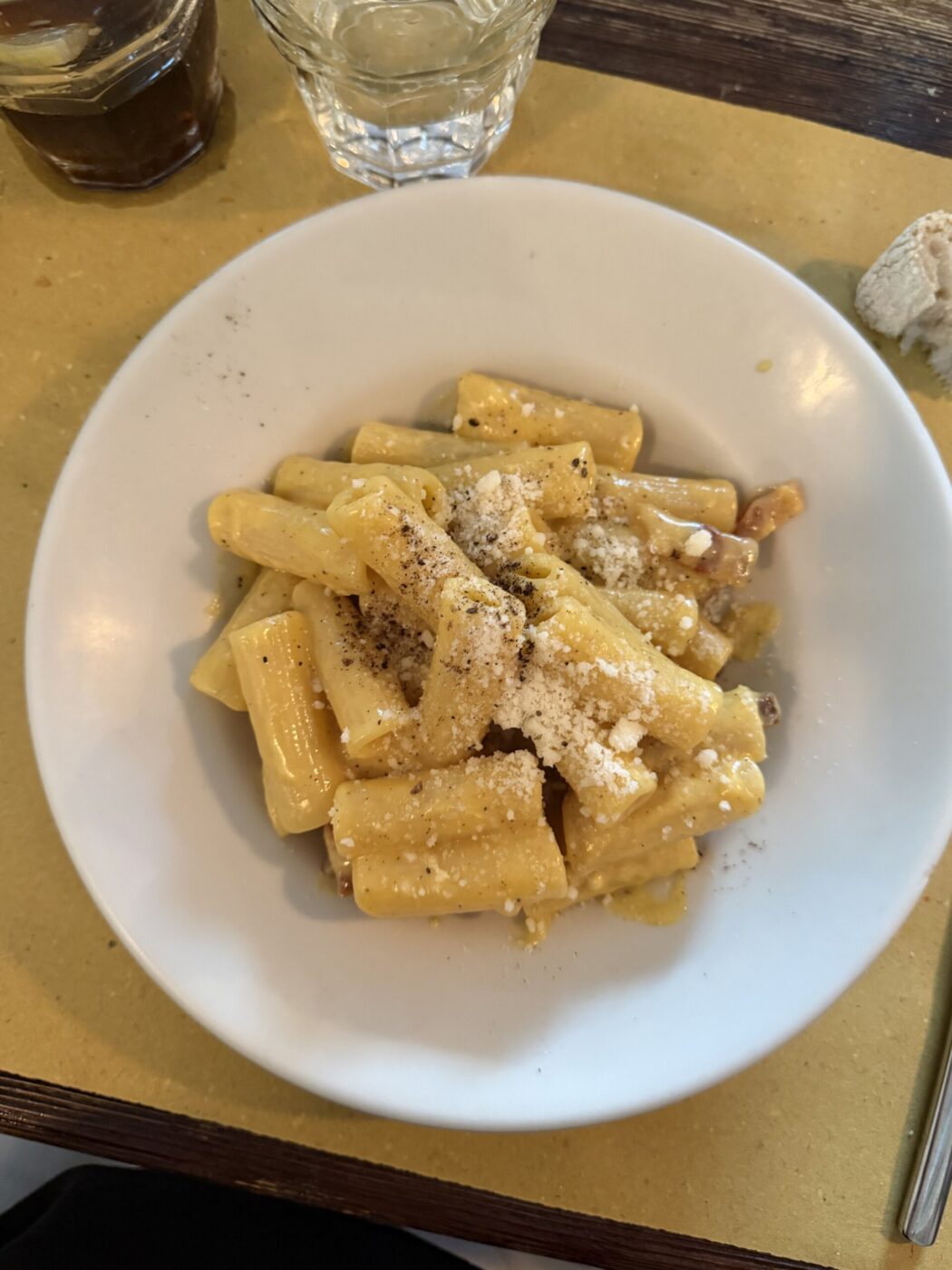
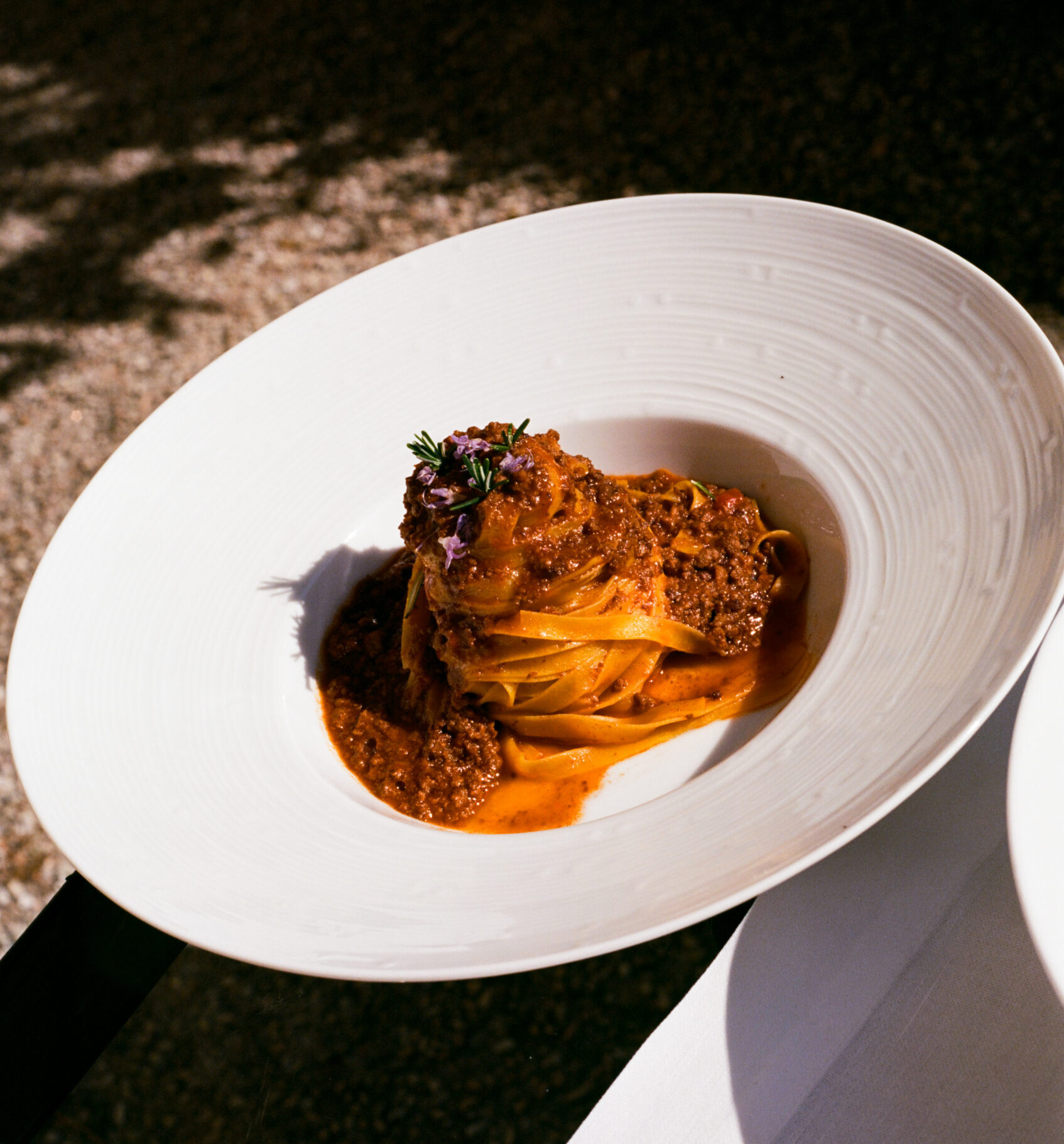
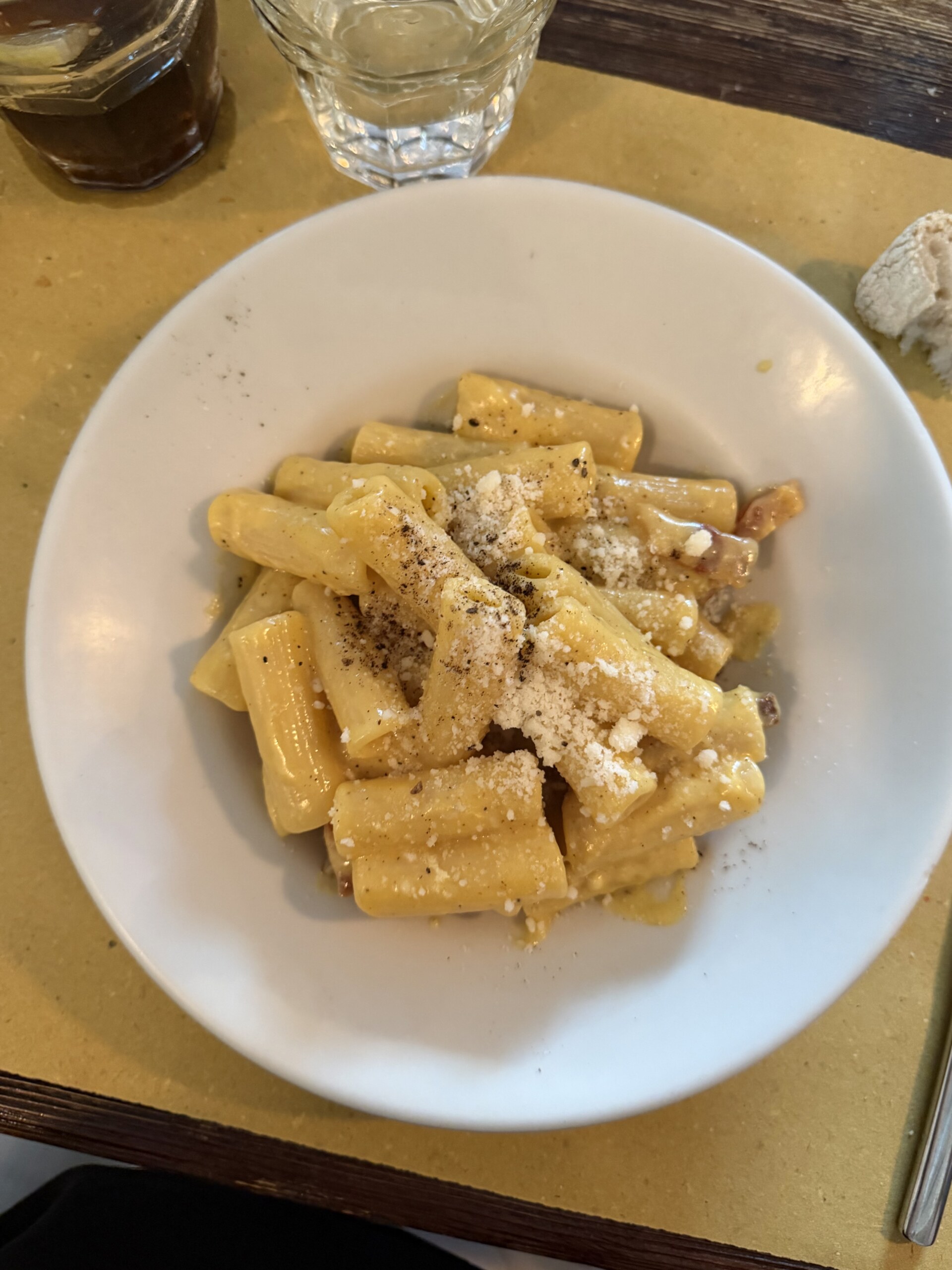
Carbonara – Trattoria Pennestri, Rome
Yes, it’s carbonara. Again.
Everyone has a place they swear by, a nonna who apparently makes it better, and a very serious opinion about what shape of pasta belongs in the bowl. In Rome, carbonara is less a dish than a subject people are prepared to argue about for the rest of the afternoon.
At Trattoria Pennestri, it doesn’t even make the main menu. Instead, you’ll find it on a separate piece of paper under “Classics” – creamy, yellow, unapologetically salty and made with rigatoni, our weapon of choice.
Pennestri isn’t a restaurant built around performing Roman tradition, which somehow makes finding a carbonara this good there even more satisfying.
You’ve had carbonara before and you’ll have it again. But you should try this one.
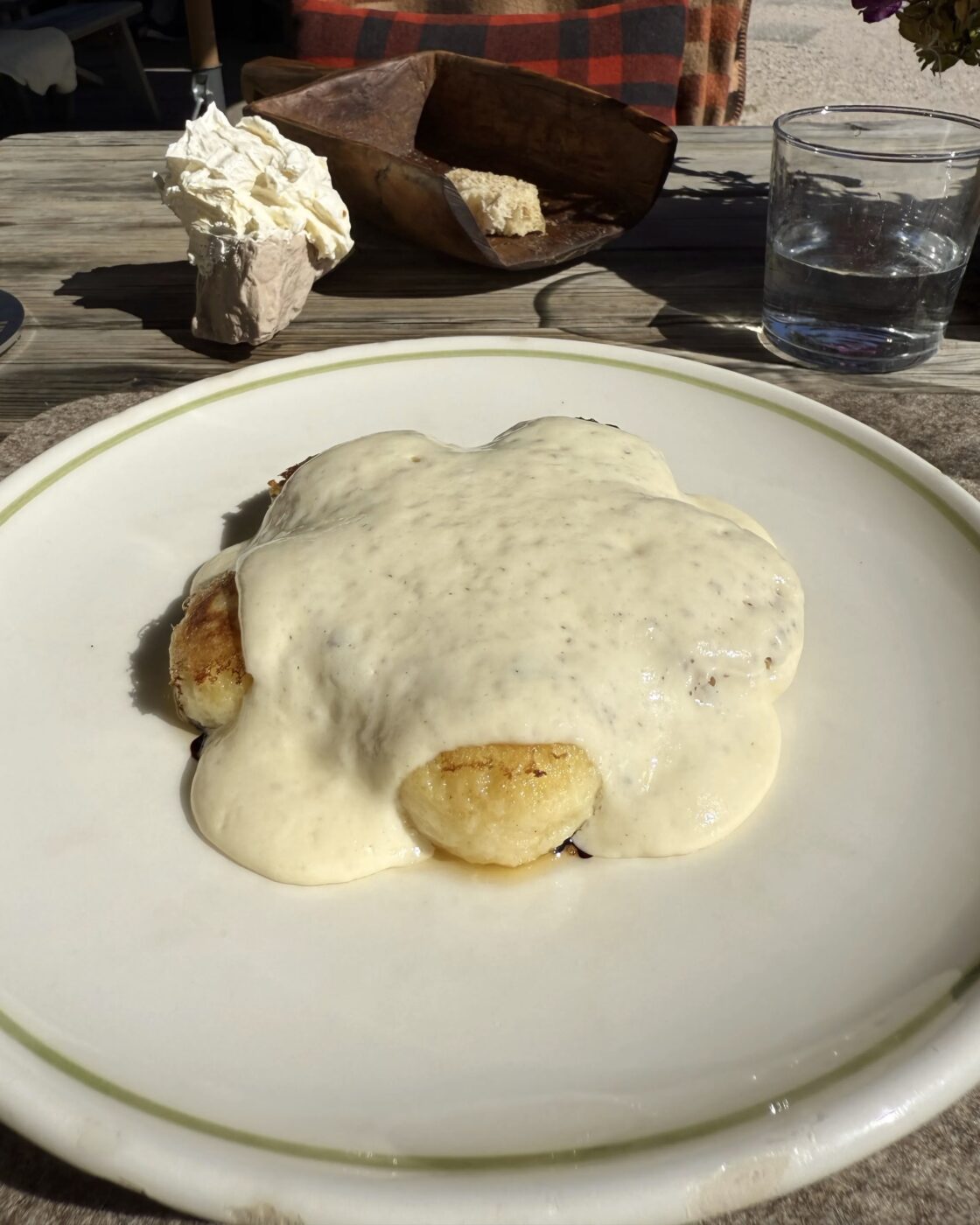
Gnocchi Soreghina – El Brite de Larieto, Cortina d’Ampezzo
We’ll admit that we originally went up the mountain for the butter.
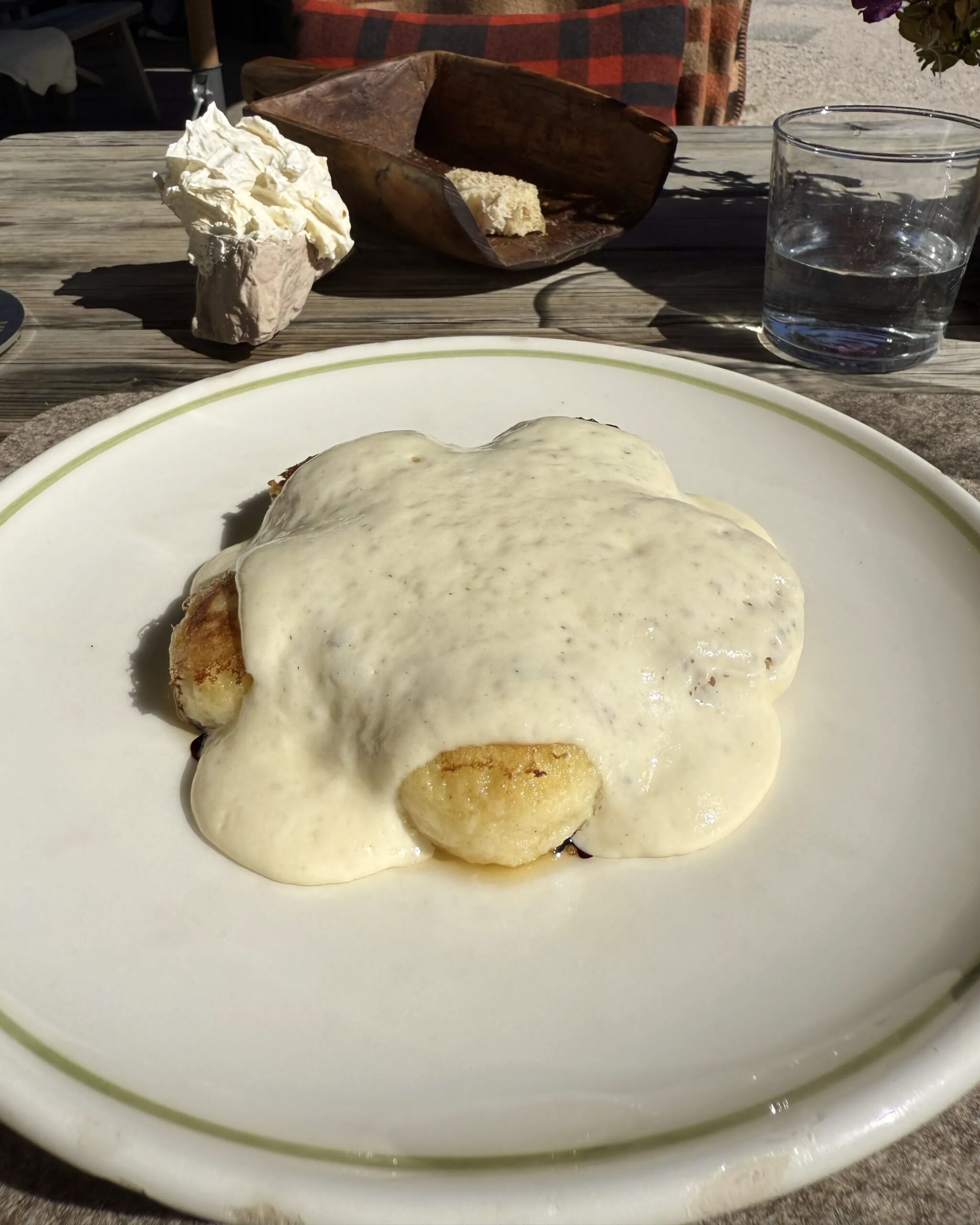
Everyone who has been to El Brite tells you about it first – churned from the milk of the Gaspari family’s own cows and served in a soft white peak on a slab of rock, like a little Alp of its own.
The butter was excellent.
But the dish we came back down the mountain thinking about was the gnocchi.
They’re called Soreghina, after the Dolomite legend of the daughter of the sun, a princess who could only live in daylight. One night, she stayed awake after dark to eavesdrop on her husband and, by dawn, was gone.
A rather dramatic story for such a comforting primo.
The gnocchi are little potato pillows filled with molten cheese, covered with a foam of latteria stravecchio, a dark reduction of mosto cotto and cumin-spiced breadcrumbs.
Reading that description, you might expect something incredibly rich. Instead, the foam is so light it barely feels like sauce, the mosto brings a slightly winey sweetness, and the cumin gives the whole dish an earthy, almost unexpected finish.
We had reached El Brite by gravel bike after an epic and frankly exhausting ride from Corvara, surrounded by other bikers and hikers who had made their own way up the mountain.
Was it worth it? Absolutely.
Would we ride back up tomorrow for those gnocchi? Also yes.
Although next time, we might stay in Cortina so we can at least roll back down the hill afterwards.
Spaghetti alla chiummenzana — Da Gelsomina, Anacapri
There are dishes that tell you almost everything you need to know about a place, and at Da Gelsomina this is one of them.
Signora Teresa’s spaghetti alla chiummenzana are made with olive oil, garlic, pomodori del Piennolo, peperoncino and oregano. That’s basically it. But with every bite, we were taken straight back to childhood summers — the kind of pasta we ate at a white plastic table under the veranda, still in our swimsuits.
The tomatoes break down just enough to coat the spaghetti, while the garlic, peperoncino and oregano give it that unmistakably southern Italian taste and smell.
Signora Teresa has been making dishes like this for decades. One plate and you understand why nobody ever felt the need to change them.
La Faraona – Trattoria d’ALberto, Barberino del Muggello
Deeply browned on the outside, tender inside and sitting in its own rich cooking juices, it’s exactly the sort of plate you hope to find in the Mugello: generous, unfussy and deeply comforting. Nothing decorative, nothing unnecessary — because when the materia prima is this good, that’s really all you need.
A must-stop if you’re driving north from Florence towards Bologna or Milan.
WHERE TO EAT ALONG THE HIGHWAY—>
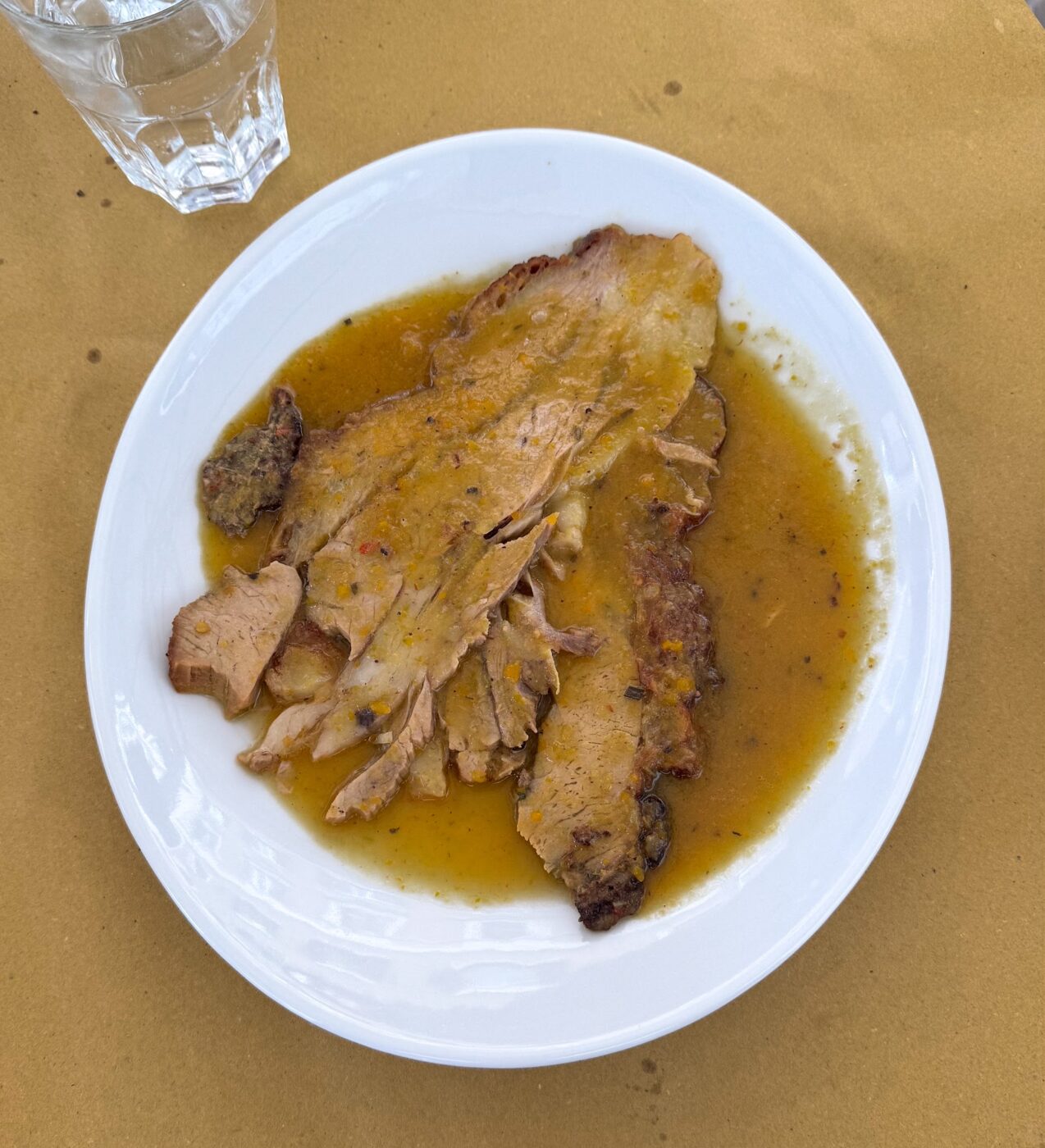
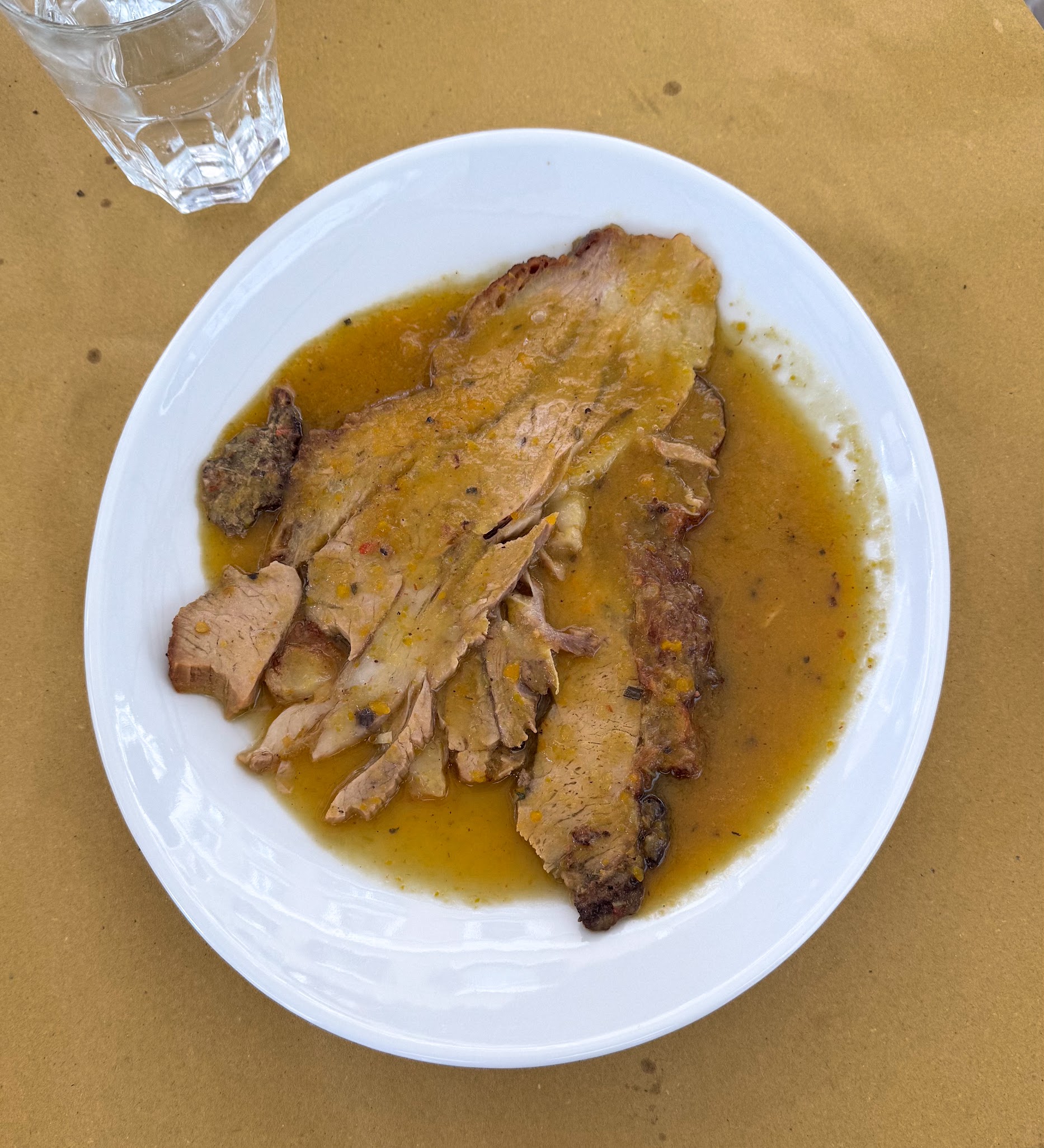
Petto di Vitello alla Fornara, Piatto Romano, Roma
Petto di vitello alla fornara is one of those dishes most people skip on a Roman menu. It’s often underestimated, and to be fair, the versions served in many restaurants don’t do much to change anyone’s mind.
Piatto Romano is the exception. Here the veal is meltingly tender, with just the right amount of fat to keep it rich and yielding, and it arrives in a generous pool of its own juices. That last part matters, because this is a dish made for scarpetta, the cherished Italian ritual of chasing every last drop of sauce around the plate with a piece of bread.
Order it. Then ask for more bread, to do la scarpetta.
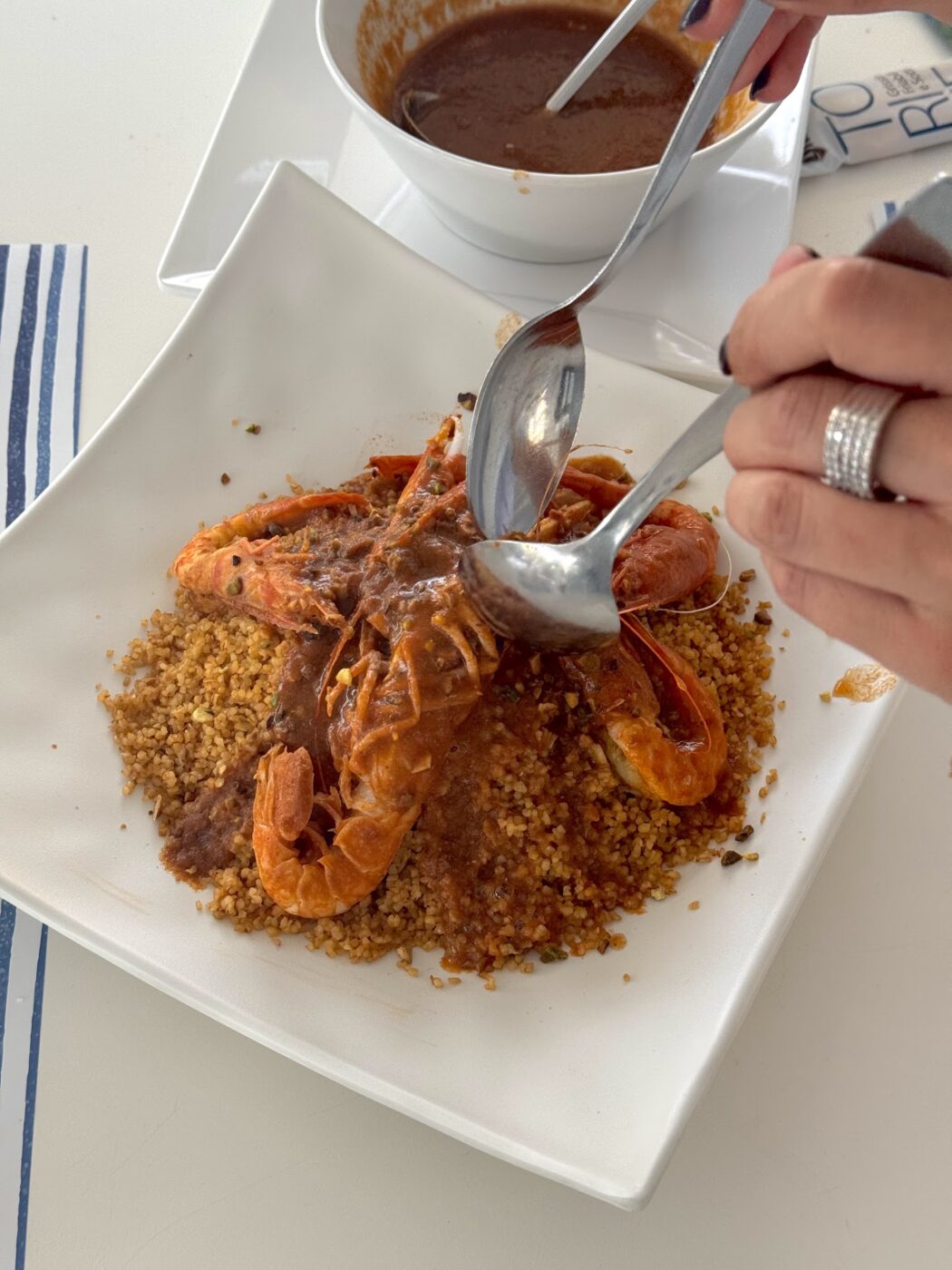
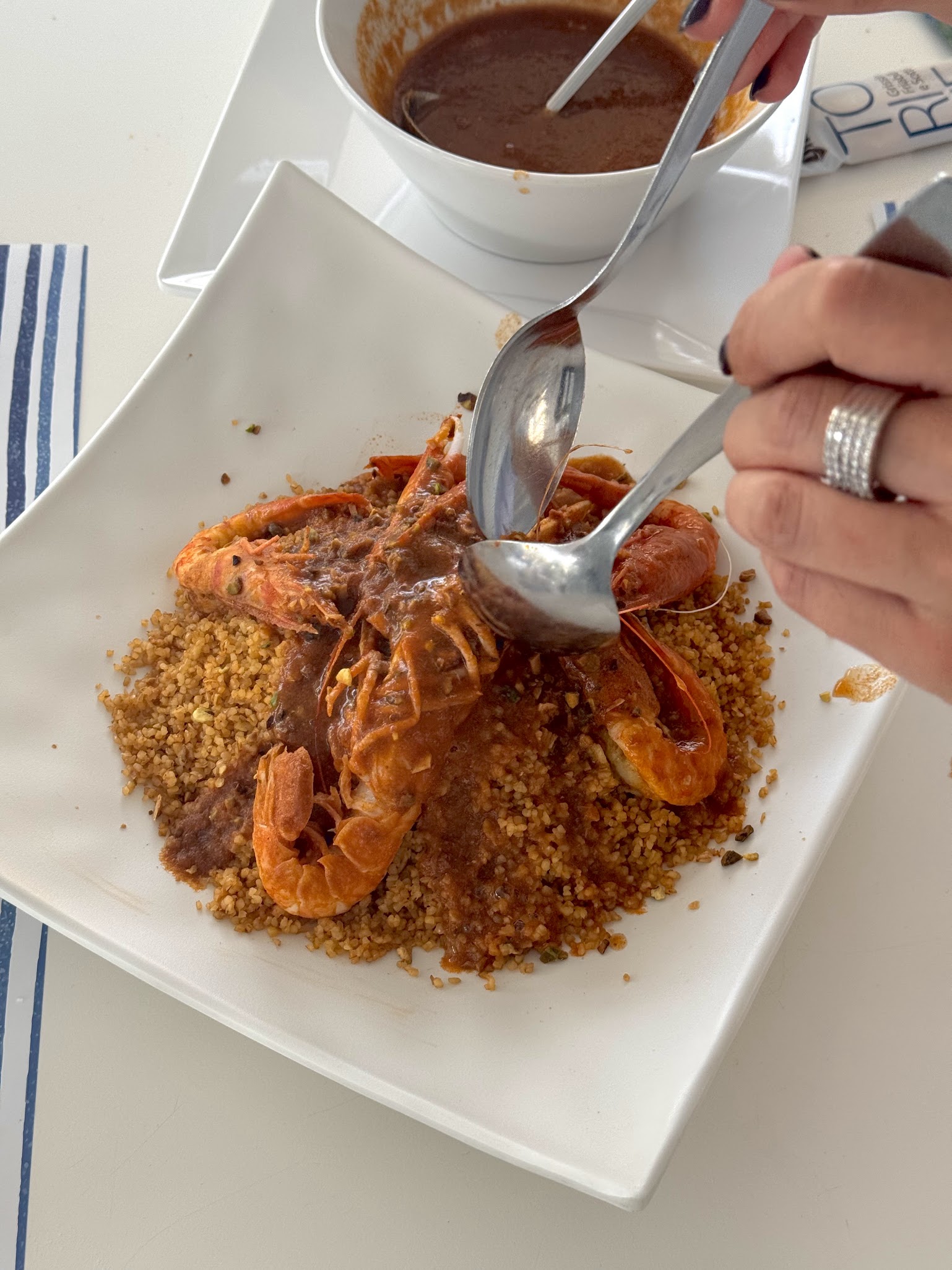
Cous cous alla trapanese, Maréaviva, Mazara del Vallo
In Mazara del Vallo, the fishing town on Sicily’s southwestern edge where the old Kasbah still echoes with North Africa, there is a fish shop called Marea Viva. And at Marea Viva, there is a couscous we haven’t stopped thinking about.
We’ll say it plainly: it is one of the best things we have ever eaten. Every grain stays light and distinct, each one soaked through with a flavor so deep and intense it feels as though the whole Strait of Sicily has been slowly simmered down into a single bowl. And then there’s the sauce: dark, glossy, and frankly beyond explanation. I won’t even try.
Simply unbeatable. If you find yourself anywhere near Mazara, go.
Bonus!
Pizza Pacalina – La Notizia, Naples
Pizza in Naples is generally good. Enzo Coccia’s pizza at La Notizia is exceptional.
Stanley Tucci said it, and unfortunately we have to agree.
You can spend as long as you like debating toppings, but the dough is what makes the difference here. It’s soft and airy inside, blistered and slightly crisp around the edges, with that faint tang that comes from proper fermentation. There is so much flavour in the dough itself that we would happily eat it bianca with nothing more than a drizzle of olive oil.
We ordered the Pascalina and the Scarpariello and could very easily have continued.
Had someone not brought out a pizza with Nutella, we probably would have.