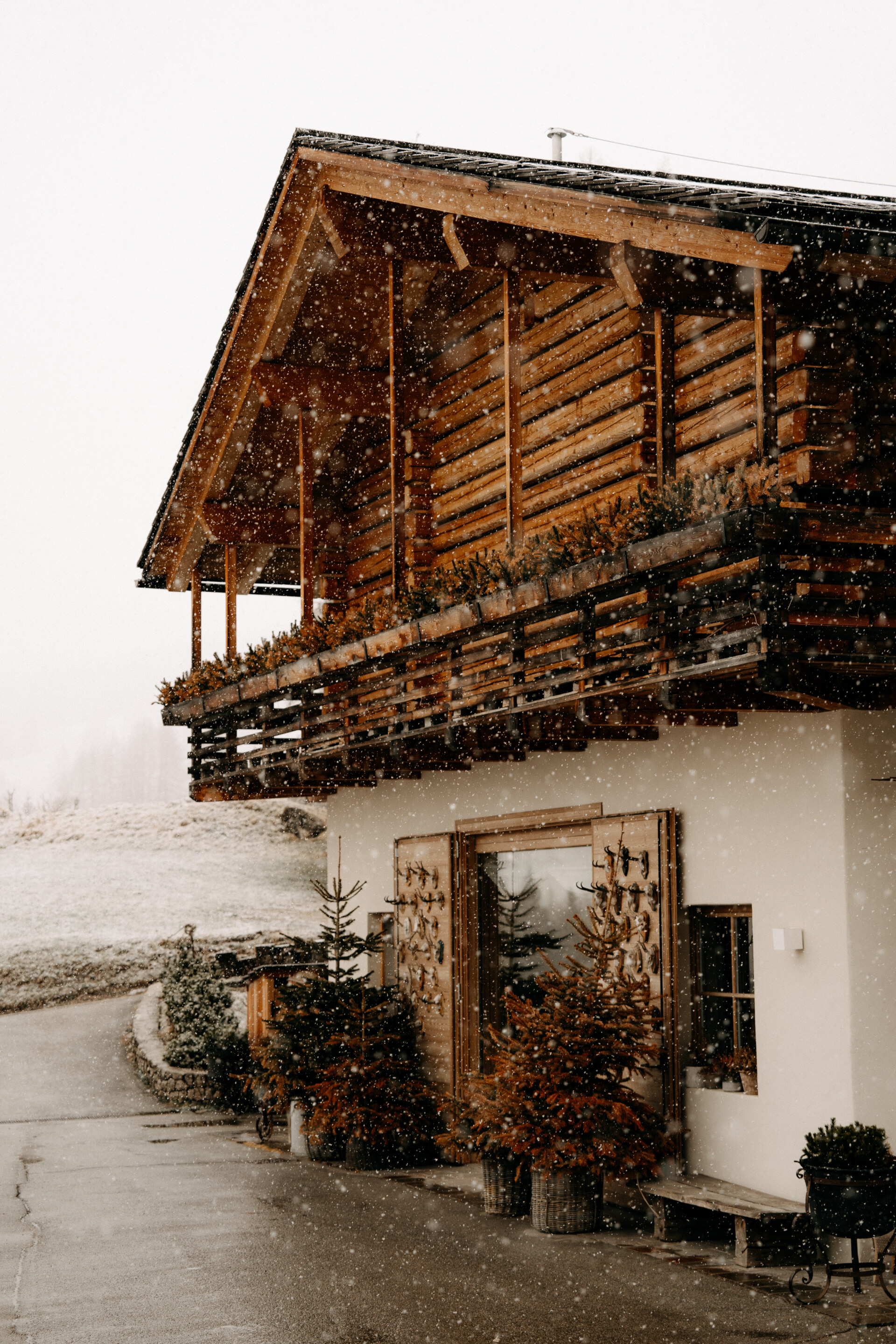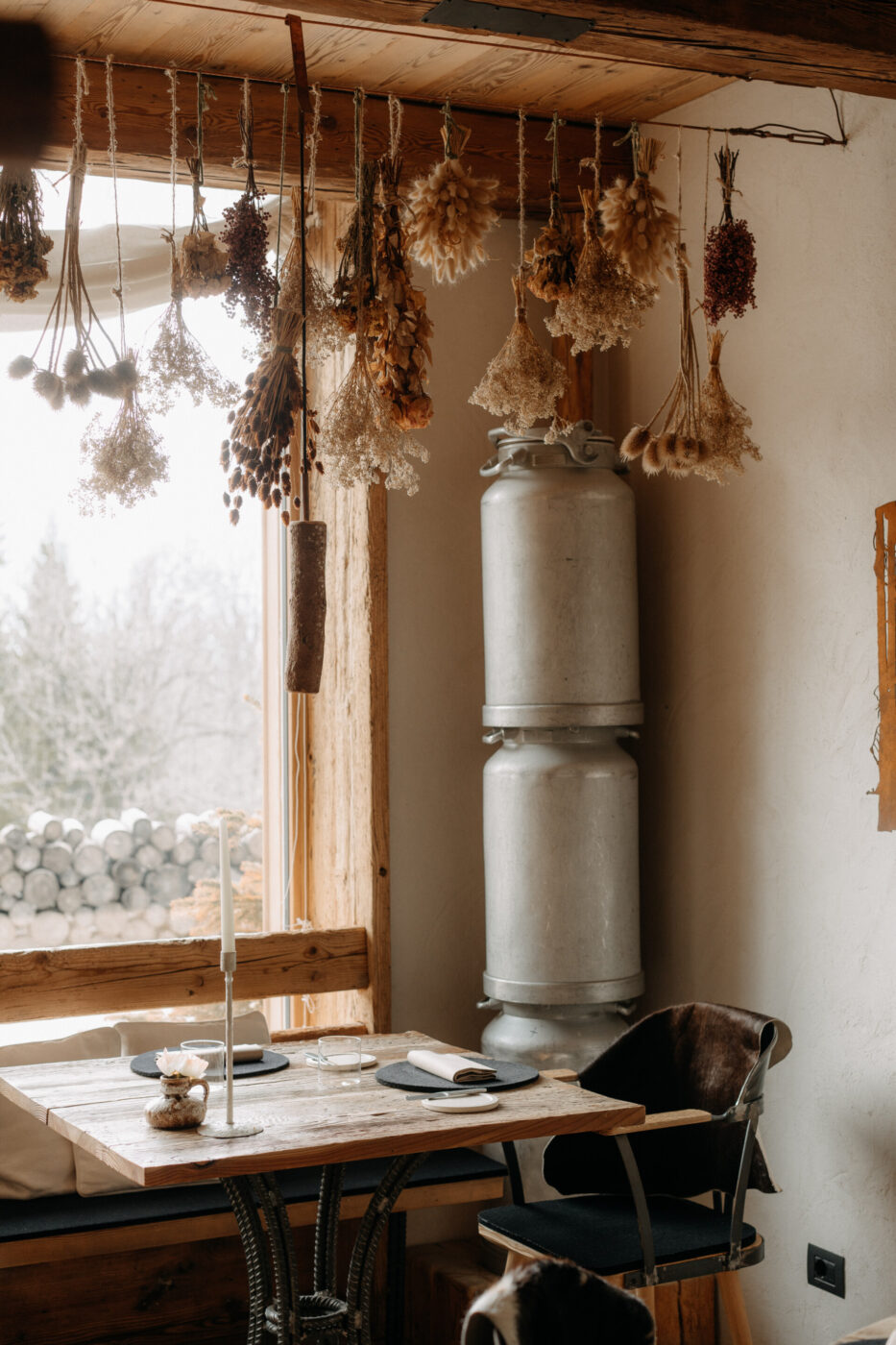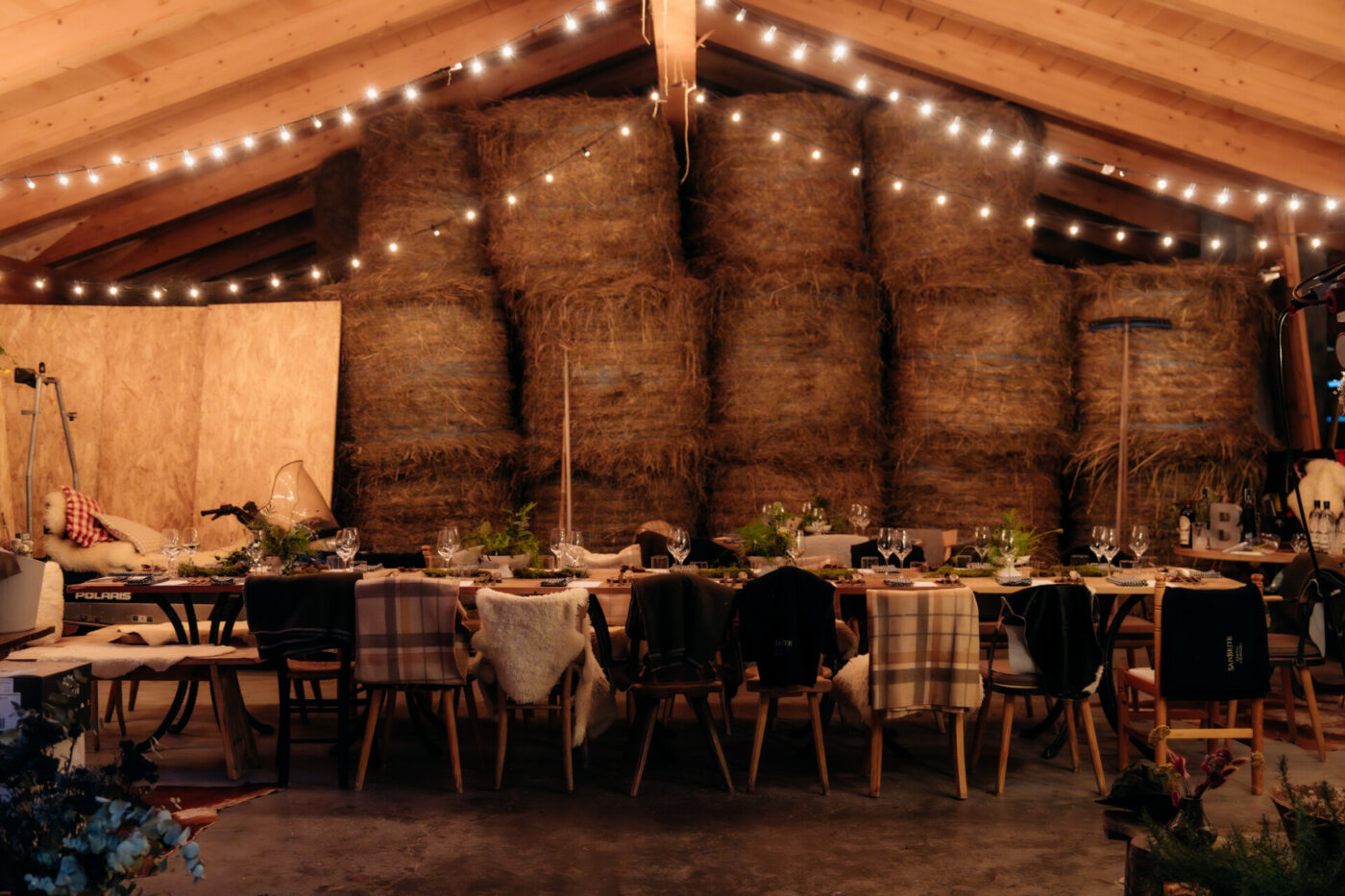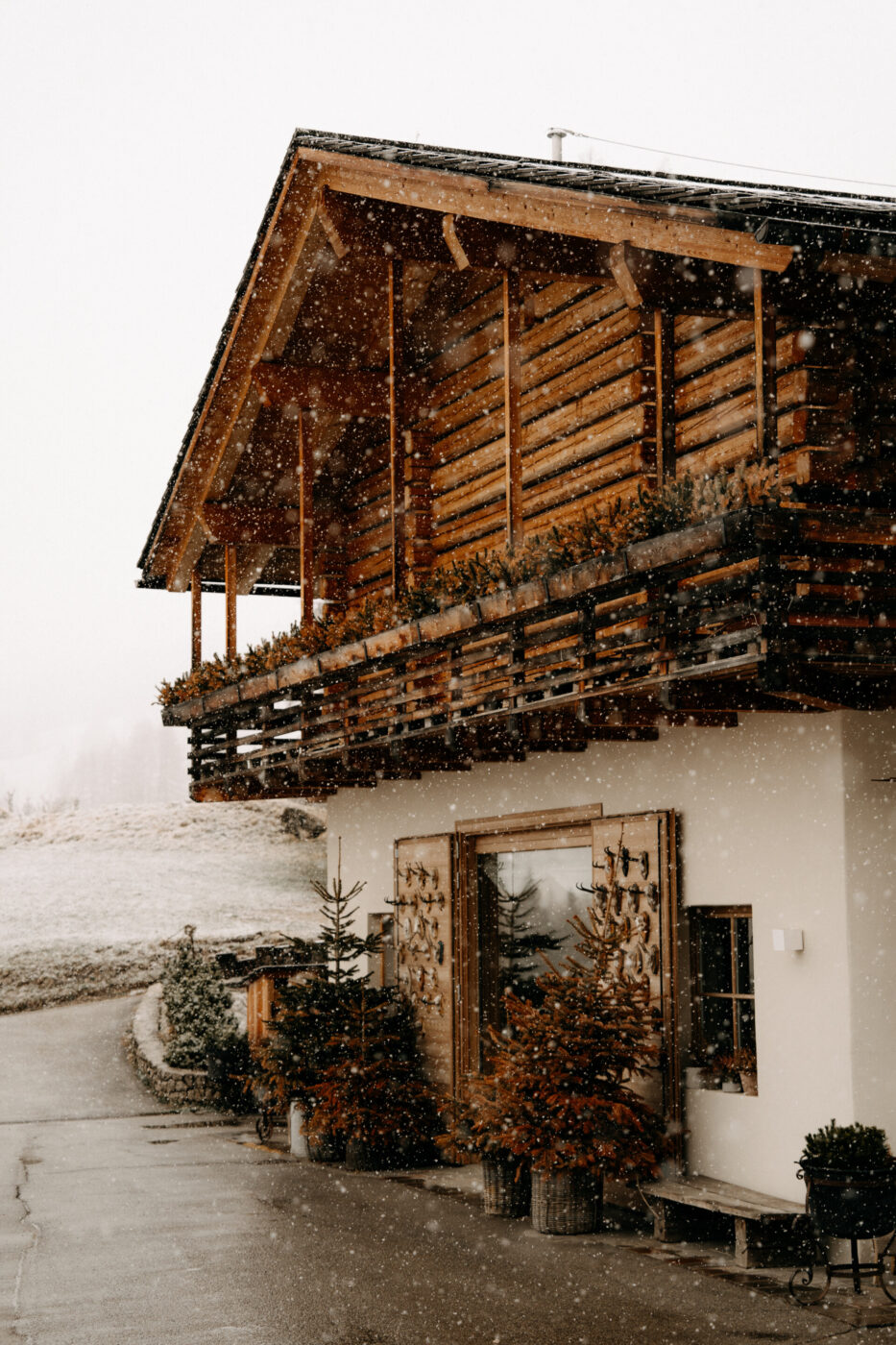
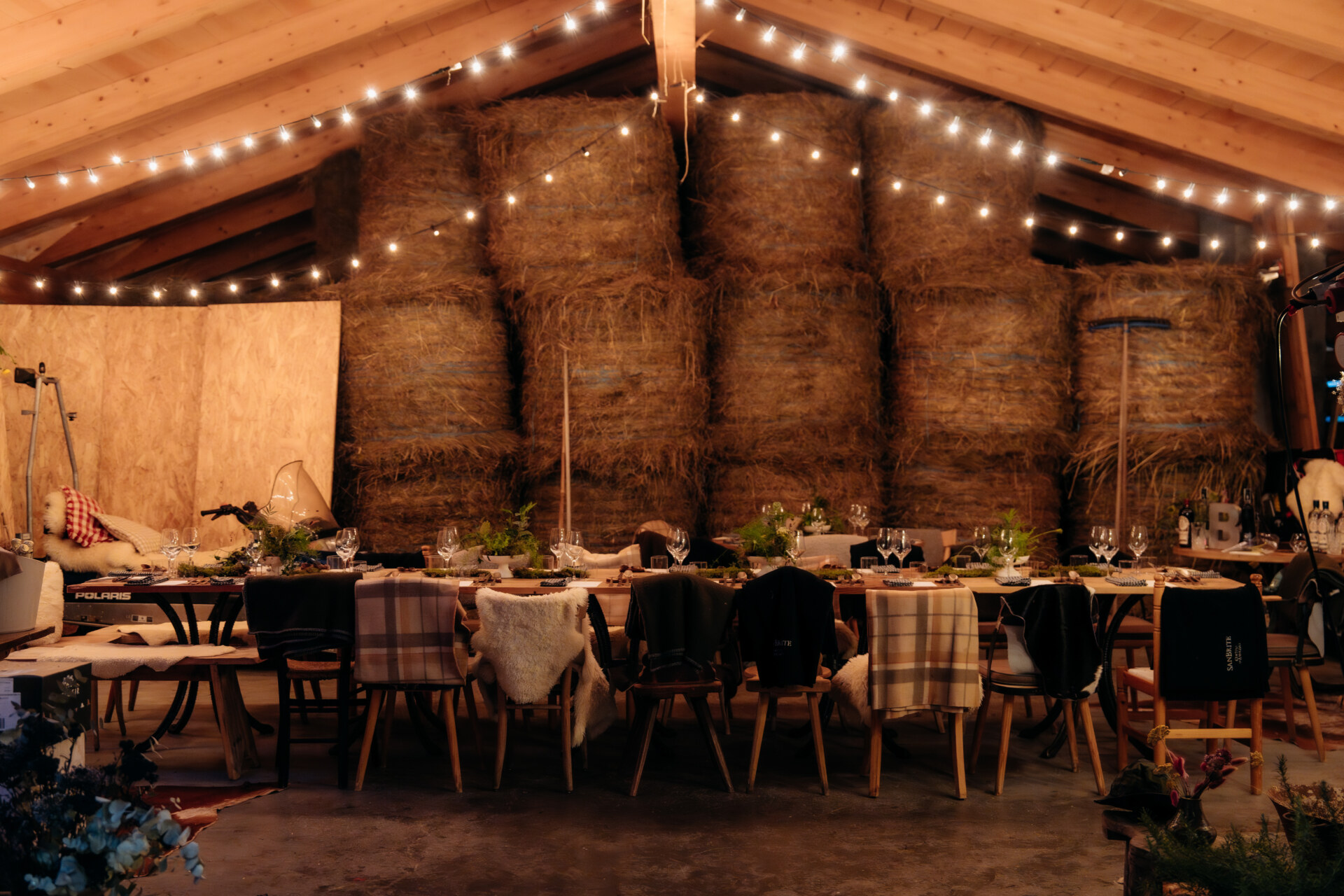
High above Cortina d’Ampezzo, where the valley gives way to pasture, lies El Brite de Larieto — a working farm that became a kitchen, a kitchen that became a way of life. The cows, bells chiming, graze in the surrounding fields; the smell of milk and hay drifts through open windows. For over twenty years, the Gaspari family have run both farm and restaurant under one roof and barn, serving guests at long wooden tables overlooking the Dolomites. Then, less than ten years ago, they launched San Brite nearby, the Michelin-starred sibling that carries the same soul in finer porcelain. Between them runs a single philosophy: nothing good comes without work.
At the heart of it all are Riccardo Gaspari and Ludovica Rubbini – a couple in life and in work, bound by eighteen years of building something that cannot be measured in stars alone. Riccardo was born and raised in these mountains. His father Flavio taught him to work until the job was done, and that lesson lives in his hands – hands that once gripped ski poles in Europa Cup races before an injury brought him back to the farm and kitchen. Ludovica arrived from Bologna with a different rhythm entirely – the warmth of a family, laughter around a crowded table. Together they’ve made a place where the farm feeds the restaurant and the restaurant honours it, where family – blood and chosen – gathers daily to eat and to work.
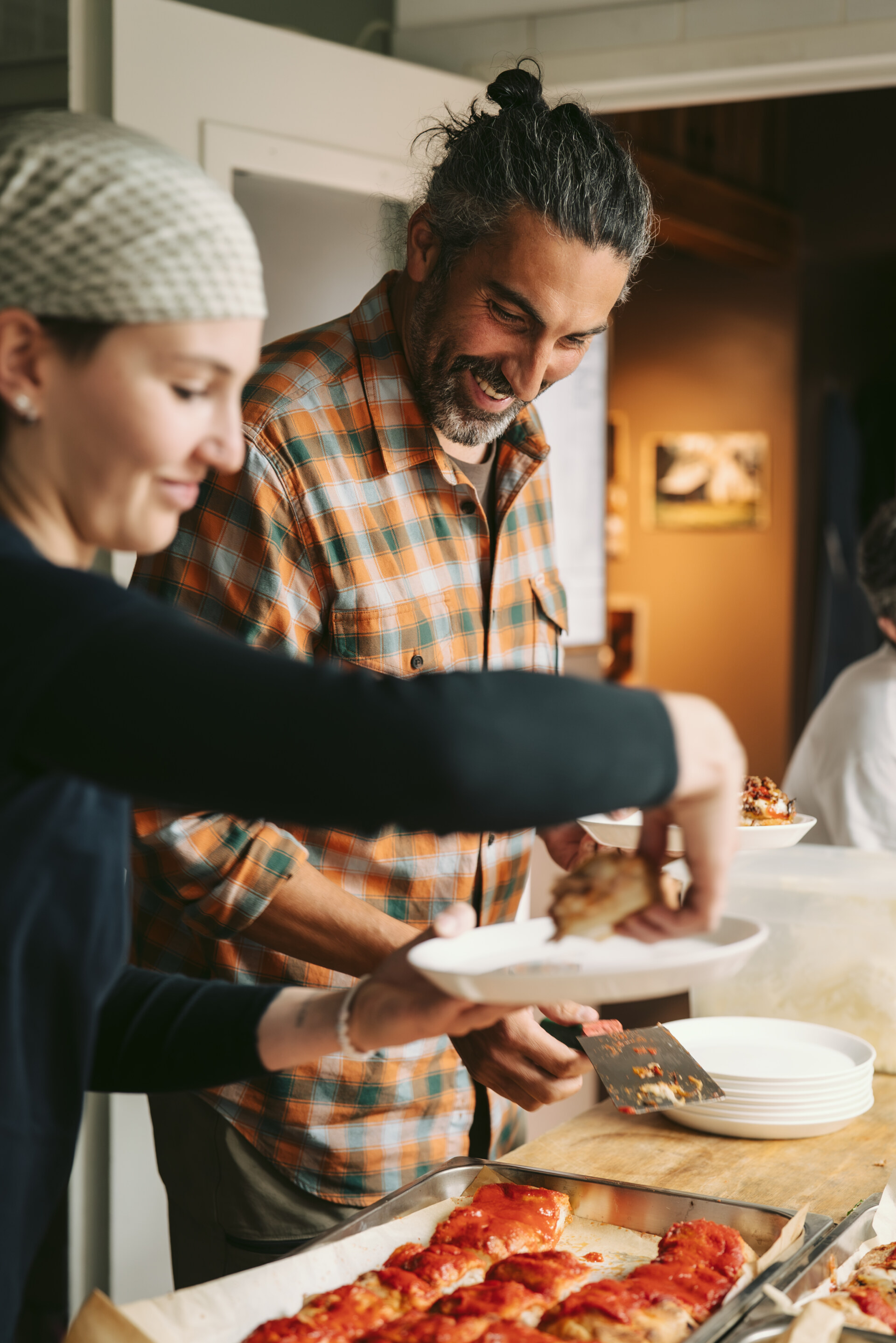
Chef and owner, Riccardo Gaspari
Today, Simone’s cooking for the team. His hands work without thinking, garlic crushed flat with the side of the knife, oil pooling in the pan, the flame kept low. Never let it burn. Burnt garlic turns bitter, and here, where everyone knows the difference, there’s nowhere to hide.
Behind him, the calamity of clattering pots is accompanied by the melody of Fabrizio De André’s ‘Il Pescatore’. A cook slides past with a tray of bread. Through the window, he can see them already gathering – Ludovico the gardener still dusted with earth, secateurs hanging from his back pocket, the waiters filing out one by one, drawn not by the clock but by the smell of garlic warming in oil.
“Chi cucina oggi?” someone calls from outside.
“Simone!”
A cheer carries all the way to the barn. Today is Friday, and Friday belongs to him – a young chef from Bologna who, everyone agrees, cooks like his nonna. Here at El Brite, the team takes turns cooking for the family, and everyone has favourites.
He adds the chilli, watches it colour, then kills the flame. The spaghetti has four minutes left — he’ll finish it in the pan, risottando it with the starchy water until it glistens. His grandmother taught him this. “Il pranzo della famiglia,” she’d say, “deve essere migliore di tutto.” The family meal must be better than everything.
Outside, a long plank of pine, thrown together from barrels and timber, overlooks the valley, the Dolomites rising like stone clouds.
Simone drains the pasta, tips it into the pan and adds a ladleful of water. The kitchen goes quiet except for the sound of the spoon scraping metal. He tastes. Adjusts. Tastes again. Parsley, chopped at the last second so it keeps its colour. One more stir.
Then he lifts the pan — vast, heavy, both hands gripping the sides — and pushes through the door.
The scent of garlic and chili cuts through the cool mountain air as Simone sets the pan down with a clang, and Flavio appears from behind the barn. Behind him, the bells of the cows ring softly. He wipes his hands on his trousers, looks toward the table, nods once. “Mangiate,” eat.
There’s a scrape of chairs, a rustle of anticipation. The first mound of pasta hits the plate, glossy with oil, red with chili. “Eccoci,” says a voice. Here we go.
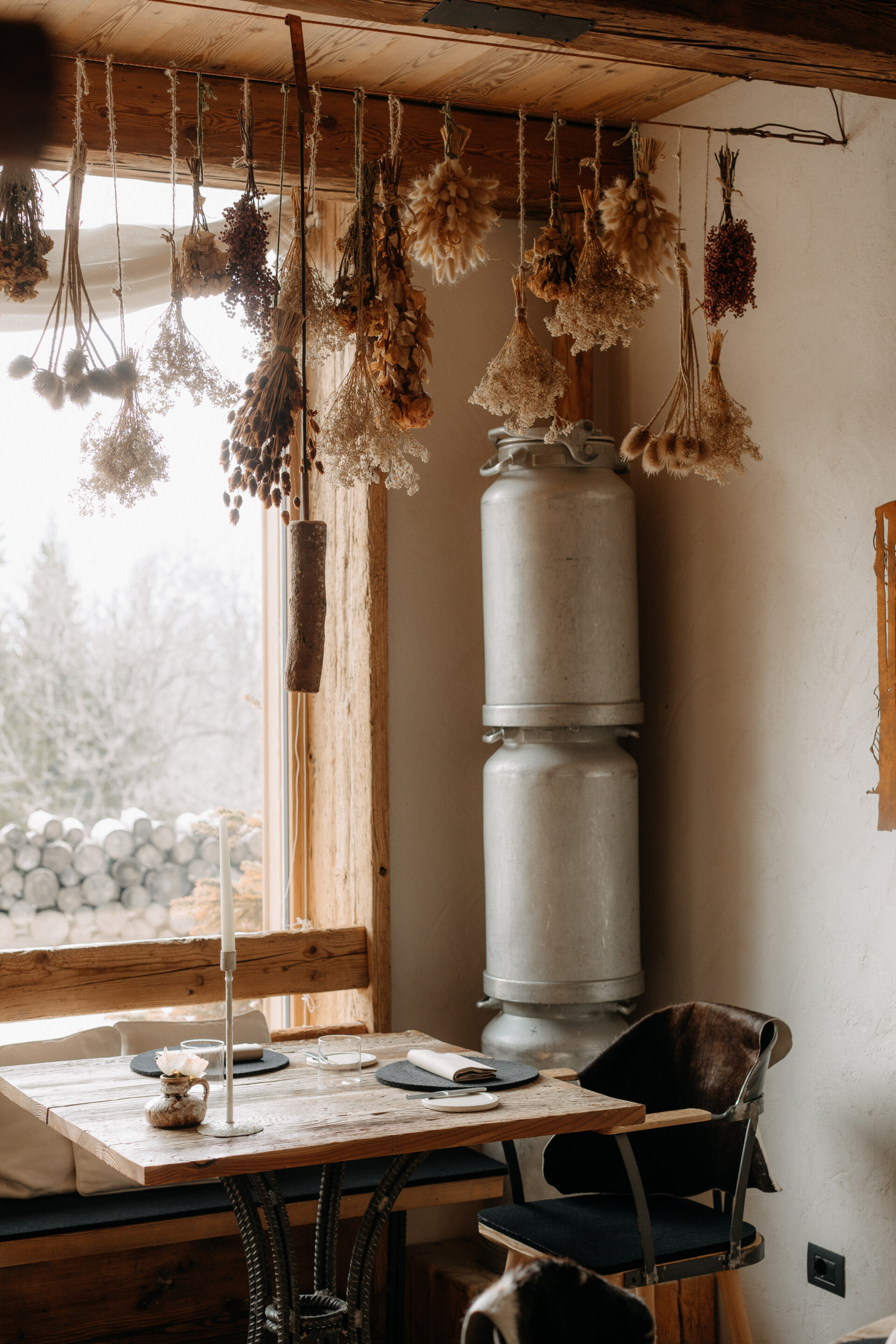
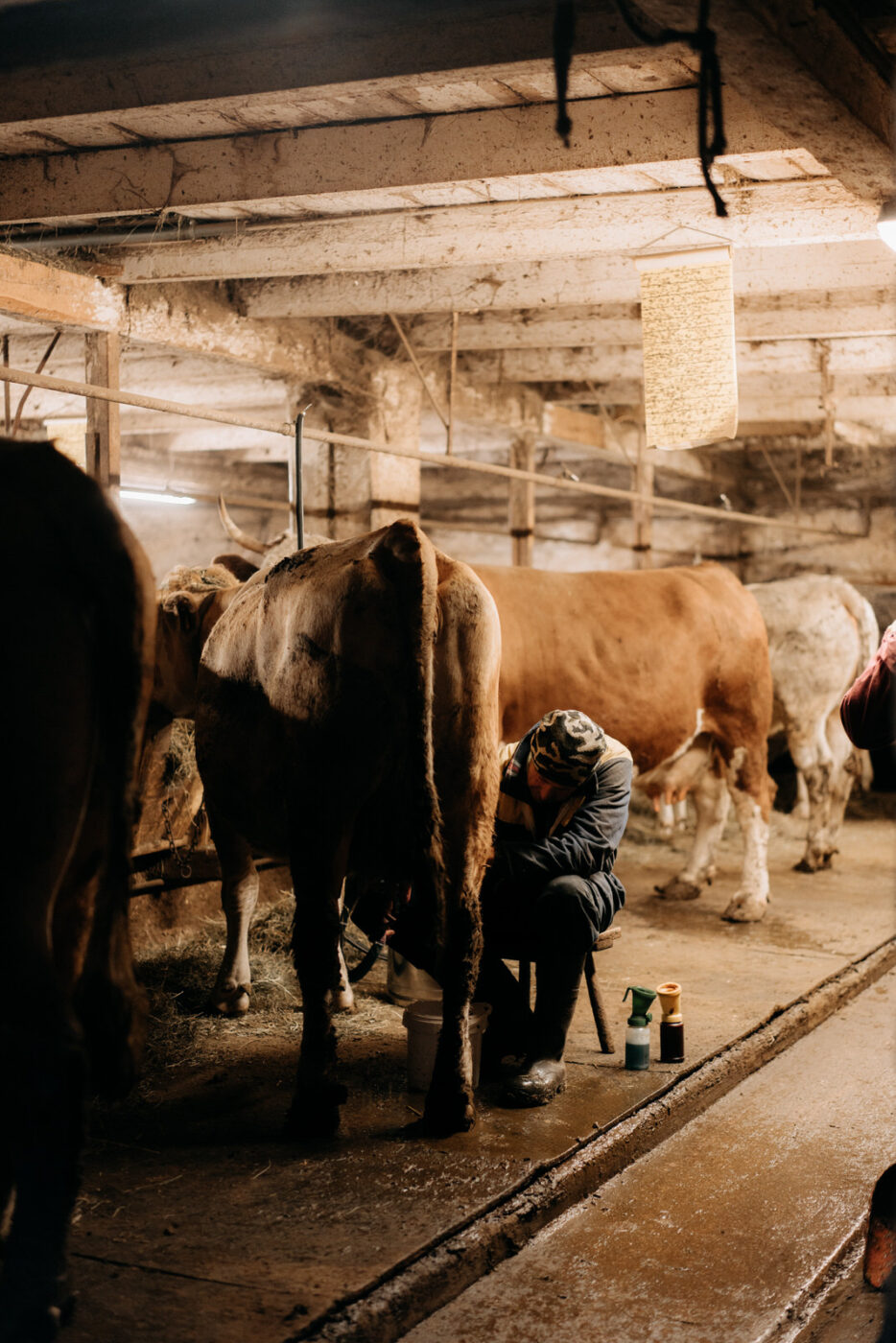
Before San Brite, before Michelin stars or fine dining, there was this: a family that measured time by the sound of animals more than clocks. Riccardo’s father, Flavio, grew up in a Cortina still poor and raw, before the 1956 Winter Olympics brought the roads and the skiers and the money – a valley that had seen war twice, occupation, and altitudes where the cold killed as readily as bullets, and where warmth came from the animals they kept and the bread they shared. “Chi ha fame, mangia,” Flavio would say — whoever was hungry, ate. Not indifference but survival. The Olympics changed everything, but the mountain, Riccardo says, remembers: his father became a carpenter, yet at night returned to the animals, feeding and tending them like kin. That devotion passed quietly to Riccardo, who learned to milk before school, to sense inbound snowfall, to work until the job was done. “My father taught me that if you have to work, you work,” he says. “Vacanza è poca.” Little holiday.
When he and Ludovica opened El Brite de Larieto in 2004, it was more farm than restaurant. They called it an agricucina — a kitchen of the land. It wasn’t fashionable then. “At the time, in Italy, almost no one was doing it,” he says. “We didn’t buy anything. We cooked what we had.” Now, with the world circling back to the language of sustainability, Riccardo smiles. For him, it was never a trend — it was inheritance.
He speaks about balance — equilibrio — in work, in marriage, in life with children, in the way the menu changes not by desire but by what the farm gives. “If you don’t find equilibrium, you separate,” he says, half-joking, half-serious. “But in the end, it’s like in the kitchen — you have to taste, to adjust. You keep trying.” “It’s an expensive system,” he says, “not because of luxury, but because of how we do things.” His logic is both simple and unrelenting: when you build something out of integrity, you can’t measure it in profit.
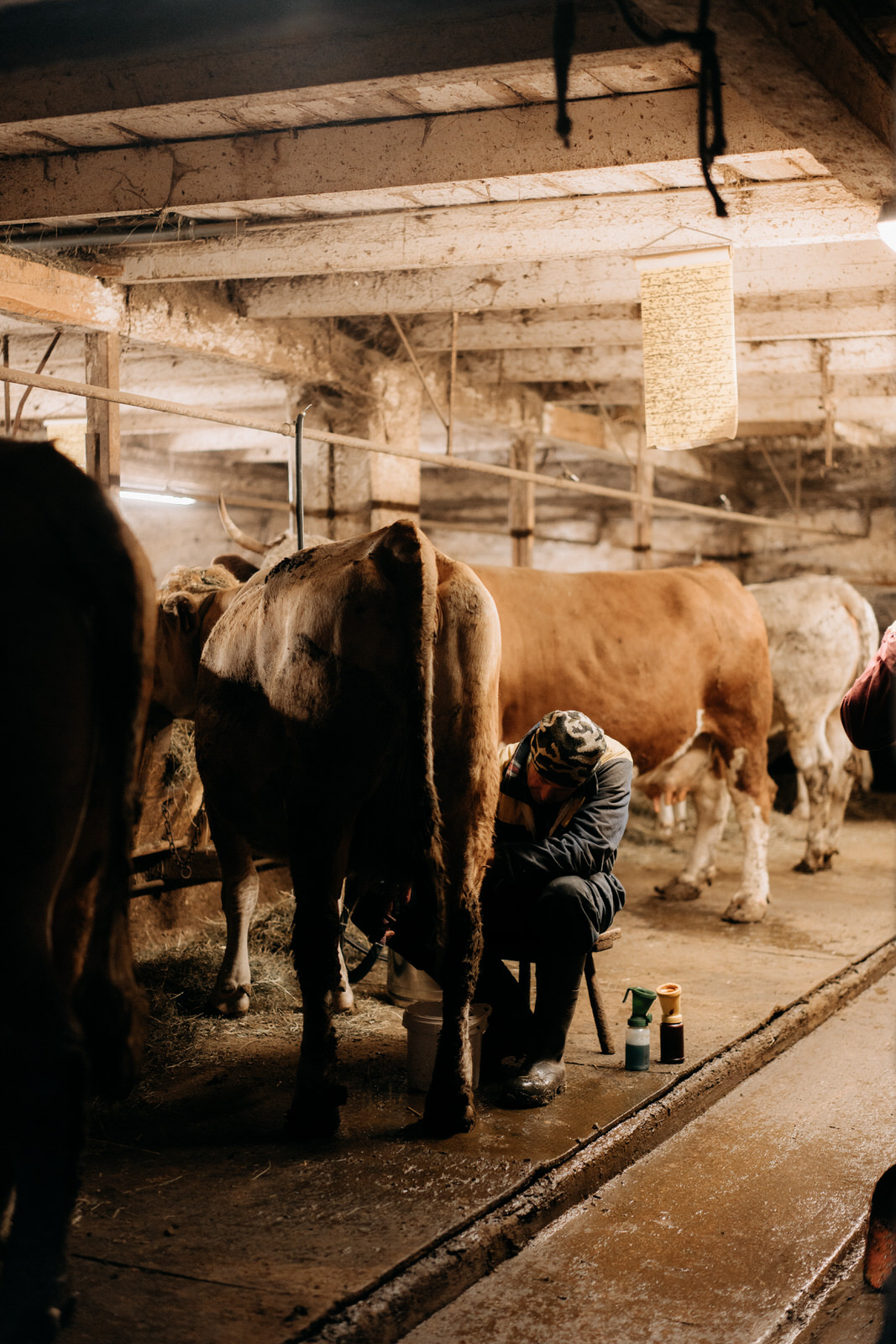
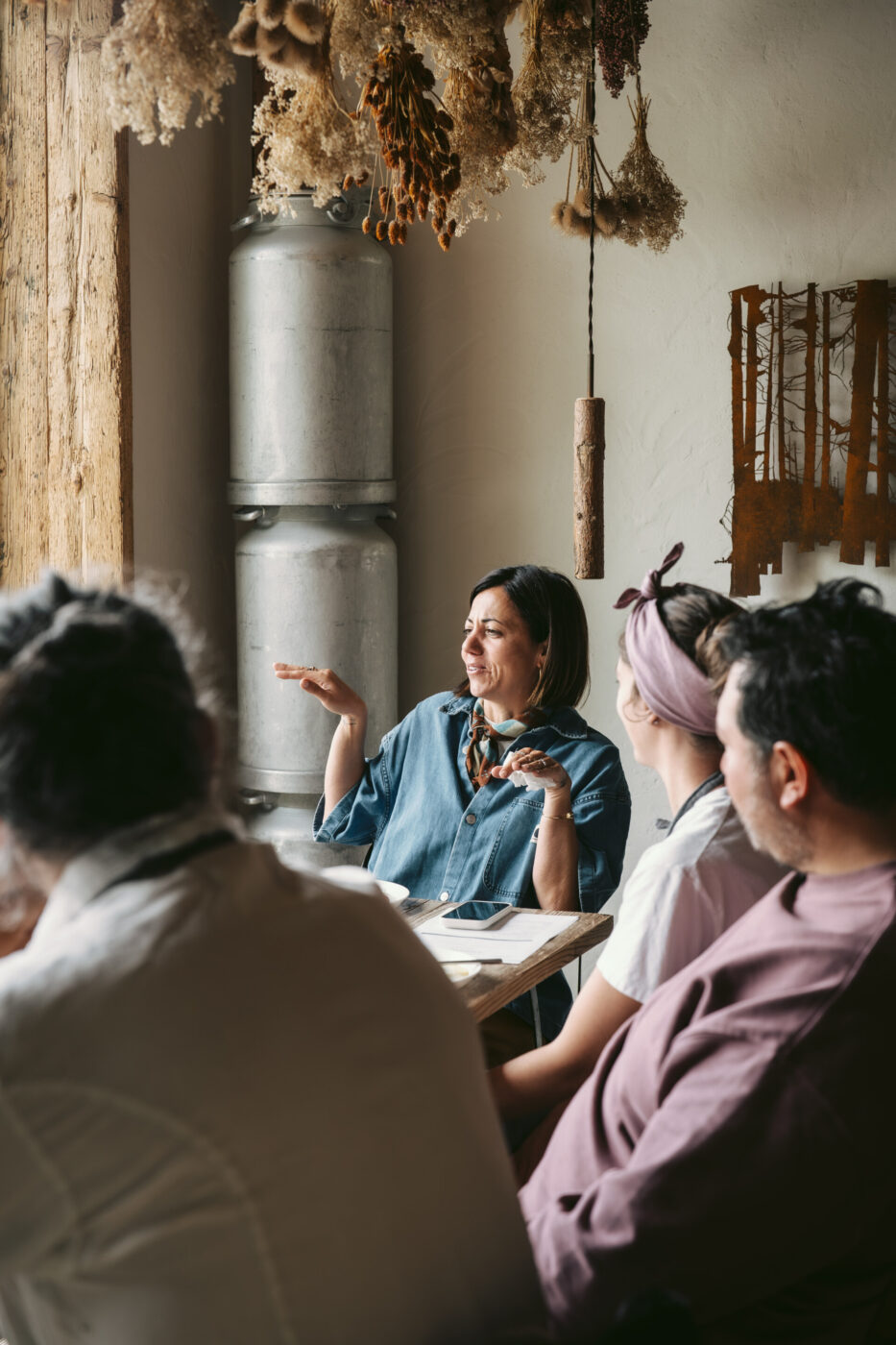
If Riccardo is the hands of San Brite, Ludovica is its voice — the steady rhythm behind it all. In the dining room, she’s a study in controlled grace: dark hair pulled back, eyes that miss nothing, moving between tables with the practiced ease of someone who understands that hospitality is choreography. She grew up in Bologna, in what she calls a “typical Italian family”: father, mother, three daughters, always together, always talking.
When she met Riccardo, she was shocked to find a family that didn’t eat together. “For me it was a trauma,” she laughs. “At home, we all sat down together — always.” Slowly, she remade that rhythm. “I asked him to meet me halfway,” she says. “And now, we have our table.”
Eighteen years later, the table has grown: the family she was born into, the one she built with Riccardo and their daughters, and the one they’ve made here, in the kitchen. “We spend so much time together,” she says, “that we also talk nonsense — and that’s important.”
Devi faticare are words that recur in every conversation with Ludovica. “When you climb a mountain,” she says, “you turn and there is always another curve, another slope. But when you reach the top, it’s a spectacle you could never see without fatigue.” She and Riccardo have worked side by side, rarely stopping. Yet now, at forty, they finally sense what she calls il raccolto — the harvest. “Our equilibrium is arriving now,” she says. “We can begin to breathe.”
Her philosophy extends to the team. “When we hire,” she explains, “we look for valore umano. People who have a sense of family – who’ve played team sports, who understand what it means to share.” Experience matters less than empathy. “If someone knows how to care,” she says, “they can learn how to cook.”
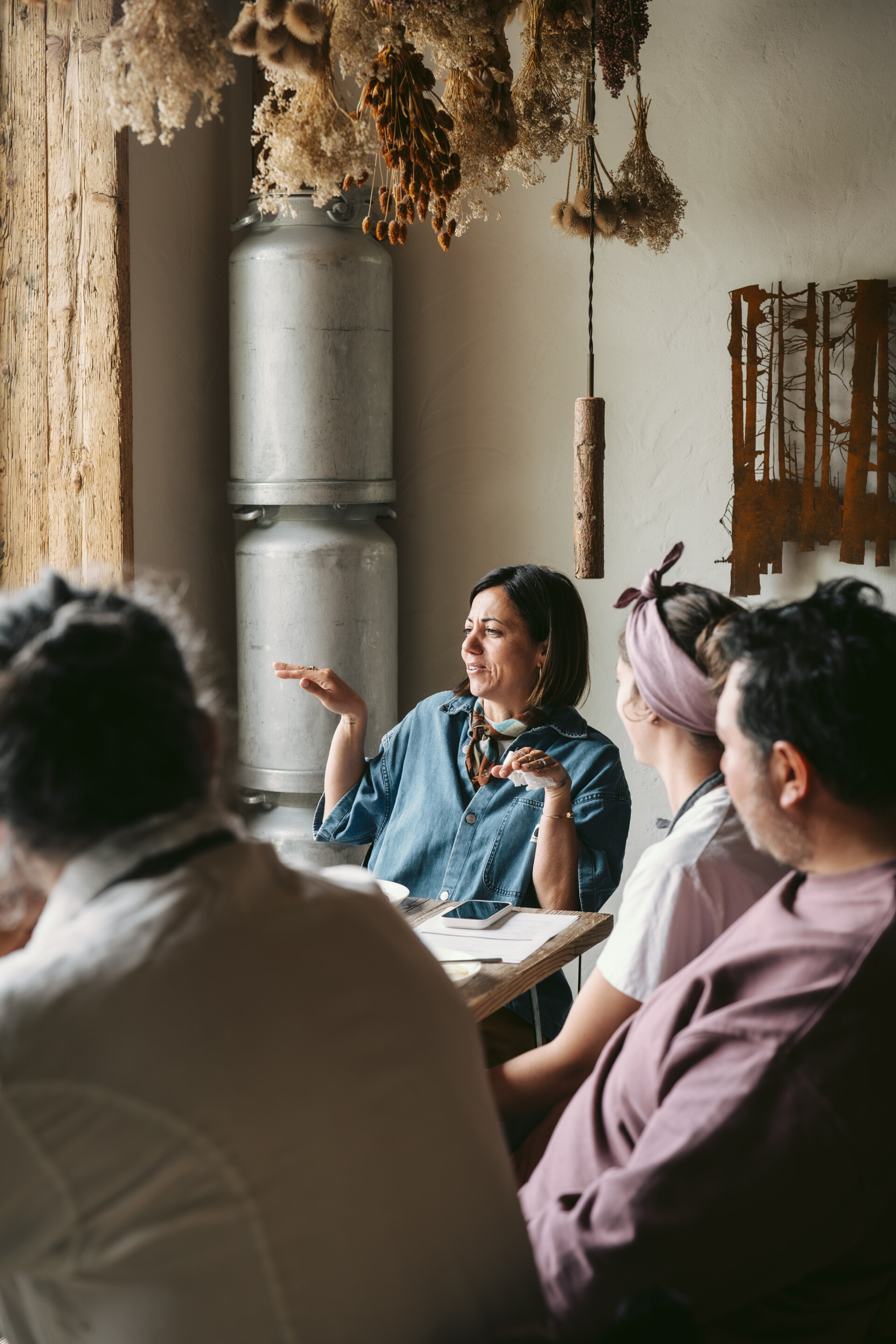
Owner Ludovica Gaspari
By noon, the table has found its rhythm — that particular music of a meal in full flow. The sun climbs high and bright over the Dolomites, shadows shrinking beneath its glare.
Ludovico the gardener is telling a story about a chamois he saw this morning, gesturing with his fork, garlic oil on his chin. Someone interrupts to argue about the best trail to Rifugio Scoiattoli. Someone else is already tucking into seconds, and now there are complaints, good-natured but loud, that Simone didn’t make enough.
“Simone! Ancora!”
“È un piatto povero,” Simone says, “ma forte.” A poor dish, but strong. “Il pranzo staff deve essere migliore di quello che facciamo per i clienti,” he says quietly — the staff meal should be better than what we make for our guests.
“In August,” Simone continues, “when we’re slammed, there’s no time for this. You eat in shifts. But here, when the season cools — there’s time to sit, to hear what’s going on with someone. If they’re tired, if something’s bothering them at home, if they’re happy. This is when you catch those things.”
Slowly, the table begins to empty. Not all at once, but in ones and twos. The cheesemakers first, back to the dairy. The cooks drift toward the kitchen, where prep for lunch service has already begun — walkers are arriving, hungry from sunrise hikes planned to bring them here. Ludovico disappears into the garden. On the shaded terrace upstairs, Riccardo’s father Flavio watches. He’s been there the whole time, eating alone before returning to work.
Simone stays at the table a moment longer. He can hear the kitchen starting up again behind him — knives on boards, water running, someone asking where the parsley went. The mountains stand, indifferent and eternal, but something has shifted here, at the table. The day has been fed and shaped by this simple ritual.
He picks up the pan, glistening with the memory of oil, and heads back inside.
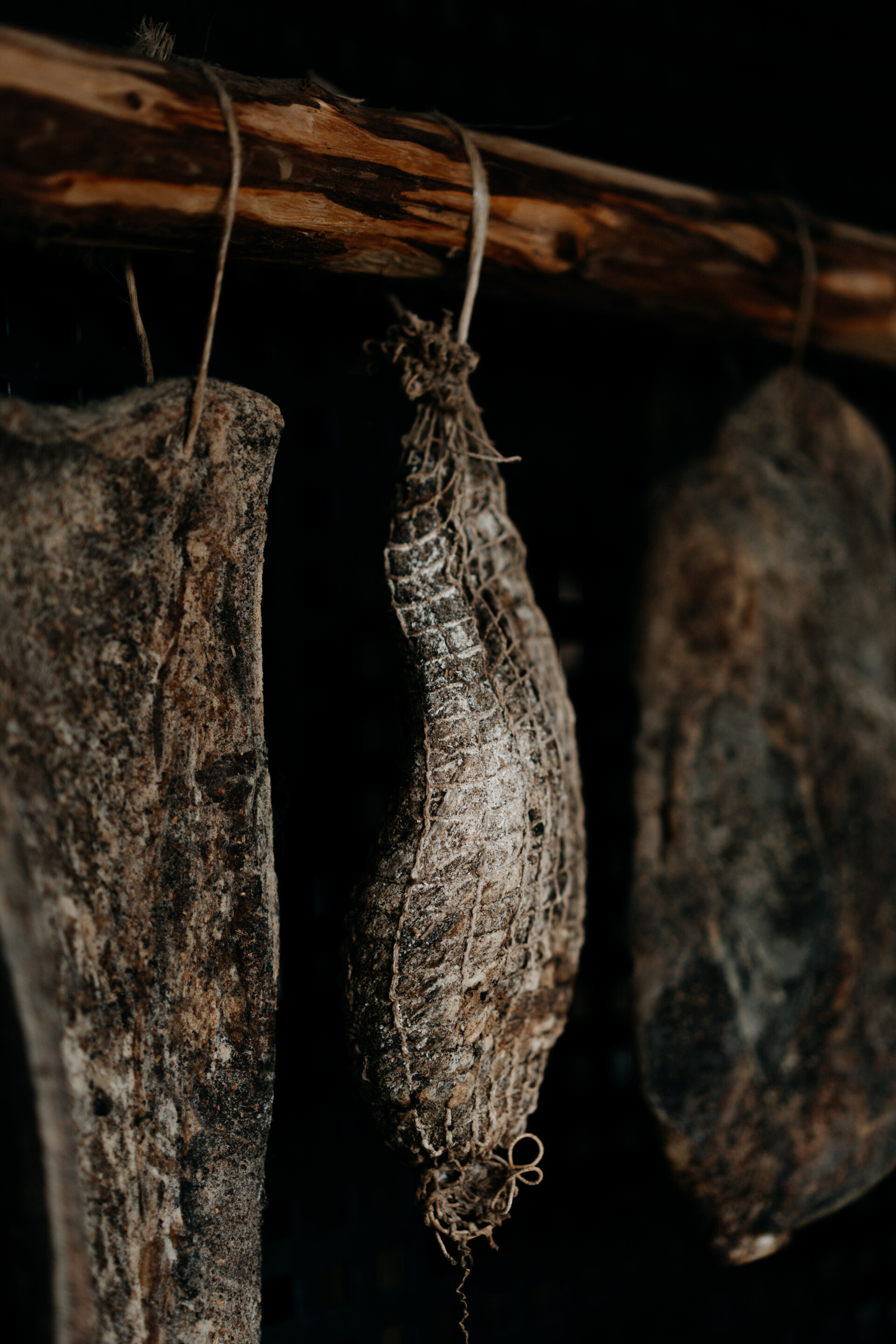
Up here at El Brite, family means many things at once. There’s the family of blood — Riccardo, Ludovica, and their daughters, Cecilia and Clementina — and then there’s the family of the mountain: the ones who cook, serve, milk, plough, forage and pour wine. They eat together, hike at sunrise, play padel after service, laugh, argue, and start again.
Something strong runs in this family. You can taste it in the butter, see it in the faces at the table, hear it in the clang of pots and the rhythm of the farm. It’s not just blood, or work, or food — it’s the belief that family isn’t an idea but a practice. Something you make every day, with your hands, at a table, in the mountains, together. Si crea famiglia. And then, somehow, the family creates you.
Recipe:
Spaghetti Aglio, Olio e Peperoncino
As Giuseppe Marotta once wrote, “Swift and cautious, simple yet at the same time contemplative, an improvisation and a maxim: this is the food for someone who has laboured from morning till night.”
Ingredients (serves 4):
- 400g spaghetti
- 4-5 cloves garlic
- 200ml extra virgin olive oil
- 1-2 fresh red chili peppers (or to taste)
- Handful fresh flat-leaf parsley
- Salt for pasta water
- Optional: 2-3 anchovy fillets
Method: Crush the garlic by hand and let it soften in a generous splash of olive oil over low heat. Never let it burn – burnt garlic turns bitter. Add chili, allow it to colour, then turn off the flame. Boil the spaghetti until just shy of al dente – about four minutes – then finish it directly in the pan, risottando it in the oil and a splash of its own cooking water until it glistens. Add chopped parsley only at the end so it keeps its colour. Taste. Adjust. Serve to laughter, to noise, to family.