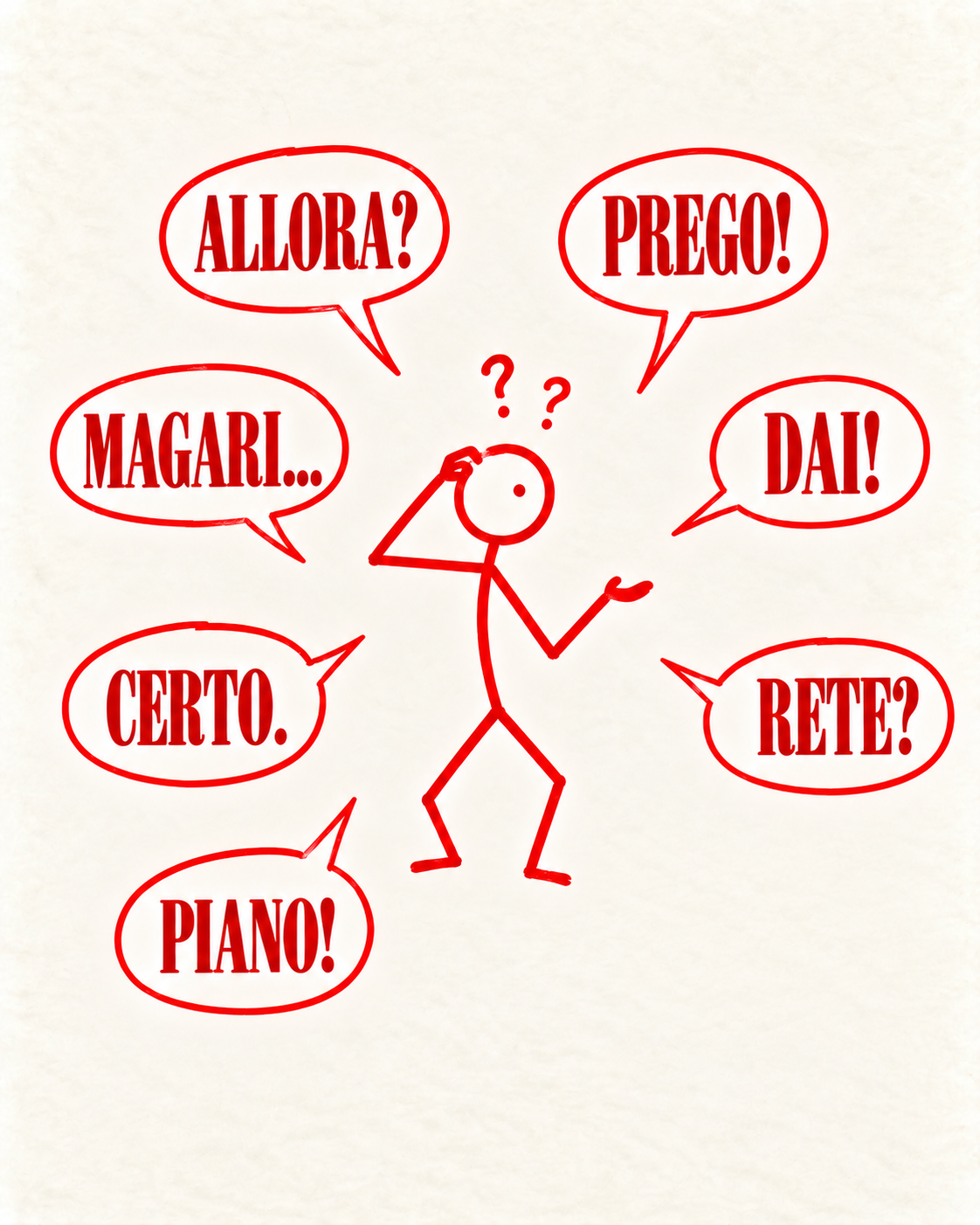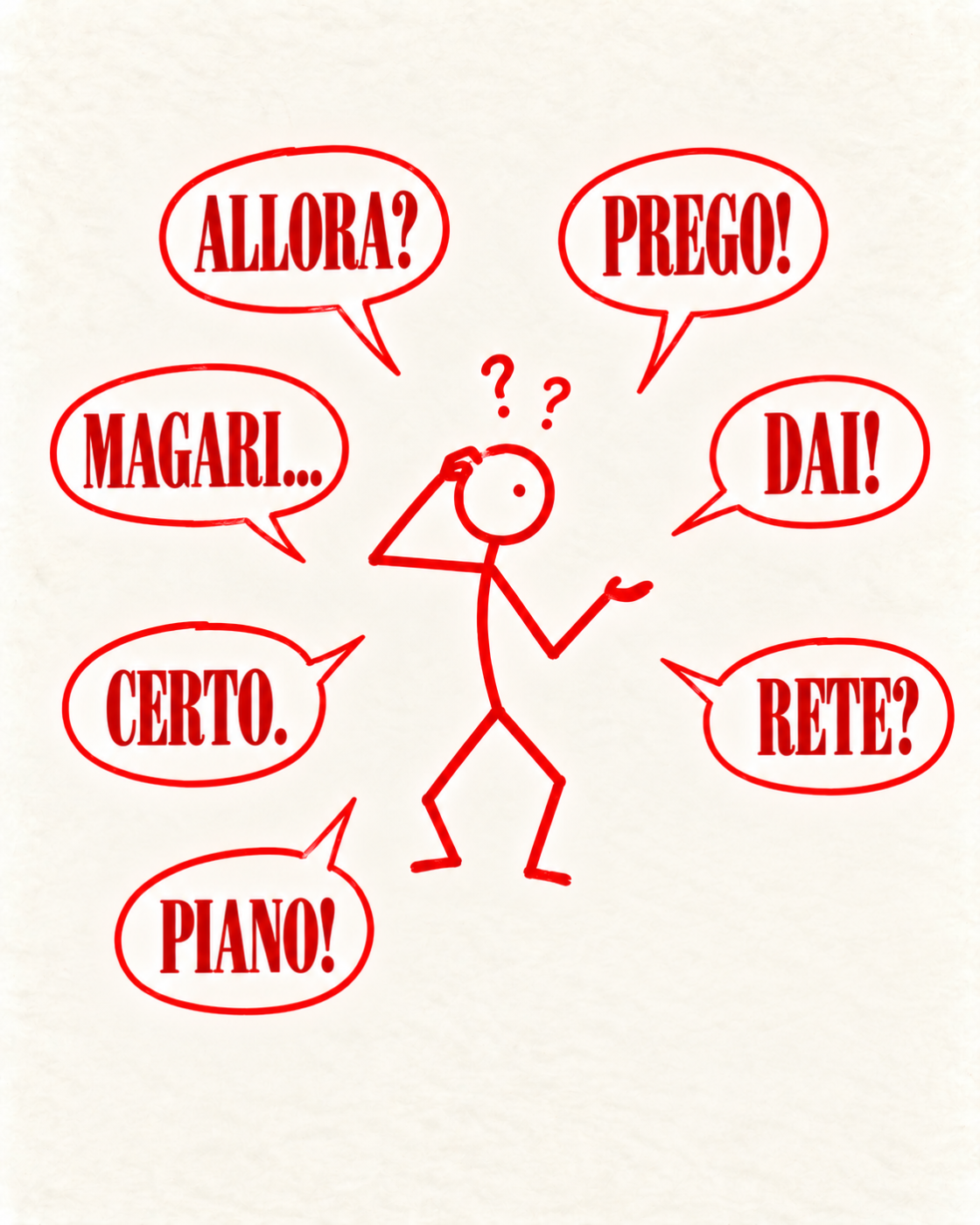
Some Italian words have a perfectly respectable dictionary definition. Then an Italian says them out loud, and all bets are off. Prego can welcome you into a room or ask you to repeat yourself. Magari can express hope, doubt, or a dream you know is unlikely to come true. And allora can mean just about anything, depending on how long you stretch it out.
The trick isn’t memorizing more vocabulary. It’s understanding that in Italian, how you say something can matter just as much as what you say. Here are eight words that do a suspicious amount of work.
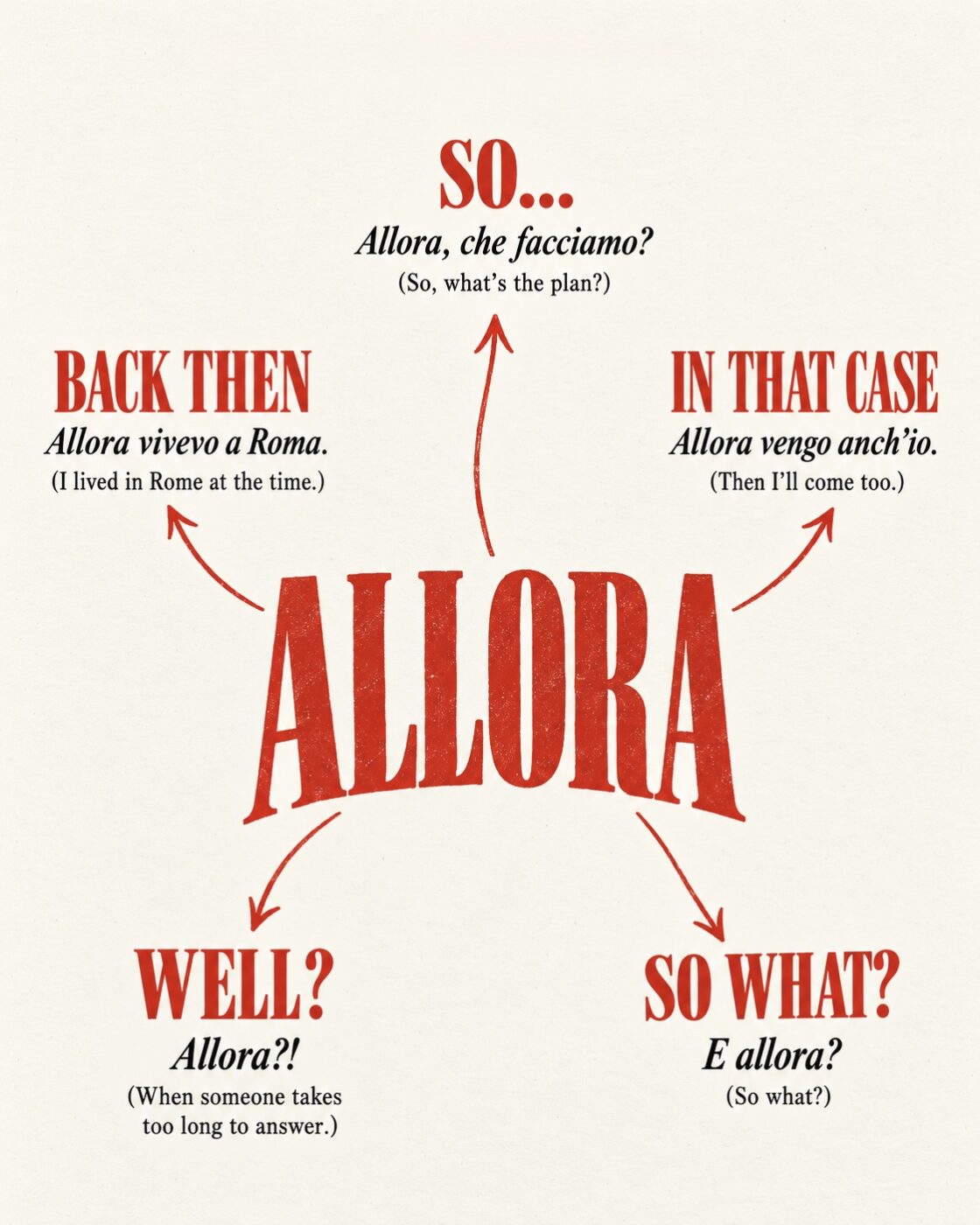
1. Allora
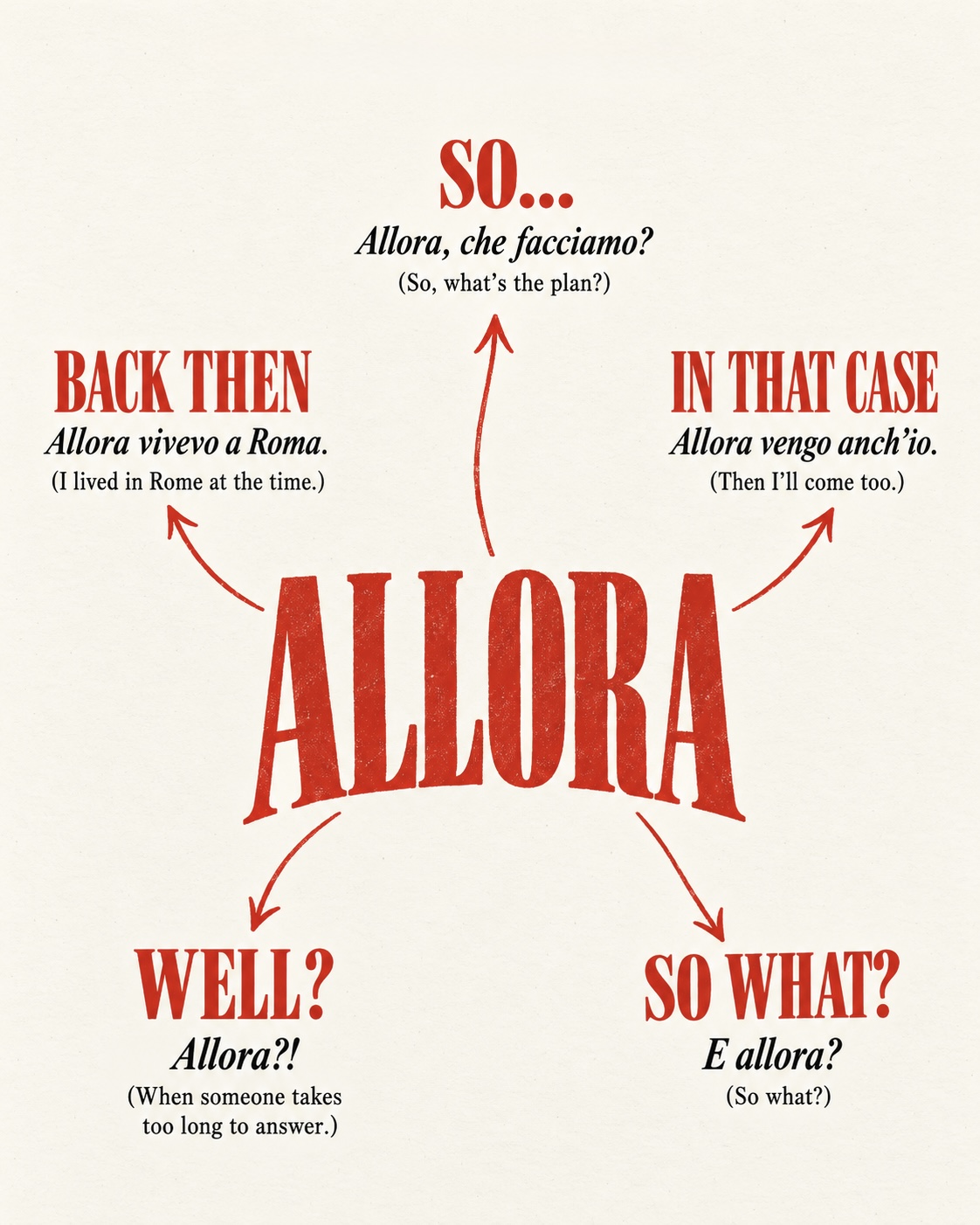
The word that starts conversations, fills awkward silences, and occasionally ends arguments. You could probably get through an entire Italian dinner using nothing but allora and the appropriate facial expressions.
- “So…” Allora, che facciamo? (So, what’s the plan?)
- “Back then”: Allora vivevo a Roma. (I lived in Rome at the time.)
- “In that case”: Allora vengo anch’io. (Then I’ll come too.)
- “Well?”: Allora?! (For when someone is taking a little too long to answer.)
- “So what?”: E allora? (And your point is?)
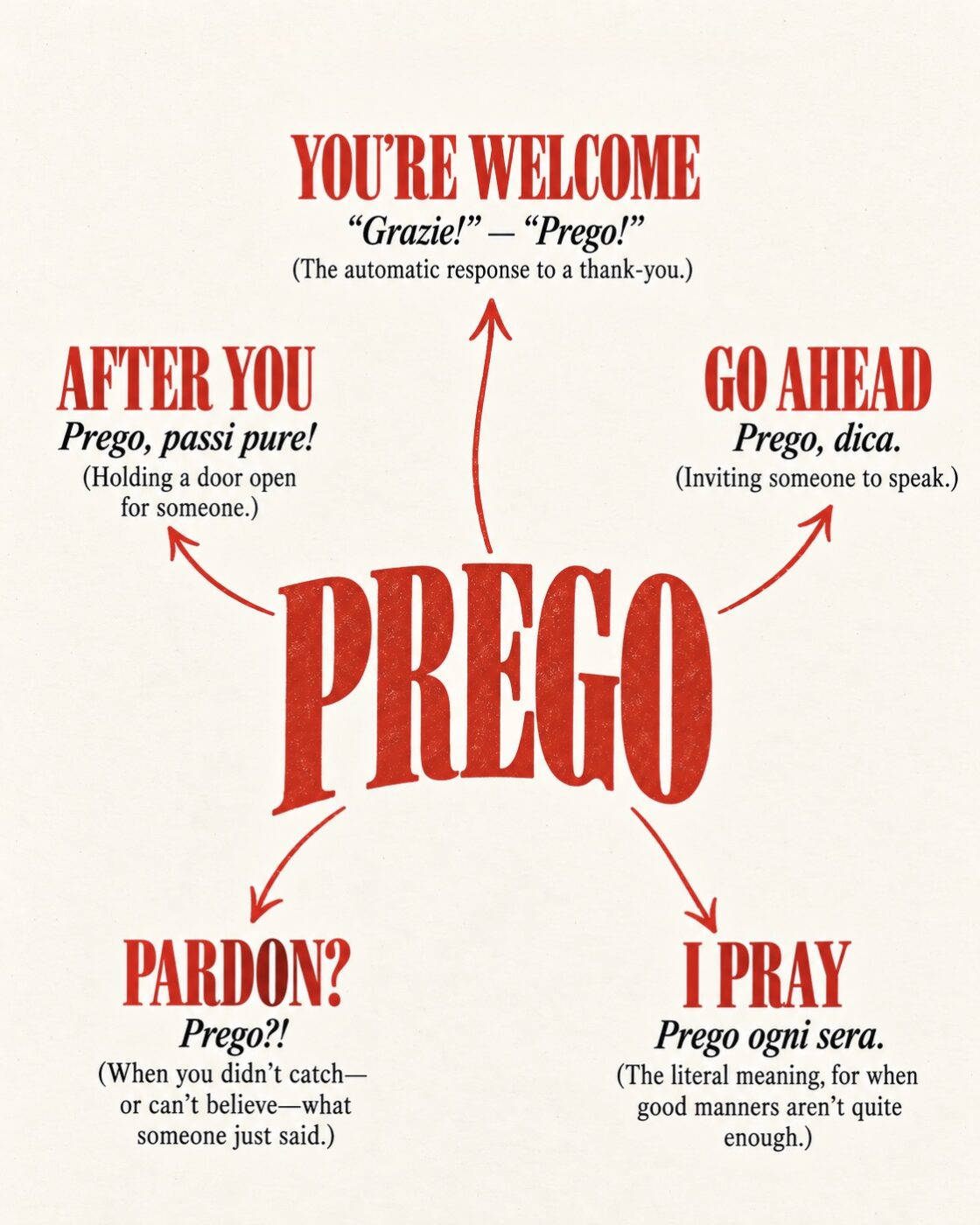
2. Prego
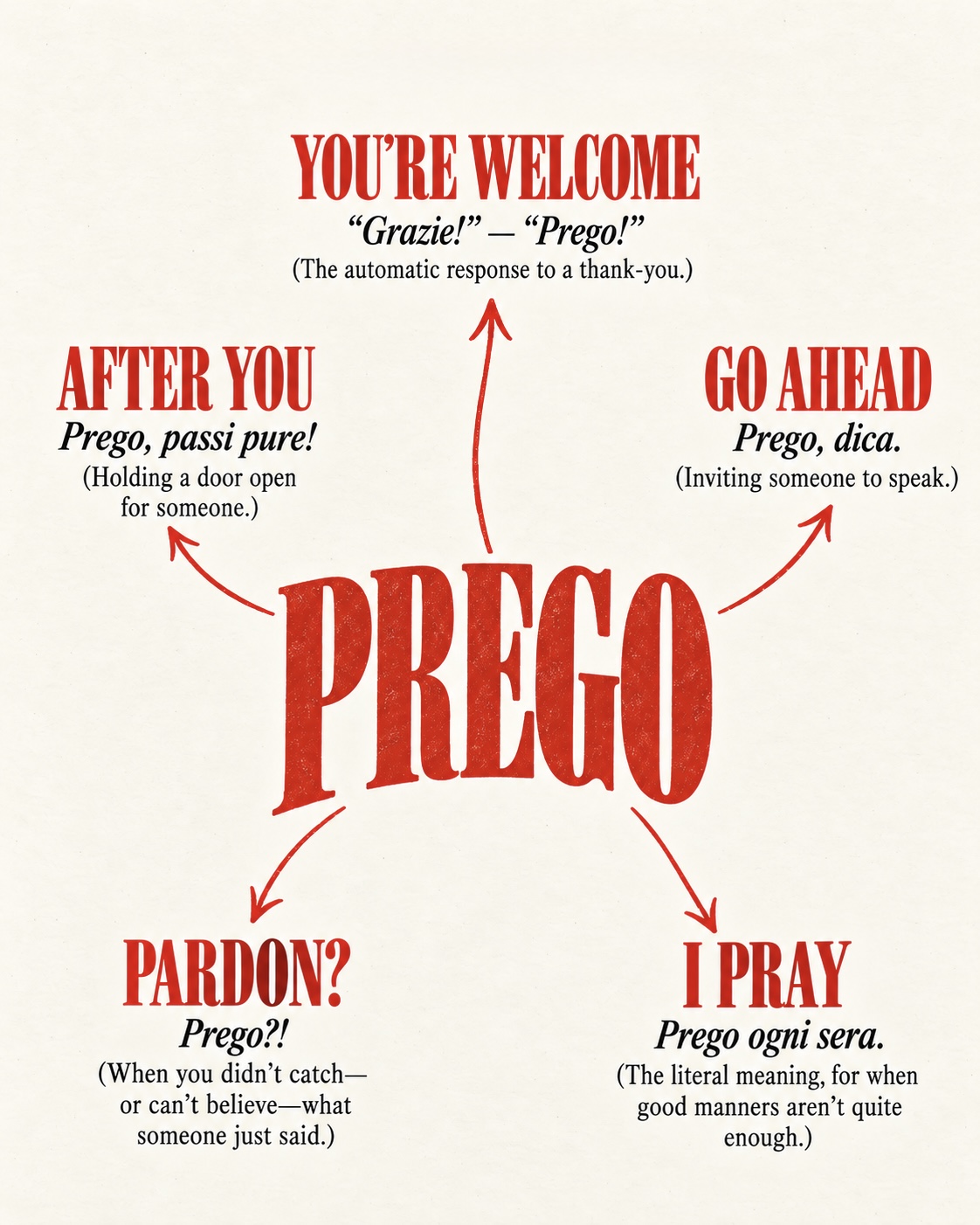
One word to handle most of the country’s manners. Depending on the intonation, it can also signal that the manners are over.
- “You’re welcome”: “Grazie!” — “Prego!” (The automatic response to a thank-you.)
- “After you”: Prego, passi pure! (Holding a door open for someone.)
- “Go ahead”: Prego, dica. (Inviting someone to speak.)
- “Pardon?”: Prego?! (With a raised eyebrow, when you didn’t catch—or can’t believe—what someone just said.)
- “I pray”: Prego ogni sera. (The literal meaning, for when good manners aren’t quite enough.)
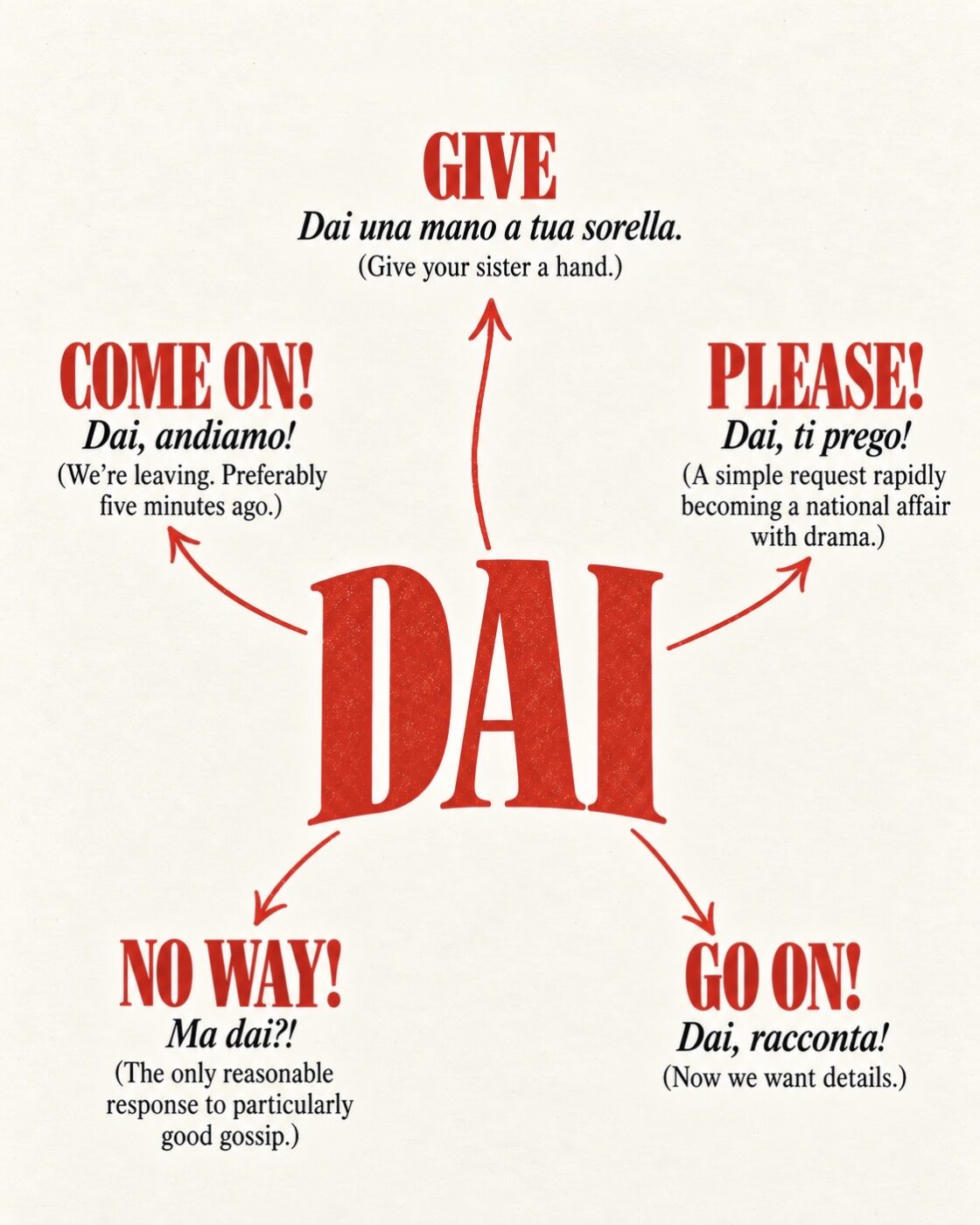
3. Dai
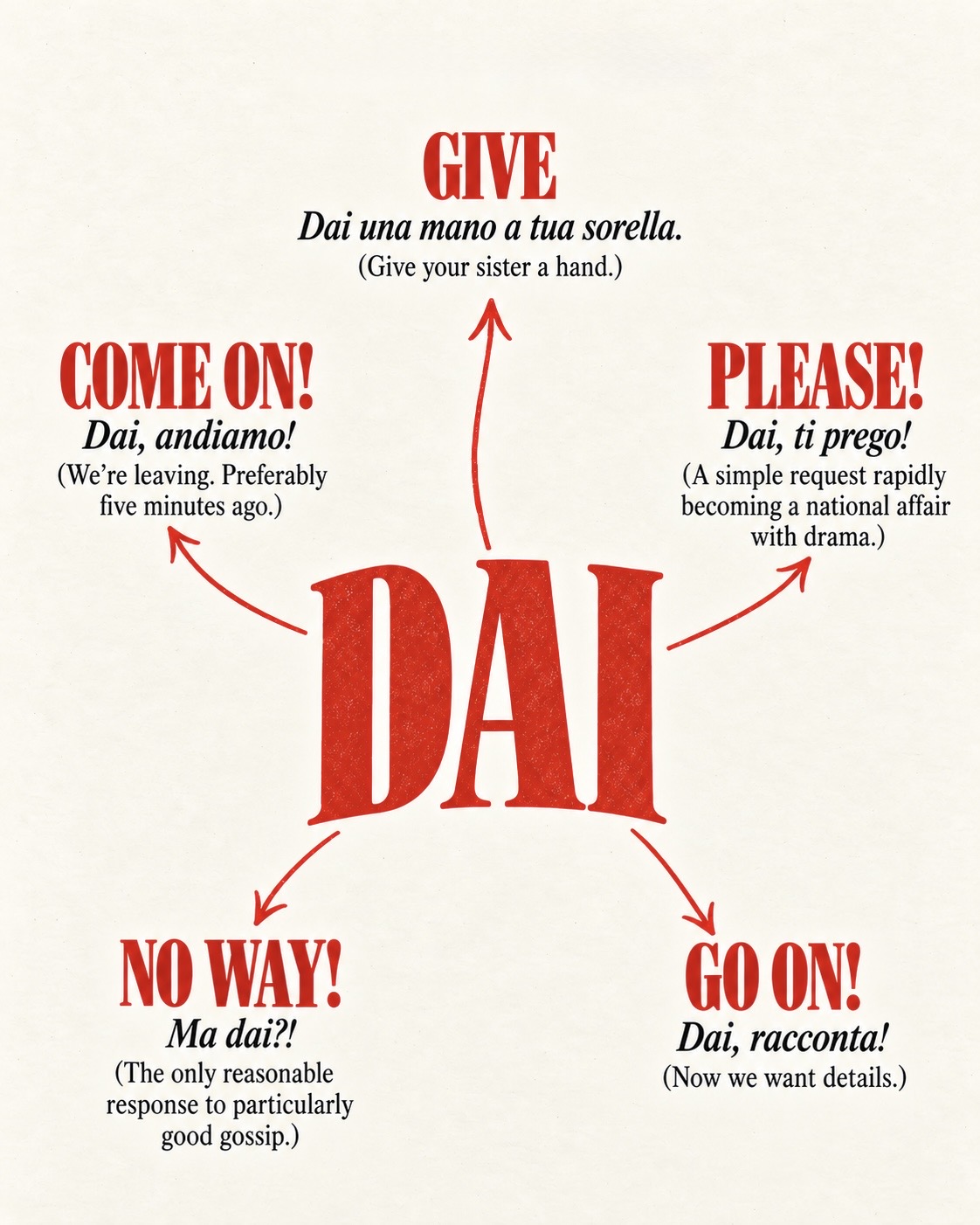
Technically, a form of the verb dare, meaning “to give.” In practice, it covers everything from encouragement to impatience, pleading, and complete disbelief.
- “Give”: Dai una mano a tua sorella. (Give your sister a hand.)
- “Come on!”: Dai, andiamo! (We’re leaving. Preferably five minutes ago.)
- “Please!”: Dai, ti prego! (A simple request rapidly becoming a national affair with drama.)
- “No way!”: Ma dai?! (The only reasonable response to particularly good gossip.)
- “Go on!”: Dai, racconta! (Now we want details.)
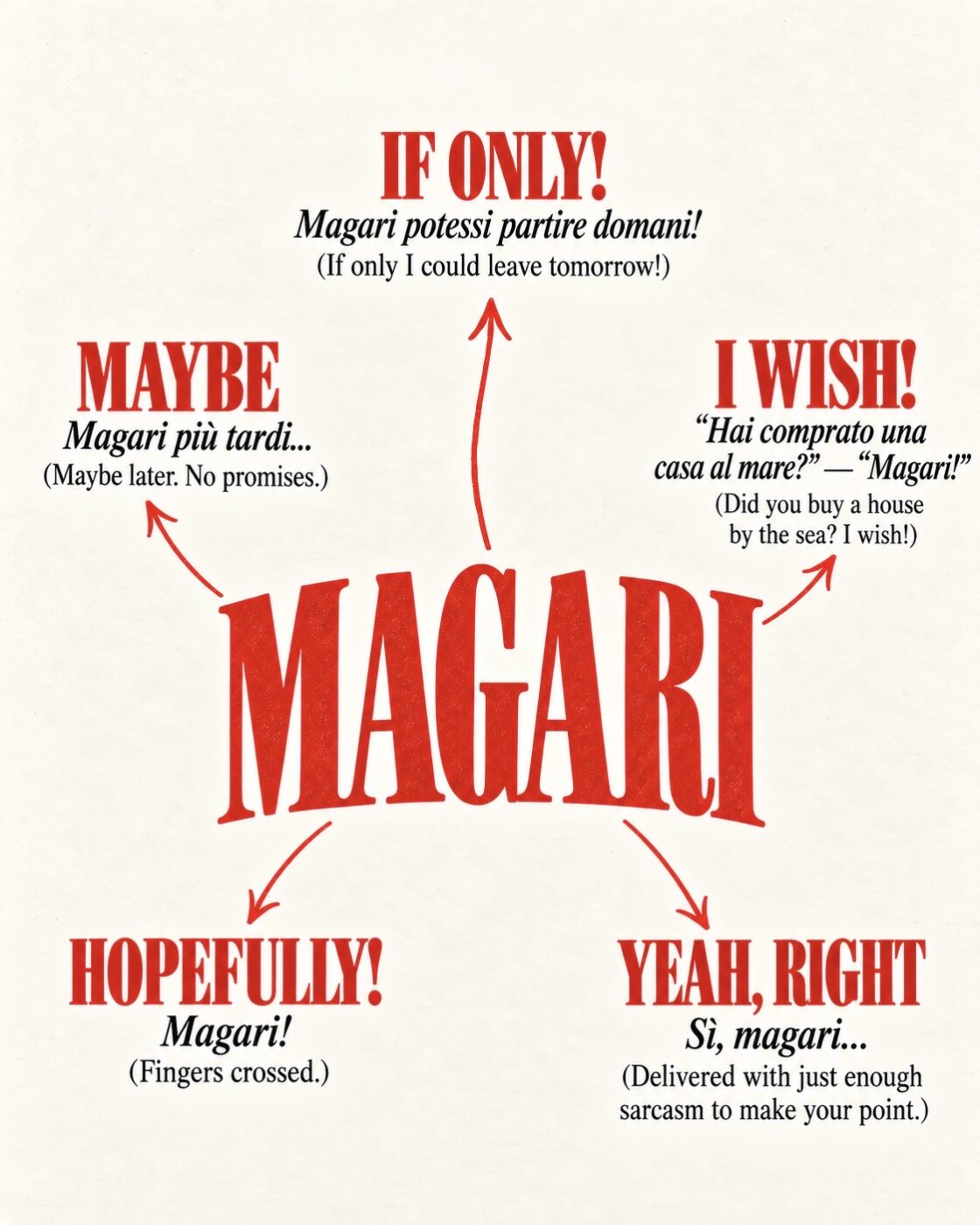
4. Magari
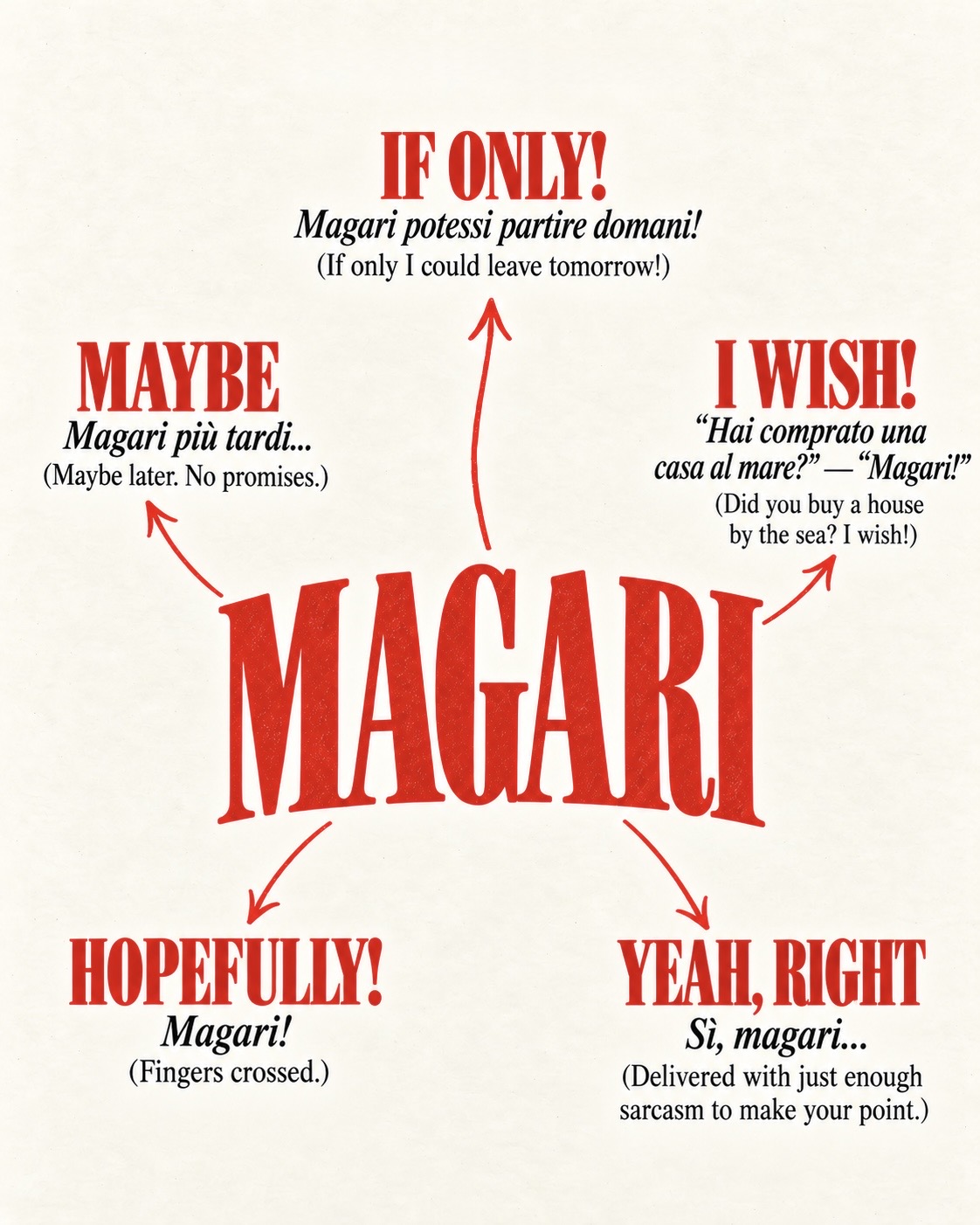
Possibly the most emotionally versatile word in Italian. It allows hope, uncertainty, and disappointment to coexist in three syllables.
- “If only!”: Magari potessi partire domani! (If only I could leave tomorrow!)
- “Maybe”: Magari più tardi… (Maybe later. No promises.)
- “I wish!”: “Hai comprato una casa al mare?” — “Magari!” (Did you buy a house by the sea? I wish!)
- “Hopefully!”: Magari! (Fingers crossed.)
- “Yeah, right”: Sì, magari… (Delivered with just enough sarcasm to make your point.)
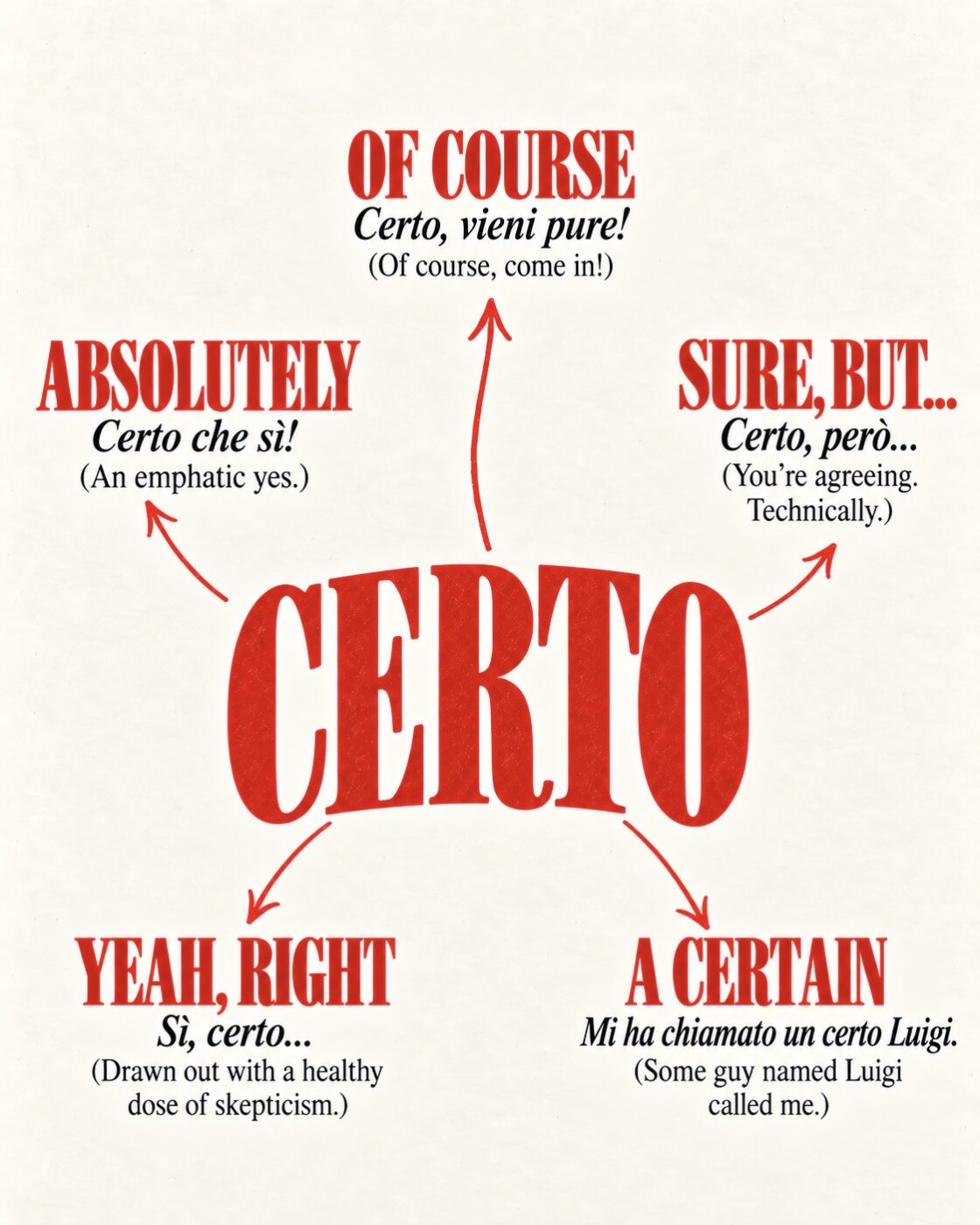
5. Certo
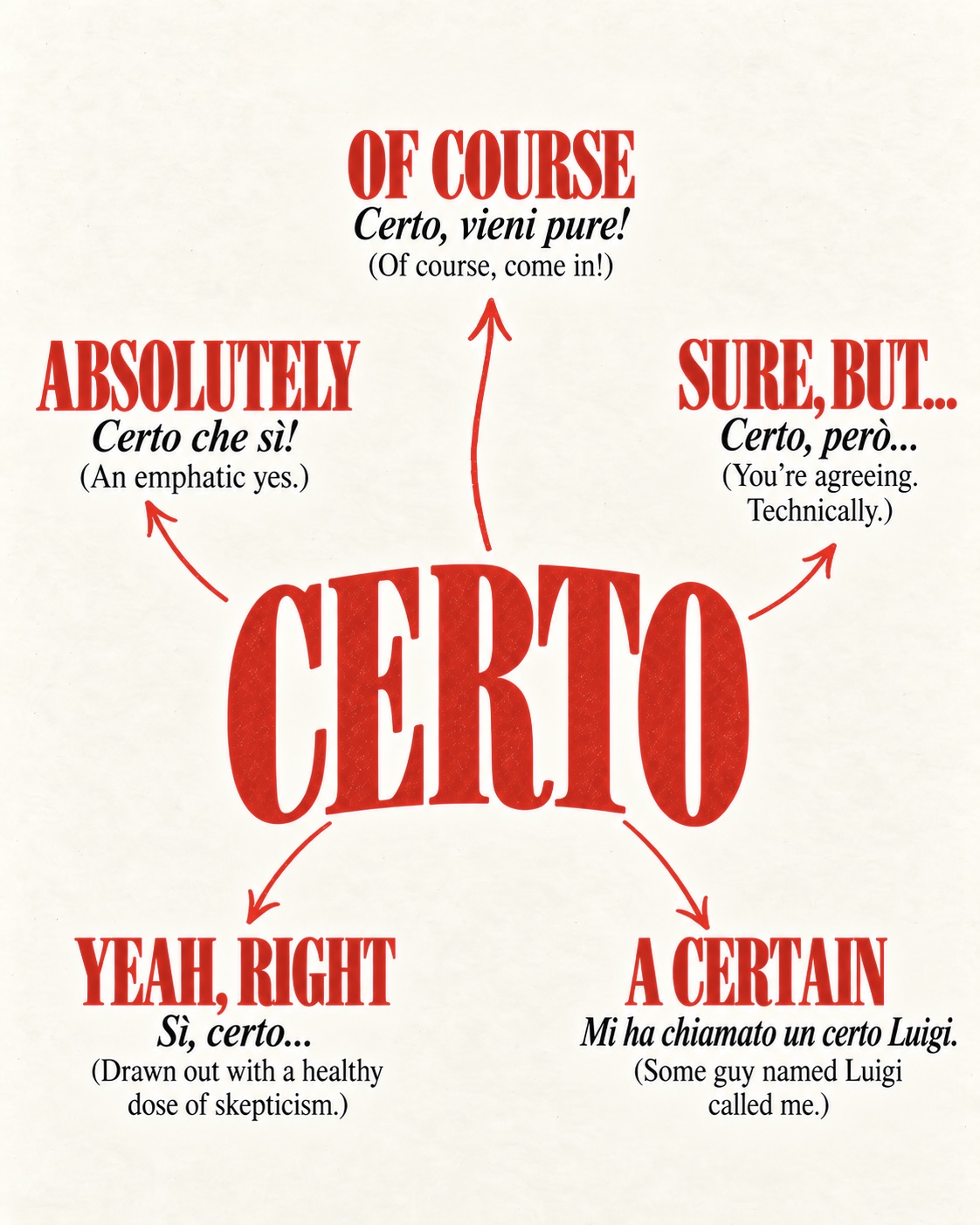
Short, reassuring, and apparently straightforward. Until someone says it with the wrong tone.
- “Of course”: Certo, vieni pure! (Of course, come in!)
- “Absolutely”: Certo che sì! (An emphatic yes.)
- “Sure, but…”: Certo, però… (You’re agreeing. Technically.)
- “Yeah, right”: Sì, certo… (Drawn out with a healthy dose of skepticism.)
- “A certain”: Mi ha chiamato un certo Luigi. (Some guy named Luigi called me.)
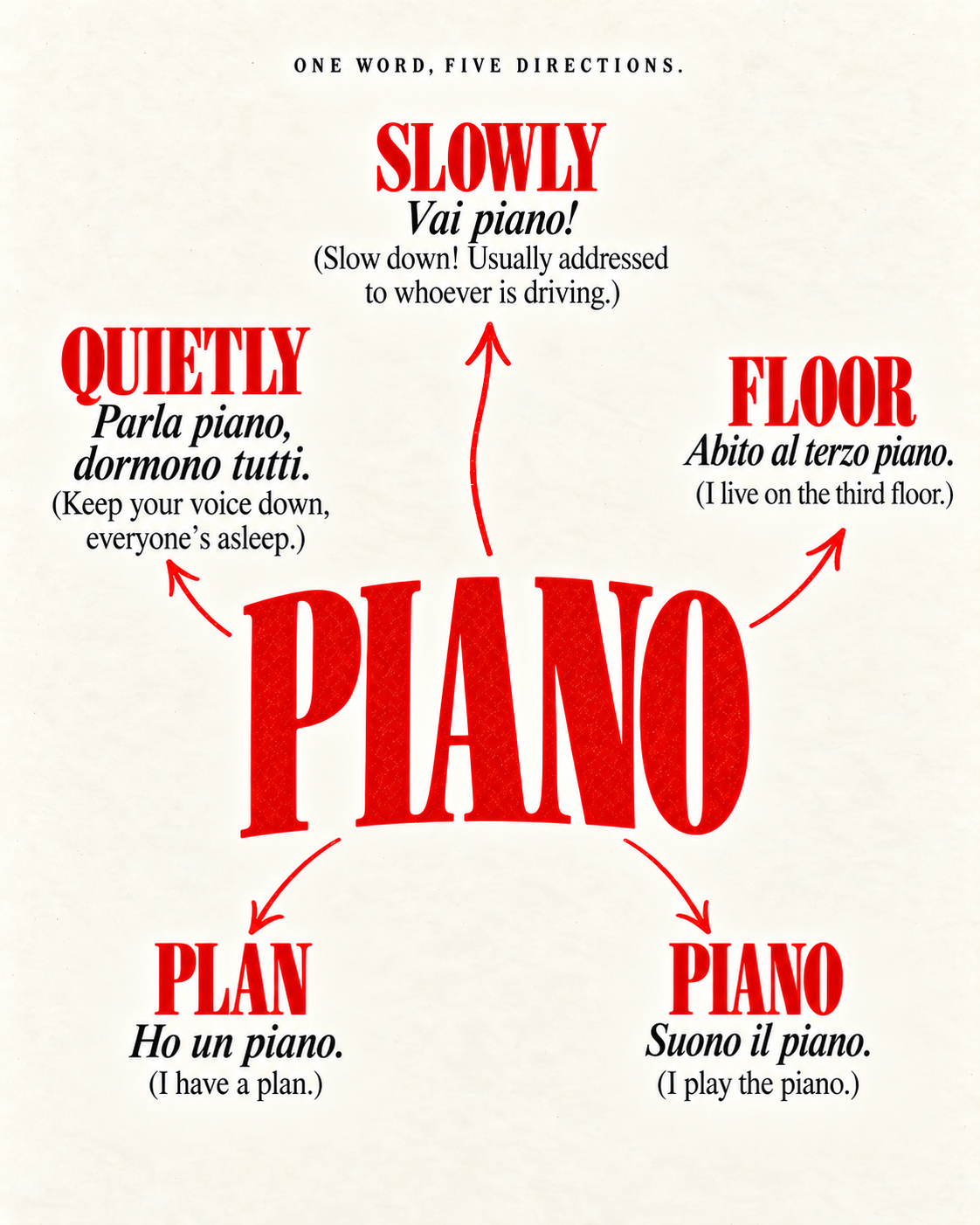
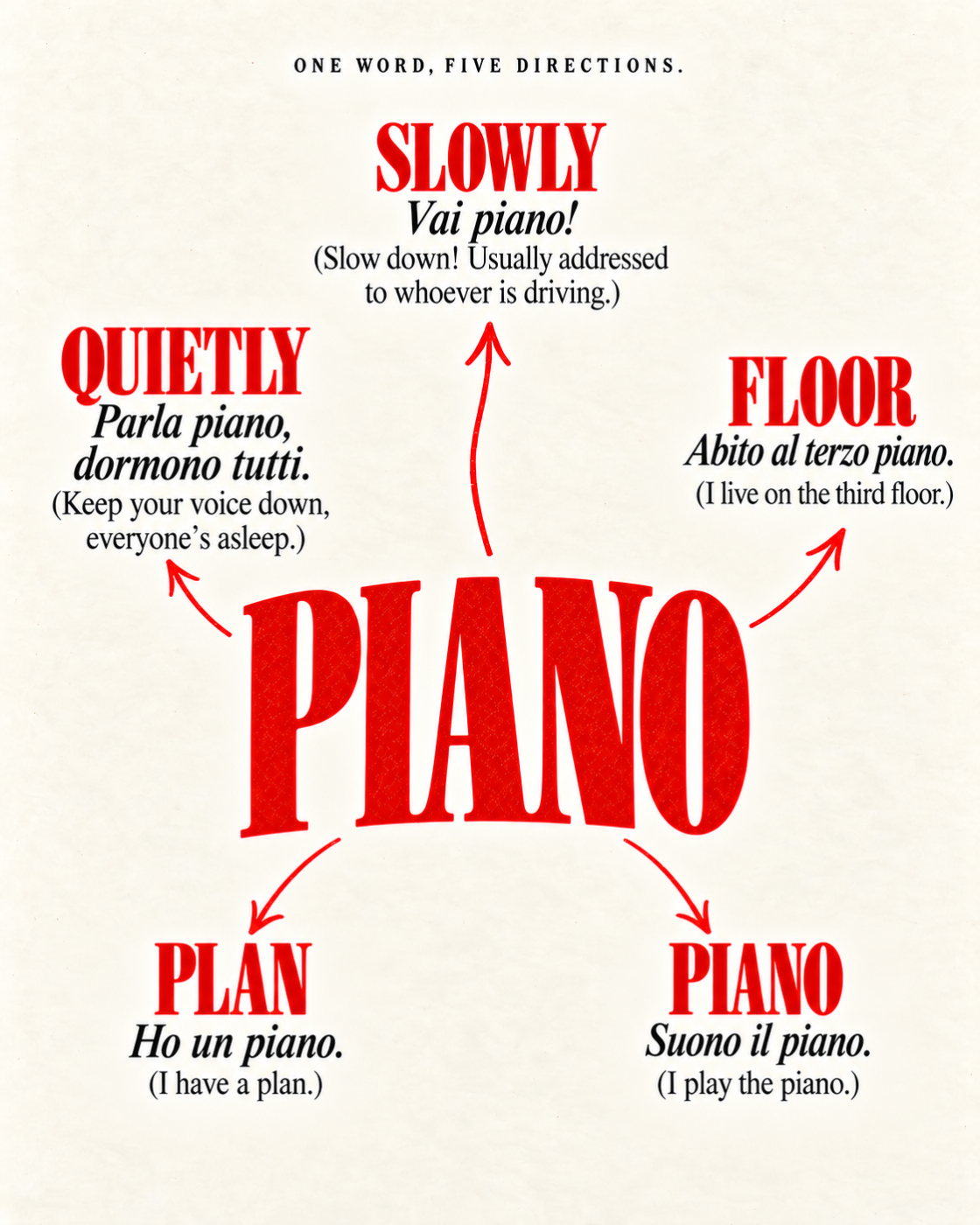
6. Piano
A word equally at home in a concert hall, an apartment building, and the passenger seat of a car. Rather impressive range.
- “Slowly”: Vai piano! (Slow down! Usually addressed to whoever is driving.)
- “Quietly”: Parla piano, dormono tutti. (Keep your voice down, everyone’s asleep.)
- “Floor”: Abito al terzo piano. (I live on the third floor.)
- “Plan”: Ho un piano. (I have a plan.)
- “Piano”: Suono il piano. (I play the piano.)
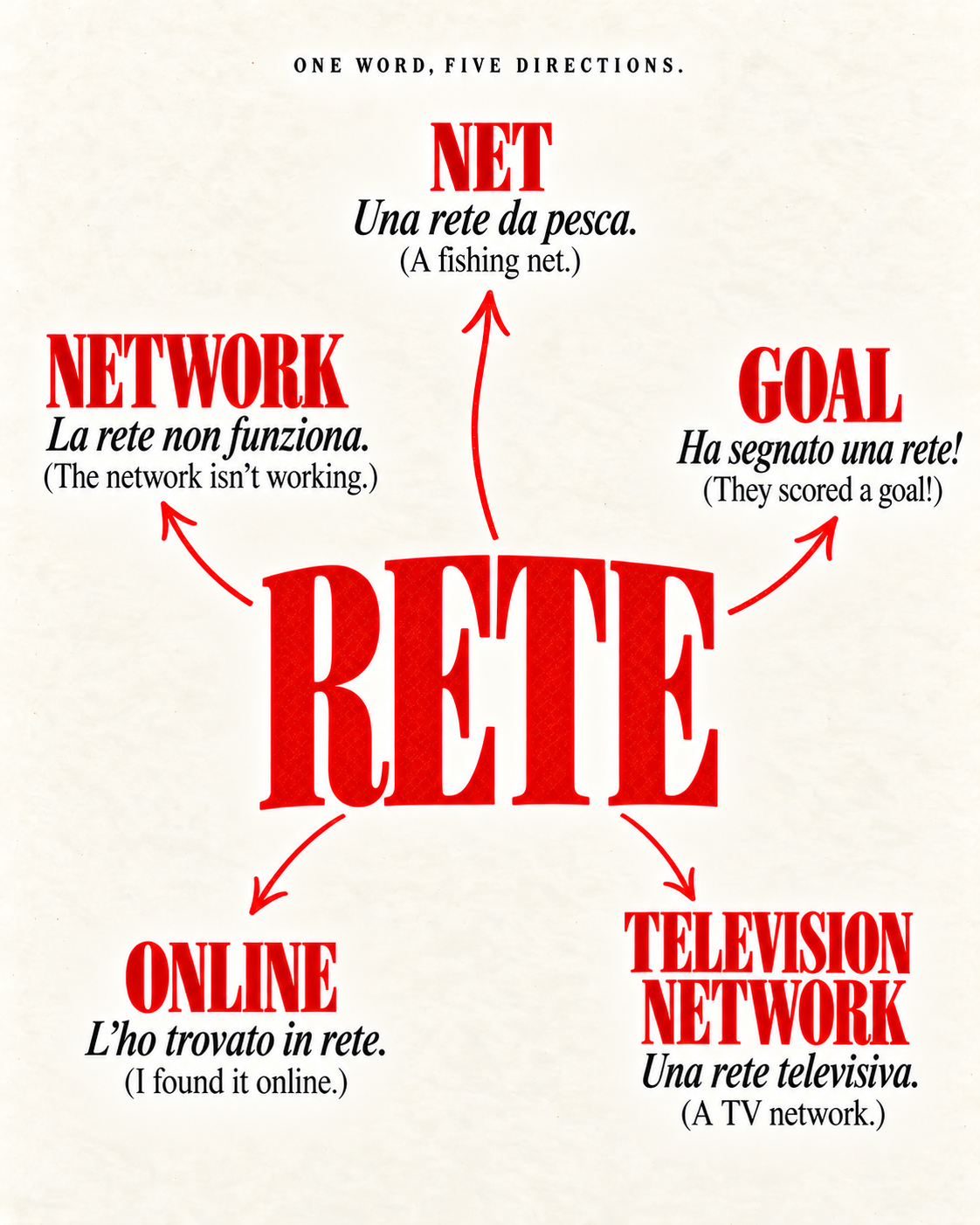
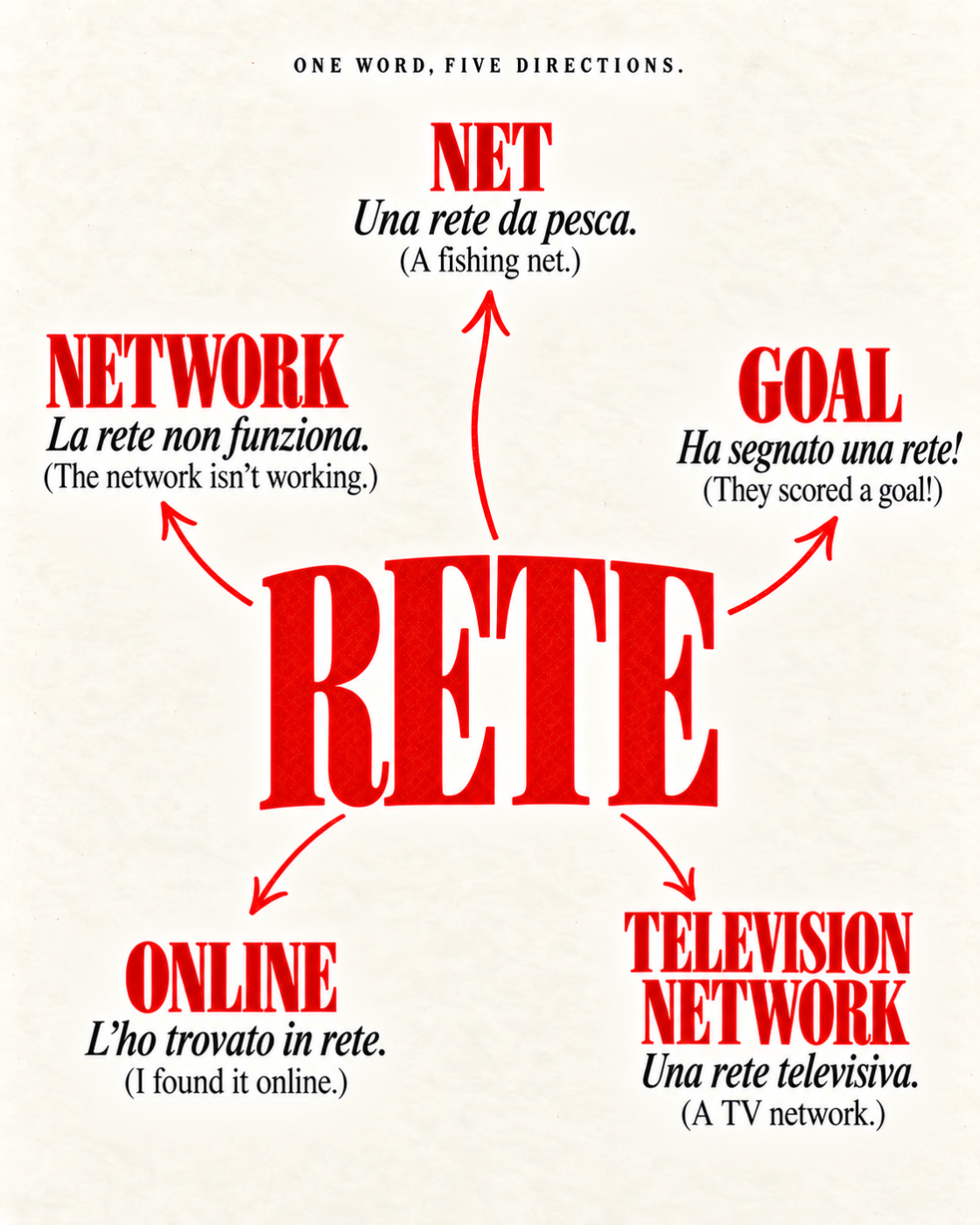
7. Rete
A fisherman, a football commentator, and the person fixing your Wi-Fi all use this word. None of them is talking about quite the same thing.
- “Net”: Una rete da pesca. (A fishing net.)
- “Network”: La rete non funziona. (The network isn’t working.)
- “Goal”: Ha segnato una rete! (They scored a goal!)
- “Online”: L’ho trovato in rete. (I found it online.)
- “Television network”: Una rete televisiva. (A TV network.)
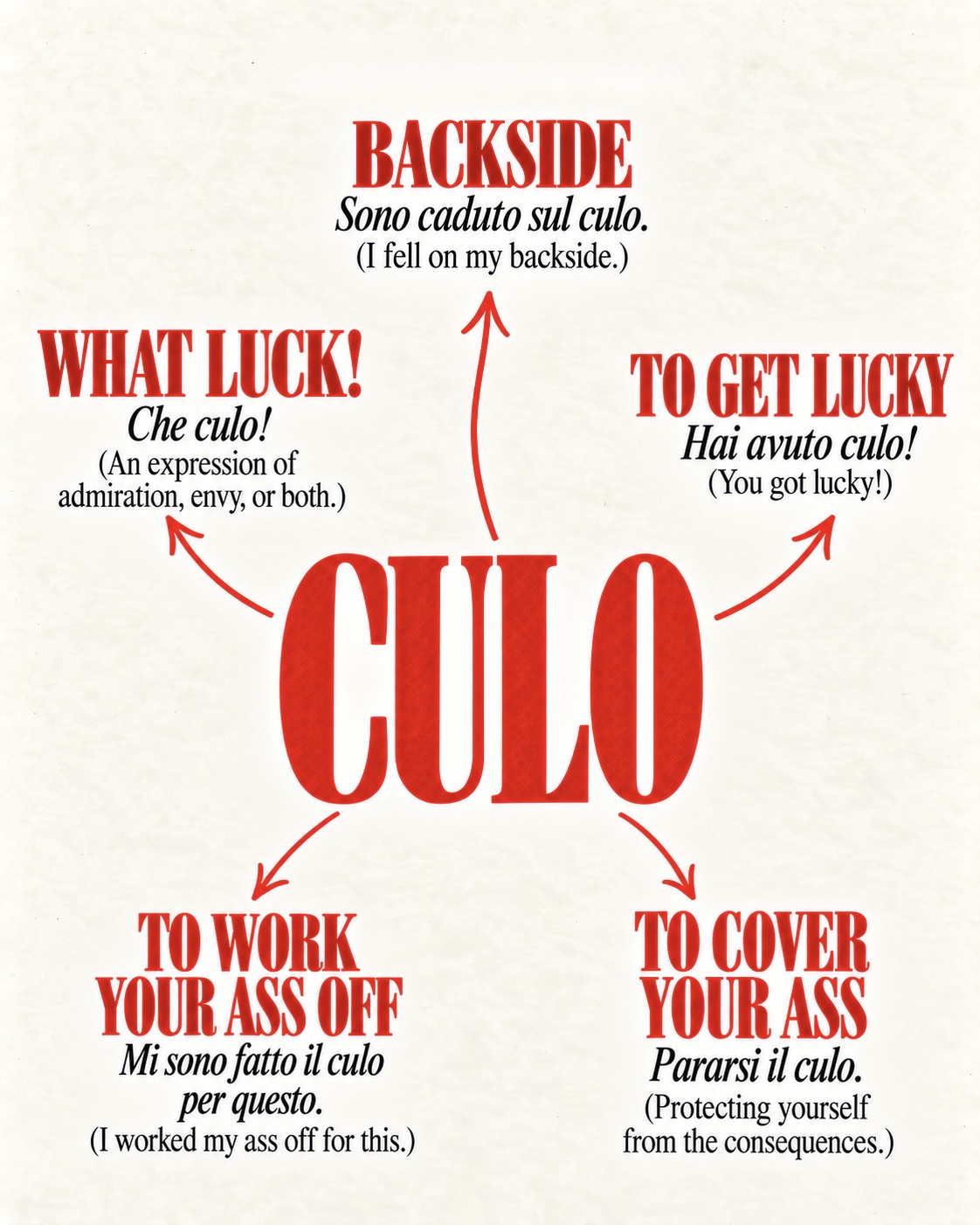
8. Culo
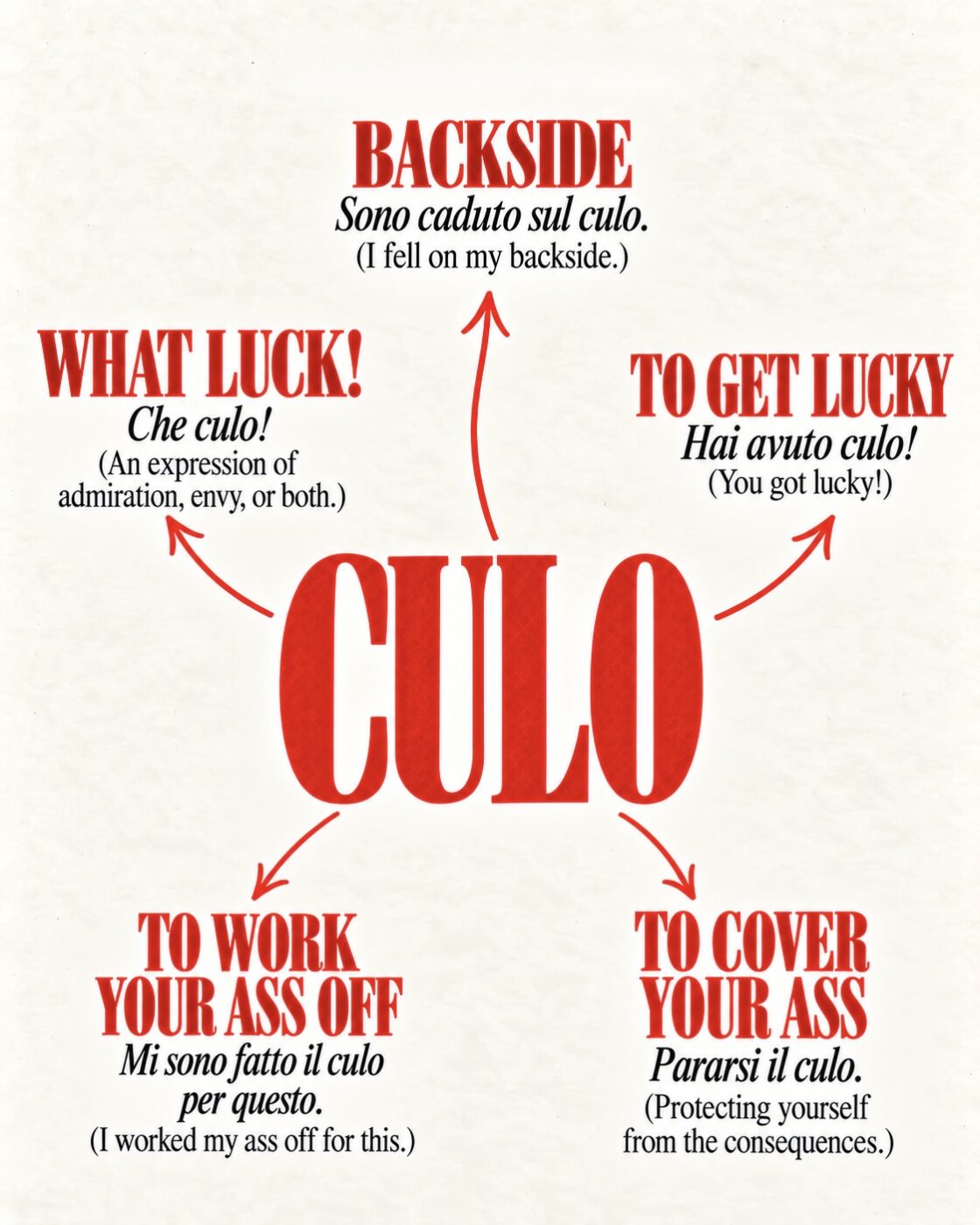
On the subject of body parts, the Italian backside has managed to become synonymous with good fortune, hard work, and occasionally both at once.
- “Backside”: Sono caduto sul culo. (I fell on my backside.)
- “What luck!”: Che culo! (An expression of admiration, envy, or both.)
- “To get lucky”: Hai avuto culo! (You got lucky!)
- “To work your ass off”: Mi sono fatto il culo per questo. (I worked my ass off for this.)
- “To cover your ass”: Pararsi il culo. (Protecting yourself from the consequences.)