Dove tutto è incominciato—Italian for “where it all started”—reads the narrow label beside a square of coarse burlap arranged with terracotta fragments: curved handles, chipped rims, and darkened shreds of pottery unearthed at Cantine Feudo della Sagitta, a 10-hectare family-run winery in Spezzano Albanese, a municipality in Calabria’s province of Cosenza. The wine is made from grapes cultivated in the very soil that once preserved these remnants. But the words resonate with me—perhaps because I started nearby, too. Or, rather, a part of me did.
I’m at the first edition of the Merano Wine Festival Calabria – Essenza del Sud in Cirò, the denomination that introduced me to Calabrese wine more than a decade ago, shortly after I had moved to Italy. Cirò is in the province of Crotone, which, like Cosenza, borders Catanzaro, where my paternal grandparents were born. No matter where I am in Calabria, I always feel as though I’m returning to something. But not in the sense of neatly closing a circle. Instead, it’s a return that feels open-ended. Unfinished.
This wasn’t my first visit to Calabria, nor will it be my last. But this marked my first time in Cirò. I’ll take almost any excuse to visit Calabria, and the Merano Wine Festival felt like a no-brainer. I’ve made northern Italy—Milan, specifically—my home for over a decade. But Calabria is embedded in my genes, and I have the DNA test results to prove it. In some way, the festival seemed like a reconciliation of sorts between the Italy I chose and the Italy I inherited.
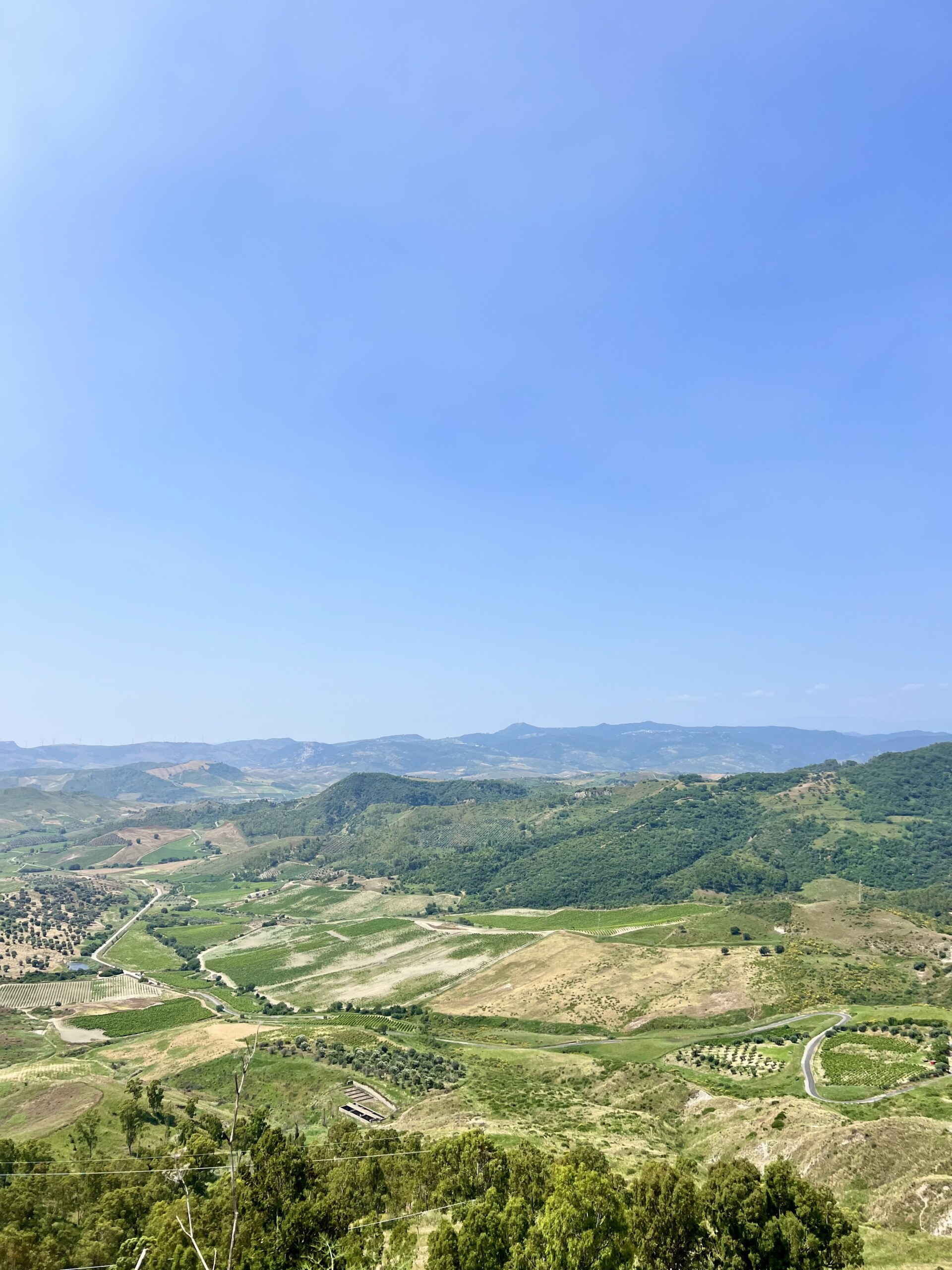
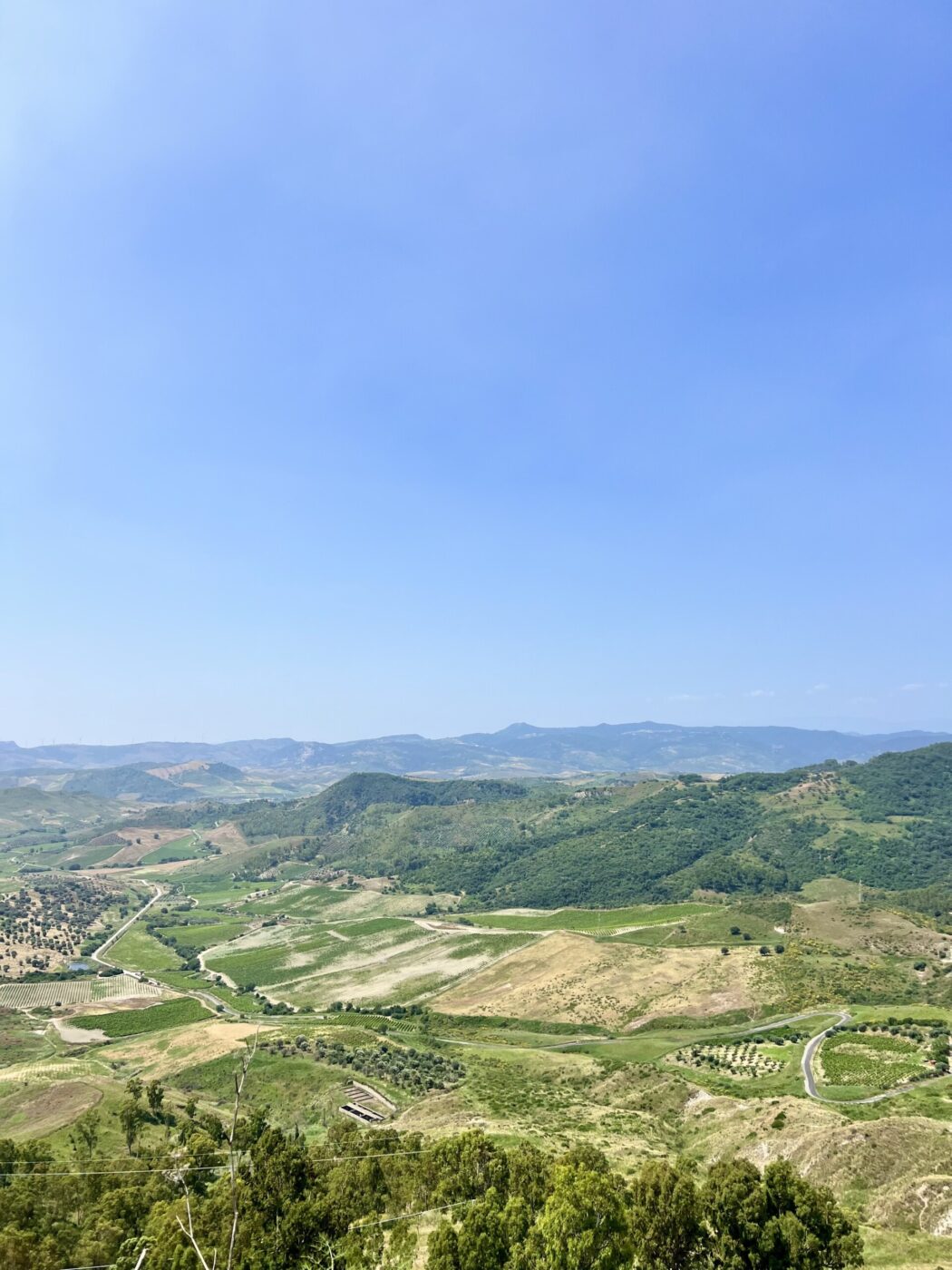
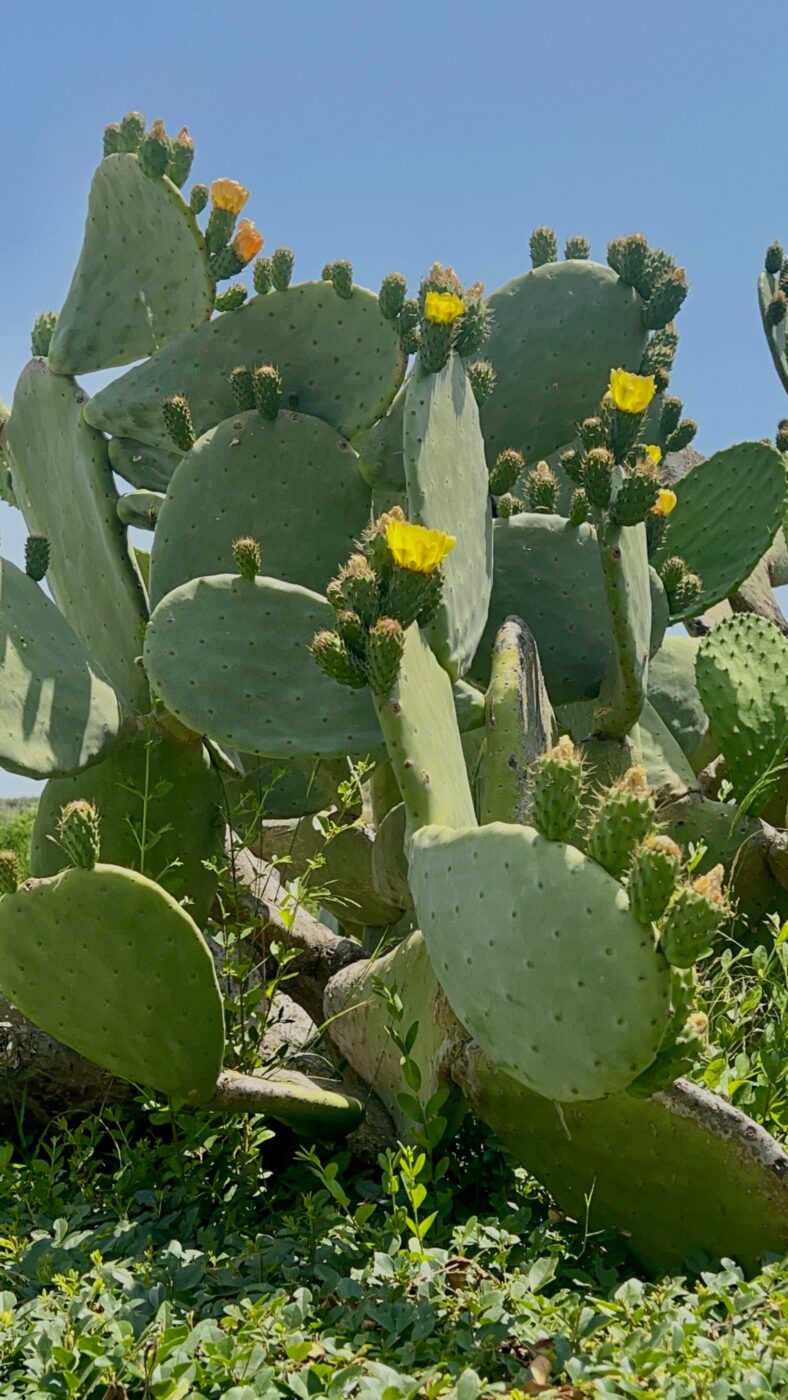
When I’m in Calabria, something shifts inside me. I’m not sure what to call it. An existential crisis? Emotional vertigo? Something in between? I gaze at the wild, rugged, unvarnished landscape. Purple, pink, and white oleander spill over the roads, walled medieval towns hug the hilltops, and the turquoise sea laps and sparkles. The terrain, the light, and the wild, unspoiled territory are all part of my heritage. And I struggle to reconcile this with how my story took shape in Yonkers, New York.
I don’t mean to romanticize what I didn’t live. I know that if my grandparents hadn’t emigrated, my first-generation Italian father would never have met my first-generation Irish mother, and I wouldn’t be here at all. And I know there are far worse places to grow up than Yonkers. Still, in Calabria, I can’t help but study the locals with envy (the healthy kind, of course). Then the hypotheticals start churning. What if my grandparents had stayed? What would my life have been like if I had grown up here, alongside everyone who has kept Calabria going?
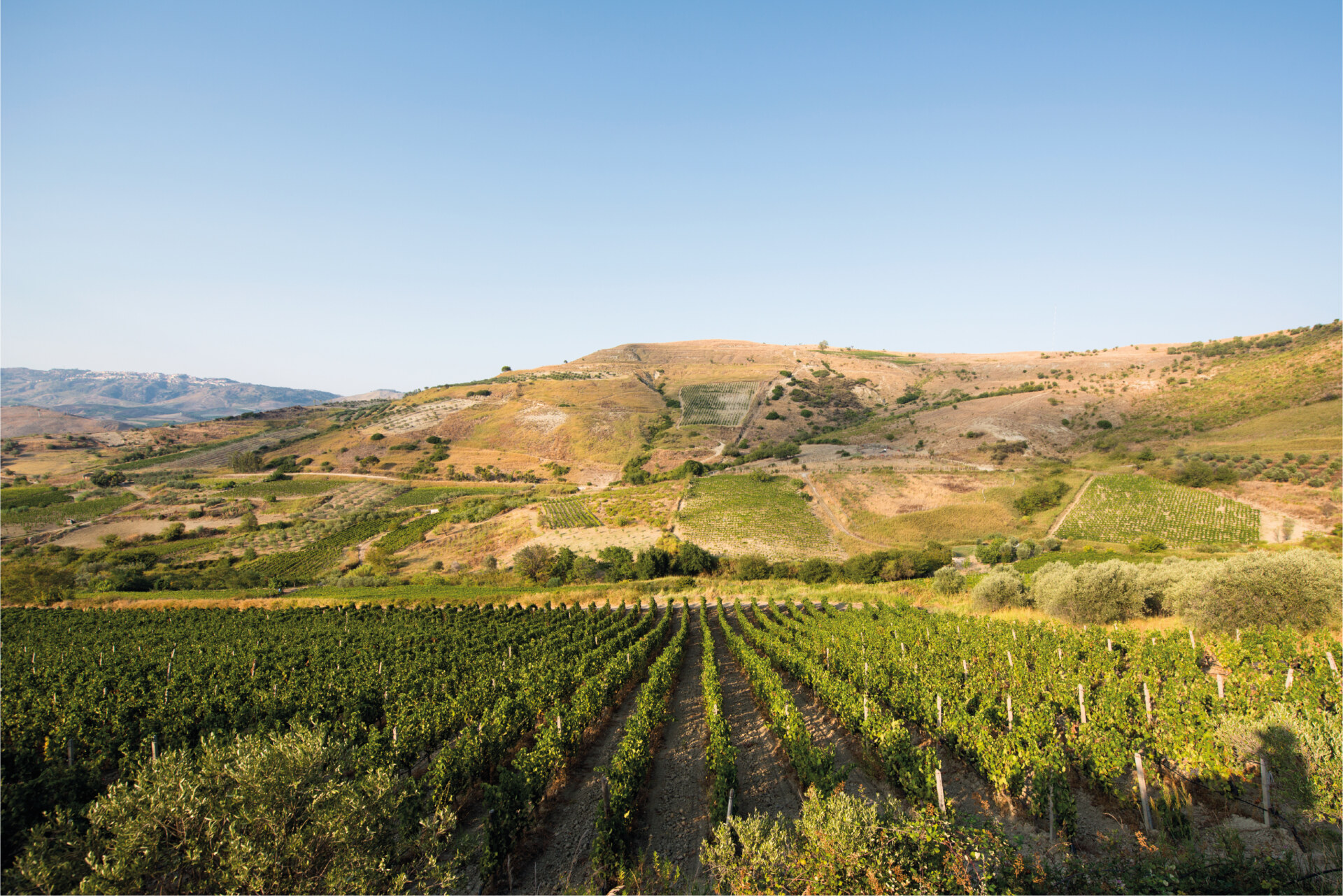
Photo courtesy of Merano WineFestival Calabria–Essenza del Sud
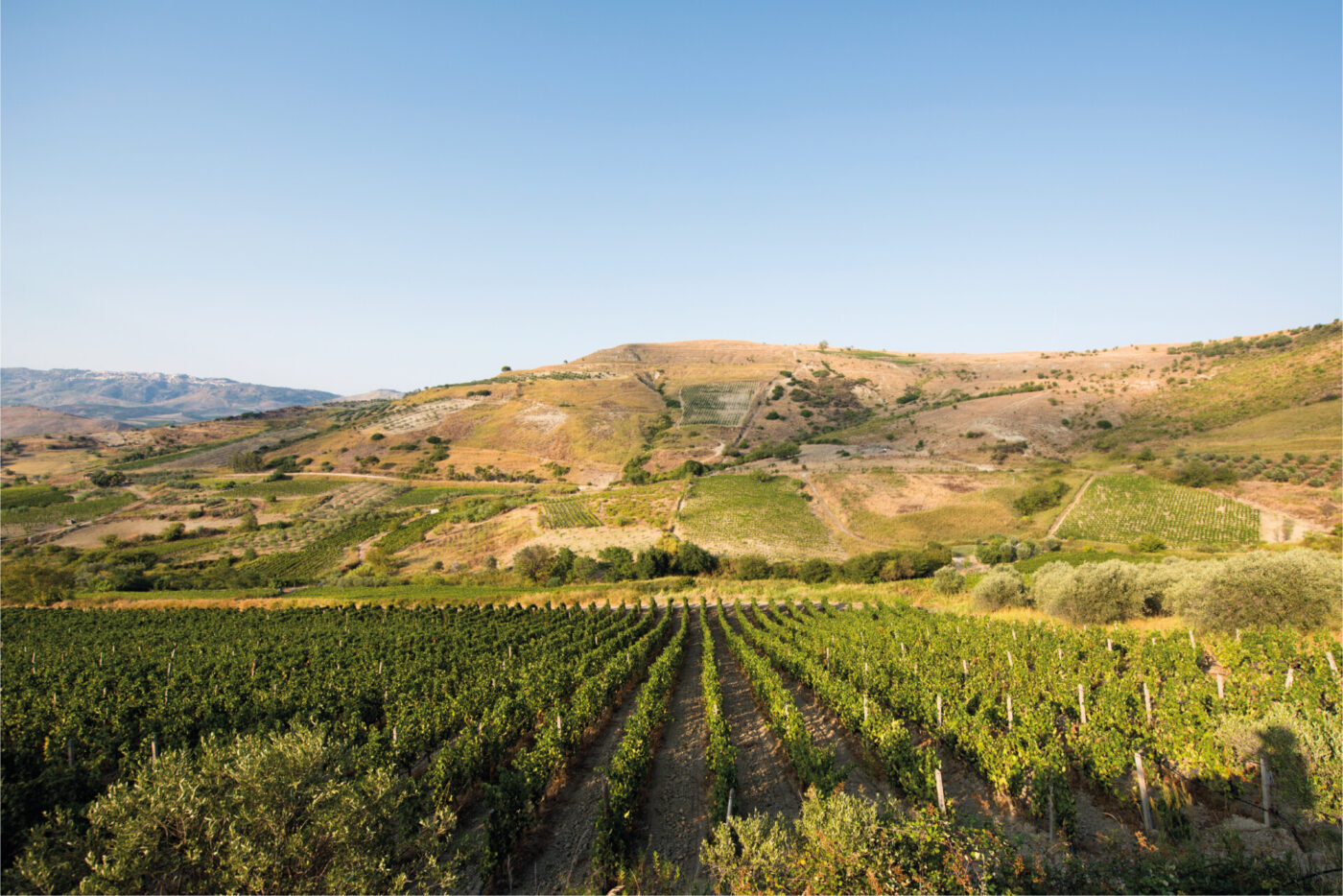
Like the Librandi family, who are often credited with putting Cirò on the modern wine map. The journey to their Rosaneti estate begins along the sweep of the Ionian shore, then heads inland. Along the coast, the architecture is distinctly postwar: low-rise apartment blocks and boxy concrete homes, interspersed with the occasional skeletal remains of buildings from the 1970s and ’80s—the so-called Calabria non finito, structures abandoned mid-construction. The surroundings give way to a rolling, ethereal landscape in shades of honey, straw, chestnut, and forest green, with fine dust drifting through the air.
For decades, the Librandi family has invested in understanding and safeguarding Calabria’s viticultural identity, championing native grape varieties at a time when many were disappearing in favor of international ones. In collaboration with leading ampelographers, including Turin-based Dr. Anna Schneider, they launched an ambitious biodiversity project to recover and catalogue the region’s genetic patrimony. Third-generation owner Francesco explains that local winemaking is believed to date back 3,000 years, commonly linked to the arrival of the ancient Greeks. But he suggests the story may stretch even further, perhaps 5,000 years, with origins tracing eastward to Georgia, long before Magna Graecia took root.
A remarkable spiral vineyard is planted with roughly 200 indigenous grape varieties arranged in concentric curves, such as Gaglioppo, Magliocco, and Mantonico. Walking it is disorienting. The curve is so gradual it doesn’t register as you reapproach the starting point—a sensation made even more dizzying by the unforgiving June sun, which beams without mercy on this cloudless Sunday morning.
Inside, I browse the (air-conditioned!) Vi.Te.S. Museo d’Impresa, dedicated to wine, vineyard culture, and local winemaking traditions. Housed in an early 19th-century farmhouse, the museum traces Calabria’s millennia-old viticultural history through tools, maps, photographs, panels, and rural testimonies. Among them is a century-old palmento, or a traditional stone wine press.
Francesco uncorks the Rosaneti, a sparkling classic method made from Gaglioppo: flowery, citrusy, and just a touch peppery. And of course, I help myself to some snacks, biting into a pita stuffed with sardella, a fiery red fish paste. The simple yeast-free dough, made from flour and water, has no-waste origins. Today, a food critic might praise its sturdy, faintly crisp texture as strong enough to hold the filling without sagging. The cuddruriaddri, fried doughnut-shaped potato fritters, taste exactly like what my family’s Calabrese next-door neighbor makes around Christmas—though some of hers are filled with anchovies.
For the rest of the afternoon, I keep reflecting on the people who chose to stay. Those who continue tending this land that so many have left behind. This all comes to a head later in the evening at the Merano Wine Festival, held in 17th-century Borgo Saverona, a tiny hilltop hamlet of low stone houses and farm buildings ringed by olive groves and vineyards.
More than 150 wine producers from across Italy are gathered, though I try to keep my focus on Calabria. The substantial turnout is shoulder-to-shoulder at times—so much so, I have to exercise caution as I navigate the crowd. For the first part of the evening, it seems nearly everyone is only half-focused on the wine in one hand, their attention fixed instead on the Jannik Sinner match playing out on their smartphones.
Helmuth Köcher, aka “The Wine Hunter”, founded the festival, one of Italy’s premier wine events, in 1992. For its first-ever regional offshoot, he chose Calabria, noting, “There are places that preserve the most authentic soul of Italian wine. Calabria is one of them.” (The festival returns in early June 2026 for its second edition.)
The Cirò Revolution exemplifies this belief. In the aughts, a collective of growers and winemakers set out to reclaim Cirò’s identity after decades of bulk production, prioritizing native grapes and traditional methods over international styles. Francesco De Franco of ‘A Vita and Christian Vumbaca of Vigneti Vumbaca are two key players. Both left professional lives elsewhere—De Franco had pursued architecture in Florence, and Vumbaca a legal career in Rome—to return to Cirò and tend to their family land with a new approach: fermentations rely on native yeasts, and vineyard practices are organic or close to it. I managed to inch my way forward through the five-deep clusters at both of their stands for a taste. Vumbaca’s 2022 Cirò Classico Superiore DOC, made from Gaglioppo, was boisterous, with fresh red fruit, like cherries and strawberries, layered with notes of licorice, cinnamon, and thyme. Over at ‘A Vita, the 2023 Il Rosso Calabria IGT, mostly Gaglioppo with a touch of Magliocco, tasted expressive and fruit-forward, but grounded with a subtle earthiness. Both a testament to the movement’s underlying philosophy: Cirò’s oldest grape hasn’t lost its mojo.
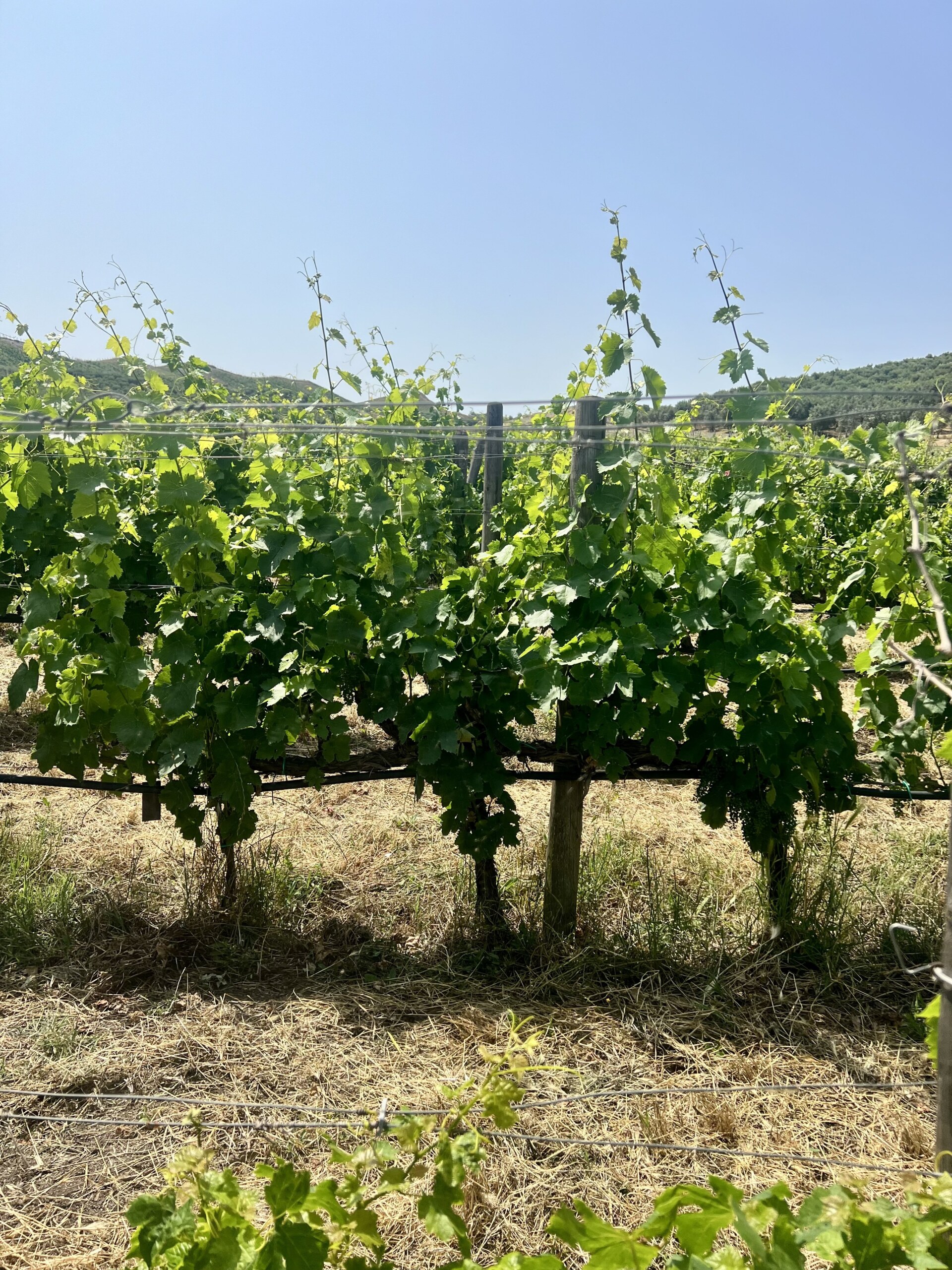
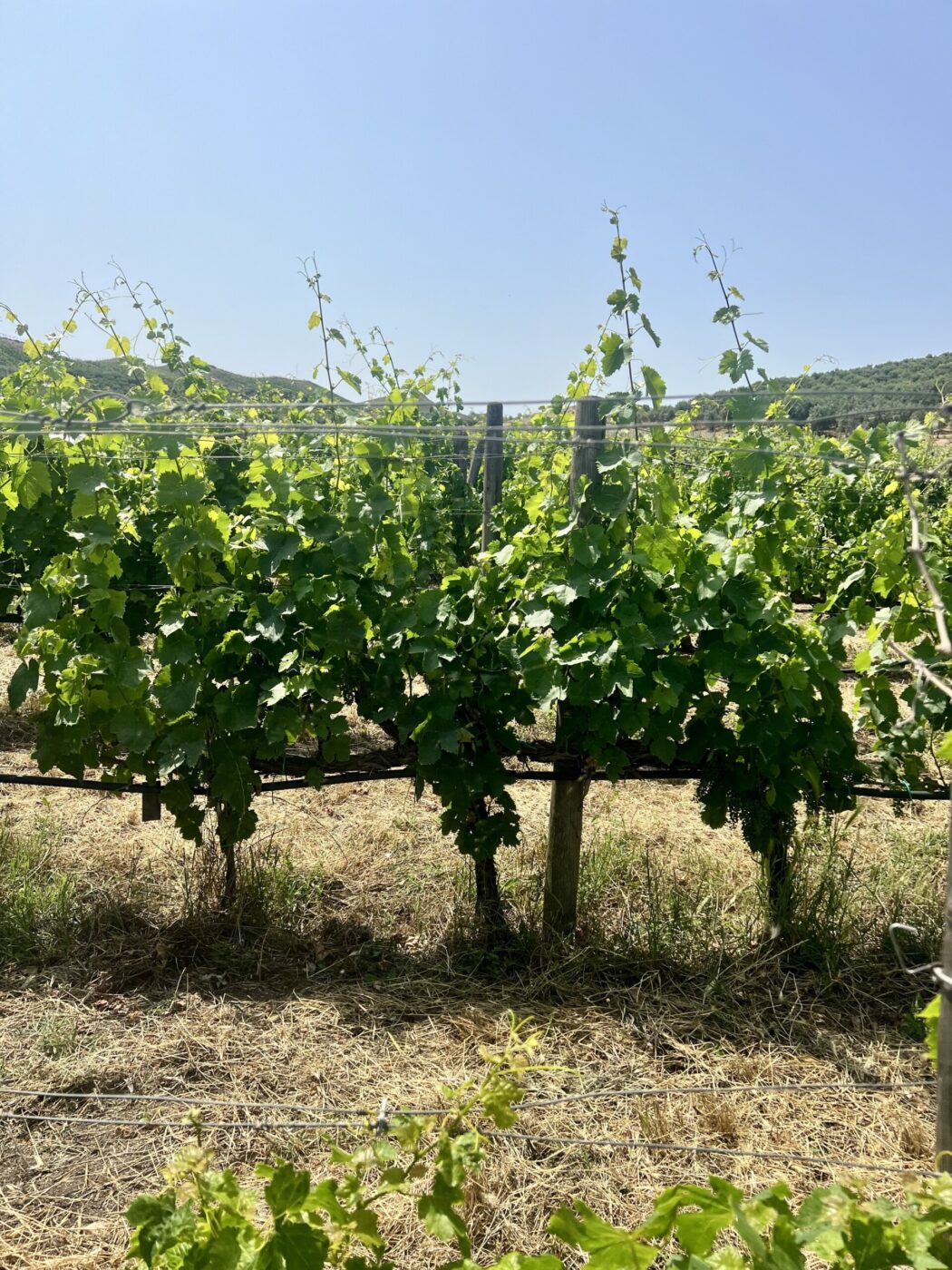
A walk through the vines at Librandi
Similarly, the food showcased some of Calabria’s most innovative culinary talent. Daniele Campana, whose Campana Pizza in Teglia holds three spicchi from Gambero Rosso, draws inspiration from southern Italian bread traditions. One dough, kneaded with pork belly from the local Aspromonte black pig, is a nod to old-school techniques, though his method is thoroughly modern: long fermentation, carefully selected local flours, and a result that is thick and crispy yet impossibly light and cloud-soft inside. One slice arrived topped with ’nduja and grated Crotonese ricotta, and another with anchovies from Schiavonea, an Ionian fishing town. Nearby, Roberto Davanzo of Bob Alchimia a Spicchi, also a recipient of Gambero Rosso’s top honors, prepared a focaccia shaped like a small pizzetta, stuffed with ’nduja and burrata gelato and finished with a drizzle of bergamot oil, a playful contrast of heat, creaminess, and citrus aromas.
Michelin-starred chefs took part, too. Dattilo’s Caterina Ceraudo served fusillone dressed with fennel pesto and ribbons of bergamot-scented ricotta, while Nino Rossi of Qafiz offered chilled tubetti pasta with roasted peppers beneath a blanket of fig leaf powder. I also enjoyed the best torrone I’ve tasted in my life: bergamot-flavored and coated in both dark and white chocolate. They were from Sgambelluri, a historic confectioner in Reggio Calabria, and so sensational that I bought three bags as souvenirs. In short, the food captured the same revival happening in the vineyards: tradition revisited with confidence and innovation.
An estimated two-to-four million Americans have Calabrese ancestry, due to the region’s vast diaspora, and I can’t help but contemplate how the majority are completely ignorant of contemporary Calabria. These chefs, pizzaioli, winemakers, bakers, and confectioners. Some of them will never taste these flavors at least once in their lives, and they have no idea what they’re missing.
The next day, I set out to explore the village of Cirò, a hilltop town overlooking the Ionian and some of the vineyards that have made its name famous. Its coastal counterpart, Cirò Marina, is newer, explains Nico, a native who manages the Pro Loco “Luigi Lilio” Cirò, a volunteer cultural association that promotes the town’s history, culture, and tourism. Cirò fishermen built it up after World War II to live closer to their work, rather than retreat to the hilltop every night.
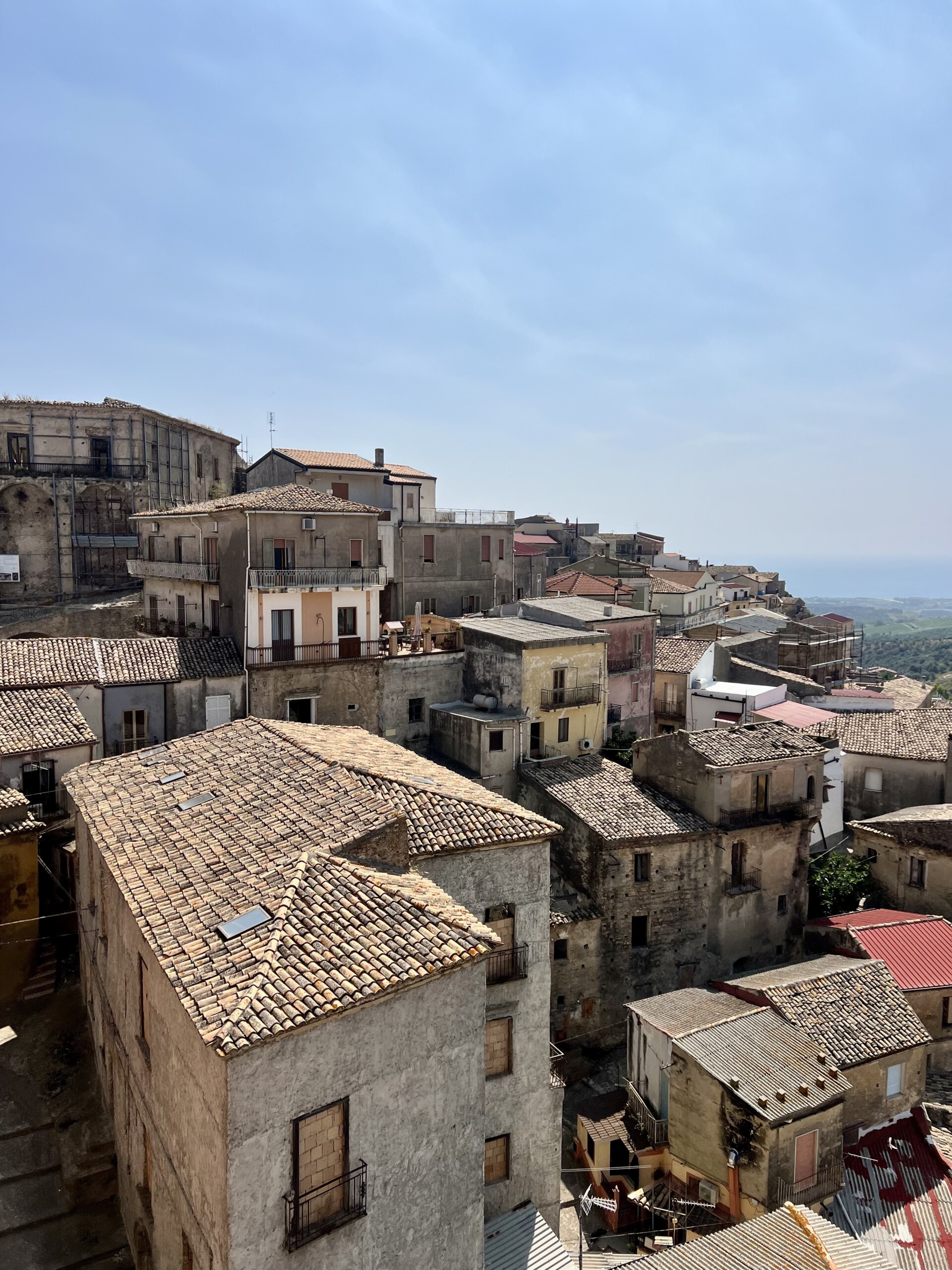
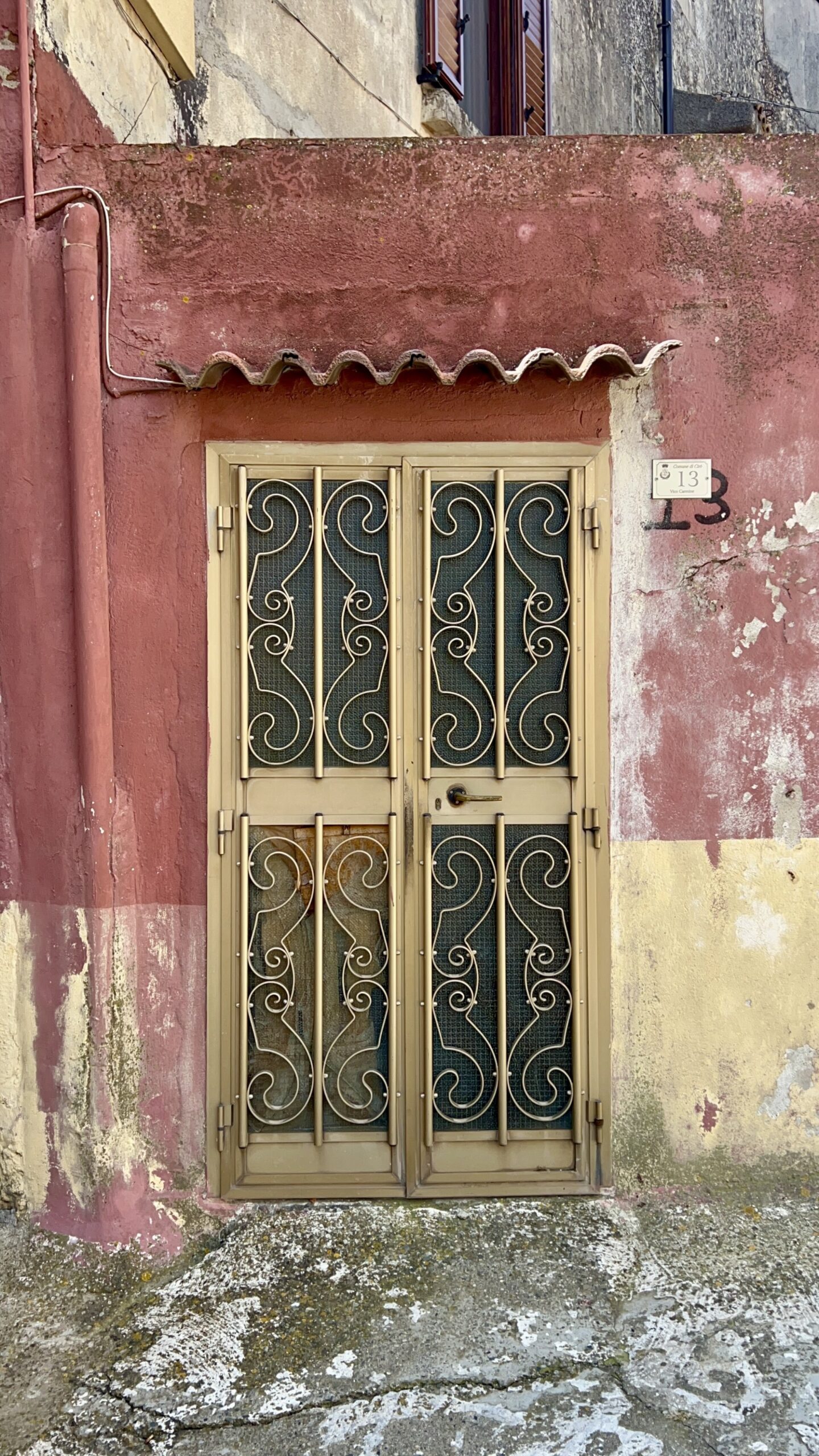
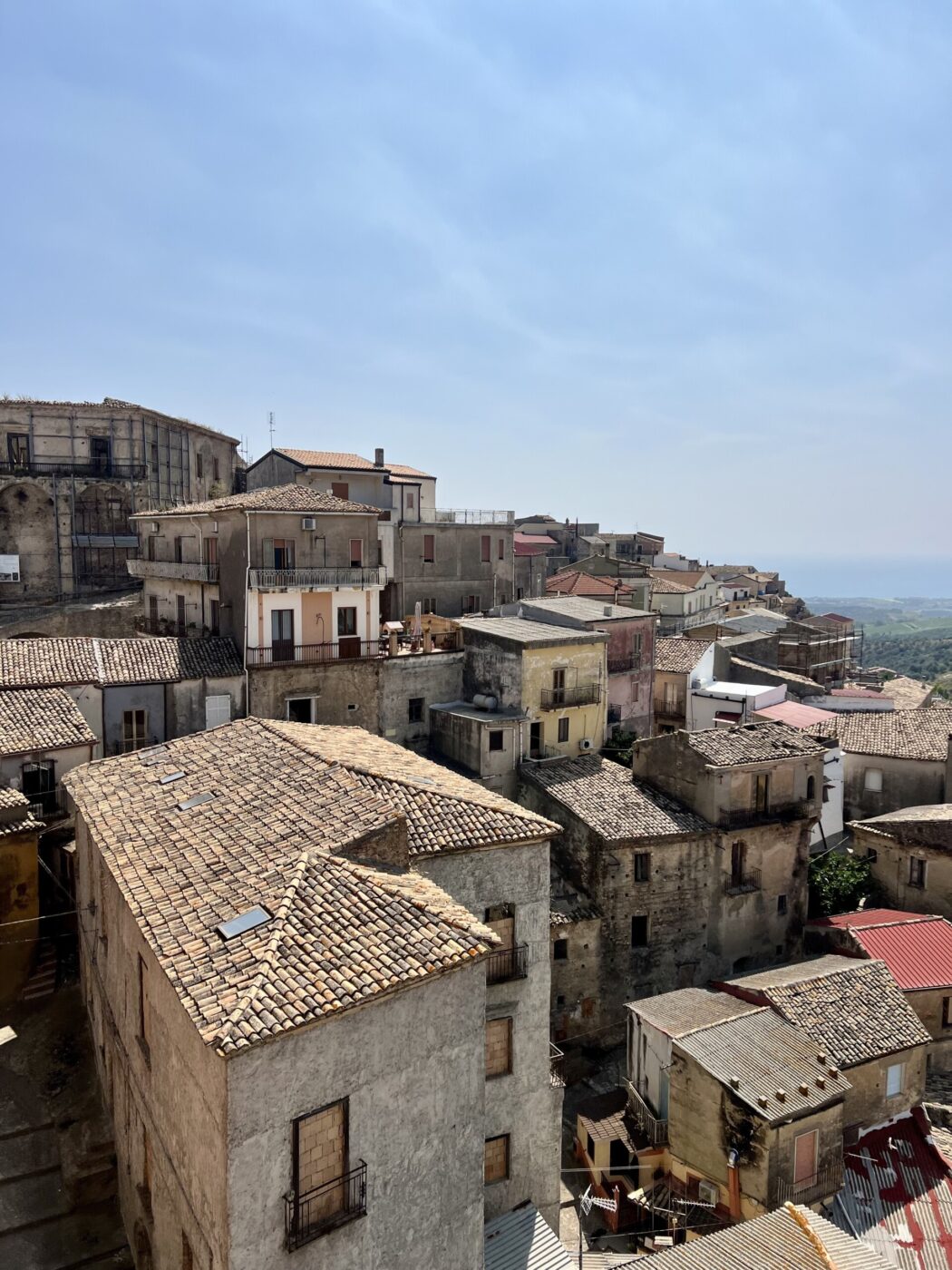
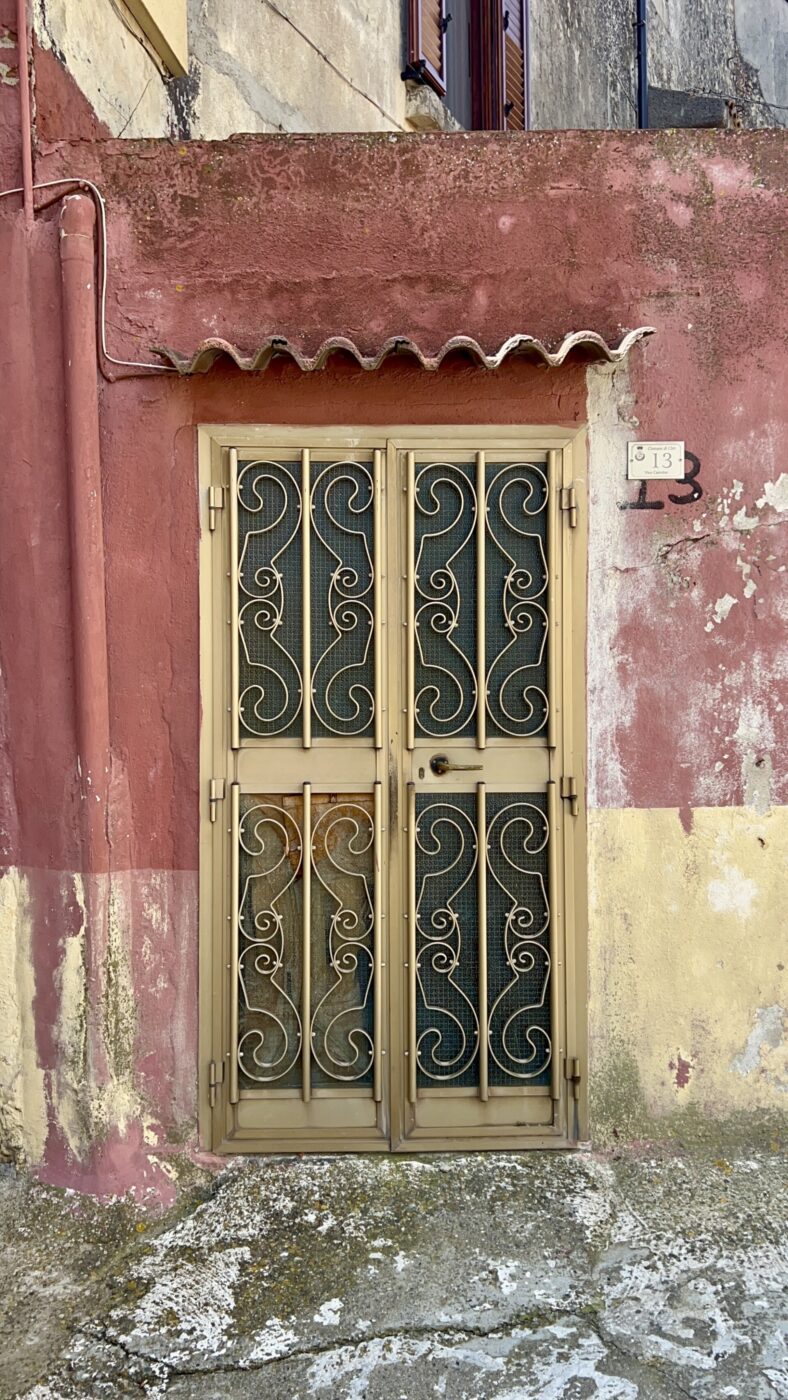
We drive up to the walled medieval town, still connected by a network of narrow lanes that rise and fall in between small piazzas. We walk past timeworn stone houses, laundry-strewn wrought-iron balconies, and sun-bleached façades where oleander and potted plants line windows and walkways. Locals disappear behind the beaded curtains of a butcher shop while others cram inside the air-conditioned gastronomia. Of course, the town isn’t fully exempt from modernization, but it still has that unaffected charm. I can’t help but think of the hum of everyday life carried through alleyways that has remained relatively unchanged over the years. It’s Calabria simply being lived.
Along the way, hand-painted wooden plaques and decorations create a kind of open-air trail, celebrating the town’s history, wine traditions, and notable people—a project by the Pro Loco. “In vino veritas,” reads a green sign beside a weathered wooden door set into an exposed brick-and-stone doorway. A trio of multi-hued directional arrows indicates the way for Tre cose ci bastano per essere felici: L’amore, un po’ di pace e una vista mare (Three things are enough to make us happy: love, a little peace, and a sea view).
Palazzo Zito presides over the town center. This 17th-century mansion with a salmon-pink facade is named for the noble family who once resided there. Today, it’s known as the Palazzo dei Musei, as it houses a handful of small museums dedicated to local heritage. Gabriele, a student at the local Liceo Scientifico, who’s wise beyond his years, shows me around. He’s eloquent and wears his love and pride for his hometown on his sleeve. The Museo del Vino e della Civiltà Contadina preserves artifacts and tools from traditional winemaking and peasant life, telling the story of how wine has shaped the local culture and economy over the centuries. One room even recreates the simple interior of a single-room home where an entire family would have once lived together.
And it turns out this unassuming hilltop town is tied to a reordering of time itself. The palazzo’s top floor is dedicated to Aloysius Lilius, or Luigi Lilio, a local astronomer whose work led to the creation of the Gregorian calendar in 1582. Aquamarine is my birthstone, thanks to that calendar. I’ll proclaim that I’m an Aries any chance I get, which, in a way, traces back to him as well. The more I think about it, the more it seems that one could make the case that a part of all of us, in some sense, began here in Calabria.
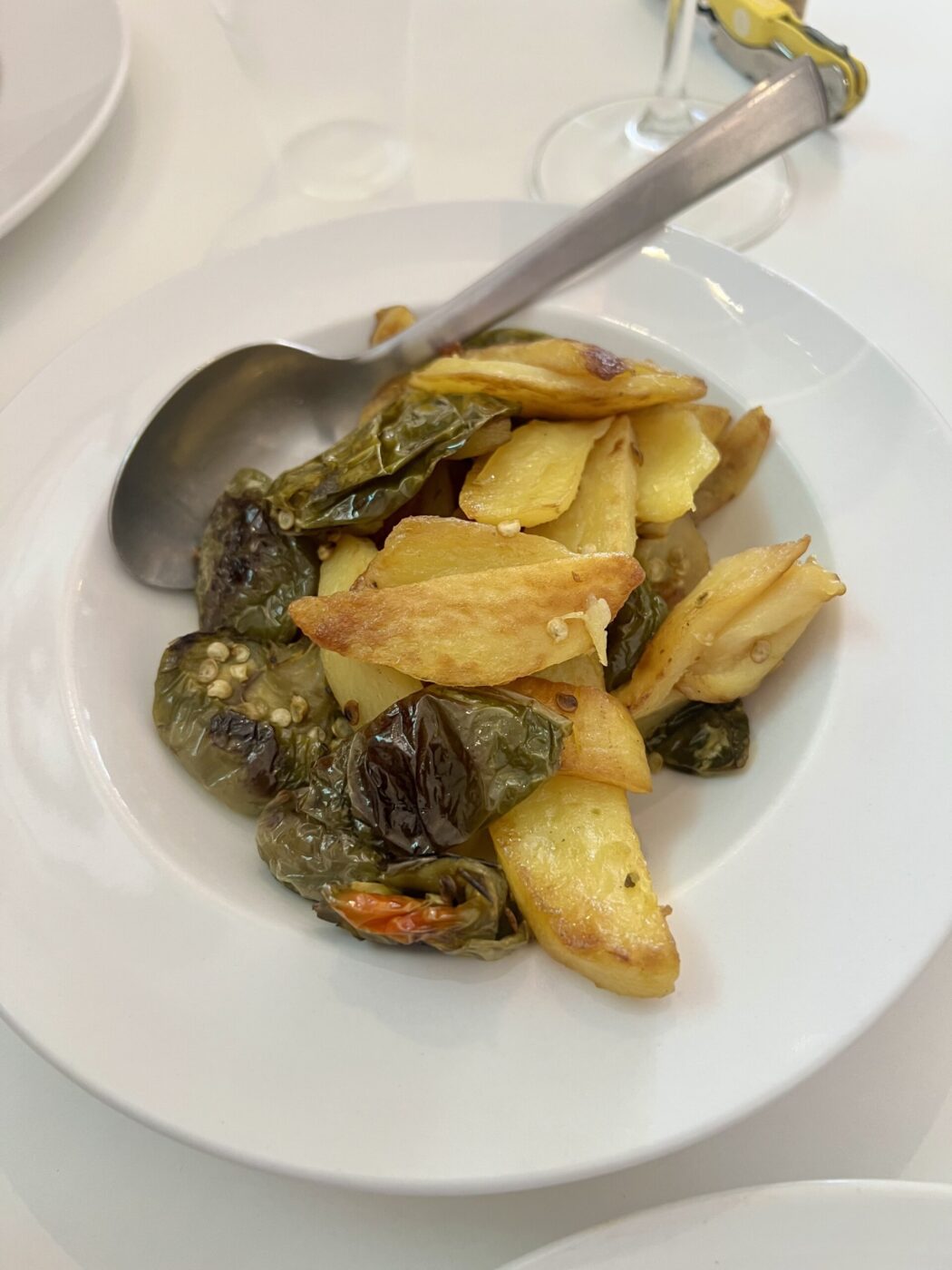
Next came lunch at A Casalura, a tiny gastronomia with a casalinga-style kitchen in Cirò Marina, where chef Giuseppe Pucci is helping keep those traditions alive. Pucci trained at ALMA culinary school and worked in fine-dining kitchens across France and Italy, as well as at Noma in Copenhagen. Yet instead of pursuing a career abroad or elsewhere in Italy, he returned home and opened a spot dedicated to preserving the local food and farming culture. He raises his own pigs for cured meats and finds inventive uses for overlooked ingredients, such as giving tuna heart the bottarga treatment. He elevates traditional dishes, such as pipi e patate, the classic pairing of peppers and potatoes, and spaghetti with sardella, his signature. He cleans and salts the sardines, cures them with chili pepper, and ages them for nearly two years. They’re deeply savory, intensely Calabrese, and unforgettable. A meal here alone could justify the trip. Though saying so feels unfair to the others who are not only bringing Cirò forward, but also all of Calabria.
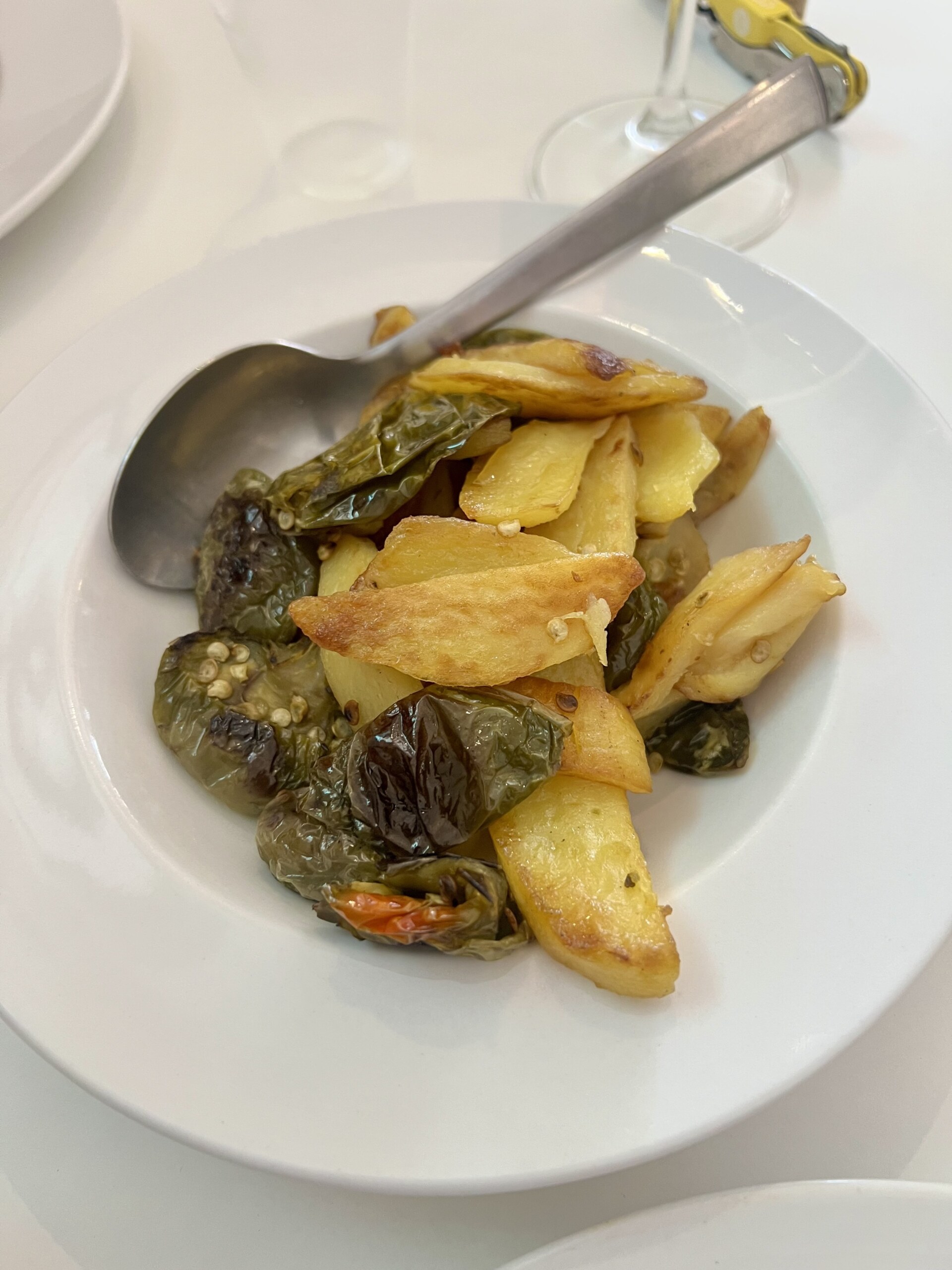
Classic pipi e patate
For generations, Calabria has existed in the imagination of many Italian Americans as a place you flee, not a place you go—even Italian-Americans with roots here bypass it entirely when they visit Italy. Yet the winemakers, chefs, bakers, and artisans I met are living proof of the opposite: people choosing to stay, return, and build a life rooted in this landscape. They’re educated, enterprising, loyal, proud. They put down roots at home. They’ve cultivated vineyards, opened restaurants, revived recipes, and safeguarded traditions. If they had all fled, what would remain? This Calabria exists because of the people who chose to believe in it. And I’m vehemently grateful to them—what would those who have emigrated think if they could see it now?
My thoughts return to Librandi’s spiral vineyard. The design is a symbol of continuity, a reminder that Calabria’s future depends on preserving what came before.
My grandparents left almost a century ago, and their paths eventually led to Yonkers, where I was born. But I feel more anchored in Calabria than I ever did in Yonkers. Roots have a way of inserting themselves with the certainty of a sixth sense.