“When it comes to an Italian tennis style, everyone has their own characteristics, so it’s hard to define a single stereotype. But imagination and creativity are what set us apart,” says Lorenzo Musetti, currently the No. 9 men’s tennis player in the world. “It’s a bit like the ‘Made in Italy’ trademark—bringing a sense of art, history and expression onto the court.”
This sense of “Made in Italy” tennis took center court once again in Rome during the first two weeks of May, when the sport’s current all-stars descended on the capital for the 2026 Internazionale BNL D’Italia. Italy’s Luciano Darderi became the talk of the tournament with his breakthrough run to the semifinals—winning a series of heroic three-set battles, including his first-ever Top 10 victory over No. 2-ranked Alexander Zverev. Simone Bolelli and Andrea Vavassori became the first Italian team to claim the men’s doubles title.
And by taking home the singles crown, World No. 1 Jannik Sinner continued his fiery start to the year and made history in the process: becoming the first Italian man in 50 years to win his country’s biggest home tournament, as well as the second-ever man after Novak Djokovic to win all 9 Masters 1000 tournaments, known as a Career Golden Masters. (His win at the 2024 Australian Open two years prior was the first time Italy had a men’s Grand Slam champion in nearly 50 years.)
Along with the Rome Open—a prestigious dual-gender competition (a pivotal lead-up to the French Open)—Italy hosts the elite ATP Finals in Turin, reserved for the world’s top eight men, and the Davis Cup Finals in Bologna, where Italy defeated Spain in 2025 to secure a historic third consecutive championship before a roaring home crowd.
Italian tennis is clearly having its moment, fueled by a level of individual success that has whipped up hype across an international fanbase. Alongside top rival Carlos Alcaraz, Jannik Sinner has dominated the last three seasons of the ATP Tour. Thirty-year-old Jasmine Paolini has similarly been a standout on the WTA Tour, with two Grand Slam singles finals (she ranks No.4), a Grand Slam doubles title (she ranks No.3), an Italian Open championship, and a doubles gold medal at the 2024 Paris Olympics.
Italy may have waited even longer than 50 years for a victory if not for a master plan engineered by the FITP (Federazione Italiana Tennis e Padel). Nearly 15 years ago, the Federation decentralized the sport’s development, channeling funding directly to local clubs and private coaches rather than a single national academy. This allowed players to stay home and train in familiar environments, while still receiving guidance from the country’s most elite coaches.
“Many people don’t realize that tennis players have to cover a large portion of their own expenses—training, travel, food, accommodation, and transportation,” explains Luciano Darderi, currently ranked a career-high No. 16 after his incredible run at this year’s Italian Open. Born in Argentina in 2002, Darderi began playing tennis at age four with his father, before moving with his family to Italy a few years later to pursue a professional tennis career.
The federation simultaneously introduced a wave of new domestic, low-level pro tournaments, so young players could climb the rankings without the financial burden of constant international travel. Because the Federation owns these events, it can also award wild cards to Italian players—giving them direct entry into draws and providing early, frequent exposure to Top 100 competition.
“Having so many competitions in Italy has allowed players, myself included, to reduce costs,” Darderi says. “At several tournaments abroad, I even had to travel without a coach because the expenses were too high.”
His career is a successful byproduct of the Italian tennis federation’s long-term plan. He’s become one of Italy’s most intriguing young players, steadily rising through the ATP ranks with a game that thrives on clay and is becoming increasingly versatile across the other surfaces.
Italy currently has six men in the ATP Tour’s Top 100 rankings—fourth-most behind the US, France, and Argentina—with another half dozen just on the cusp. It’s a deep bench, full of veterans and young talents alike. Matteo Berrettini and Flavio Cobolli, who spearheaded the Davis Cup charge last November, perhaps best exemplify this duality. Berrettini is a charming, charismatic fan-favorite who turned pro in 2015, but has struggled with injuries since breaking through at Wimbledon five years ago (where he fell in the final to Novak Djokovic); Cobolli is a fiery talent with a game as explosive as it is elegant. Following a breakthrough run to the Wimbledon quarterfinals last year, he’s fresh off a hard-fought title in Acapulco and currently sitting at a career-high of No.10.
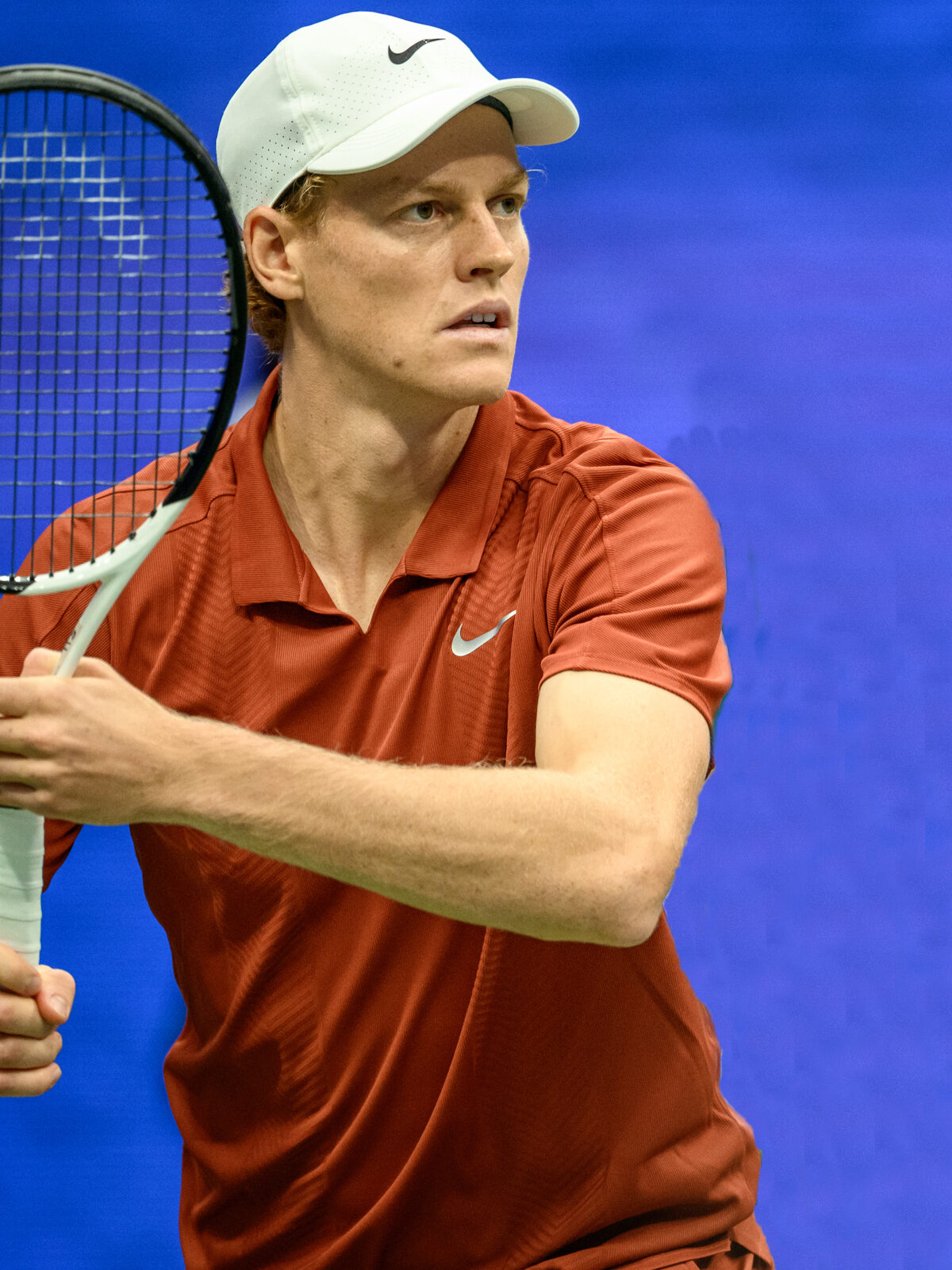
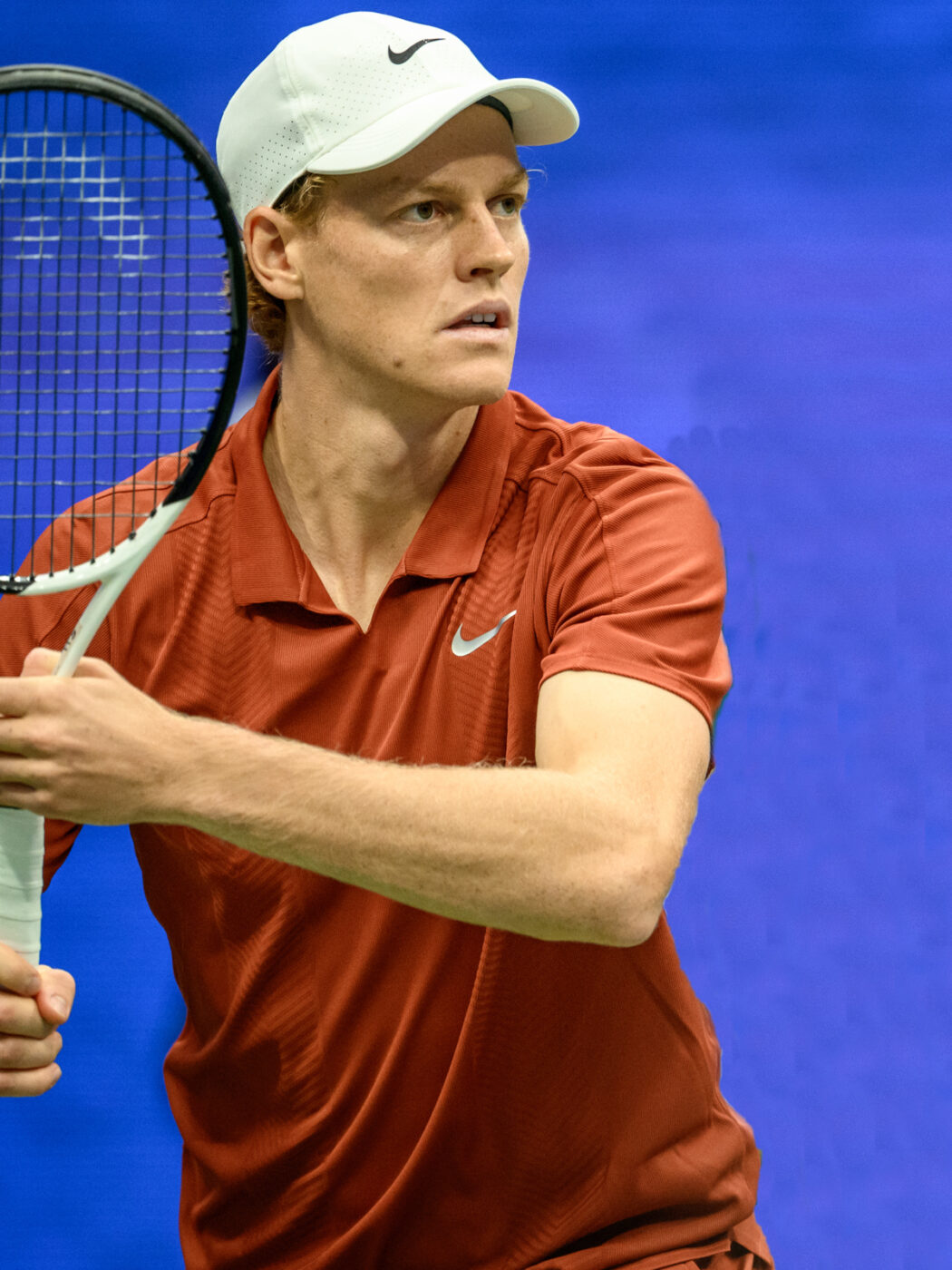
Jannik Sinner at US Open 2025; Courtesy of The White House derivative work: Kacir - https://www.flickr.com/photos/202101414@N05/54777103163/, Public Domain
But 24-year-old and current World No. 1 Jannik Sinner remains the de facto face of the hot revival of Italian men’s tennis. Born in 2001 in San Candido, a small town in the province of Bolzano near the Austrian border, Sinner didn’t grow up dreaming of tennis. His first sport was skiing, racing down the Alpine slopes in his backyard, and he didn’t pick up a racket until the age of seven. Turns out, he preferred a game where mistakes could be rectified the very next point—unlike skiing, where a single slip could mean instant failure.
After years of eye-catching progress on the pro tour, Sinner had his Grand Slam breakthrough at the 2024 Australian Opent—a tournament that proved he had the physical fortitude to match his mental toughness and powerful game. Nearly five months after his triumph Down Under, he became the first Italian man to ascend to the No. 1 ranking—and went on to capture a maiden US Open title in September. He’s since collected two more Grand Slams and several other major titles, spent over 70 weeks at No. 1, plus ushered in a fierce rivalry with fellow phenom Carlos Alcaraz of Spain; the pair is known to fans as “Sincaraz.”
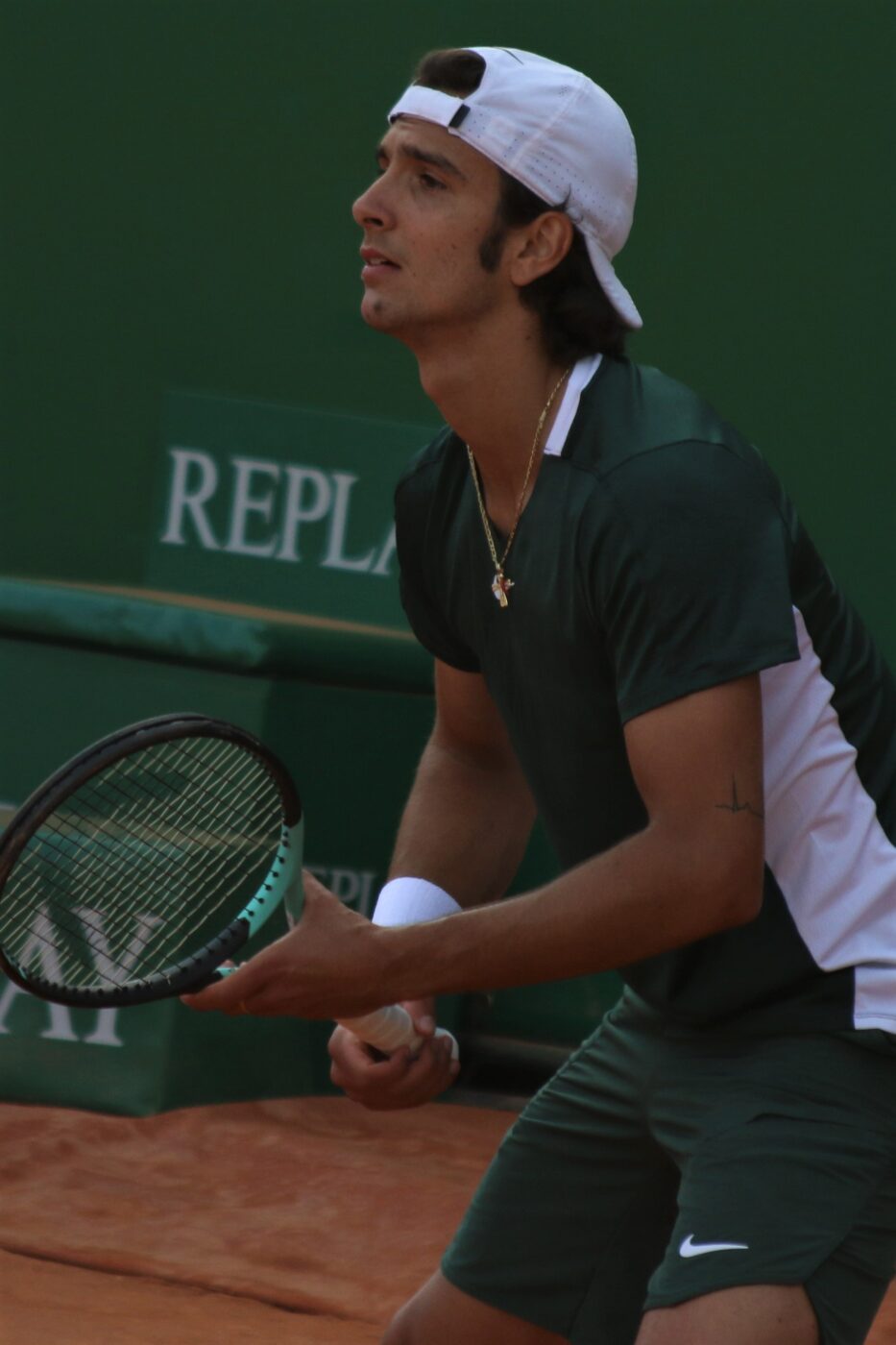
In an era dominated by baseline power like that of Sinner, Lorenzo Musetti’s game, rather, is characterized by a fluid one-handed backhand, on-court creativity, and an aesthetically pleasing shotmaking arsenal. Born in Carrara, the 24-year-old has emerged from the Tuscan town best known for its marble quarries to become one of the most stylistically distinctive players of his generation.
Last year, Musetti rode an incredible clay court season—which included a French Open semifinal—to a career-high ranking of No. 5 (the first time two Italian men were simultaneously ranked in the Top 5 in the history of the men’s pro tour). He reached multiple championships and qualified for his first-ever ATP Finals slot, ultimately finishing the year at No. 8.
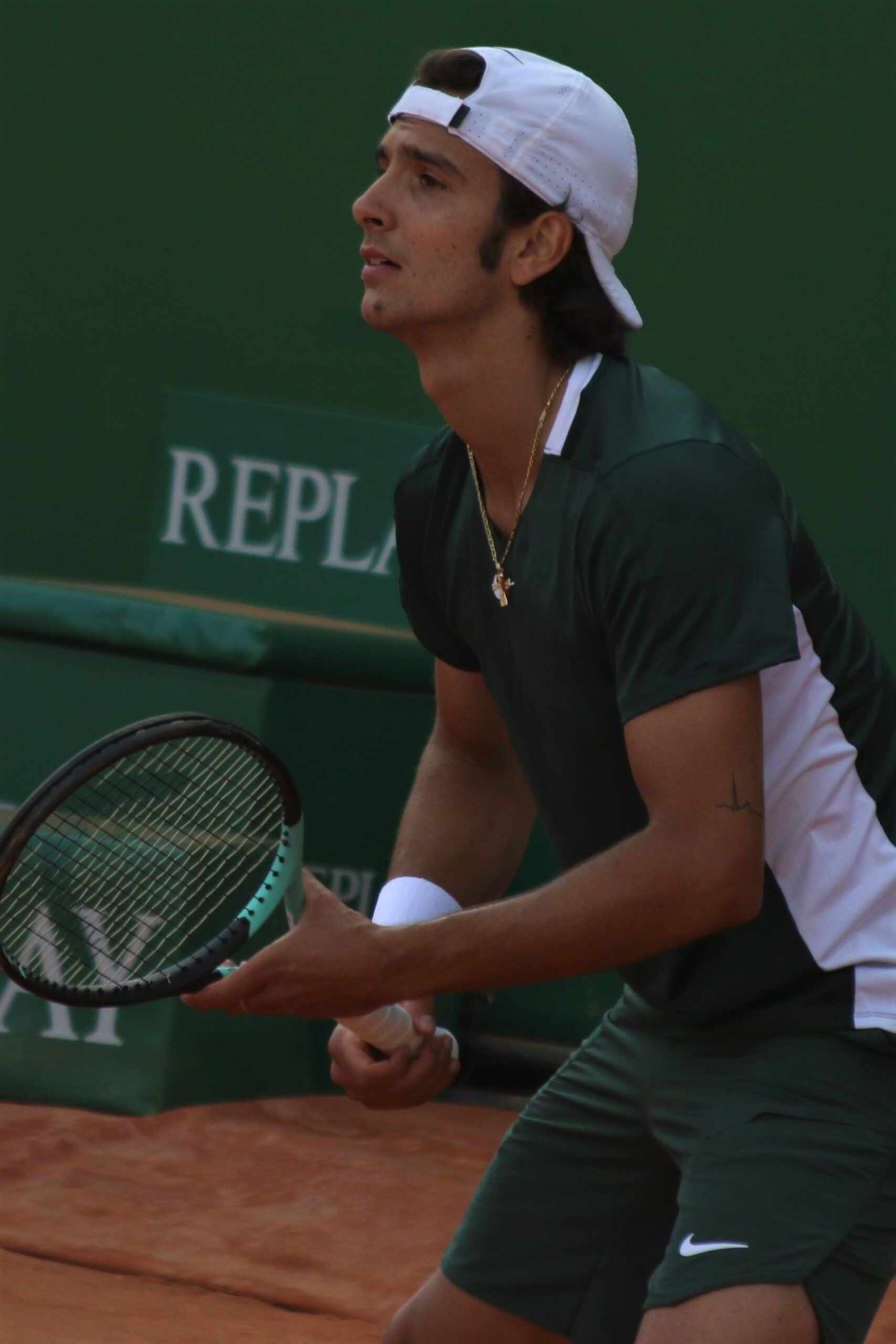
Lorenzo Musetti; Photo by si.robi - Musetti MCM22 (52), CC BY-SA 2.0, https://commons.wikimedia.org/w/index.php?curid=117594417
“I believe the ATP Finals, the Italian Open, and competitions like the Davis Cup Finals brought to Bologna and Italy have definitely helped increase interest in the sport,” Musetti muses. “But first and foremost, the results of players like Jannik Sinner and Matteo Berrettini, and before them Fabio Fognini and others have drawn in an audience that might previously have been more focused on football… which of course is still the most popular sport in Italy.”
One of the most electric aspects of Italy’s tennis boom is that audience, and the atmosphere generated by passionate home fans. “Places like Rome or Turin are courts where you experience unique sensations,” Musetti says. “What might have been more easily forgiven [during play] a few years ago no longer is… We have very little room for mistakes. There is definitely a bit more tension. Playing at home is never easy. In my opinion, though, it’s truly beautiful because of what this stage gives back to you.”
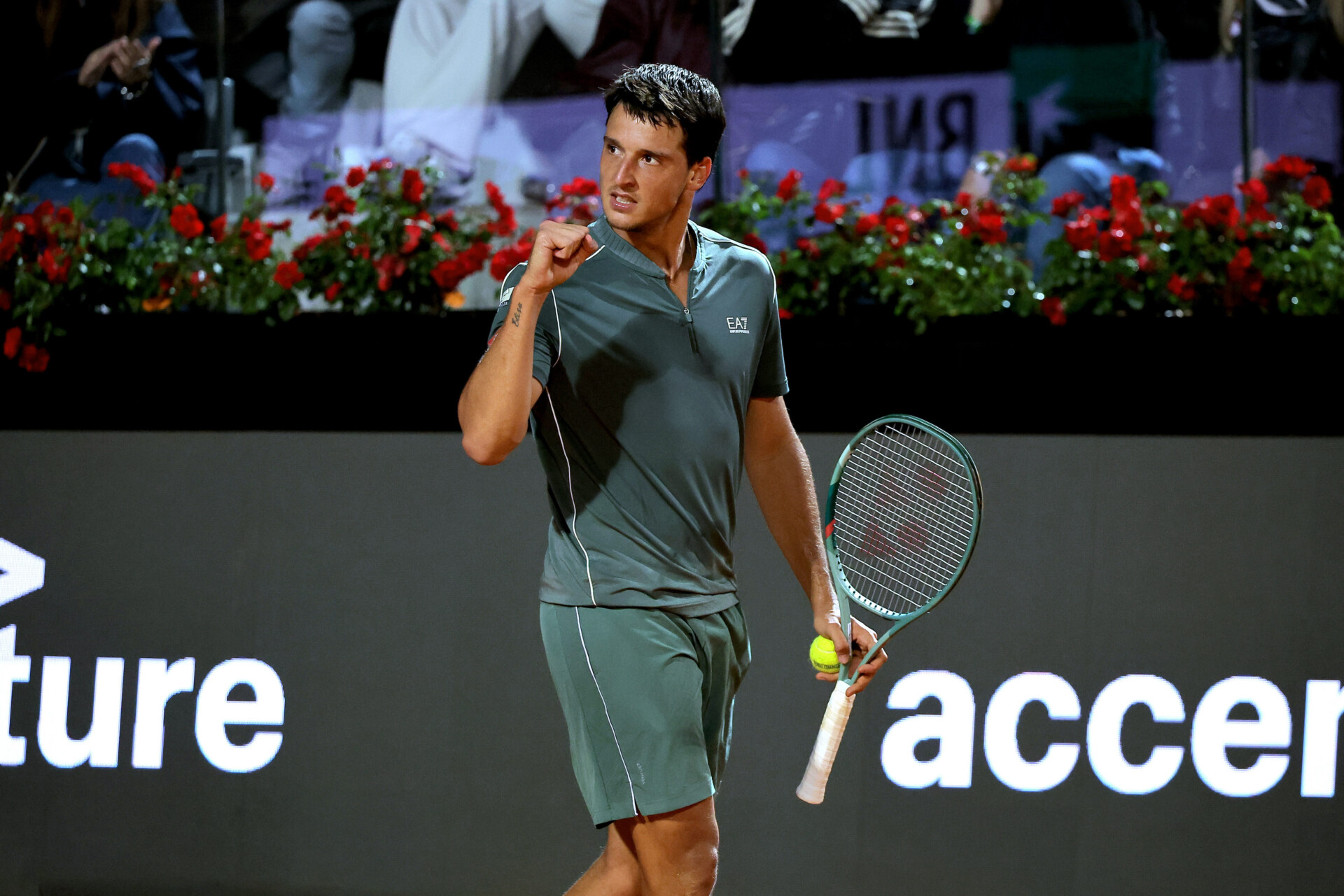
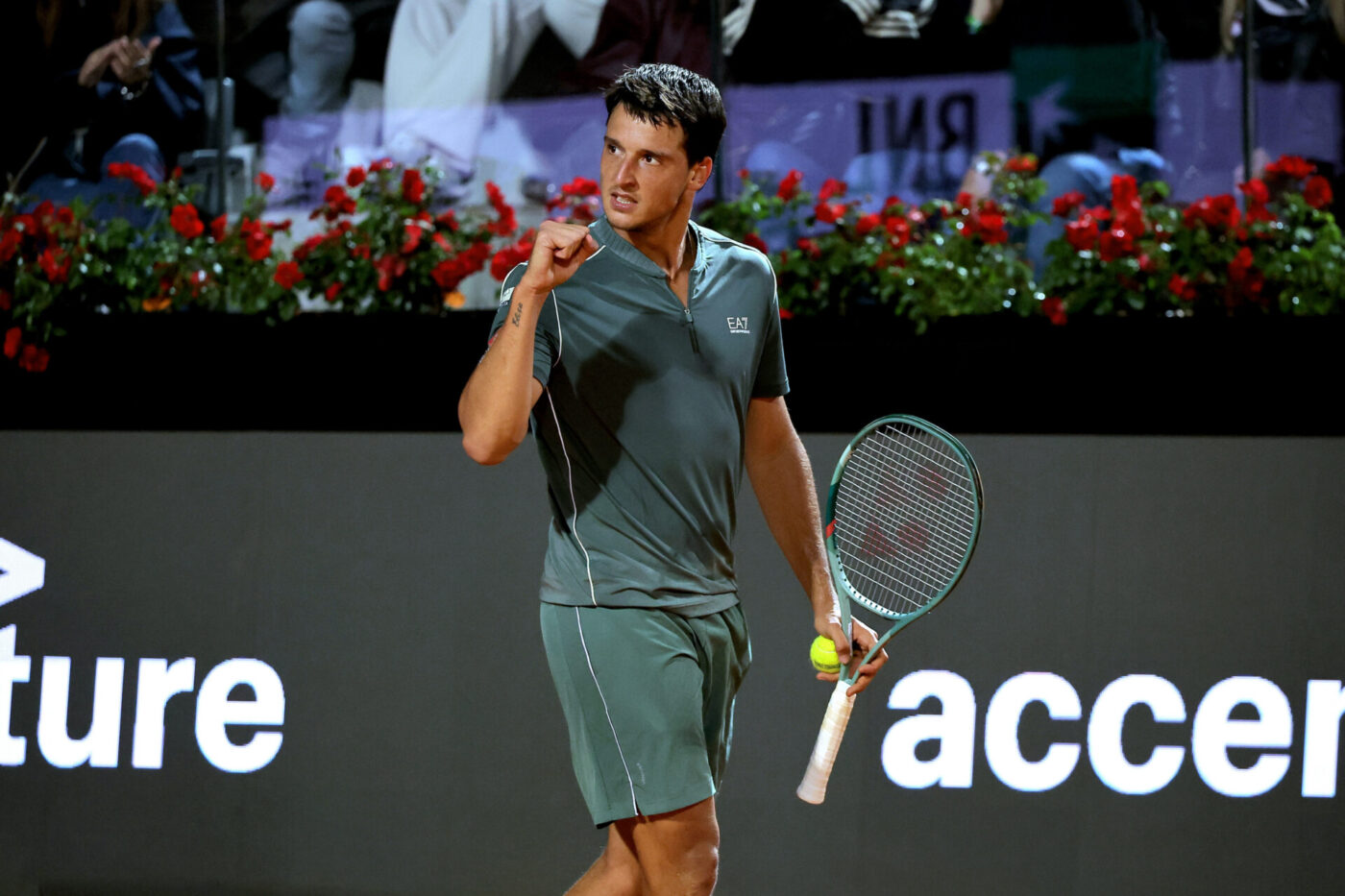
Luciano Darderi; Internazionali BNL d'Italia 2026 Roma 13/05/2026 Rafael Jordar vs Luciano Darderi Foto Giampiero Sposito/FITP
“Italy is an extraordinary country, especially because of the variety of its cultures and cities,” Darderi says. Italian food also fuels him—carbonara and Neapolitan pizza are notable favorites—but his greatest motivation comes from the crowd. “There was a match against Denis Shapovalov, and it ended 7–6 in the third set after almost three hours of battle. It was a real thriller. Towards the end, I was cramping and physically at my limit. But the warmth of the Italian crowd gave me an energy I had never felt before on court. At that moment, I told myself: ‘With this kind of support, I cannot lose.’”
Though Darderi has now captured multiple titles around the world, from Córdoba to Marrakech to Santiago, this year’s Italian Open stands above the rest. Down a set and a break to Tommy Paul, Darderi bounced back to win the third round match. He also saved four match points against Zverev before coming back and sweeping the third set 6-0. And in an epic 2 AM battle against Jodar, interrupted by a smoke delay caused by fireworks at the nearby soccer stadium, Darderi powered through to claim the victory.
It helps to be a fighter, and it helps even more to have a country on your side. “When I play in Italy, I always feel very supported and loved, and that’s something I truly appreciate,” Darderi says. “I think the fans recognize my hunger for victories, my desire to fight for every point, and the grit I always try to bring onto the court. That energy can be intense, but for me it isn’t pressure—it’s mainly extra motivation to give everything and try to win for them, too.”