If I had to sum up Roero in just two words, they would be “rocche” and “truffle”. Sitting just north of the Tanaro River, this rugged, 420-square-kilometer corner of Piedmont remains the wild, uncrowded alternative to our famous neighbor, the Langhe. Here, the orderly vineyard hills are replaced by the rocche—a spectacular network of deep, sandy canyons and woods that cut through the hills. These badlands and sandy canyons shape more than the landscape: the wines from the region are mostly elegant, fragrant Arneis and Nebbiolo, with a lightness you won’t find from their Langhe counterparts. It’s this sandy soil, combined with forests and uncultivated lands, that also produces prized, large white truffles (called the White Truffle of Alba “Rocche del Roero”) known for their delicate, peachy fragrance, which have become the world’s first truffle certified as a “cru”.
Beyond the vines and tubers, Roero is a mosaic of family-run peach orchards, hazelnut and chestnut trees, and rock-hewn cellars, plus medieval ridge villages from Canale to Monteu Roero where generations of families make wine out of genuine passion rather than a marketing playbook. Here, where to eat, drink, shop, sleep, and explore in this secluded region of Piedmont.
Video by Paolo Bevolo
WHERE TO EAT IN ROERO
Belvedere Roero (Monteu Roero) — This historic trattoria has been run by the Groppo family since 1930. Choose to sit in the internal dining room warmed by an open fireplace or the outdoor veranda that looks towards Monviso. While the kitchen excels at handmade Piedmontese pasta and fried porcini, the real star is the wine cellar of older Roero vintages and rare Piedmont crus that would make even Michelin-starred restaurants jealous.
Ras-cia Muraje (Cisterna d’Asti) — A young couple transformed this bar/restaurant into a dynamic dining room focused on high-quality ingredients, seasonal exploration, and an avant-garde wine list that highlights independent, low-intervention producers. Expect innovative dishes like fried asparagus with a spiced mayo or quail with onions and BBQ sauce mixed in with expert versions of dishes like plin con sugo di arrosto.
Bajaj (Monteu Roero) — At this family-run estate, you’ll dine on a panoramic terrace overlooking the dramatic rocche canyons and the village below. Run by winemaker Adriano Moretti, the “agri-restaurant” pairs traditional farm-to-table recipes with the estate’s own organic Roero Arneis and Nebbiolo. The well-priced set menu (around €38 a person) changes monthly, and you can also tour the winery before or after your meal.
Trattoria Le Tre Galline (Canale) — Opened by mother-and-daughter duo Franca and Valentina Faccenda, the restaurant in Canale town center prepares regional staples with meticulous care. Expect an oft-changing menu based on what was available at the market that day, with superb takes on Piedmont’s classic culinary roster, from vitello tonnato and anchovies with butter and lemon to the homemade plin, gnocchi, and tajarin. The space is light and airy, though the highlight is the peaceful, secluded interior brick garden, with thick jasmine vines that make spring a particularly nice time to visit.
Osteria Delle Aie (Castagnito) — Recently moved to a fresh location, this high-energy spot is run by an established local crew who know how to have a good time. This is the spot for celebrations, as the vibe is always best with big groups crammed around large tables, either in the garden or under the brick vaulted ceilings. The menu is unstuffy, and the Magnum bottles are always flowing.
Il Centro (Priocca) — A Michelin-starred institution legendary for its consistency and devotion to Piedmontese tradition. Run by the Cordero family since 1956, it is globally famous for serving one of the finest fritti misti alla piemontese (traditional mixed fried platter) in Italy, alongside a world-class wine cellar. Most of their ingredients are sourced from their on-site garden, and you’re going to want to reserve in advance.
Osteria dell’Enoteca (Canale) — This refined ground-floor bistro is operated by Michelin-starred chef Davide Palluda, whose upscale restaurant is located just upstairs and who brought Roero its first Michelin star. It delivers Palluda’s iconic, elegant culinary philosophy through simpler plates—think bowls of hand-pinched agnolotti del plin and classic tripe—in a contemporary setting. You’ll get access to a world-class kitchen and a massive regional wine list at local tavern prices.
Gelateria Valsania (Canale) — You’ll find scratch-made gelato at this no-frills local landmark. They’re famous for hyper-seasonal flavors that taste like they come directly from the surrounding orchards, whether hazelnut or the current summertime peach and amaretti cookie.
Sacchero (Canale) — This is a mandatory stop for traditional regional pastries. Go straight for their artisanal Torta di Nocciole (Piedmontese hazelnut cake), handmade baci di dama biscuits made with local IGP hazelnuts, and famous “La duchessa” chocolate bon-bons.
Bar Sacco (San Damiano d’Asti) — This historic café right on the main piazza feels frozen in time, with an old-school counter loaded with pastries. The shaded outdoor seating looks out onto the piazza, making it the definitive local spot for a morning espresso or late-afternoon Campari and some good people watching.
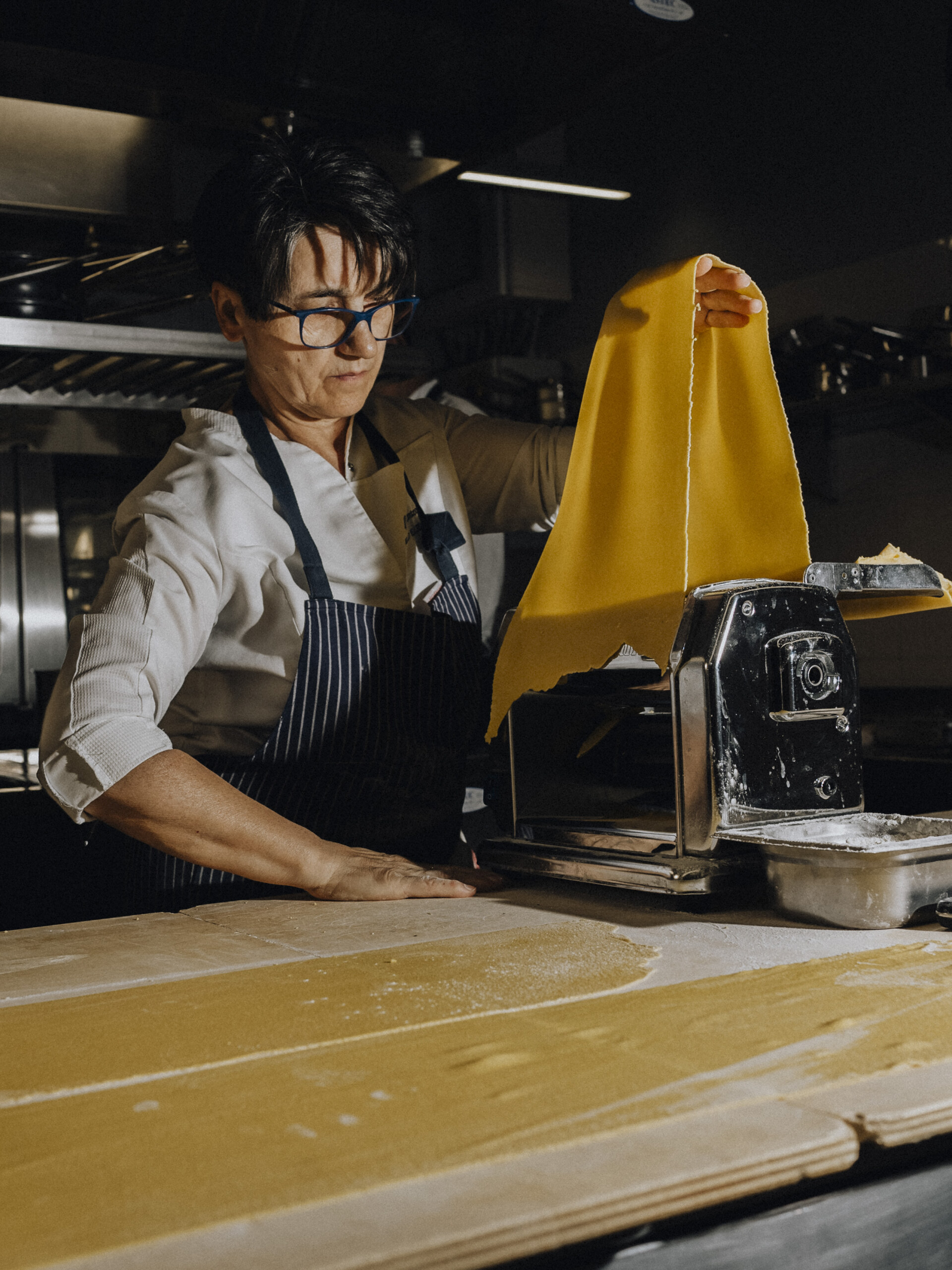
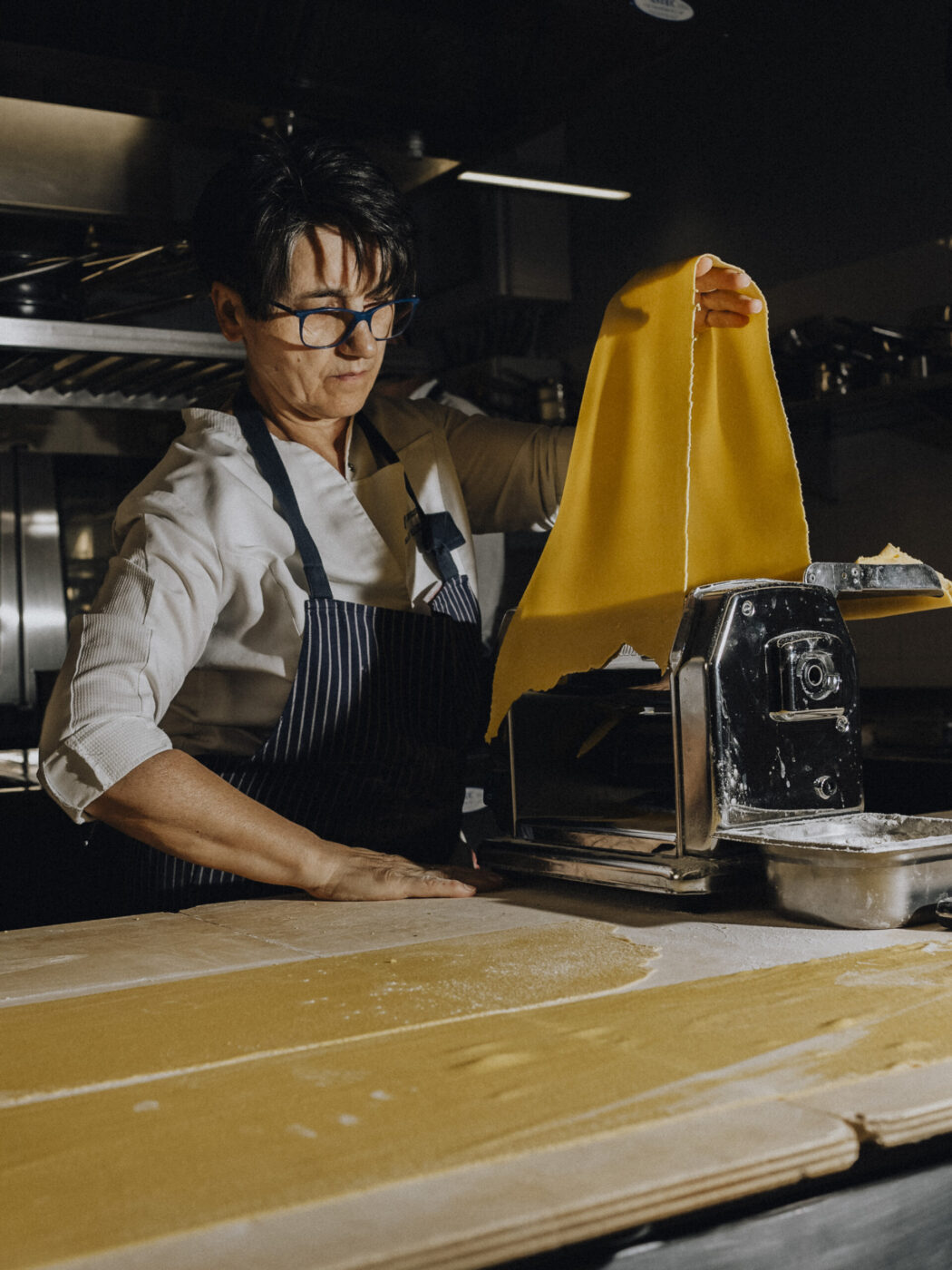
Making the pasta by hand at Il Centro; Photo by @agricolamultimedia
WHERE TO DRINK IN ROERO
Alla Rosa Bianca — This enoteca and restaurant in the hills feels like a countryside house, with a stunning garden where children can run freely and an incredibly long list of local labels. It strikes the balance between elegant and casual, where you can get incredible wine insight without pretension and crowded dining rooms. You’ll also find a strong showing of wines from beyond Italy’s borders.
Ciabot San Giorgio — A hilltop spot for 100% immersion in the vineyards, offering outdoor tables with panoramic views of the Roero hills. It gets incredibly crowded with locals on weekends, so skip the peak hours and head here on a weekday to fully appreciate the peaceful atmosphere and sip some local varieties.
Trames (Canale) — Located right on Piazza San Bernardino, this vineria puts just as much thought into their impressive wine list as their food menu. Though it’s nice for dinner, it’s particularly enjoyable for a summertime aperitivo, when you can sit on their outdoor patio for some easy drinking.
Il Decimo Enoritrovo (Canale) — A small, atmospheric wine bar tucked into Via Roma, focused heavily on curated regional bottles and casual pairings. It’s the ideal local spot, whether you want to stop in for a quick afternoon aperitivo or grab an exclusive bottle to go.
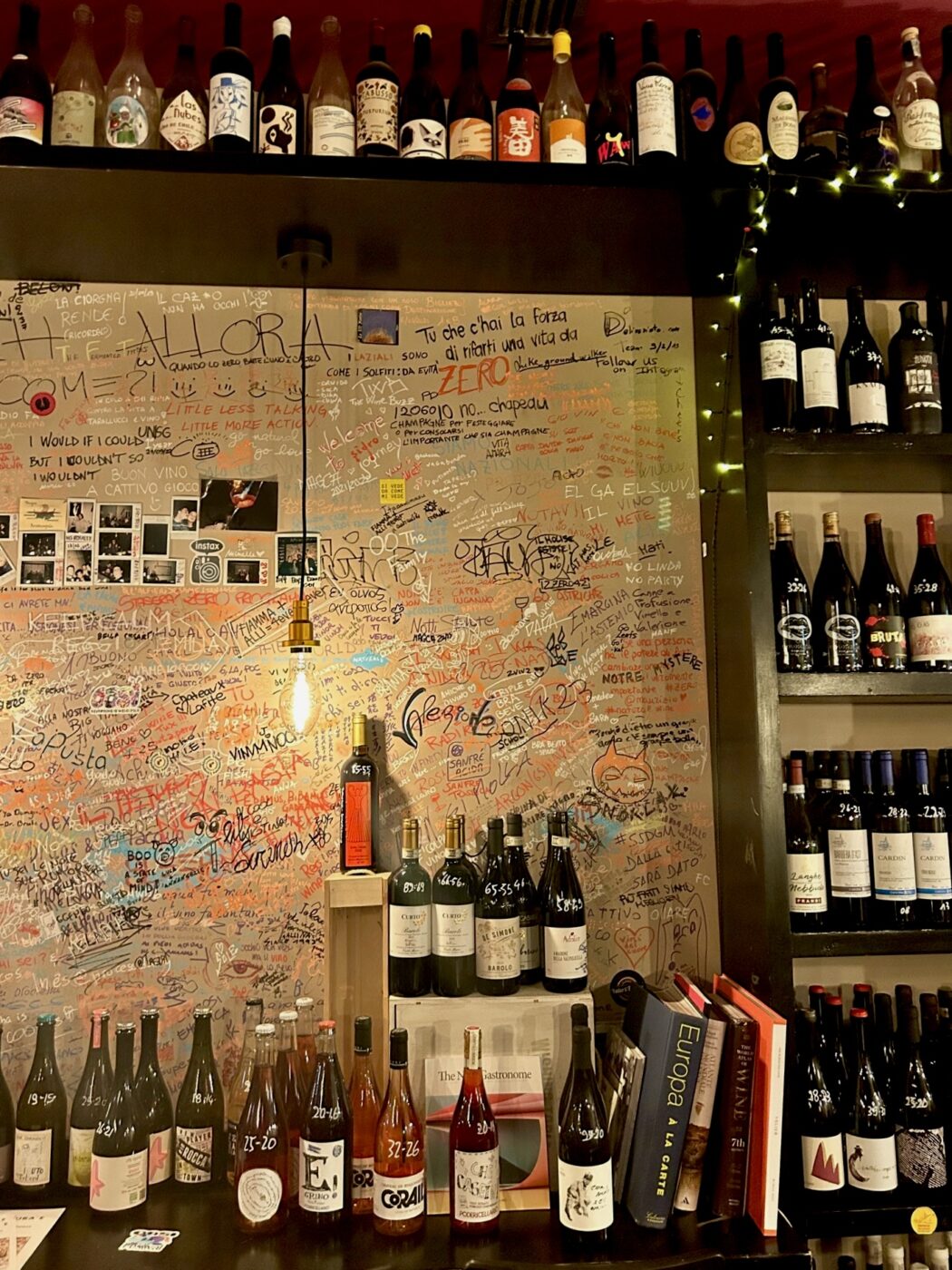
Enoteca Zero (Bra) — One of the best natural wine bars in Italy, run by Maurizio, who is incredibly knowledgeable and will always guide you to the perfect pour. The convivial enoteca has a lively, community-driven atmosphere—often made up of students from the nearby University of Gastronomic Sciences—that stays buzzy late into the evening.
Materia (Bra) — Sitting right on Via Pollenzo in Bra, this spot is part specialty food shop, part local aperitivo destination. It pairs a highly curated wall of natural wines and raw-milk cheeses with a laid-back, modern dining vibe.
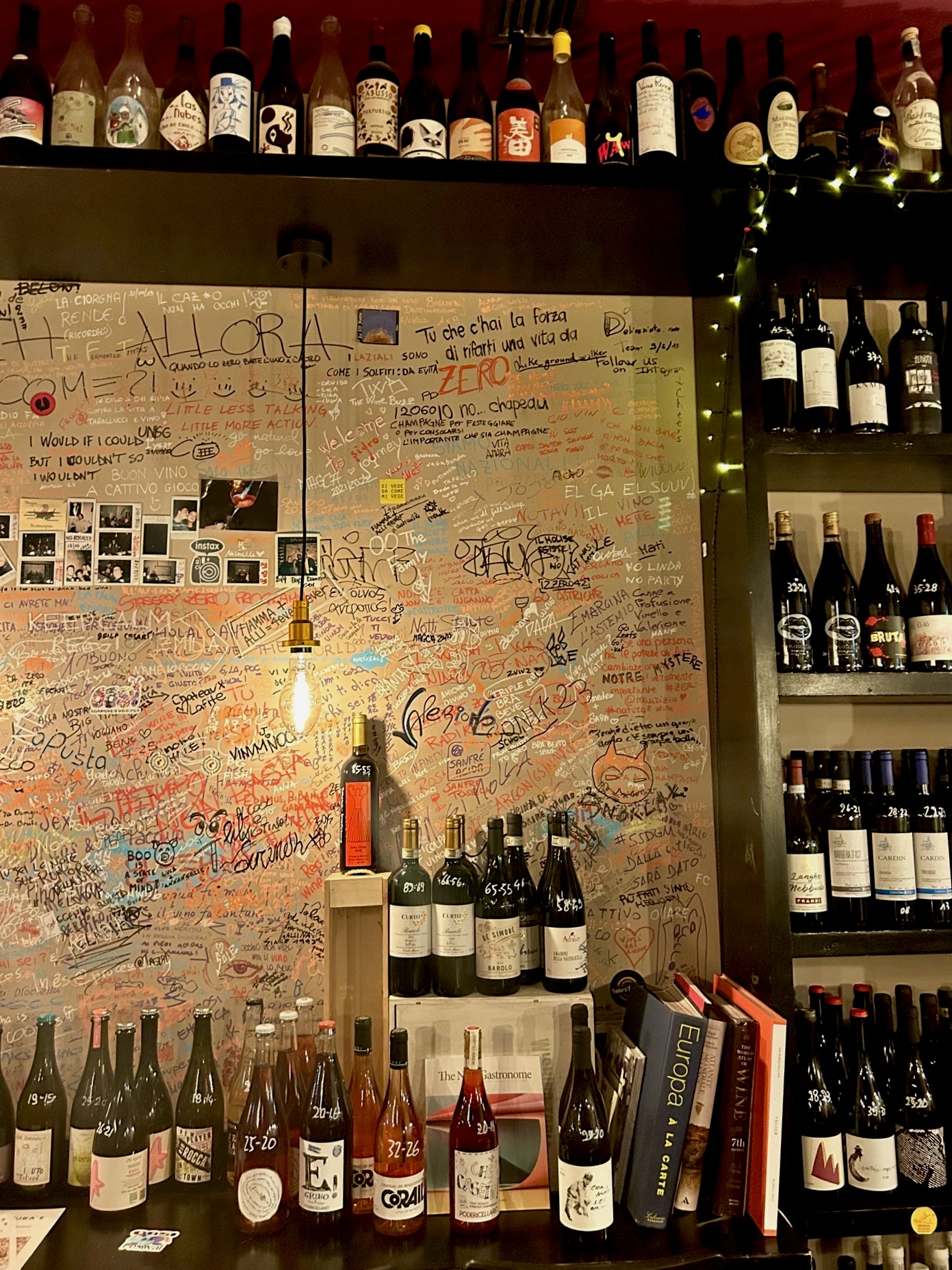
A wall filled with natural wine and UNISG student's signatures at Zero Enoteca Conviviale
WHAT TO DO IN ROERO
If you visit at the end of June, don’t miss Usanze in Cisterna d’Asti. This hidden-gem festival, held in the village’s historic castle, is an important community event, with food, micro-markets, and live music or DJs.
Explore the Rocche — This area is defined by the maze-like rocche, which cover a landscape of 30 km. The rocche are winding caverns in the sandy clay cliffs, carved out by ancient river beds and originating from the withdrawal of sea water and the so-called “capture of the Tanaro”, when the river deviated about 250 million years ago. The rocche in Monteu Roero are sometimes visitable thanks to tours organized by the Bel Monteu Cultural Association.
Go for a hike — There’s no shortage of stunning paths to get lost in across the Roero countryside. Head to the Rocche of Pocapaglia to find the Grotta dell’Eremita (Hermit’s Rock), where trails weave through deep caves that are often mentioned in old legends of witchcraft. Alternatively, the Santuario dei Piloni (between Canale and Montà) offers a 6-km panoramic loop past holy shrines in the area’s wild woods. The Ecomuseum of the Rocche del Roero runs a network of food and bike paths connecting Montà, Montaldo, and Santo Stefano. Favorite trails include the Sentiero del Tasso, Sentiero dei Fossili, and Sentiero della Castagna Granda, which leads to a monumental, 250-year-old chestnut tree.
To explore the region through the eyes of passionate locals, connect with Ettore Chiavassa and Paolo Pertusio (I Pastori del Roero). Ettore acts as your trail guide, while Paolo hosts tastings inside traditional crutin (rock-hewn cellars) and shares stories of local shepherd life.
If you’d prefer to traverse the hilly region by Vespa and/or bike, Ferrero Moto and Vélotourist are great places to rent from, respectively.
Video by Paolo Bevolo
Go truffle hunting — The Educational Truffle Grounds in Vezza d’Alba is a perfect hands-on introduction to the territory, where you can get your boots dirty and follow trained dogs to search for these buried treasures.
Visit a winery — I could tell you a nuance about every producer in this region, but the real pleasure is discovering them yourself. Here’s my full guide to the best wineries in the region. In the meantime, I’m waiting for you in my own cellar at Hilberg Pasquero (Priocca) for a walk through the vineyards and a look inside our rock-carved crutin to explore the geology that lies at the root of it all. Our winery has been a pioneer of organic and biodynamic farming since the ’80s. Tastings are either up on the hill surrounded by vines or in the aging cellar among the barrels.
Go horseback riding — The historic Circolo Ippico Malabaila offers refined equestrian experiences within the surrounding estate, while Le Querce del Vareglio is an oak-lined setup ideal for booking guided treks through the region’s wilder valleys.
View the frescoes at the Chiesa di San Servasio — In the hills of Castellinaldo, and once home to a cloistered monastery, this church boasts fantastic medieval frescoes that date back to 1581. It’s reachable via a particularly scenic drive.
Visit a farm in Guarne — L’Orto Smeraldo is a beautifully kept property designed to connect visitors with traditional family countryside life. You can wander through their vegetable gardens and orchards, and pick up fresh seasonal produce and other handmade products from their farm stop. Juppi Fattoria Didattica is a working farm that doubles as a kids’ playground. You can visit to harvest apricots, have a picnic in the orchard, or just stock up on some produce while the kids can enjoy farm animals and outdoor workshops.
Visit a castle — Roero’s skyline is punctuated by medieval fortresses. The gothic, 14th-century Castello Roero – Monticello d’Alba is the area’s crowning jewel; one of the best-preserved medieval structures in Italy, it has belonged to the same noble family for centuries and is a rare chance to see intact fortified feudal architecture. The Castle of Cisterna d’Asti houses a Museum of Arts and Crafts dedicated to forgotten rural trades, while the beautiful 12th-century Castle of Monteu Roero boasts panoramic viewpoints and tours thanks to local volunteers of the Bel Monteu Association who love the castle and what it represents.
Walk through an art park — Located in the Madonna di Celle district of Guarene, the Sandretto Re Rebaudengo Art Park is a 30-year-old open-air park. Cutting-edge contemporary sculptures, some created specifically for installation here, are juxtaposed against rolling hills and neatly manicured rows of vines.
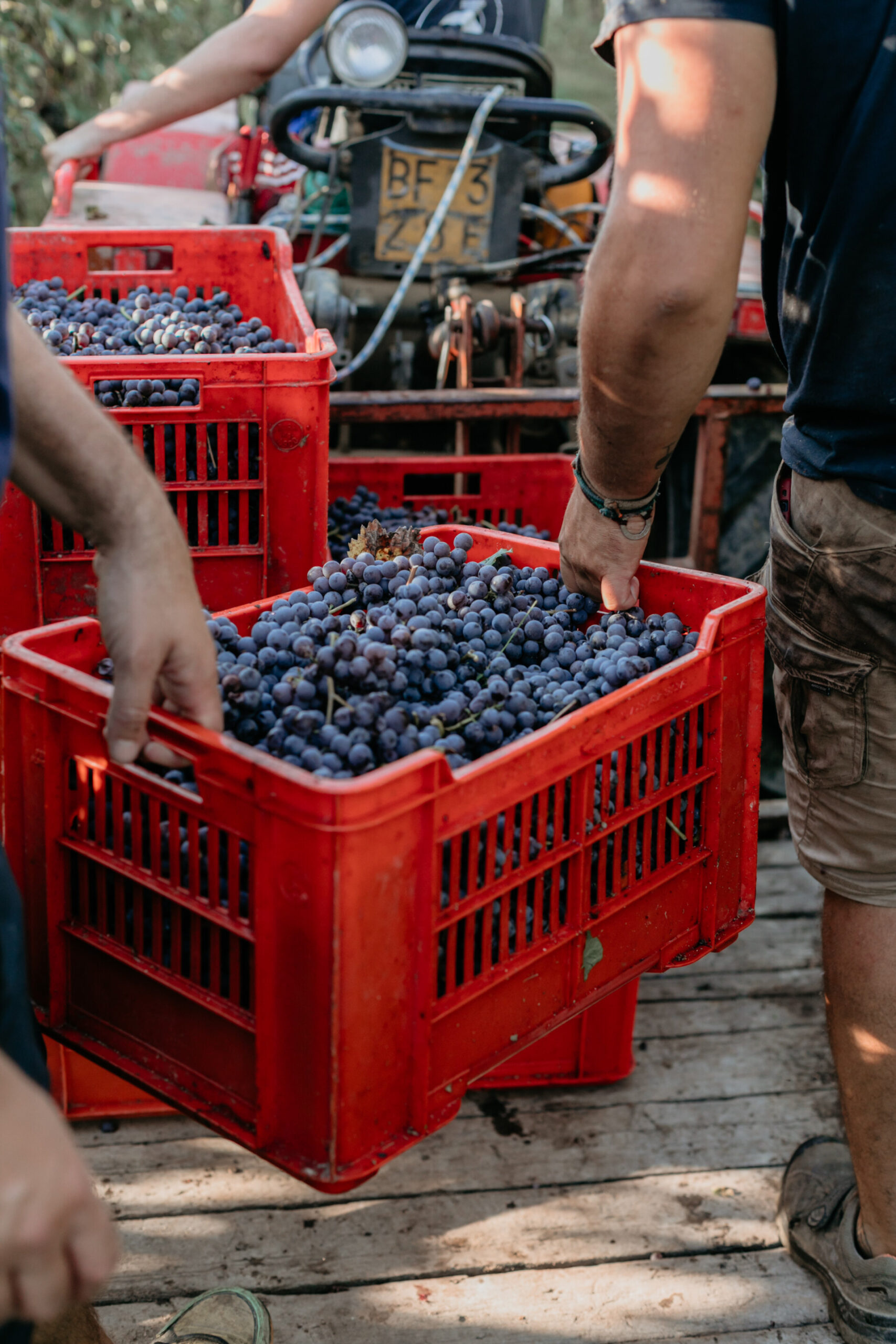
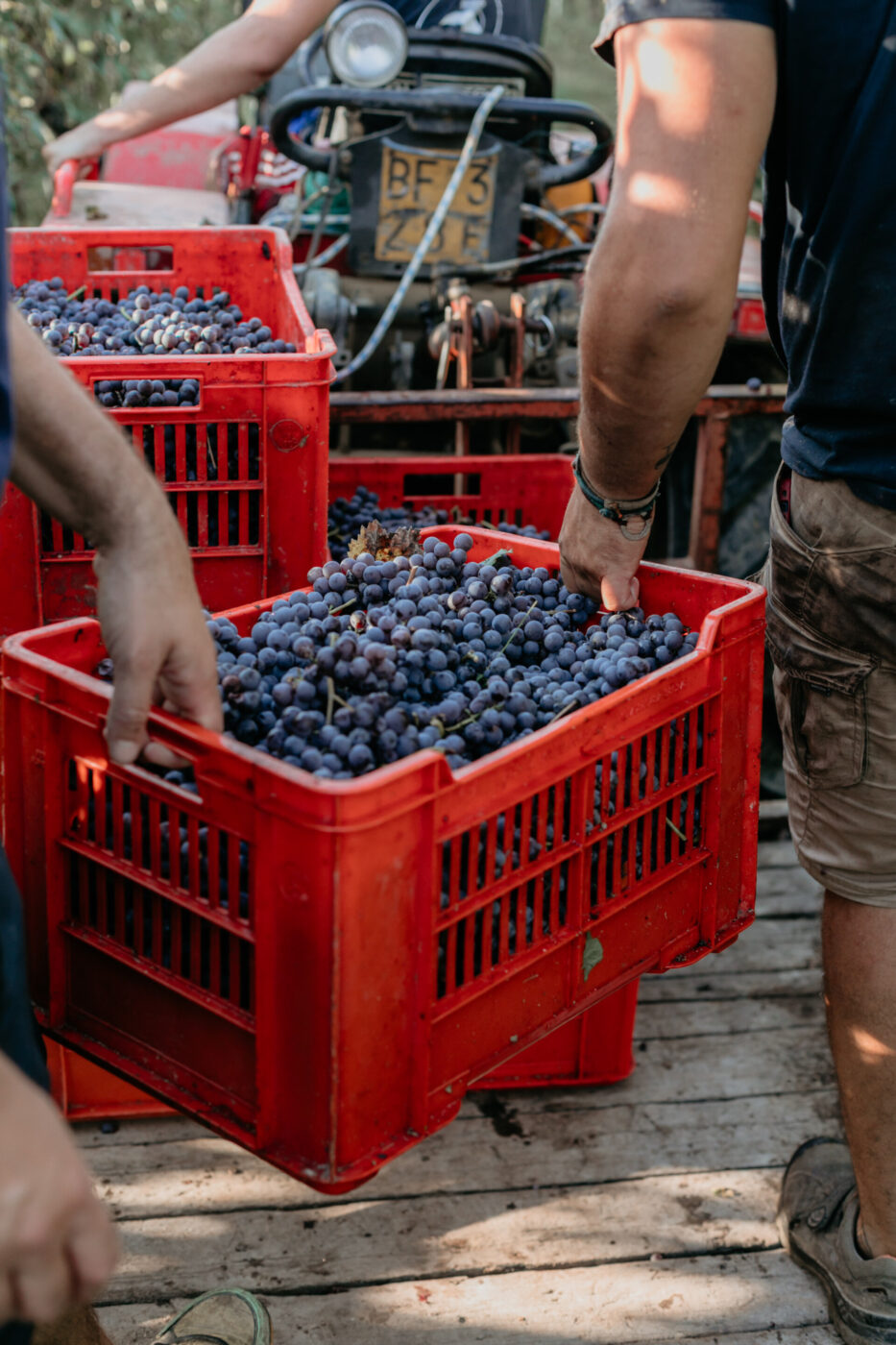
Vendemmia at Priocca – Hilberg Pasquero Winery; Photo by Valentina Malone.
WHERE TO SHOP IN ROERO
Food shopping — In Canale, stop into Bono Nella e Pagliarino for cheese, Biologicamente in Canale for local produce, and Macelleria Salumeria Del Nostro Sacco di Sacco Marco for the best meat for a barbecue. In Monteu Roero, get saffron at Ottavo Sapore and jams, honey, and juice at R’era ‘d Minot. And in Cornegliano, get Fassona dry-aged beef at Macelleria F.Lli Bonino.
Roagna Calzolai (Canale) — A family workshop passed down for generations, this shoe-repair shop has walls lined with vintage wooden shoe lasts and a space dedicated to the dying art of hand-stitching, repairing, and custom-molding footwear.
Scarsi (Canale) — A metalwork shop straight out of another era, owned by three brothers whose family legacy in metalworking dates back to 1850. These blacksmiths help to keep the ancient art of hand-forging iron alive, making everything from functional everyday objects to delicate, fluid sculptures.
Valtorta (Canale) – Four generations of talented carpenters have run this woodworking shop, which specializes in house installations like doors, cabinets, and large tables.
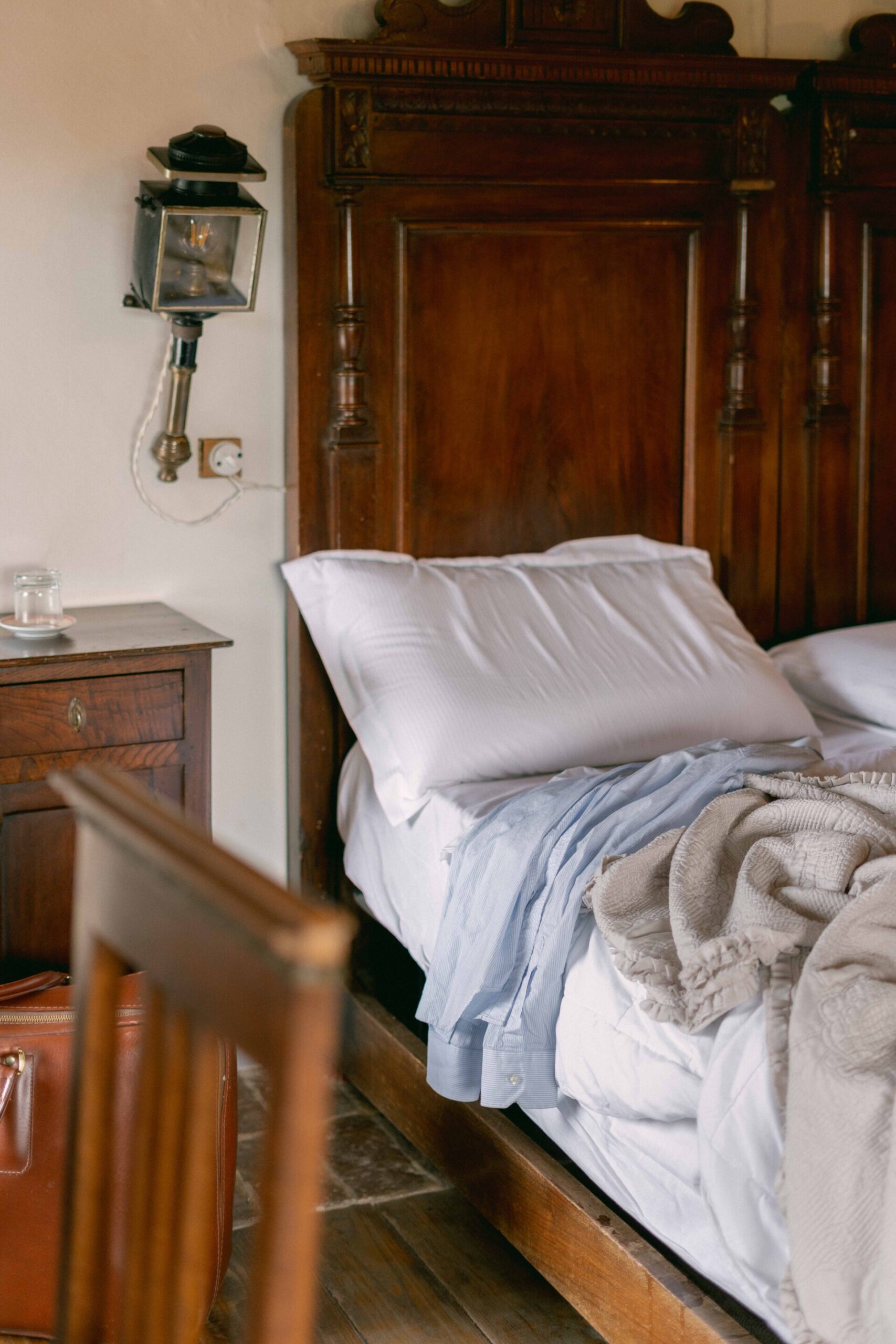
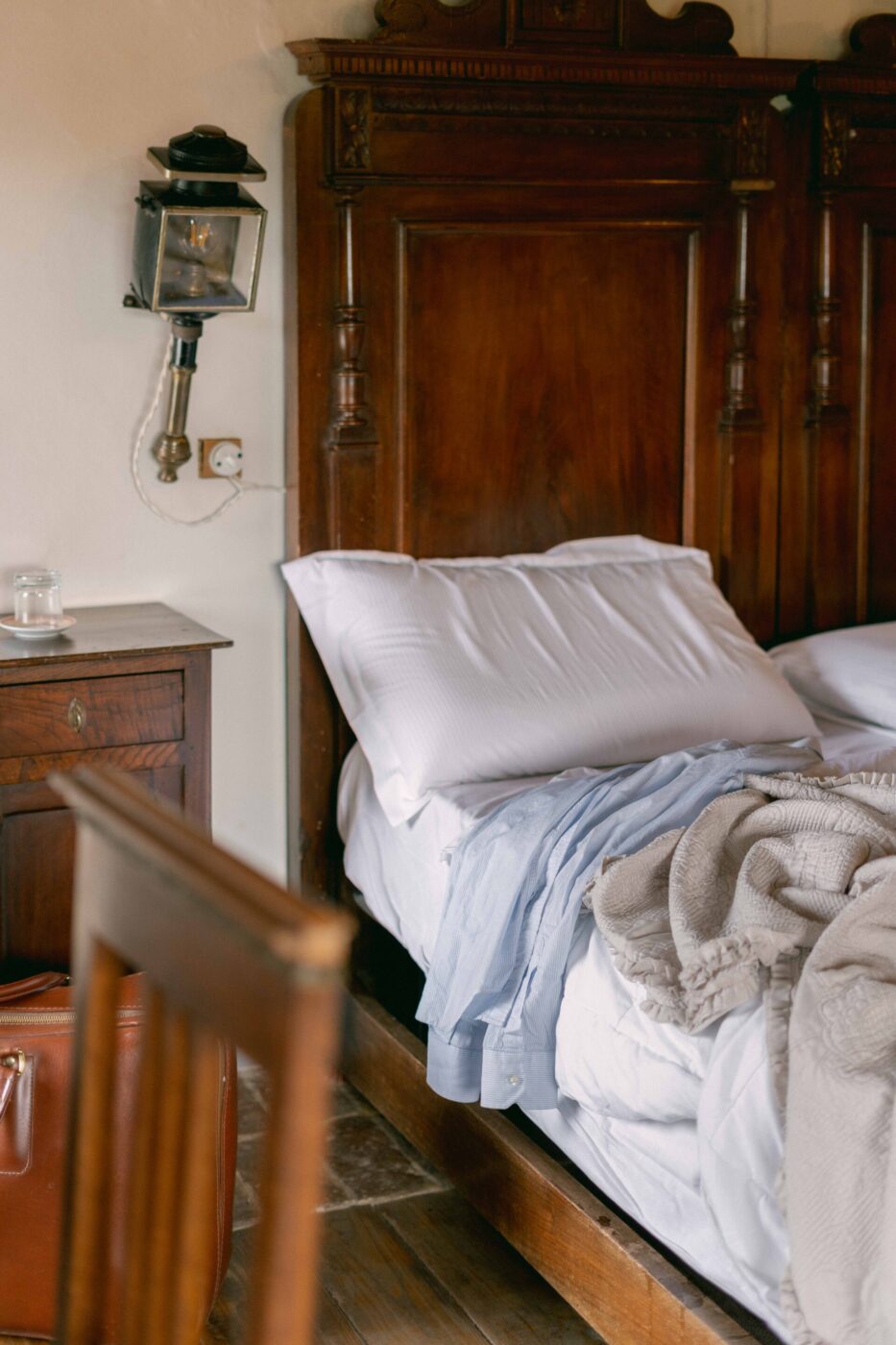
Photo courtesy of Casa Scaparone
WHERE TO STAY IN ROERO
Casa Scaparone (Alba) — A countryside retreat for those looking for something authentic yet chic. The 500-year-old hilltop farmstead is made of restored brick and stone, operating as Alba’s only estate with both an on-site organic osteria and lodging. Across its nine rustic rooms, expect antique sleigh beds, vintage terracotta floors, and a myriad of “hipster-agri” details. It features an open-air pool, vineyard dining tables, and spaces for yoga or florist workshops.
Agriturismo Ca’ Nadin (San Damiano) — Located at the gateway to the region for travelers arriving from Turin or Milan, this working livestock and wine farm is run by a young local couple, who gave the villa a modern twist. They have three bedrooms (each named after a local flora like Sage or Lavender) alongside an on-site workshop making fresh pasta, a regional wine shop, and a new vineyard-facing pool kiosk.
Roero House (Magliano Alfieri) — A strategic rental base positioned just below the ramparts of the Magliano castle, making it easy to jump between Roero’s canyons and the Langhe wine trail. The setup is a single, multi-level private house layout featuring two bedrooms that can sleep up to seven guests total, giving you the entire property to yourself. Prices vary by season.
Lindhouse Casa Vacanze (Govone) — Situated in a tranquil hamlet easily reachable for those coming from the direction of Asti, this property is split into just two independent, self-catering holiday apartments. It’s an ideal destination for cyclists, since it’s close to nearby trails. Although it’s an apartment and not a hotel, the hosts deliver a local breakfast basket directly to your door each morning.
Greeneria (Guarene) — A forward-thinking eco-farmhouse built entirely around bio-building principles, utilizing sustainable timber and non-toxic materials. Positioned right on the border of Roero and Langhe, it offers a tiny footprint of energy-efficient eco-rooms and apartments complete with private garden patios, a tennis court, and electric vehicle charging.
Braja Farmhouse (Sommariva del Bosco) — Run by a professional gastronomer and Slow Food alumna, this historic, recently renovated farmhouse features three well-designed guest rooms. The experience centers around food, plus a seasonal pool, a sun terrace, and highly curated breakfasts made with zero-kilometer ingredients from the estate’s orchard.
Agriturismo 1883 San Grato — A historic agriturismo sitting directly on the edge of the Rocche del Roero cliffs. Designed specifically as a base camp for hikers and nature enthusiasts, the small collection of rooms provides immediate, doorstep access to the region’s famous yellow-sandstone canyon trails.
Castello di Guarene — While this massive 18th-century fortress is famous for its luxury stays, skip the overnight and head straight here to book their world-class, subterranean spa—an opulent, high-end wellness retreat built beneath the fortress with an indoor pool carved directly out of the castle rock face. Spa access by reservation only.