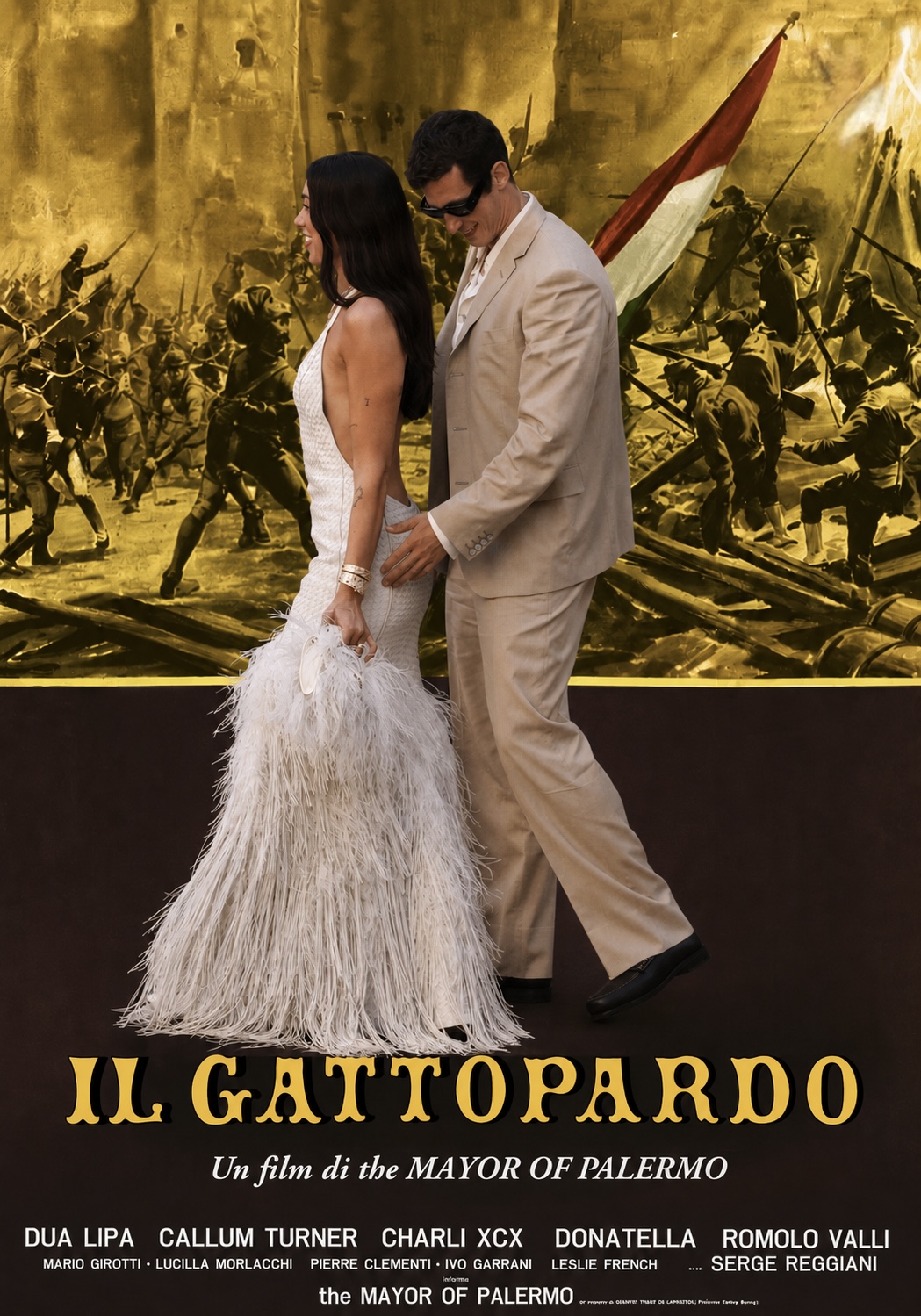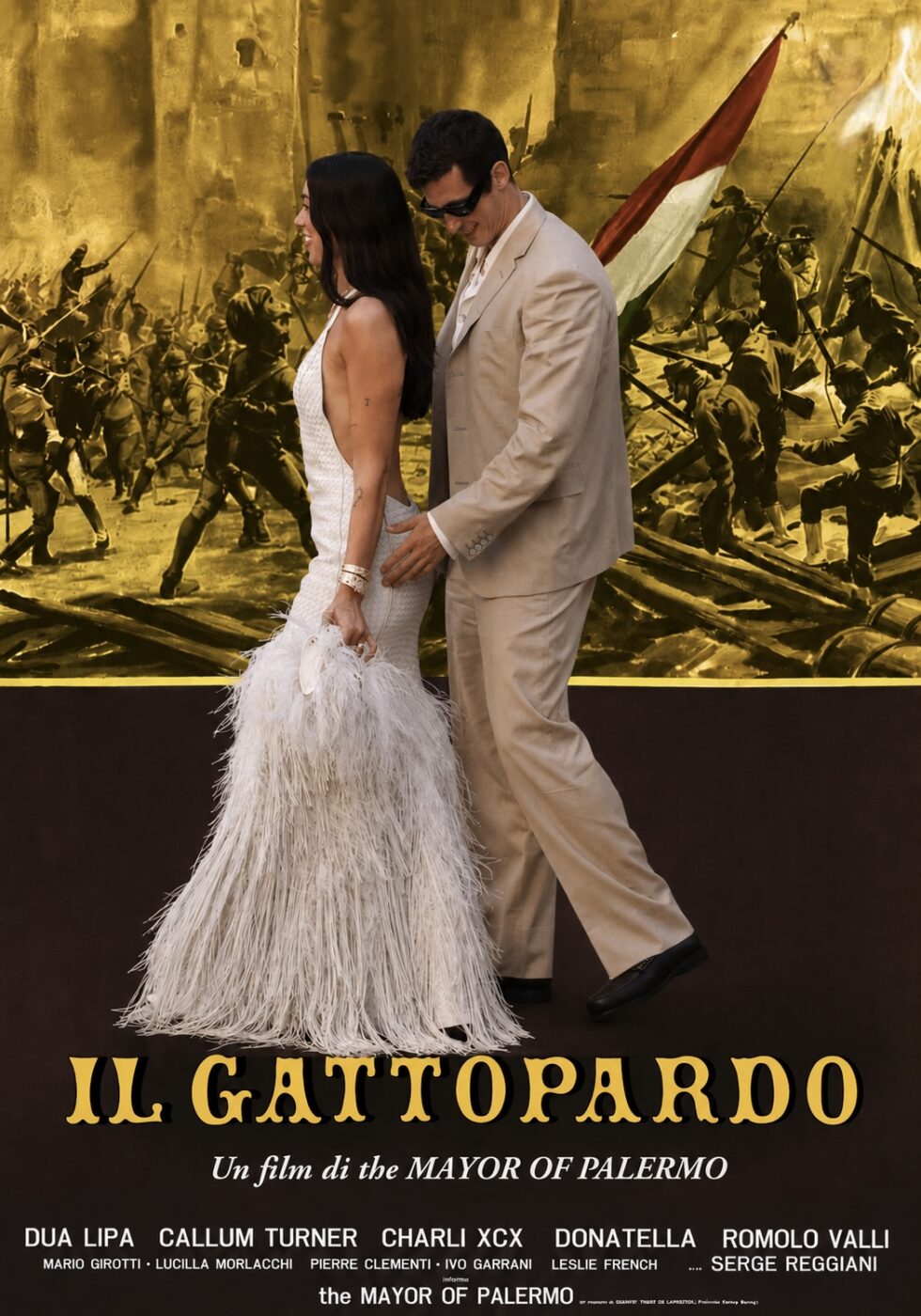
The core argument of Giuseppe Tomasi di Lampedusa’s Il Gattopardo (The Leopard) is perhaps most famously captured by Tancredi, who offers his uncle, the Prince of Salina, this advice: “If we want everything to stay as it is, everything has to change.” In the 19th century, this meant the cash-poor Sicilian aristocracy had to swallow their pride and marry into the newly rich bourgeoisie to preserve their status, trading cultural prestige for the liquid capital needed to keep their estates from crumbling.
Today, that historic compromise is playing out in a surreal modern reverse, crystallized perfectly by the star-studded wedding of 30-year-old pop icon Dua Lipa and 36-year-old actor Callum Turner this past weekend.
The couple arrived in Palermo by private jet on Thursday night, initiating a series of scheduled closures across the city’s public and historic sites. The itinerary included a private rental of the city’s impressive Galleria d’Arte Moderna, which the couple paid a reported €10,000 for. Security teams also cordoned off the 18th-century Croce dei Vespri square, which was transformed into a vintage bookstore in a nod to how Lipa and Turner met while reading the same novel, and blocked a number of arteries around it. In an irony almost too heavy-handed for fiction, the singer’s multi-day nuptials culminated at Palermo’s Palazzo Gangi—the very palace whose gilded ballroom served as the setting for Luchino Visconti’s 1963 cinematic adaptation of Lampedusa’s novel. Where Visconti once filmed the bittersweet waltz of a dying aristocracy, Lipa, in a white leather woven Bottega Veneta dress with ostrich feathers, and her guests, in microchipped gold bracelets (functioning as security wristbands), danced under frescoed ceilings now repurposed for the global entertainment apparatus.
But outside the iron gates of Palazzo Gangi and the baroque walls of Villa Valguarnera, the mood on the streets of Palermo and Bagheria didn’t match the image of the romantic fairy tale. Although the couple’s celebrations had an estimated €268 million impact on the Palermo metro area, local activists and residents gathered along the police lines, draping barricades with banners reading “Palermo non è in affitto” (“Palermo is not for rent”)—a protest against the city being excised and sold to the highest bidder for a three-day VIP playground. Many local citizens lamented that while halting daily life might be comprehensible for an event of profound civic or spiritual gravity, it felt insulting to see their historic neighborhoods shut down so that a pop star’s vanguard could party undisturbed by the public gaze.
Not long ago, Venice bore witness to a similar dynamic when Amazon founder Jeff Bezos celebrated his wedding to Lauren Sánchez. Bezos’s mega-gala cordoned off the historic Venetian Arsenal and the pristine banks of the lagoon, transforming the monument of naval history into a temporary Silicon Valley fiefdom.
On the surface, Lipa and Bezos inhabit entirely different cultural ecosystems. Full disclosure, no one at this office would go to bat for Bezos. But, we do harbor a collective obsession with Dua Lipa, whom we generally consider to be an unproblematic queen—slang that admittedly becomes a bit too literal when she is requisitioning Sicilian estates. But leaning into that favoritism would be a heuristic fallacy, because she and Bezos have done more or less the same thing.
In the modern iteration of Lampedusa’s dance, the cash-strapped municipal governments and heritage boards of Europe have become the modern-day Prince of Salina. Burdened by stagnant economies and the staggering maintenance costs of preserving centuries-old sites, local authorities are making desperate pacts with a new global bourgeoisie. The terms of the deal, however, have grown more extractive. Unlike the 19th-century merchant class, which sought to integrate into the old world and adopt its customs, today’s hyper-wealthy have no interest in joining the local culture; they merely wish to lease its aesthetic for the weekend.
Visconti’s sweeping ballroom scene in The Leopard captures the exact moment the old order realizes its authority has evaporated into thin air. By staging Lipa and Turner’s wedding in that exact room, the changing of the guard in global prestige becomes unmistakable. Power no longer resides in old European bloodlines—a historical riddance no one should mourn—but neither does it reside in municipal governments. It belongs to a borderless elite of the digital and entertainment age who can deploy private security guards to push Italian locals out of their own town squares. When modern mayors defend these disruptions by promising luxury tourism and global visibility, they fail to calculate the true cultural cost. When public infrastructure is surrendered to private billionaires, the message to the populace is: your home is a commodity, and you are merely renting space in a museum owned by someone else.
It seems the prophecy of Il Gattopardo will reach its logical, tragic conclusion. The palaces of Sicily will remain standing, beautifully restored with corporate funds, and the canals of Venice will shine under custom lighting installations. But the communities that gave these places their soul will be displaced, pushed to the margins by velvet ropes and non-disclosure agreements.
The old leopards of Italy have long since faded into history, but the new leopards have arrived to take their place, checking (gold) wristbands at the door.