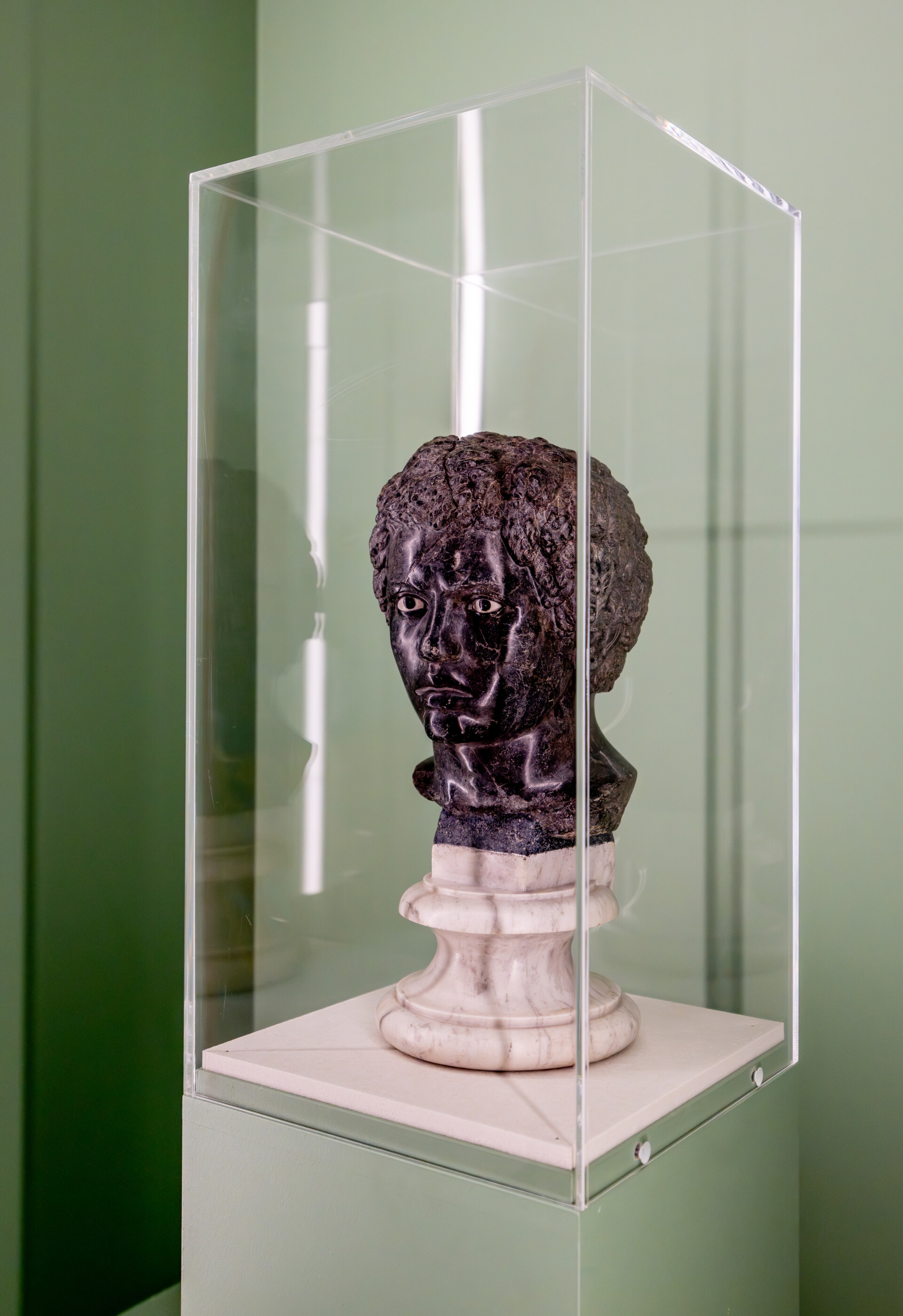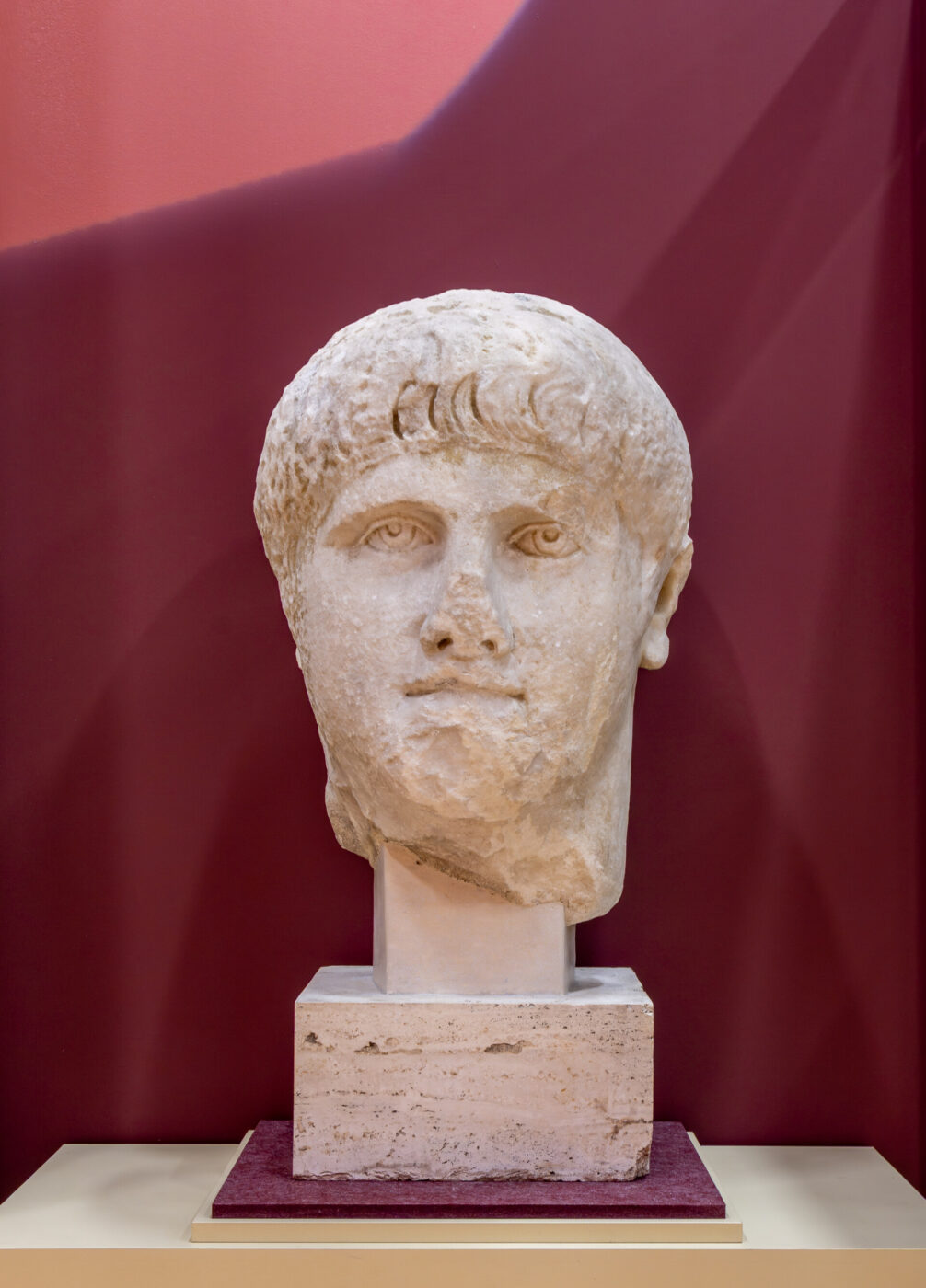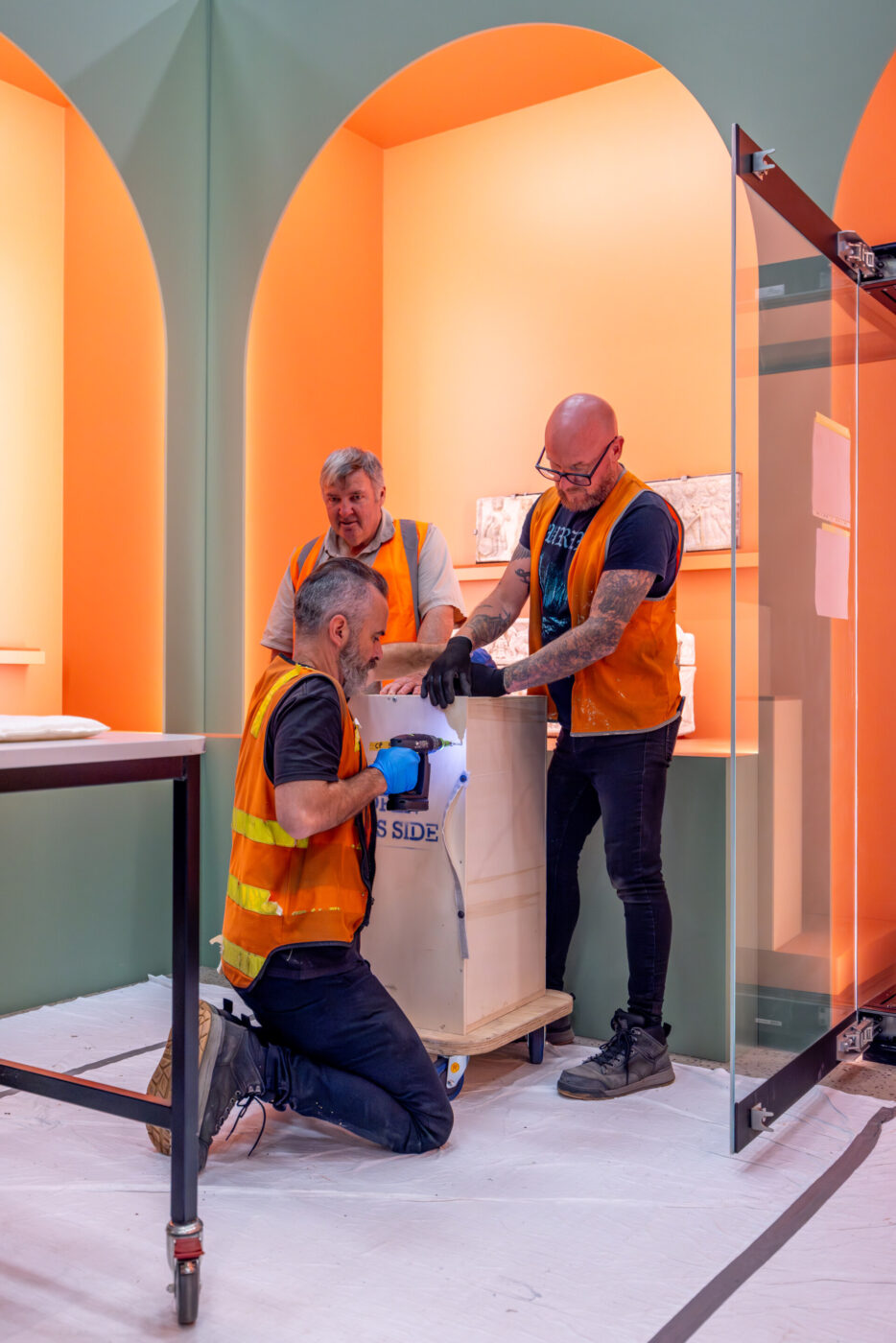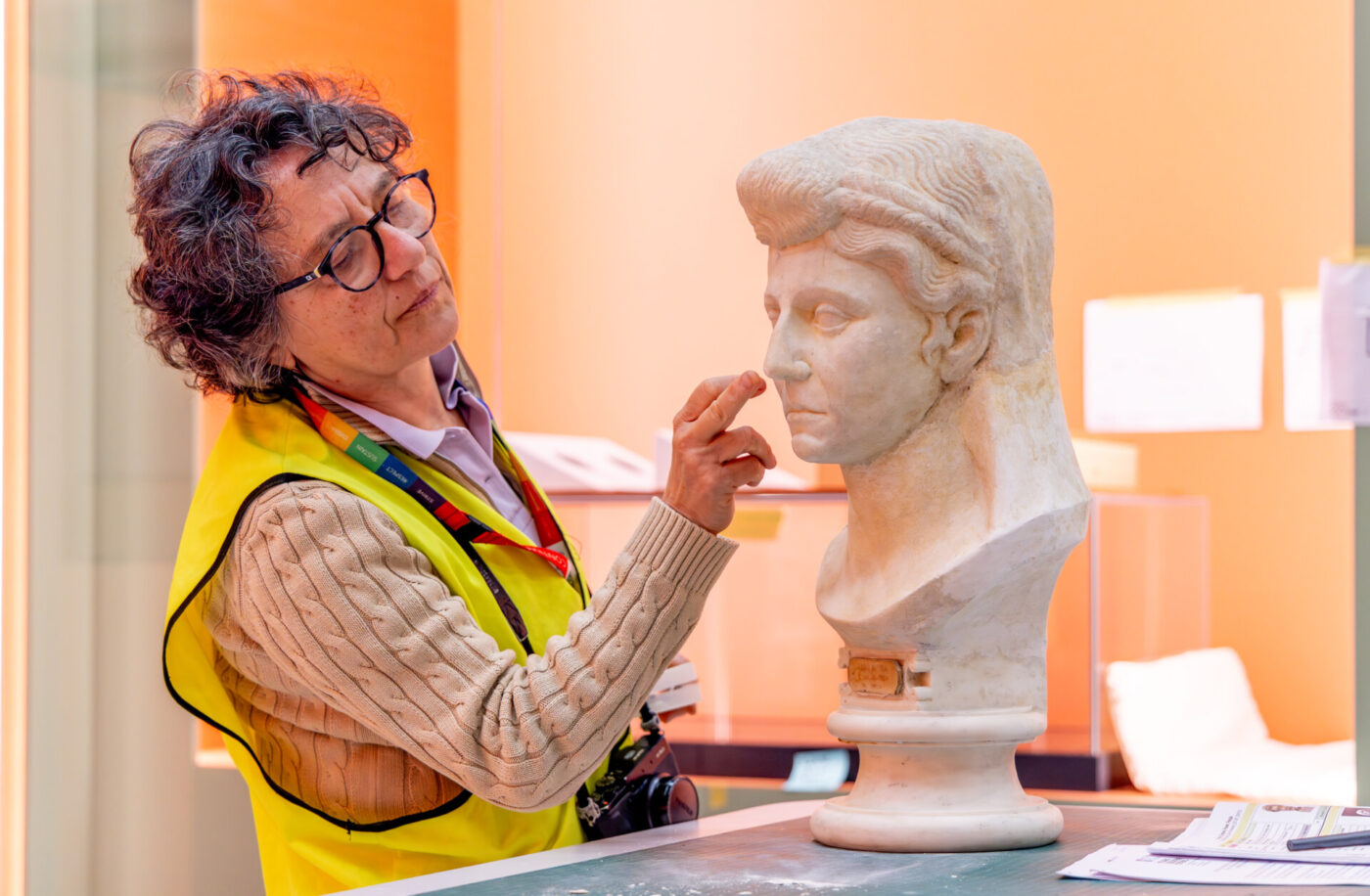
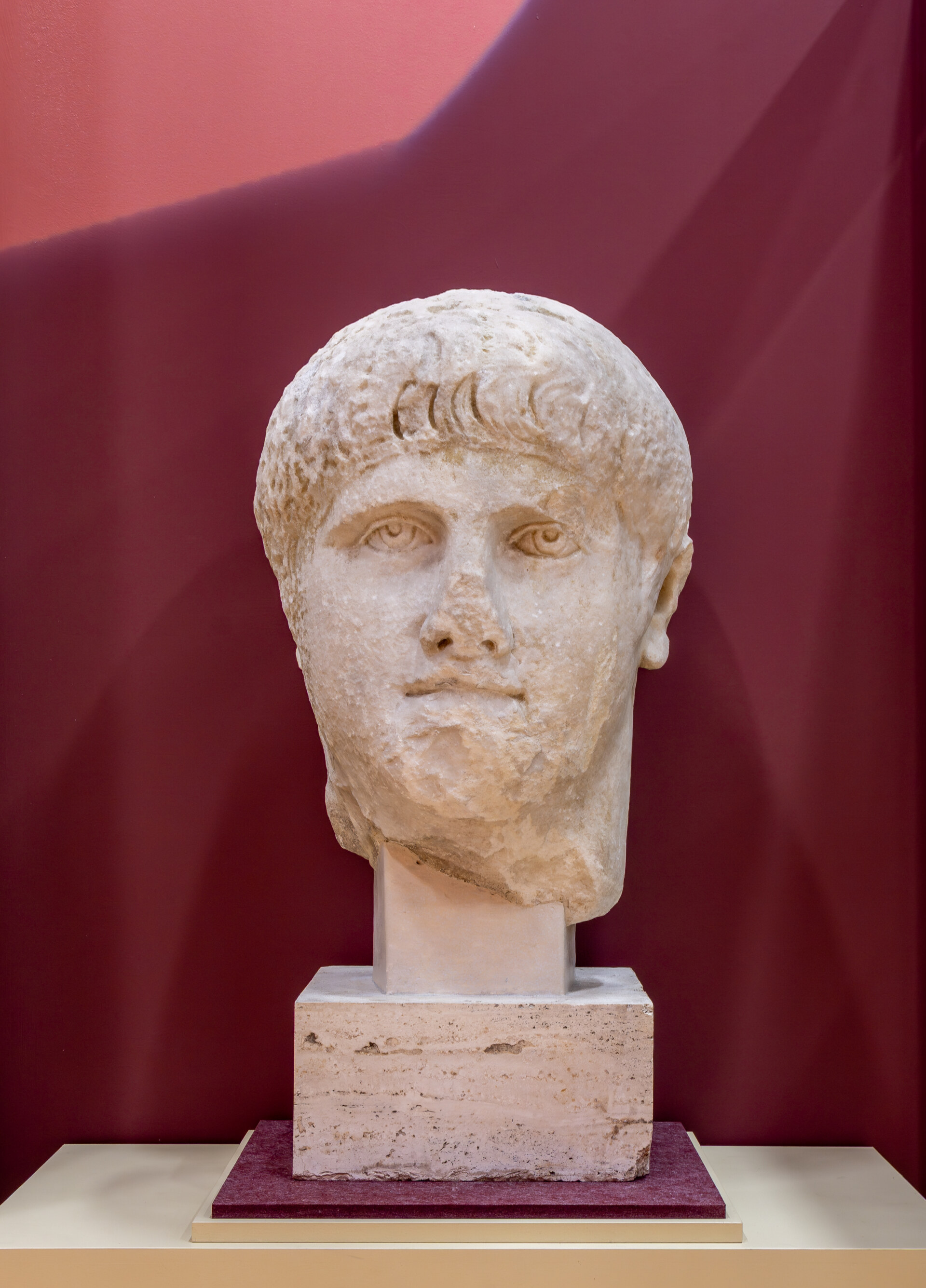
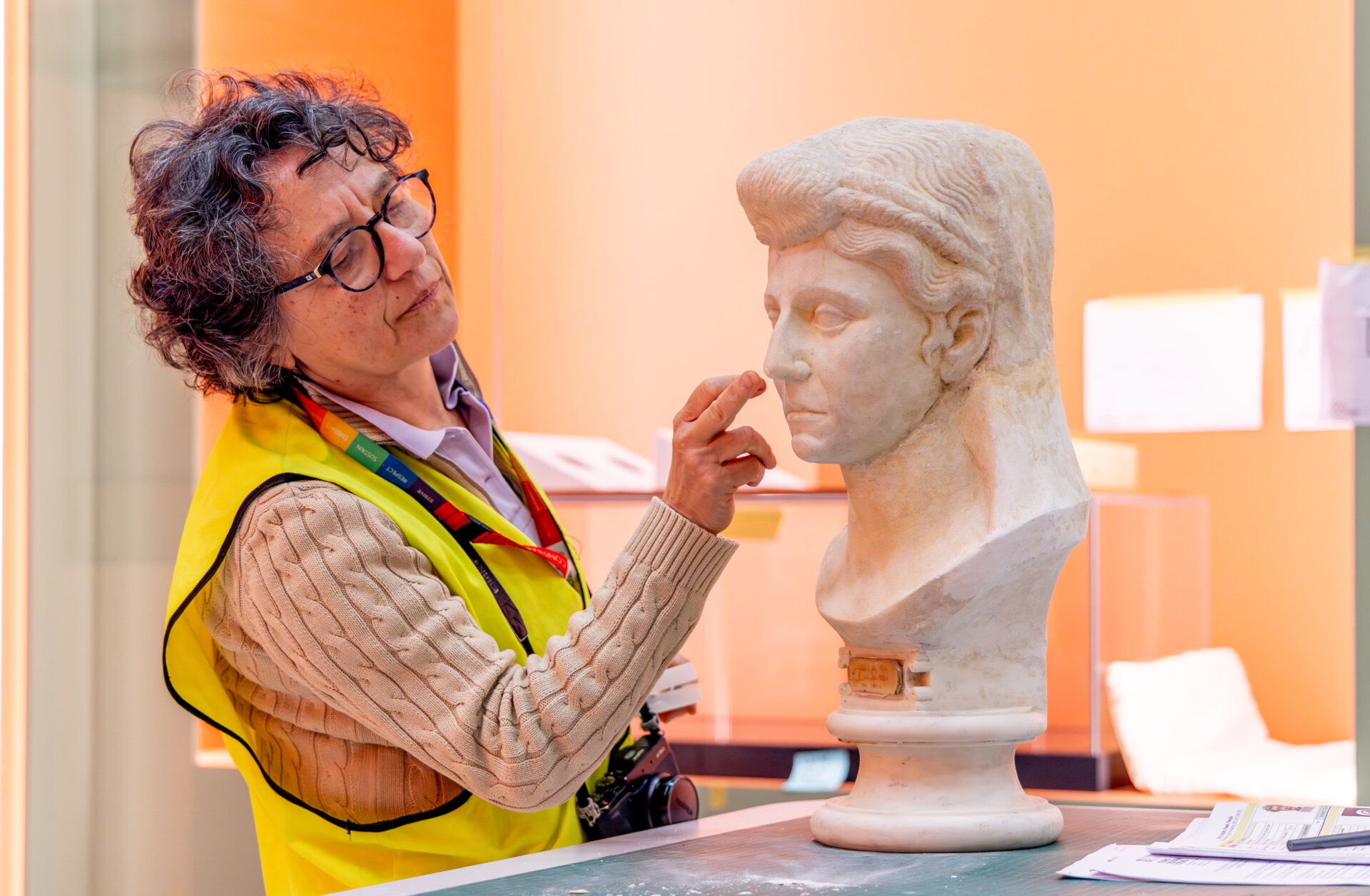
Try unboxing the solid marble head of Emperor Nero from the period 54–68 CE, sent express from the Eternal City itself. Object ID 12613: that’s him “on paper,” for reference. Imagine cracking open the wooden transport crates, ripping off those layers of shock-absorbing foam, unraveling more layers of protective Japanese paper, untabbing all the tabs…Finally, you come ‘faccia a faccia’ with that noseless Roman visage. Signori, the man needs air.
It’s no light work; packing, transporting, and “unboxing” ancient artifacts from Italy’s national museums. Each year these statues, busts, slabs, inscriptions, and assorted antiquities emerge from storage to be sent as precious cargo to museums around the world where they star in exhibitions dedicated to ancient Rome and ancient cultures. For Emperor Nero, it’s time to shine after a hiatus in storage at Rome’s Museo delle Terme di Diocleziano. He’s ready for his close up.
Courtesy of Museums Victoria
HOW ANCIENT ROME ENDS UP IN MELBOURNE
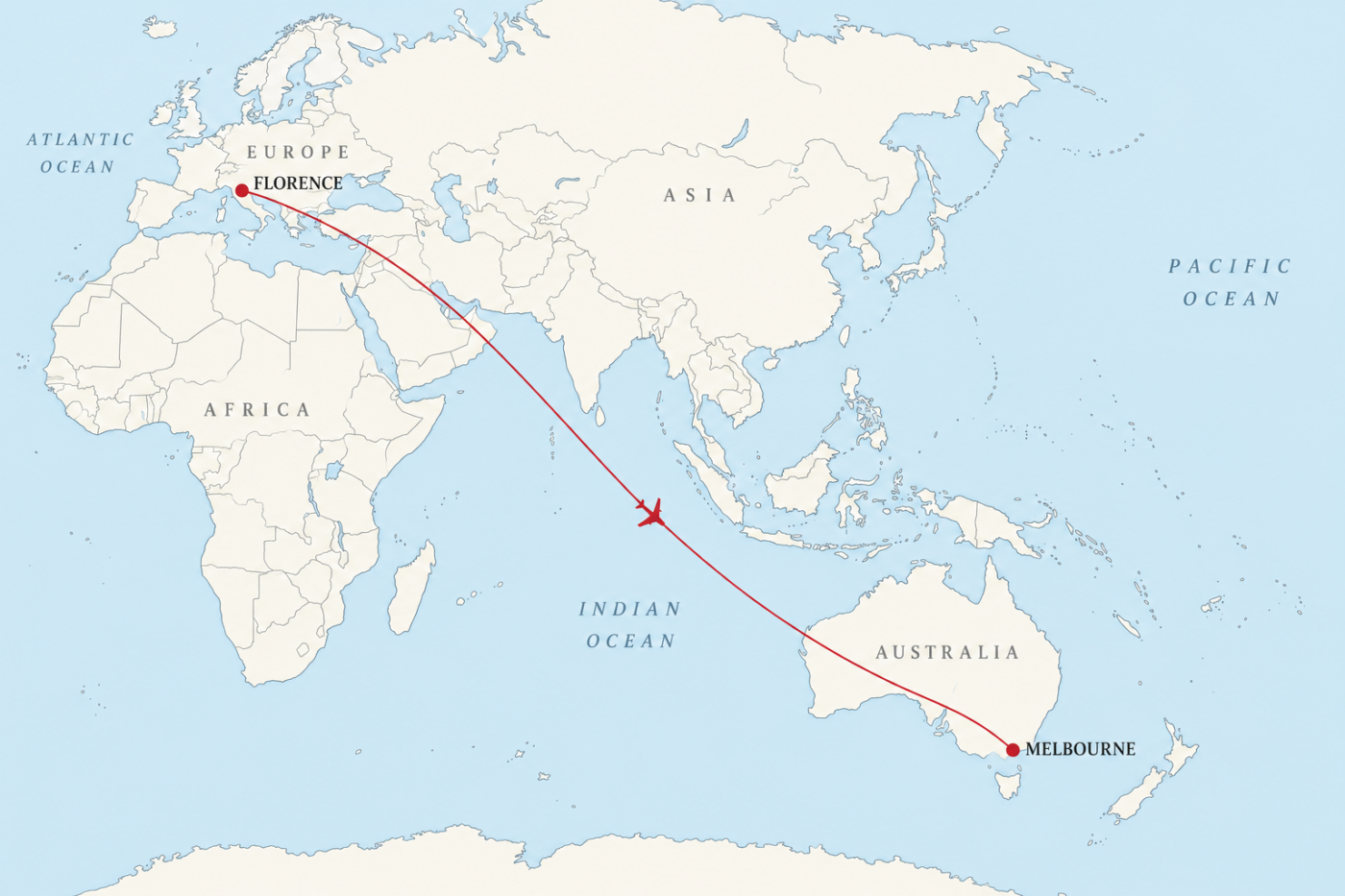
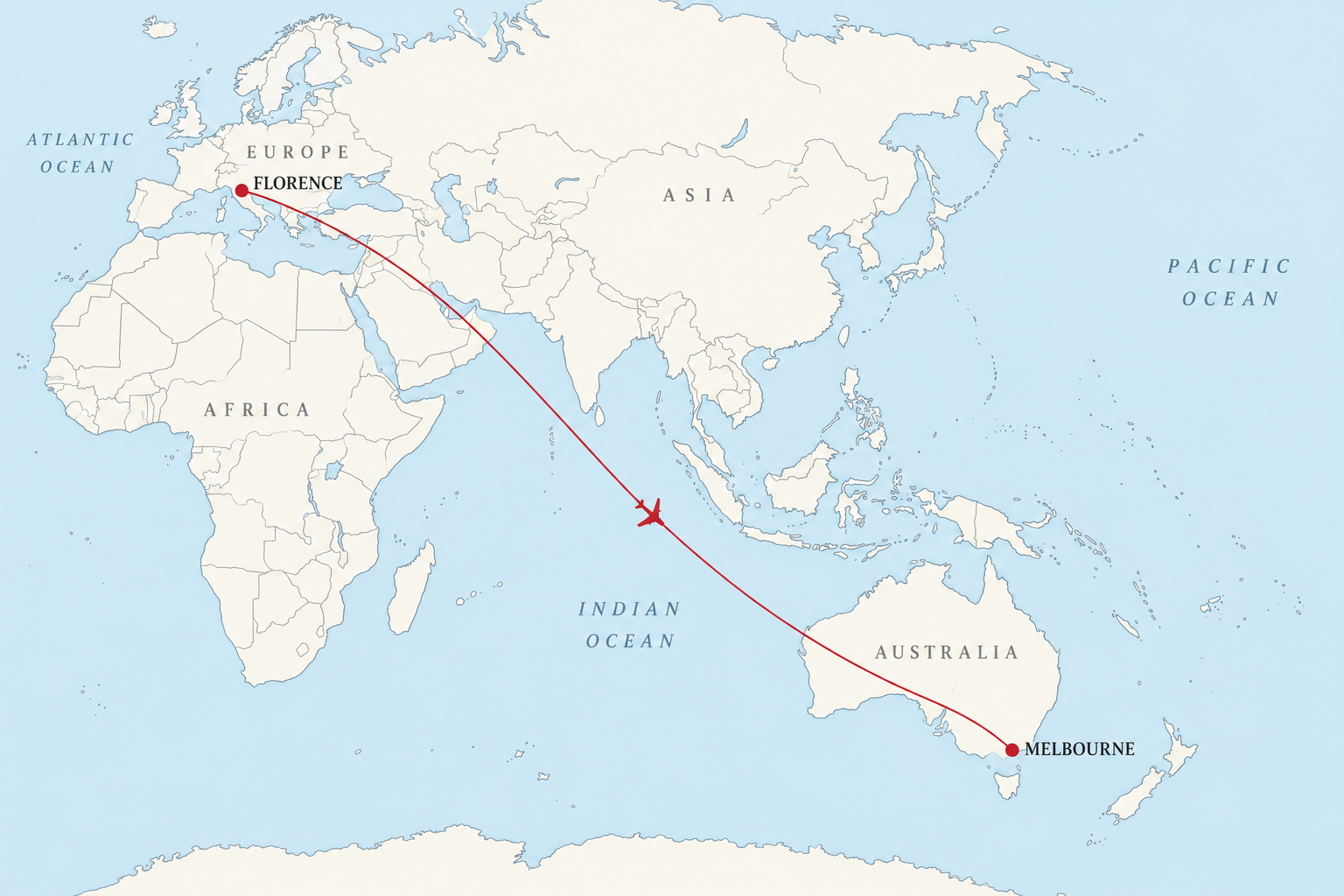
Earlier this year, he—and a 63-page list of artifacts from the Museo Nazionale Romano and the Museo Archeologico Nazionale di Firenze—were packaged up and air-freighted to the other side of the world. To Australia, if fact. Twenty-four-plus hours and a change of hemisphere later, they arrived in Melbourne, where they are currently on display in the Melbourne Museum’s archaeological exhibition Rome: Empire, Power, People.
“This is the first curatorial project we’ve undertaken in Australia, though we’ve had similar experiences in many European and Asian countries,” says Dr Federica Rinaldi, Director of Museo Nazionale Romano and one of the exhibition’s curators.
“This Melbourne Museum exhibition is truly a ‘museum within a museum’ experience, featuring significant pieces that have not found a place in our permanent collection in Rome. This has allowed us to showcase important, high-quality artefacts, while ensuring there are no empty spaces in our galleries,” she shares.
Managing the international transportation and installation of these antiquities is surely the definition of a logistical nightmare. But Florence-based exhibition management company Contemporanea Progetti has turned this feat into a fine art. The team, which comprises art historians, archaeologists, architects, and management experts, partner with the likes of the Museo Nazionale Romano to create temporary exhibitions around the world that showcase Italy’s archaeological, historical, and cultural legacy. For more than 20 years, they have been staging exhibitions dedicated to everything from gladiators and Pompeii, to Marco Polo and ancient pirates of the Mediterranean.
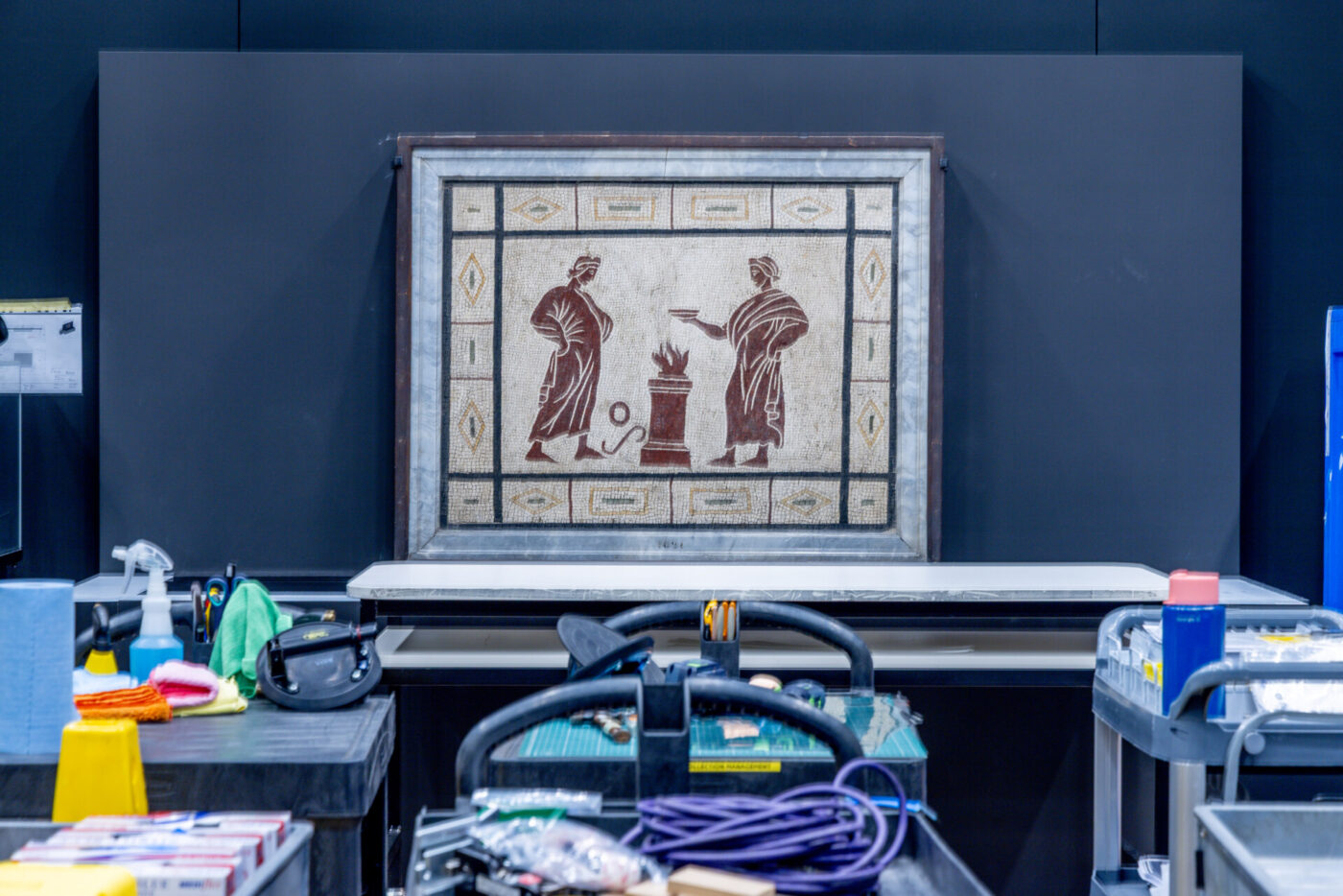
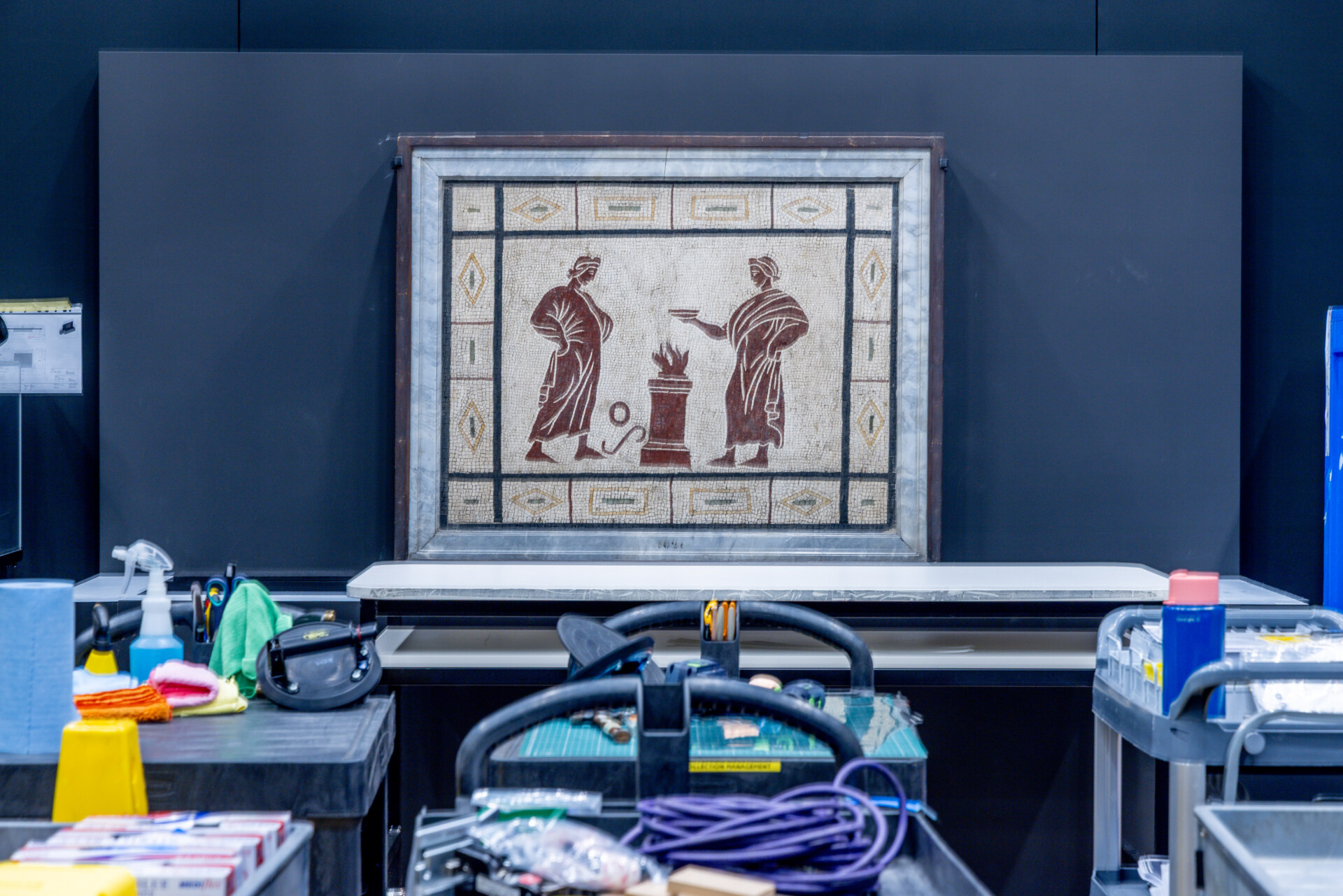
So, Giulia Buscaroli (project manager of Contemporanea Progetti’s exhibitions department) and her team packed their bags—and 180 ancient Roman antiquities—and set off for Melbourne for the first time. At the Melbourne Museum, they have created what she calls one of the “largest and most ambitious” international exhibition projects in the company’s history. Developed in collaboration with Museums Victoria, Dr Federica Rinaldi, and other curators from the Museo Nazionale Romano, this exhibition is a taste of ancient Rome’s power and opulence as well as everyday civilian life through a collection of artifacts that have never touched down on Australian soil before. These includes a fine-grained white marble sarcophagus carved with scenes of prisoners (late 2nd century CE), a bronze Roman helmet from the imperial period, a fresco wall panel from the Theatre of Nemi (1st century CE), and collections of ancient ceramics, jewelry, coins, and everyday household objects.
WHO DECIDES THE TRAVEL SHORTLIST?
Emperor Nero and the gang obviously didn’t just magically appear in Melbourne. The process began, Buscaroli explains, with discussions between Contemporanea Progetti and the exhibition’s curators to determine which objects in storage are most suitable for displaying to an international audience, and which ones are “fit” for such a journey. Curators check the objects’ availability, condition, and capacity to travel—not unlike the recommended health check one receives before any long-distance trip. Then it’s on to the paperwork, allora, a mountain of it. Oh yes, and insurance; kind of important. As with all these international exhibition projects, “nail-to-nail, all-risks covered” insurance is arranged by Contemporanea Progetti in accordance with the lending museum’s requirements. This coverage protects each object from the moment it leaves its home museum until it returns safely. Because when ancient Rome is jetting around the word at 35,000 feet, nobody is about to play games.
Courtesy of Museums Victoria
HOW DO YOU PACK AN EMPEROR?
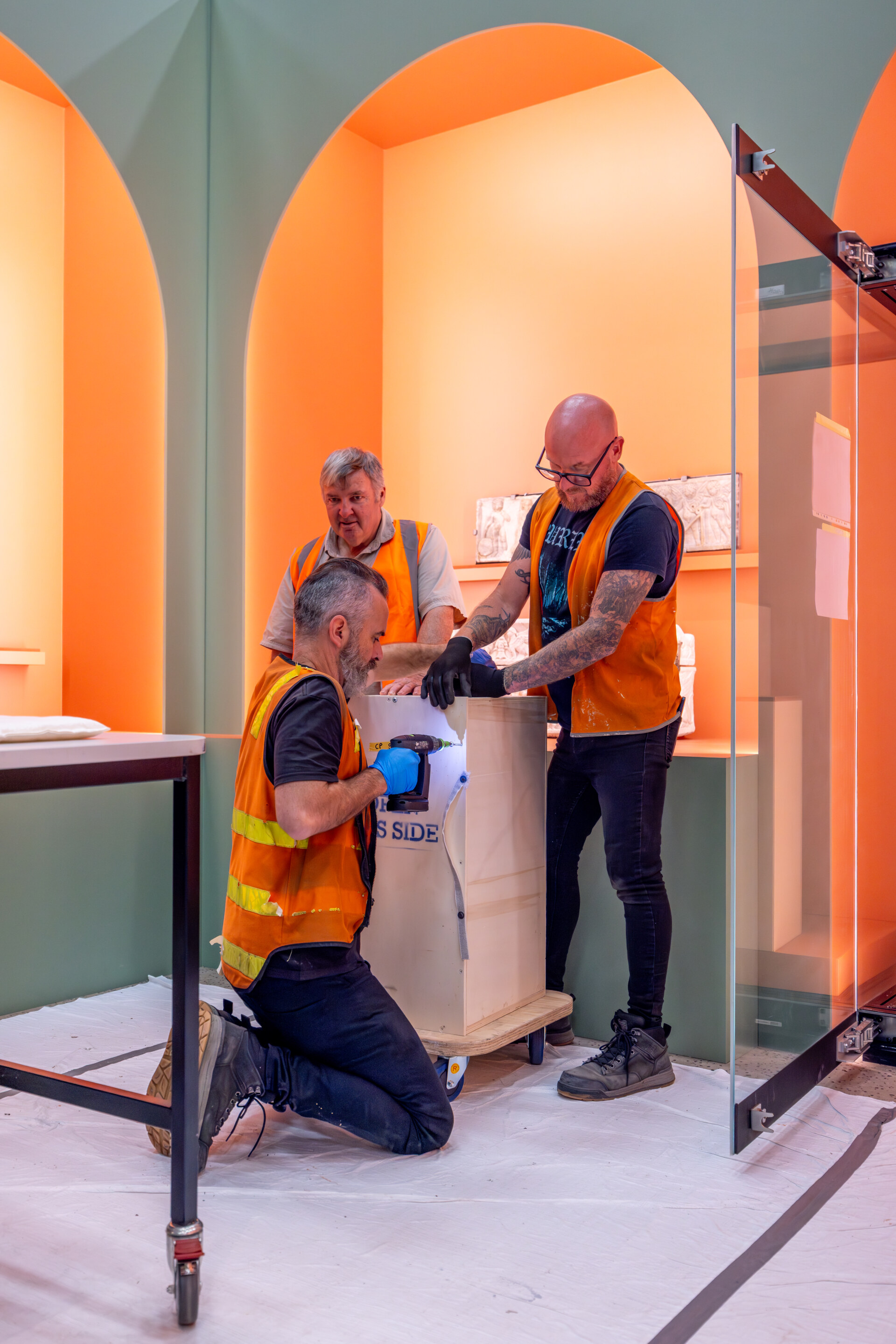
Packing and sending Emperor Nero’s head to Australia is not a Poste Italiane job, respectfully. This is where another team of experts steps in: the fine art transportation specialists. They are responsible for every logistical aspect of the packing and freighting process, from building custom double wooden crates to fit the objects’ dimensions to packing them with special Japanese paper, foam, shock absorbers, and sensors. Anyone who has flown to Australia knows how demanding this 24-plus-hour journey is on the human nervous system. Apparently, it’s just as stressful for a marble statue. The transport specialists aim to minimize the impact of movement and vibrations on the objects in their crates as they go from freight truck to loading bay, to aircraft, to loading bay, to freight truck, and finally into the hands of the installation team at Melbourne Museum. On a voyage of this nature, stress sensors do for Emperor Nero what an aspirin or a sleeping tablet might do for us mere mortals at breaking point.
Courtesy of Museums Victoria
WHAT HAPPENS IF SOMETHING BREAKS?
“It doesn’t happen often but yes, things can break,” Buscaroli says. That’s life. “When we were working on a previous archaeological exhibition in China, one of my colleagues unpacked an object and noticed that it had broken during transportation. That’s why it’s important to have a restorer present as part of the installation team. In that case, the piece was restored on-site to a condition where it could still be displayed.”
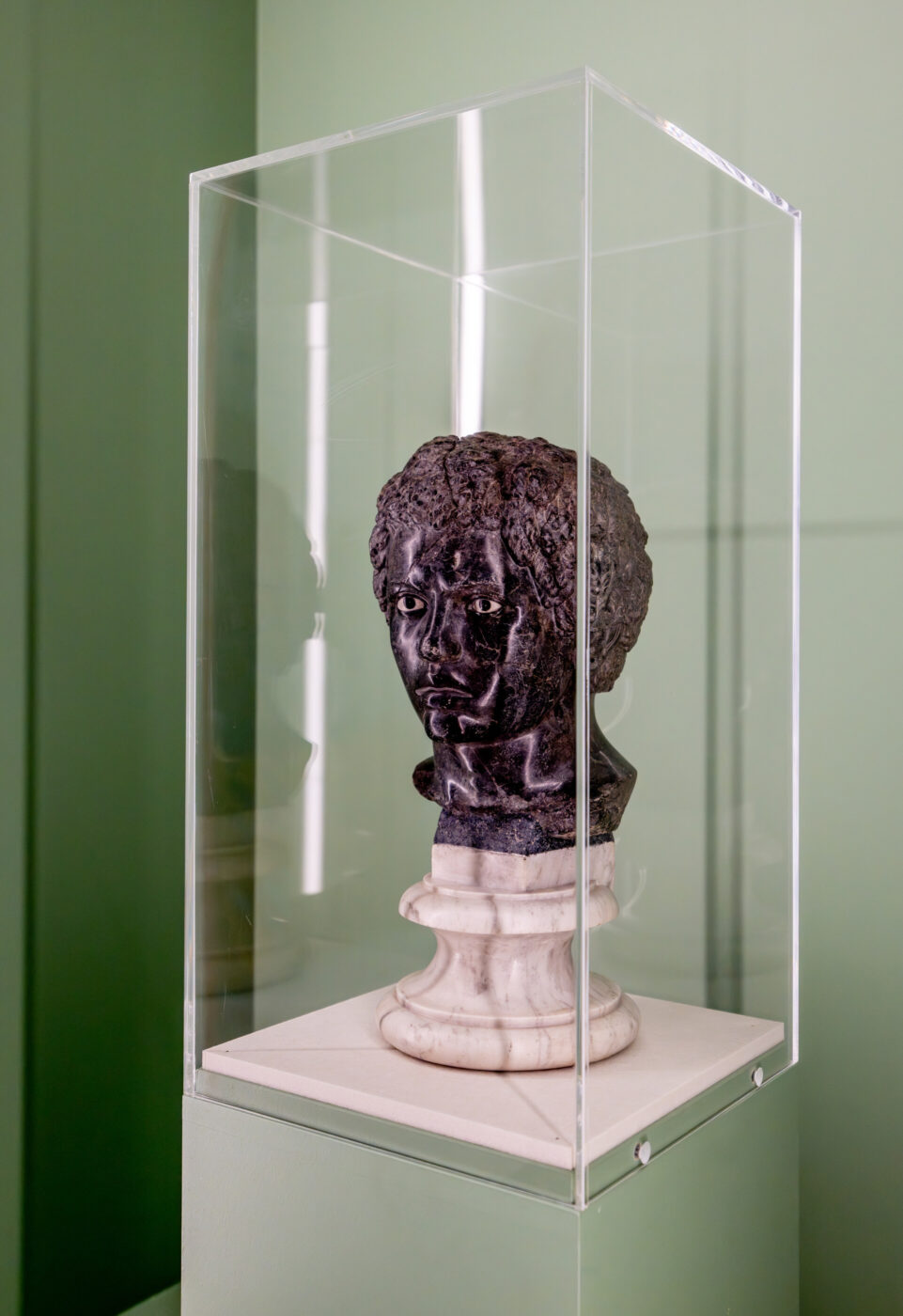
These artifacts sure get the celebrity security treatment. They travel with their own supervisors, who oversee every stage of the journey; from secure storage depots and airport loading to refuelling stops in Asia or the Middle East. By the time they reach Melbourne, Emperor Nero, Bacchus and Minerva must have been dying to stretch their legs. Thankfully, no broken limbs were reported as a result of this voyage “down under.” And it’s not like Emperor Nero can break a nose that’s already broken…
Courtesy of Museums Victoria
WHY SEND ANCIENT ROME AROUND THE WORLD?
“It’s always very interesting to work on these international exhibition projects because you see the fascination with ancient Rome from a new perspective, from audiences who are not Italian. I think, as Italians, we often take our cultural heritage for granted. But when you see these objects in a different cultural context, like in Australia, you see people engage with them in a different way and observe things you might have overlooked,” Buscaroli says.
Come the end of October, you can bet that Emperor Nero and his marble gang are going to leave the Melbourne Museum the same way they entered: all wrapped up, padded up, and boxed up, and out the back door under strict security watch. An exit fit for rockstars.