Wasting no time—onto the Venice Art Biennale, an entire cultural ecosystem that is as intricate and thought-provoking as La Serenissima itself. Granted, nobody ever truly “conquers” La Biennale, except maybe those seagulls. That’s not the objective, anyway; though, a strategic itinerary is a very good idea…
At the heart of the Biennale, the national pavilions in the Arsenale di Venezia and the Giardini della Biennale are always a good place to start, with installations and projects addressing themes that run the gamut from climate and politics to craft and spirituality. Then come the “talk of the town” exhibitions at the city’s major institutions like Gallerie Accademia, Pinault Collection, and Ca’ Pesaro, which further set the city’s tone from May to November. Leave extra time for the circuit of collateral exhibitions presented by local and international galleries and foundations across the city, along with plenty of unexpected stops to wrap your head around ambitious outdoor installations that make you see Venice’s public spaces (and waters) in a completely new light.
This 61st edition of the Venice Biennale has already sported its share of controversy, long before its doors even opened. Its theme, “In Minor Keys”, reflects the vision of curator Koyo Kouoh, whose sudden passing last year rocked the international art world. In recent months, the Biennale has become an international flashpoint—a stage for strikes, boycotts, and pavilion shutdowns that underscore the volatility of current geopolitics. (Let’s not forget that contemporary art is an indisputable mirror to contemporary life.) These controversies have been well documented by other publications, and we highly recommend seeking out those reports for a deeper look at the current climate.
Meanwhile, amidst the opening weekend flurry, we caught up with a few Biennale regulars—gallerists, cultural developers, photographers, consultants—who know where to look first.
“From what I’ve seen so far, this Biennale feels different from others. It feels slower and more reflective, less overwhelming,” says photographer, art consultant, and Venetian local Giacomo Gandola.
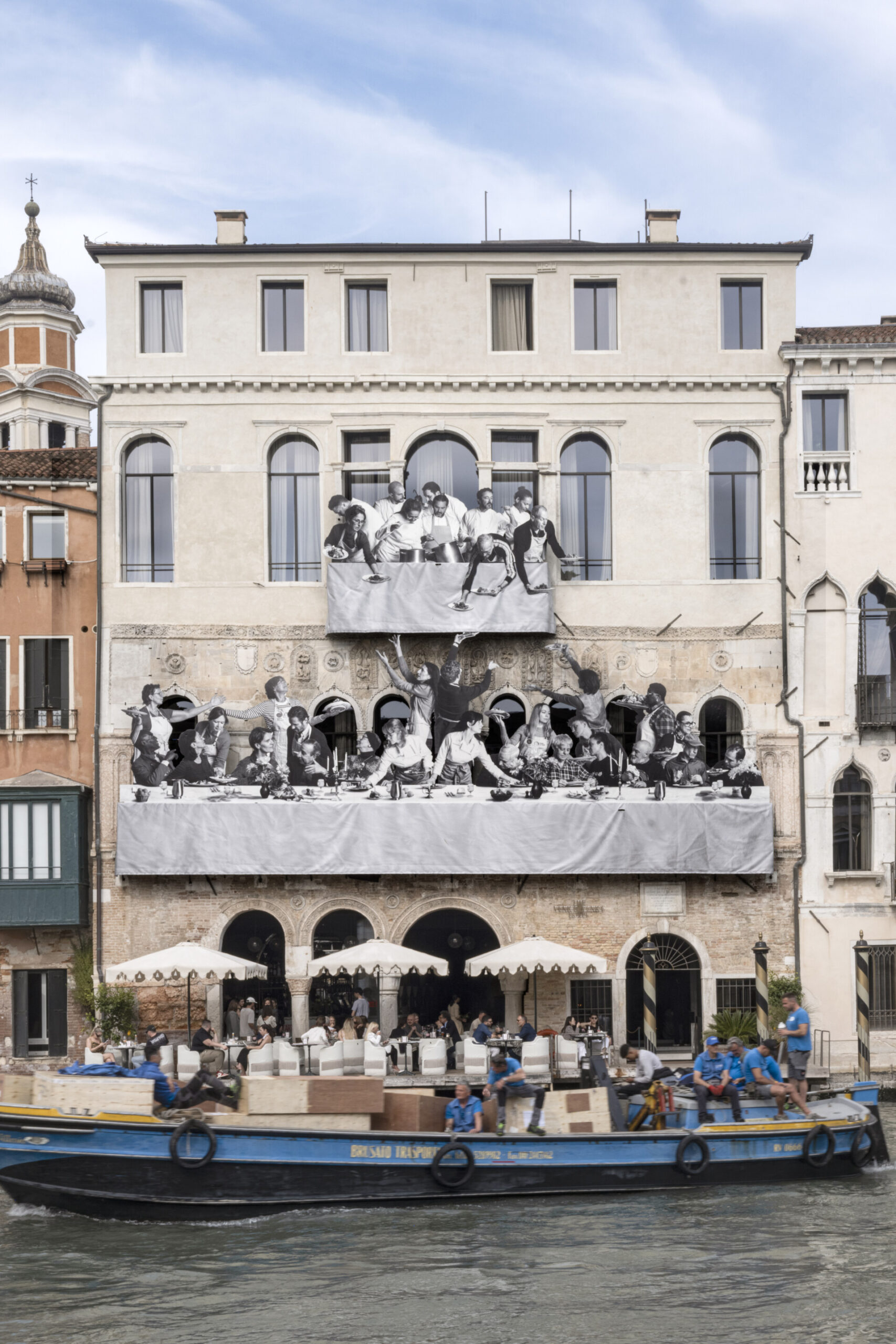
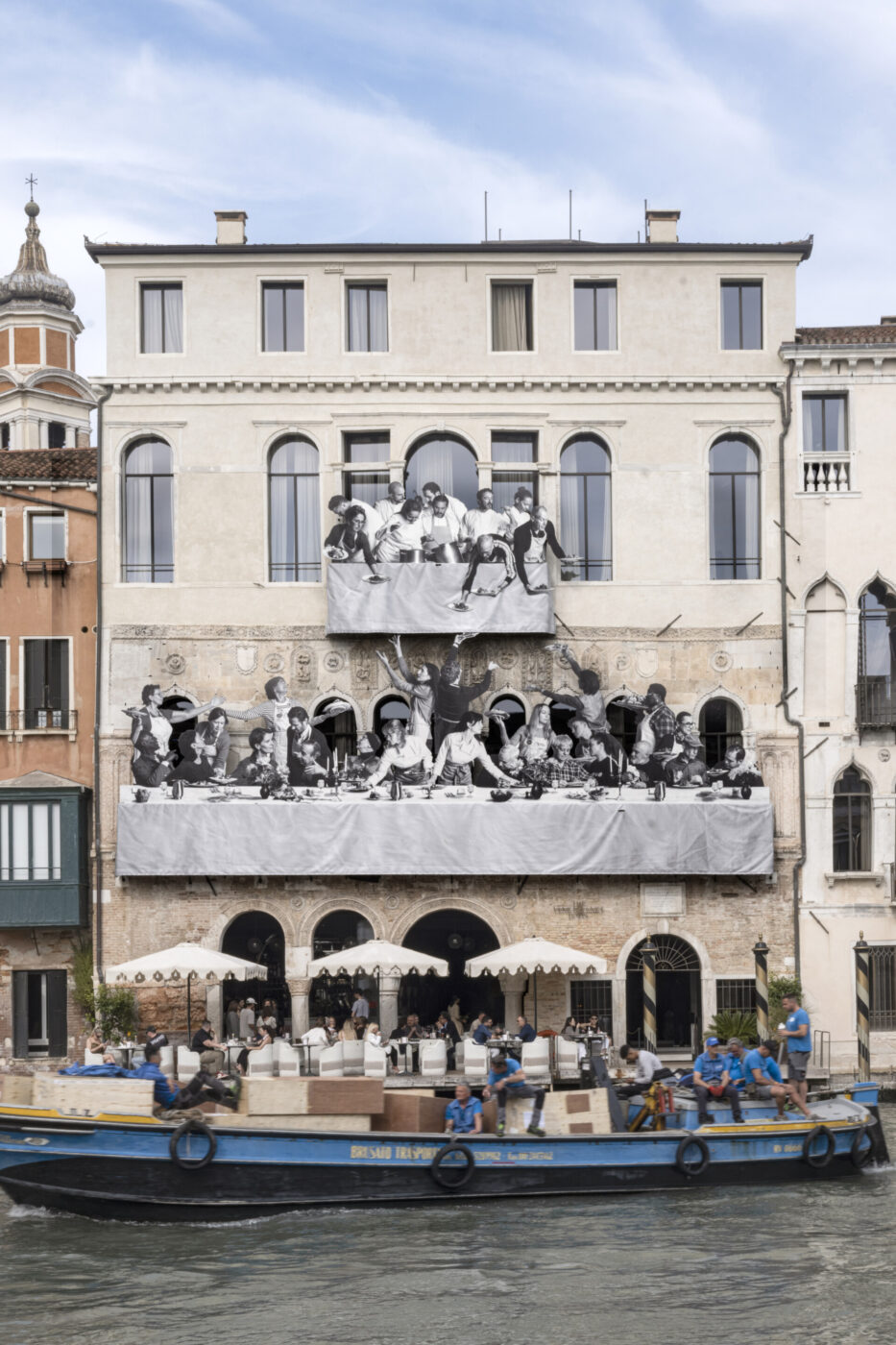
JR's "Il Gesto"; Photo courtesy of Venice Venice Hotel
“My advice is to experience Venice and the Biennale as an act of rebellion against the ‘FOMO’ and the ‘everything now’ mentality of events like Milan Design Week,” says Stefano Soso, cultural developer and founder of studio.steso.
“It’s a city with its own rhythms and customs, and one that deserves to be experienced with the sense of grace that defines it,” he adds.
A self-proclaimed “cultural surfer,” Soso recommends a mix of hallmark public-facing projects, performative installations, and smaller exhibitions worth discovering across the city’s palazzos, cultural spaces, and hotels:
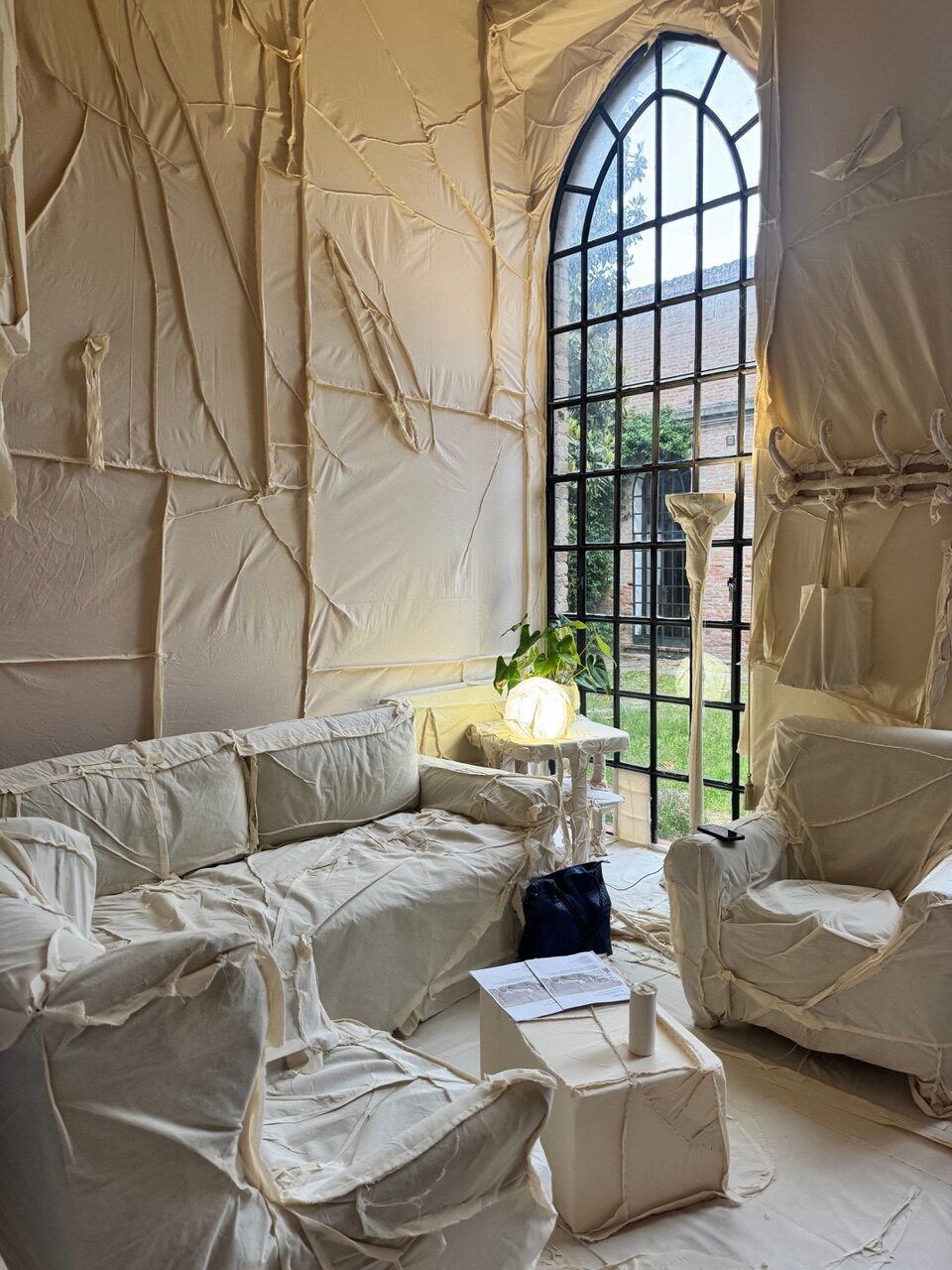
—A visit to the installation “Ca’ Dora” (May 5–November 22) by multidisciplinary artist Dora Fiammetta Perini, curated by Charlotte Laubard (Fondamenta S. Biagio, Giudecca). Here, the artist has covered every visible surface of an interior habitat with masses of plain canvas fabric, which will eventually be marked and stained throughout the course of the Biennale. The work reflects on the boundaries between private and public space, between the domestic interior and the external world.
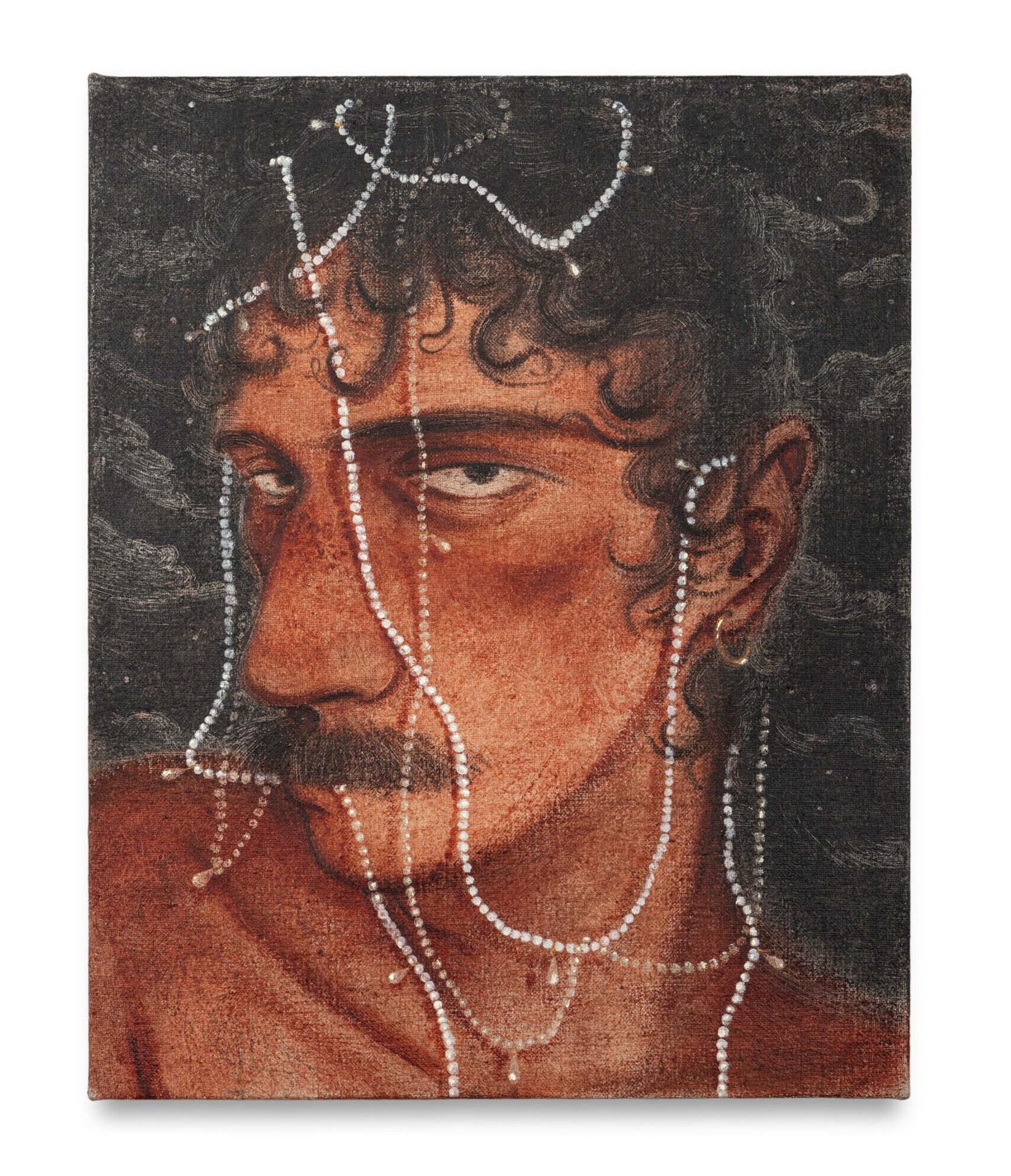
—“See You” (May 5–July 18) at Tommaso Calabro Venice (Campo San Polo), a portraiture-focused exhibition with works by historical, modern, and contemporary artists, including Tiepolo, Giovanni Boldini, Leonor Fini, and Flaminia Veronesi.
—“Outta Love” (May 7–June 30) at Palazzo Vendramin ai Carmini (Dorsoduro), a collective show presented by Stallmann Gallery in which paintings, photography, installations, and textile works by artists including Angela Brandys, Wolfgang Tillmans, and Vivian Maier are curated in dialogue with the palazzo’s interior spaces.
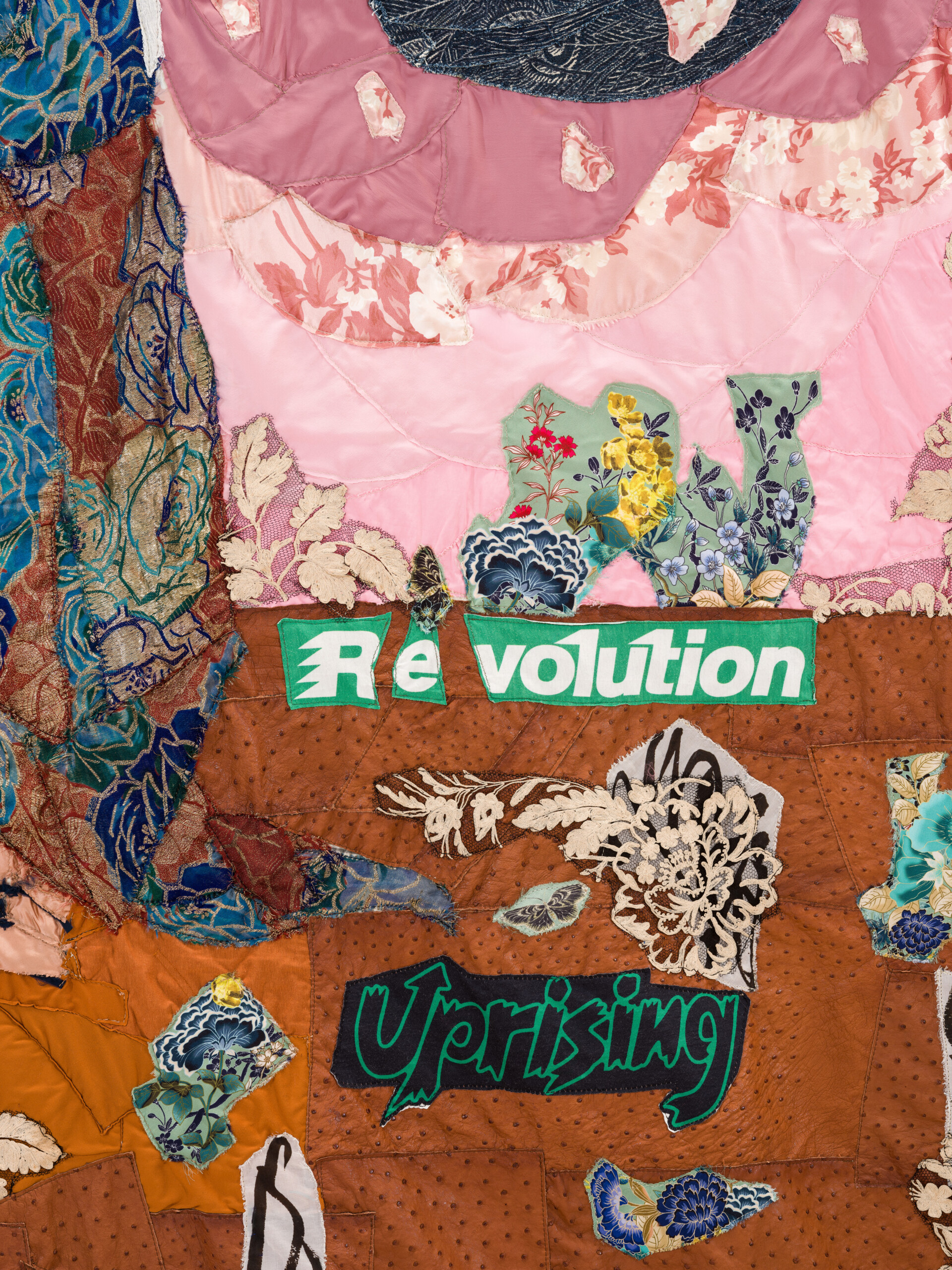
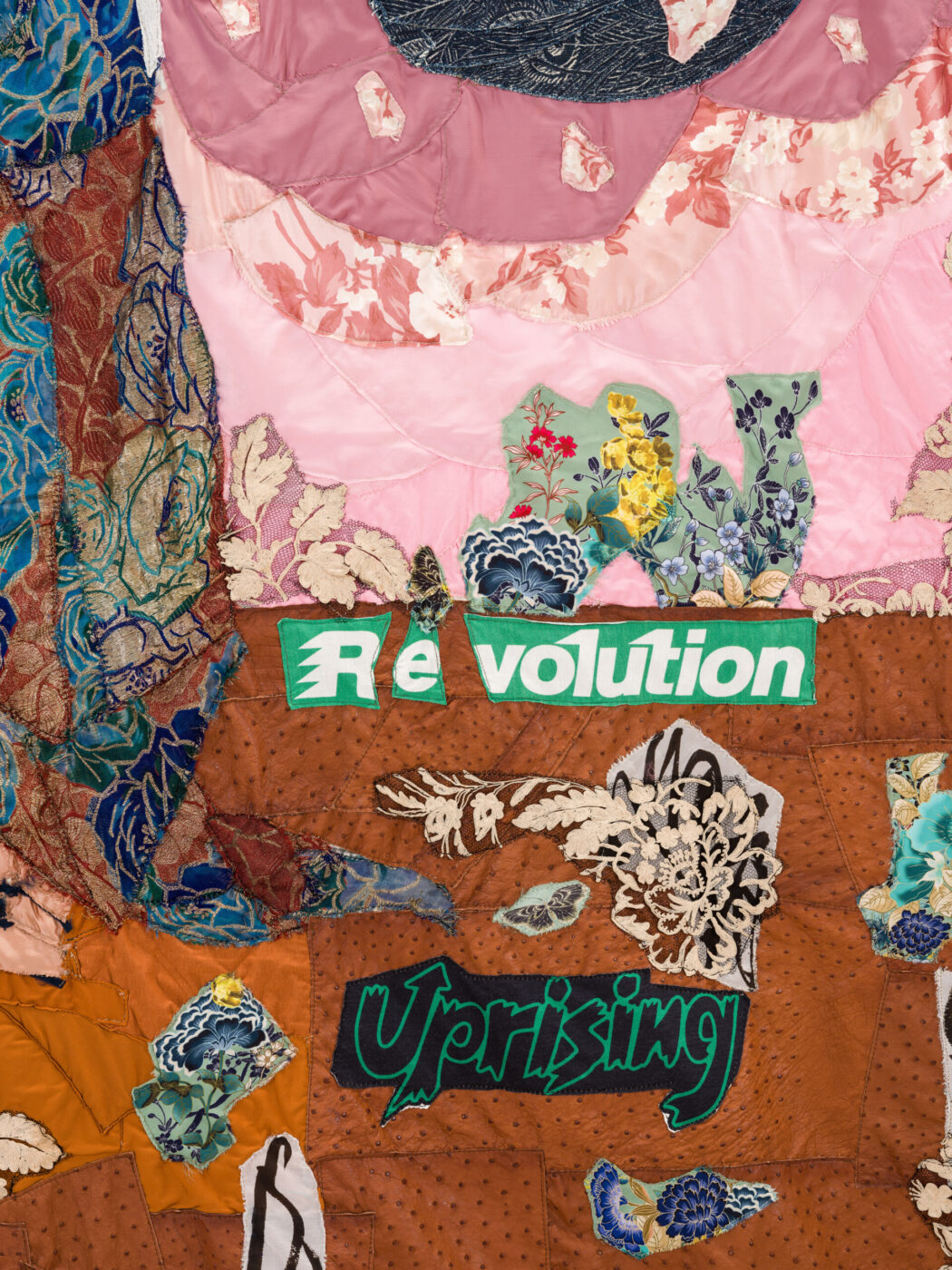
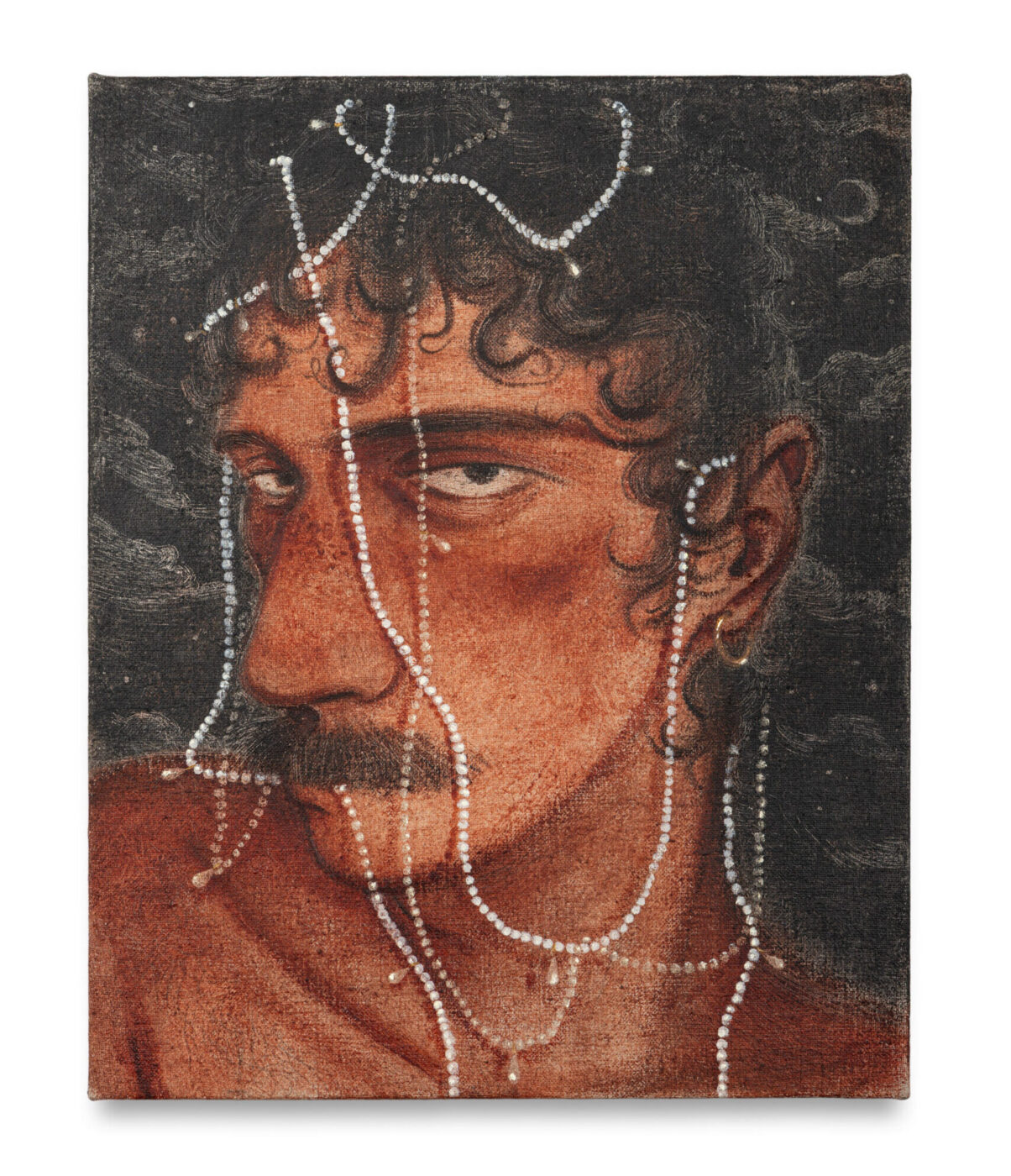
Detail from Angela Brandys' "Offering" (2024), on view at "Outta Love" at Palazzo Vendramin ai Carmini; Photo ©Ugo Carmeni
—“DOVE STA ANDANDO L’HOMO SAPIENS?” (May 6–November 22) by Lorenzo and Simona Perrone, the artistic duo LibriBianchi. Featuring the artists’ hallmark use of recycled books treated with glue and white plaster, this 2.5-meter sculpture, installed on one of the balconies at Palazzo Morosini Strozzi, explores the essence of humanity and the triumph of knowledge.
—“Il Gesto” (May 6–November 22), the photography-based installation project by JR that takes over the façade of the Venice Venice Hotel (Palazzo Ca’ da Mosto) and continues inside with a tapestry by master weaver Giovanni Bonotto, produced by Fondazione Bonotto, measuring almost eight meters wide. Presenting a contemporary interpretation of the biblical story of The Wedding at Cana, the French photographer and street artist positions the project as a “social pact” with the city of Venice.
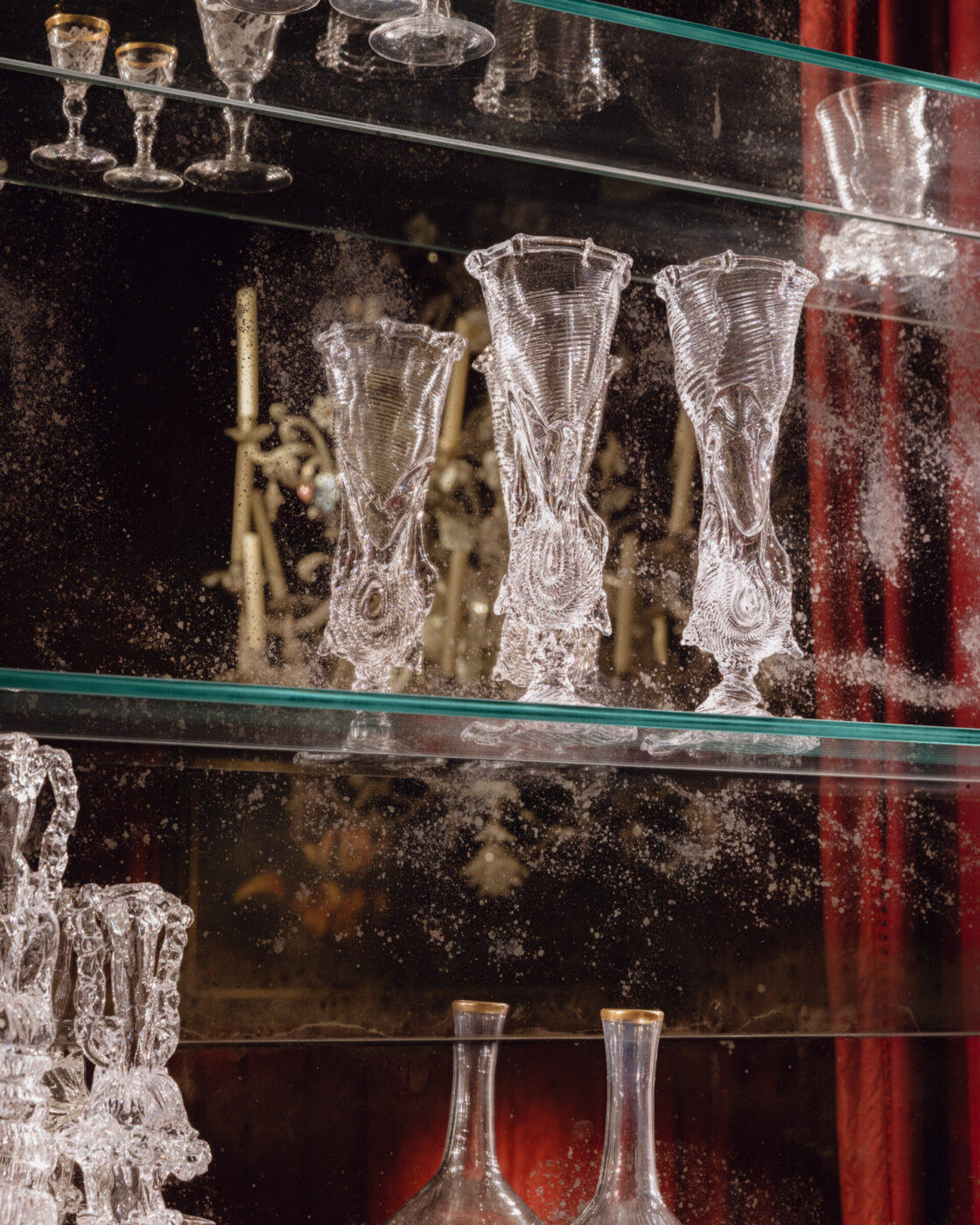
—Exploring the recently inaugurated Fondazione Dries Van Noten inside Palazzo Pisani Moretta, which hosts the exhibition “The Only True Protest Is Beauty” (April 25–October 4). A homage to craftsmanship across fashion, art, jewelry, glasswork, furniture, sculpture, and beyond, this exhibition, curated by Van Noten with Geert Bruloot, celebrates the emotional resonance of materials and artisanal handwork.
Soso believes this “controversial” Biennale 2026 is an opportunity to discover hidden spaces across the city, get to know young artists, and “savor the beauty of art, which, above all, should unite us rather than divide us.”
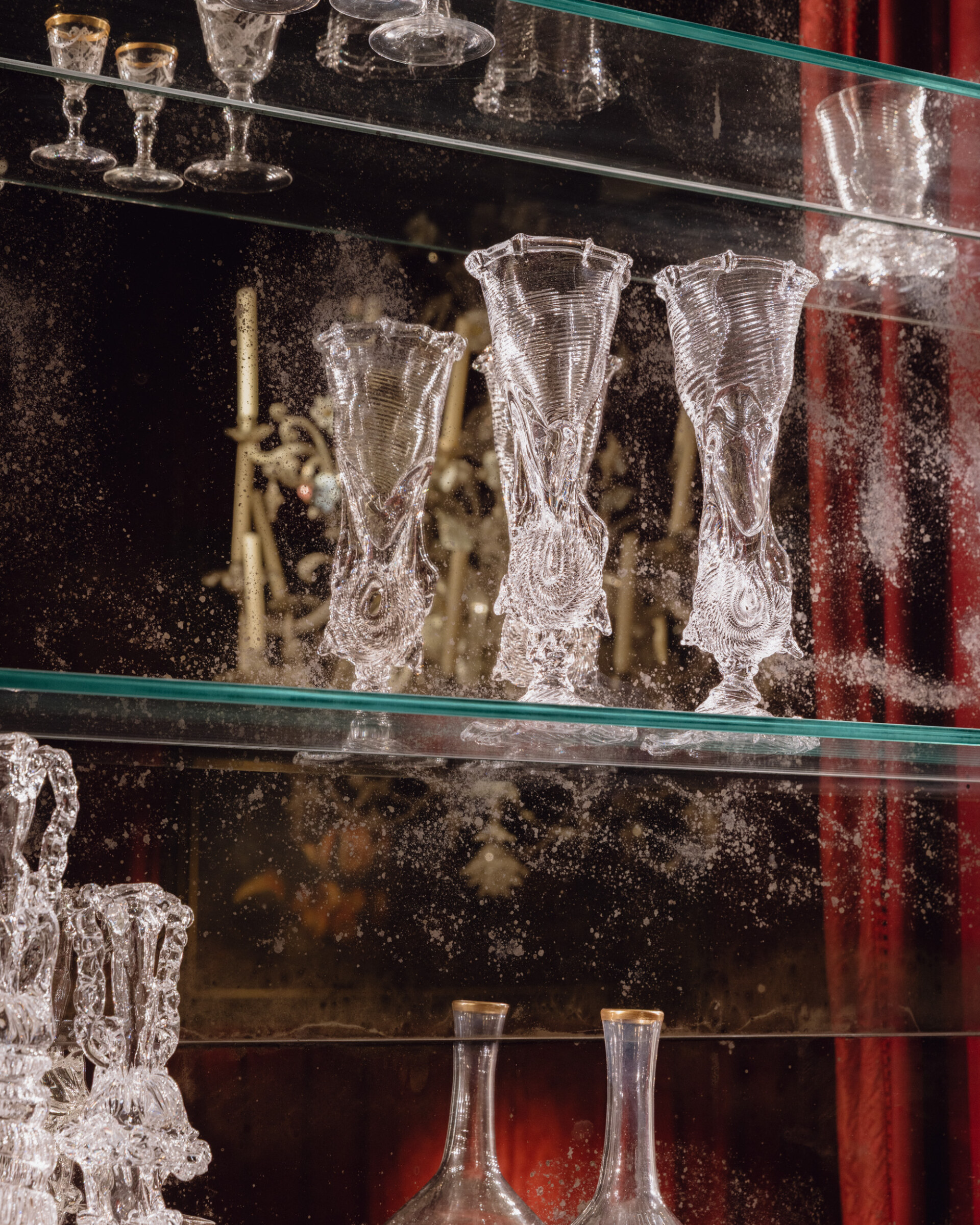
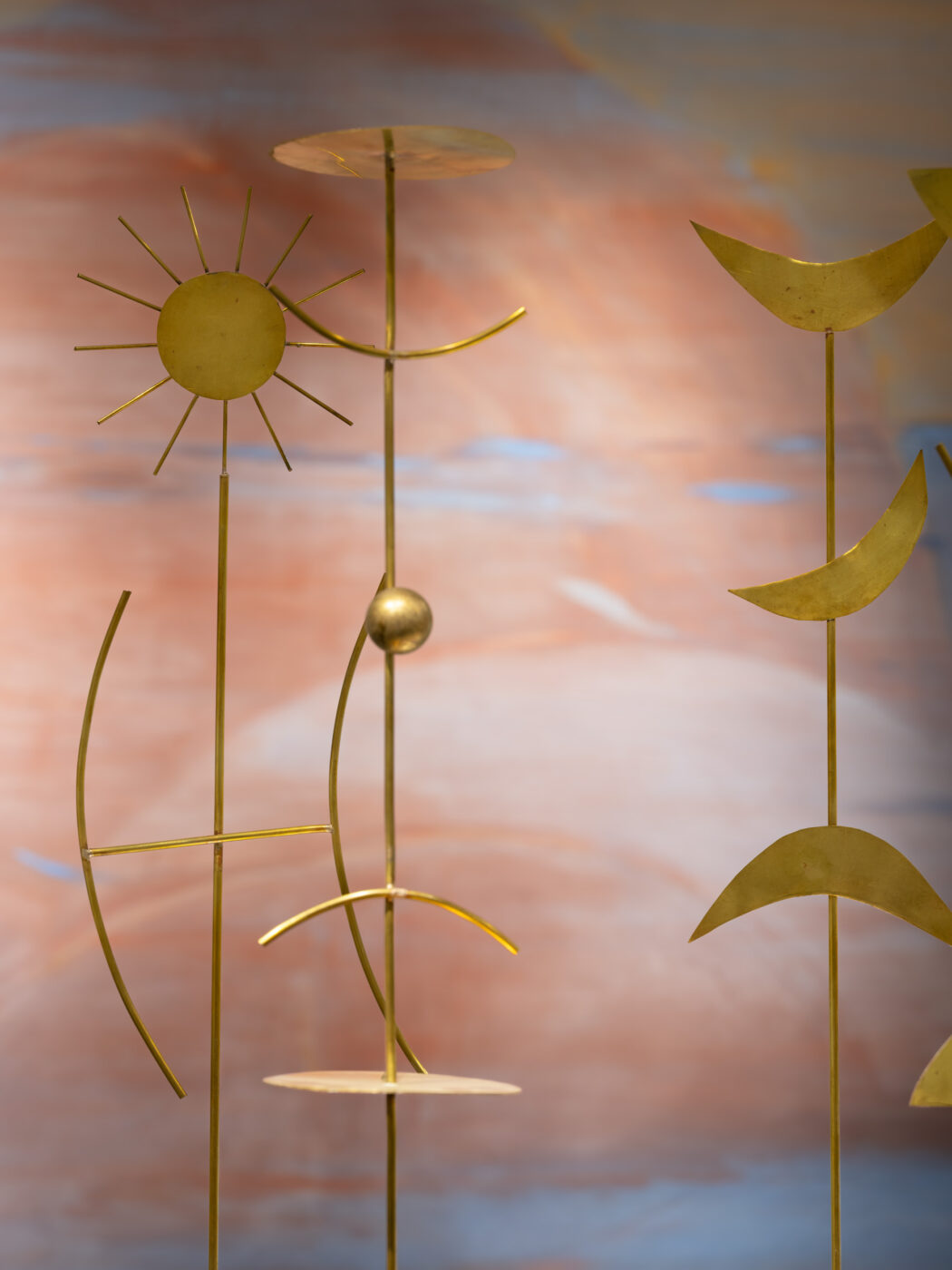
Alexander Kirkeby Vase, Candelabra and Tumbler (2026) on view at Fondazione Dries Van Noten; Photo by Matteo de Mayda
Camilla Previ, who holds various directorial roles across the international contemporary art market (including managing director at Upsilon Gallery, Milan), is always being asked for Venice Biennale advice. She says this year’s edition is “a particularly good one” and suggests an itinerary focused on La Serenissima’s lesser-known spaces and private collections for multicultural dialogue.
“Over the course of a weekend—or let’s say three days—I think you can experience a good mix of the main Biennale program, the museums and institutions, shows at independent galleries, and private spaces and collections. It’s important to get this balance,” notes Previ. She suggests:
—A visit to the “unmissable” installation “Diario Veneziano” (May 9–June 28) by Ukrainian-born American artist Emilia Kabakov at the 16th-century palazzo Ca’ Tron (Grand Canal). Curated by Cesare Biasini Selvaggi and Giulia Abate, the project features more than 700 “everyday” objects ranging from teddy bears to tools and trinkets, donated by Venetians from diverse social groups, along with diary entries reflecting on their relationship with the city.
—Discovering Casa Sanlorenzo, a new space dedicated to art and cultural research in Venice, located opposite the Basilica of Santa Maria della Salute. As part of La Biennale, the “permanent cultural home of Sanlorenzo Arts” hosts the exhibition “Waves” (May 6–June 28), featuring works by artists including Alexander Calder, Lucio Fontana, and Tony Cragg.
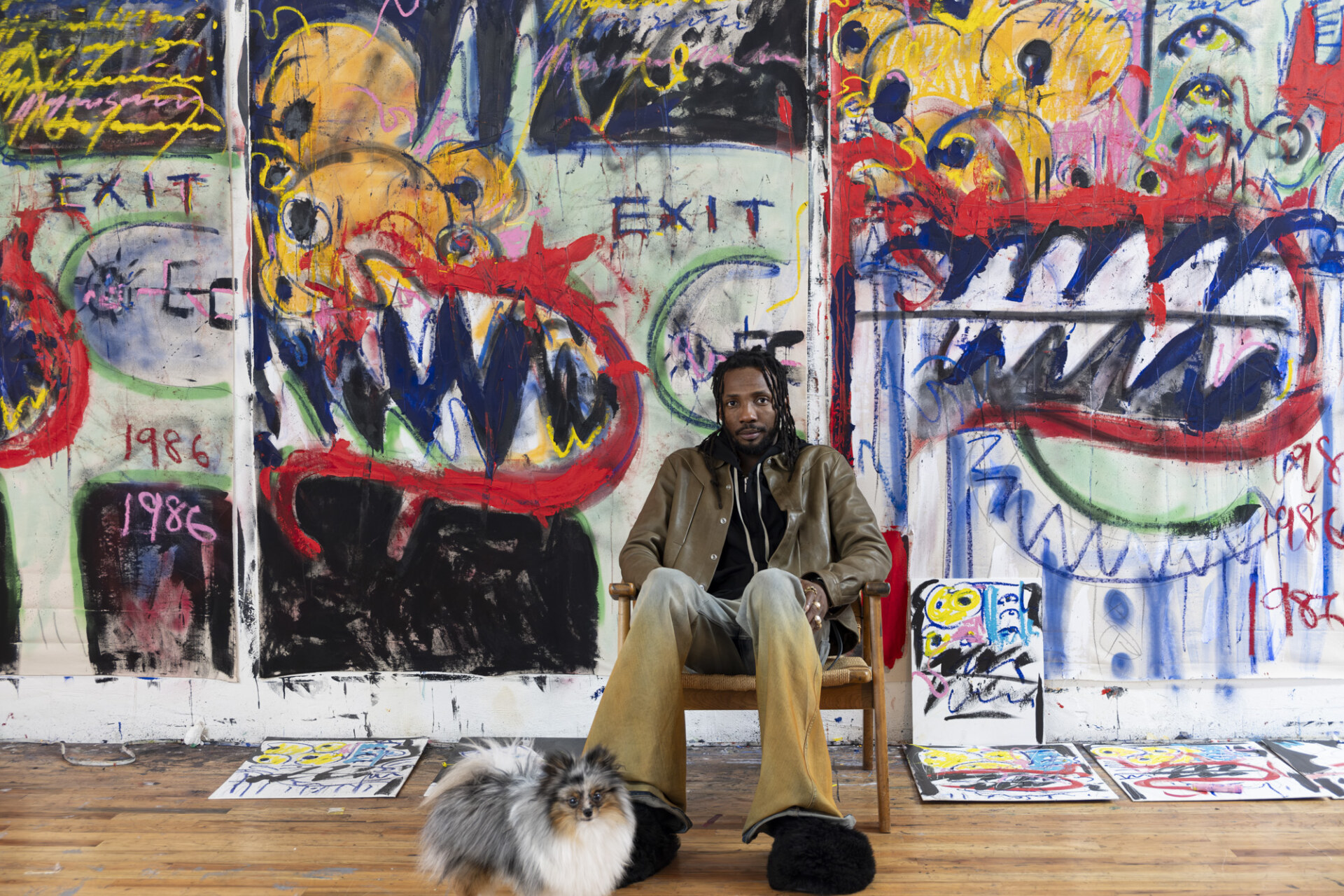
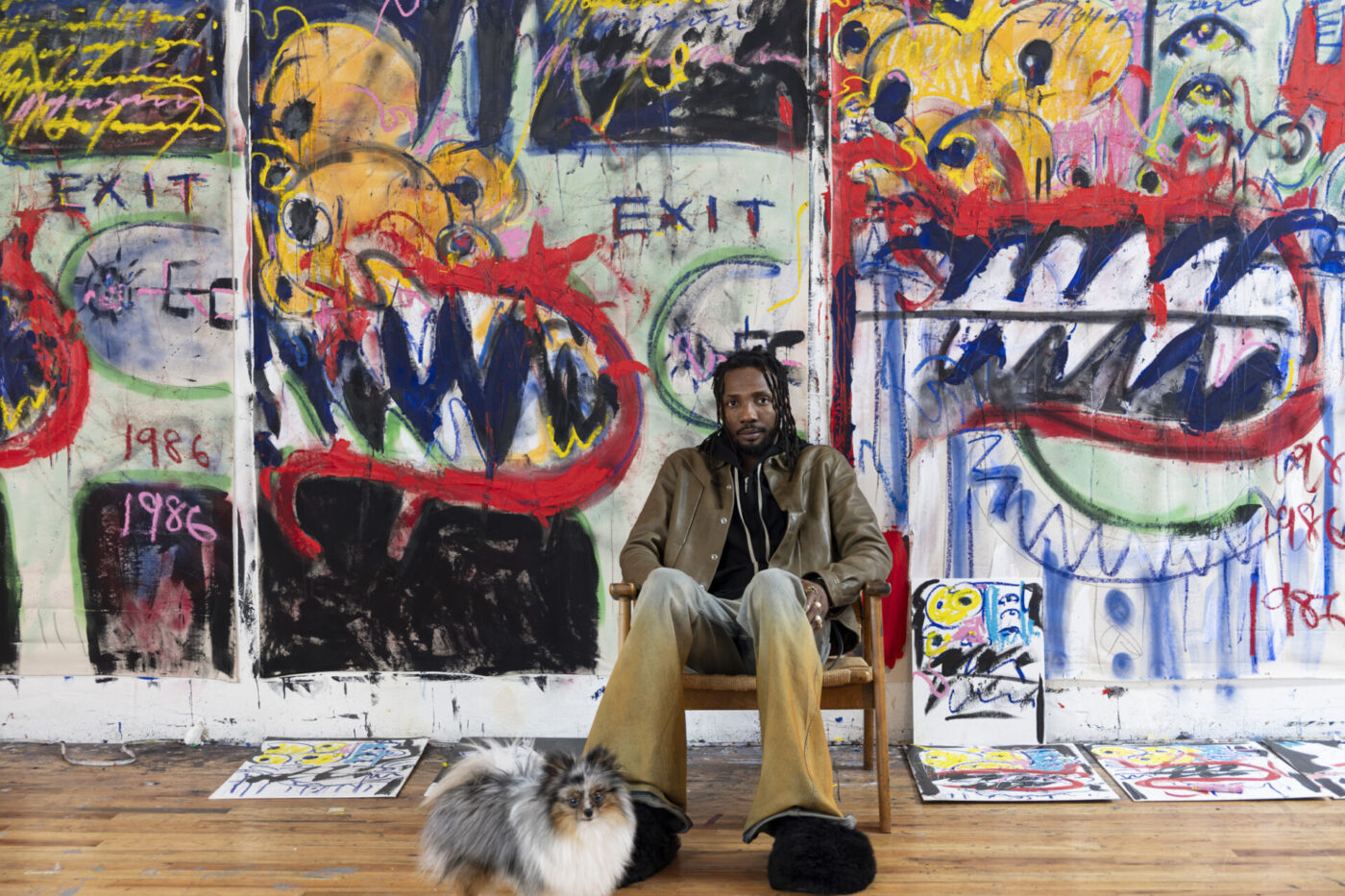
Nigerian-born New York-based artist Móyòsóré Martins has two large-scale paintings represented in the Sierra Leone National Pavilion; Image courtesy of Upsilon Gallery Milano
—Learning more about West Africa’s diverse cultures and artistic expressions at the inaugural Sierra Leone National Pavilion (Liceo Artistico Statale M. Guggenheim, Dorsoduro). The exhibition, titled “Mondi Presenti” (May 9–November 22), features work by a selection of West African and international artists, including Nigerian-born, New York-based mixed media artist Móyòsóré Martins.
—Taking time to explore exhibitions at Venice’s major institutions, including Jenny Saville and Hernan Bas at Ca’ Pesaro, and Lorna Simpson’s show, “Third Person”, at Pinault Collection (Punta della Dogana).
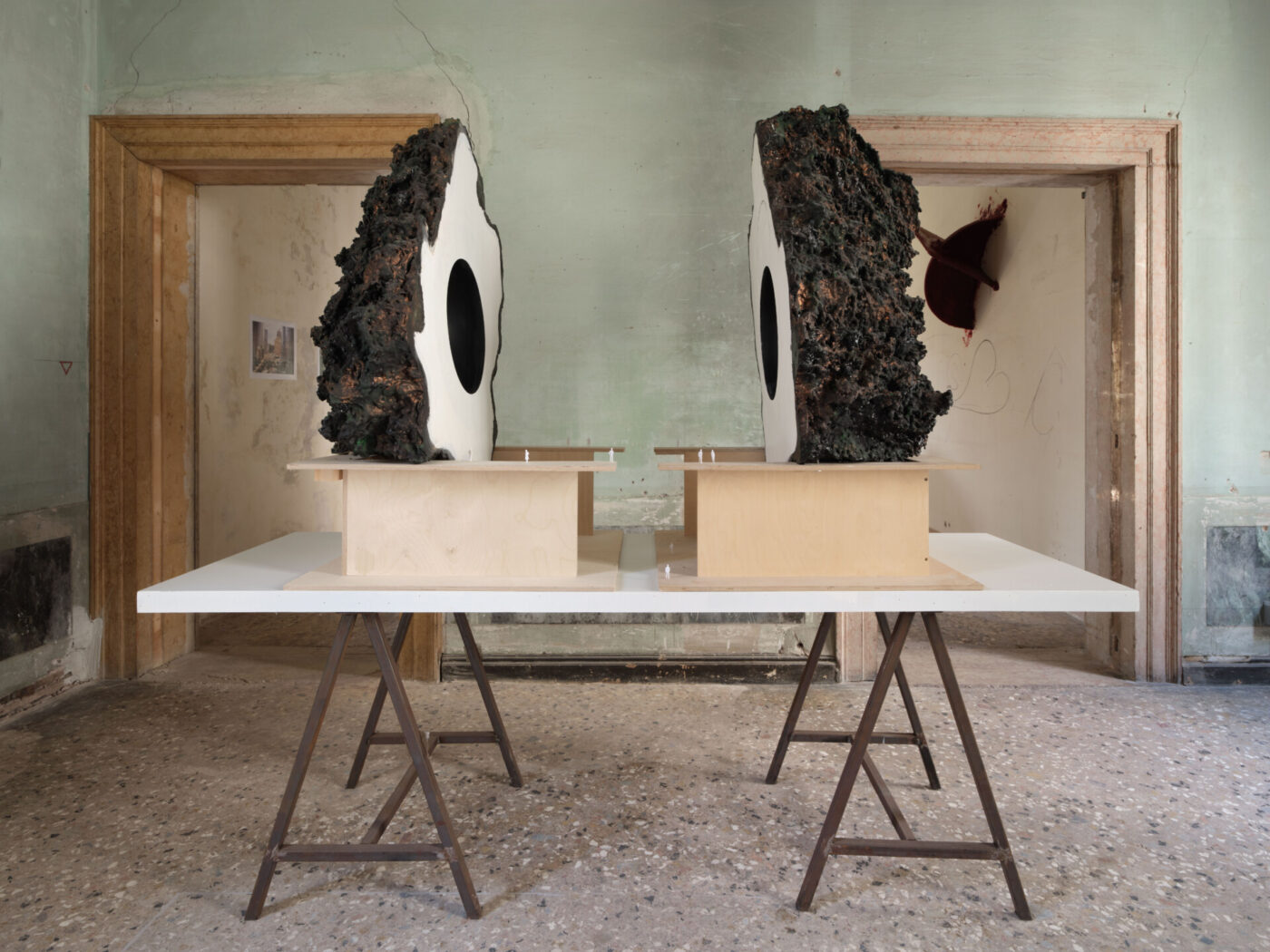
—Taking the rare opportunity to step inside Palazzo Manfrin (Cannaregio), which opens its doors to host a comprehensive retrospective dedicated to Anish Kapoor (May 6–August 8). The show presents around 100 architectural models of the artist’s most ambitious landmark works (including the Monte Sant’Angelo “art metro station” in Naples, which opened last year), demonstrating the evolution of his explorations into scale and form.
Previ also recommends taking copious breaks, perhaps with a drink in hand. “I like to meet friends for a cocktail at a place called Experimental Cocktail Club later in the evenings,” she says. “I also love Harry’s Bar. Everyone loves Harry’s Bar!”
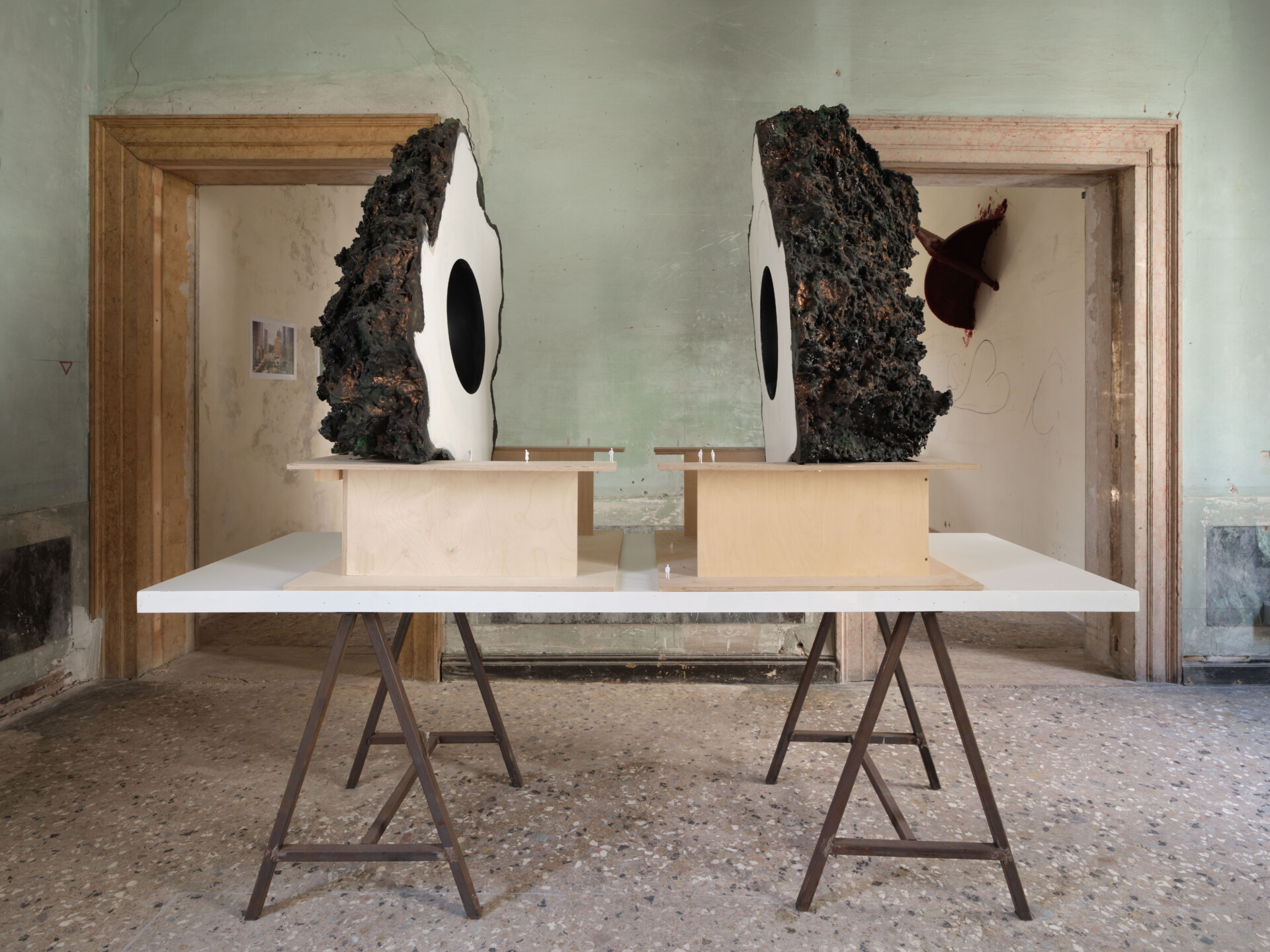
Anish Kapoor retrospective at Palazzo Manfrin, Cannaregio
If you’re visiting Venice especially for La Biennale, Gandola is the kind of guy you want to accidentally meet and hang out with. He says this Biennale feels like a mirror of the current state of the world and the issues we’re facing. “It’s like we’re being encouraged to slow down and engage more deeply with the program, the city, and the people around us,” he says.
Trust Gandola when he says that the Biennale is one of the rare occasions when you can “unlock” some of Venice’s secrets that are usually not so easy to discover—private salons, hidden gardens, and those locals-only watering holes where a perfectly good glass of wine and a chat with a worldly stranger cost less than €2 (that is, at the one and only Al Bottegon—Cantine del Vino Già Schiavi). The key, he says, is to give yourself enough time to experience it all:
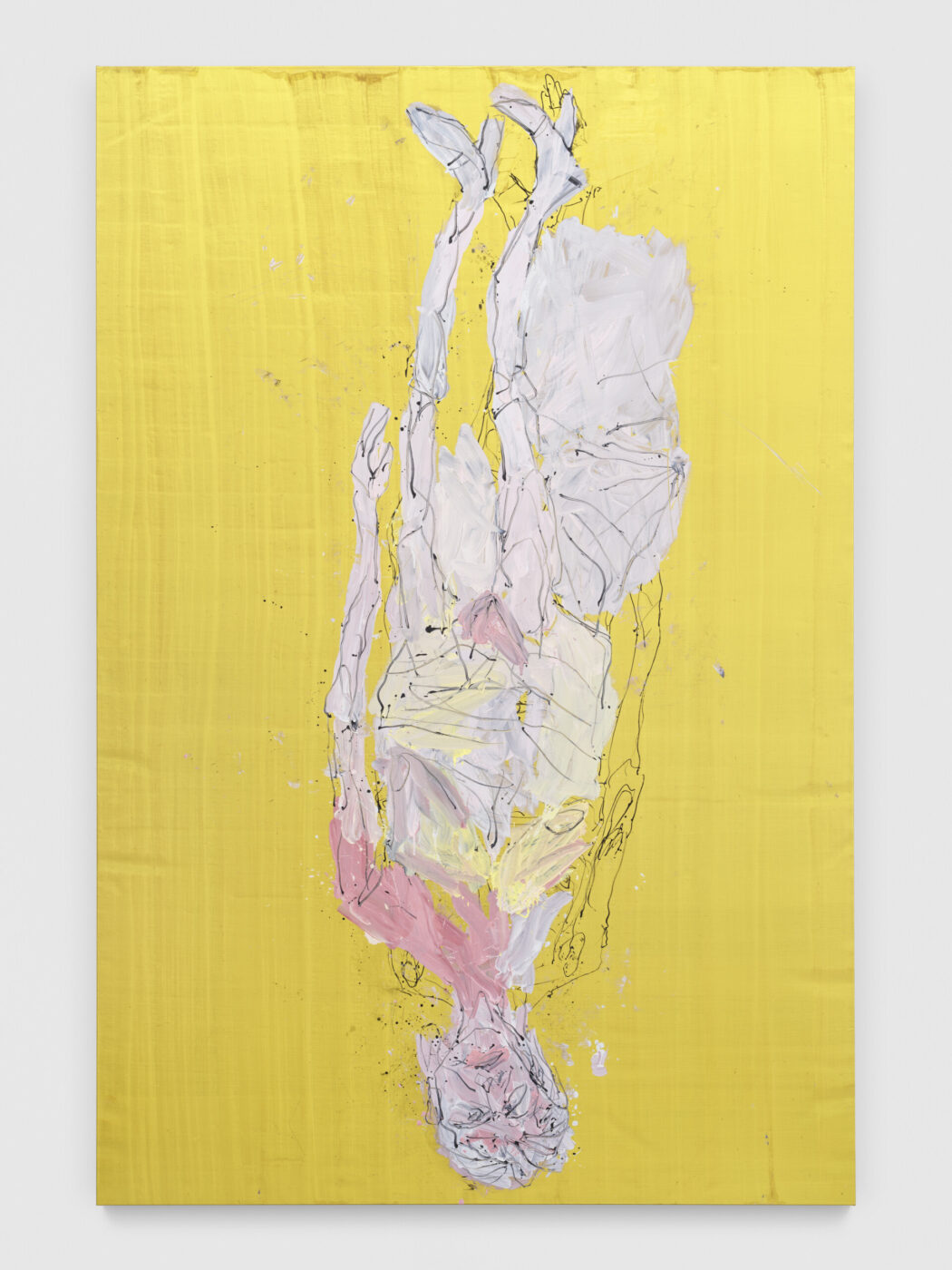
—A trip to Fondazione Giorgio Cini (Isola di San Giorgio Maggiore) to see German artist Georg Baselitz’s large-scale painting. The retrospective exhibition, titled “Georg Baselitz: Eroi d’Oro” (May 6–September 27), illustrates the late artist’s use of gold as a flat plane for his painted human forms, a revised vision of medieval iconography.
—An afternoon at Fondazione Querini Stampalia, making sure not to miss “Hans Hartung and Music. The Invisible Chord.” (May 5–September 13). Reflecting what Gandola perceives as a conceptual thread of music and sound-based concepts running through this year’s Biennale, this exhibition showcases the central role of music in the German-French painter’s practice, as seen across nearly 80 of his abstract paintings.
—A visit to the Holy See (Vatican) pavilion at the Church of the Scalzi, with its secret internal garden. The sound-based pavilion project, titled “The Ear Is the Eye Of The Soul” (May 9–November 22), was conceived in collaboration with experimental sound-art collective Soundwalk Collective and features a “sonic prayer” spoken by Patti Smith.
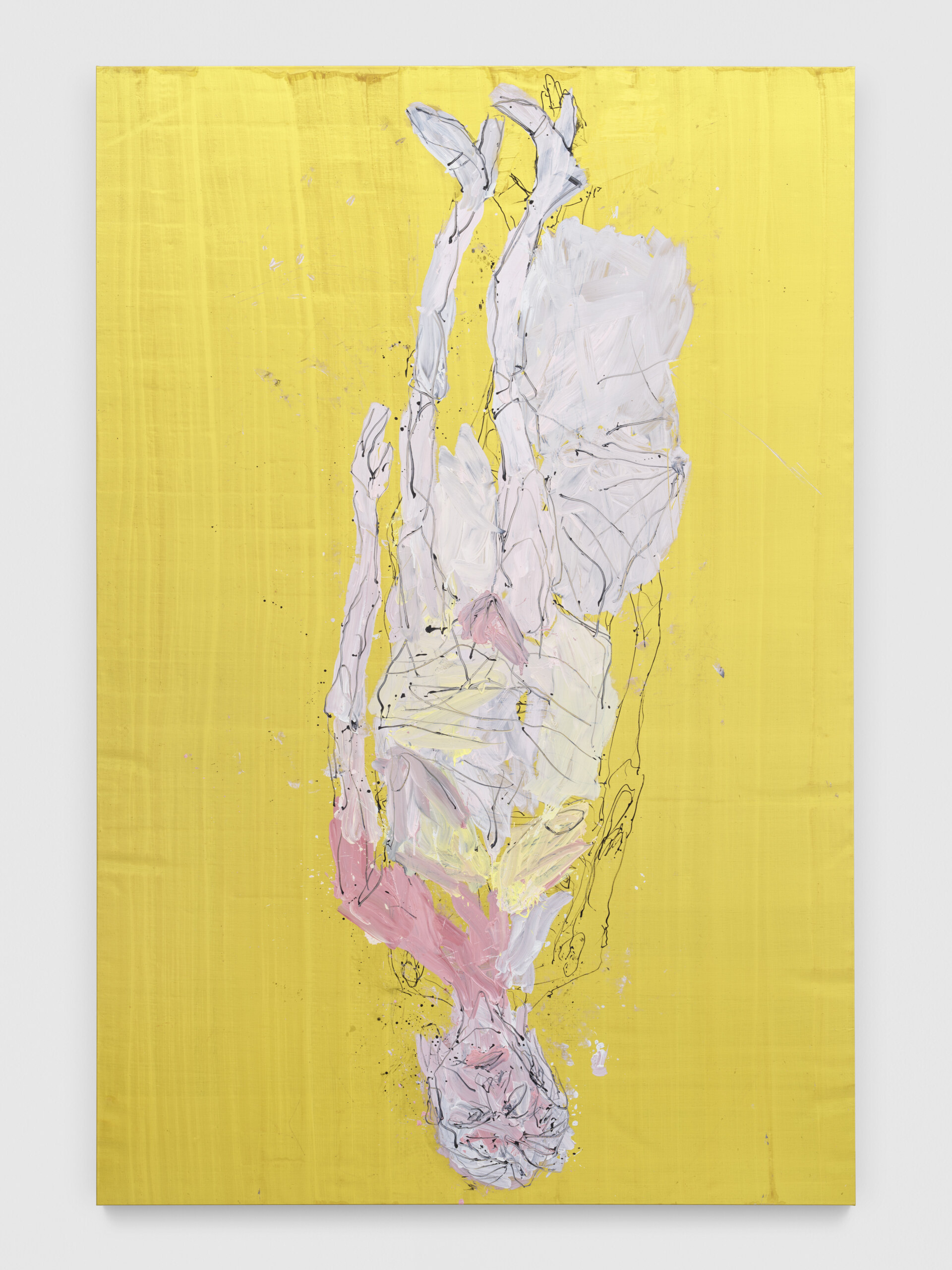
Georg Baselitz "Türkische Hose auf dem Treppchen" (2025); © Georg Baselitz; Photo by Stefan Altenburger
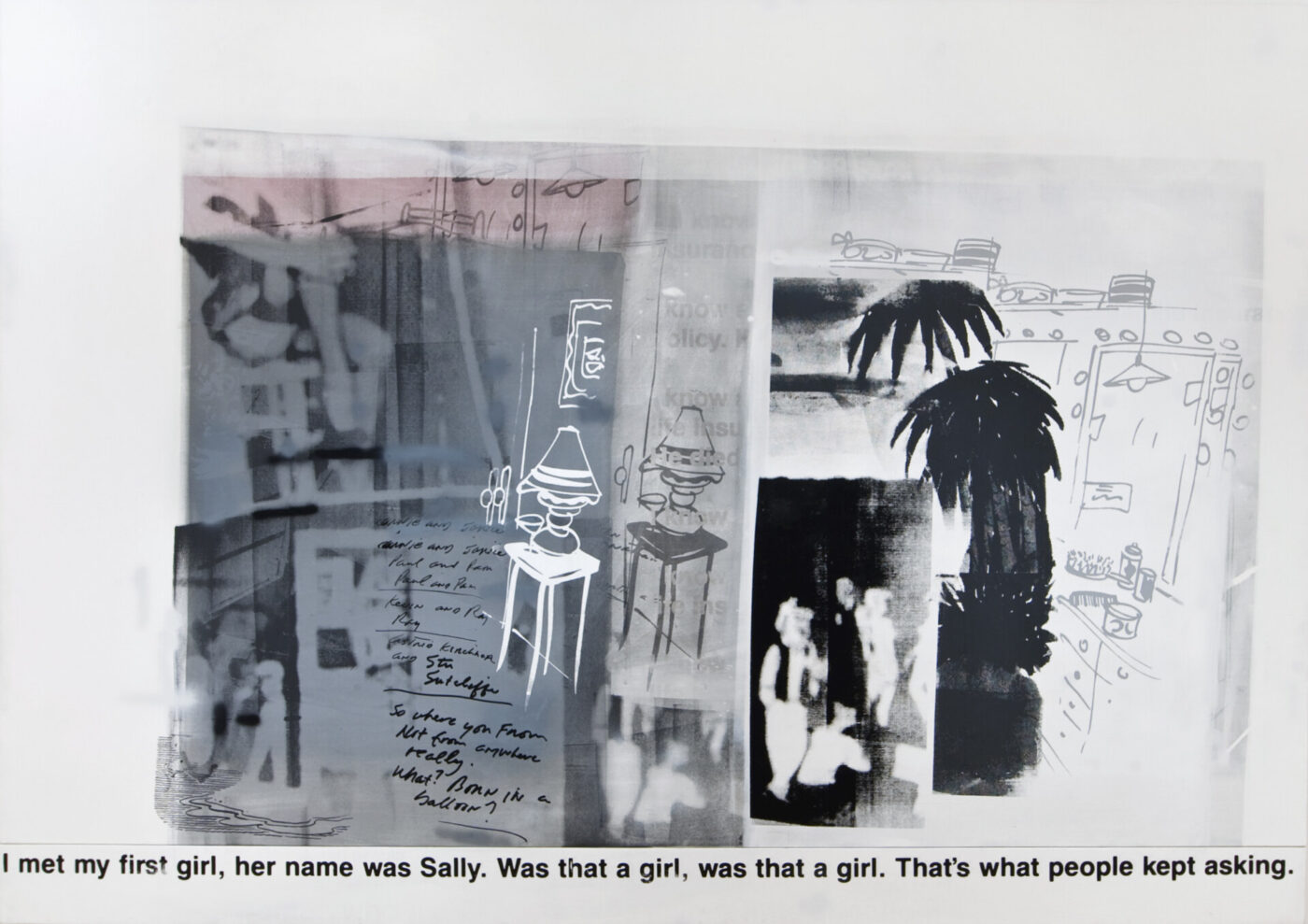
—Exploring a range of exhibitions across Venice’s institutions, including Fondazione Prada, where “Helter Skelter” by American artists Arthur Jafa and Richard Prince is on view, and a show dedicated to conceptual artist Joseph Kosuth at Casa dei Tre Oci, which includes a new large-scale installation by the artist.
—Visiting the national pavilions at the heart of the Biennale, located in the Arsenale and Giardini. Gandola was particularly impressed by this year’s Italian pavilion, a project called “Con te con tutto” by artist Chiara Camoni, curated by Cecilia Canziani. Through a series of totem-like metamorphic figures made from clay, the artist explores social evolution through a female-focused collective imagination.
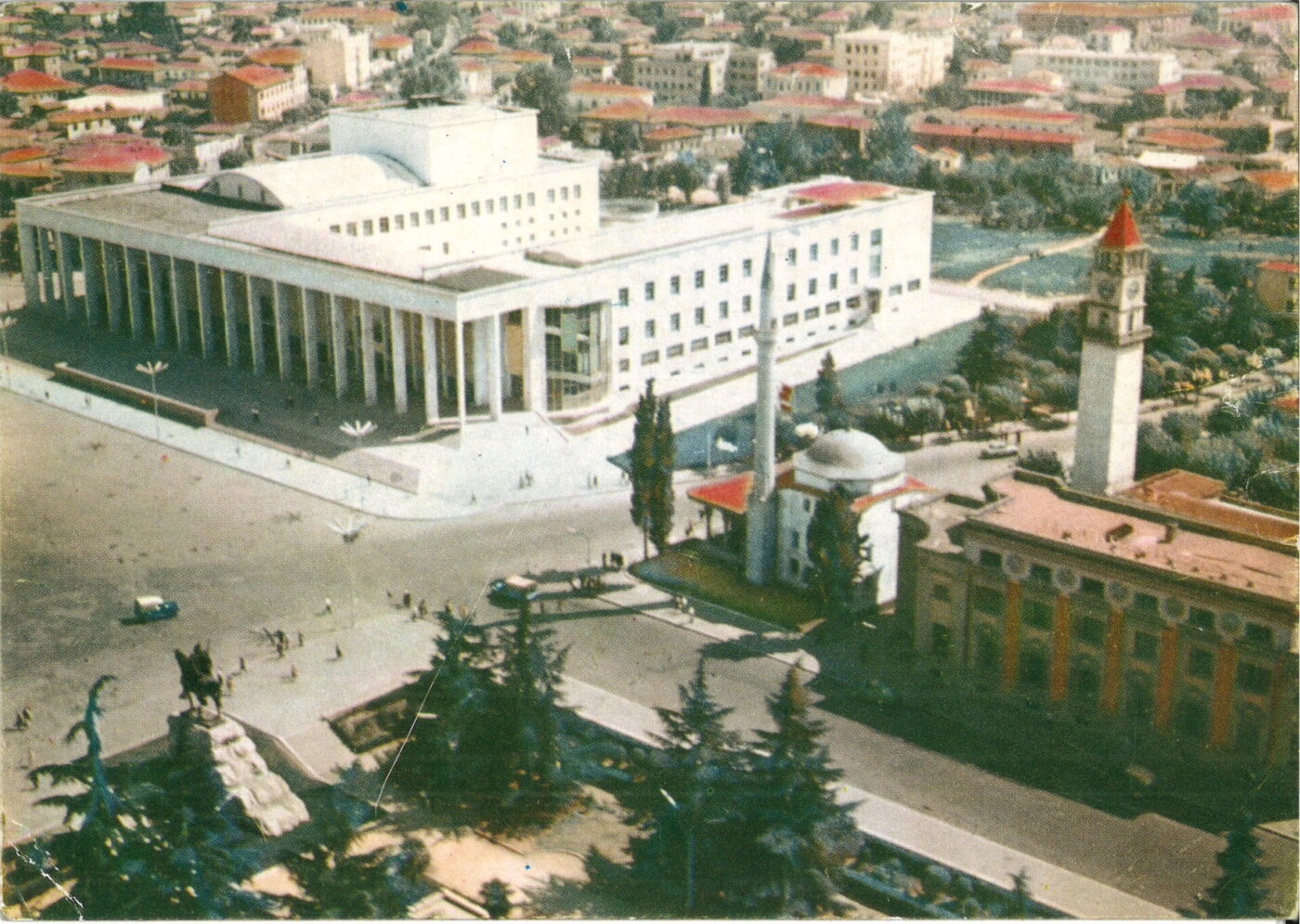
—Another “must-see” on Gandola’s list is the Albanian pavilion, featuring a three-channel video-based work by artist Genti Korini titled “A Place in the Sun”. Combining live acting, puppetry, animation, and an original sonic score, the work explores a vision of Albania as a “somewhere place”.
“It’s impossible to stay home when the Biennale is on. You see people fall in love with Venice again, simply walking around and discovering it on foot. I always say, follow the water, let it guide you. Venice is one of those cities where it’s a pleasure if you happen to get lost,” Gandola says.
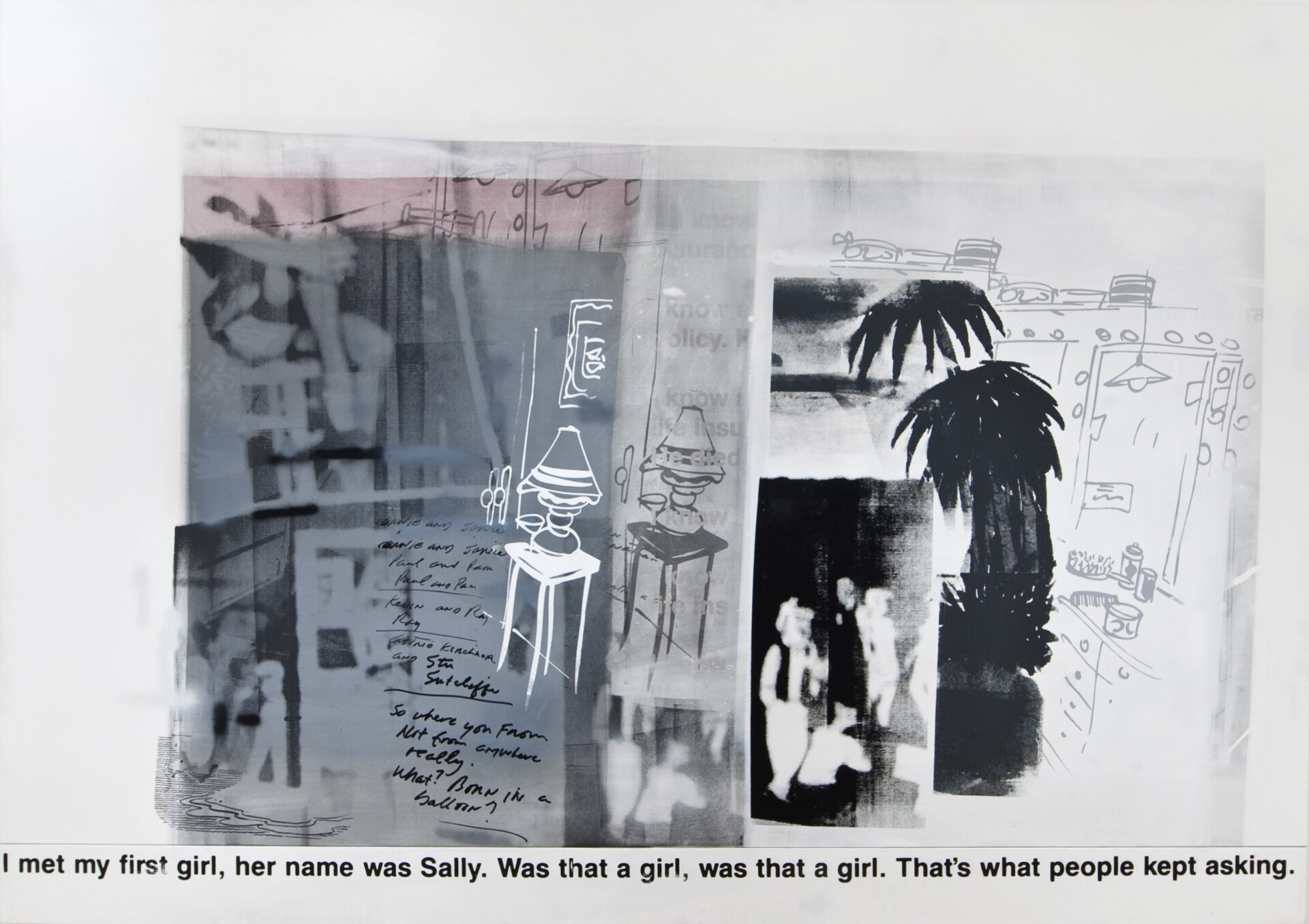
"I Know This Guy (White Paintings)" (1980) by Richard Prince on view at Fondazione Prada; Collection of Alan Hergott and Curt Shepard © Richard Prince
More from our circuit:
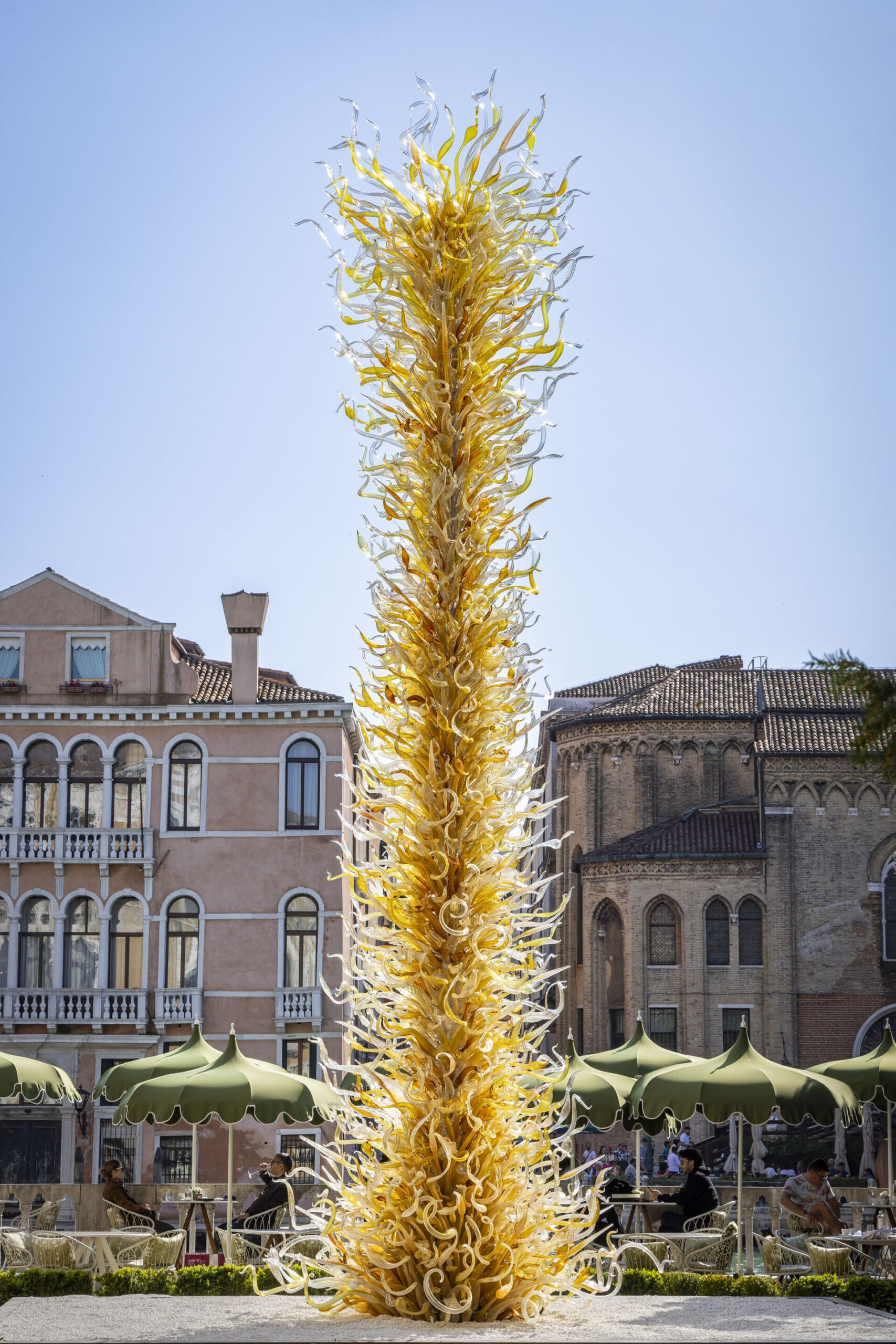
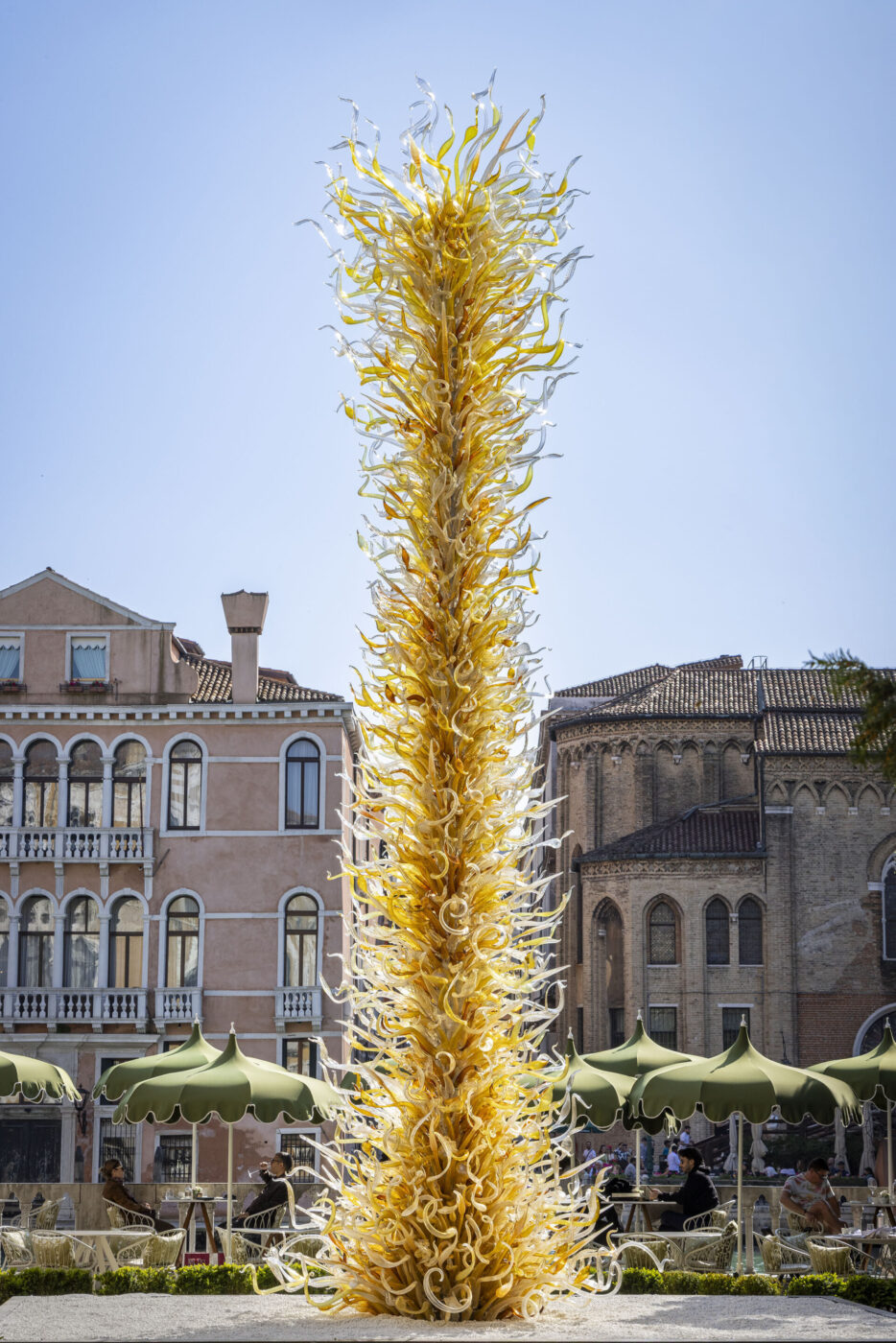
—Renowned for his large-scale experimental glass sculptures, American artist Dale Chihuly presents three new towering outdoor monuments in Venice this year with the exhibition “CHIHULY: Venice 2026” (May 5–November 14). This marks the 30th anniversary of his project “Chihuly Over Venice”.
—“The Shape of the Self / La forma del Sé” (May 10–July 25), a group show by Cassina Projects at Ca’ Riviera, featuring artists including Yves Scherer and Cecilia Granara.
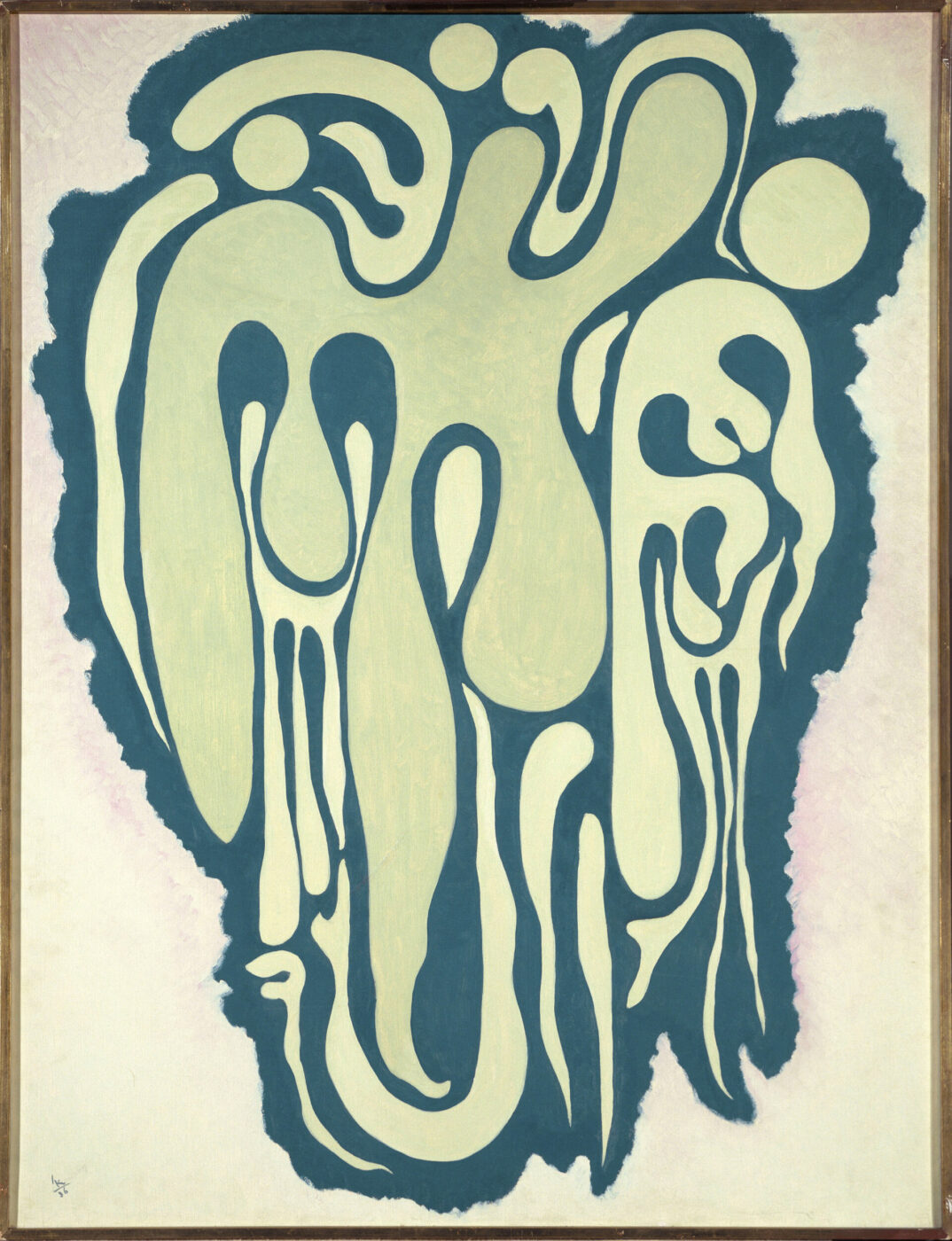
—“Peggy Guggenheim in London: The Making of a Collector” at the Peggy Guggenheim Collection (Dorsoduro). This exhibition explores the influence that the art collector and patron’s “inner circle” of artist-friends had on shaping her vision, featuring works by Kandinsky, Barbara Hepworth, and Piet Mondrian.
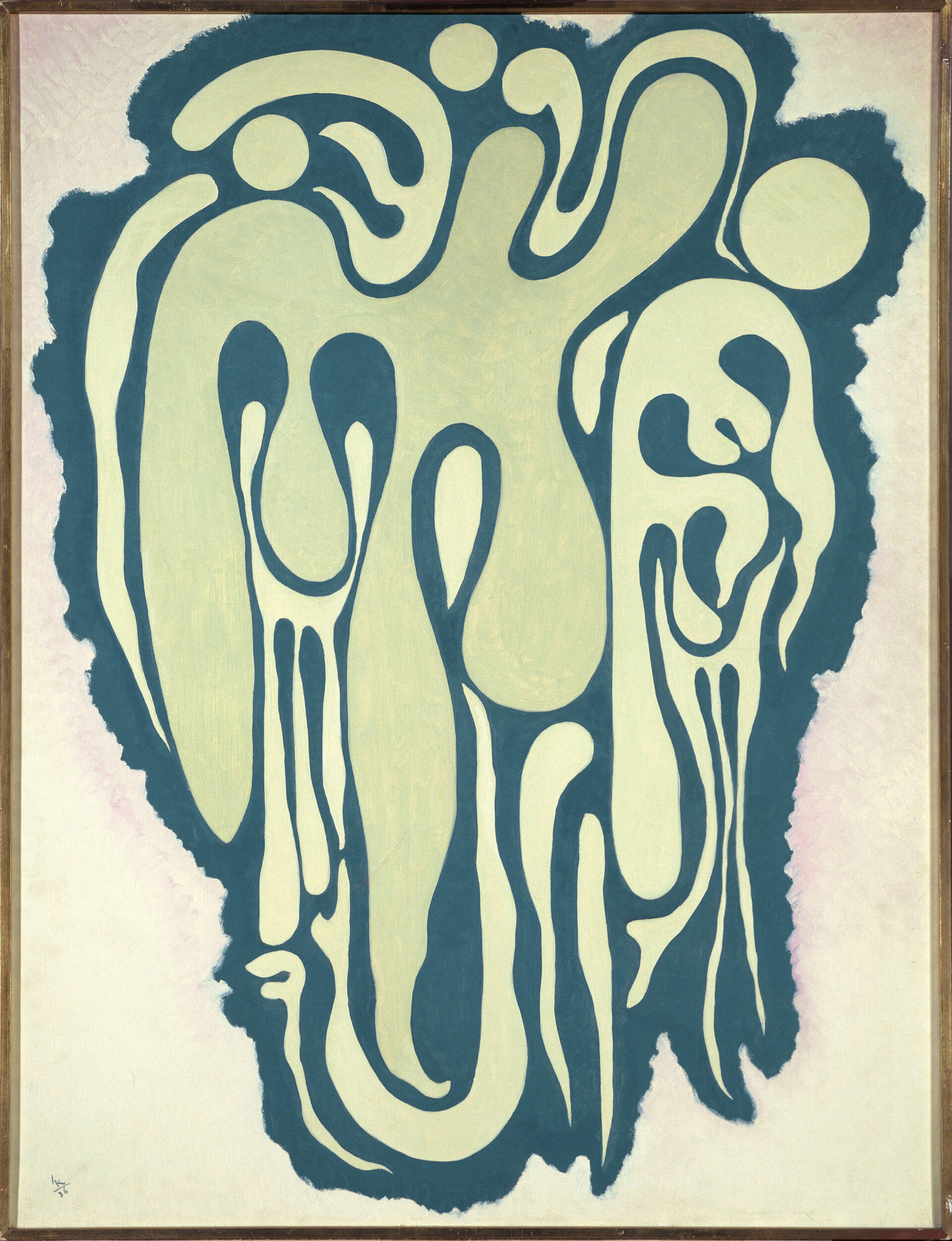
Vasily Kandinsky "Figura verde" (1936) on view at the Peggy Guggenheim Collection; Image ©Centre Pompidou, Paris
—“Color and Lights” (May 9–July 15) by Michelangelo Pistoletto at Palazzo Widmann, a presentation of the artist’s new mirror works inspired by a series of lost paintings by late Baroque artist Luca Giordano, once housed in this private palazzo.
—British film director and multimedia artist Charlotte Colbert presents a series of mystical, polished stainless steel sculptures in her exhibition “Possible Landscapes” (through September 30), on view at Palazzo Corner della Ca’ Grande and in the gardens of Aman Venice.
—Fancy a bit of time travel? A visit to the Canova Galleries inside the historic Museo Correr (Piazza San Marco) should be on your itinerary. Here, the exhibition “Spiral Economy” (April 30–November 22) offers an immersive dialogue between the work of Franco-Swiss artist Julian Charrière and Antonio Canova’s sculptures. The timelessness of marble as material and matter is the show’s conceptual thread.
—Museo Fortuny, one of our favorite cultural landmarks in San Marco, is hosting those radically proportioned, gravity-defying sculptures by Austrian artist Erwin Wurm. Titled “Dreamers” (May 6–November 22), the exhibition presents an unlikely dialogue between Wurm’s radical sculptural expressions of “everyday life” and Palazzo Fortuny’s theatrical interiors.
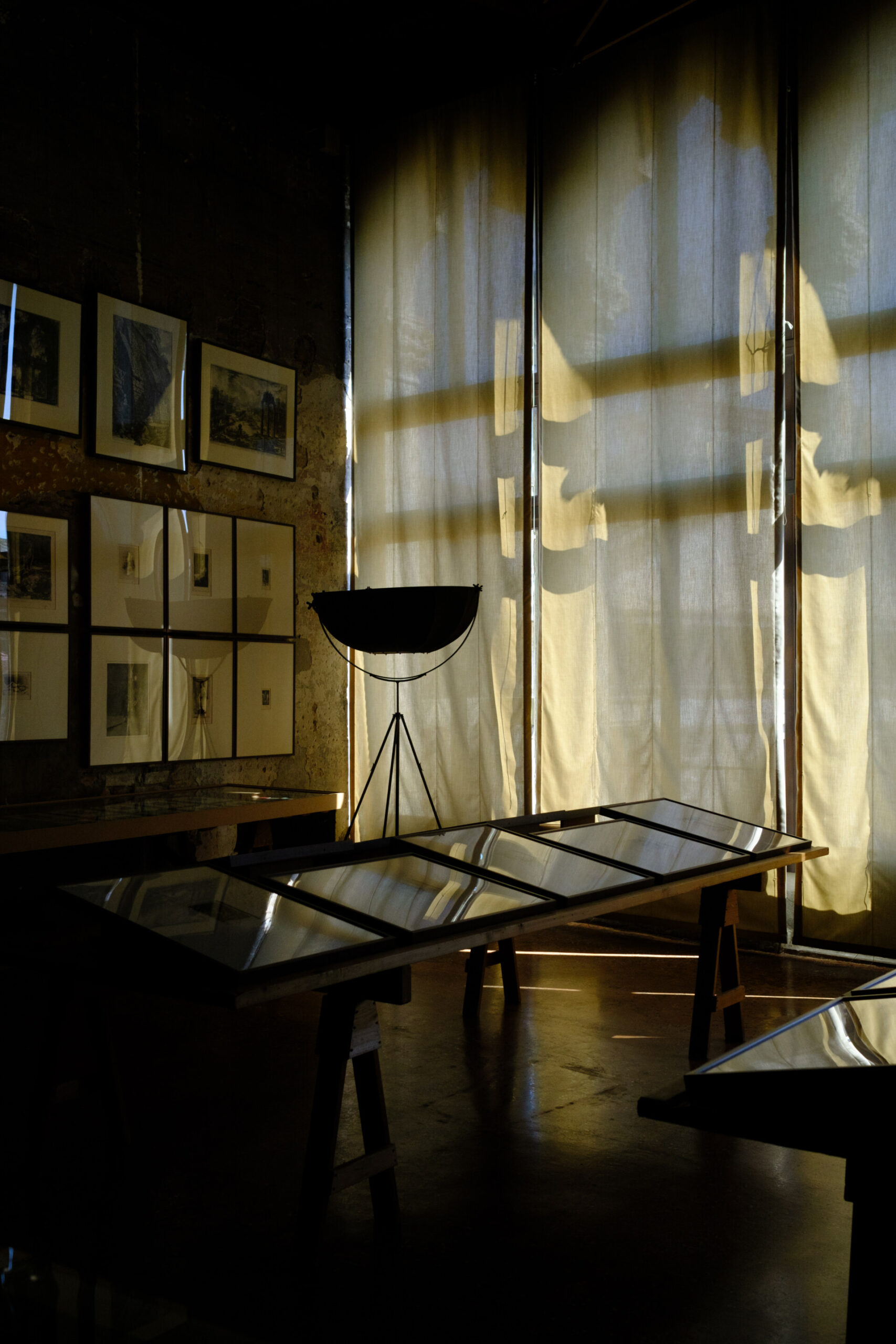
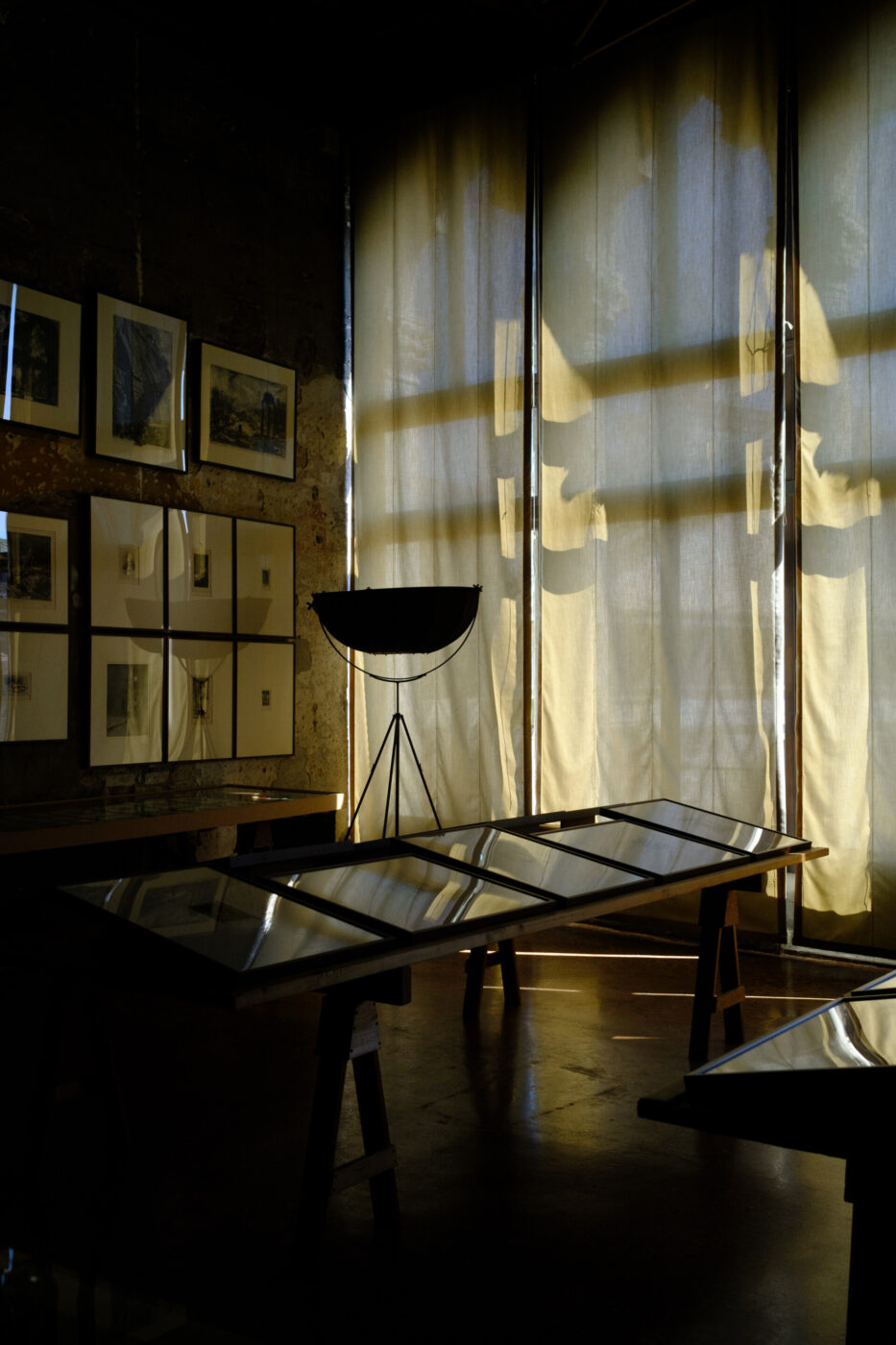
Museo Fortuny; Photo by Giacomo Gandola