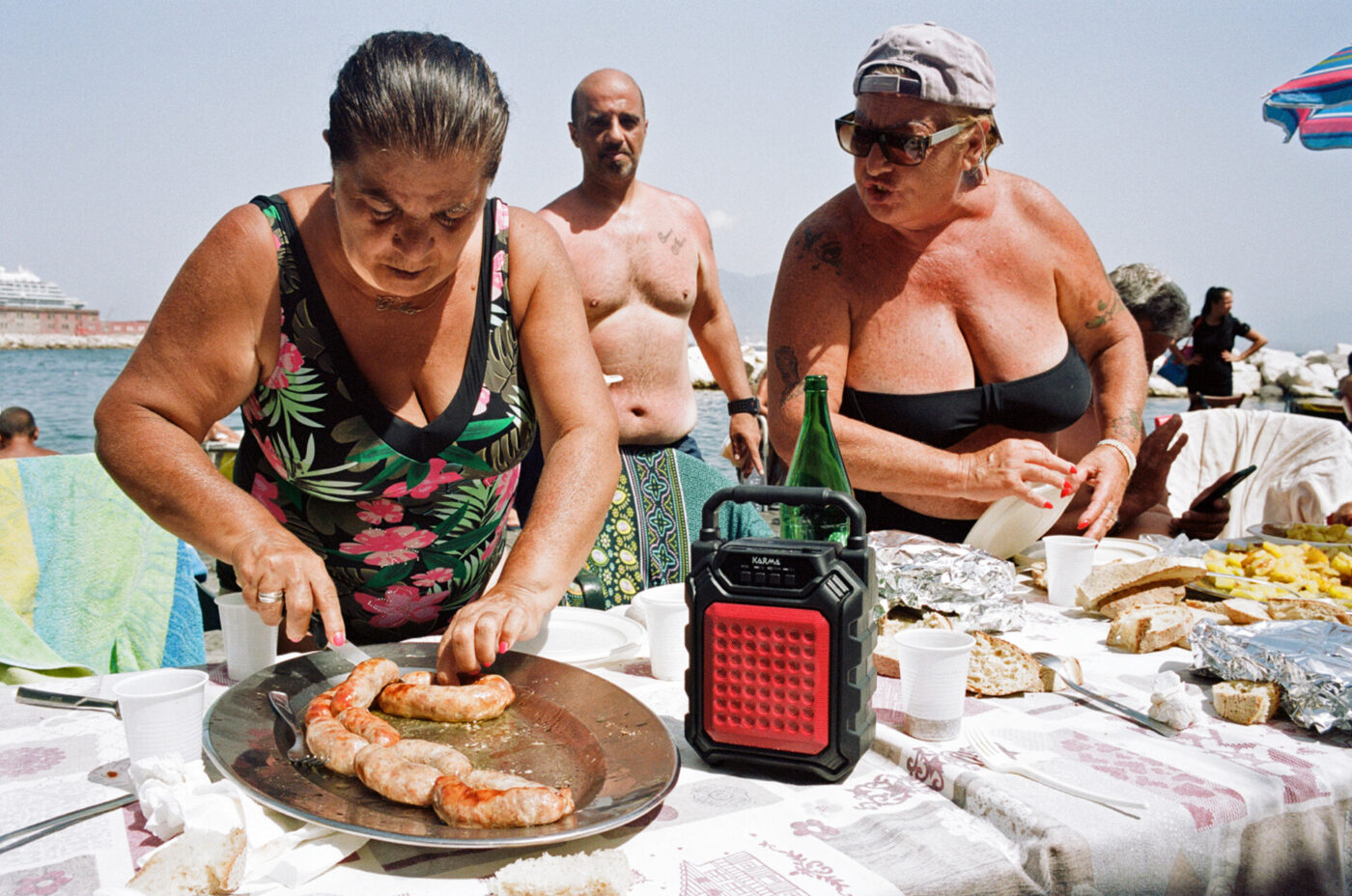
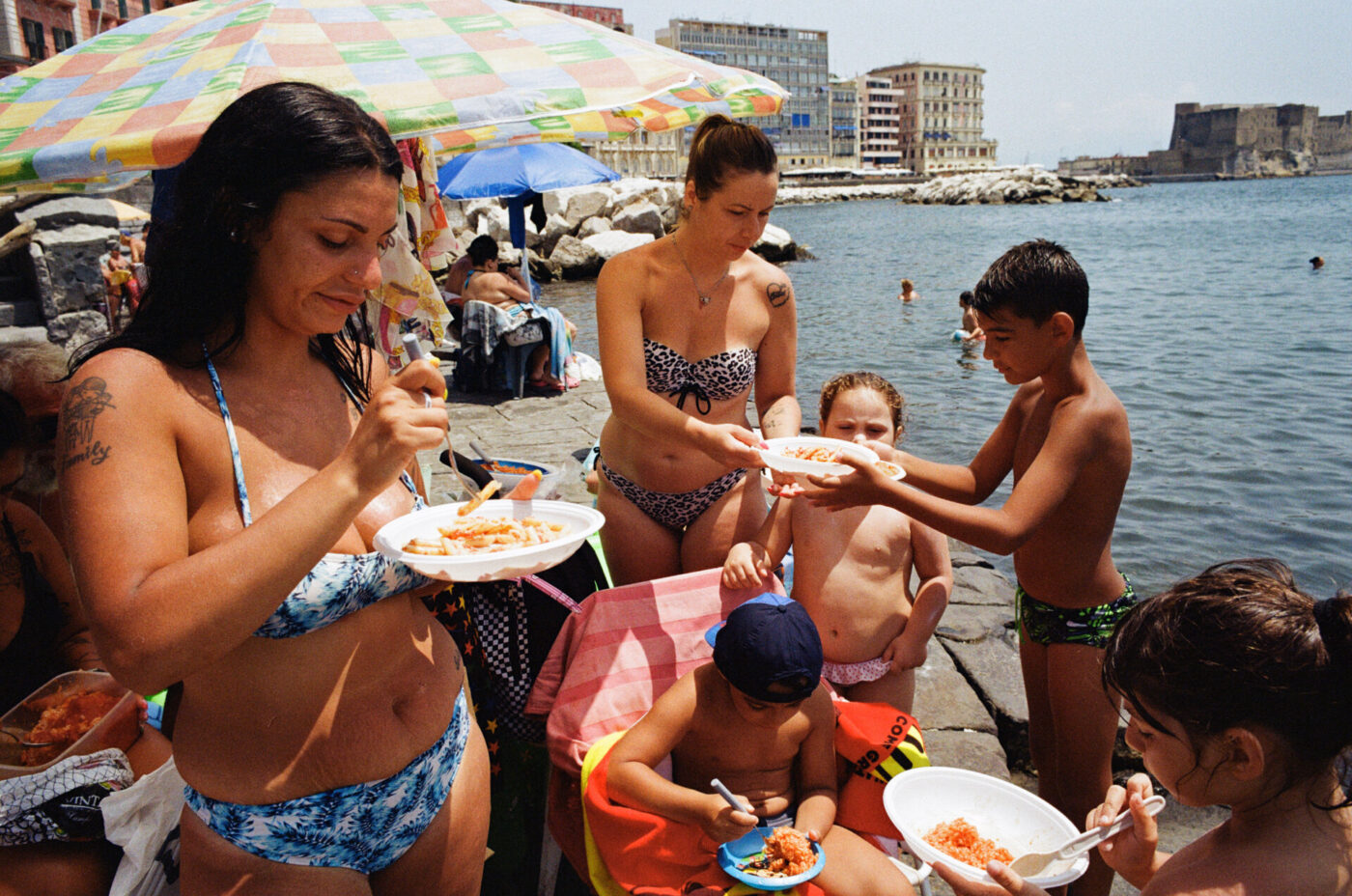
Naples. A city, a capital, a hot topic. And today, a successful brand. Photographers, writers, directors, and even fashion companies from all over the world have tried to capture its soul, that elusive idea of napoletanità (if it’s even definable). And while outsiders associate it with mopeds, pizza, and Elena Ferrante’s novels, locals know the city’s true soul belongs to the sea.
Here lies a bitter geographic paradox: despite being perched above one of the world’s most magnificent gulfs, Naples offers its residents remarkably little physical access to it. There’s almost no continuous, open seafront in or near the city. Cut off by private enclaves, industrial barriers, and polluted stretches, the water remains a daily tease—highly visible, profoundly close, yet frustratingly out of reach for the average Neapolitan.
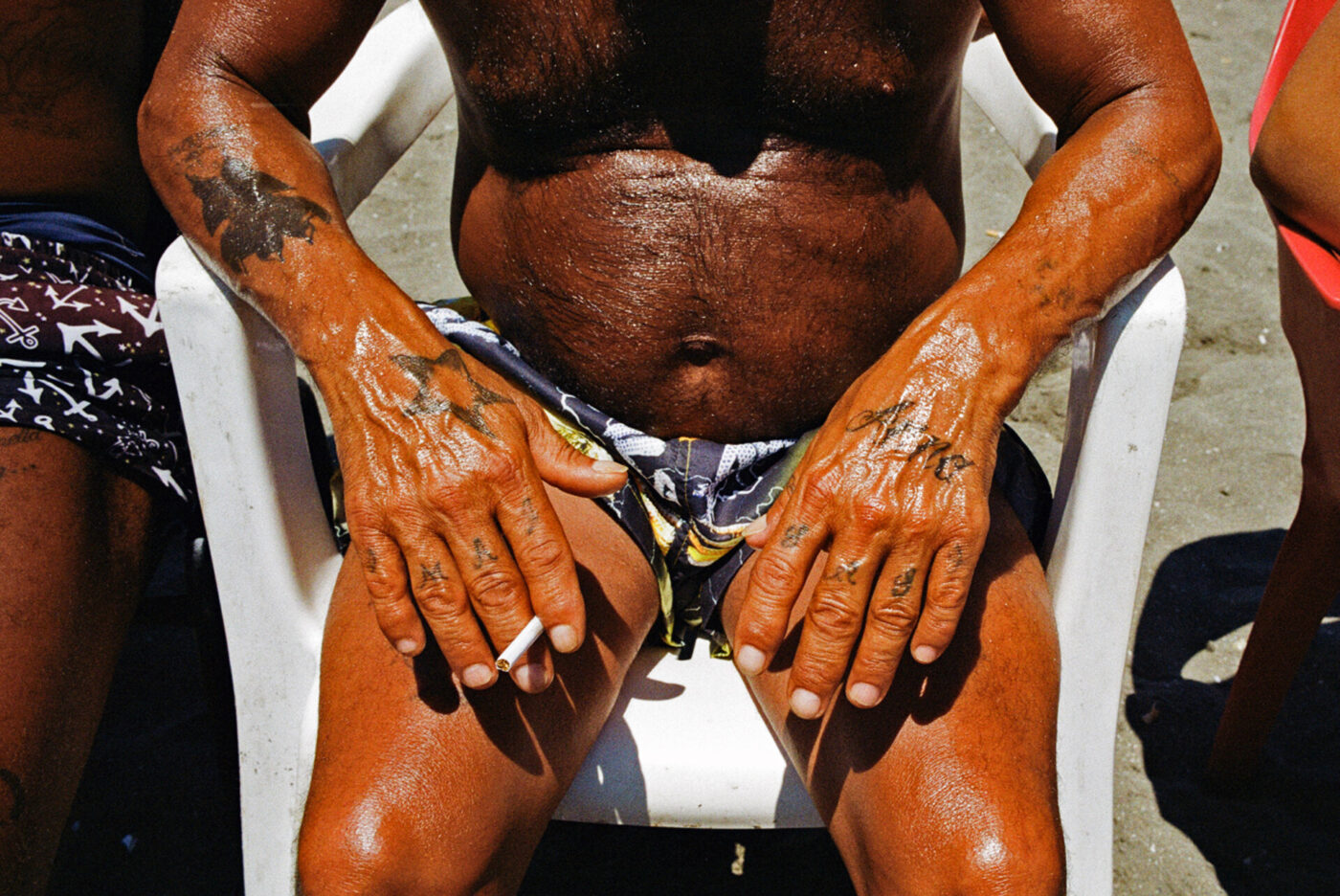
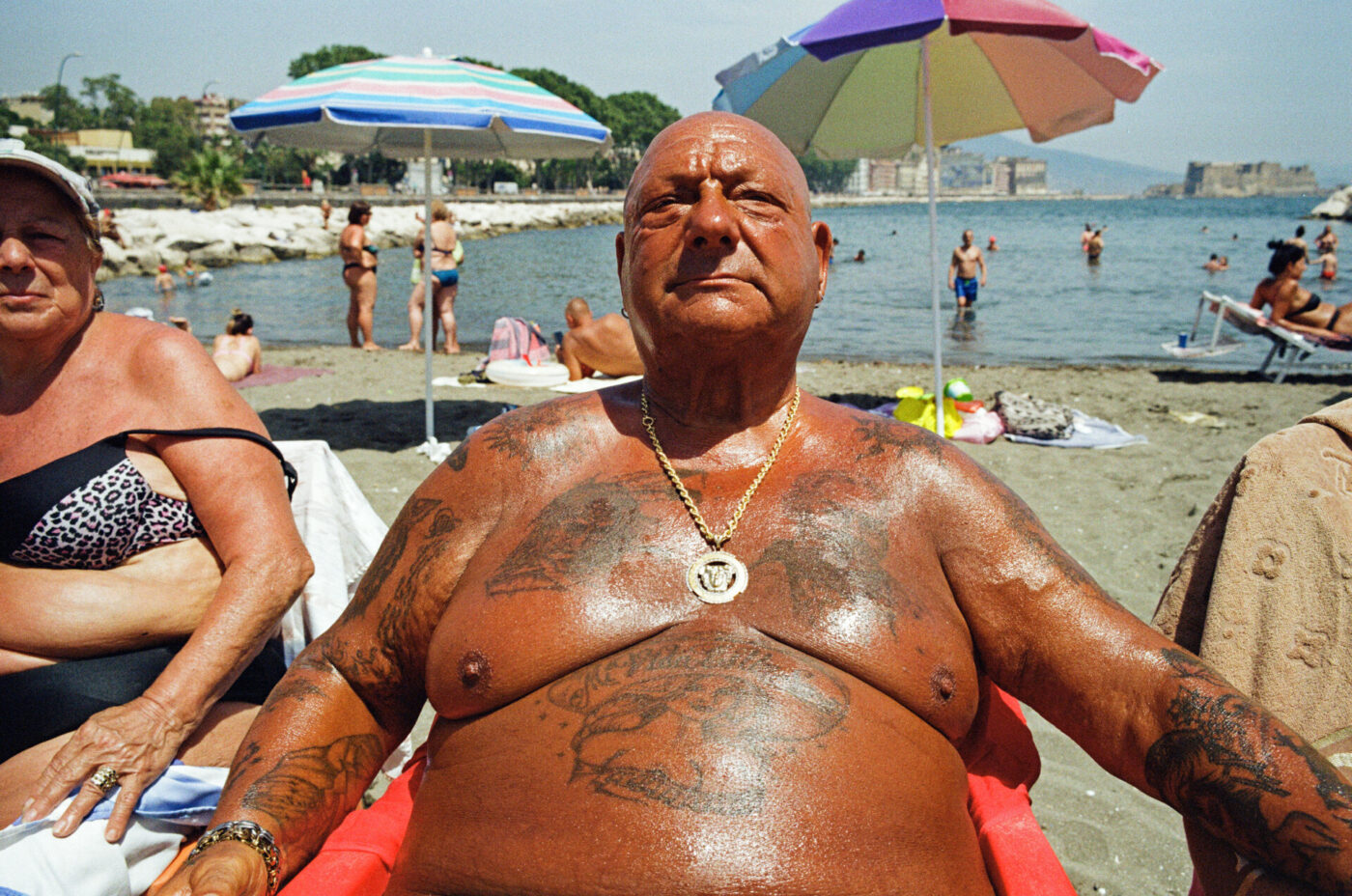
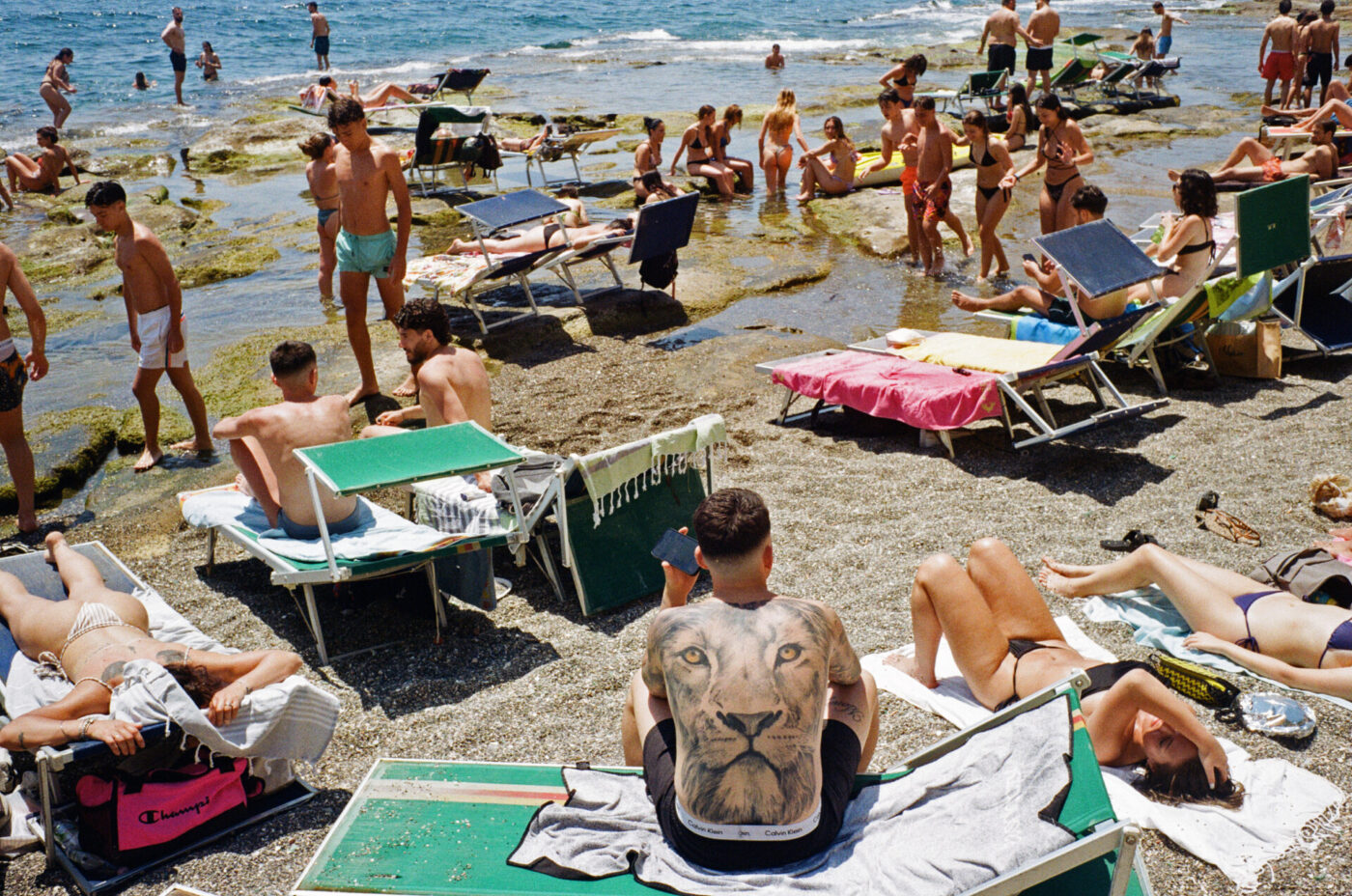
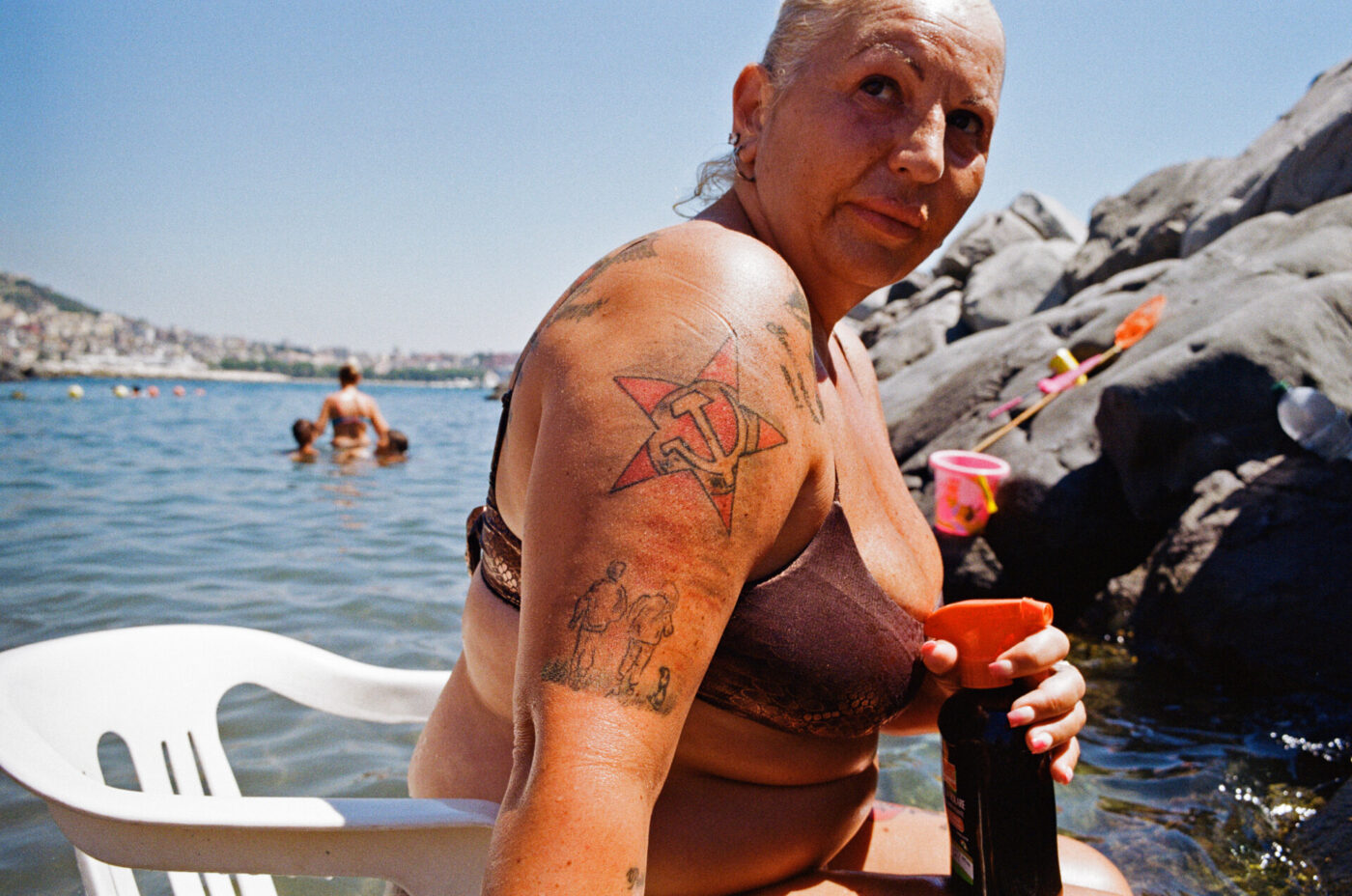
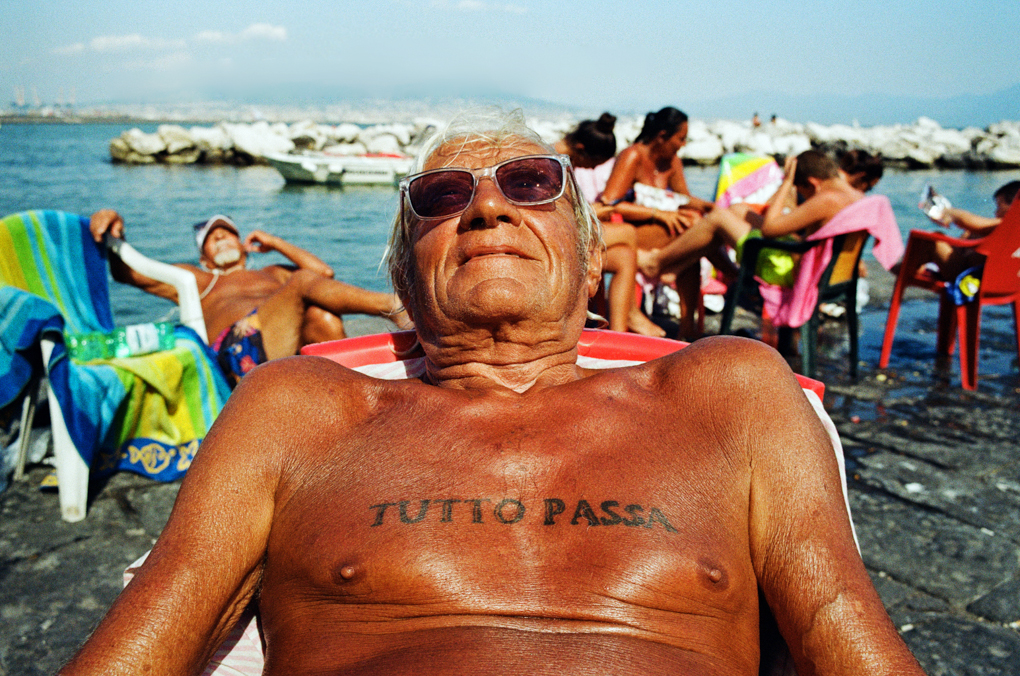
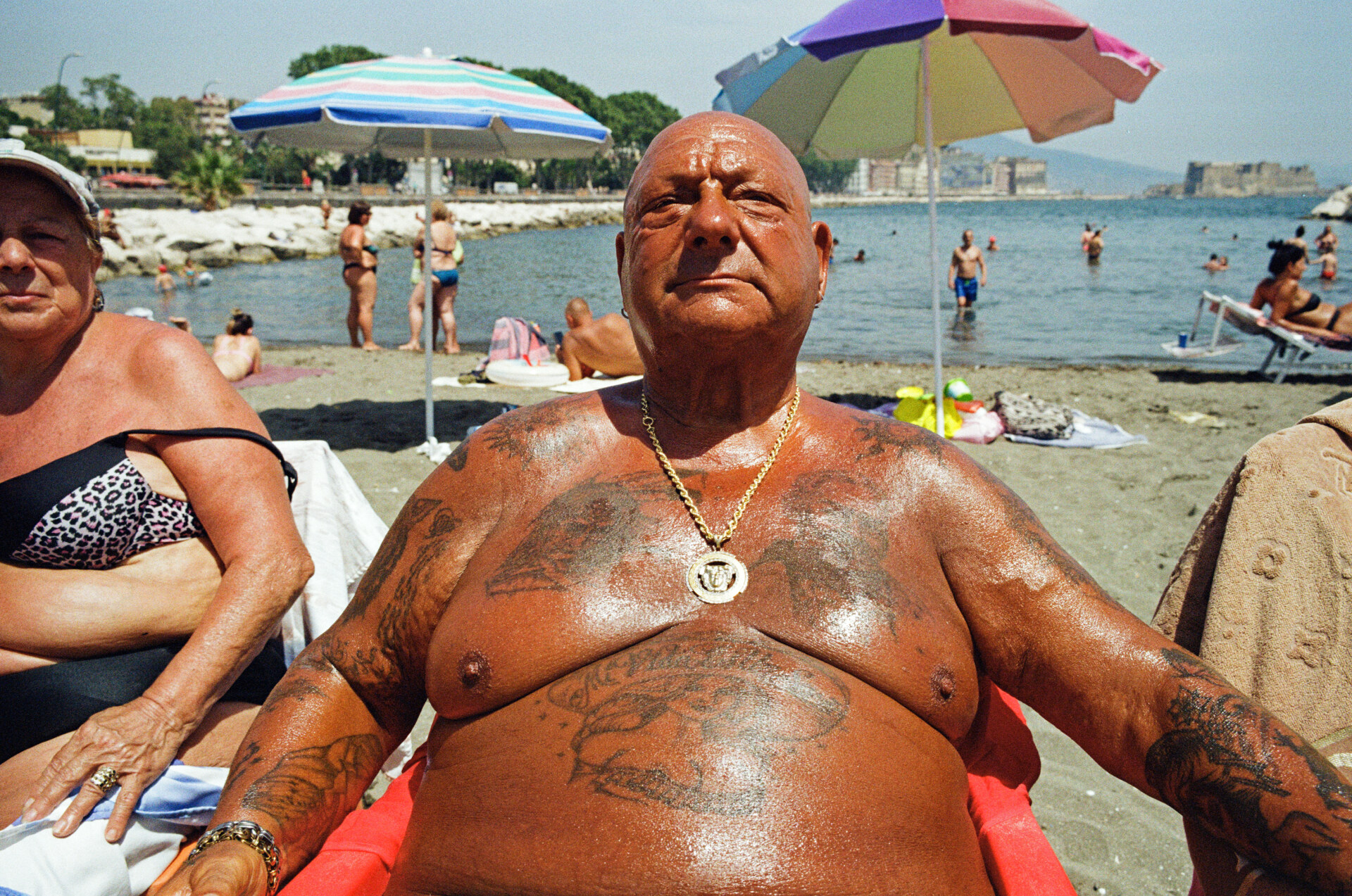
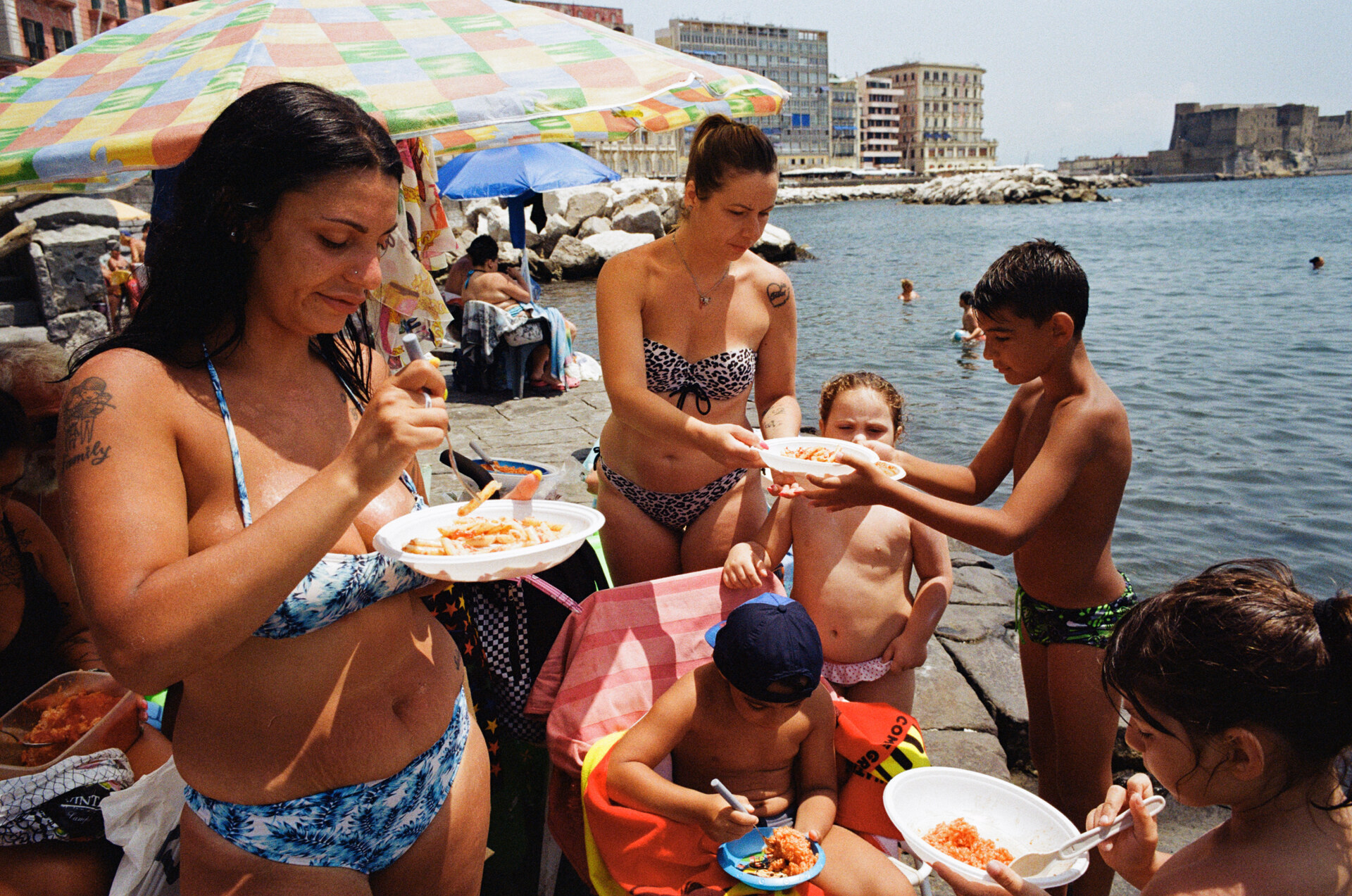
This frustration has given rise to a culture of defiance on the city’s rare pockets of public sand, most notably Mappatella Beach. Here, working-class Neapolitans routinely bypass restrictions to claim the water—a spirit crystallized in the now-viral local swimmer whose chest is tattooed with “Tutto Passa” (“Everything passes”). In recent years, images of him and others have inundated social media as a steady influx of photographers, influencers, and anthropologists comes to capture this insular coastal community.
The sudden spotlight has sparked much debate over whether the attention is genuine cultural appreciation or, as many critics assert, the romanticization of socioeconomic neglect and the distortion of private, communal moments into staged spectacles for external consumption.
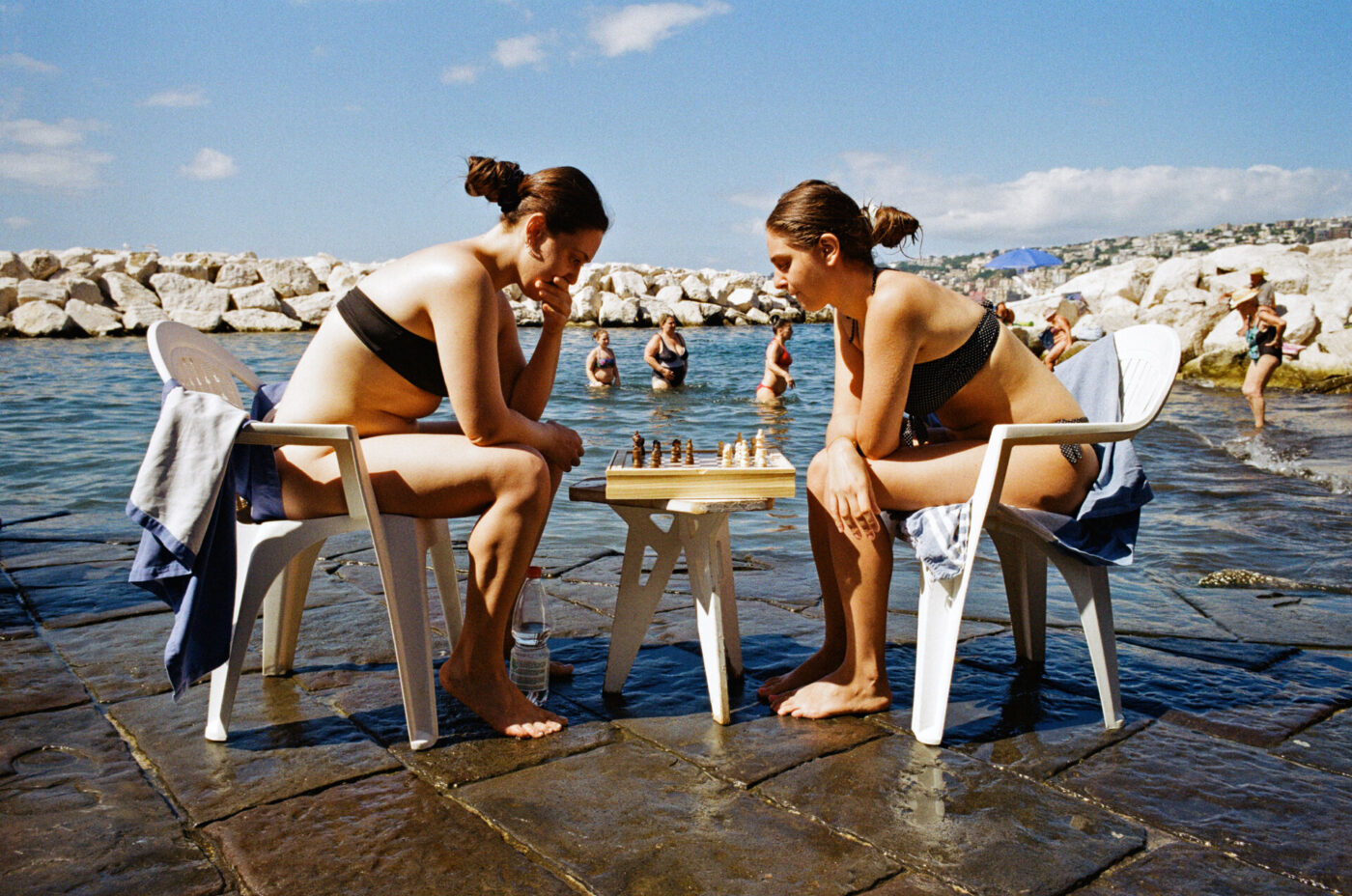
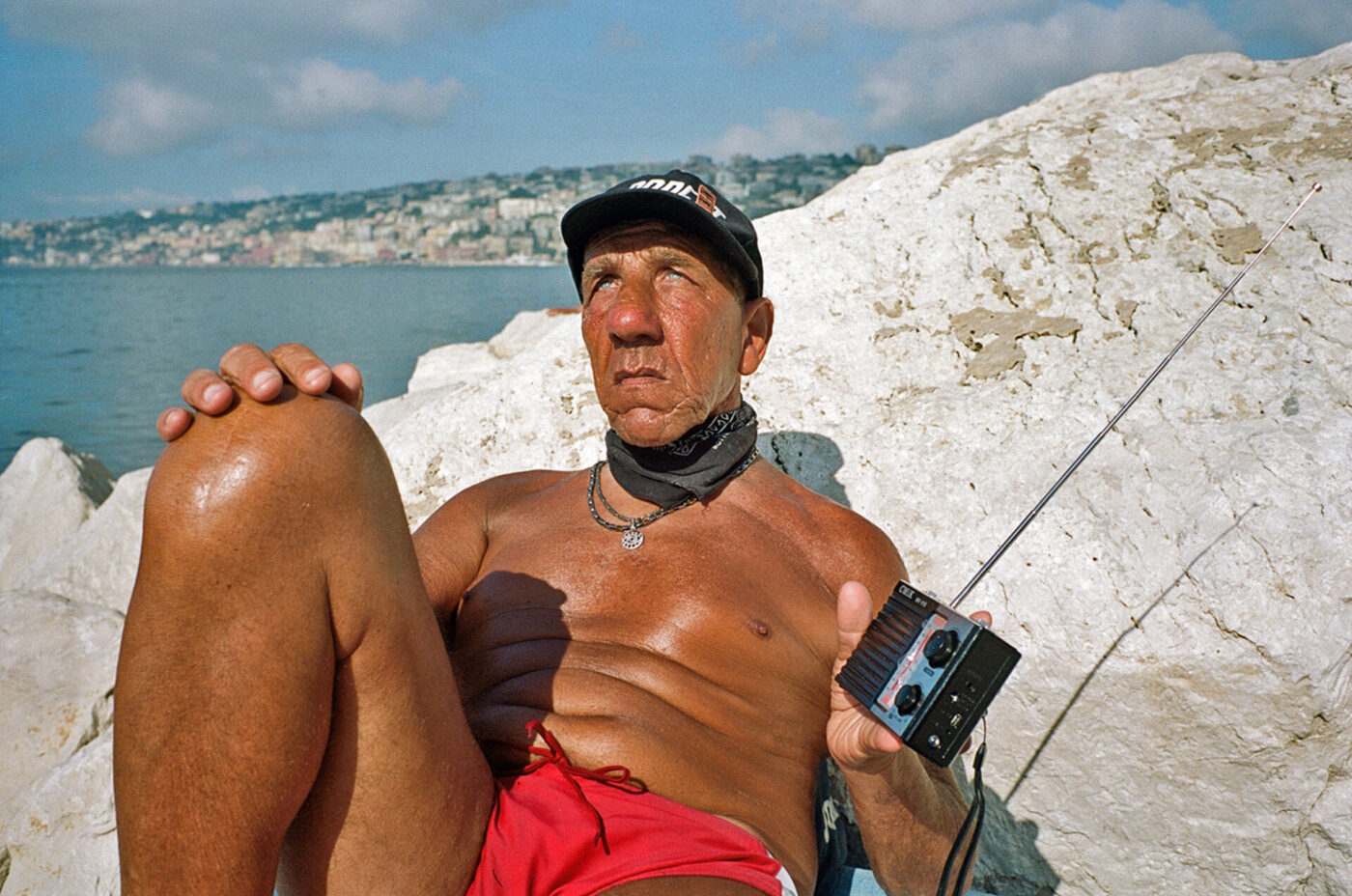
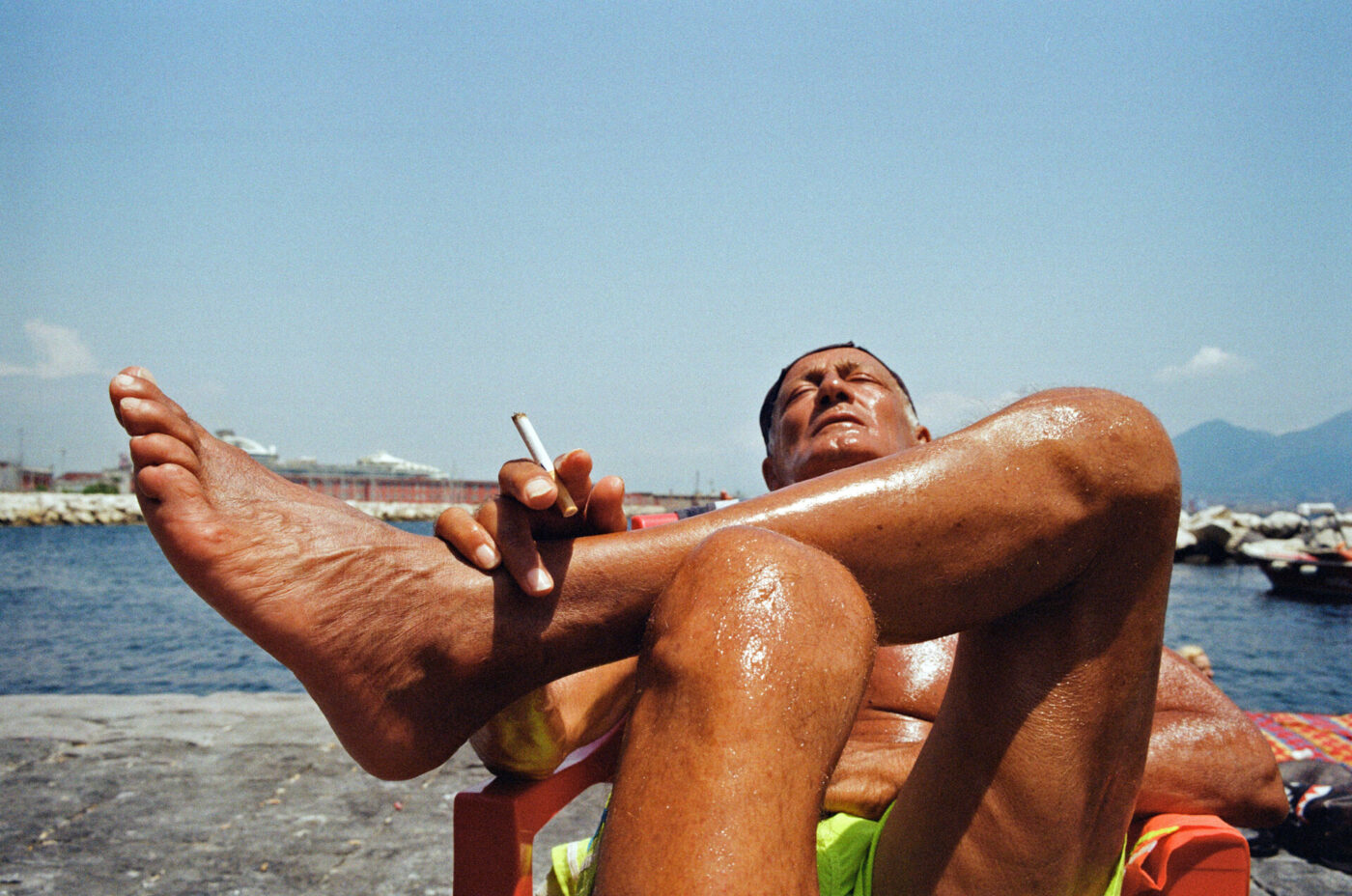
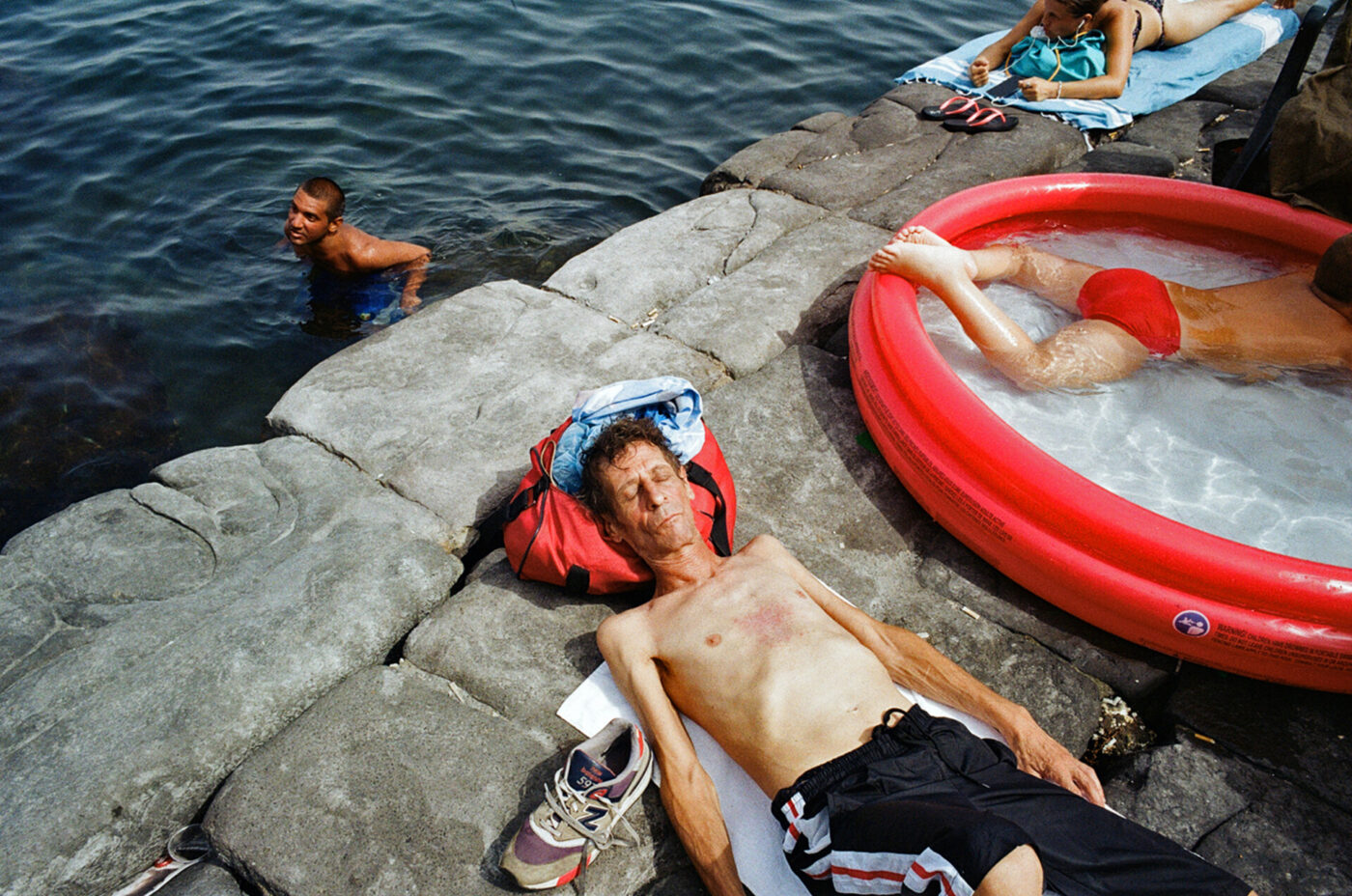
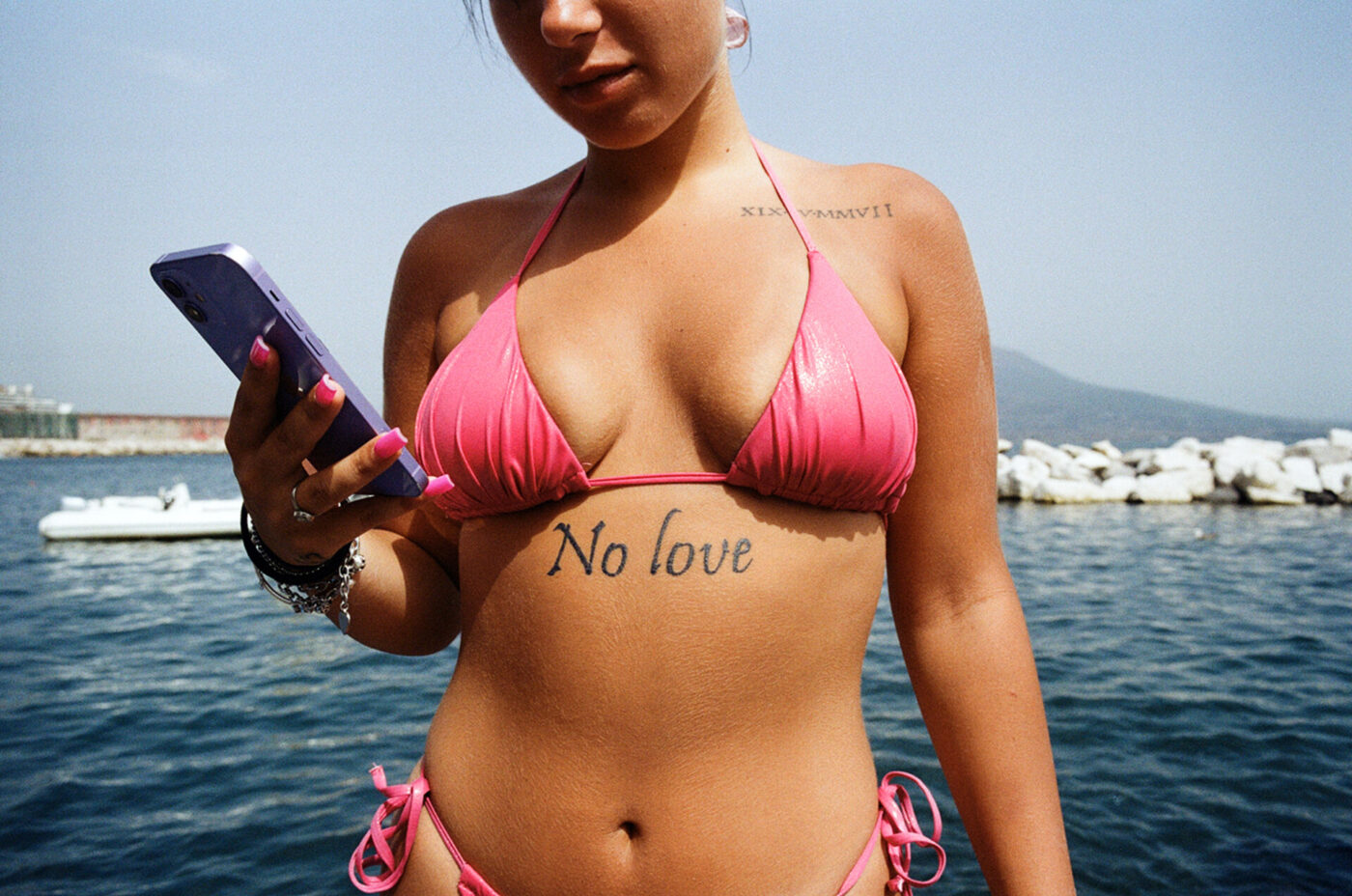
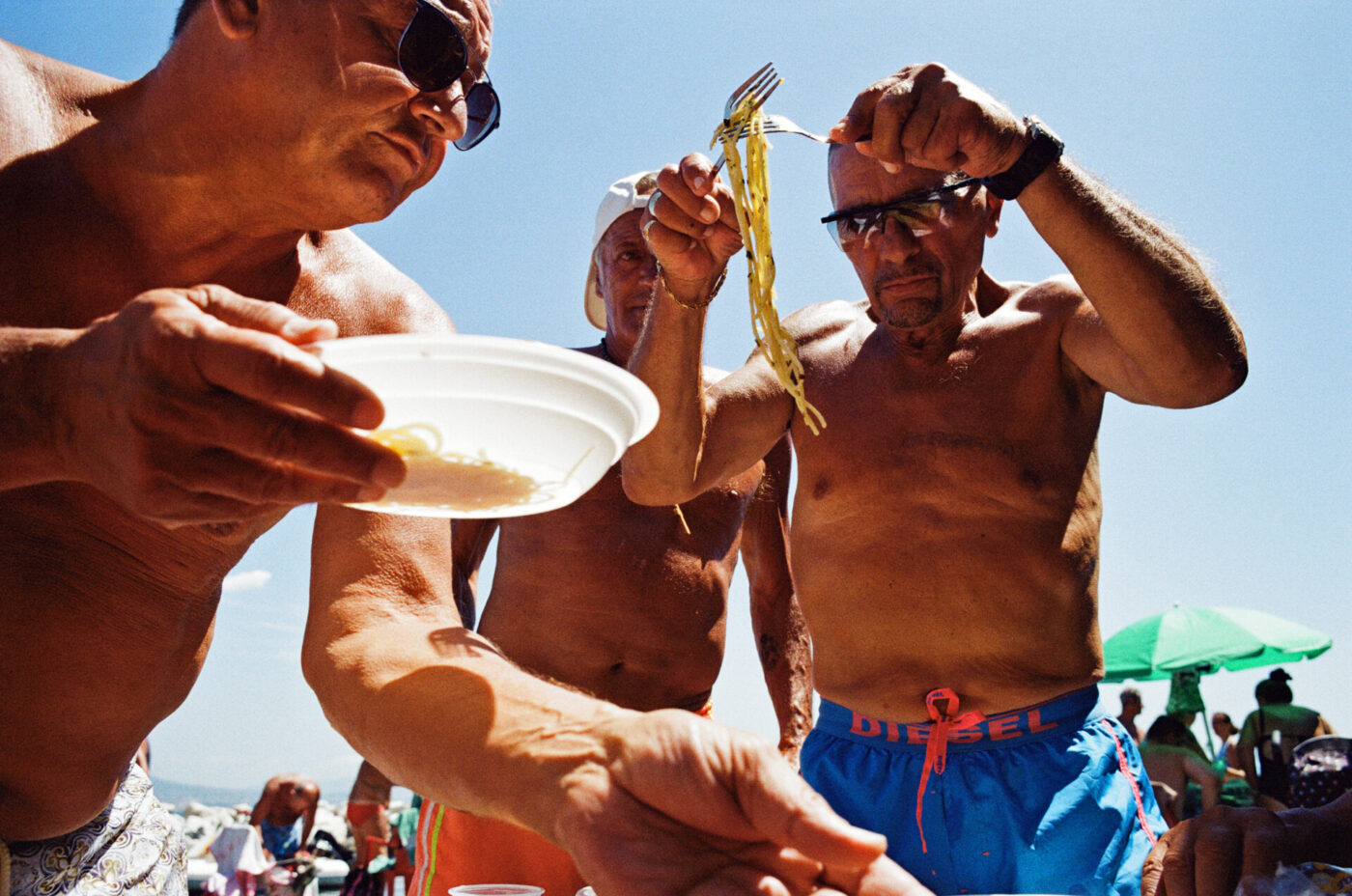
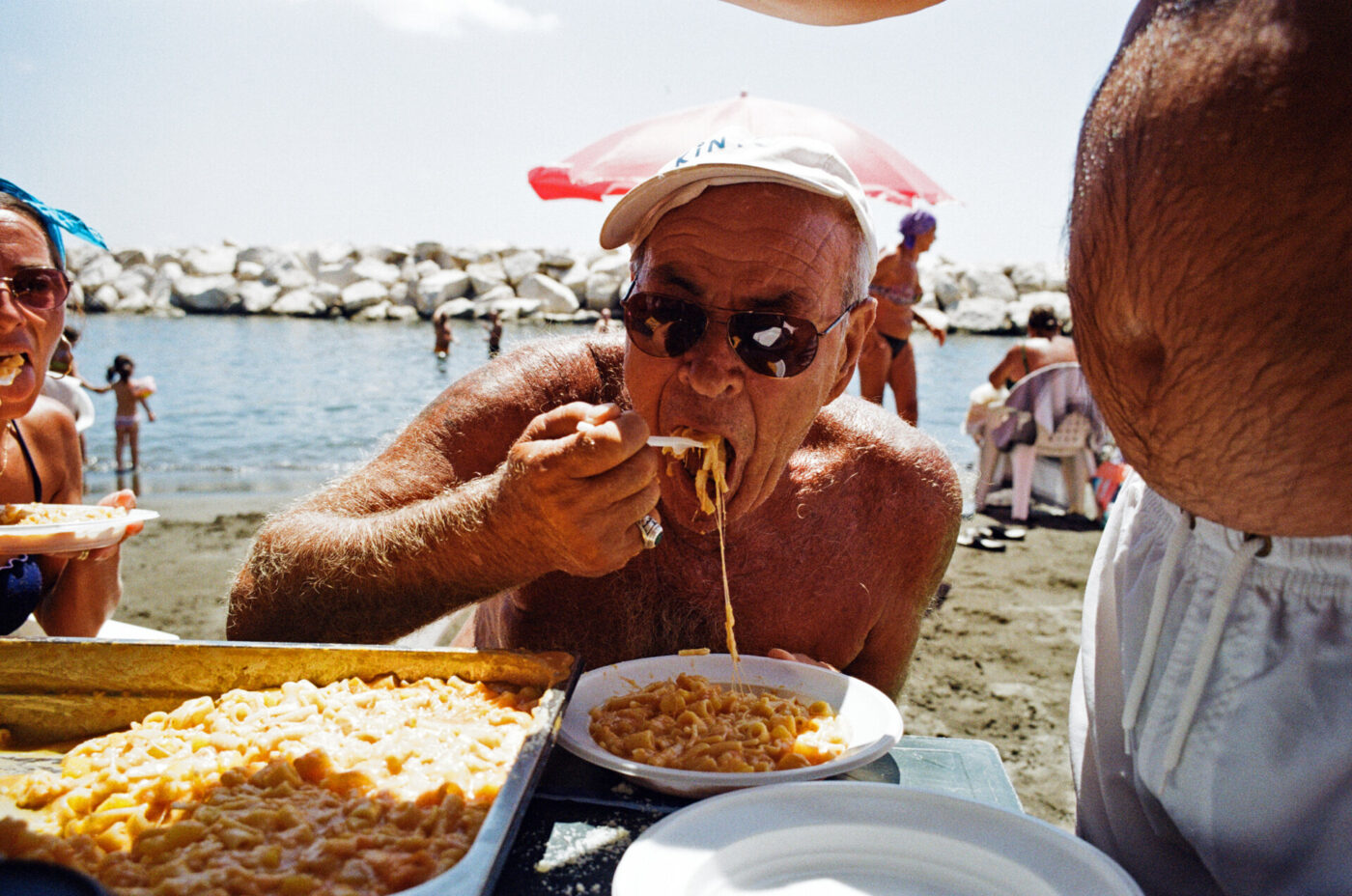
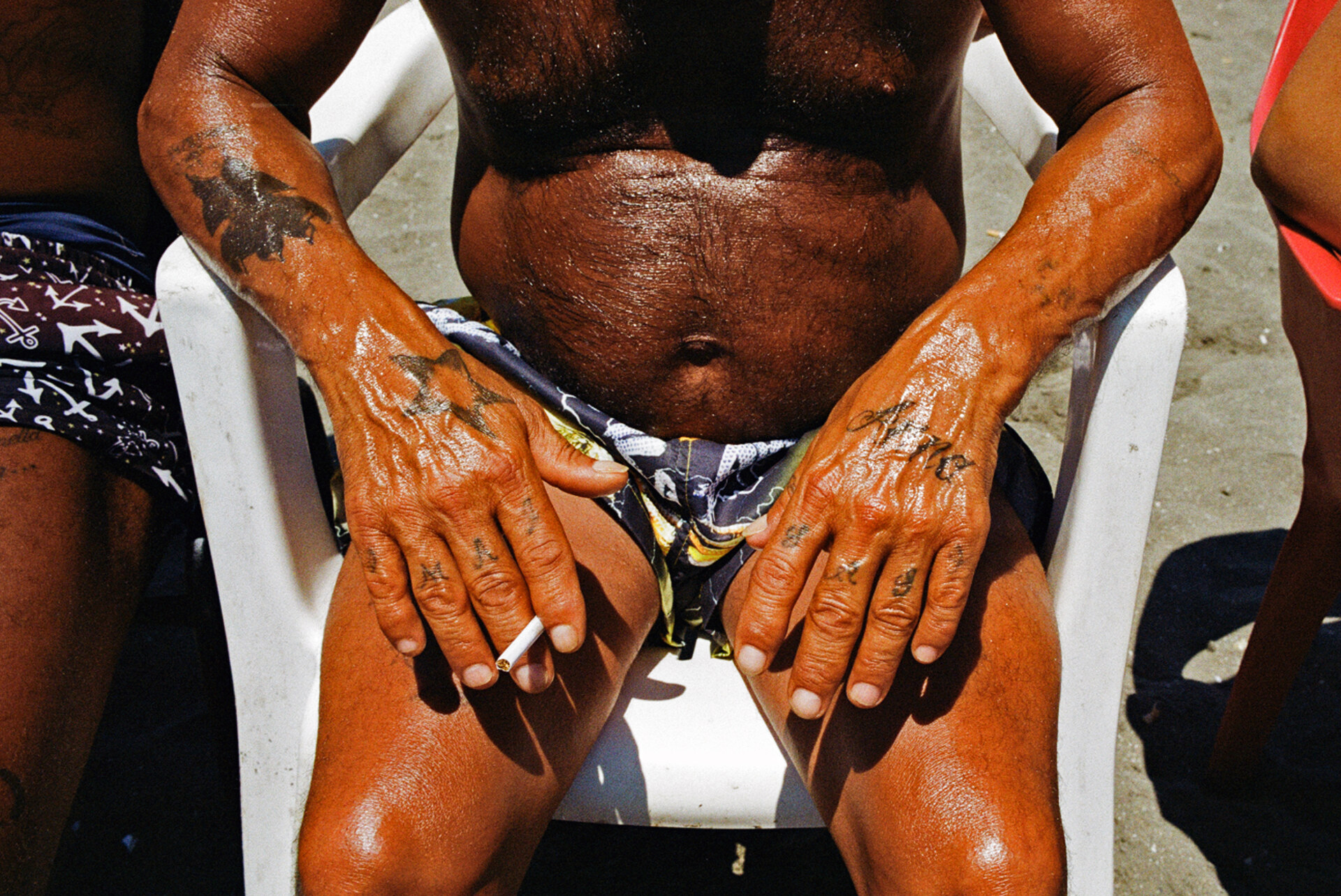
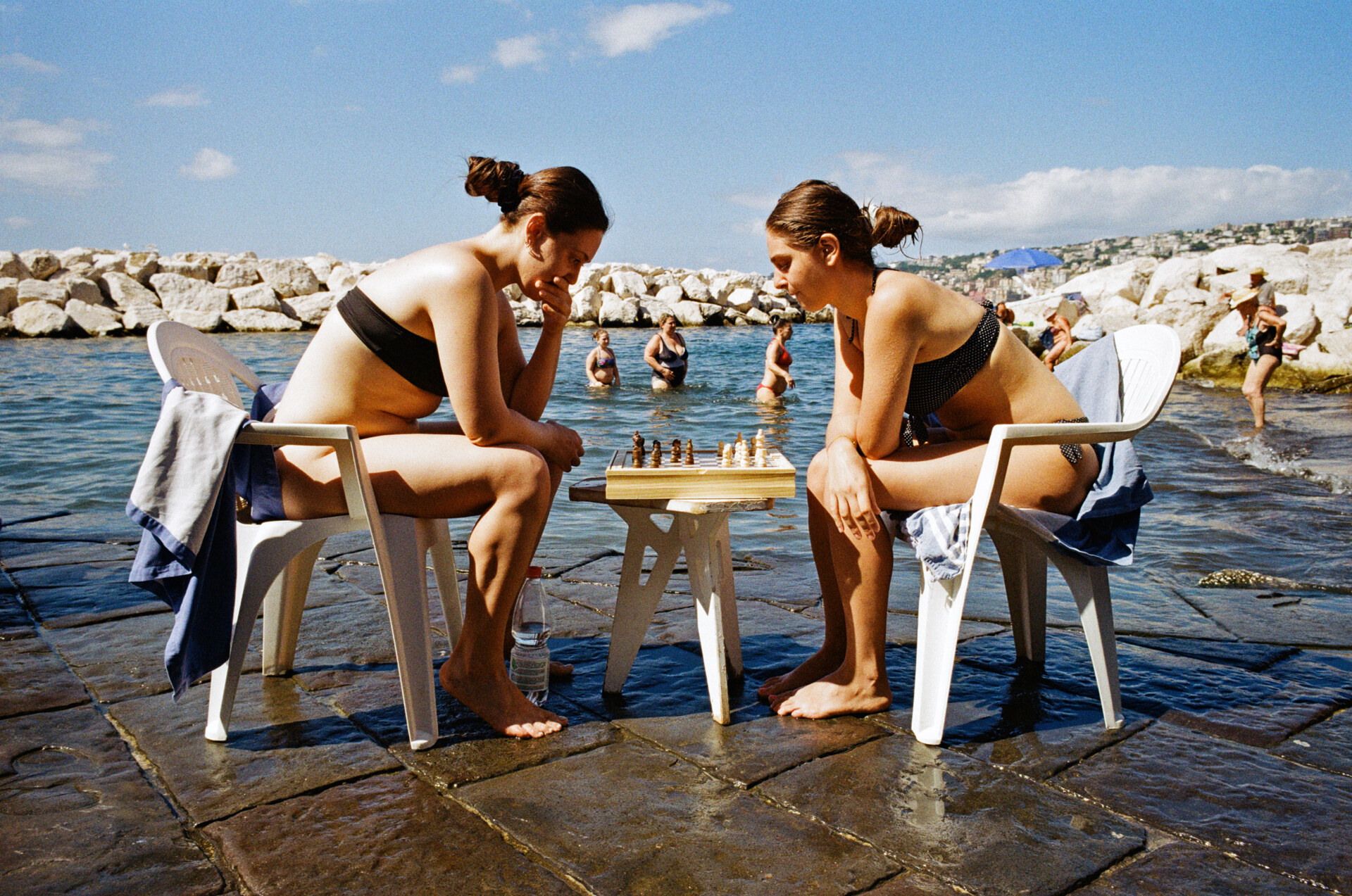
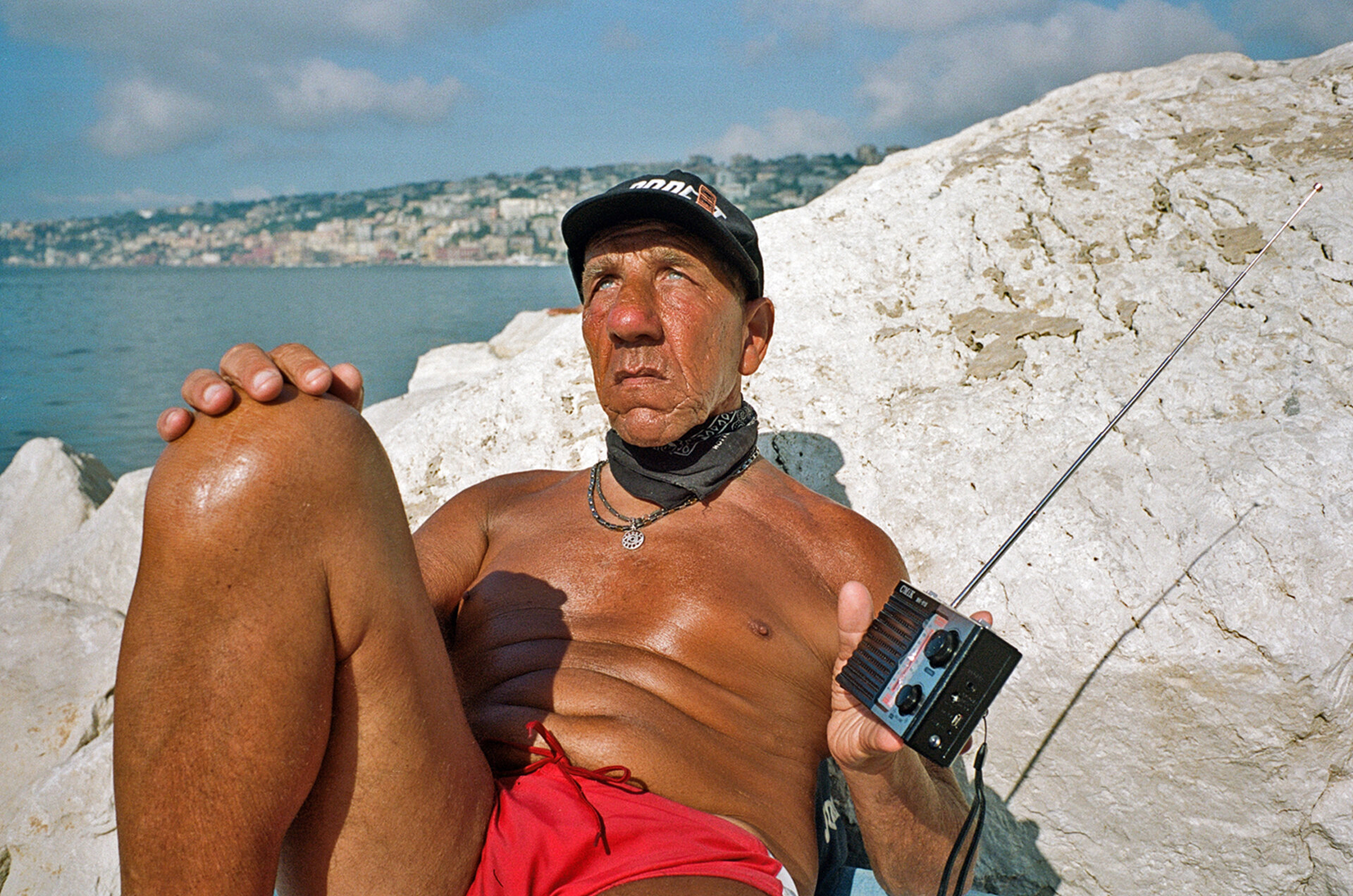
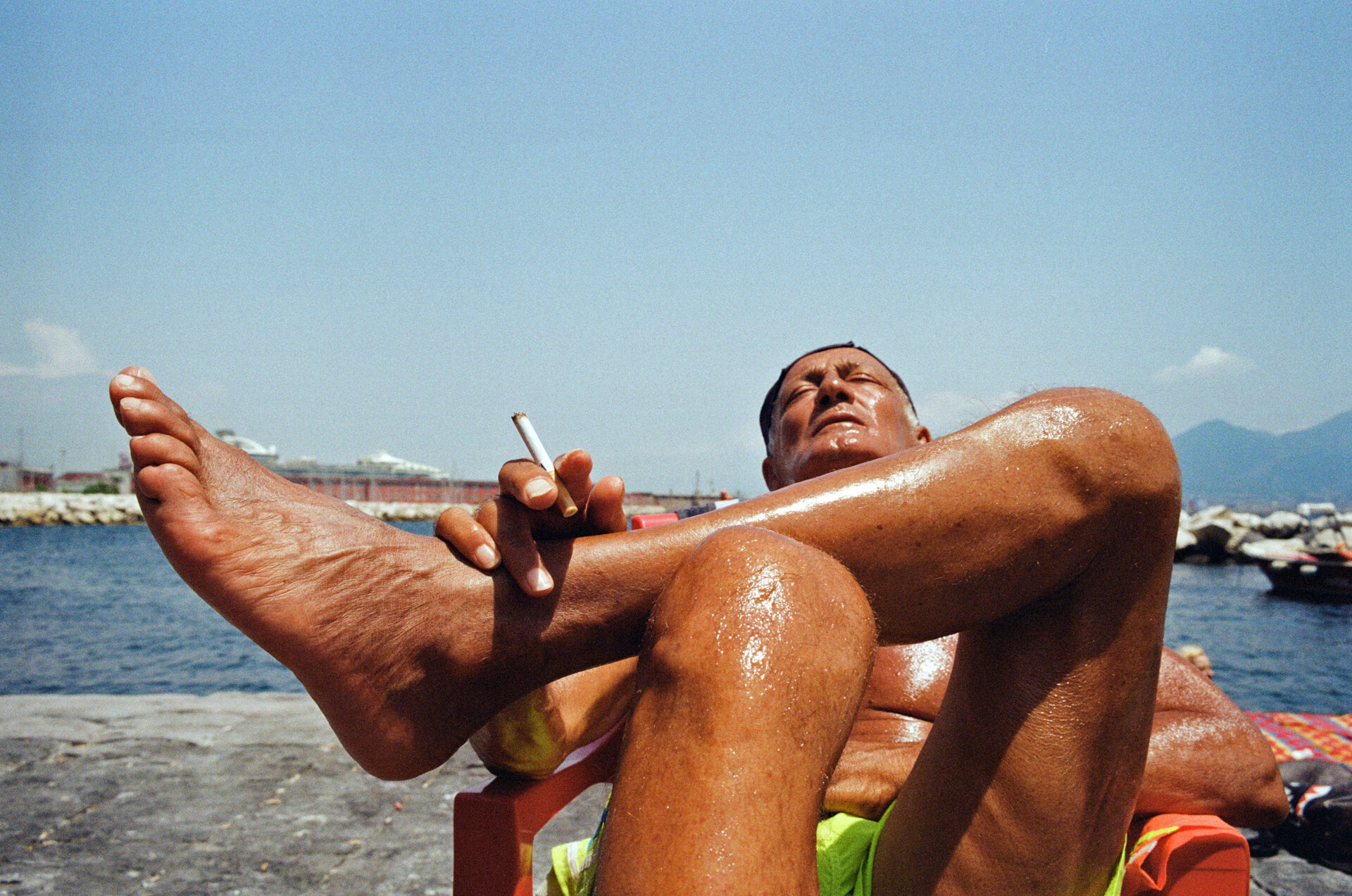
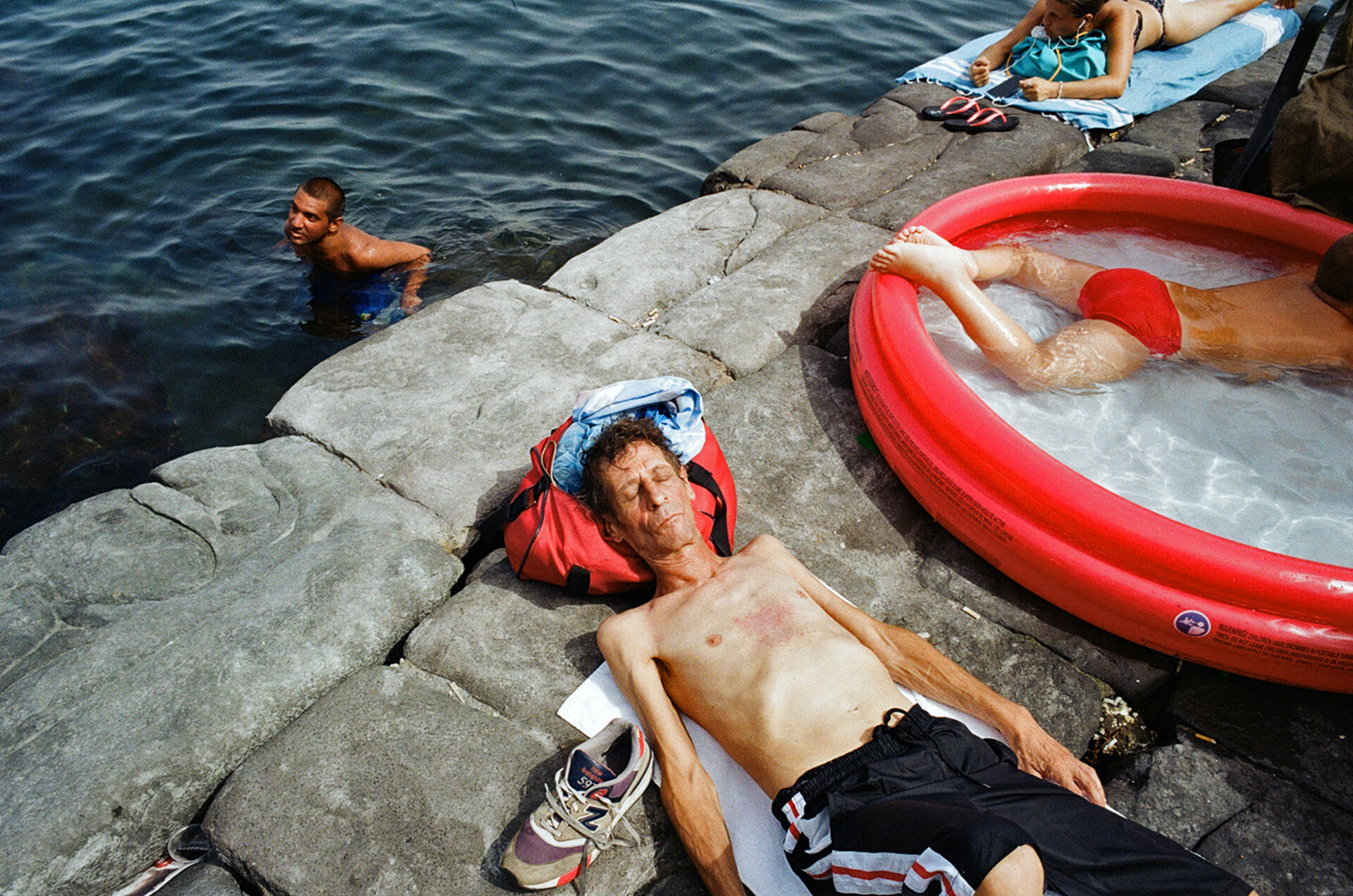
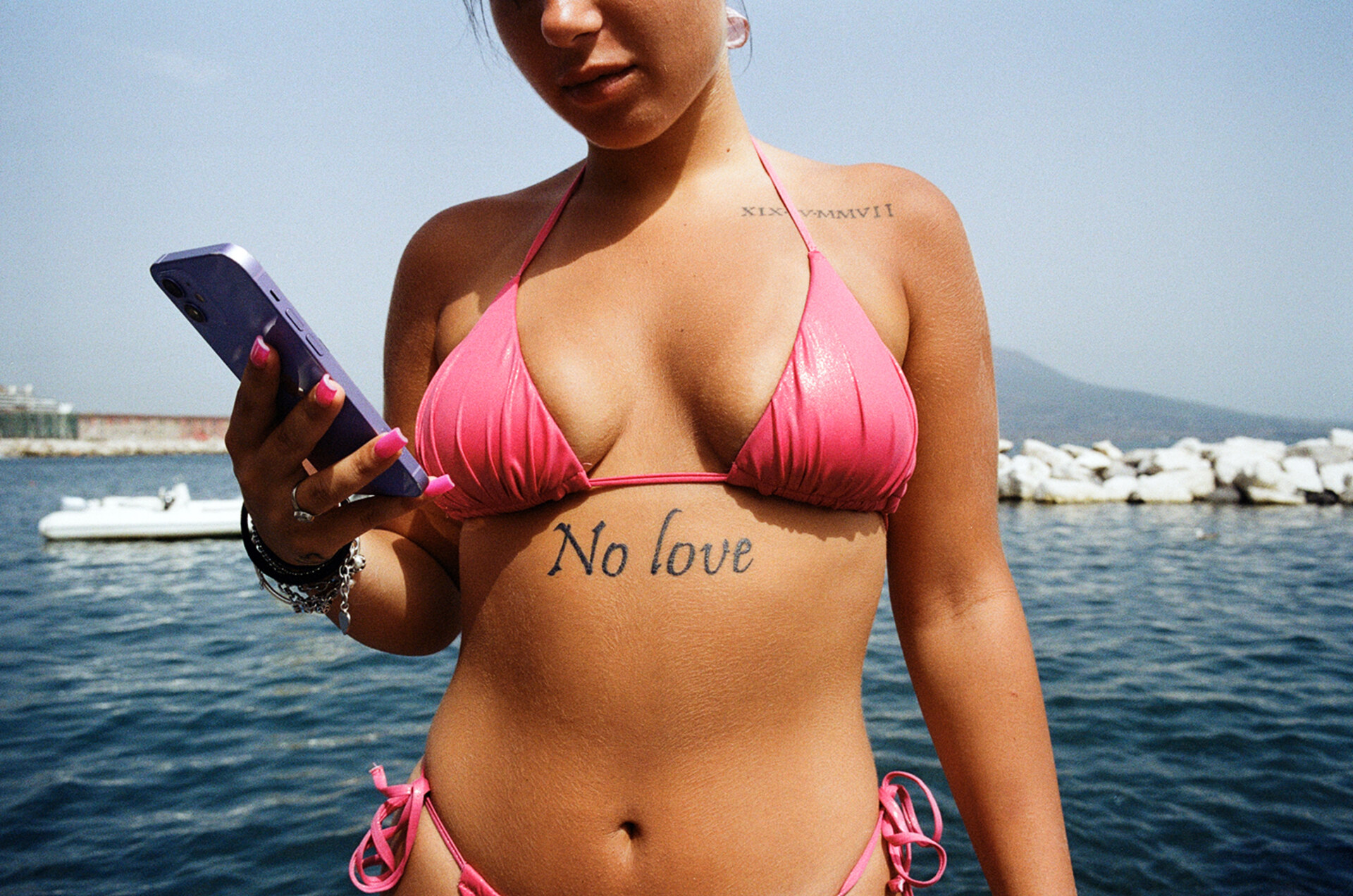
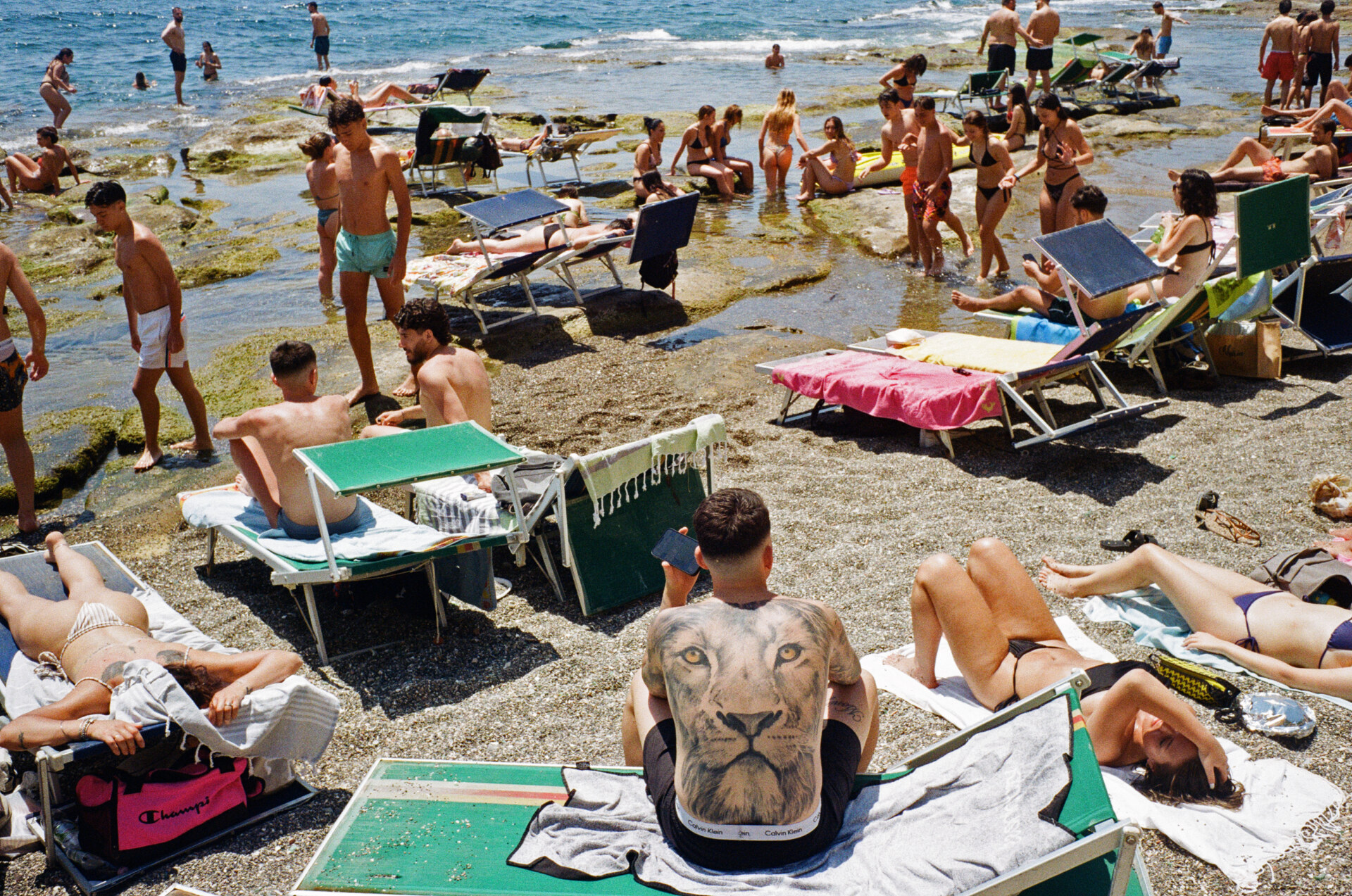
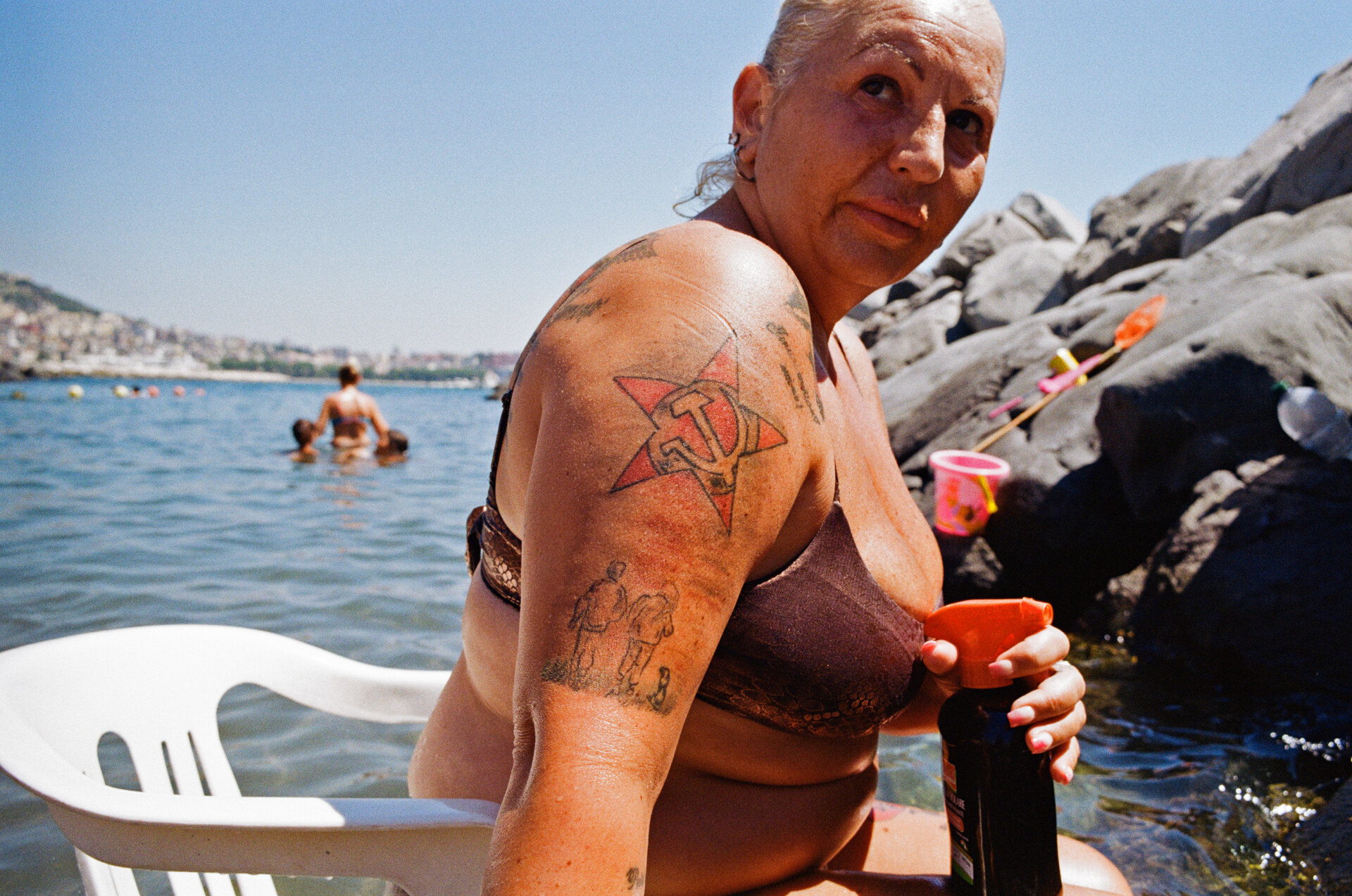
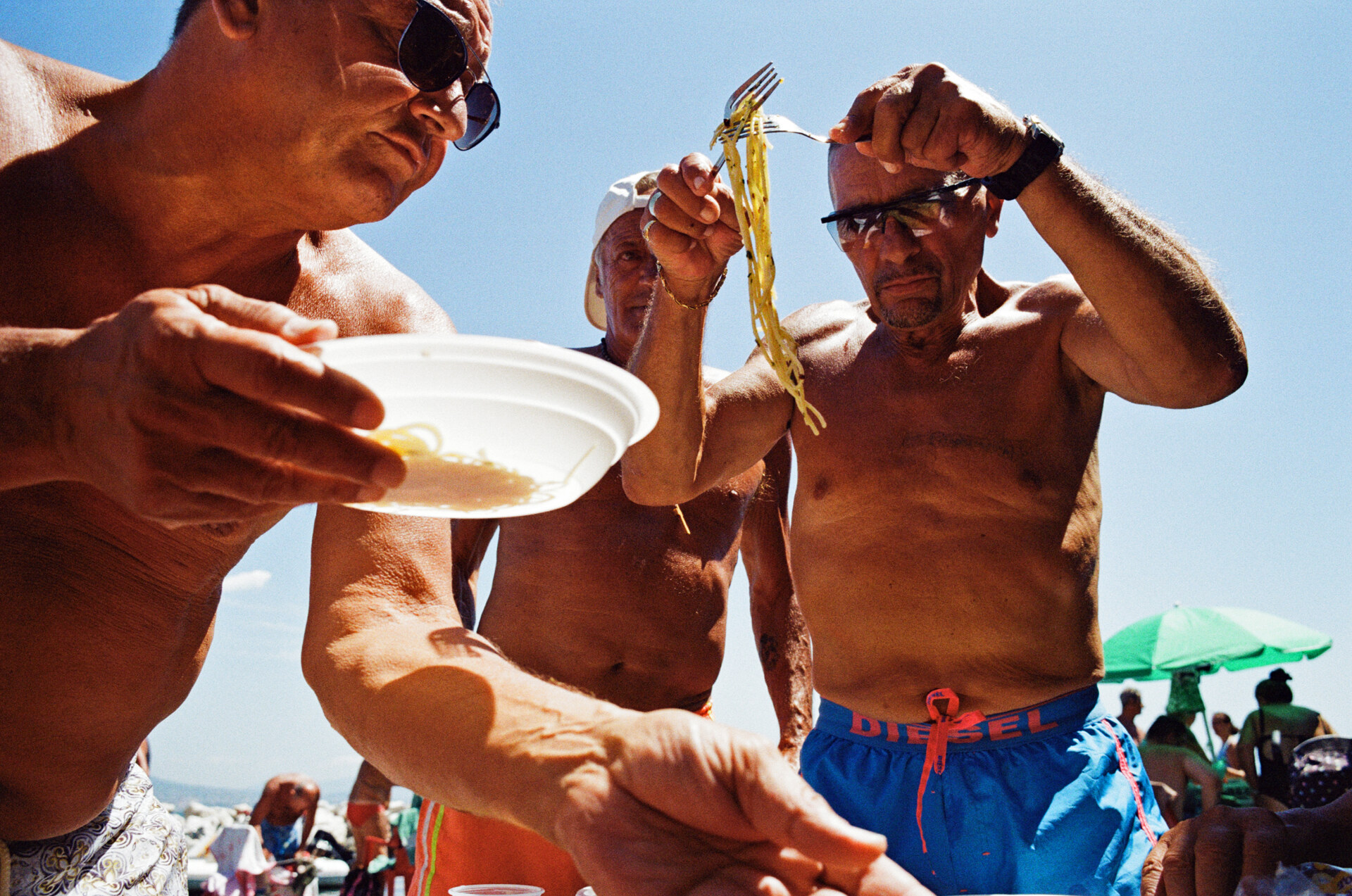
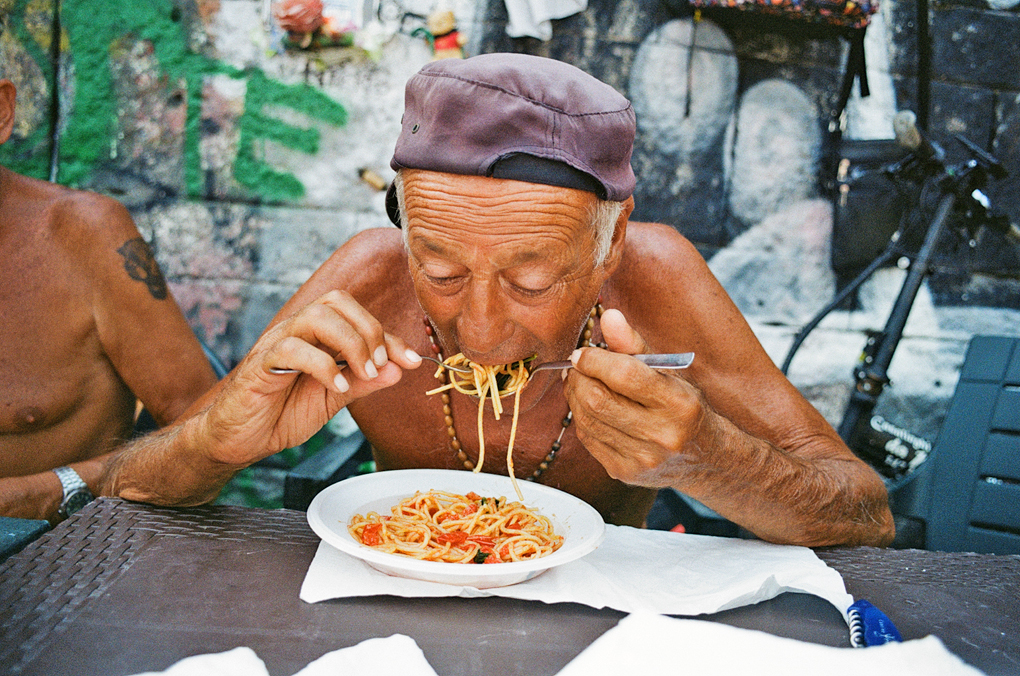
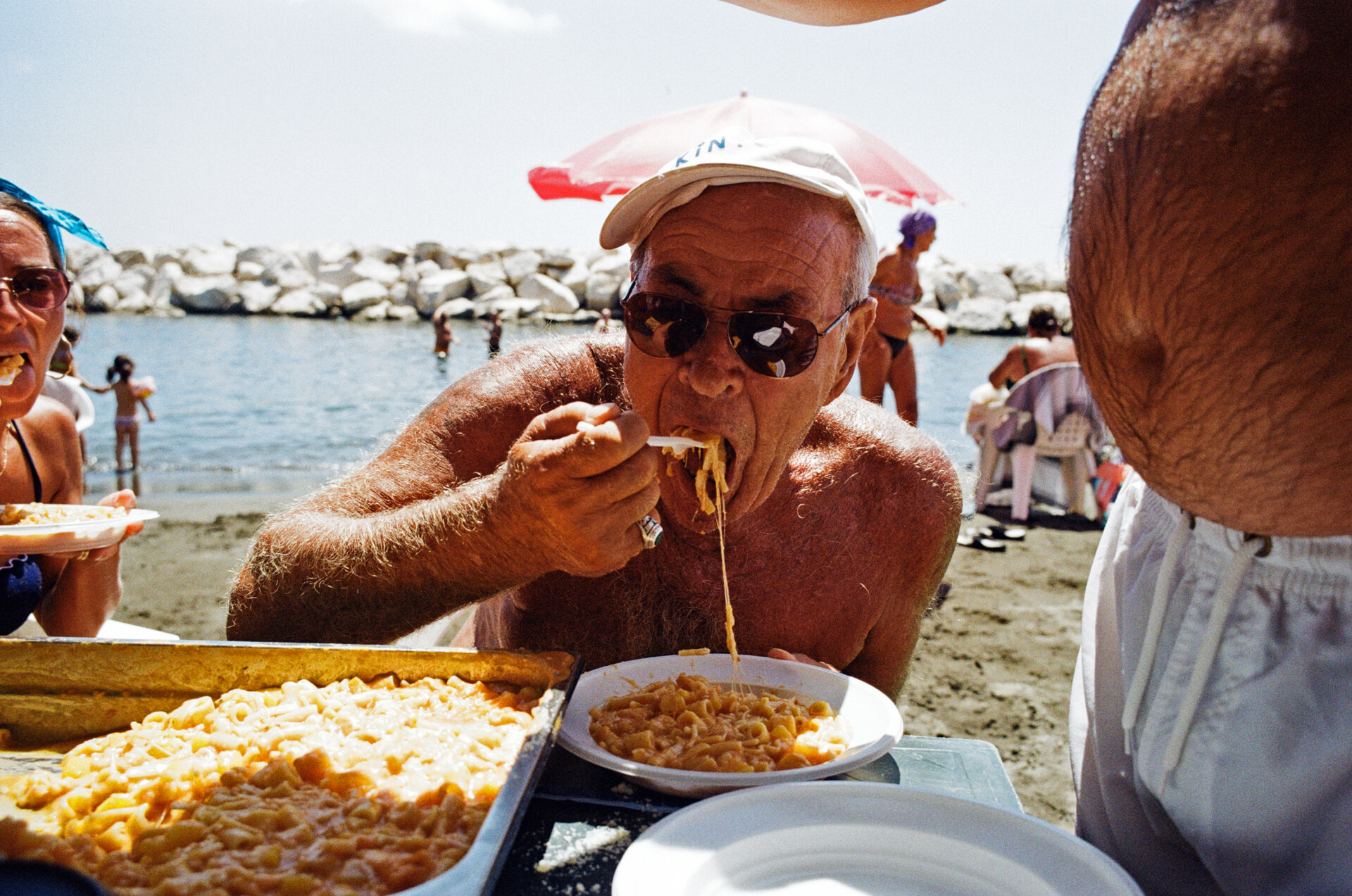
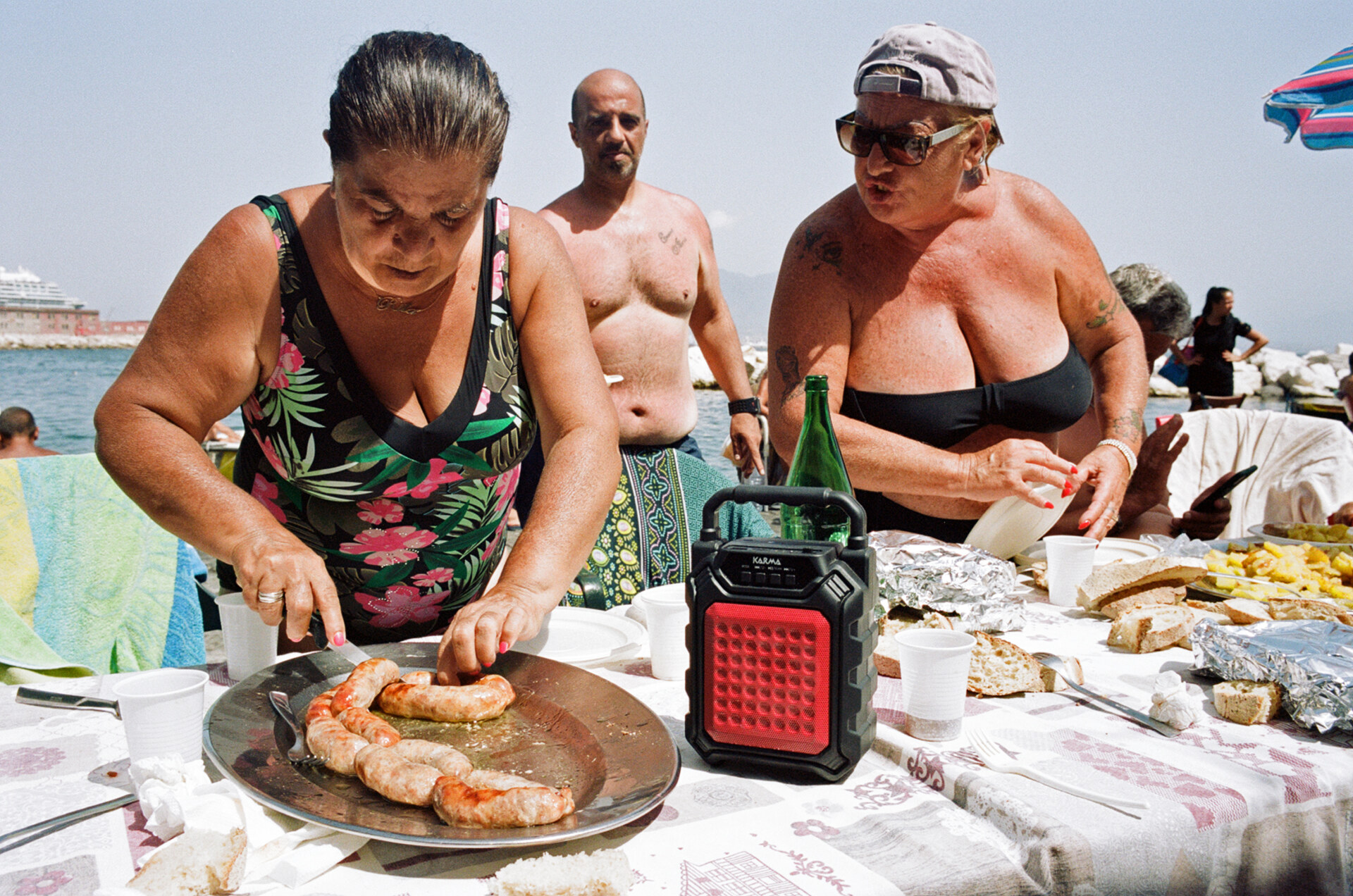
Without question, however, chronicling this delicate ecosystem well requires a rare degree of patience—something photographer Robbie McIntosh has invested in spades. Since 2012, long before the current wave of digital tourism and social media saturation, McIntosh has been embedding himself within this community for his long-term project, On the Beach. “It grew from my curiosity about what Neapolitan beach life looked like from the postwar years to the ’80s,” McIntosh tells me. “My online research led to very little; all I had were stories told by ‘veterans’ of that era. So I decided to create my own narrative—one that’s still unfolding and will continue to as long as I have eyes to see.”
While his images have not been immune to the broader debates surrounding the city’s representation, his work stands as a pioneering archive of the modern Neapolitan relationship with the sea. We sat down with McIntosh to discuss his decade-long journey, the evolution of Naples’ seafront, and the complex ethics around documenting this space.
Deborah D’Addetta: Hi Robbie, and welcome to Italy Segreta. Tell me a little bit about who you are and what you do.
Robbie McIntosh: Hi Deborah, thanks, I’m glad to be here! I’m a professional photographer (and also an engineer), born in 1977 just outside Naples to Neapolitan parents. I was “forcibly repatriated” here at the age of eight after spending my early childhood between Lombardy and Rome. Photography, for me, is a way to claim freedom—99% of the time, I’m my own client—and also a form of artistic expression (after a failed pursuit of music as a youth, where I lacked both talent and discipline).
DD: What is it about the beach itself as a setting that keeps drawing you back?
RM: To me, the beach is the ultimate democratic space: no supermodel or athlete body required. It’s a celebration of the human form, flaws and all—a place where everyone is exposed, subjects and me alike. I’m there with my camera, in plain clothes, out of place yet in plain view. On the Beach is like a train that never stops: people get on and off with the rhythm of life, but it keeps moving forward.
DD: Today our focus is Naples—specifically, the everyday life and habits of a community whose relationship with the sea plays out along a stretch of the city from Largo Sermoneta to Marechiaro and up to Largo Nazario Sauro. What drew you to this area and its people?
RM: These are the natural outlets for Neapolitans’ thirst for the sea—across all social classes, without distinction. But I’m especially drawn to those in lower-income brackets, people who can’t afford the €50 per day it takes just to enjoy the beach from the city’s bagni.
DD: There feels like a deeply personal connection in how you view this specific demographic.
RM: My mother’s family was working class—honest and humble, who lived with dignity and without embellishment. My gaze is directed at them. And maybe, deep down, when I photograph people from that world, it’s a way of reconnecting with my grandparents, my aunts, and all the figures who shaped my childhood. I grew up with their life stories—fattarielli, as we say in Neapolitan. And the fattarielli are still what I hear every time I’m on these beaches. It’s like a counter-narrative—not the official story, perhaps even an apocryphal one—but all the more interesting for that very reason.
DD: Would it be fair to say you were one of the first (if not the first) photographers to spend time with these people and this place in this way?
RM: I wasn’t the first photographer to be there, of course—not in absolute terms. Just think of the images by Charles H. Traub and Cesare Zavattini, or the treasures stored in the Archivio Carbone.
DD: But your approach feels distinct from those historical archives.
RM: I do think I was the first to do it in such a systematic way: every weekend from May through late September, plus whenever the weather allowed. It became a mission—an obsession. Maybe it was my way of reconnecting with Neapolitan roots I’d never fully claimed as mine. Or maybe it was an attempt to live out a past I never experienced—a kind of lost Arcadia.
DD: In recent years—thanks in part to social media—this community has become a hot topic. Other photographers have come, Coldplay filmed a music video, and fashion brands now stage shoots at Mappatella, blending their models with the locals.
RM: These are the cyclical waves that have always defined Naples—a city that for centuries has drawn artists from elsewhere. Think of Goethe, Leopardi, Croce, and Andy Warhol, who came as a guest of renowned Neapolitan gallerist Lucio Amelio.
DD: What do you think those modern outside observers are looking for when they arrive today?
RM: Naples is a city-nation, set apart from the rest of Italy with its own energy, rhythm, and way of thinking. The heart of the Mediterranean, it’s a crossroads of cultures by nature. And today, I think outsiders are fascinated by a certain Neapolitan lifestyle—particularly in summer, when entire communities pour onto the coastal stretches I photograph. To foreigners, it can seem like Neapolitans spend all their time swimming, sunbathing, eating by the sea—almost as if they’ve escaped the grip of capitalism.
DD: But what’s the economic reality beneath that summer lifestyle?
RM: It’s a lifestyle driven by carpe diem—not so much as a choice, but as a necessity. A legacy of l’arte di arrangiarsi (the art of getting by), deeply rooted in a population that’s long lived with total uncertainty. No long-term, or even short-term, plans. In places like Pallonetto di Santa Lucia, Forcella, Quartieri Spagnoli, and the other working-class neighborhoods, life is one continuous emergency; a constant act of scraping by.
DD: There’s a raw, unpredictable element.
RM: Yes, that’s what fascinates outsiders: this subtle sense of exoticism, this taste for the bizarre, the messy, the unpredictable. It’s certainly not the boring bourgeoisie of so-called “Napoli bene”—assuming it even makes sense to talk about bourgeoisie in the Western world of 2026.
DD: How has this community’s attitude toward “outsiders” changed over time?
RM: Social platforms like Instagram and TikTok were a turning point. In the early days, photographers were almost always seen as intruders, even as enemies. People reacted with irritation, sometimes with verbal or physical aggression. The explosion of those platforms triggered a change in how beachgoers and ordinary people saw themselves. Everyone began to feel like a protagonist, whether out of a hunger for fame or out of pure exhibitionism. Andy Warhol’s famous “15 minutes of fame” prophecy has, in a way, come true.
DD: A perfect example is the man (mistakenly) nicknamed “Mr. Tutto Passa.”
RM: He represents the everyman—living a peaceful old age after a life that wasn’t always easy. I don’t think he sees himself as a spokesperson for a community or the city. His photos went viral shortly after the pandemic, probably because that phrase—“Tutto Passa” (“Everything Passes”)—came to symbolize a sense of hope, a shot of optimism during a short but incredibly dark time.
DD: Why do you think major brands have latched onto his image so heavily?
RM: I believe brands are drawn to him precisely because he’s just that: an ordinary man, with flaws and a past. He’s not a superhero—and that’s exactly why people see themselves in him. We live in an age that’s thirsting for icons even more than heroes.
DD: When I decided to do this interview, I asked myself how I could do justice to a topic that strikes a deep chord in Naples: the commercial exploitation of its people. Too often, the portrayal feels heavy-handed or folkloristic. Where do you draw the line between genuine photographic exploration and exploiting a city’s identity for digital clout?
RM: Great question. I think there’s nothing inherently wrong with it—as long as the people being photographed are properly (and respectfully) compensated, and there’s mutual understanding and satisfaction. What’s essential is that the storytelling respects the dignity of both the people and the place. It doesn’t need to be solemn or overblown—but it absolutely shouldn’t be shallow or careless, either. The line between artistic research and commercial exploitation can be clear… or it can be blurry. It really depends on the photographer’s sensitivity.
DD: How do you deal with the backlash your imagery might face?
RM: I don’t really pay much attention to criticism—I’d rather spend what little time I have chasing my own visions and obsessions. No one holds the absolute truth—but each of us holds a truth.
DD: So you just tune out the noise and focus entirely on the viewfinder?
RM: In the end, no matter what’s said, thought, or written, what I care about is chasing what’s beautiful and what’s real. Which, in fact, are two sides of the same coin. Without looking away in snobbish or hypocritical denial—but trying, instead, to stay on the same level as what I observe and choose to capture.
DD: Fashion campaigns shot in places like the Quartieri Spagnoli, Forcella, and the areas you document have been accused of cultural appropriation and showing little respect for locals. What’s your take?
RM: A local photographer—someone embedded in the social fabric—can and should go deeper, crafting a more nuanced narrative, with full awareness of their social role. A photographer who drops in from outside, even a talented one, and spends just a few days in the area won’t be able to grasp the subtleties, the layers, the humanity that stands in front of their lens.
DD: It requires a level of creative integrity that goes beyond just capturing a striking visual, doesn’t it?
RM: There has to be intellectual honesty on the part of the photographer—and honesty towards photography itself. There has to be originality of voice, too. No copycat or lazy imitation—because, in the end, a copy is always just a weaker version of the original.
DD: There’s a constant push-and-pull between those who say “Naples isn’t just this” and those who insist “Naples is also this.” Do you think the current media spotlight distorts the city by focusing too heavily on one narrative at the expense of others?
RM: What is Naples, anyway? Does a single Naples even exist? Or are there many—fragmented, plural, contradictory? To me, this city is a slippery creature—ever-changing, yet always the same. It’s an unfinished entity, denied, diminished, looted. It’s also an anxious mother, a cruel stepmother, a saint, and a lover.
“Naples must not change”—remember that cult line from the movie No grazie, il caffè mi rende nervoso (No, Thanks. Coffee Makes Me Nervous, 1982)? But it changes nonetheless—sometimes naturally, sometimes under heavy outside pressure, sometimes spontaneously, like matter shifting toward a new equilibrium (a chemist would invoke the Law of Lavoisier).
DD: What is the role of Naples’ storytellers? What are we called to do in order to protect the city and its stories?
RM: I’ll answer with what Letizia Battaglia once told me when I asked her something similar. Photographers, artists, and intellectuals can’t save the world; or at least, they can’t do it alone. That work belongs first and foremost to society—to politics, institutions, schools, families. But those who tell stories do have a moral obligation: to stay as intact as possible. To remain honest to just two things: the Muse and the Monkey. Inspiration and obsession.
This interview has been translated from Italian and edited for length and clarity.