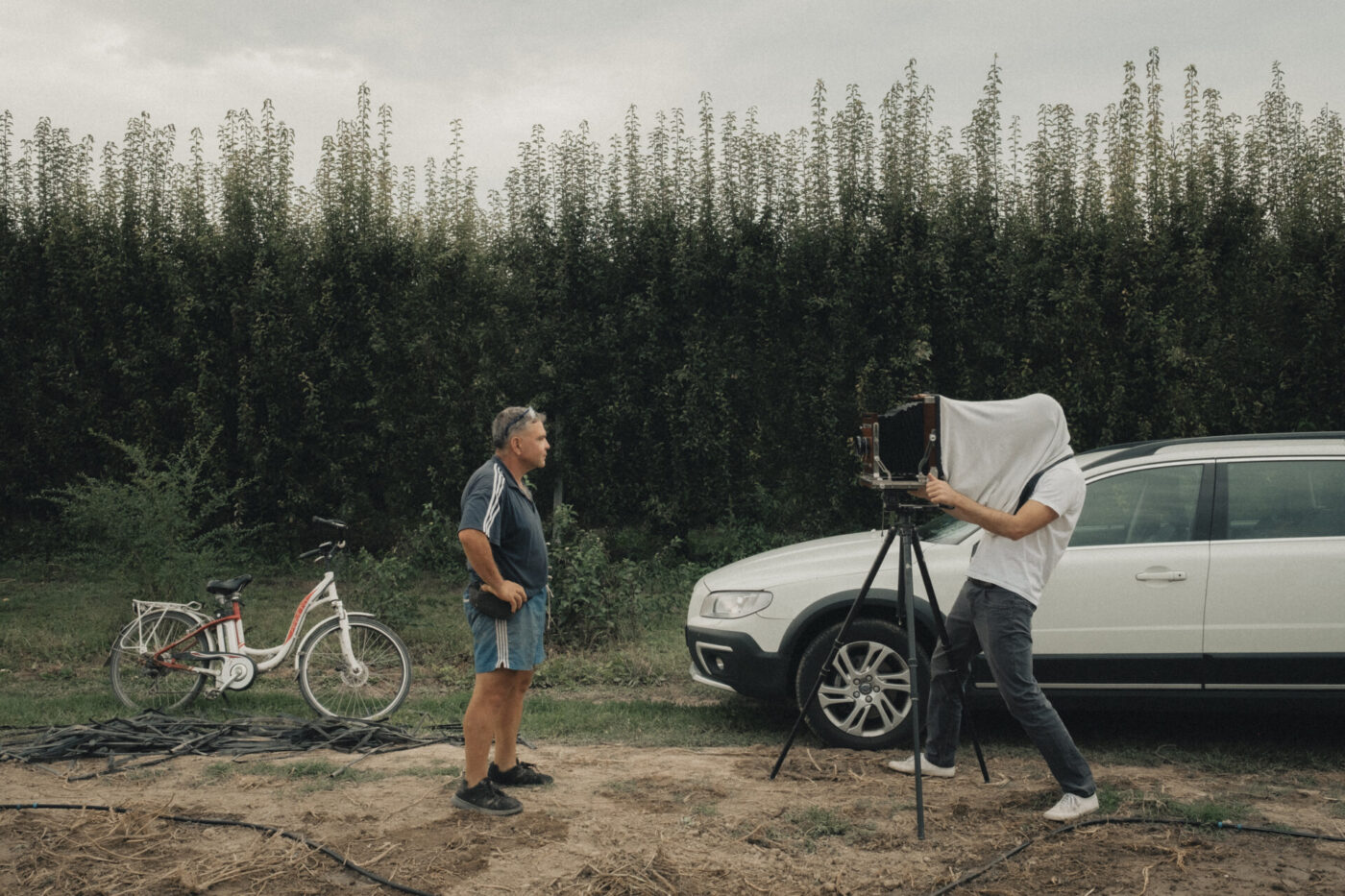
It’s just about approaching 5 PM on a gray late-August afternoon when photographer Francesco Neri (43), after a bit of old friends’ chit chat, asks farmer Sauro Rossini (55): “Have you got time for a photograph?”
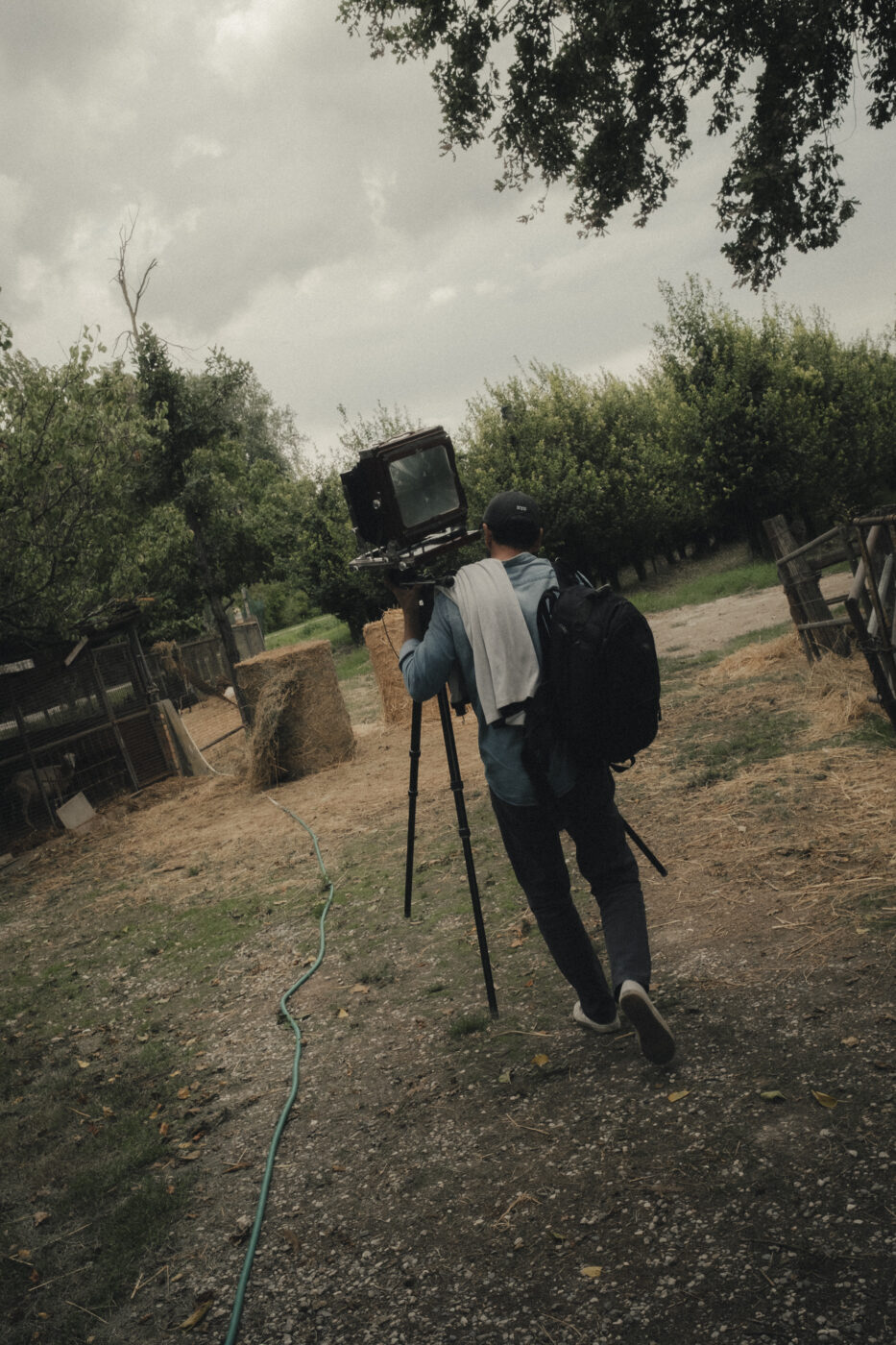
The dark clouds looming beyond the field of pear trees to the west don’t bode well. Still, Neri is never in a hurry when it comes to preparing a shot on his 20 x 25 large-format camera. Slowly and deliberately, he pitches the tripod and unfolds the camera’s bellows. Then, under the dark cloth, he takes in the scene appearing upside down. He adjusts the focus, pauses for a moment, then almost imperceptibly releases the shutter.
He signals to Sauro to stay silent and still. Sauro mostly complies, despite the efforts of his daughter, Sofia (12), who perches nearby on her yellow bike and is trying her best to make him lose his cool.
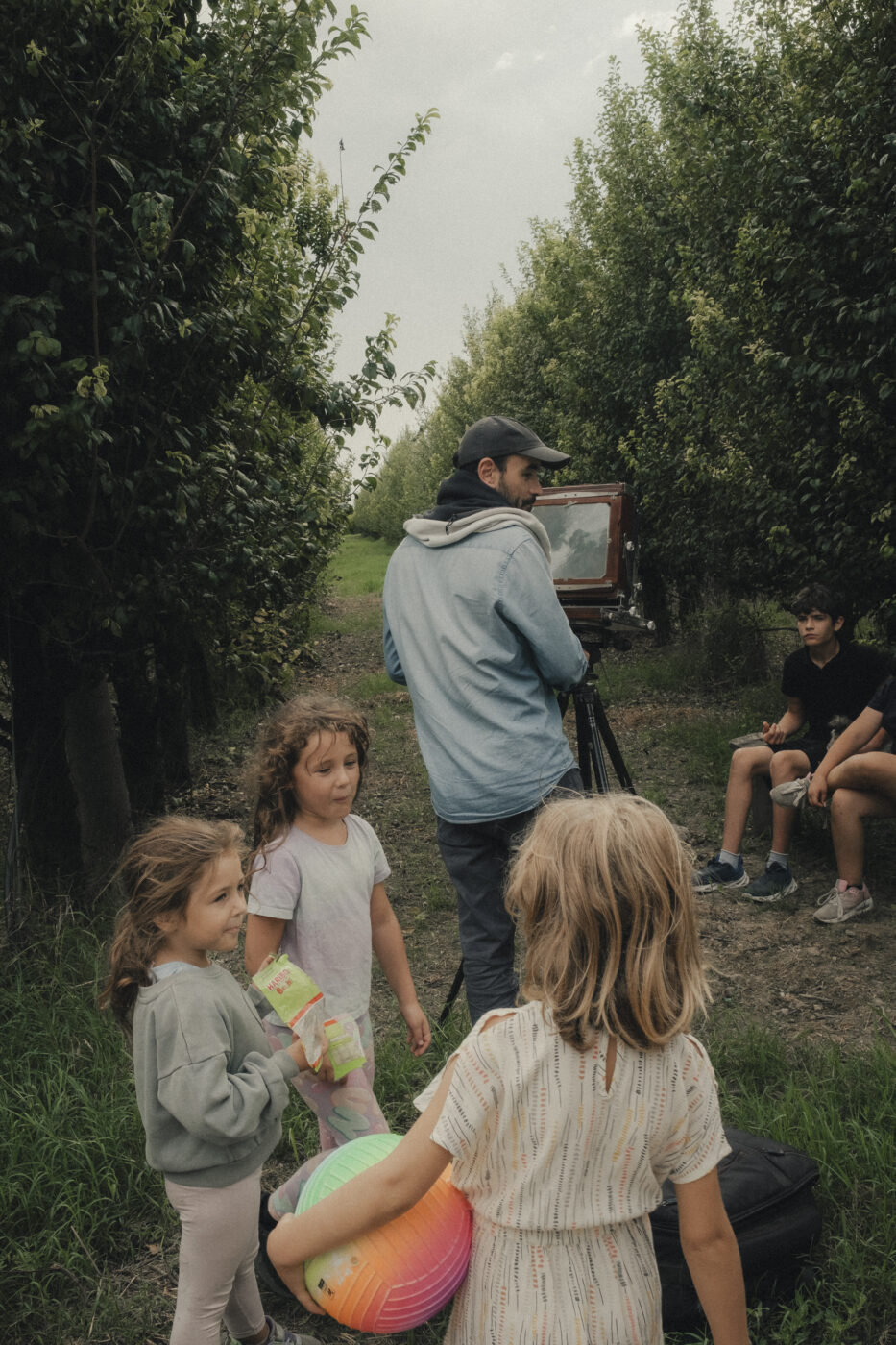
A similar scene repeats itself a few days later, after we’ve finished lunch at La rondine, the organic farm and agriturismo Sauro manages with his wife Debora. It’s Saturday, and Sofia and her siblings Giuseppe (15) and Clara (7) are even more in the mood to show us their tricks of frusta romagnola, a kind of whip-cracking routine which in this part of Italy—Romagna, the land of Fellini and piadina—is close to an obsession, or else, to introduce us to the farm animals.
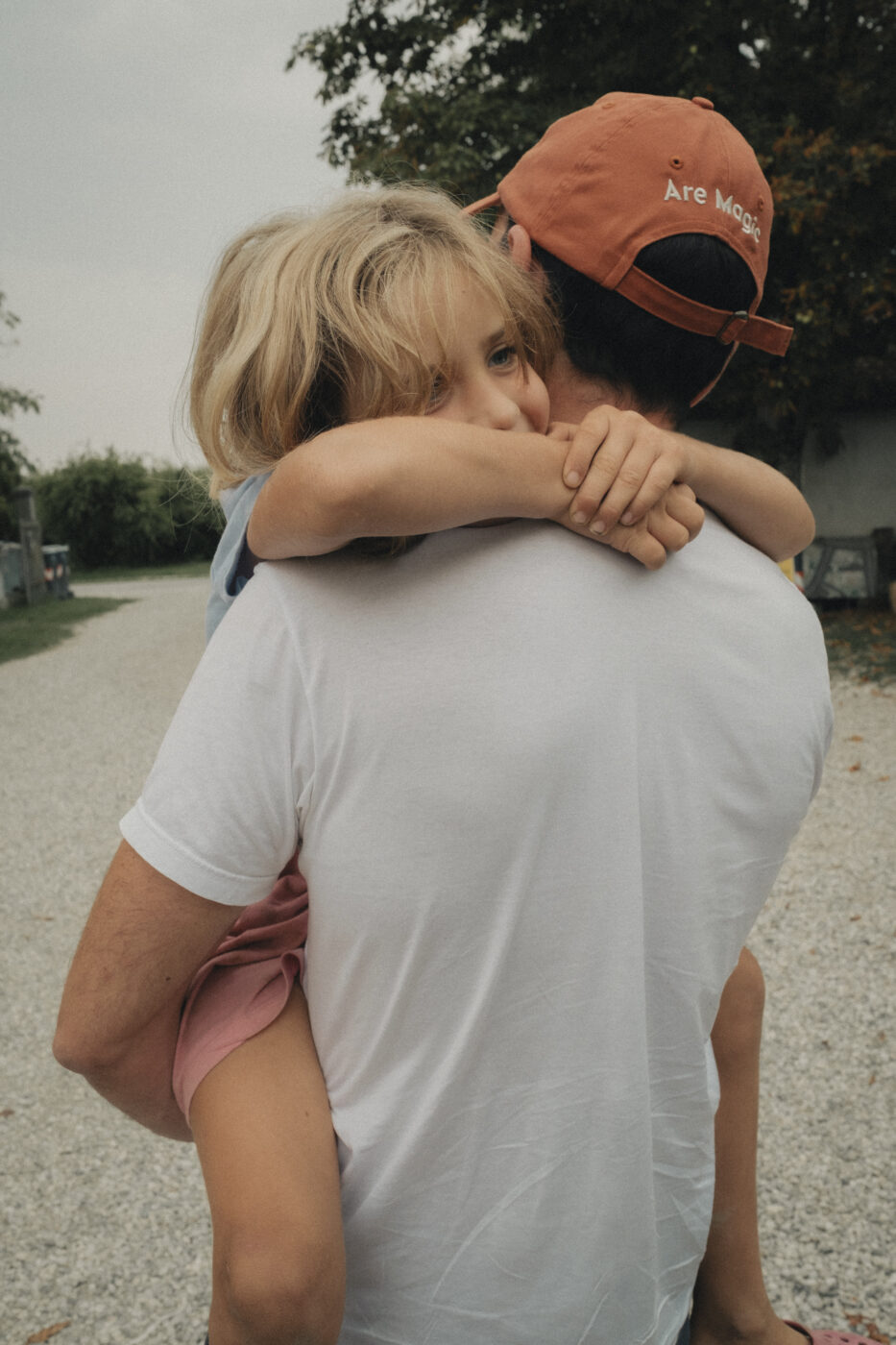
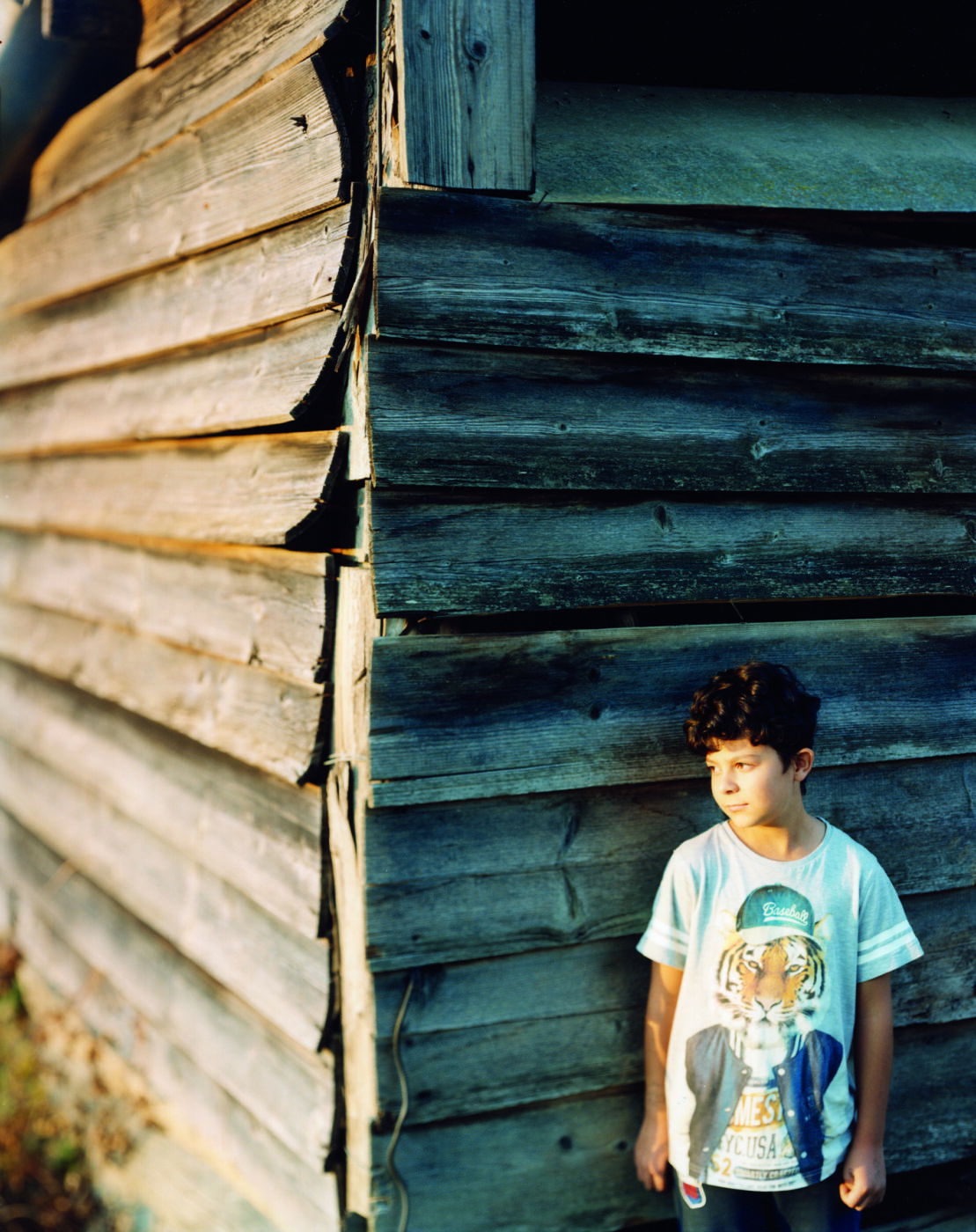
Yet, when Neri calls for Clara—and her two friends Aurora and Chiara, who are staying in a caravan on the property—the children stop their shenanigans and, as if cast under a spell, start to follow his calm but authoritative directions. By now, Neri is family. No longer just a photographer who drops by now and again, he is a fixture perfectly attuned to the everyday madness of La rondine.
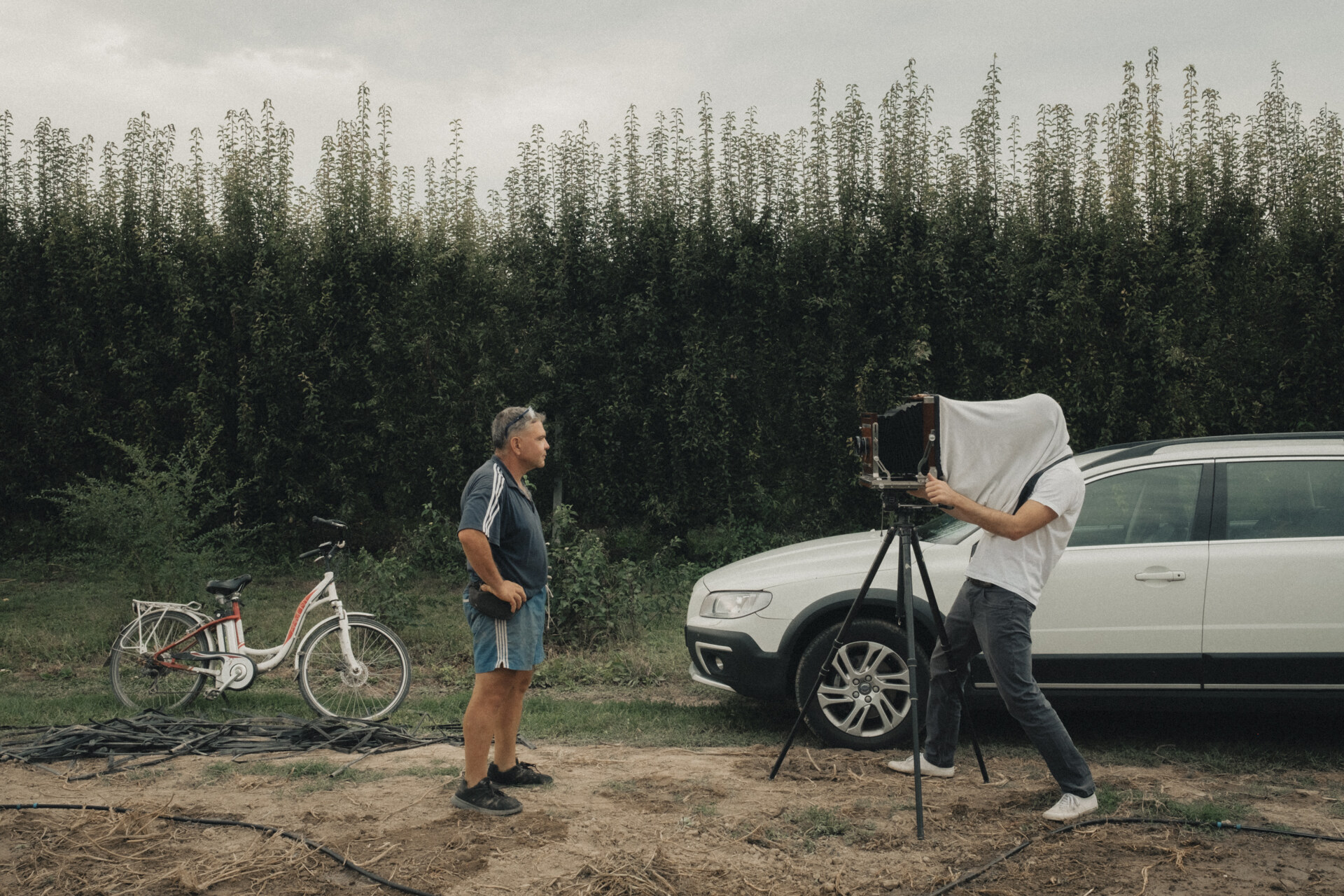
Neri photographing Sauro; Photography by Tommaso Serra
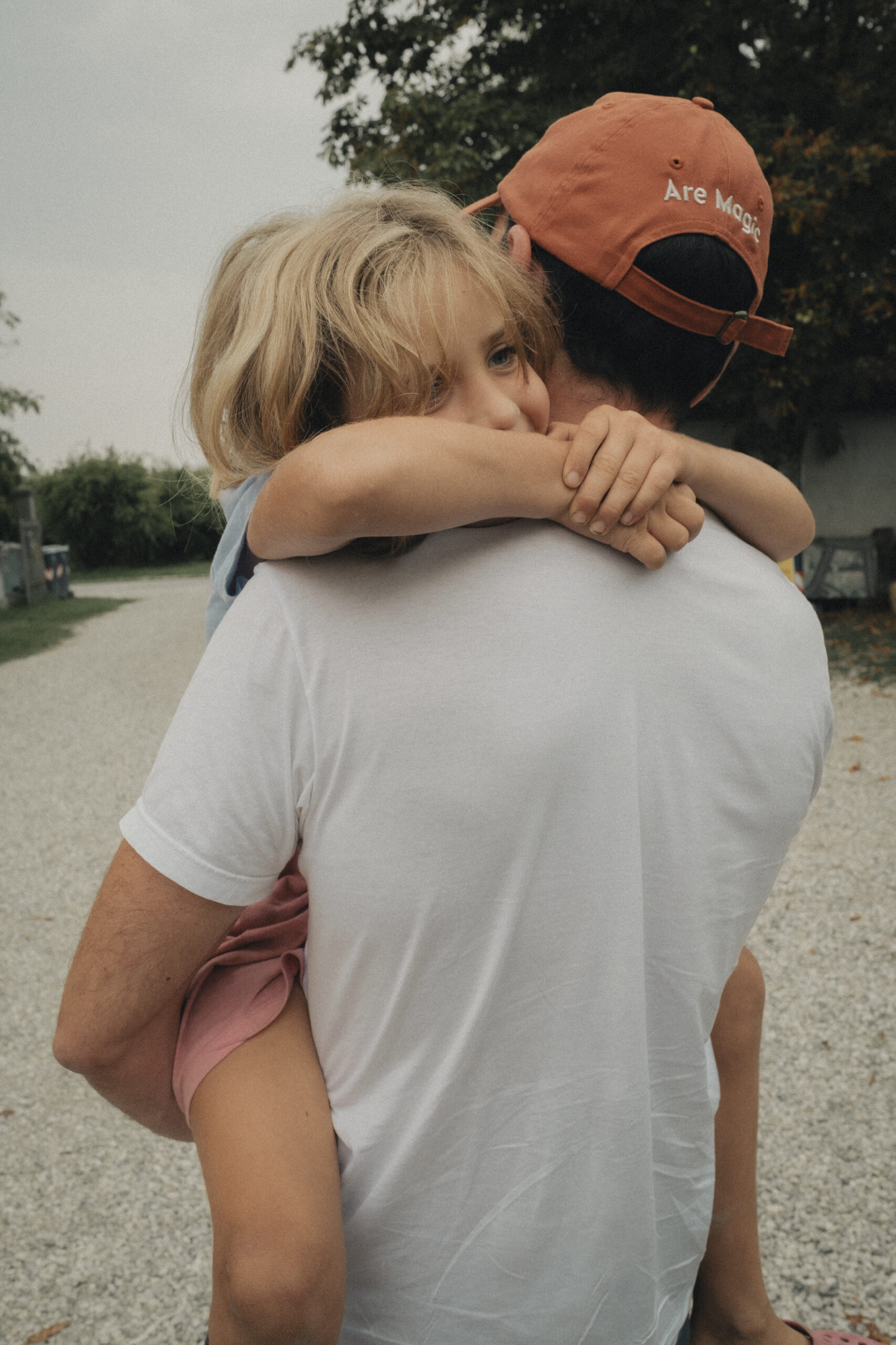
Clara with Neri; Photography by Tommaso Serra
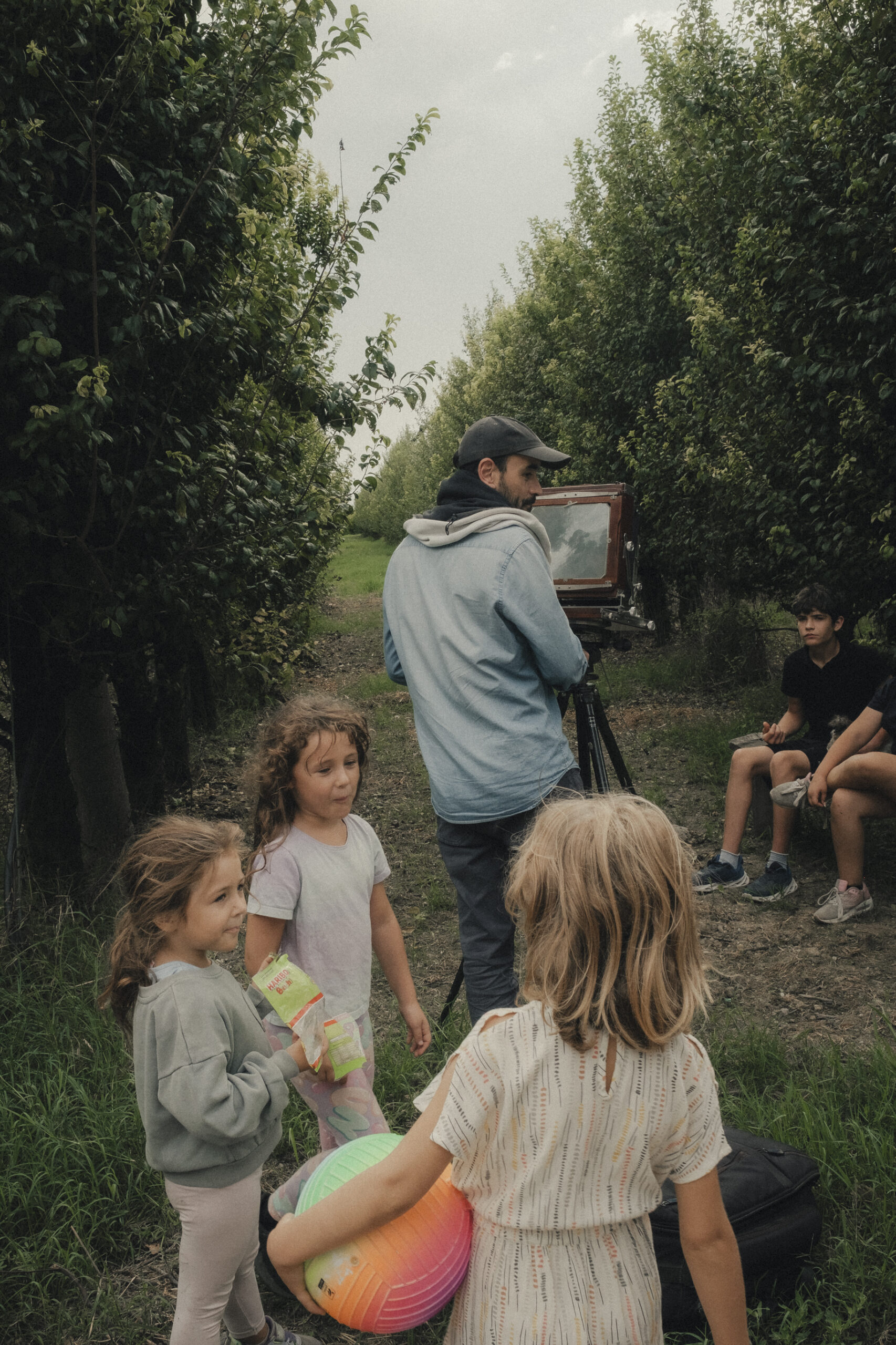
The scene at La rondine; Photography by Tommaso Serra
It’s been four years that Neri has been visiting Boncellino, the 300-strong frazione where the Rossini live. Yet the journey to becoming a local familiar face, greeted and stopped by everyone, was far greater than the 15 kilometers separating this village from Faenza, the ceramic-famed town where Neri was born and still resides.
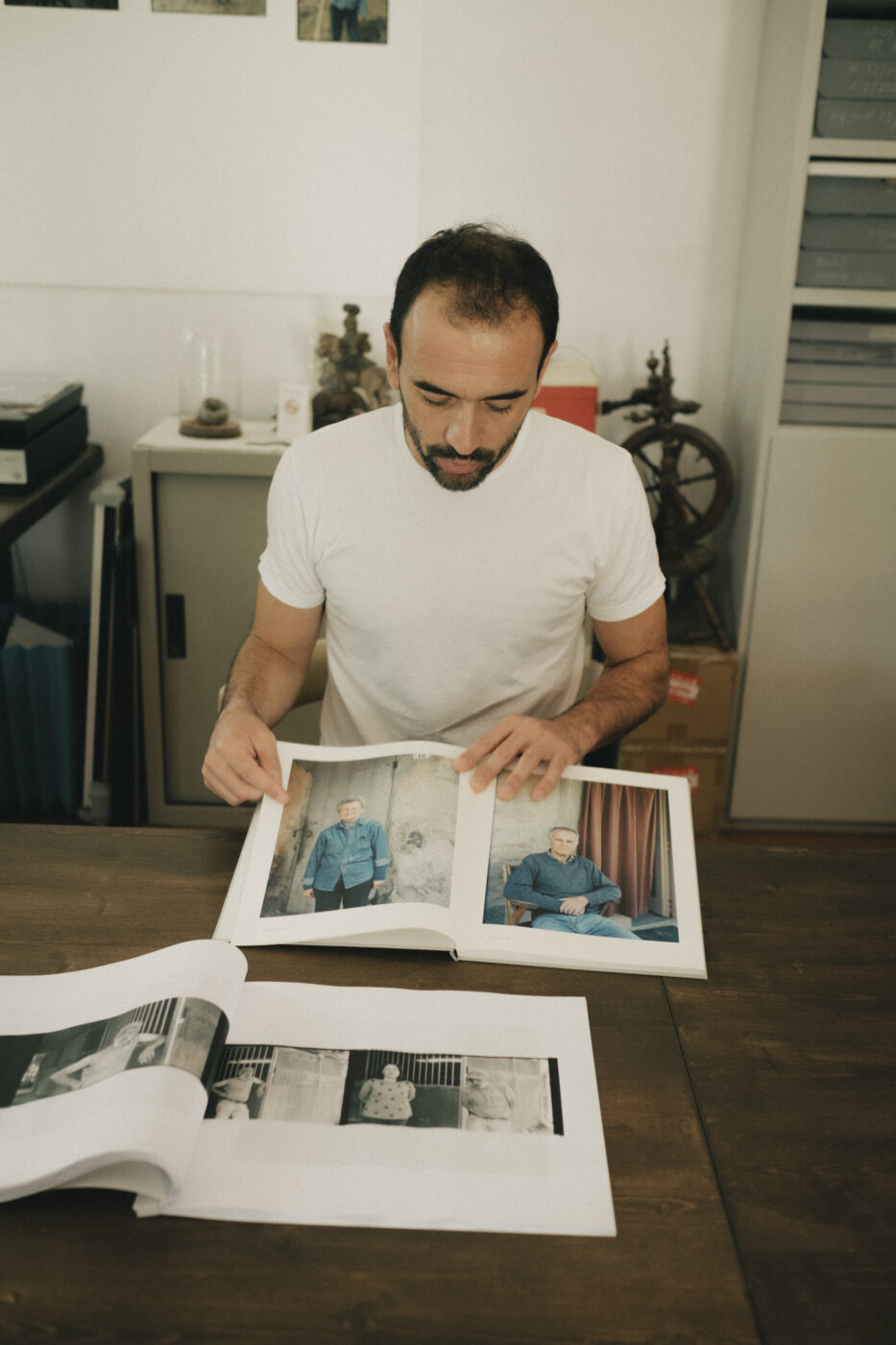
A few days prior, we sat with the photographer at his home-cum-studio in a residential neighborhood of his hometown to discuss Boncellino, a project that feels like the natural successor to Farmers (2018)—his catalog of Emilia-Romagna farmers that, in a nod to August Sander, also serves as an homage to a way of life. To the photography-initiated, this is unmistakably Luigi Ghirri and Guido Guidi territory, the sort of anonymous urban-rural fringe first put on the map in landmark works like Viaggio in Italia (1981) and Esplorazioni sulla Via Emilia (1986). And, indeed, as a student and protege of sorts of the latter, Neri began as a landscape photographer.
This observational attitude continues to inform his photographic style. “You have to take photographs that stay quiet,” he tells us, drawing from the American photographer Stephen Shore. “If they speak too loudly, they become annoying.” Still, even in early photographs from 2008 or prior, one can see a portraitist’s interest slowly creep in: Neri’s friend’s mother, a gardener tending the ginkgo tree just outside the window, people working in the industrial area nearby. “The people kept slipping in. I didn’t plan it,” he says, smiling.
The real breakthrough, Neri recalls, came in 2011 during a workshop hosted by Linea di Confine per la Fotografia Contemporanea, a cultural association dedicated to surveying Italy’s evolving landscape. At the time, the area around Reggio Emilia, historically farmland, was being dramatically disrupted by the construction of the Treno ad Alta Velocità (TAV), with farmers expropriated to make space for the brand-new high-speed railway.
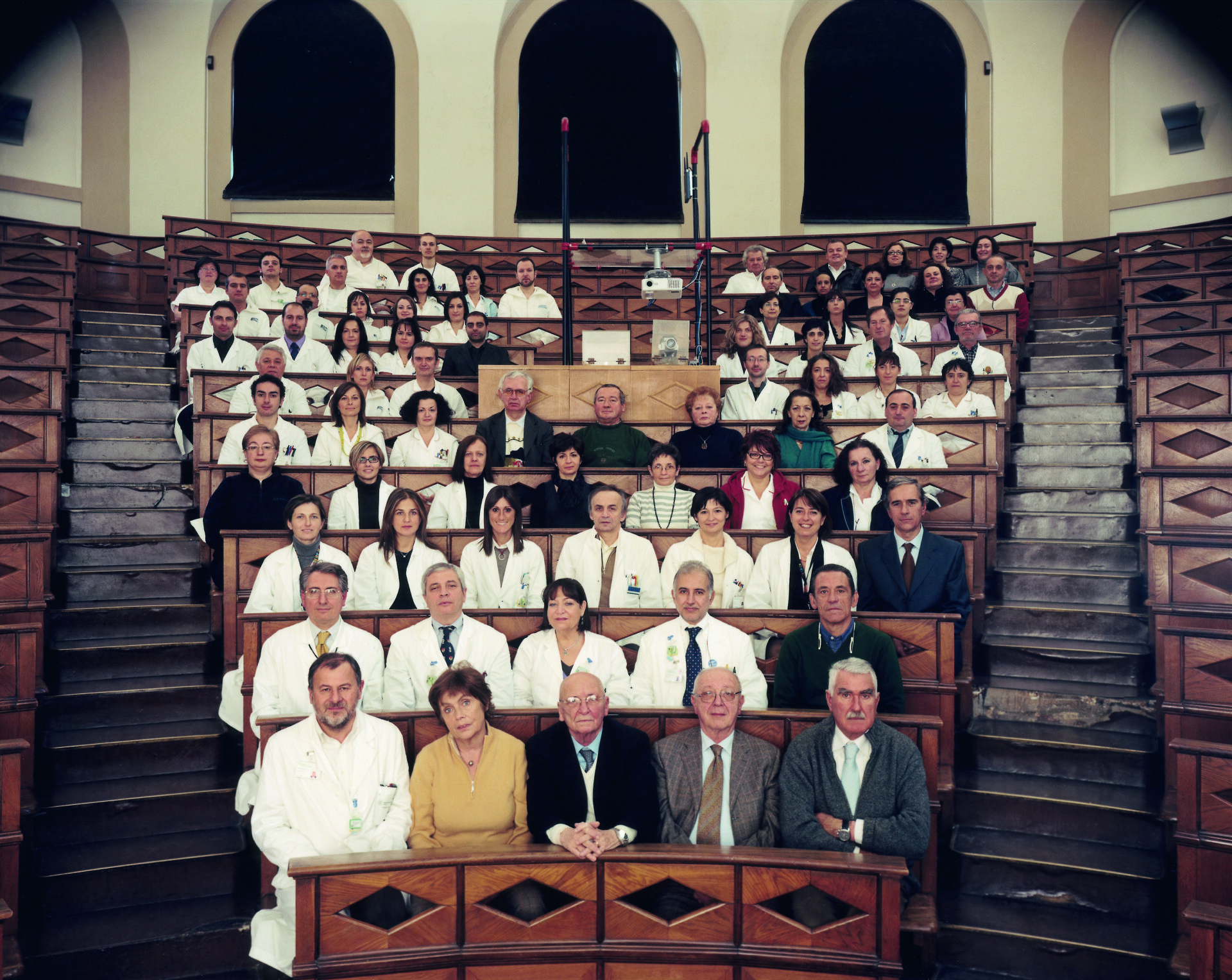
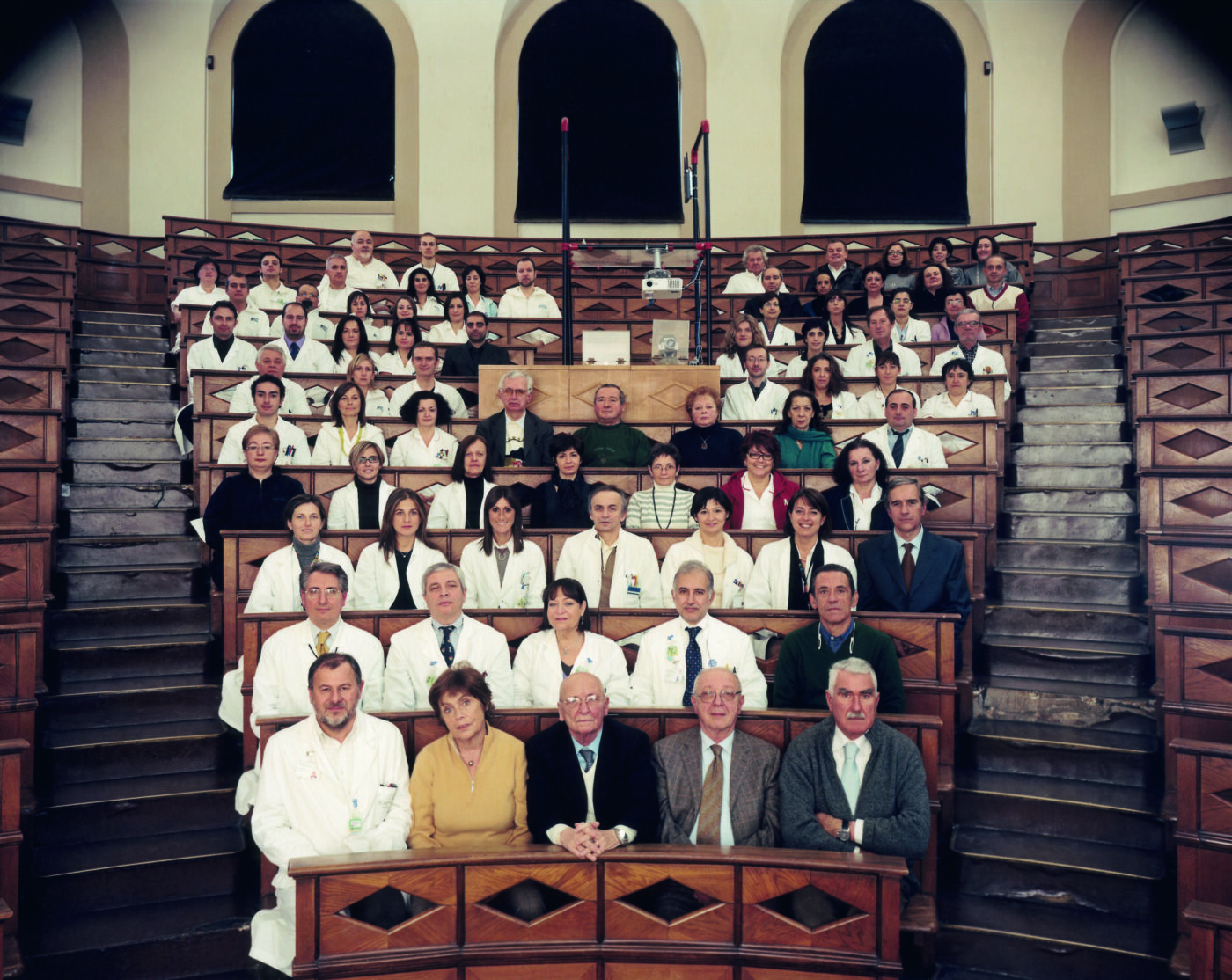
Neri's father's retirement day, 2009; Photography by Francesco Neri
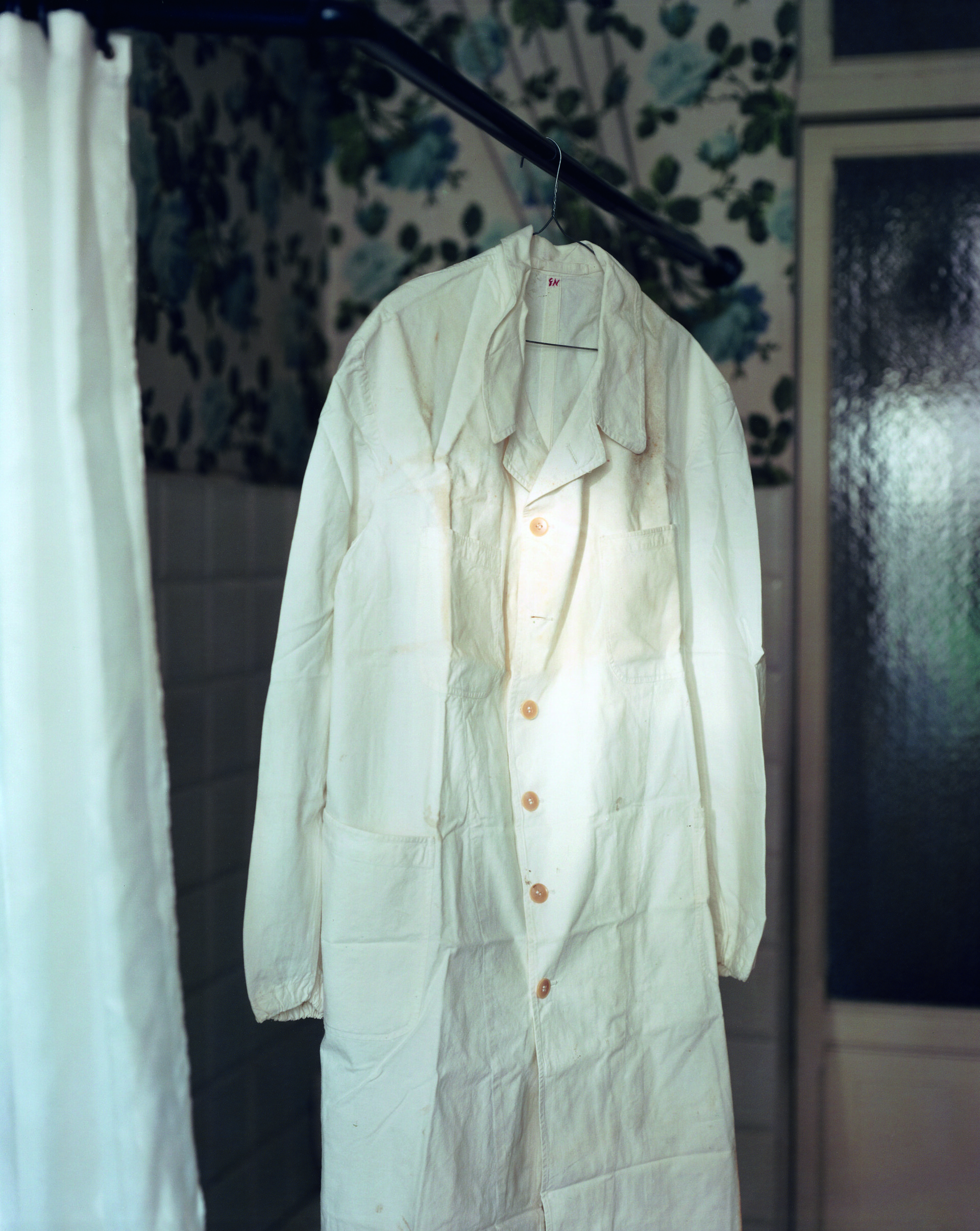
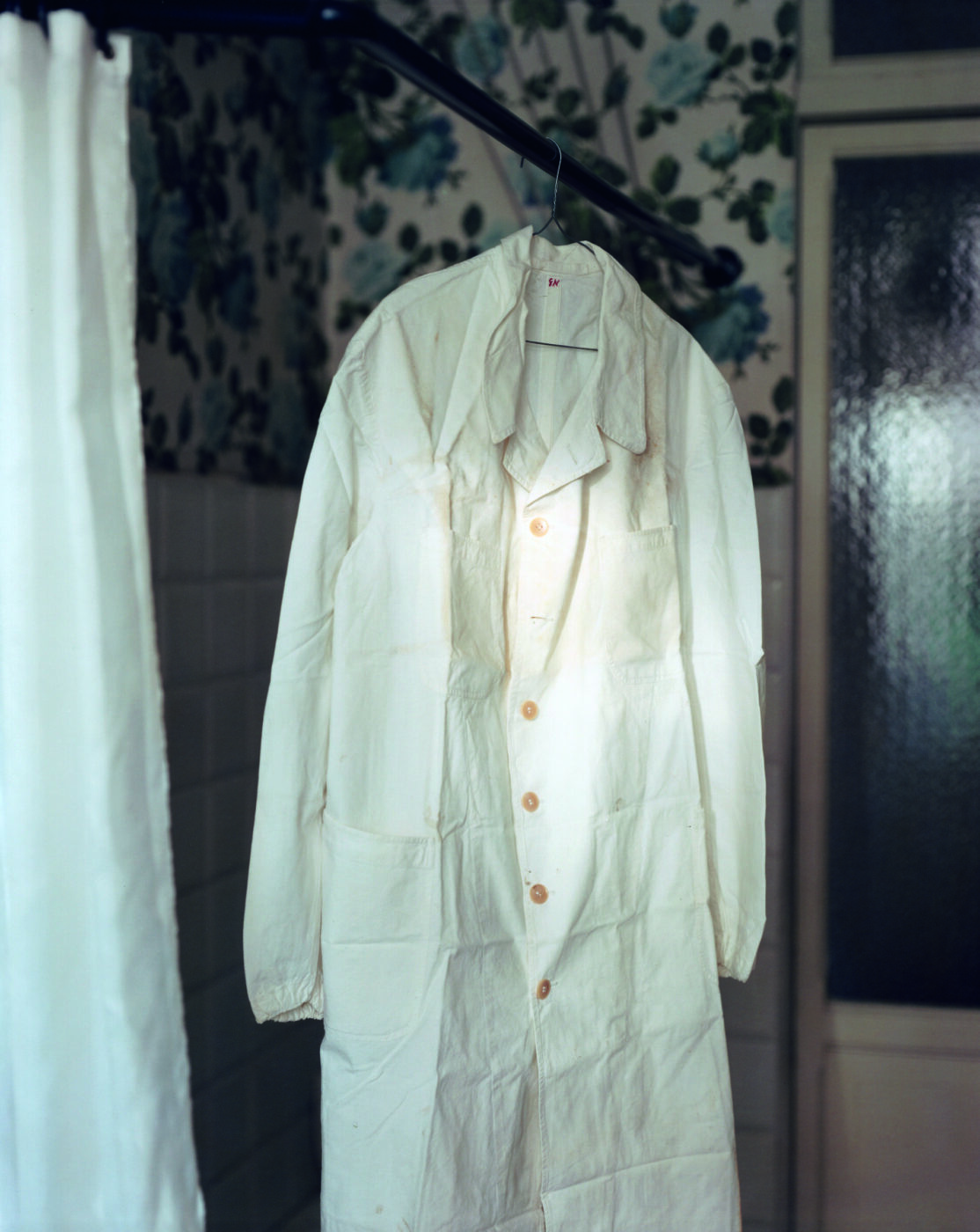
Neri's father's coat, 2011; Photography by Francesco Neri
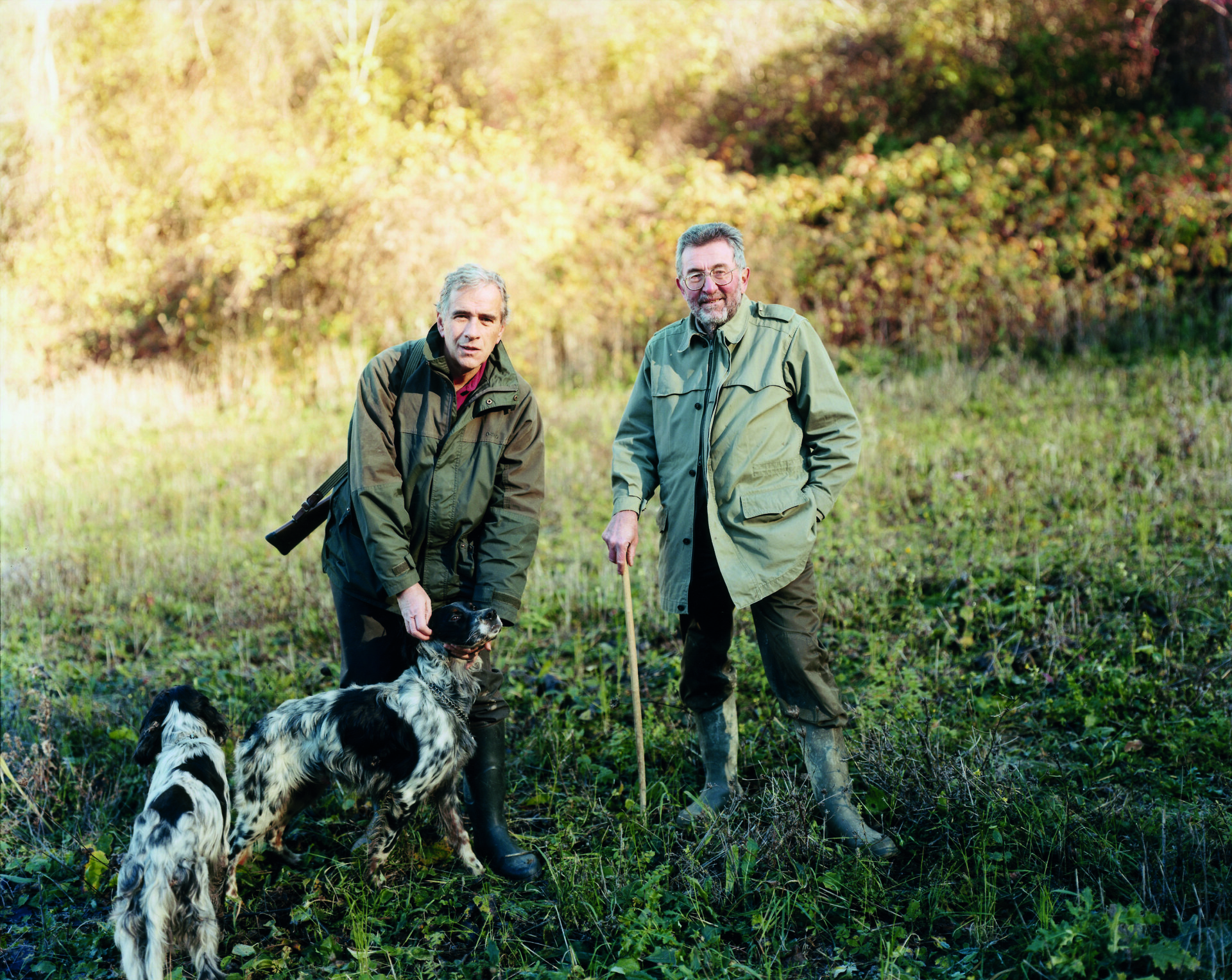
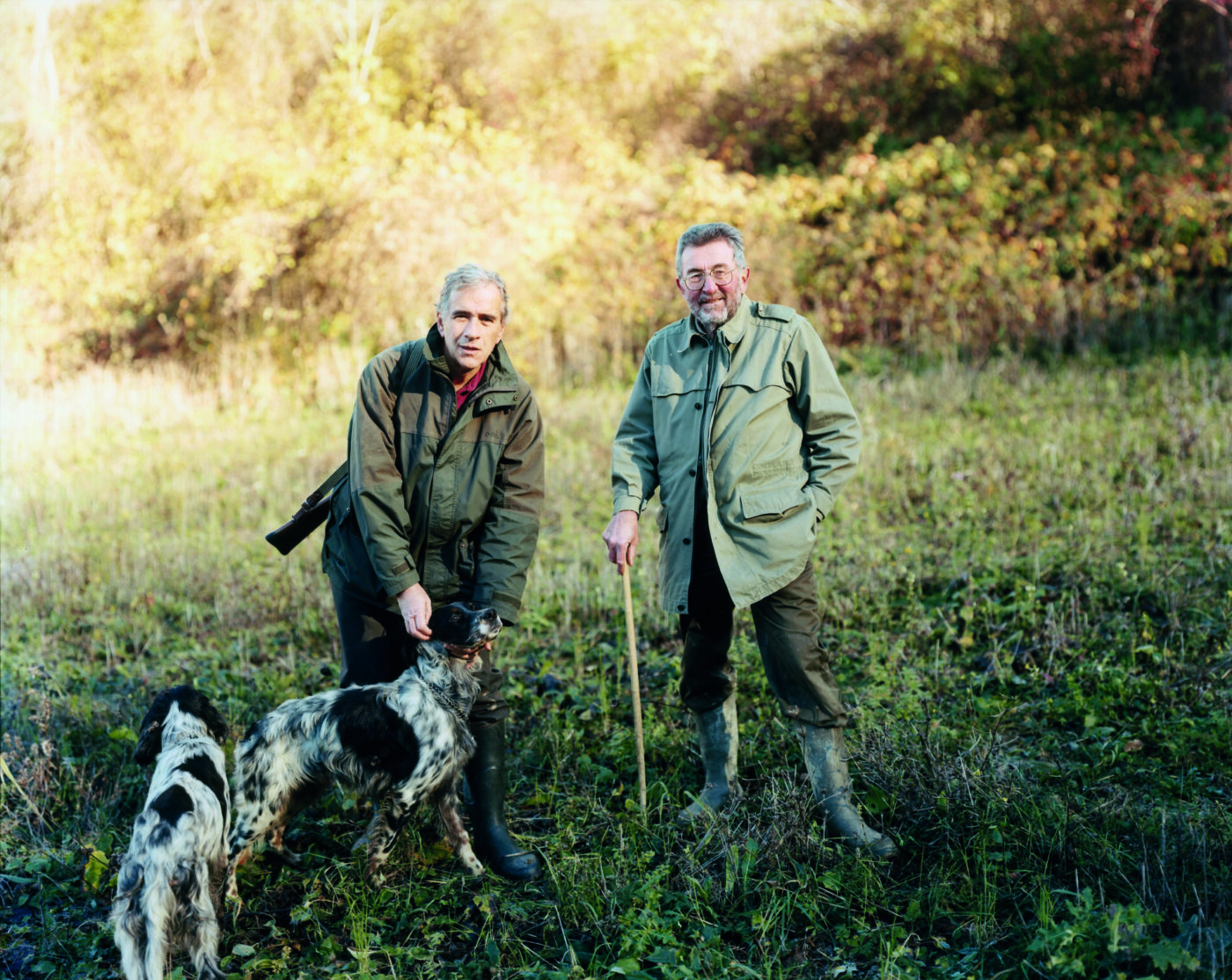
Neri's Dad hunting with Rolando, 2012; Photography by Francesco Neri
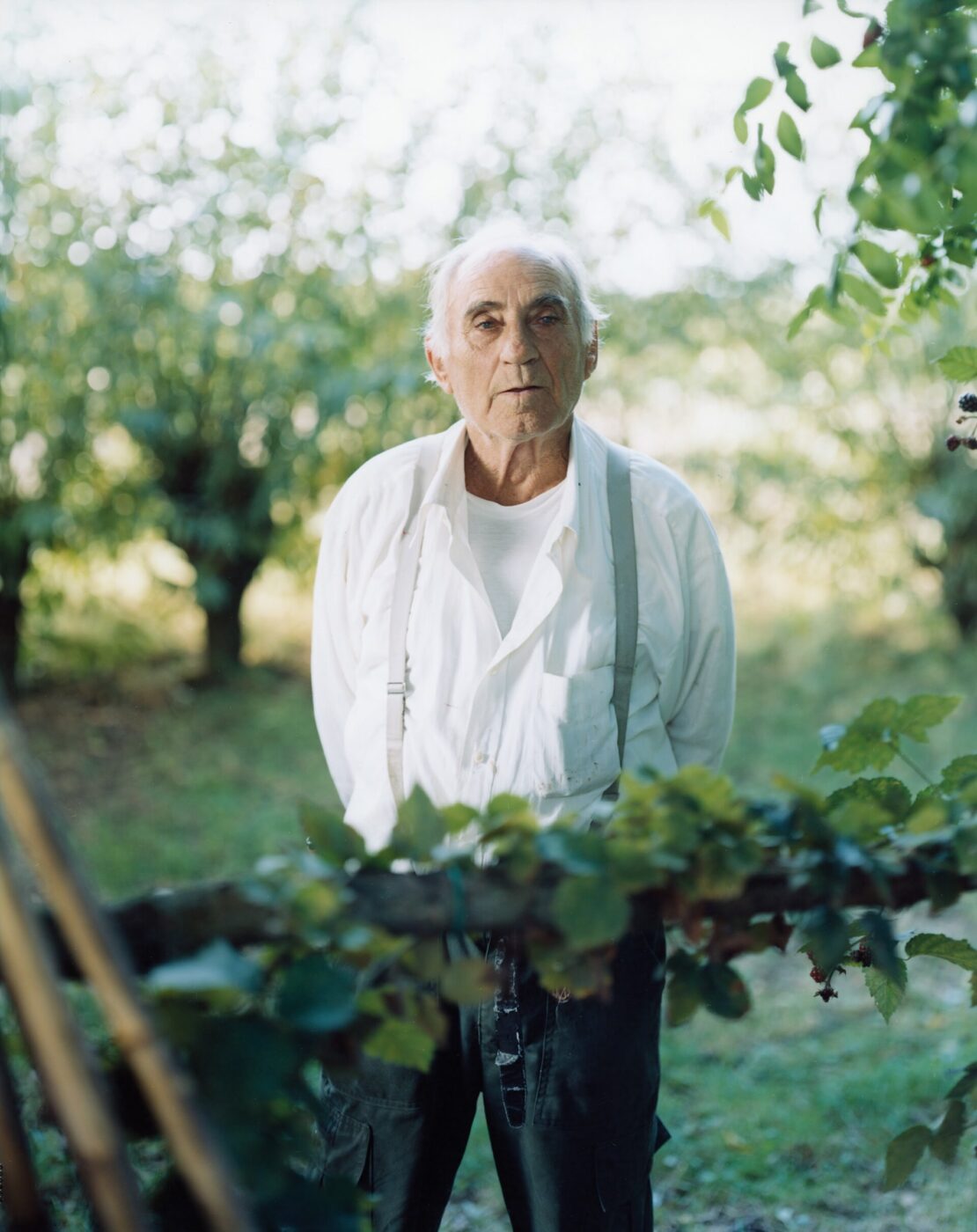
Neri was asked, like the other participants, to document this transformation indirectly, through the landscape. On one of his outings, among empty fields and construction sites, he was approached by farmer Livio Papi, who asked Neri if he would hear his story. Papi would go on to become one of the subjects of Farmers, and Neri returned to the Linea di confine’s headquarters with crates of fruits and vegetables, while the other photographers cursed the locals who kept driving them off their land.
It would take a few more years to gain international recognition—the first August Sander Award for Portrait Photography, followed by a series of exhibitions in Brussels, London, and Cologne—but the trajectory of his work was already clear.
At his studio, Neri shows us his first photo-book, Trophy & Treasure (2017), a poignant record of a family history of doctors and hunters. Like much of his work, it began by chance. In 2008, his father—a doctor—asked him for a retirement memento: a simple group portrait of the radiology department at Bologna’s Sant’Orsola hospital. Around the same time, Neri was moving into his grandparents’ house in Faenza, sorting through a lifetime of stuffed birds, hunting rifles, and medical instruments. “Medicine and hunting,” he says. “Healing and killing. Three generations of Neri did both.” The resulting book interweaves these worlds, pairing hospital scenes with still lifes of trophies and family portraits.
Some images were shot with flash, a technical challenge which Neri describes as a tight-rope walk. For the longest time, the photographer has worked almost exclusively with a 20 x 25 large-format camera, a piece of equipment so cumbersome and delicate that every photograph feels almost like an act of devotion toward what he is capturing.
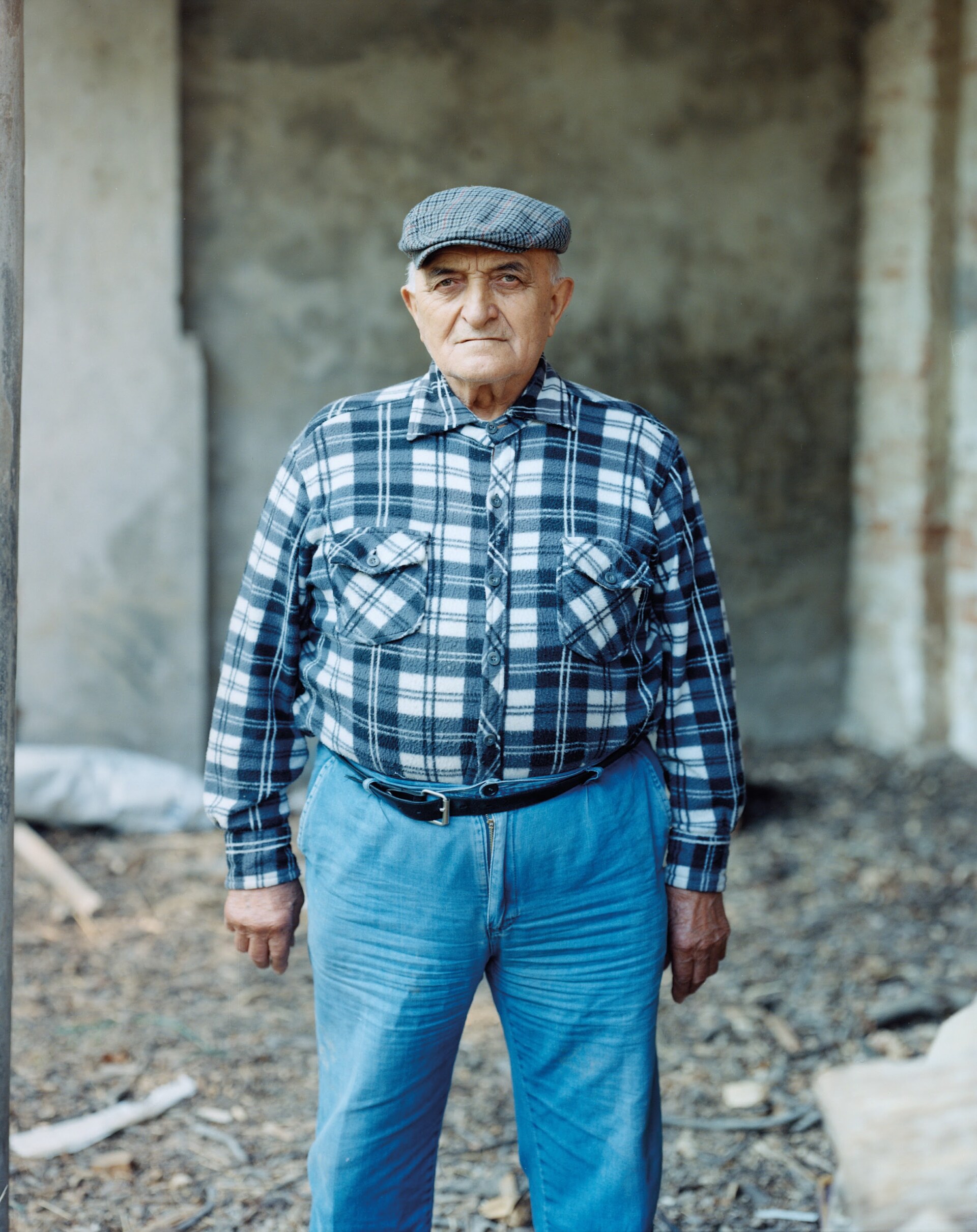
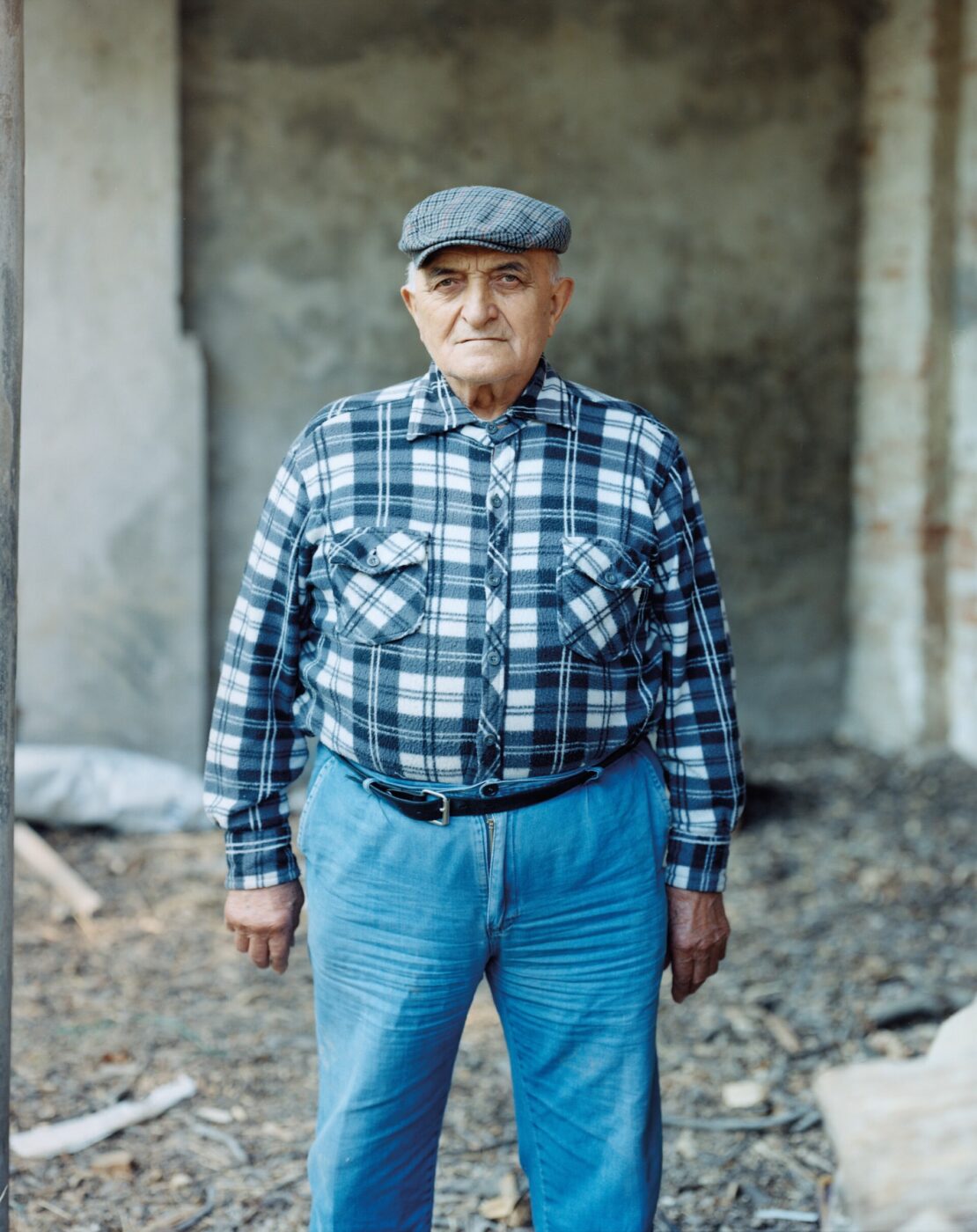
Cosina (2017), from Farmers; Photography by Francesco Neri
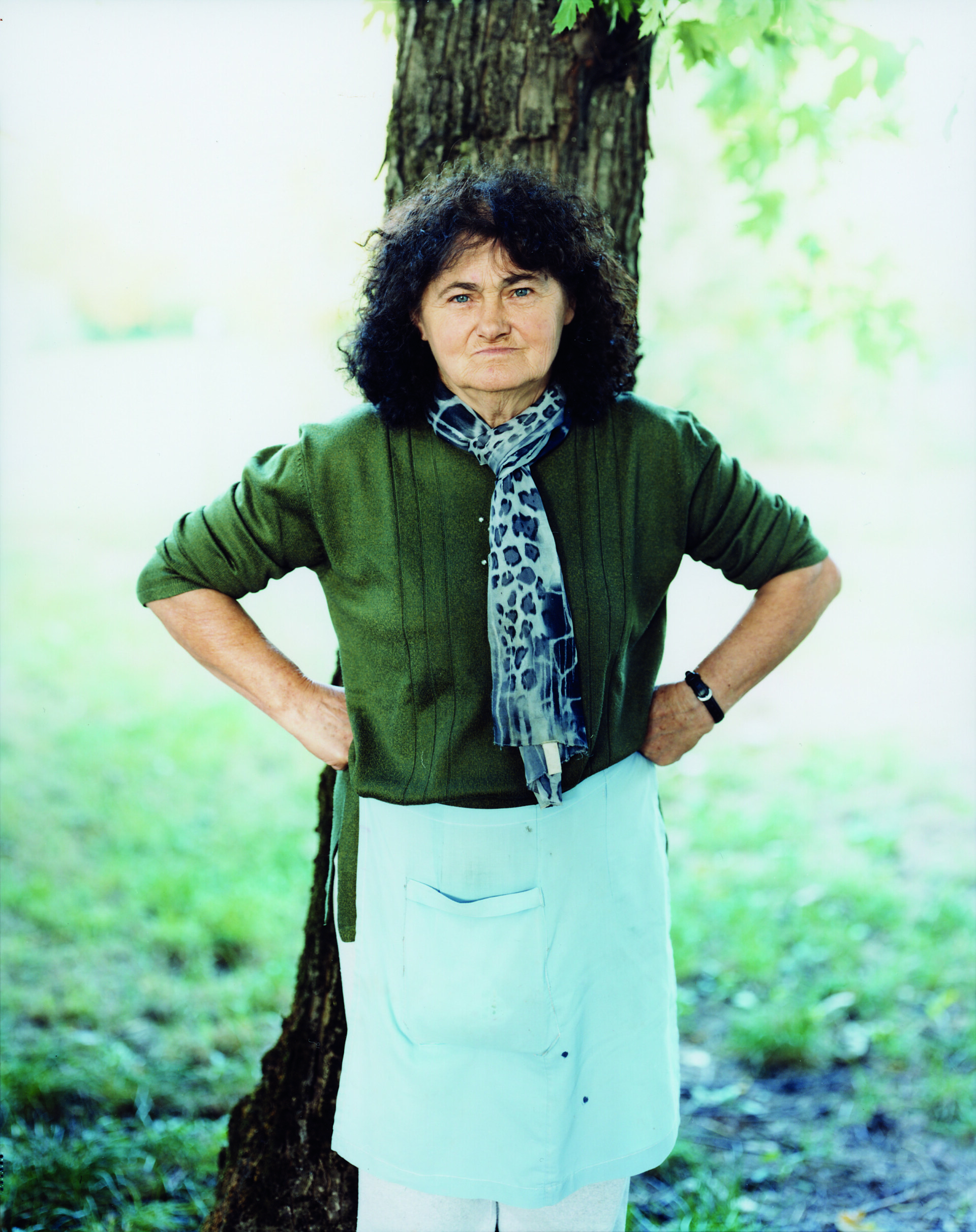
Castelguelfo (2018), from Farmers; Photography by Francesco Neri
The medium’s slowness suited his temperament and his photographic philosophy, favoring duration, the passing of time, over the decisive moment. He pulls out a few prints from Farmers: portraits of Elvio and Pina, his neighbors at his parents’ country house in Fognano, taken in 2009. Then another set, from 2018. They are nearly identical—the duo has the same posture, same expression, even what appears to be the same sweaters. What sets them apart is the time that has passed.
Showing us prints with a newfound, immediate quality, Neri explains his recent swap from a 20 x 25 camera to a portable 35mm. The shift coincided with becoming a father in 2023; the staged distance he once cultivated had begun to feel like a cage. Suddenly, he needed motion and speed.
“I went to Boncellino, and in three hours, I shot 25 rolls.” Less staged and more spontaneous, the resulting images bring a flesh-and-blood intimacy to Boncellino that was perhaps missing from the archetypal portraits in Farmers. “It’s like a mix of acceleration and braking,” he says of the way he likes to operate nowadays.
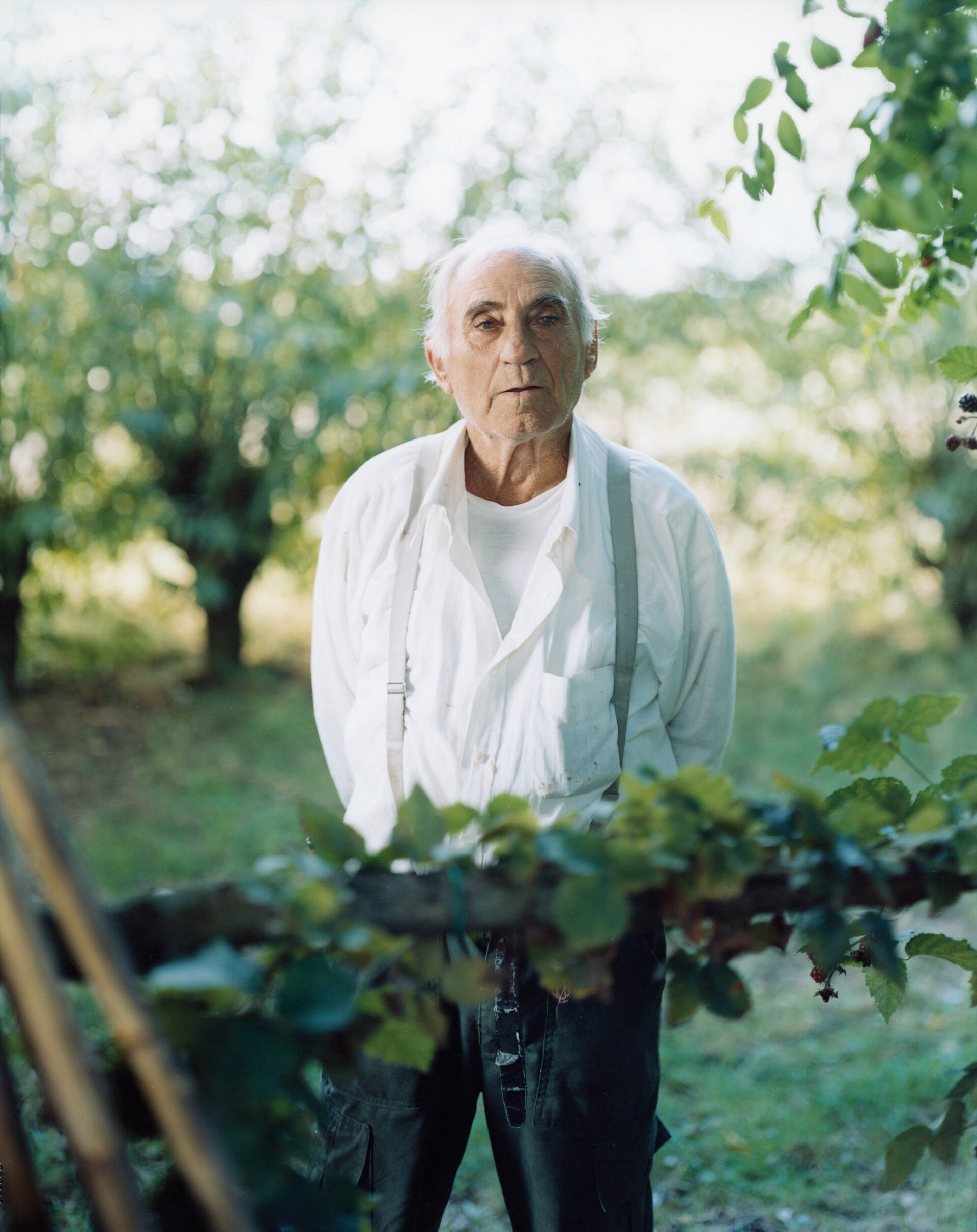
Castelguelfo (2018), from Farmers; Photography by Francesco Neri
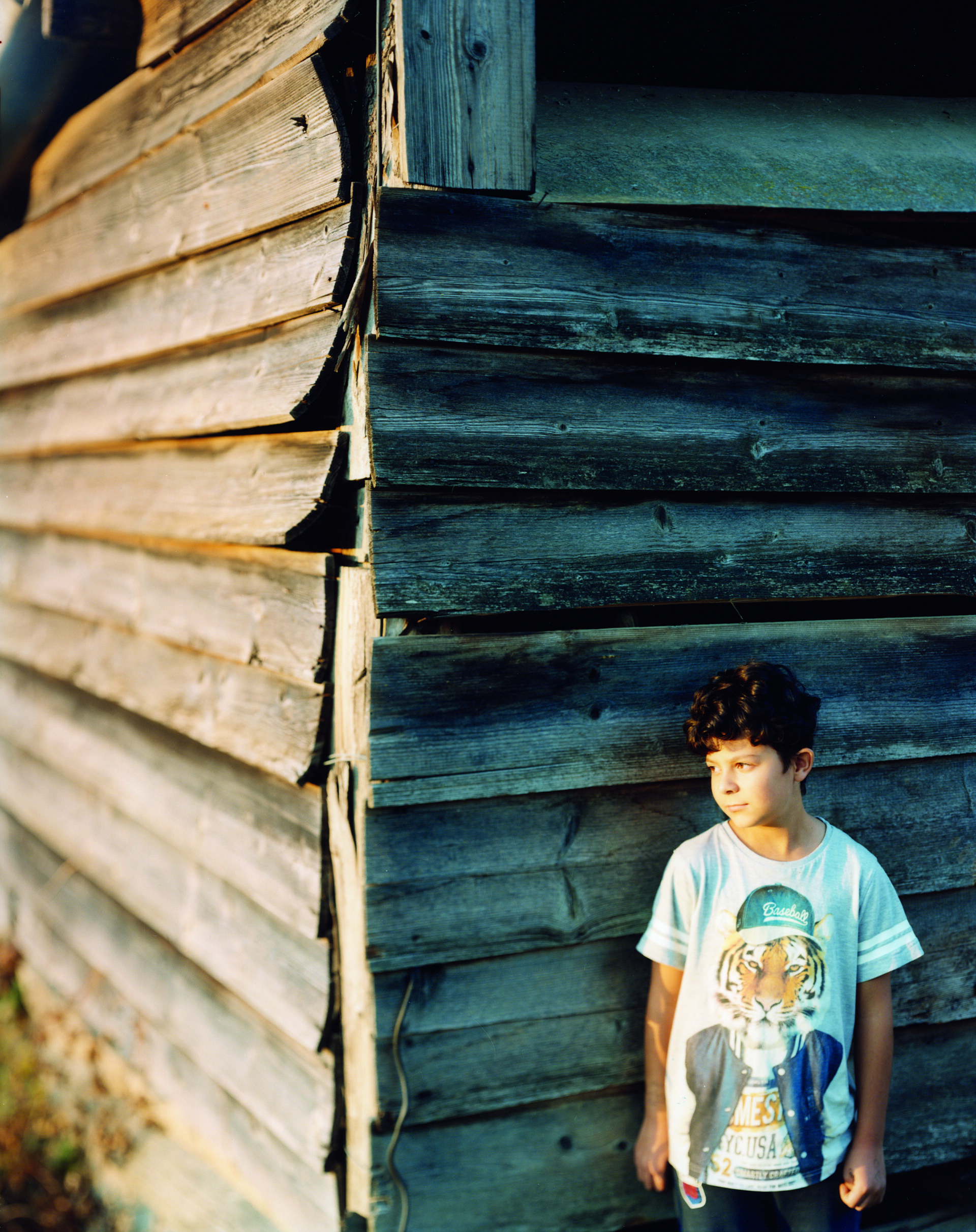
Casola Valsenio (2015), from Farmers; Photography by Francesco Neri
But where does Neri’s interest in contadini come from? For the most part, he dodges the question with a mix of nonchalance and modesty. (Another trait he has in common with his mentor Guido Guidi.) Neri maintains that photography is an unconscious process, during which you have to suspend your judgement. “I like to think it’s the photograph that reveals things to me,” he explains. “It’s not that I impose my eye on the photograph. It’s the photograph that shows me things I couldn’t see otherwise.”
He admits, however, his interest might have something to do with the childhood summers he spent at his grandparents’ house in Fognano, another village in the area. He recalls long, bored afternoons spent inventing games with his only peer. With no other young people in sight, the local elderly farmers became Neri’s unlikely friends.
That photography—and specifically portraiture—is a way for Neri to reconnect and pay visits to “old” friends becomes clear when, after lunching at the Rossini’s and bumping into one or two acquaintances, we end up at the Appaloosa horse farm of Giuliano Bravi (61).
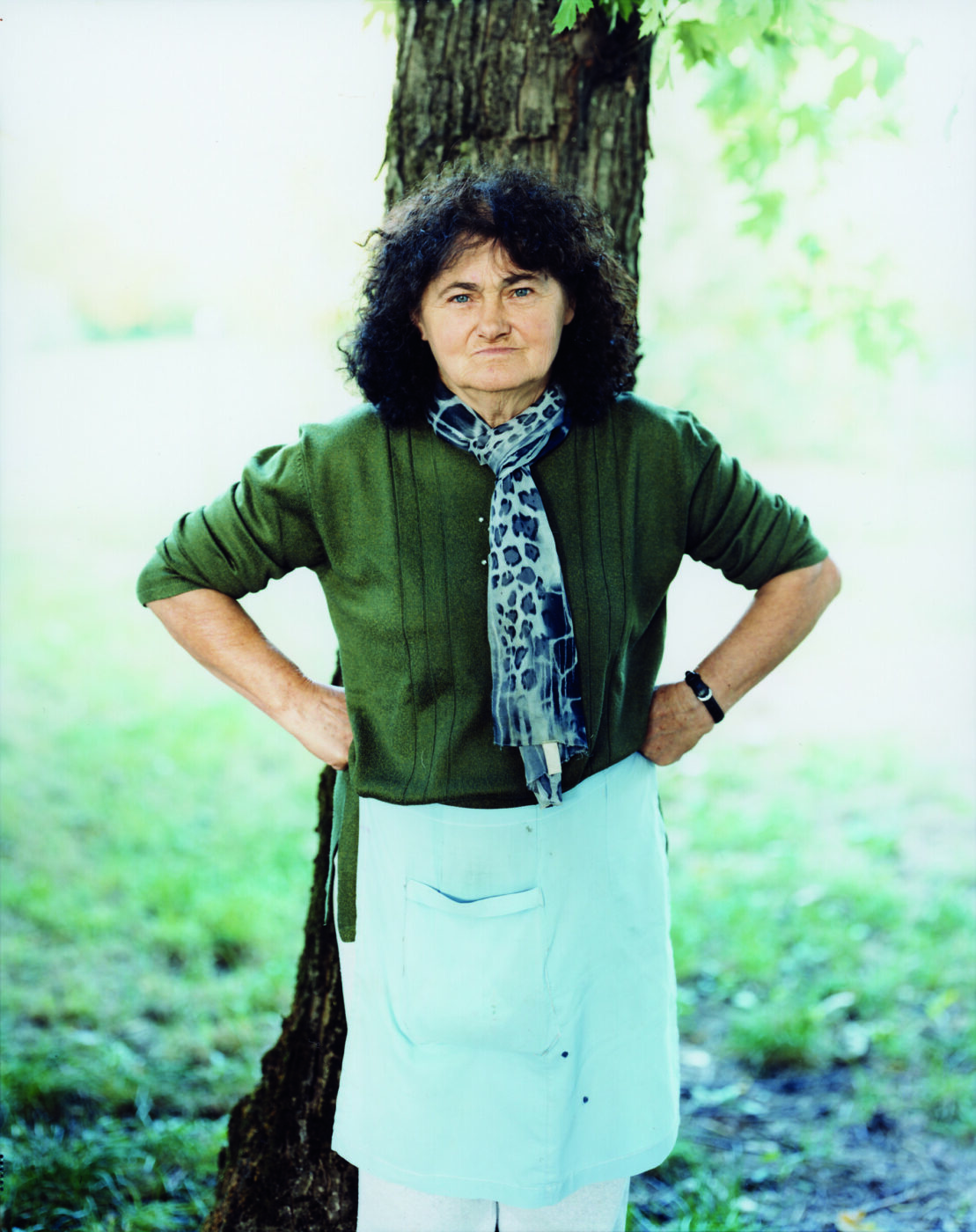
With piercing blue eyes, Giuliano is a central character in Boncellino. His stern black-and-white portrait recently stared down visitors at London’s Large Glass Gallery—but the image belies his wild spirit. Two minutes in, he’s already calling Neri a “sborone di serie A” (a world-class rascal). You can’t get more Romagnolo than this, at least to our Emilian ears.
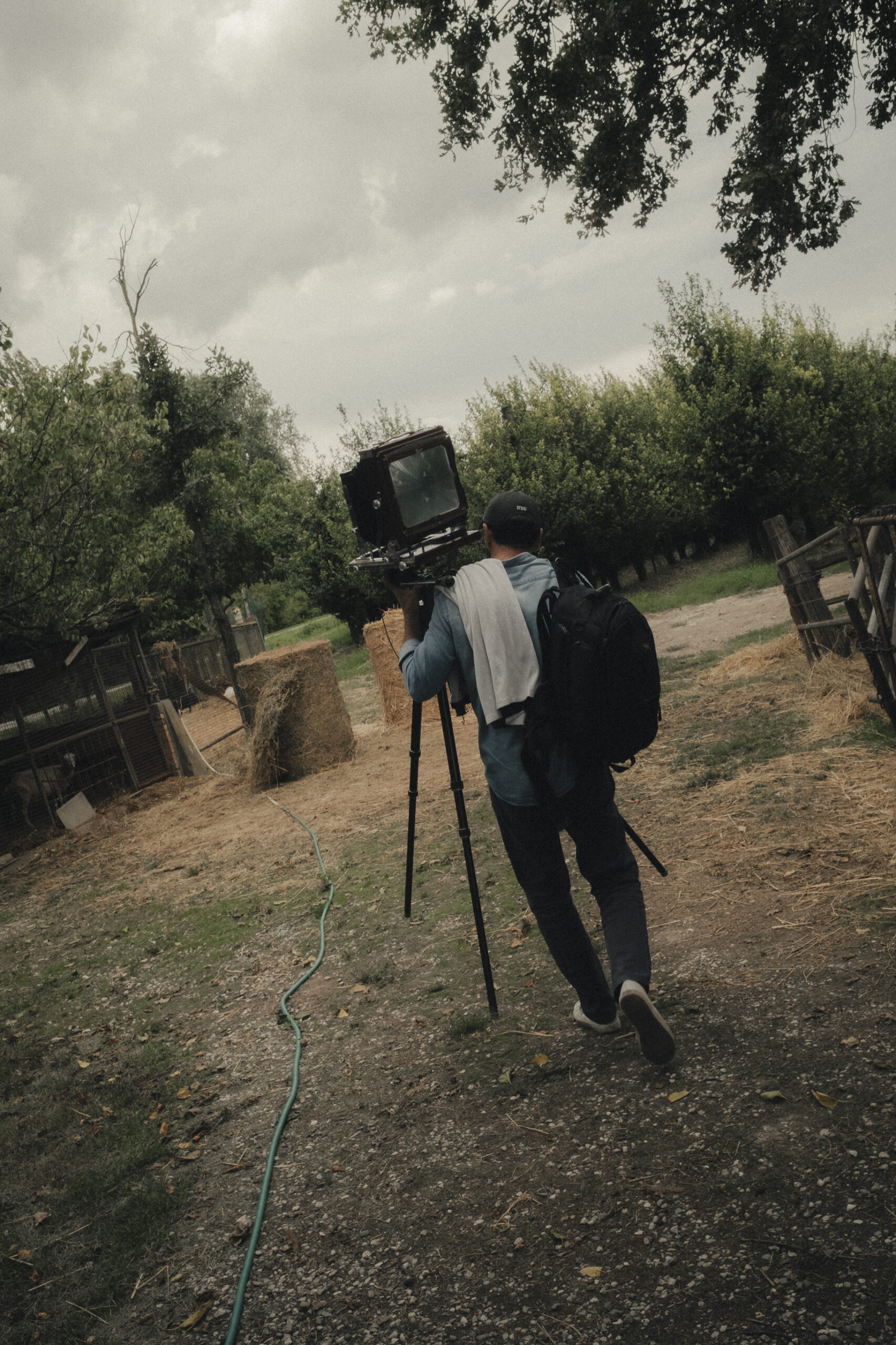
Photography by Tommaso Serra
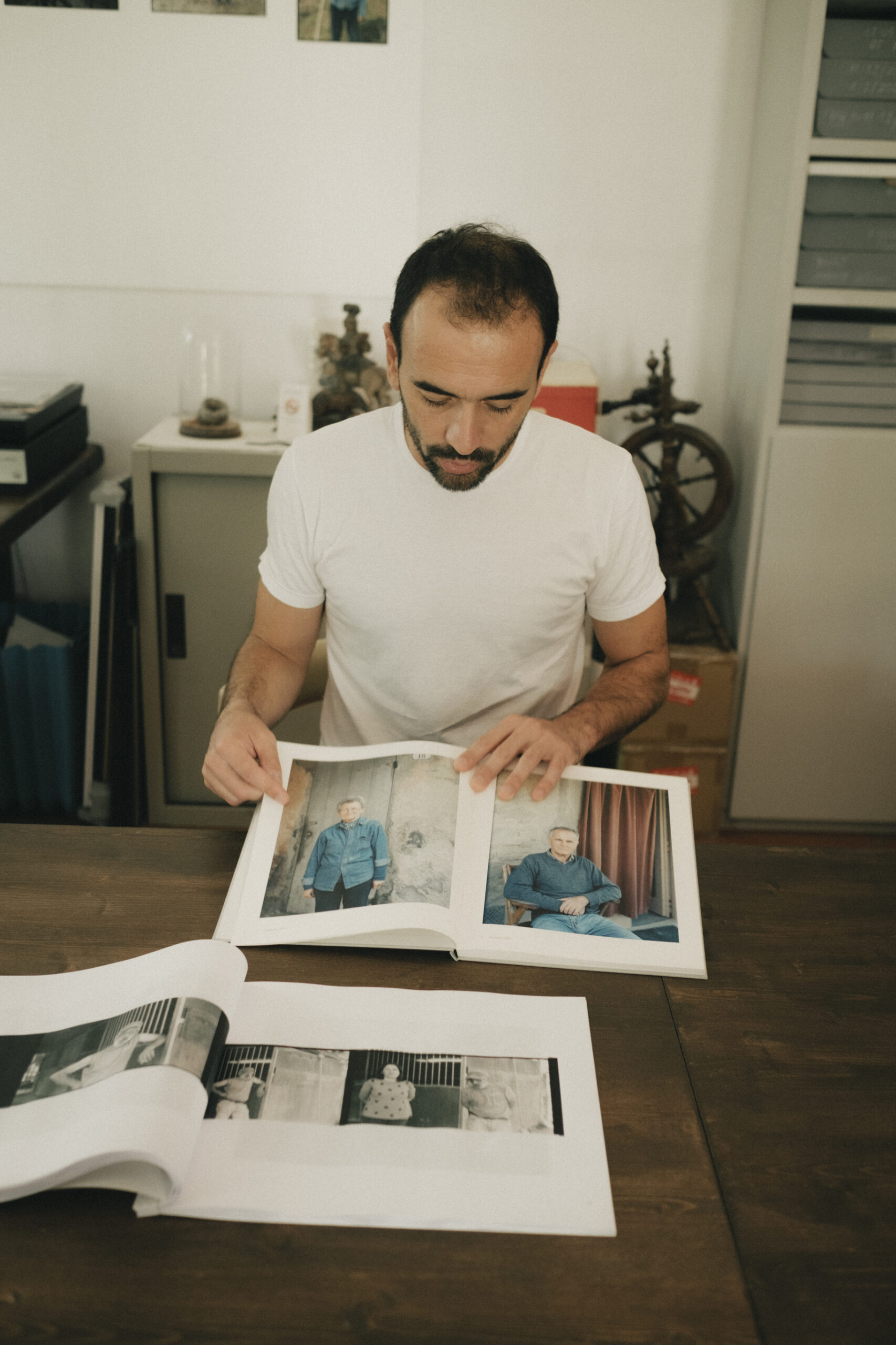
Neri in his studio; Photography by Tommaso Serra
Over wine and coffee prepped in his caravan, Giuliano recounts how he and Neri first met. With an excavator still moving sand away in the background, he tells us about the two successive floods of 2023, which, in less than two weeks, washed away his horse farm and flooded Boncellino, as it did with Faenza and much of the area. Across the region, the catastrophic damage exceeded €10 billion, with more than 50,000 people displaced as 23 rivers burst their banks. The agricultural sector was hit particularly hard, with over 5,000 farms submerged and an estimated €1.5 billion in losses to crops, livestock, and essential machinery. Even now, many buildings bear the watermarks of those dark days.
Giuliano remembers the dawn after the first flood: a lone figure wading through the mud in oversized wellies. It was Neri, who then nearly stepped into a submerged canal. “No one was around,” Giuliano recalls, “just noi due sfigati [us two losers].” His eyes well up as he adds, “Those were sad times, but at least there was the excuse of [Neri] coming. A quarter of an hour here and there, a glass of wine, and the bazza [little party] would be on.”
Prior, in Faenza, Neri told us, echoing legendary MoMA curator John Szarkowski, that photography is, of necessity, a minor art, about small things and intimate moments. And, indeed, although they always preserve an aura of mystery and reticence, his photographs document a world that most experience fleetingly, while peering out a train window or speeding along the A1 motorway that cuts across the region. A world that exists mostly out of sight and yet feels so very familiar.