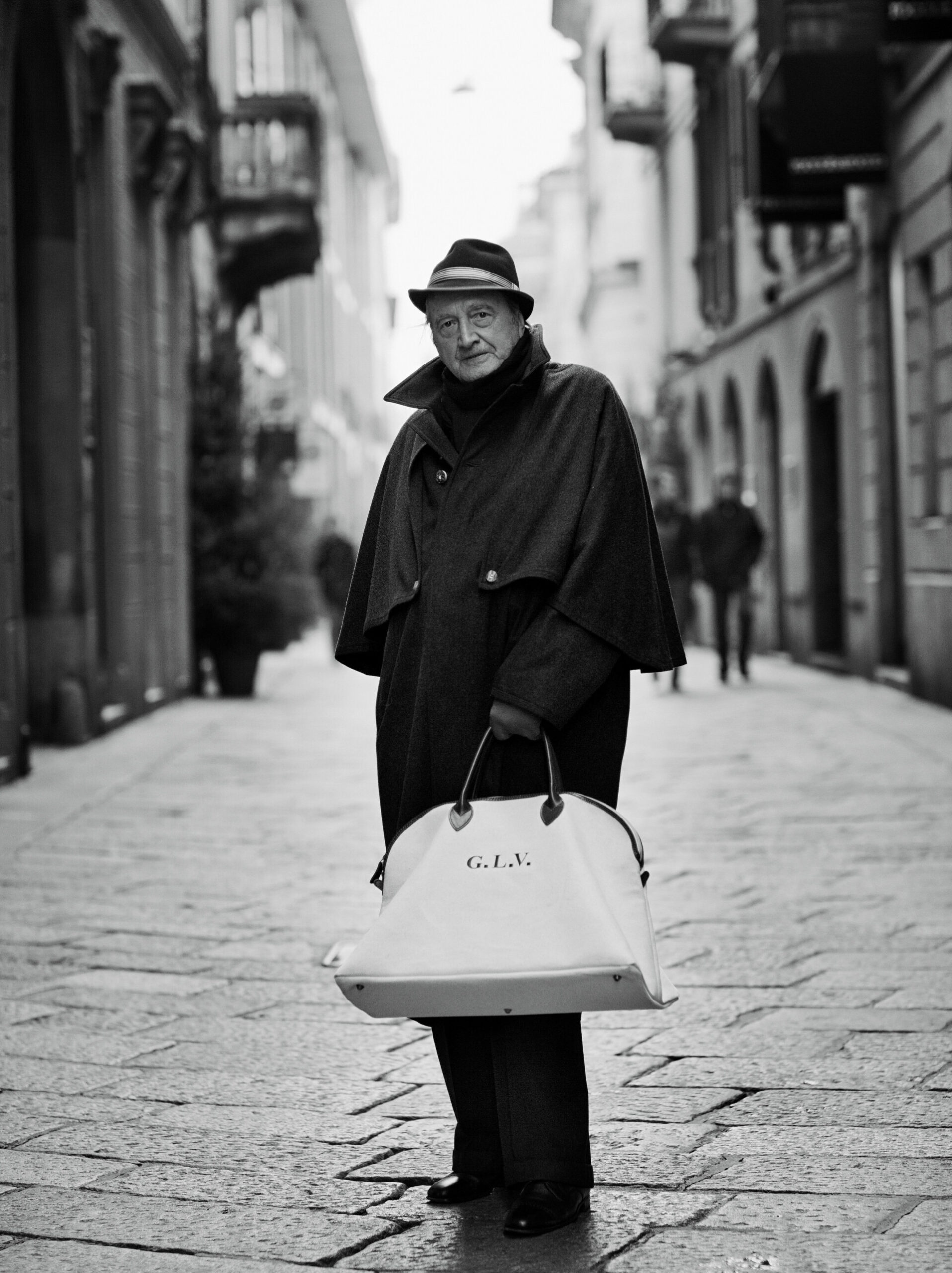
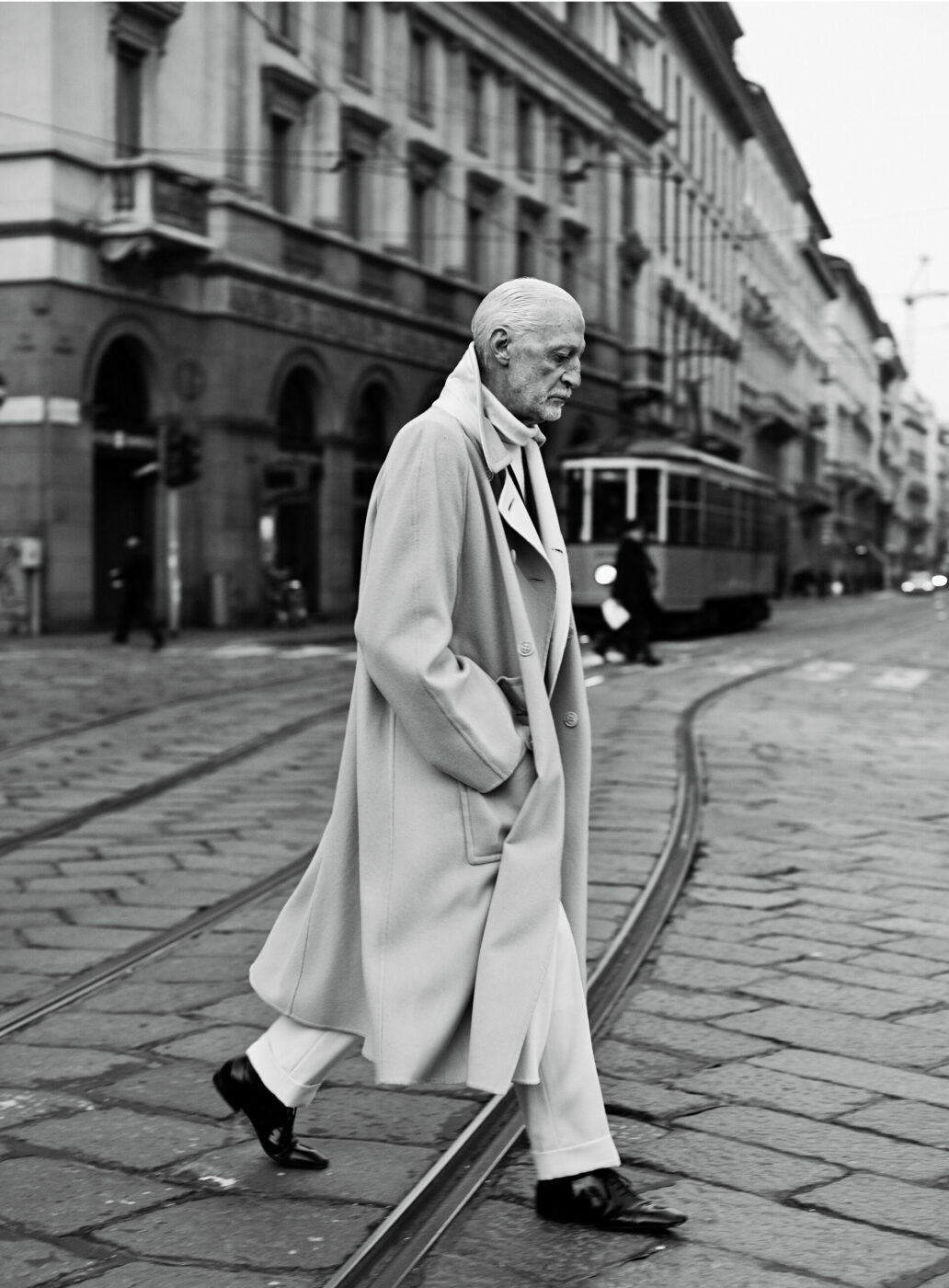
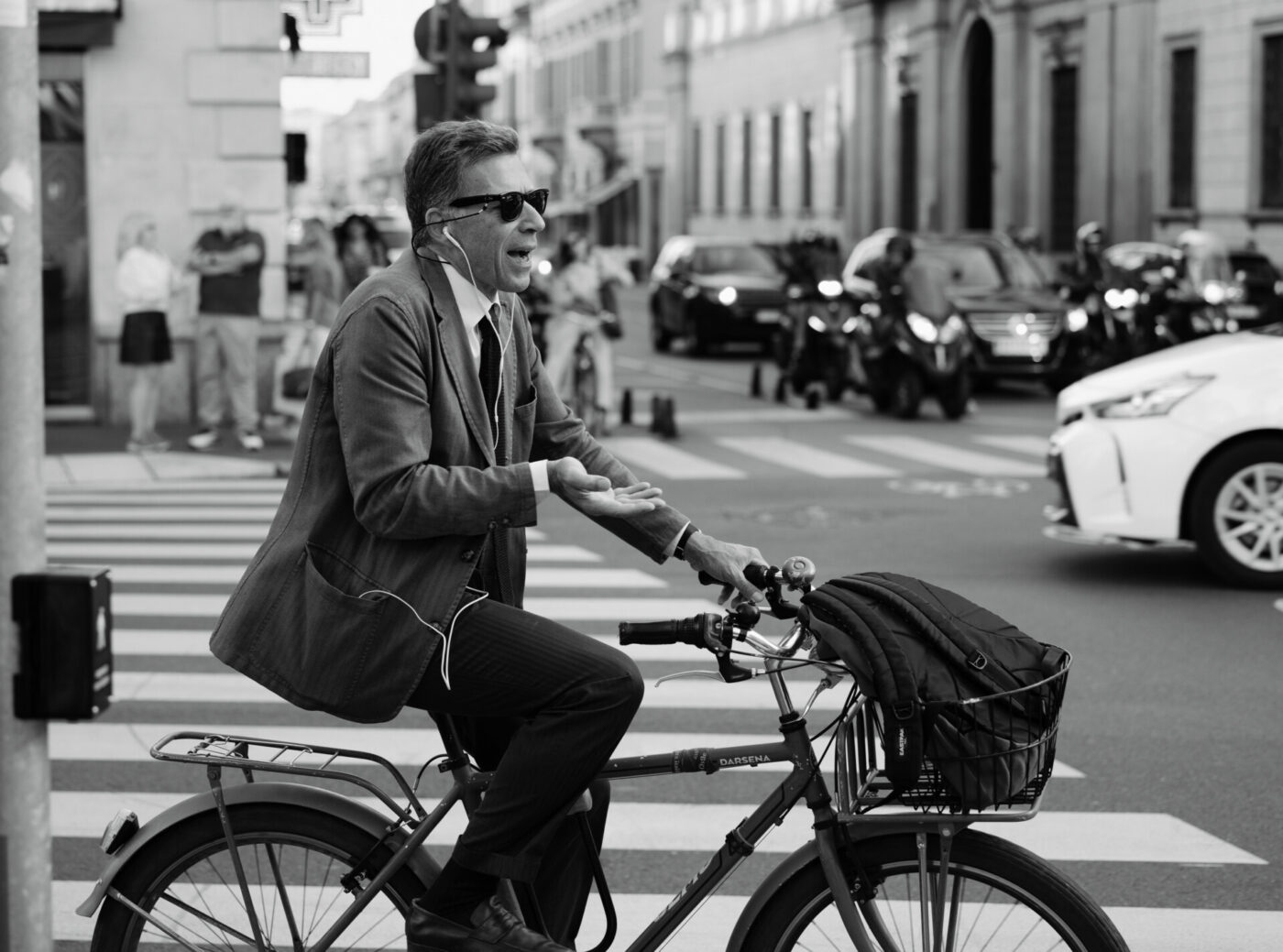
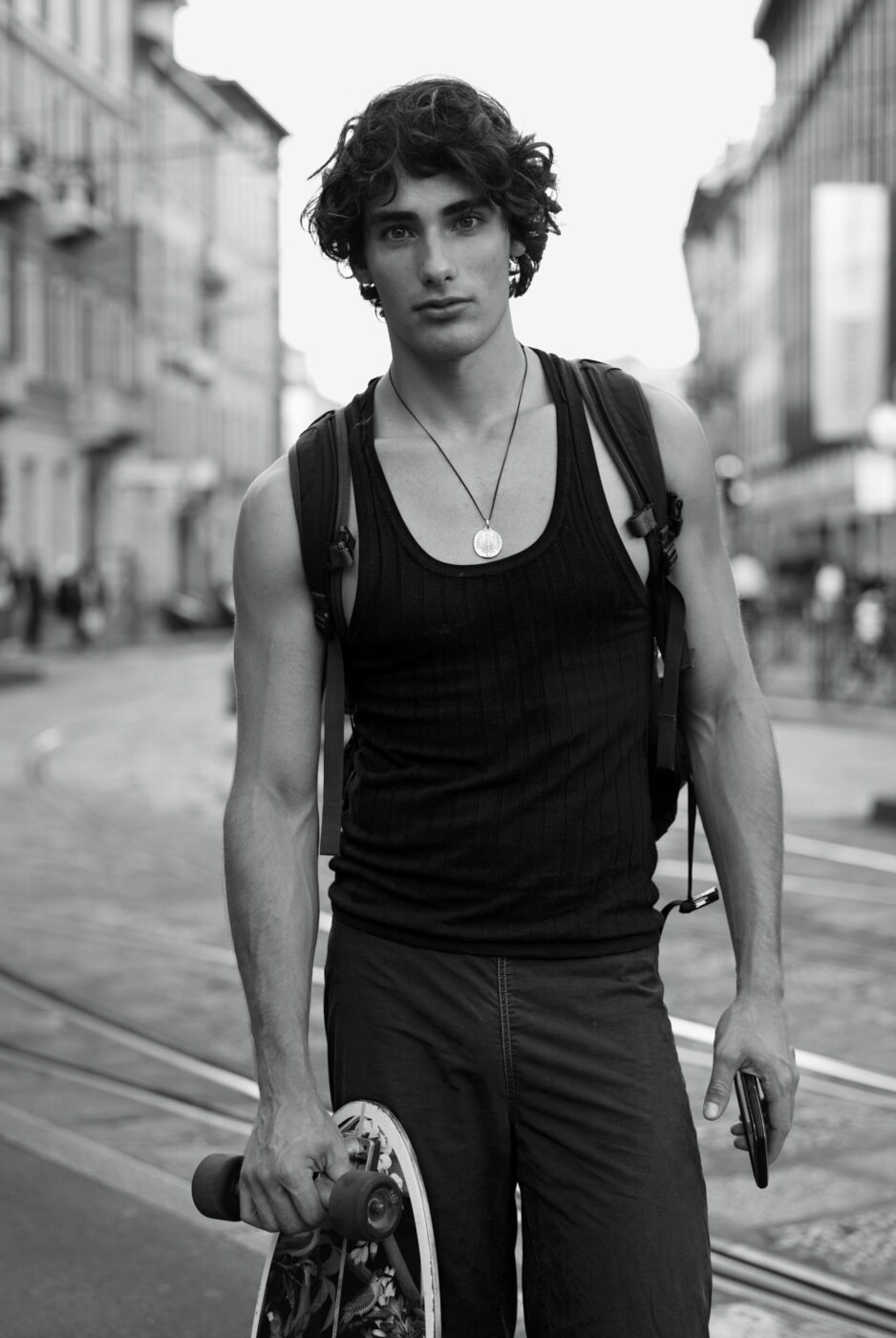
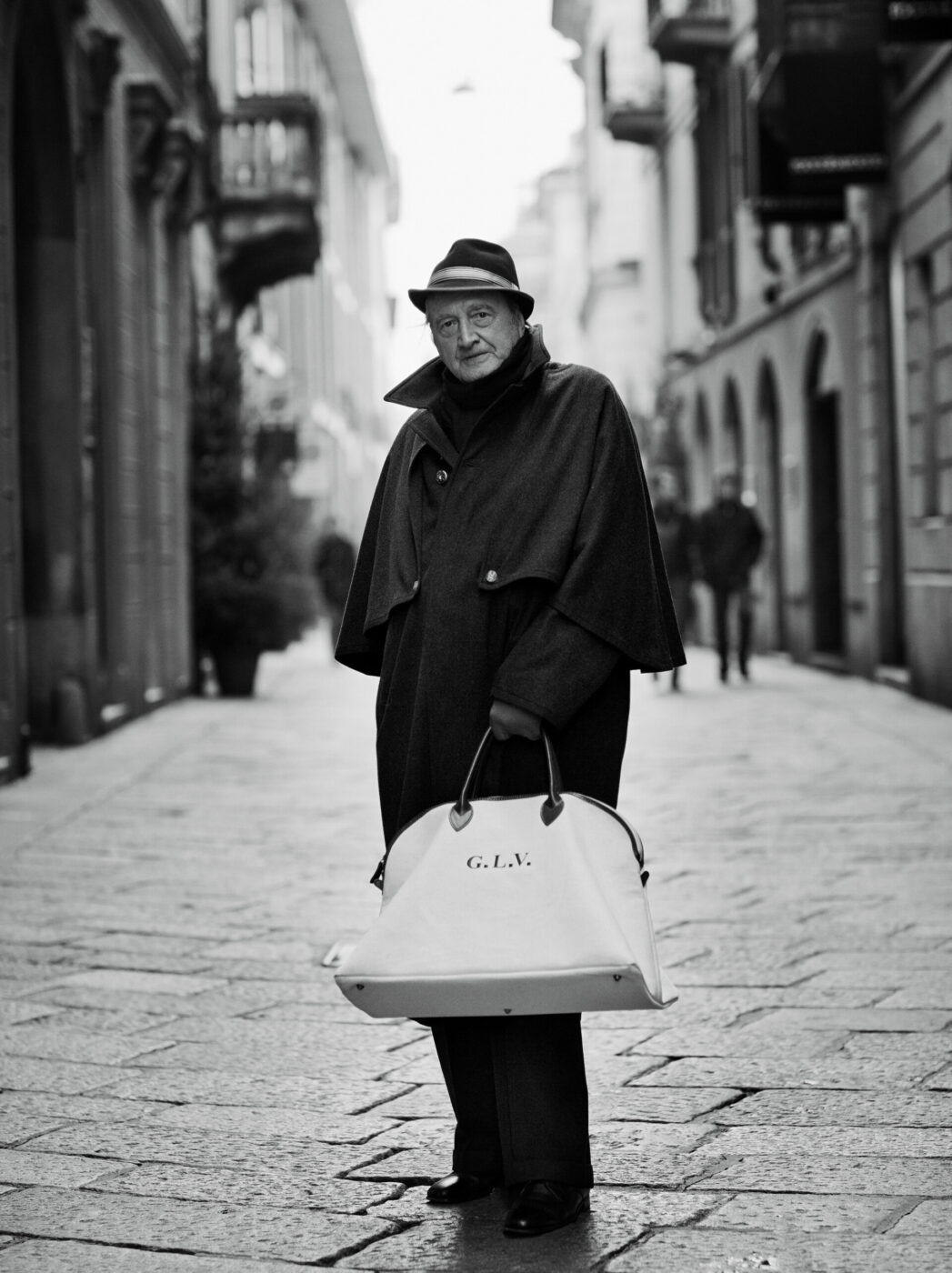
Milan, the late Giorgio Armani notes in his introduction to Scott Schuman’s new book, doesn’t lend itself to fleeting acquaintances. The fashion capital of Italy has long been painted as an austere backdrop, a city of gray skyscrapers and closed doors, a place that takes time to warm to. Schuman, by contrast, is a master of fleeting acquaintances. Through his camera, passing faces turn into intimate portraits on street corners, personal style captured in serendipitous encounters and brought into sharp, sacred focus.
Known as one of the founding fathers of street-style photography, Schuman rose to fame after 2005 through The Sartorialist, a sleek street style blog that captured what people were really wearing on the streets of New York City. Today, after years of visiting Milan, he finally calls the city home.
Despite its magnetic pull, the Lombard capital hasn’t quite overtaken him yet: “I still have a lot of New York tendencies,” he jokes from his flat when we speak; he still likes his coffee long.
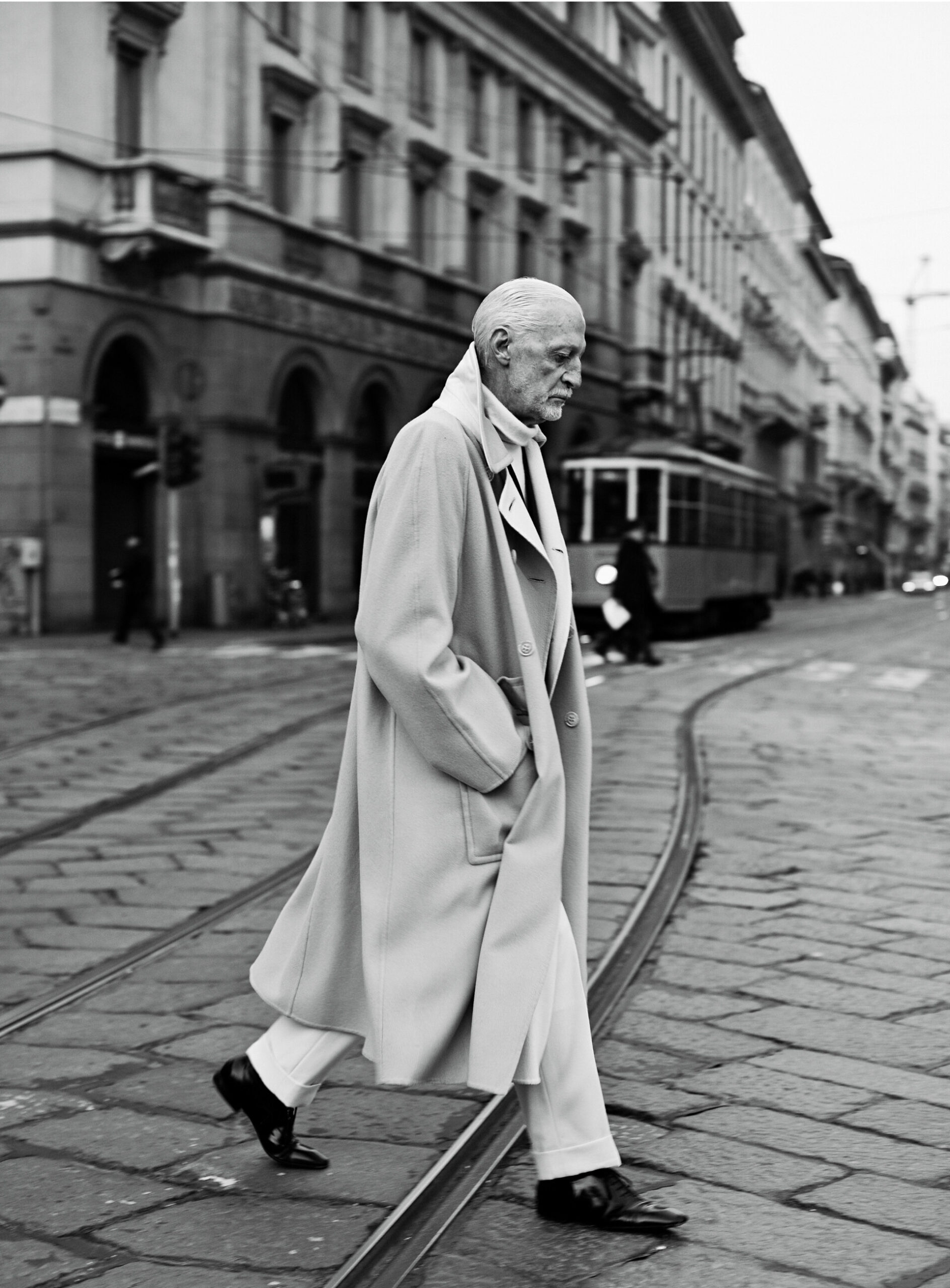
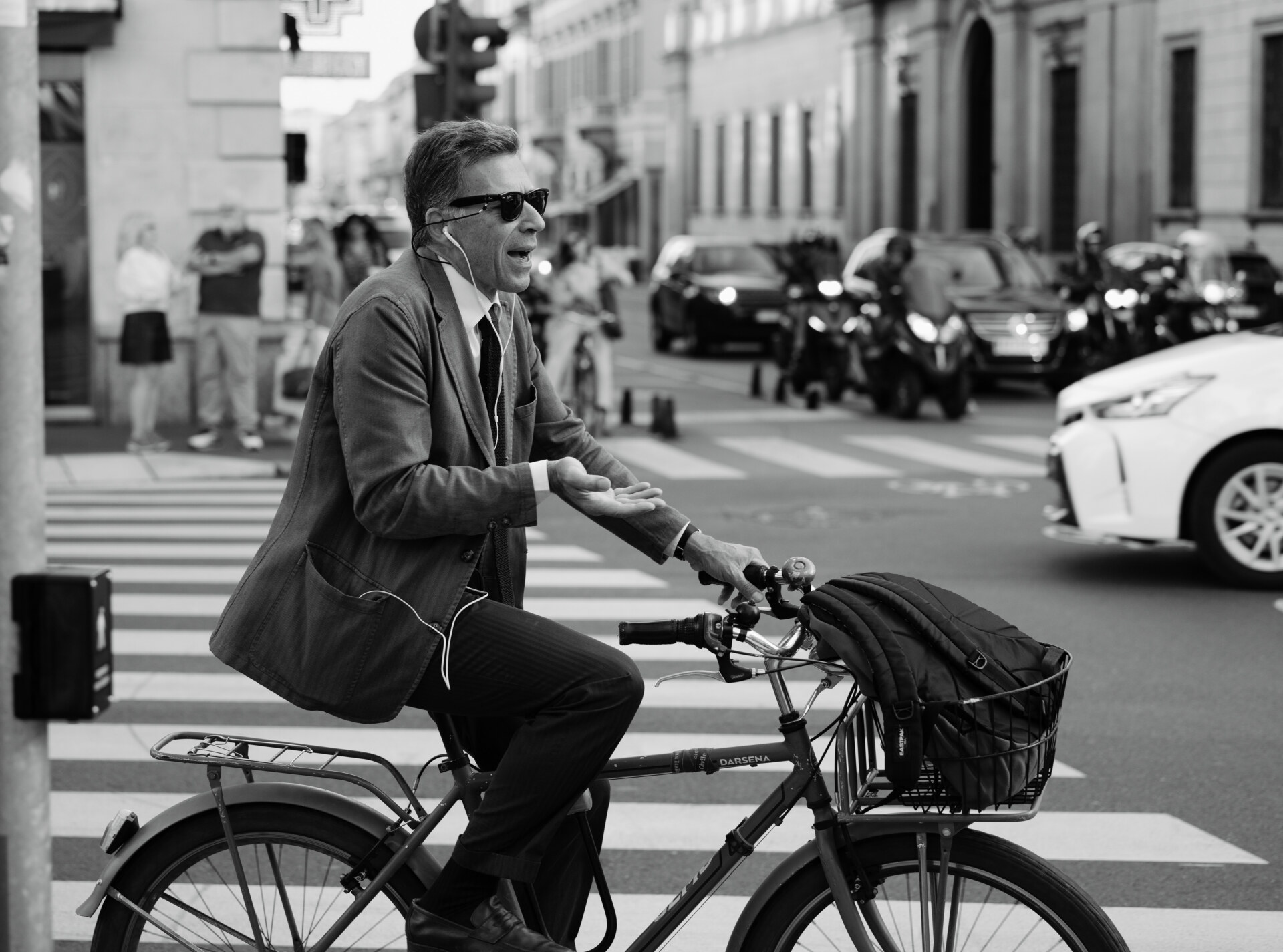
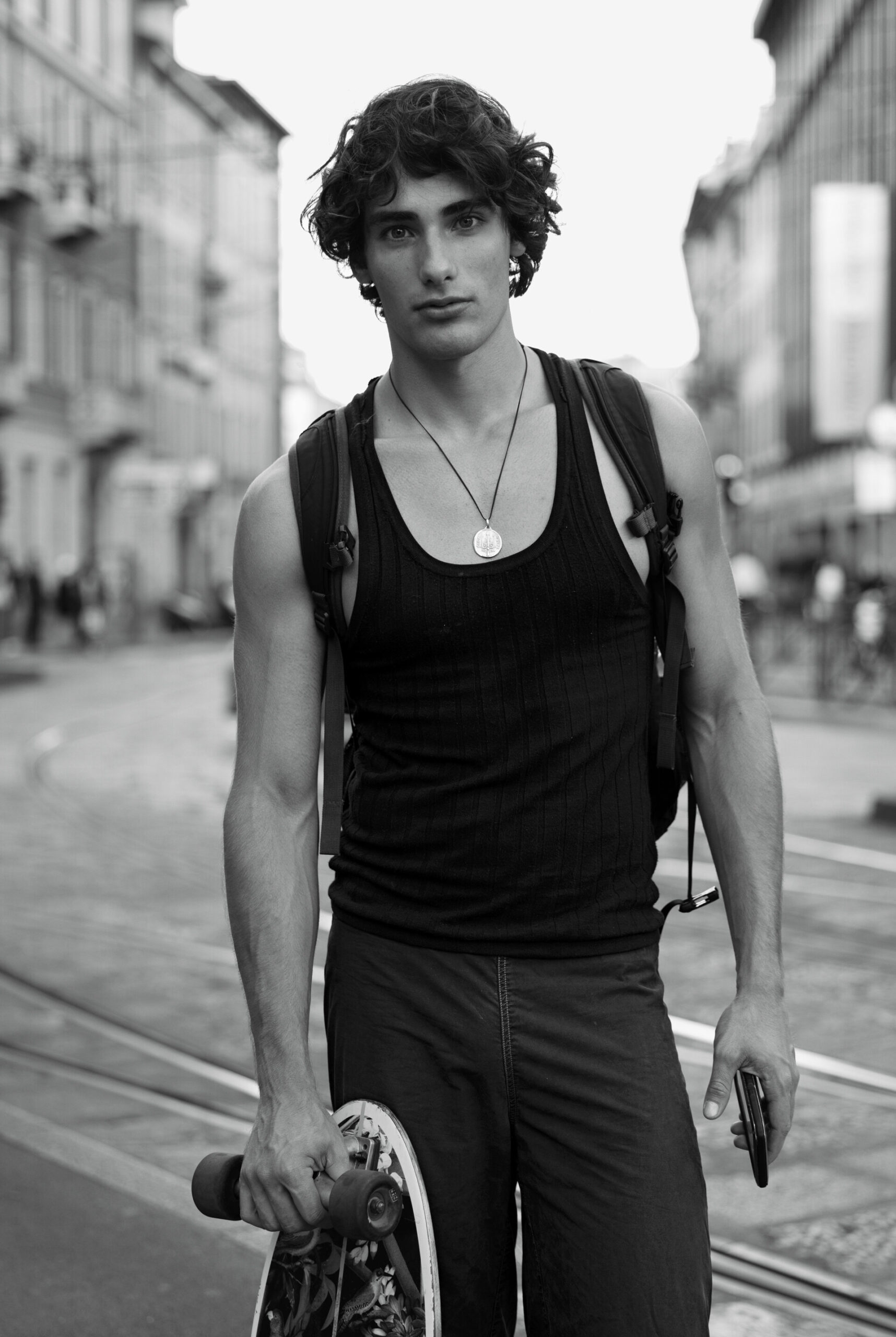
Although he’s produced books in the past, the process of putting Scott Schuman: Milan together was different. “I really love it here,” he says candidly, “It doesn’t have the reputation it deserves. I grew up always hearing how Milan was so gray and industrial, and all the fashion people couldn’t wait to get to Paris.” Schuman would be confused. “It’s a very misunderstood city”—just one of the reasons he wanted to create a book about it.
He looks out of his apartment window and describes how he sees the terraces, green everywhere, spilling out over the rooftops, the secret worlds that await just beyond the surface. Milan is a city of highs and lows, he explains, a city that brings people together—a fashion capital, an industrial hub, a multicultural mixing pot. “It’s a great mix of eccentric people, but also really classy people,” Schuman says, “I really wanted—I had—a challenge to show Milan the way that I see it.”
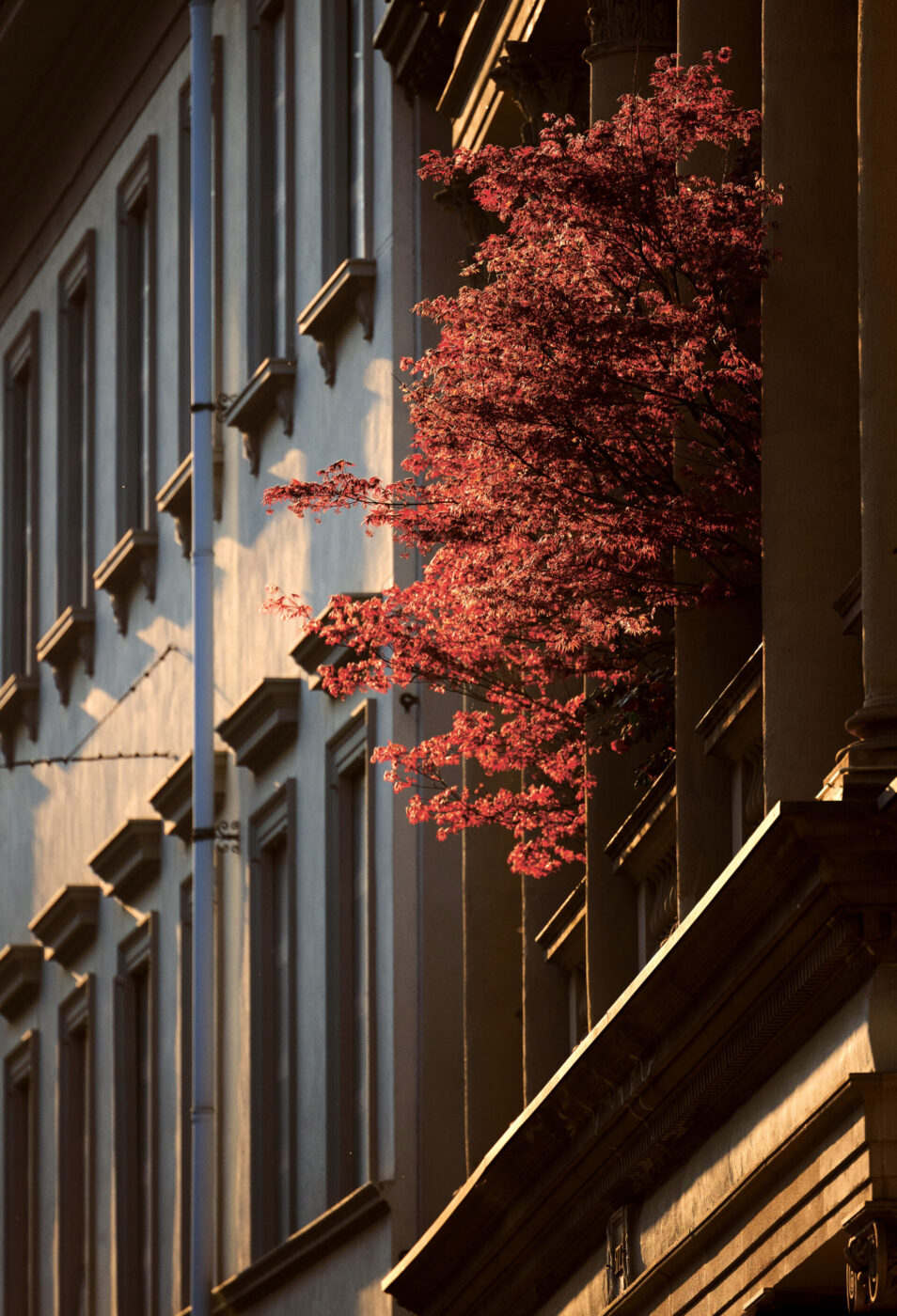
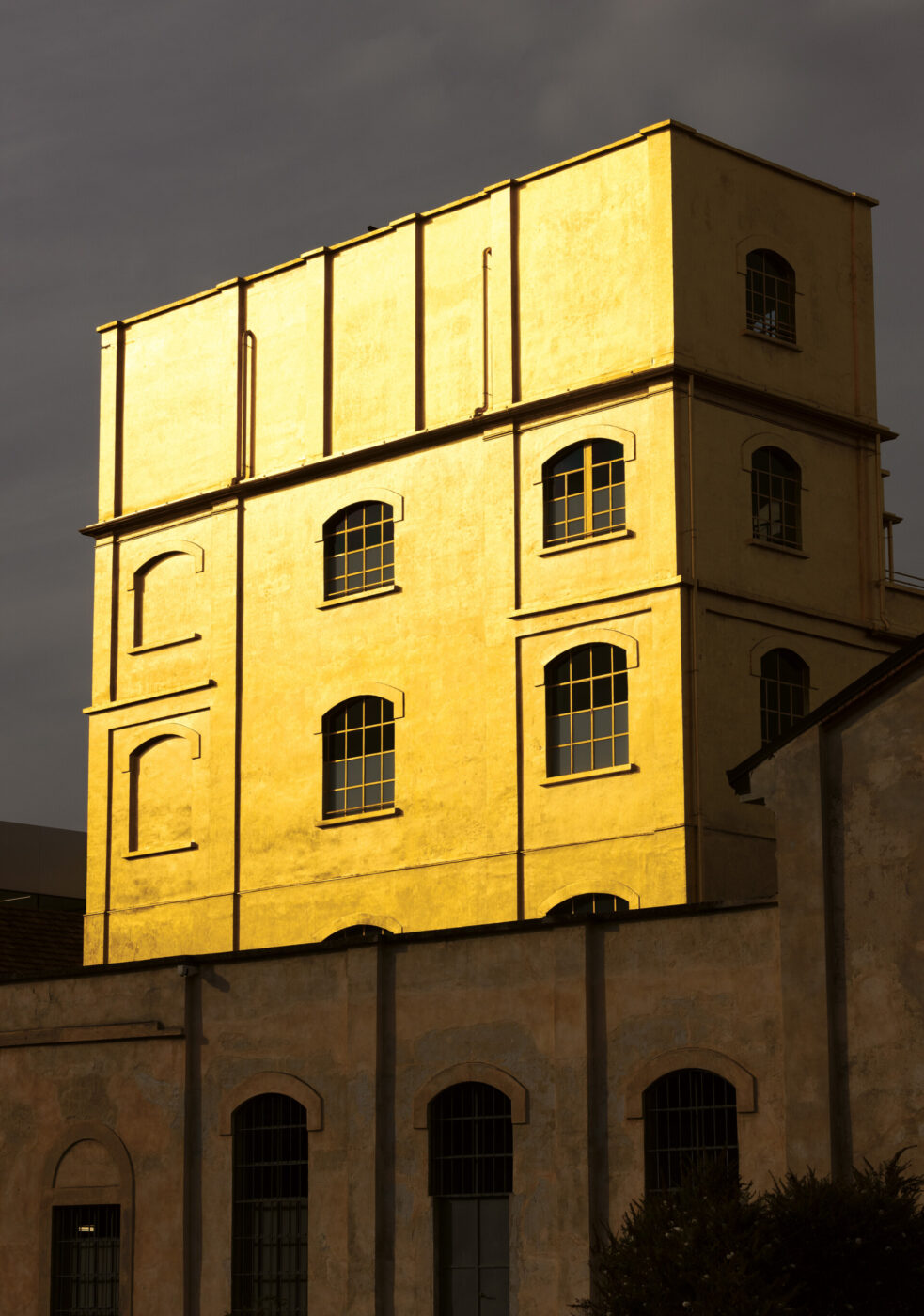
To counter the city’s gray reputation, color became a guiding principle in the construction of Scott Schuman: Milan. You can see it in the images of cascading shivers of ivy that appear to engulf entire buildings. The vivid shamrock shock of a woman’s hair, emerald glass in the architecture of the central station, an imposing doorway, an old water fountain. “I kept ending up with these great pages, where there were two strong reds or strong blues in both photographs, or strong greens or yellows… so I just let that happen,” Schuman shares. In this way, the pages weave an unpredictable path through the city, mirroring Schuman’s own process of wandering the streets over many years. “I like when people don’t know what’s coming on the next page,” he notes. “I don’t like to work according to themes… I like to keep it random, and doing it by color made it very random.”
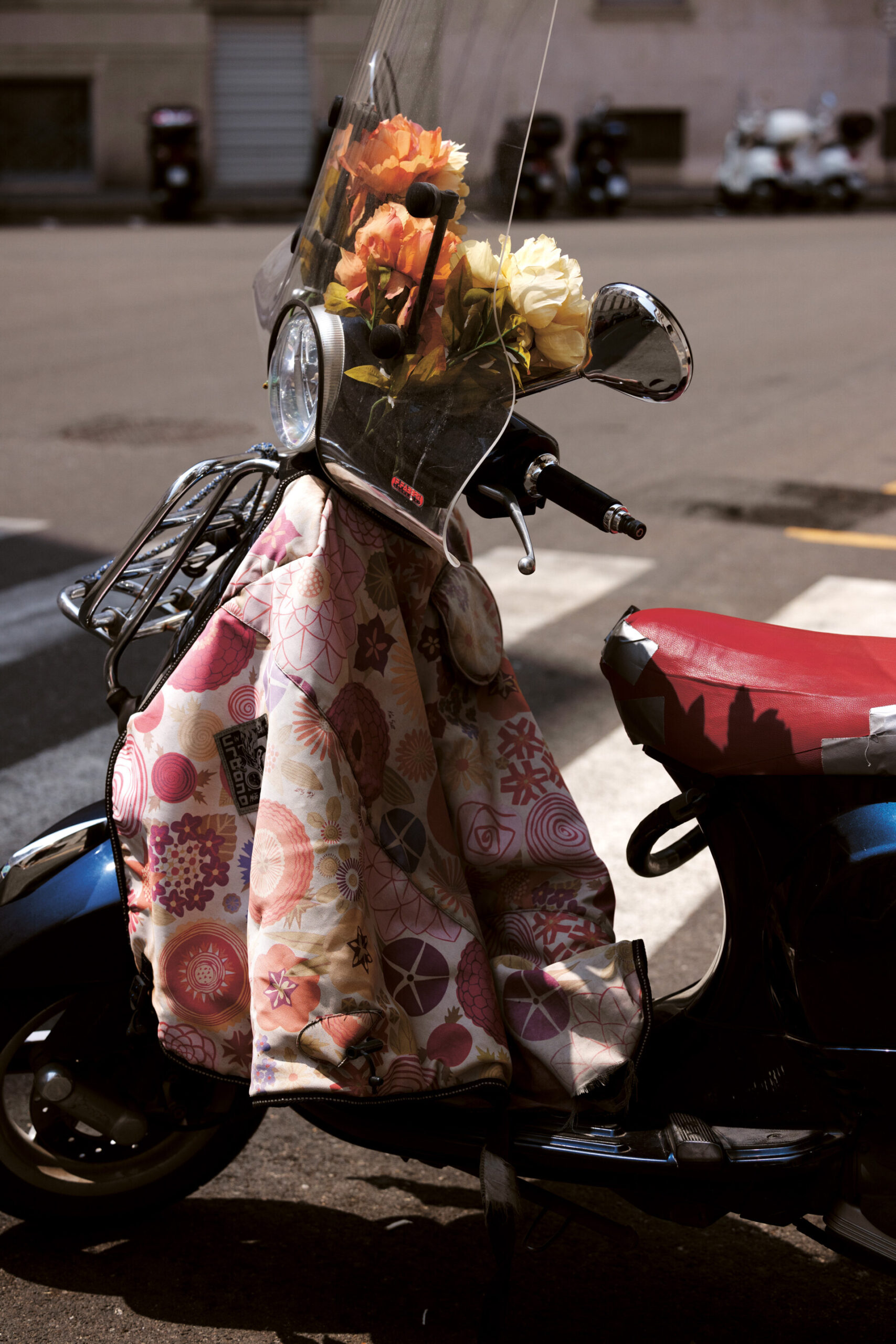
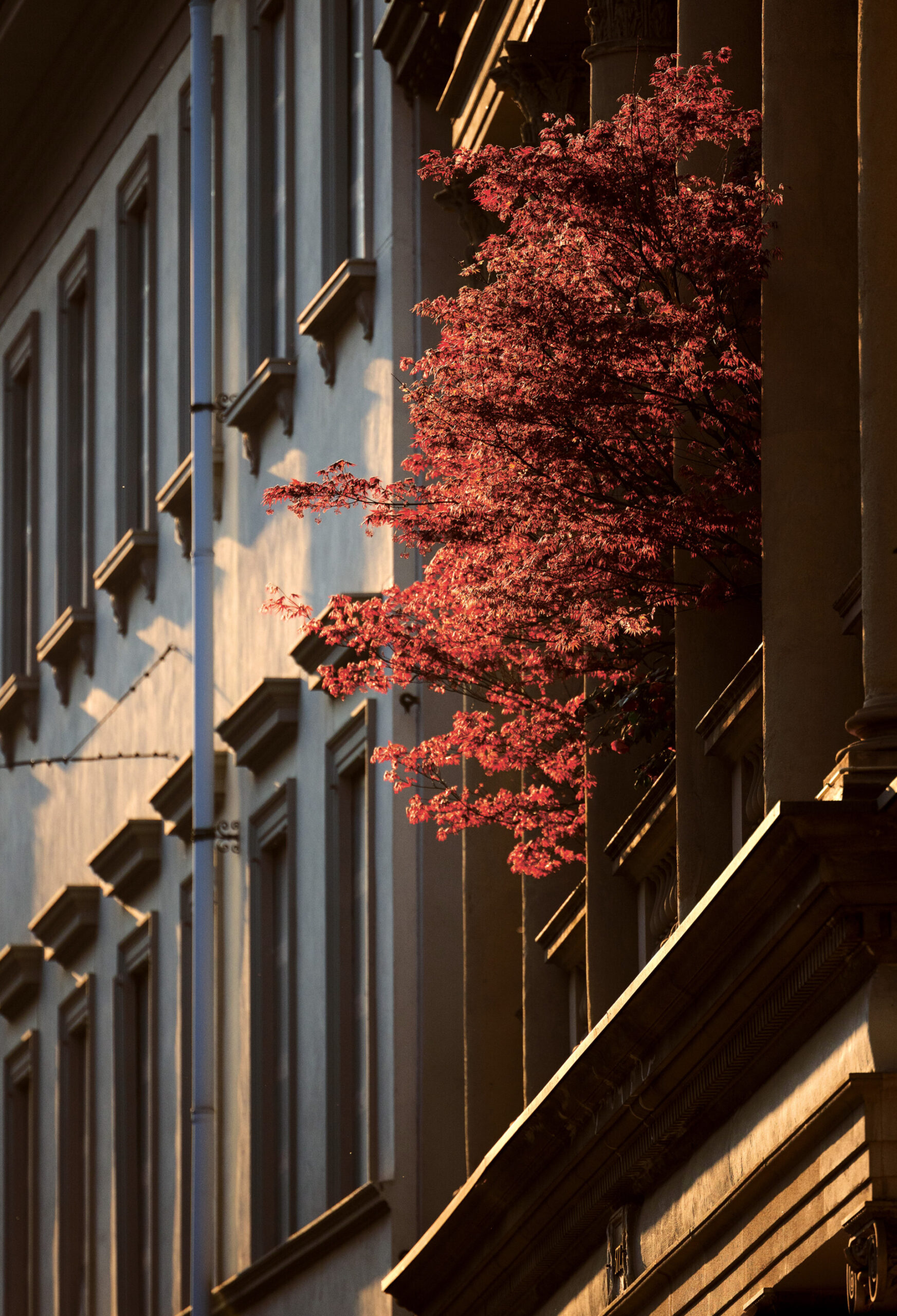
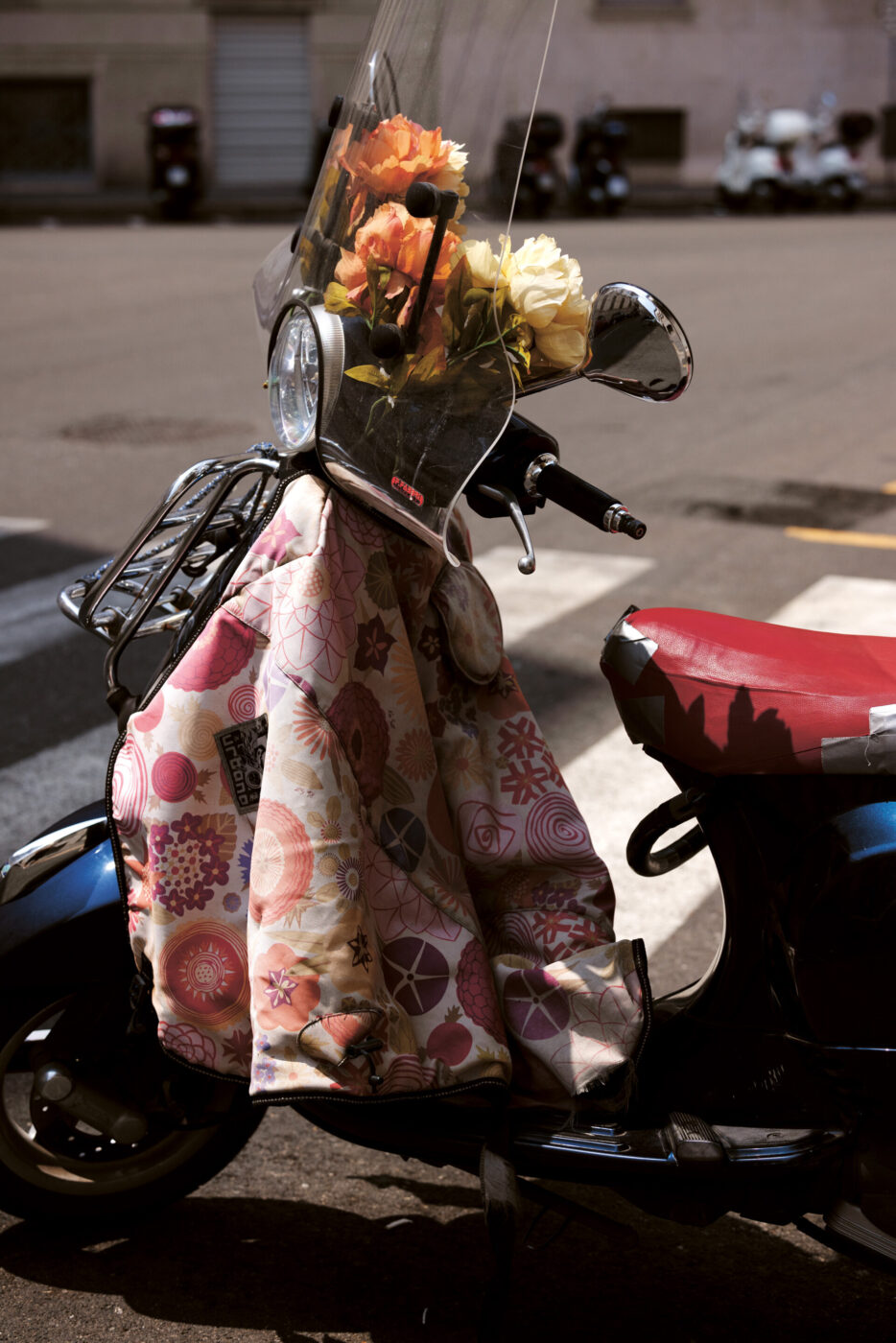
Across a double page, ornate brickwork and the rich umber shadows they cast along the Viale Premuda harmonize with a woman’s herringbone jacket; the shadows of a tree against a building’s facade on Corso Magenta mirror the freckled birthmarks of a woman’s face in a close-up portrait. The textures and fabrics of the city spring to life: ribbons on a door to celebrate a child’s birth, the stickers on an old moped seat, a used napkin curled around an espresso on a table after a long meal (naturally, on one of the final pages).
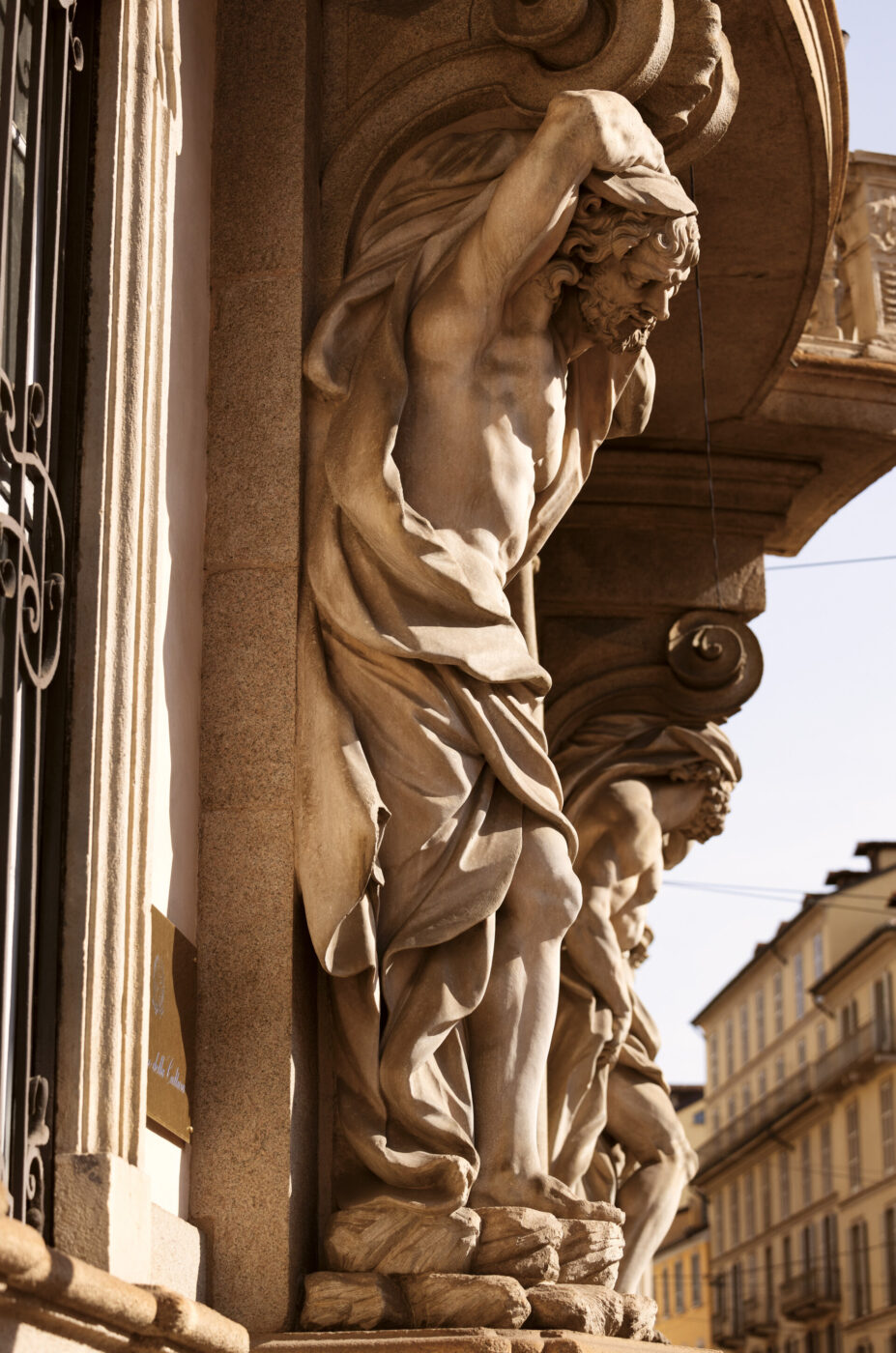
Schuman was never going to depict a picture-postcard Milan, but he’s aware of the appeal. “Of course, there’s the Galleria [Vittorio Emanuele II] in there,” he confesses with a grin; some things are unavoidable. After all, it wouldn’t be a faithful portrait without some of the classics. Variety is key; creating a portrait of a city isn’t a simple affair. Schuman’s aware he’s also entering a saturated marketplace. “There are a lot of books about Milan right now, and it’s a great moment for Milan. There’s the entryways book, and chic Milan, and inside Milan, but they’re very interior design and architecturally driven, not so much about the people, and I think the people are what make Milan really interesting.”
The book, too, contains some familiar famous faces, for who could resist a little Milanese royalty? There’s Miuccia Prada closing her show on the runway at Fashion Week and Barnaba Fornasetti at home. The late Vogue Italia editor Franca Sozzani is shown out and about, while her sister, the editor and gallerist Carla, is captured at work in her office, complete with its delicious patchwork of postcards on pinboards. Naturally, Schuman feels privileged that he’s able to open such doors, but it’s clear that, rather than leaning on his lofty fashion connections, he’s made a concerted effort to keep a balance. It’s not all about what he terms Milan’s “fancy fancy.” Yes, there are models and influencers, but he also includes unknown faces: students, hotel workers on a cigarette break, teenagers making TikToks, athletes at practice, commuters on their way to work, the unrivaled elegance of Italian nonnas on their daily passeggiate. It would have been unnatural to stray too far from the streets, the source of The Sartoralist’s success since it was founded 20 years ago.


“He notices people before they notice him,” says Gianluca Cantaro, who only realized he’d been immortalized by Schuman when he saw himself on The Sartorialist in 2007. At the time, he was working as Deputy Editor-in-Chief of L’Uomo Vogue, lingering on a Paris sidewalk outside a Givenchy presentation.
When it comes to capturing moments like these, timing is always key: “There were a lot of places that I would just keep an eye on,” Schuman muses. “Whether I was walking around or biking…I probably shot some places 20 times waiting for the right light, for the right thing.” This sense of timing, the feeling of a patient hunter stalking the streets, is part of what made The Sartorialist such a phenomenon in the early days of blogging. In a world before Instagram and algorithms, scouring the ecosystem of blogs online was one of the only ways to get an inside view into the industry, and Schuman’s eye was one of the most captivating, managing to strike the balance between chance moments and astute curatorial tableaux. In his introductory essay to the book, Cantaro praises the fact that in 20 years, Schuman’s images remain “remarkably consistent,” and it’s true. There’s a Sartorialist sensibility that remains untainted by time, a raw energy in his eye that continues to fascinate, an ability to distill a person’s style in a single shot.
Scott Schuman: Milan’s cover is a good example. What is Milan? A woman’s baby-blue heel, balanced upon the pedals of a bike. It’s a moment, a precipitation, a pause before motion, a scene of poise, practicality—or rather perfect impracticality—a detail that not everyone would push to the front and center. Yet it is the city distilled.
In this way, the book keeps the roots of The Sartorialist alive without denying the incredible access Schuman’s contacts now afford him. There’s a refreshing honesty in this, and it makes the publication richer for it. “There were some things I really had to fight for,” he confesses, though he won’t reveal exactly what. It’s incredible to think just how much the landscape in which Schuman originally began working has evolved. Today, he posts across a number of platforms, but print publications remain special. “When I put images on Instagram, it’s very chronological, and so to do a book, I get to put pictures I might have taken 20 years ago together with one I just took.” The process becomes a surreal kind of match-making: “I’m just constantly trying to see which ones work well together. When you find them, it’s like creating a perfect sentence.”

As always with street photography, it’s the moments of serendipity that hit the hardest. One of Schuman’s favorite moments within the book is what he affectionately calls “the blue section.” In the dusk of twilight, he’d captured a dark green edicola, illuminated, a box of neatly ordered books set against the darkening blue sky. Across the page, there’s an old man who just happened to be walking by with a blue coat in the same shade of sky: “They’re shot at totally different times, years apart, but they just look so perfect together.”
These moments don’t make themselves. “If you’re a real street photographer, you’ve just got to go out and do it,” he says. No matter the time, no matter the weather—Schuman gestures outside: “Do it today, on a gray day. All these things are legitimate and beautiful in their own ways. You have to try and find the beauty in what that is… even though it might be a gray day, I might find somebody great, or just a moment that’s great. You just have to accept that and try.”
It’s this unwavering faith that really comes across in Schuman’s work, a belief in the beauty of the everyday. In a city like Milan, this devotion becomes, like its population, densely concentrated. Tortoiseshell sunglasses, a woven beanie, a pair of sparkling wedge heels—every person, knowingly or not, carries markers that make them who they are. For Schuman, the challenge lies in capturing them, no matter how fleeting the acquaintance may be. “That’s the part I really like about it,” he says, smiling, “It’s having to make those fast decisions like, ‘Okay, I’ve got a person. I’ve got this scene. This is where the light is. This is the setting.’ Then quickly, I’ve got to figure out: ‘How do I make the best of this situation?’”