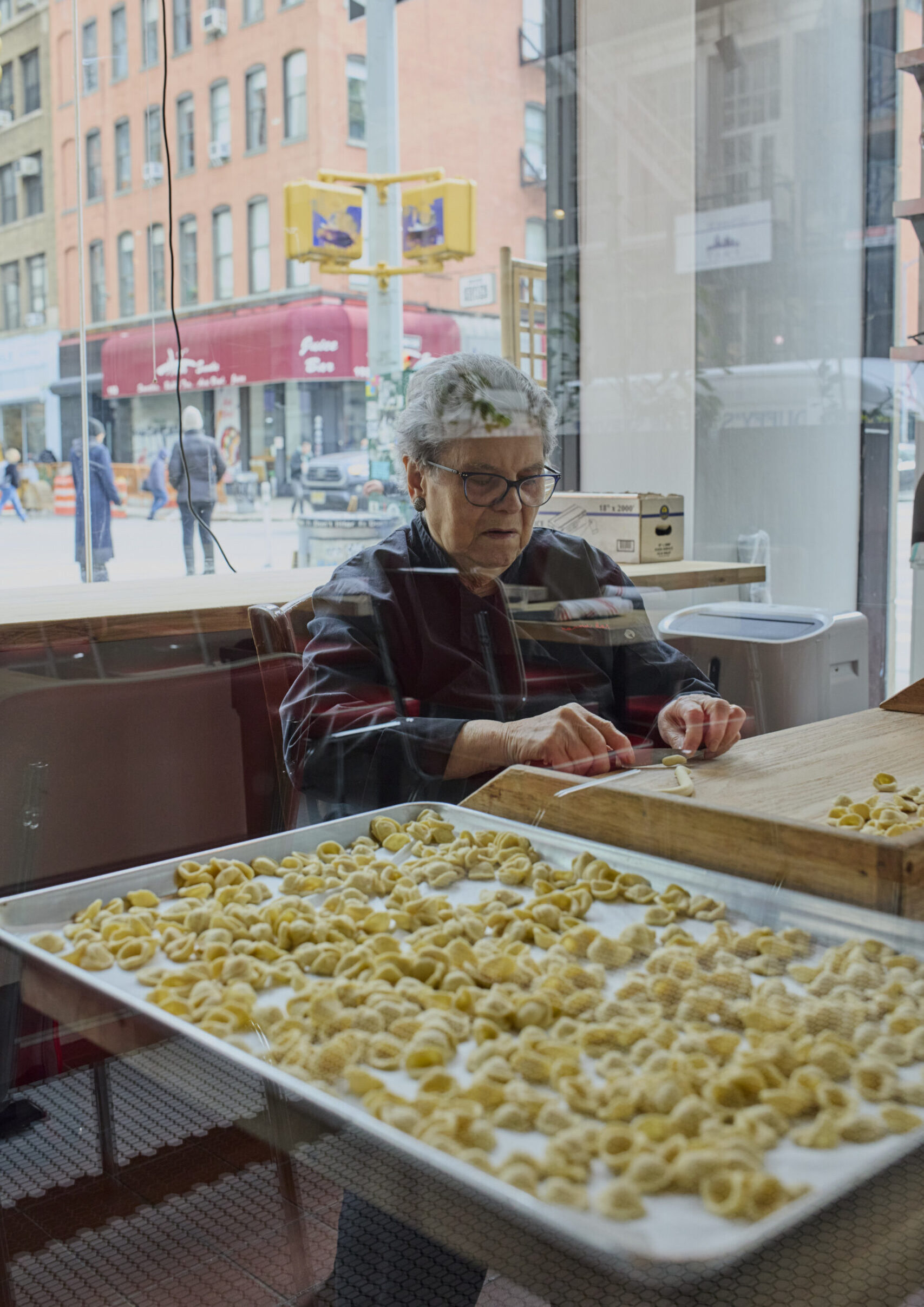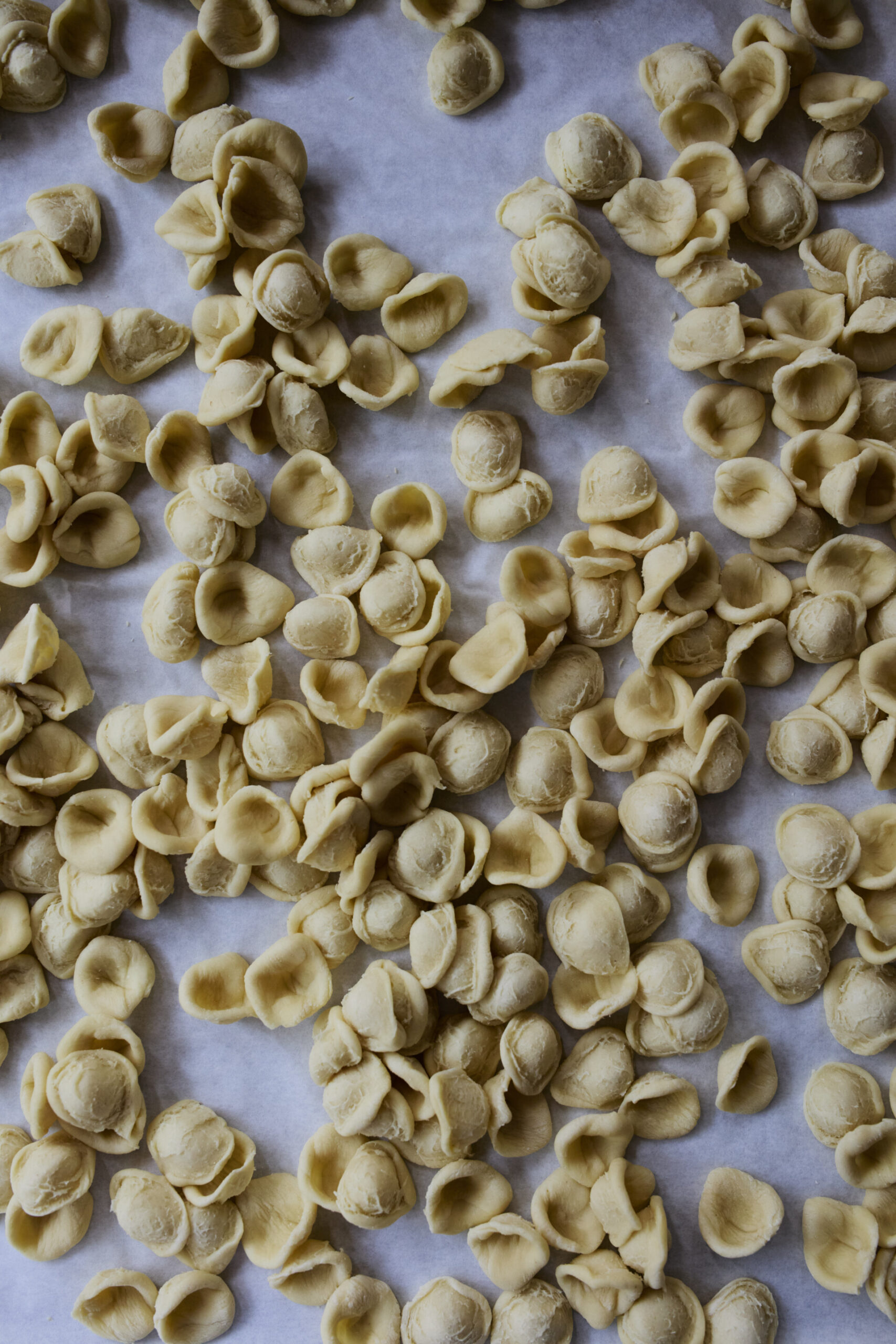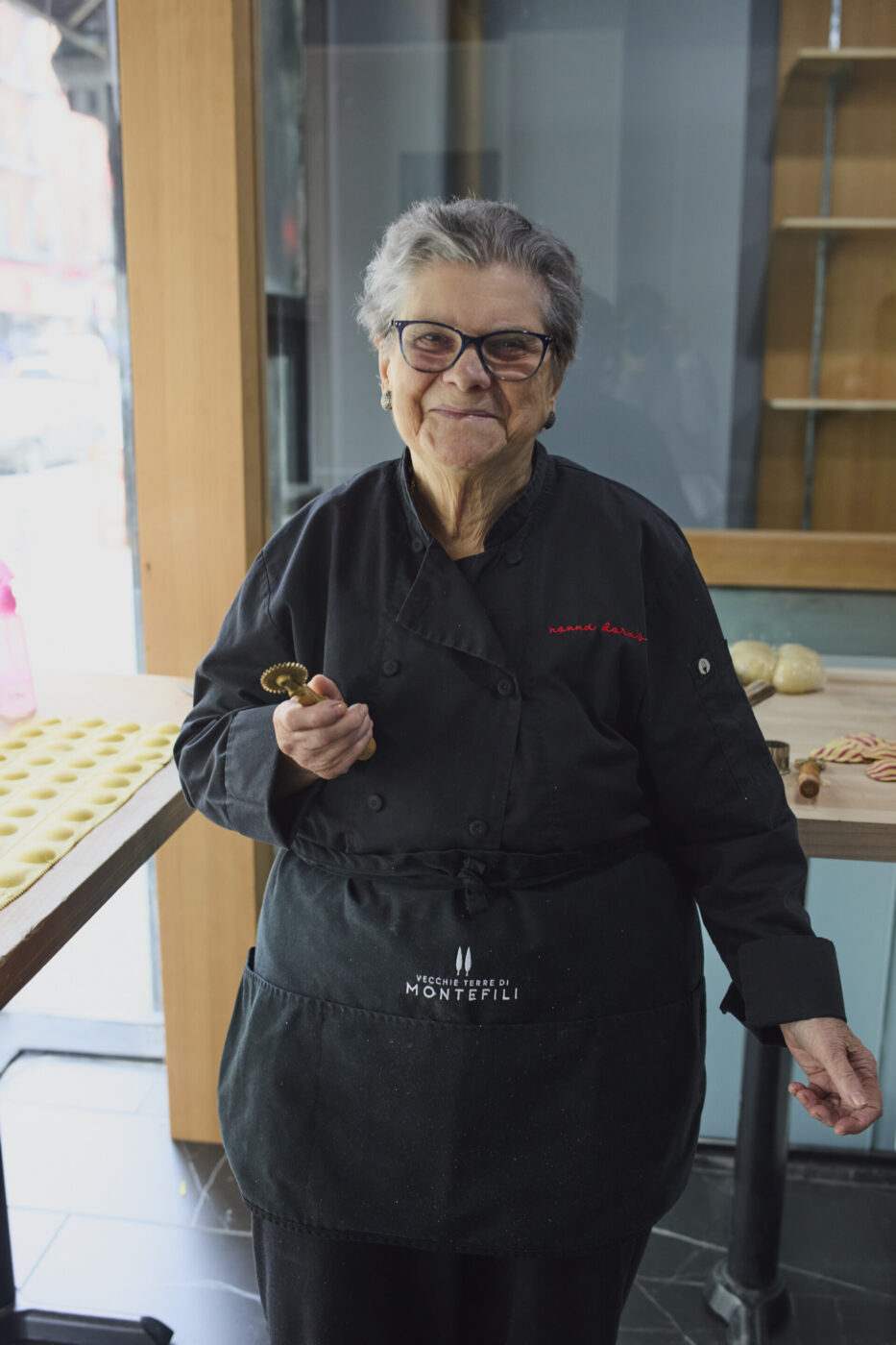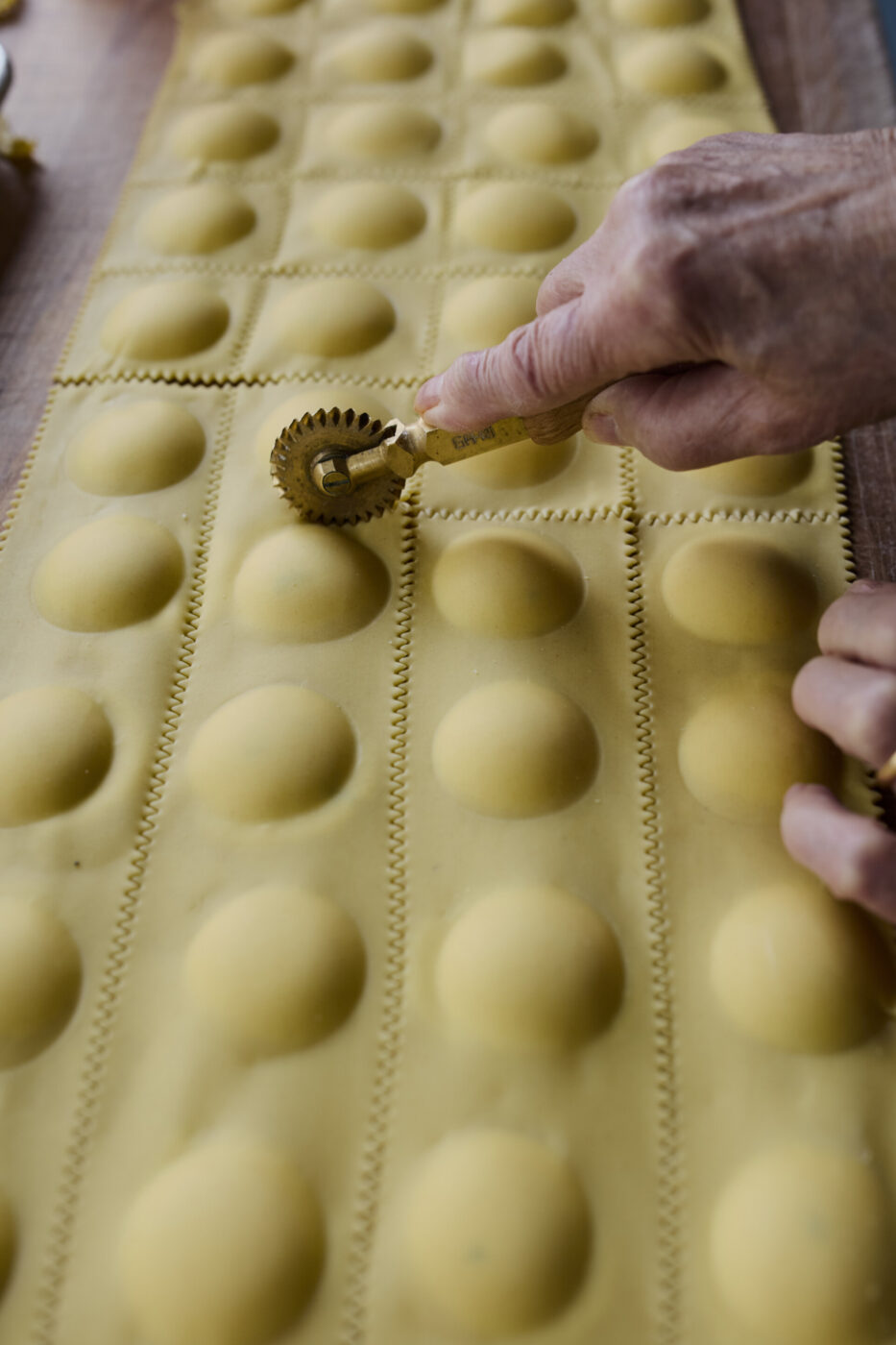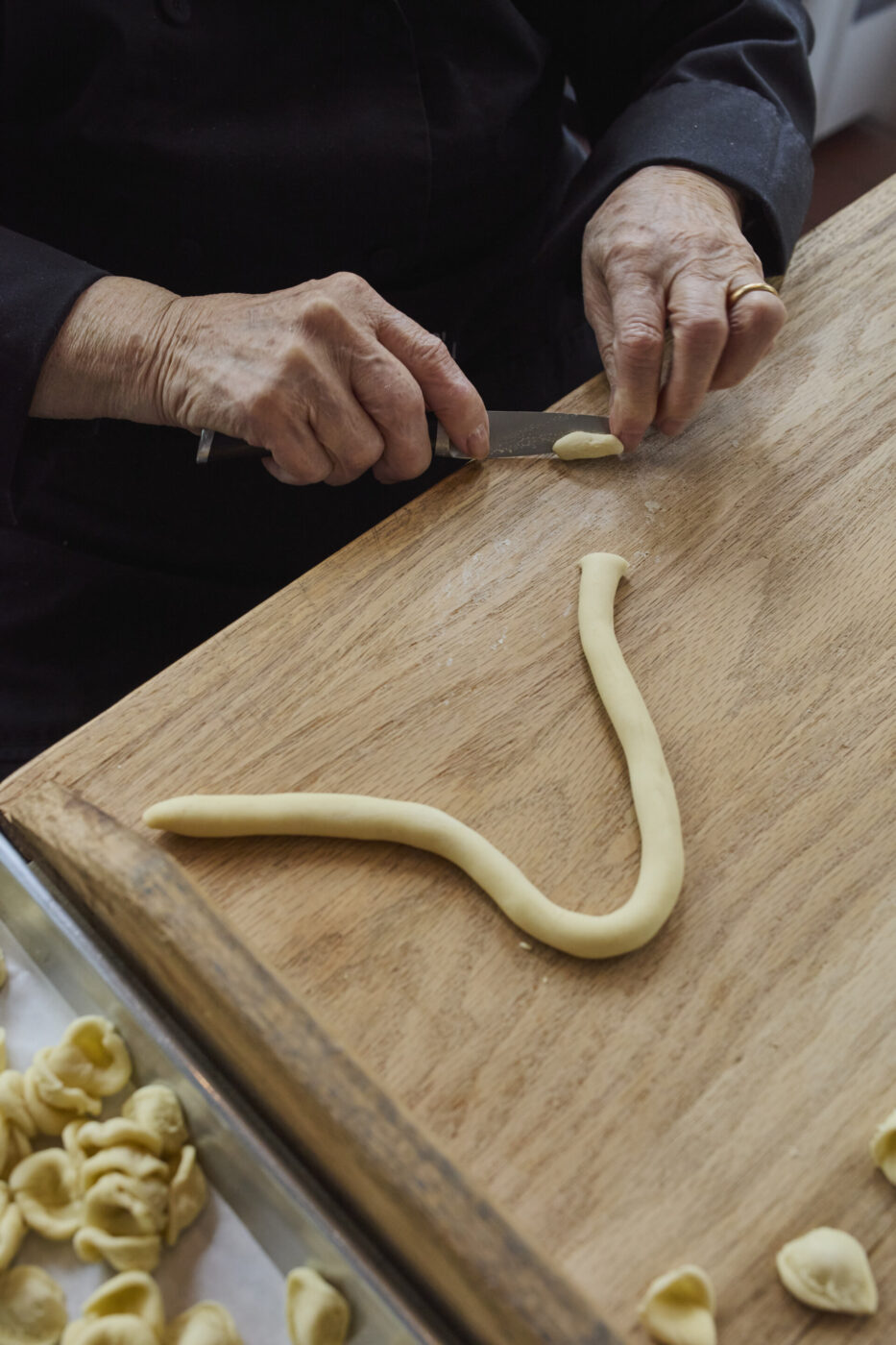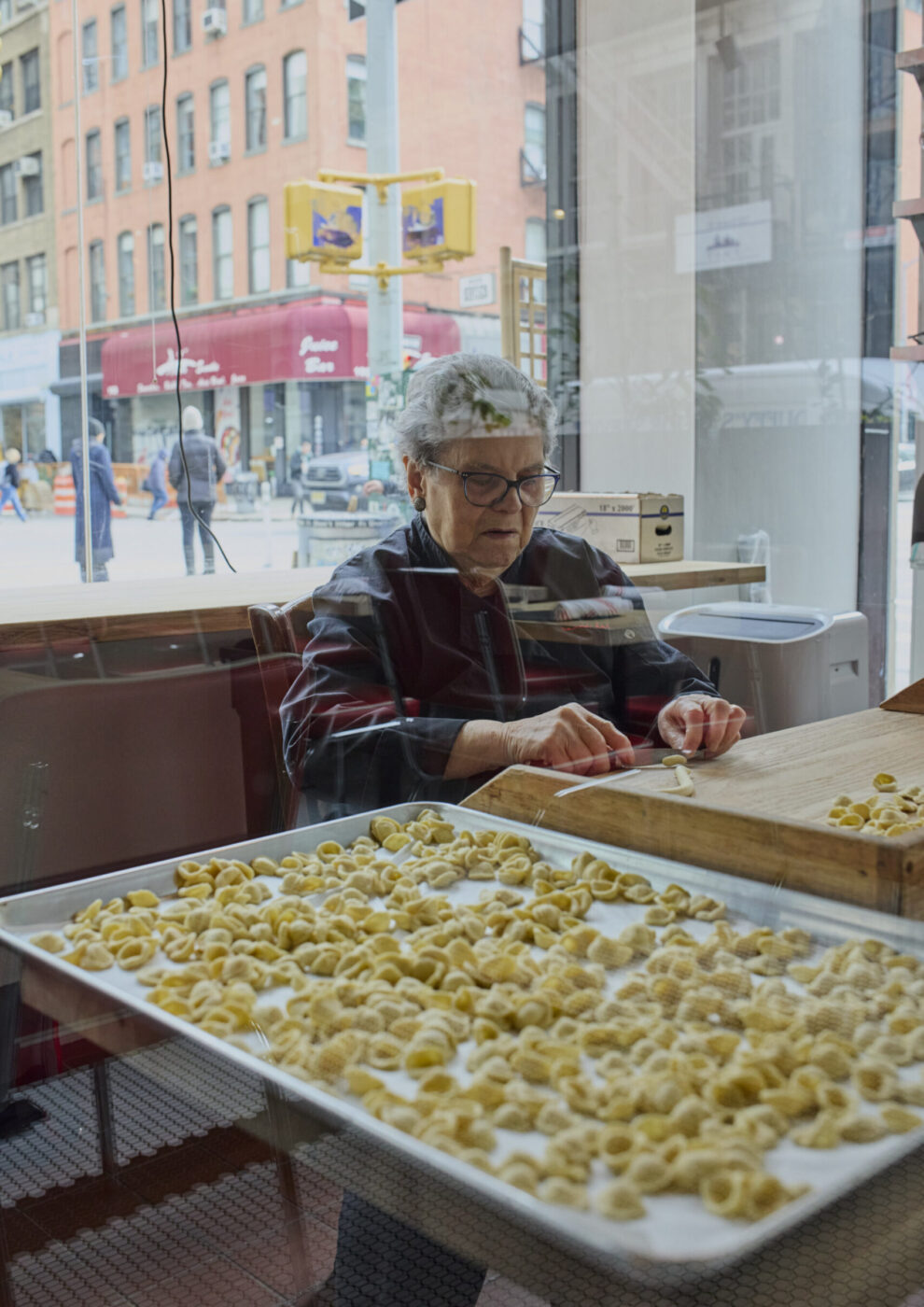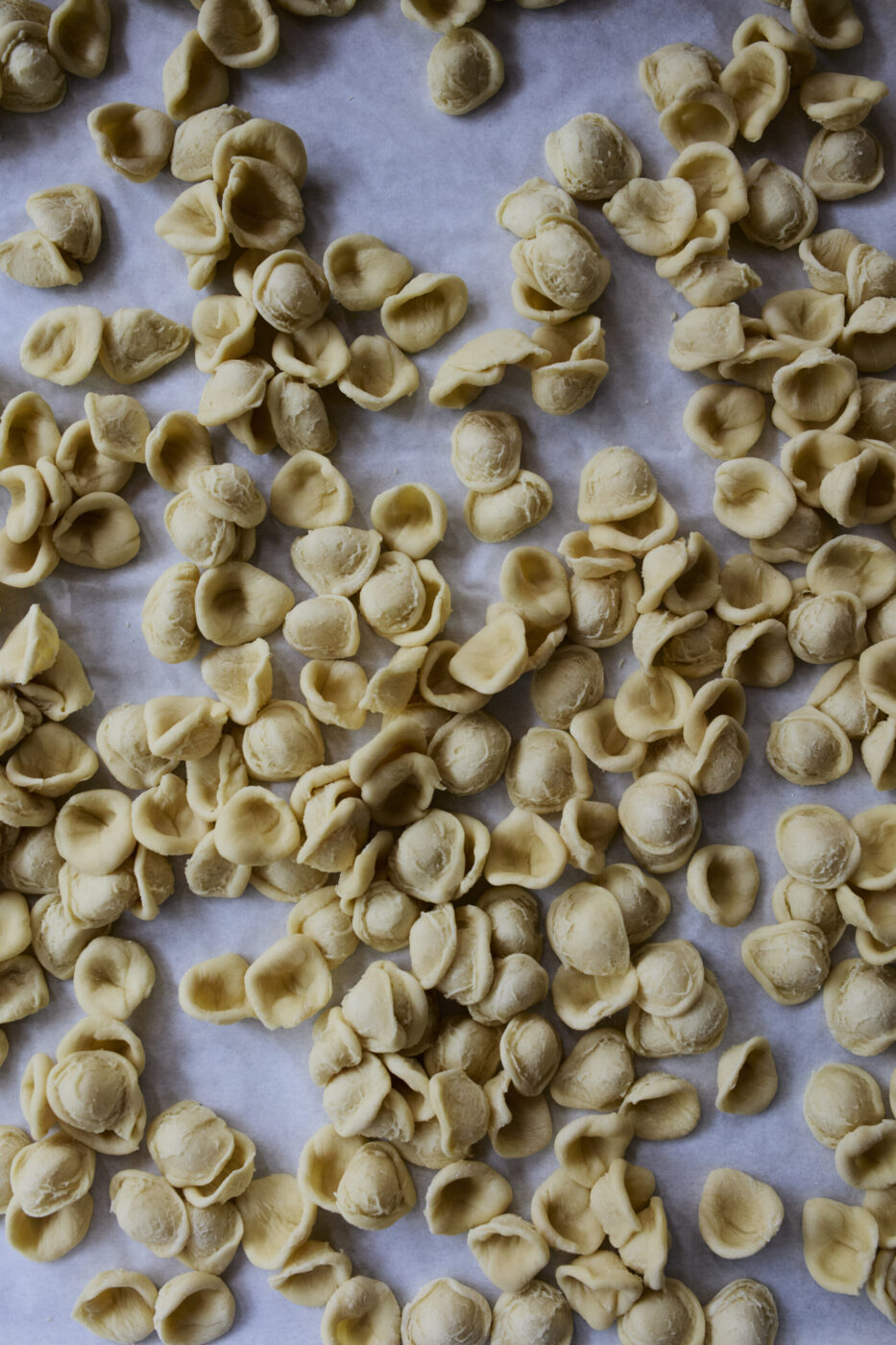
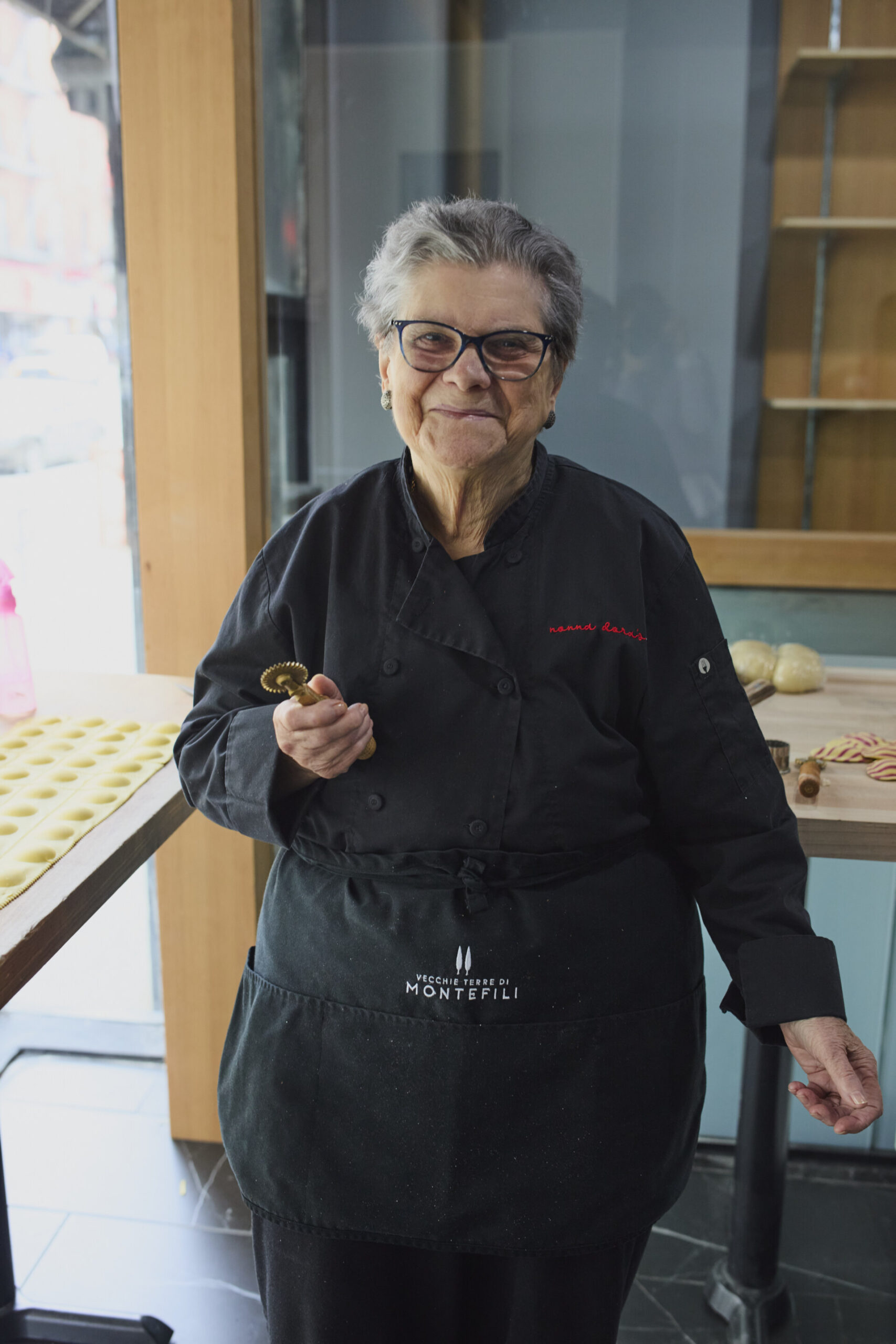
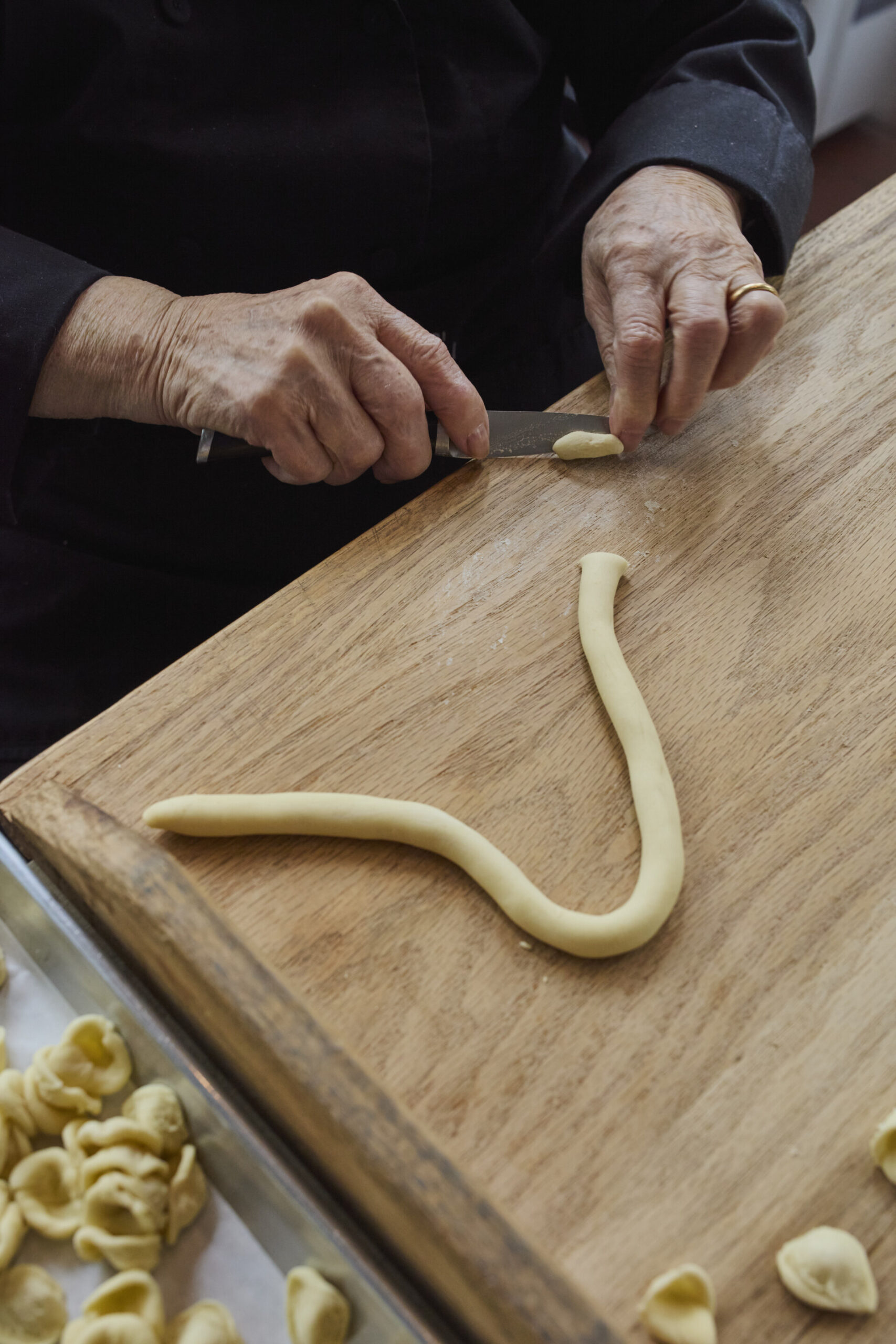
It’s a brisk day in New York City when I find myself standing out front 200 Church Street. Inside, framed by the window glass and late-day sunlight, an older woman sits at a makeshift workstation, absorbed in her work. Her hands move quickly. Shapeless dough becomes long ropes, then small squares. With a flick of her knife and a turn of her thumb, each piece transforms into perfectly shaped tiny ears, or orecchiette.
The woman is Addolorata Marzovilla. The restaurant is Nonna Dora’s in Tribeca. Having turned 91 at the end of March, Dora is a sweet, comforting presence—as her archetype would lead you to believe—but she’s also one badass Italian grandmother still hard at work, still making pasta the way she has always done it: by hand, without shortcuts, and without fuss. She makes pasta so perfectly, in fact, that her son and business partner, Nicola, once had to ask her to mess it up a bit so customers would know it was handmade.
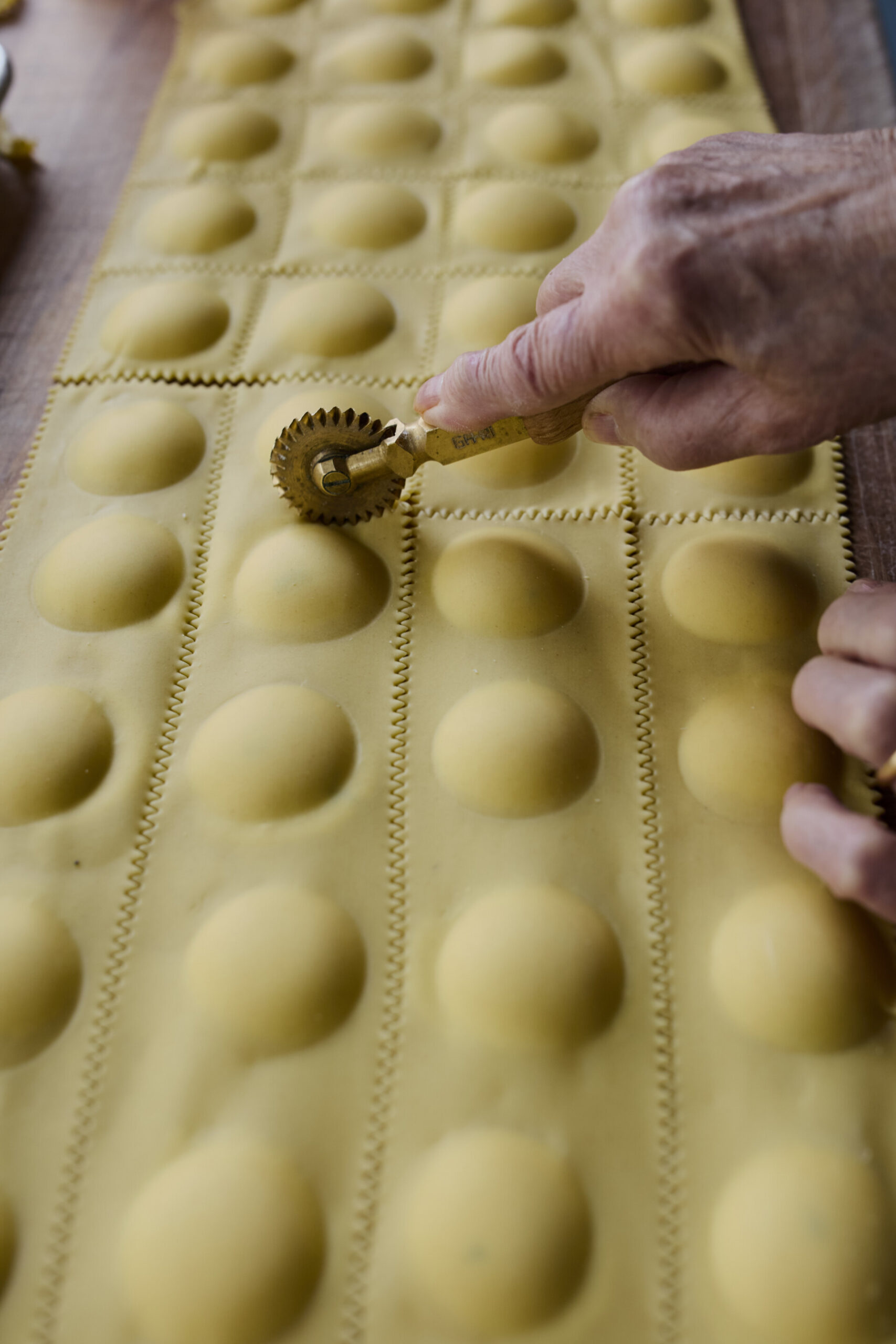
Dora immigrated from Puglia to the Bronx in the 1970s with her husband, their four children, and just $2,500 to their name. Having worked as a seamstress since the fifth grade, Dora eventually “left her needlework for noodles” in 1994 when Nicola opened I Trulli in Gramercy Park. The Pugliese eatery became an instant neighborhood favorite largely because of Dora, who spent five to six hours a day rolling out orecchiette, gnocchi, and malloreddus for delighted diners. When that space closed in 2022, they pivoted to an intimate, 22-seat pasta bar in Kips Bay.
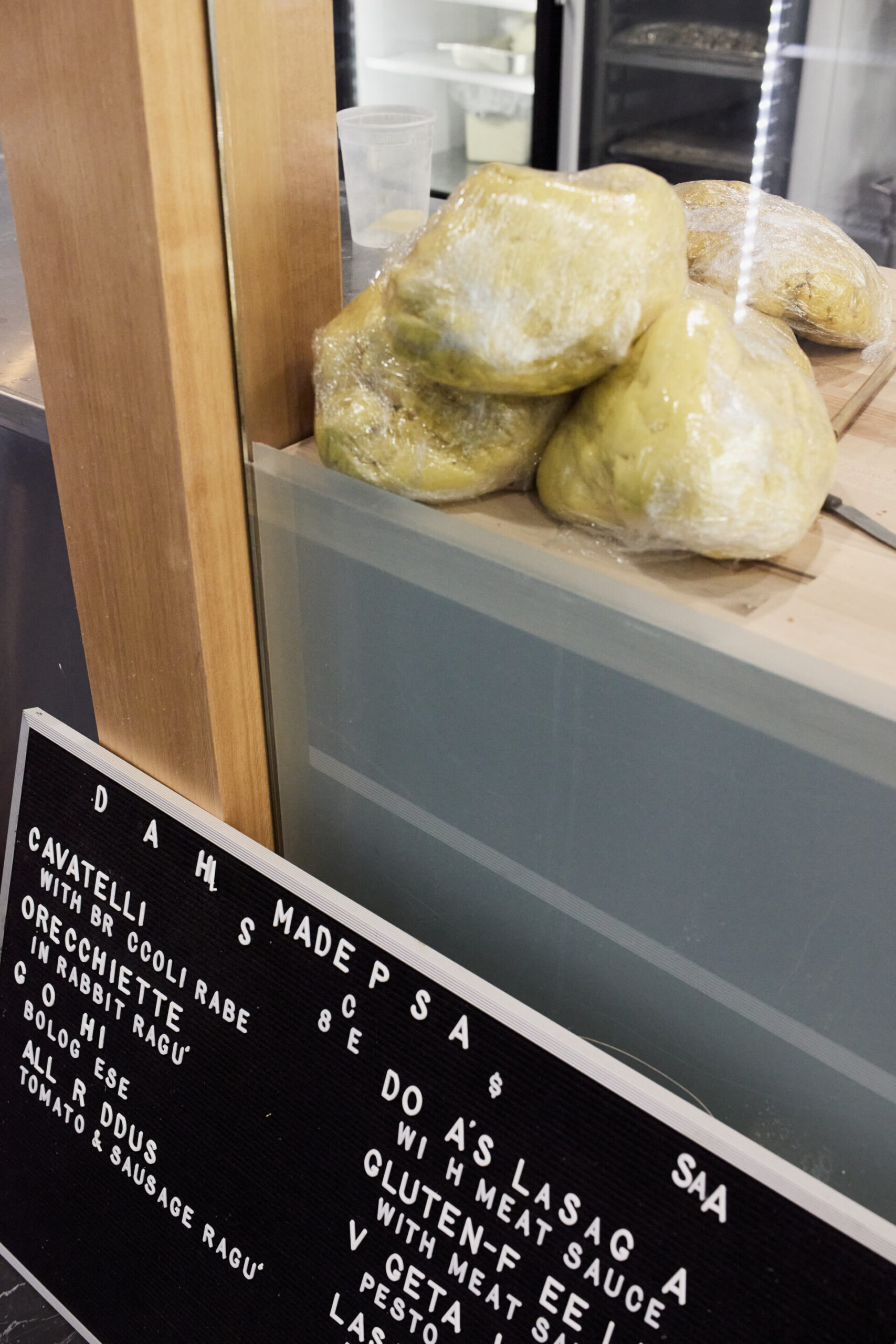
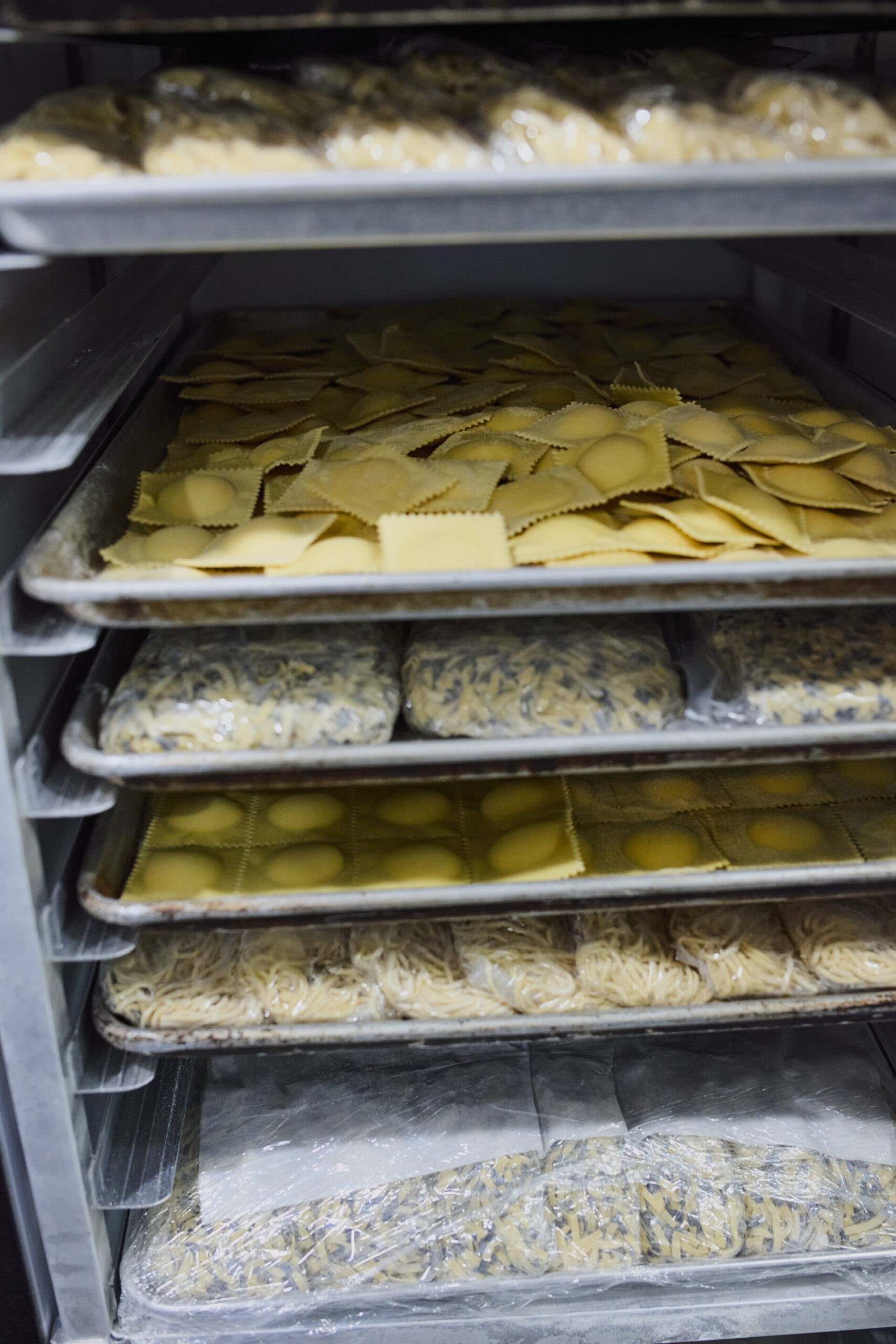
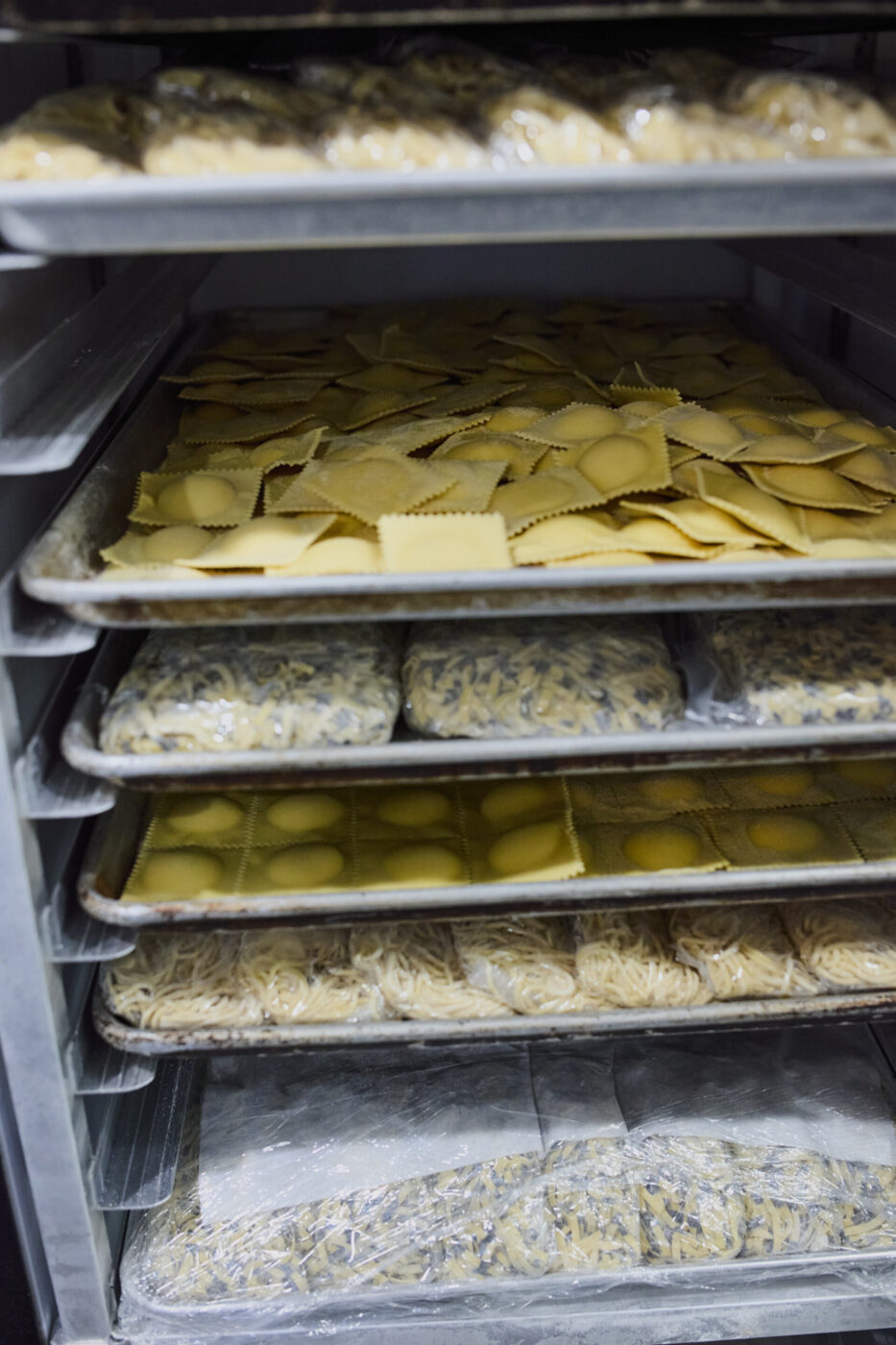
Dora’s local fame skyrocketed to a global scale when she became the first non-Italian resident featured on the hit YouTube channel Pasta Grannies. The resulting viral buzz and cult following quickly outgrew the tiny Kips Bay spot, prompting Nicola to secure a 10-year lease on the former Tribeca Kitchen space on Church Street. Now aptly named Nonna Dora’s Tribeca, the new location features an expanded dining room and a team of hard-working women whom Dora personally trained to hand-shape 15 pasta varieties daily, from cavatelli, which gets tossed with broccoli rabe and toasted almonds, to pappardelle, which gets coated in wild boar ragù. Yet, Dora remains front and center, dough in hand, inside her glass-windowed kitchen. Over a shared lunch of orecchiette with rabbit ragu and the classic Pugliese dish ceci e tria, Nonna Dora, joined by her children Nicola and Carmela, opens up about her lifelong craft and the fierce regionality of Italian cooking.
Jacqueline Tobin: Who is the woman behind the Nona Dora name and brand?
Nonna Dora: It’s simple: I’m just a grandmother who loves to cook and feed her family. That’s who I am. Handmade pasta is my tradition. Tradition matters. My heritage matters. I like making customers fresh pasta whenever I can. That’s it.
JT: Sounds simple enough, but can you take us from Addolorata, the little girl, to the grandmother everyone knows who taxis to her day job four or five days a week?
ND: I grew up in Puglia. In my house, you learned to make pasta by hand. I can vividly recall being seven years old, standing in the kitchen, and watching my mother and sister make the pasta. I was mesmerized. I started with cavatelli; for me, it was easier than orecchiette. It was thicker. I really felt the dough. You learn by feeling it. There was no recipe, no machines. Just my hands. I always worked with my hands. First, as a seamstress in Italy. Then, in New York, for Oscar de la Renta. After my husband died, I didn’t want to stay home alone, so I went back to the pasta. The pasta keeps me busy and around people all day. I like that. I can’t stay home and do nothing.
JT: How did you go from kneading dough and making fresh pasta in your son’s restaurant to opening your own pasta bar to this restaurant?
ND: When Nicola opened I Trulli in 1994, I followed him. Every night I made 10 to 20 pounds of pasta by hand, often with an audience watching. That’s where Nonna Dora was born. After Nicola closed I Trulli, I opened Nonna Dora’s in Kip’s Bay; Nicola was my adviser.
Eventually, a YouTube show called Pasta Grannies found me and filmed me here in New York. It was fun. After that came local press, social media buzz, and a following that carried over to our tiny but beloved pasta bar. It was never a family-style restaurant. Still, everyone shared pastas, ordering two or three at a time. Over the next three years, demand outgrew the small space, and now here I am on Church Street, in the window, making the pasta.
JT: Is there something you feel Americans haven’t understood about Italian pasta culture?
ND: I’ll start by saying that fettuccine alfredo is not an Italian dish. It’s American. You can find it in Italy, sure, but mostly because tourists ask for it. We don’t have it on the menu here. Spaghetti and meatballs? Not an authentic Italian dish in the way you would think, but people like it, so my son put it on the menu, almost as a joke at first; it took him 32 years to do it. But it’s a bestseller, so we keep it on.
My meatballs are simple but delicious: chopped beef, eggs, breadcrumbs, and milk. I also like to eat meatballs. I like to eat pasta. But I don’t like to eat my meatballs on top of the pasta. We serve it with the meatballs on the bottom and the spaghetti on top.
JT: So, how do you decide what belongs on the menu and what doesn’t?
ND: We like to stay far away from what Nicola calls “bastardized” pasta dishes. Cacio e pepe is everywhere, so we don’t serve it. We take a dish you think you know and do it our own way, and a lot of that comes from where we come from. When you eat with us, you eat like we eat in Italy. Take our coffee, for example. You ask for a coffee here, you get an espresso; that’s it. No cappuccino, no macchiato, no a latte… just espresso.
Recently, though, we started offering gluten-free, handmade pasta after my grandson developed a gluten intolerance. We always have at least 10 gluten-free shapes, plus gluten-free bread and gluten-free meatballs made with gluten-free breadcrumbs.
JT: You are known for your orecchiette. What would you say to people who aren’t intimidated by making pasta from scratch?
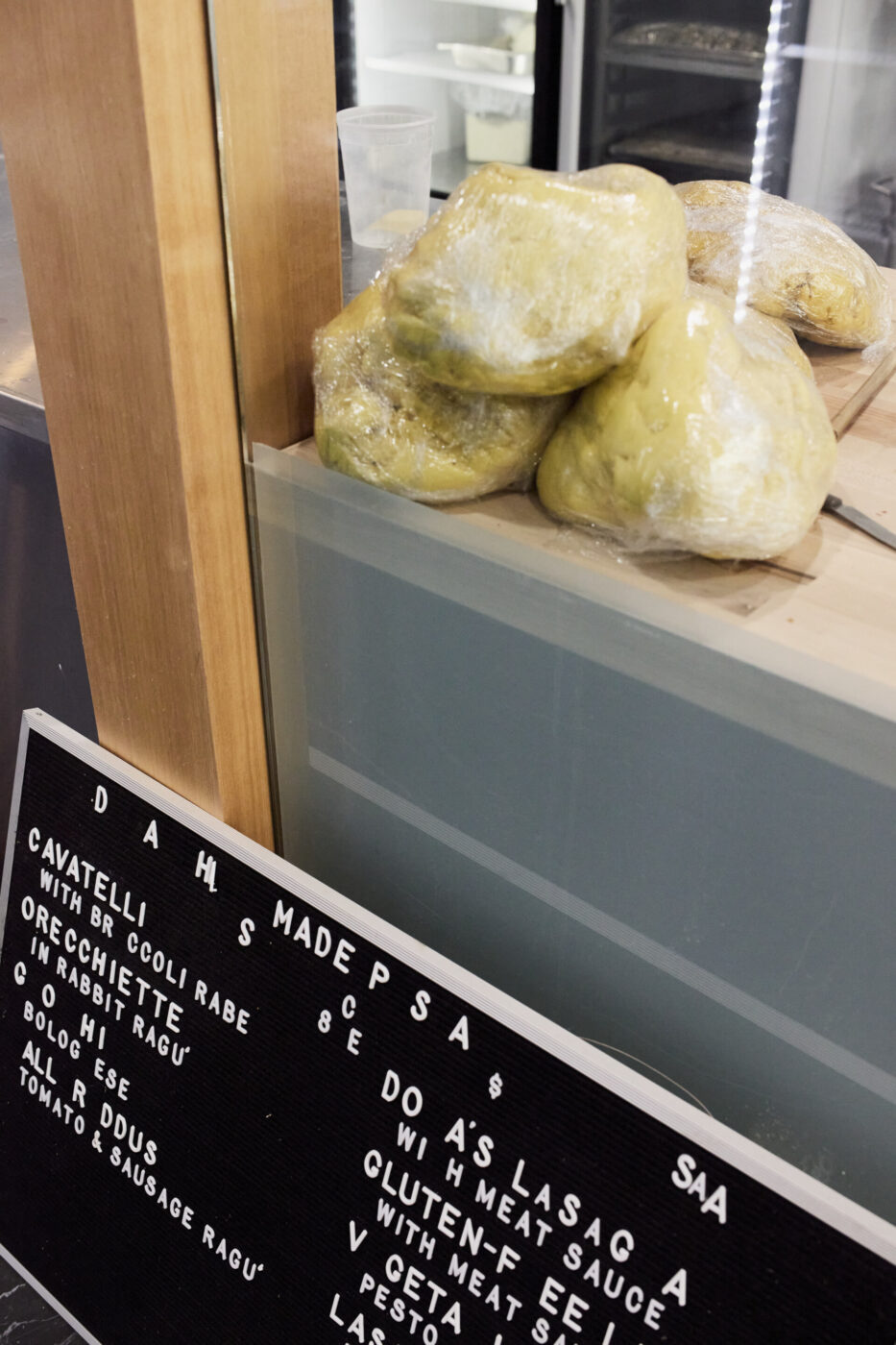
ND: I don’t know why they’re afraid. It starts with the dough. Semolina, not white flour, then water and a little salt; that’s it. Nothing to be intimidated by. You mix it, stretch it, wrap it in plastic, and let it rest. Then you make the shapes. It’s like Play-Doh. You have to find the right consistency. That’s what the water does. Don’t forget to add salt to the water: no salt, no flavor, no good.
JT: Beyond the orecchiette, you always have a large number of pastas on offer.
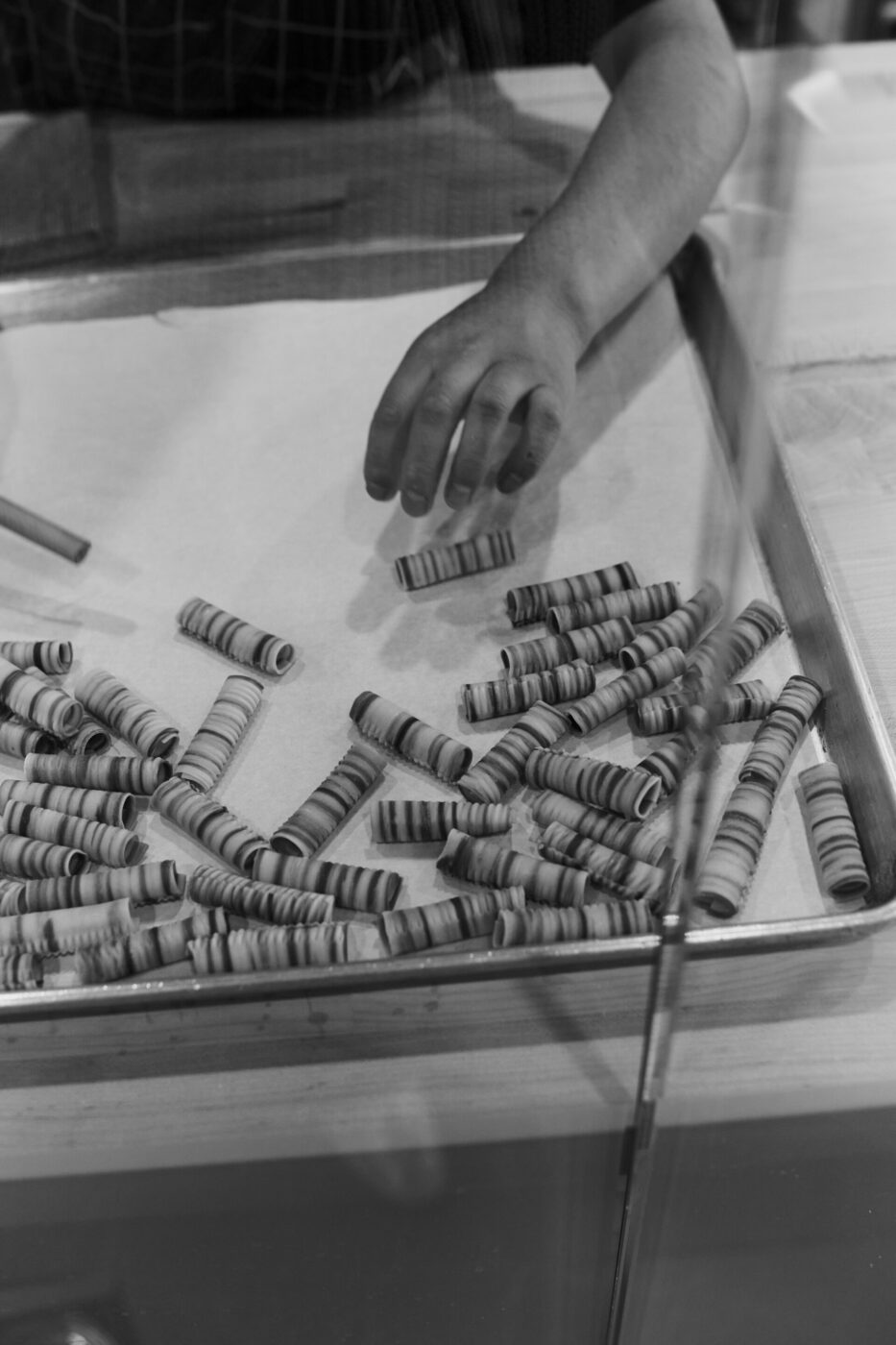
ND: At Nonna Dora’s Tribeca, we make about 15 shapes by hand every day—not just me but a team of dedicated women I trained. People think, “Ah, this exists in Italy, being able to order any of these pastas anywhere.” But no. In Italy, it would be impossible. There are 20 regions there. A Nonna from Puglia does not make cappelletti from Bologna. In Sicily, they are not making pappardelle. Everyone cooks what belongs to them.
JT: Do you have a favorite dish on the menu?
ND: The orecchiette with rabbit ragù, a dish that’s native to Puglia. And the ceci e tria, a simple dish made with pasta and chickpeas. Who doesn’t like chickpeas? The fried pasta portion of the dish is crunchy, like a wonton; very satisfying.
And oh, the panzerotti. We start and end the meal with it. First, stuffed with mozzarella, and later with Nutella. It’s the same dough, but the Nutella comes out hot, and it squirts. You have to take your bites carefully.
JT: And what would you recommend for someone who wants to try something new?
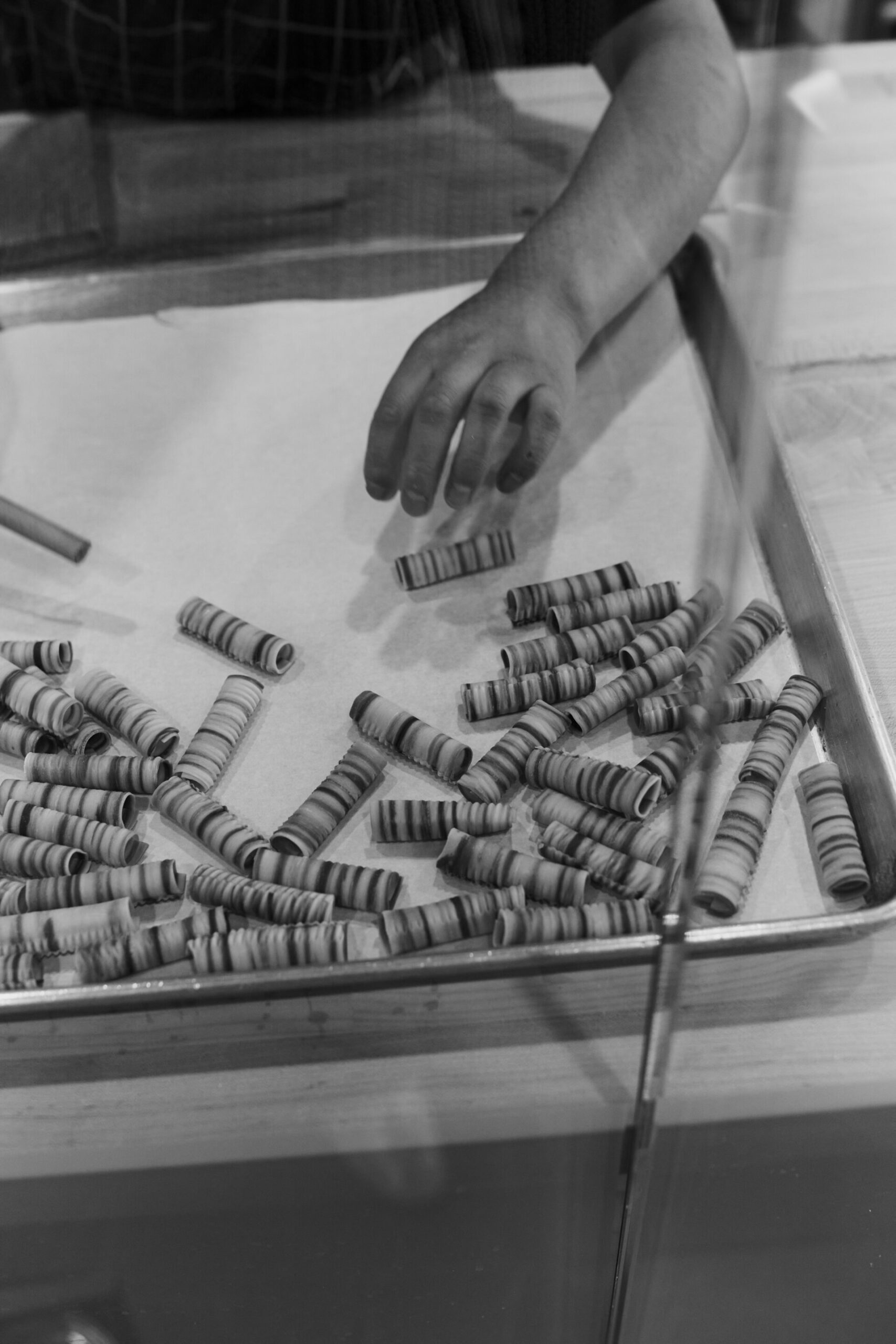
ND: The malloreddus with a saffron seasoning and pork sausage. Or the maccheroncini grano arso, which is a burnt wheat pasta with duck confit and peas.
JT: Why do you think people stop, watch, and feel inspired by you?
ND: Well, it’s not because I’m doing anything special; I’m just doing what I love to do. People tell me they are amazed by me, by how fast I make the pasta, by how I still do it by hand and not with machines. I think people like to watch me make the pasta because they see something they’re afraid of losing. Nostalgia. Tradition. I tell them the most important thing is family. Family and pasta! When people eat here, we don’t want them to feel like they’re in a restaurant. I want it to feel like home. Nothing complicated. As Nicola likes to say, if there are more than three or four ingredients in a dish and it’s not minestrone, there’s a problem.