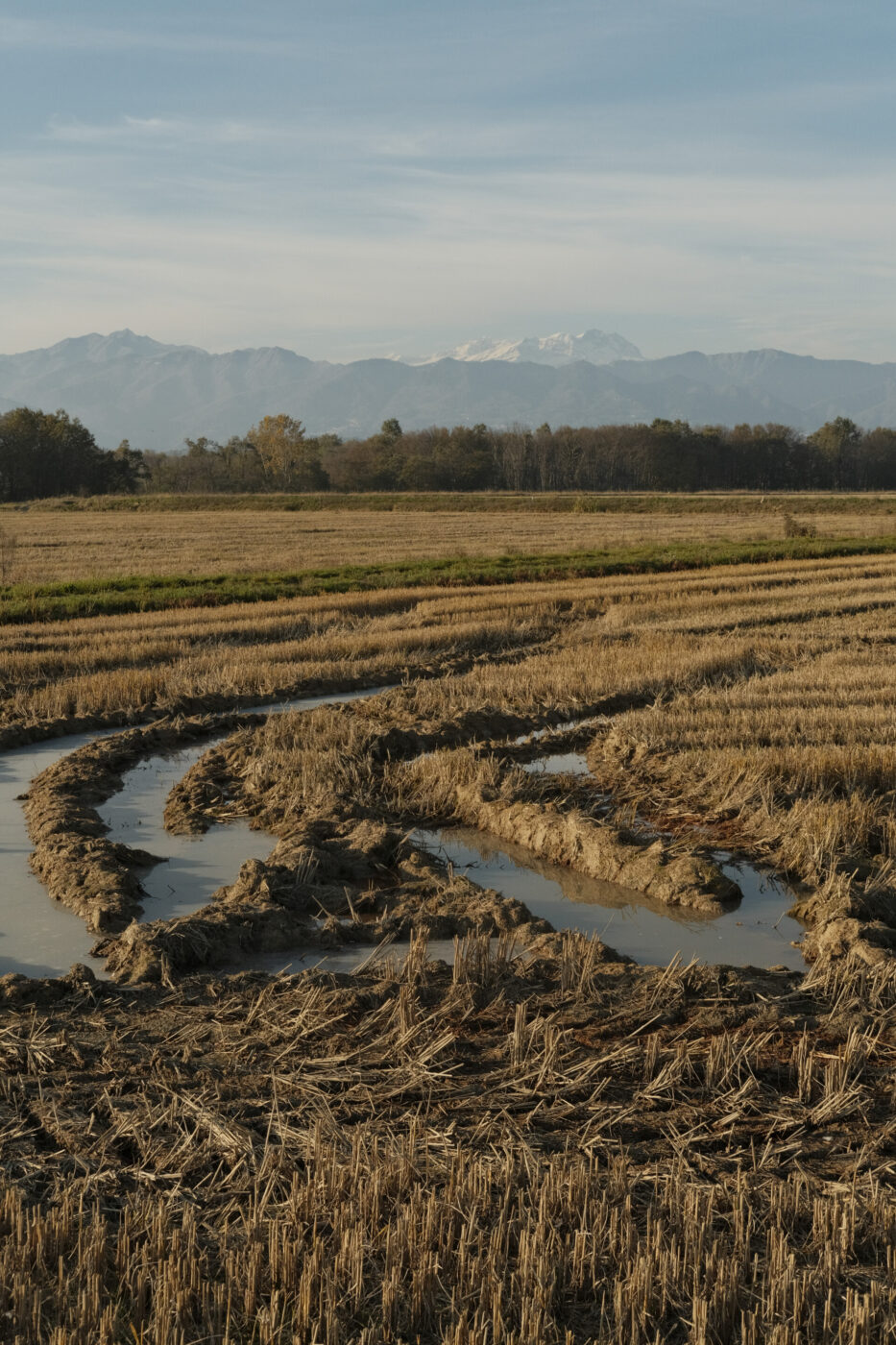
Every time I was upset as a child, which happened quite often, my grandmother, without a word (words aren’t needed with grandmothers), would disappear into the kitchen and make me some riso al latte. This rice pudding was the comfort food of my childhood. I don’t know what the secret behind it was: the sugary taste of milk lingering on my tongue afterwards, or the fact that my grandma had made it for me. Probably the latter.
I’m not the only one to have fond memories related to rice and grandmothers, of course; it’s quite a shared experience among my friends in Reggio Emilia, where I’m from in Emilia-Romagna. While the region between Bologna and Parma is world-renowned for the likes of lasagna and tortellini, rice is equally at home here, even in desserts like the popular torta di riso—a cake with a creamy, rice pudding-like interior scented with lemon zest or vanilla.
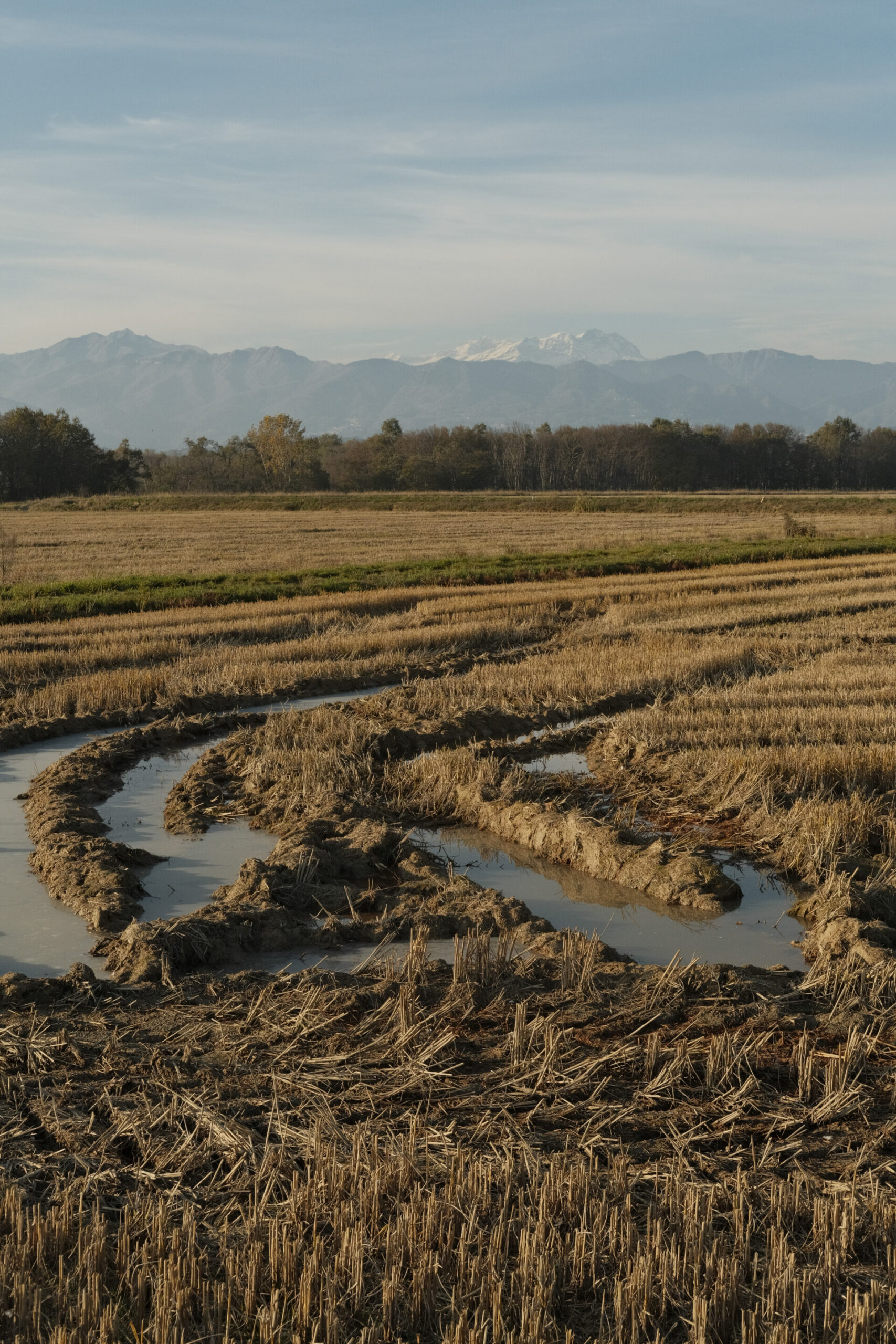
Though not the first cereal that comes to mind when thinking of Italy, rice dominates European production, with Italy yielding 1.3 million tons annually—half the EU total—and exporting 53% of that. This massive output is driven by the fertile Po Valley, the heart of which is Vercelli (the “European capital of rice”), where rice cultivation dates back to the 15th century. This region produces premier risotto grains like Arborio and Sant’Andrea and is the top producer of Carnaroli, a prized postwar hybrid developed in neighboring Lombardy.
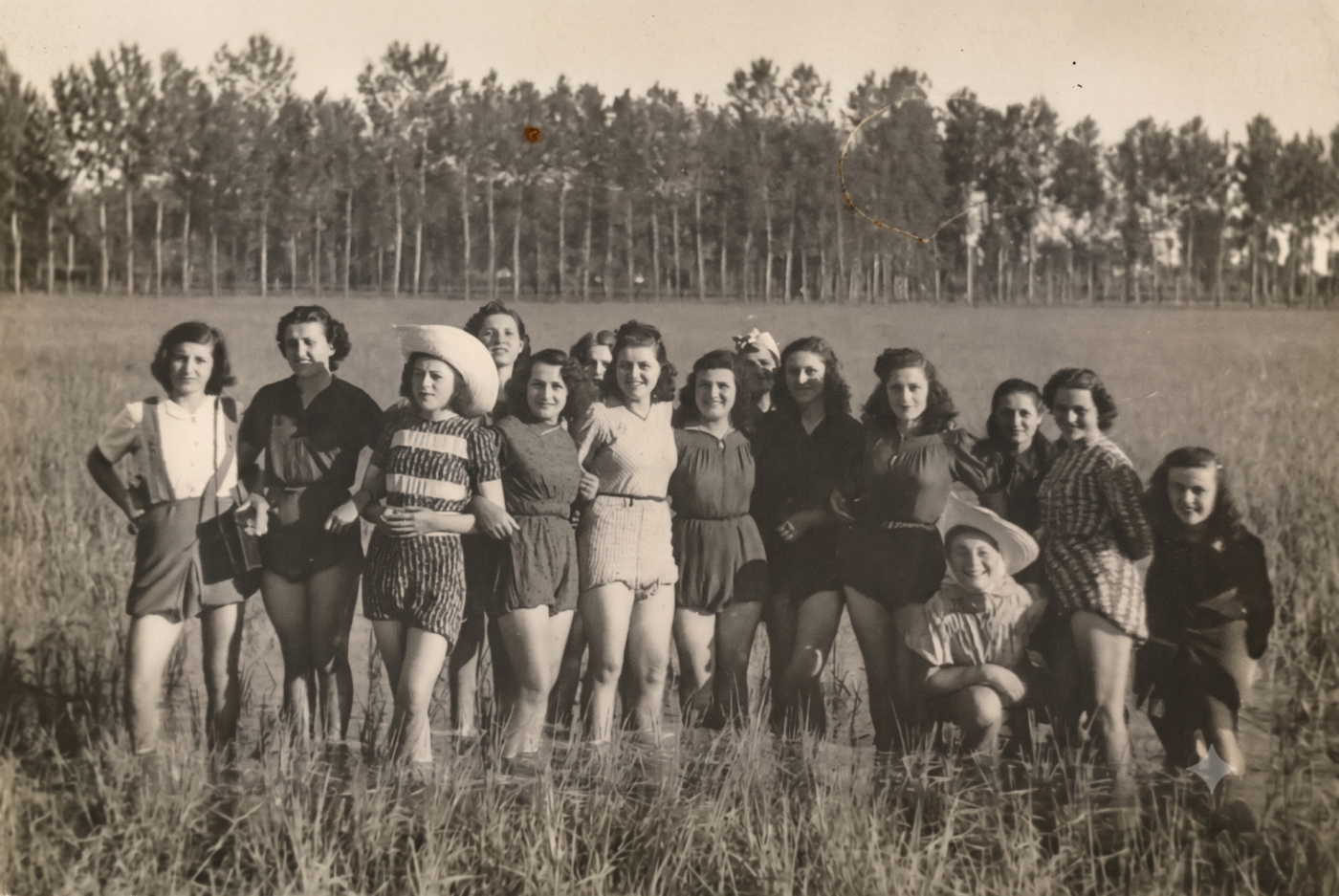
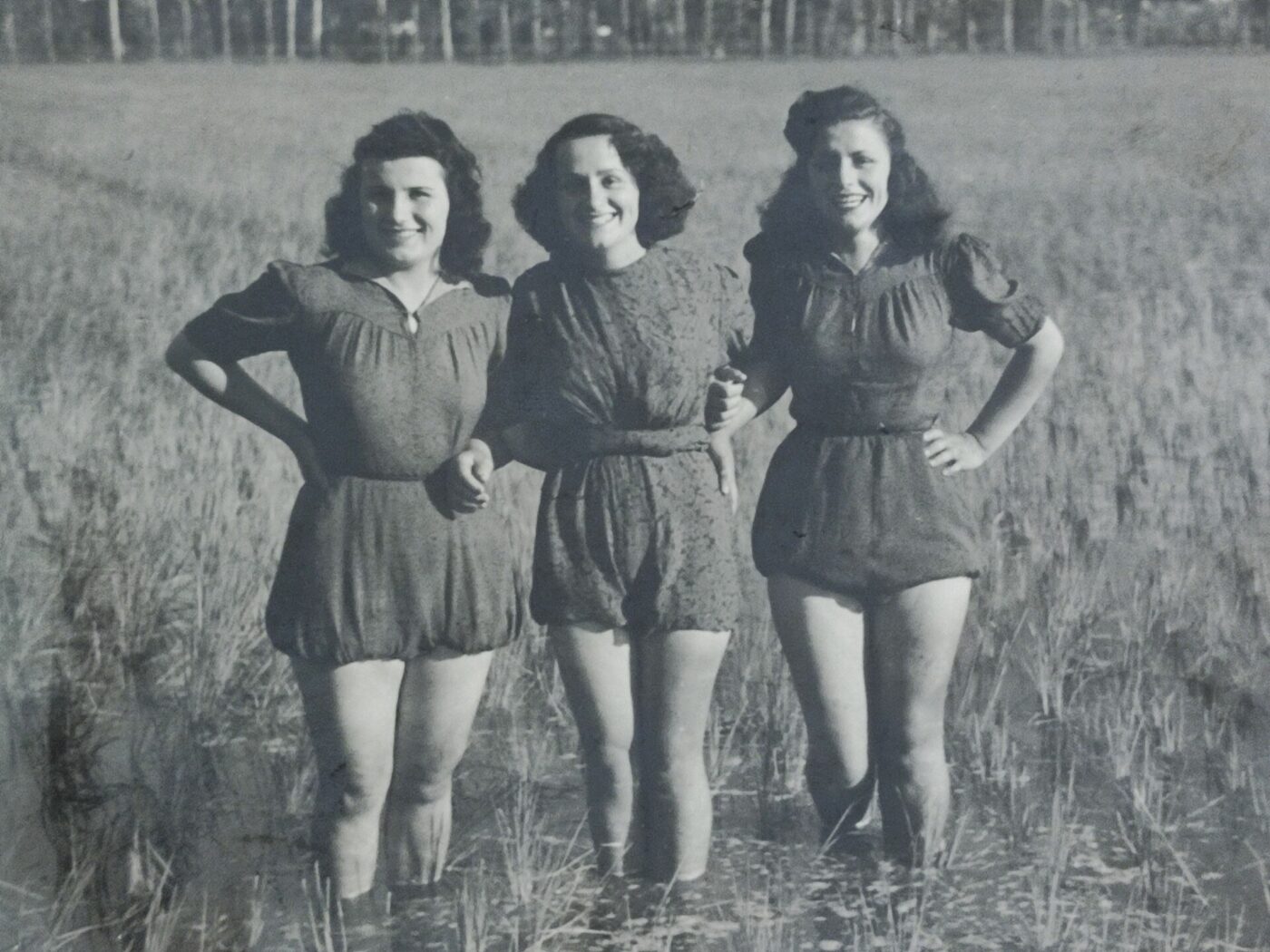
“The water snakes…” recounts my own grandmother, born in 1924, who spent many months in her 20s working barefoot with water up to her knees in Vercelli’s rice fields. “They weren’t poisonous, but I was so scared of them!” She was one of tens of thousands of young women who migrated annually to the “rice belt” of Vercelli, Novara, and Pavia to work in the local paddies from the late 19th to the mid-20th century and who would go on to become labor pioneers, winning historic milestones from the eight-hour workday to foundational healthcare protections.
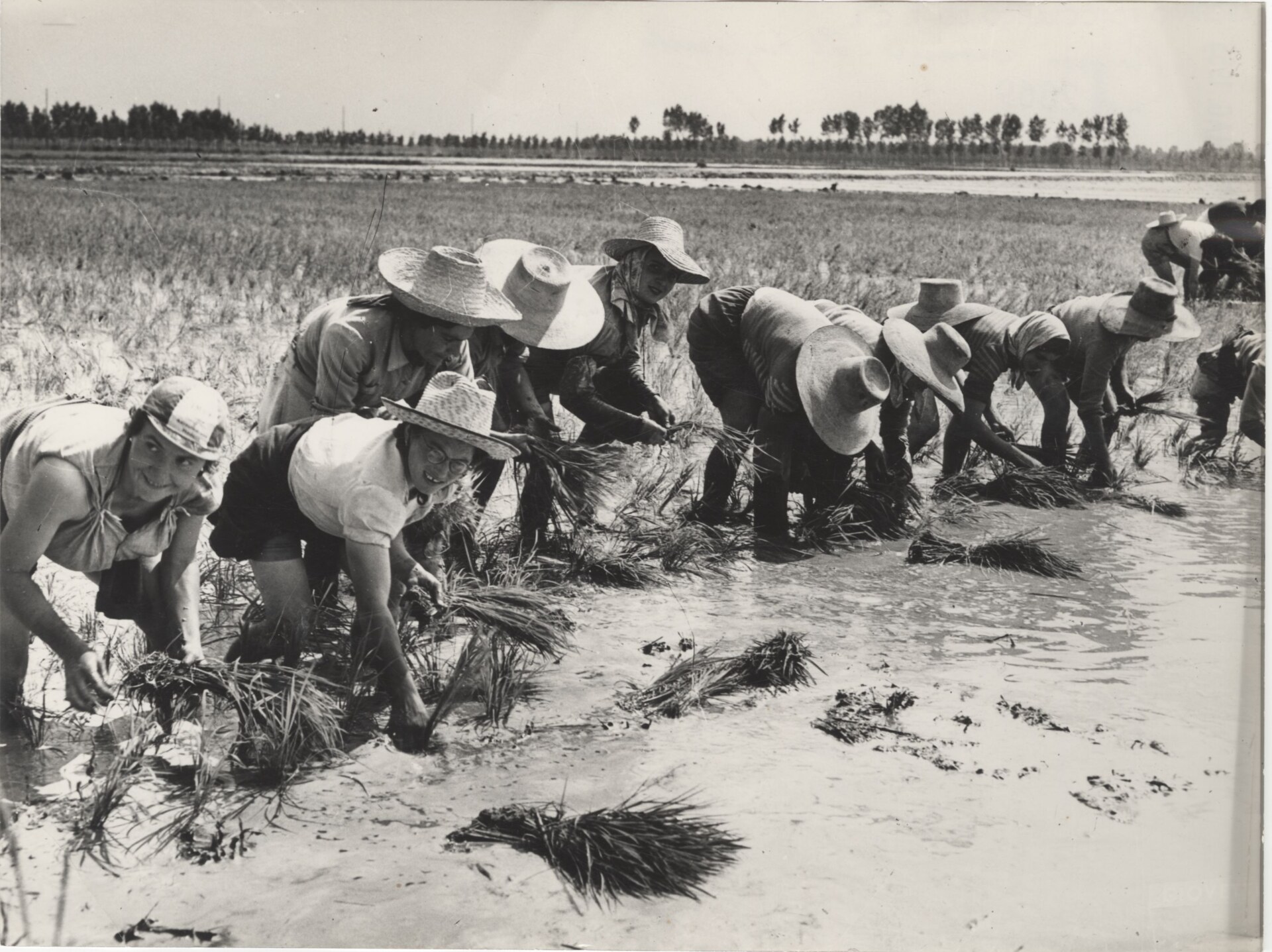
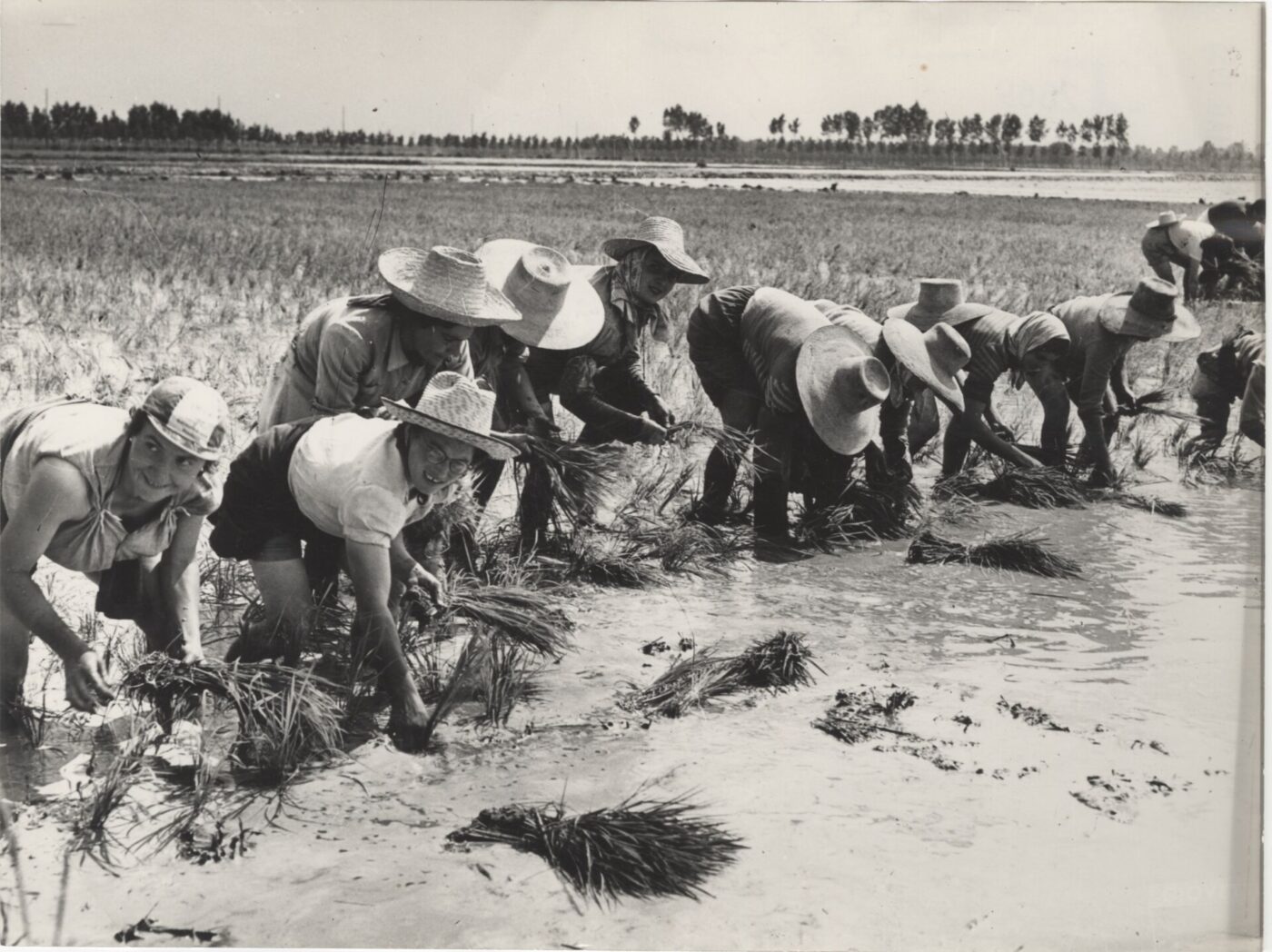
The mondine at work; Touring Club Italiano, CC BY-SA 4.0, via Wikimedia Commons
Known as mondine, these women and girls—aged 14 to 65, as per the law—lived and worked together for 40 days a year between late April and July. The name mondine comes from mondare (to weed), their core task alongside transplanting seedlings. This seasonal work coincided with the flooding season, which protected young shoots from temperature shocks. Supervised by a padrone (master), they worked grueling eight- to 12-hour shifts—barefoot, backs bent in ankle-deep water, and plagued by swarming mosquitoes, leeches, and the aforementioned water snakes. Their grueling labor earned meager wages, peaking at just 1.00 to 1.50 liras per day after World War II.
In the essay La fatica delle donne. Storie di mondine (2005) by Marco Minardi, trade-unionist Ada Mazzolini from Parma recalled that “mondine lived under unthinkable conditions,” separated from partners and children. To cope, “the bubbliest girls would sing to lift everybody’s spirits and also to kill time,” because “life in the rice fields was terrible.”
Writer Renata Viganò documented similar stoicism in her short volume Mondine (1952), interviewing a worker who shrugged off a leg wound, badly infected by the muddy water, with a simple, “It’s nothing.” Hunger was equally relentless. In La fatica delle donne, former mondina Maria Zuccheri recalled her daily routine, which included waking up at 5:30 AM for a breakfast of milk and bread. “I would bring with us a slice of salami to eat at 10 AM, when I could, because if the master was there, he would not allow us to eat.” At noon, lunch was just “rice, with bugs, or beans, who knows…” The brutal reality of the mondine was perhaps best captured in the 1948 film Riso amaro, starring Silvana Mangano, who later admitted she could never endure such a life in reality.
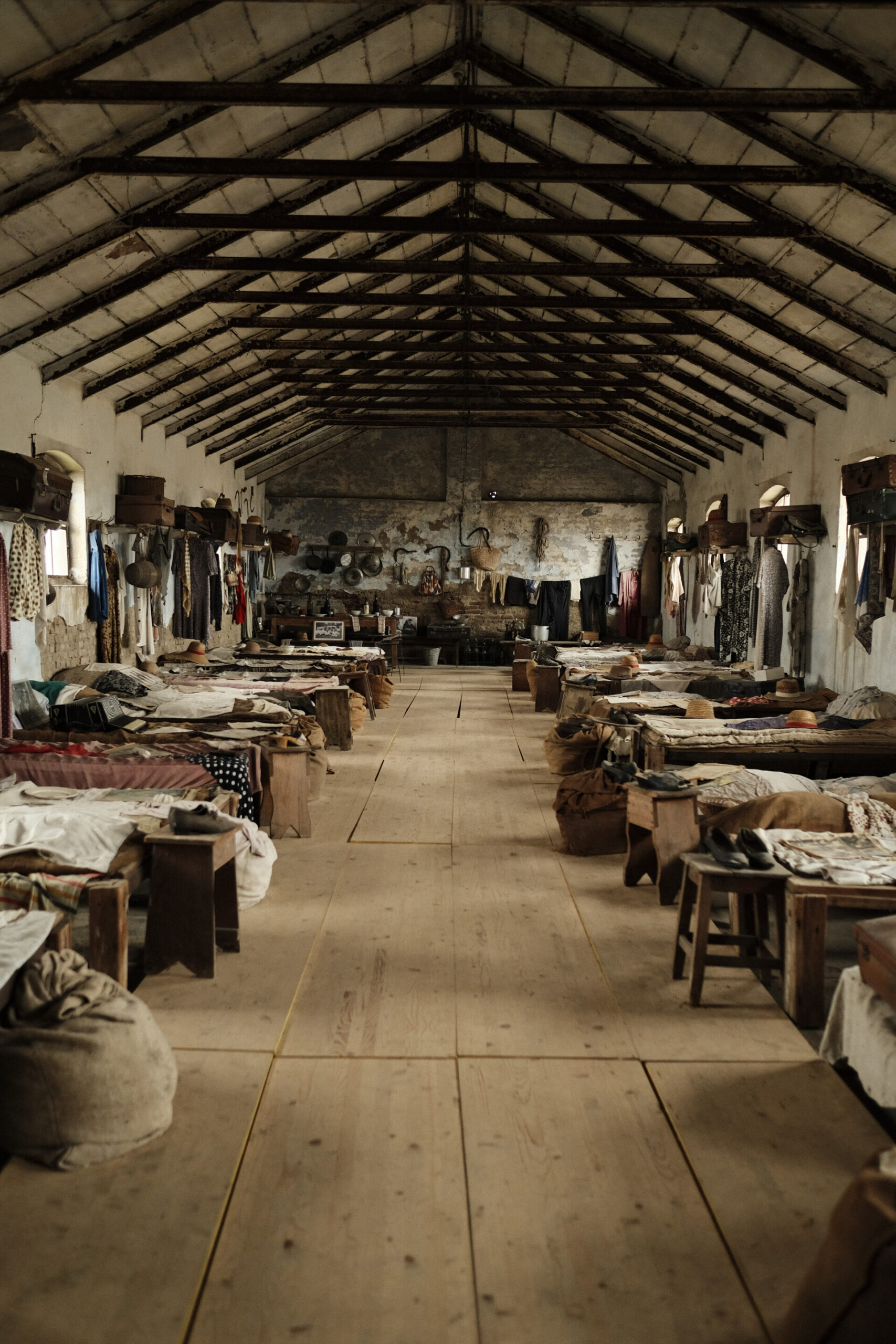
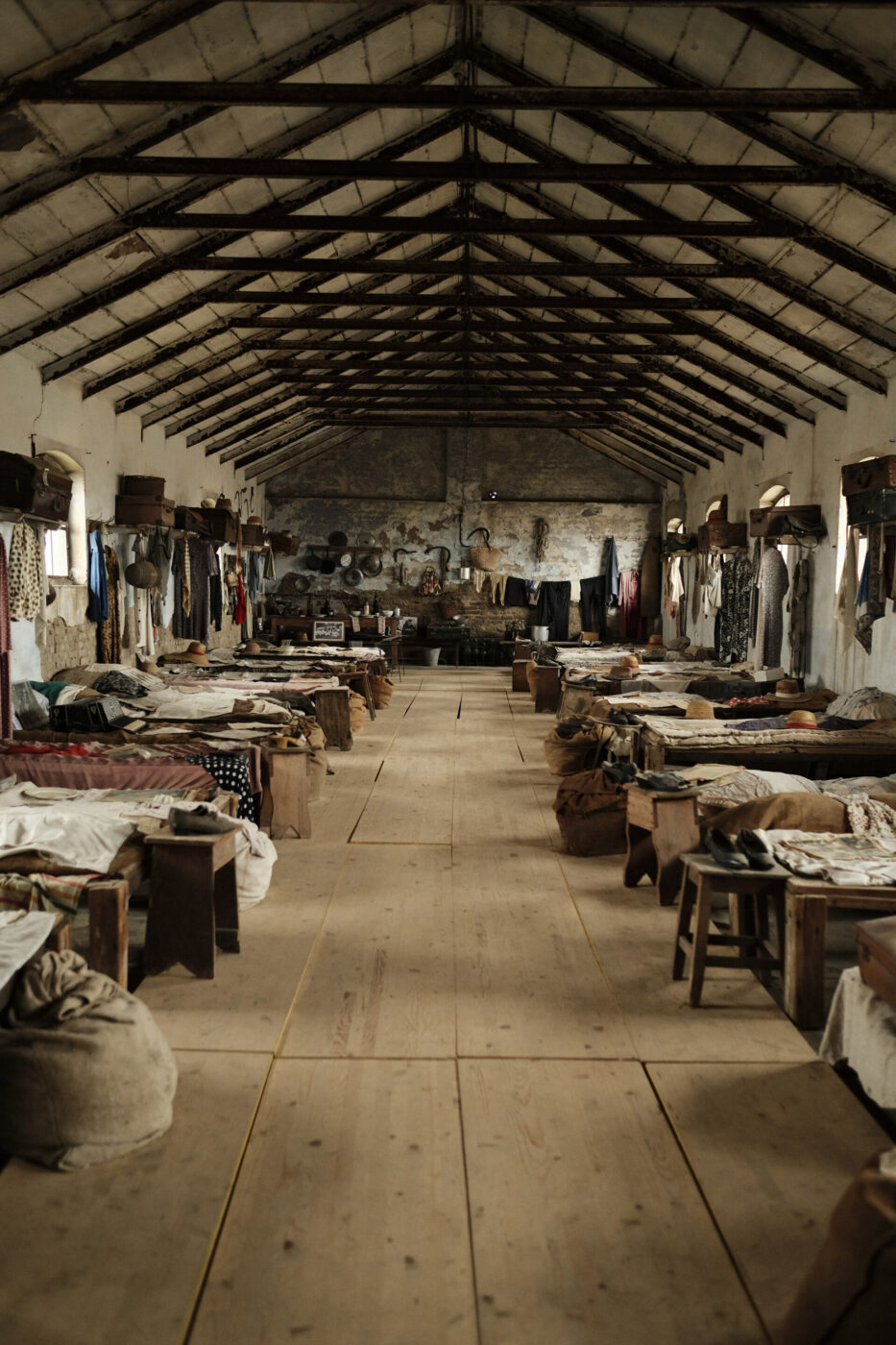
The mondine's barracks; Photo by Tommaso Serra.
Coming from Northern Italy’s poorest working-class families, these girls bore the brutal conditions for two reasons. First, they were driven by economic necessity wrapped in family pride; in La fatica delle donne, Velia Tarroni’s story is particularly striking—she endured the rice fields simply to afford her own dentures. Second, hardship was already a baseline for them. Most were already intimately acquainted with survival, and some even lived through two World Wars.
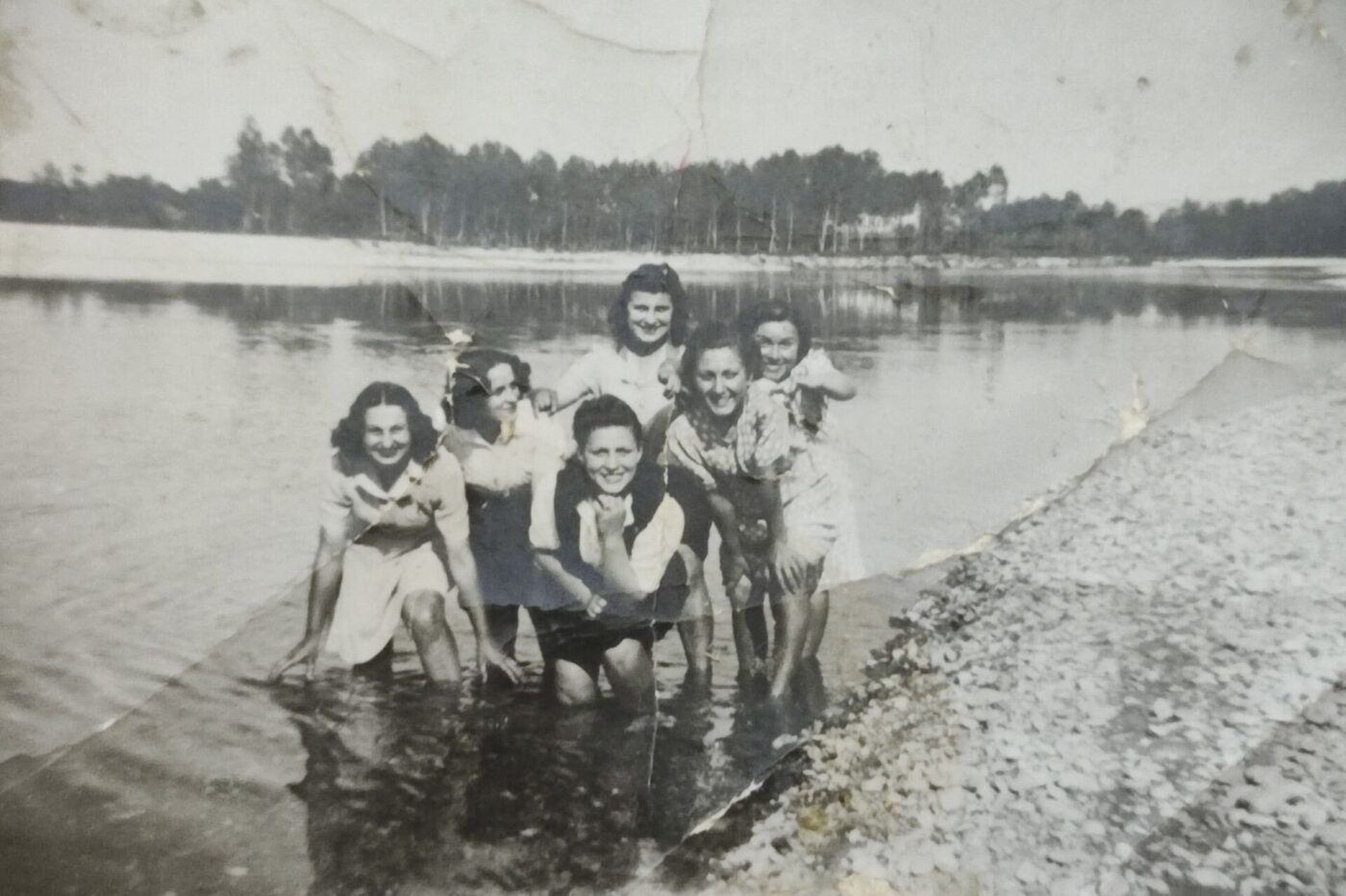
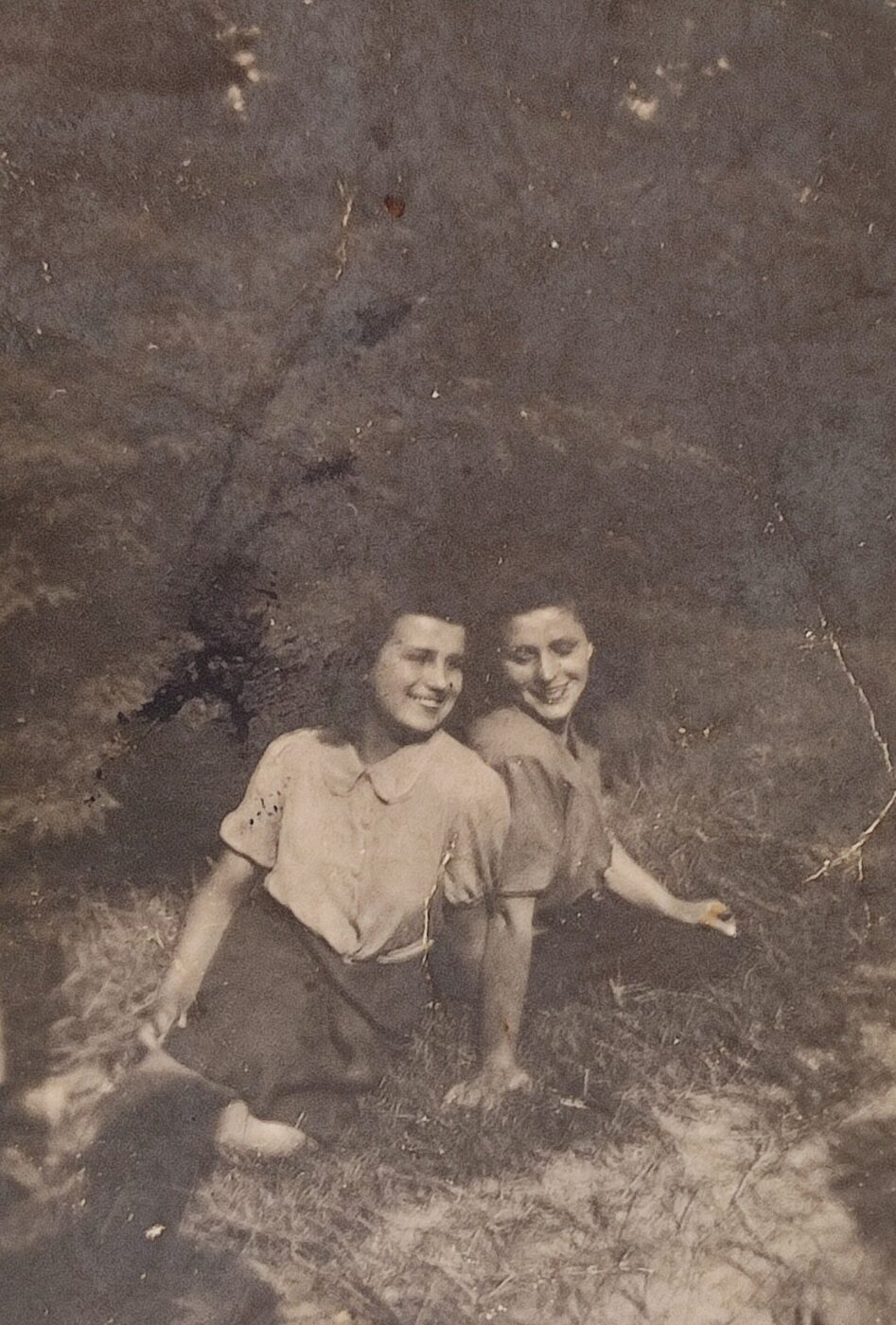
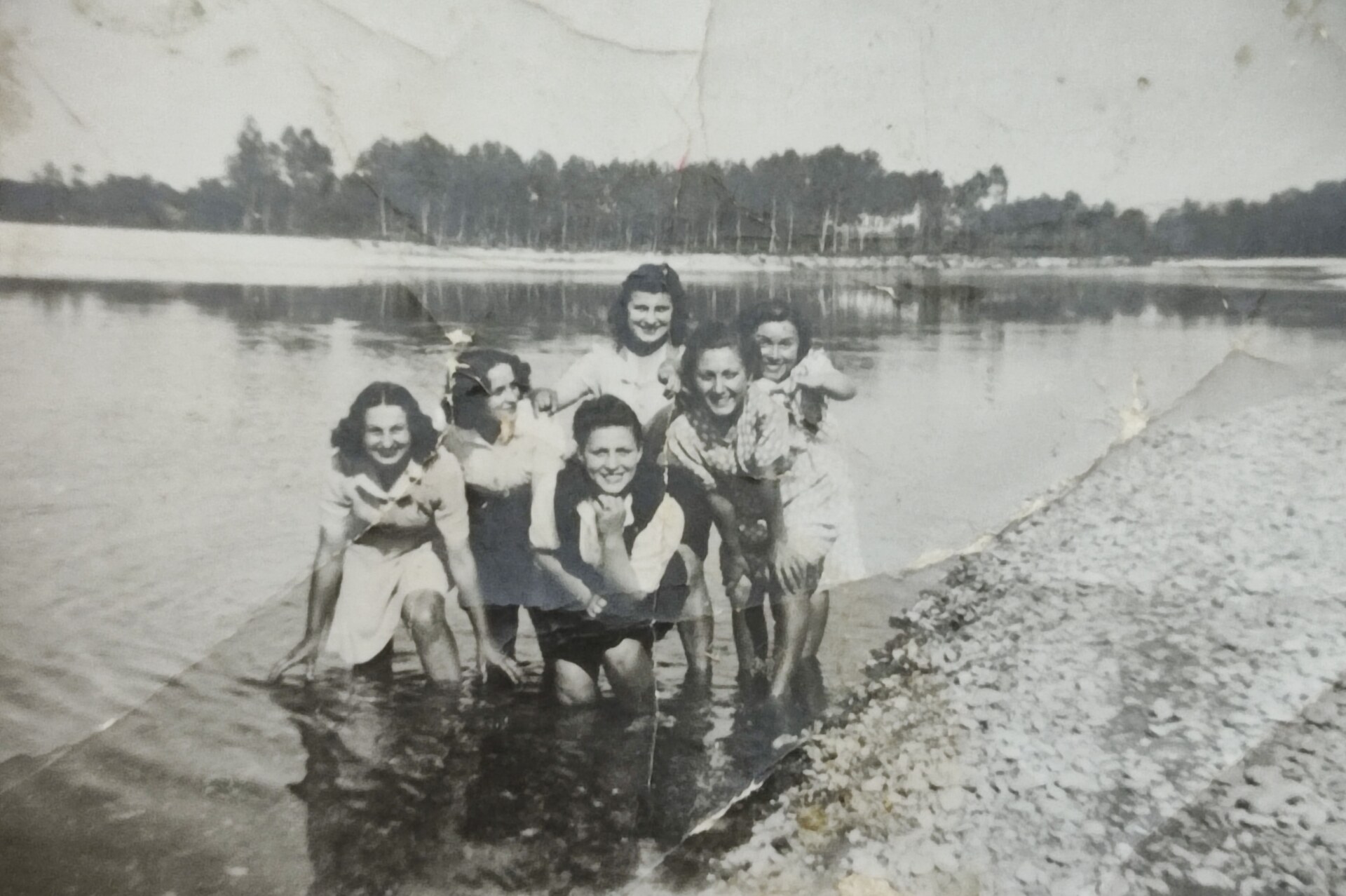
Yet it’s worth remarking that most of them were just girls, in the deepest sense of the word. I am aware that, while a pretty alluring epistemological lens, Girlhood Core comes with the risk of sugar-coating; in the case of mondine, though, I find it quite fitting. Recalling her time as a mondina, my grandmother would not dwell on the harshness of her working conditions. Rather, she would tell me about how she made friends for life (two of whom became her sisters-in-law!) and how they would enjoy themselves by dancing, gossiping, and trading inside jokes. They had nicknames for each other—in my grandma’s case, her name spelled backwards, “Aivil”—and they would sing together, telling the tone-deaf girl in the group to shut up because she “spoiled all the fun.”
While my grandmother would gladly share stories of her time as a mondina, I also couldn’t help but feel she always held a piece of it back. I found her secretiveness frustrating as a child, but I understand it now. Girlhood is a sacred, liminal space. There are some things you share among girls that are meant never to leave that circle—not even for a beloved granddaughter.
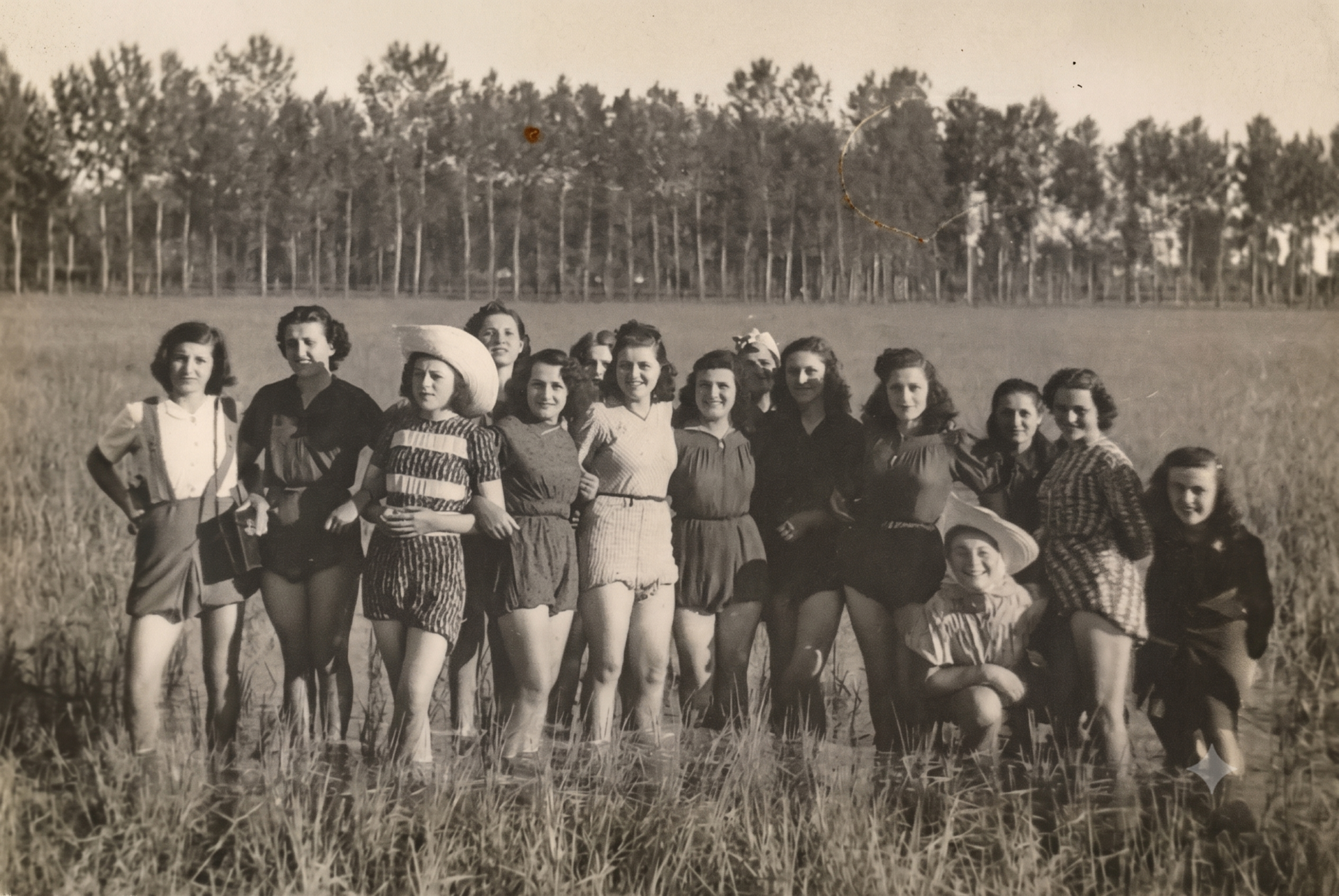
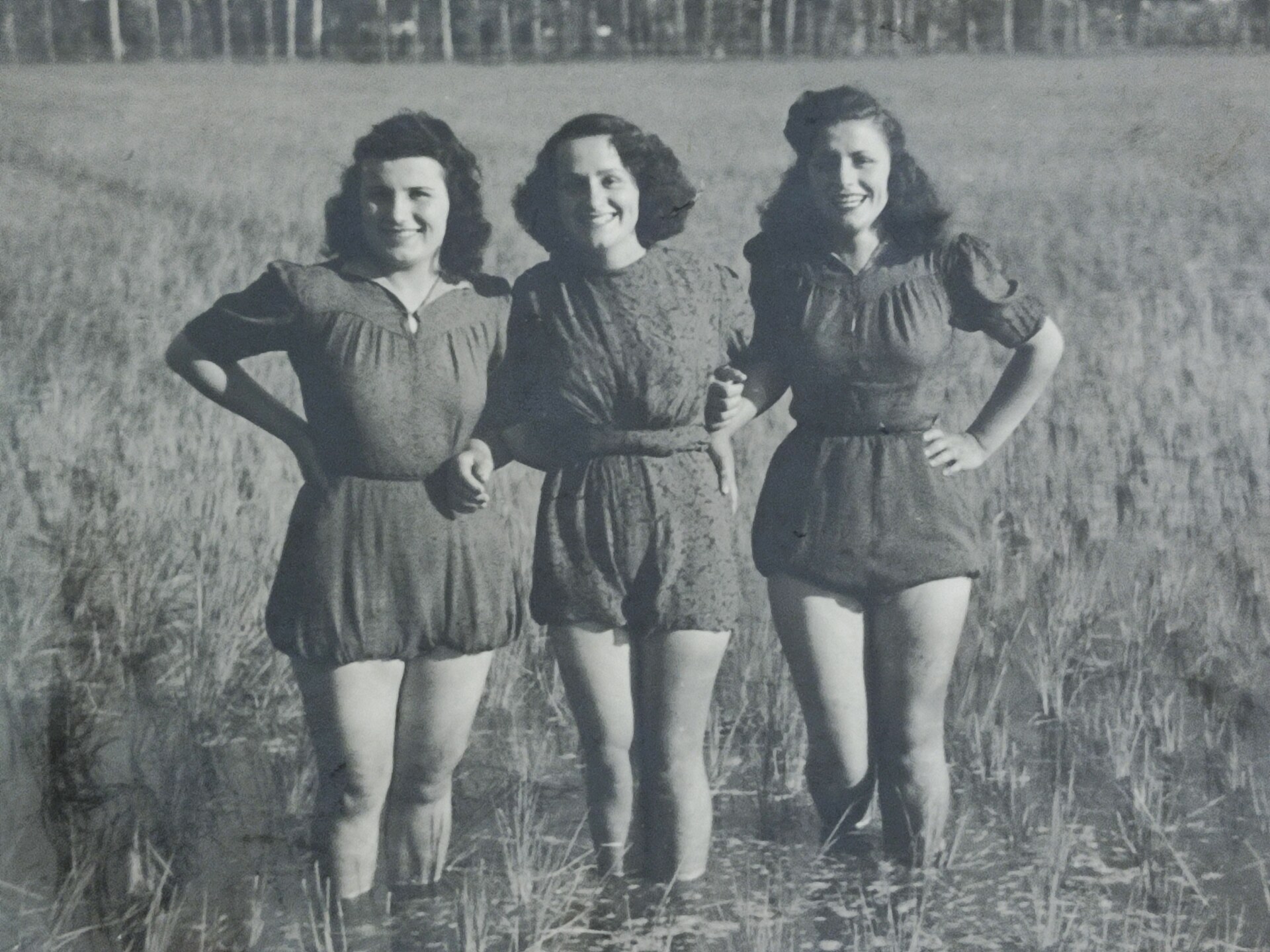
Pushpanjali's grandmother and her friends from the paddies
The mondine’s world was an almost all-female one, the padrone being the only man present. Often, the eldest women would take on maternal roles, allowing the girls to rest when they were sick or comforting them when they missed home. Inevitably, because they lived and worked outside traditional patriarchal society, the mondine faced the predictable sting of slut-shaming, dismissed by outsiders as “easy girls.”
“I had heard things about mondine…they said they weren’t good girls. That they would go with men,” as Anna Quintavalla, a mondina from Parma, recalled. “It wasn’t true. To me, it was a beautiful experience because I learned you shouldn’t listen to rumours.” The truth is, despite its many dehumanizing aspects, being a mondina allowed many of these girls to experience a degree of freedom and independence for the first time in their lives. And of course, the mere idea of a free woman has always terrified society—even more so a Fascist one.
Bound by rigid conservative values that restricted their education, travel, and personal lives, these young women found in their seasonal labor a crucible for a profound existential and political awakening. They embraced radical leftist ideas—not necessarily out of ideological indoctrination, but from an immediate need to defend their basic human dignity.
The women’s first organized resistance began as early as 1882 with a strike near Vercelli, growing increasingly sophisticated over the next two decades and culminating in a historic shutdown on May 31st, 1906, when thousands of mondine paralyzed the rice paddies and flooded downtown Vercelli. Massing beneath municipal balconies alongside local factory workers, they chanted a unified demand, “Vogliamo le otto ore!” (“We want the eight hours!”), ultimately forcing landowners to grant daily wages of at least 2 liras plus a landmark eight-hour workday, a progressive milestone won 13 years before it became Italian national law.
This fierce fighting spirit was famously soundtracked by their own music. Banned from talking in the paddies, the mondine sang to communicate, keep pace, and cope with the grueling labor. As Mazzolini noted, the padroni willingly permitted it because the rhythm accelerated production. For these young, uneducated girls, singing functioned as a collective coming-of-age ritual. Their lyrics explicitly championed left-wing labor demands through a uniquely female perspective, giving birth to defiant anthems like “La mondina” (“I am the exploited one”) and “Saluteremo il signor padrone”, a musical legacy that also became deeply intertwined with the history of “Bella Ciao”. This collective voice directly accompanied them to the barricades, fueling their strikes and forever immortalizing their 1906 triumph in the anthem “Se otto ore vi sembran poche”:
If eight hours seem too few, try working them yourself, and you’ll feel the difference between working and commanding.
Yet the struggle did not end with these early victories; through the Fascist regime and into the post-WWII era, the mondine continued to strike. Their relentless activism brought both bright milestones and dark tragedies; though they successfully pushed the state and landowners to grant pioneering healthcare protections like paid maternity leave and mandatory nursing breaks in the fields, this progress came at a heartbreaking cost on May 17th, 1949, when 34-year-old activist Maria Margotti was shot and killed by a Carabiniere during a strike in Molinella.
It would be easy to wrap this story up with a generic sentiment—to tell you that the next time you buy a packet of Arborio or Carnaroli rice, you should remember the mondine. But I find the verb “remember” interesting. Today, it often seems that memory itself has become a hyper-personalized, subjective bubble—the kind of solitary nostalgia epitomized by Proust. And it’s true that to me, “mondina” will always simply mean “grandma.” But the mondine’s legacy was fundamentally collective, and writing this has made me realize that honoring their sacrifice requires practice, not just sentiment. In an era where feminism often fixates on individual advancement, the history of the mondine is a reminder that everything women have ever achieved, they achieved together. And true remembrance demands daily, active solidarity with other women. To remember is not a static verb, unless you allow it to be. With that in mind, this afternoon I am going to make some riso al latte and invite my sister over—it’s been far too long since we last spoke.
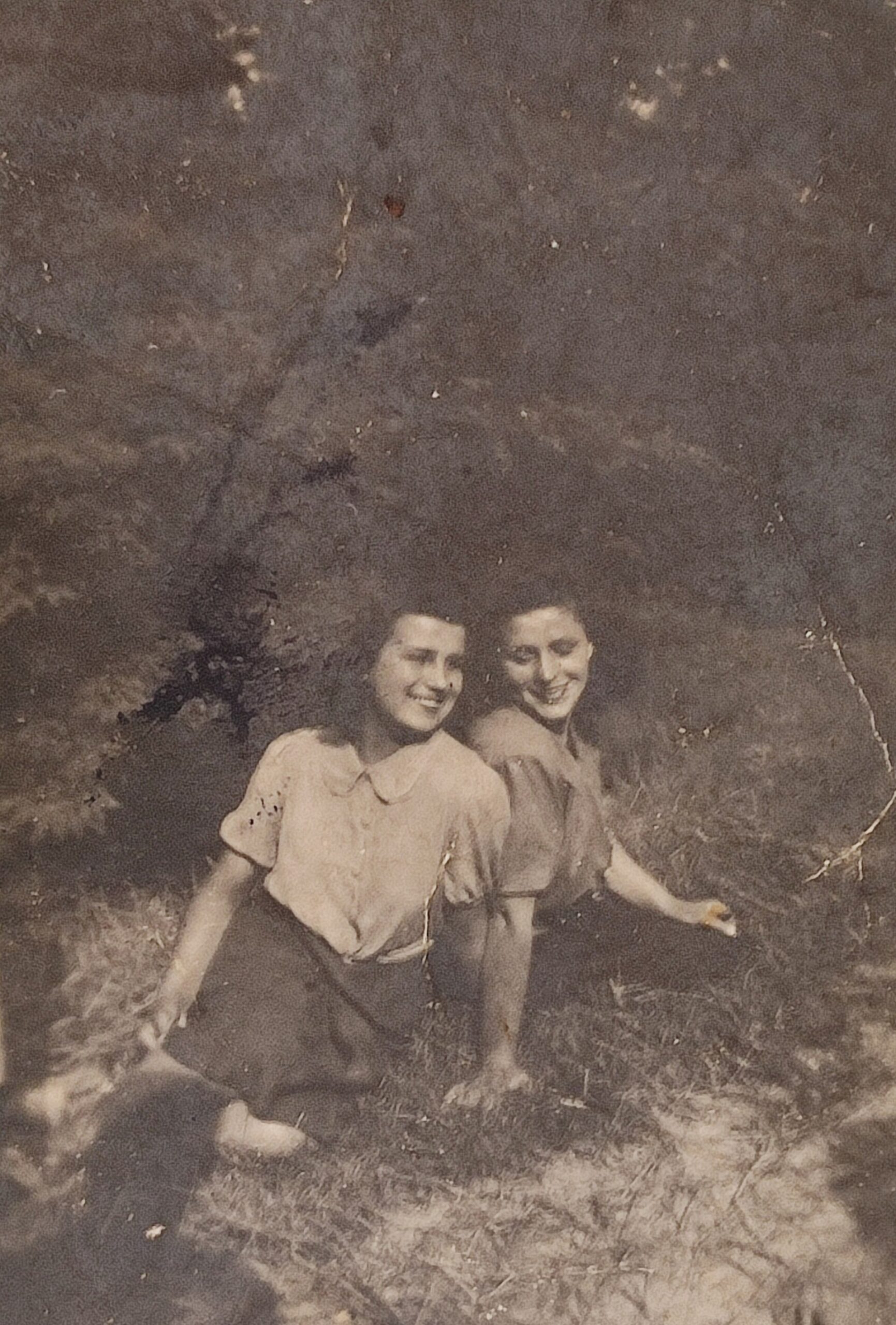
Pushpanjali's grandmother, pictured on the left