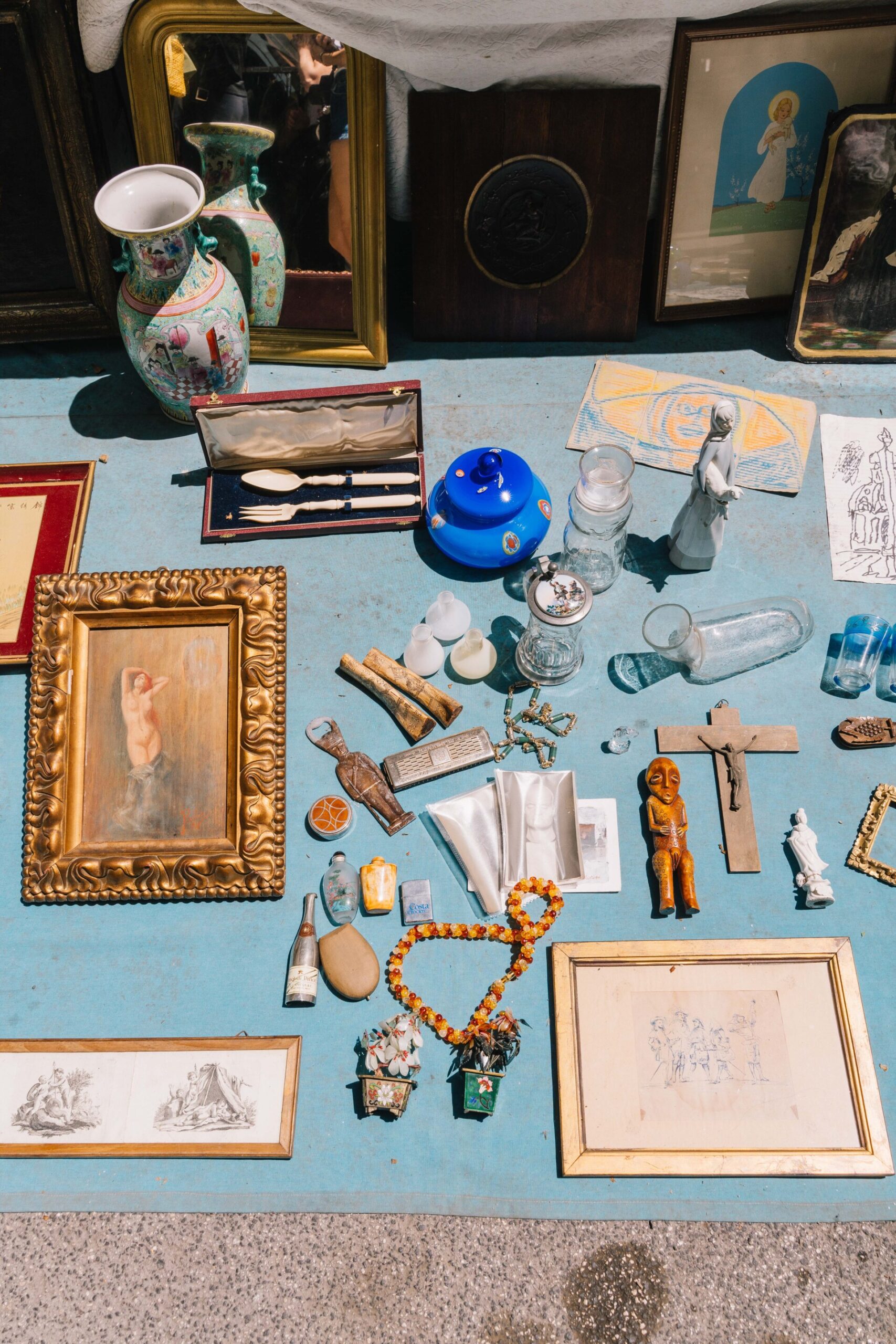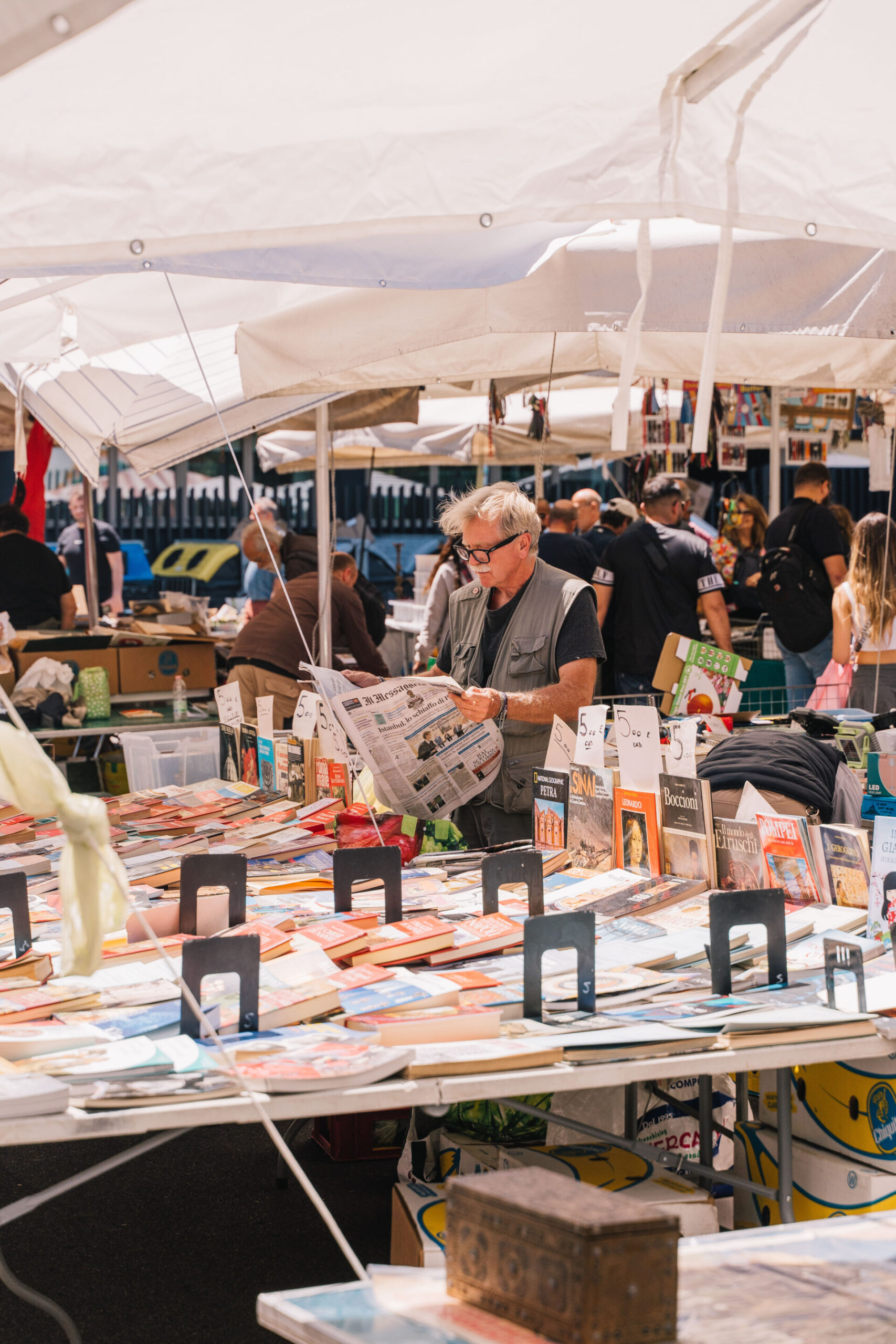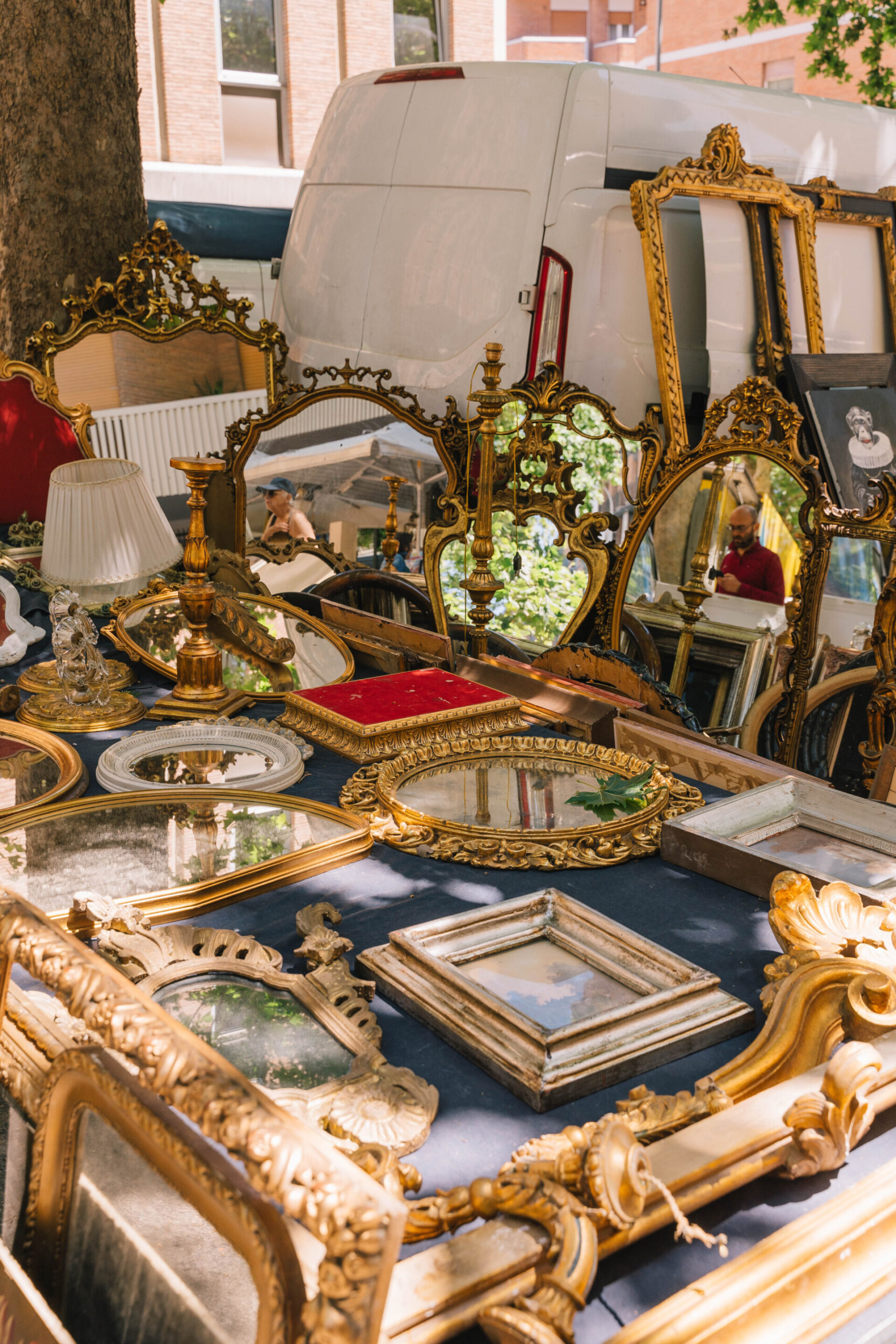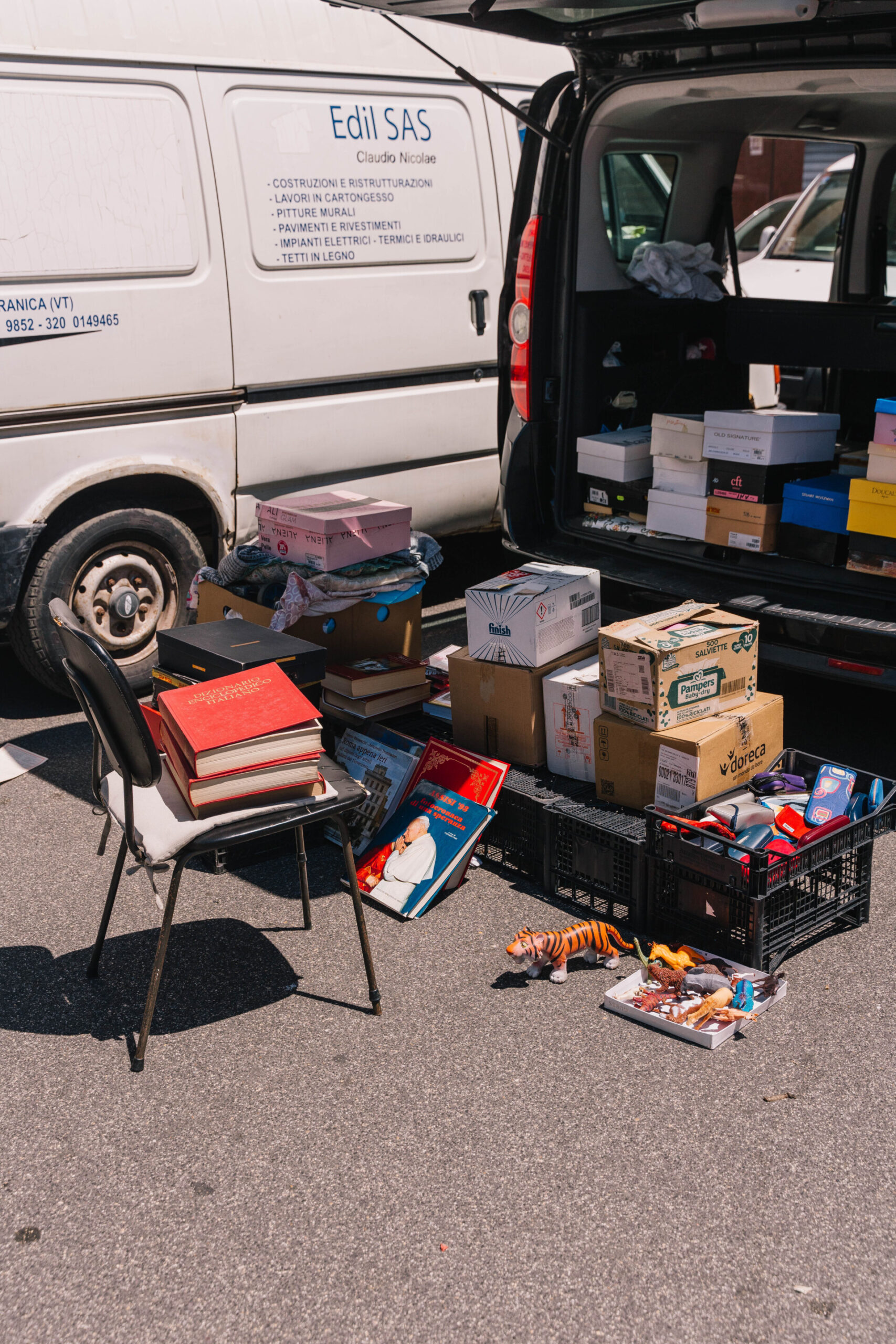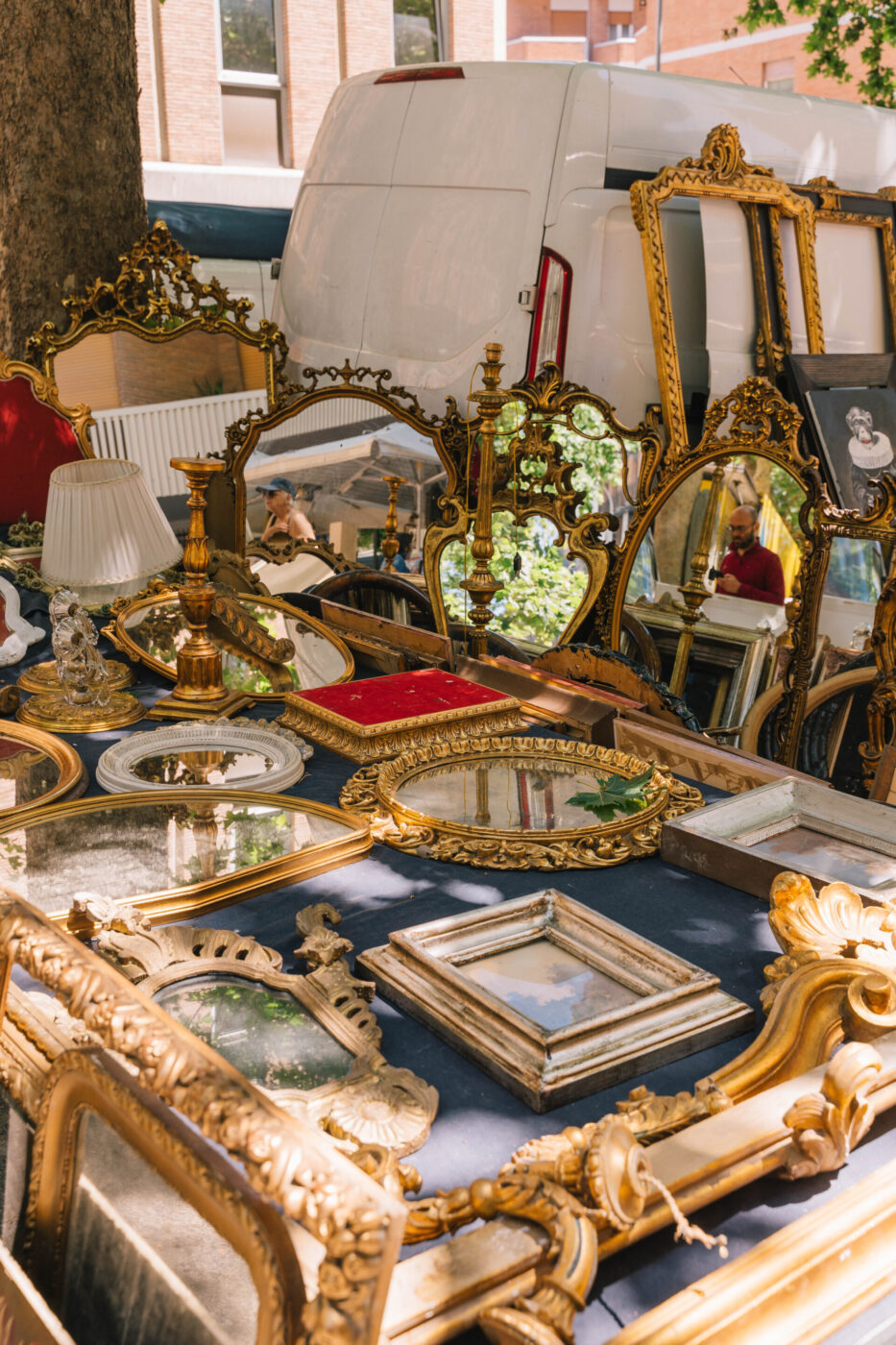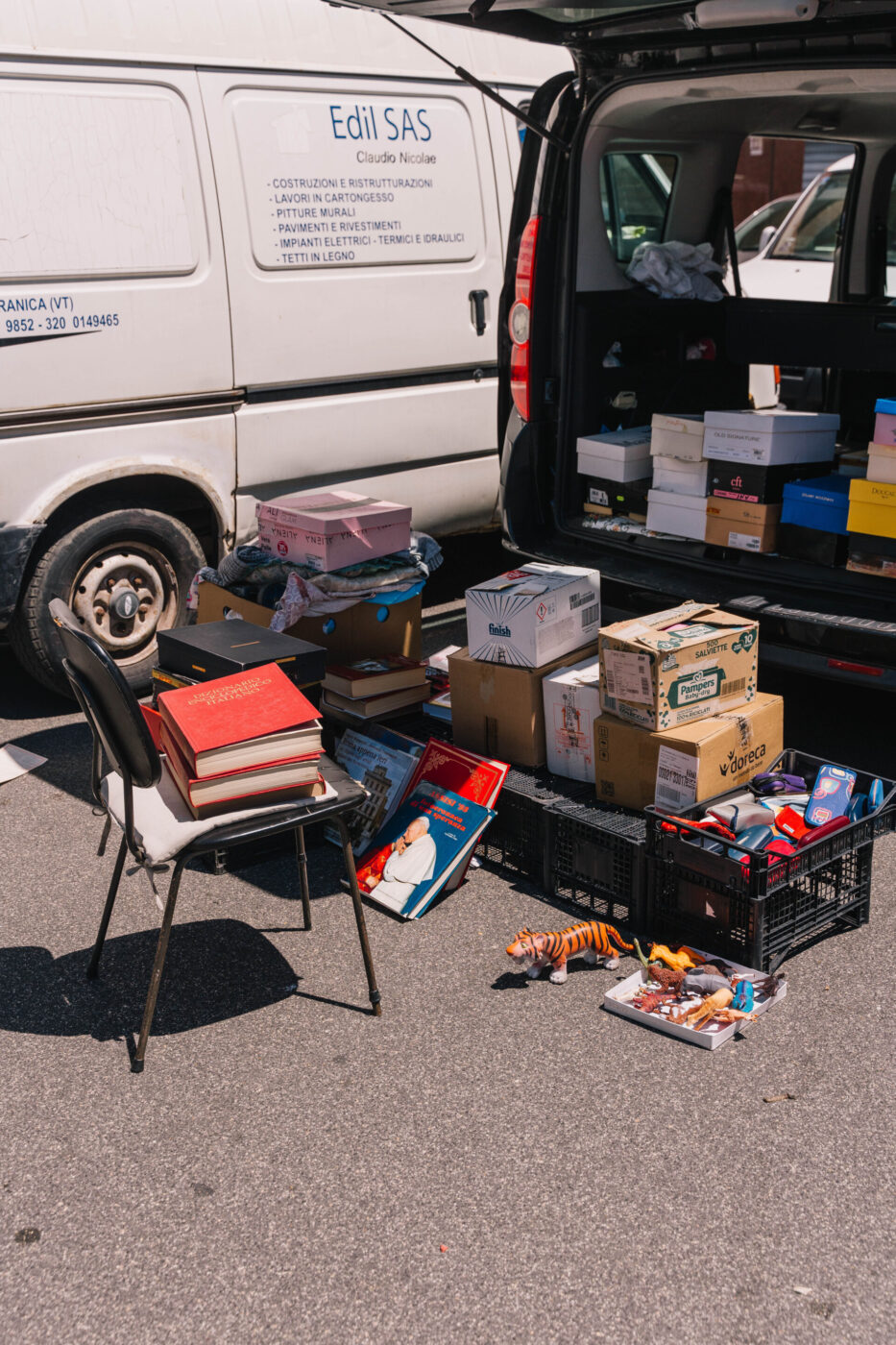
An acquaintance I met in Rome once told me that a person’s opinion of the city’s most famous Sunday street market, Porta Portese, is a good way to judge their character. If they deem it too chaotic, then they’re probably not for you. But if they understand its unique charm, the way its chaos is part of its beauty, the possibility of finding a potential treasure always around the corner, then they could turn into a real connection.
If I’m honest, I listened to this story sheepishly, mostly because for quite some time I had been on the wrong side of that equation. I lived not too far from the famous Sunday market, and I could tell what day it was by the hordes of vintage-lovers with plastic bags bearing their hauls. I was used to the heavily anesthetized experience of American shopping malls, with full-force air conditioning, fluorescent lighting, and serene white walls. Something about Porta Portese’s labyrinthine stalls and heaps of clothes—sometimes for less than a euro and sometimes piled on the literal ground—intimidated me.
Yet, much like Rome itself, Porta Portese’s charm began to reveal itself to me little-by-little every visit, suggesting that the more I understood it, the better I could partake in its delights. I liked to go with different friends, finding that each one exposed me to something new, from the Roman who showed me where to buy the best Tirolesi sweaters and vintage sunglasses to my silver-loving friend who always emerged with the most delicate trinkets to an editor of this magazine who helped me find my now-beloved forest green Loden coat.
I loved nothing more than flashing a smile when someone asked me where I’d gotten something—“Porta Portese,” I’d tell them proudly.
But if Porta Portese is part of Rome’s identity, then the people who man its various bancarelle certainly make up a large part of that experience. Italy Segreta talked to the owners who run some of the market’s most prominent and most unique stands. These are their stories.
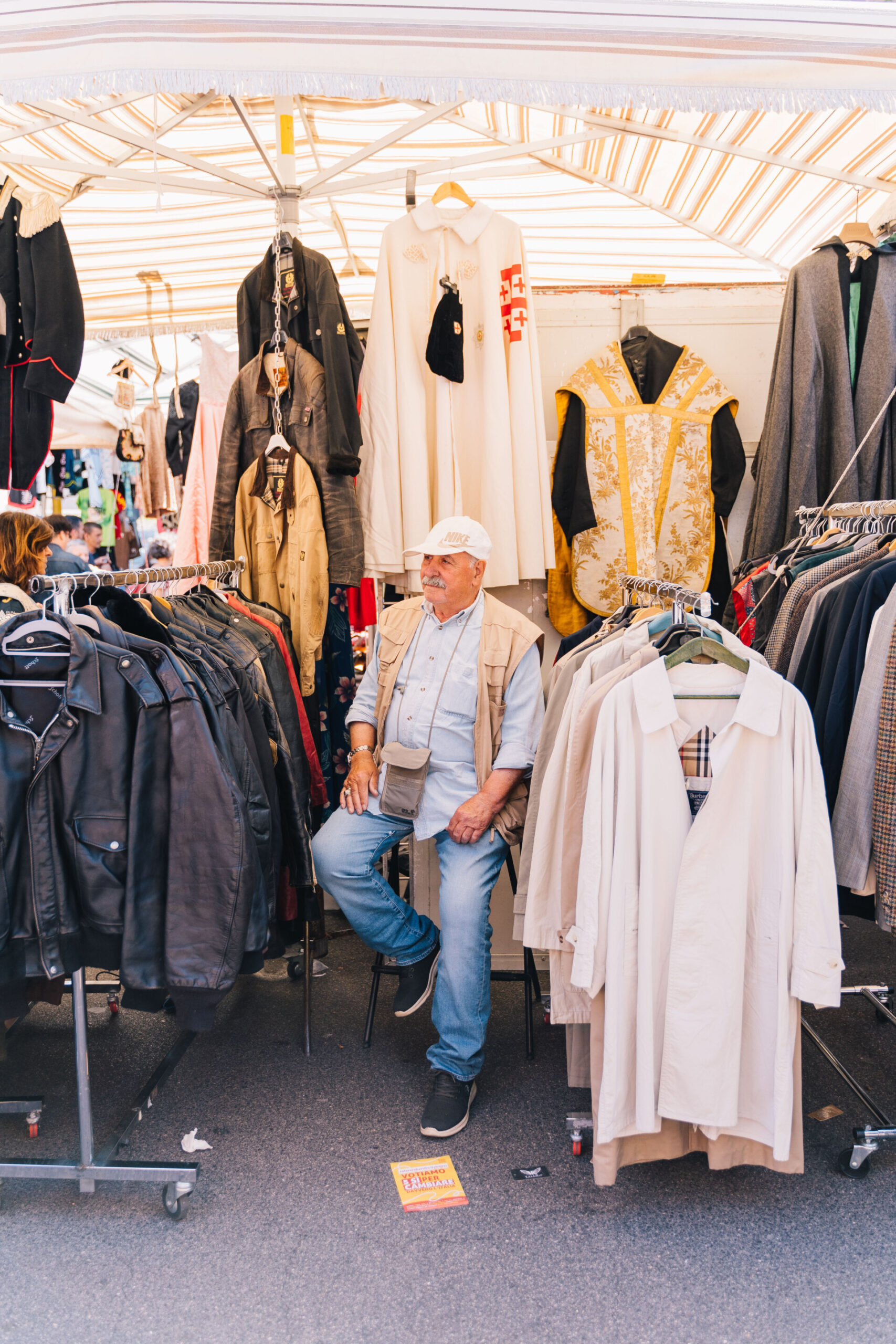
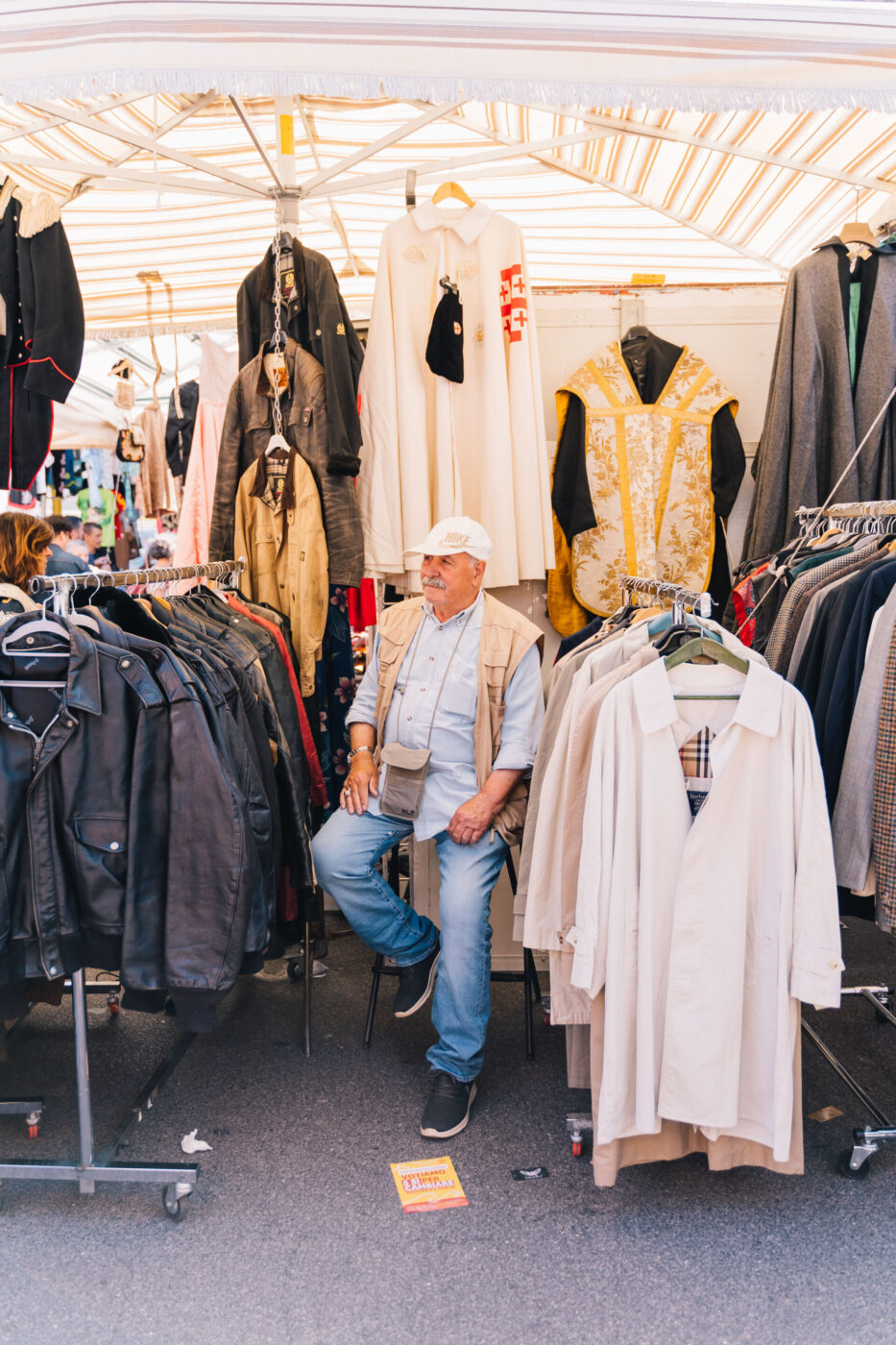
Anna and Bruno Scognamiglio (80 and 84)
Vintage clothes and theater costumes
How did the bancarella start?
Bruno: My mother was the creator of the business. After the war, she started working—she found theater costumes, and costume designers and tailors would come and buy original clothes from the 1930s. After two or three years, things started to take off and word spread, because we were the only ones [doing something like this]. People would buy [the clothes] as models to copy them, including, eventually, Gianni Versace. He came to my shop with Umberto Tirelli, a big movie costume designer; he had his own tailor’s shop in Rome, Tirelli, which supplied all the theaters and opera houses in Europe.
How do you find the things that you sell?
Bruno: I have my own suppliers now, and I’ve known them for years. They look for these things, and they call me, and we come and get them—it’s not that we go and search. Of course, it’s a bit tricky to find this type of merchandise.
Are there any particular objects over the years that have stayed with you?
Bruno: When we went to the United States, we bought clothes that we would never pay that much for here—pieces that were quite rare. Corsets from the early 1900s, dresses from the 1800s—all that kind of stuff. When I arrived in Rome, the costume designers said, “Beautiful, beautiful, beautiful.”
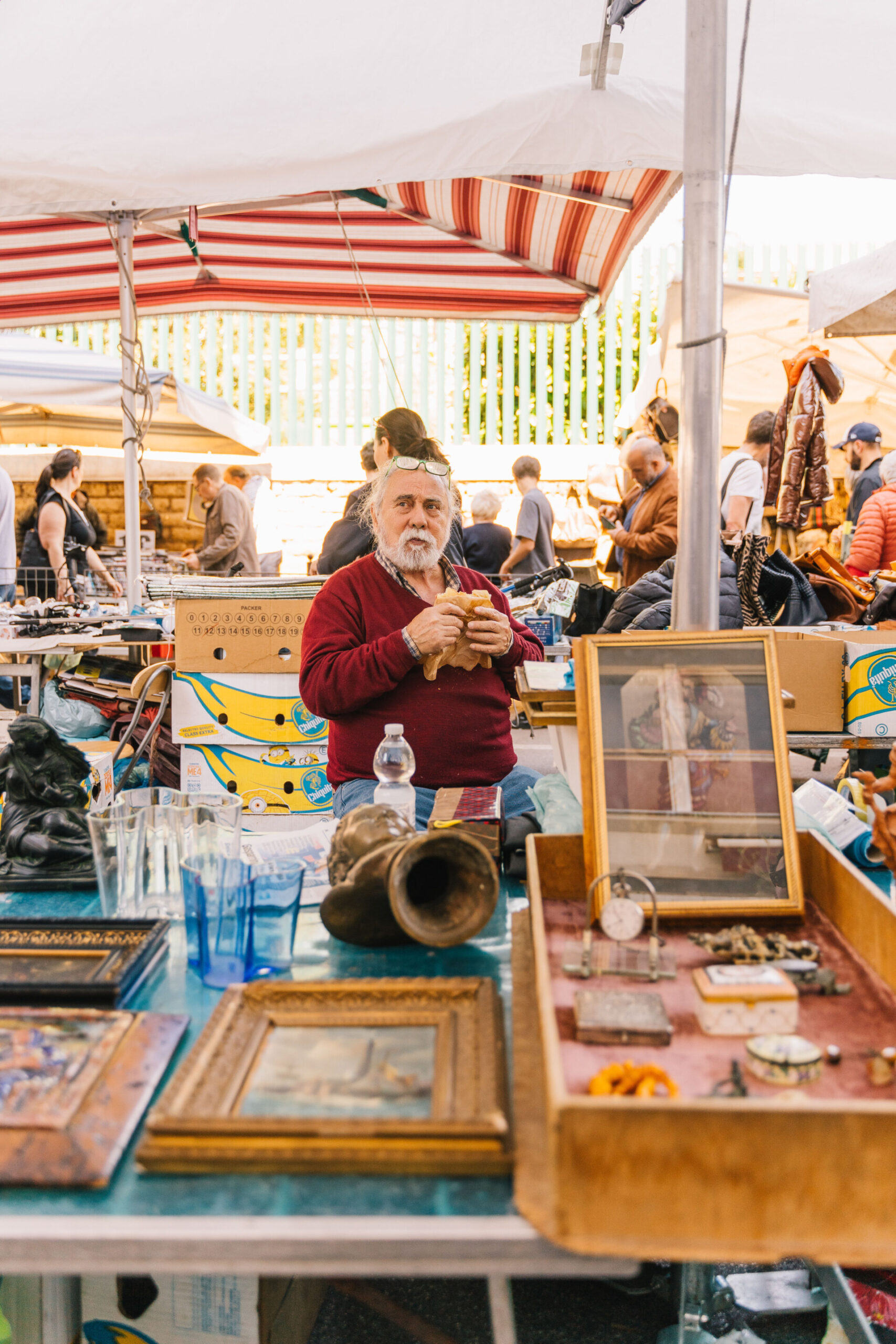
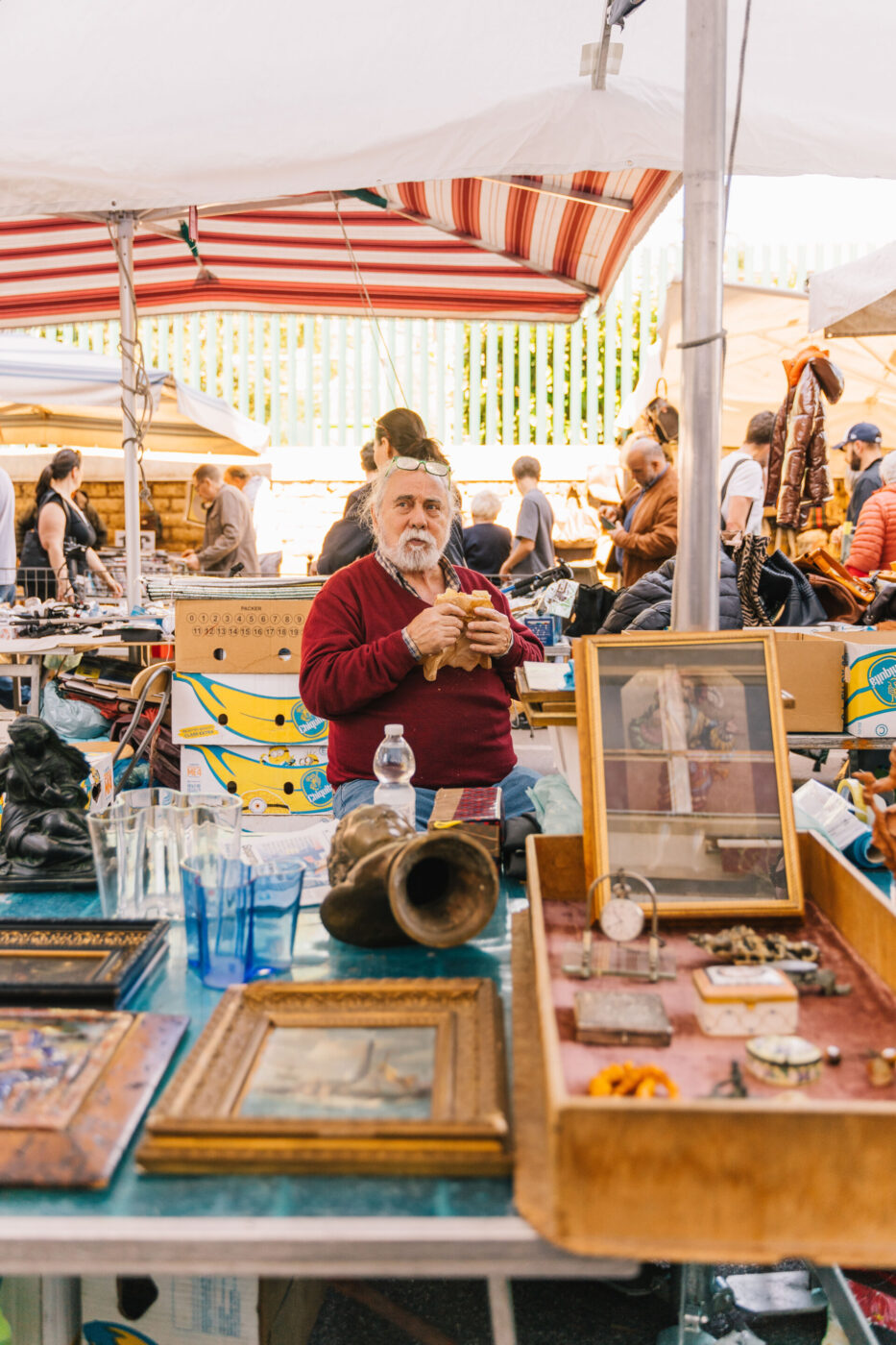
Roberto Conti
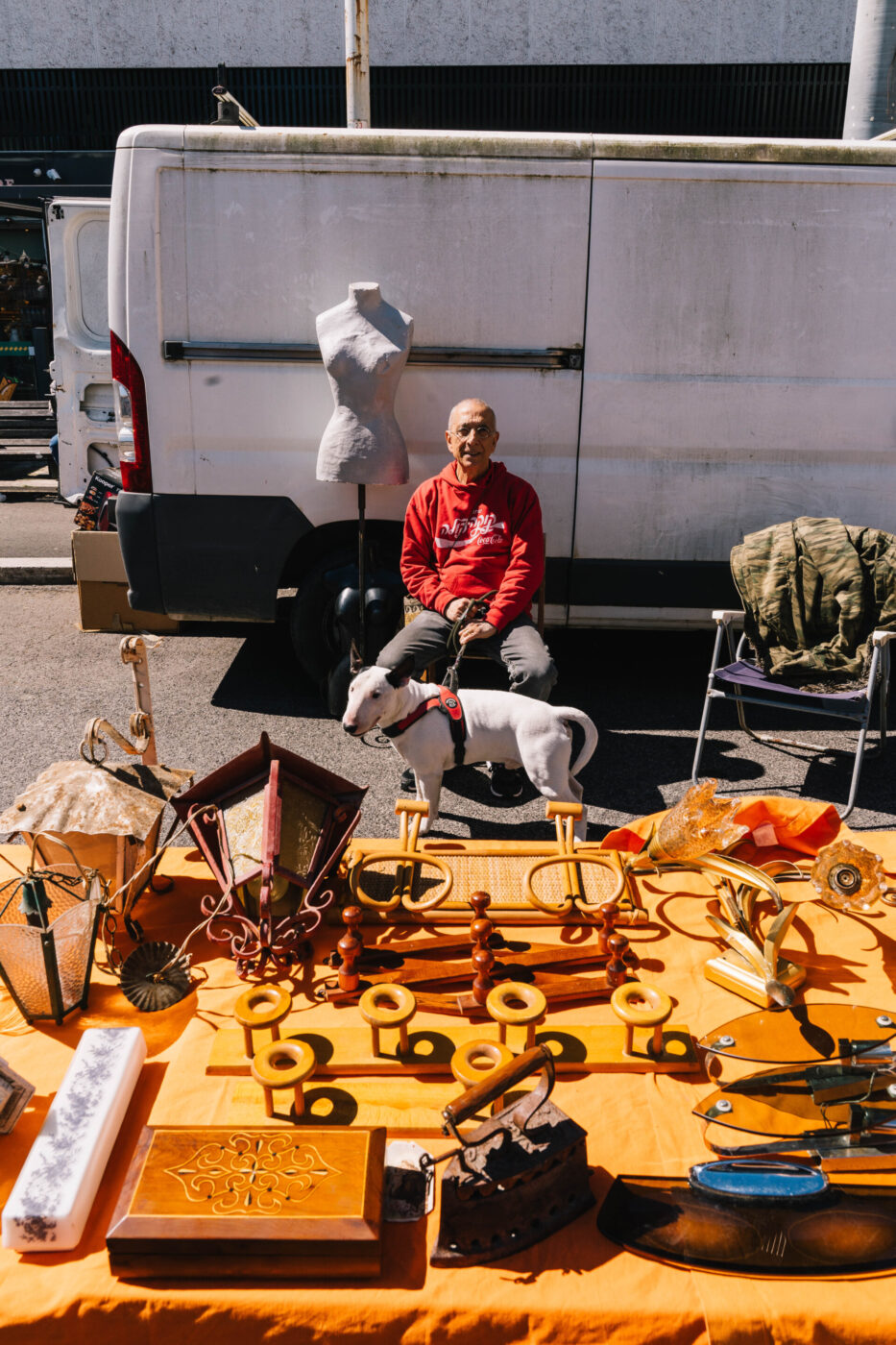
Antiques
How did the bancarella start?
Roberto: I started here in 1977. When I arrived the first time, I asked a gentleman who was standing there, “Where can I go?” He said, “Stand wherever you want; they’re making us close next Sunday.” And I’ve been here for 50 years. The market is completely different. Before, they were all people who went to salvage things and sold them for next to nothing.
How do you find the things that you sell?
Roberto: I buy them in houses, mainly, and also in the stockrooms of antique shops. People call us when they have things to sell.
Are there any particular objects over the years that have stayed with you?
Roberto: This morning, for example, I sold a lithograph by Piero Dorazio, a lithograph that could be worth around €500 to €1,000.
If you could describe your bancarella in just one sentence, how would you do it?
Roberto: I am a collector who sells things. I like buying them, but then I can’t keep them all, so I resell them.
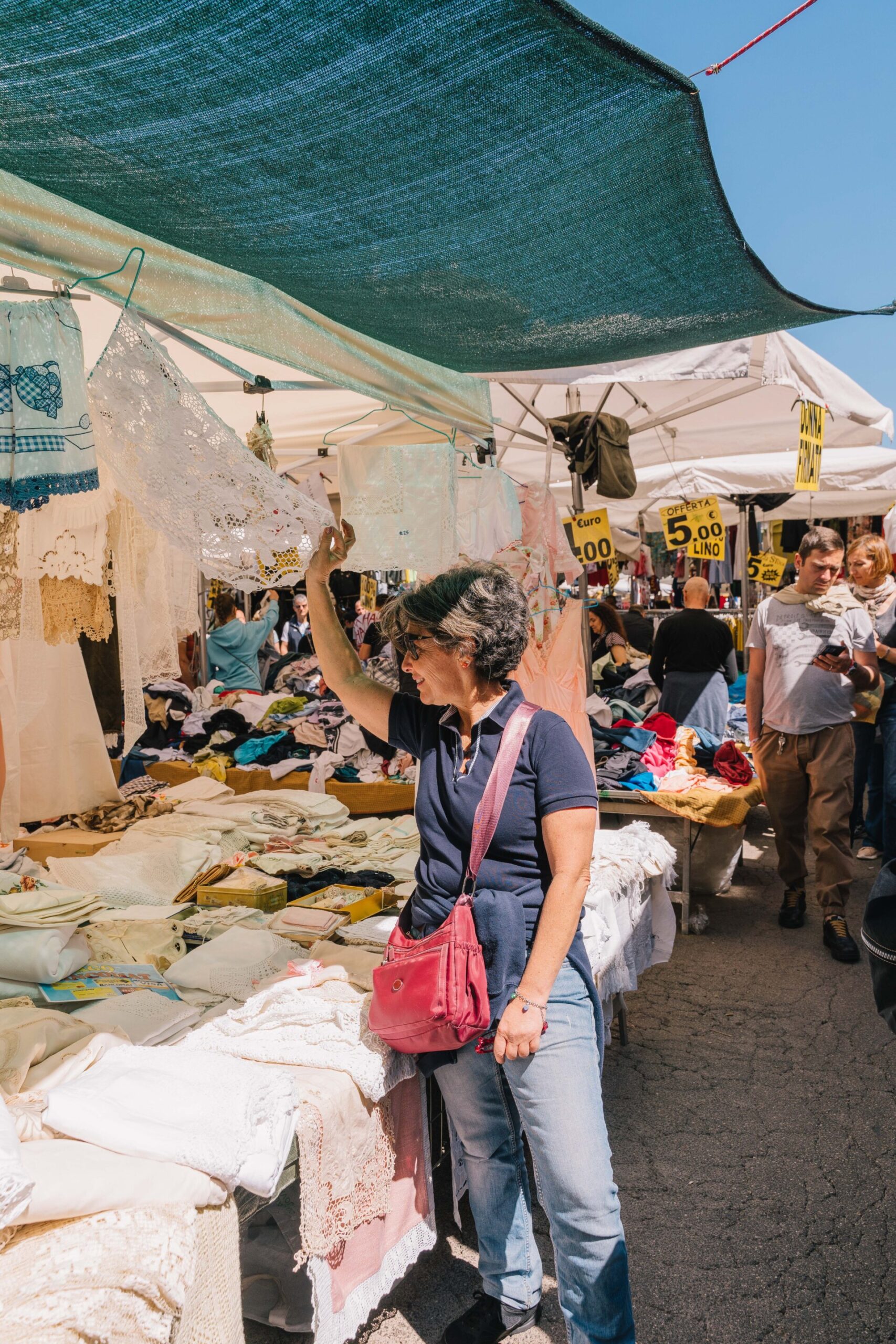
Federica Bagni (57) of Passioni di Un Tempo
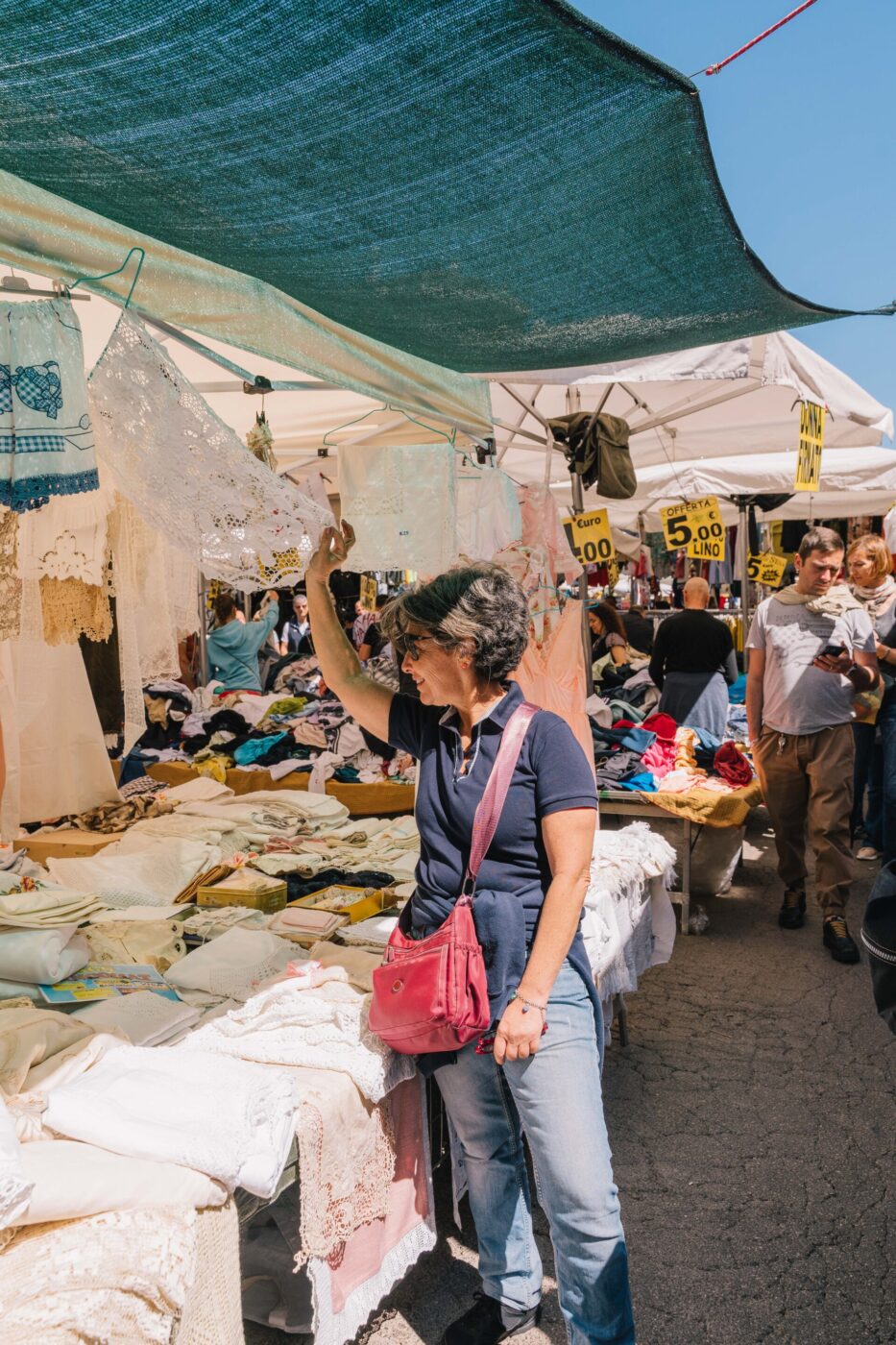
Vintage lace items
How did the bancarella start?
Federica: I’ve been in Porta Portese since 1992, selling antique trousseaus and vintage lingerie. My business is a bit of a niche market—it’s not for everyone and everyone’s tastes. The people who come to this stand are mostly foreigners who really love these items.
Are there any particular objects over the years that have stayed with you?
Federica: This week, I sold a military flag dated to 1910 or 1911 to a lace collector who works for a very famous brand. It was a very special thing.
If you could describe your bancarella in just one sentence, how would you do it?
Federica: My mantra is: only very beautiful things. Under every post on my Instagram page, I always begin with “solo cose molto belle.”
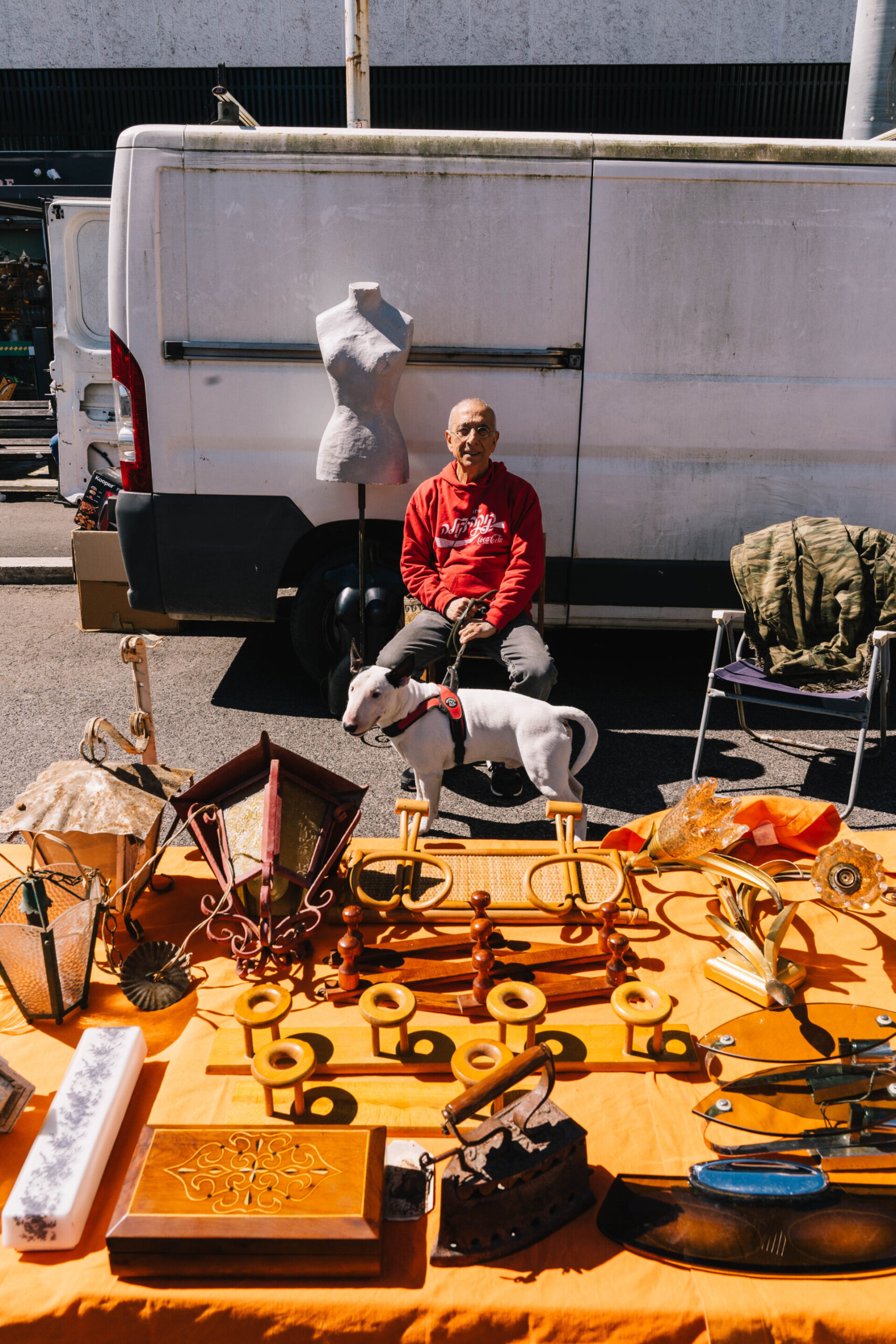
Giulio Grandicelli
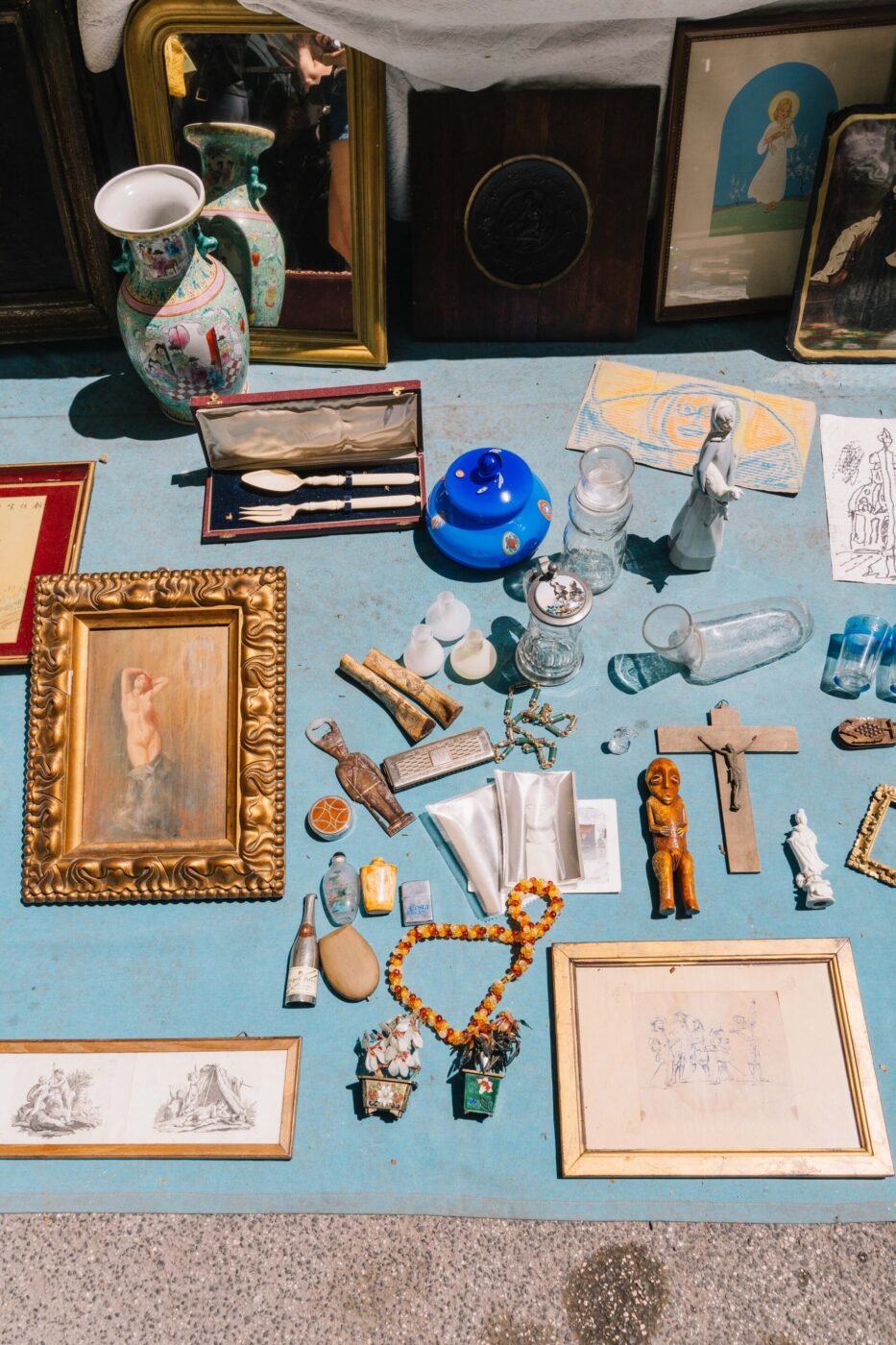
Antiques and furniture
How did the bancarella start?
Giulio: I’ve been here for 39 years. When I started coming to Porta Portese, there were just free spots, and so we kept coming back every Sunday, because our spot was the same every time.
How do you find the things that you sell?
Giulio: When someone dies and they have to sell the apartment, they have to get rid of everything. Sometimes, people come and give us things. We put it back into circulation.
Are there any particular objects over the years that have stayed with you?
Giulio: It’s not like there’s one story behind a single object that I have. They come from different situations, you know? I don’t get to decide that. The person who gets to decide that is the one who is buying it. All old things—things that have a history—they have their own charm, regardless of whether they’re ugly or beautiful, like people.
How would you define your clientele?
In terms of the customers, there are the regulars, those who never miss a Sunday. There are many collectors who come looking for postcards, coins, the most unthinkable things.
If you could describe your bancarella in just one sentence, how would you do it?
Giulio: My stand is beautiful. You would never call your child ugly. My stall isn’t just beautiful; it’s stunning.