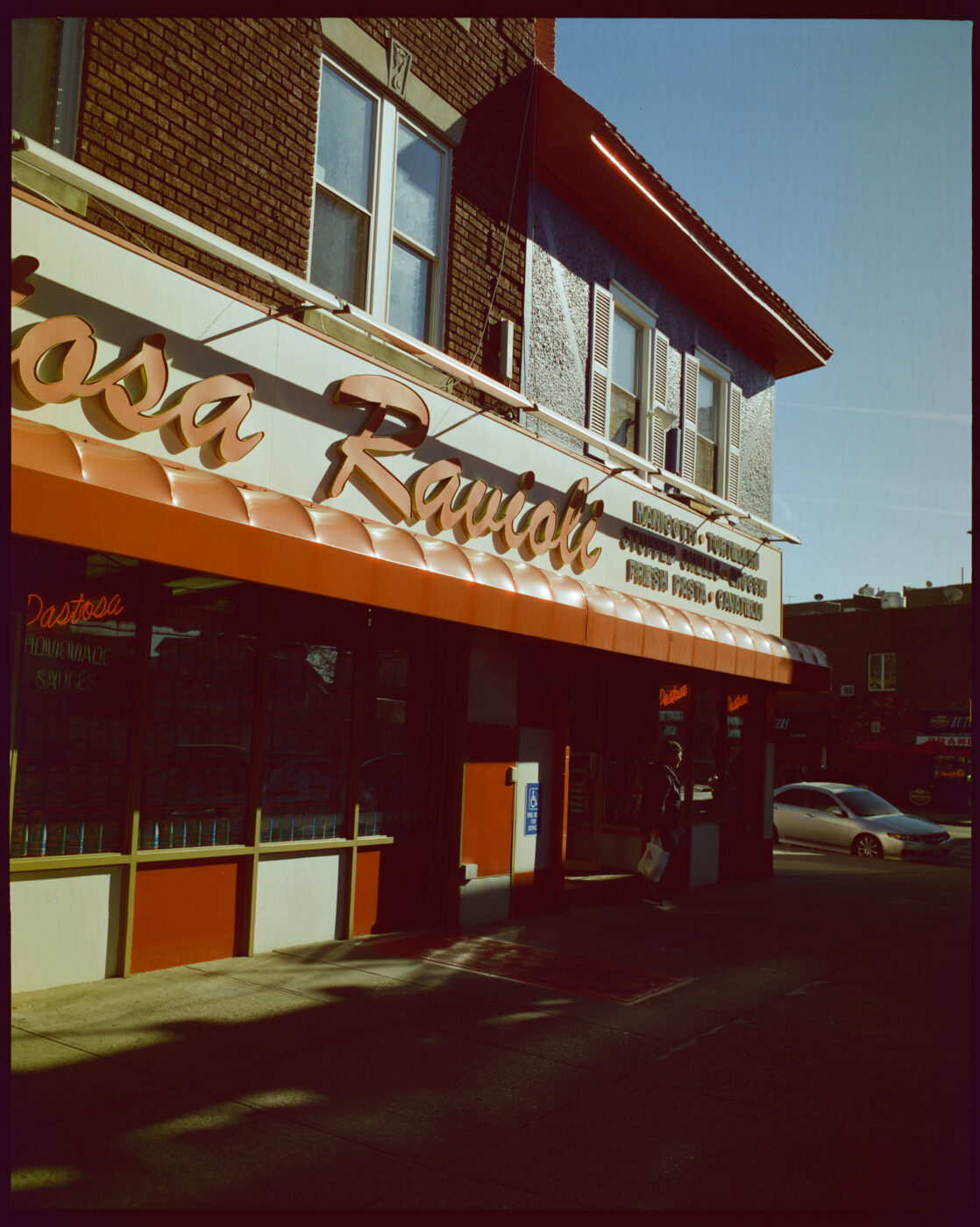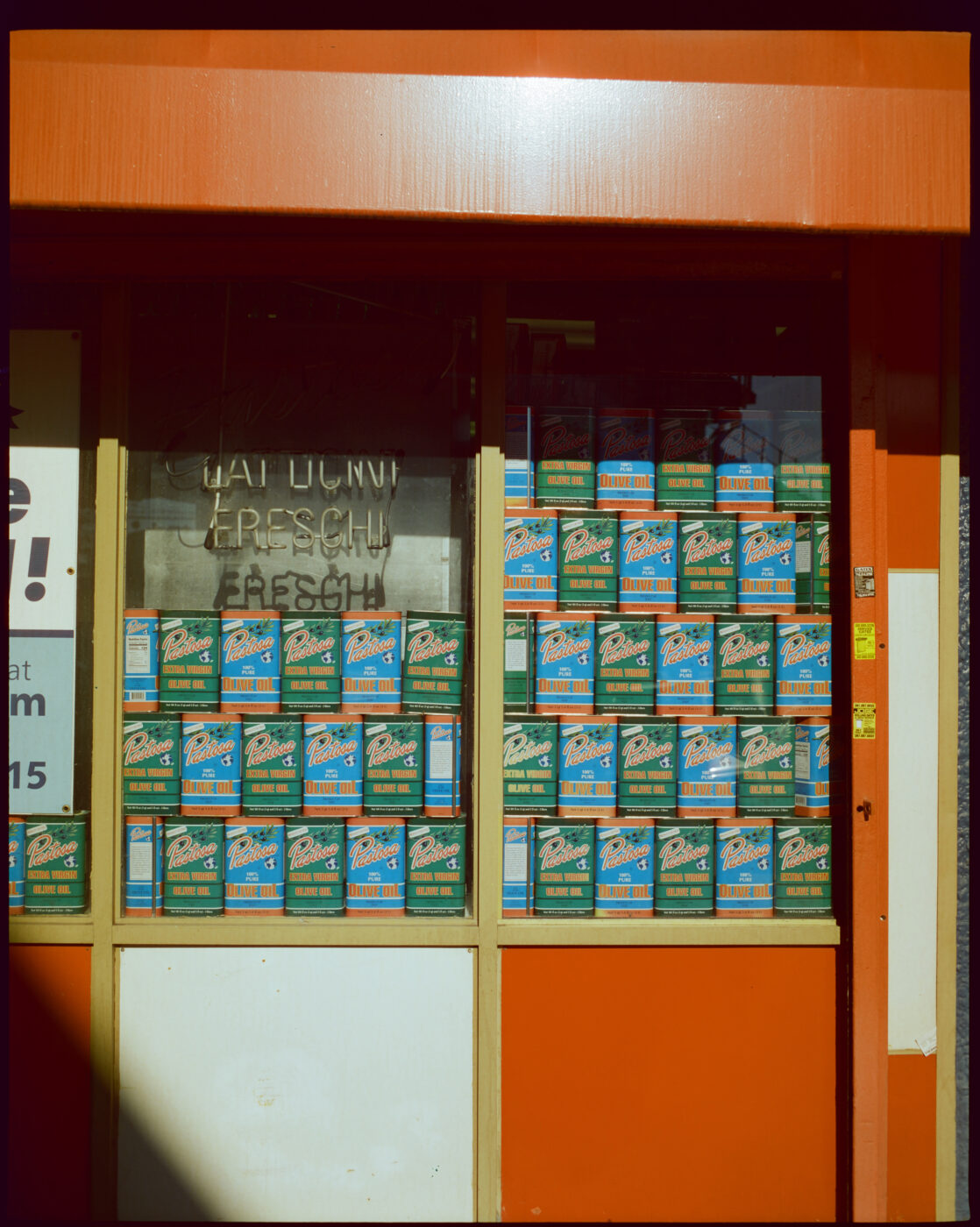
The square slices come the same way they always have for my father, his father, and his grandfather, too. Michele Papa, my great-grandfather from Naples, first came to L&B Spumoni Gardens in 1945. Eight decades later, I’m sitting in the same concrete yard on a hot Saturday in Bensonhurst, Brooklyn. The sfincione arrives at the table, and my relatives sit up a little straighter. Eyes land on the box, and hands reach for the crunchy corner pieces.
Repeating what our grandparents and great-grandparents did measures how old-school Italian we are, whether it’s eating at institutions like L&B, following an ancestor’s recipe for scarola e fagioli, or keeping a jar of Vicks VapoRub in the medicine cabinet. To ask why my great-grandfather, a Neapolitan, preferred Sicilian-style pizza risks disrupting the tenuous links we claim to our Italian heritage. Instead, we leave paper plates splattered with tangy red sauce and streaks of tricolor spumoni, unaware of how they ended up on the same menu.
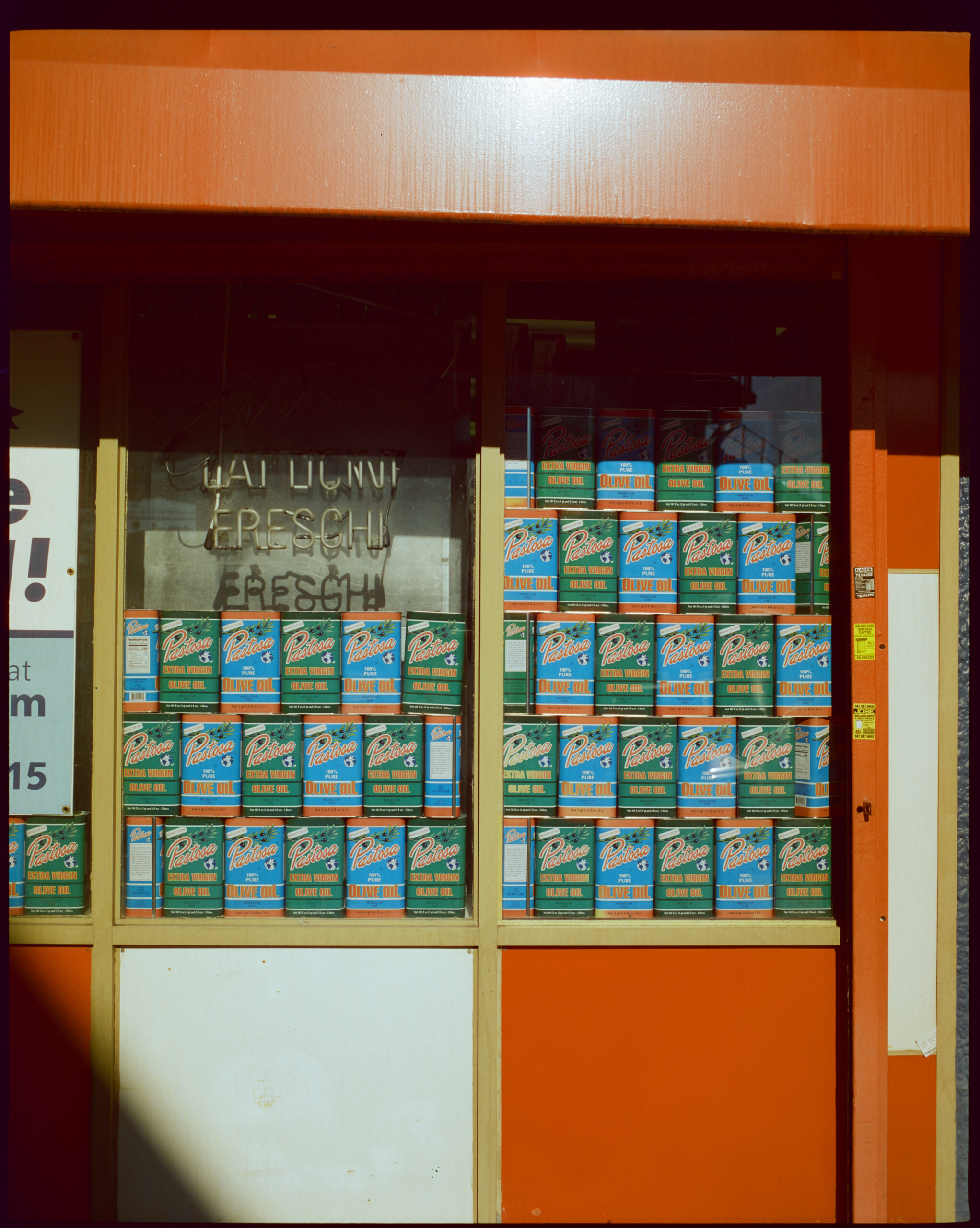
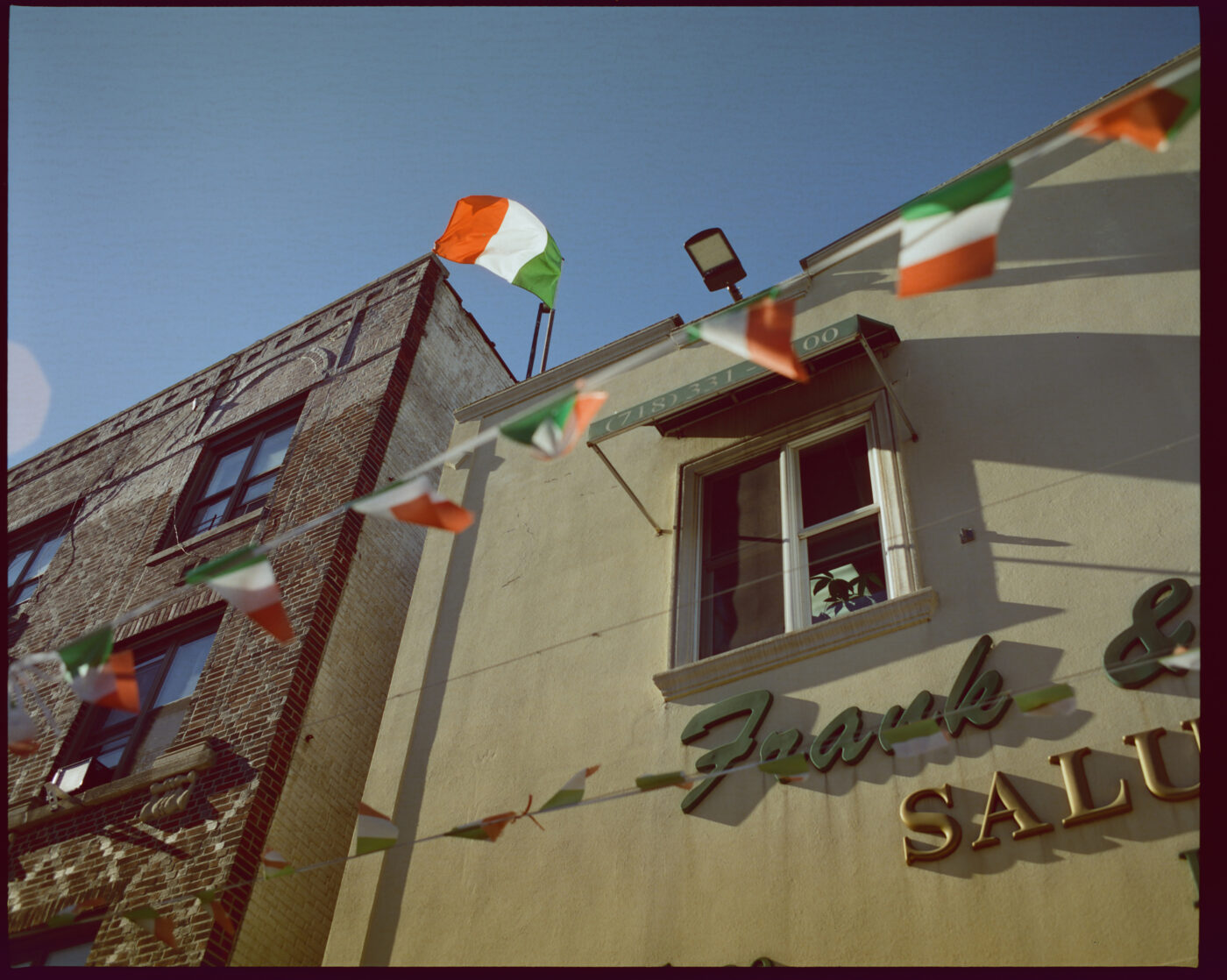
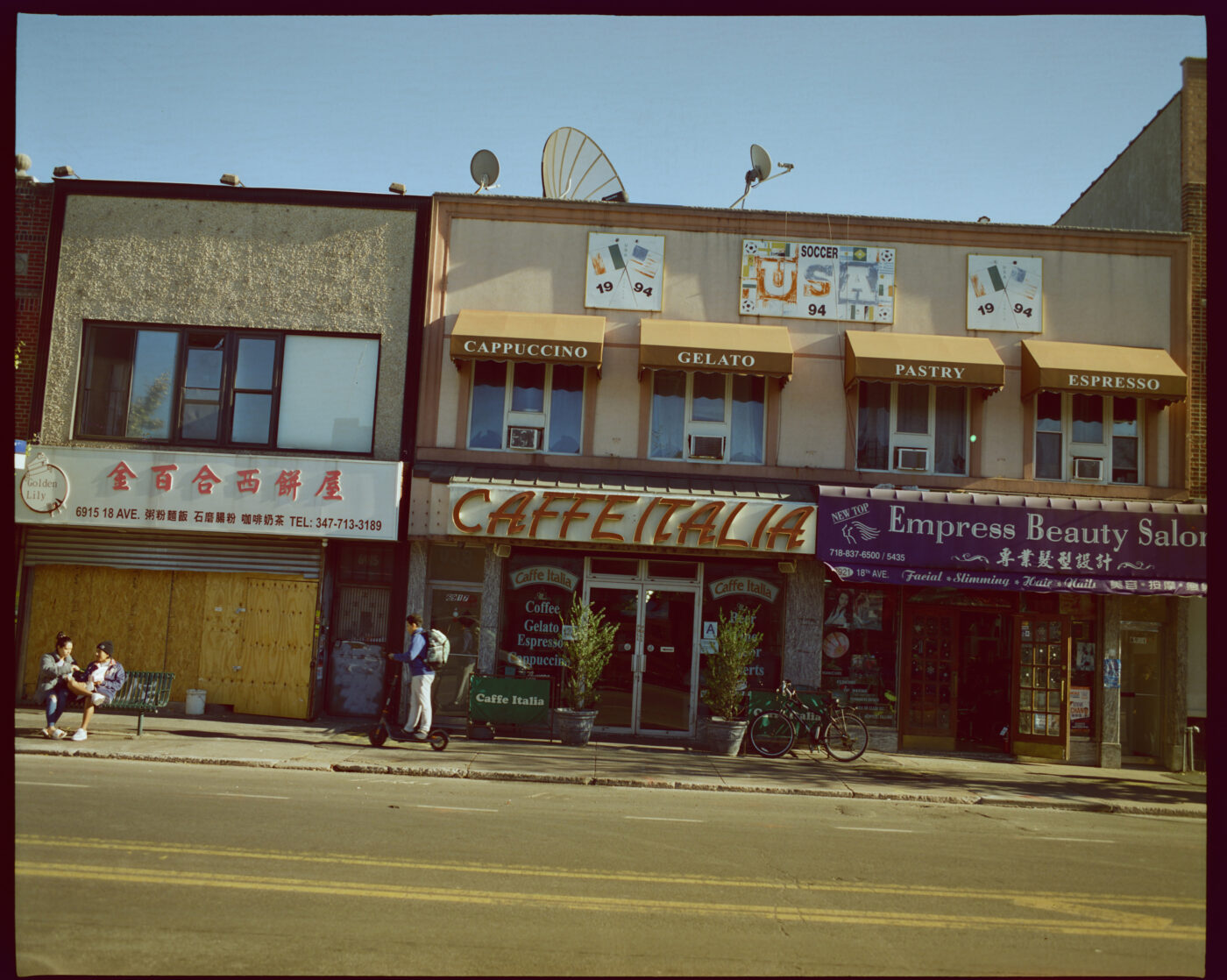
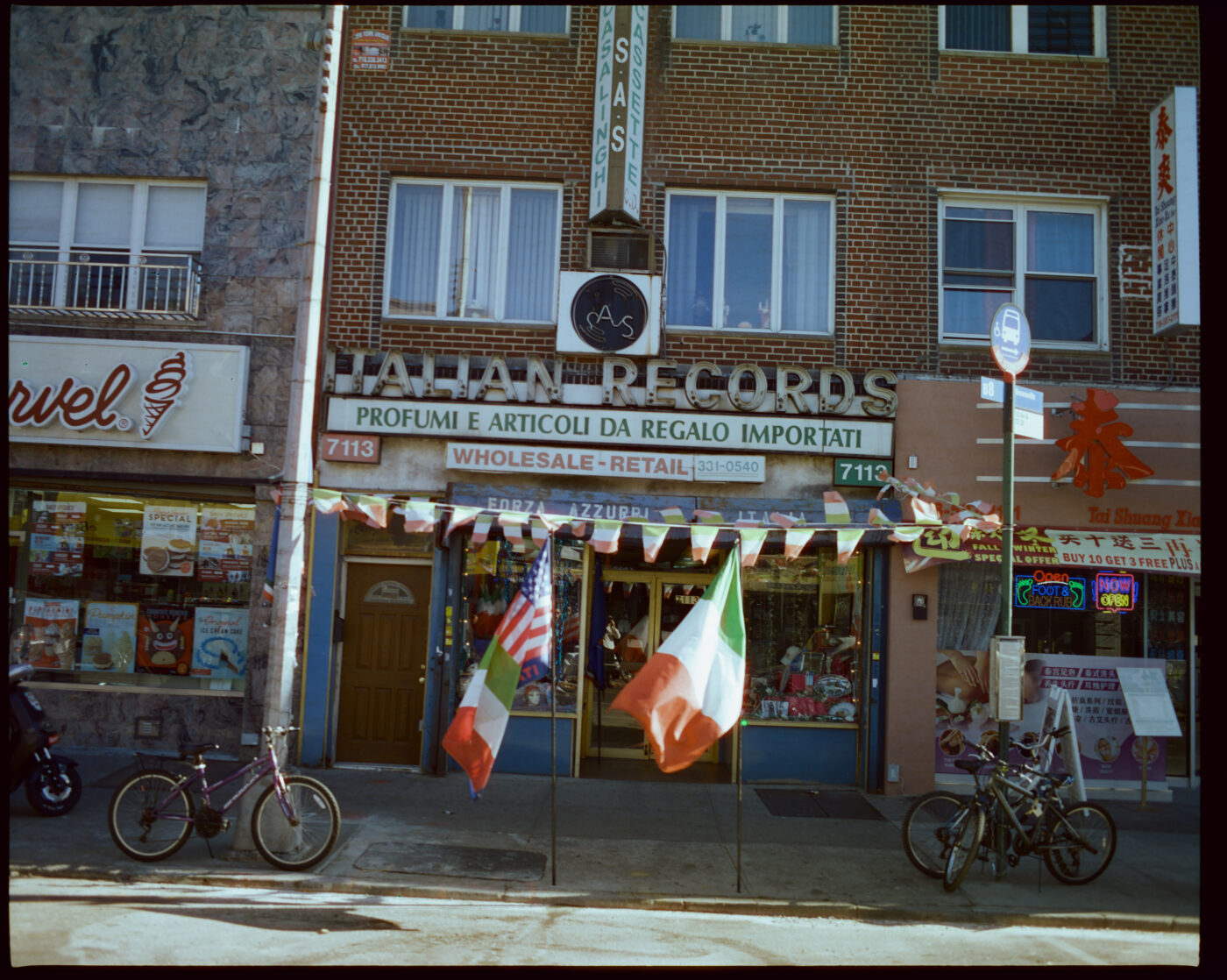
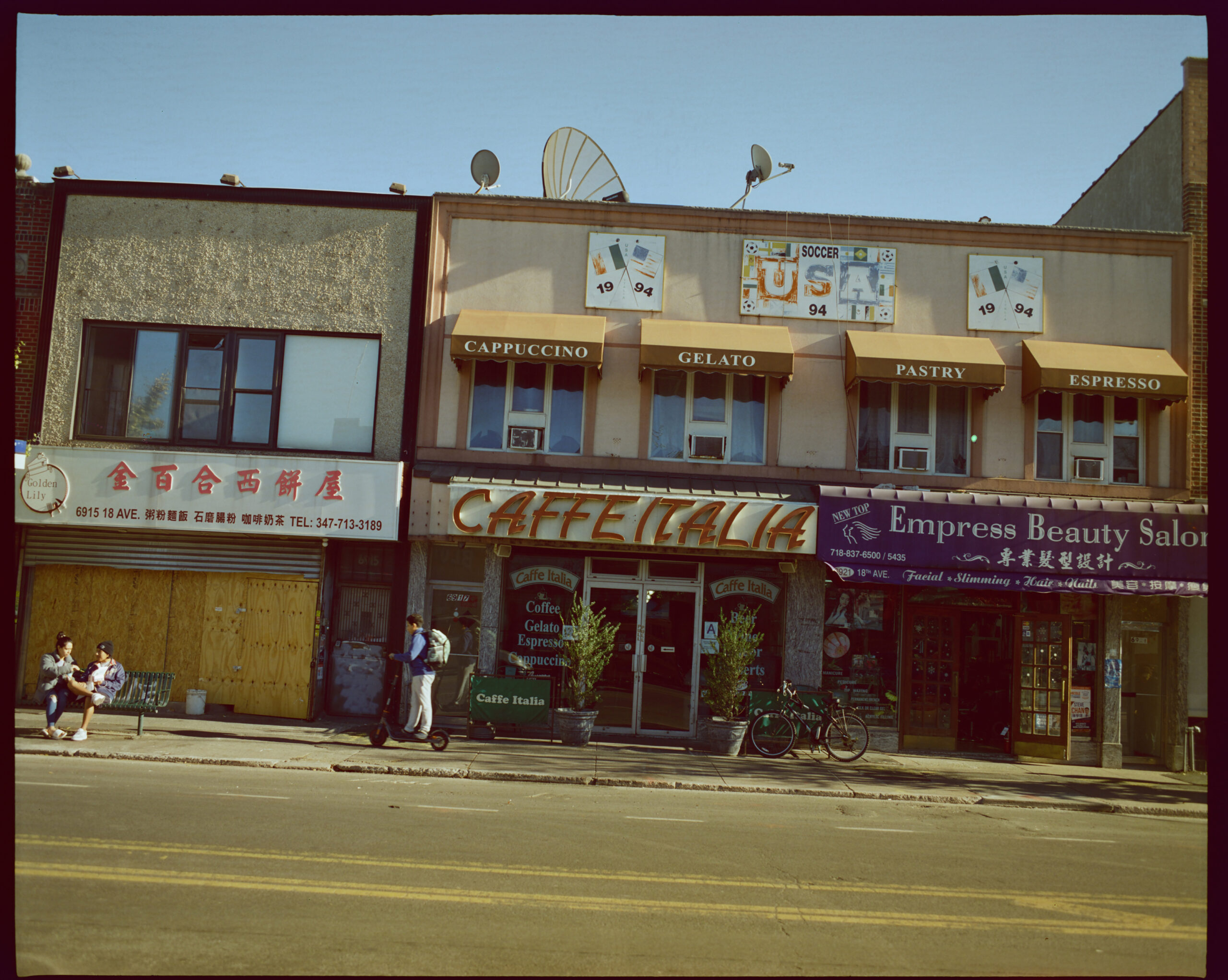
Scenes like this play out across the borough. On 18th Avenue in Bensonhurst or Court Street in Carroll Gardens, families like mine in Brooklyn’s old Italian neighborhoods are stuck on repeat. That repetition, paradoxically, betrays the heritage our Italian forebears left us: the capacity for adaptability and change that created a living, evolving Italian-American culture, especially in what we eat.
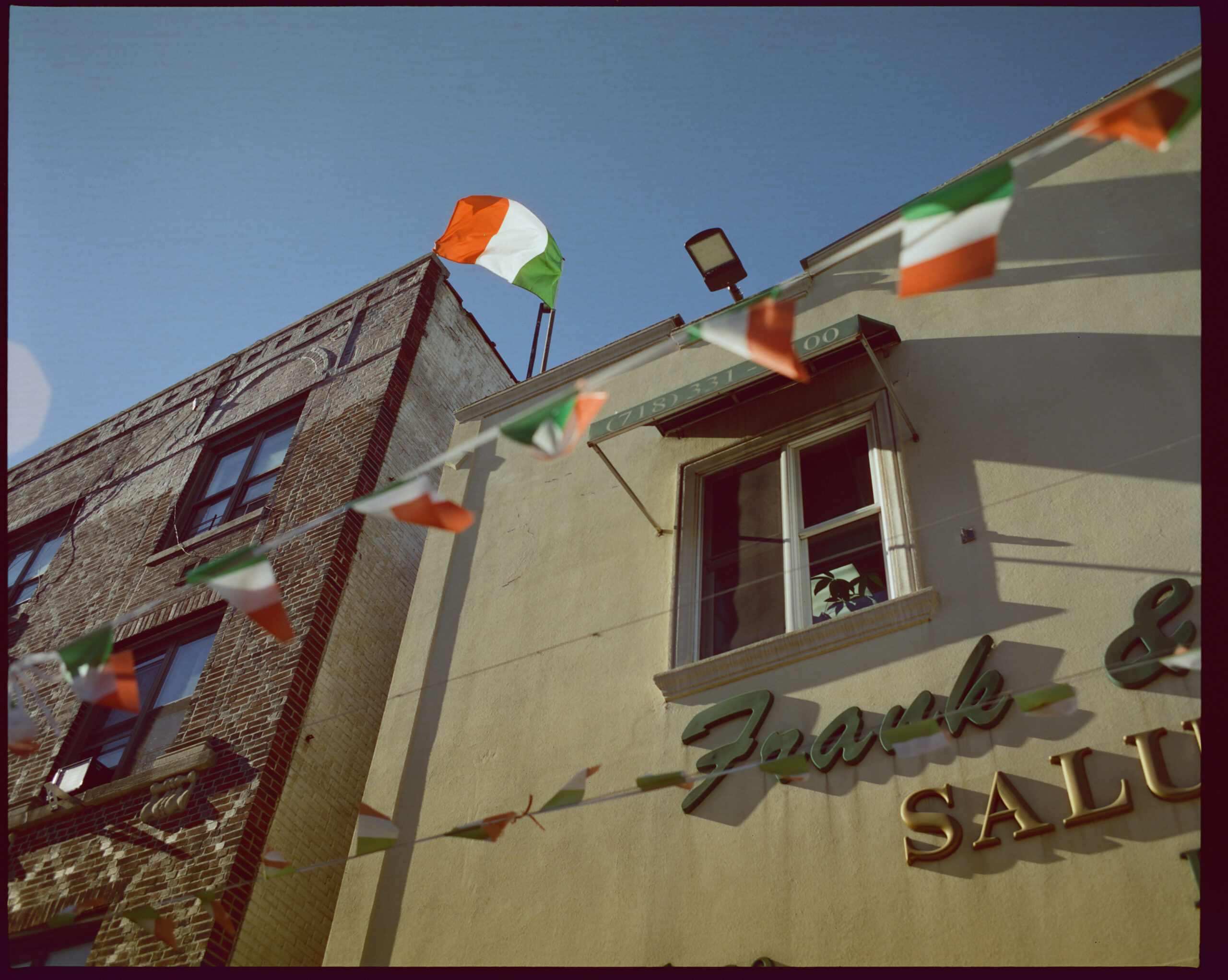
L&B began in 1938 as a horse-drawn spumoni cart. I had always assumed that made the man behind the cart Neapolitan. Pizza in one hand, iPhone in the other, I discovered that Ludovico Barbati immigrated in 1917 from the rural village of Torella dei Lombardi, far from Naples’ spumoni and even farther from Palermo’s sfincione. He didn’t cook what he learned from his grandparents or great-grandparents. He improvised by combining several Italian traditions, none of which were his.
Before Brooklyn’s farmland became suburban neighborhoods, Italian immigrants in 19th-century Manhattan lived in tenement blocks on the Lower East Side and in Harlem. They organized into buildings with neighbors from the same village who spoke the same dialect. In the early 20th century, when they followed expanding subway lines to the outer boroughs, Sicilians, Neapolitans, and Calabrians began living side by side. In places like Bensonhurst, they found shared habits and pleasures, and mixed customs and recipes they never would have known back in Italy.
Bensonhurst became America’s largest Italian enclave, a Mezzogiorno melting pot, but drugs, mafia violence, and urban decline led second- and third-generation Italian Americans to move away. In 2002, The New York Times reported that the old neighborhood was “losing its Italians.” Between 1980 and 2000, half of Bensonhurst’s 150,000 paisans followed expanding highways to Staten Island and New Jersey. Those who stayed dug in their heels, turning preservation into a defensive wall around Brooklyn’s shrinking Italian presence.
“You gotta understand,” Joseph Caputo, owner of Caputo’s Fine Foods, told Condé Nast Traveler in 2025, “the community wants you there, and they don’t want you to change much; so in order to change—you still need to fit in. All of the old school Italians that come in—we want to make sure they don’t feel alienated.”
Bensonhurst native Thomas Perone, owner and chef of Brooklyn Roots in Bay Ridge, thinks differently.
“We’re not a museum for Italian Americans,” Perone says of his restaurant, with its neon ‘Old School Italian’ sign in the window.
From my seat at the bar, I watch recognizable, red-sauce-laden dishes stream from the kitchen. Arancini and mussels fra diavolo appear alongside new inventions inspired by the restaurant’s regulars, like the Matty Guns Special: a mountain of rigatoni vodka with sausage, meatballs, mozzarella, and a cloud of whipped ricotta.
“Everyone thinks I’m the red-sauce guy and that Brooklyn Roots would completely satisfy me,” Perone tells me.
For a while, it didn’t. Three years after opening Brooklyn Roots, Perone struck out on his own again with The Corner, a fine-dining bistro on the same block. Though he was proud to bring upscale cooking to Bay Ridge—the kind he learned in storied kitchens like Gargiulio’s in Coney Island—he eventually closed The Corner and moved Brooklyn Roots into its larger space. There, even pizzeria fare gets the rigor of the Institute of Culinary Education graduate.
“Take our chicken marsala,” Perone says. “We don’t just throw onions into the pan with oil for a few seconds. We caramelize them. We use roasted cremini mushrooms. It looks like chicken marsala, but it’s not what you expect.”
Perone says the trick is knowing how much you can change without losing what people love about these dishes. He’s comfortable with modification, but there are some adjustments he’ll never make, like replacing ReaLemon juice from the green bottle. “Italians have called me out for not using fresh lemon juice,” he confesses. “But I don’t care. That’s what my Sicilian grandmother used. That’s how I was raised.”
Where Perone asks how far he can stretch red-sauce rules without breaking them, Paul D’Avino wonders why the rules exist at all. Growing up in an Italian-American suburb of Connecticut, a generation removed from the old neighborhood, the co-chef of Cafe Mars in Gowanus is unburdened by how things have always been done.
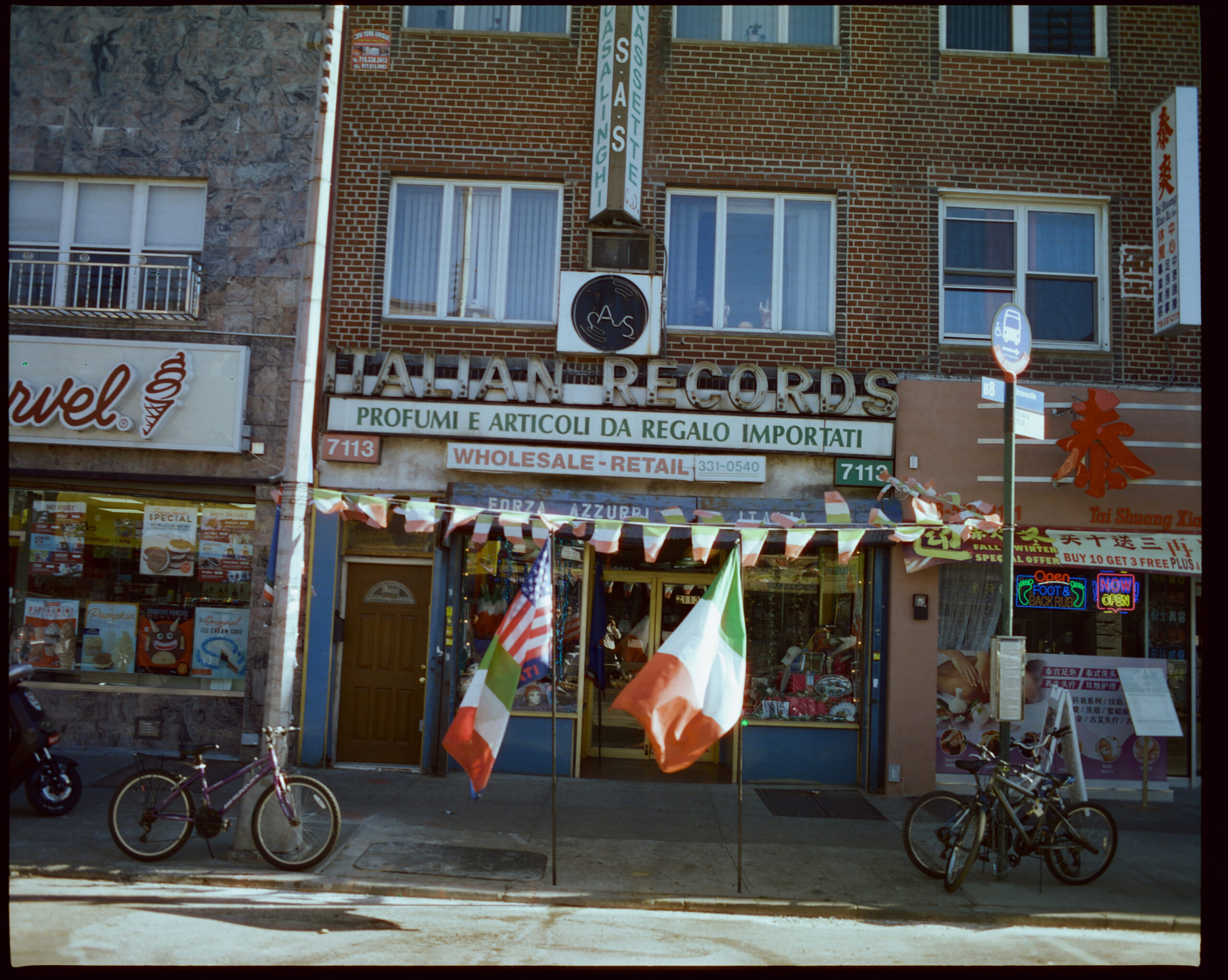
An alum of the boundary-pushing restaurants wd~50 and Aska, D’Avino set out to open a Japanese izakaya. He and co-chef Juan David Gracia pivoted to what they call an “unusual Italian restaurant” after finding the perfect space: an old Italian deli across the street from the building where D’Avino’s great-grandfather lived after immigrating from Corsano.
Cafe Mars replaces the red-and-white check tablecloths that defined Italian Brooklyn for generations with Memphis Milano zigzags and playful neon lighting. It sets the tone for remixes of Italian-American traditions, like the Feast of the Seven Fishes, our typical Christmas Eve dinner. D’Avino invites me to celebrate it with Sicilian-Arbëreshë pastries filled with whipped brandade, and bucatino topped with caviar, uni, and nori.
“All traditions were new at some point,” D’Avino tells me. “They’re just ideas that enough people decided to keep doing.”
Tossing out conventions, like never pairing cheese with fish, has earned Cafe Mars attention, but it’s not for show. D’Avino always has a point. “If miso can cure fish,” he asks, “why can’t Parmesan do the same?” His Parmesan-cured Montauk fluke subverts steaming acqua pazza, turning it into an ice-cold tomato bath. Served as a crudo, the fish gets a generous coating of grated cheese.
For D’Avino, the rules of Italian cooking—and the distinction between Italian and Italian-American cooking—are imaginary. “Every culture is sautéing, braising, and making some version of noodles and dumplings,” he explains. “We’re looking for connections everywhere, and they’re abundant.”
The rules aren’t imaginary for Emiliano Cammardella and Rossella Episcopo, who moved from Cilento to New York in 2012.
“Little by little, we started looking for Italian food, partly because it’s what we like to eat, and partly because nostalgia kicked in,” Cammardella tells me. “We’d walk into restaurants and pastry shops with Italian surnames on the door and leave disappointed. There was nothing Italian inside.”
That disconnect led them to open Flora, their bright, airy Park Slope restaurant, where executive chef Episcopo prepares dishes like linguine coated in silky broccoli rabe sauce and finished with drops of colatura, the juice of anchovies captured in ancient menaica nets.
Episcopo allows creative freedom in form and presentation, but the core elements—colatura from Pisciotta and crunchy dried peppers from Matera—are non-negotiable. “You can shuffle things around, change the order of the elements,” she says, “but you can never change the elements themselves.”
The couple carefully studies the traditions they once took for granted in Cilento. They jump over hurdles and through hoops to import the ingredients they need to recreate their Campanian dishes faithfully. They say it’s important to show people there’s more to southern Italy than pizza and pasta.
“For us southerners,” Cammardella says, “Naples is a cultural beacon, having been the political and cultural capital of the south before Italy was unified. Everything that comes from Naples deeply reflects our southern culture. The cultural connections between Naples, the Amalfi Coast, Cilento, the Vallo di Diano, and Lucania create an immense and unique cultural heritage.”
Cammardella and Episcopo would resist the comparison, but I see a clear line from their method to Barbati’s. Nearly a century after he combined spumoni and sfincione, Flora puts Cilentan baccalà and Neapolitan-style polpo in dialogue. Each dish adheres strictly to the rules of its place of origin, but those places have different traditions, dialects, and ways of doing things. Taken together, Flora’s menu shows the same spirit of adaptation southern Italians have always practiced in Brooklyn.
Having seen how far Italian Brooklyn has moved beyond the old neighborhood, I end up where I always do. At L&B, I sit outside and order a square slice. It comes the way it always has, crispy and tangy on an unfussy paper plate.
I set out believing the old neighborhood was stuck on repeat. But in this concrete yard that seemed never to change, the wheels that Barbati’s spumoni cart set into motion never stopped turning. L&B became a pizzeria, then a restaurant that dominates the entire block. In 2024, the family opened a second location in Dumbo, where thousands enjoy square slices and spumoni in the shadow of the Brooklyn Bridge.
From Bay Ridge to Gowanus and Park Slope, Barbati’s successors are at work altering, reworking, and even improving our old traditions. As the years pass and some of their changes stick, will I get stuck in my ways, like those who came before me? Maybe that’s how it has to be. The next generation of Brooklyn Italians will need something to push against—an impetus to tweak, refine, and amend—to give Italian Brooklyn a new form for their time.