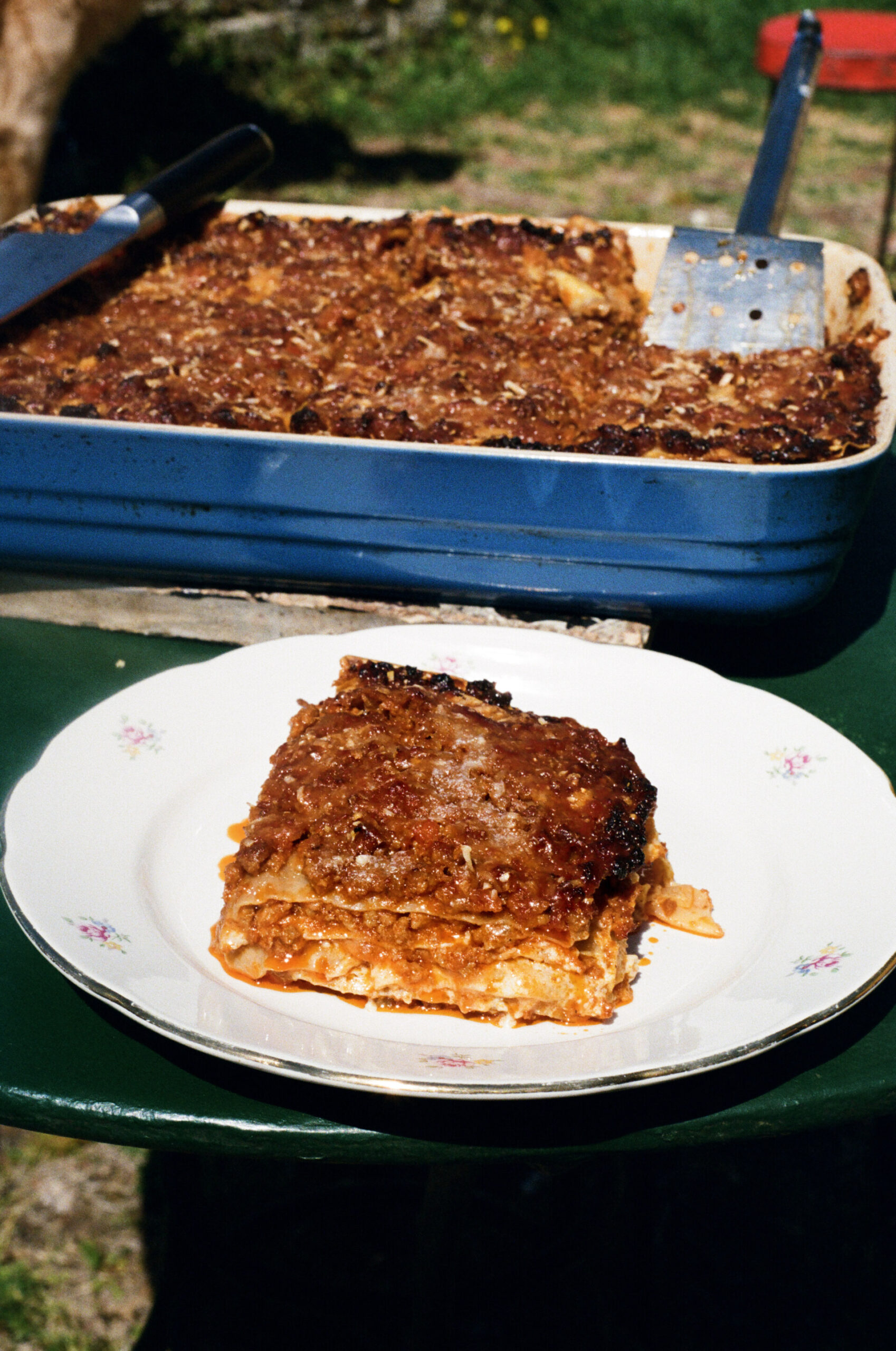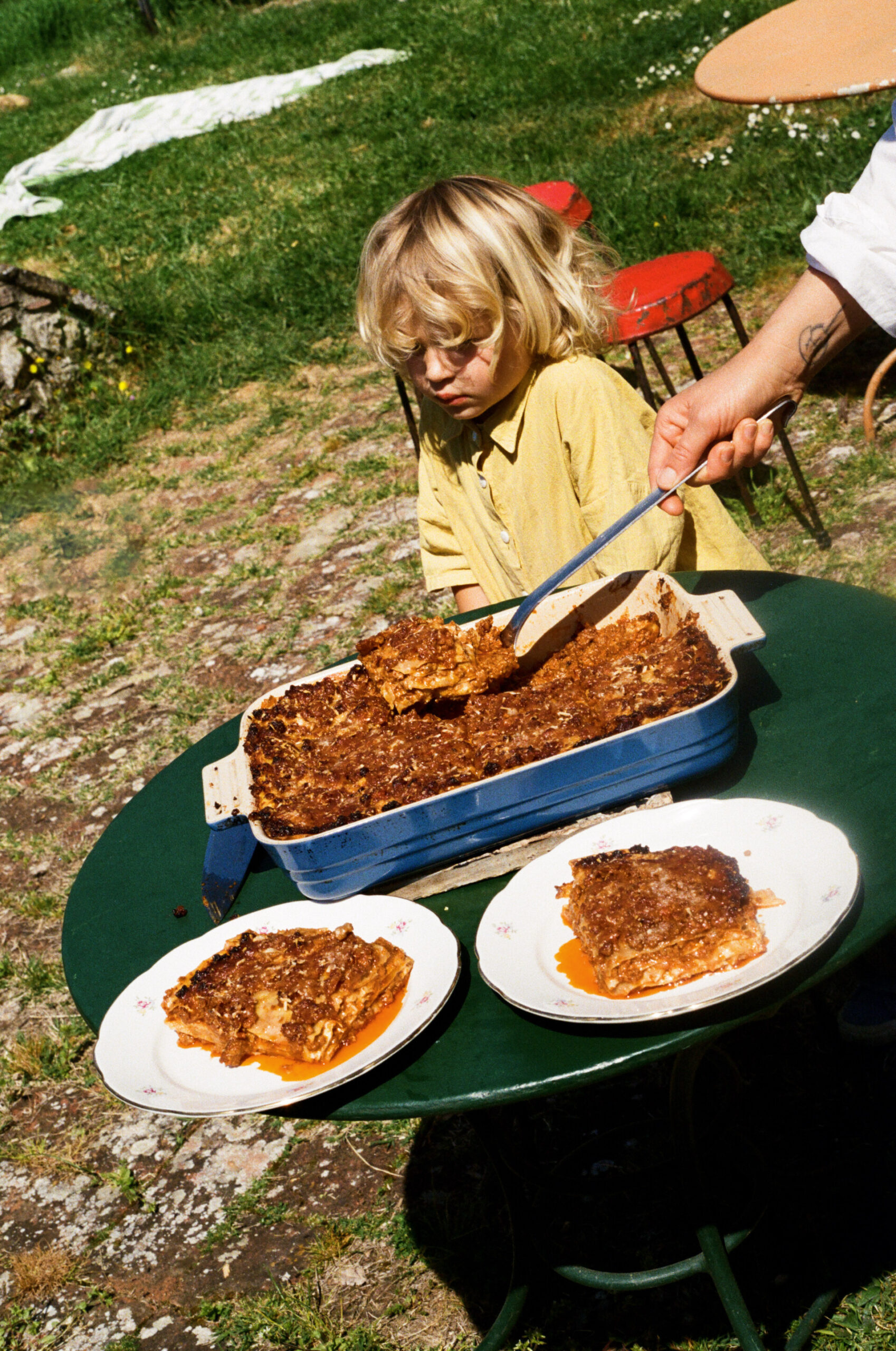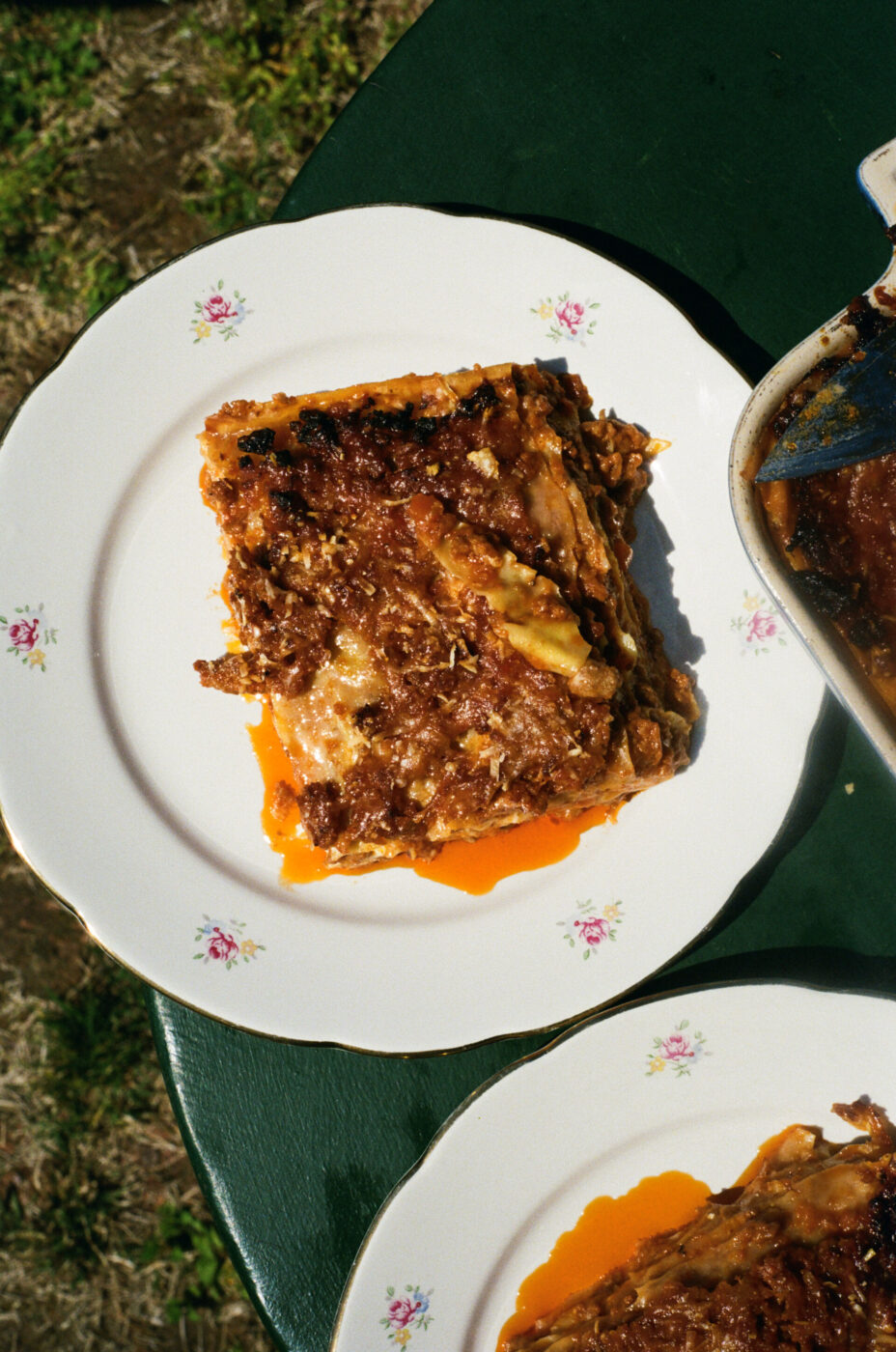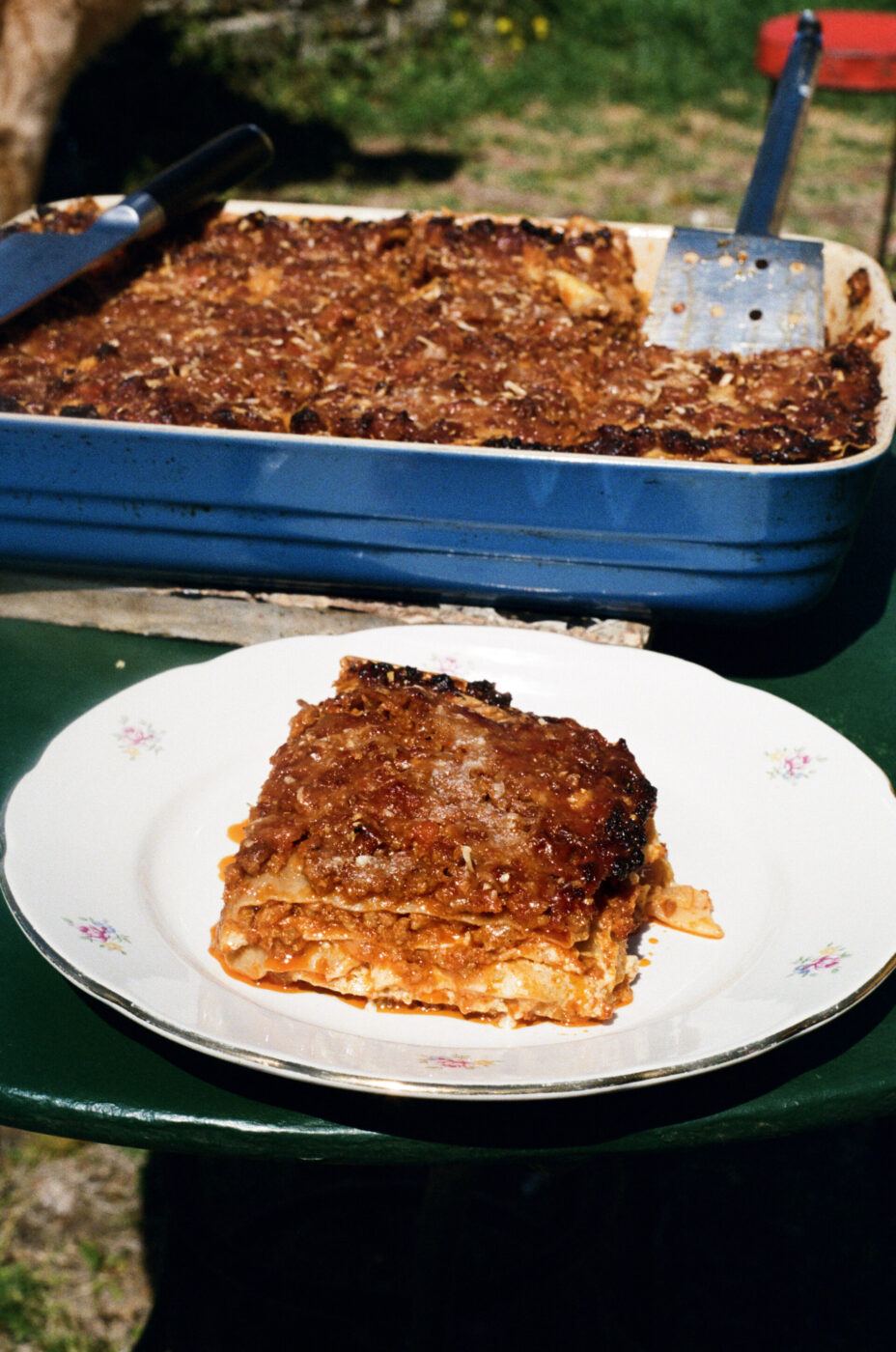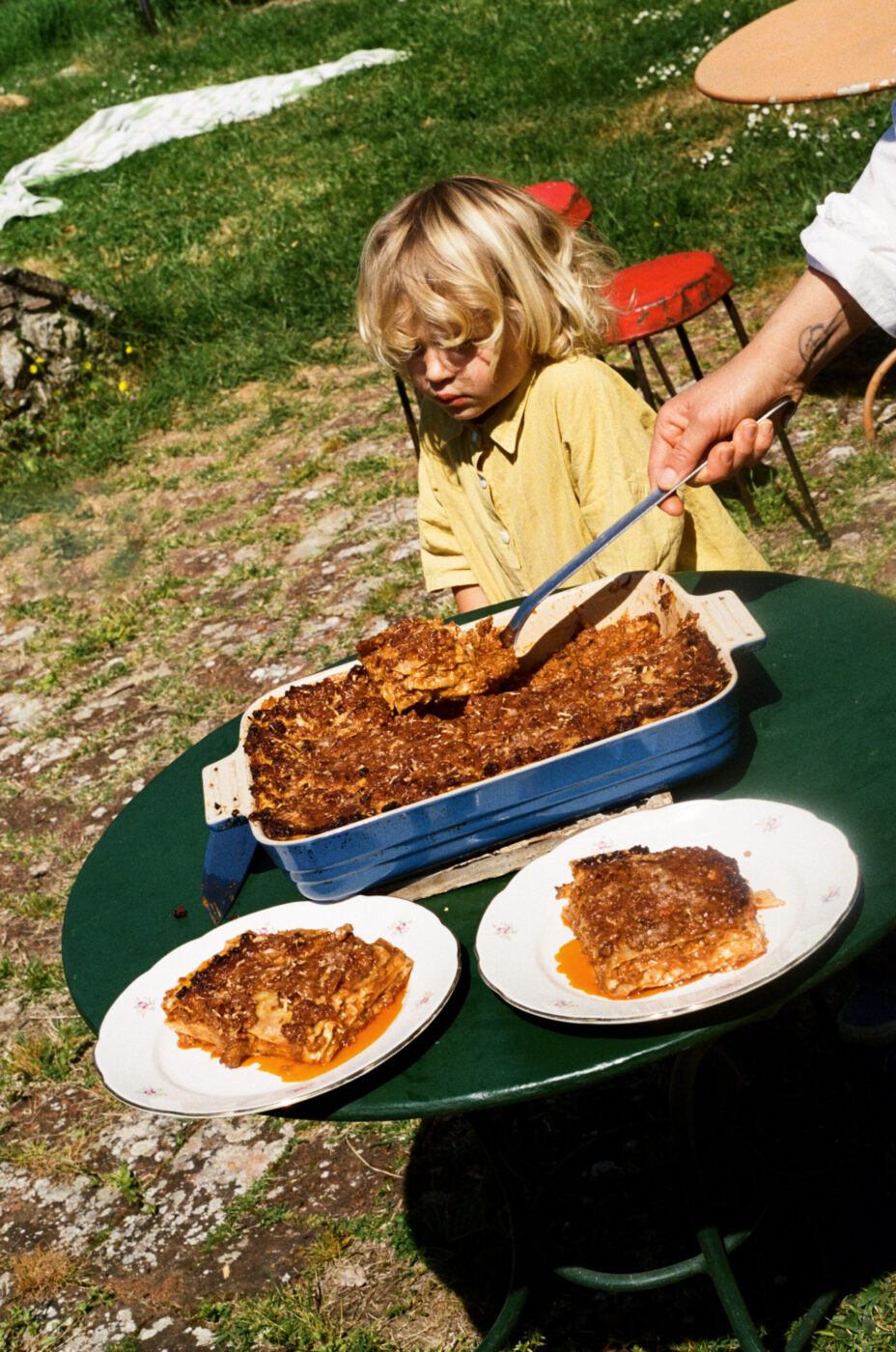
Lasagna is a dish everyone wants to eat and no one wants to make; that’s why it’s so often saved for special occasions here. My mother would make it on my birthday—the kitchen loud, people talking over each other—then it would come out of the oven, and everyone would scramble for a piece. For a moment, all was quiet. I’d take that over cake any day.
On paper it’s simple: ragù, béchamel, pasta. In some ways, lasagna is just a platform for ragù, with the béchamel holding everything together between the sheets. None of it is complicated, it just takes time, and somewhere along the way it becomes greater than the sum of its parts.
It’s also a flexible dish, one that can change based on what you have on hand. Running short on ragù and béchamel once led to a thinner lasagna—crunchier, with more bite, but just as good. Different meats work too, or small additions like mushrooms, a pinch of cinnamon in the ragù, herbs in the milk, or spinach in the pasta. At the end of the day, lasagna is defined by its structure, not ingredients, so there’s always room for improv. That said, this is the recipe I always come back to, passed down through the generations in my family.
Pro Tips: One, I add seasoning at each stage of the process as I find it fills the dish better. Two, it’s best to make the béchamel right before assembling. Three, you can never have too much ragù. Remember that while decadent, lasagna is also a delicate dish—it need not be smothered.
LA LASAGNA
Serves 8-12
Prep Time: 45 minutes | Cook Time: 3.5 hours | Total Time: 4 hours 15 minutes
INGREDIENTS
For the Ragù:
- 2 large yellow onions (≈200-250 g total)
- 2 carrots (≈150–200 g total)
- 2–3 celery stalks (≈100-120 g total)
- 1–2 garlic cloves
- 2–3 Tbsp extra virgin olive oil
- 300–400 g minced pork (or sausage meat)
- 600–700 g lean minced beef
- 200–300 g canned plum tomatoes (or tomato paste, if preferred)
- 1 cup (240 ml) red or dry white wine
- 1 bay leaf
- Salt and pepper, to taste
- Optional: 1 cup (240 ml) whole milk
For the Béchamel:
- 1 L whole milk
- 100 g butter
- 100 g flour
- Pinch of nutmeg
- Salt and pepper, to taste
To Assemble:
- 500 g dried pasta sheets (or 500 g fresh pasta dough)
- Healthy amount of Parmigiano Reggiano, grated (≈ 100-150 g)
- 9 x 13 in (23 x 33 cm) baking dish (should be at least 3 in/7.5 cm deep)
PREPARATION
1. The Ragù
- Finely chop the onion, carrot, celery, and garlic to make your soffritto; I enjoy doing this by hand to get small, uneven chunks—it’s quite meditative. Add to a large pot over medium heat with a generous glug of extra virgin olive oil. Sauté until translucent and tender, but not burnt.
- Season the soffritto with a pinch of salt and pepper, then add the meat. I like to add the pork first to let the fat render before adding the beef. Cook over medium-high heat until the meat is nicely browned.
- Add the wine and cook until the alcohol has evaporated. Then, add in the tomatoes. If using plum tomatoes, break them down gently with a fork. (This recipe relies heavily on the meat, so if you prefer, you can replace the purée with a smaller amount of tomato concentrate.) Add the bay leaf, lower the heat almost completely, and let cook slowly, partially covered, for 3–4 hours. Stir occasionally, adding water or beef stock if the sauce becomes too dry.
- If using milk—which will help break down the meat and make the ragù silkier—add it in 30–60 minutes before the end. After about four hours, turn off the heat and let cool slightly. (Treat yourself to a spoonful or two, perhaps with some bread.) You can use it right away, though I recommend letting it rest in the fridge overnight to deepen the flavor.
2. The Pasta
- If using dried pasta sheets that say “no boil”, skip this step; though if your box doesn’t say “no boil”, you can cook the dried sheets in salted boiling water for about 30 seconds each to prevent the sheets from getting crunchy.
- If using fresh dough, roll it out by hand or machine and cut into roughly 12 sheets (or more depending on your baking dish), sized to the length of your tray and about half the width.
- Bring a large pot of salted water to a boil. Cook each fresh sheet for about 1 minute, then lay them out flat on a clean towel or tray to dry and cool before assembly.
3. The Béchamel
- Place a small pot over medium heat and warm the milk until hot, but not boiling.
- In a separate medium saucepan over medium heat, melt the butter. Whisk in the flour slowly until it forms a smooth paste: this is your roux.
- Lower the heat of the saucepan and gradually add the warm milk to the roux, whisking constantly. The roux will take in the milk and become increasingly silky and smooth. Continue whisking until the sauce is thick enough to coat the back of a spoon but still easily pourable. Season with salt, pepper, and a pinch of nutmeg, then set aside to cool slightly.
4. Assembly & Baking
- Preheat the oven to 180°C (350°F).
- Coat the bottom of your baking dish with a thin layer of béchamel and ragù, then cover with a layer of pasta sheets. Add another layer of béchamel, a layer of ragù, and a generous dusting of Parmigiano Reggiano. Ensure the béchamel covers the pasta edge-to-edge, but don’t overdo it.
- Repeat this layering process 2–4 more times, depending on the depth of your tray. Top with a final sheet of pasta, a thin spread of ragù, and a final handful of Parmigiano.
- Lift the tray, feel its weight, admire your creation, and place it in the oven. Bake for 25–35 minutes, or until a knife slides easily through the center.
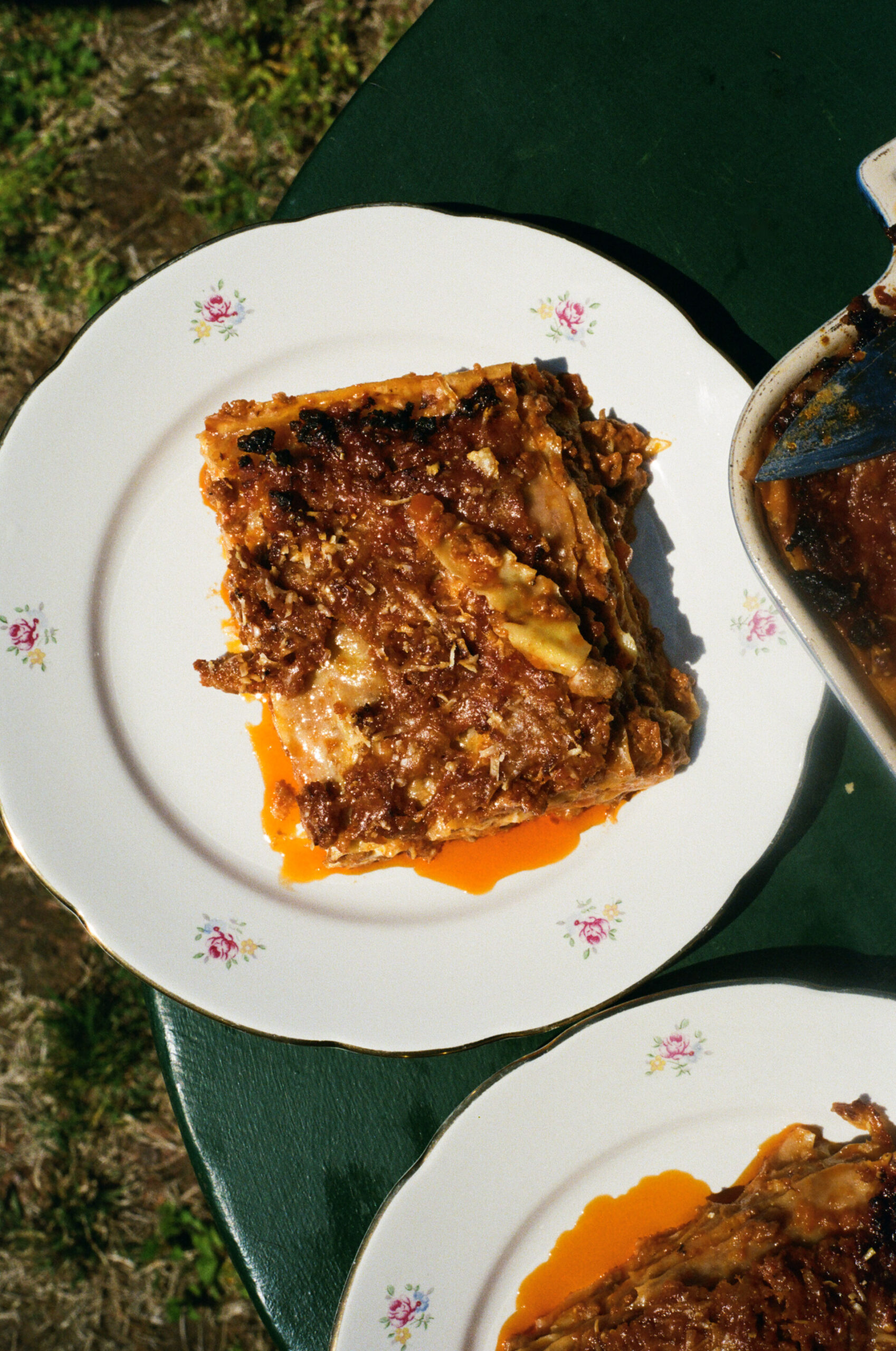
- Let the lasagna rest for 10–15 minutes to set. Admire it one last time, cut into generous squares, and serve hot.