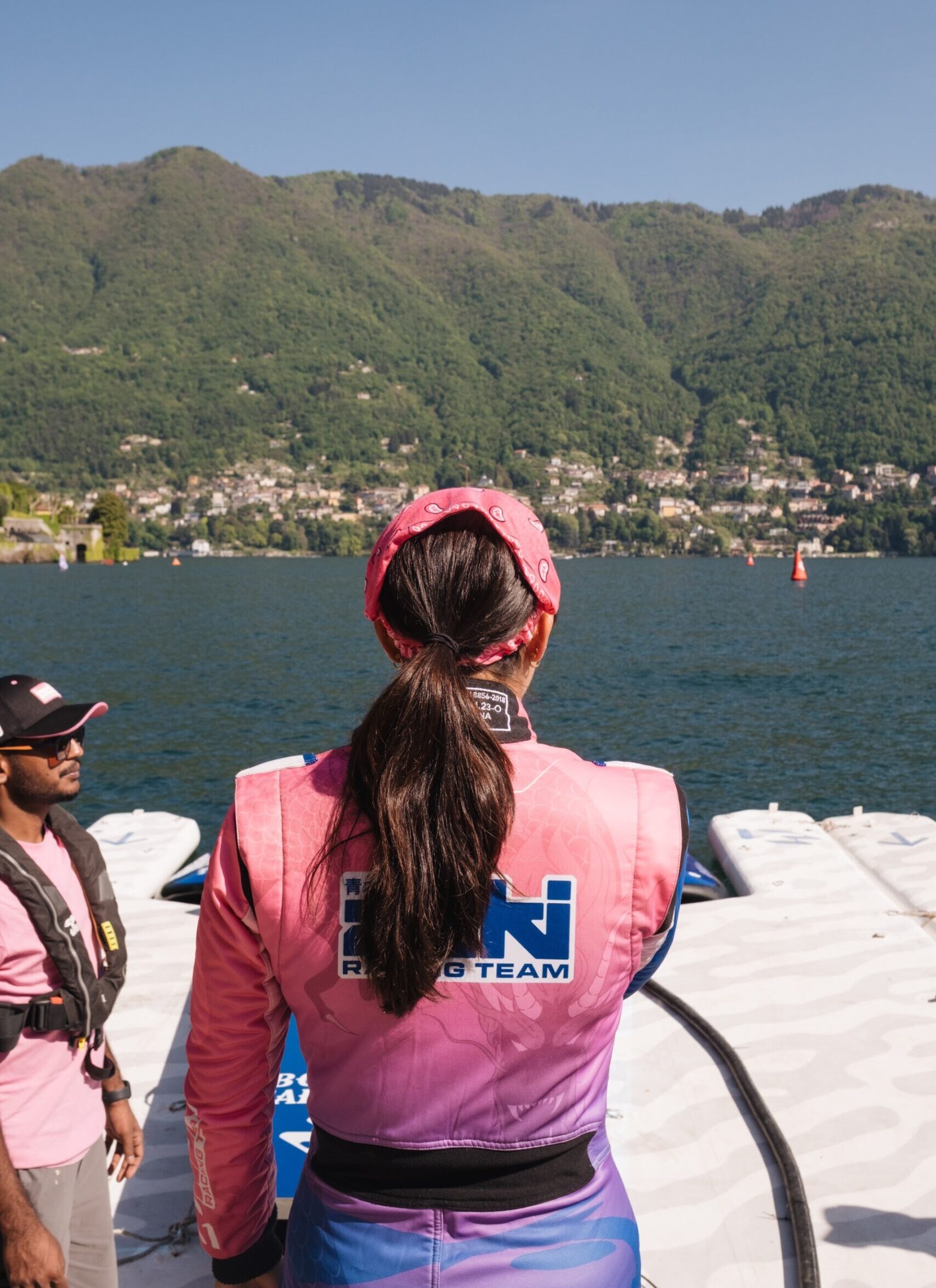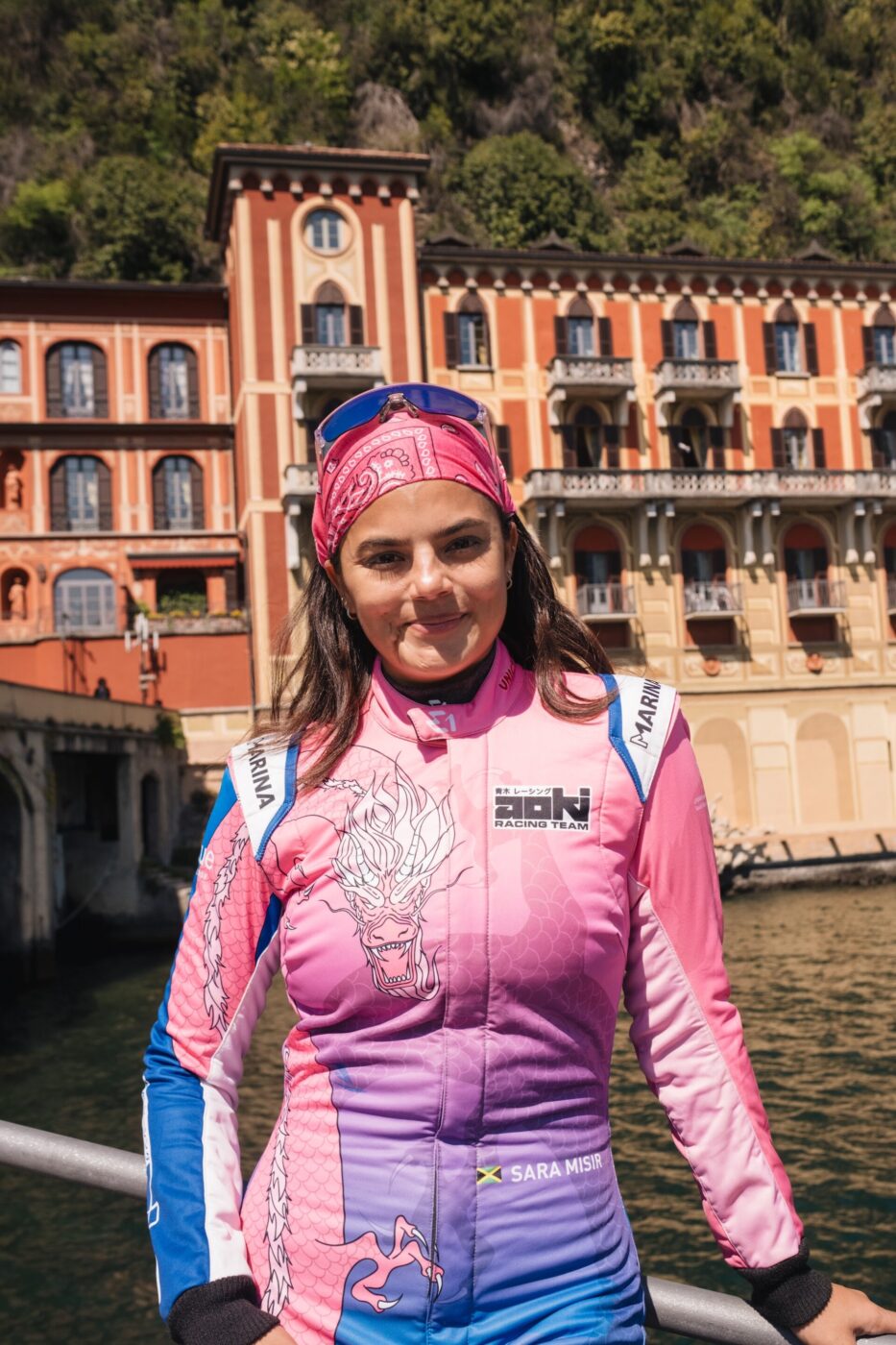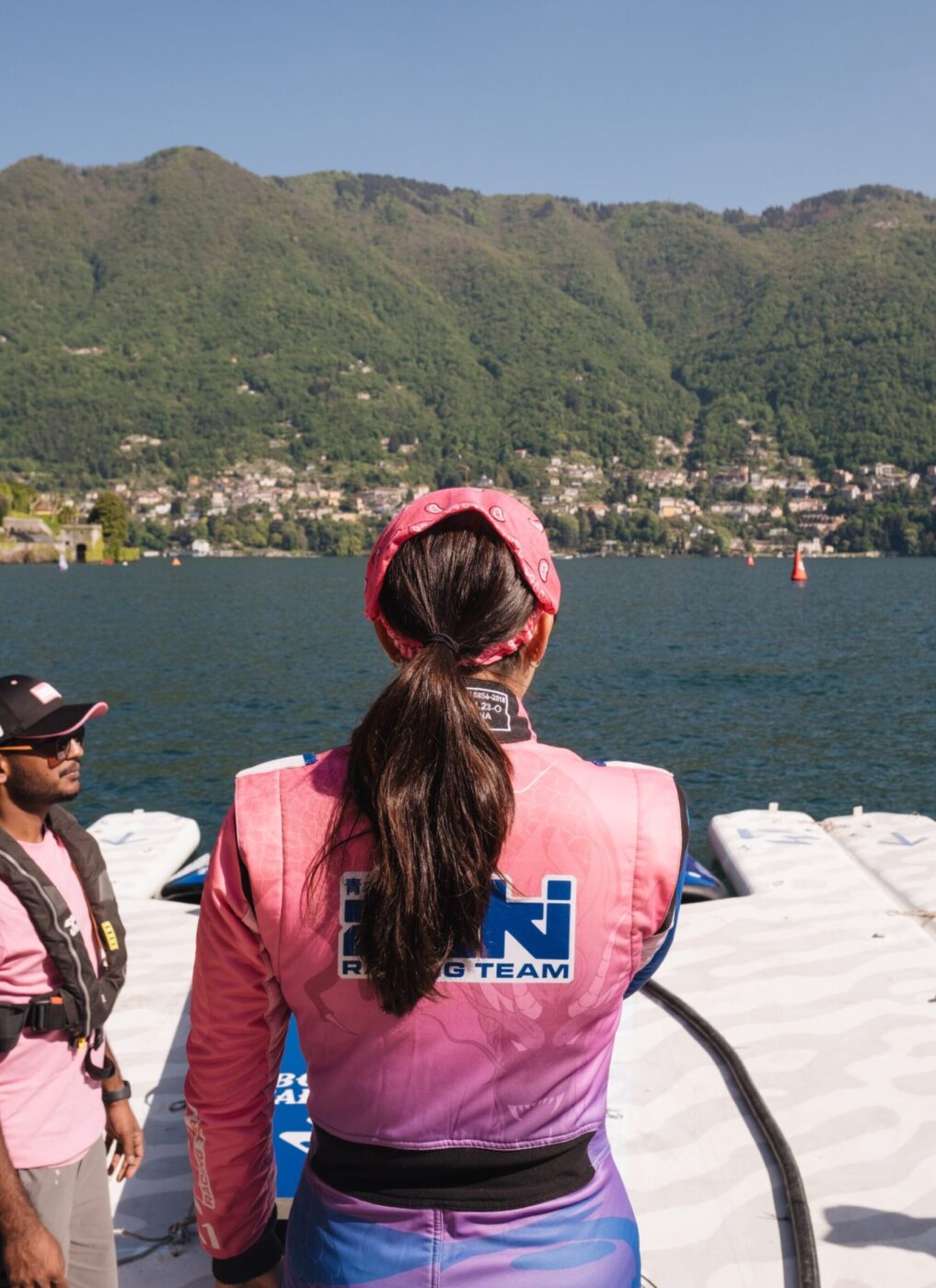
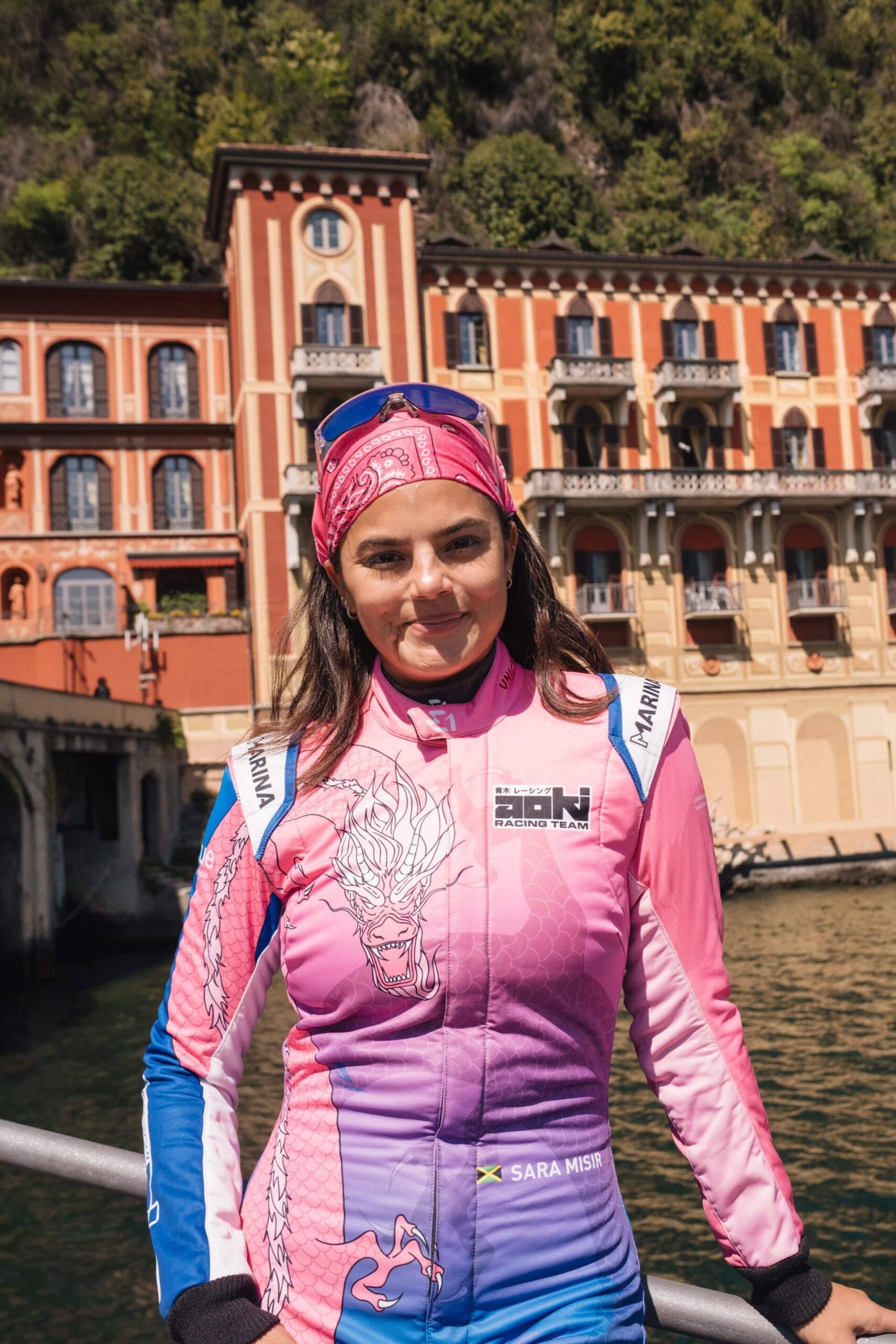
Sara Misir, 28, has never been able to sit still. A former equestrian champion, Formula Women racecar driver (the Caribbean’s first and only), and now E1 Series boat racer, she has built a career out of saying “yes”—and out of refusing to let injury, inexperience, or expectation define her limits. One gets the sense that if you told Sara something was impossible, she’d nonchalantly prove you wrong. She is, after all, metaphorically and literally built differently, thanks to the four titanium plates in her face.
Born in Kingston, Jamaica, to a Jamaican father and an Italian mother from Rimini, Sara has spent her life bridging two worlds. These days, when the racing calendar allows, she retreats to her mother’s hometown on the Adriatic coast, where she lives with her brother and recharges on her nonna’s pasta con salsiccia.
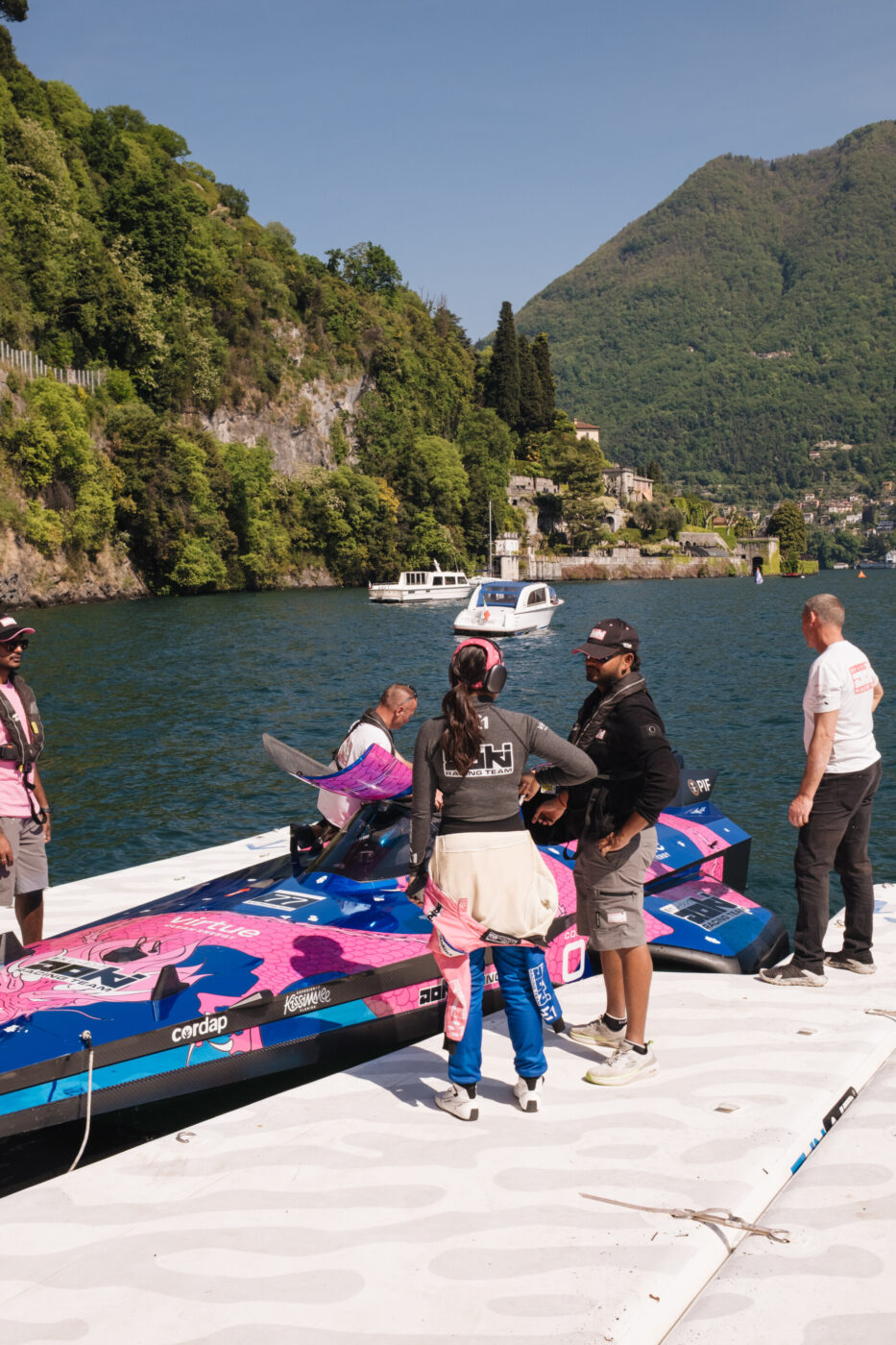
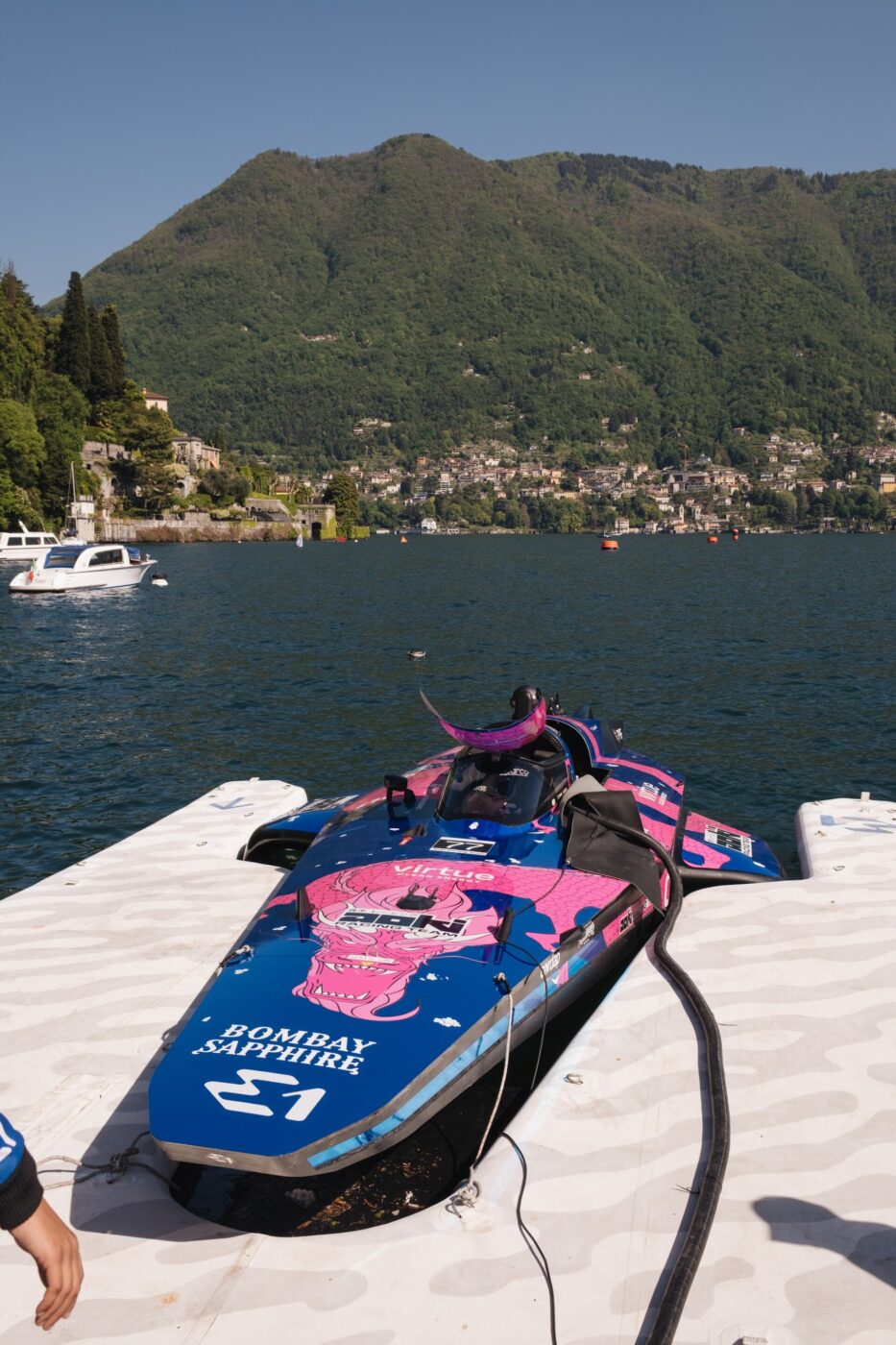
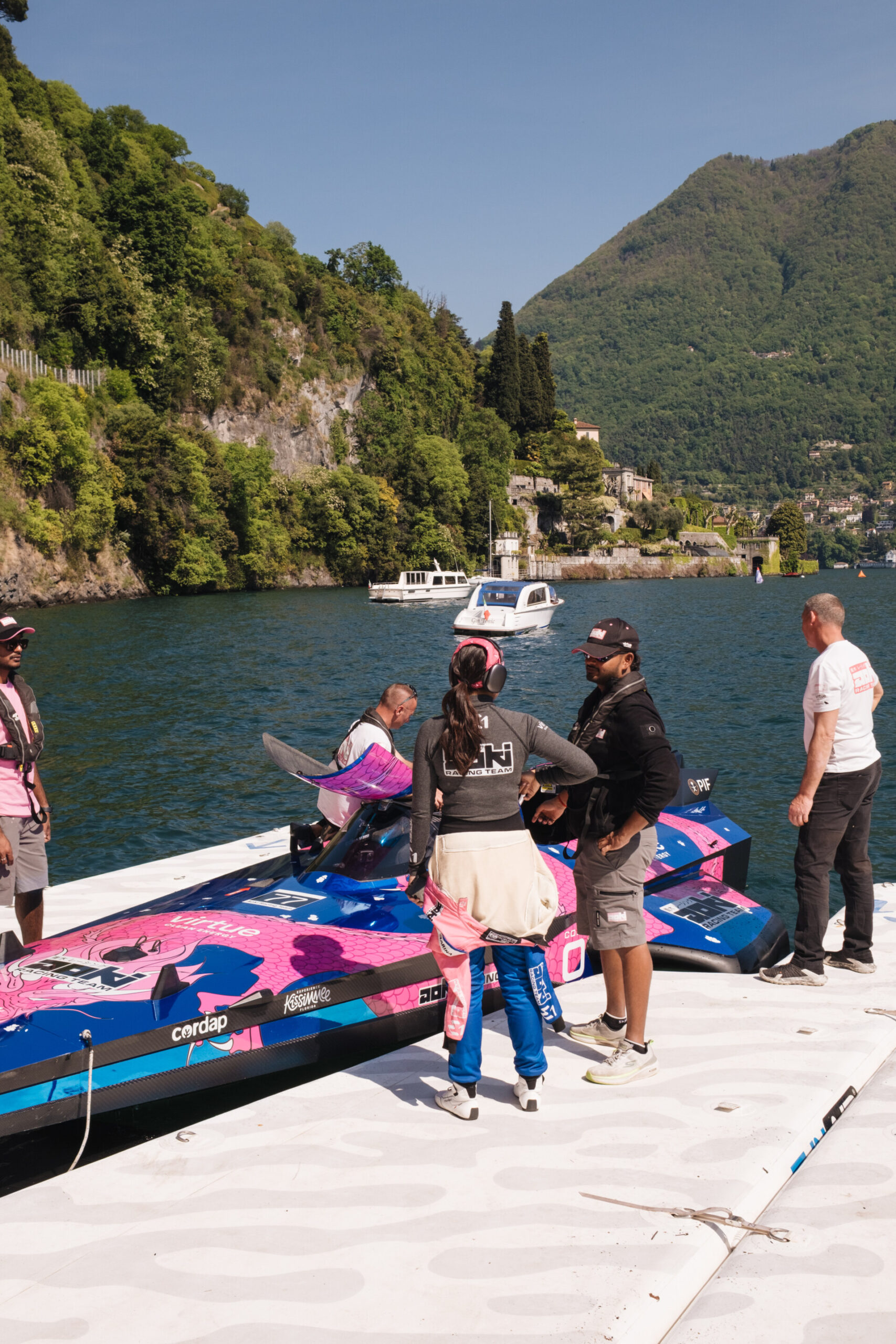
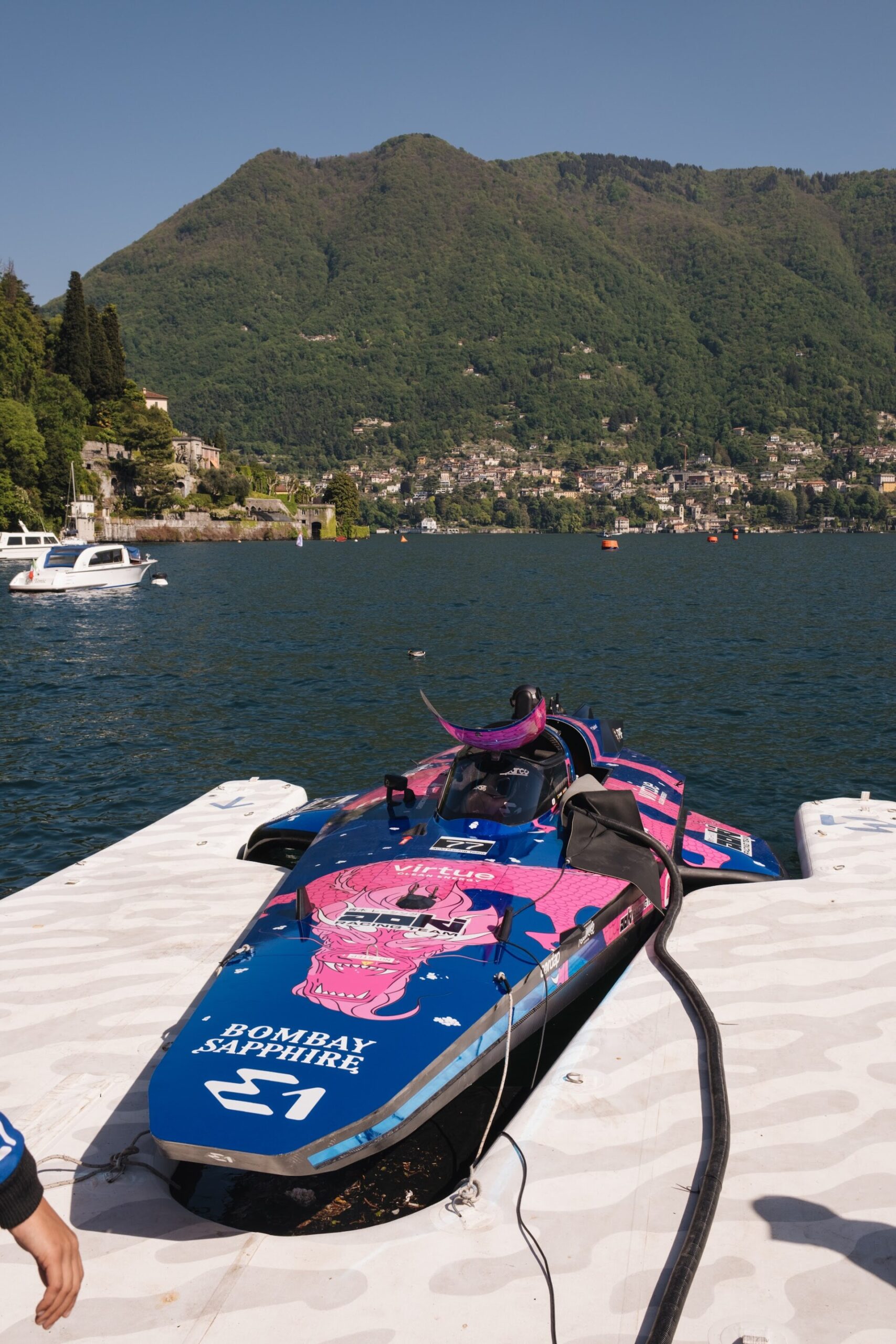
I meet up with Sara at La Villa d’Este in Lake Como for the European kickoff of the E1 Series, the world’s first all-electric powerboat championship featuring the RaceBird—a hydrofoil vessel that practically flies above the water to reach speeds of 50 knots (93 km/h), all while leaving zero emissions in its wake.
Fresh off a historic win at the 2026 Jeddah Grand Prix, where she was named Pilot of the Day, Sara reflects on the accidents that redirected her path, the sacrifices that shaped her career, and why Kingston and Rimini have more in common than you’d think.
Gabrielle Grangie: Let’s start from the beginning, where did you grow up?
Sara Misir: I was born and brought up in Jamaica, but my mom is 100% Italian; she was born in Rimini. My dad is Jamaican. My mom moved to Jamaica when she was 26, met my dad, had my older brother and I, and now here I am.
GG: What was your introduction to competitive sports?
SM: I tried every sport I could growing up—football, volleyball, but my first passion was riding horses. That’s how I entered the world of equestrian sports; it was my everything. But on my 17th birthday, my horse kicked me in the face while we were training for the Pan American Games. I was working towards the Olympics to represent Jamaica, and I ended up breaking my jaw and my eye orbit. I actually have four titanium plates in my face as we speak—I’ve lost count of how many screws.
GG: How did people react?
SM: That was January 2015, and everyone was asking me, “What are you going to do?” which seemed bizarre to me. I thought: I’m going to heal and go back to training. After a couple of months, I got back on my horse—and then, at the end of November of the same year, I fell and broke my shoulder in half. I had to get another metal pin just as I was going into my final year of high school. That’s when my parents told me to take a break, and I couldn’t really argue with them, plus I had exams. But I couldn’t sit still. Then my dad introduced me to go-karting. I fell in love with it. I’d actually raced motocross when I was younger, but my mom wasn’t a fan, so that didn’t last very long.
GG: How did karting compare to being an equestrian?
SM: I always loved the concept of racing. But I was coming into it at 18 when most of my peers had been doing it since they were four or five. I went from winning horseback riding competitions all over the world to putting in double the work just to come last. I had to tough out the learning curve.
GG: How did you manage that?
SM: I had a village around me. A great support system that kept me going. After two years, I tried my hand at racecars. Then, at the end of COVID, this competition came up called Formula Women—thousands of applicants from female drivers around the world, competing for a position with McLaren to race in the GT4 in the UK. At that point, I was also finishing my master’s in architecture, so I asked my parents if I could take a break from my studies to pursue racing. I thought: “It’s now or never,” especially as one of the “older” applicants.
GG: And you won!
SM: I won a position on the McLaren team! It was crazy. I had to go to the UK during COVID, on my own, to race. Then to Sweden for the ice-racing round—which, in Jamaica, we don’t have much experience with. I actually found an ice driving school in Livigno, and trained there for one day before flying to Sweden; I knew then that I’d be back.
GG: What actually is ice driving?
SM: It’s exactly what it sounds like. You’re drifting on ice, and your tires have needles on them for grip. But it’s incredibly difficult; the balance of the car and car control is completely different from driving on roads… It’s a lot of fun.
GG: How did the race in Sweden go?
SM: I placed second. It was the day where everything felt like it was starting to pay off; I had bet so much on this. I just cried all day. As a 24-year-old, it felt huge. I gained the full position with McLaren, did a year in the GT Cup, then went back to school, raced internationally on the side, and finished my master’s. It was a busy year.
GG: You must have sacrificed a lot.
SM: I had no social life, and parts of that were really difficult. But it was absolutely worth it. It opened the door to E1 and boat racing.
GG: And how did E1 come about for you?
SM: I was 26 when they contacted me. At that point, I was moving back home from university. I looked at my family and thought: “Well!” In Jamaica, you don’t get many opportunities, so I’ve never said no to one. What’s the worst that could happen? You get to try something new, see new places.
GG: Had you ever driven boats before?
SM: Never in my life. Not this type of boat, let alone boat racing. I had to get my licence before I could even try the RaceBird and do the dunk test. The E1 series has these special electric powerboats that look like birds flying above the water when you race, but they require a specific type of training.
GG: The dunk test?
SM: It’s one of the more intimidating parts of E1; it’s an immersion test for cockpit boats. You’re fully sealed into the cockpit, they strap you in, flip the boat into the water, and you have to learn to stay calm and get yourself out as it begins to fill with water.
GG: That sounds terrifying! Seeing where you are now, though, I understand you’ve had your fair share of training to stay calm in high-stress situations. How has the E1 series gone for you?
SM: I won my first race this year. It’s really been a journey, and a lot of saying yes, even when people looked at me like I was crazy.
GG: Do you have a pre-race ritual?
SM: I listen to my music on my headphones and focus. It can be anything from dancehall to “Volare” [by Domenico Modugno], which just feels right before getting on the RaceBird.
GG: You have incredible resilience.
SM: I live by the saying: “If you always do what you can, you’ll never be more than you are.” I’ve also always been competitive by nature. But I try not to compare myself to others. All you can do is try to be better than you were yesterday—and have fun.
GG: And it takes a village, as you said.
SM: Absolutely. As a woman in motorsports, it’s difficult to find people who genuinely support you, who don’t get jealous, who don’t let ego get in the way. I mean, I have an ego—I’m an athlete; we’re going to have egos! But my fiancé knows me so well. I was hesitant when E1 called, and he pushed me to do it, knowing I’d regret it otherwise. And my mom was the one who instilled in me the belief that if I put my mind to something, I can do it.
GG: It sounds like you were raised by a very courageous woman.
SM: She’s crazy! I just turned 28, and I looked at her and thought: “How did she just pick up her life, move to the other side of the world at 26 where she knew no one, and marry the love of her life?” She’s always been bold. She taught me to be kind, to be a lady—I grew up a tomboy, but she still taught me those things. My dad always pushed me to do my best and try anything I was interested in. And then there’s my big brother; he has Down syndrome, and I’ve always been very protective of him. He’s who I live my life for. He’s always loved racing and cars, and he’s actually here this weekend.
GG: Has your mom told you about Rimini’s connection to motorsport?
SM: She always told me that so many top racers have come out of Emilia-Romagna. It’s amazing to see the Jamaican spirit of speed, track and field, athleticism—and the history of motorsport in Italy—come together and feel so alike. I see both as a great foundation.
GG: As someone constantly on the move, where do you call home?
SM: Rimini is absolutely one of those places. I’ve spent a lot of my life splitting the year between Rimini and Jamaica, as I still do now. It’s the perfect mix. My mom and brother are fully based there, too.
GG: How would you describe Rimini to someone who’s never been?
SM: It’s my little paradise escape. Whenever I’m there, I’m with my family, eating my nonna’s cooking. I get very spoiled.
GG: What’s your favorite thing she makes?
SM: Pasta con salsiccia. It’s very simple, but it’s my favorite.
GG: What’s the community like there?
SM: It has a very strong community feel. In all the years I’ve been going there and living there, it hasn’t changed much, and I find that comforting. Maybe it’s because it was meant to be a second Rome, built on so many layers of history. There’s something immovable about it that’s reassuring.
GG: Do you see cultural similarities between Jamaica and Italy?
SM: Definitely. Both cultures love to have a good time. I can only speak for Emilia-Romagna and Rimini, but the mindset there is generally hopeful—aiming to find the good in everything. Then obviously, both are big on food, on family, on social life. The styles are completely different, but the attitudes and priorities are very similar. A few of my mom’s friends who moved to Jamaica or came to visit noticed it straight away.
GG: You’ve been through so much and are continuing to achieve incredible things at just 28 years old—any final words of wisdom you’d like to share?
SM: My biggest goal is to inspire any little girl to go after what they want and not just what they’re expected to be. Looking back at the months I spent in the hospital, having to learn how to speak and eat again, not recognizing myself when I looked in the mirror—obviously a tough experience as a 17 year old—I think about a Bob Marley quote that’s always stuck with me: “You don’t know how strong you are until being strong is your only option.”