At Castello Sonnino, the first rule of harvest is not to celebrate too soon. Nobody congratulates what appears to be a great vintage. Not yet. By late summer, the red bunches are full on the vines and the year’s work seems safely within reach. Still, everyone looks up. A single hailstorm can undo it all overnight. “Until the moment you pick, you don’t know,” says Leone de Renzis Sonnino, who oversees the estate’s viticultural side. “You touch wood until the end of the harvest.”
This suspense is part of the vendemmia, as essential to it as the ripeness tests, picking crews, and crates. A vintage is not a formula executed annually but a record of one unrepeatable season: its rain and heat, its temperature swings, the storms that came down and the ones that broke somewhere else. Rosso Nobile begins with that same idea, then turns it inside out.
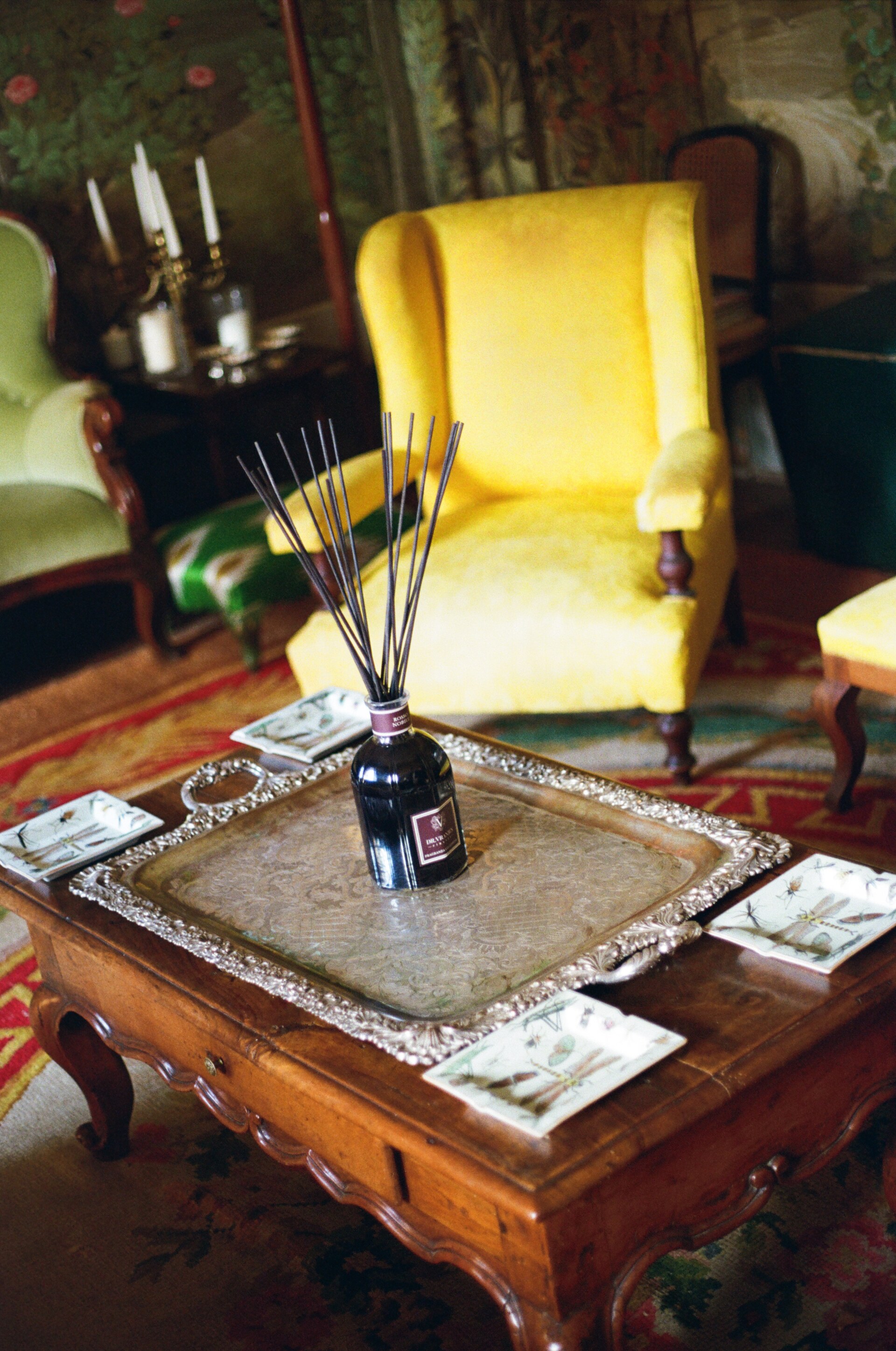
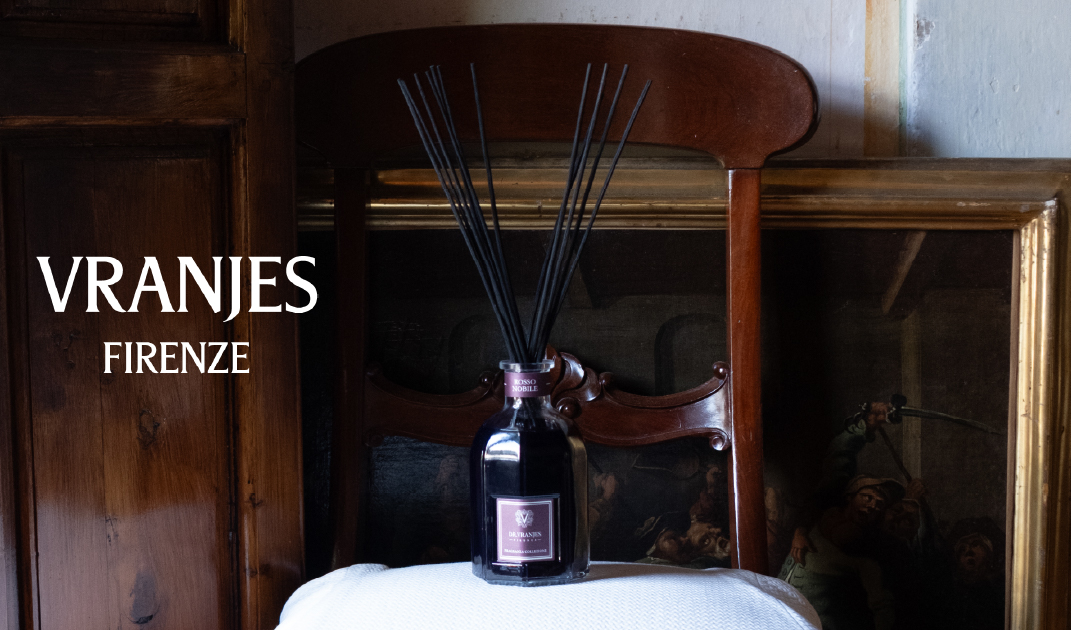
Created in 1999 by Vranjes Firenze, a luxury Florentine fragrance house based just a short drive from Castello Sonnino, it was the first home fragrance to recall Tuscan red wine—capturing not one particular vintage, but the lasting impression of one.
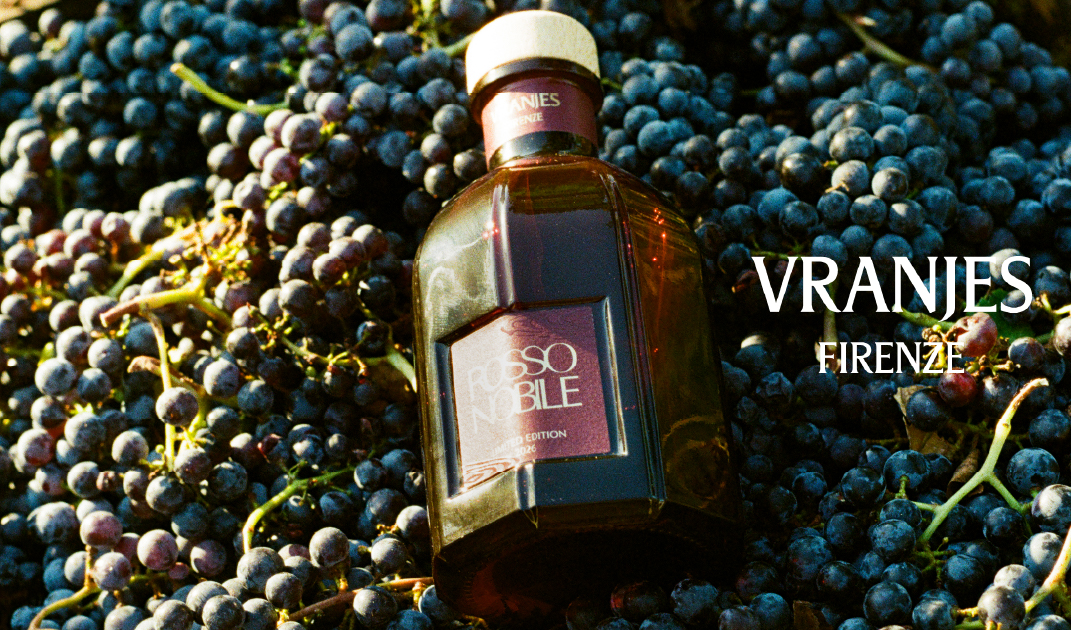
For 2026, Rosso Nobile has been given a vintage of its own, in a limited-edition, semi-transparent burgundy bottle. Its octagonal shape—an homage to Brunelleschi’s Duomo—filters light like a wine glass, casting a deep garnet glow reminiscent of a full-bodied Tuscan red held up to the sun.
Where a label on a bottle of wine identifies a year that can never be reproduced, this “2026 vintage” marks a new edition of a fragrance that brings the vendemmia back, season after season.
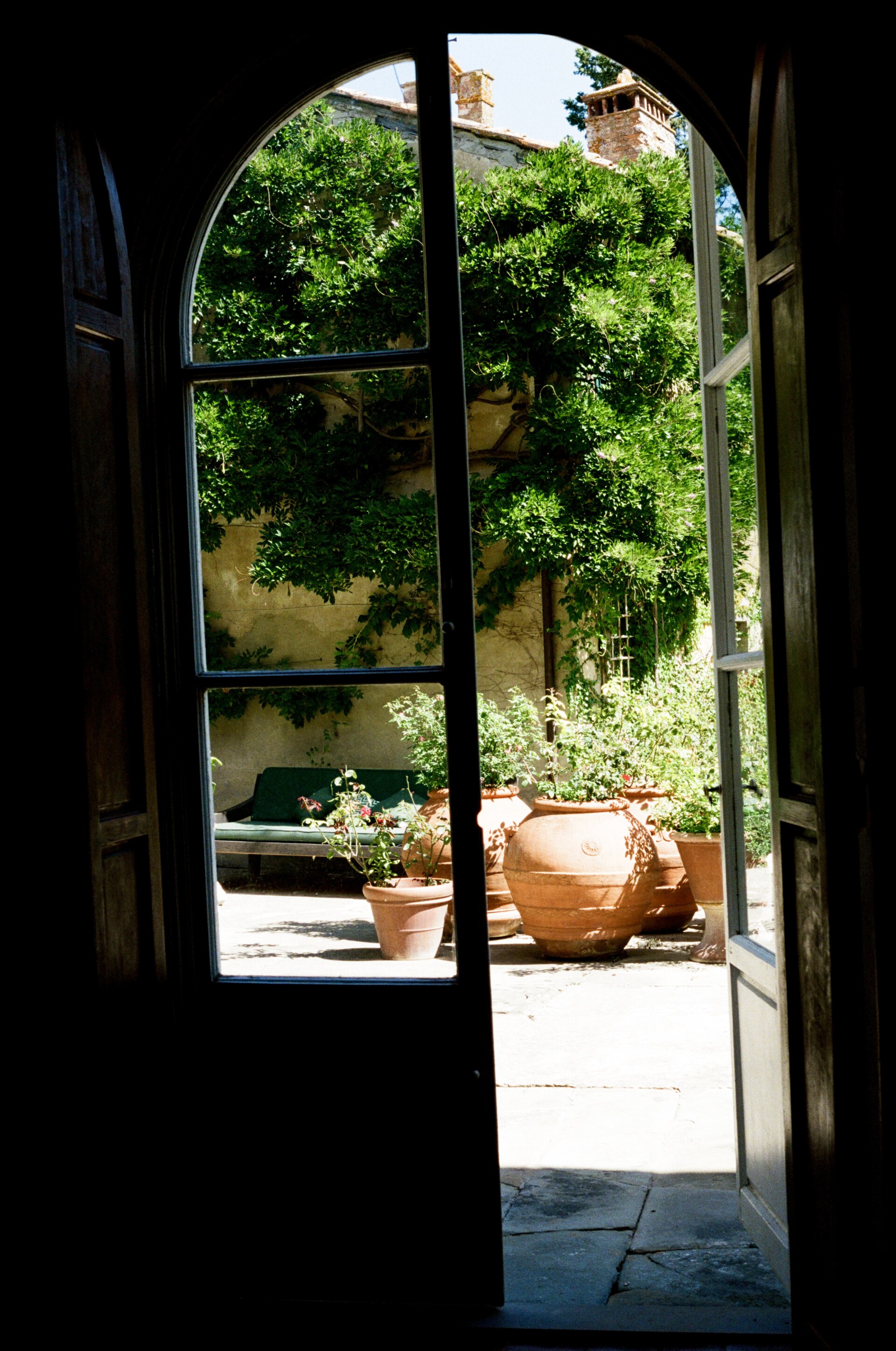
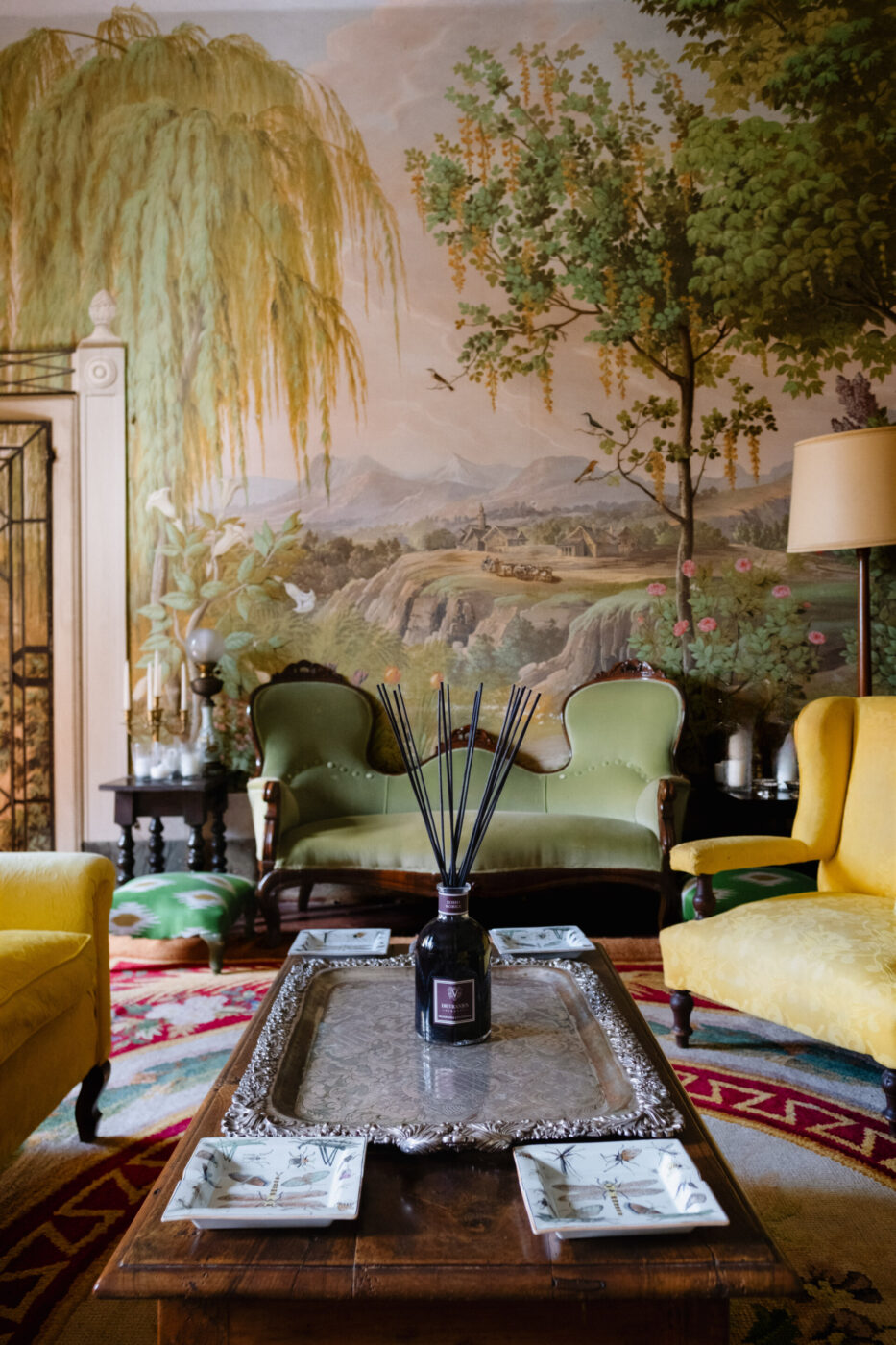
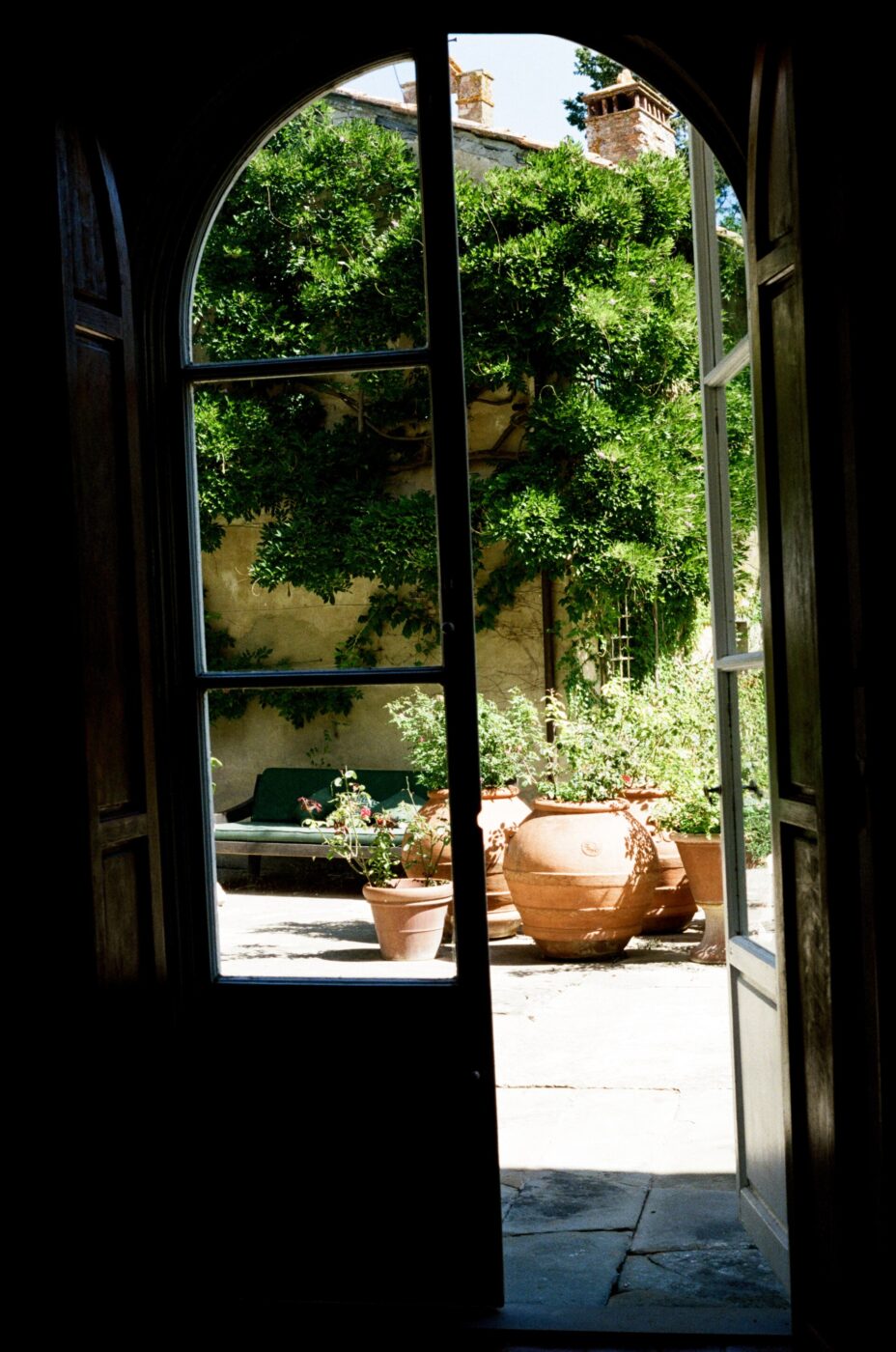
Above Montespertoli, within Chianti’s smallest subzone, Sonnino’s more than 40 hectares of vineyards surround a fortified 13th-century tower, a 16th-century palazzo and cellars built in the 17th century. The de Renzis Sonnino family has been here since the early 19th century.
Recently, warmer summers have moved the opening of the harvest from around mid-September toward the end of August. Even then, the grapes do not all arrive together. Syrah destined for rosé may be picked first, while the grapes retain more acidity and less sugar; white varieties follow, then the reds, row by row. Each must be caught at the right moment. Too early and the wine lacks ripeness; too late and freshness begins to disappear.
Long before the wine has a taste, however, the vintage can be smelled. “During the vendemmia, you have a lot of profumi that you don’t usually have,” says Leone’s sister, Virginia. There are freshly picked grapes in the rows, crushed fruit at the tramoggia, and must beginning to ferment below the house. “I love the cellar during harvest because you’ve got the smell of must, which is still macerating with the skins of the grapes,” Leone says. It’s a scent that always brings him back to “this very happy time of the year.”
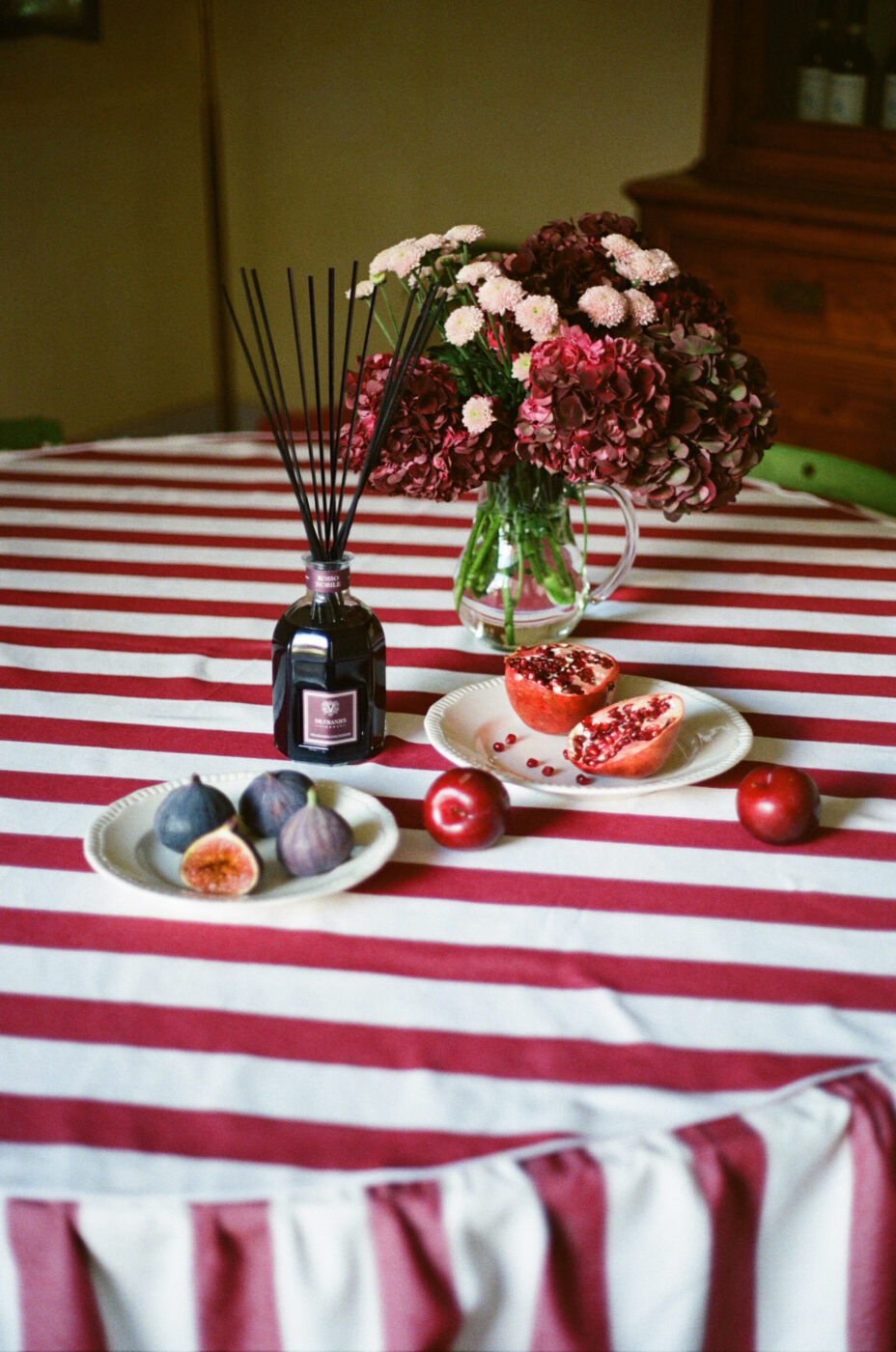
Rosso Nobile reconstructs that feeling note by note. Orange and orange blossom lift the opening; strawberry and wild berries follow, ripe and almost jammy. Violet supplies body, while birch and oak temper the sweetness with something a bit darker and faintly smoky. “It gives depth. It gives elegance,” explains Vranjes Firenze perfumer Eléonore Beurnier of the latter.
“Extremely generous” is how Beurnier describes Italian wines. “I feel as if I drink and I ‘eat’ at the same time, because they’re so rich,” she says. Rosso Nobile does not attempt to reproduce the bouquet of one bottle. Instead, it follows the structure of a generous red: brightness first, then ripe fruit, floral density and, finally, wood.
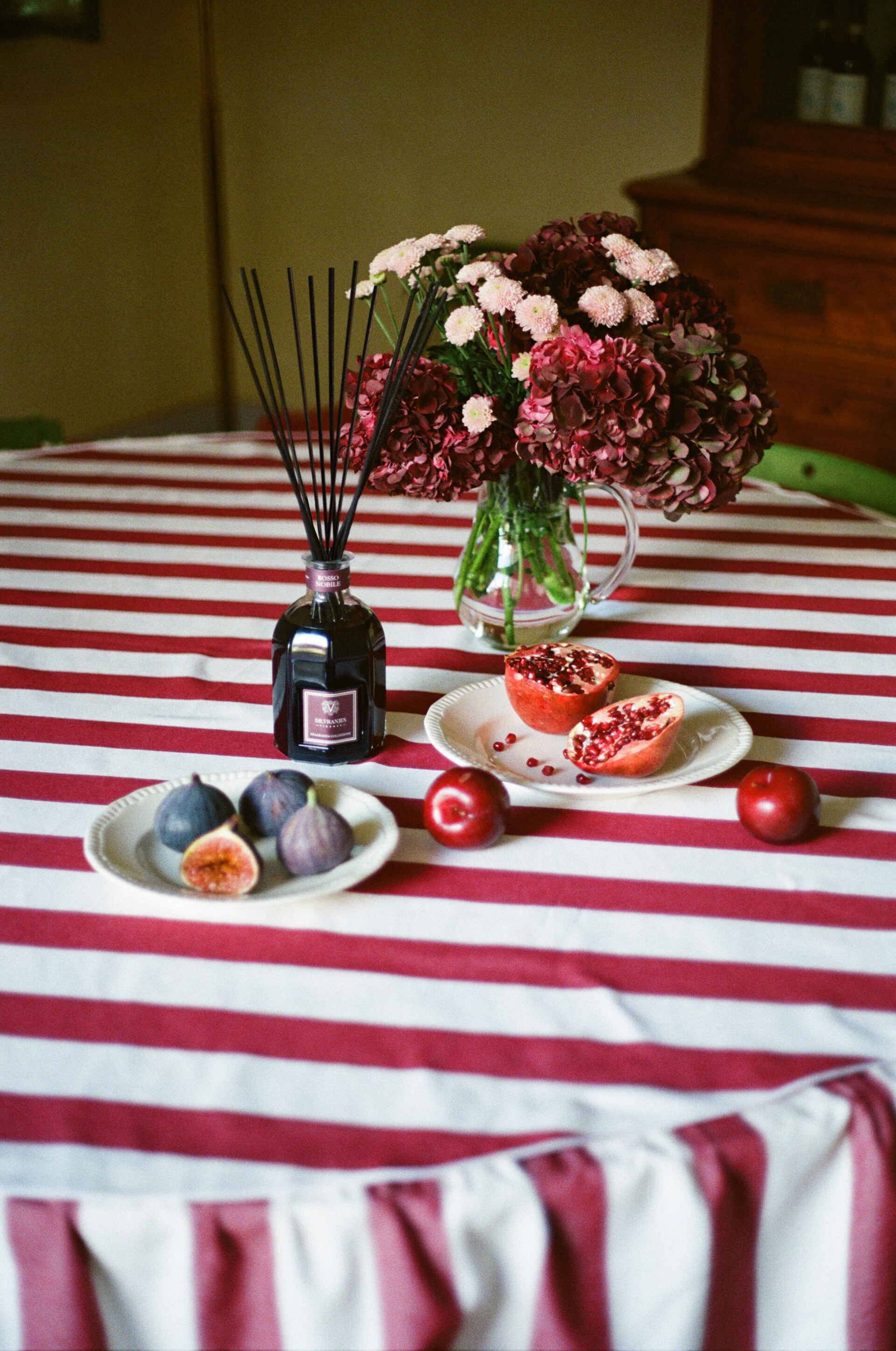
For Beurnier, the word “nobile” belongs as much to Florence as the Duomo. “I think it’s really part of the DNA of Firenze,” she says. “Nobile is not an adjective that you would use for Milan. I think it’s an adjective that really matches Florence and Tuscany.” Rosso Nobile does not suggest an anonymous rosso della casa, but a wine with pedigree.
At Sonnino, pedigree comes with surprisingly little ceremony. “We always had friends coming over,” Virginia says of growing up in the castle, “people just coming and going, visiting, stopping by.” Today, the house welcomes university groups and a small number of guests, but it is never simply handed over. “If you come here, we always eat with you,” she says. “We love wine. It’s part of our family culture, but also the culture of our country.”
The wine that eventually reaches that table begins well before the grapes enter the tramoggia. “A good wine, for our philosophy, is made in the field,” Leone says. “It’s not made in the cellar.”
Perfumery shares this devotion to raw materials, though creating the scent of wine requires a clever act of alchemy. Because grapes themselves yield no extractable fragrance, Vranjes Firenze constructed Rosso Nobile through an amalgamation of others to conjure the illusion of the vine without using actual grapes.
Back in the cellar, handpicked grapes are destemmed, then directed toward steel or cement according to the wine being made. Yeast converts the sugars in the must into alcohol; afterward, younger wines spend six to eight months settling in the estate’s old cement tanks. The most structured reds move into oak for 16 to 18 months—and sometimes longer, depending on the vintage.
Again, the wood is there to work, not to show off. Slow exchanges of oxygen soften the tannins and give the wine greater structure and longevity. Sonnino favors older barrels, which have already surrendered much of their flavor to previous vintages. “We want the fruit to be the protagonist,” Leone says. The oak should remain in the background—the same balance that keeps Rosso Nobile from ending at strawberry jam.
Wine and fragrance also share a necessary period of waiting. At Vranjes Firenze, the individual perfumery materials are weighed and blended, then left to rest before alcohol is added and the fragrance is bottled. Beurnier calls the stage “maturation and maceration,” borrowing the same vocabulary heard in a cellar. Time allows the separate essences to settle into a single bouquet. “So much of taste actually comes down to smell,” Leone observes—80% in fact—which is why Rosso Nobile is able to so closely catch the feeling of a vintage in the glass.
At Sonnino, the wine may take years to reach the table. The first toast does not wait that long. Once the last grapes are safely inside the cellar, everyone can stop watching the sky and say what nobody dared say in August: it was a good year.