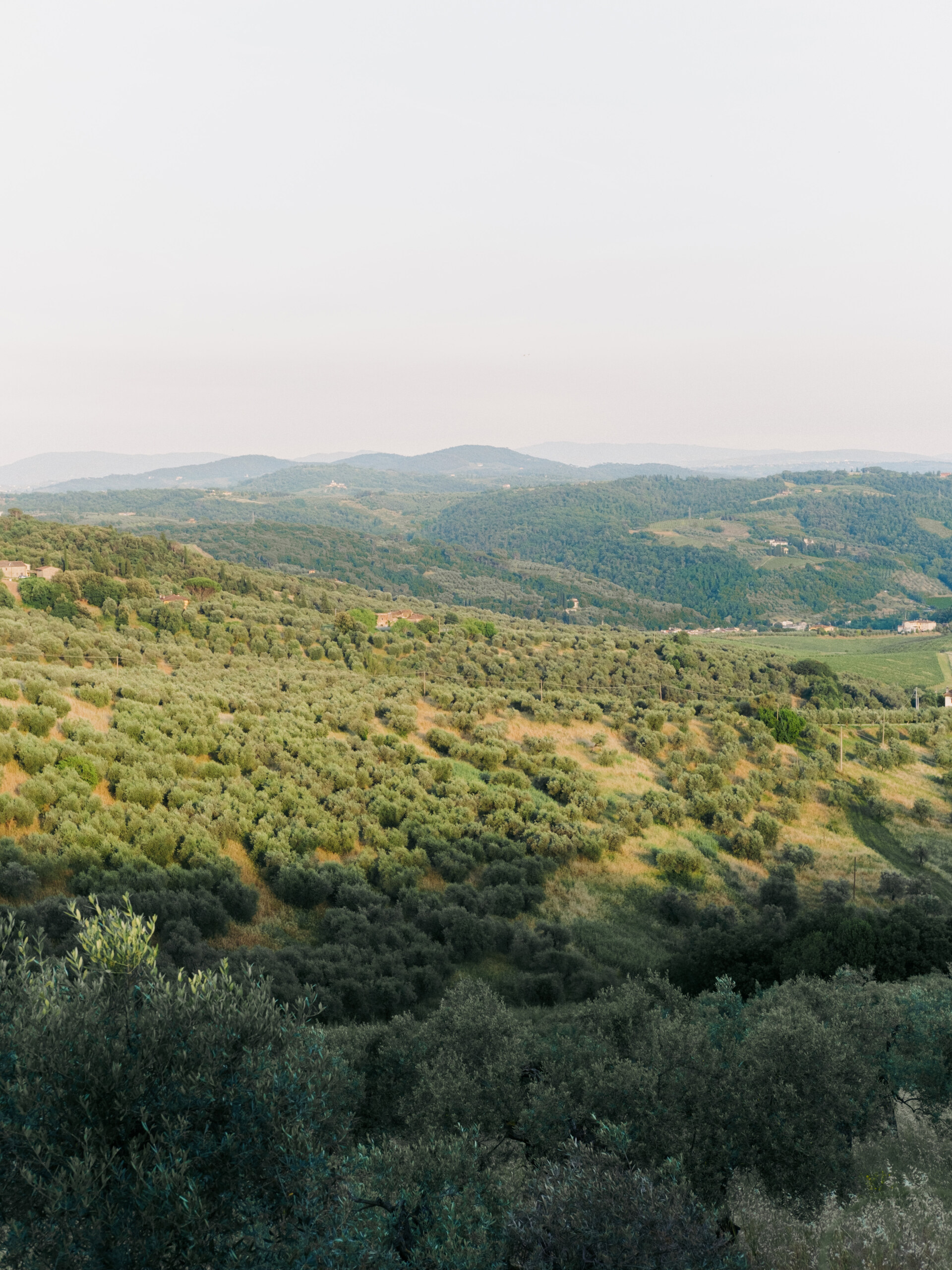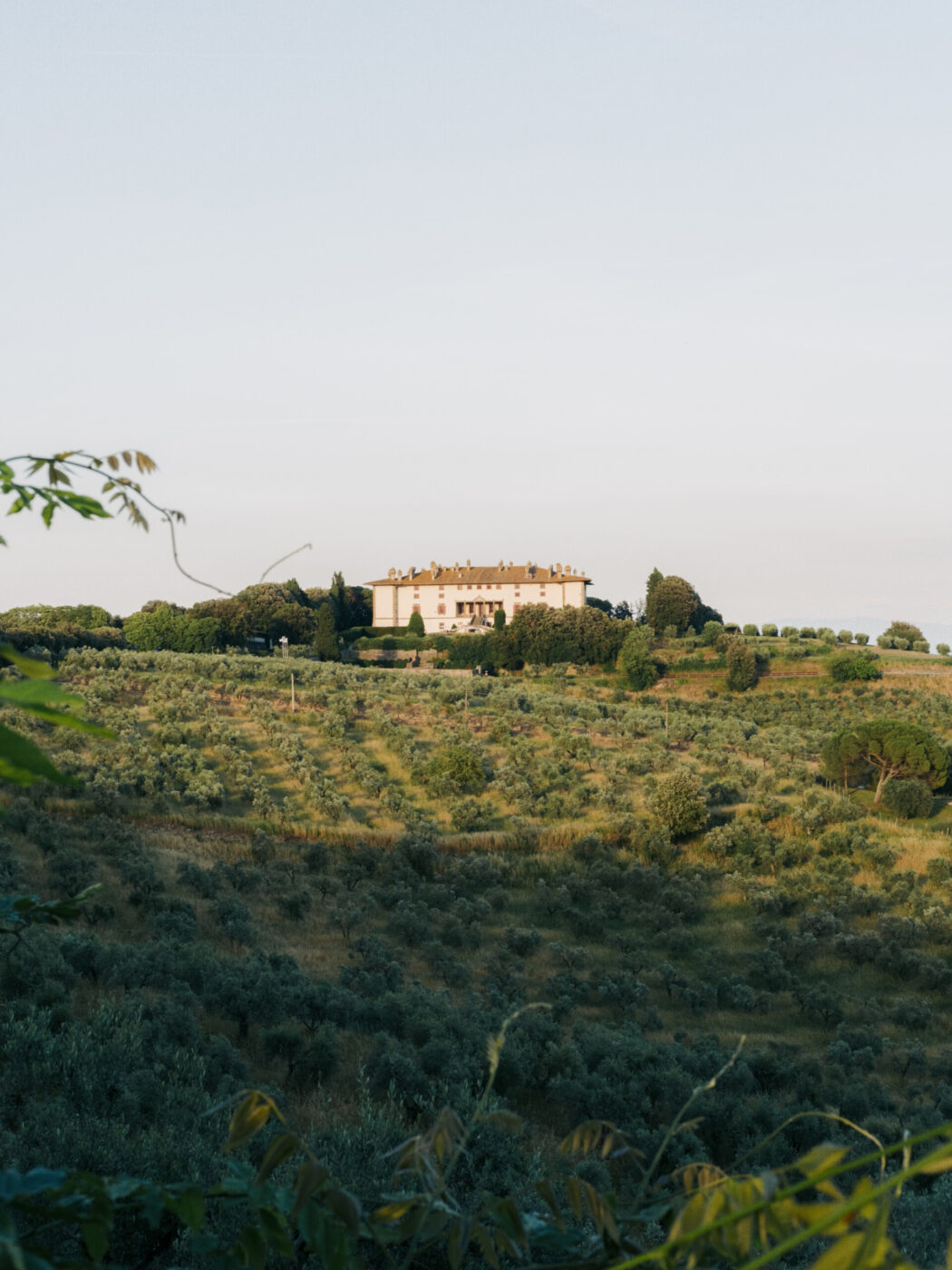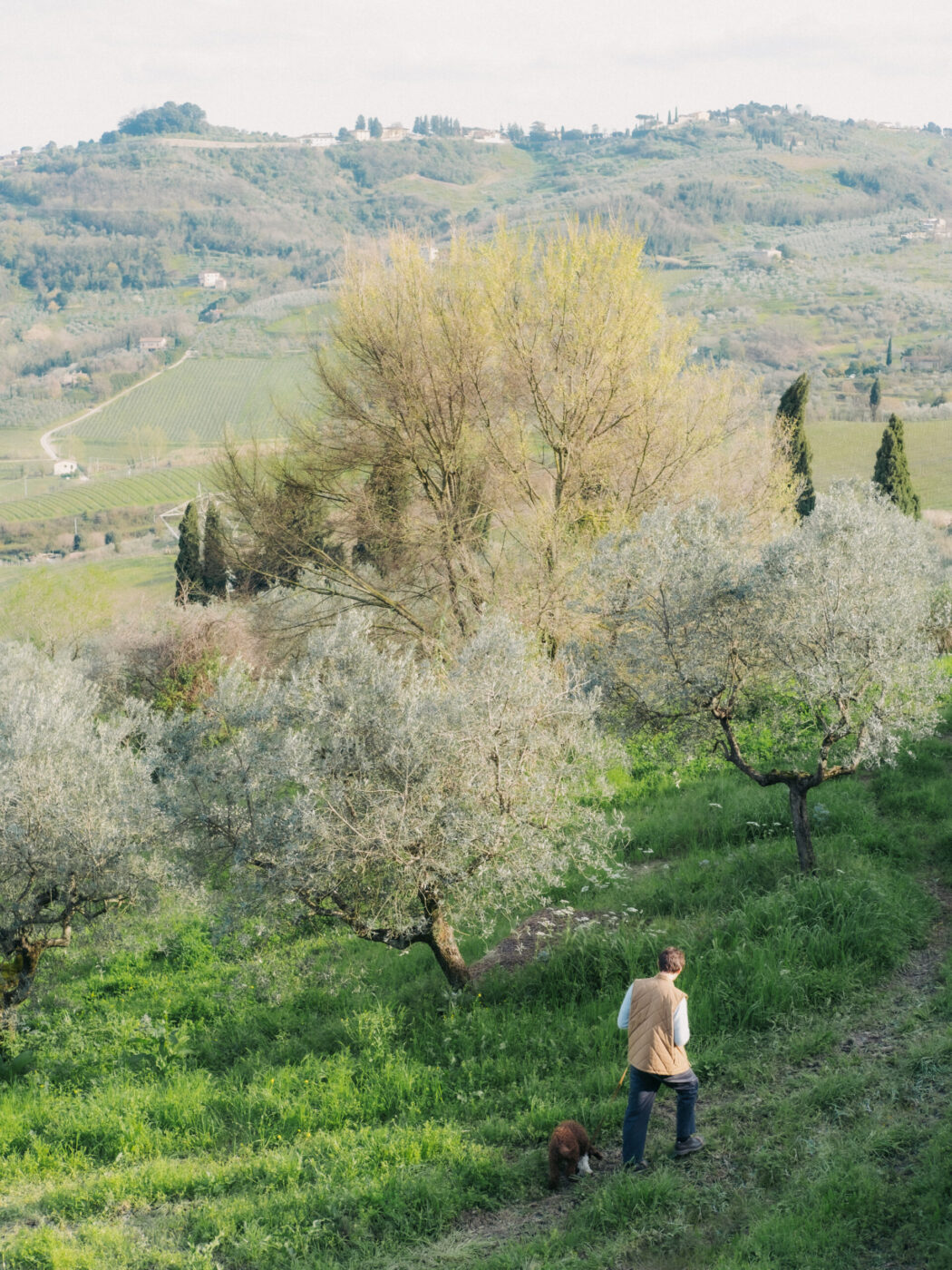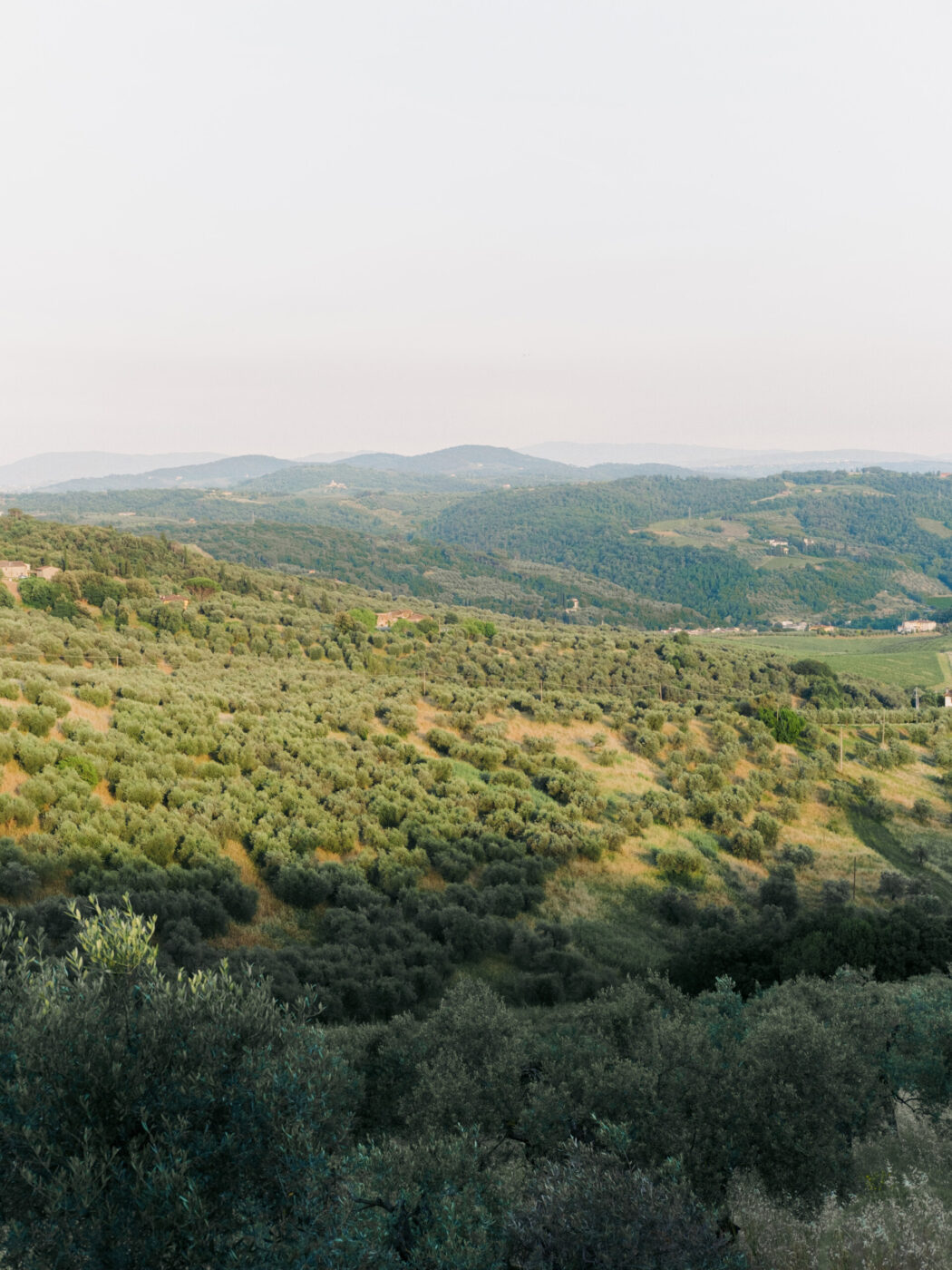
From Florence, the road west quickly leaves the city behind. A few factories give way to fruit stands, then nothing but rolling hills. At the top of one sits Artimino: a small cluster of ochre buildings framed by stone gates and a line of cypresses, with a bar, a gelateria, a church, and the Medici villa famed for its 100 chimneys. From there, you can see straight to Carmignano, a town that’s been making wine since ancient Roman times.
This part of Tuscany is primarily working land, known more for figs and olive oil than tourism. Artimino’s population barely tops 100, and the rhythm here is unhurried. That deliberate pace inspires the team at Lèmme, a luxury Tuscan knitwear brand, who takes their name from the local Tuscan dialect for “slow.”
Just 50 minutes from Florence, Artimino flies under the radar but delivers on charm. Curated by Lèmme, who is based out of these same hills, this guide maps out the perfect day in Artimino and Carmignano, highlighting where to eat, drink, and explore for a refreshing escape that feels distinct from the usual Florence day trips.
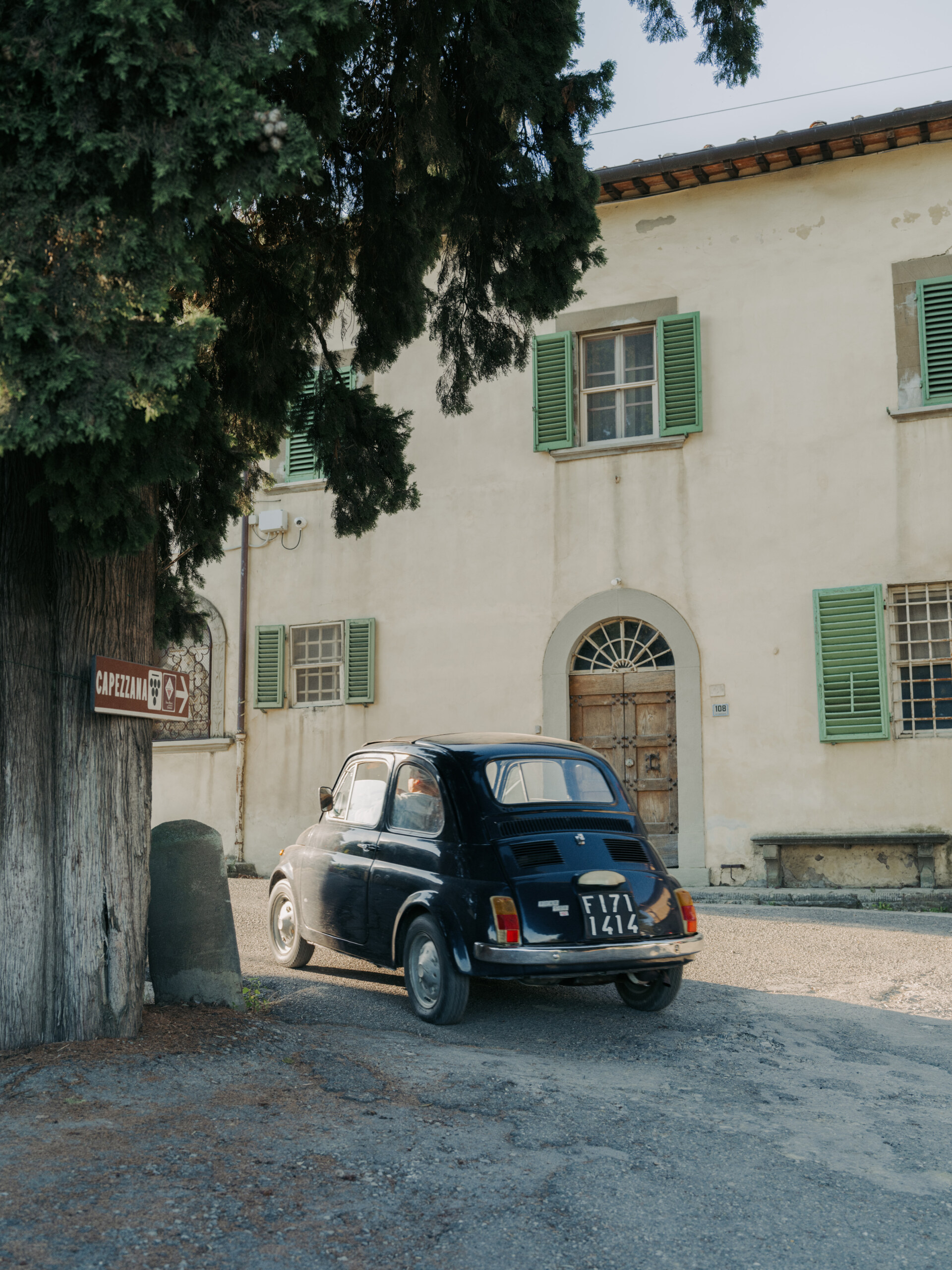
MORNING
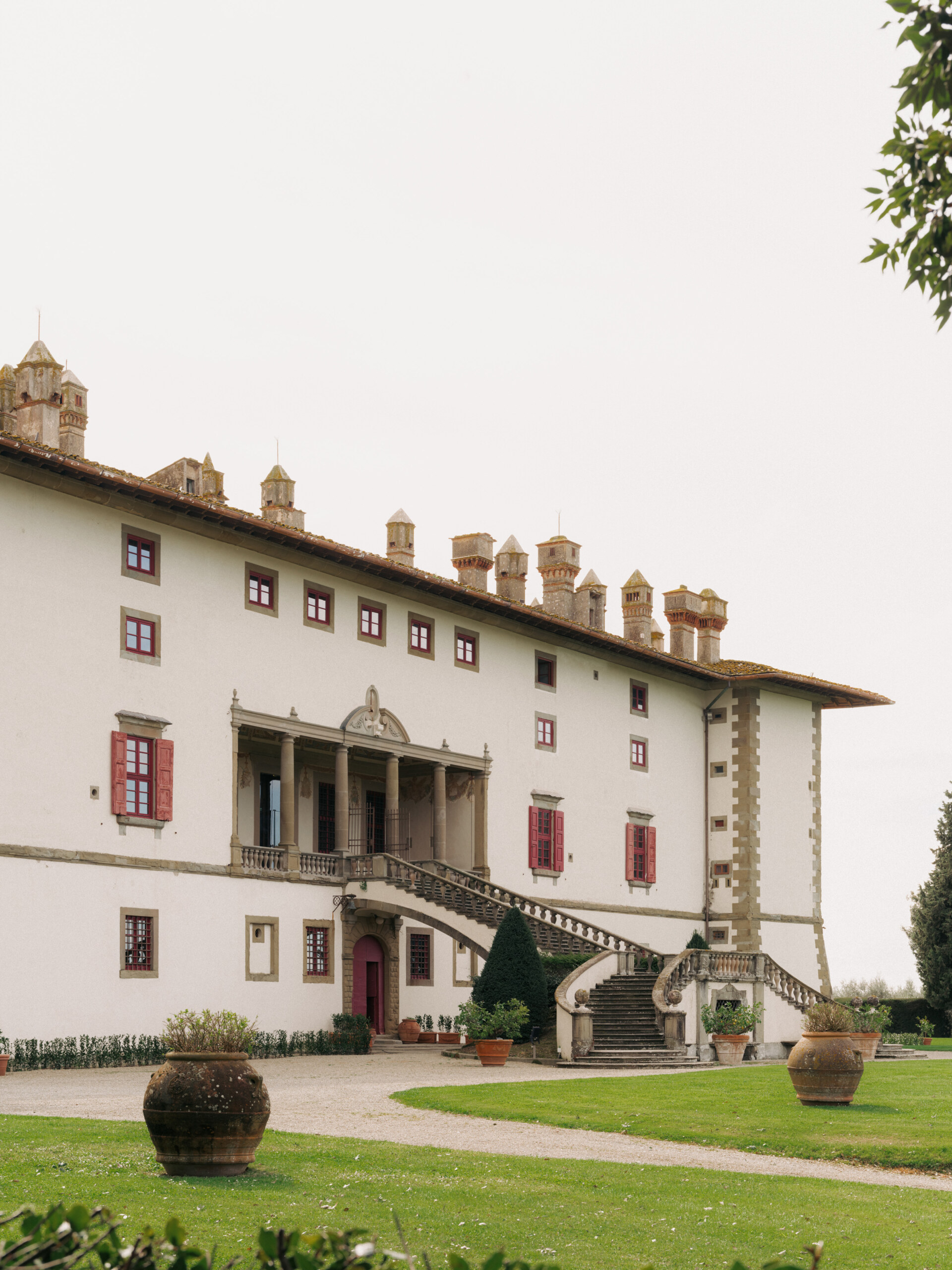
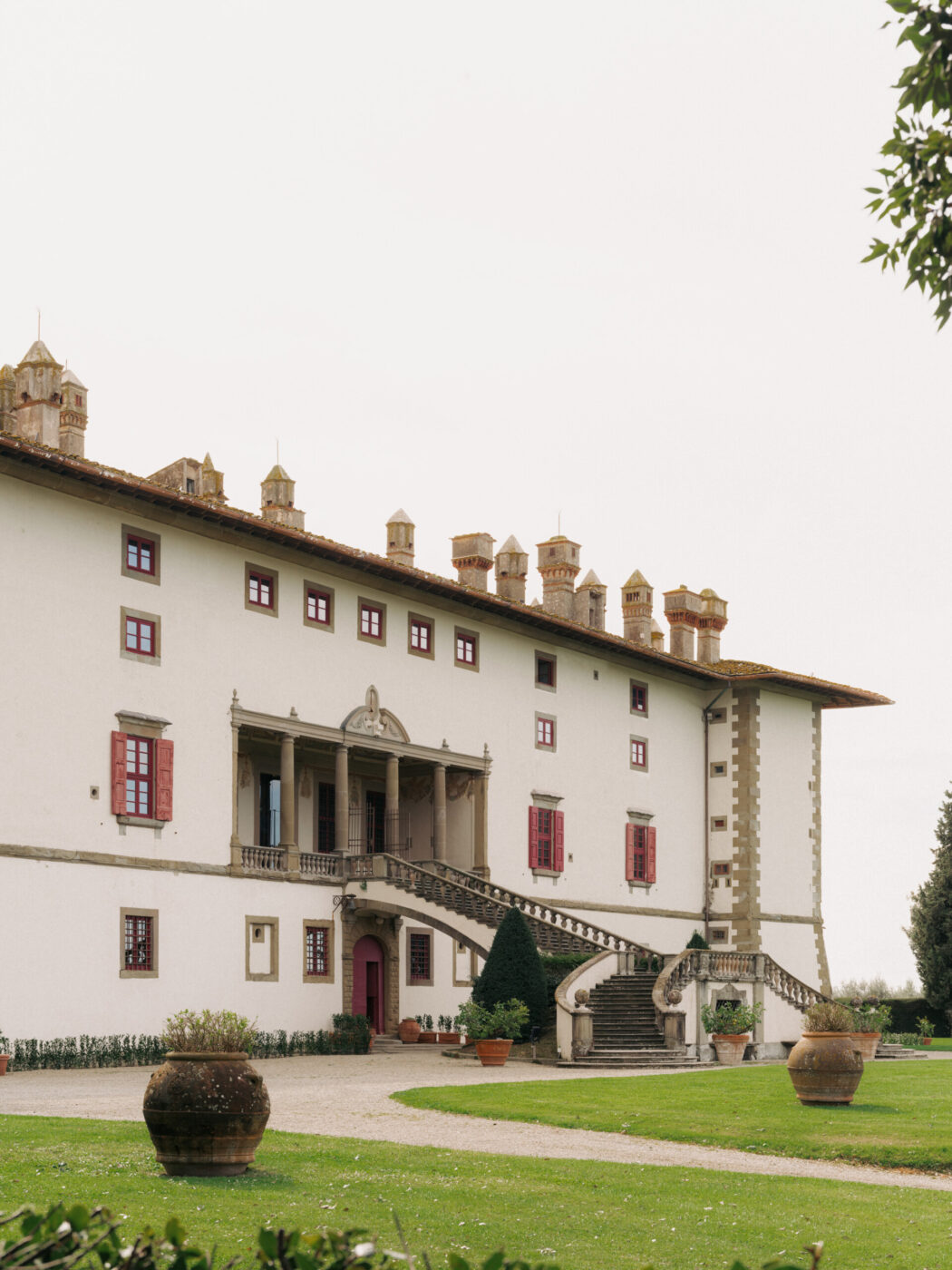
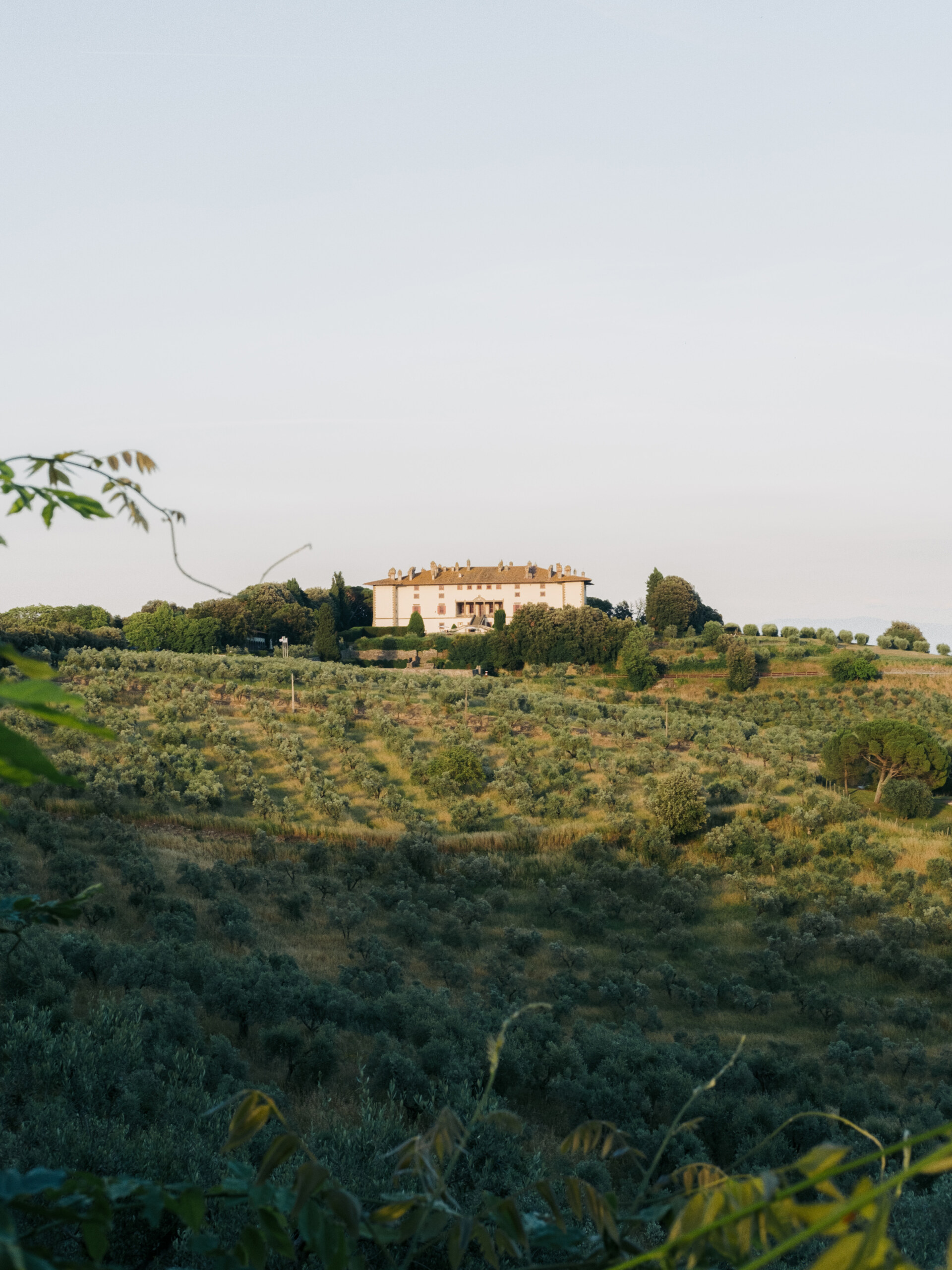
Start the day in Artimino, and take in the 360° views over the Arno Valley after an espresso at any of the local bars. Walk the stone path to the UNESCO Villa Medicea La Ferdinanda, the so-called “Villa of the Hundred Chimneys,” built in 1596 by Buontalenti for Ferdinando I de’ Medici. The chimneys, each shaped differently, were designed to ventilate the villa’s many fireplaces, a symbol of wealth but also practicality in a countryside that easily gets cold after sunset. The estate began as an Etruscan settlement, evolved into a medieval village, and later became the hunting lodge of the Medici family. Today, the villa is a hotel, winery, and event venue well worth a stop.
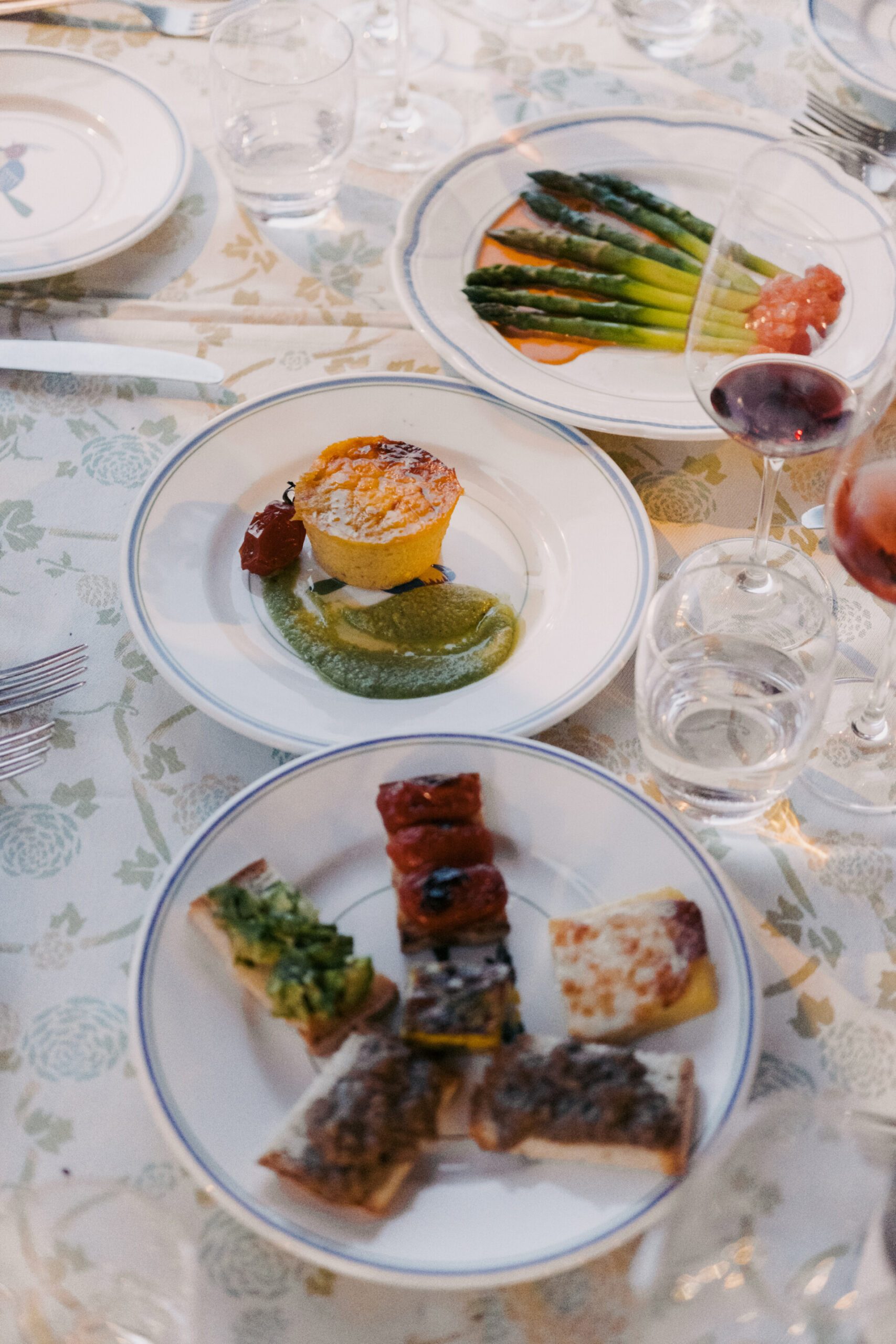
LUNCH
A few steps down the slope, Da Delfina is a benchmark for traditional Tuscan cuisine. Founded by Delfina Giusta, who cooked here well into her 90s, it’s now helmed by her son, Carlo Cioni—an archive of local food lore. Carlo will happily tell you how medieval Benedictine monks laid the groundwork for European winemaking, or share his personal quest to trace an obscure historical link between Da Delfina and Leonardo da Vinci’s final days in Amboise.
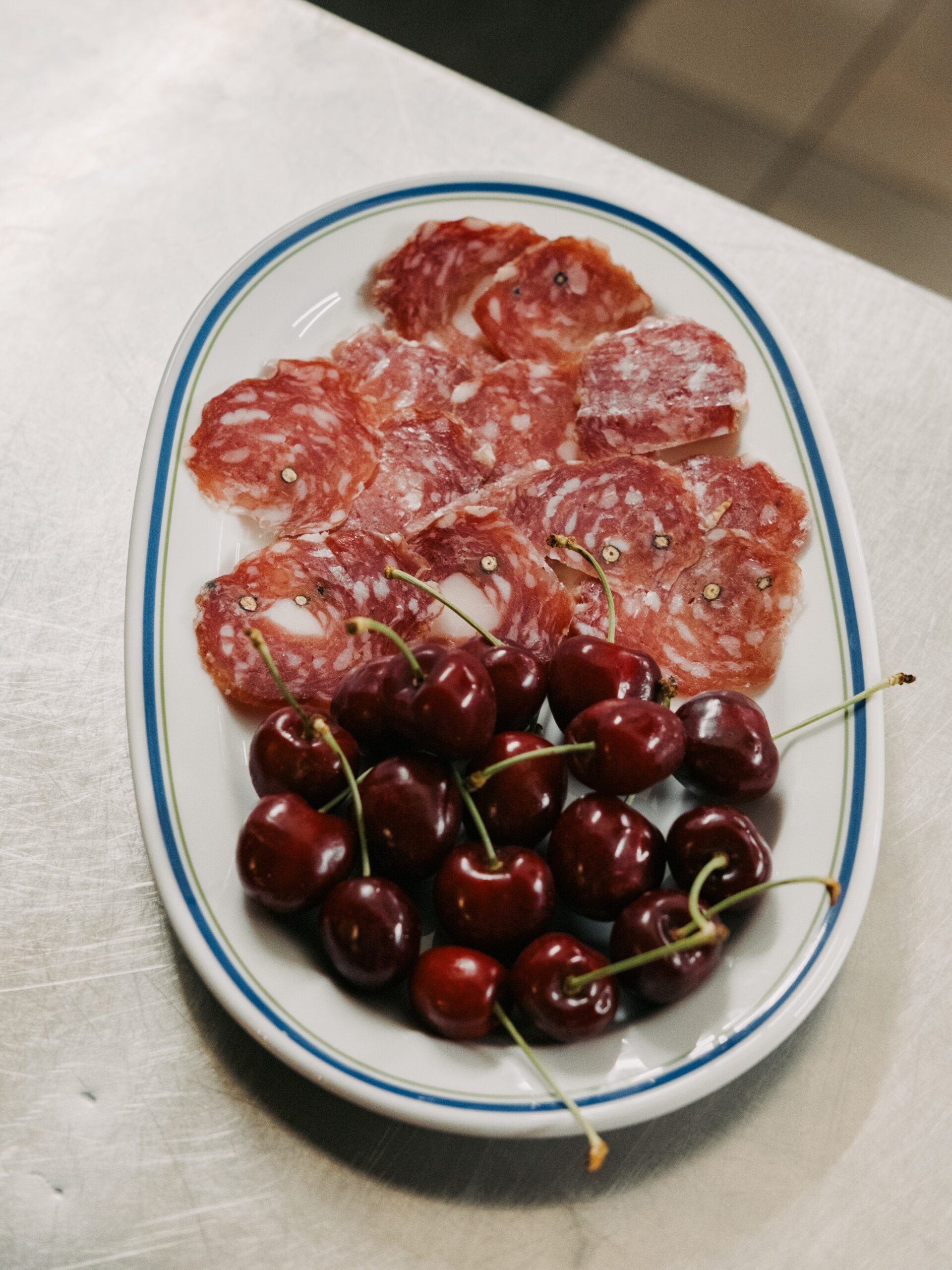
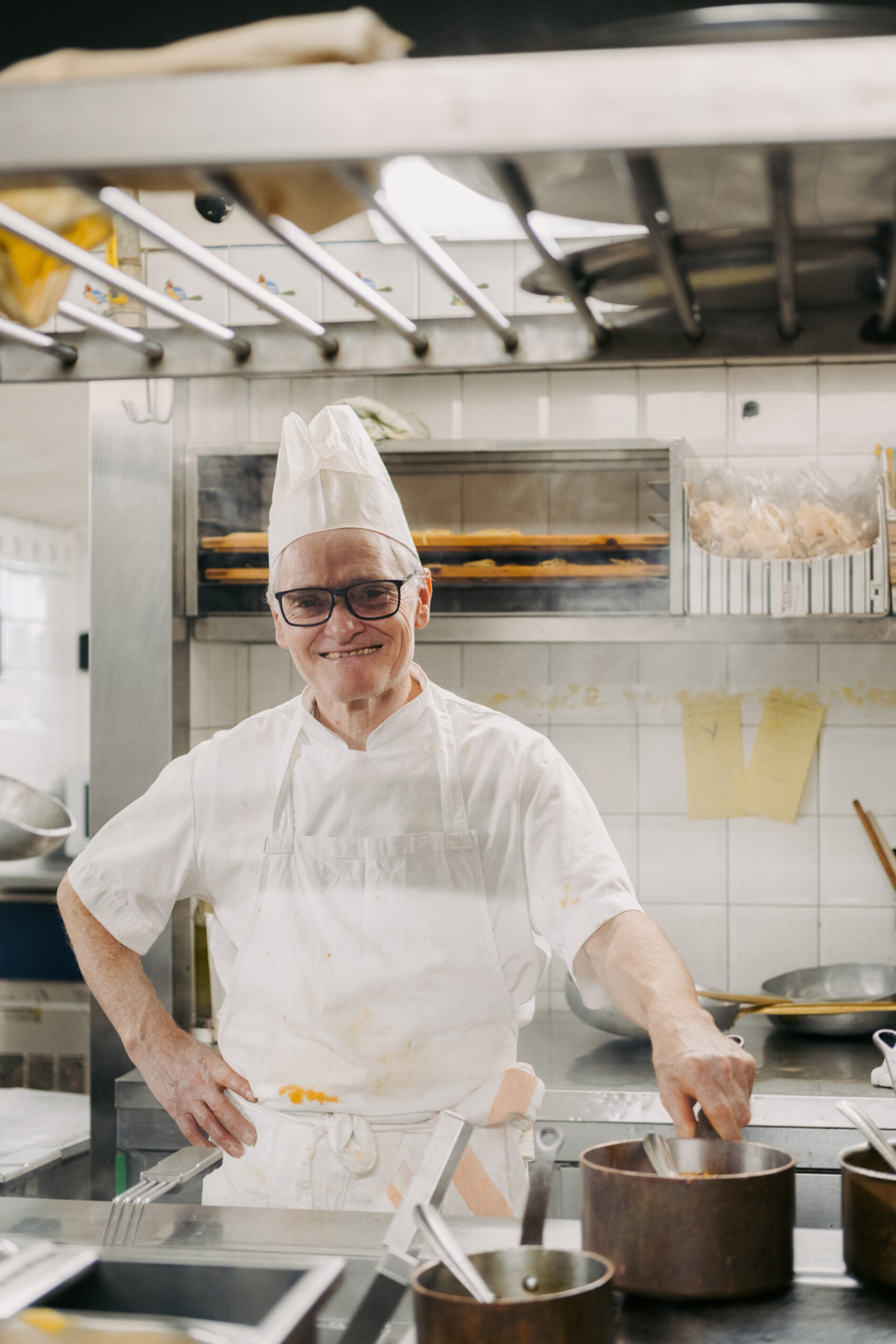
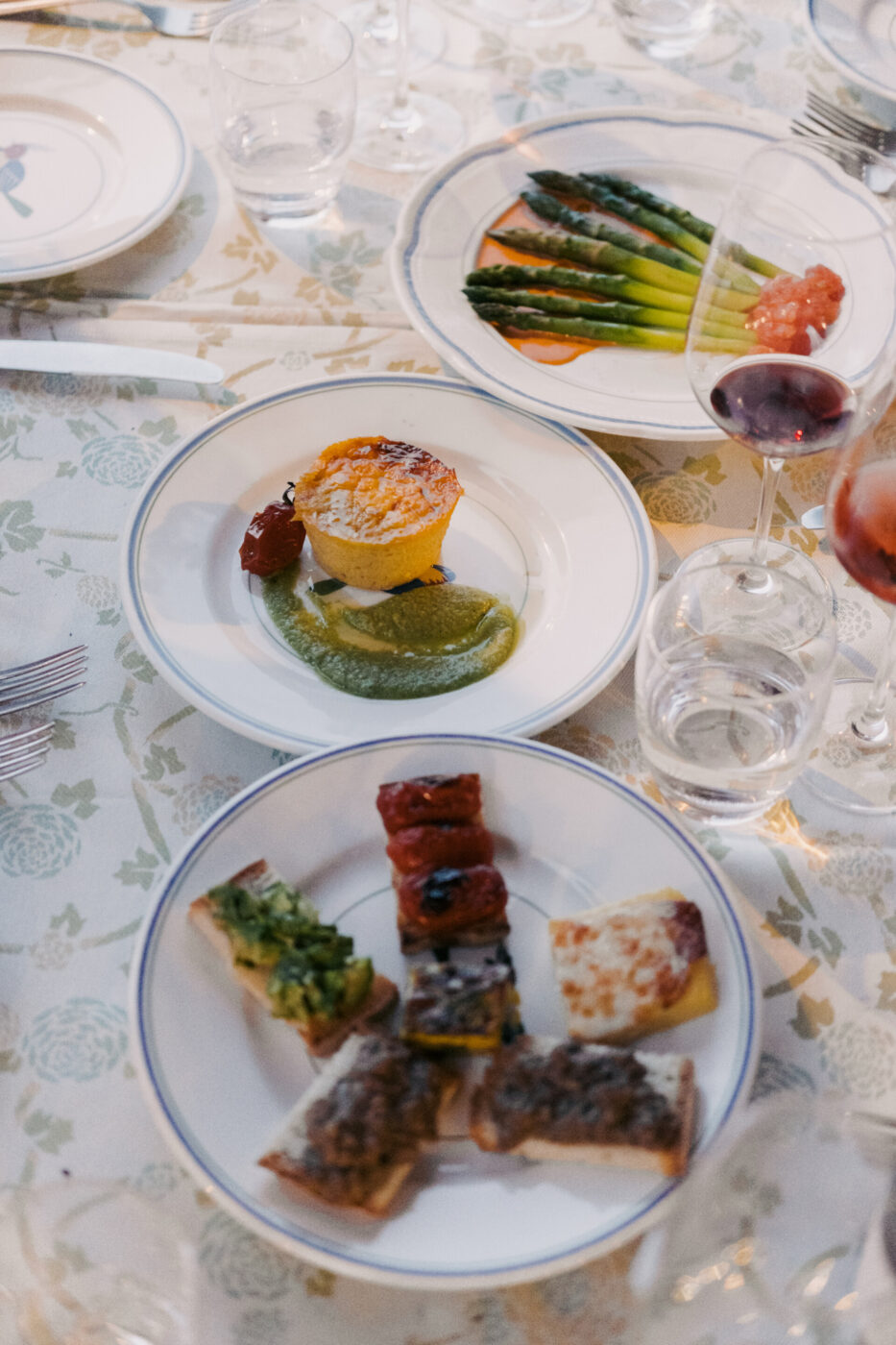
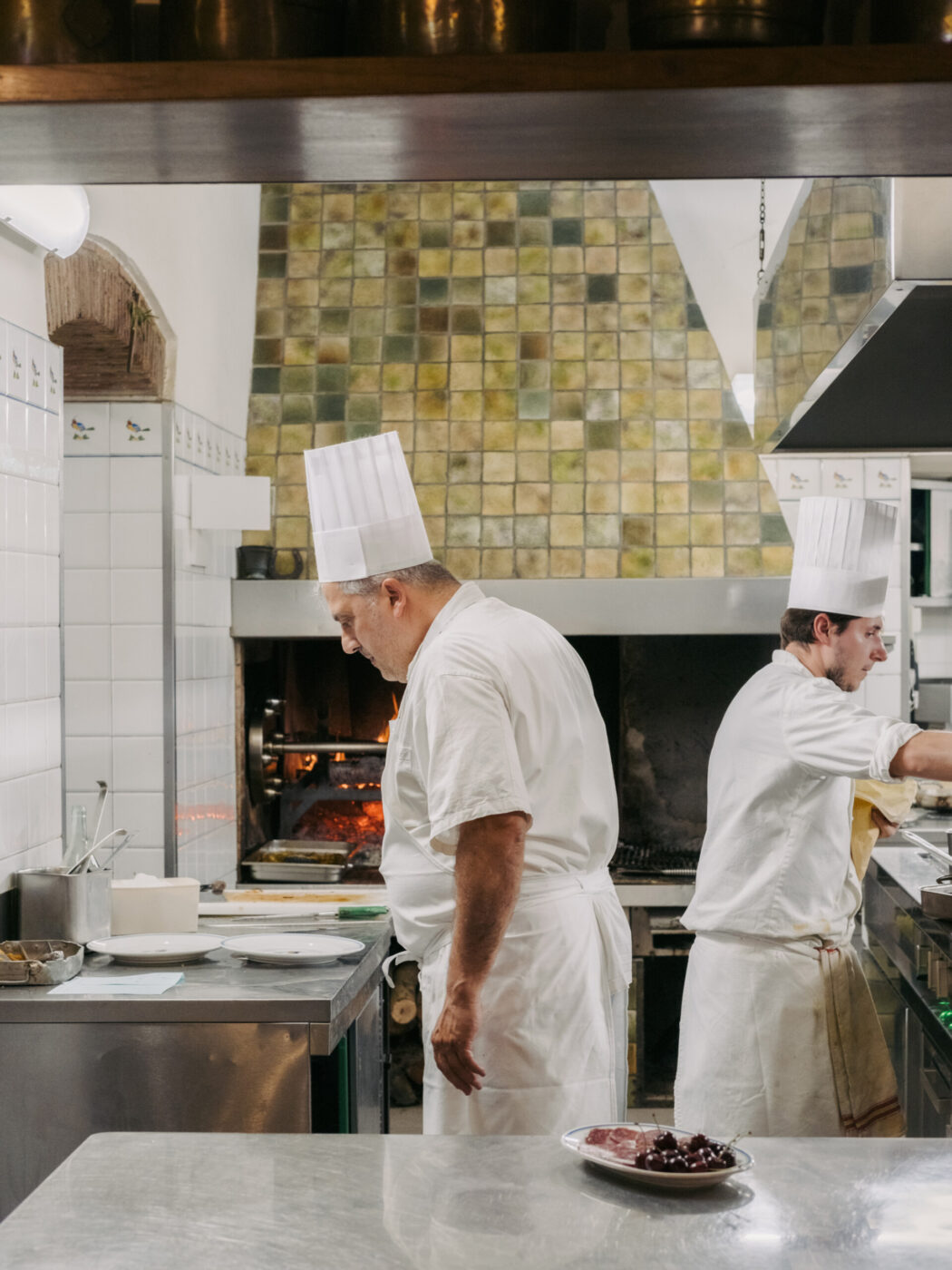
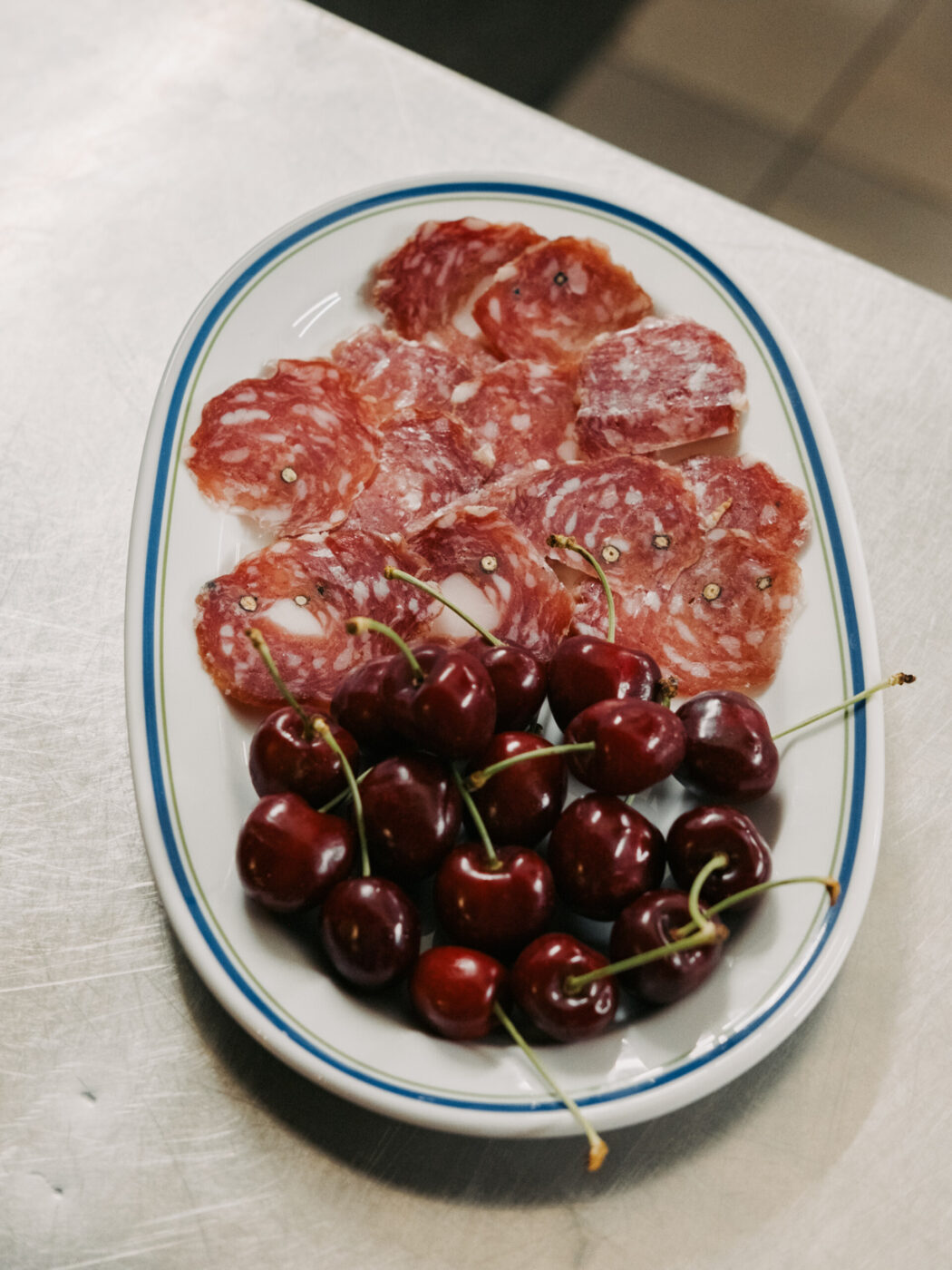
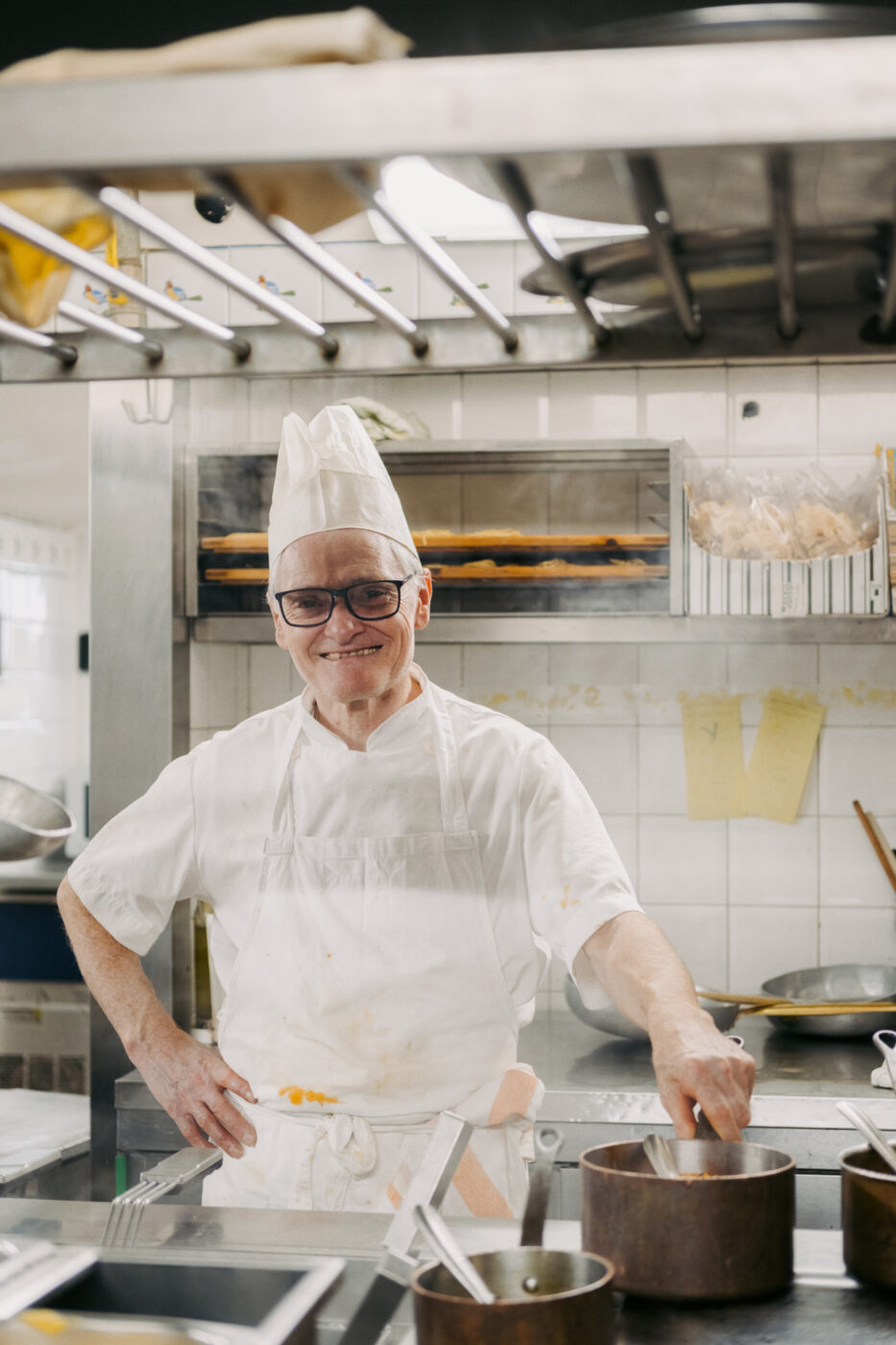
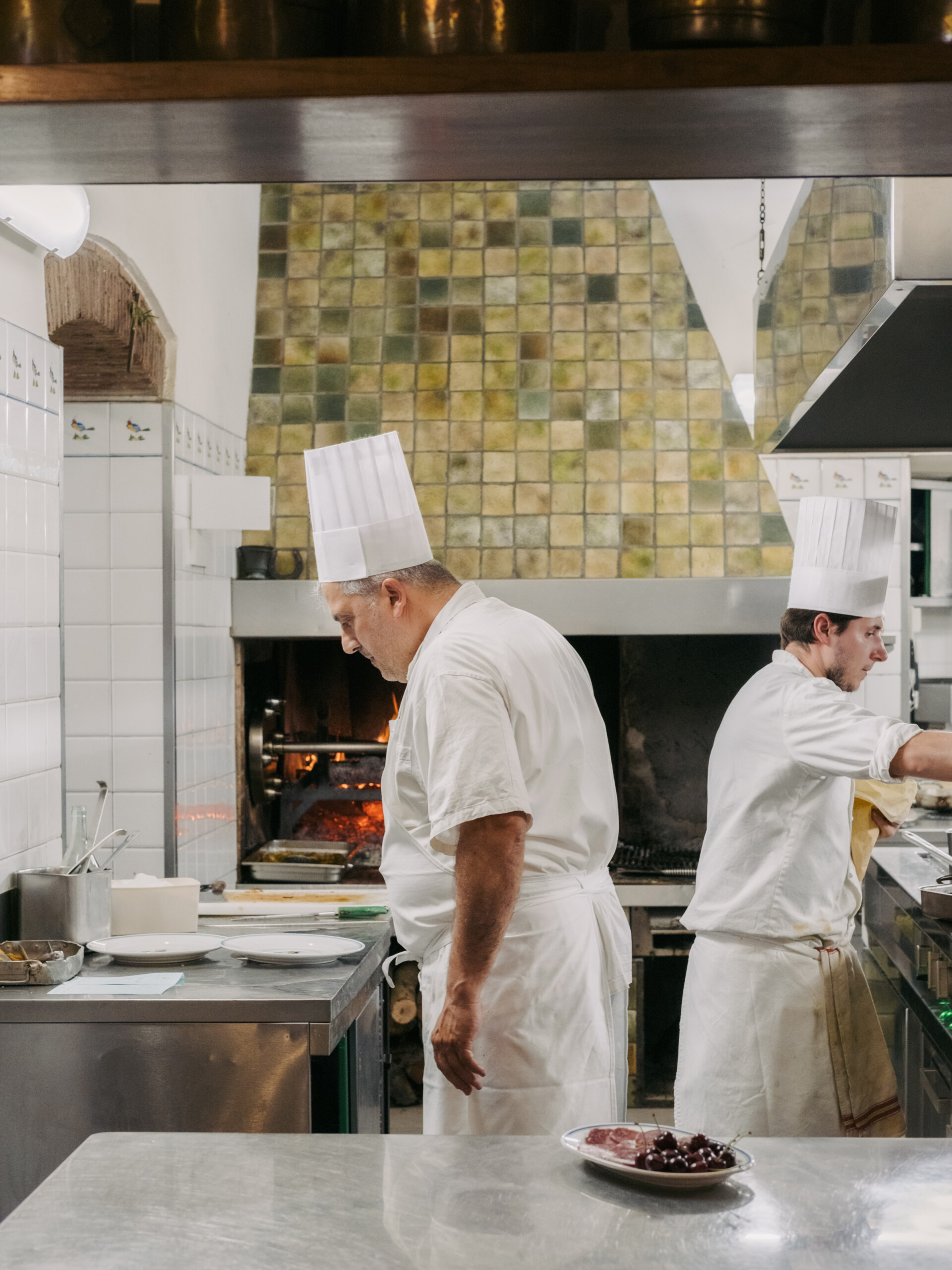
Carlo’s nephew, Chef Riccardo, will walk you through the meat pantry, hanging salumi, and hand-rolled pastas like nettle taglierini. You might be served by Primo, a waiter who has been here for 36 years. The menu changes daily based on what the surrounding fields yield: expect seasonal combinations like wild nettle lasagna, onion and zucchini frittata, or salami served with fresh cherries, alongside Carlo’s homemade balsamic vinegar and classic spit-roasted meats. What doesn’t change is the view from the terrace—hills unfolding into vineyards beneath the Medici villa, even more dramatic in the evening light.
After lunch, head into the main piazza for a cone at family-run Gelateria La Torre—so named because it’s right under the tower—and take it with you on a walk through the village’s quiet back streets. If you need a merenda, pause for a quick beer or panino with mozzarella and prosciutto at the Circolo di Artimino, a laid-back local favorite with a stunning view over the valley from their terrace.
AFTERNOON
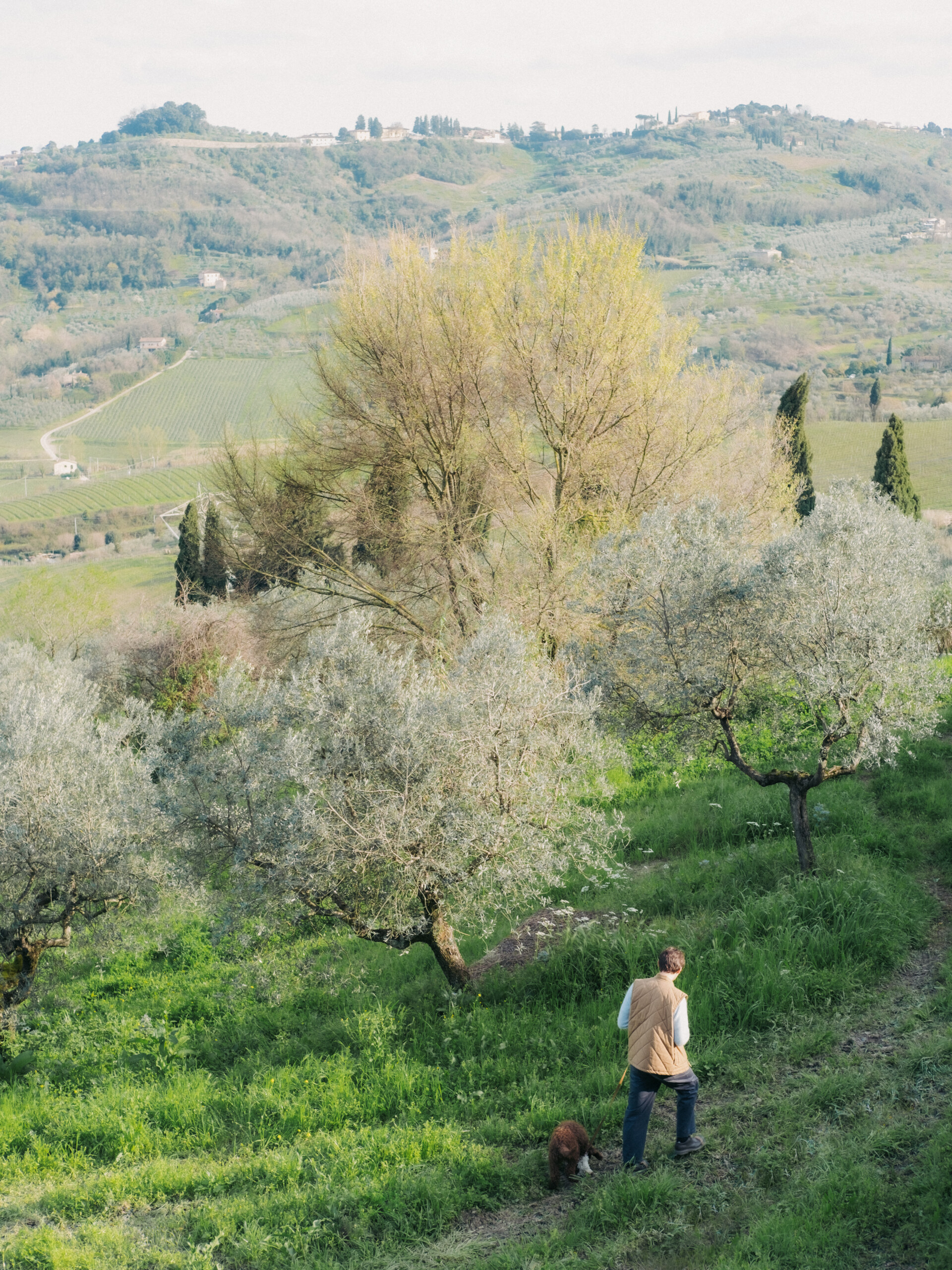
From there, it’s a short drive toward Carmignano, a region with a winemaking history dating back 2,500 years to Etruscan times. The Carmignano region was the first Tuscan DOC to officially sanction blending Cabernet Sauvignon with Sangiovese—a tradition introduced by the Medici family in the 16th century, long before “Super Tuscans” had a name. The Medici recognized the area’s superb terroir, issuing an edict in 1716 that served as a precursor to modern DOC boundaries. In 1990, Carmignano was among the first areas in Italy awarded DOCG status for its exceptional heritage and quality.
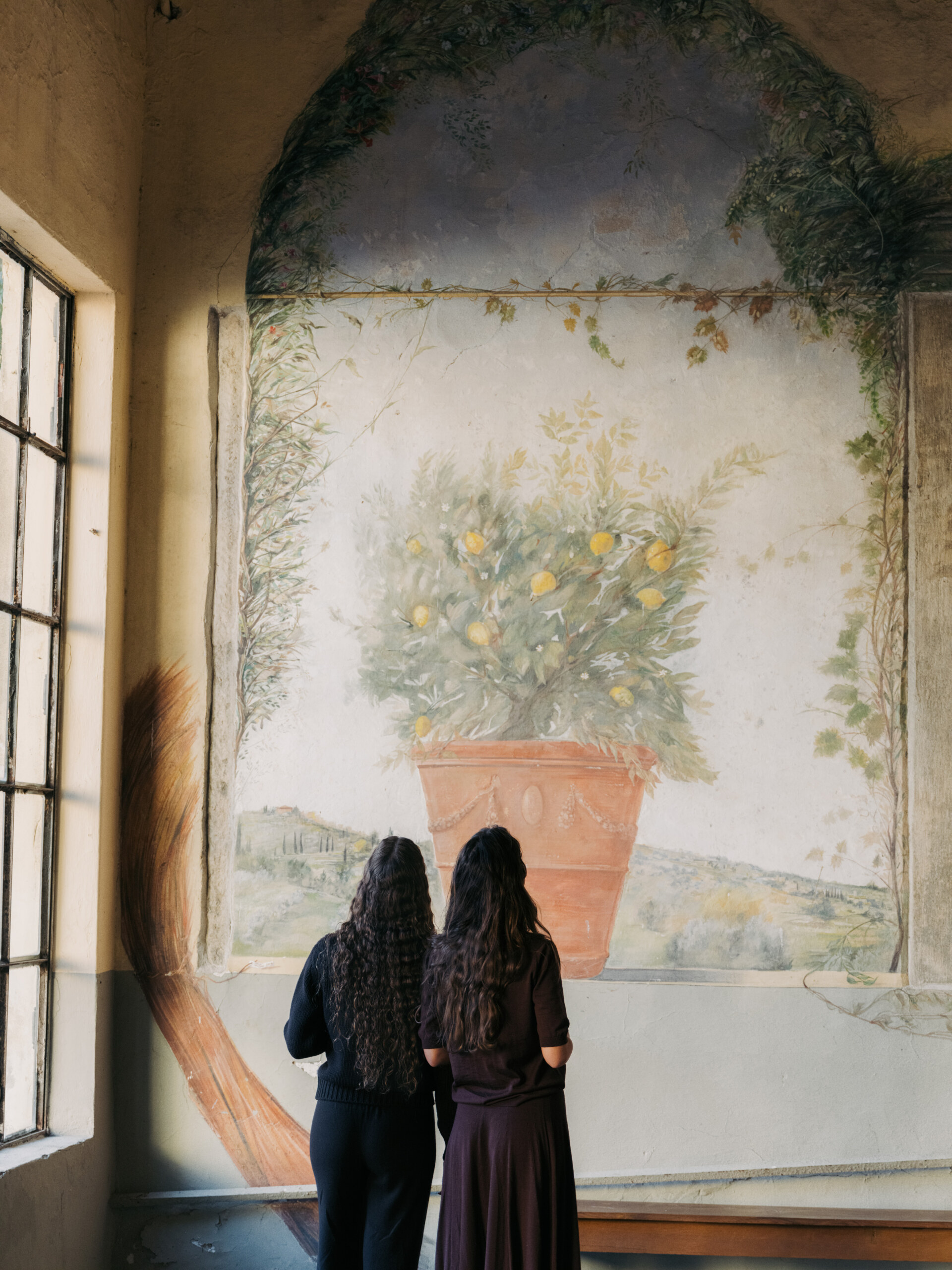
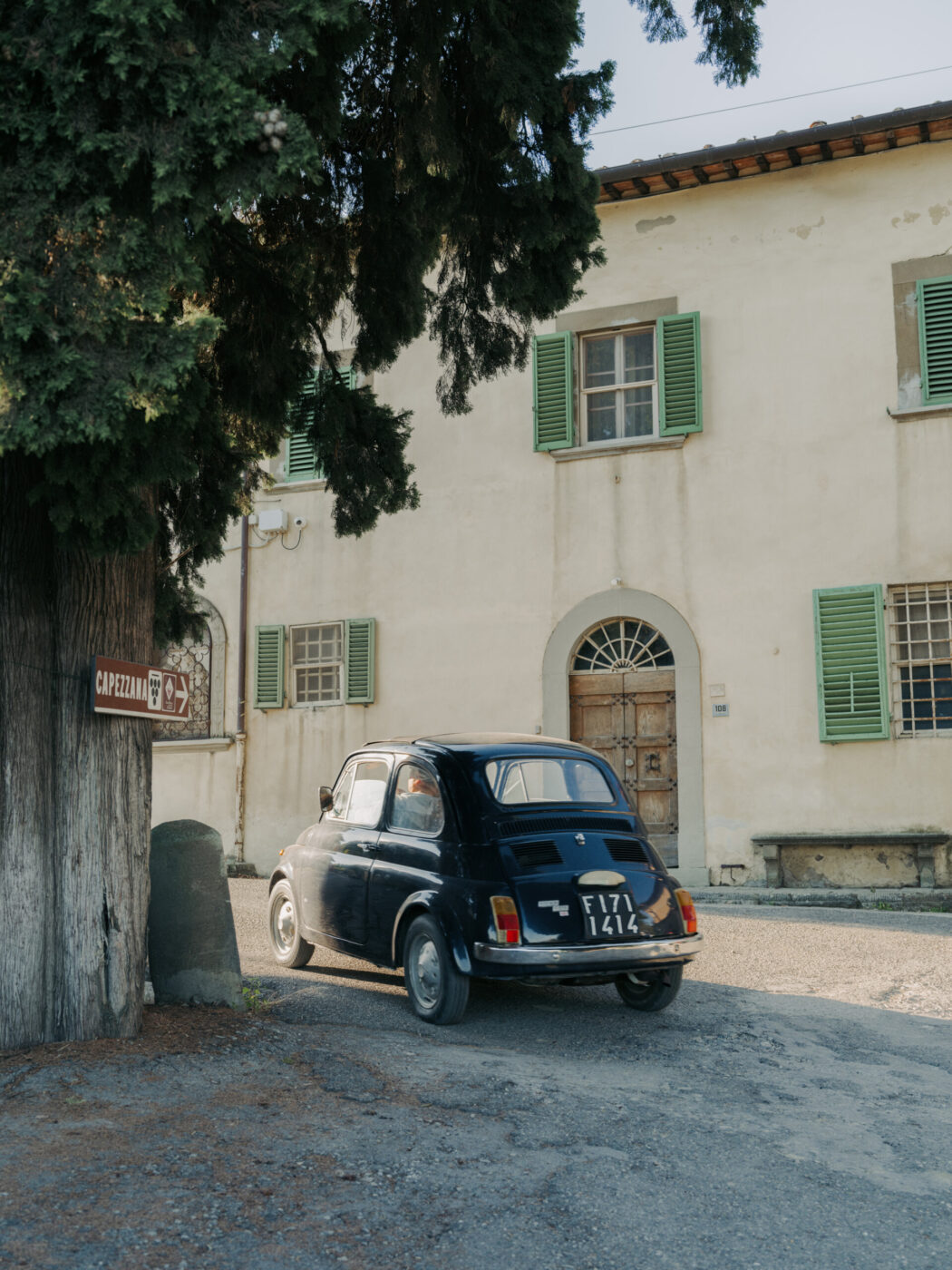
Your first stop on the drive should be Tenuta di Capezzana. Wine has been made on these grounds since at least 804 AD, but for Lèmme, Capezzana is practically home—they grew up picking grapes here during summer harvests alongside the Conte Contini Bonacossi family, whose descendants, Ettore and Duccio, still run the estate today. Step inside the cellars, where light filters through small windows over rows of aging barriques and caratelle barrels, filling the room with the scent of old wood and vintage wine. While their Carmignano DOCG and extra virgin olive oil are exceptional, their legendary Vin Santo steals the show. Produced using a closely guarded family method—hand-harvested grapes dried slowly and aged under the rafters for years—it’s best enjoyed paired with crunchy cantucci di Prato at their restaurant La Vinsantaia, with vast vineyard views.
After your tasting, continue to Carmignano itself. The medieval Rocca di Carmignano sits atop the Montalbano ridge, offering panoramas over the valleys where Florence, Prato, and Pistoia meet. Built in the 12th century, the fortress changed hands through centuries of battles between rival city-states. Though partially demolished in the 1800s, parts of the medieval walls and 16th-century bell tower remain. You can explore the gardens, underground chambers, and exhibits featuring a reconstructed 15th-century kitchen.
Before leaving town, pop into I’ Fochi, a pasticceria known for its modern take on biscotti di Prato. The classic almond-studded version is always in stock, but grab a bag of their fig or pistachio biscotti to pair with a bottle of Vin Santo later.
DINNER
For dinner, Osteria Su Pei’ Canto oozes hospitality. The simple spot whips up an impressive chalkboard menu of rustic dishes highlighting local ingredients, from rabbit stuffed with figs and eggplant with wild mushrooms to liver risotto, crespelle with wild greens, and tortelli with mortadella di Prato.
SPECIAL EVENTS
If you visit Carmignano during August, catch Calici di Stelle on August 10th, when local winemakers pour tastings under the night sky for the feast of San Lorenzo.
In October, Benvenuto Fico Secco a Carmignano celebrates the region’s dried figs, a heritage product protected as a Slow Food Presidium. Carmignano was once nicknamed “Carmignan da’ fichi” for its abundant groves. The figs are split, steamed, sun-dried, rested for 40 days until a natural sugar crust forms, then stuffed with aniseed and shaped into traditional figure-eights called picce. Pick some up to take home—or, if you visit during the late-summer harvest, sample them fresh off the tree.