Emanuela Anechoum, 35, hadn’t told anyone she was writing a book. She was already working in publishing, at the Italian house E/O, dealing with the rights of other people’s stories. Her own, she kept in a drawer, perhaps convinced she would never reveal it.
The idea had come to her in 2019 while listening to her father recount stories from his childhood in Tangier, a childhood marked by material scarcity but full of play and community.
His adult life led him elsewhere, to Reggio Calabria, where he built a life, opened a business, and fell in love. That’s where Anechoum grew up, in an Italian-Moroccan family, between two languages and two cultures—both southern, yet worlds apart.
Anechoum’s own adult life took her elsewhere too. Like her father, she moved north from her point of departure, first to Milan, then to London. She belongs to a generation of Italians conditioned to look elsewhere, suspended between building a life abroad and the pull of home.
Anechoum—along with other Italian writers like Vincenzo Latronico and Veronica Raimo—explores this fracture: the experience of expatriation, the unresolved relationship with one’s country of origin, the disconnect between old traditions and new cultures. In her case, however, there is an additional layer: the comparison between two migrations, her own and her father’s—different in circumstances, possibilities, and imaginaries, yet also strikingly similar.
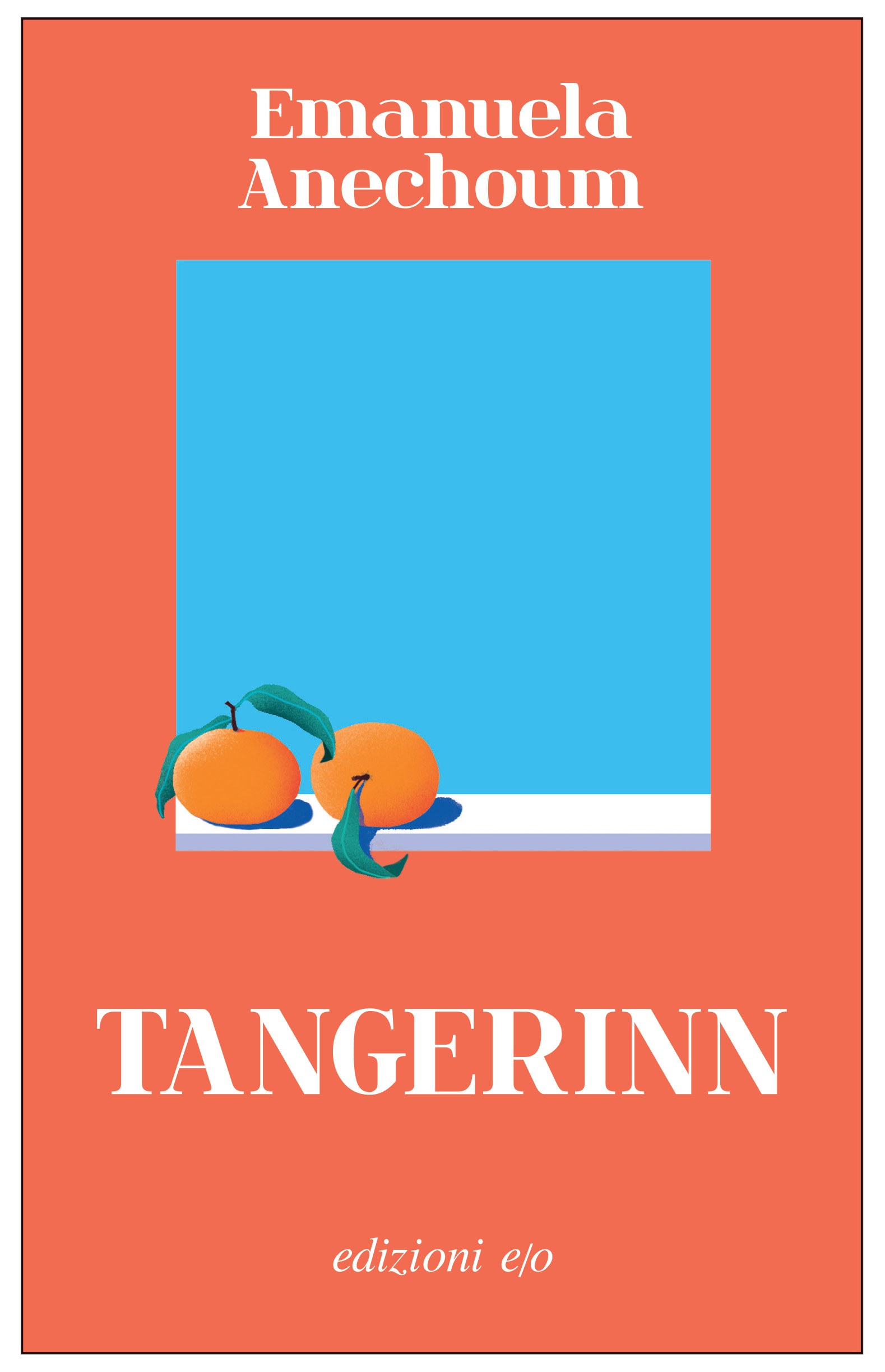
Tangerinn is her first novel, published in Italy in 2024 by E/O, the same publishing house where she works, and released in English earlier this year to rave reviews, including from The New York Times.

Emanuela Anechoum
“One evening I got drunk with a colleague, and it came out that I had written a book,” Anechoum recalls. “At that point, it was already finished. She said, ‘Send it to me now, immediately, on WhatsApp,’ and I did. The next day I woke up thinking, ‘Oh my God, what have I done?’ But after that evening, everything started moving, and we haven’t stopped since.”
We are sitting at Gatsby Café in Piazza dell’Esquilino, in the center of one of Rome’s most multicultural neighborhoods. For years, Gatsby has been a reference point for aperitivo, cultural evenings, and even jazz. It’s one of those places that both reflects the life of the square and narrates its transformation—and a certain form of gentrification.
There’s also a bar in Anechoum’s story, Bar Tangerinn, which gives the novel its title, owned by the protagonist’s father and located in a small town in southern Italy that is never explicitly named. When her father dies, Mina—who’s moved to London in search of a freer and more cosmopolitan life than she imagined possible in her hometown—is forced to return and reckon with the place she had tried to outgrow, starting with the bar itself, which she inherits with her sister Aisha.
“The bar doesn’t really exist, and there isn’t a place exactly like it in Reggio Calabria either,” Anechoum says. “My parents actually run a gym there. A completely different environment.” Yet, she adds, that was precisely where she realized how any place can become a center of gravity. “I saw everything that revolved around it: dinners, group trips, summer bonfires. Communities can emerge anywhere, if the right people are there.”
In the novel, Bar Tangerinn becomes a gathering place for the town’s immigrant community, who are viewed suspiciously by the Italians around them. Serving North African food, the bar evolves into a social microcosm—a space where people of diverse languages and histories share the same reality, even as the outside world views them as a single, indistinct group.
“When writing about Bar Tangerinn, I was partly inspired by Mimmo Lucano’s integration experiments in Riace,” says Anechoum.
In the late 1990s, the arrival of refugees altered the trajectory of this Calabrian town, which had been hollowed out by emigration. As houses reopened and workshops restarted, Riace re-envisioned refugee reception as local renewal rather than crisis management. The model drew international acclaim, landing Lucano on Fortune’s 2016 list of the World’s 50 Greatest Leaders. Yet this fame made Riace a political lightning rod: praised as proof that migration could revive dying towns, and condemned as a symbol of failed asylum policies. The project ended abruptly in 2018, dismantled by legal proceedings after Lucano was arrested on charges of financial irregularities and facilitating illegal immigration.
“Something that doesn’t leave you with a lot of hope,” Anechoum adds. “I never specify in the novel that we are in Calabria—because it could also be Sicily—but Calabria is a region that receives very little attention, and yet it has so much to offer.”
“I see myself as a writer of the South,” she says, describing a distinct Mediterranean dimension within contemporary Italian literature—a writing style shaped by histories of migration, proximity to North Africa, and a shared cultural space spanning Spain and the wider region.
Indeed, the South, as both a place and a literary position, runs through the references she names. She mentions Vito Teti and his essay on restanza—the idea of staying—as a fundamental reference point for Tangerinn. Then Maurizio Fiorino, Tunisian-Puglian writer Mohamed Malel, and an entire constellation of Southern writers, including Goliarda Sapienza and Elena Ferrante, as proof that regional specificity can become universal without losing its accent.
“If I had to define my core, it’s still regional,” Anechoum tells me. “My first cultural clash wasn’t with London; it was with Milan, when I moved there for university. Milan is another culture compared to the Southern Italian one I was raised in… It’s a gap that still hasn’t been bridged within Italy itself.”
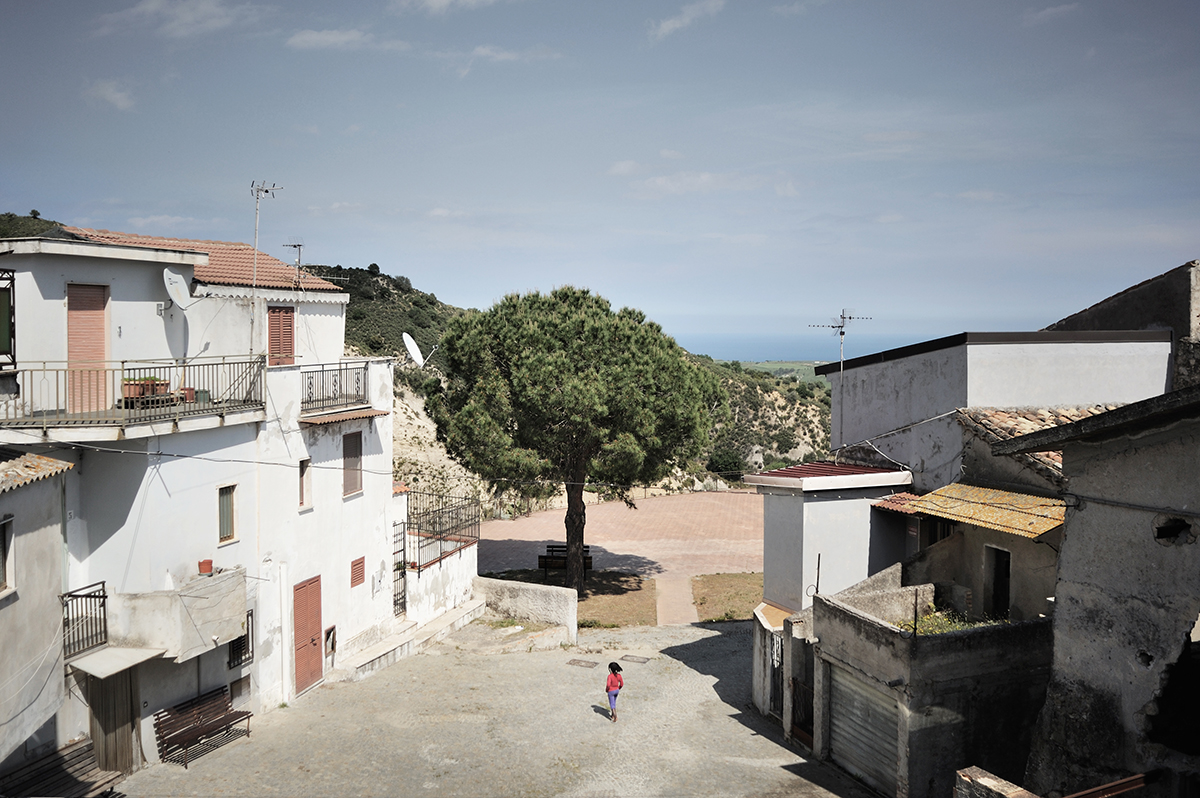
Photo by Fabio Itri
That’s why she wanted Tangerinn to bear the imprint of Calabria—not just its dialect and hardships, but the shadow of organized crime, systemic abandonment, and an enduring sense of invisibility. The novel, however, simultaneously speaks to a wider millennial experience here: the exodus to Northern Europe to escape the stagnation of provincial Italy.
Tangerinn—which has already been translated into English, French, Czech, and Portuguese—has met a very different reception abroad than at home. “Readers outside Italy were most interested in Omar’s story—the father; his migration and Mina’s relationship to that inheritance. I think that part is more universal. English, American, and French readers can more easily see themselves in that dynamic,” Anechoum explains.
It’s an observation that connects back to something Anechoum told me when we first sat down: Tangerinn came from a sense of personal urgency. “I’ve always had this persistent thought of wanting to tell, even if only in part, my father’s story. Omar is inspired by him.”
“After George Floyd’s death, I wrote an article for Vice because, for the first time, certain themes were entering Italian public discourse, and I felt the need to enter that conversation,” she tells me. The article resonated more than she expected. It left her with a new feeling—not just the possibility of telling her father’s story, but the sense that there was real space for it. “I felt encouraged. I thought: maybe there is an audience for this story. Maybe there is also a need to bring it out into the world.”
At the same time, she says, Italian literature is beginning to change too. I ask whether publishing still remains a predominantly white environment, one that struggles to reflect the country’s social and cultural complexity. Anechoum immediately distinguishes between Italy and the United Kingdom, where she has lived and worked. “In England, the conversation also concerns editorial offices, how white the publishing industry is. But it’s different there, because migration has a longer and deeper history.”
In Italy, she says, the shift is newer but increasingly visible. To illustrate a widening field, she points to writers like Igiaba Scego, a pivotal figure in bringing colonial memory and the Somali-Italian experience to contemporary literature. She also cites fellow Somali-Italian Saba Anglana, whose debut novel La signora Meraviglia—a family story about exile, citizenship, and the afterlives of colonialism—made the Premio Strega’s final twelve in 2025.
“I also think it’s a multimedia question. It’s not just publishing; it’s music too. Think of Mahmood; think of Ghali. There are brilliant second-generation voices who have things to say.”
If the songs of Sanremo and the novels in bookstore windows are beginning to speak the same language, she suggests, it is not because the industry has suddenly opened up. It is because society, slowly, is changing.