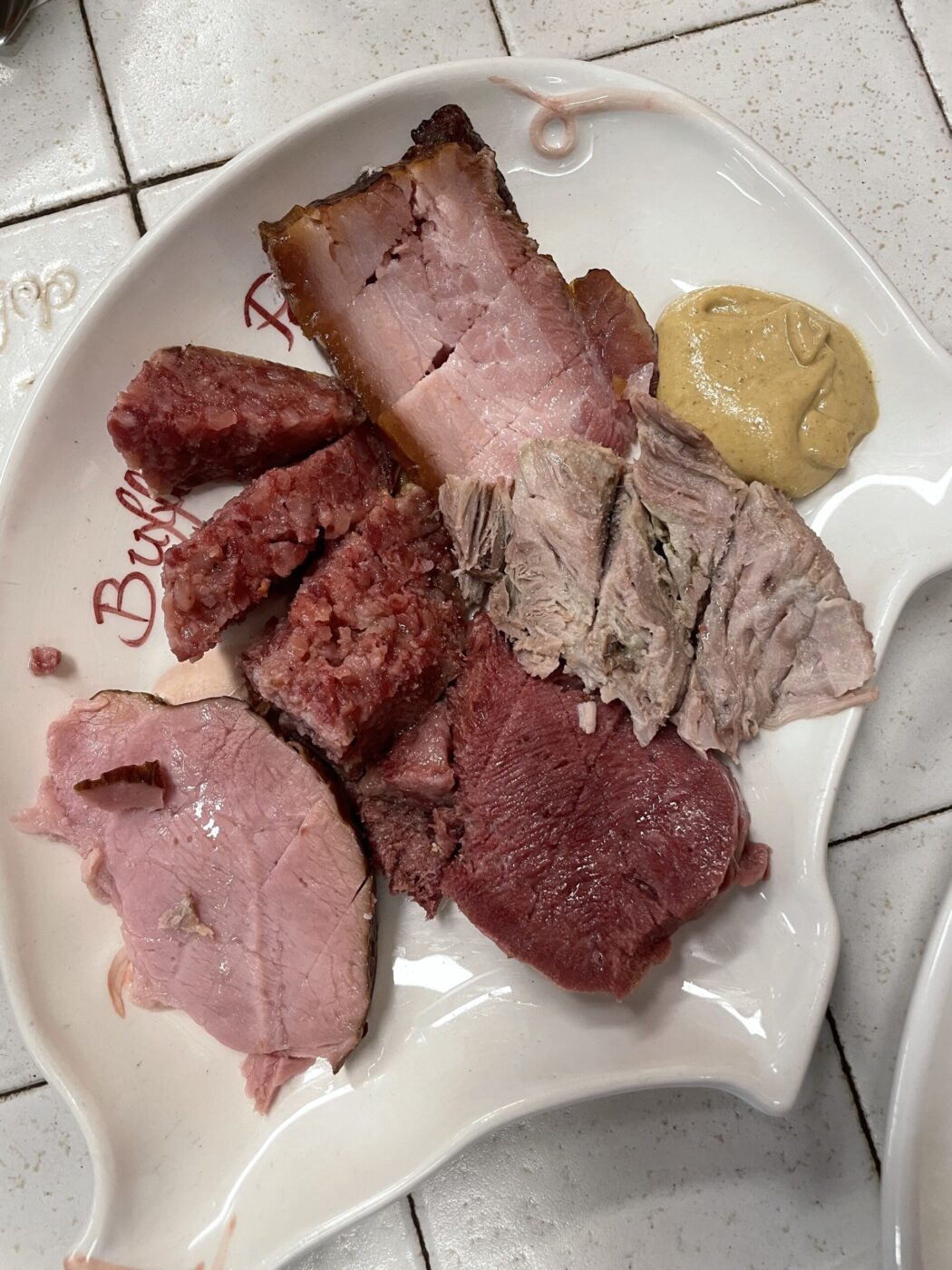
The first thing you notice at Buffet da Pepi is the sinus-clearing sting of fresh horseradish and the heady scent of rendering pork fat. I’m here on the recommendation of many trusted chefs and gourmands, all of whom pointed me toward Pepi for my first meal in Trieste. “It’s the definitive spot in Trieste, the epitome of the city’s cuisine,” they all said. “Get the porcina, various pork cuts boiled together in one broth-filled pot called la caldaia.”
That didn’t exactly set my pulse racing. I’ve had bollito before. I’ve eaten pot-au-feau. Yes, boiled meat is delicious, but what makes this version so special, and why is it the pinnacle of Triestino food? What I knew about the region before visiting was mostly limited to grape varieties—one of natural wines’ most revered deities, Joško Gravner, comes from Friuli, as does Radikon—so I imagined the international port city to be a bit more of a hip melting pot, not a literally boiling pot of meat. I’m glad to have been mistaken.
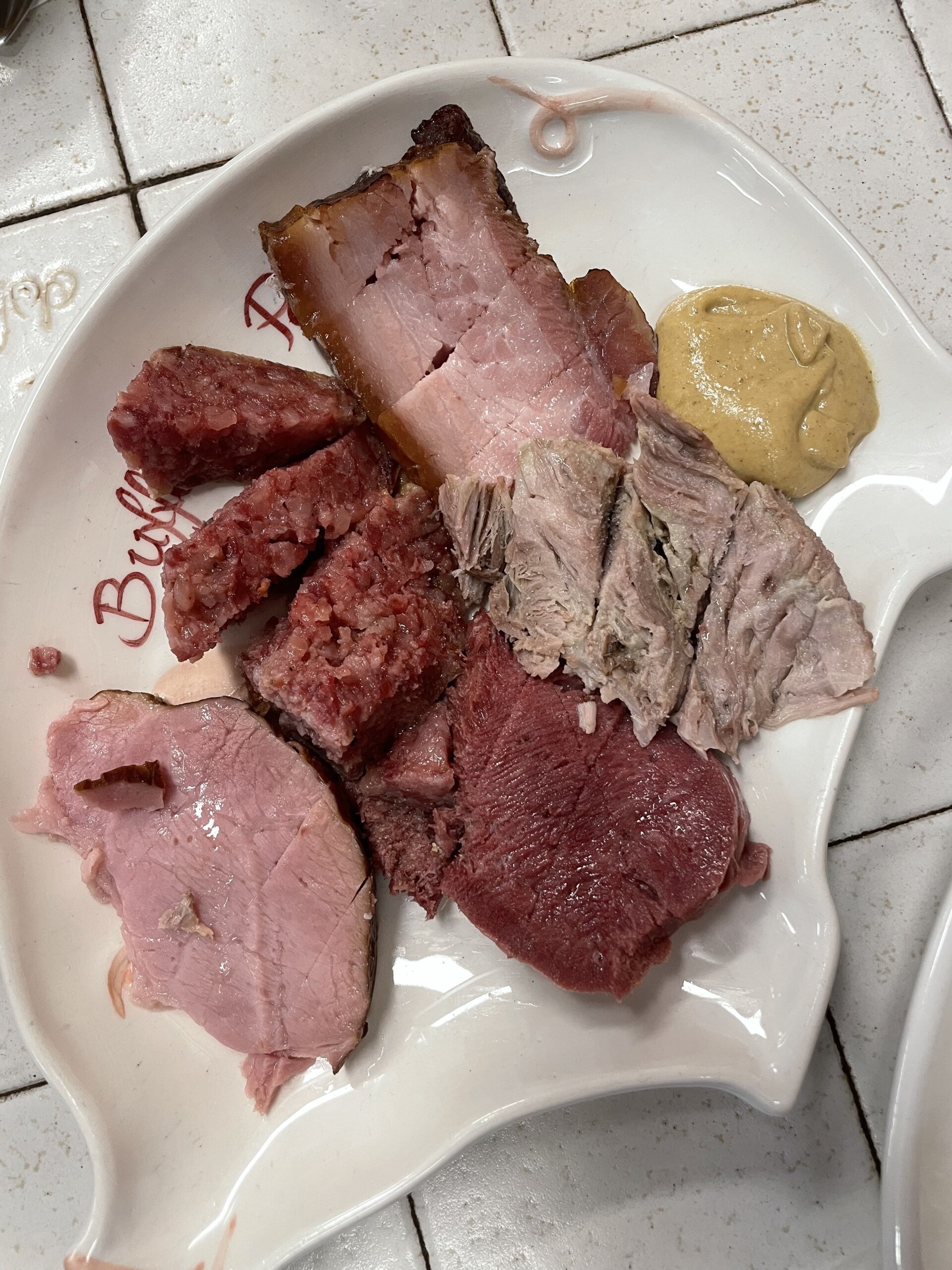
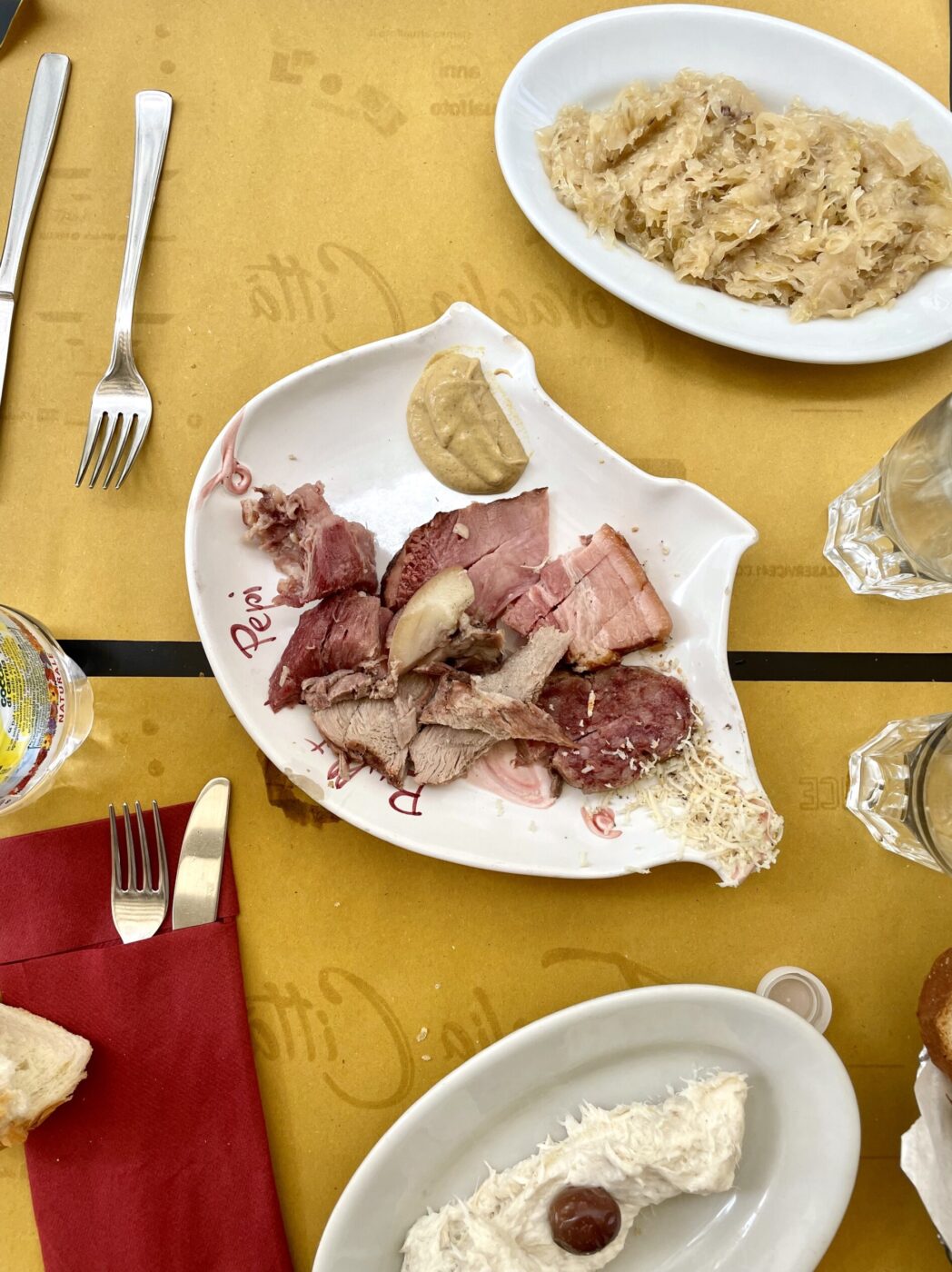
Porcina
Friuli Venezia Giulia is on the Adriatic coast, and Trieste is distinctly a port city. While a huge amount of wealth has flowed through that port, earning the nickname “the third entrance of the Suez Canal,” it still has a working class vibe.
And Buffet da Pepi is a crucial part of daily working life here. Open from 8:30 AM to 10 PM, the restaurant’s hours reflect the dockworkers’ tradition of rebechin, a local habit of eating a hearty mid-morning snack to sustain themselves during long shifts. It roughly translates to “something to pick at,” though Pepi isn’t exactly a place for a light bite.
Buffet Da Pepi was Trieste before Trieste was Italian. This self-proclaimed “little buffet in Piazza della Borsa, town center” first opened in 1897 when the city was the crown jewel of the Austro-Hungarian Empire. It survived when the city became a disputed territory claimed by Mussolini’s Italy, occupied by Nazi Germany, governed by Yugoslav partisans, and finally administered by Allied military forces before landing permanently in Italian hands in 1954.
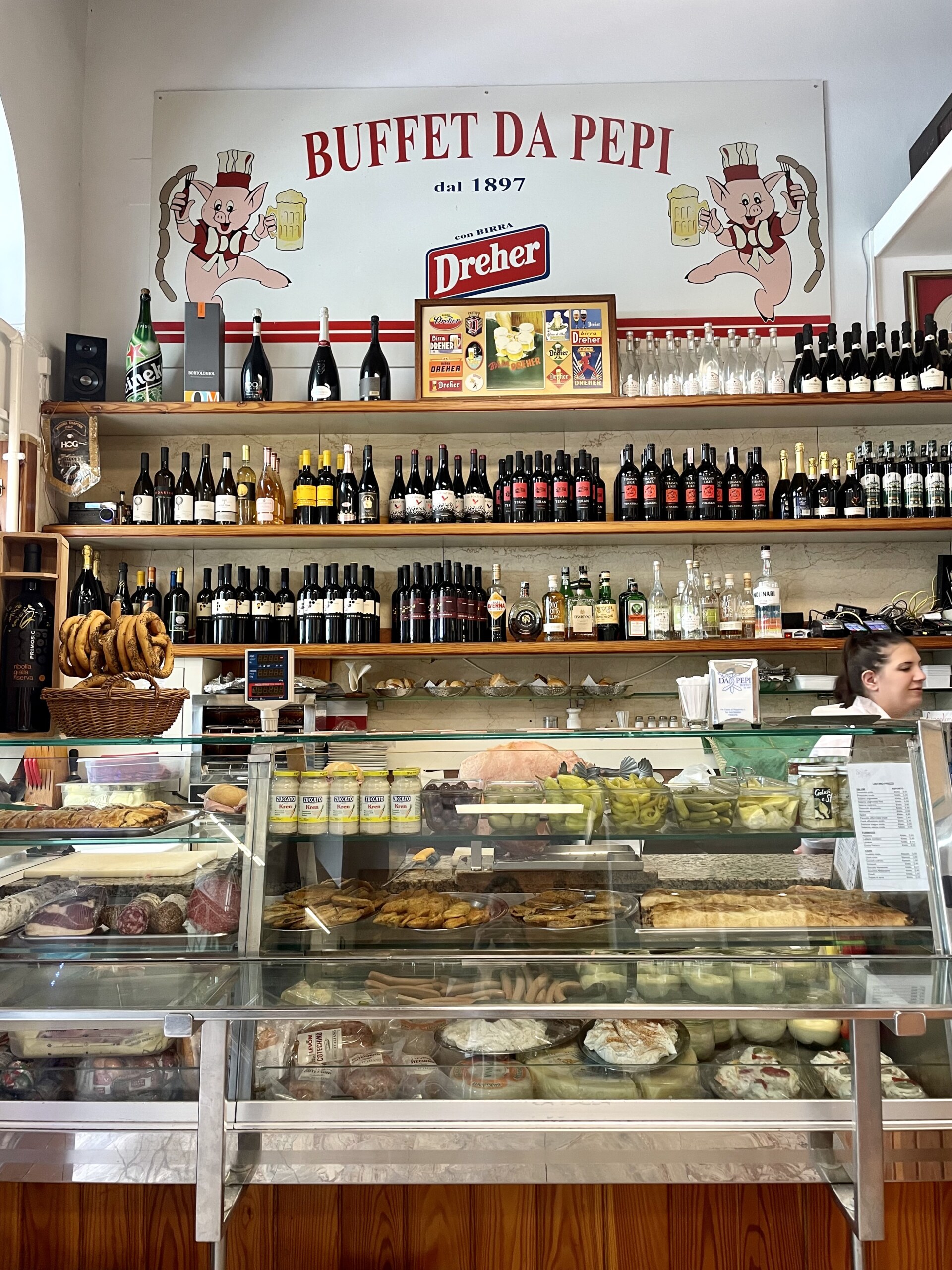
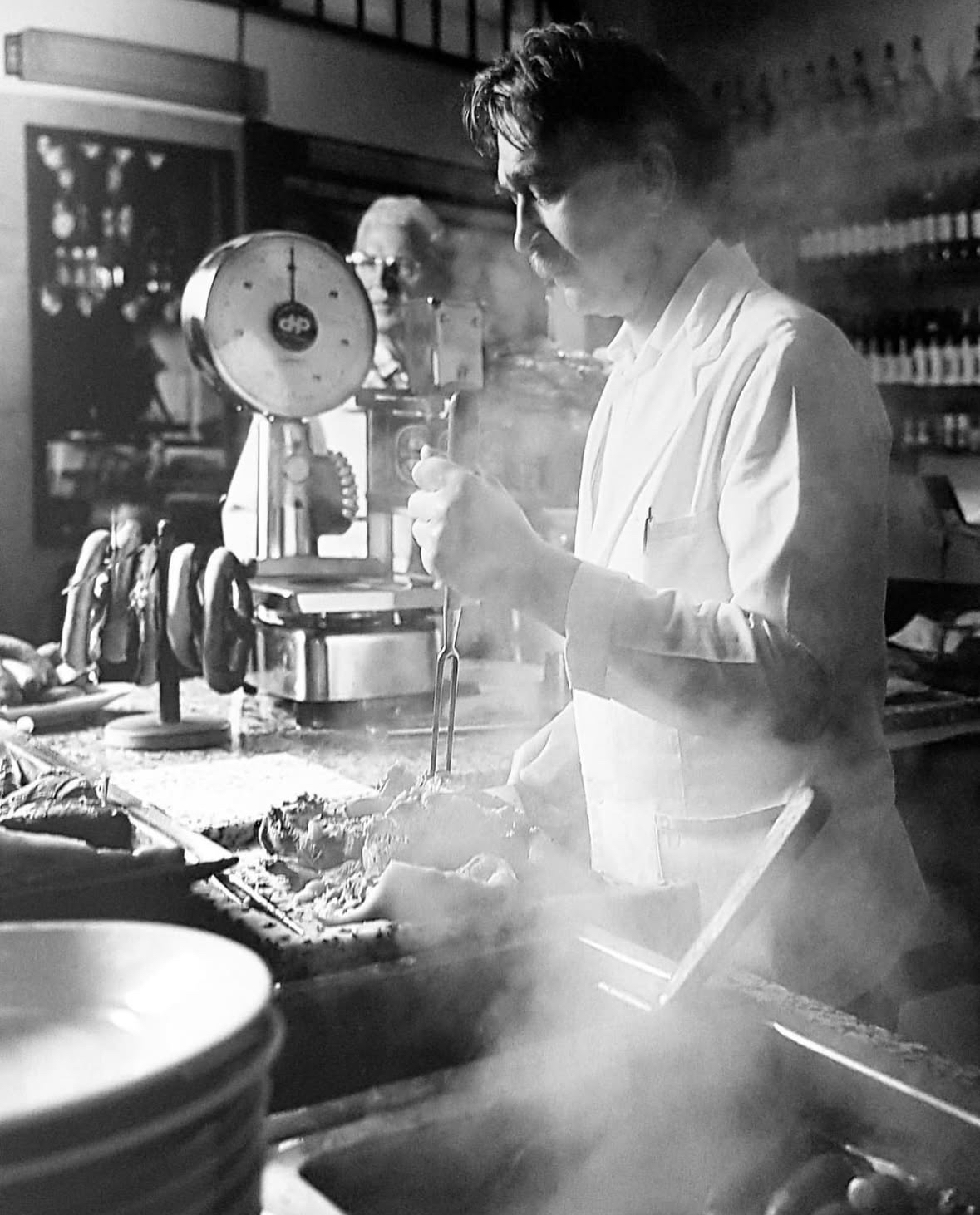
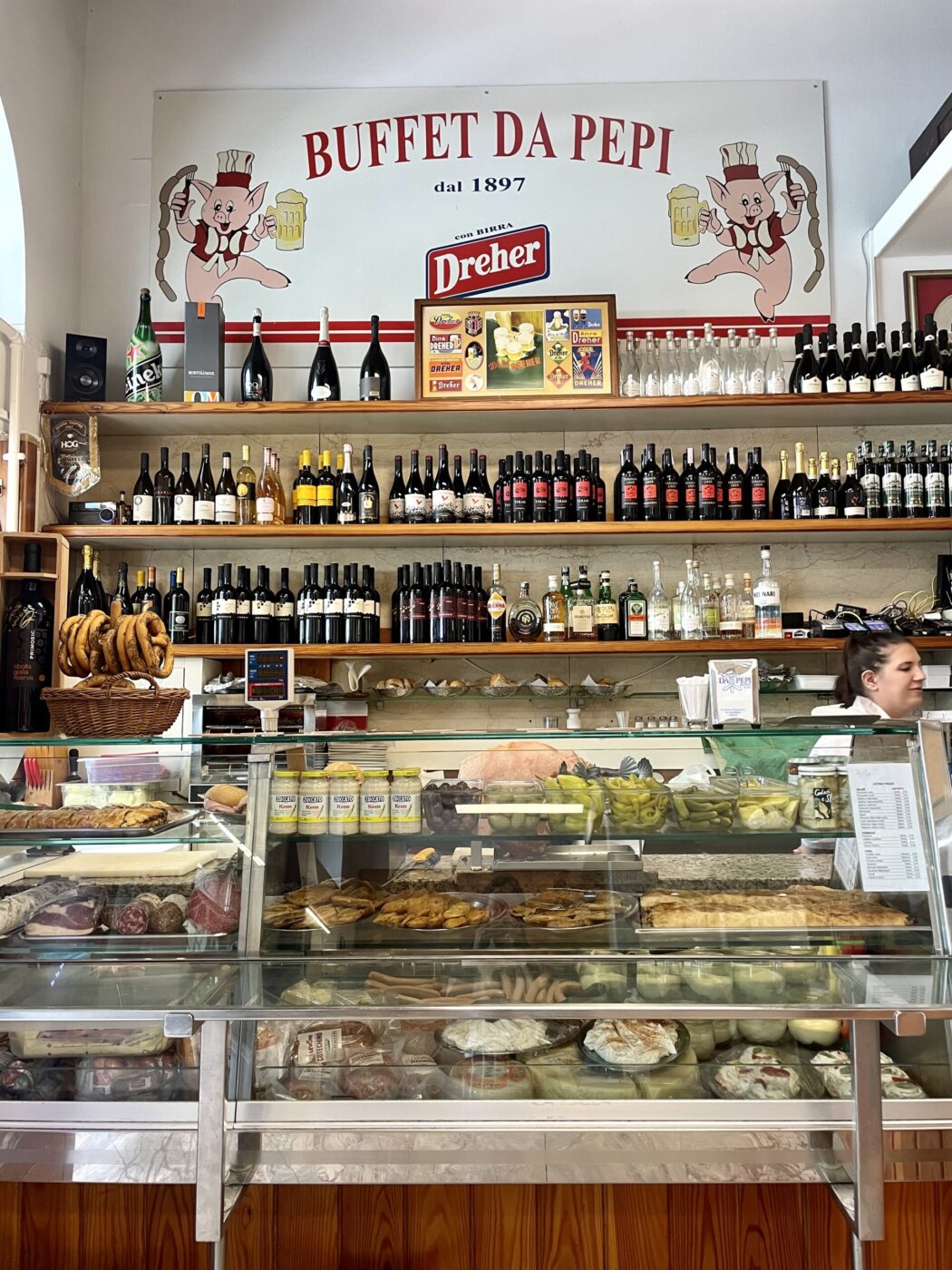
The counter at Buffet Da Pepi
Today, the identity of the city is understandably complicated. Though Trieste is Italian territory, the Slovenian border is so close that many of the city’s suburbs are physically in Slovenia. And of the city’s some-200,000 residents, about 12% are Slovenian. Pepi’s namesake founder himself, Pepi Klajnsic, was nicknamed Pepi S’Ciavo—Triestino for “Pepi the Slovenian.”
Eventually ownership of the buffet passed to Pepi Tomazic, who was killed in a WWII bombing in 1944. By 1952, his widow and brothers had renovated and transformed the restaurant into more-or-less how it looks today, with few tables, a lot of woodpanelling, and a very large meat counter—the center of everything they do, and where Trieste’s cultural collision is felt most strongly. In the rest of Italy, a bollito is usually a polite affair of beef served with an array of sauces, like sharp salsa verde in Piedmont or the sweet-and-spicy fruit heat of mostarda in Emilia-Romagna.
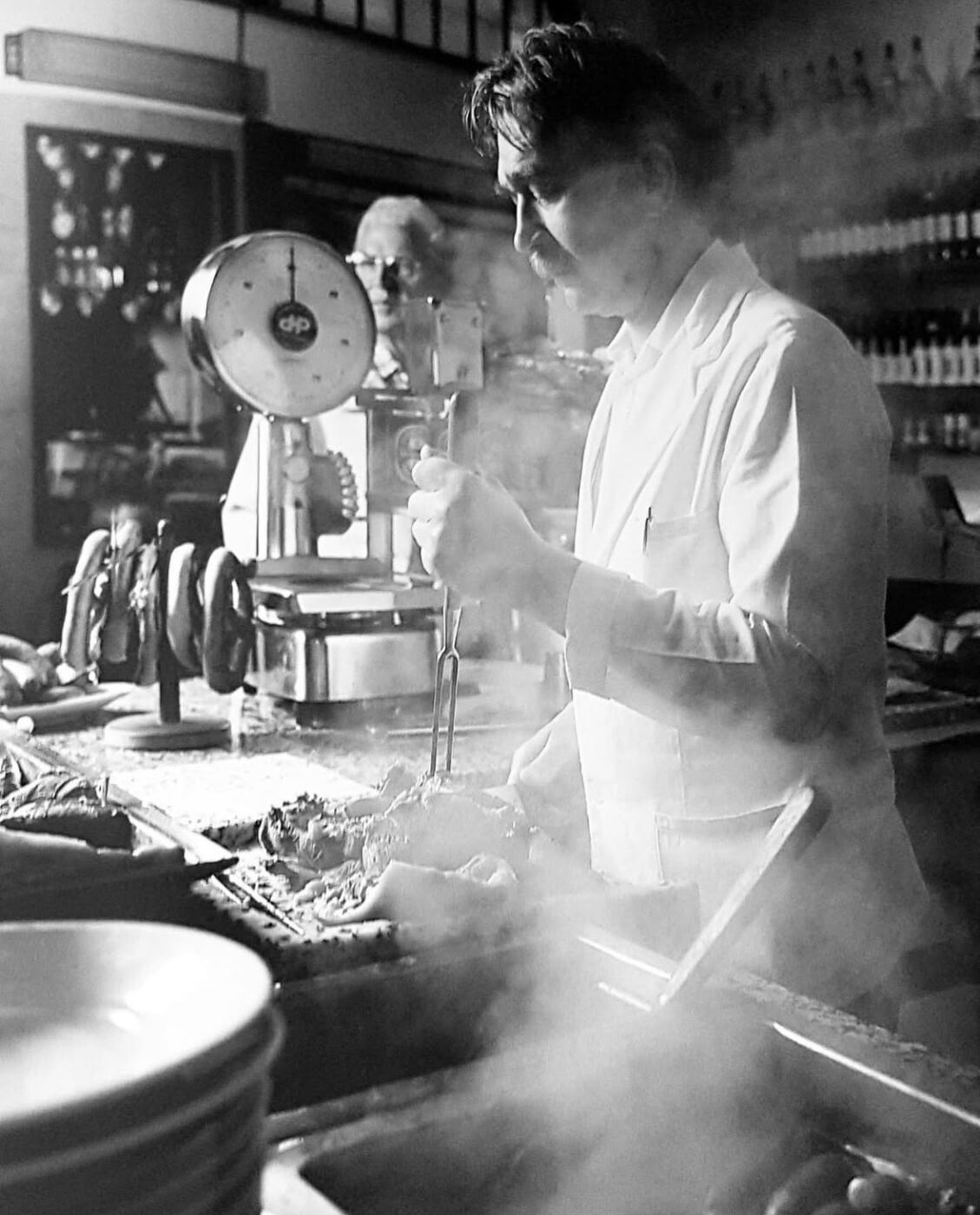
At Pepi, they reject the beef and the finery. “It’s always pork, never beef,” says Andrea Polla, whose family has now run the counter for decades. He’s 33, started working at Pepi as a teenager, and knows the business like the back of his hand. He clocks in right after his father, Paola Polla, one of the three owners who’s worked behind the counter almost every day for the last 50 years, greeting guests and taking orders with a charming, gregarious energy and smile that I still remember months after my visit.
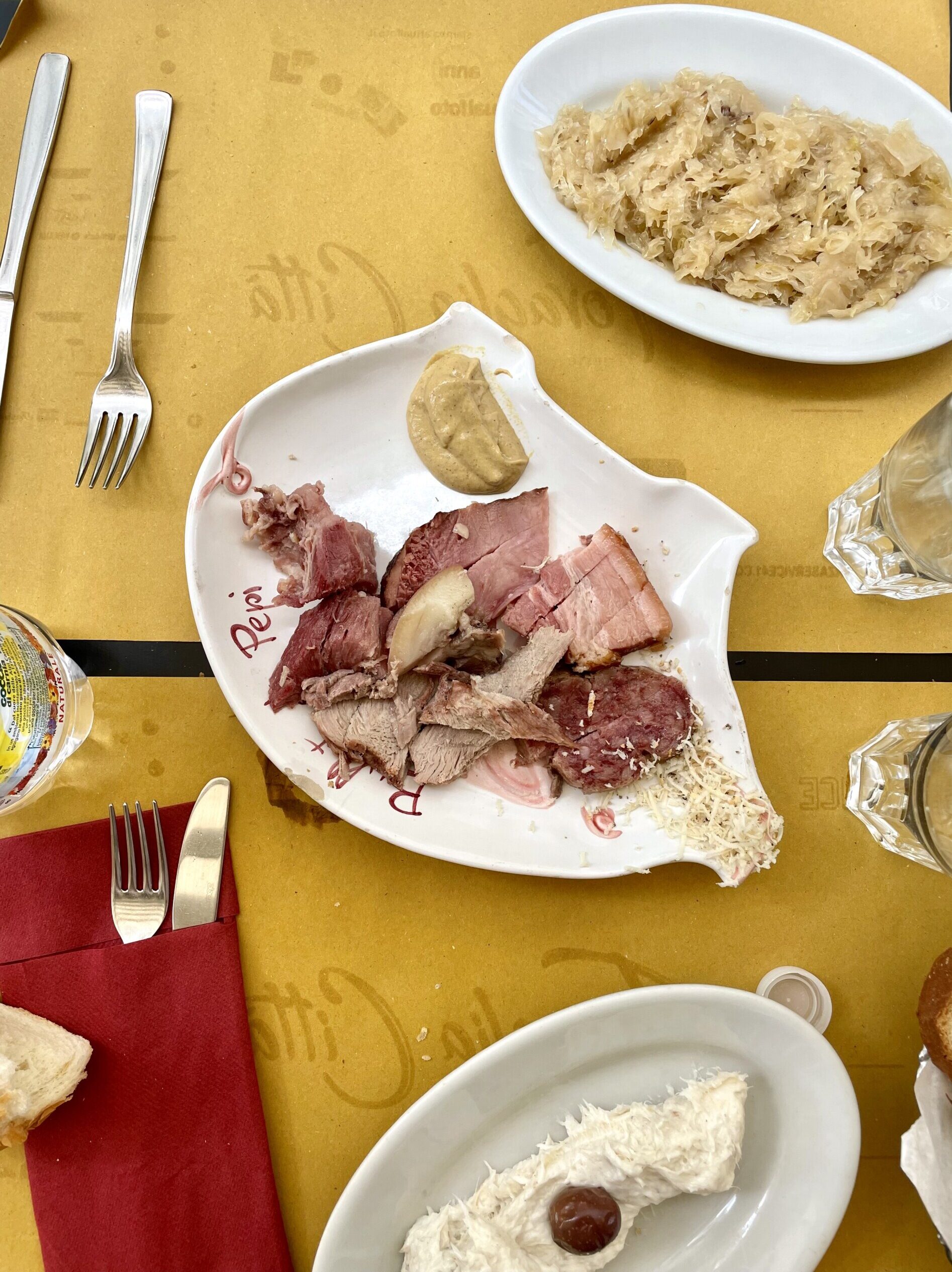
“Everything cooks in one pot,” Andrea says. “One hour and a half. Maybe two. The sausages need less time.” By “everything”, he means tongue, neck, cheek, belly, loin, and sausages. It’s a choose your own adventure when ordering, though “the only acceptable accoutrements here are mustard and freshly shaved horseradish (cren),” he continues.
This largely boils down to place more than taste. Horseradish is native to Hungary; the country is still the largest producer of it in the European Union. And, while Piedmont relies on its native Fassona beef and Emilia-Romagna leans on its famed pork, the bollito in Trieste is a direct reflection of its history as a portal to the Austro-Hungarian Empire. In the 1830s, the Empire saw the rise of the Mangalica—a curly-haired Hungarian pig breed that soon numbered in the millions. While cattle required vast grazing lands and were often priced for export, pigs were easily reared and preserved, fueling an industrial boom in pork husbandry. The people of Austro-Hungary ate pork, so naturally, that’s what restaurants like Pepi serve.
“It’s more Austro-Hungarian food,” Andrea answers when I ask what he considers Pepi’s culinary influence to be. “It’s not Italian food; we’re 10 minutes from Slovenia, one hour from Austria… If you go to Vienna, the food is the same. Sauerkraut, boiled pork, maybe it’s a little bit different, but these flavors come from there.”
Above all, I’d argue, it’s Triestino food. “We are proud of the city,” Andrea says. “We have the sea, we have the mountains. We live very well in Trieste.”
This I can confirm. Pressed between the Adriatic and the Karst Plateau, it’s a beautiful city where history is stacked in plain sight: a Roman amphitheater neighbors the Hapsburg-era Piazza dell’Unità d’Italia, just minutes from the Mussolini-era behemoth that houses the police station. It’s easy to see why James Joyce made a home here, and why empires fought to claim it.
Not much has changed at Pepi since 1897, though the entire world around it has shifted many times over. You could argue that boiled meat is just boiled meat, but porcina belongs to Pepi. As long as the Palla family keeps the caldaia simmering, the soul of the city remains safe—regardless of whose flag is flying outside.