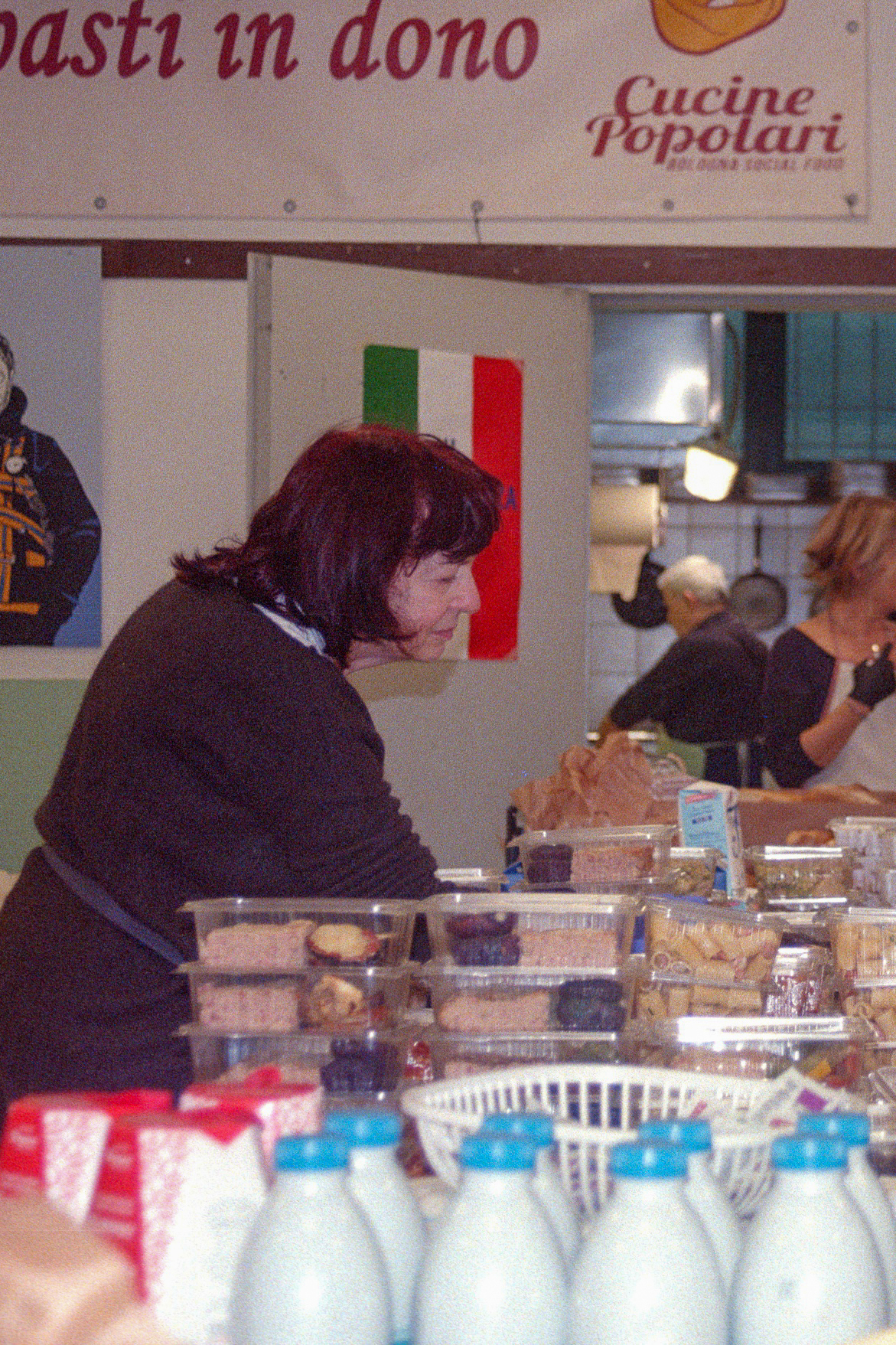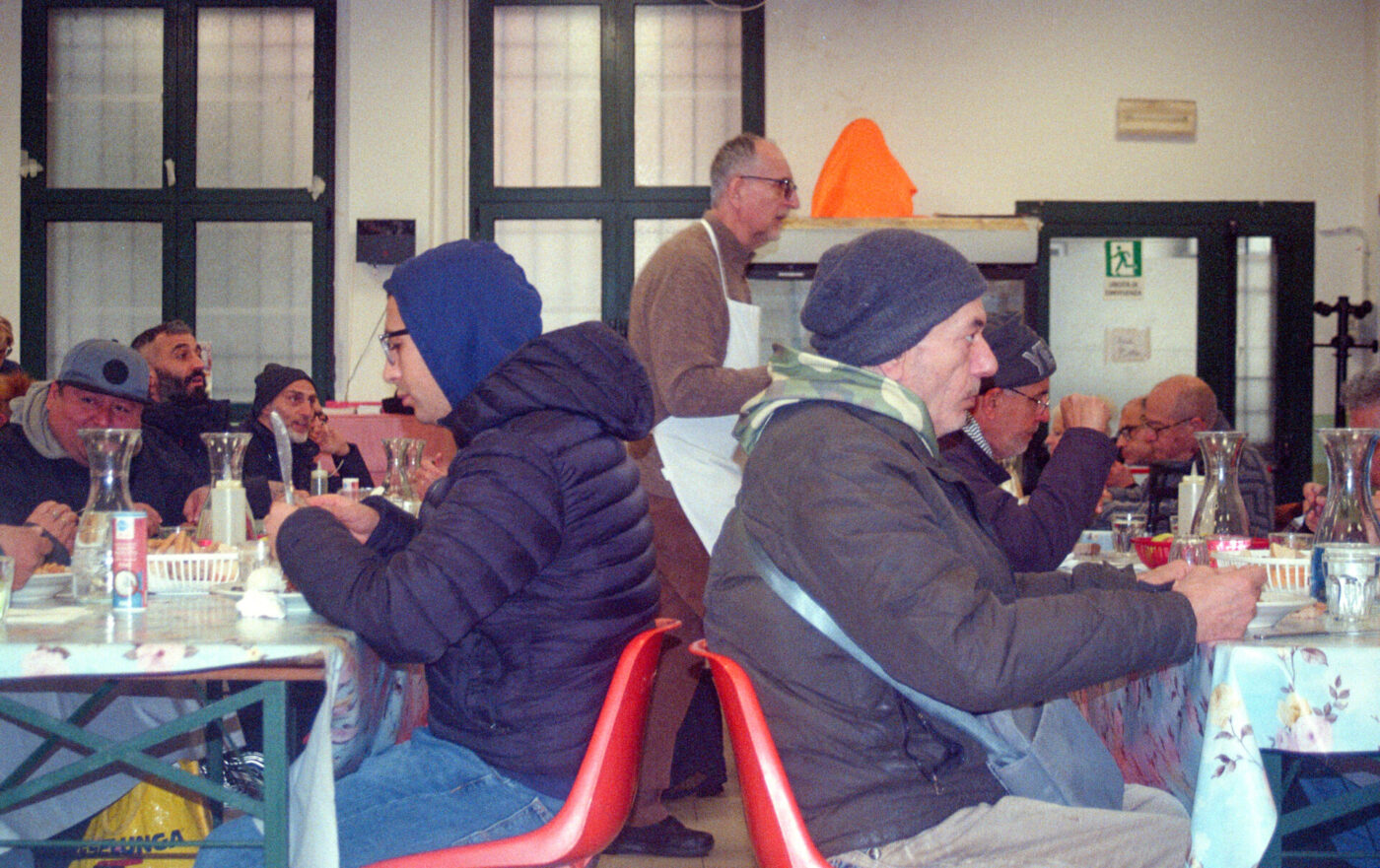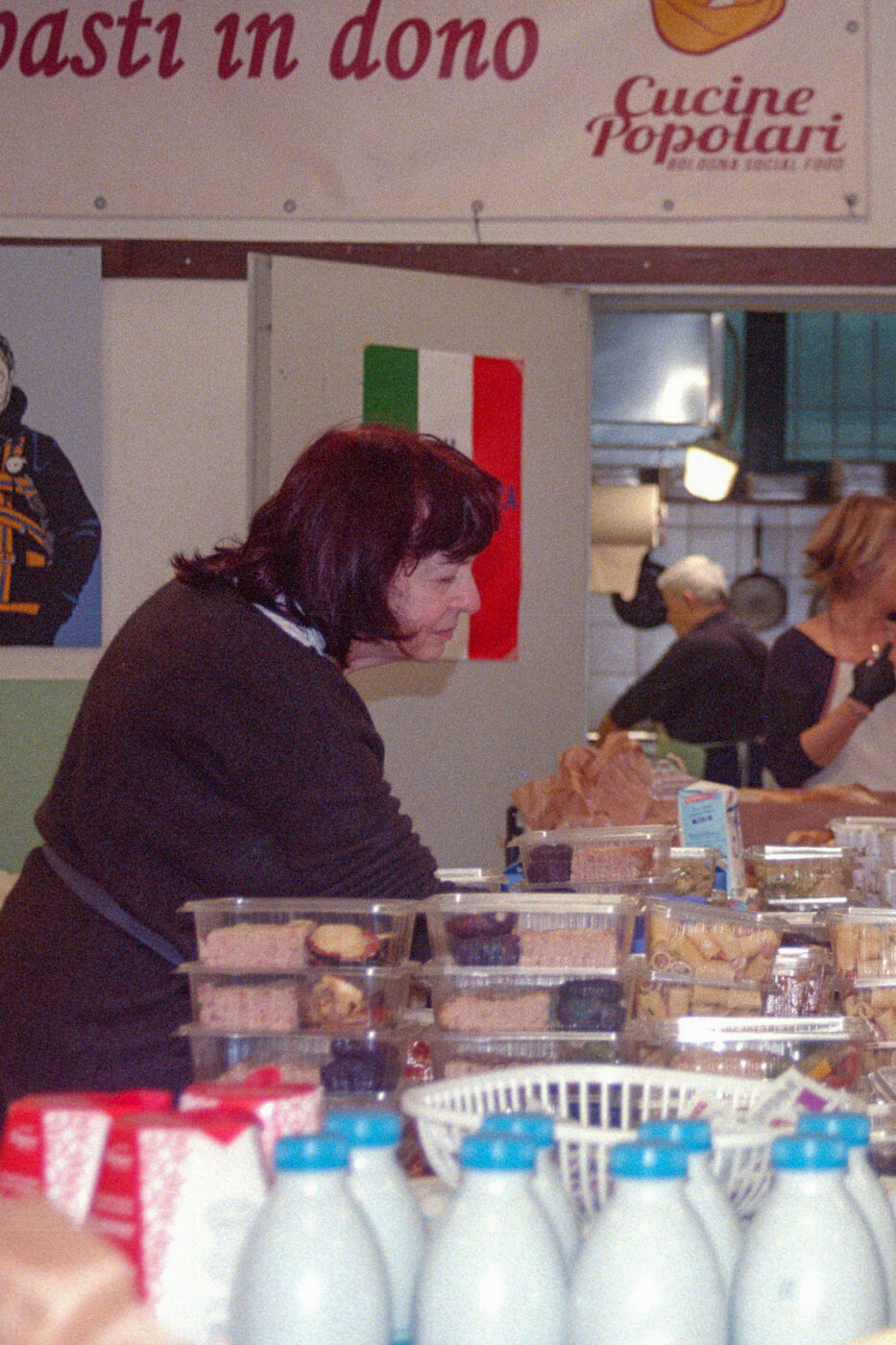
It’s noon in Bologna. In a neighborhood north of the ancient city walls, in an unremarkable brick building, and in a yellow-hued cafeteria-like room, tables are set with plates and pasta bowls, silverware and glasses, baskets of bread and vases of olive oil and balsamic vinegar. They are filled with people: chatting amongst themselves, saying what they’d like to eat, conversing with those who serve them lunch. The room looks rather normal for an Italian lunch, and that’s intentional: The servers and cooks and dishwashers are all volunteers, however, and the guests are here because they are in need. In Italian, this place is called one of Bologna’s Cucine popolari. For a proper English translation, we’ll need some context: the history of left-wing politics and hearty gastronomy in one Italian city.
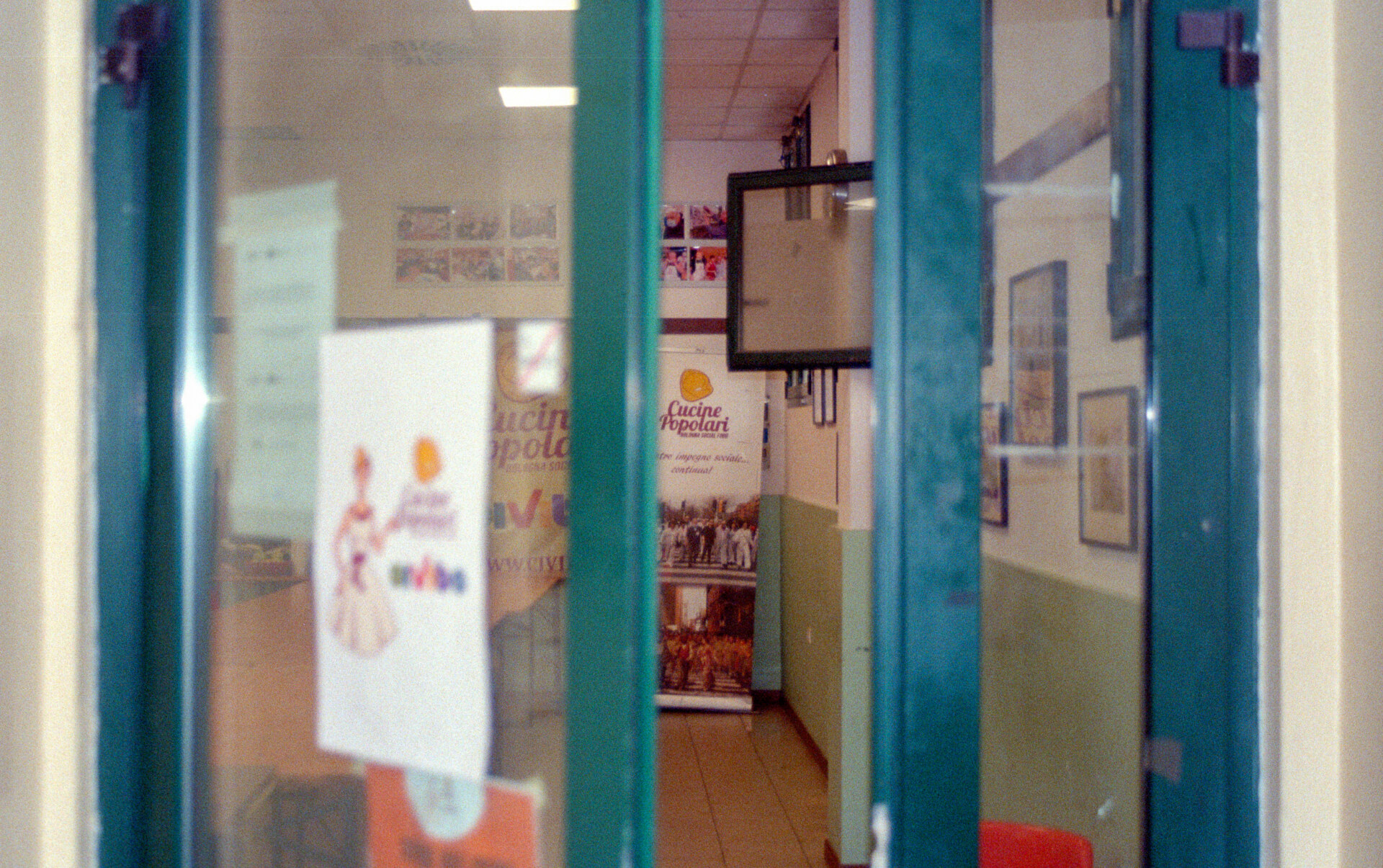
I arrive at one of the city’s four Cucine popolari earlier that morning. Across the street from the building, in the cold, damp air of an alley, someone is asleep on an uncovered mattress. Once inside, I’m greeted by a volunteer named Johnny Rizzi who idles behind an espresso machine. He has thick black glasses and a weightlessness about him; he is almost constantly giggling. Before he leaves this morning to deliver food to an elderly home, he leaves me with an observation of his city: “There is really a culture of solidarity,” he says proudly, adding that, “beyond solidarity, food is in the culture of Bologna.”
In December of 2024, Johnny’s city inscribed a “right to food” in its municipal statute. Bologna has officially recognized “the right to an appropriate, sufficient, healthy, sustainable, and culturally acceptable diet” as a “fundamental right and common good.” According to Dr. Andrea Segrè, who drafted the law as a University of Bologna professor and special adviser to the mayor for food policy, “a series of local food policies should”—he stresses that he’s using the conditional verb tense, and that he is referring to an ideal—“render this right enforceable for all.” Dr. Segrè says, “This is the struggle, this is the context, this is the frame.”
Dr. Segrè tells me that if it weren’t for third-sector organizations like the Cucine popolari, the problem would be much worse. “But what is really missing,” he says, “is government intervention on poverty.”
Bologna has boasted “economic,” “public,” or “popular” kitchens since the early 19th century, when, under the reign of Napoleon, volunteer organizations, often church-affiliated, distributed meals to the poor. At the start of the 20th century, as Bologna elected its first socialist mayor, the city would undergo a food policy overhaul. During the economic turmoil of the First World War, Mayor Francesco Zanardi constructed an enormous public bakery, opened city-run grocery stores, and even ran a public restaurant and a cafe. They called him the “mayor of bread,” and since his epoch, the Left has dominated city politics. This, as Dr. Segrè said, is the struggle, context, and frame in which Le Cucine popolari operate.
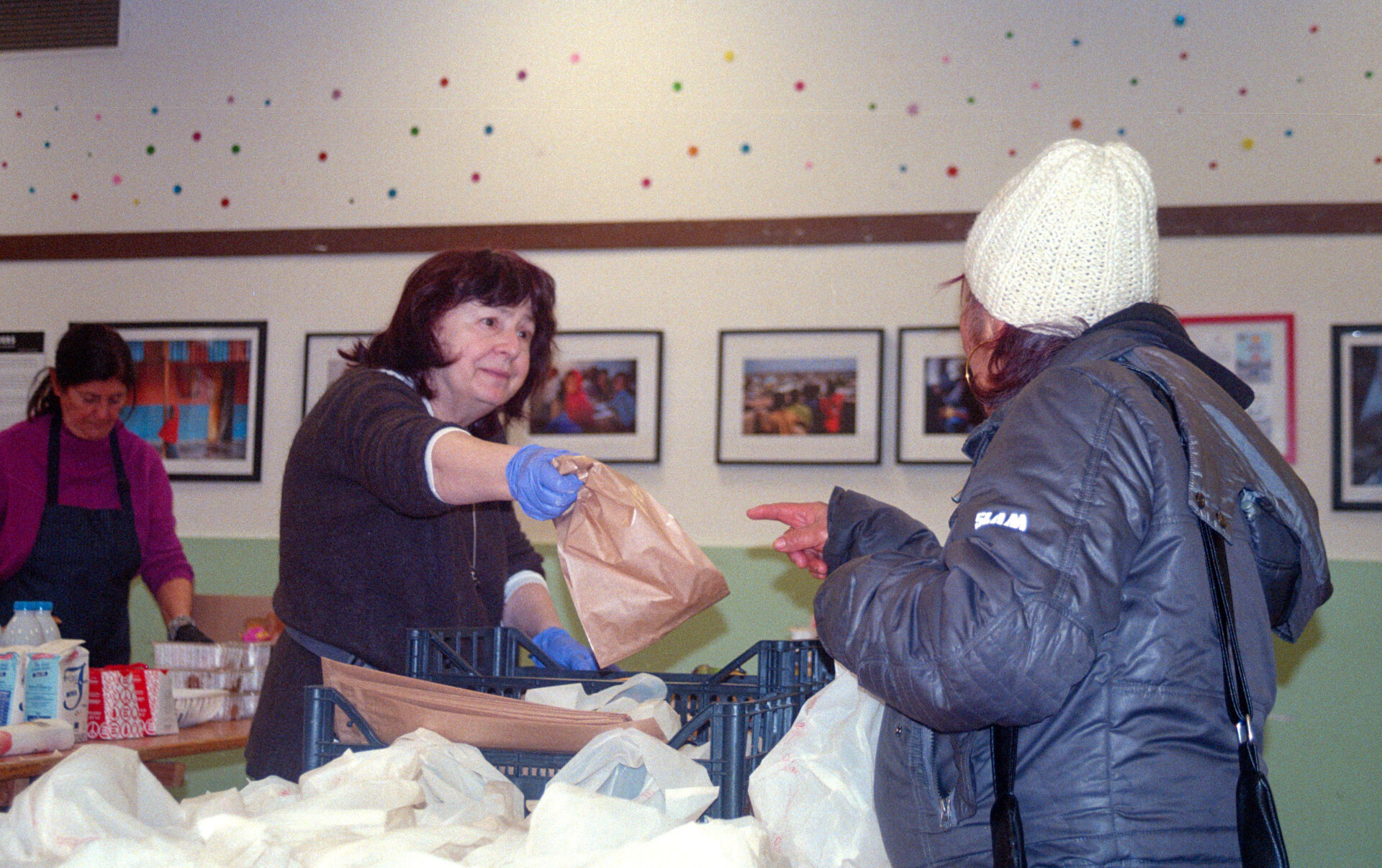
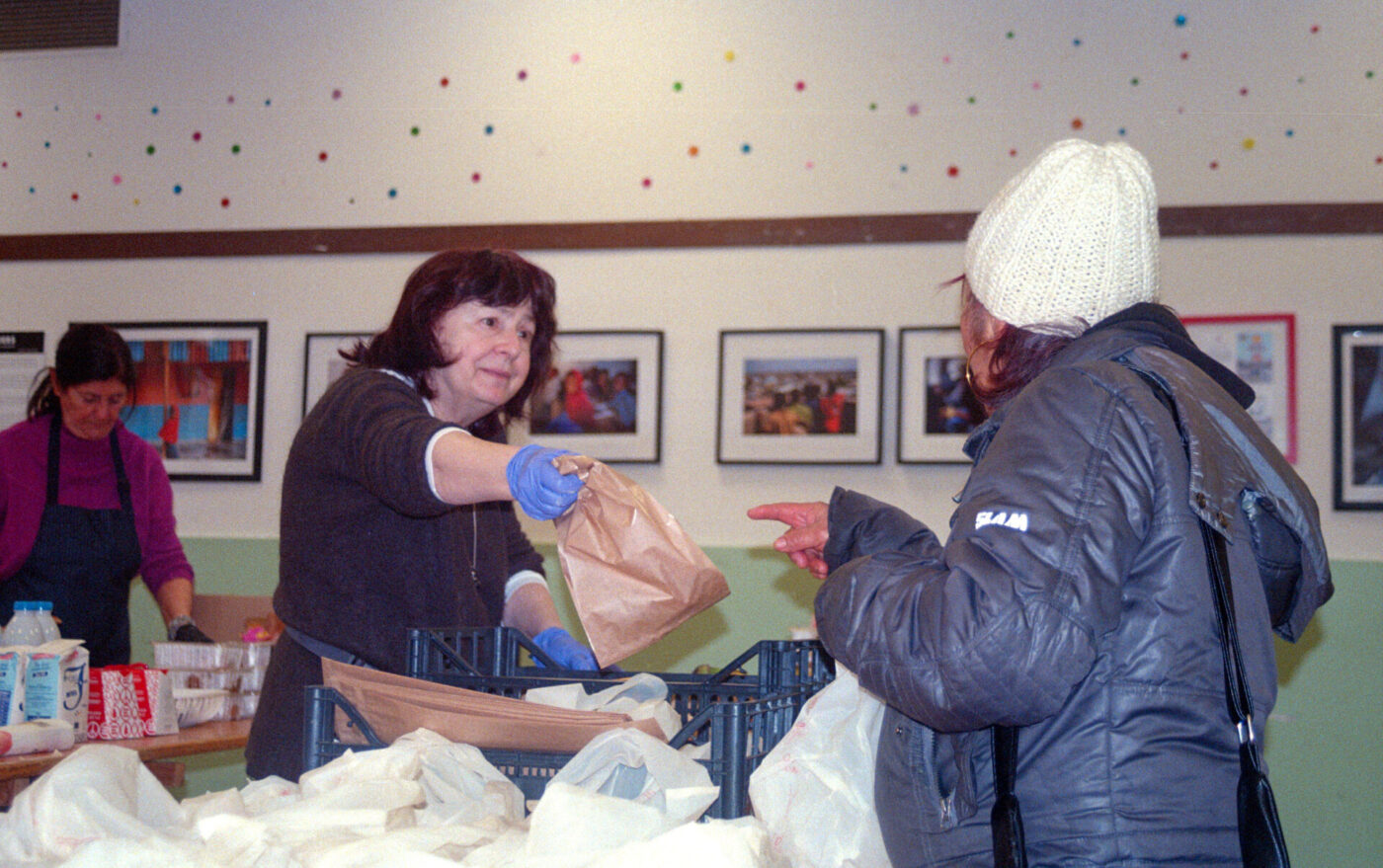
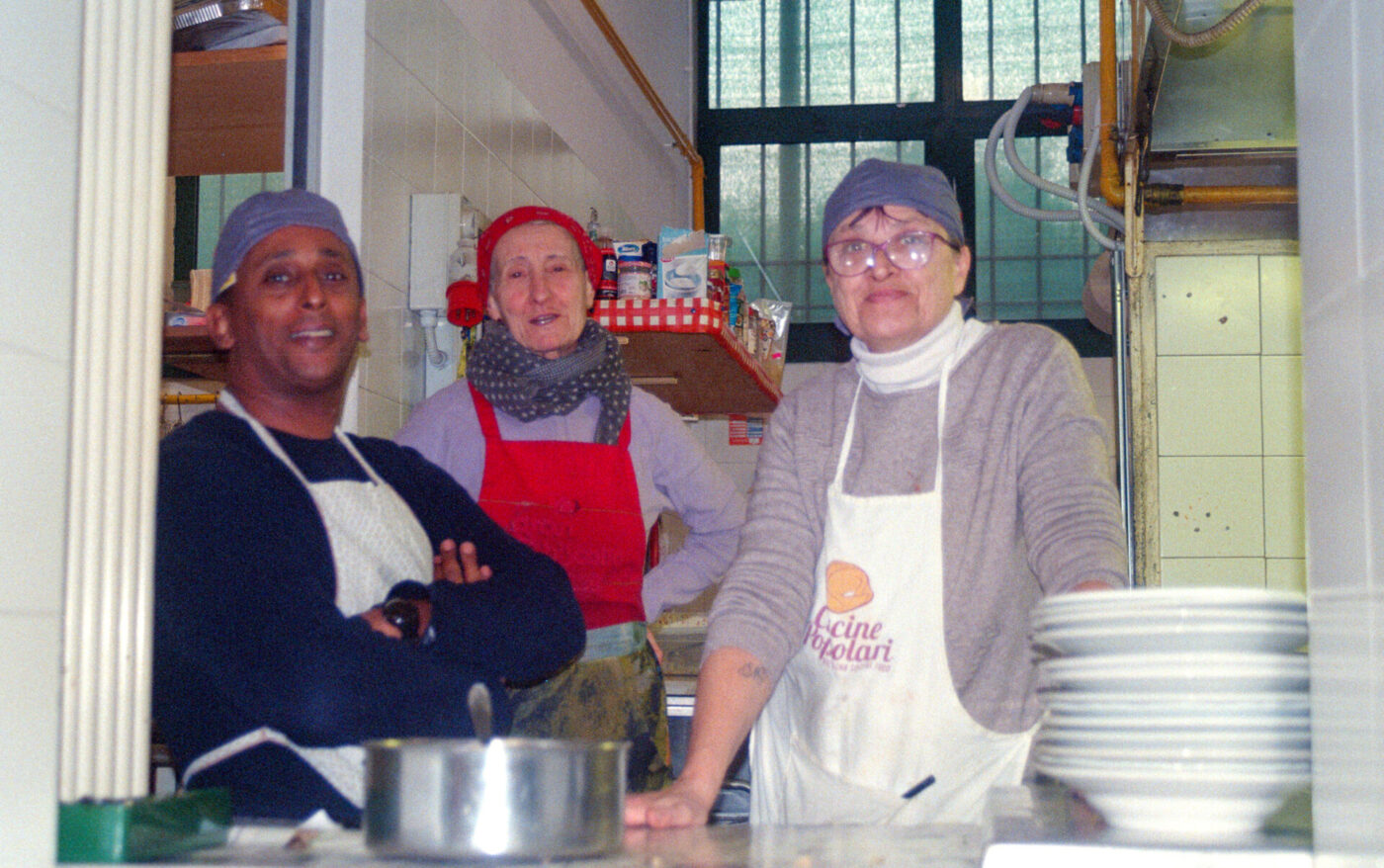
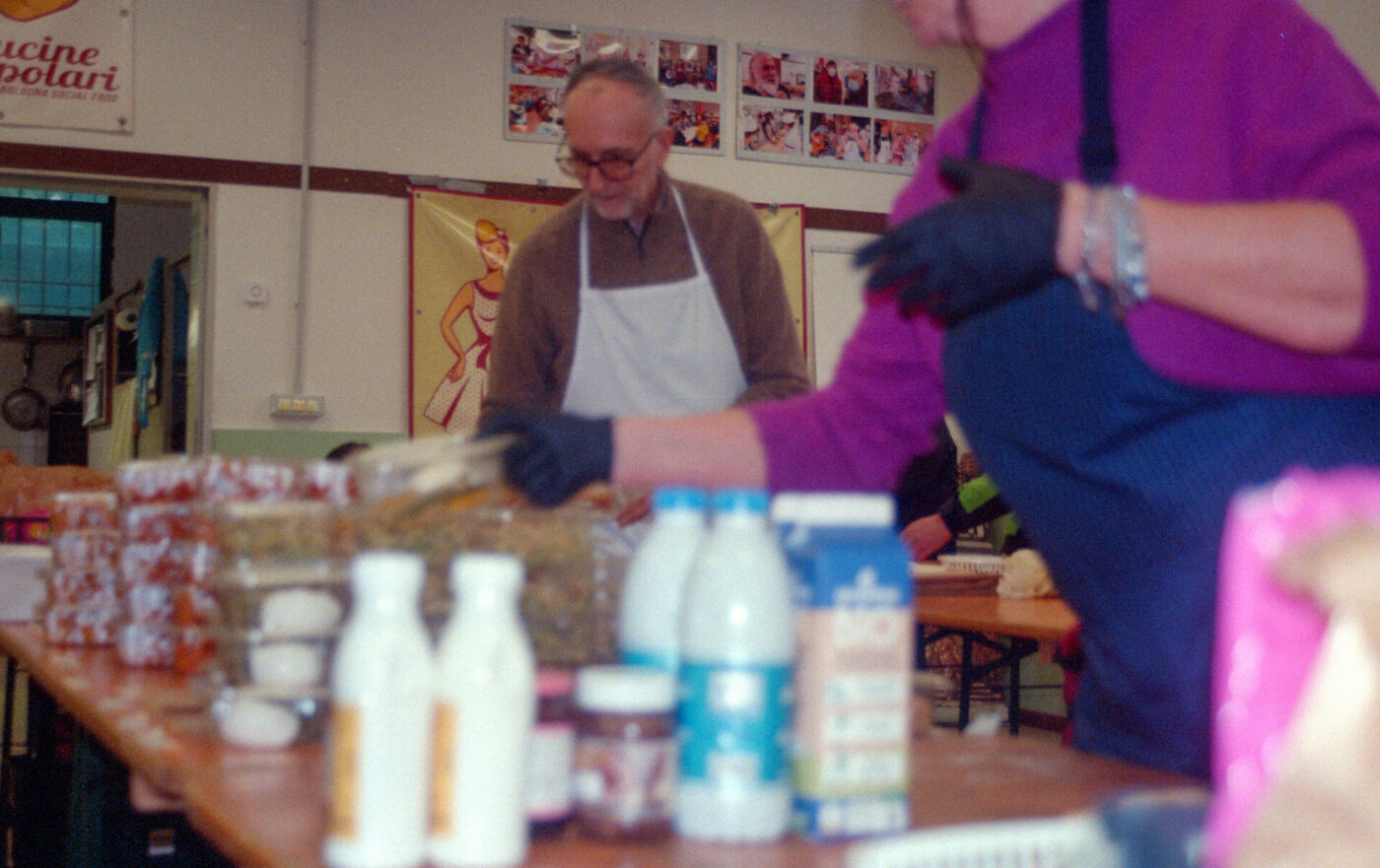
Arranging donated food on a table is Valeria Gabuso, an aunt in retirement with wide eyes, a pinched smile, and a quick voice who, throughout the morning, will call out my name in little shrieks and frets. We need to: set the tables! clean the trays! and attempt to—with some difficulty—assemble sandwiches using donated hamburger buns and jars of the European Union’s commodity chocolate-hazelnut spread. The latter task of spreading the dry, sweet paste on the buns does not go smoothly; it results in flurries of bread crumbs and chocolate which dot the cutting board. Although we are hours away from when the guests will arrive (those who come for a meal are always referred to as guests), Valeria passes this morning in a frenzy. She tells me, in a rare moment she has time to answer questions, that she volunteers with Le Cucine popolari twice a week, which really means four days a week, since she always spends the day after recuperating.
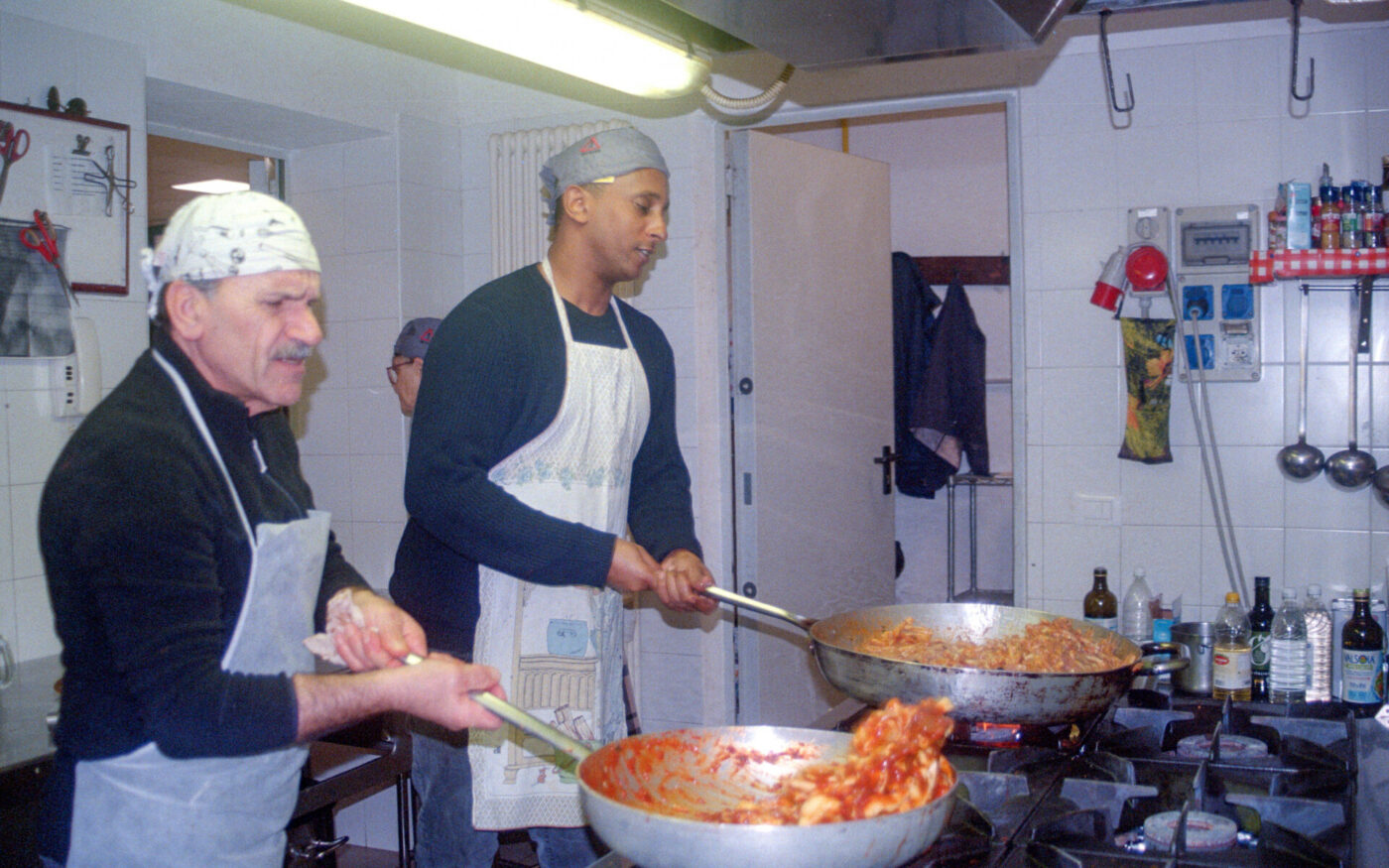
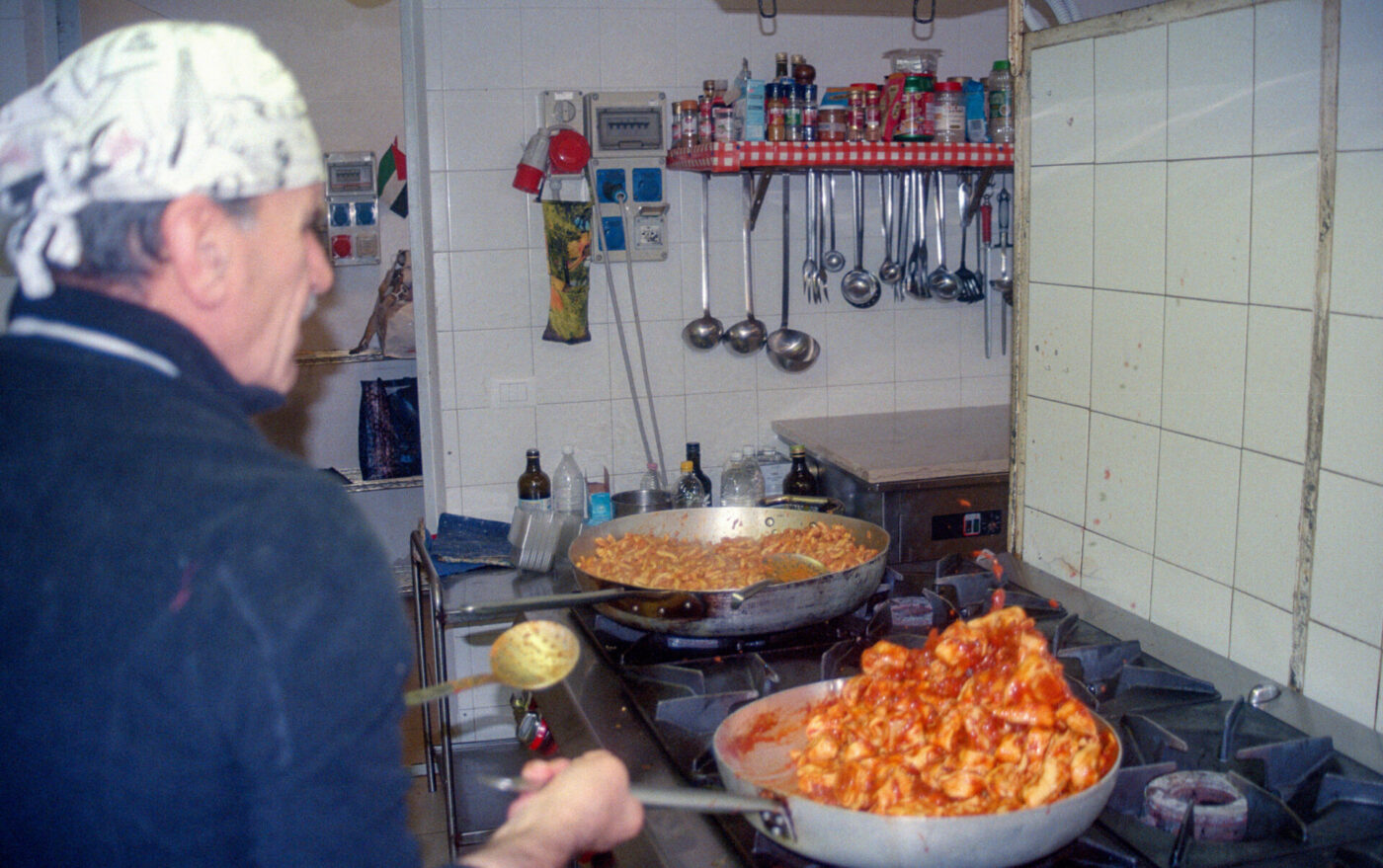
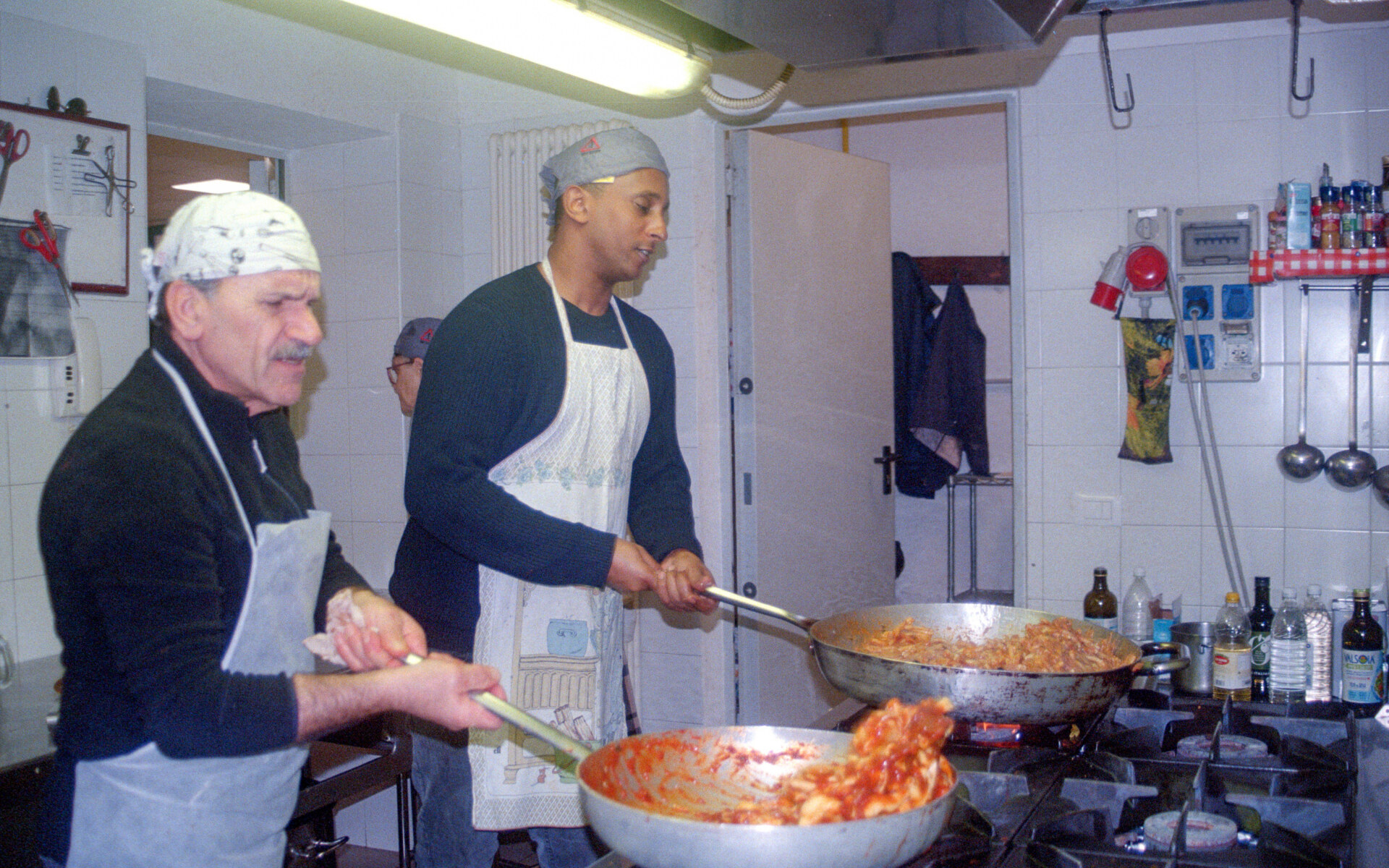
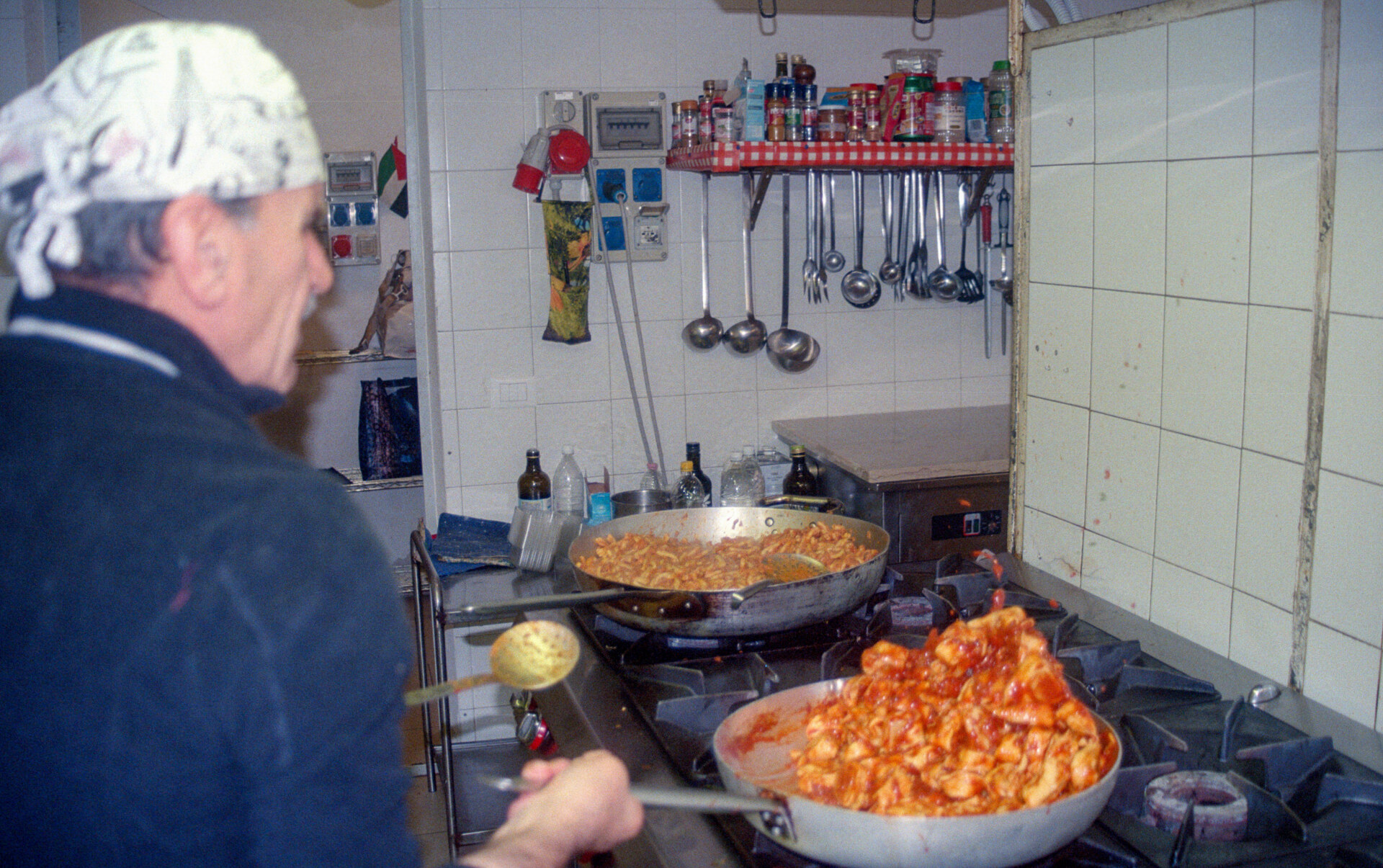
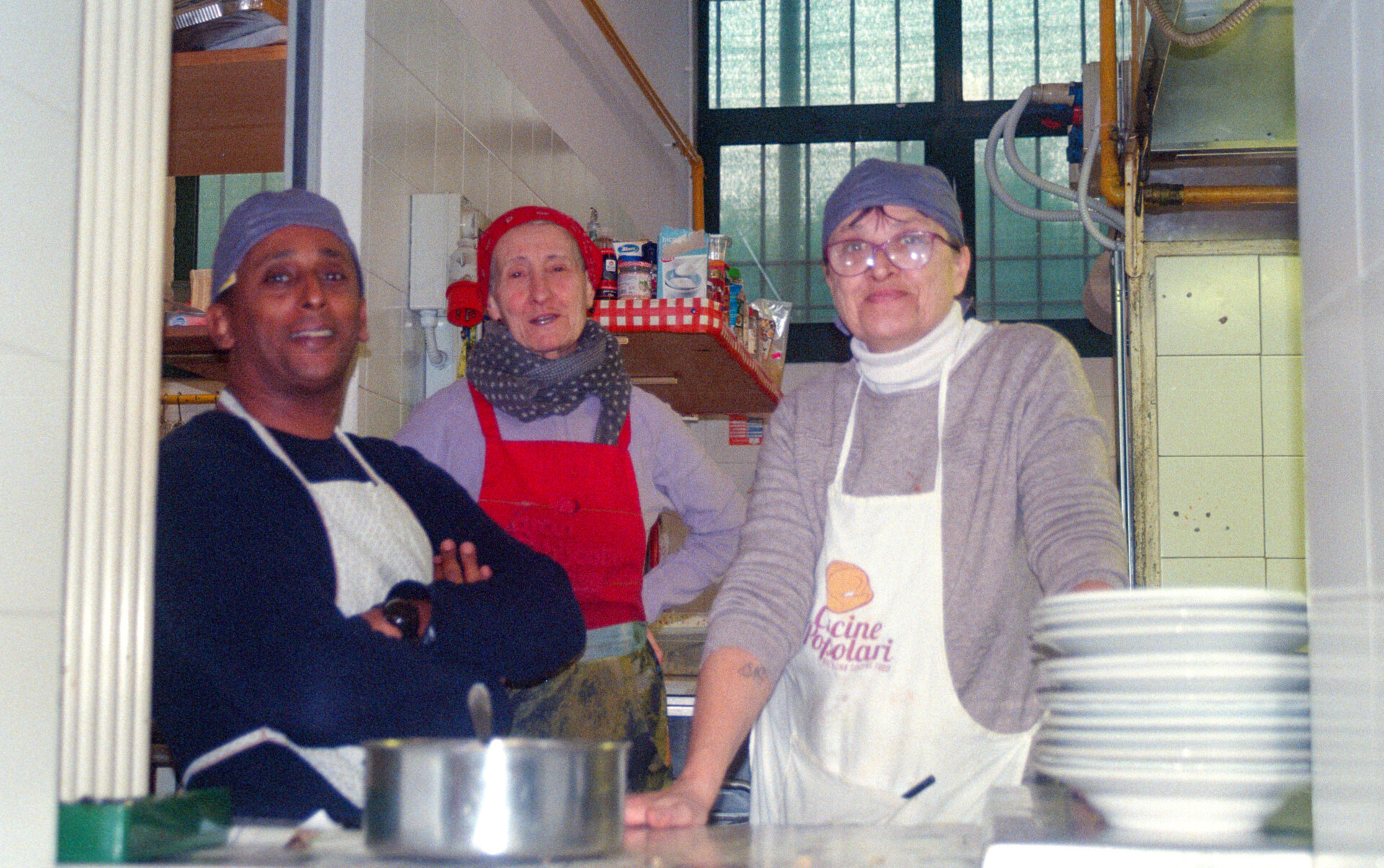
In the industrial kitchen, an enormous pot of tomato sauce is stewing on a burner while vegetables are being cut, plates washed, and a dessert prepared. The volunteers are holding packages up to the ceiling light, checking their expiration dates and then cross-checking them with a poster displaying an Italian law aimed at combatting food waste. In 2016, with guidance from the European Union, Italy passed new rules and incentives for donating food to third-sector organizations. “Social solidarity and the limitation of waste” were the ideals of the legislation. In Bologna, around 12,000 tonnes of avoidable food go to waste every year. Across the four kitchens, Le Cucine Popolari estimates they’ll serve 650 meals today.
I can’t quite wrap my head around the combination of thrift and luxury going into this communal lunch. In addition to the chocolate-hazelnut-hamburger-bun sandwiches, chef Ermias Abraha is making a dessert out of panettone, a traditional Italian Christmas cake. (It is mid-January when I visit, and the cakes are not yet expired.) The head chef Antonio Villani is simmering the tomato sauce, which will go over handmade tortellini, the typical Bolognese pasta. Among the donated food to be given to the volunteers are bread, croissants, and fine pastries from some of the city’s best bakeries. The meal begets even more than the usual mystique, craft, and awe with which an American would view Italian food.
“Well,” says chef Daniele Ruiba, coming up with an answer, “I don’t want to slip into politics.” Then he pauses. “Let’s slip into politics! Bologna is on the left wing.”
“Red!” chirps Cinzia Busi. (She is referring to the historical and present influence of the Communist Party.)
Chef Daniele continues: “The progressive part of the population has brought empathy: we help. It’s in the DNA of the left.”
“But also on the street,” Cinzia adds. You come across someone, you stop, you help them up; we’re like that.”
“And the Catholics!,” the chef declares. Which prompts Francesca Longhi, who donates food to her local church, to add that the vocation to help the poor is found there, too.
The head chef Antonio Villani pulls away to prepare a lasagna. He thinks the city is “very open” and “very tender.”
Ermias brings up a quote which he’s seen enshrined and illuminated above a nearby bridge: We are for the entire and absolute freedom of all. “And that phrase,” he says, “sums up some of the philosophy of Bologna.”
Chef Daniele adds that on the city’s coat of arms, you’ll find libertas, and Francesca explains that in 1256, Bologna abolished slavery.
“Instead,” Ermias asks me, “in the United States, when was slavery abolished?”
Roberto Morgantini, the founder of Le Cucine Popolari, enters and responds, “It’s not over.”
Roberto Morgantini has a mythic, fairy-tale air about him. When he leaves the kitchen and enters the dining room, a flurry of hello dear’s meet him: “Ciao caro!”, “Ciao carissimo!”, “Ciao bello!” He is 78 years old with long white hair that encircles his face and rounds out a long white beard. He is rather short, stout, walks slowly, and is wearing at least three layers: the outermost a puffy coat he does not take off while indoors. He has kind, altruistic eyes, like those of a Santa Claus in which you really believed.
He grew up in an industrial mountain town in Piedmont with fewer than 7,000 residents. His father was a Partisan during the Second World War, his mother a courier for the same anti-fascist uprising. Then the war ended, and Italians from the South migrated north in search of jobs. “And it was at that point precisely,” Morgantini explains, “that I came to know the hunger of those people, how the southerners were treated.” He is retired now, with a sister and a brother who are both politicians, himself a lifelong unionist and a man of non-profits. He is still involved with the organization of which he was a principal founder, Le Cucine popolari, which puts on meals for the elderly, needy, and lonely; makes afterschool snacks for school children; and babysits the kids of immigrant mothers while they attend a free Italian language course.
Morgantini tells me with a grin that his Le Cucine popolari, founded in 2015, owes its name and origins back to the “mayor of bread.” Morgantini believes that food is a “right for all,” that should be recognized, “even if only to combat waste.” The organization is secular, does not receive government funding, and yet is political in its own right. He explains, “We occupy a vacuum created by the state,” with the intended goal “that there is no longer a need for volunteers because it’s the state that bears this—or that, even better, everyone has a job, everyone has opportunity.”
Concerning the city’s volunteer efforts, he describes Bologna as “receptive” and “sensitive,” but he presents a contradiction to himself: “But if it’s the duty of the state, why do you do it?”
He then answers his own question: “Because otherwise, today, these people would be worse off.” He goes on: “the battle is a political one to say ‘the state must do this,’” contending that, pending government action, citizens should take the responsibility upon themselves. “If food is a right,” he says, “someone must see to it that this right is satisfied.”
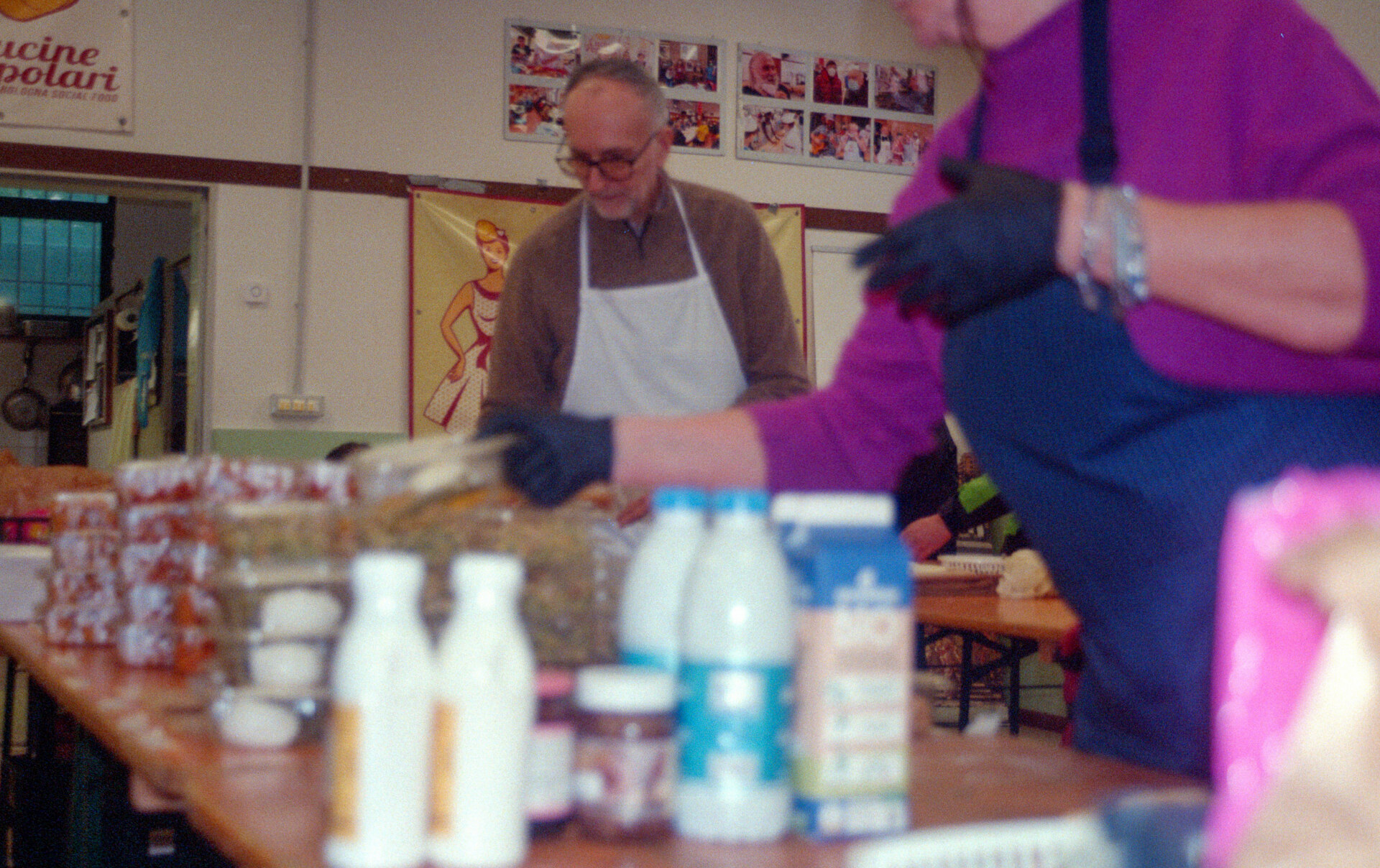
At lunchtime, the volunteers skirt around the full tables bearing dishes to and from the kitchen. There is the usual clanking and hum of conversation found in a restaurant or a home kitchen, and although this place is neither, it feels akin to both. Morgantini explains that the guests “are in need of much more than a plate of food, but also many other things.” First among them, he says, is “dignity.” That’s why the guests are given the day’s menu to choose from, real ceramic plates and bowls to eat on, real silverware to eat with, and real glass to drink from. Morgantini says there’s a difference between “charity” and “solidarity”: a charity “gives,” while the kitchens “give back.” The Italian verb he uses implies the guests already had something; it just needed to be affirmed.
“Poverty is like an illness,” he says. There are workers who frequent the kitchens because their paychecks are not high enough, old people who come because they are lonely and are poor in the sense of solitude. He sees poverty as necessary to an economic system which would like its supply of cheap labor; he sees poverty as a deprivation, and not always in terms of money. He does not blame the guests.
During lunch, a volunteer named Teresa Abbattista is bussing plates, asking guests what they’ll have. Heard above the dining room’s murmur, a guest is singing from his seat: leaned backwards in his chair with his mouth open to the ceiling. Teresa passes him with a smile and a chuckle, then glances at me with an eye roll. She shrugs: “One needs to laugh, or else”—she pauses—“or else they argue.” It’s one of the rare moments in which the reality of poverty and its symptoms, despite the positive outlook of the volunteers, become clear. “It takes a lot of patience,” she says.
In Tereza’s aplomb, the reality that faces the guests and confronts the volunteers is not lost. Some guests are kind, others are rowdy or rude on account of substance abuse or mental health issues. All, however, are in need: for some duration or another, of a meal, a place to dine in company, and some groceries to take home. Inescapable for me, while surrounded by such joy and tenderness and togetherness, is a feeling of shame. It arises when faced with abundance and yet waste… wealth and yet poverty. Poverty is shameful—not the poor, but the fact that poverty exists, that you possess the choice of whether to see it, and you seldom bear witness. For this American, it is a shame of country: both mine and Italy.
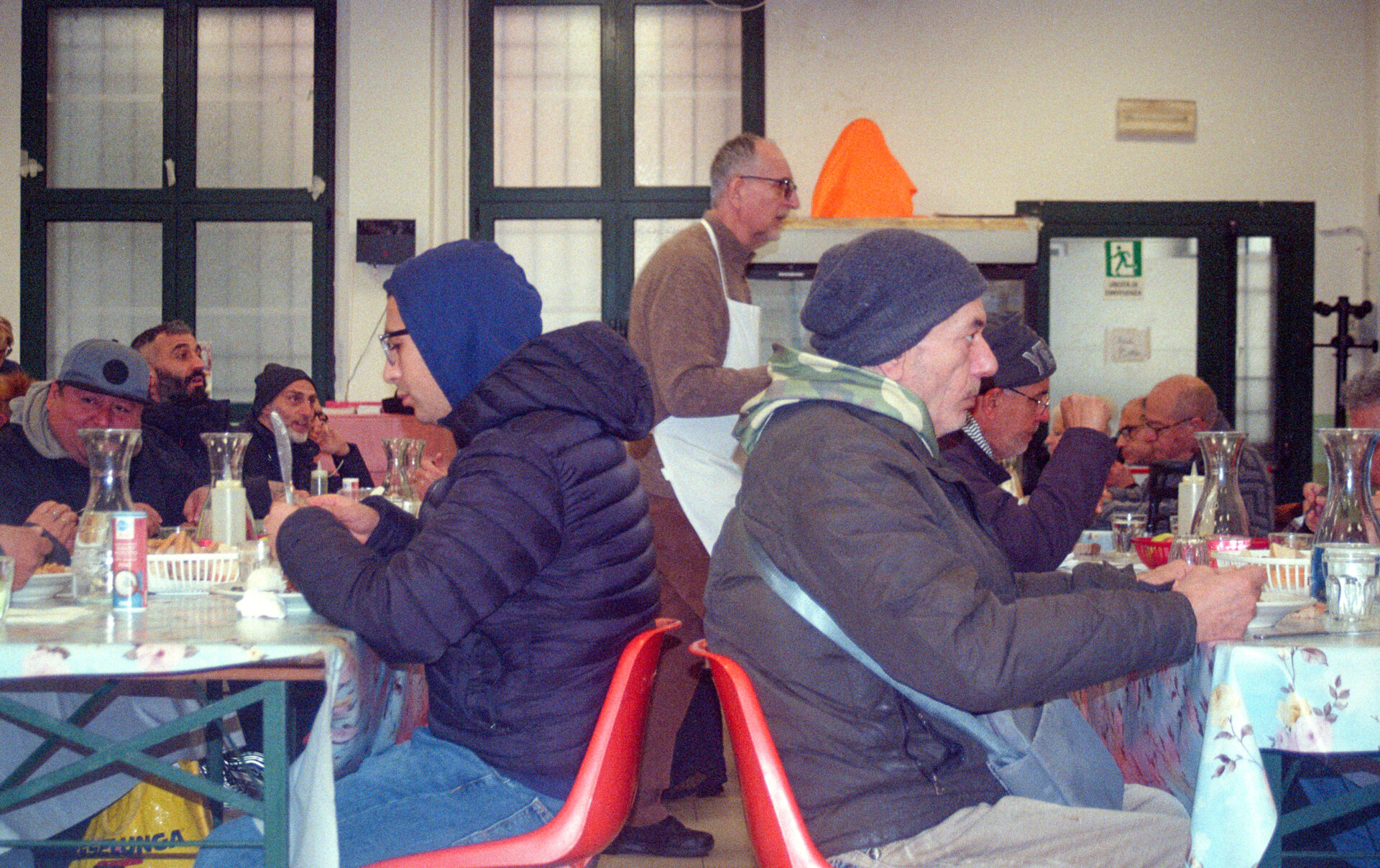
Morgantini watches over the dining room and tells me that what’s happening here is a form of politics. “Politics must set examples,” he says, “which are not just words but examples of concrete things that you do.” He continues: “not theorizing poverty but putting something into practice, doing something concrete.”
I ask if he has any intention to run for office. He chuckles, says no, that he’s “no good at all.” He tells me volunteerism is rooted in egoism, “a need that we all have, a slice of solidarity, to say, ‘what can I do for another person?”’ Even with an English translation, the food metaphor remains.