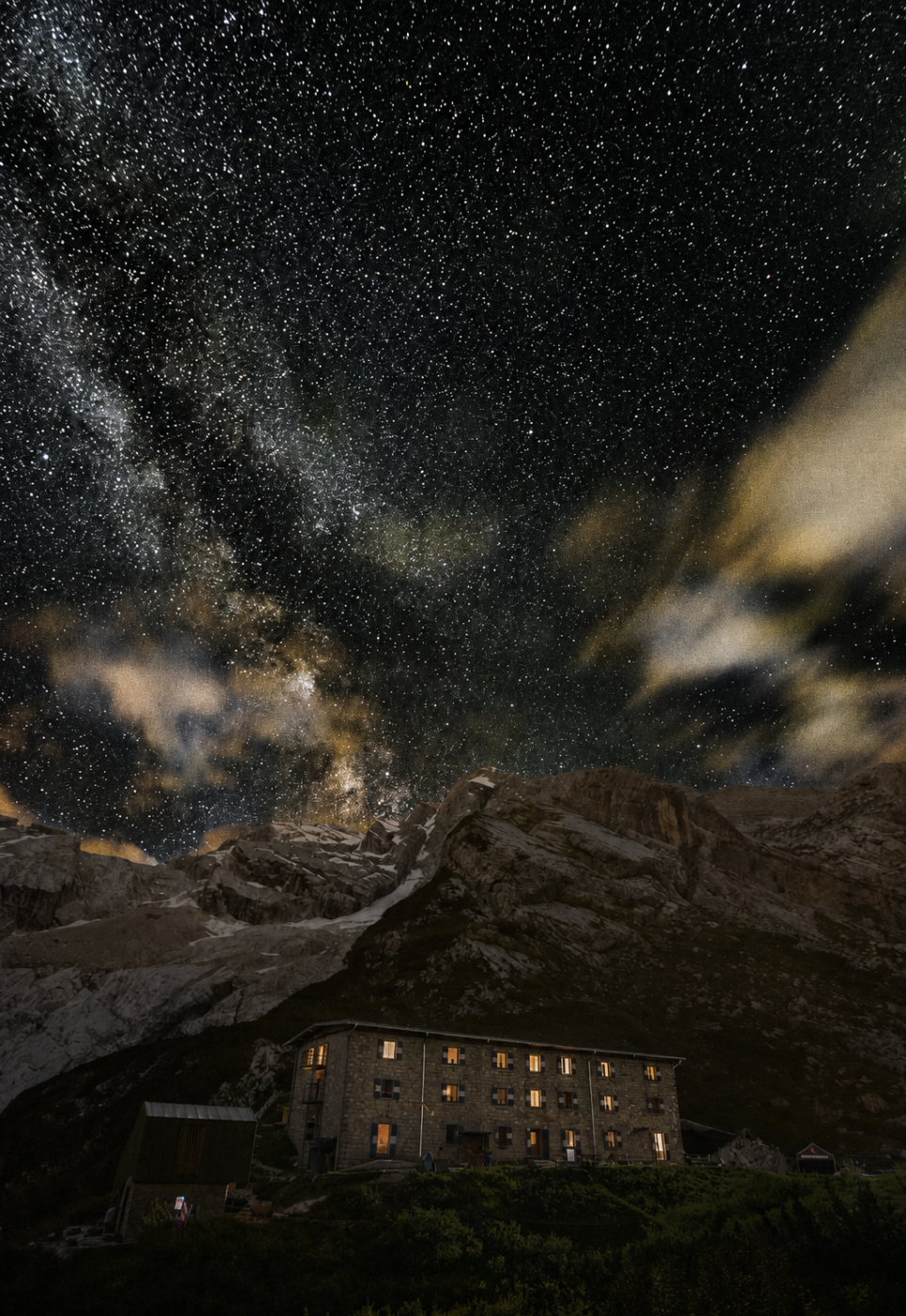
Some perch precipitously along the cliffsides, jutting out more like a half-removed block from a Jenga stack than a structure fixed into the mountainside. Others nestle comfortably within lush valleys and scenic backdrops. All seem somehow suspended somewhere between earth and sky. Rustic and simple by design, these mountain refuges known as rifugi form the backbone of Italy’s high-altitude hospitality for modern-day explorers.
Some of the country’s best rifugi belong to Italy’s oldest mountain association: Club Alpino Italiano (CAI), or Italian Alpine Club as it’s known in English. CAI was formed in 1863 to organize mountaineers and promote knowledge of the mountains, long before tourists flocked to Tre Cime or Seceda’s jagged Odle Peaks for Insta-worthy pics. Their mission to preserve and promote Italy’s unique mountain culture lives on today in more than 250 CAI rifugi and rest points, open to climbers, hikers, and other outdoor enthusiasts for affordable overnight stays and warm meals. Here are five of the most jaw-dropping across the Italian Alps.
Know Before You Go
CAI ensures consistency in rates across its vast network of mountain huts. Current rates for overnight stays range from €30 to €39, based on the structure’s category, with additional costs applied for meals and other basic amenities. Members enjoy discounts for stays booked at CAI-designated refuges.
But don’t confuse these CAI huts with their smaller, unstaffed counterparts; bivouacs, by contrast, are small and spartan structures reserved for high-altitude mountaineering and open year-round. Most rifugi operate from June through September or early October.
Note that traditional CAI rifugi often feature shared dormitories and bathrooms, and scarce water supply can also mean limited, timed, or no showers at all for guests. Avid hiker and slow travel advisor Kimberly Kephart recommends, “Slow down when you get there. Sit outside, have a drink, talk to other hikers, and actually take in where you are.”
Five of the Most Unique CAI Stays
Refuge Margherita Observatory Hut
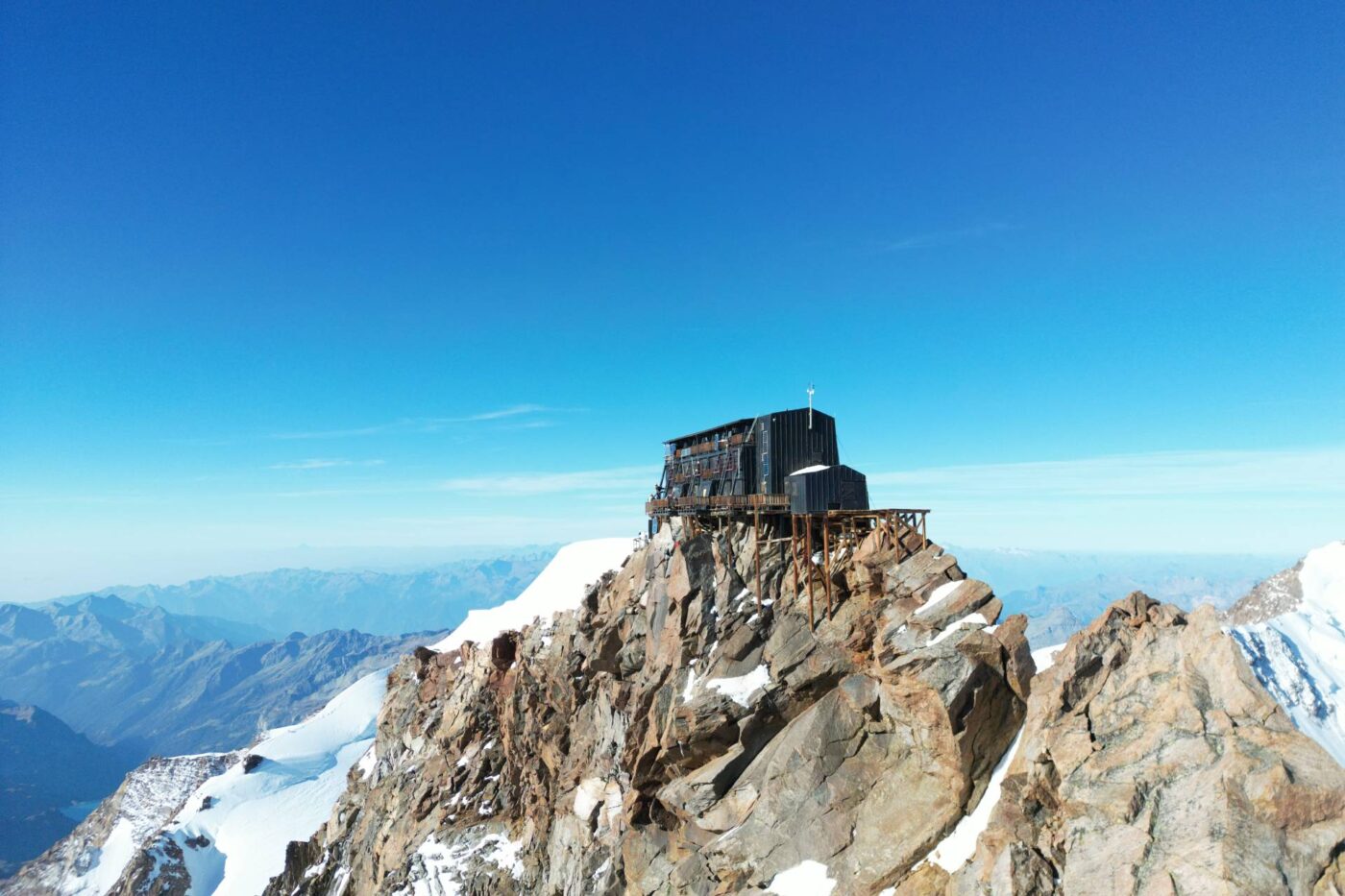
Perched dramatically atop Punta Gnifetti (Signalkuppe) in the Monte Rosa massif between Piedmont and Valle d’Aosta, Capanna Regina Margherita holds the title of Europe’s highest mountain refuge at a dizzying 4,556 meters (14,947 feet) above sea level.
Inaugurated in 1893 in the presence of Queen Margherita of Savoy—for whom the structure is named—the hut is built to endure ferocious alpine winds and freezing temperatures. Complete copper cladding makes the building a giant Faraday cage to safely ground the hut against frequent, high-altitude lightning strikes.
Reaching the refuge is for fit, experienced, and fully acclimatized mountaineers only. The approach requires navigating crevassed glaciers, crossing ice fields, and using technical equipment (crampons, ice axes, and rope teams), usually starting from the Indren lift or lower huts like Capanna Gnifetti. Those who brave the thin air are welcomed into a heated, unexpectedly cozy haven, powered by solar panels and micro-generators, offering hot regional meals, bunk beds, and a surreal, 360-degree view that sweeps across the Pennine Alps—stretching from the peak of the nearby Matterhorn to Mont Blanc and, on clear days, all the way to the plains of the Po Valley.
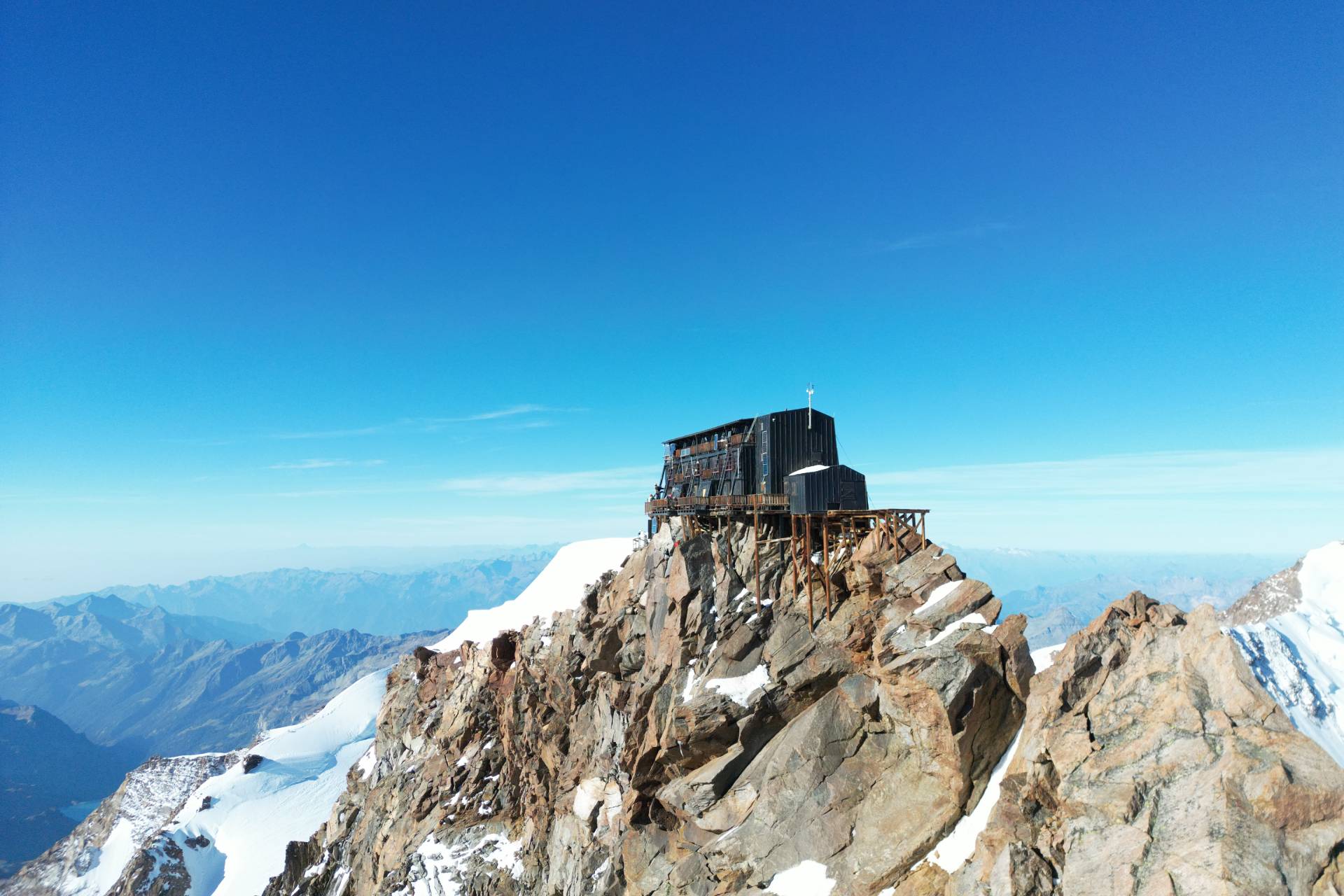
Photo courtesy of Refuge Margherita Observatory Hut
General Achille Papa Refuge
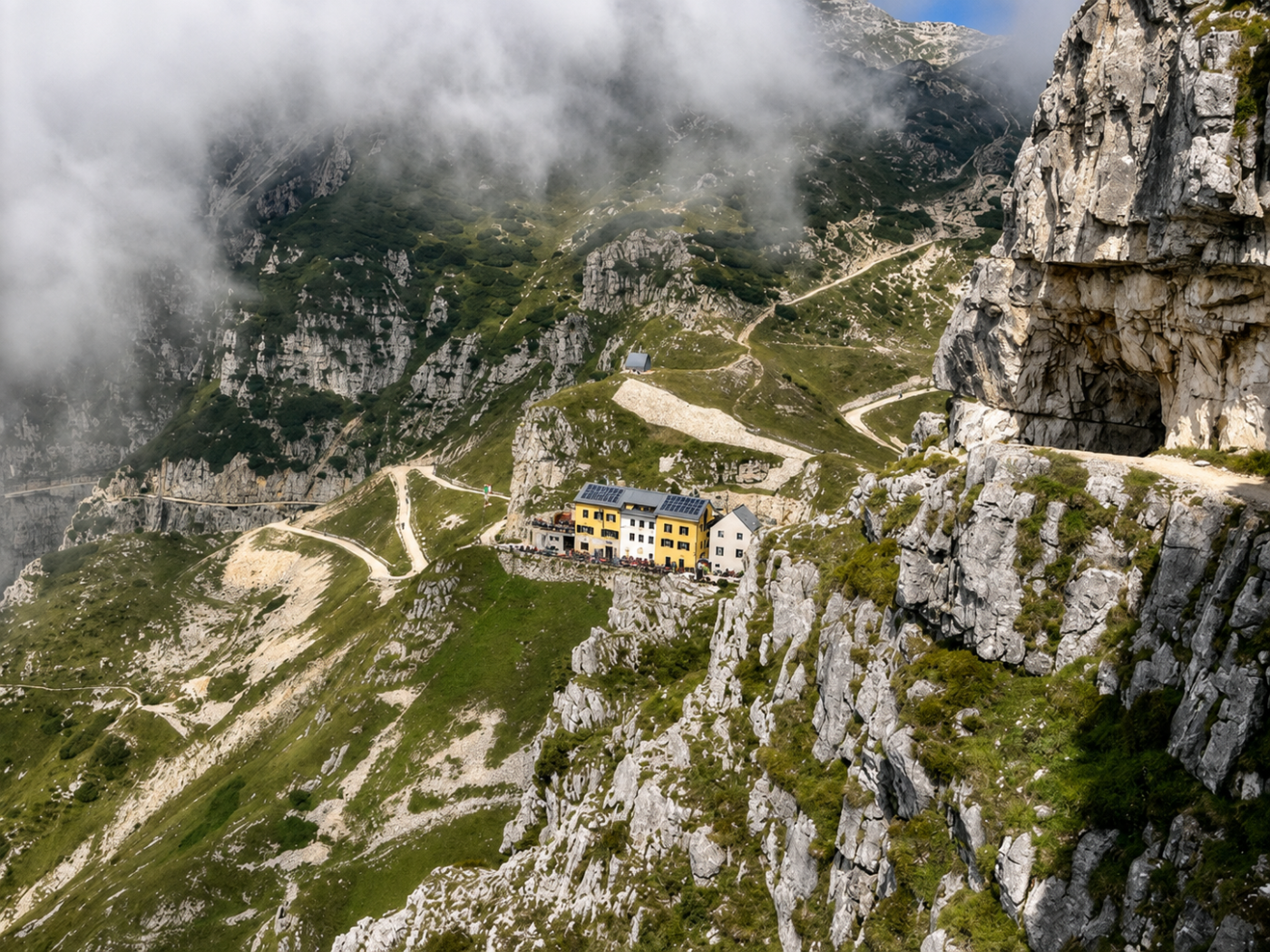
In the Vicentine Alps of Veneto, the charming mustard-yellow Rifugio Generale Achille Papa sits at 1,928 meters atop the Porte del Pasubio, at the end of the legendary Strada delle 52 Gallerie (Road of 52 Tunnels)—an astounding military engineering marvel carved through sheer limestone by the Italian Army’s 5th Engineer Regiment in 1917. Built in secret to supply troops out of reach of enemy artillery, this dark, corkscrew route leads hikers directly onto the Pasubio massif, a plateau that served as the backdrop for some of the fiercest, most brutal mountain warfare of World War I. The refuge is named for the general who led the defense of the ridge.
After emerging from the final hand-carved tunnel into the alpine sunshine, hikers can grab a spot at an outdoor picnic table perched over the rolling valleys of the Little Dolomites below and refresh with tap-drawn beer or a pour of Prosecco.
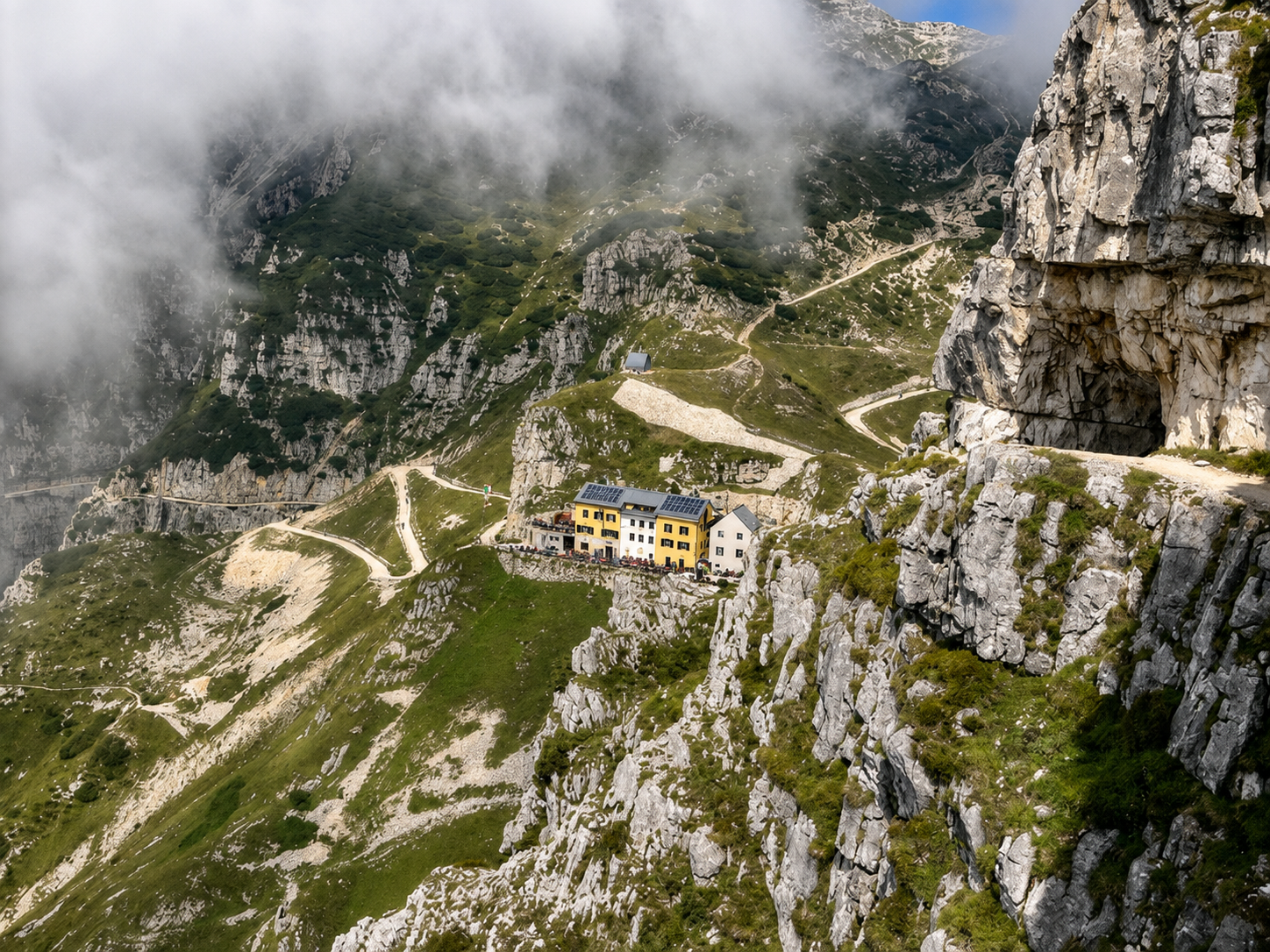
General Achille Papa Refuge; Photo by Alyssa Blakemore.
Pier Fortunato Calvi Refuge
Directly beneath the marble-white cliffs of Monte Peralba, Rifugio Pier Fortunato Calvi is in the Carnic Alps of northeastern Italy at 2,164 meters, right along the Austrian border near Sappada. Once the front line of World War I, the surrounding crags still have ruins and trenches carved out by soldiers who fought in these unforgiving alpine conditions.
Named after a 19th-century Italian patriot, the refuge today is perfect for long-distance trekkers traversing the Carnic ridge. Tired hikers gather in its wood-paneled dining room for hearty regional dishes, topped off by the refuge’s true claim to fame: a legendary, house-made herb grappa whose recipe is top secret.
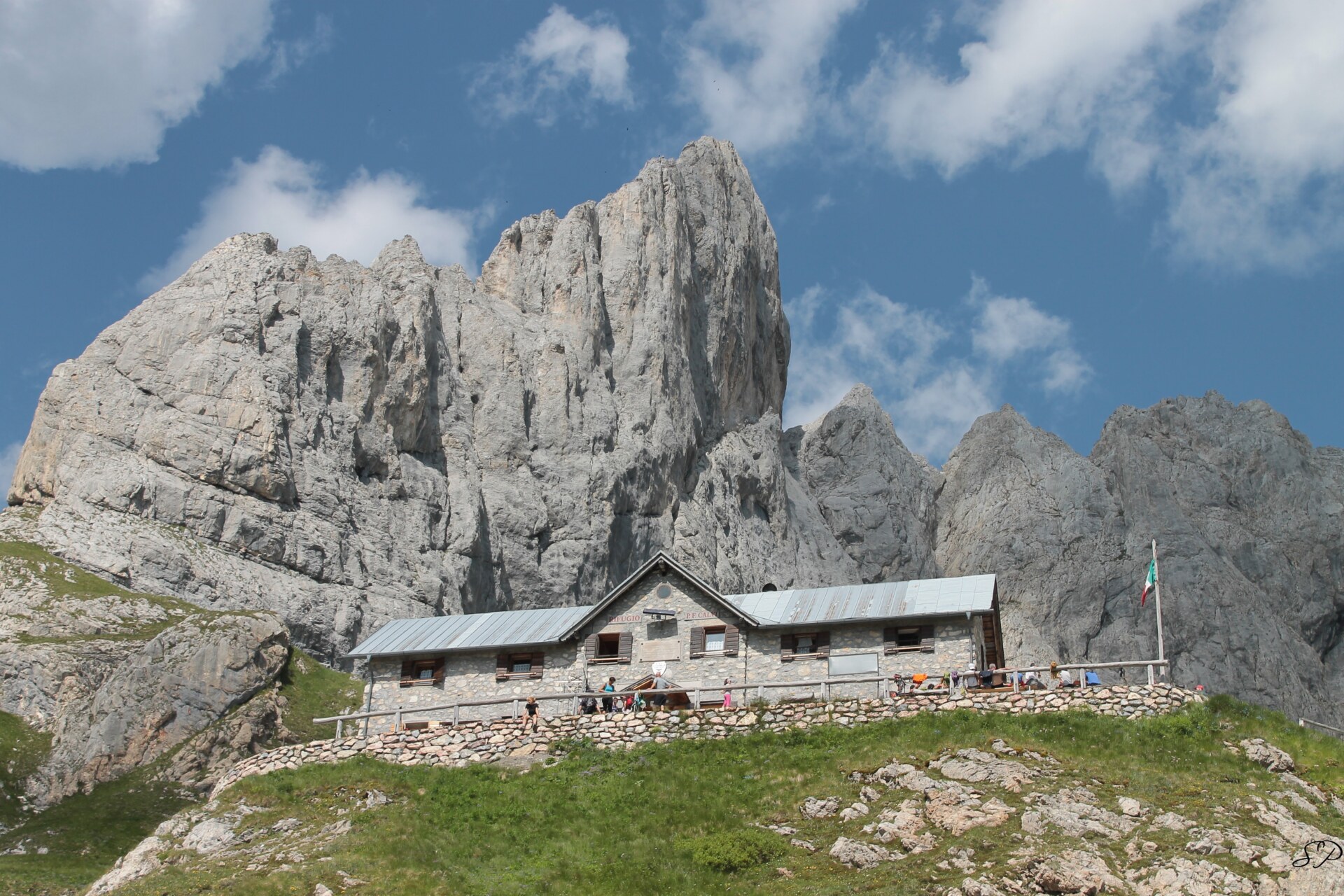
Photo courtesy of Pier Fortunato Calvi Refuge
Plose Refuge
On the Mount Plose plateau at 2,446 meters, above Bressanone, Rifugio Plose is one of South Tyrol’s oldest alpine huts, dating back to 1887. Thanks to its proximity to the Plose cable car, it’s accessible year-round, making it an approachable mountain escape for families seeking scenic, low-elevation-gain walks in the summer or ski-in/ski-out convenience in the winter. Recent renovations have brought modern comforts, introducing private guest rooms equipped with en-suite bathrooms.
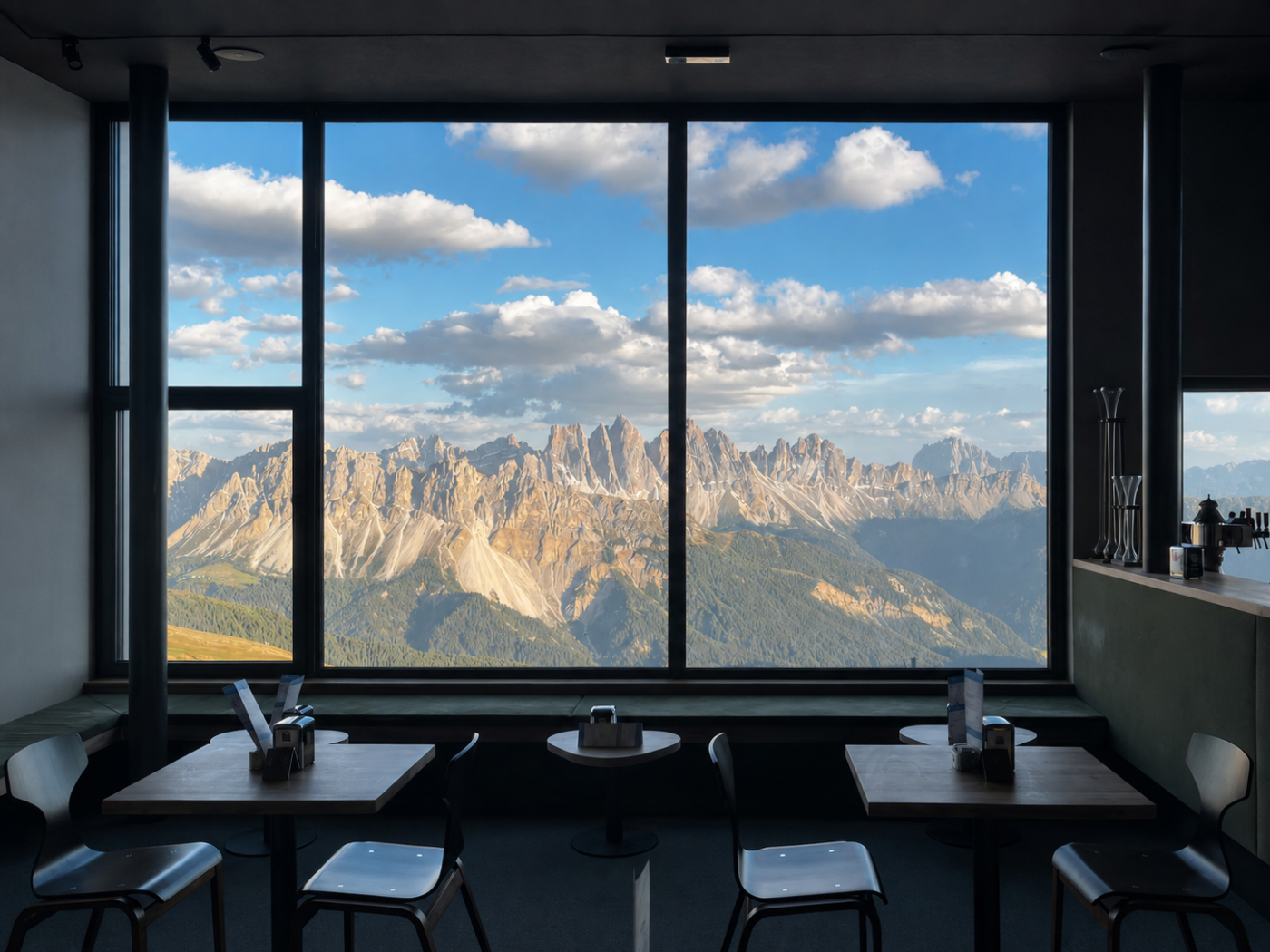
The true highlight of a stay here is the front-row view of the UNESCO-protected Dolomites, with the refuge’s panoramic terrace looking directly across the valley at the jagged spires of the Odle (Geisler) Group. Expect comforting alpine fare, from savory canederli (bread dumplings) and tender braised venison to decadent slices of freshly baked Sachertorte.
![[Image Title] - A modern mountain lodge rests on a snowy slope at sunset, its glass windows catching the warm light, while distant mountain ranges stretch beneath a clear sky.](https://italysegreta.com/wp-content/uploads/2026/08/ChatGPT-Image-Aug-6-2026-03_16_54-PM.png)
Photo courtesy of Rifugio Plosehütte
Refuge Pietro Galassi
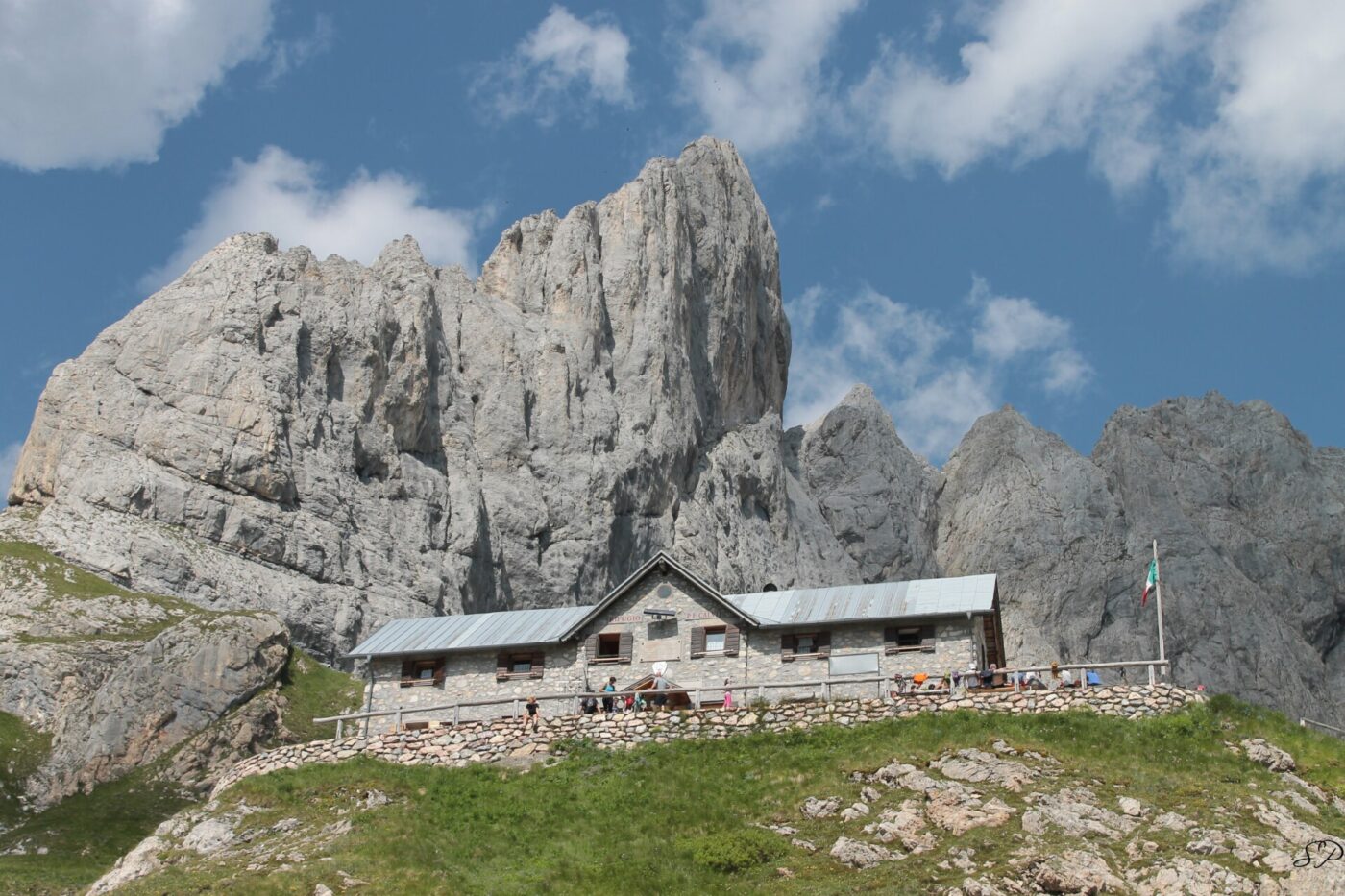
Situated at 2,018 meters in the Venetian Dolomites, beneath the peak of Monte Antelao, Rifugio Pietro Galassi is a converted 1903 military barracks, built as part of Italy’s World War I defenses. Today, it’s an ideal base camp for mountaineers tackling the “King of the Dolomites.” The barracks have been transformed into bunk-bedded rooms, some of which are even pet-friendly.
What makes the stone-and-timber shelter truly unique across the entire Alpine region is its spirit of altruism: since 1970, it has been operated entirely by volunteers from the CAI Mestre section, with around 100 members rotating in alternating shifts throughout the summer. Whether hauling supplies via off-road vehicles or trekking up steep trails on foot, these dedicated volunteers brave all weather conditions to ensure guests are greeted with top-notch hospitality.
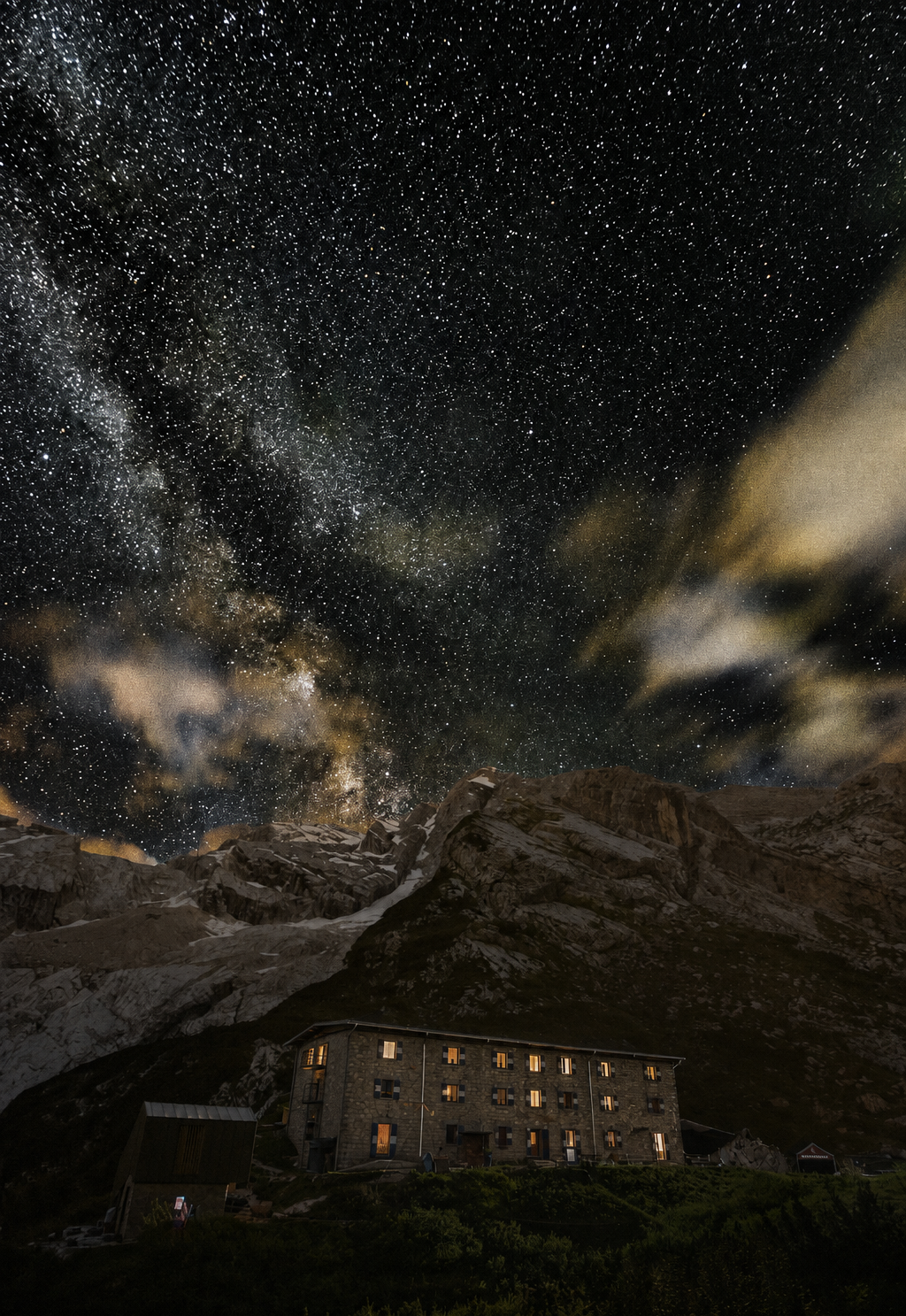
Photo courtesy of Refuge Pietro Galassi, taken by Stefano Forin.
How to Book a CAI Rifugio
Of course, don’t forget to consider your itinerary before booking. Hikers like Kephart consider location, atmosphere, and practicality when choosing rifugio stays, noting that “a well-placed rifugio can make your entire trek feel more manageable and enjoyable.” From the CAI’s reservation page, you can search rifugi by region and filters for dates, number of people, and walks and routes they are situated along. Book directly with each rifugio through links found on the CAI website.
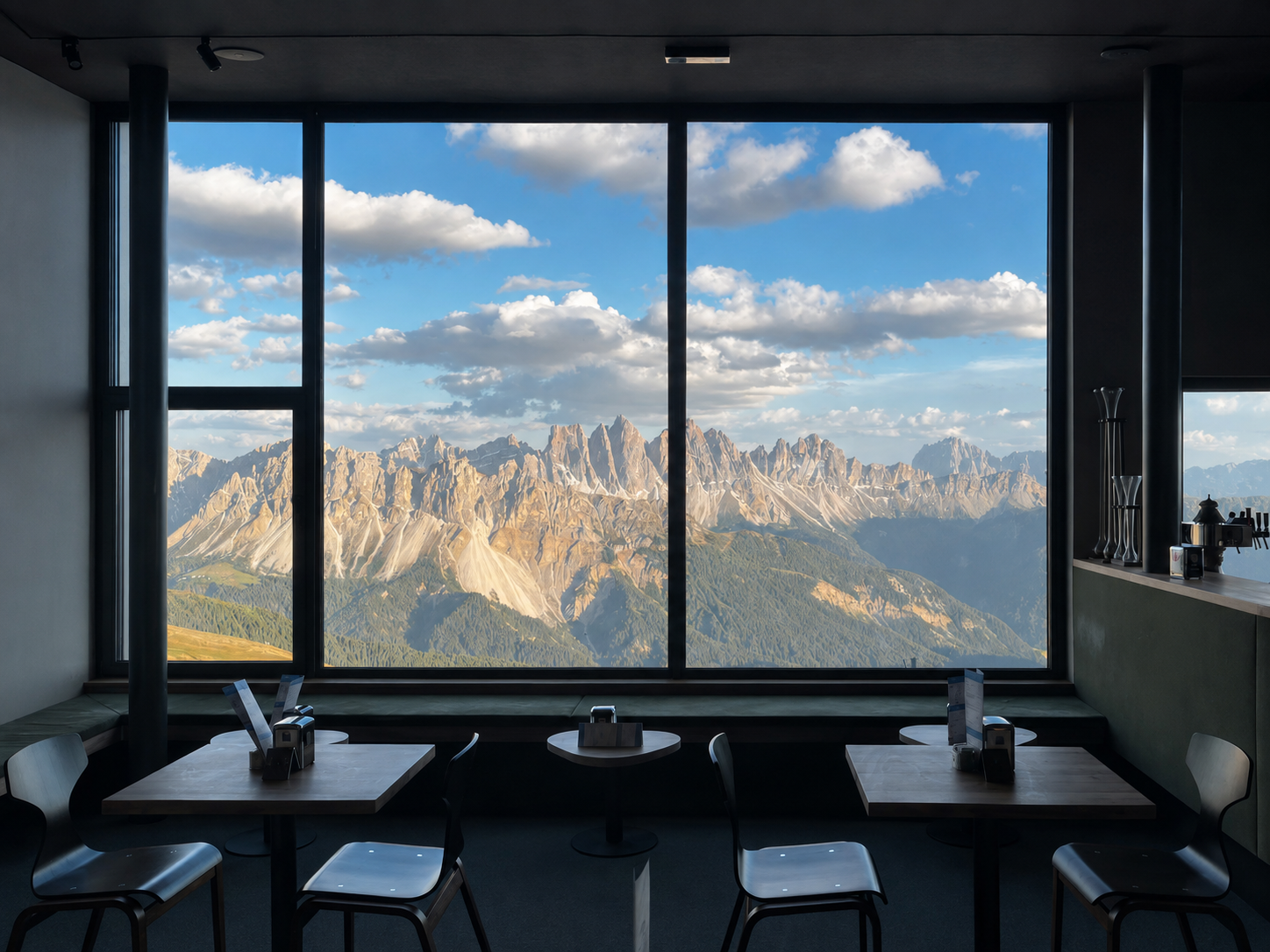
Photo courtesy of Rifugio Plosehütte
![[Image Title] - A modern mountain lodge rests on a snowy slope at sunset, its glass windows catching the warm light, while distant mountain ranges stretch beneath a clear sky.](https://italysegreta.com/wp-content/uploads/2026/08/ChatGPT-Image-Aug-6-2026-03_16_54-PM-1400x933.png)