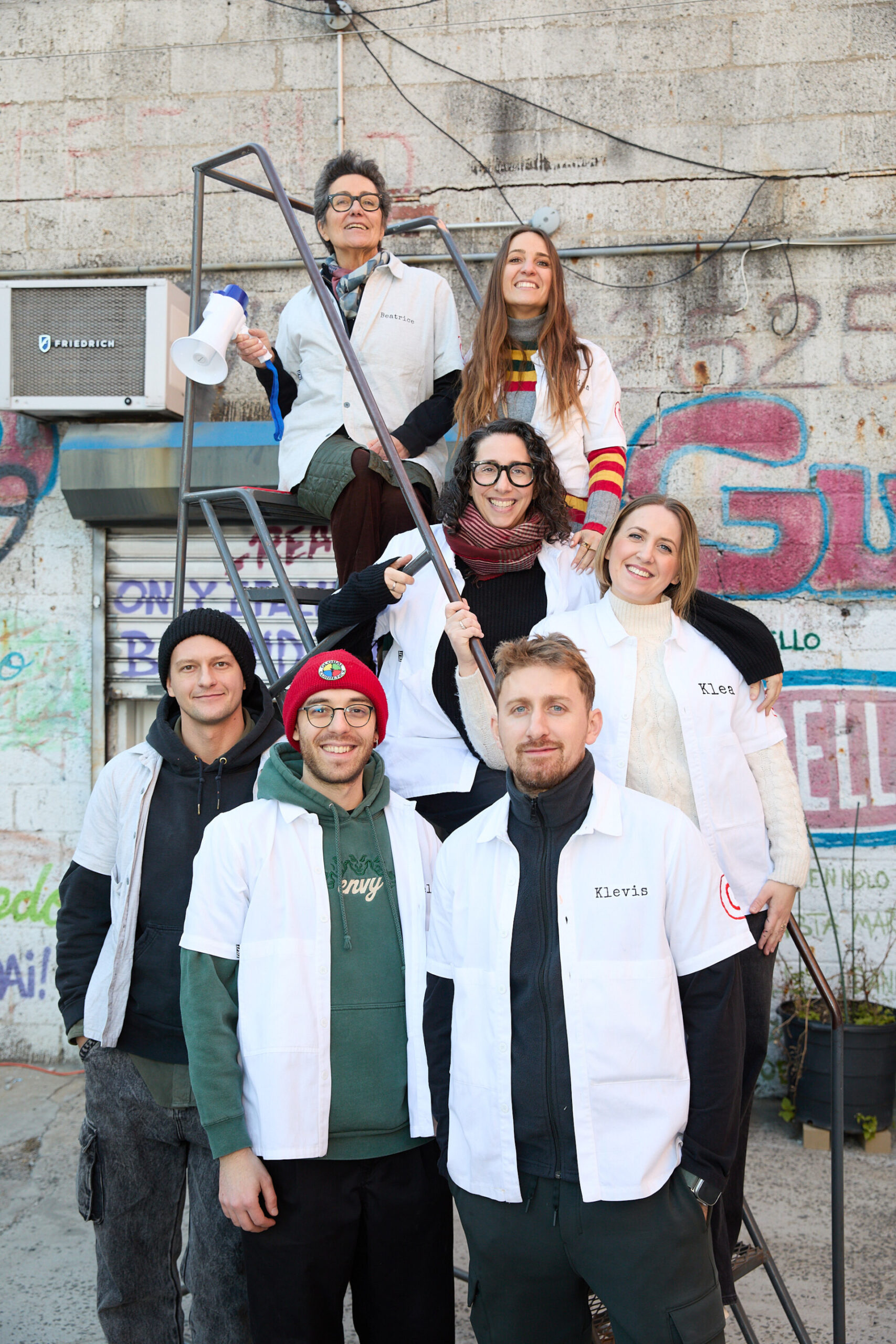
One of the food producers who works with Beatrice Ughi recently described her as a curator. At first, that might sound like a stretch. Food export is usually about numbers, customs paperwork, and, right now, tariffs. But after more than a decade of watching her work—dating back to the days when this wide-eyed 30-year-old food studies graduate student first crossed paths with her—the description rings true.
Beatrice’s company, Gustiamo, is one of the most carefully curated collections of Italian food in the United States. Importing millions of tomato jars annually across wholesale and e-commerce, Gustiamo never compromises quality for scale. Representing each of their curated partners exclusively in the US, their Bronx warehouse has become a legendary pilgrimage site for chefs and home cooks alike.
The network around Gustiamo extends well beyond the producers themselves, and you might encounter Beatrice at an event, visit a producer through her introductions, or stop by the Bronx warehouse when it’s open for shopping. In each case, the point is connection.
One Gustiamo dinner party in New York comes to mind, where every guest had clearly been curated by Beatrice—chefs, writers, and producers gathered around the table. A chef from Roman’s sat beside editor and artist Nicholas Blechman, fresh off the publication of his New York Times piece “Extra Virgin Suicide”, which exposed the widespread adulteration and mislabeling of Italian olive oil. It was exactly the kind of table Beatrice tends to create: people from different corners of the food world exchanging ideas about producers, ingredients, and the systems behind them.
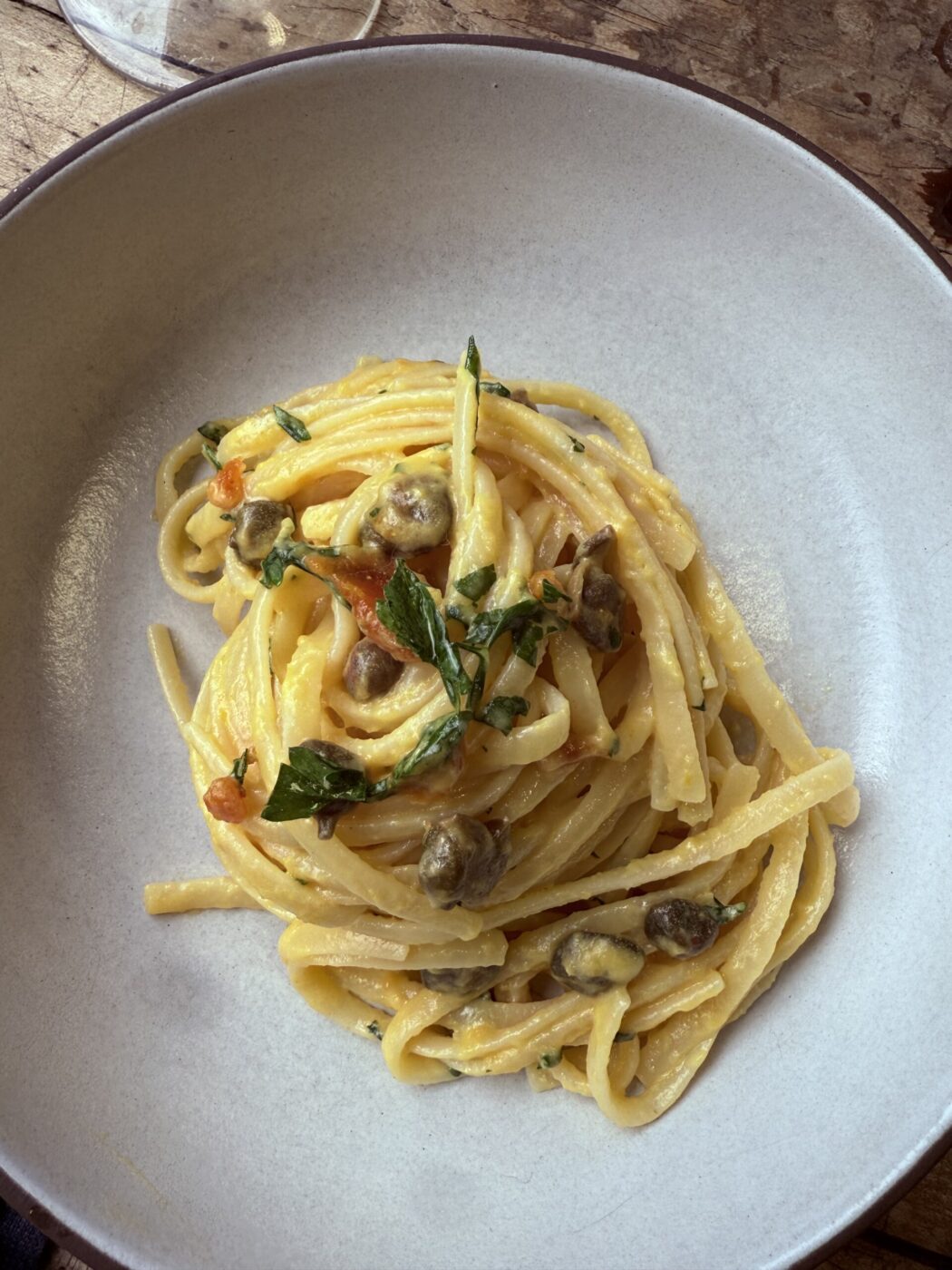
Beatrice is warm, generous, and frequently hosting at home or in Gustiamo’s Bronx outpost, but she’s not the mythical Italian hostess who effortlessly pulls together a feast from whatever happens to be in the pantry. Instead, she’s honest about her shortcuts. The secret isn’t elaborate cooking. It’s extraordinary ingredients after a long workday spent moving between New York and Italy. Bottarga is one of them. “My secret weapon for an effortless pasta dinner,” she shares. A quick grate over pasta with olive oil and lemon transforms a few pantry staples into something elegant. “My friends call me the Bottarga Queen.”
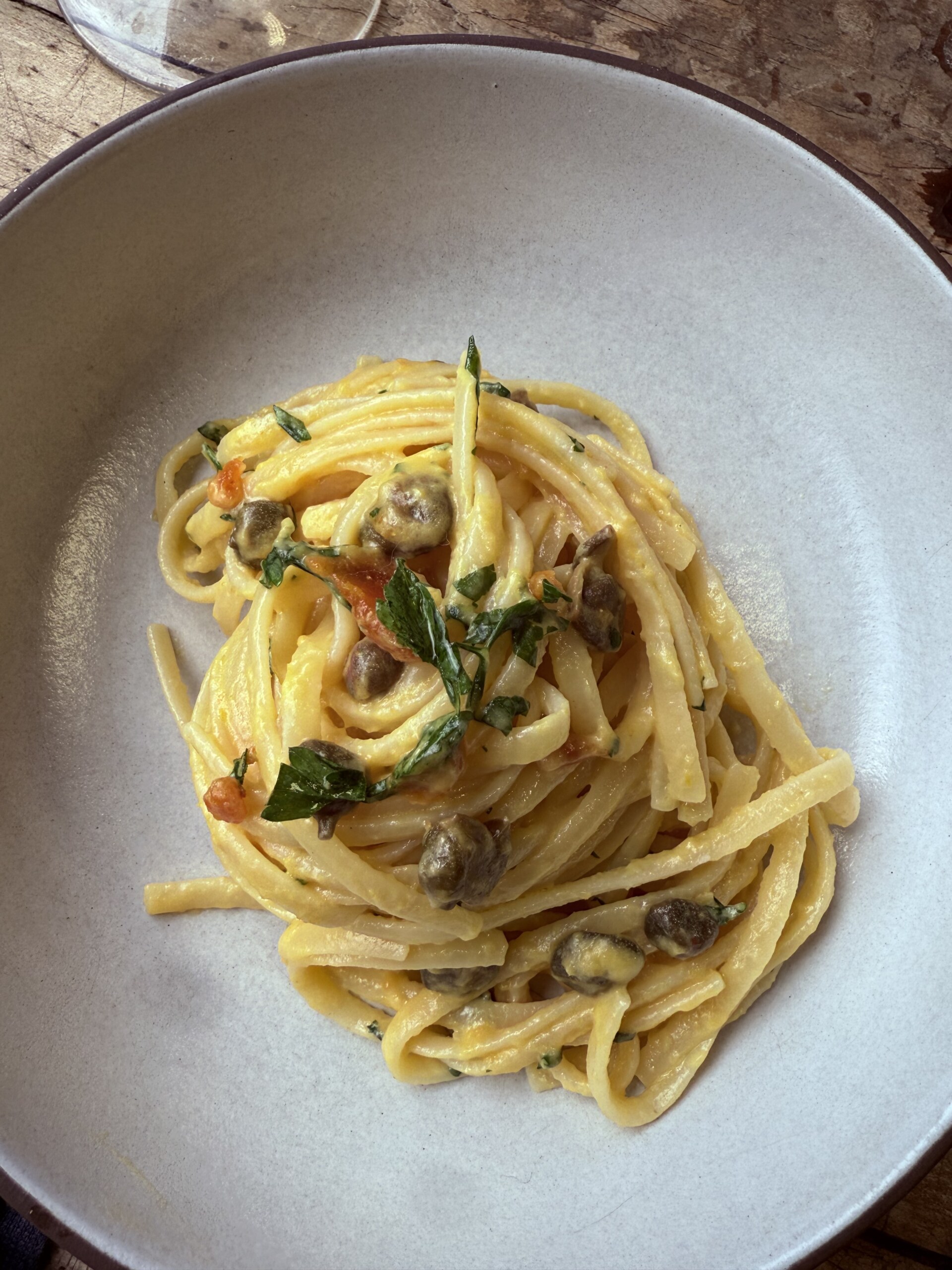
Spaghetti alla bottarga
Elizabeth De Filippo-Jones: I want to start with the origin story. How did Gustiamo begin?
Beatrice Ughi: It began almost by accident. I sometimes call myself the accidental food fighter. In 1999, I was asked to start a company in New York on behalf of an Italian business group. The idea was to create a portal for everything Italian in the United States. At the time, I was working in accounting, not food. After two years, the Italian owners decided to leave the business. What they left behind was this extraordinary selection of artisanal products and, by then, a passion I had developed for the people behind them. I had fallen in love with the stories, the sacrifices, and the integrity of these producers. The company was originally called Esperya. When I had to rebuild it on my own, I changed the name to Gustiamo.
EDF: What did your earlier career in auditing and accounting give you that still informs your work today?
BU: I worked at Ernst and Young, first in Rome and then in New York, and when you audit financial statements, you learn how to conduct due diligence and verify what is real and what is not. You learn how to question, how to investigate, how to understand whether a story holds up. That’s still how I work with producers. We go very deep. We want to know whether what they say about ingredients, methods, farming, or sourcing is actually true. That background gave me the tools to build trust in a very rigorous way.
EDF: What was the importing landscape like when you started? Were there already good Italian products in the US?
BU: Very few. There were some specialty grocery stores, of course, but what we were doing was unusual. We started online, which at the time was almost unheard of for food. We were among the first to build a serious online business around Italian artisanal products in the US. It was difficult. You do not just open a website and have people flood in. The wholesale side became essential. Selling to restaurants and shops helped us create the volume that supports not just our business, but the producers themselves.
EDF: When you decide to work with a producer, what are you looking for?
BU: Before we visit a producer, we’ve already spent months doing our homework. We speak with journalists, neighboring producers, and trusted local sources because we’re looking for reputation and integrity, not just quality. If it’s olive oil, we want to see the mill, the groves, the family, the technology, and the care behind every bottle. Once we decide to work together, it’s like a marriage. We don’t simply import products—we represent these families and their work in the United States.
Faella pasta making
EDF: That idea of representation feels central to what Gustiamo does.
BU: It is. We’re not just bringing in boxes of food. We’re building and protecting the identity of the people who make it. That means being very careful about where products are sold, how they’re described, and who is speaking about them. Trust is everything for us.
EDF: Chefs clearly trust Gustiamo. What do they come to you for beyond the product itself?
BU: Validation, I think. They know that if we carry something, it’s real. It’s fair. It’s ethically made. It’s made with the best ingredients possible. They know we have done the work. For 25 years, we have never betrayed our values. We have never imported something just because it would make money.
EDF: What’s an example of something you would never compromise on?
BU: Truffle oil. We’ve never imported truffle oil. More broadly, I would never import a product that doesn’t reflect our standards just because there is demand for it. We’re also not very interested in gluten-free pasta.
EDF: You’ve also taken chefs to Italy to meet your producers. What changes when they see that world firsthand?
BU: Everything changes. Every year, we take a small group of chefs to visit producers, especially during olive harvest. Once they understand how difficult farming is, how much weather matters, how physically demanding and precarious the work can be, they develop a much deeper respect for the product. It’s one thing to use a bottle of olive oil in a kitchen. It’s another thing to understand what it takes to make real extra virgin olive oil.
EDF: What are Gustiamo’s core products today?
BU: Olive oil is our number one. Then pasta, tomatoes, rice, nuts, vinegars, preserves. One of our more recent additions is a Sicilian fishing family that works with bluefin tuna, anchovies, and mackerel. Their story is extraordinary. They fish under highly regulated conditions, then process the fish themselves in jars with Sicilian olive oil. It’s exactly the kind of producer we love: deeply rooted, highly skilled, and completely authentic.
EDF: What’s the hardest thing you’re facing right now?
BU: The cost of importing. Tariffs are a major issue, but so are longstanding duties that people often don’t understand. Take pasta. On our pasta, we already pay anti-dumping duties of 20%. Then new tariffs are added on top of that. Large companies can afford costly reviews and legal processes to lower their rates. Small producers cannot. The system isn’t fair.
EDF: Has growth changed your philosophy at all?
BU: No. The future is growth with exactly the same values. We want to become more visible in the United States, to communicate better, to reach more chefs and more customers. But the principles do not change. Our producers deserve to grow. The question is how to help them grow without losing what makes them special.
EDF: What makes Gustiamo different from other importers?
BU: We don’t use intermediaries. We don’t have agents in Italy suggesting products to us, and we don’t use agents in the US to speak to our customers. We work directly with the producers and directly with the chefs, shop owners, and buyers. We also handle the inventory ourselves. Everything is stored in our own warehouse. These are delicate products. We treat them like jewels. Temperature, freshness, best-by dates, handling, presentation, all of it matters. That level of control is unusual for a company of our size.
EDF: Are there products in the catalog that still feel especially rare or hard to find elsewhere?
BU: Yes, many. Zibibbo grape raisins, caper leaves, a special grape vinegar from Friuli. Years ago, we helped introduce colatura to the United States. There are many products that are still difficult to find in their true form. That is part of the larger fight against fake Italian products and Italian-sounding products that dominate so much of the American market.
EDF: Your work can sound almost curatorial, not just commercial. Does that feel accurate to you?
BU: Yes, I think so. What matters to me is creating the right connections. Sometimes that means putting a chef in touch with a producer. Sometimes it means introducing a writer to a farmer, or bringing people together around a table. That network is part of the work.
EDF: And finally, what do you cook when you’re not working?
BU: Pasta, always. At the office too. We keep it simple: pasta with bottarga, pasta with pesto, pasta with tomato sauce and Parmigiano. Good ingredients don’t need much.
Pesto genovese
While Beatrice won’t disclose the company’s value, an Instagram post she wrote a few years back got people talking: “If Campbell buys Rao’s for $2.7 billion (bbbillion), how much is @gustiamo’s really, really good tomato sauce worth?”
What’s clear is that she runs her multi-million dollar company less like a distributor and more like your favorite neighborhood restaurant in Italy—sourcing only from producers she knows personally. She knows their children’s names, their histories, and will just as easily tell you a story about visiting them at home as she will about their product.
Beatrice’s Top 5 Gustiamo Products
1. Pistachio Cream from Marco Colzani
This has been a Gustiamo favorite for years, but it recently found a whole new audience after appearing in a vegan Dubai chocolate recipe shared by Billie Eilish on social media. Rich, intensely nutty, and made with exceptional Sicilian pistachios, it’s just as delicious spread on toast as it is folded into desserts.
2. Organic Extra Virgin Olive Oil from Il Tratturello
One of Beatrice’s most treasured products, Il Tratturello was among the very first olive oils Gustiamo brought to the United States. Produced in the little-known region of Molise, it has introduced countless Americans to one of Italy’s most overlooked food destinations. The co-owner, Pia, an olive oil sommelier, creates a blend centered on Molise’s native Gentile di Larino cultivar, complemented by Frantoio, Leccino, and Moraiolo olives. Today, the producing family also runs Parco dei Buoi in Milan, a shop dedicated to sharing products from their own farm and a carefully curated network of artisan producers—many of whom are also part of the Gustiamo family.
3. Mullet or Tuna Bottarga from Oro di Cabras
Perhaps one of the world’s oldest ingredients, bottarga has been enjoyed since ancient times. Oro di Cabras, in Sardinia, still cures its mullet roe the traditional way, drying it naturally on wooden planks for up to a month. The result is a deep amber brick designed for grating, with an umami-rich flavor that’s briny, savory, and wonderfully versatile. It may have first been eaten over flatbread 3,000 years ago, but today it’s just as delicious shaved over pasta, eggs, or burrata.
4. Faella Pasta from Gragnano
Handmade, slow-dried, and produced exclusively with Italian wheat, Faella represents the opposite of industrial pasta production. In fact, the company’s entire annual output is roughly equivalent to a single shift at a large pasta factory. The result is extraordinary texture, flavor, and ability to truly hold a sauce.
5. San Marzano Tomatoes from Gustarosso
These are the real San Marzano tomatoes, grown by the Gustarosso family in the volcanic soils near Mount Vesuvius. During the growing season, the Gustiamo team speaks with the farmers almost daily, maintaining an unusually close relationship with the people behind the product. It’s this transparency and connection that make these tomatoes a pantry essential.
Beatrice’s Favorite Places to Find Gustiamo Products in the US
SHOPS
Pastaio Via Corta — Gloucester, MA
Bread & Salt — Jersey City, NJ
Sissle & Daughters — Portland, Me
De Laurenti — Seattle, Wa
Cookbook — Los Angeles, CA
RESTAURANTS & CHEFS
Chad Colby, Antico Nuovo — Los Angeles, CA
Jacob Siwak, Forsythia — New York, NY
Missy Robbins, Lilia & Misi Pasta – Brooklyn, NY
Jacob Serebnick, Ceres Pizza — New York, NY
Giorgio Lo Greco, PepeNero — Traverse City, MI
Ron Molinaro, Il Pizzaiolo – Pittsburgh, PA
Johanna Hellrigl, Ama Restaurant – Washington, DC
Dario Monni, Tortello – Chicago, IL