On August 20th, 2018, in the sweltering 35°C heat of the Modenese countryside, I sat down for a first date. I was nervously fidgeting, scanning the menu for something light and refreshing (both for the weather and to settle my butterflies), when my Italian date leaned over and asked if I’d ever tried tortellini in brodo. Of course I had, but instead, I played coy. “No… should I order that?” His correct answer in that moment should have been a dramatic “Assolutamente no.” Instead, he encouraged me to go for it.
While in Morocco, I would never mind a peppermint tea in the heat, here’s my public service announcement: do not, under any circumstances, order tortellini in brodo in the middle of an Italian summer—five days after Ferragosto, at that. Twenty minutes later, I was literally melting into my chair, sweating through my scalp (my nerves definitely not soothed), and occupied more with politely sipping the hot broth of happy, little tortellini than first-date conversational niceties.
And I thought to myself… Italians cannot possibly eat this dish in August. This is flu-season comfort food, the kind of thing you crave in the dead of winter, not under an unrelenting sun.
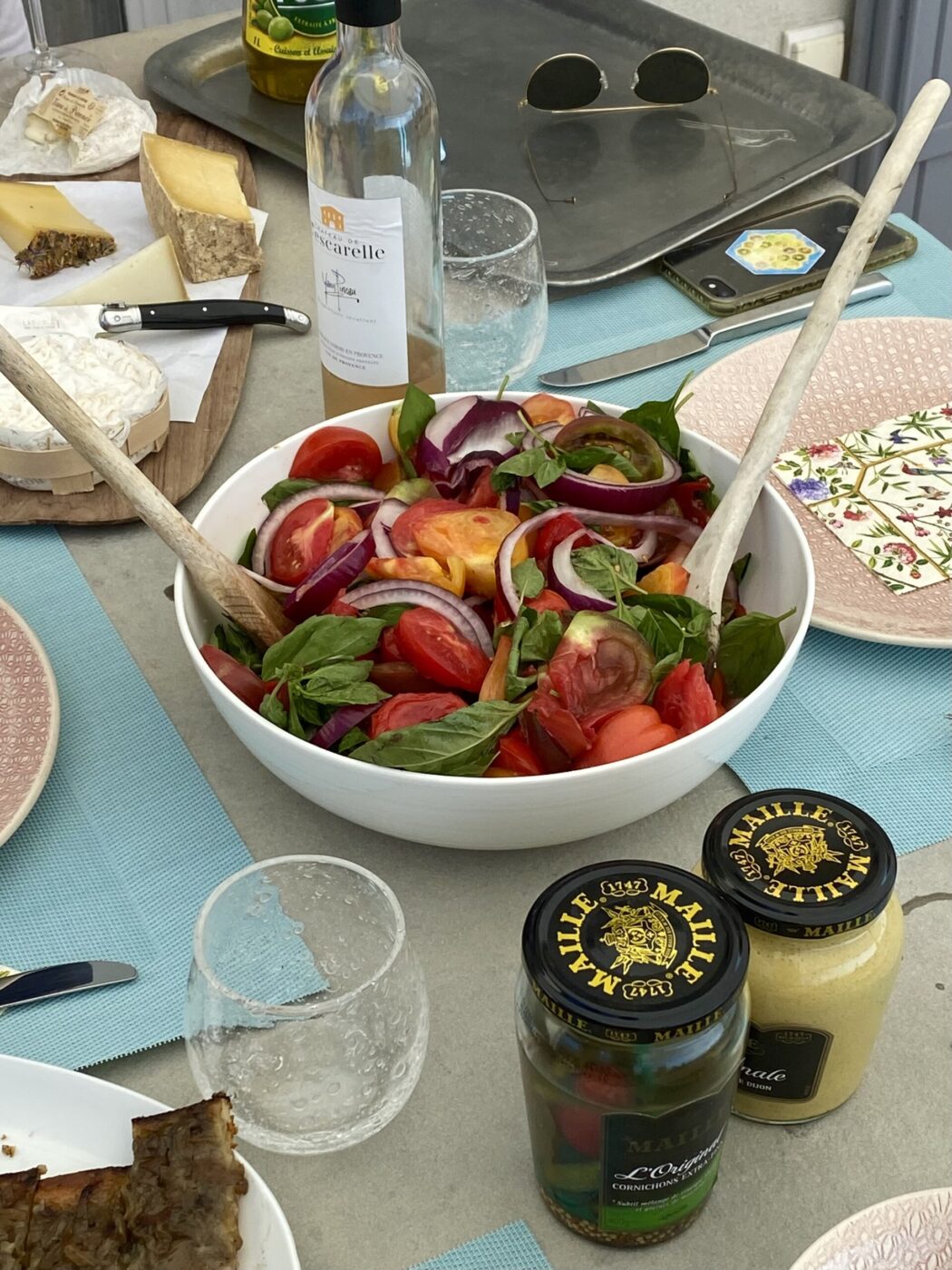
Turns out, everyone (but that masochist Modenese) actually eats differently in the summer. At home, dishes are often quick to assemble with little-to-no cooking required, and feature the best of summer’s bounty: tomatoes, cucumbers, peaches, melon, etc. Caprese and prosciutto e melone are two nationwide staples, accompanied by a whole host of dishes—all known as “insalate” (“salads”)—designed to be both portable and refreshing.
But a word of warning: order an insalata mista (mixed salad) at a restaurant and you’ll be sorely disappointed by a bowl of limp leaves. True Italian summer salads rely on bread, potatoes, grains, or proteins—so you can eat light without starving. Here, seven classic summertime “salads” to master (and to bring to your next August picnic date).
INSALATA DI RISO
Carnaroli rice—one of the varieties often used for risotto—is mixed with just about anything you love (and your pantry offers): the classic northern version includes prosciutto cotto, caciotta or scamorza, cherry tomatoes, olives, and pickled veggies, while a southern twist swaps the ham for tuna and the cheese for capers. To make, boil the rice, let it cool, combine with all the ingredients and a heavy glug of olive oil, and refrigerate. Many grocery stores even carry a ready-made jar of the fixings called Condiverde Riso, with pickled carrots, peppers, cucumbers, olives, corn, celery, mushrooms, artichokes, peas, fennel, etc. Mix it with rice, and you’ve got an easy winner.
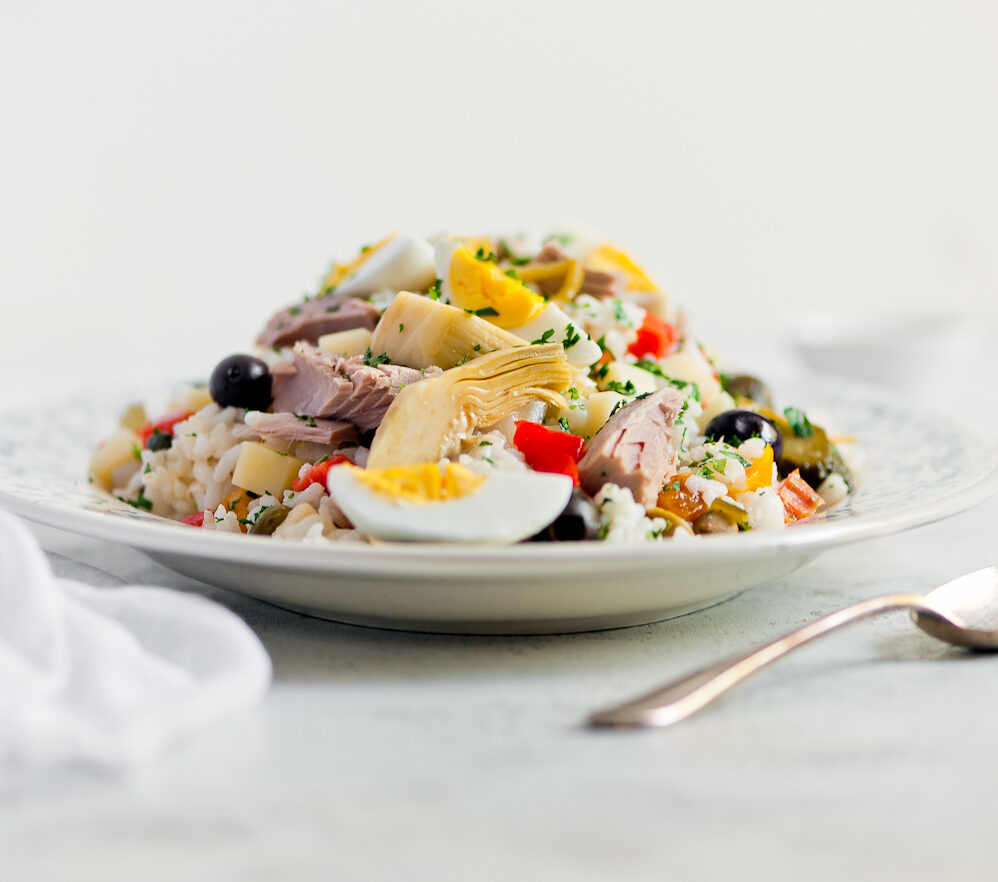
Photo by Valeria Necchio
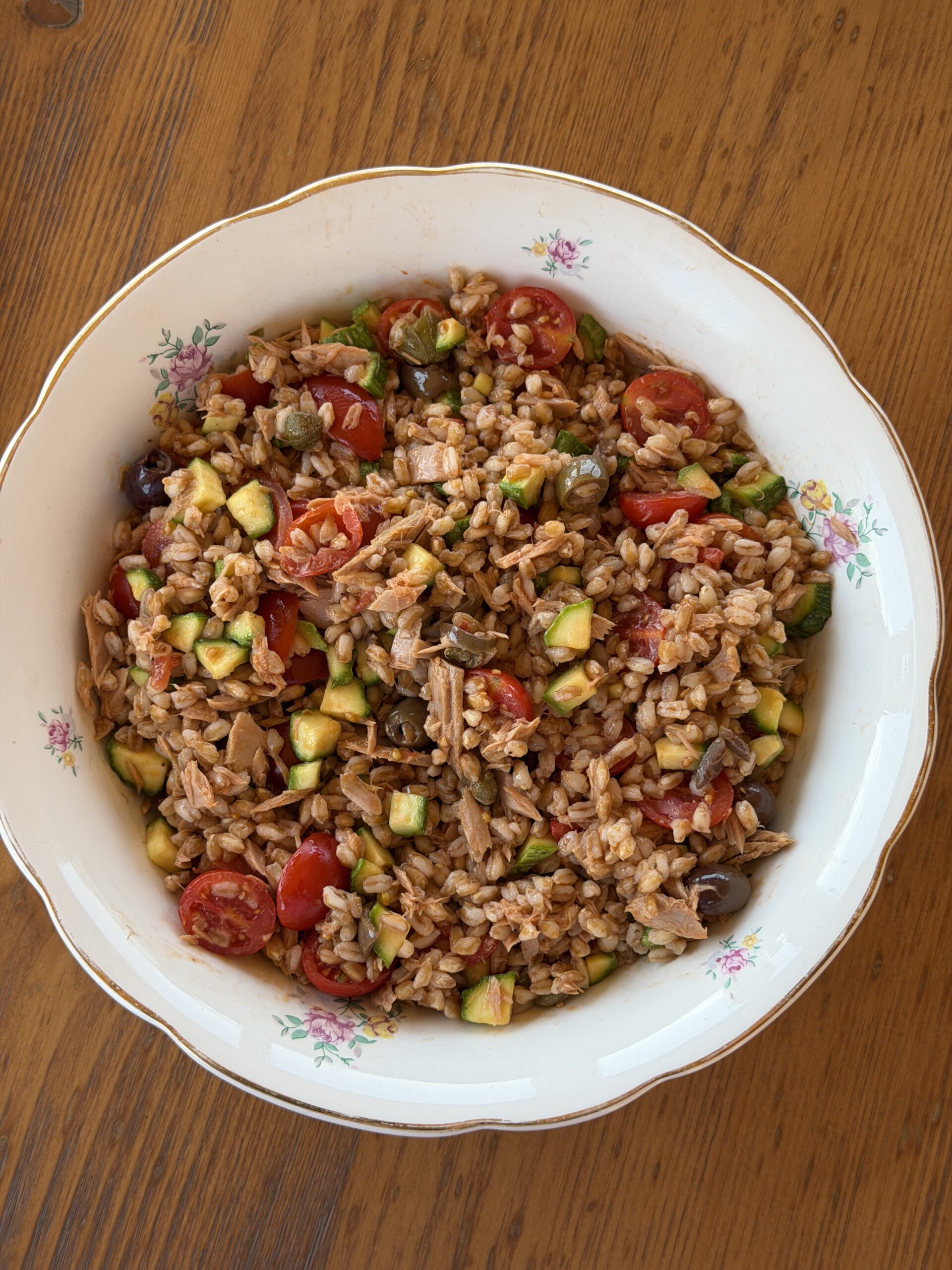
INSALATA DI FARRO
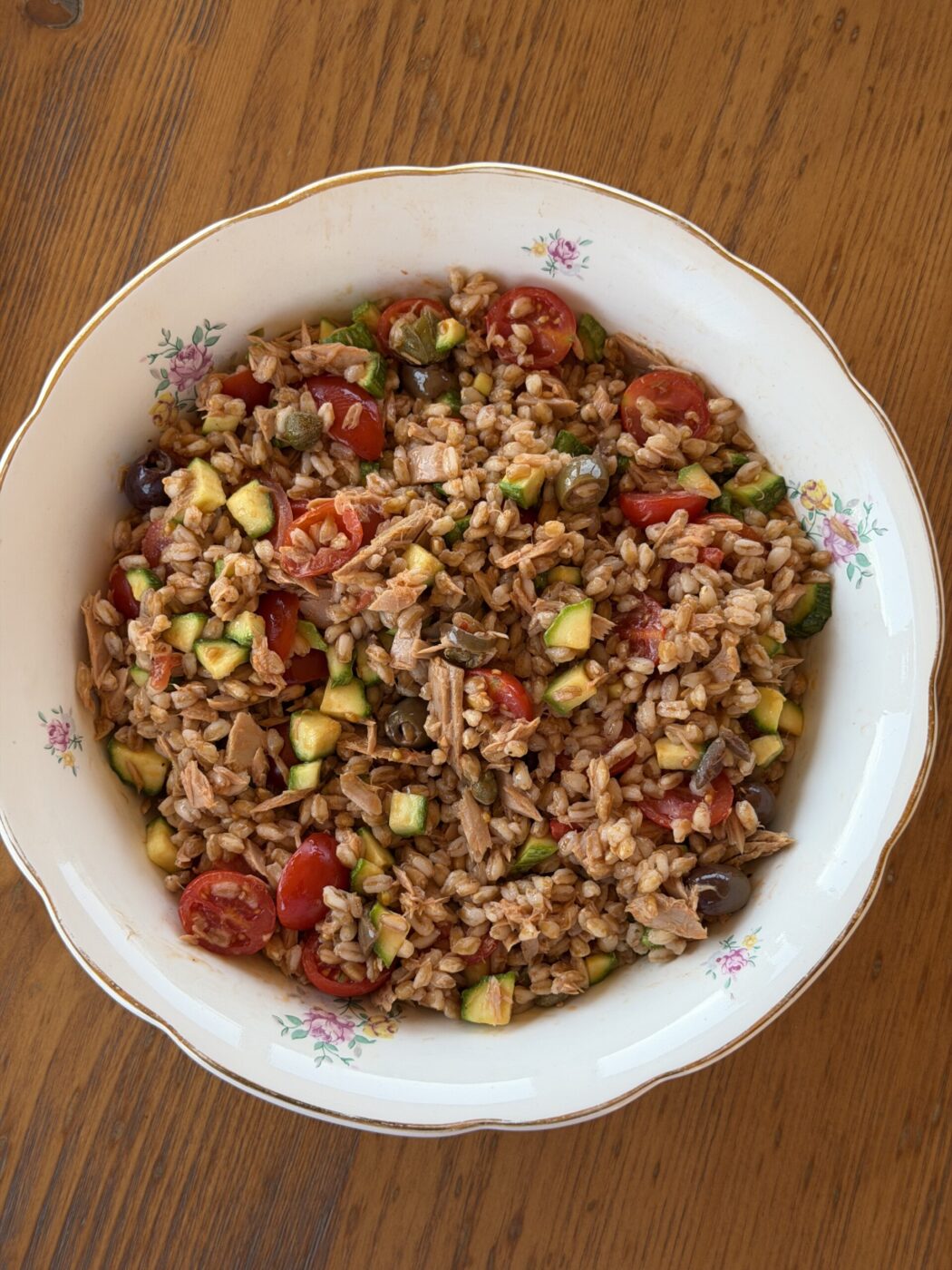
This hearty grain salad is a choose your own adventure—most versions see cooked farro combined with tuna, cherry tomatoes, grilled vegetables, chunks of Parmigiano Reggiano, fresh herbs, and olive oil. It’s good warm or cold and holds up well in the fridge. Italians have been eating farro long before it was trendy, as the nutty ancient grain dates back to Roman times—when it was a standard ration that fueled the legions as they marched across Europe—and grows abundantly in central Italy. Cook it al dente to play up the textures.
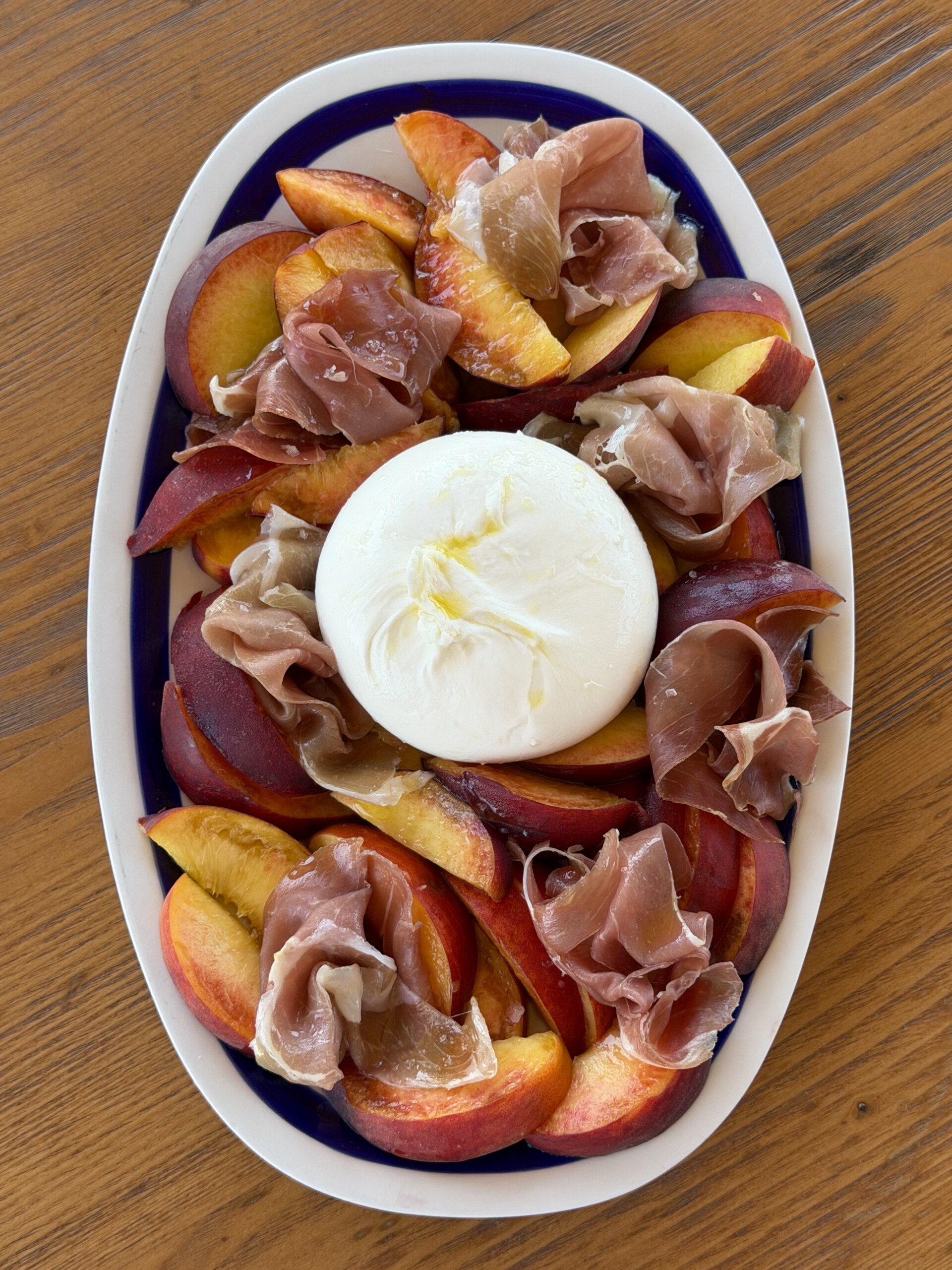
INSALATA DI PESCHE, BURRATA, E PROSCIUTTO CRUDO
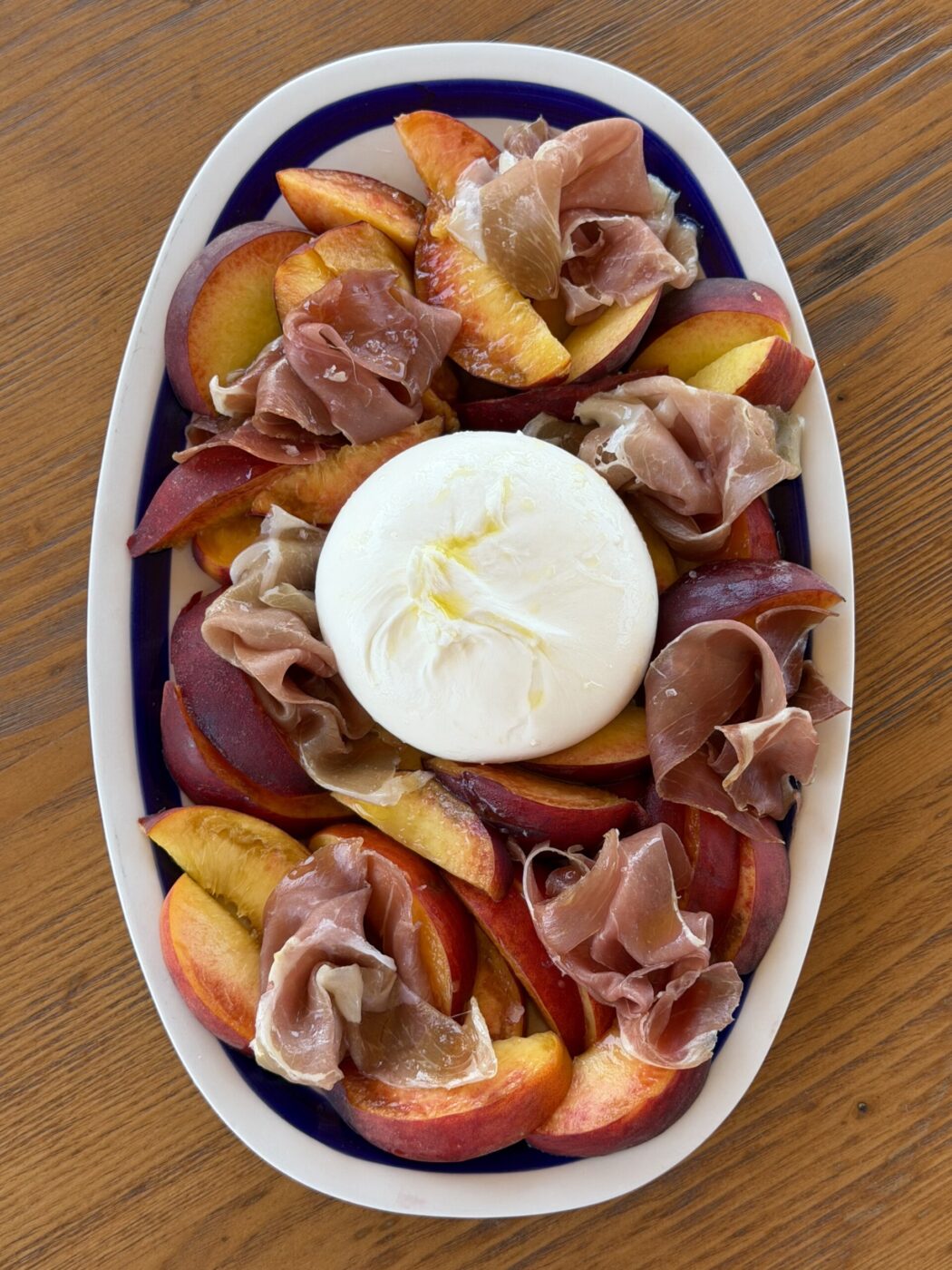
As soon as peaches hit the shelves of my fruttivendolo in May, this becomes my favorite lunch or dinner. All you need to grab is a few pesche tabacchiera (the flattened, “donut” ones with velvety skin and sweet, white flesh), one large ball of burrata, a few slices of salty prosciutto crudo, and a drizzle of olive oil. The sweet and salty delicacy is a fancier alternative to prosciutto e melone and pairs nicely with a glass of bubbles.
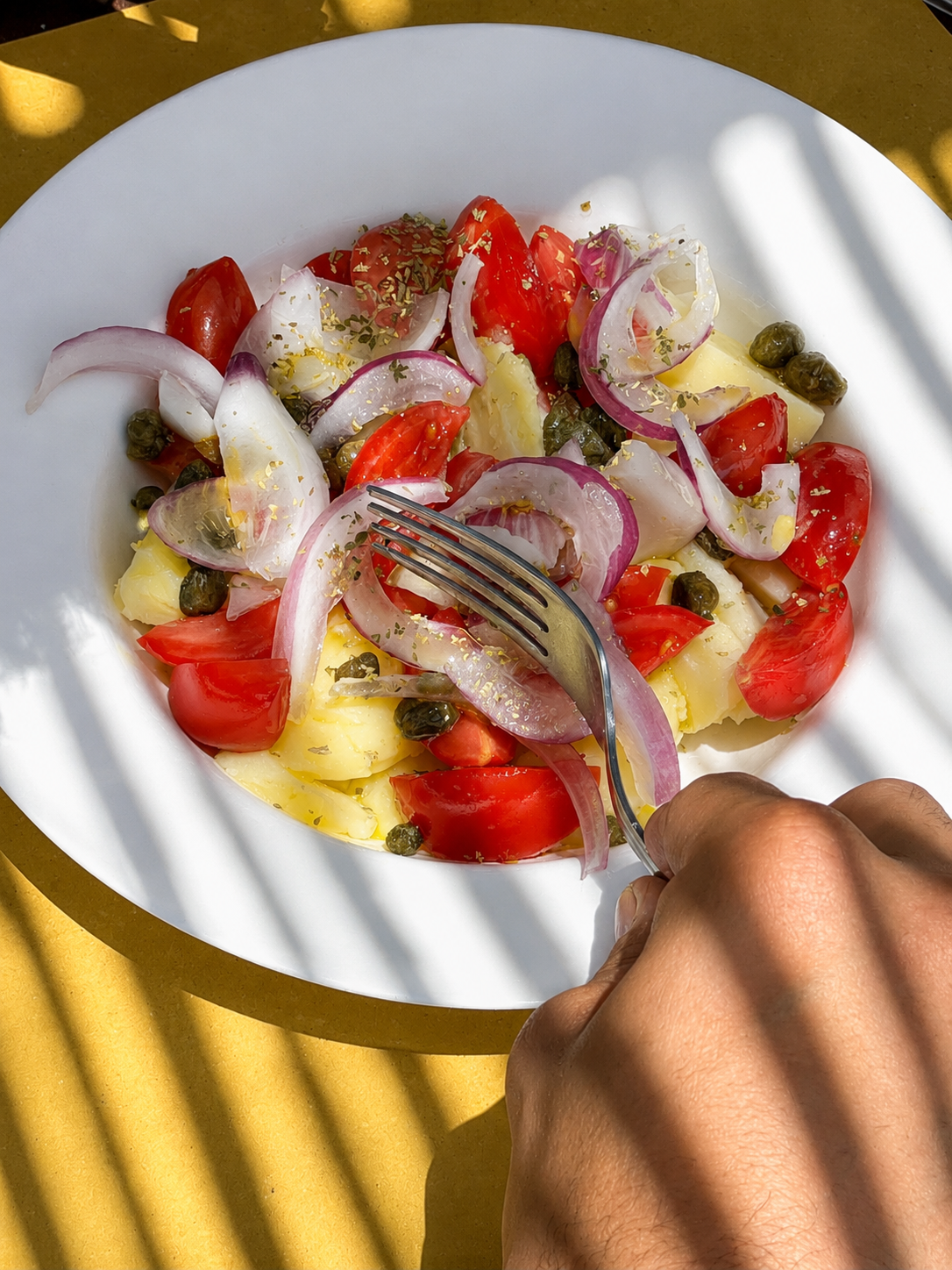
INSALATA EOLIANA
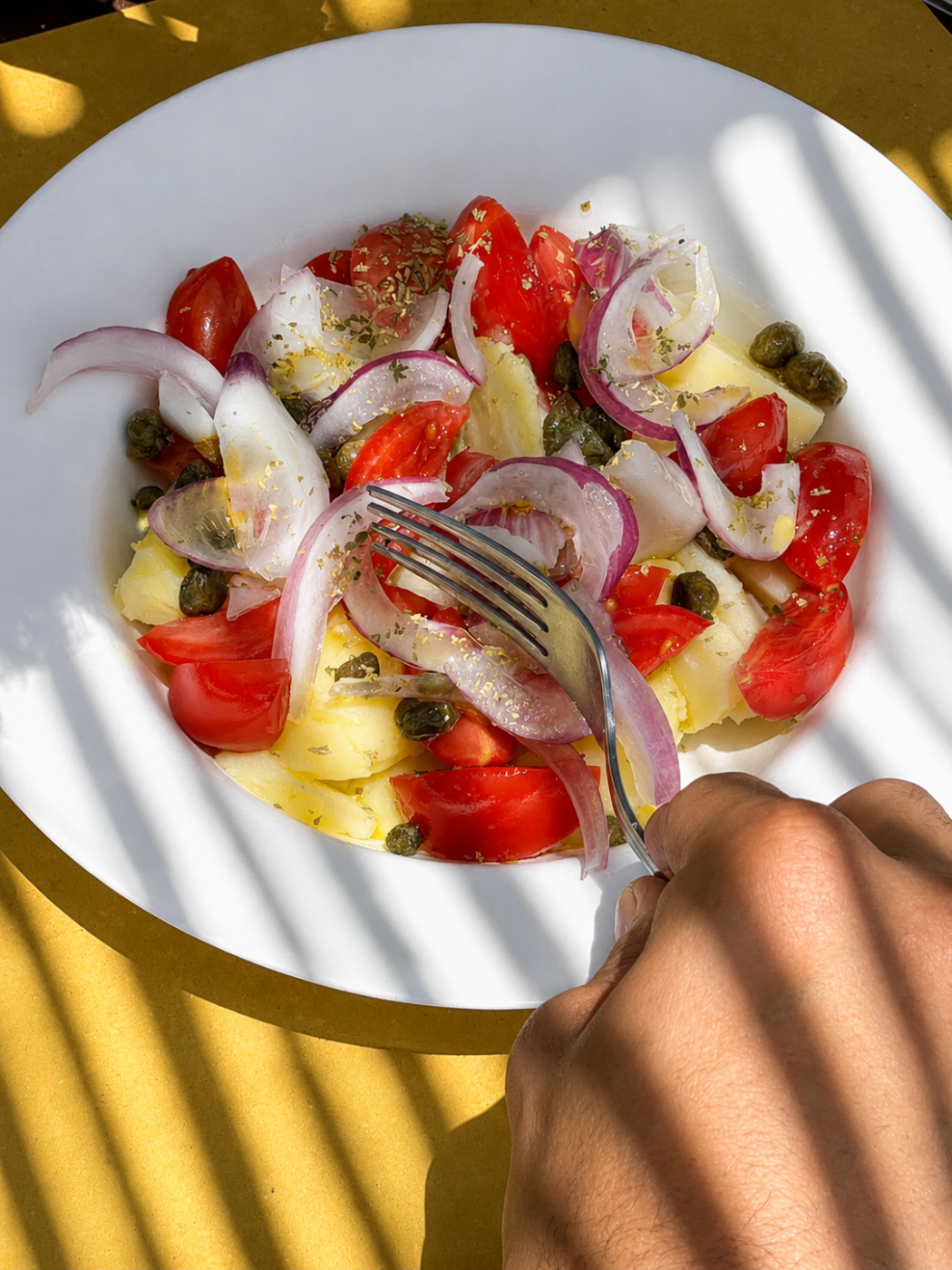
Summer lasts a while longer than the rest of Italy on Sicily’s Aeolian islands, where this light potato salad originates, starring the islands’ prized caper bounty alongside cherry tomatoes, tuna, olives (black and green), red Tropea onion, and dried oregano. You’ll likely find a different version of the salad on each island (and in each Sicilian home), so try as many of you can and experiment with your own recipe to see which you like best. Italy Segreta’s version rounds out the picture nicely with fresh basil, anchovies, and red wine vinegar.
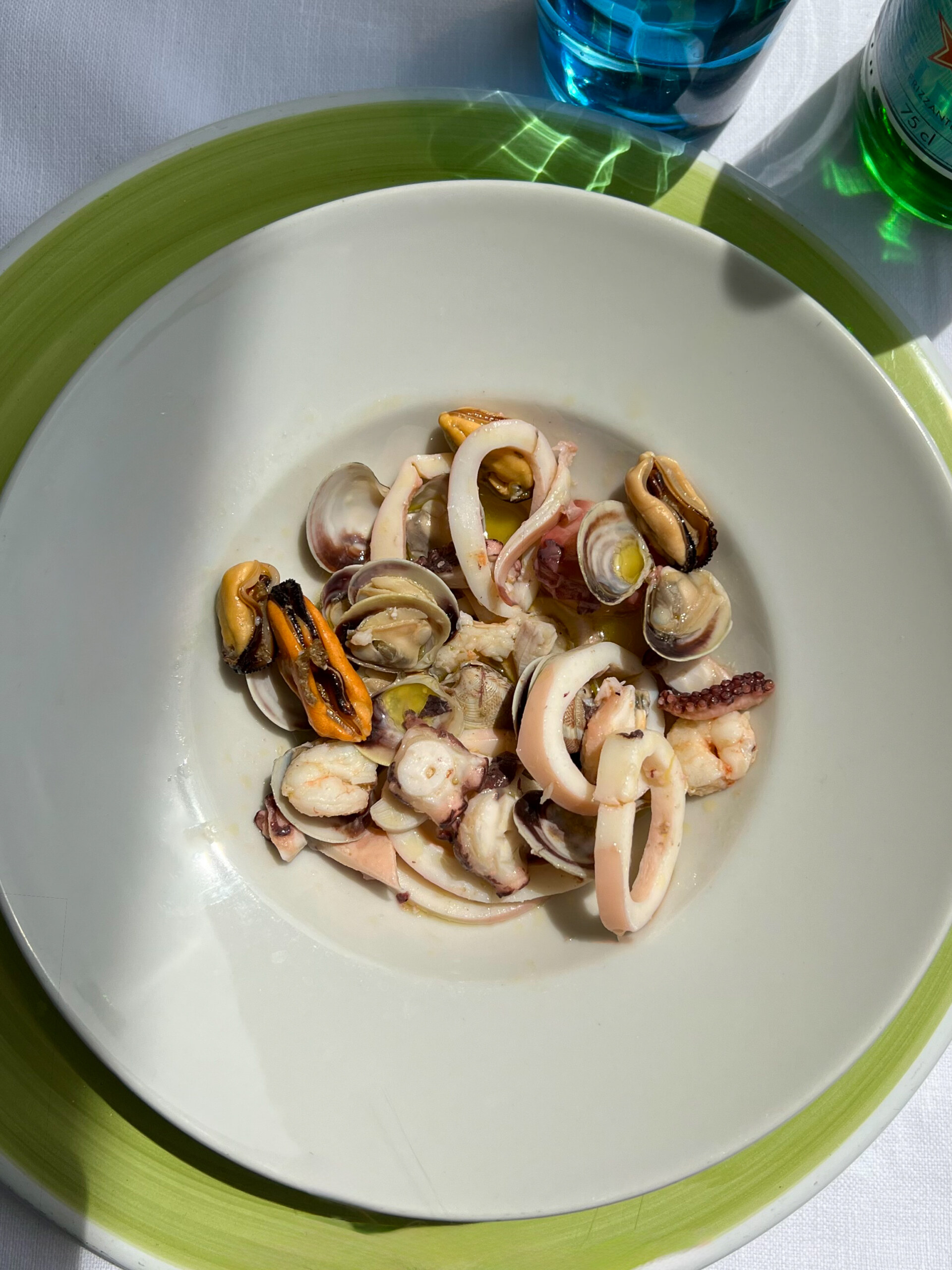
INSALATA DI MARE
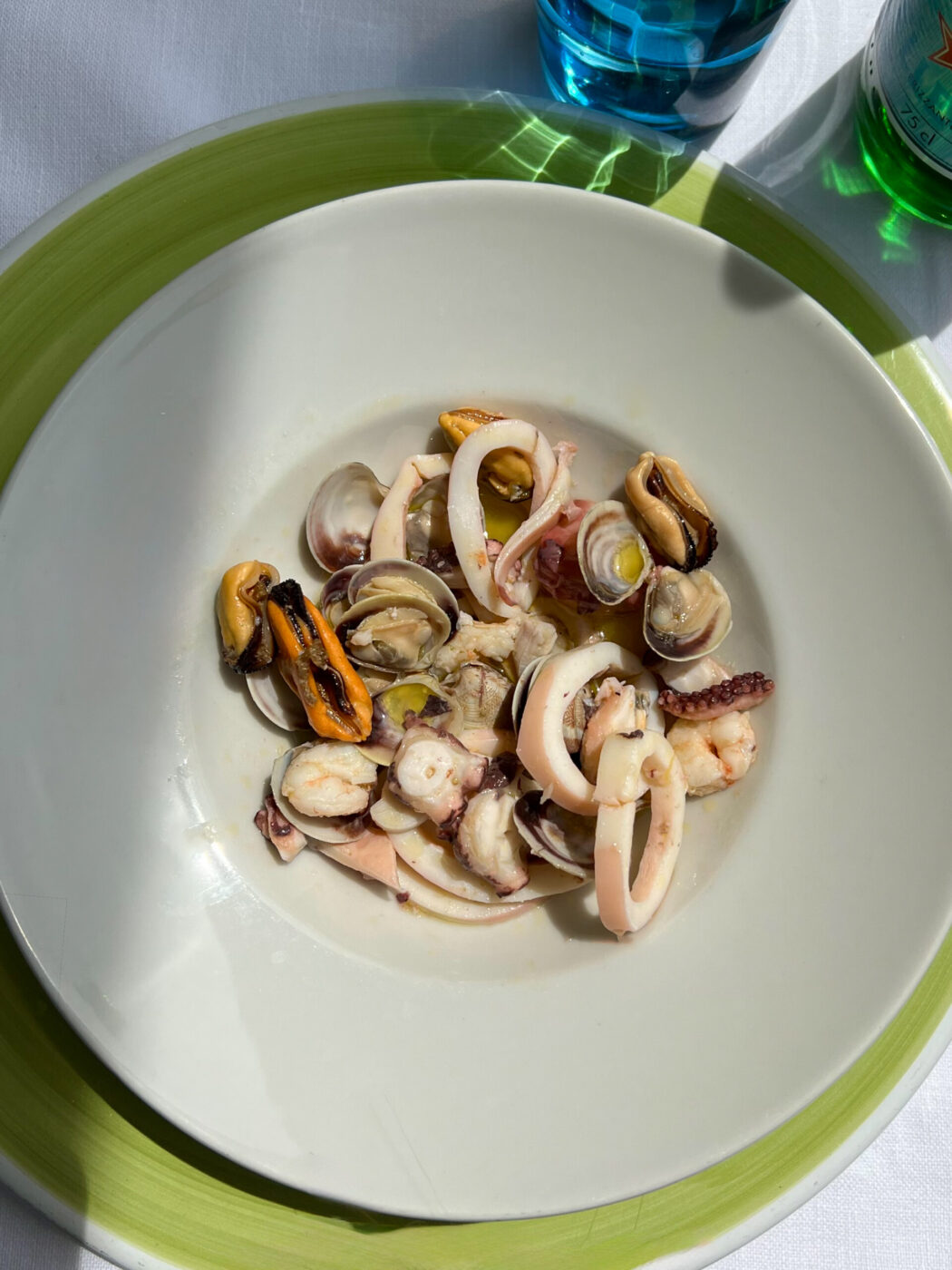
No matter what version of this “salad of the sea” you’re enjoying, it’s sure to taste like summer. The classic calls for boiled octopus, calamari (tubes and tentacles), and shelled shrimp, tossed in a dressing of lemon juice, chopped parsley, extra virgin olive oil, and, often, garlic. It’s better when left to sit overnight and zhuzhed up with a little extra olive oil before serving. If you’re a real frutti di mare fan, add in cozze, prawns, white fish (baccalà, merluzzo, or branzino), and baby cuttlefish, plus cherry tomatoes, capers, and celery for brightness.
PANZANELLA
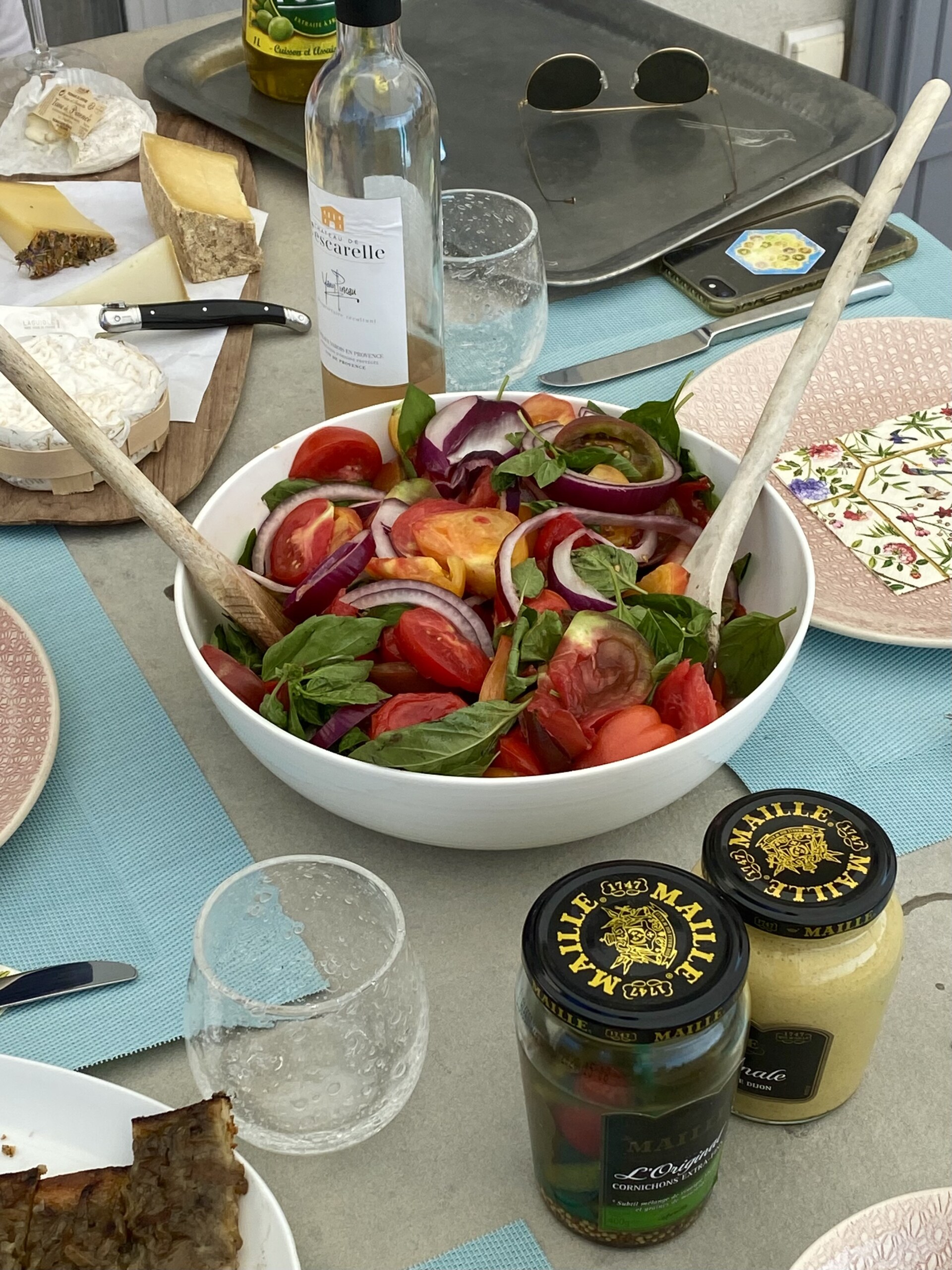
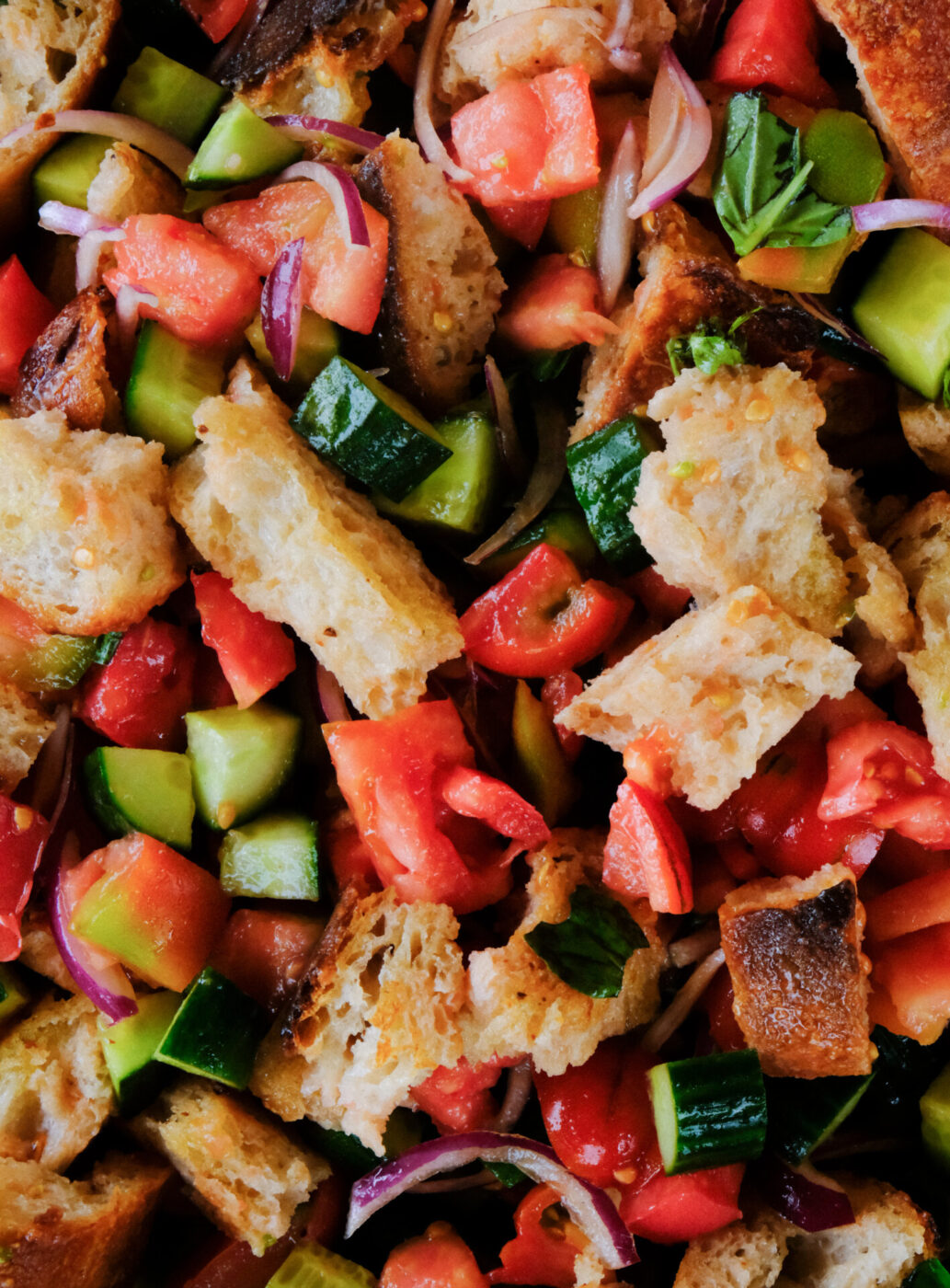
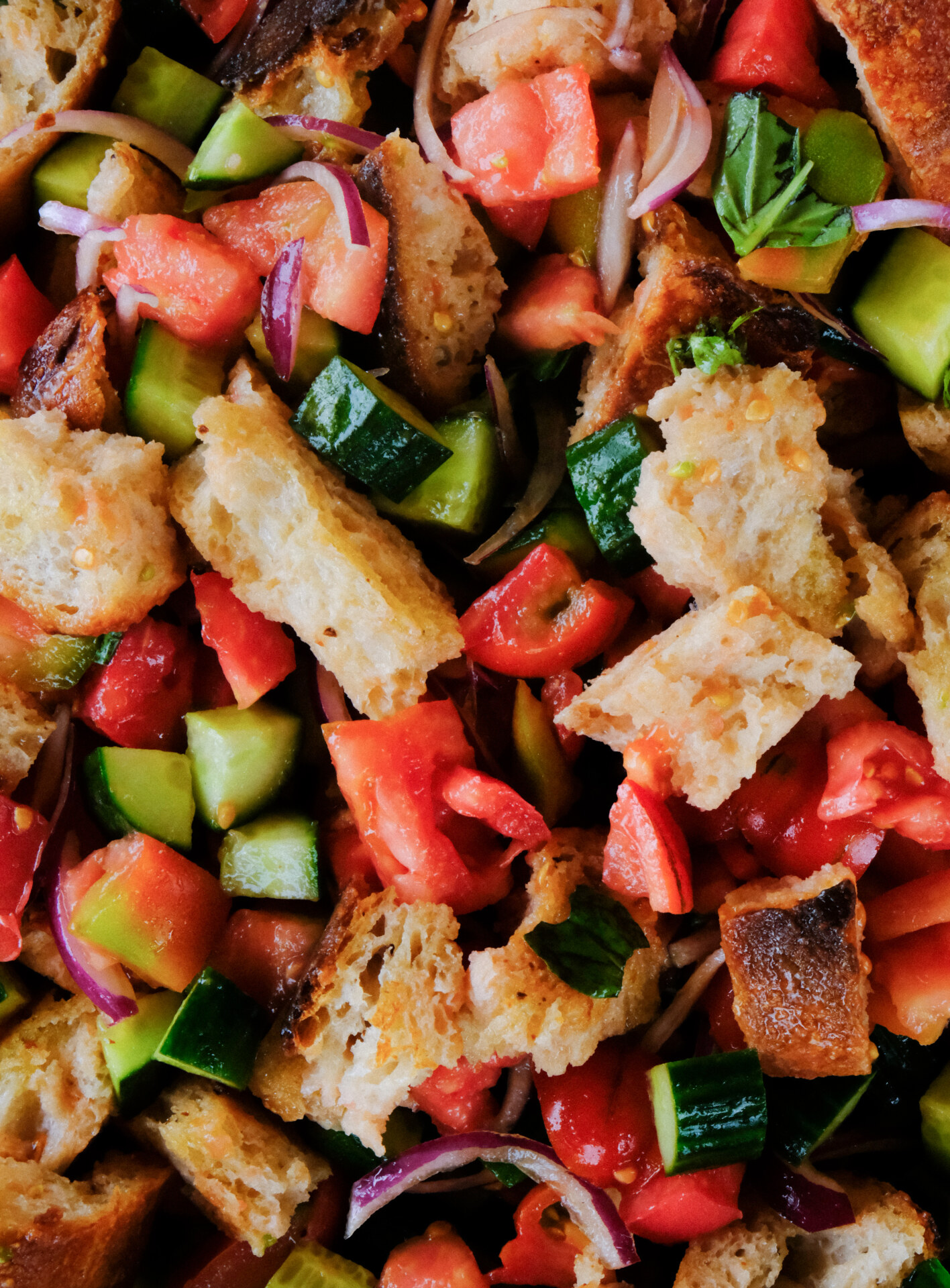
The first ingredient in this Tuscan salad is, rather surprisingly, bread—particularly stale bread, broken into bite-sized chunks and rehydrated before joining with tomatoes, cucumbers, onions, and basil doused in olive oil, salt, and red wine vinegar. This was a summertime favorite for the region’s farmers, and still is a favorite when cooking—even boiling potatoes—is too sweaty of a task. The trick is letting it sit at least two hours before eating, and you can enjoy it cold or at room temp. Follow Italy Segreta’s ultimate recipe here.
INSALATA RUSSA
This is Italy’s version of good ol’ fashioned potato salad—a mayo-forward delight that combines the tuber with carrots, peas, and sometimes hard-boiled eggs, chopped pickles, and tuna. It is a ubiquitous antipasto, particularly cherished during Christmas lunch, though the Piedmontese staple is enjoyed year-round (and makes a great side for a summer grigliata). Much of the world calls it “Olivier salad” after the Belgian chef who invented it in 1860s Moscow, but in Piedmont, they prefer their own legend: that a Savoy court chef created it to honor the Russian Tsar’s visit to Racconigi Castle in 1909. Some even hypothesize that the name comes from the dialectal word rusa (“red”), because of a now-uncommon version dyed with beets. It can usually be purchased pre-made in delis and grocery stores, but the homemade version (especially if you whisk your own mayo) is undoubtedly better.