Moderation has never held a seat at Bologna’s table. The city’s moniker is “La Dotta, La Grassa, La Rossa”, and though the middle designation, “The Fat One”, may seem like a joke or an insult, it’s actually been a badge of honor here for almost a millennium. While much of southern and central Italy built its cuisines on the lean, cucina povera foundations of olive oil, tomatoes, and dried wheat, Bologna developed a lavish, unabashedly rich gastronomy thanks in part to that “La Dotta”, or “The Learned One”.
The founding of the University of Bologna in 1088 brought an influx of affluent scholars, church dignitaries, and noble merchants who demanded sophisticated, high-calorie food. Local medieval guilds stepped in to strictly codify recipes, whose ingredients came from the surrounding lush plains of the Po River Valley. Other nearby parts of Emilia-Romagna offered up culinary luxuries, too, chief among them Parmigiano Reggiano, mortadella, and prosciutto di Parma. This was, and still is, a landscape of dairy cattle and swine, where fat (elsewhere in the country, the height of luxury) wasn’t used sparingly as a cooking medium, but celebrated as a vehicle for flavor. That’s why today, butter, lard, and cream reign supreme.
Above all else, Bologna is a place for pasta, most often made with a healthy amount of egg yolks, from teensy, hand-folded tortellini to wide ribbons of tagliatelle clinging to ragù. You’ll soon learn that the first course in Bologna is never an introduction to the meal; it’s the main event. Here are the 20 foods, plenty of them primi, you must eat while in La Dotta, La Grassa, La Rossa.
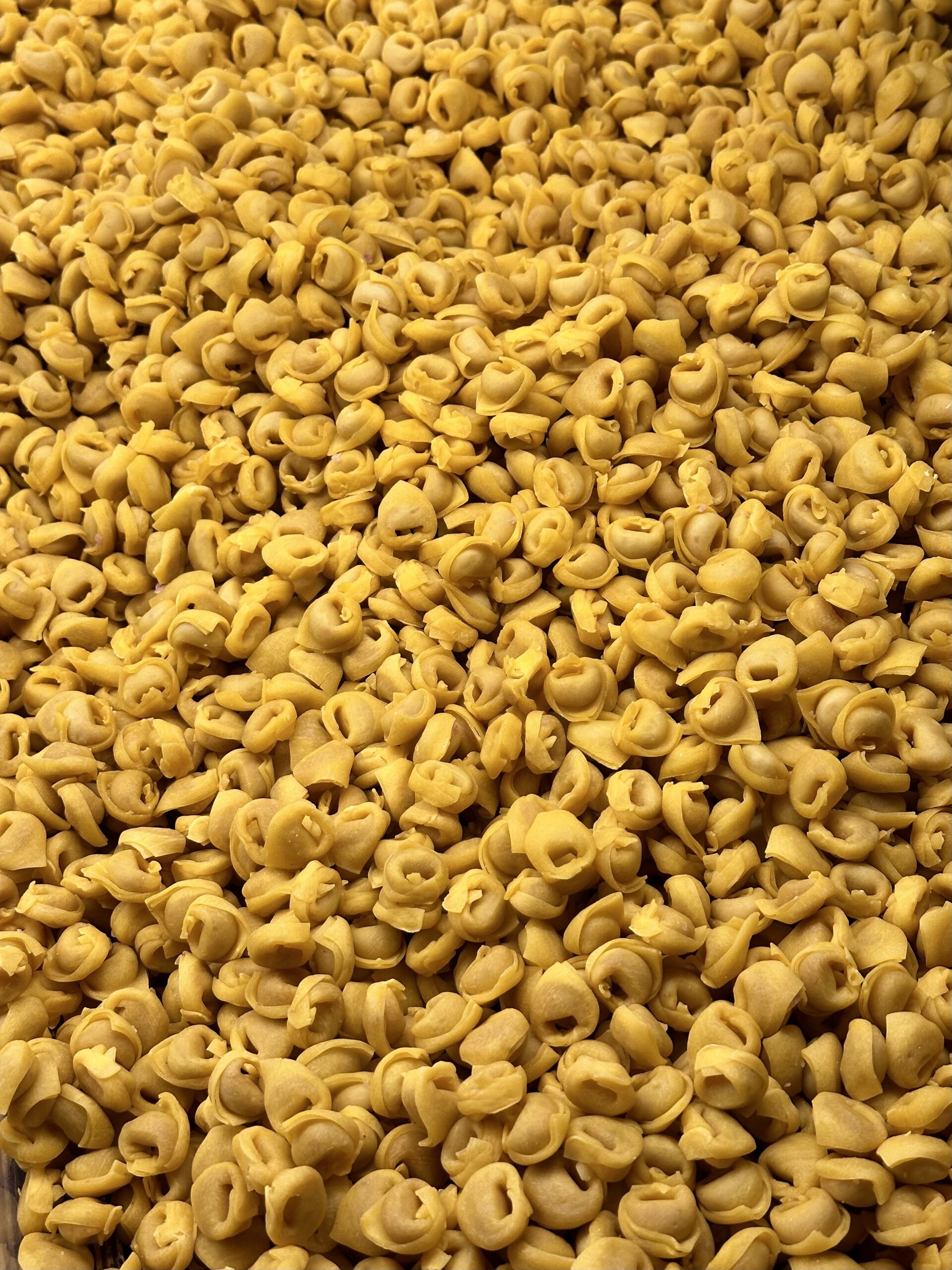
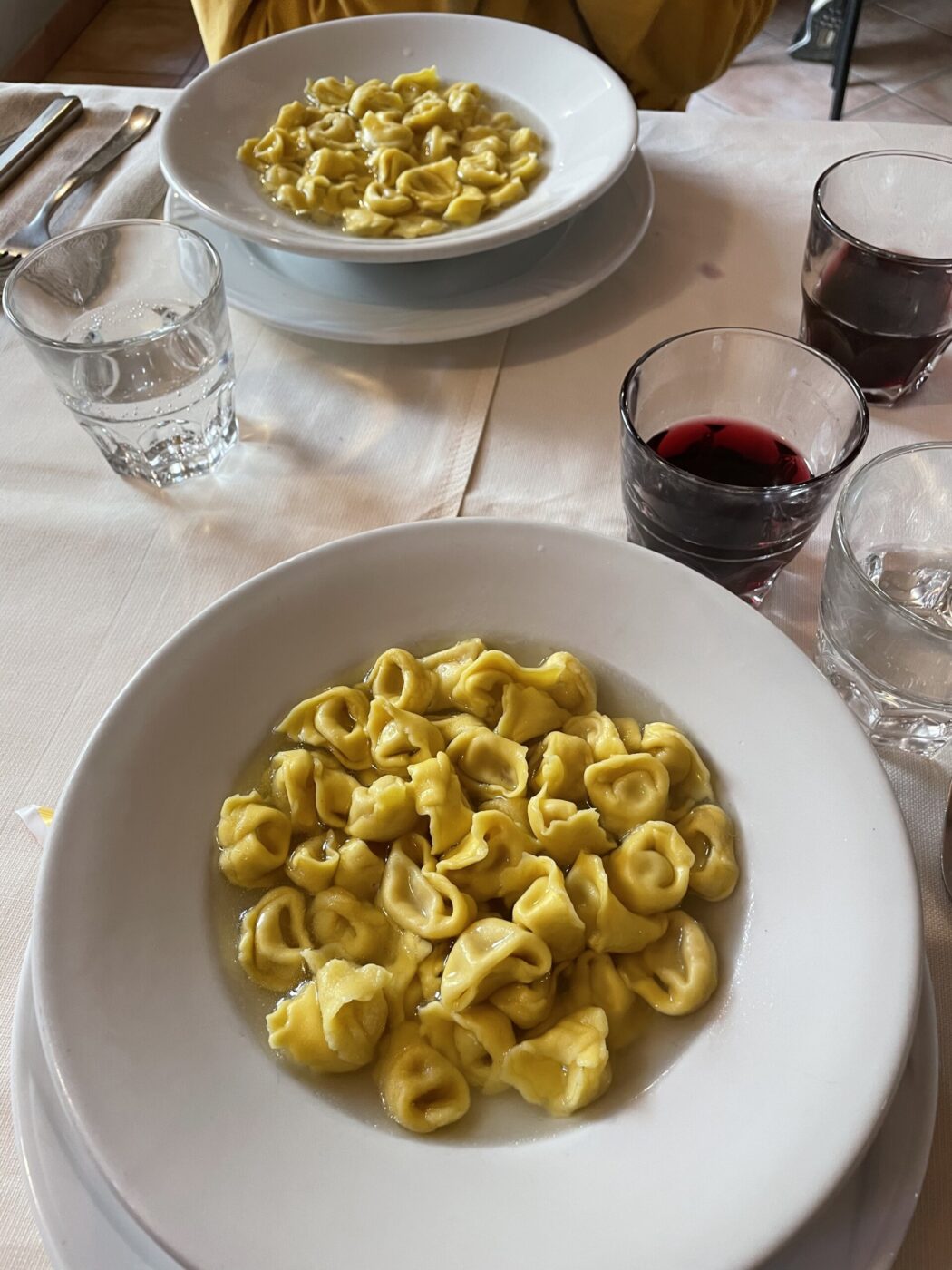
TORTELLINI IN BRODO
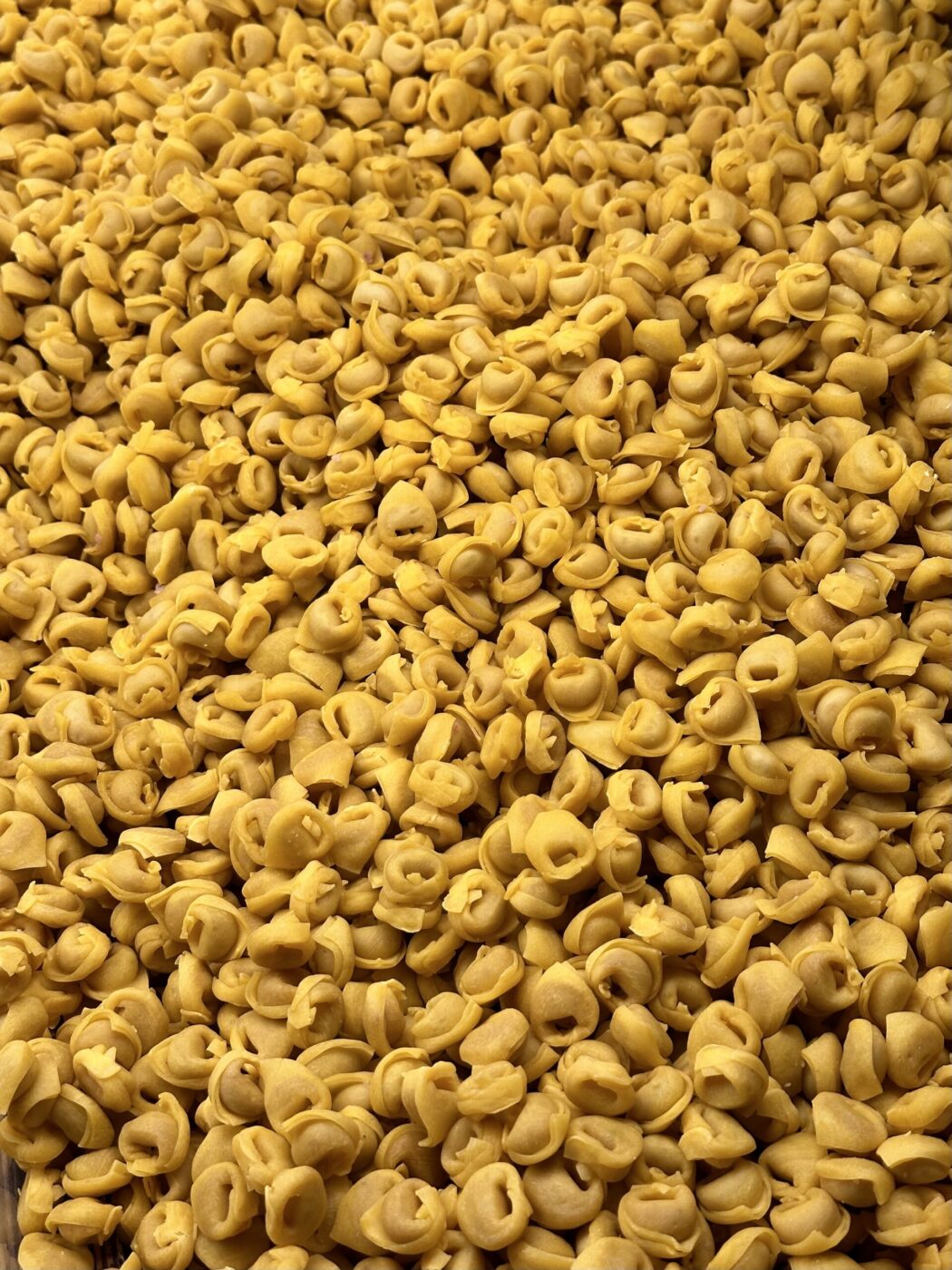
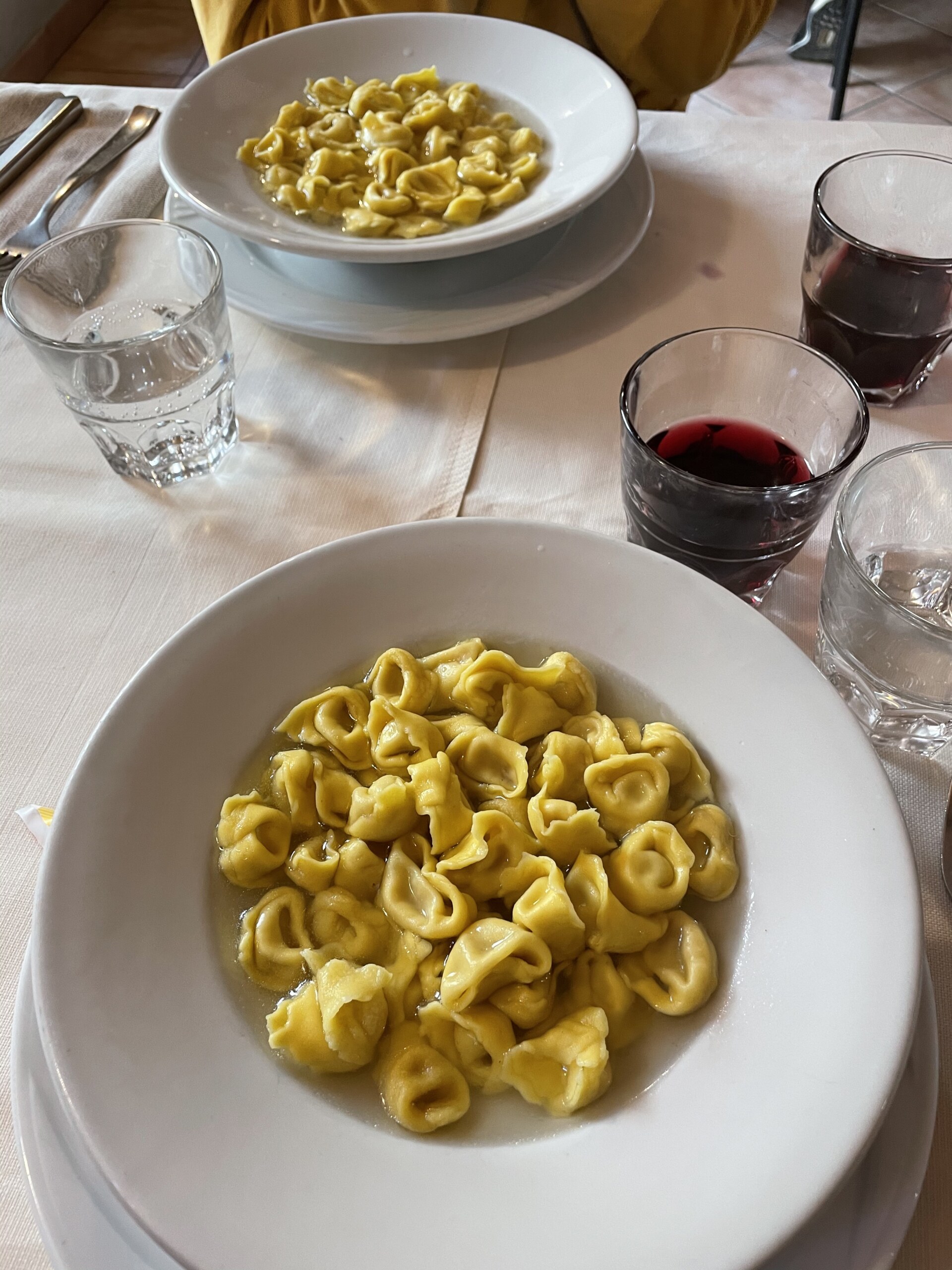
Legend has it that an innkeeper in Castelfranco Emilia, peeping through a keyhole at his guest, the goddess Venus, was so struck by the beauty of her navel that he rushed to the kitchen to recreate it in dough. These tiny, ring-shaped pastas are the holy grail of Emilian cuisine, filled with a strict mix of pork loin, prosciutto, mortadella, Parmigiano Reggiano, and nutmeg. In Bologna, you’ll find them in brodo, a clear capon broth, or the decadent in crema di Parmigiano. As Castelfranco Emilia is midway between Bologna and Modena, the latter also lays claim to the pasta’s origins and the feud over the recipe is centuries old; in Modena, they’re a touch larger and can include veal in the filling.
LASAGNE VERDI ALLA BOLOGNESE
Forget the dried pasta sheets and mozzarella you might see elsewhere; the Bolognese version of lasagna is a towering, seven-layer monument to excess with fresh egg pasta dyed green with spinach. The sheets are layered with the city’s signature ragù, a silky, nutmeg-spiked béchamel, and mountains of Parmigiano Reggiano. The result is a gooey mess of comfort food that’s best enjoyed during Sunday lunch.
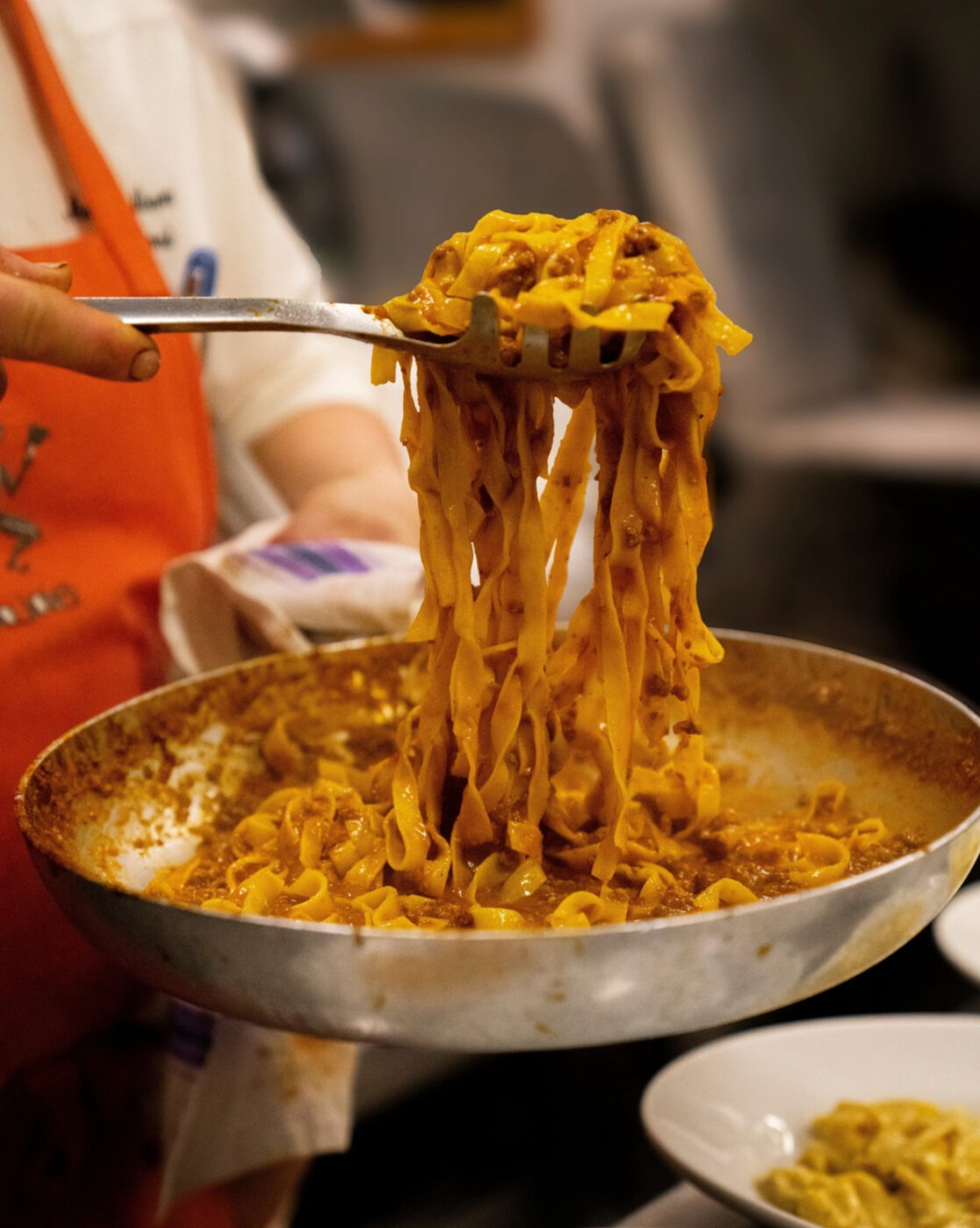
TAGLIATELLE AL RAGÙ
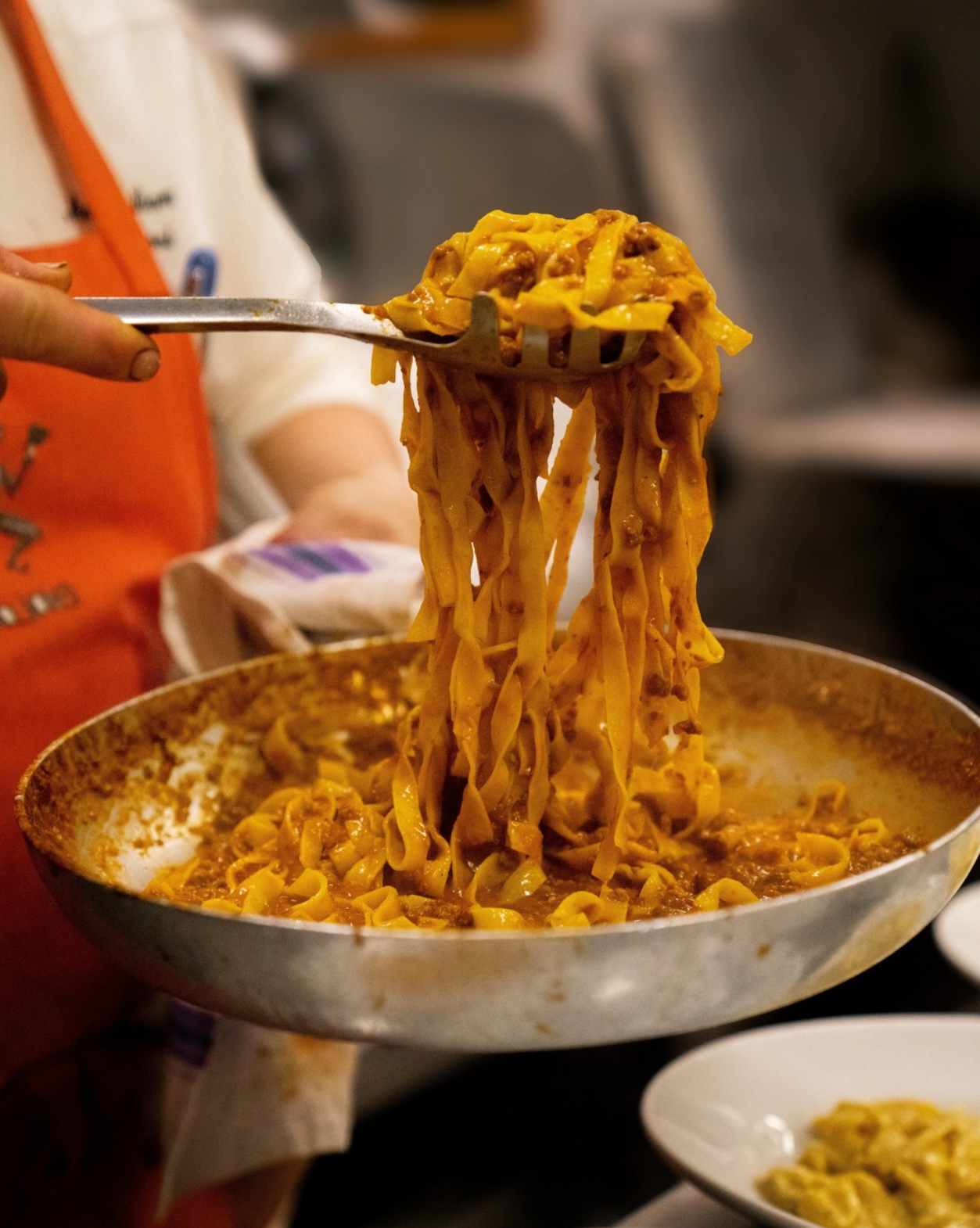
Let’s get one thing straight: spaghetti bolognese doesn’t exist—here in Bologna, at least. The real deal is tagliatelle al ragù. The noodle’s width is taken so seriously that a solid gold replica of the perfect slice—precisely 8mm wide when cooked—is locked away in the Chamber of Commerce, ensuring the pasta is porous and broad enough to hold the heavy sauce. The ragù itself is a slow-cooked masterpiece of minced beef, pork, soffritto, and tomato concentrate (never garlic!), finished with a splash of milk to tenderize the meat.
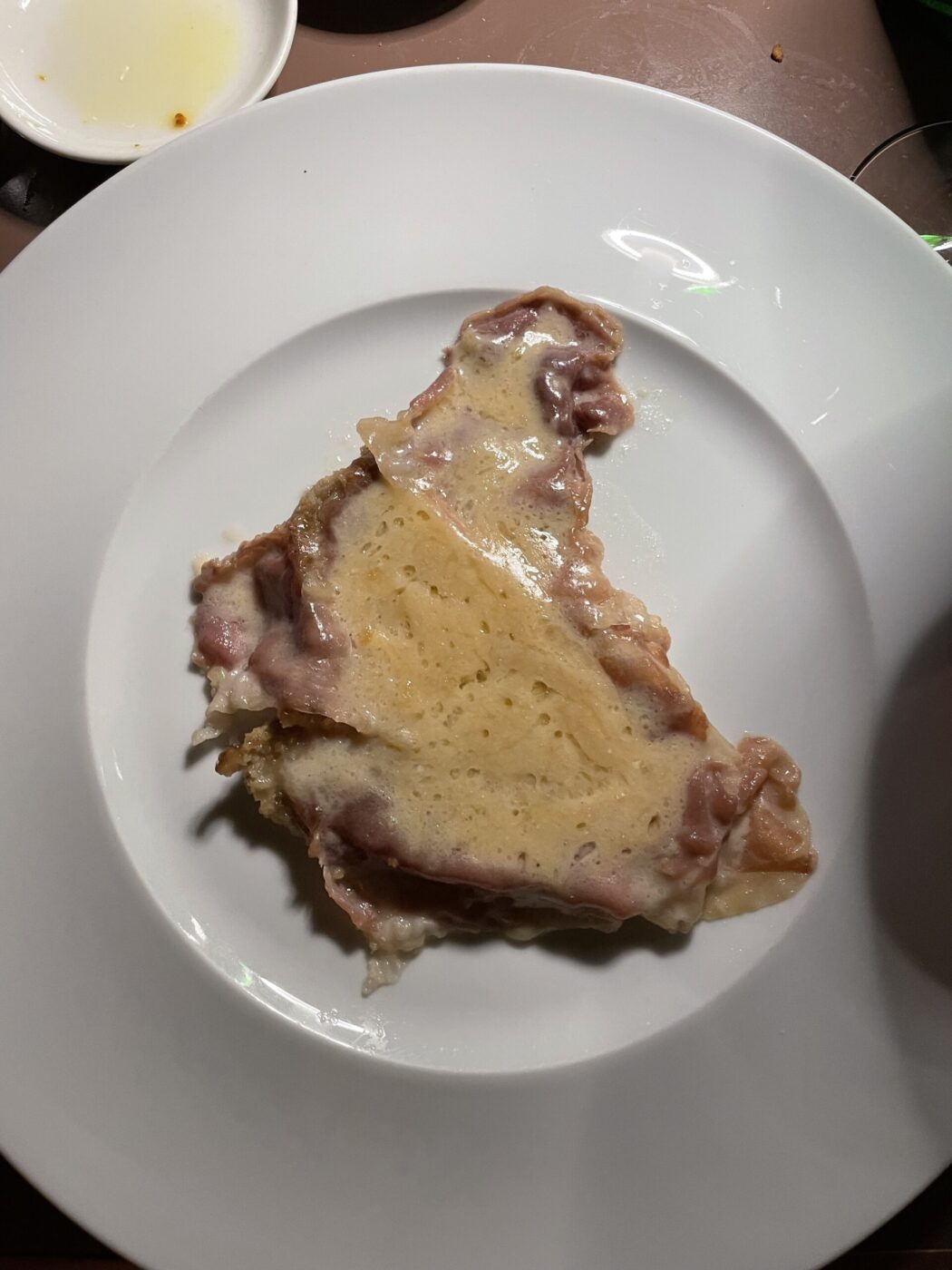
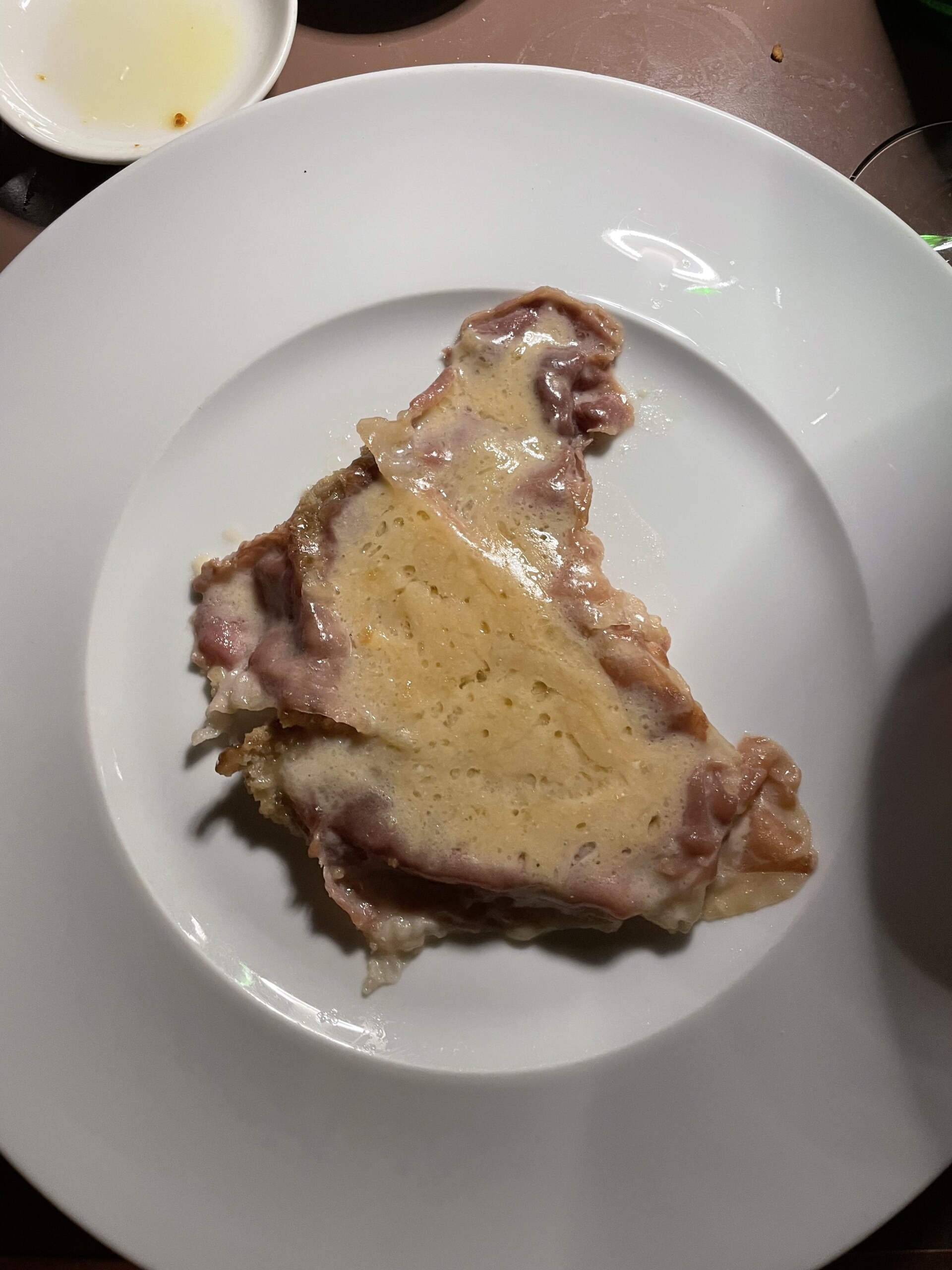
COTOLETTA ALLA BOLOGNESE (PETRONIANA)
The Milanese have their costoletta, but the Bolognese looked at a fried veal cutlet and asked, “How can we one-up this?” Named after the city’s patron saint, San Petronio, this cutlet is breaded, fried in butter, topped with prosciutto crudo and Parmigiano, and then briefly braised in meat broth until the cheese melts. A word of warning: it’s decadent, so go easy on the rest of your order; it doesn’t even really need contorni.
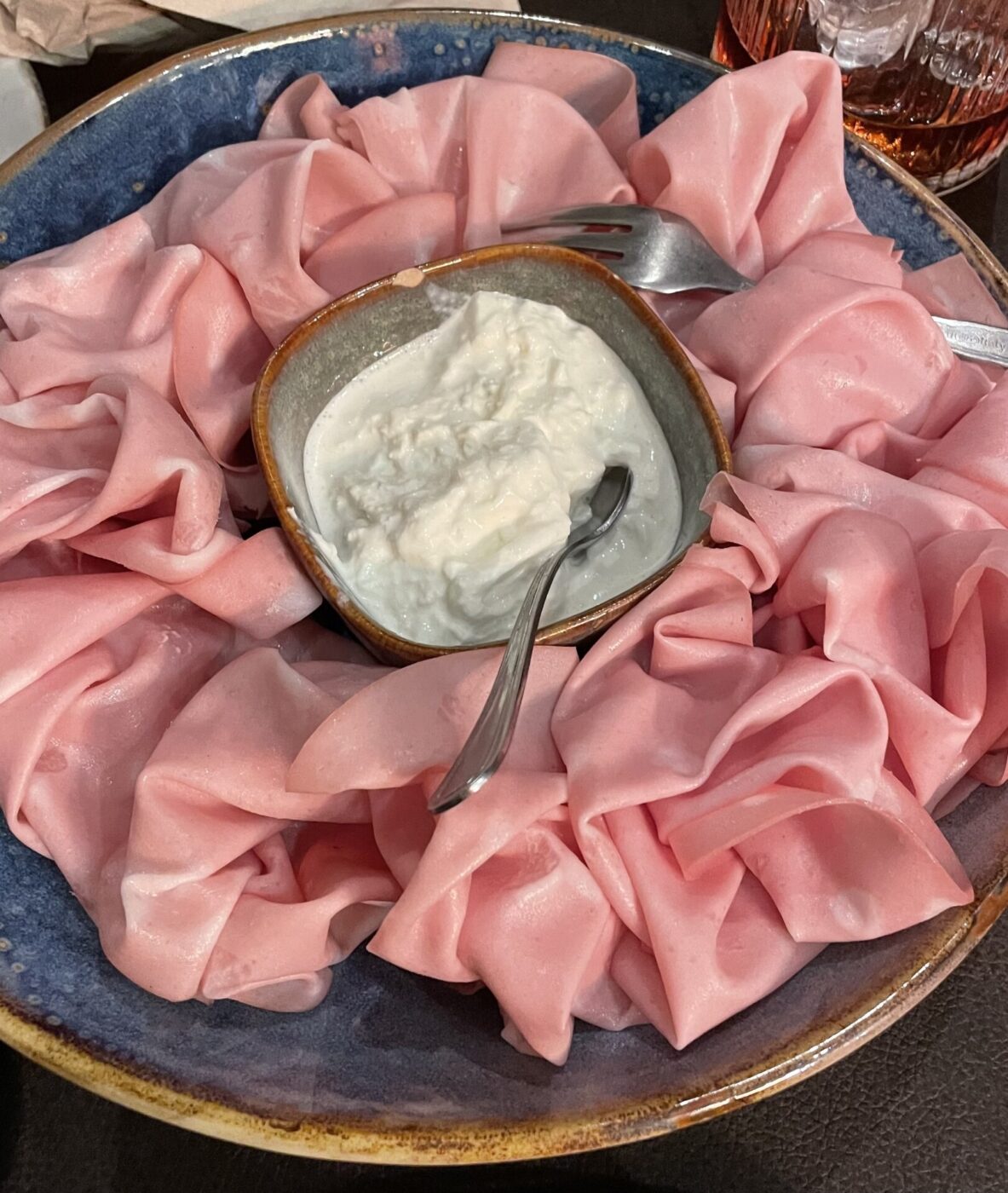
MORTADELLA BOLOGNA IGP
Please don’t call it “bologna.” This large-circumferenced salumi, known as la regina rosa (the pink queen), traces its origins to Roman times. Today, pork shoulder is finely ground with at least 15% lardelli (neck fat), cooked at low temperatures to achieve its signature velvety texture, and then often studded with pistachios. Legend has it the meat should be sliced thin enough that you can see the silhouette of San Luca, Bologna’s hilltop basilica, through it.
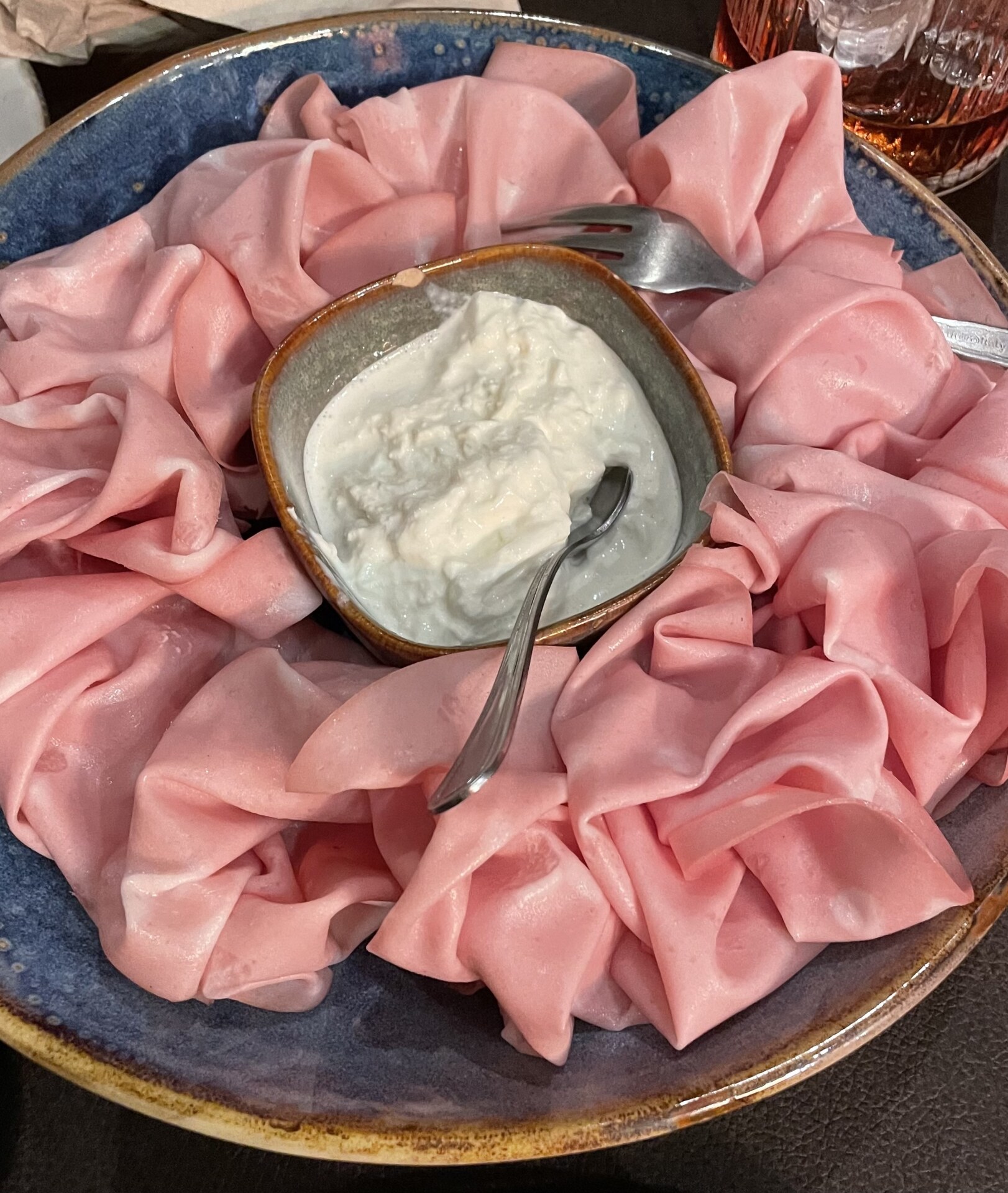
Mortadella plate at Corner Bar in Bologna
TORTA DI RISO
This festive dessert, also called torta degli addobbi, dates back to the 1470 Corpus Domini celebration, when Bolognese families hung colorful drapes from their balconies and offered slices of cake to neighbors. Unlike the simpler torte di riso found in Florence and wider Tuscany—which lean toward light, vanilla-and-lemon baked rice custards, often in a pastry shell—Bologna’s version is dense and crustless. Rice is slow-simmered in milk, bound with eggs and sugar, and heavily studded with ground almonds and candied citron. Its signature is a generous dousing of Alchermes liqueur, which gives the cake a spicy-floral fragrance before it’s sliced into diamond shapes (“losanghe”).
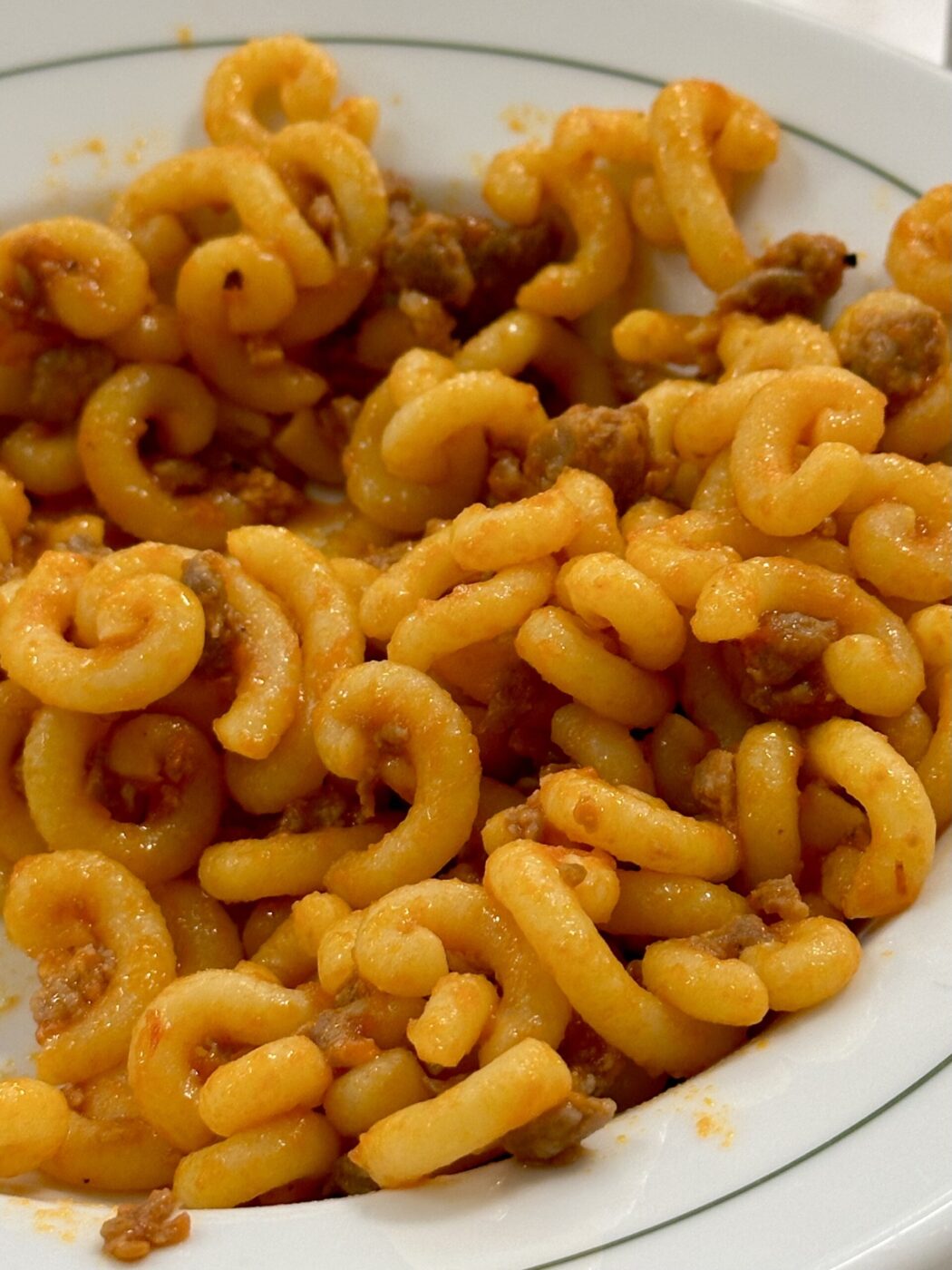
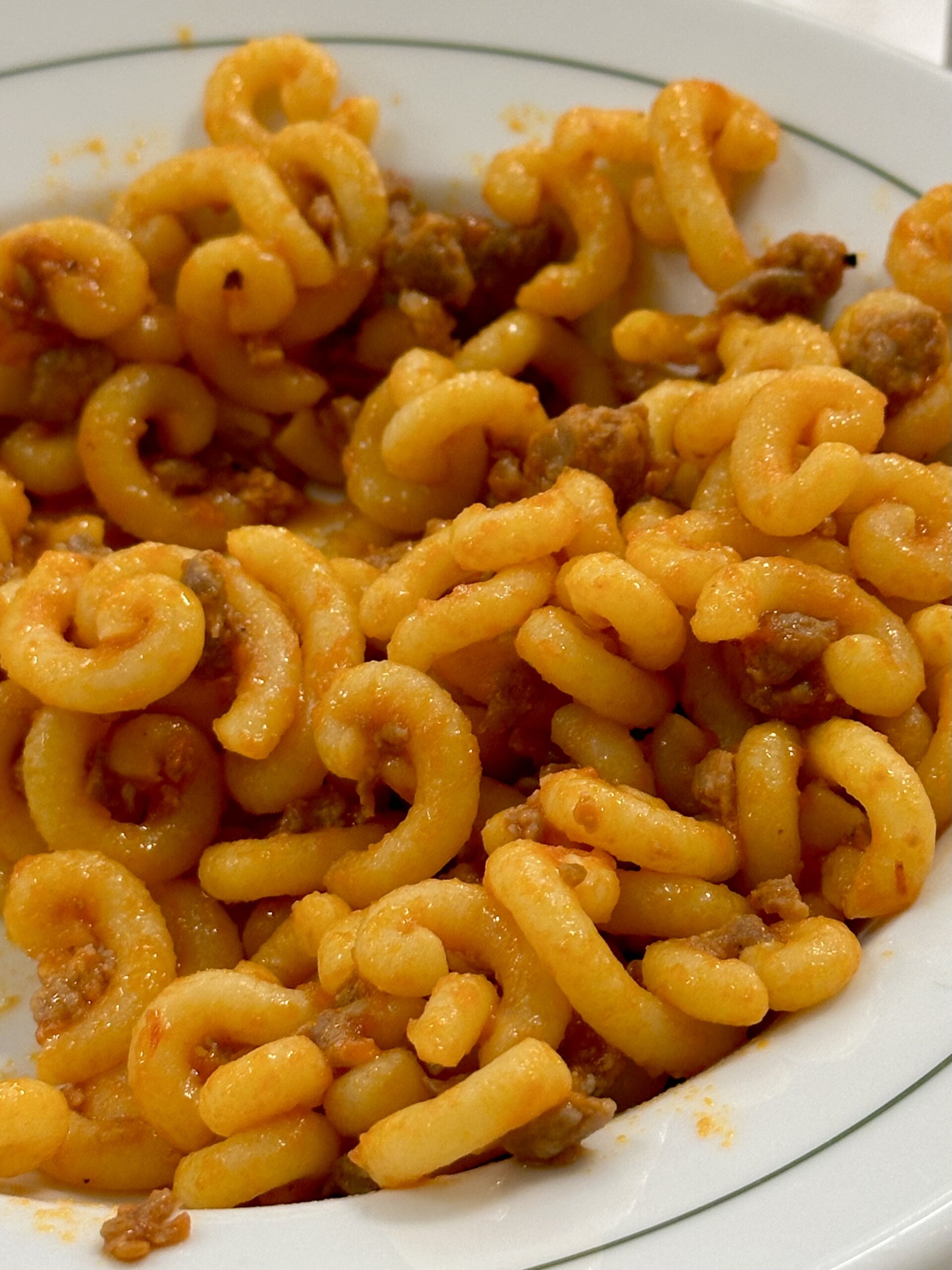
GRAMIGNA ALLA SALSICCIA
Named after curly weed tendrils, gramigna is one of Bologna’s oldest egg pastas, created alongside the late-16th-century brass press (torchio). Traditionally prepared during the winter pig slaughter (la maialatura), its hollow corkscrew shape is perfect for trapping a ragù of crumbled pork sausage, white wine, and a splash of milk or tomato. You’ll sometimes find the pasta “paglia e fieno” (“straw and hay”), with a mix of plain egg-yellow and spinach-green noodles—one of the most underrated Emilian comfort foods.
BALANZONI
Named after Dr. Balanzone, a pompous, masked carnival character with a big belly, these green, hat-shaped pastas are essentially tortellini on steroids. The bright-green pasta is stuffed with ricotta, spinach, nutmeg, and mortadella scraps—a luxurious way to recycle leftovers. Because the filling is so rich, they’re usually served simply tossed in butter and sage.
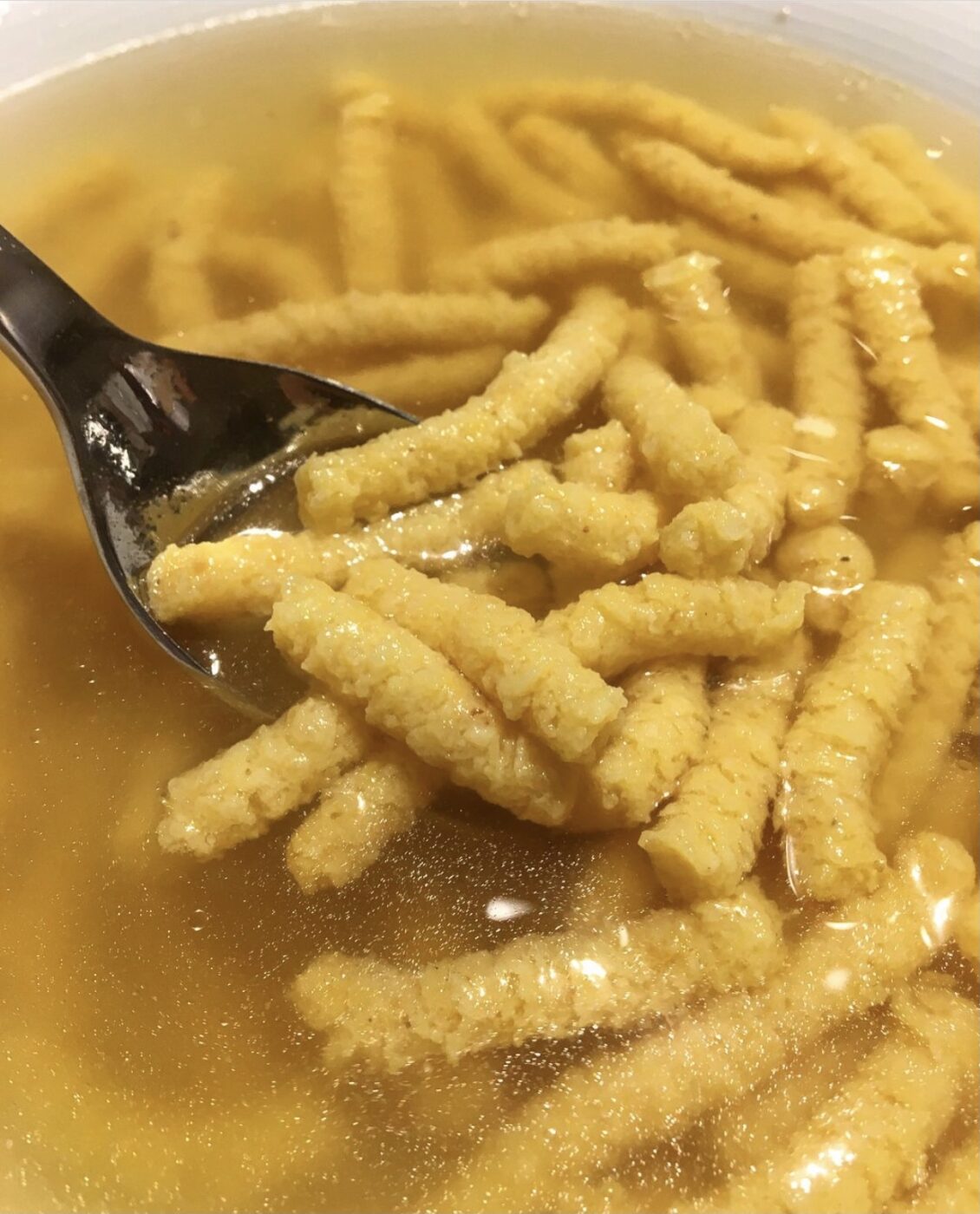
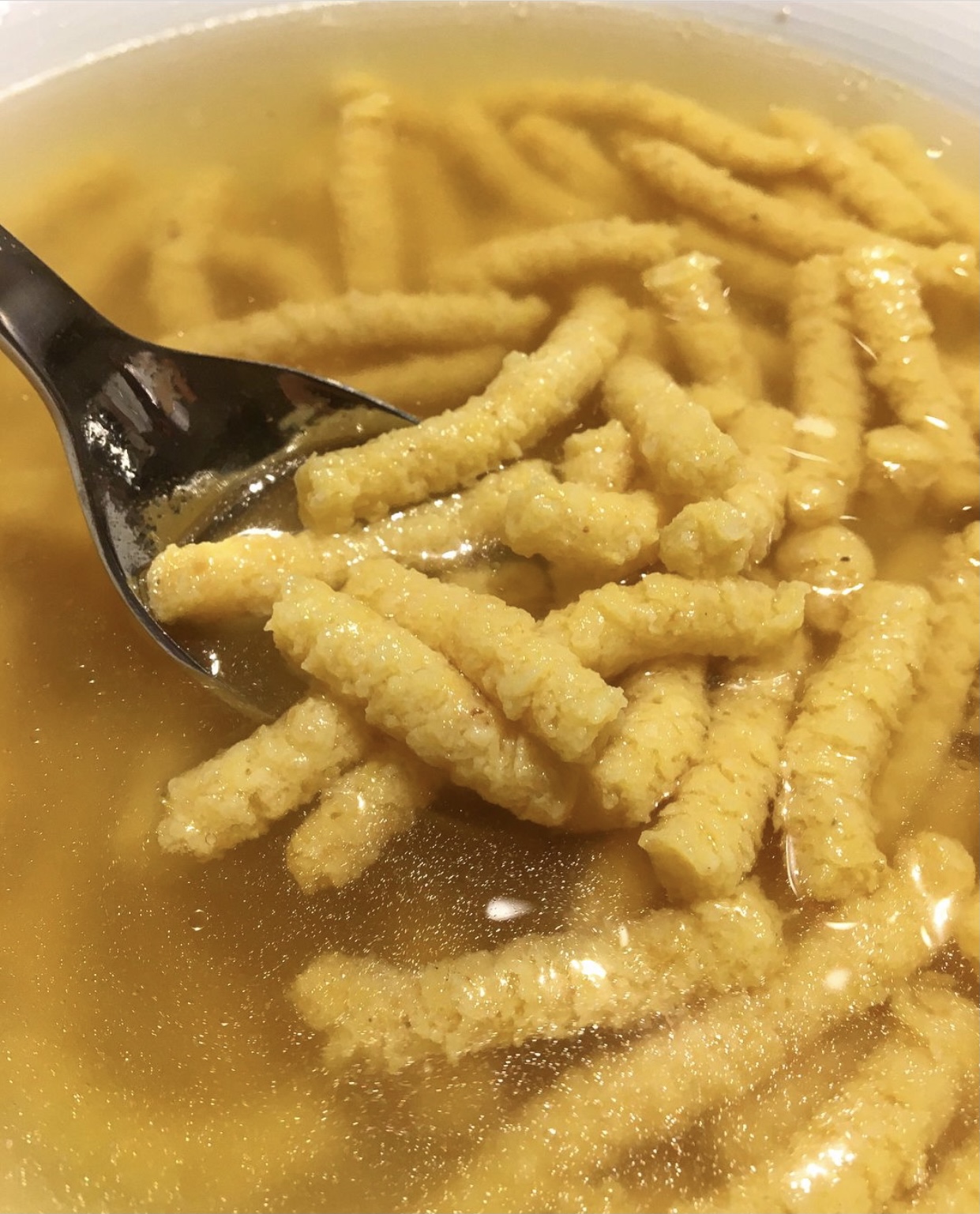
PASSATELLI IN BRODO
Turns out you don’t actually need flour to make pasta. A dough of stale breadcrumbs, eggs, Parmigiano Reggiano, lemon zest, and nutmeg is forced through a potato ricer directly into boiling broth to make short, rough “pasta”. They’re firm to the bite but dissolve on the tongue like a cheesy dumpling. You’ll most often find them served in broth.
FRIGGIONE
Though it seems like a simple side dish, friggione, friżån in Bolognese, is a labor of love that dates back to a recipe recorded in 1886. White onions are sliced thin and macerated in sugar and salt to release their water, then slow-cooked in lard and fresh tomatoes for up to four hours. The result is a sweet and savory jammy dip that you can eat with bollito, bread, or any secondo, really.
BOLLITO MISTO
In winter, old-school trattorias roll out steaming silver carts laden with bollito, a feast of boiled beef, veal, tongue, chicken, cotechino sausage, and other bits and bobs. The meat is simmered gently for hours to remain tender, but it’s naked without its traditional accompaniments: a sharp, green sauce of parsley and anchovies (salsa verde) and the spicy, fruit-mustard condiment called mostarda.
ZUCCHERINI MONTANARI
Hailing from the Apennine mountains above Bologna, these ring-shaped cookies are baked for weddings and grand celebrations, traditionally strung on threads like edible pearls and handed out to guests. Scented with aniseed or anise liqueur, the firm, dry, ring-shaped biscuits are submerged in a piping-hot, boiled sugar syrup until it crystallizes, which gives the cookies a snowy, porcelain-like glaze.
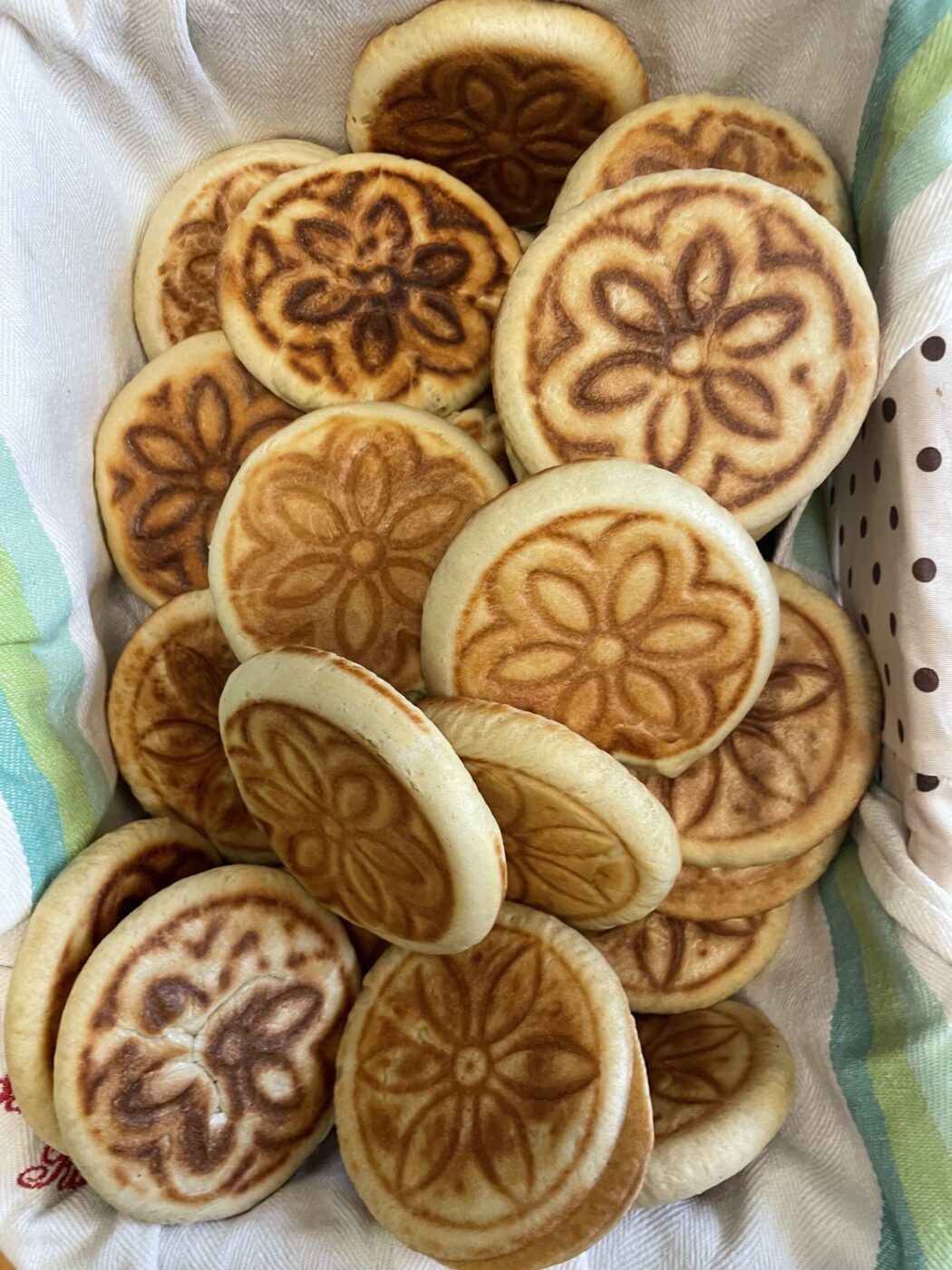
CRESCENTINE (TIGELLE)
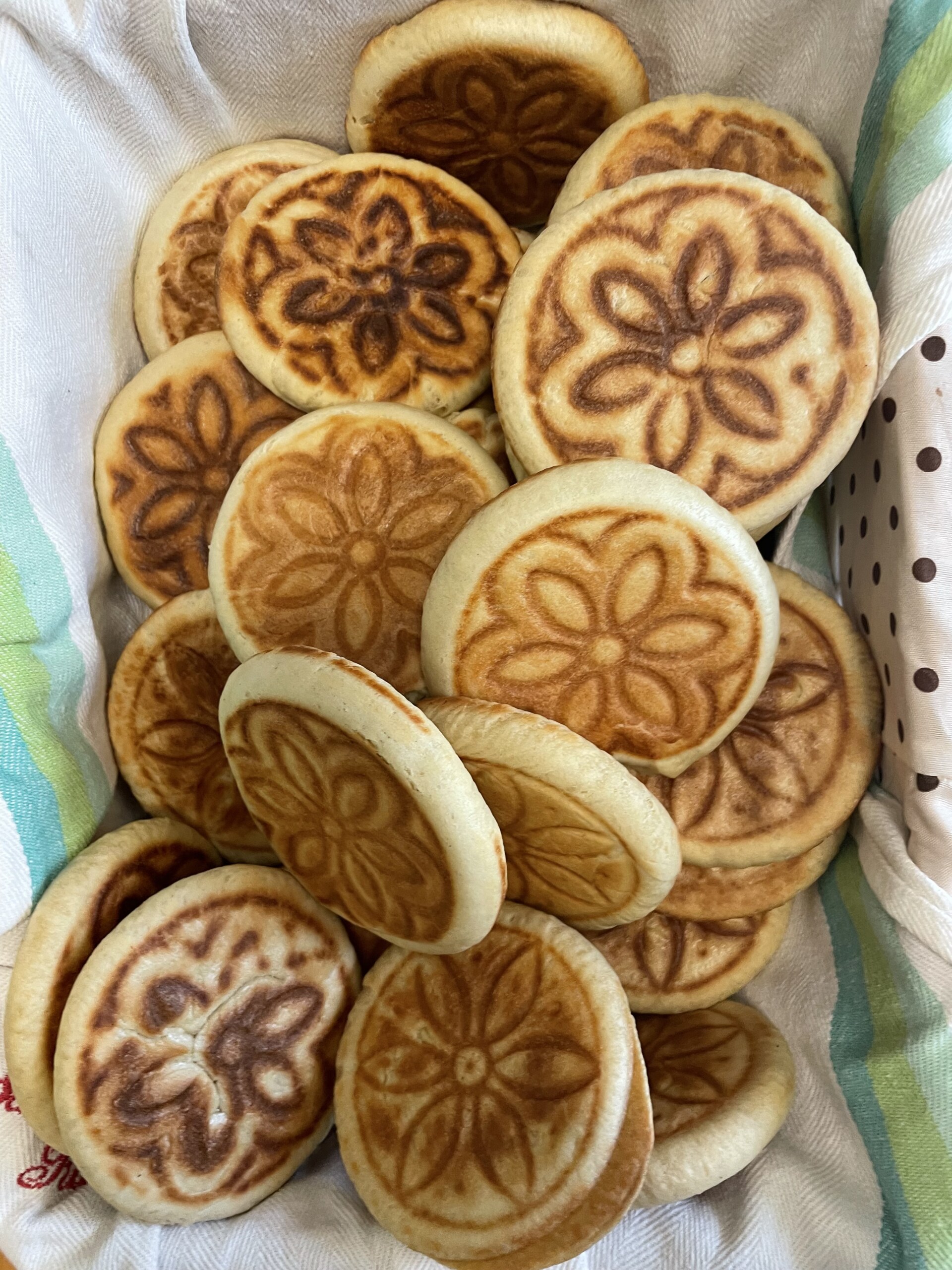
While they’re often ordered under the name tigelle, local purists will remind you that these small, round breads are properly called crescentine. (Tigelle technically refers only to the terracotta discs that crescentine were historically cooked between in the Apennine mountains.) Stamped with a signature geometric flower pattern, these arrive crisp on the outside and steaming within, ready to be sliced open hot and stuffed with salumi and cheese or, more traditionally, slathered with cunza, a spread of cured pork lard, minced rosemary, and garlic. Remarkably, this mountain comfort food has a thriving diaspora: following a 1904 wave of Emilian emigration, the flatbreads, linguistically adapted to “carcentas”, remain a staple in Capitán Pastene, a remote village in the Nahuelbuta mountains of southern Chile.
RAVIOLE BOLOGNESI
Not to be confused with ravioli the pasta, these half-moon shortcrust cookies are a breakfast staple in the city’s cafés. They’re filled with Mostarda Bolognese, a thick, tart, black jam made of quinces and plums, and traditionally brushed with Alchermes before baking to give them a festive pink blush—perfect for dunking in a morning cappuccino or a glass of red wine.
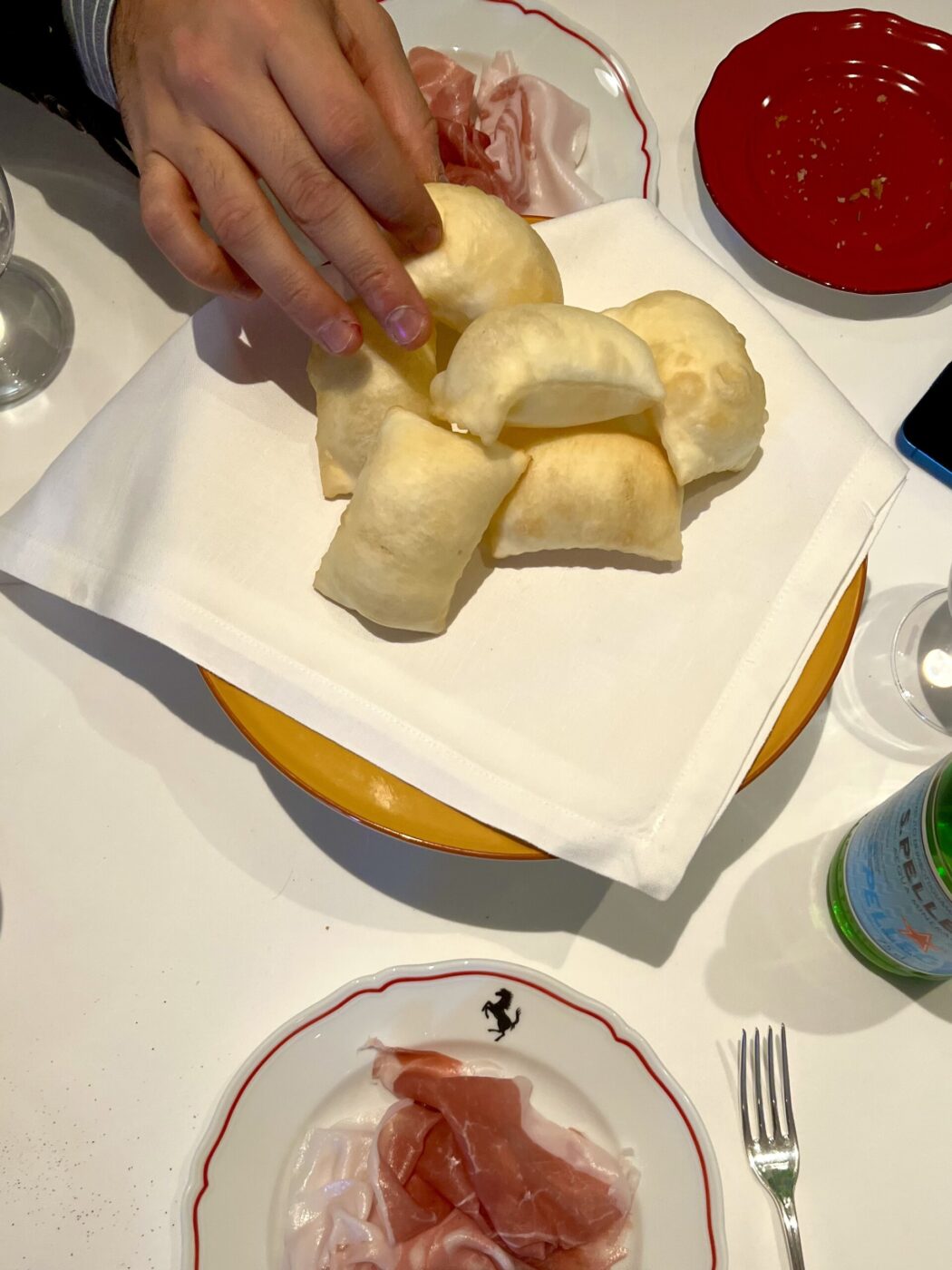
GNOCCO FRITTO
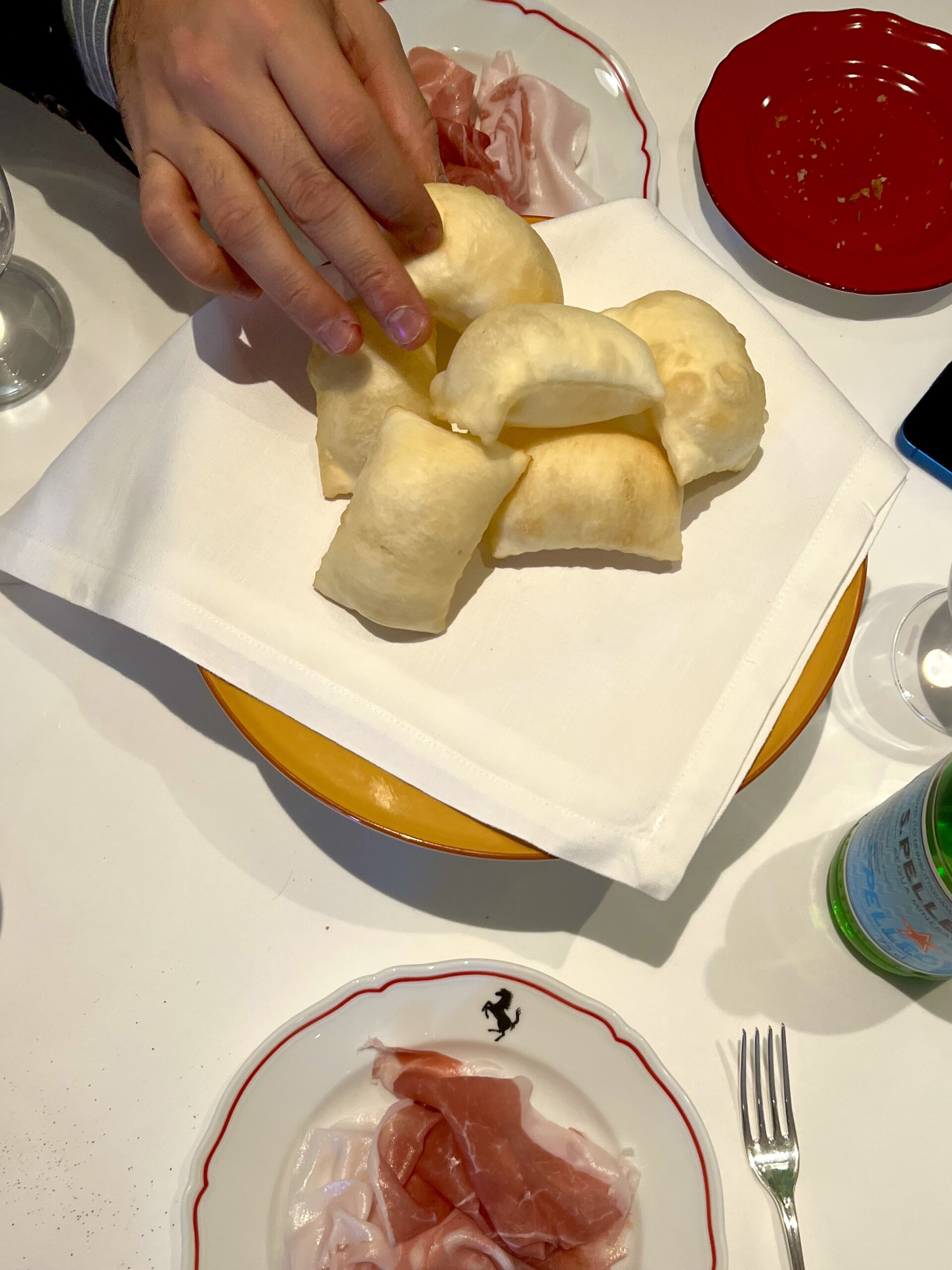
Imagine fried dough, but lighter and eaten for dinner. These pillows of yeasted dough are fried in lard until they puff up and turn golden, then served immediately in a paper-lined basket alongside meats and cheeses of your choice. The trick is to drape a slice of salumi over the hot gnocco instantly so the fat of the cured meat begins to melt.
ZUPPA INGLESE
Despite the name “English Soup,” this boozy trifle is the quintessential dessert of Bologna, potentially named as a nod to—or a mispronunciation of—English trifles. Sponge cake or ladyfingers are soaked in crimson Alchermes liqueur and sandwiched between alternating layers of vanilla and chocolate pastry cream for a spoon dessert that packs a punch.
SALAME ROSA
This is one for the niche salumi lovers. An ancient ancestor of mortadella that was nearly extinct until a recent revival by artisan butchers, salame rosa looks like a roast pork loin crossed with a salami. The pork shoulder is knife-cut rather than ground, keeping the muscle intact for a roast-like texture, and seasoned with a mix of garlic and pepper before being dry-roasted.
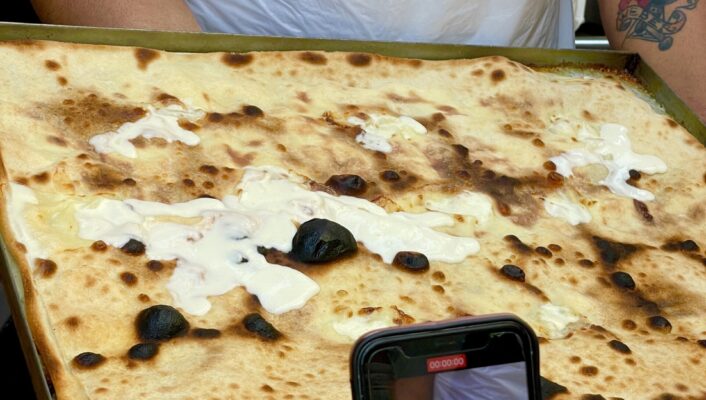
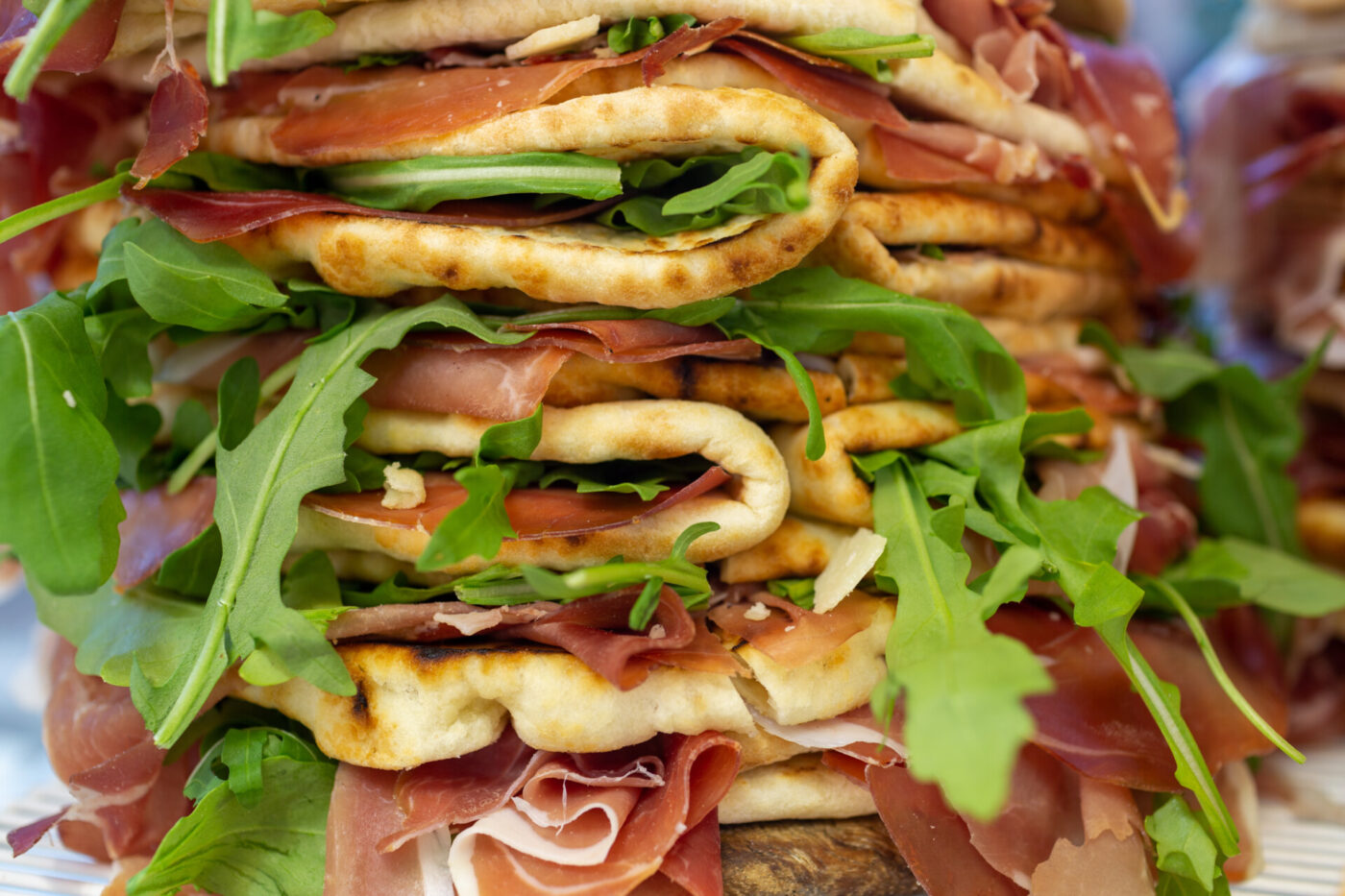
PIADINA
While technically a transplant from the neighboring Romagna coast, the piadina has been enthusiastically adopted by Bologna as the street food of choice. This rustic flatbread is made with flour, water, salt, and lard—which gives it its signature flake—and cooked on a hot terracotta or metal plate. Eat it hot with a filling of prosciutto di Parma, tangy squacquerone cheese, and arugula.
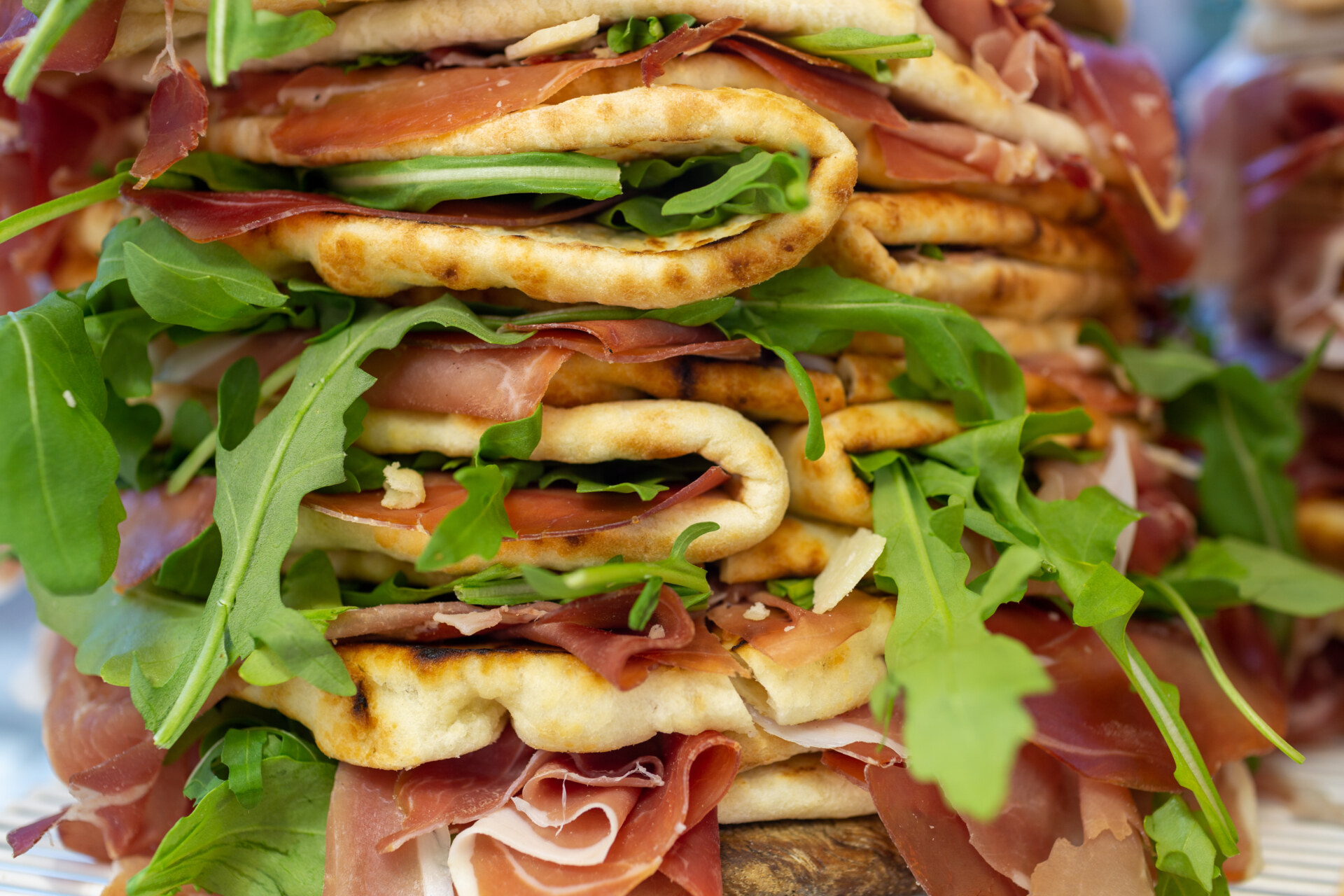
Piadina
CERTOSINO DI BOLOGNA
Also known as pan speziale, certosino di Bologna is the Christmas cake of the city. Originally made by medieval apothecaries (“speziali”) and later perfected by the Carthusian monks (“certosini”) of the local monastery, this dense, spiced loaf is bound with honey, dark chocolate, pine nuts, and almonds. You’ll recognize it by its glossy top, which is decorated like a stained-glass mosaic of whole candied cherries and citrus peels.
MOSTARDA
Unlike Lombardy’s fiery, syrup-drenched whole fruit, mostarda bolognese is a dark, jam-like conserve of slow-simmered quince, plums, pears, and citrus—originally, a way to preserve the late-autumn harvest. Rather than an aggressive mustard burn, ground mustard seeds give it a subtle piquancy. This unique sweet-sour-spicy balance makes it one of the most versatile items in the Bolognese pantry, equally at home cutting through the fat of bollito misto as it is inside local pastries like pinza and raviole. Try it with Parmigiano, too.