In Italy, there’s always a new pastry marking the next festive season. I ate so many slices of panettone over Christmas that by January, I could barely glance at a shop window without feeling a certain sugar-induced weariness. But my Veneto-born husband, Stefano, reminded me that Carnevale was coming—and in this country, there’s no escaping the sweets. Soon, frittelle were appearing everywhere, those ubiquitous fried dough balls covered in powdered sugar, some plain and others bursting with cream.
But there’s a Venetian pastry even more exclusive and special than fritelle: mammalucchi. This rarity appears only during Carnevale and, more importantly, only at two pasticcerias in all of Venice. On a crisp January morning in Castello, we stopped at Pasticceria Bar Targa. From the outside, it looks almost touristy, with kitschy limoncello bottles sharing window space with the day’s bakes. Really, it’s just an old-school Venetian haunt stuck in the 1980s—which is exactly why I love it.
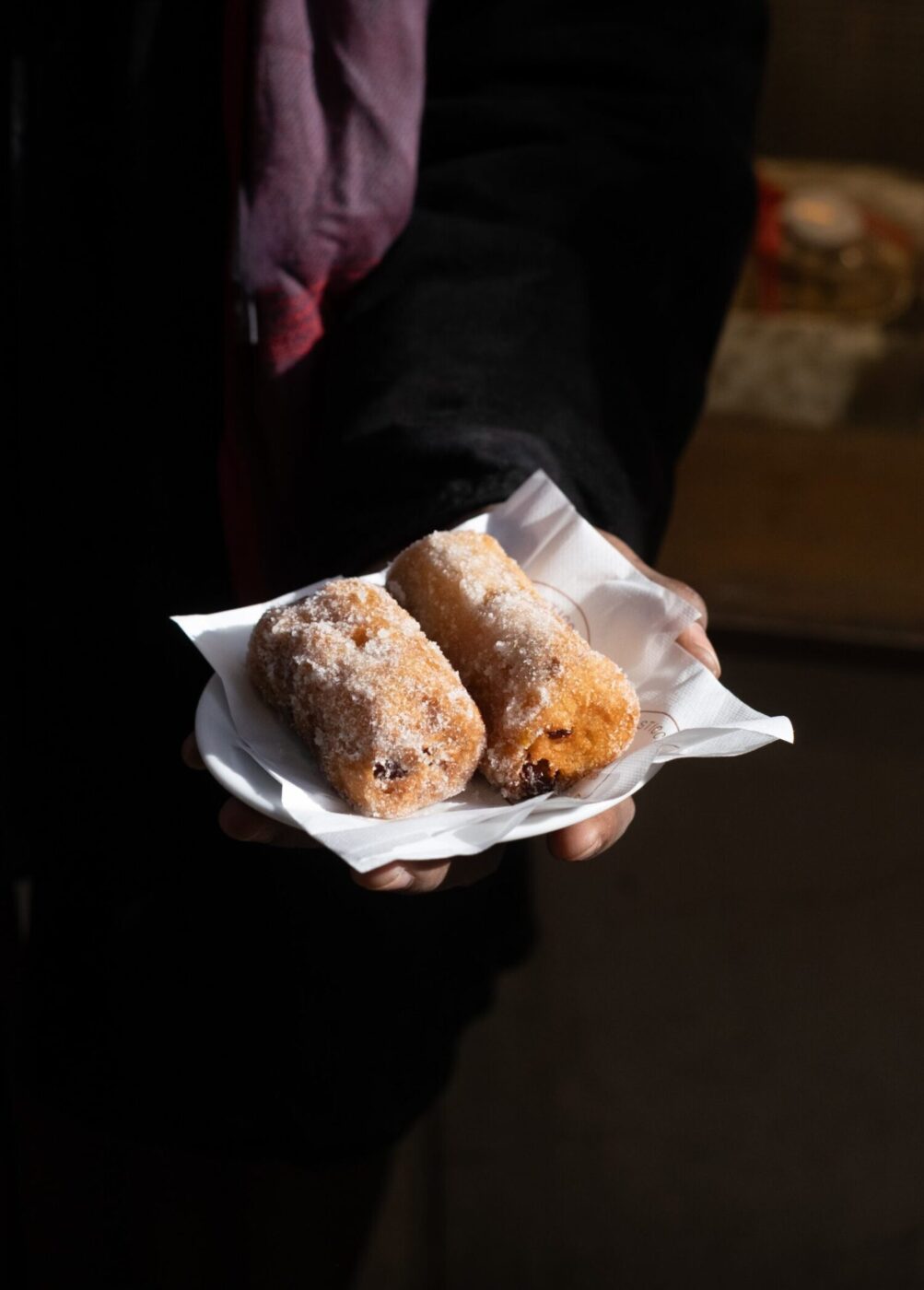
The golden cylinder was longer than a cannoli, creamy, and rolled in sugar. The custard interior, both sweet and savory, was punctuated by bursts of candied orange and raisins. It tasted like the inside of a perfect doughnut crossed with zabaione-soaked cake, but denser and more substantial. We drank espresso and finished the pastry while watching owner Marco Rizzetto stack freshly fried mammalucchi on gold laminated paper trays with locals’ names who’d called in orders for pickup.
Mammalucco derives from the Arabic mamālīk (warrior-slaves who rose to power in medieval Egypt). In Venetian dialect, it evolved to mean “fool” or someone backward in understanding. Every source online repeats the same origin story: master pastry chef Sergio Lotto accidentally botched a recipe in the 1970s, then salvaged the ruined dough by mixing in custard and candied orange, frying it as a creative recovery. But when journalist Eugenio Pendolini tracked down Lotto for La Nuova Venezia in 2022, the then-87-year-old chef countered that it was not a mistake at all. Lotto had been deliberately trying to recreate and refine a recipe from the 1300s, experimenting without leavening until he got it right. The name mammalucco refers to the dough itself: indrio, meaning backward, because it doesn’t rise like traditional yeasted pastries.
Lotto’s career traced a path through many of Venice’s elite kitchens. After his Murano workshop was destroyed in the devastating 1966 flood, he worked at Pasticceria Bonifacio, Franceschini, Garbisa, and eventually Targa. It was during his time at Bonifacio in the 1970s that mammalucchi, in their current form, first appeared.
Lotto told La Nuova Venezia he started making them at Bonifacio in the ’70s, then brought the recipe to Targa. But he only gave them the base: “Poi aggiungevo il mio tocco, che non ho rivelato a nessuno.” (“Then I added my own touch, which I didn’t reveal to anyone.”)
At Pasticceria Bonifacio, owner Carlotta Bortoluzzi tells me other chefs have tried copying them, but the recipe stays locked up. At €2 each, Bonifacio’s version is the more affordable option, with a more delicate flavor. The pasticceria is also a touch more modern with a well-kept display case.
At Targa, Rizzetto tells me his family has been making them since the ’90s, nearly a thousand daily during Carnevale season. They have Lotto’s handwritten recipe (the base version, at least). At €2.50 each, they’re a touch pricier but richer, with more raisins and candied oranges giving more vibrancy to each bite. Rizzetto made a practical decision to remove pine nuts from Lotto’s original recipe to keep the inside more consistent (Bonifacio also omits pine nuts).
Unlike frittelle, the process is fussy—dough and custard made separately, cooked separately, somehow convinced to become one thing before the fryer. Most shops gave up on trying to copy it decades ago. The dough contains no yeast or leavening. Targa incorporates ricotta (perhaps the reason their version is creamier), whereas Bonifacio excludes it, citing the original recipe’s purity.
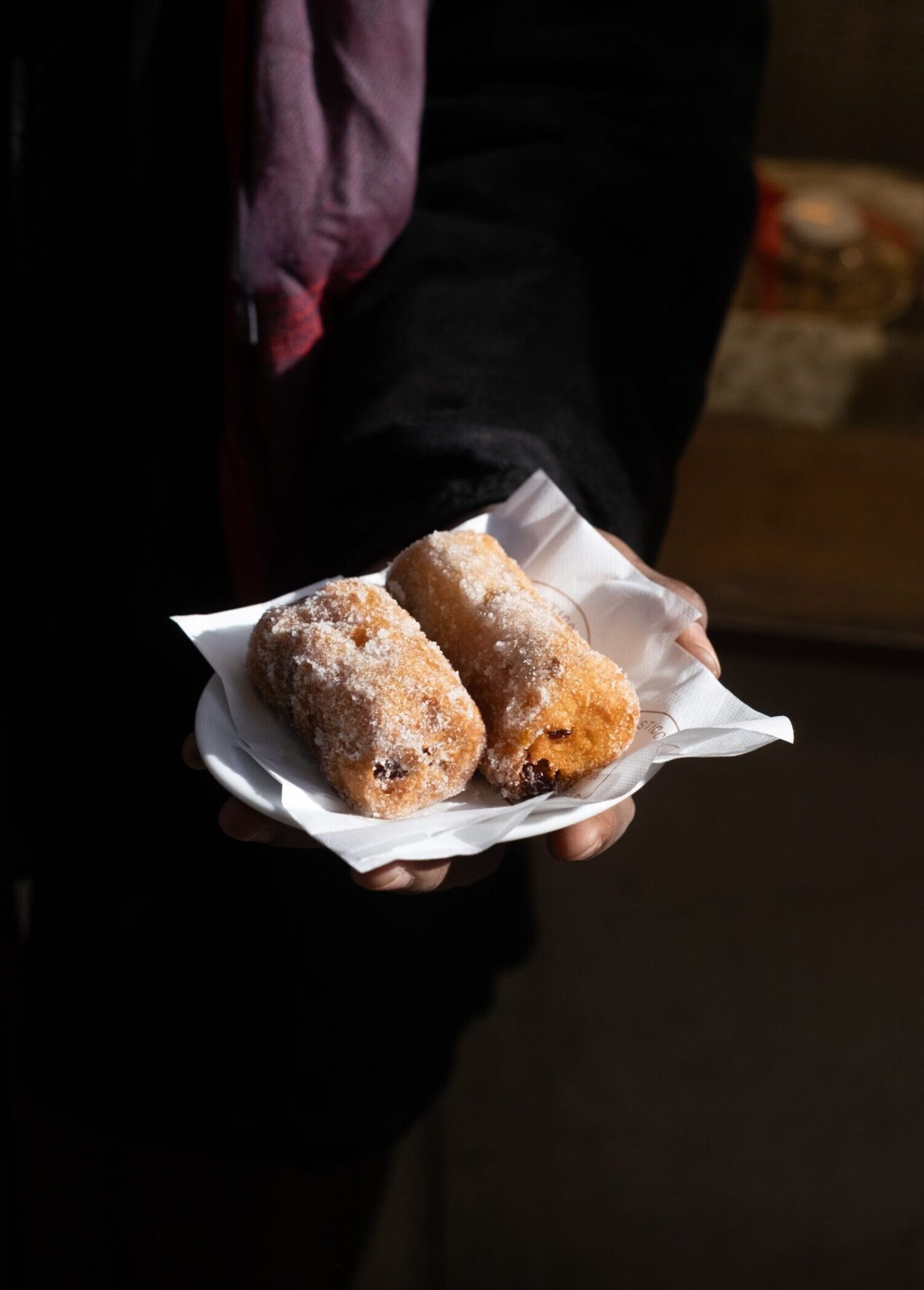
Mammalucchi
Rizzetto explains that there was a post-pandemic surge in demand, driven by nearby Italians who flocked to a less-crowded Venice once lockdowns were lifted. “Now tourists come year-round asking for them,” Rizzetto said. “We have to explain they’re only available during Carnevale.”
I stood outside Targa, dusted in sugar from the mammalucchi, watching tourists walk past without a clue. For 50 years, the Carnevale pastry remained a secret indulgence for Venetians, yet almost invisible to the millions of visitors passing through. Venice, after all, is famous for its layers, for showing tourists one face while keeping another hidden just for locals, even in plain sight.
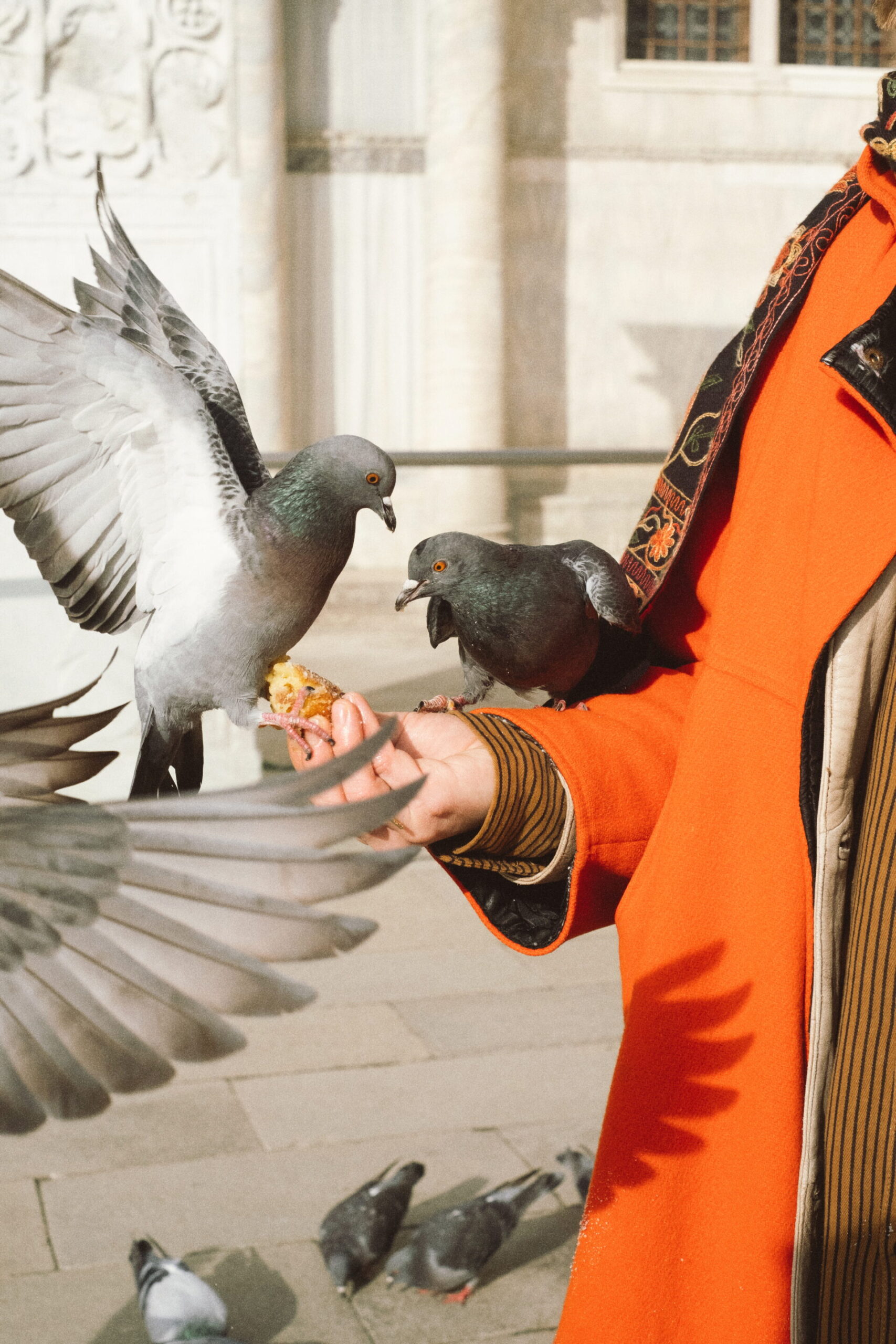
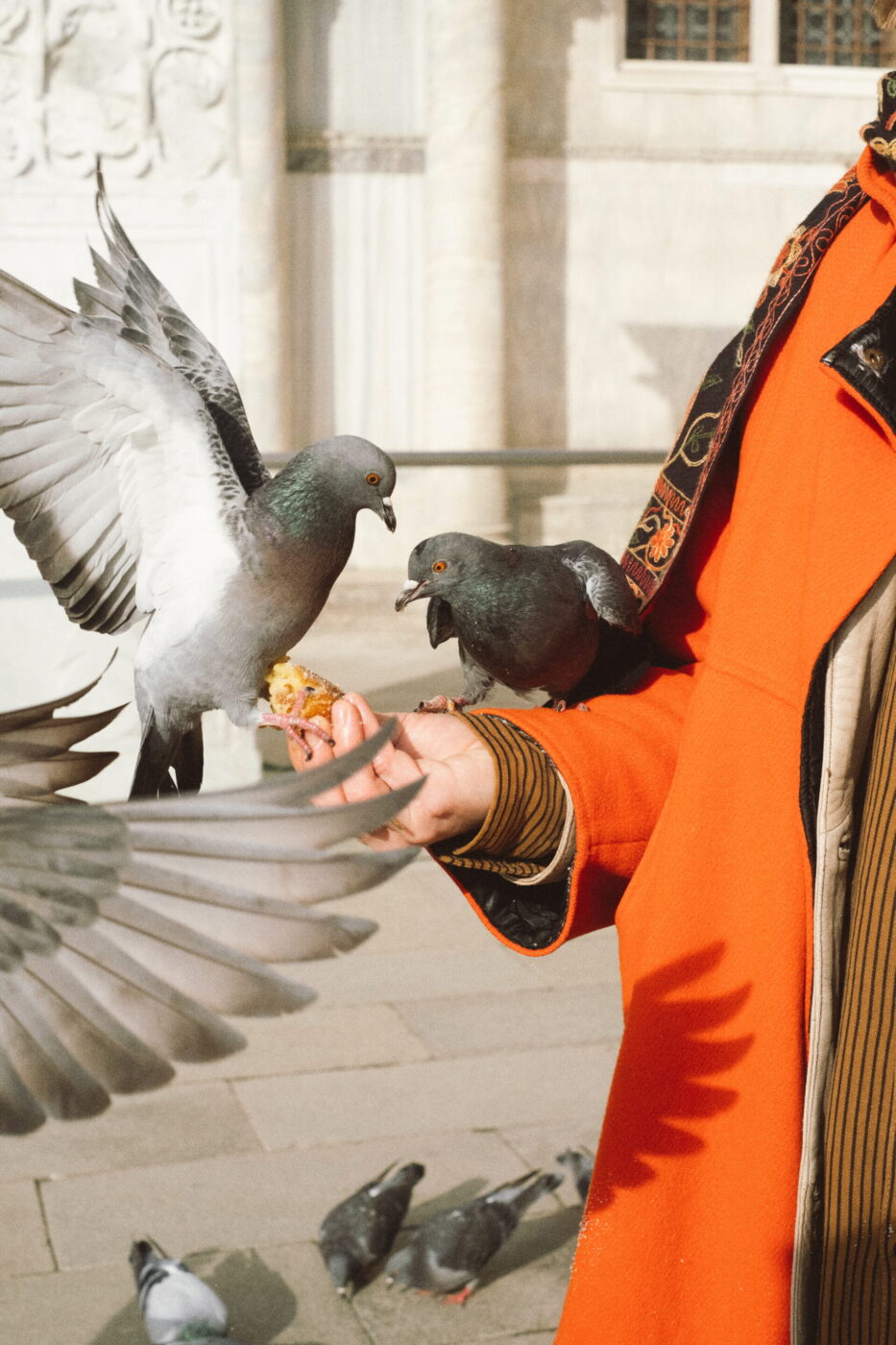
During Carnevale (through February 17th, 2026), mammalucchi are served daily starting at 11 AM until sell out (Targa is closed Wednesdays; Bonifacio is closed Thursdays). And if you do manage to snag one for outdoor consumption, beware of its other biggest fans: pigeons and seagulls.