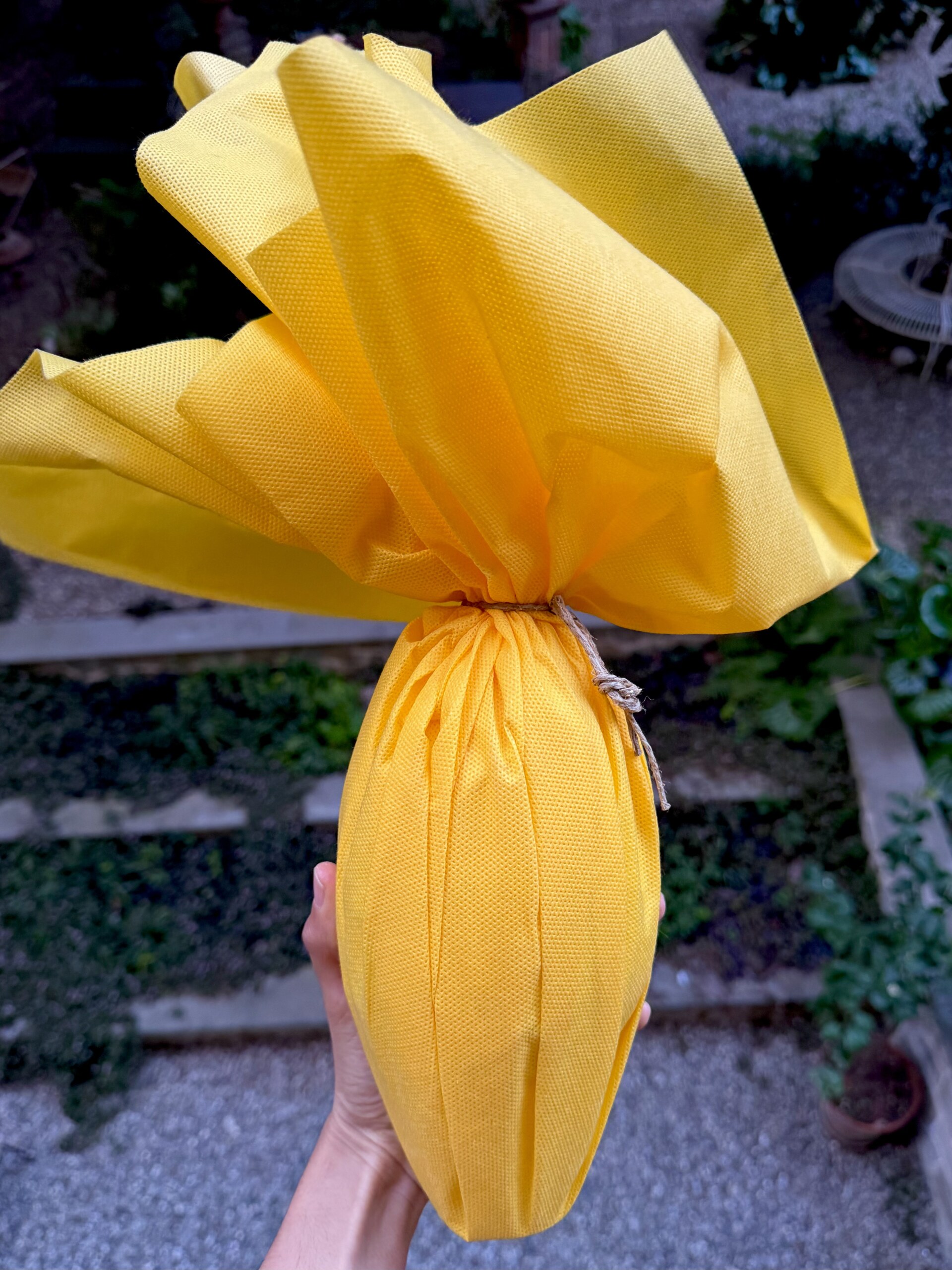
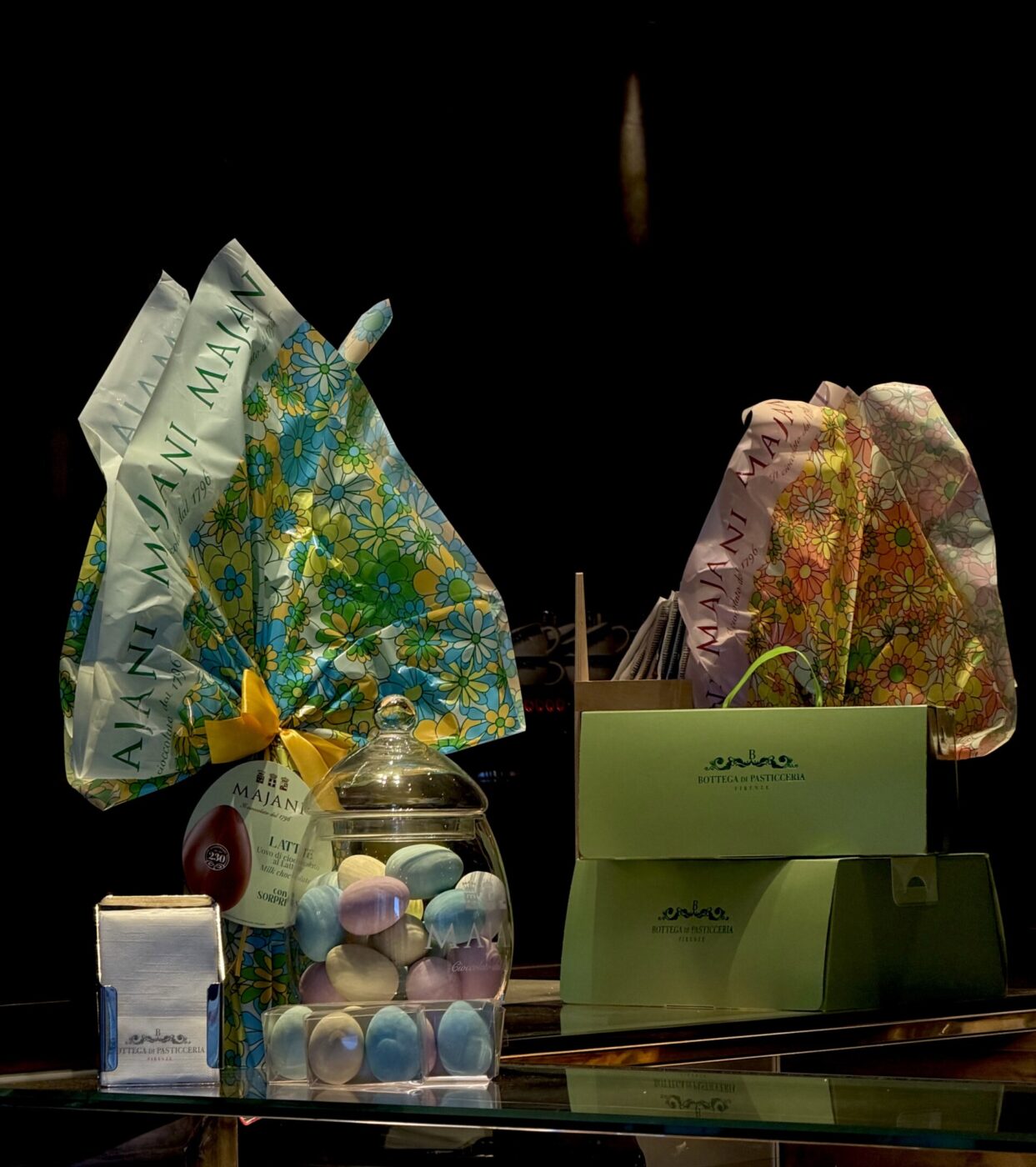
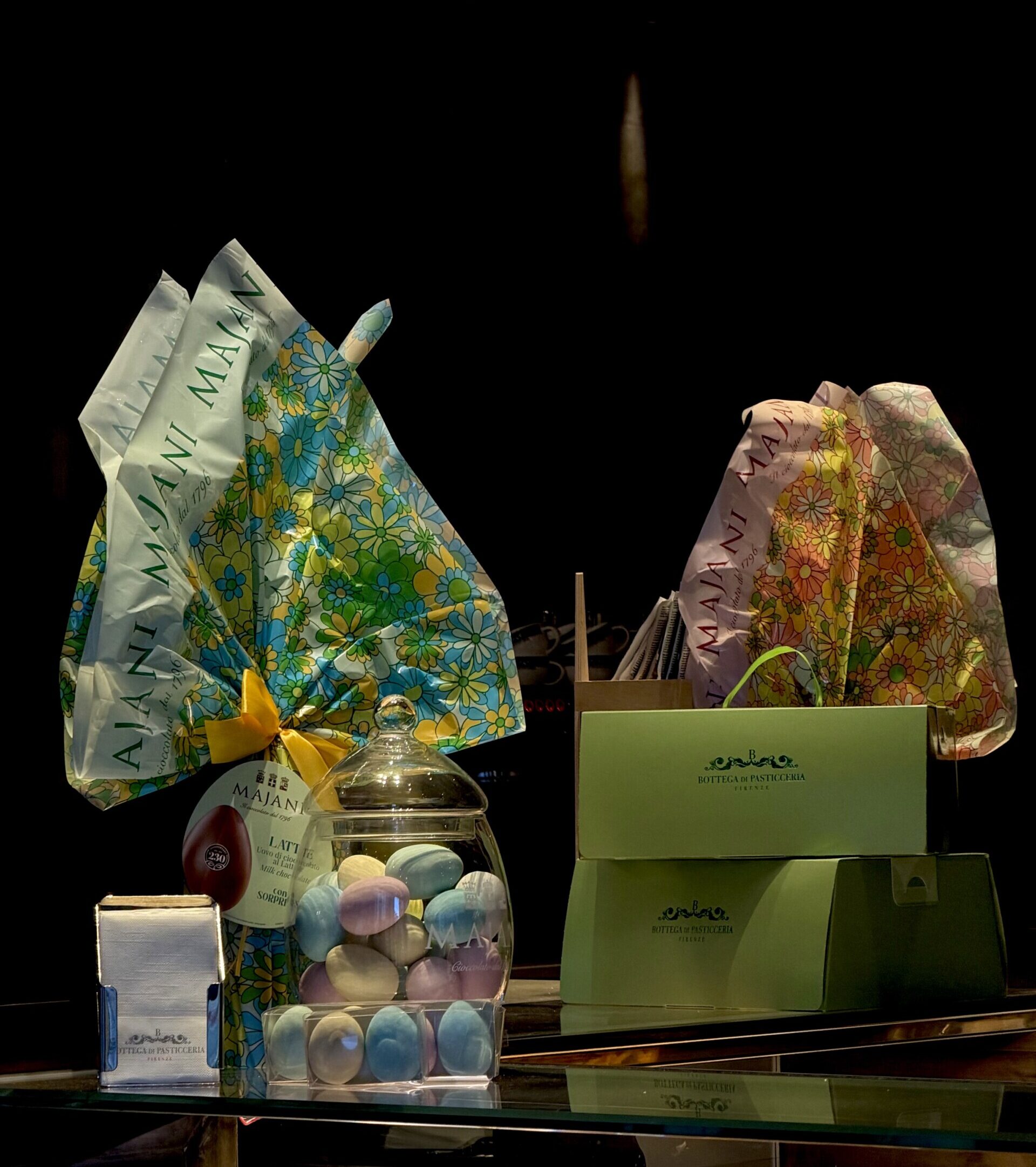
Italy is mad about Easter eggs. A trip to an Italian supermarket in the weeks leading up to Settimana Santa is enough to confirm that fact: uova di cioccolato reach monstrous proportions, bigger than I have seen in any other country, trussed up in shiny wrapping and jostling for attention along the shelves. The Italian chocolate Easter egg is a victim of evolutionary gigantism, the heftiest amongst them inevitably selected by the sticky hands of enthralled bimbi. Inside these oversized shells is a little treasure, la sorpresa, most often a themed toy that ranges from cartoon characters to miniature puzzles. Given the scale of the country’s chocolate-crazed Easter preparations, it is of little surprise that the commercialization of the Easter egg began here in Italy, in the capital of Piedmont, Turin.
Turin’s love affair with chocolate goes back to the 1600s, when the House of Savoy introduced cacao to the city and, in doing so, birthed generations of chocolate-makers, whose shops still line the arcades of the cobbled streets. In 1725, one such shop existed on Via Roma. It was modest in size and owned by a woman, a widow of the surname Giambone.
La vedova Giambone had an idea. She filled the empty shell of a chicken’s egg with molten chocolate and left it to cool until hardened into a perfect ovoid. Some accounts say she first pressed these chocolate eggs into the cupped palms of her grandchildren; others that she displayed them in the shop window beside a live hen. Either way, the newfangled Easter eggs took off, of particular interest to the chocolate-loving Turinese.
Chocolate Easter eggs had been experimented with before. The Sun King, Louis XIV, had ordered his court confectioner to replicate ostrich eggs with chocolate, an attempt to stun his frothy-clothed guests. Yet nobody before Giambone had thought to take them beyond the realm of an absurd courtly fancy, nor had they ever been sold.
It was again in Turin, in the 1920s, that the pastry chefs of Casa Sartorio patented a revolutionary new system for modeling the hollow Easter egg. Hinged molds were rotated inside a machine, so the molten chocolate spread evenly and formed two neat, curved halves, allowing la sorpresa (back then, sugared figurines or almonds) to be enclosed inside.
The egg, symbol of birth, persists as an Easter culinary staple; for Catholics, it is closely related to the memory of Christ’s resurrection. Yet the reverence of the egg can be found in ancient pagan traditions, when the promise of new life in spring’s longer days and milder climates was cause for festivity. In Basso Piemonte, just southeast of Turin, the sacred and profane came together in the “Cantè j’euv” ritual (dialect for cantare le uova, or literally, singing the eggs), a Christianized peasant practice with roots in Celtic rites. After dusk fell on each day of Holy Week, a group of young men, led by a man dressed as a friar and bearing a cavagnin (basket), would travel from farm to farm, singing in exchange for eggs.
Uma partì da nostra cà, ca i-era n’prima seira, per venive a salutè, devè la bun-ha seira, the song would start, the men’s voices thrumming through the silence cloaking the sleeping farmstead. We left our homes as evening was just falling, to come and say hello and wish you good evening.
Echoes of antiquity permeate here; hints of pagan beliefs that the earth needed to be roused from its winter slumber for spring to begin. Under the first full moon of the spring equinox, the inhabitants now rising from their beds, the door creaking open, the song would continue:
In questa casa, gentil casa, ui sta drabrava gente:
l’han senti’ cante` e sune` e l’han visca` lo chiaro.
In questa casa ui sta dra gent tantcumplimentosa:
l’ha senti` cante` e sune` e a se l’e` nascosa.
E dem di ovi, dem di ovi dir voster galeini
chi m’on dic i vostr auzei chi n’ei dir cassi peini!
(In this house, a welcoming house, there are good people;
they heard the singing and playing and turned on the light.
In this house there are very hospitable people;
they heard the singing and playing and didn’t hide away.
Give me the eggs, give me the eggs from your hens,
for your neighbors told me you’ve got crates full of them.)
The eggs were, more often than not, duly given. Then the final, melancholic refrain:
E adess chi m’ei dac j ov nui a v’ringrasioma
se in’autr ani a soma al mond nuiatri a riturnoma.
(And now that you’ve given us the eggs, we thank you;
if we’re still alive next year, we’ll be back.)
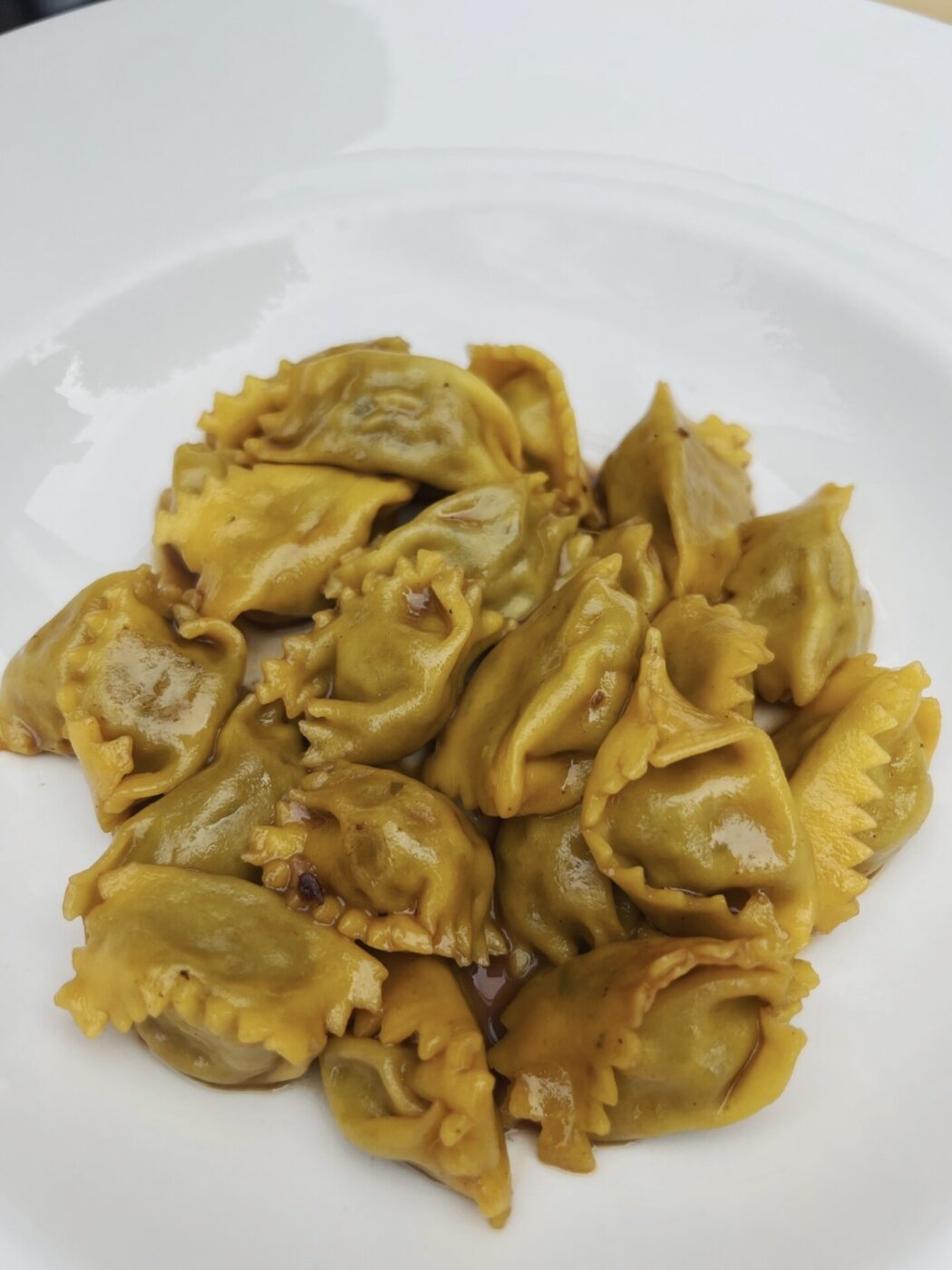
They were used by the women to make omelettes on Pasquetta (Easter Monday) and eaten out in the meadows. On the Piedmontese Easter table today, traditions continue. My family there hastens to tell me that many of the culinary staples belong to the cucina povera. They list the dishes with relish: tomini al verde, a traditional antipasto of soft cow’s cheese topped with a tangy bagnet verd, a sauce of parsley, anchovies, vinegar, garlic, and breadcrumbs. A typical Easter primo is agnolotti del plin, Piedmont’s famous “pinched” pasta, in a sauce of butter and sage. Unlike almost all other Italian regions, where the secondo promises lamb, brasato al Barolo is a popular Easter dish in Piedmont, a stew of braised beef cooked in Barolo, the famous Piedmontese wine, until the meat is perfumed and tender. It is served with mashed potato or polenta, soft golden clouds stained with the dark red of the sauce.
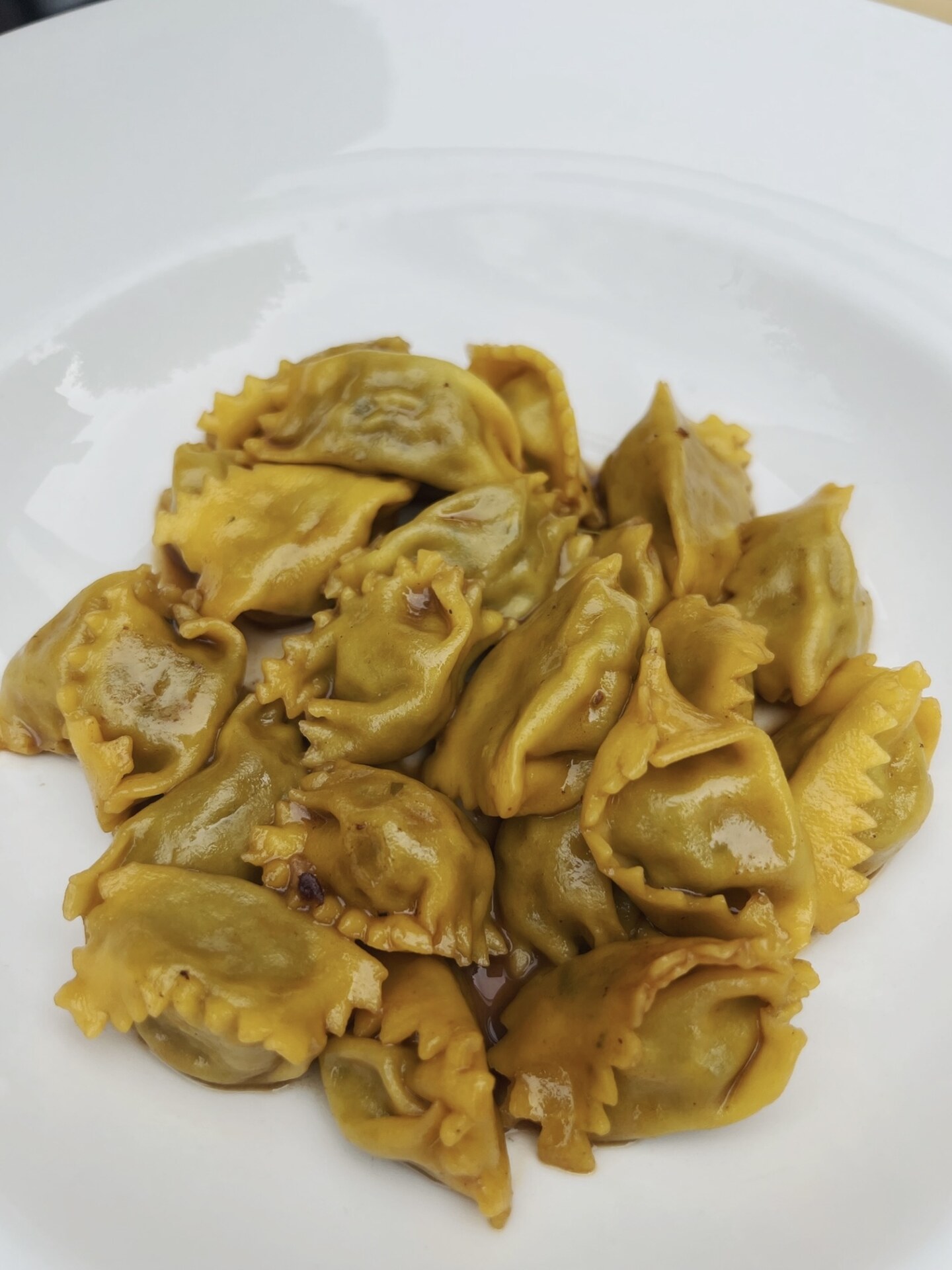
Agnolotti del Plin
When it comes to dolce, salame del papa reigns, a treat from the Piedmontese city of Alessandria. It resembles the salami of its namesake, but is made instead with chocolate, hazelnuts, and a shot of rum. Some legends state that it was eaten during Lent as a replacement for the meat that was prohibited during fasting; others that it was given the Pope’s blessing.
Like elsewhere in Italy, lunch on Pasquetta is typically a meal of grilled meat. This is far from a traditional Piedmontese culinary tradition, but is certainly a contemporary Italian one, almost always involving a picnic with family or friends, as per the famous saying: Natale con I tuoi, Pasqua con chi vuoi. Spend Christmas with your family, and Easter with whomever you like. Not so far removed, then, from the Piedmontese Pasquetta of days yonder, when soft golden omelettes, sung for under the moonlight, were eaten in the wet grass of a meadow. The chatter of men, women, children, the sounds of community. Perhaps, when money began to come more easily, they even had a little chocolate: a sign of the Easters di lusso that were to come.