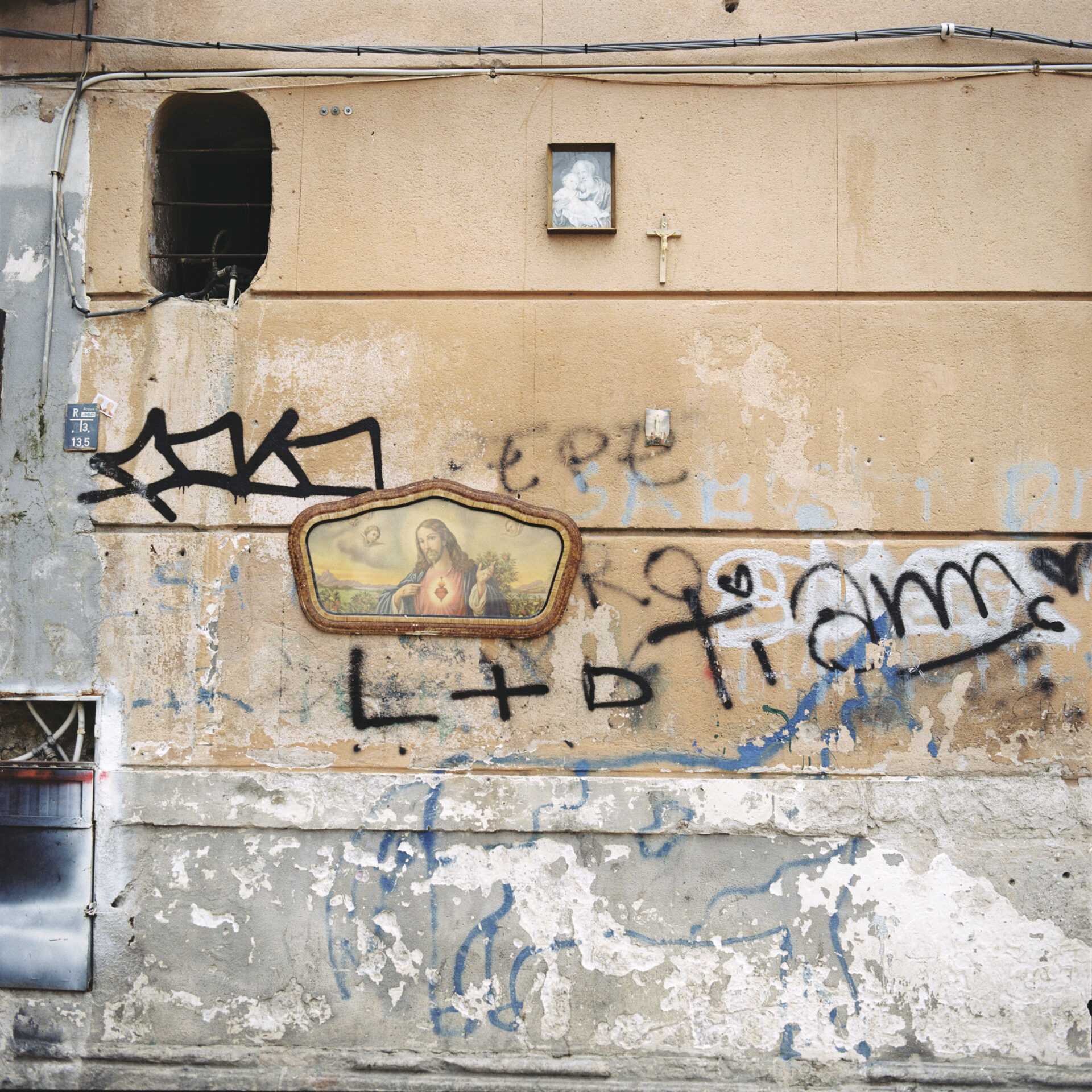
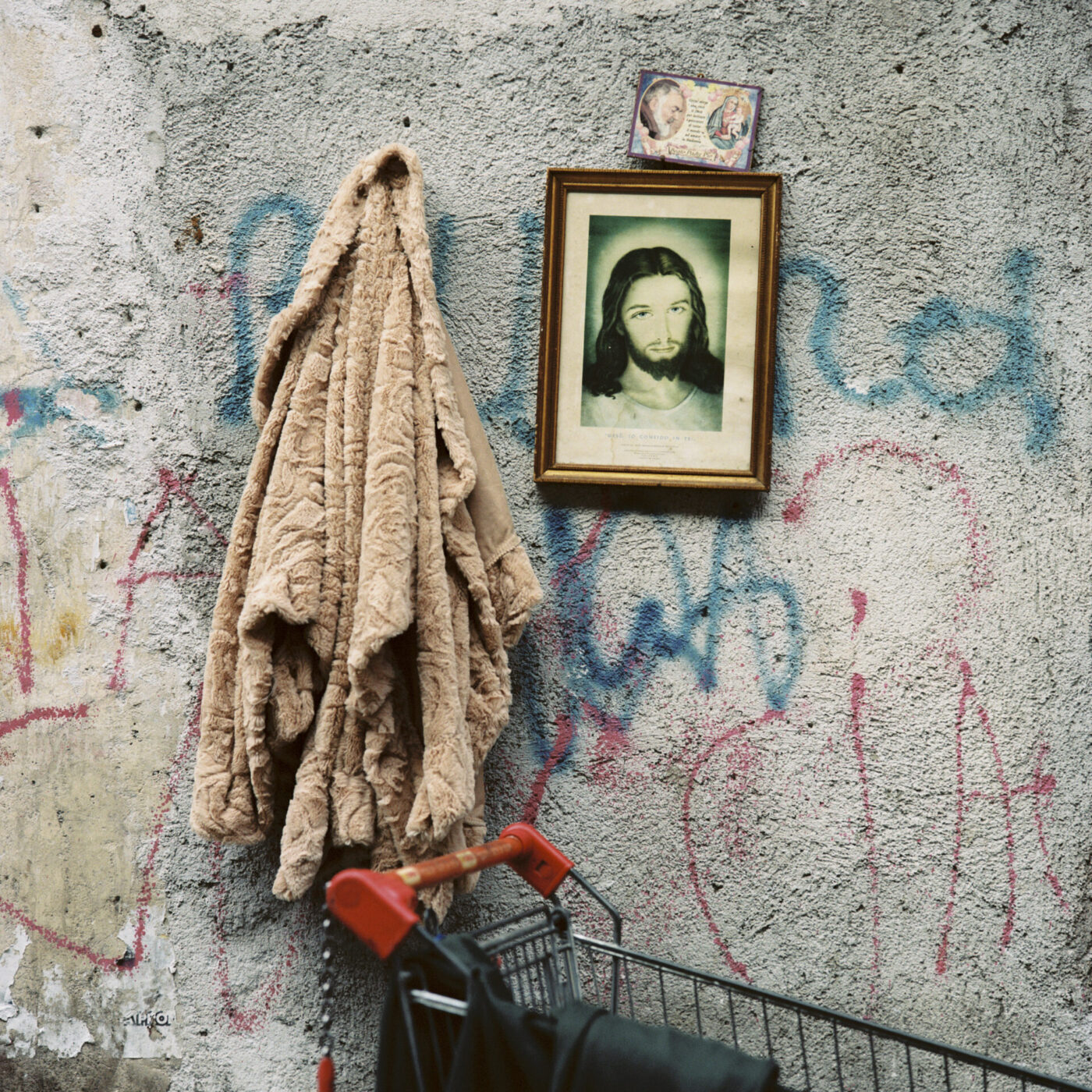
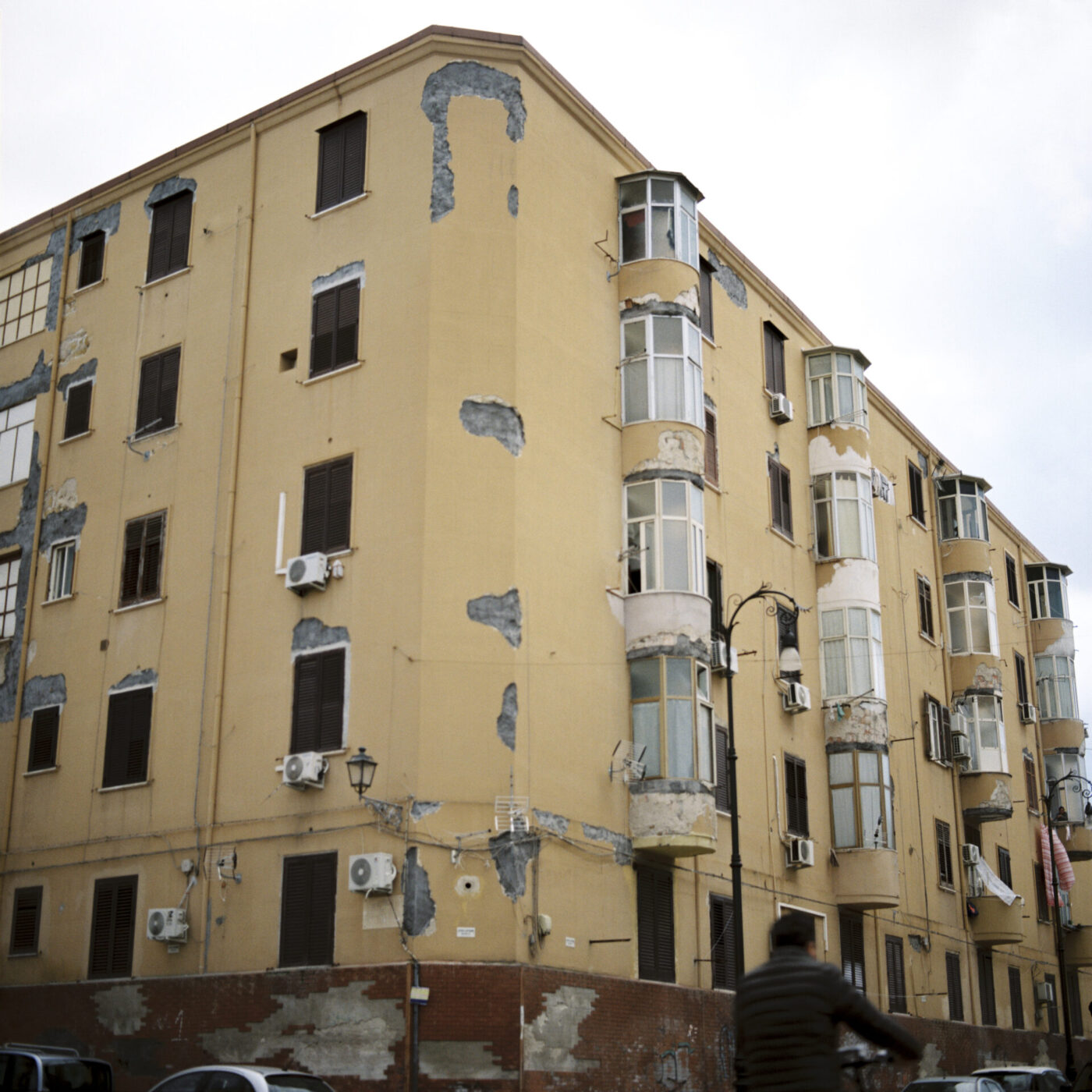
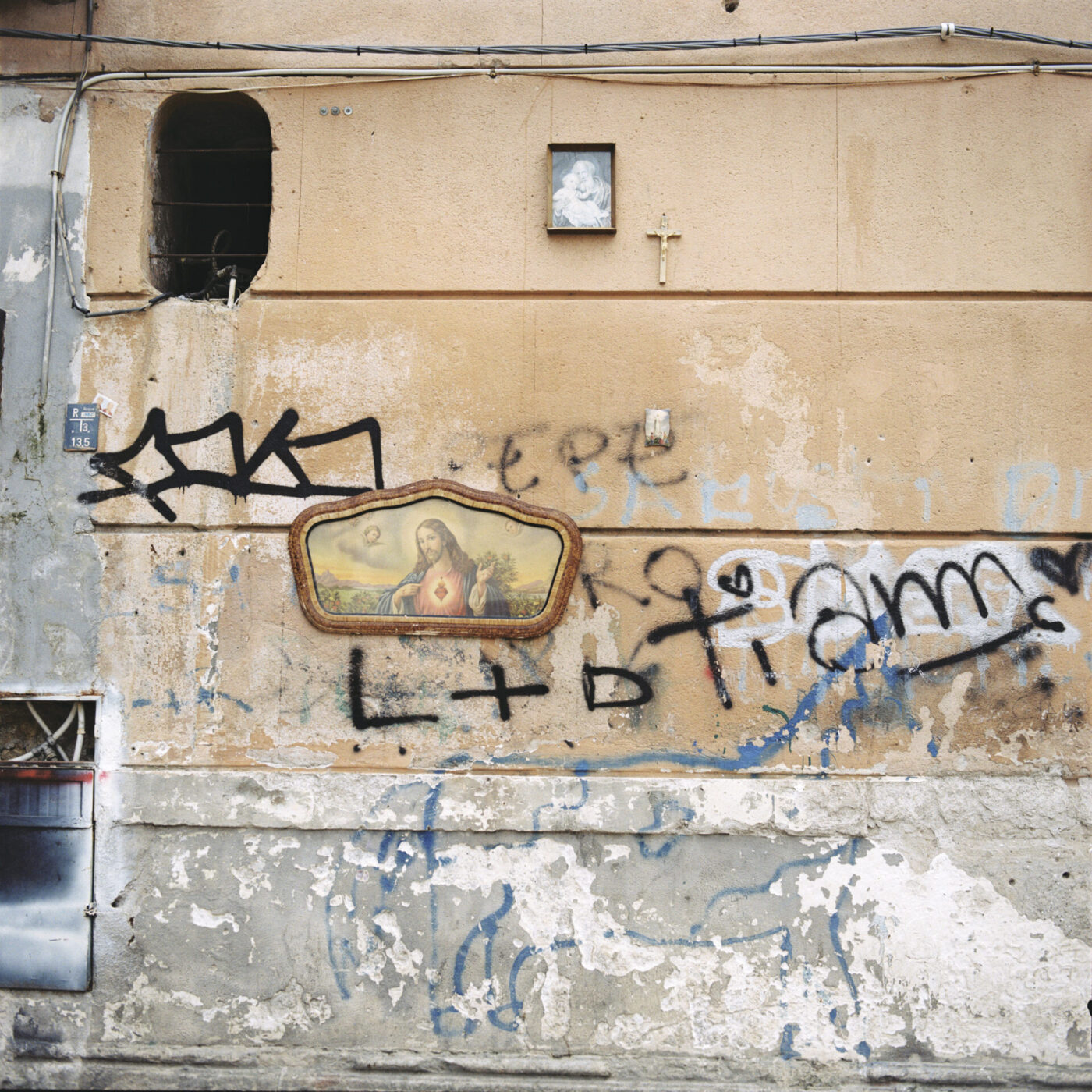
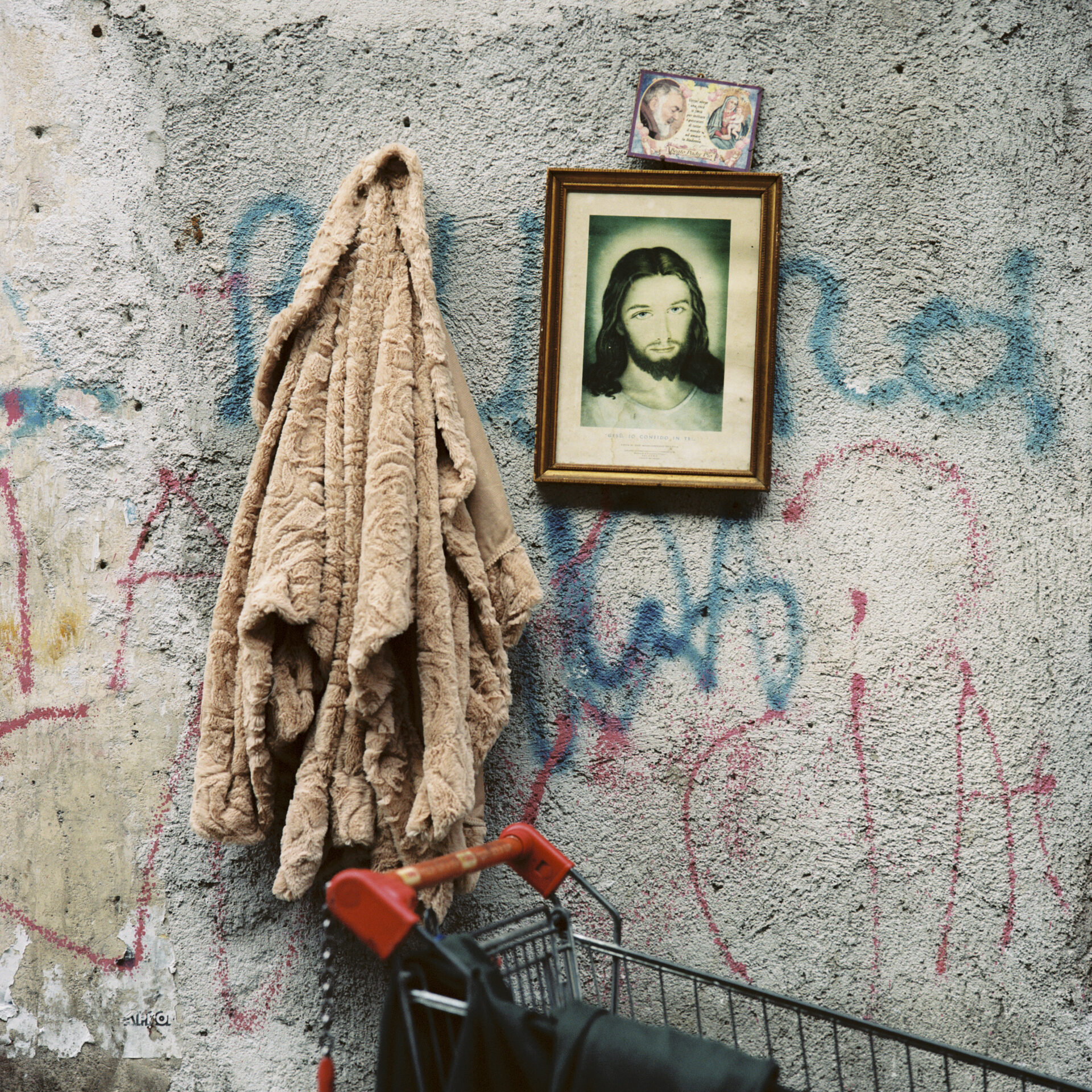
Clutter is the essence of Sicily and Palermo, and indeed it is also the first thing that catches your eye in the latter’s Albergheria neighborhood: chunks of plaster from public housing stand beside Palazzo Reale, a UNESCO World Heritage site; satellite dishes sprout from crumbling Baroque facades; graffiti and prayer candles crowd ancient stone steps. Although Albergheria is officially in the city center, its people live on the margins. This quarter, founded by the Phoenicians and once home to Sicily’s sovereigns, is now a place where migrant communities are finding footing, many locals cope with issues like unemployment, and petty commerce thrives alongside deep inequality.
To understand what Albergheria represents, it helps to consider its more famous neighbor, Ballarò—perhaps Palermo’s most renowned historic market, a food bazaar that has drawn visitors for centuries. In recent years, Ballarò has succumbed to the most predictable of fates: it has, quite simply, been gentrified. The stalls now cater to tourists, prices have risen, and the rougher aspects have been smoothed over.
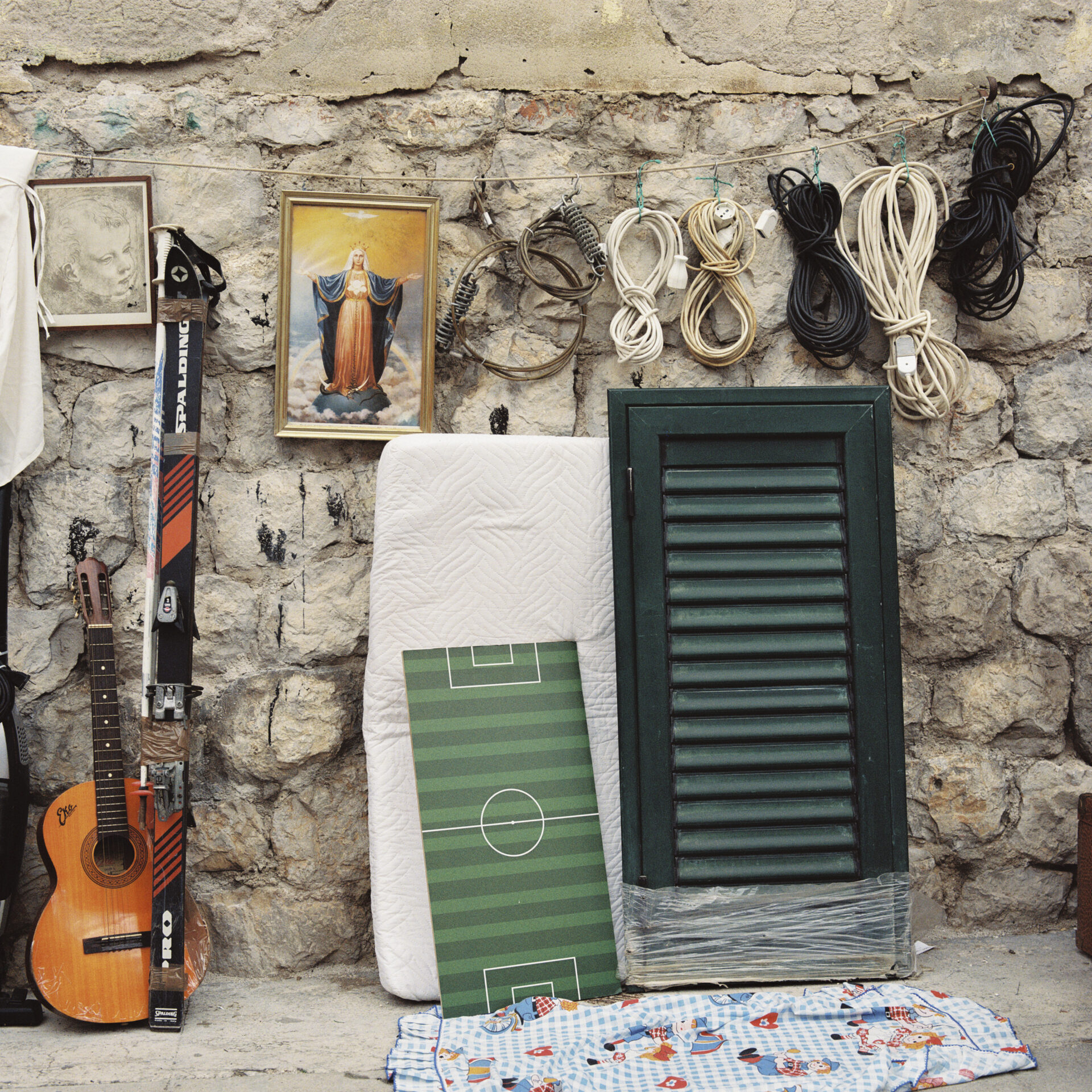
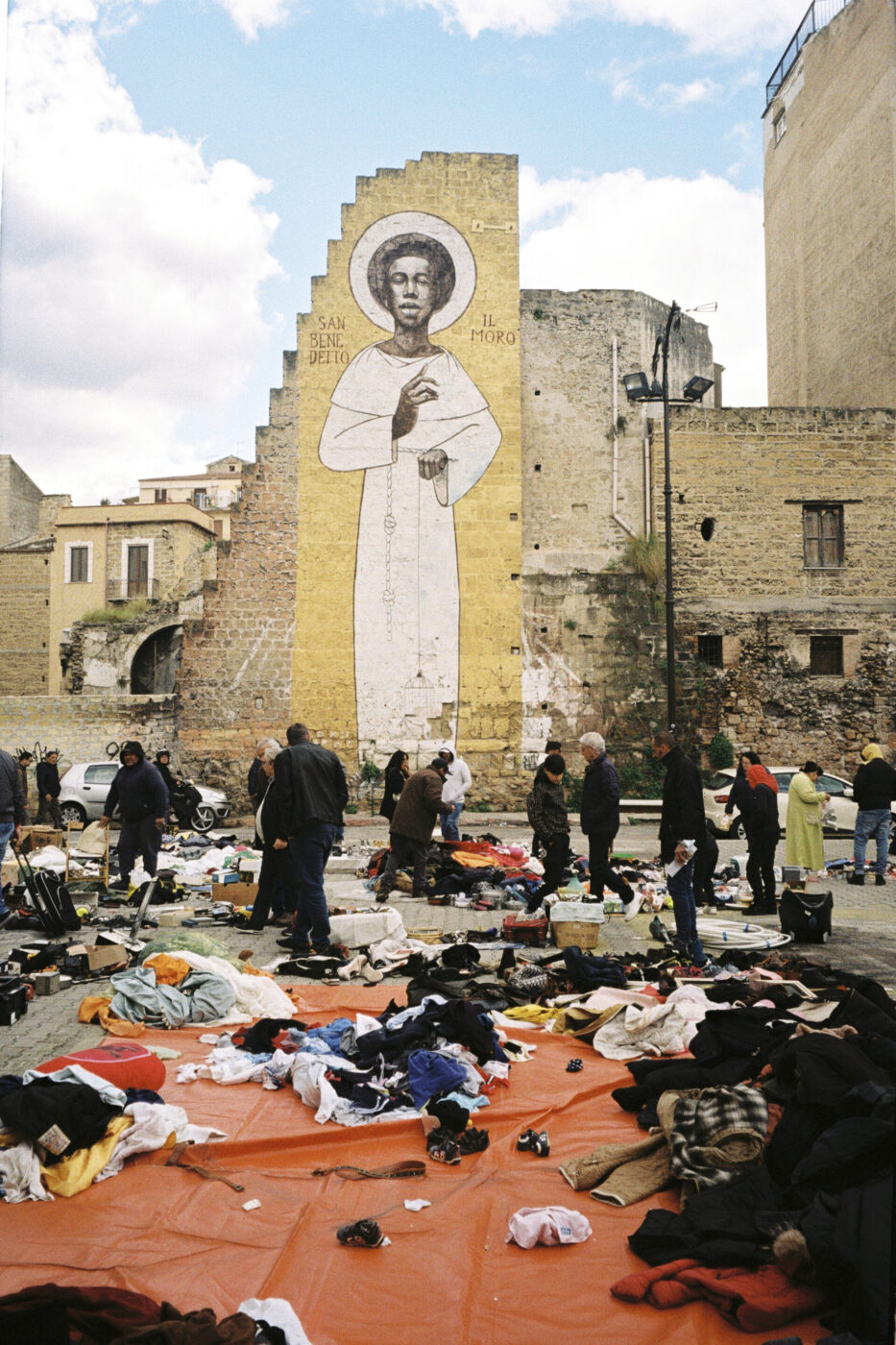
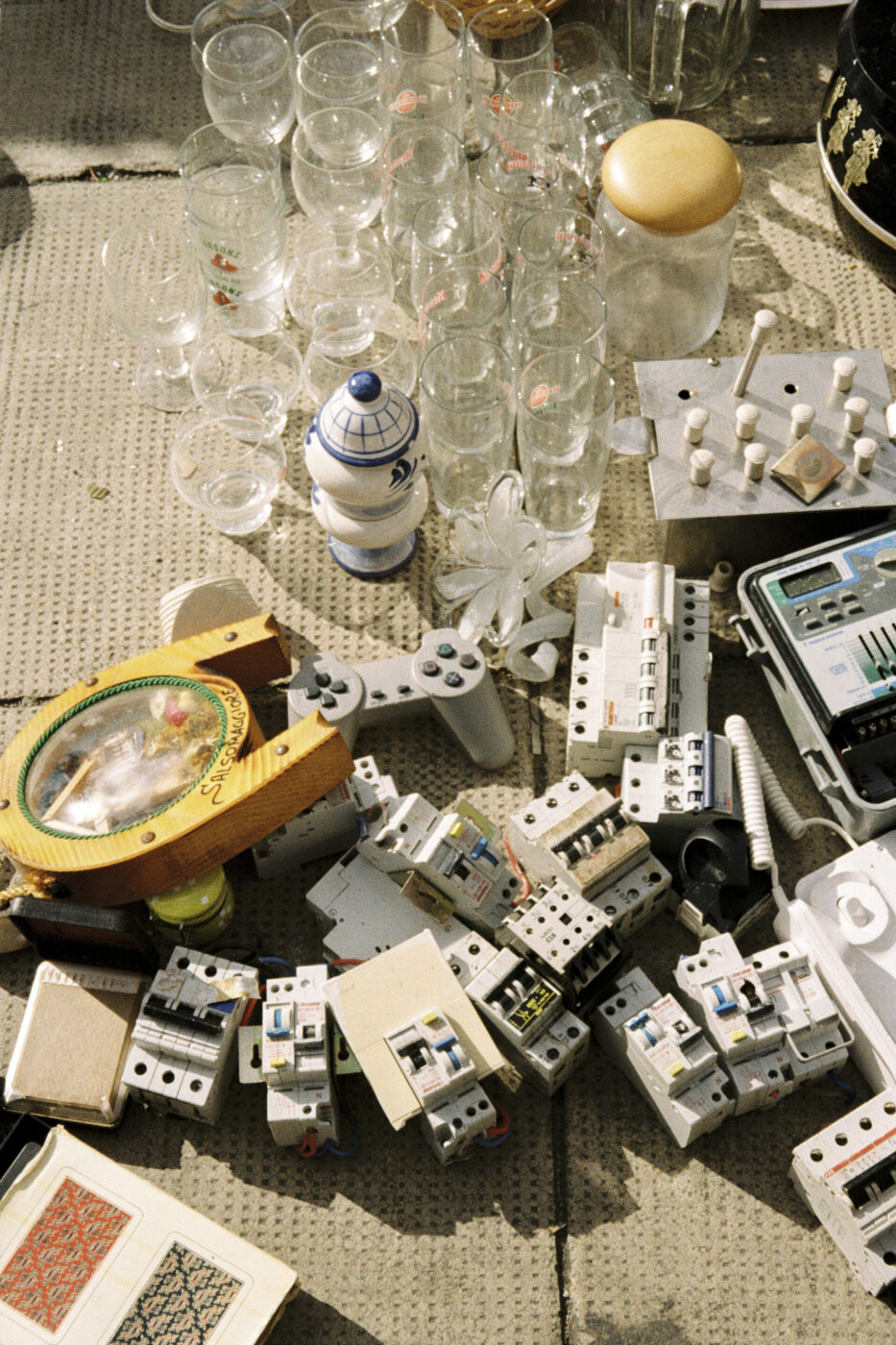
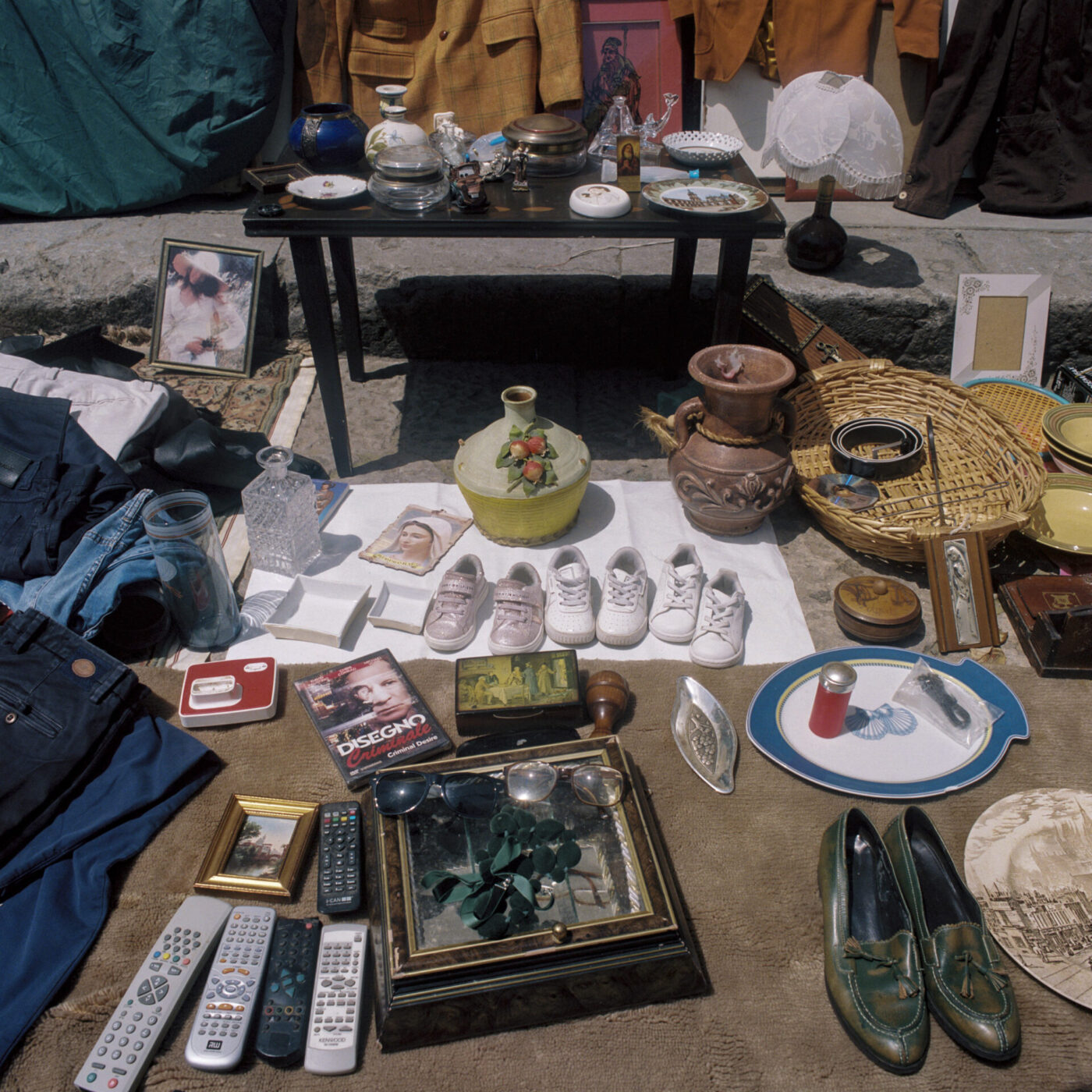
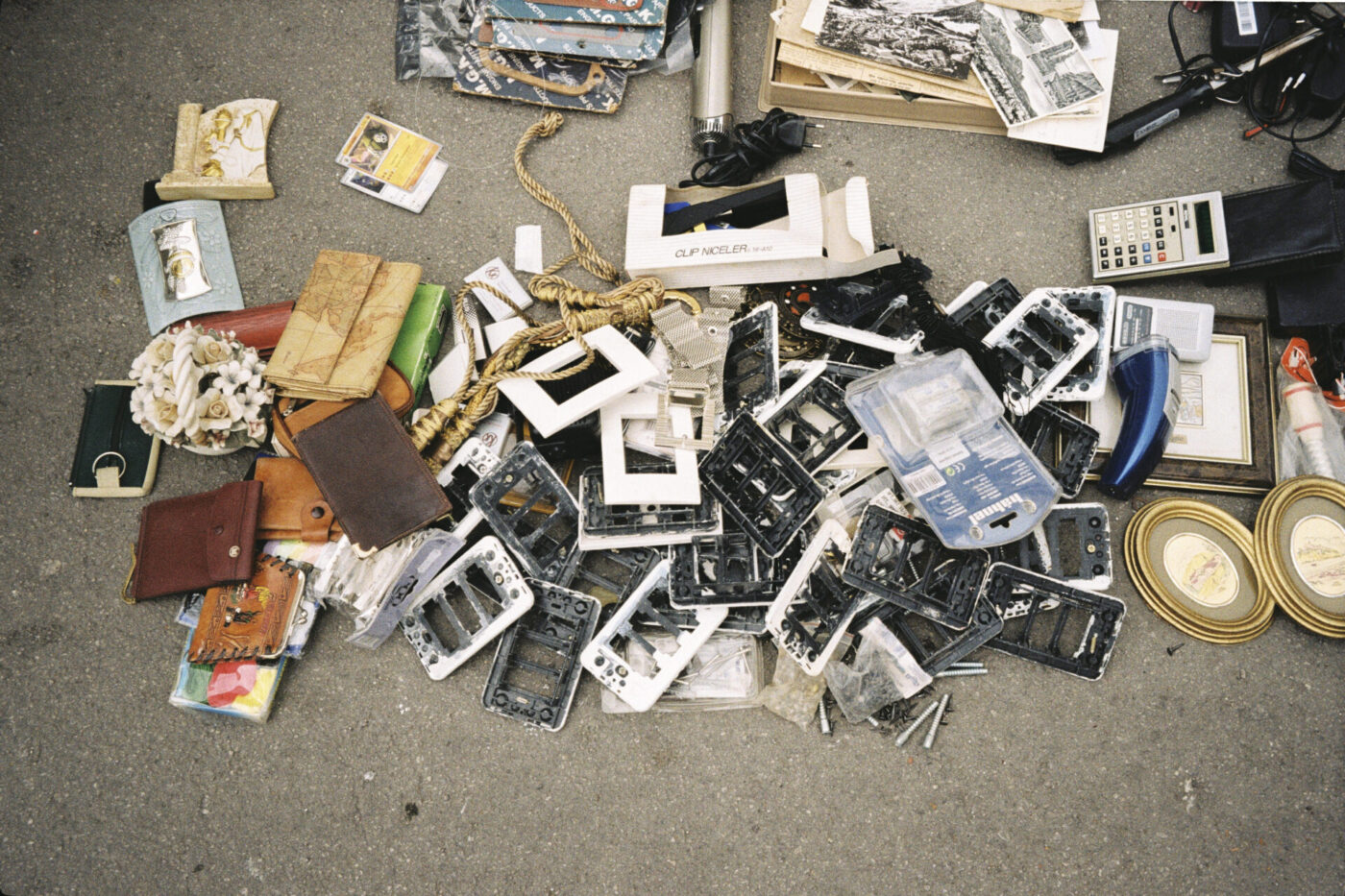
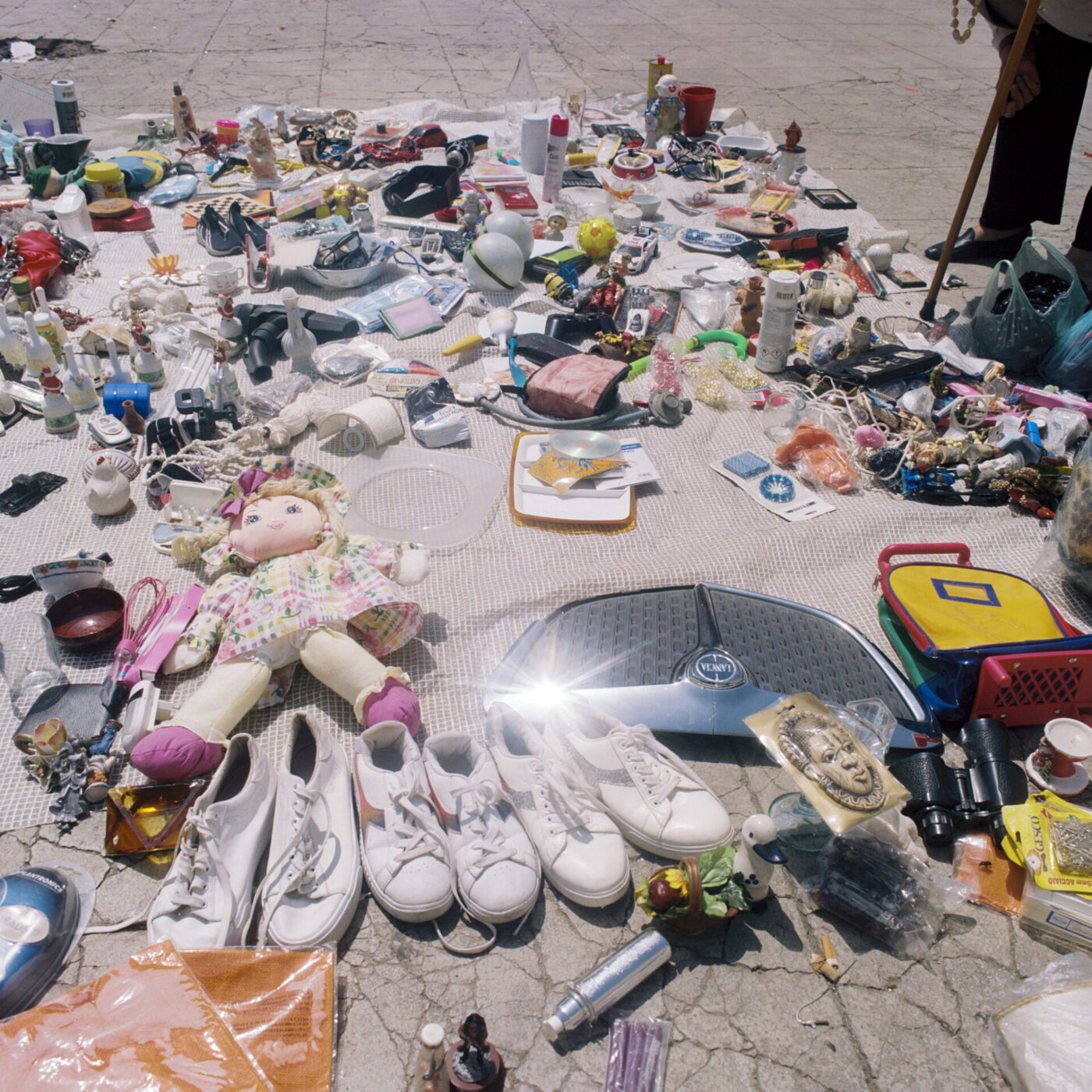
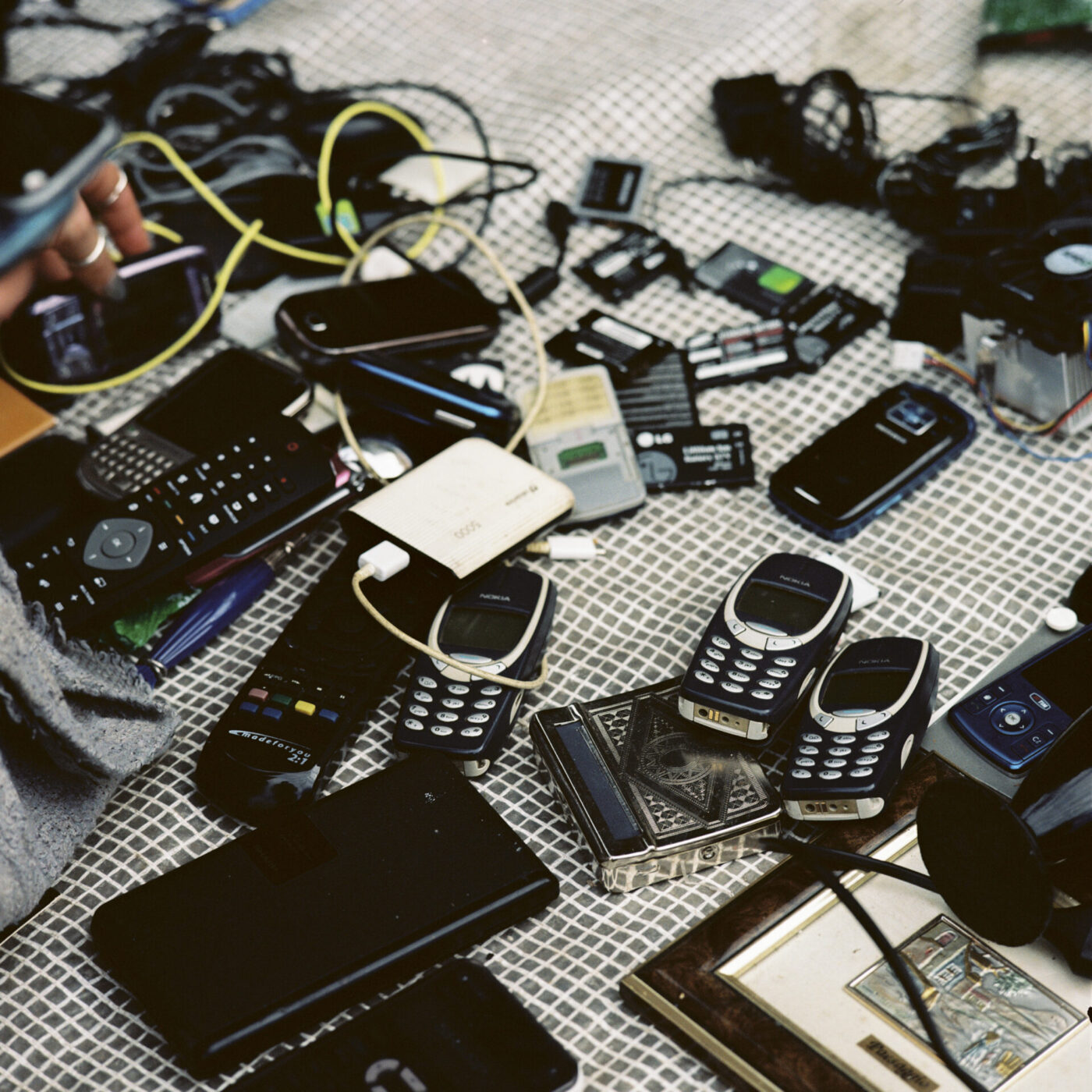
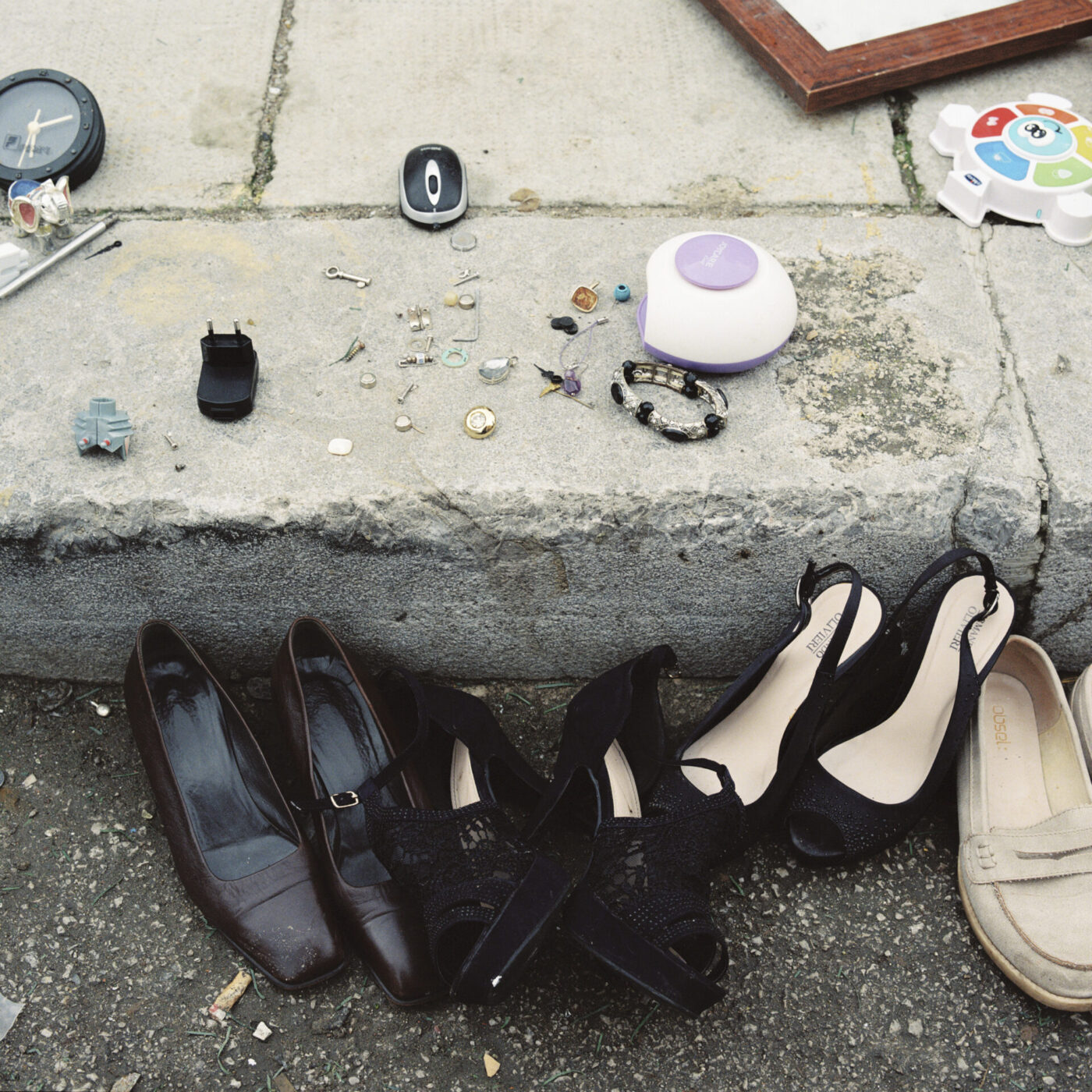
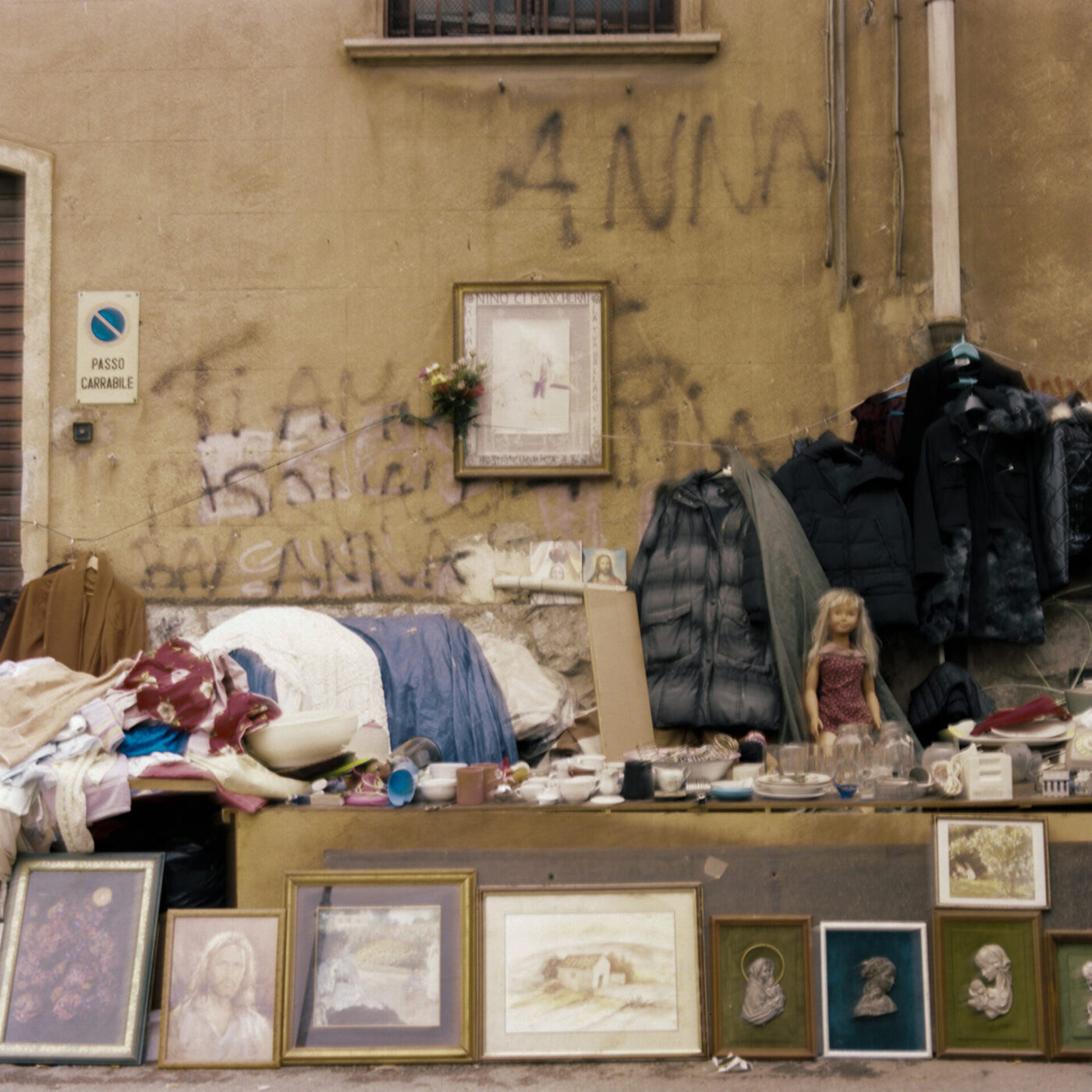
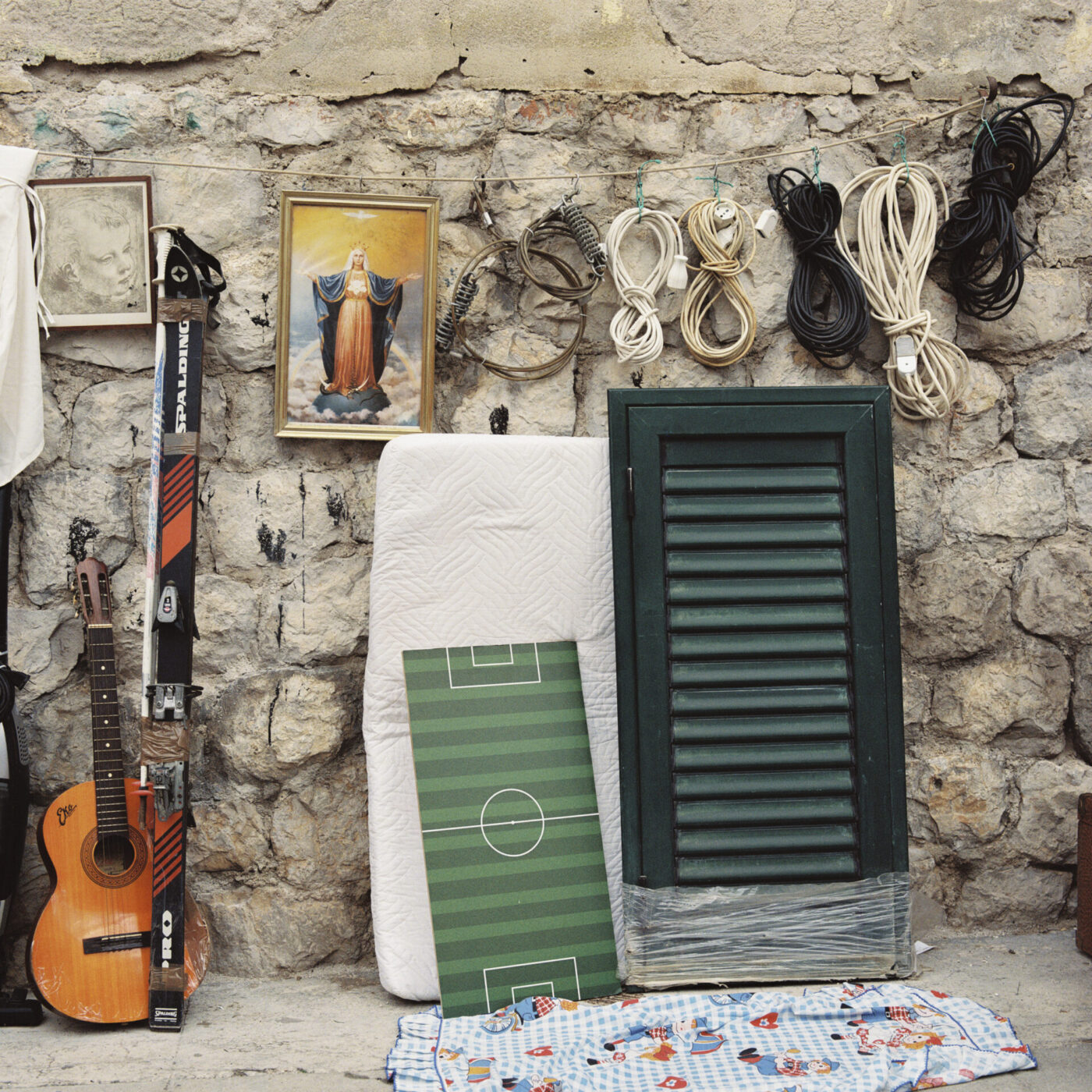
Albergheria, by contrast, resists such polish. Its second-hand market lacks the photogenic charm that attracts investment and visitors; what it sells—rusty tools, obsolete electronics, chipped figurines—holds little appeal for the Instagram crowd. Along its sidewalks and makeshift stalls, people trade memorabilia, tools, and trinkets of every sort: hammers, batteries, faded paintings, and forgotten dolls are given one last dance before passing through Europe’s gateway to the Global South or ending up as waste. Albergheria is one of the continent’s last refuges for old (often faulty) objects, in a city that in many ways clings to the margins of modern consumerism and capital flows.
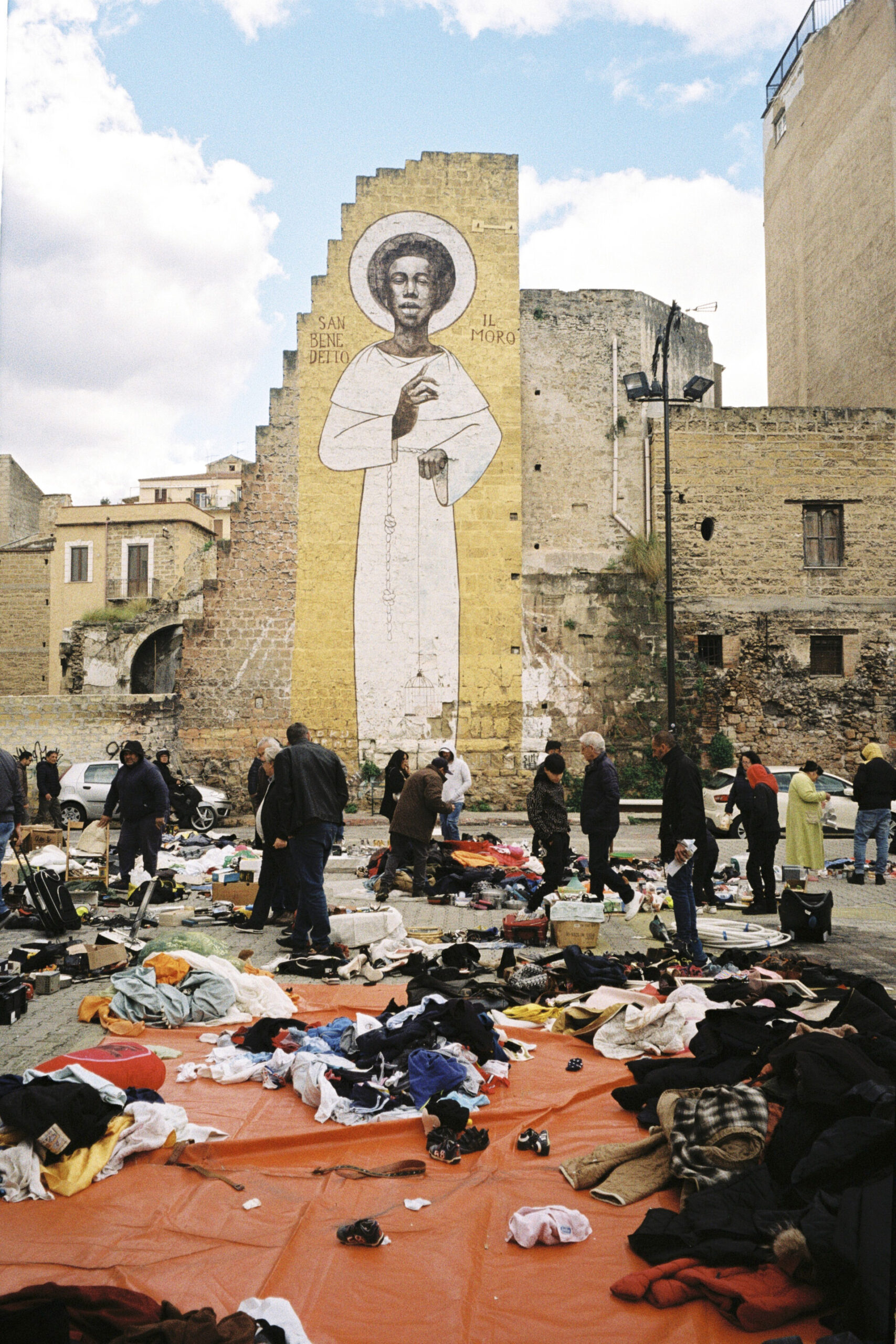
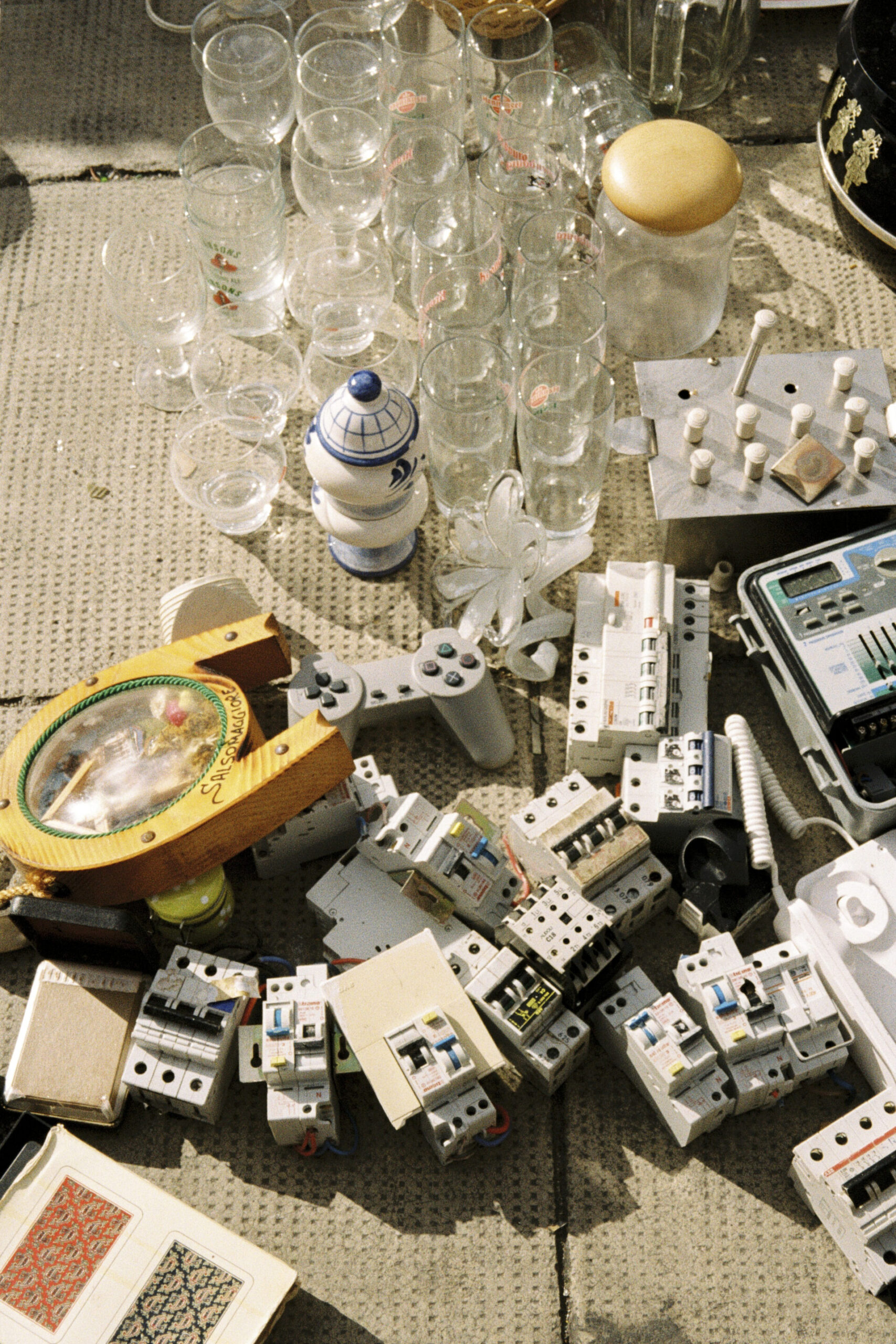
“While, for some, this market represents a genuine alternative economy based on trade and recycling,” says photographer Tommaso Serra. “For outsiders like myself, it feels like a dreamlike journey through an absurd juxtaposition of objects.”
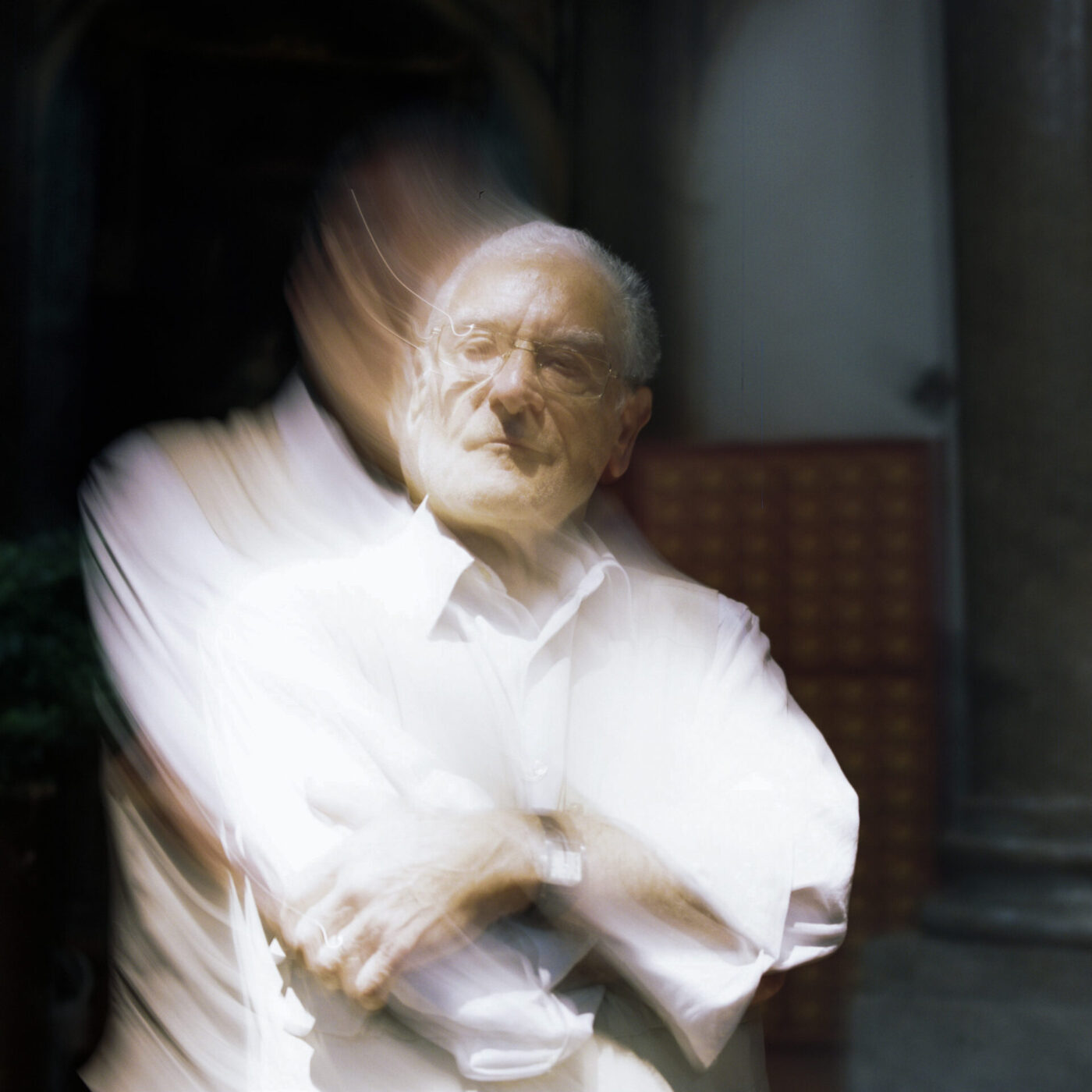
An Italian photographer based in London, Serra spent a month immersed in the Palermitan neighborhood. What emerged is a photo series that resists easy categorization: Albergheria captures a place suspended between nostalgia and necessity, marginality and myth. Much like the objects they depict, Serra’s images feel like post-human relics. They are distorted and imperfect, the result of a technical fault in his camera’s shutter that caused the images to emerge “shaken.” The blurred images veil the subjects’ identities, a visual metaphor for the liminality of the market itself. Though first unintentional, this element of chance became method when the photographer returned to Albergheria to complete the project.
Serra’s old medium format camera, a Zenza Bronica—far from discreet—drew curiosity, skepticism, and even suspicion. One man pulling a cart asked Serra if he was a cop. When he said no, the man’s reply was immediate, “Benvenuto ad Albergheria, allora” (“Well then, welcome to Albergheria”). Some people refused photos. Others waved Serra in with a grin. One asked, puzzled, “Why do you want to photograph this junk?”
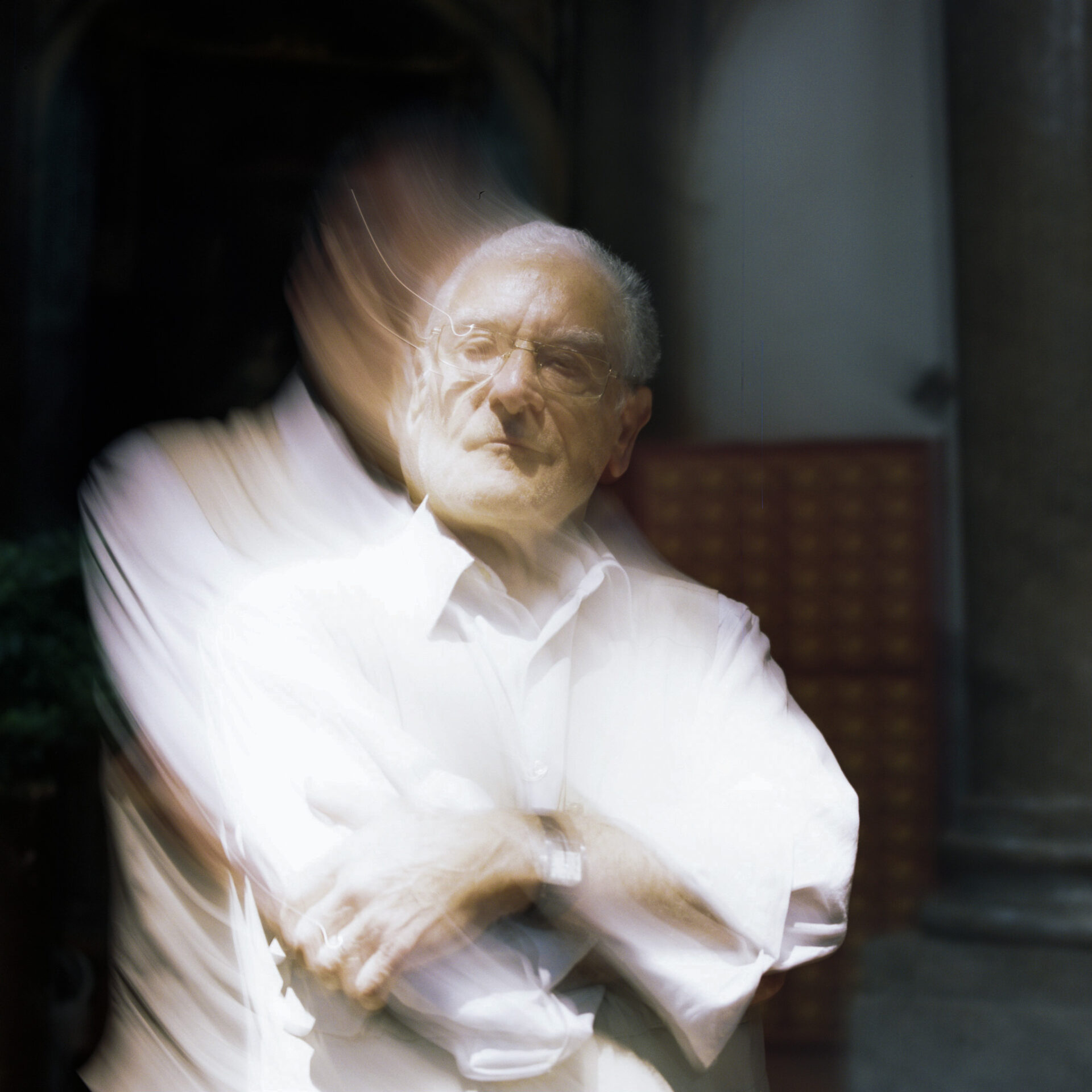
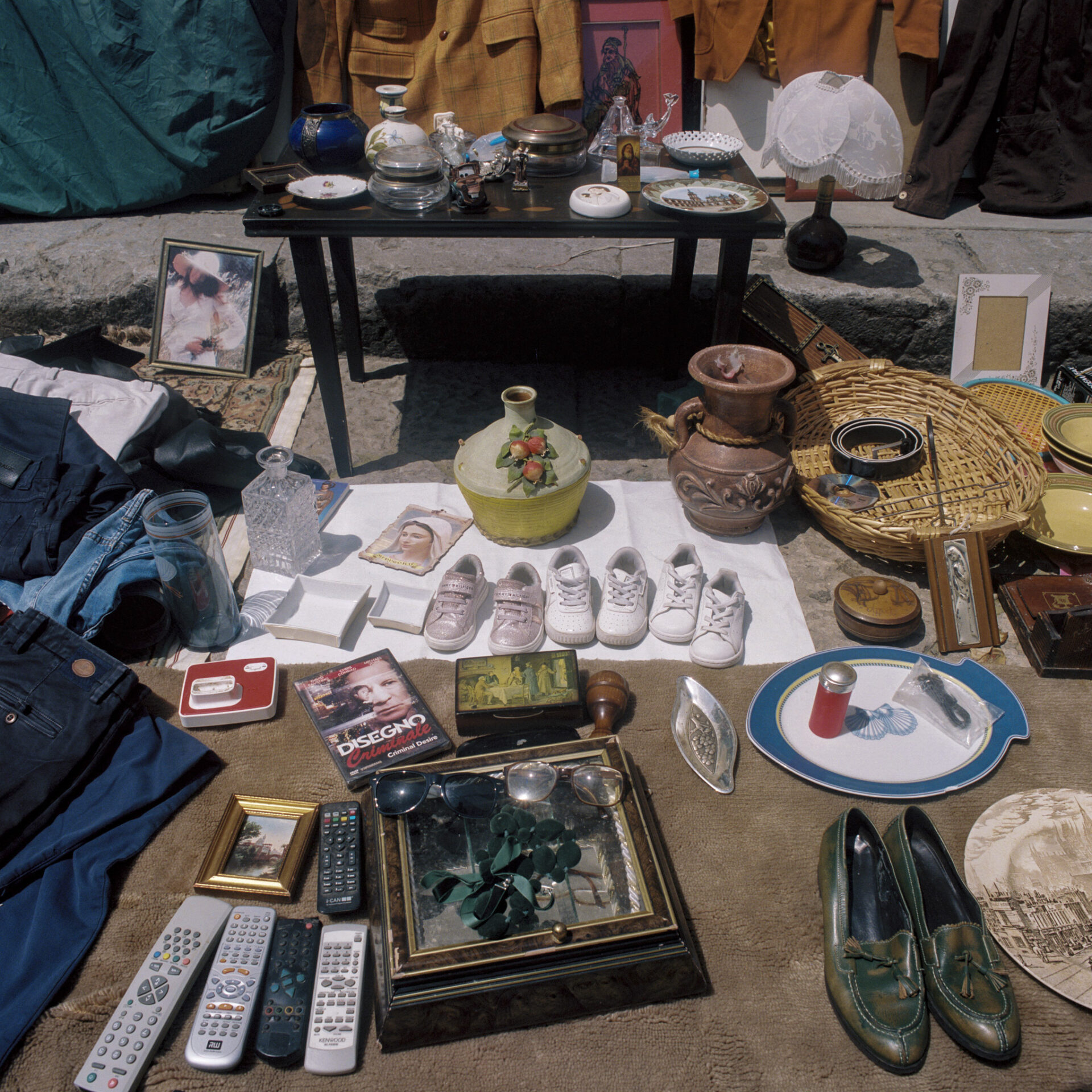
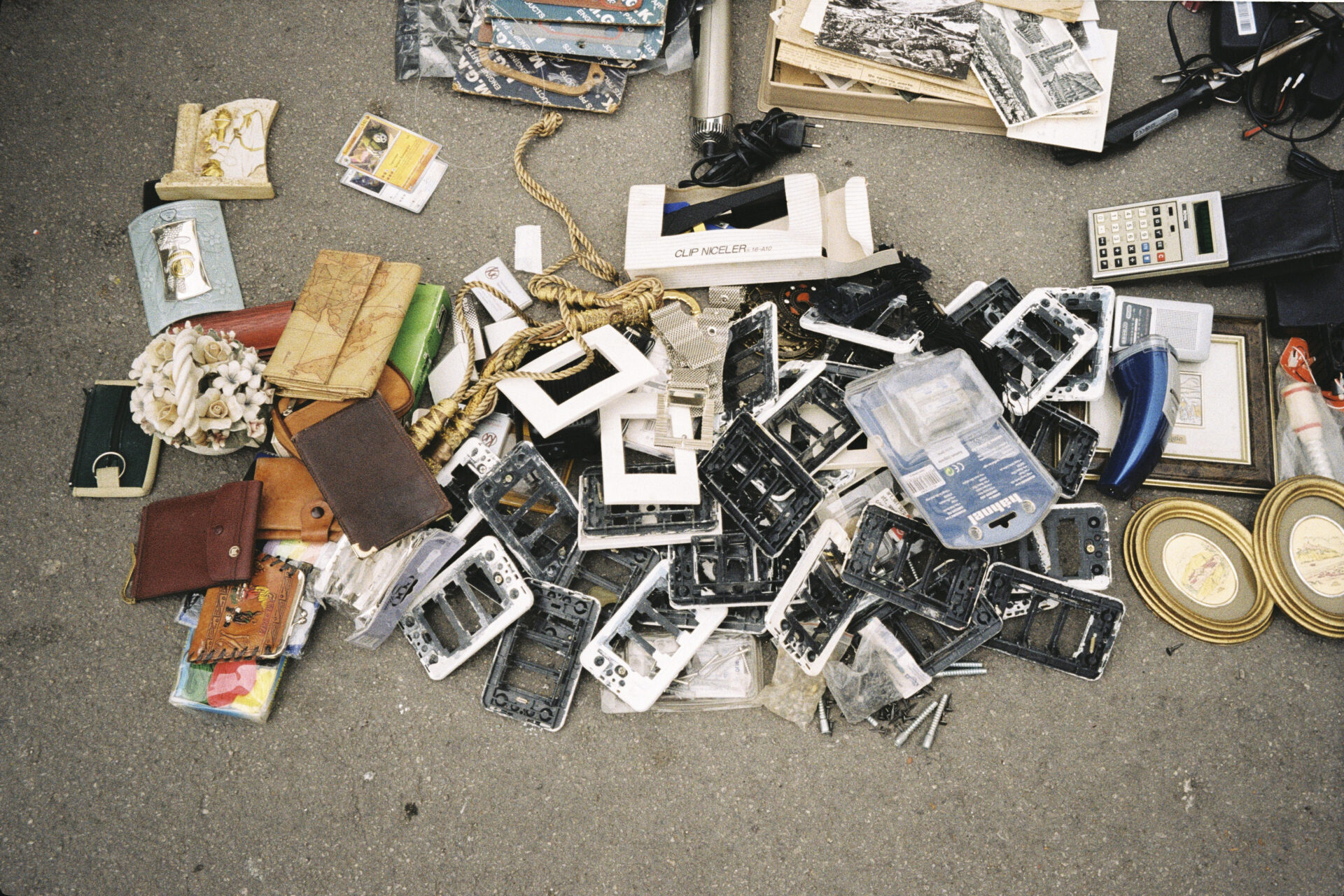
“After the first batch of ‘faulty’ photos, I started to look at things differently, from the point of view of the objects themselves,” Serra shares his answer with us. “This is their story. From a factory in China to a child’s bedroom, and now abandoned in a dusty market in Palermo.”
Through Serra’s lens, Albergheria becomes a version of Italo Calvino’s Leonia, one of the so-called imaginary cities of his novel Le città invisibili (Invisible Cities, 1972)—a place where accumulation and discard merge into one, and progress leaves its remnants for others to salvage.
Serra hadn’t planned for any of this. When he’d first arrived in Palermo, he’d had a different project in mind: a visual exploration of desertification in the Mediterranean, bridging Tunisia and Sicily through landscapes so dry they’d blur geographic boundaries. But nature had other plans—unfortunately for him, though perhaps a relief for a region often gripped by drought. May 2023 turned out to be the rainiest in recent memory, and instead of parched soil, Serra found himself surrounded by green hills and unmet expectations.
“I was left without a project and a lot of free time,” he tells us. He lingered in Palermo, a city he had studied during his undergraduate years in London, fascinated by its Islamic history and cultural syncretism. He ended up staying in Albergheria, in a shared flat with a new friend. “Every single corner of Albergheria was filled with improvised stalls and sellers. You literally could not recognize the neighborhood.”
“It was love at first sight,” he recalls. “Loud sellers, quiet sellers, sketchy corners, old memorabilia, new furniture, paintings, Barbie dolls.”
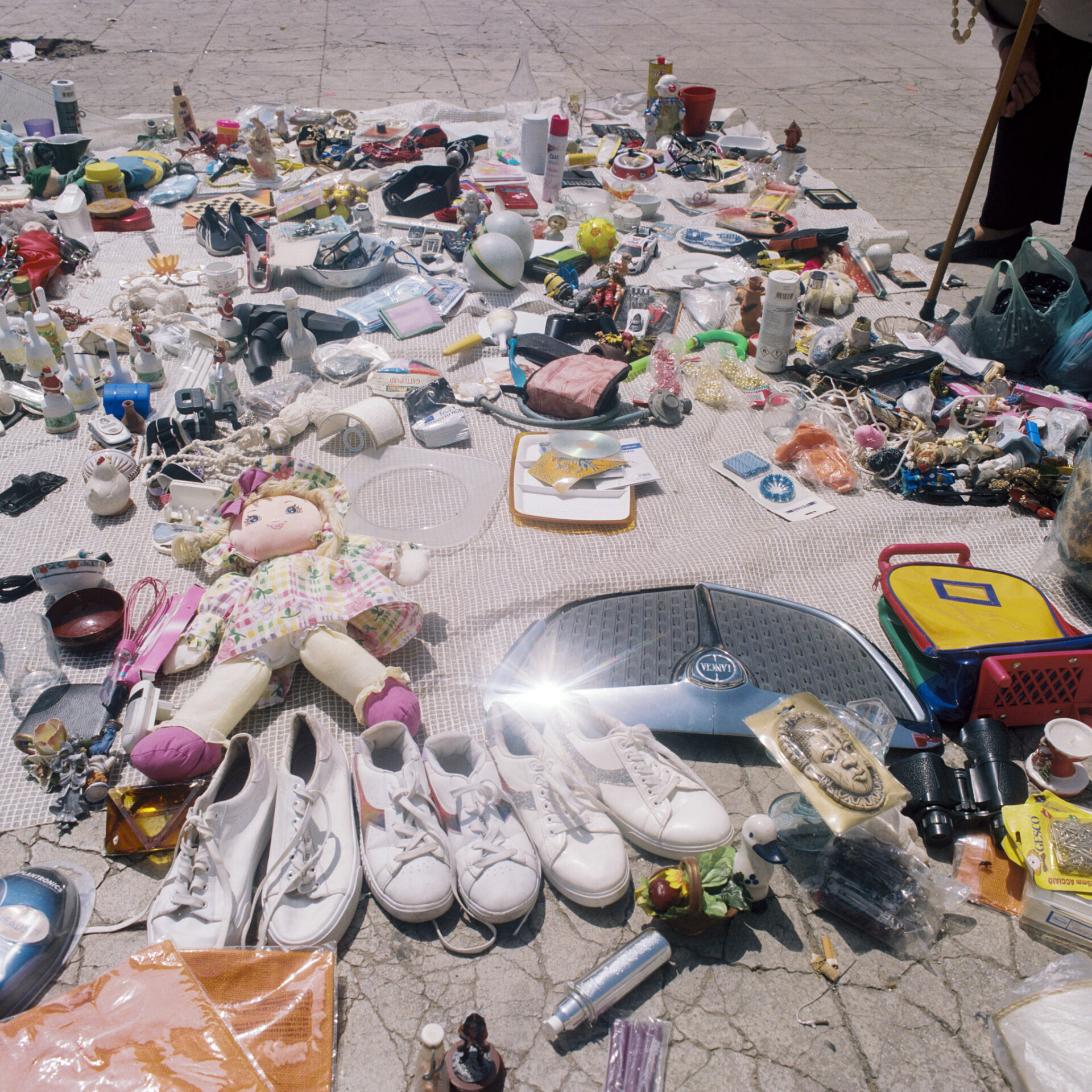
What captivated Serra wasn’t just the accrocchio (tangle) the objects formed, but the choreography of human interaction surrounding them. Sellers haggled with each other, with customers, and with occasional tourists who stumbled upon the market by accident. Old men stood in tight clusters, guarding their wares, observing the ebb and flow of people. At one stall, a man attempted to sell an old flashlight with no batteries to another vendor, muttering about how “the market is no longer profitable” because of increased competition. Others, like Lorenzo, a local he met at the San Francesco Saverio church across the street, blamed the market outright: “Everything you see there is stolen.”
“Who in the world would steal a single shinpad or an electronic toothbrush?” Serra counters. For the photographer, the truth of the market lies elsewhere—in equal measure, its absurdity and its poetry. In “the composition of plastic eras and outdated technologies—DVDs, tapes, floppies—now incompatible with the velocity of the modern world.” Albergheria is “the last chance these objects have to be objects before they become ‘trash’.”
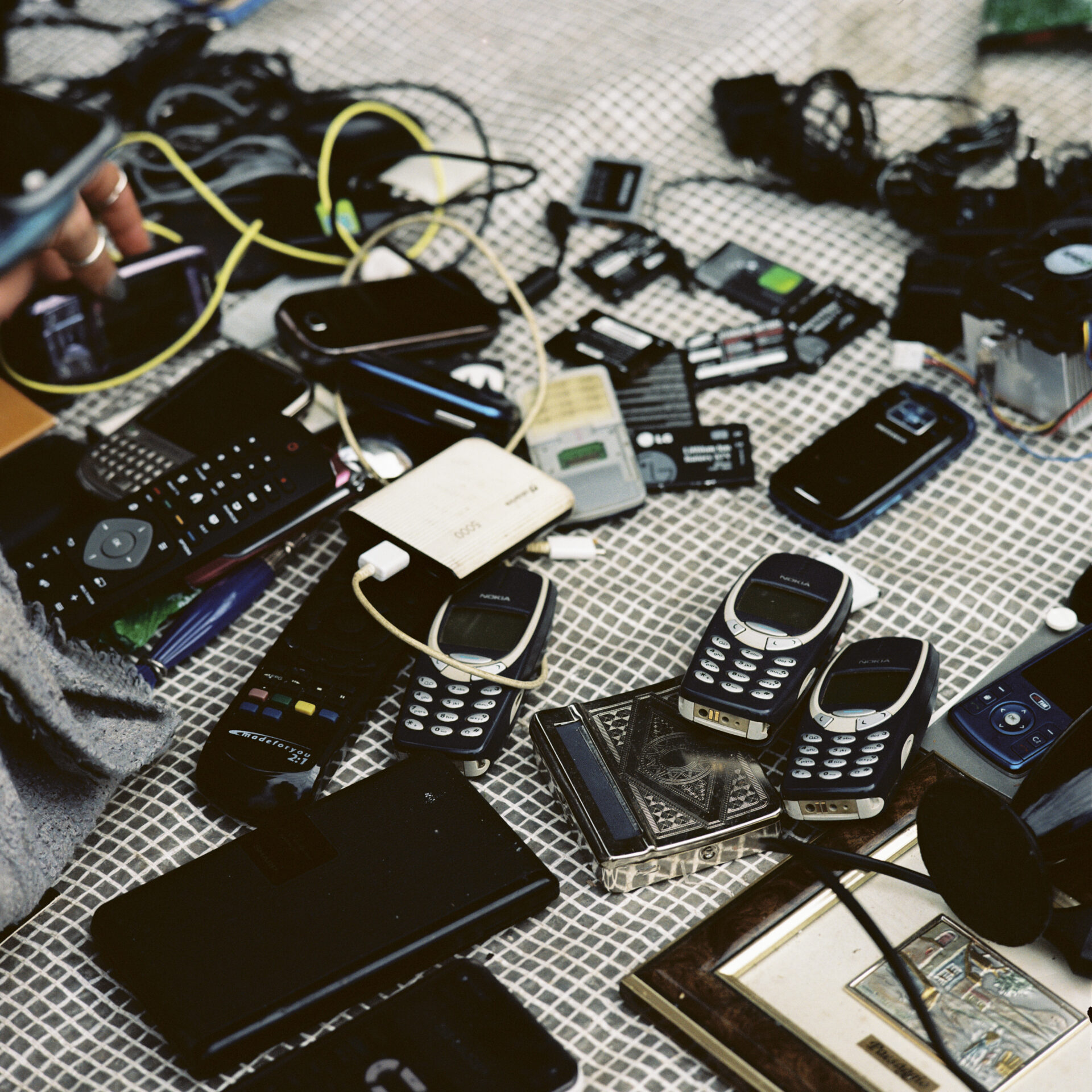
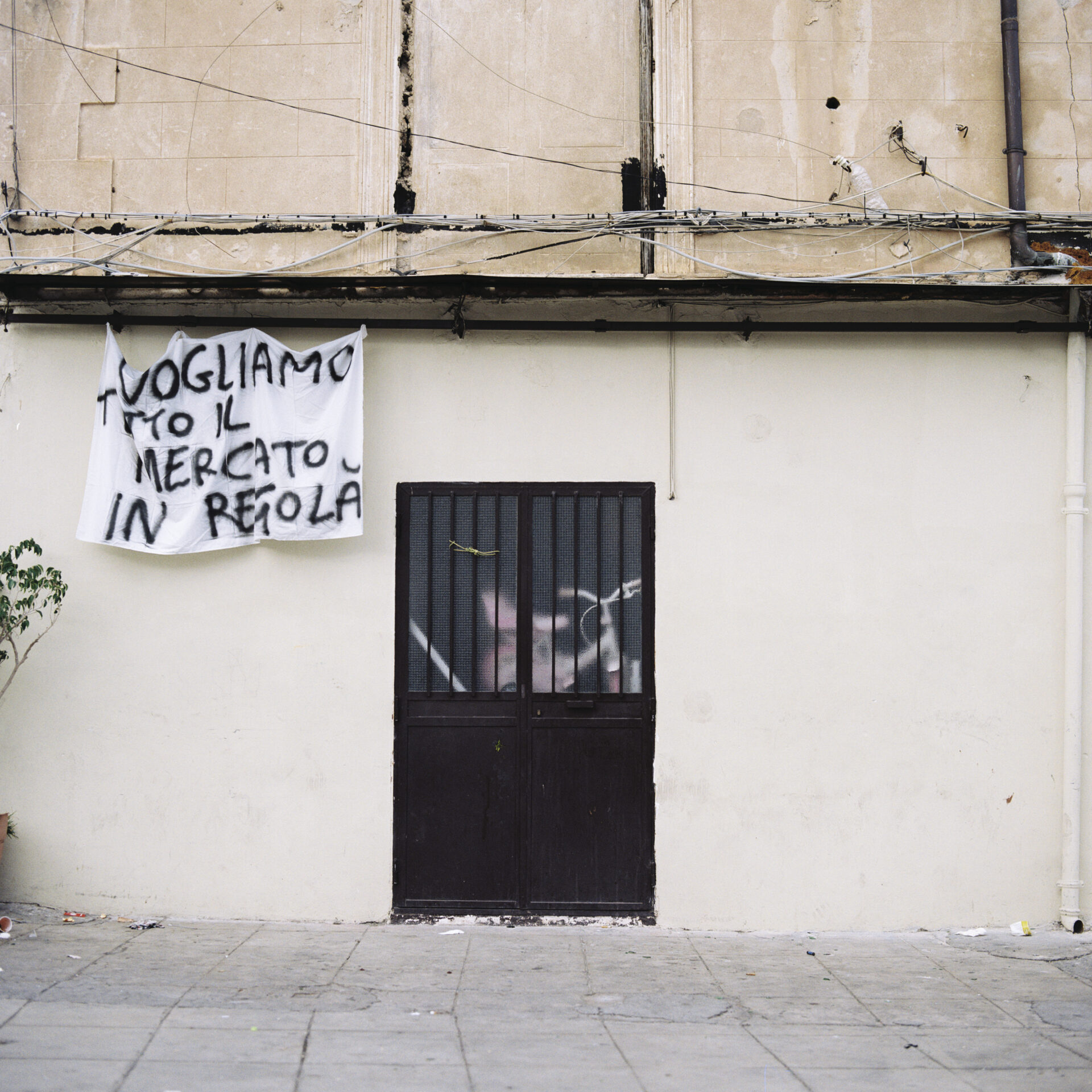
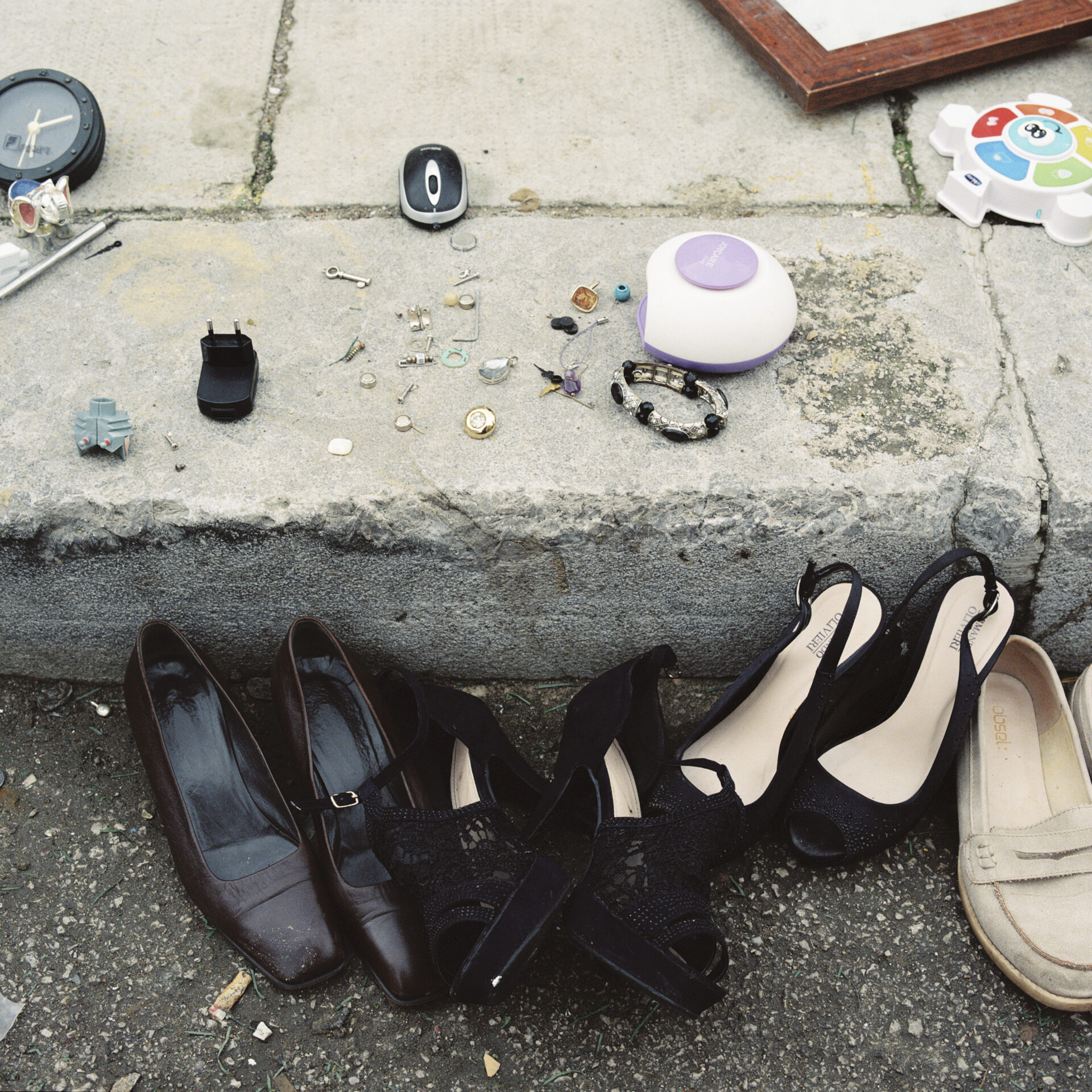
That shift—from human to post-human, from possession to waste—is central to Albergheria. Like Germans Bernd and Hilla Becher, whose serial photographs of defunct industrial structures stripped away human presence to focus on form and typology, Serra uses repetition and visual rhythm to draw our eye to the surreal details of each stall. But unlike the Bechers’ rigorously neutral framing, Serra’s work carries the chaos of the place.
“Some portraits were ruined,” he says, referring back to the technical issues with his shutter. “Others became a lot more interesting.” Oscillating between documentary and dream, the work lacks a central protagonist. In its place are fragments: a melted doll, a blank-eyed mask, a tower of VHS tapes. These are the city’s castoffs, caught in limbo.
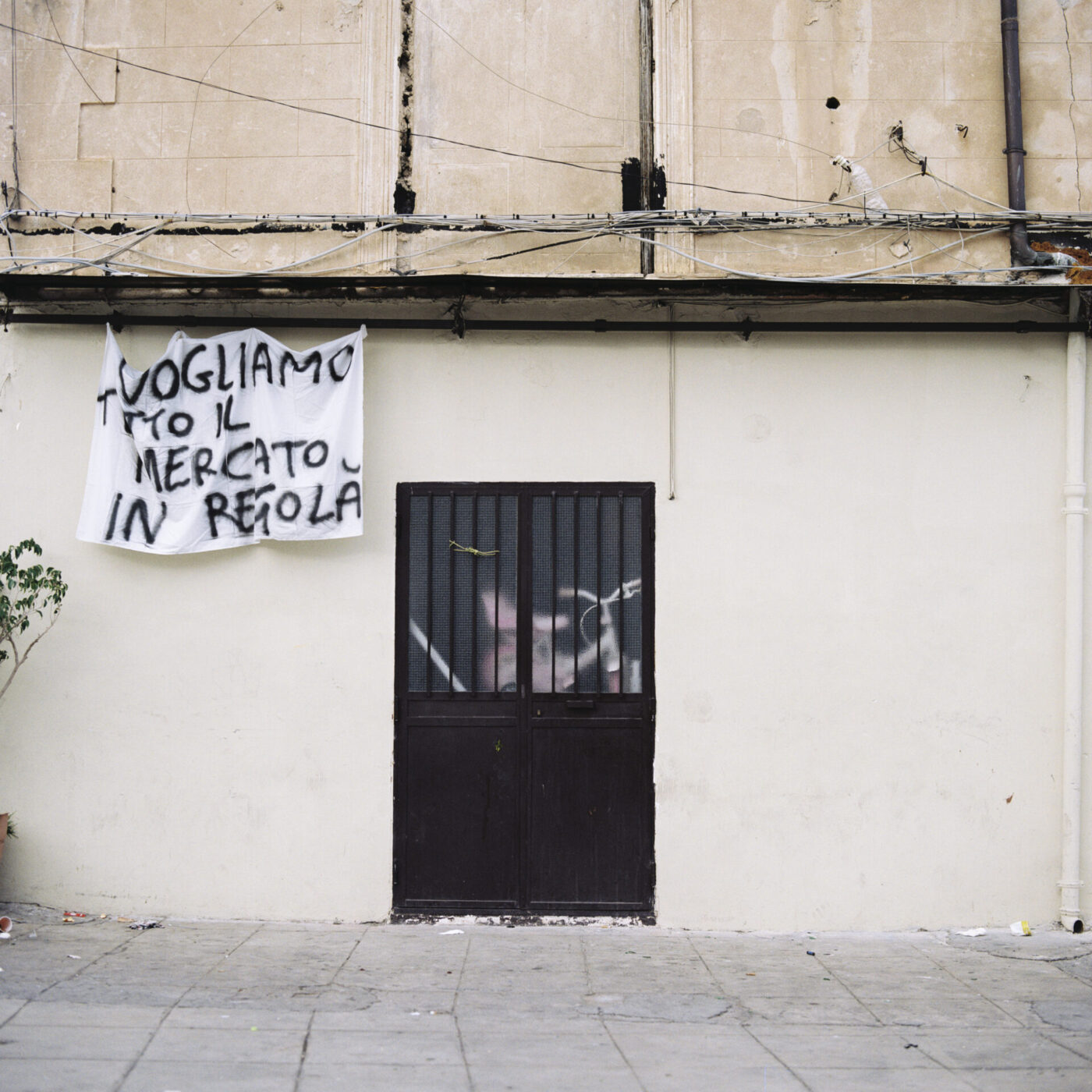
“The neighborhood of Albergheria is one of the craziest places I’ve seen in Europe,” Serra reflects. “Parts of buildings look like they’re still destroyed from WWII bombings, and on their leftovers, you can spot some of the coolest graffiti in all of the Mediterranean.” There’s something ancient and cracked about everything here—its stones, its stalls, its social fabric—and yet, a stubborn vitality persists.
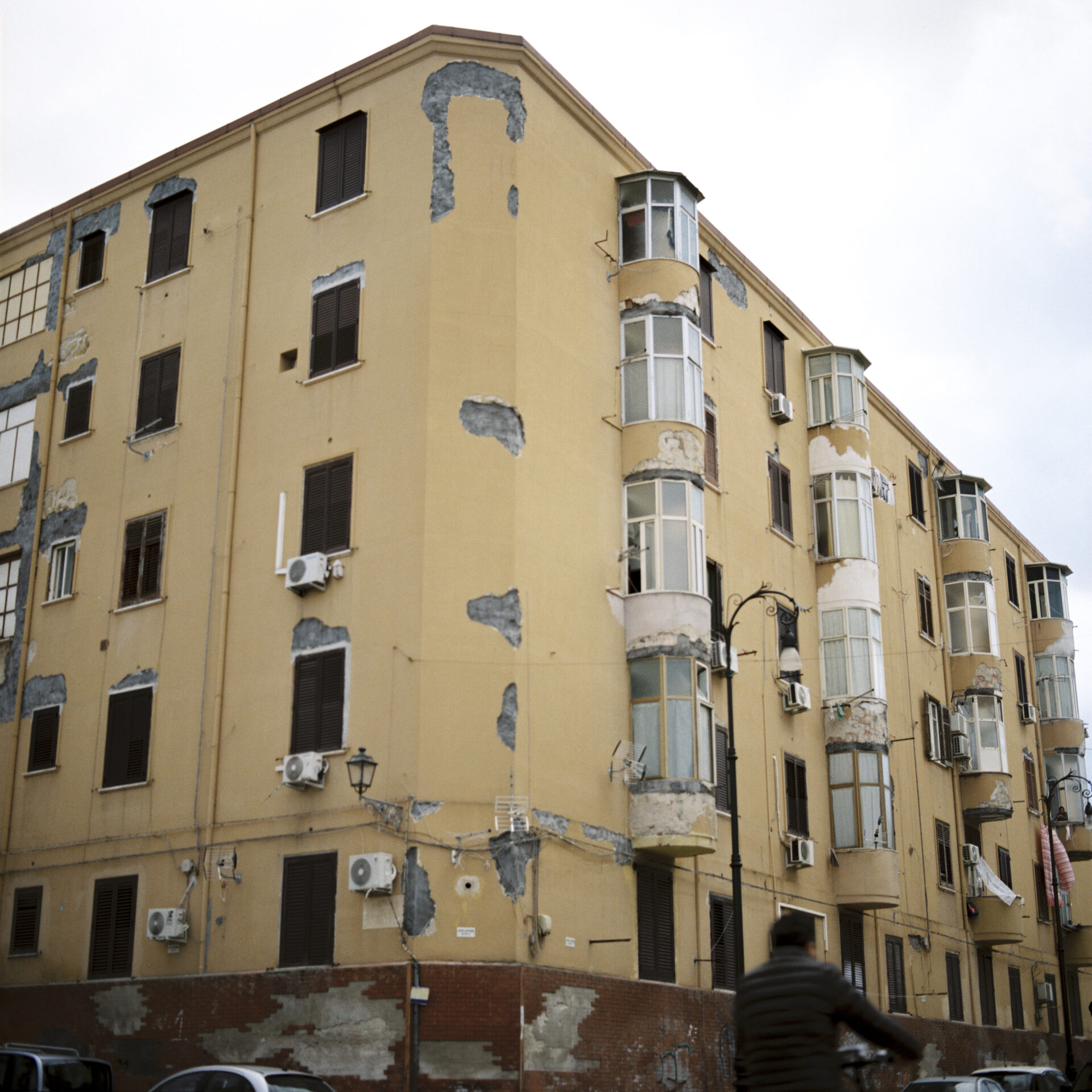
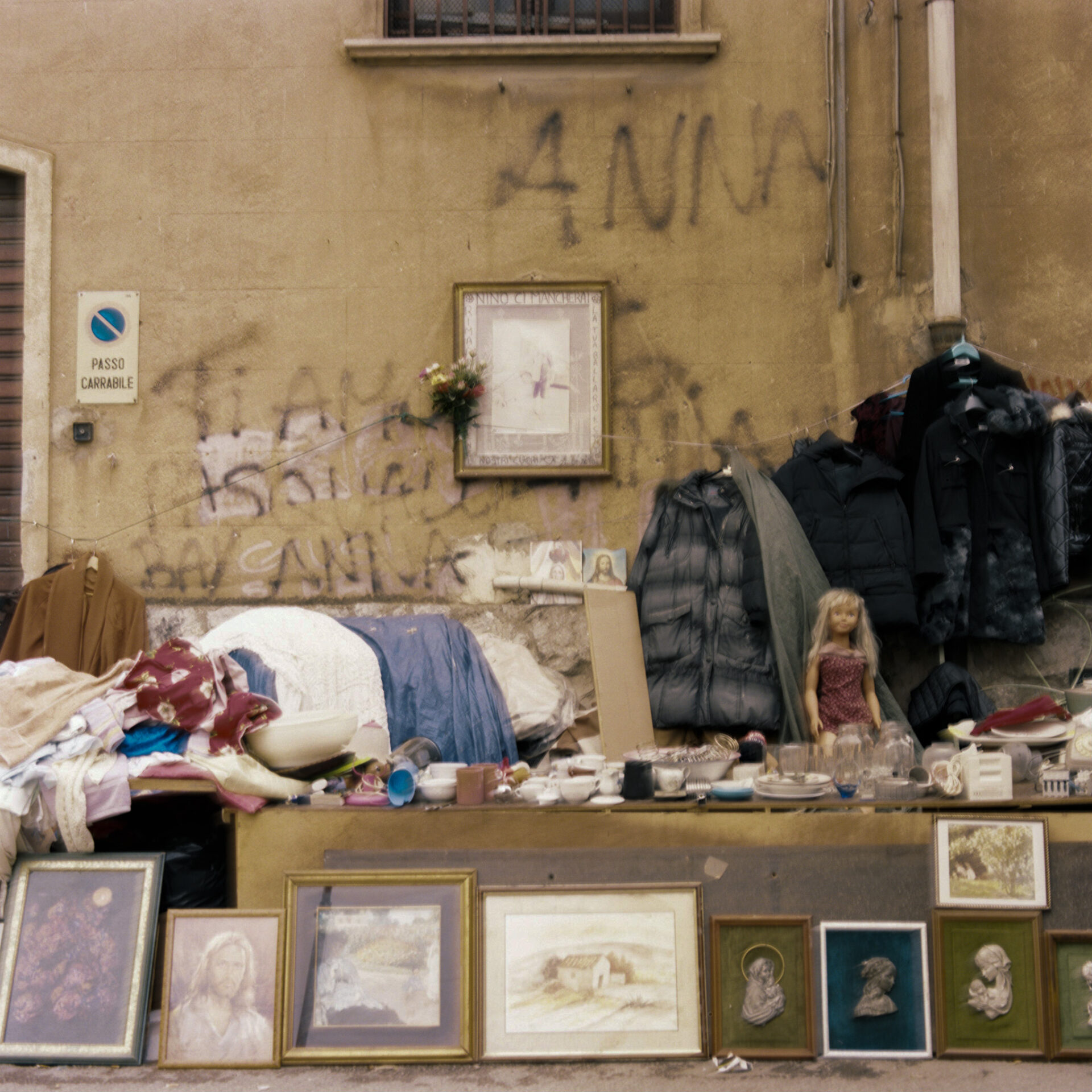
In the shadow of these ruins, the distinction between treasure and trash disappears. Serra was drawn to that in-betweenness, the market’s function as a final European stop for objects bound for the Global South, and the way its clutter reflects a system that produces more than it can ever absorb. In this sense, one can see the influence not just of Bernd and Hilla Becher and their “anonymous sculptures” in Albergheria, but also Andreas Gursky’s crammed pictures of overflowing supermarket shelves and Peter Mitchell, whose wry snapshots of post-industrial Leeds in the 1980s function as memento mori or Dutch vanitas.
Contrary to some of these influences, though, there is something rough and ready about Albergheria as a project—a willingness to embrace accident and chance and foreground lived experience rather than distant observation. After all, a market, in order to feel alive, relies on a series of happy chances and casual encounters. In their spontaneity and lack of unifying narrative, the photos work almost as an abstract mosaic which reminds that cities are built not just by planners and governments, but by people setting up a tarp on a Tuesday morning, laying out their objects, and waiting to see who stops. That somewhere between hoarding and obsolescence lies a fragile, flickering state of being: not yet forgotten, not quite useful. Simply there.