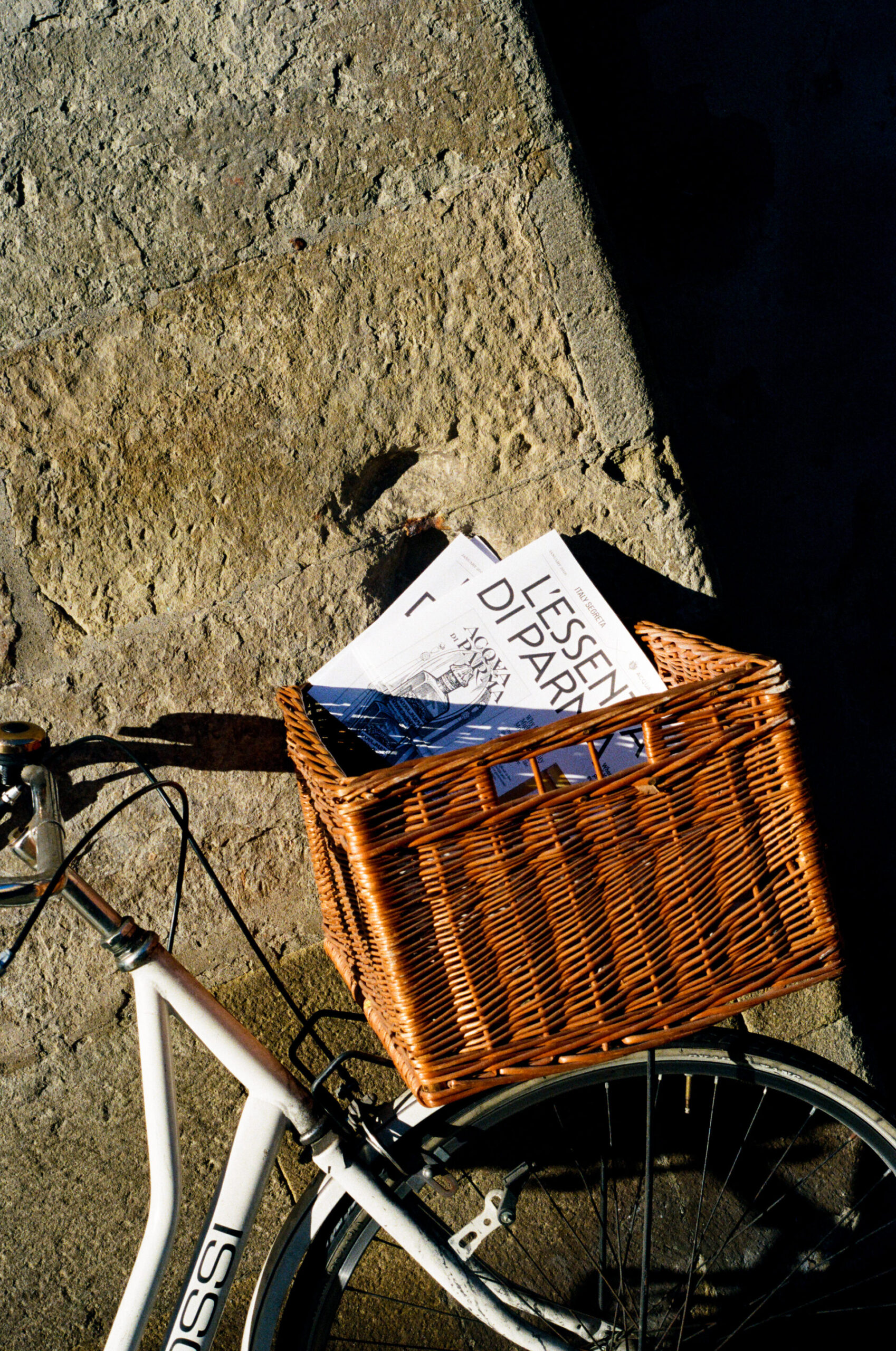
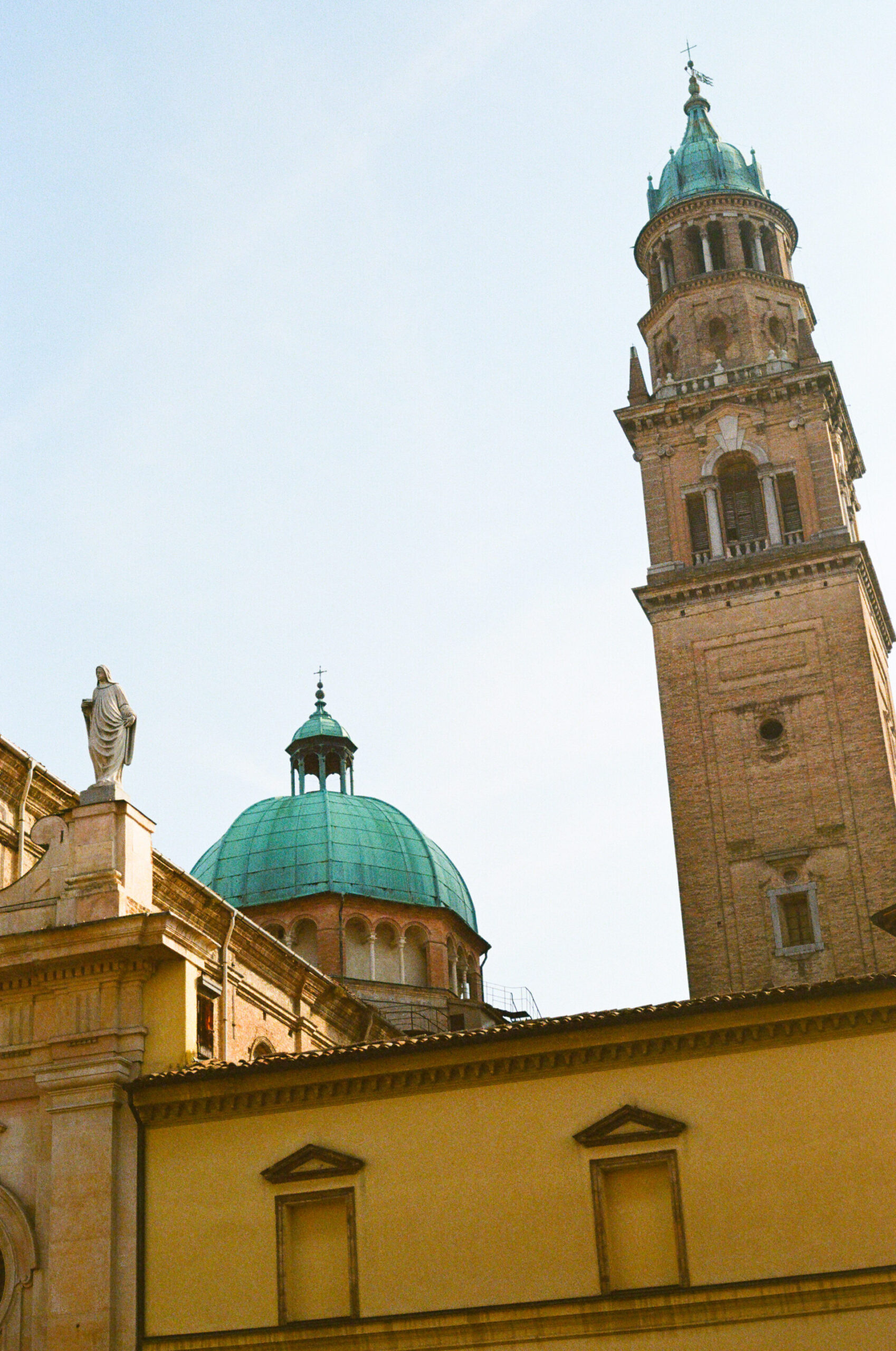
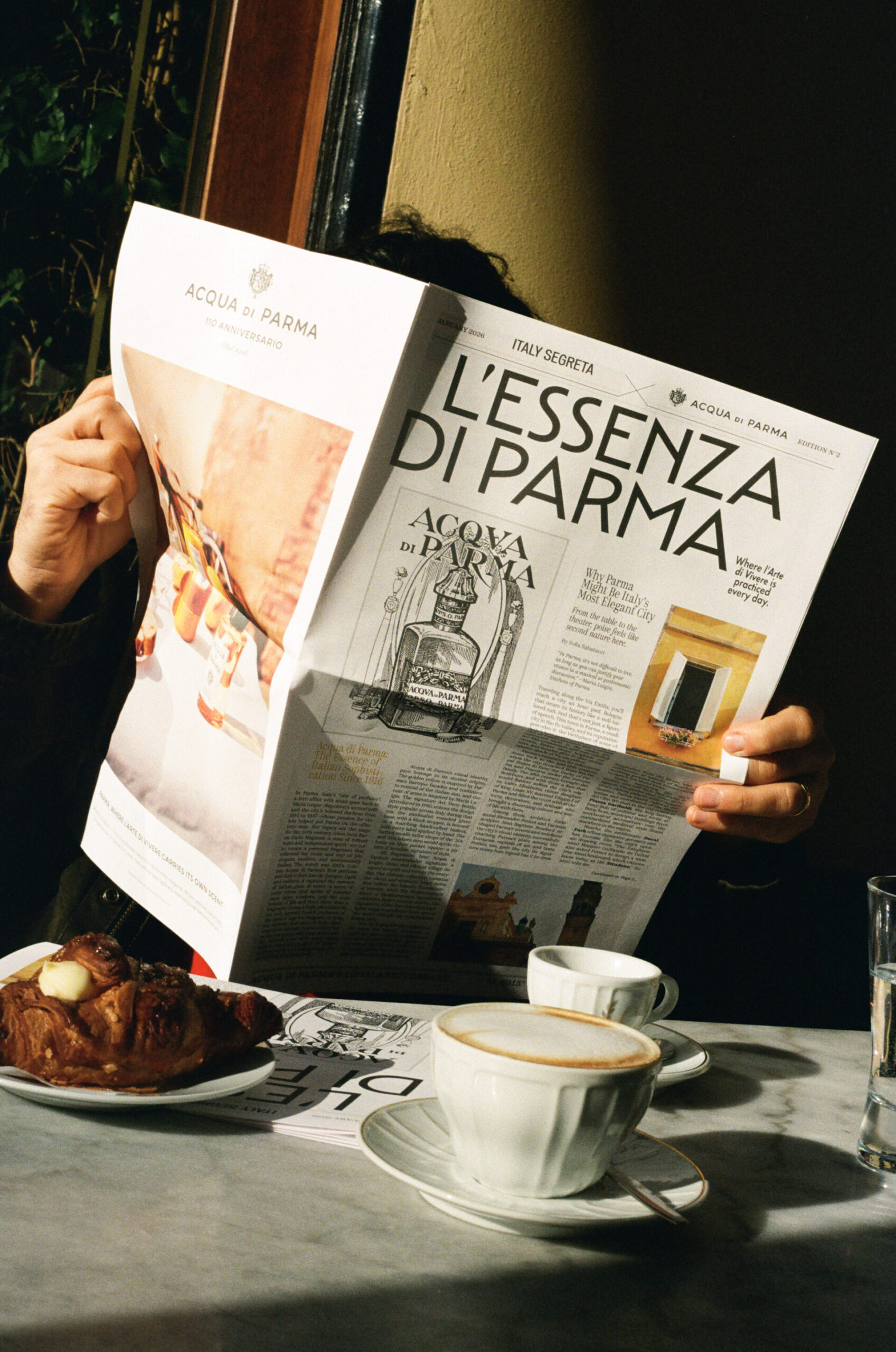
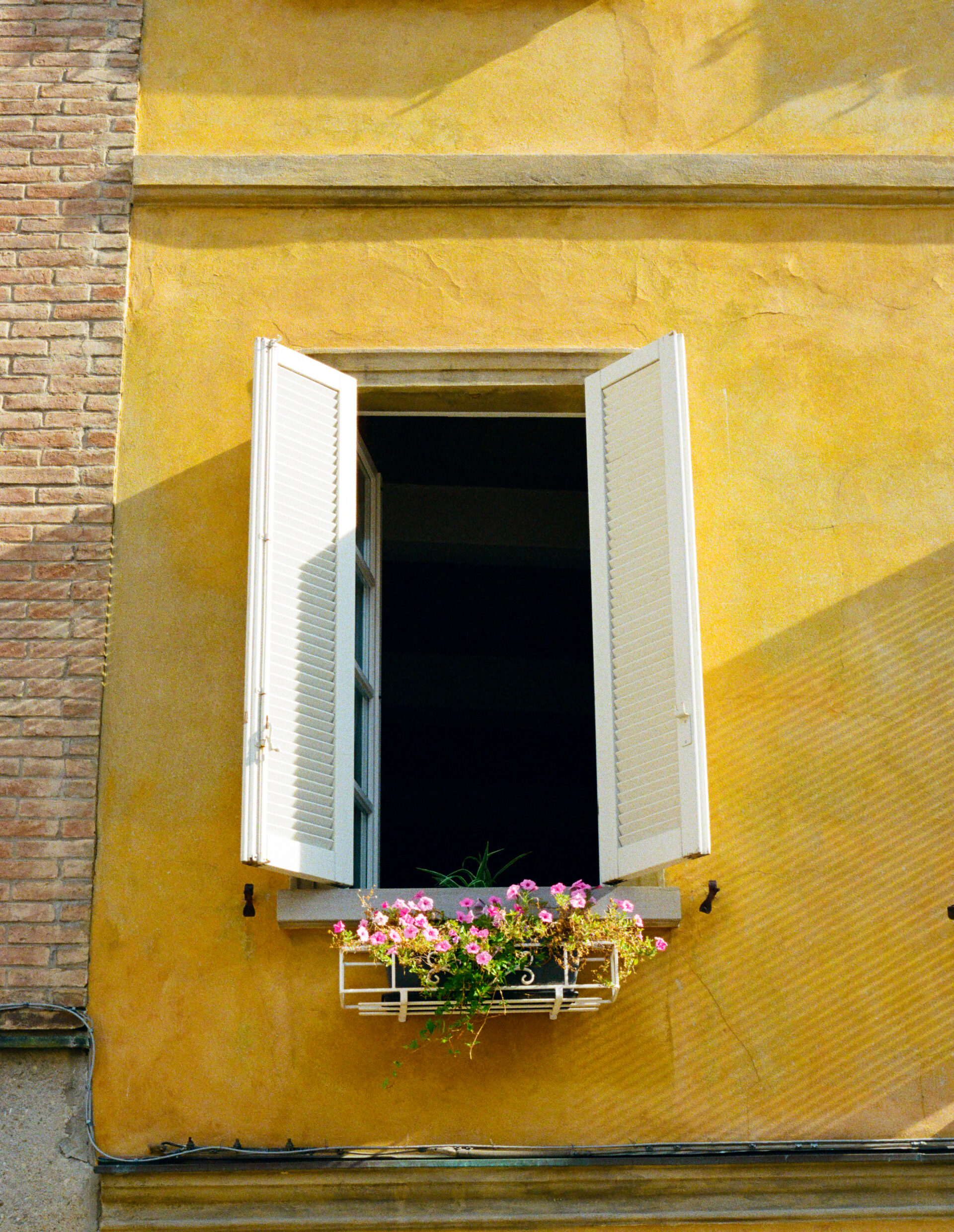
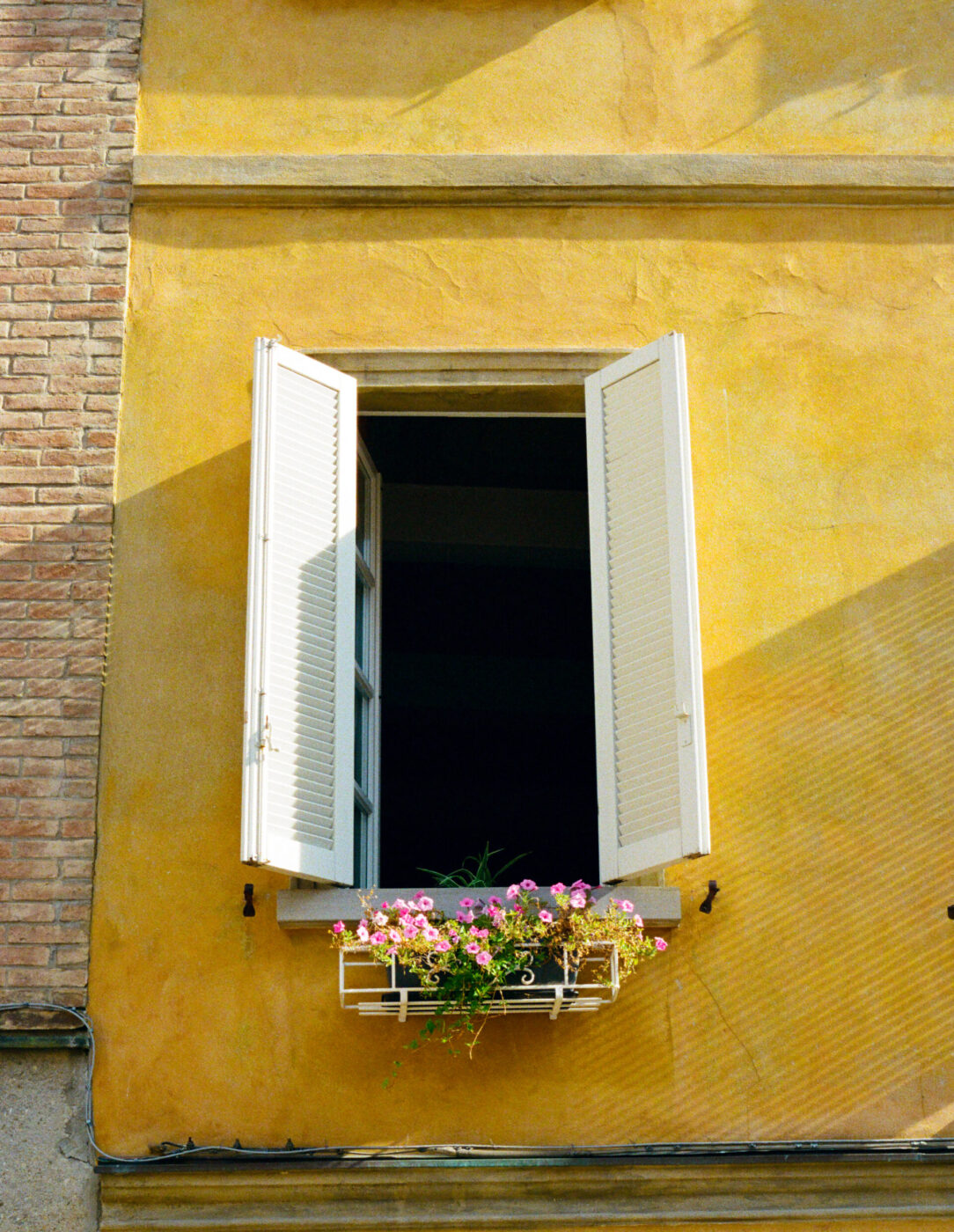
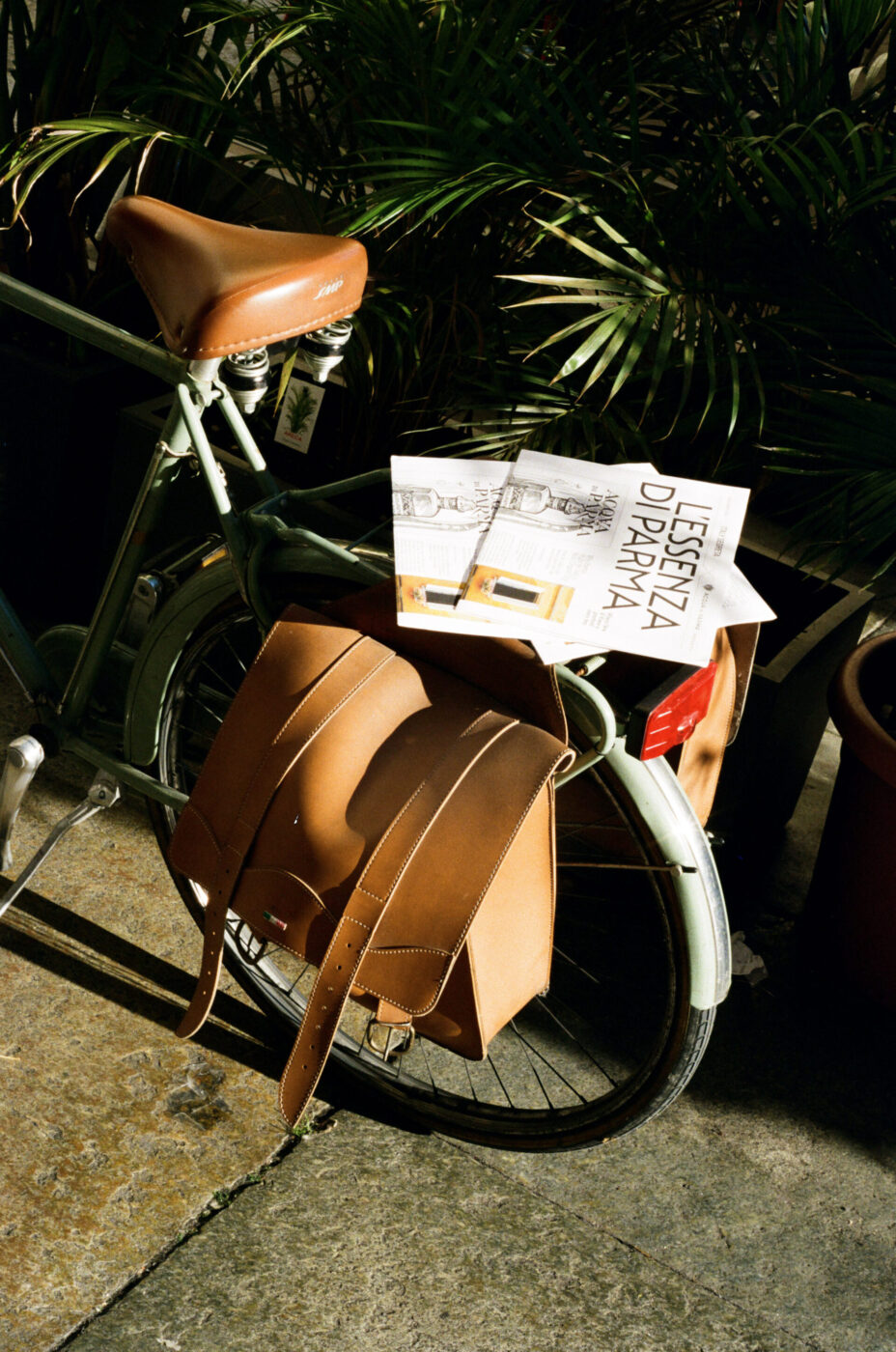
In Parma, even the air itself seems cultured. It smells of the citrus-laced elegance of Acqua di Parma, and, on certain nights, it carries the distant, dramatic swell of a Verdi aria. This is the heart of Emilia-Romagna, Italy’s “Food Valley,” but it is also a city of profound art, music, and a refined, unhurried pace of life that defines the Italian concept of l’arte di vivere—the art of living.
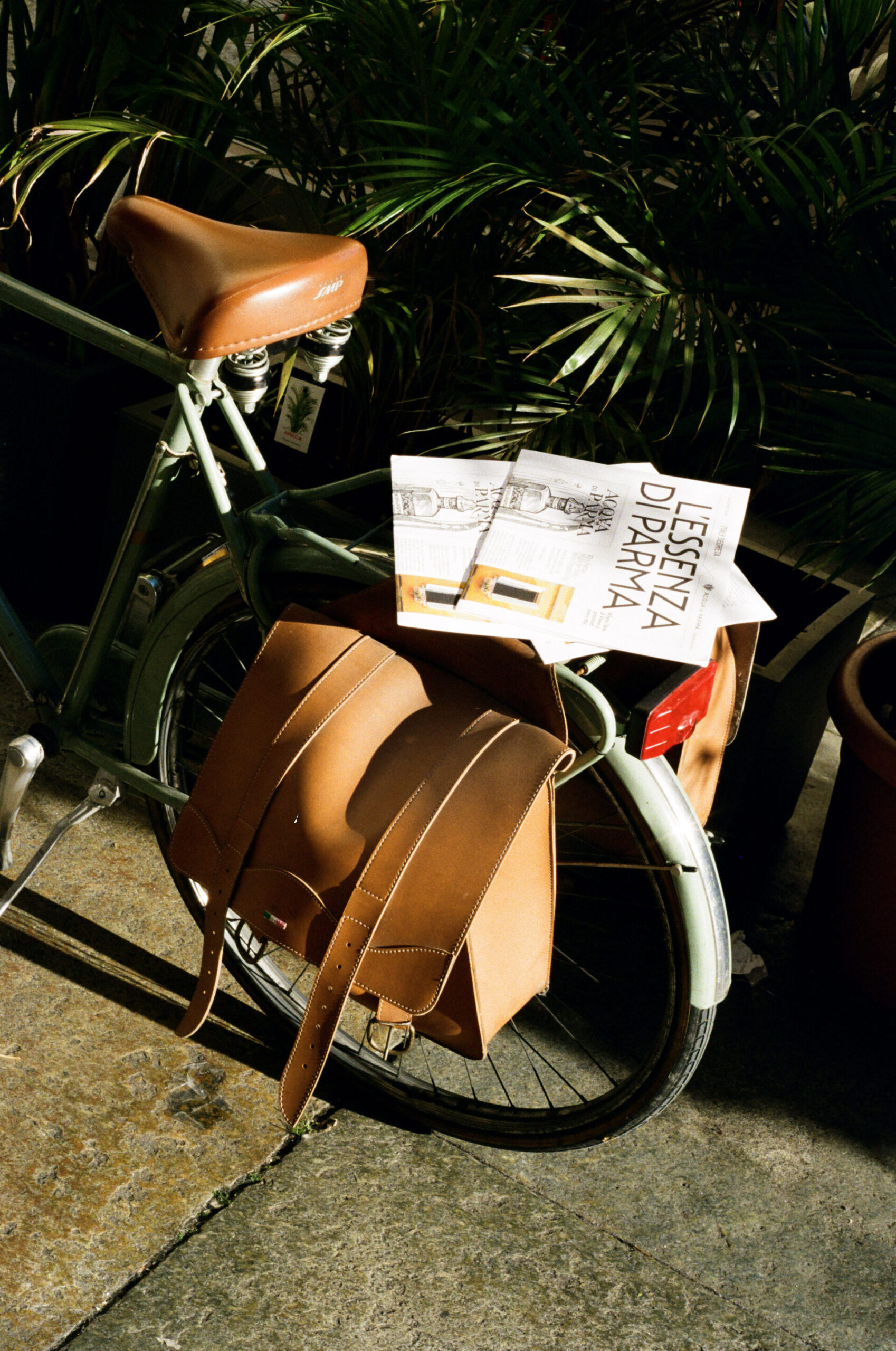
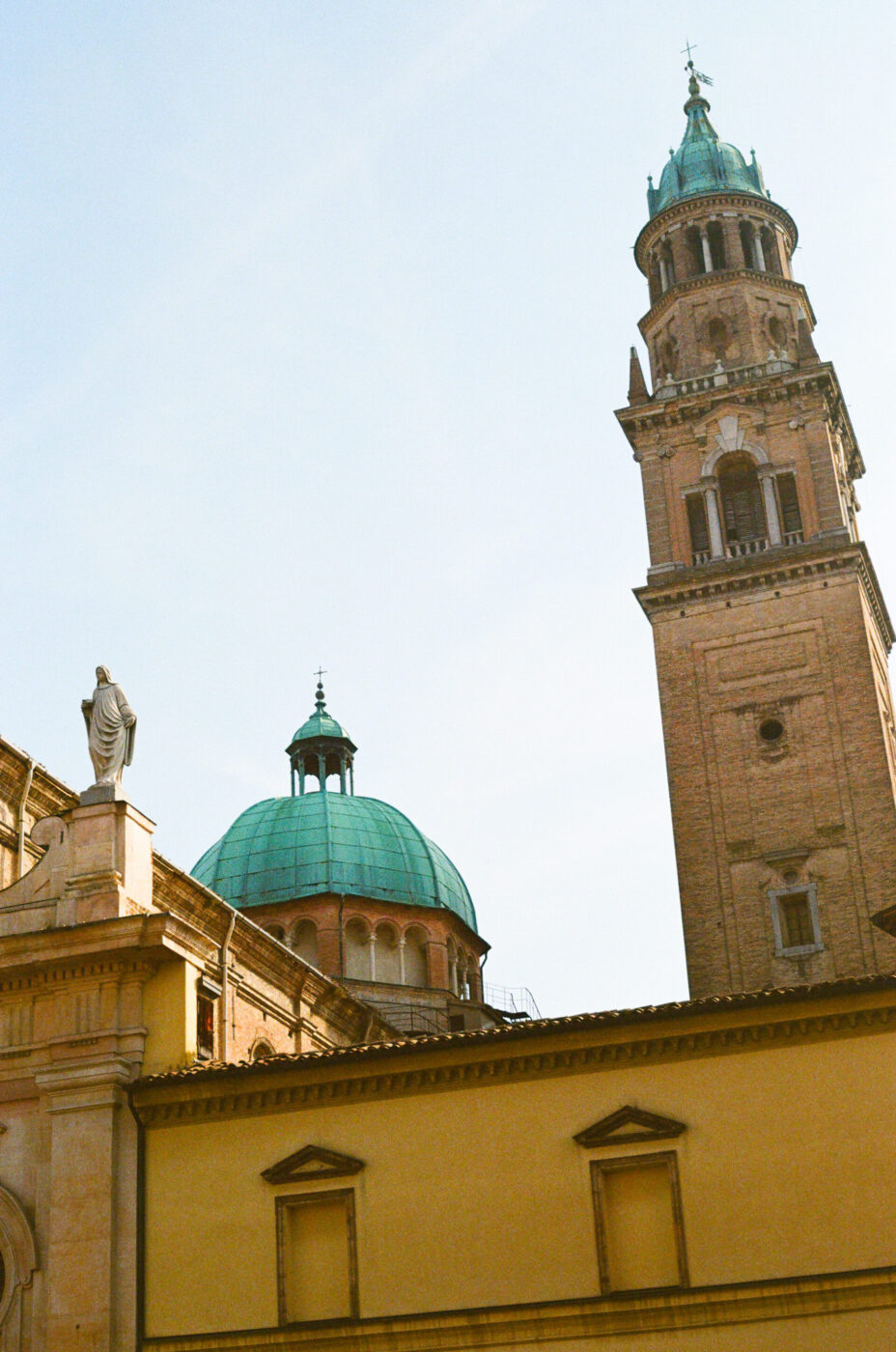
This is not the chaotic grandeur of Rome or the Renaissance wonderland of Florence. Parma’s appeal is more subtle. It is a city that, as local restaurateur Virgilio Buratti Zanchi puts it, “allows you to enjoy the advantages of a big city—university, work, cinema, theater, gastronomy—while enjoying the benefits of a small town.” Here, you can gaze upon the High Renaissance masterpieces of Correggio and Parmigianino in the morning and reach anywhere you need to go by bicycle in the afternoon. You can step into the octagonal Battistero, sheathed in pink Verona marble—a Romanesque-to-Gothic bridge ringed with zodiac reliefs and 13th-century frescoes—before running into your friend around the corner.
In Parma, the art of living is practiced daily in the city’s theaters, osterias, and historic shops. Here, seven such places that capture the spirit of Parma.
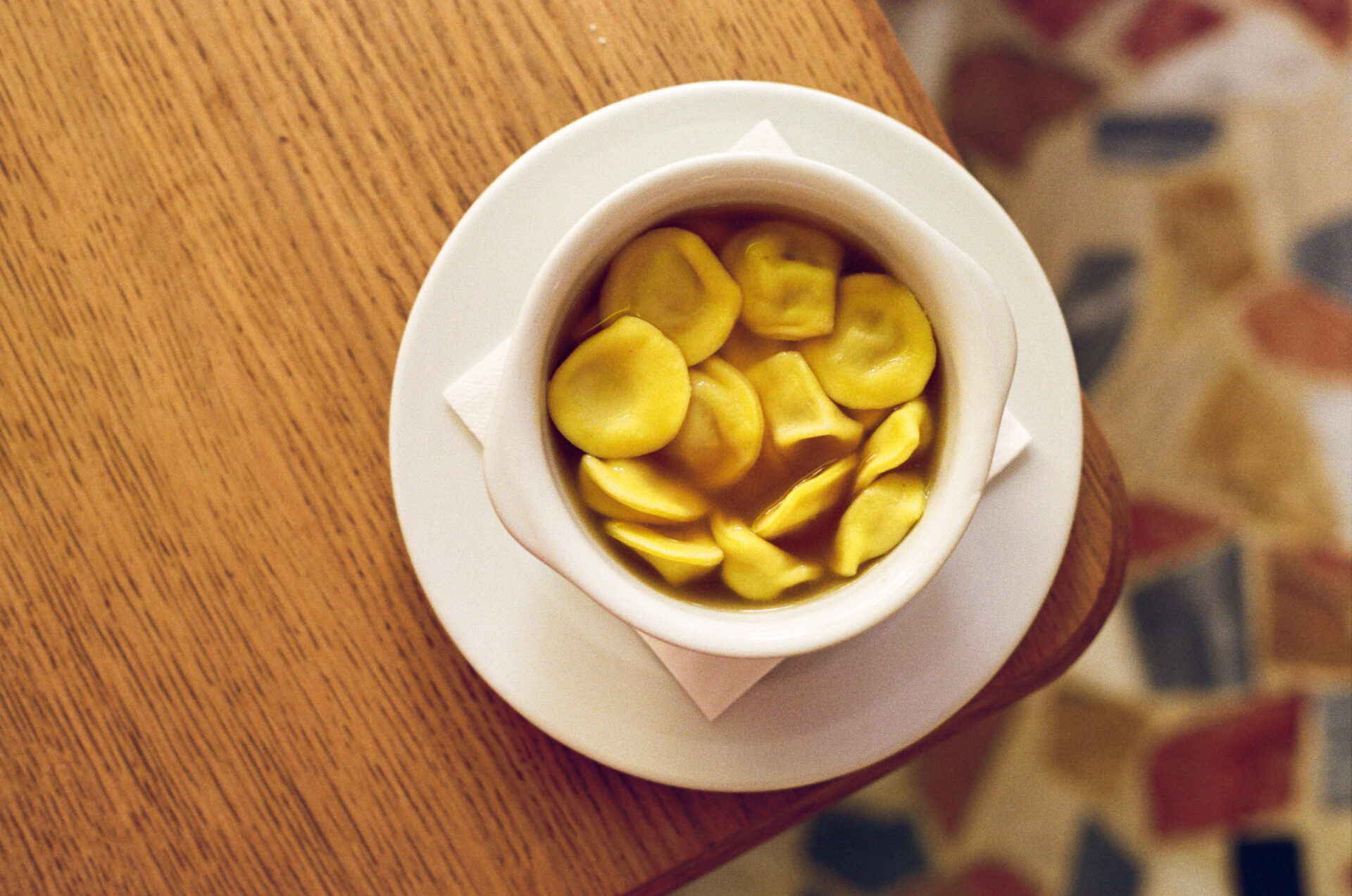
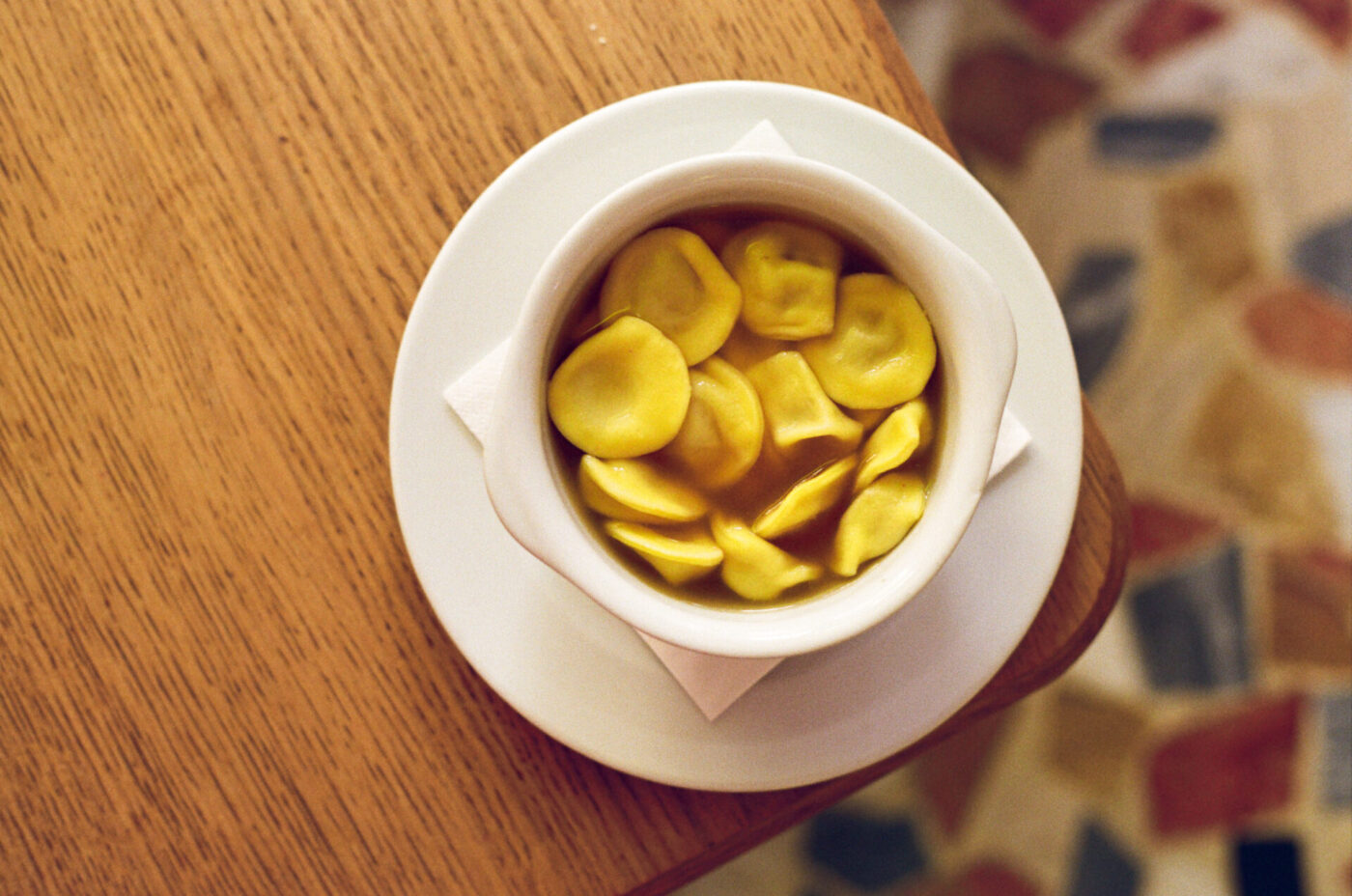
Anolini in brodo at Osteria Virgilio
OSTERIA VIRGILIO
In the historic Oltretorrente neighborhood, across the river from Parma’s grand palazzi, Virgilio Buratti Zanchi has been what locals call an oste resistente—a “resistant innkeeper”—since 2003. His Osteria Virgilio serves as Parma’s intimate 30-seat bastion for the most authentic local flavors.
“Parma’s regional cuisine has been codified for many years, therefore recipes have a very strong and unchangeable identity,” he explains. Nowhere is this code more fiercely protected than in pasta. The restaurant is a pilgrimage site for Parma’s two foundational stuffed pastas. First is anolini in brodo—tiny pasta parcels filled with stracotto and Parmigiano, and served in a rich broth—which are a non-negotiable part of every local Christmas. The secret, Virgilio explains, is “excellent 36-month-old Parmigiano and the size of the anolino itself: small and thin.”
Alongside them are the equally delicious tortelli d’erbetta, the rectangular ravioli filled with ricotta and herbs, traditionally served (as they are here) drowned in butter and snowed over with Parmigiano.
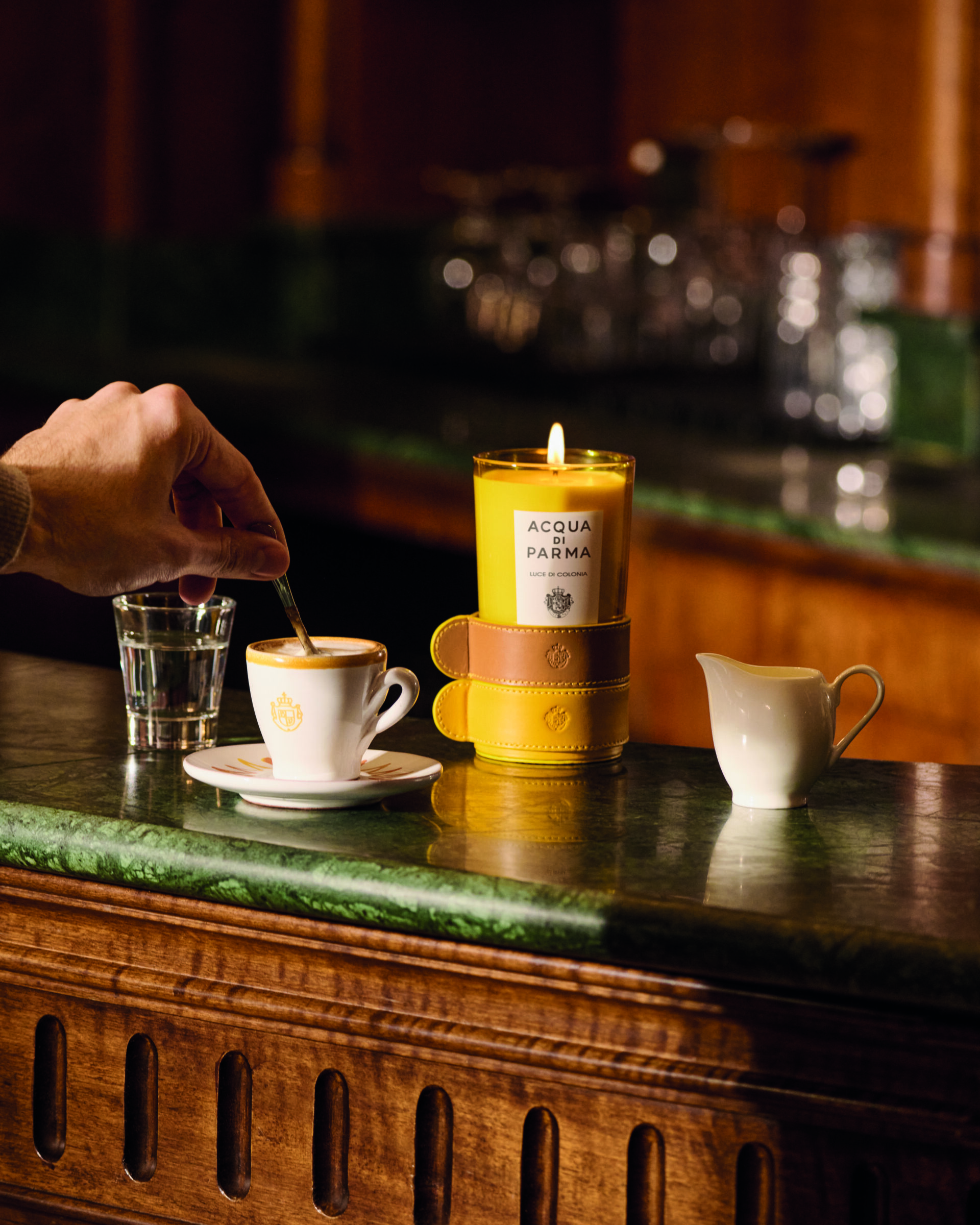
Gran Caffè Cavour
GRAN CAFFÈ CAVOUR
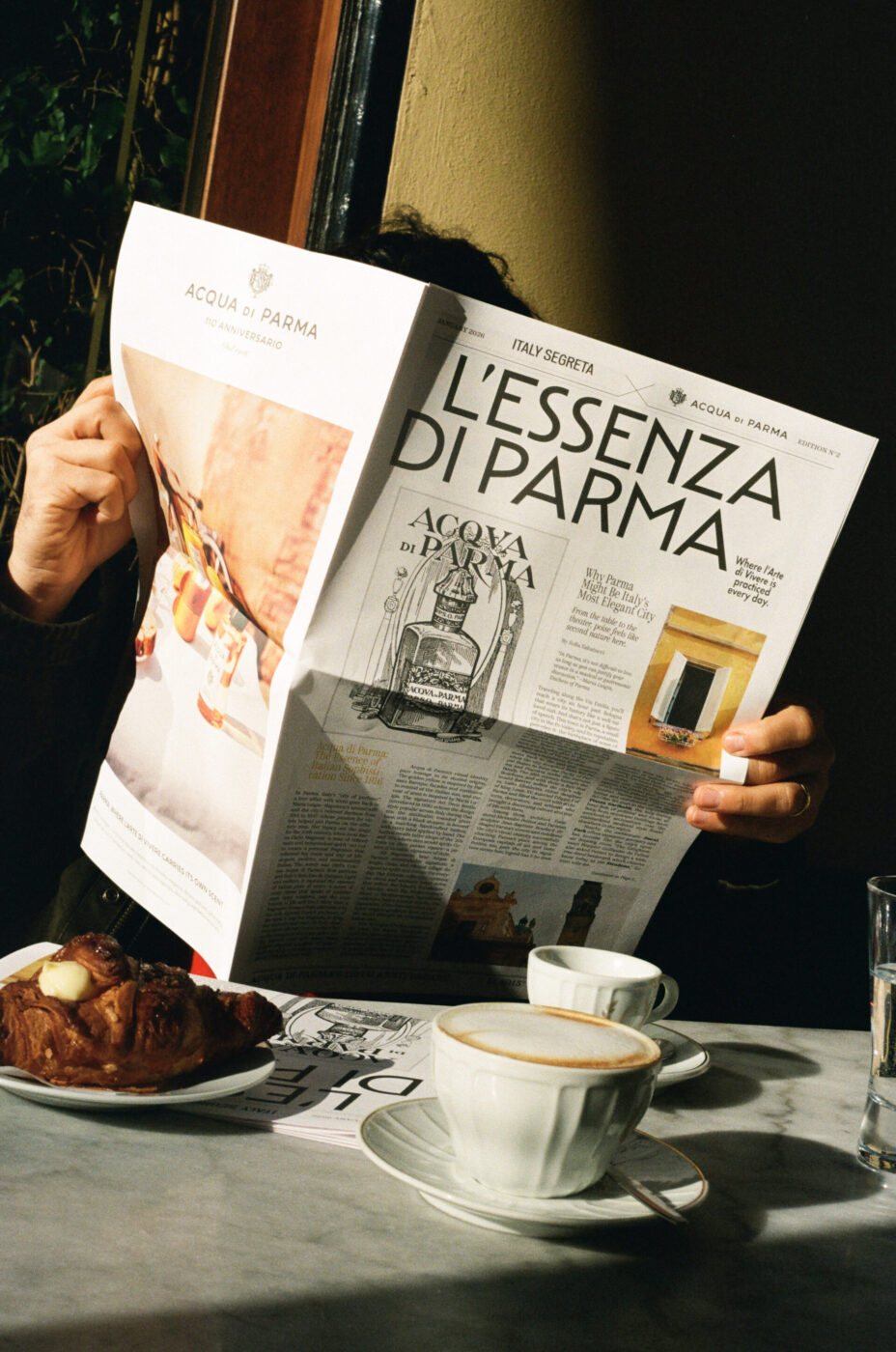
In Parma, colazione (breakfast) is a cherished daily rite, and the Gran Caffè Cavour is its most elegant stage. As one of the city’s botteghe storiche (historic shops), it serves as Parma’s true salotto (drawing room), balancing a clientele of refined locals and curious visitors. Its magnificent Art Nouveau interiors, dating to its opening around the early 20th century, are defined by intricate stucco, gilded mirrors, and dark wood paneling; a grand crystal chandelier dominates the main room, illuminating the high ceilings. This was the chosen meeting place for Parma’s intellectuals, including the poet Attilio Bertolucci and writer Giovannino Guareschi, who came to debate all sorts of matters over coffee.
The pastry case itself is a work of art, featuring a stunning array of pasticceria mignone (miniature pastries)—tiny fruit tarts, bignè filled with chantilly or chocolate—alongside generous crostate (tarts), rich with seasonal jam, and local specialties like the torta di riso (a traditional rice cake) or the opulent Duchessa, a dome-shaped cake created for Duchess Maria Luigia, layered with zabaglione and chocolate.
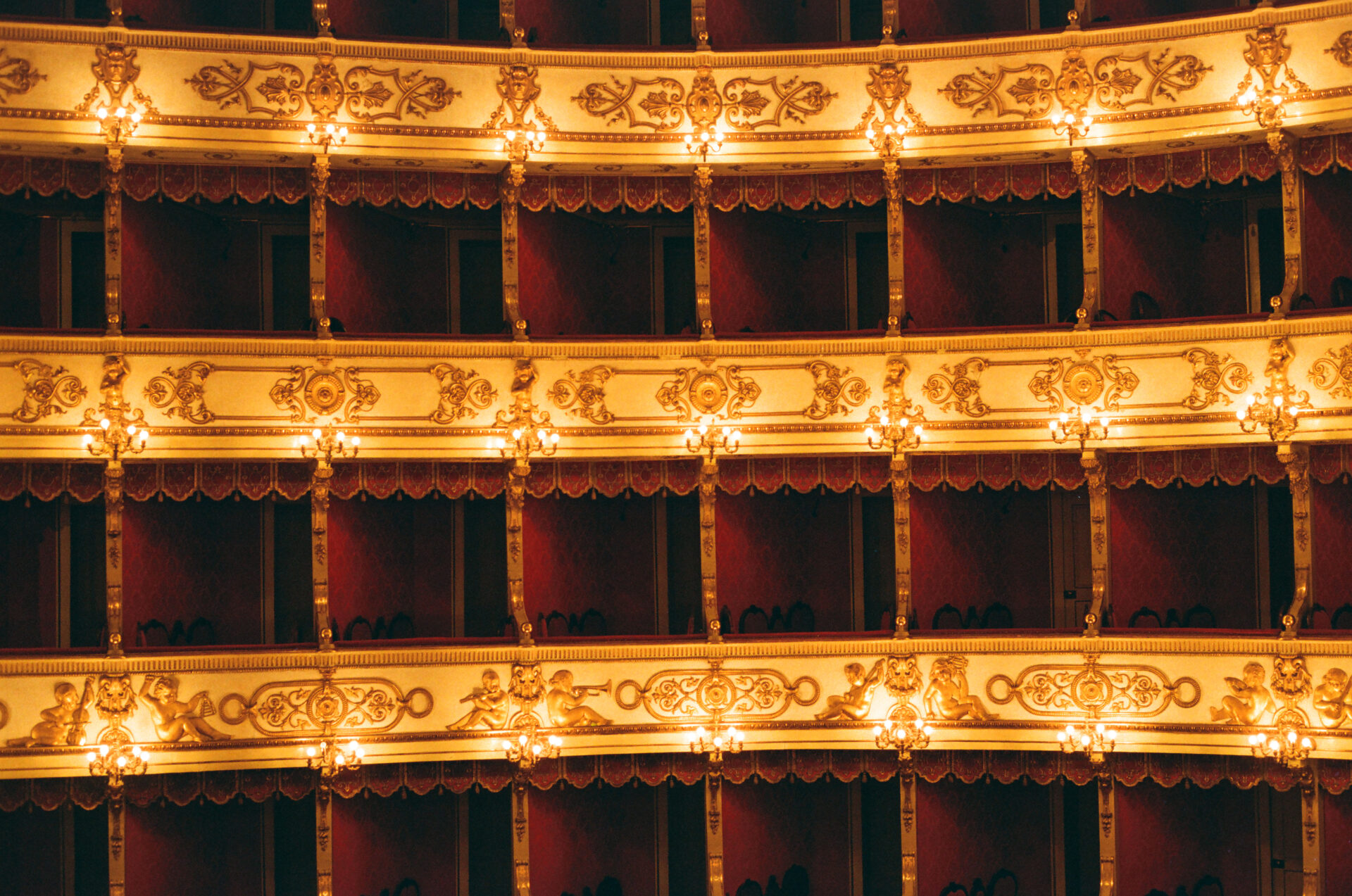
Inside Teatro Regio
TEATRO REGIO
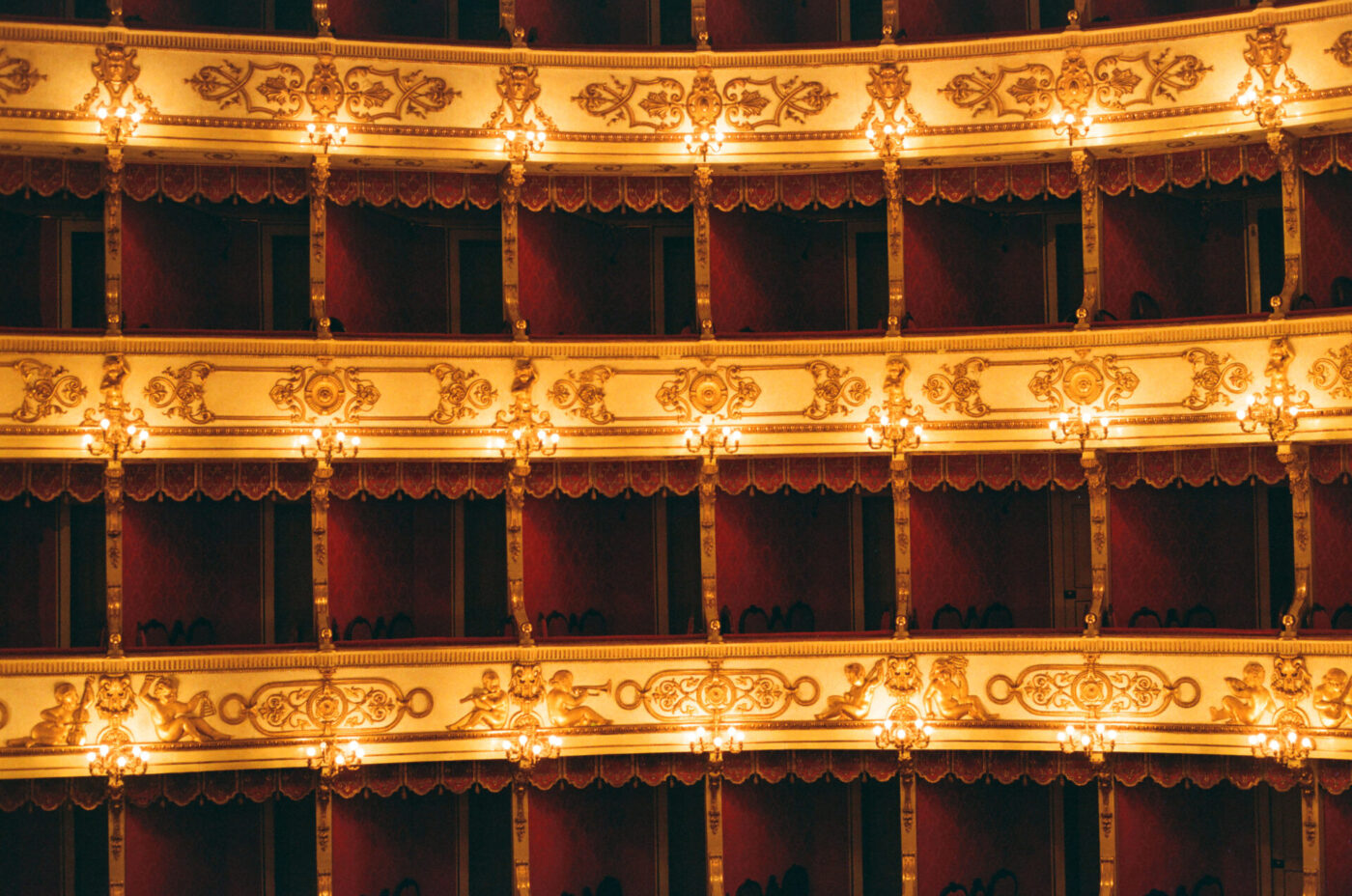
Parma’s cultural life revolves around music, and its temple is the Teatro Regio, a stunning neoclassical opera house commissioned by Duchess Maria Luigia (who watched her operas from the Royal Box). When it opened in 1829 with Zaira, an opera composed for the occasion by Vincenzo Bellini, it was a statement of her modern vision: it was the first public theater in the territory, open to all social classes and built with integrated production spaces like rehearsal rooms, scenography workshops, and tailoring facilities.
Designed by the architect Nicola Bettoli, who took his inspiration from Milan’s Teatro alla Scala, the 1,200-seat theater was built to be a “harmonic resonance box,” explains one of the theater’s official guides, with a horseshoe shape and wooden construction to perfect its acoustics. Though Maria Luigia’s original blue-and-gold decor was stripped away in 1853 by a new duke, the magnificent sky-blue ceiling, painted with Greek gods, remains from the original design.
The theater is the global epicenter for the music of Parma’s native son, Giuseppe Verdi, who was born just outside the city. It hosts the annual Festival Verdi, a month-long immersion in the maestro’s works that also spills into the streets with Verdi OFF—free performances across the city from deconsecrated churches to piazzas, retirement homes, and prisons.
But the theater’s most unique feature is hidden behind the box seats: retropalchi—private, furnished back-rooms. The guide explains that in the 19th century, these were “private spaces where nobles could gamble, flirt, eat, and drink.” These spaces have been passed down through the local families, furnished and decorated as they wish, and it’s not uncommon to find a few hosting aperitivo in them before the shows start.
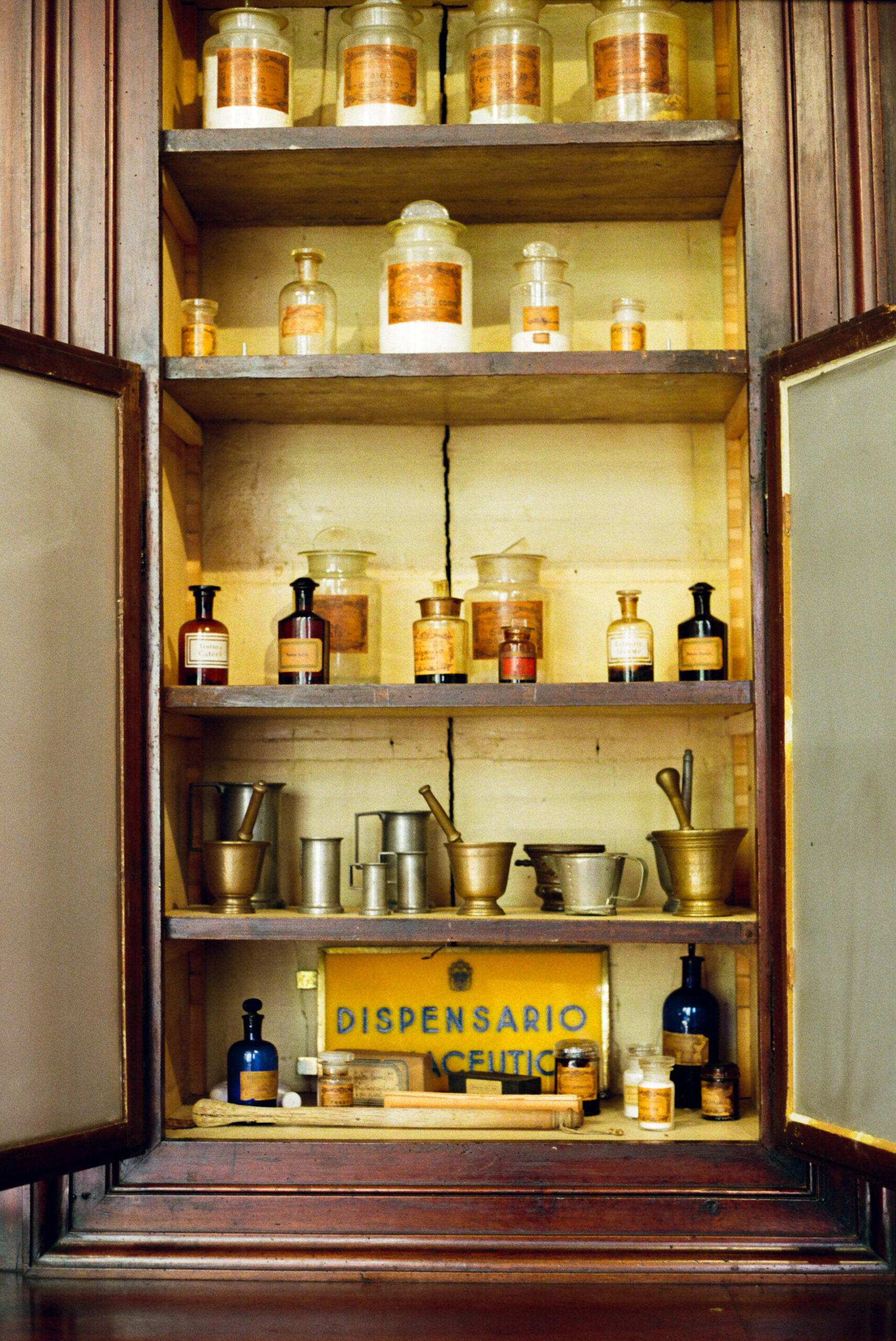
Antica Farmacia San Filippo Neri
ANTICA FARMACIA SAN FILIPPO NERI
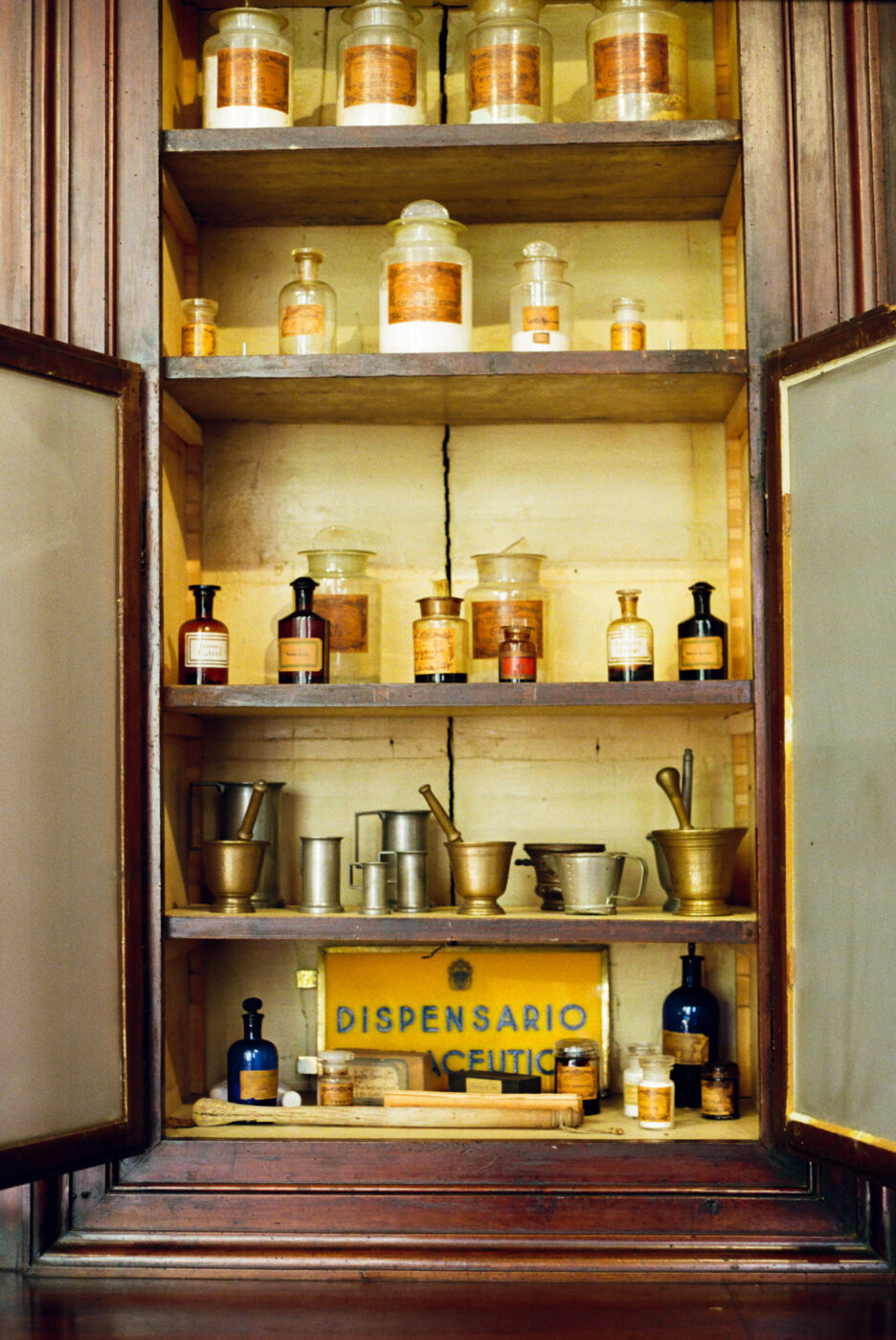
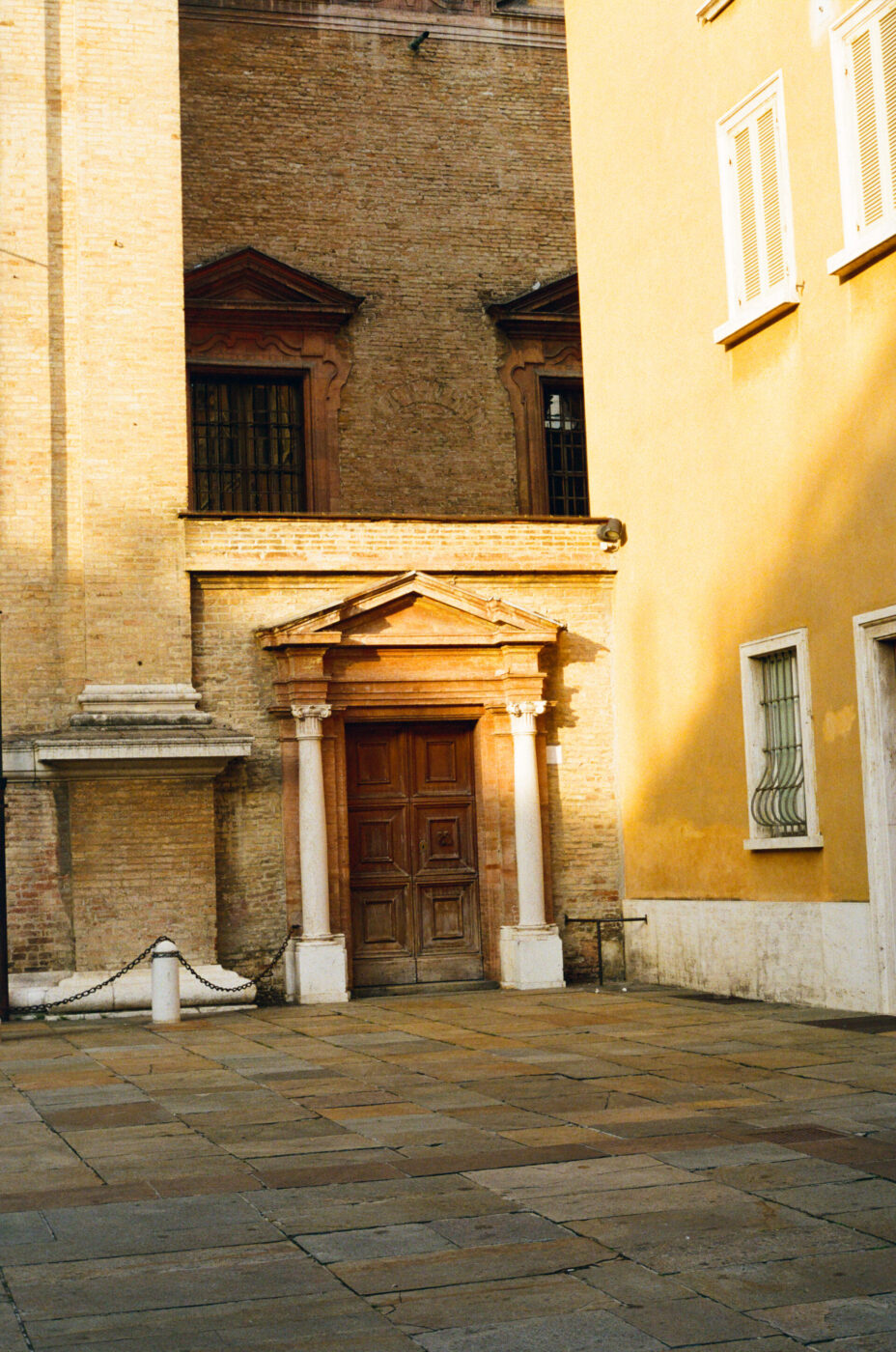
Inside the Palazzo San Tiburzio is a place that captures Parma’s deep-seated social conscience: the Antica Farmacia San Filippo Neri. A perfectly preserved 18th-century laboratory, the pharmacy was founded by the Congregazione di Carità (Congregation of Charity), a civic group established in 1500 to care for the city’s poor.
For centuries, this pharmacy never sold anything, explains spokesperson Anna Mambrioni. “Its sole purpose was to produce pharmaceuticals to distribute for free to the sick in need.” The Congregation’s doctors would visit the poor in their homes and return to the pharmacy to retrieve the necessary cures—the first structured home assistance in the world.
The pharmacy’s work was so revered that when Napoleon was dissolving religious orders, he not only preserved Parma’s Congregation but ordered that Congregations of Charity in every city of Italy be established based on its model. The pharmacy was later awarded a gold medal by Duchess Maria Luigia for its work to stop a cholera epidemic in 1836 and, along with French authorities, managed one of Italy’s first vaccination campaigns against smallpox.
Today, the pharmacy is a museum and educational center, its wooden shelves lined with original 18th-century jars that contain ingredients like crab eyes, belladonna, and “sangue di drago“, not actually dragon’s blood but the root of a red plant.
Anna Mambrioni explains that this history is directly linked to another of Parma’s famed industries. “At ancient pharmacies or apothecaries,” she says, “distillation techniques were developed and aromatic plants were used, giving rise to what we know today as perfumery.” In Parma, it seems, even the art of healing is inseparable from the art of living.
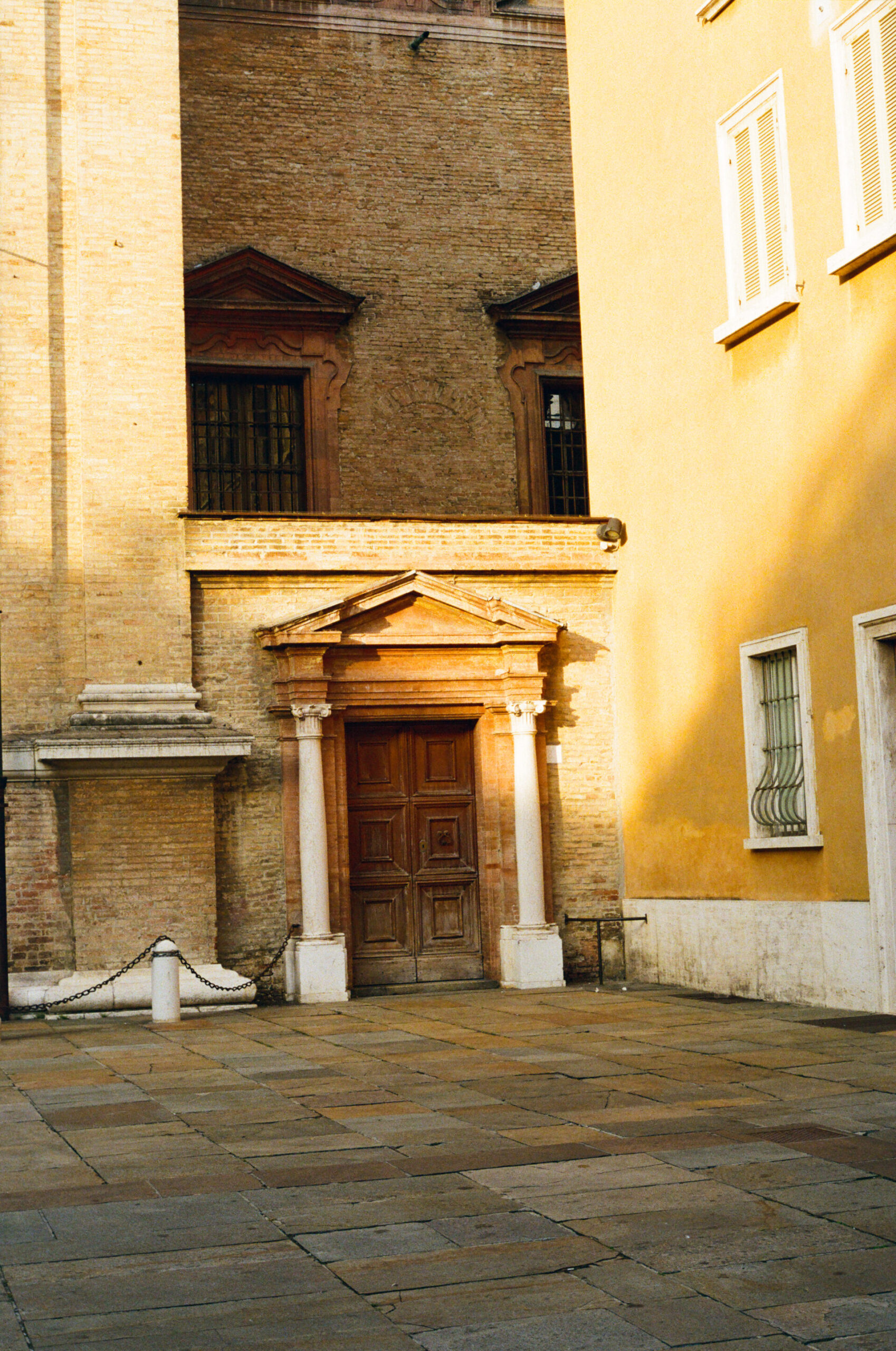
The view of Piazza della Steccata from Ciacco
CIACCO
In Piazza della Steccata, you’ll find Ciacco, a gelateria built on a philosophy of radical purity, summed up by its motto: “gelato senz’altro” (“gelato without anything else”). For founder Stefano Guizzetti, a “scientist-gelatiere” who moved to Parma to study Food Science and opened Ciacco in 2013, this means short ingredient lists that lead to true, intense flavors.
Guizzetti’s “lab” is a library of tastes, built on a network of relationships with local farmers, and his philosophy of using everything—not just peels, but also infusions from hay, fig leaves, or even bark—results in flavors that are elegant, surprising, and constantly rotating. You might find a bright Lemon and Juniper, a refreshing Hibiscus, Pineapple and Mint, or an earthy autumnal Pumpkin, served alongside pristine classics made from Bronte DOP pistachios or organic Uji matcha. Try some scoops at Ciacco—housed in an antica cappelleria, a charming, century-old hat shop that’s retained its original wooden furnishings—and you’ll experience a modern expression of Parma’s deepest value: that the highest form of art comes from the purest ingredients.
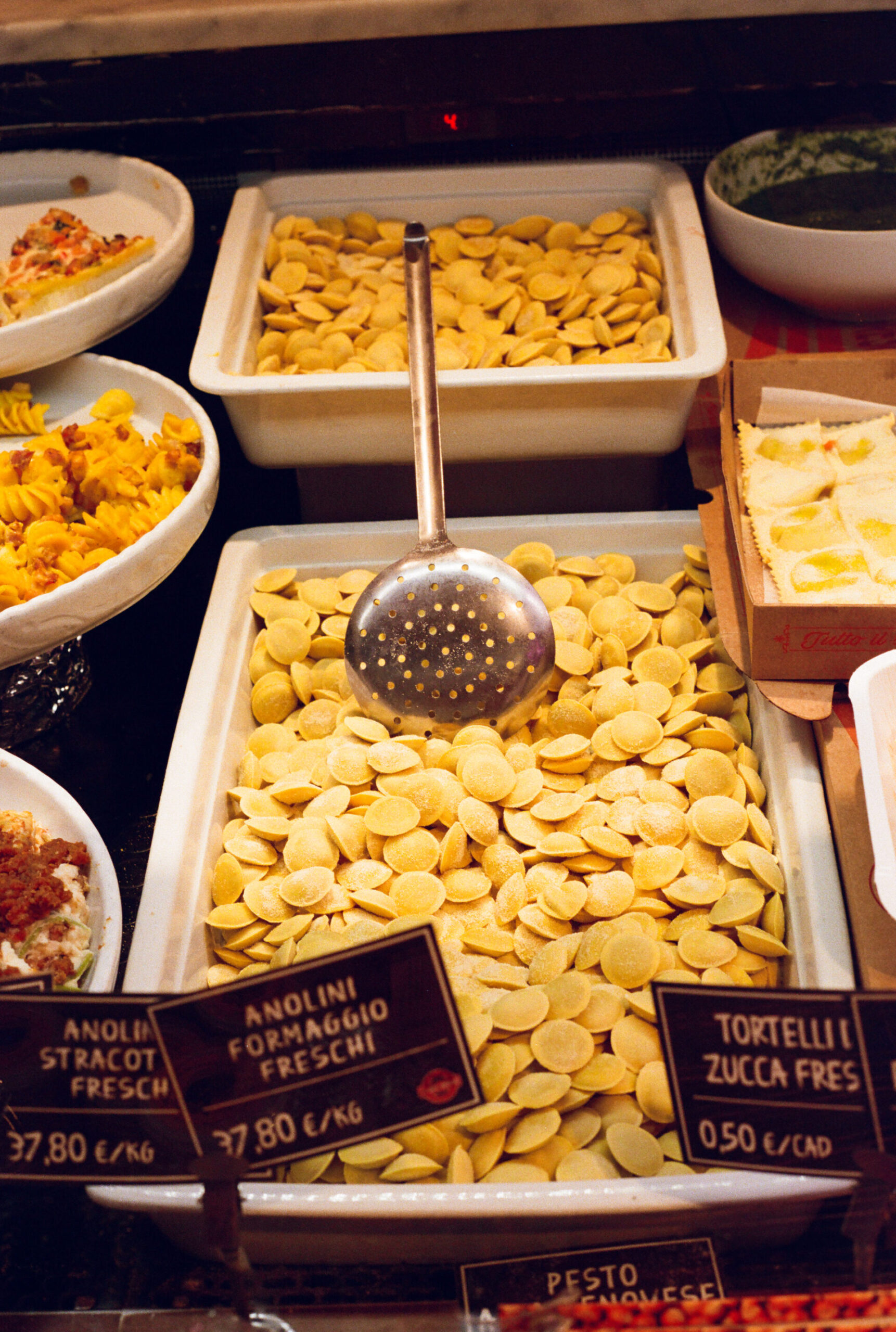
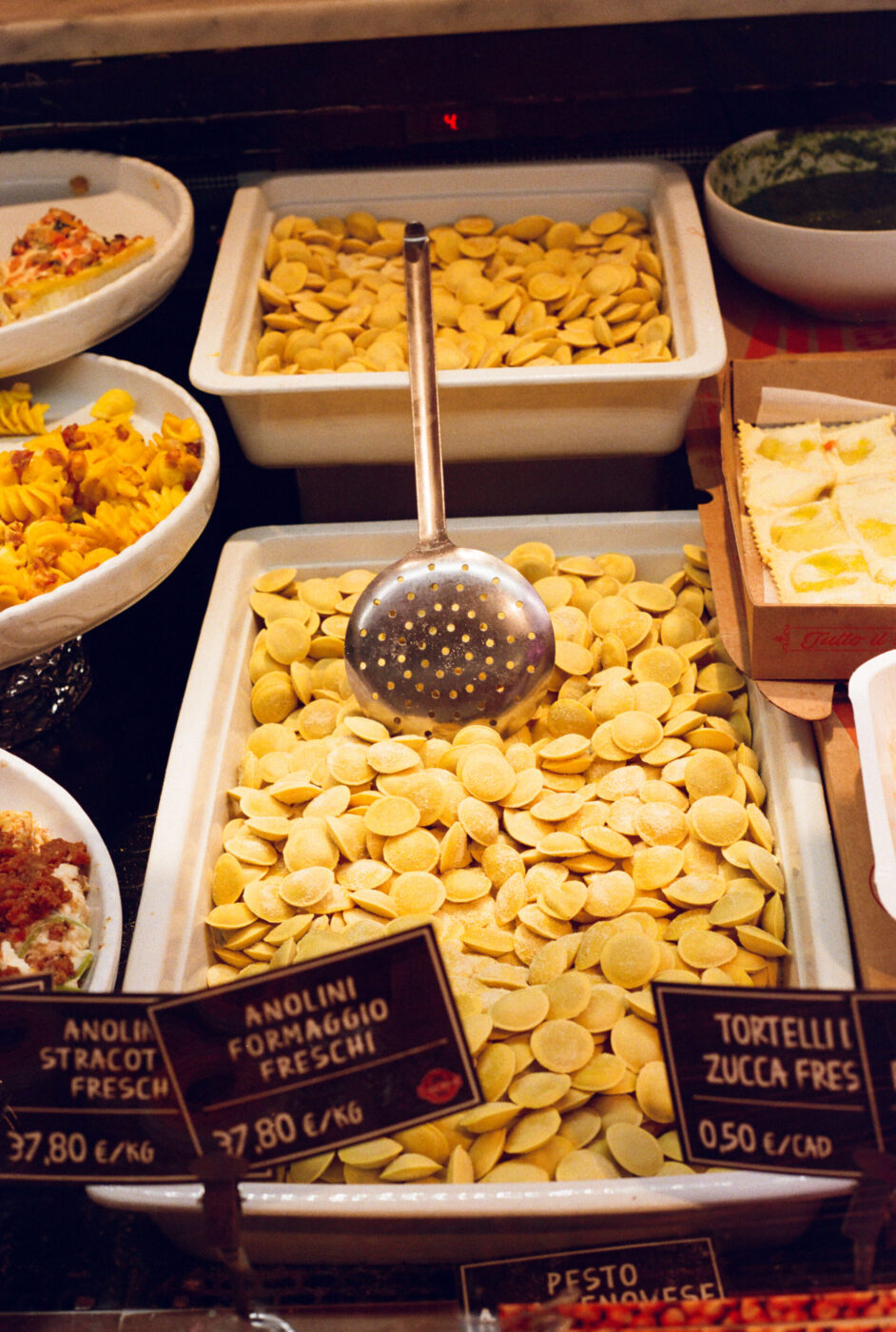
Anolini to take home from La Prosciutteria
LA PROSCIUTTERIA
“You live well, and above all, you eat well,” says Andrea Venturini of Parma; he works at one of the city’s premier delicatessens, La Prosciutteria. While many come for Prosciutto di Parma and Parmigiano-Reggiano, Venturini points to a holy trinity of local cured meats. There’s culatello, the prized heart of the pork thigh; culaccia, a similar cut aged with its rind; and strolghino, a salame made from the lean parts of culatello. Its name, from strolga (diviner), comes from its use as a quick-curing salame to “predict” the quality of the long-aging culatello.
The craft here extends to the aforementioned anolini. “La sua morte è col brodo,” Venturini jokes—its destiny is to end up in broth. “The climate doesn’t help, but all the food certainly does,” he finishes. It’s a sentiment that captures the city perfectly: even when the Po Valley fog hangs heavy, the warmth of Parma is found at the table.
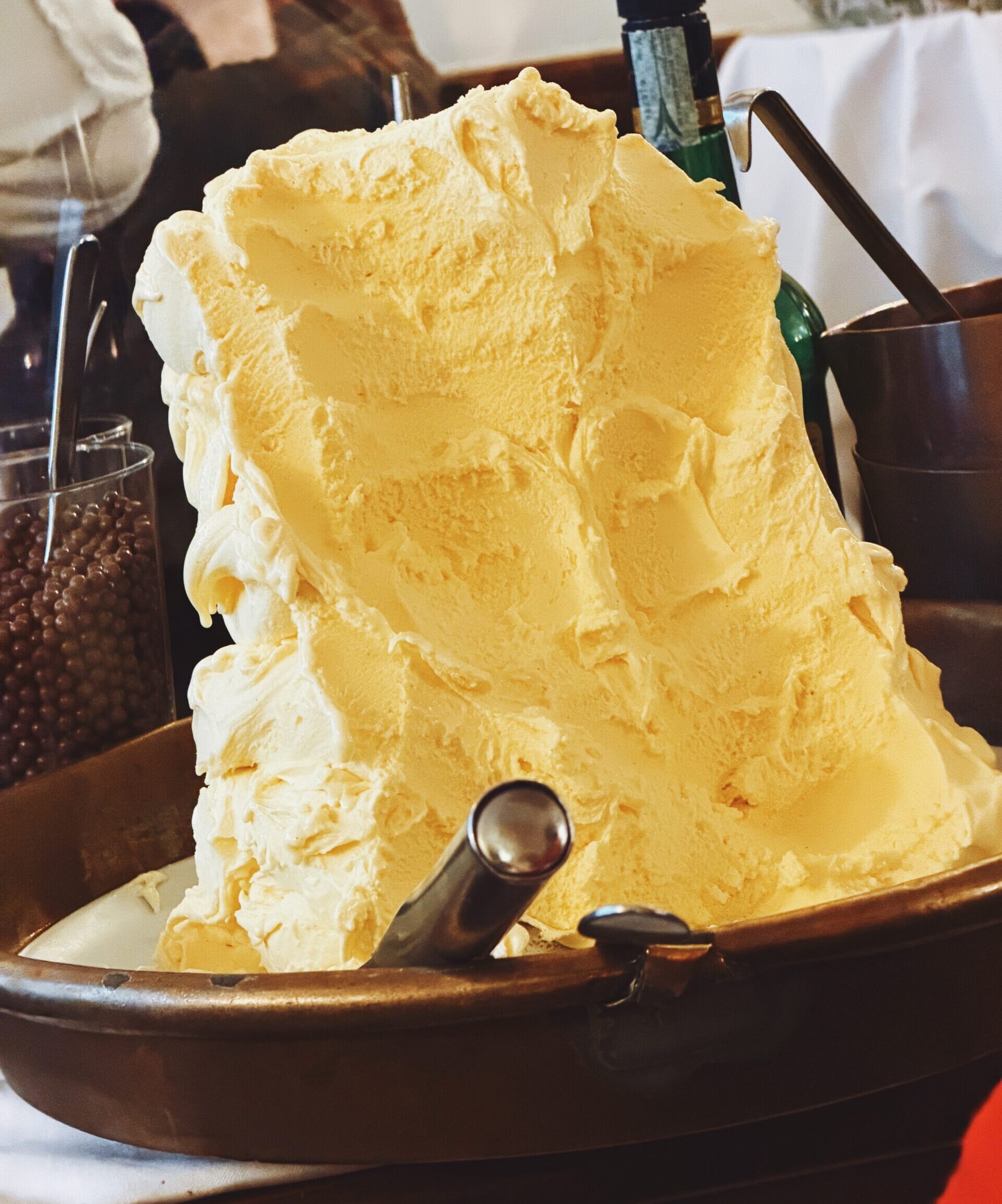
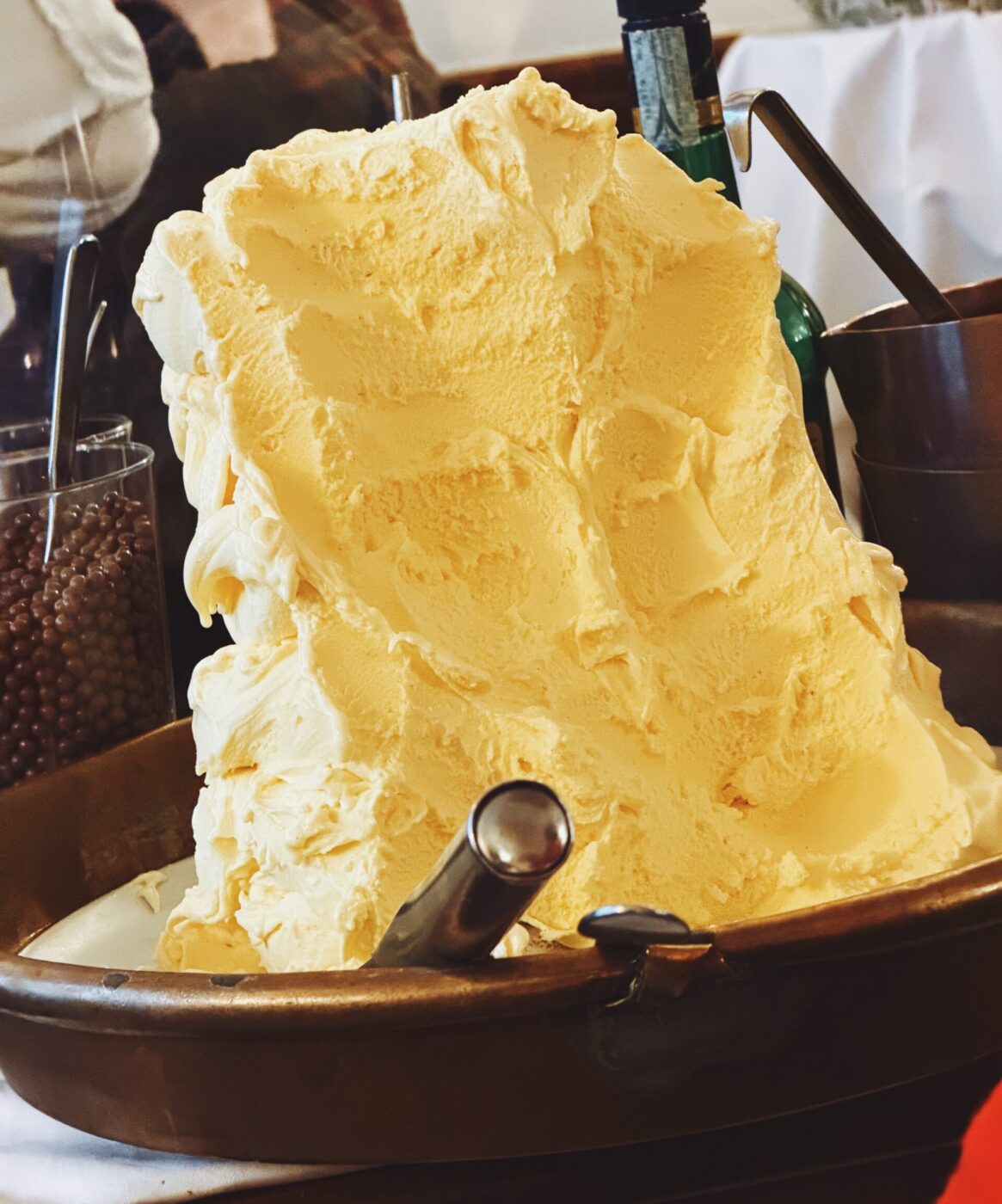
The gelato alla crema at Ai Due Platani
AI DUE PLATANI
Head just outside the city to the small hamlet of Coloreto, and you’ll reach Ai Due Platani. Born in the early 20th century and shaped by generations of local life, this trattoria once housed everything from a grocery store and barber to a bocce court and a cinema-oratory—the heart of a self-sufficient rural world. The two sycamore (platani) trees out front (only one remains today), planted to celebrate the birth of an original owner’s son, give the restaurant its name, and today, under the stewardship of Giancarlo Tavani and Gianpietro Stancani, flavorful, honest cooking comes courtesy of Ai Due Platani’s chefs and the small producers in their supply chain.
“At the trattoria, we carry [Parma’s culinary tradition] forward responsibly, knowing that in the meantime, the restaurant industry is moving ahead with new trends and innovations,” explains Giancarlo. “What we try to do is contextualize traditional cuisine, bring it into the modern day, and make it as accessible as possible to the public—to the widest audience possible.” Their philosophy is best tasted in the house favorites, from the classic antipasto misto di affettati (mixed cold cuts)—order the little Borretane onions in agrodolce as an add on—to pastas like tortelli di zucca (pumpkin tortelli) and a gorgeous green tagliatelle with duck ragù. We suggest ending the meal with the rich gelato alla crema, made on the spot with caramelized hazelnuts, zabaglione liqueur, and/or liqueur-soaked cherries, if you so desire. It is a finish that confirms Parma’s art of living ripples far beyond the city center.