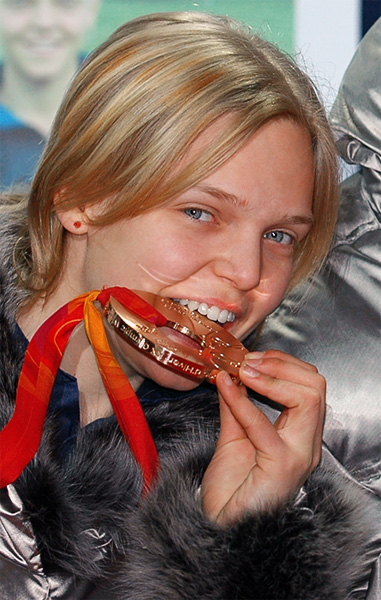
Beijing, 2022. The women’s speed skating 500-meter final. It took three starts to decide the race. First, a false start reset the field. Then, a collision sent Italian Arianna Fontana sliding across the ice, forcing officials to call the pack back again. On the third attempt, everyone’s nerves frayed, the race unfolded at full speed.
The Netherlands’ Suzanne Schulting took the lead, with Fontana skating relentlessly at her shoulder, matching her stride for stride. With two laps remaining, Fontana seized her moment. Low and fearless, she executed an impeccably-timed inside pass on the Dutch world champion, crossing the finish to secure gold.
It was a defining performance for Italy’s most decorated Winter Olympian. Short track speed skating is a sport defined by chaos, one where instinct, composure, and nerve decide everything. And with 11 medals spanning five Games (including back-to-back golds in the 500m at PyeongChang 2018 and Beijing 2022), Fontana has built a legacy on mastering the unexpected.
On the ice since age four, she claimed her first Olympic medal at just 15. Now, the 35-year-old faces perhaps her most emotional challenge yet: competing on home soil. With the Milan-Cortina Games on the horizon, Italy Segreta spoke with the ever-humble Fontana about the pressure of the home crowd, the evolution of success, and life as an Olympian.
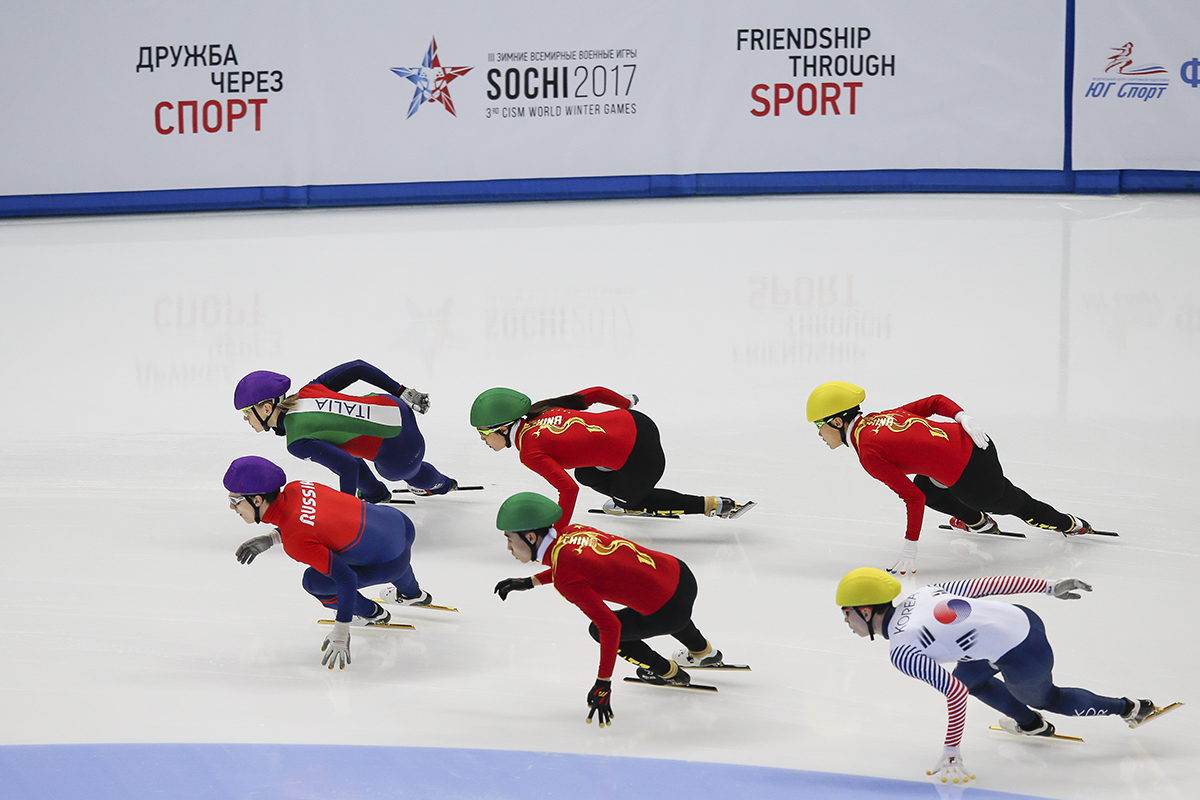
Fontana competing in the 3,000m mixed relay at the 3rd CISM World Winter Games in Sochi (2017). Photo by Sergey Kivrin/CISM2017; Mil.ru, CC BY 4.0, via Wikimedia Commons.
Francesco Dama: Short track is often described as chaotic and unpredictable. How do you mentally prepare for a sport where control is never absolute?
Arianna Fontana: You learn to make peace with uncertainty. Control in short track is never complete, and resisting that truth only creates tension. Instead, I train myself to remain present—to respond rather than impose. I focus on what belongs to me: awareness, instinct, choice. Calm, in the middle of chaos, becomes a form of strength you build over time.
FD: You started skating as a child. How did your passion for the sport begin?
AF: I actually followed my brother onto the ice, not knowing that I was stepping into the place where I would eventually find myself. At first it was just movement, speed, the joy of being together. The ice felt like freedom well before it felt like destiny. There was no single moment of realization—only a gradual falling in love, until skating stopped being something I did and became part of who I am.
FD: What’s the hardest part of skating?
AF: The repetition. The long hours of doing the same thing again and again, when no one is watching, when you feel like you’re not making any progress. Your body aches, your motivation wavers, and nothing looks heroic. But that’s ultimately where everything is decided.
FD: What’s one aspect of everyday life as an Olympian that might surprise people who only see the competition days?
AF: How restrained it is. Ordinary, even. Life is a sequence of carefully measured choices: sleep, recovery, food, travel. Training days are disciplined and often solitary. One of the least visible but most decisive elements is rest. Sleep shapes performance more than people imagine.
FD: You’ve competed at the highest level across multiple Olympic cycles. How has your understanding of success evolved from your first Games to today?
AF: At the beginning, success was something external—a medal, a confirmation. Now it feels internal. Success is alignment: when the way I train, the way I race, and the person I am move in the same direction. A performance matters when I can recognize myself in it, regardless of the final result.
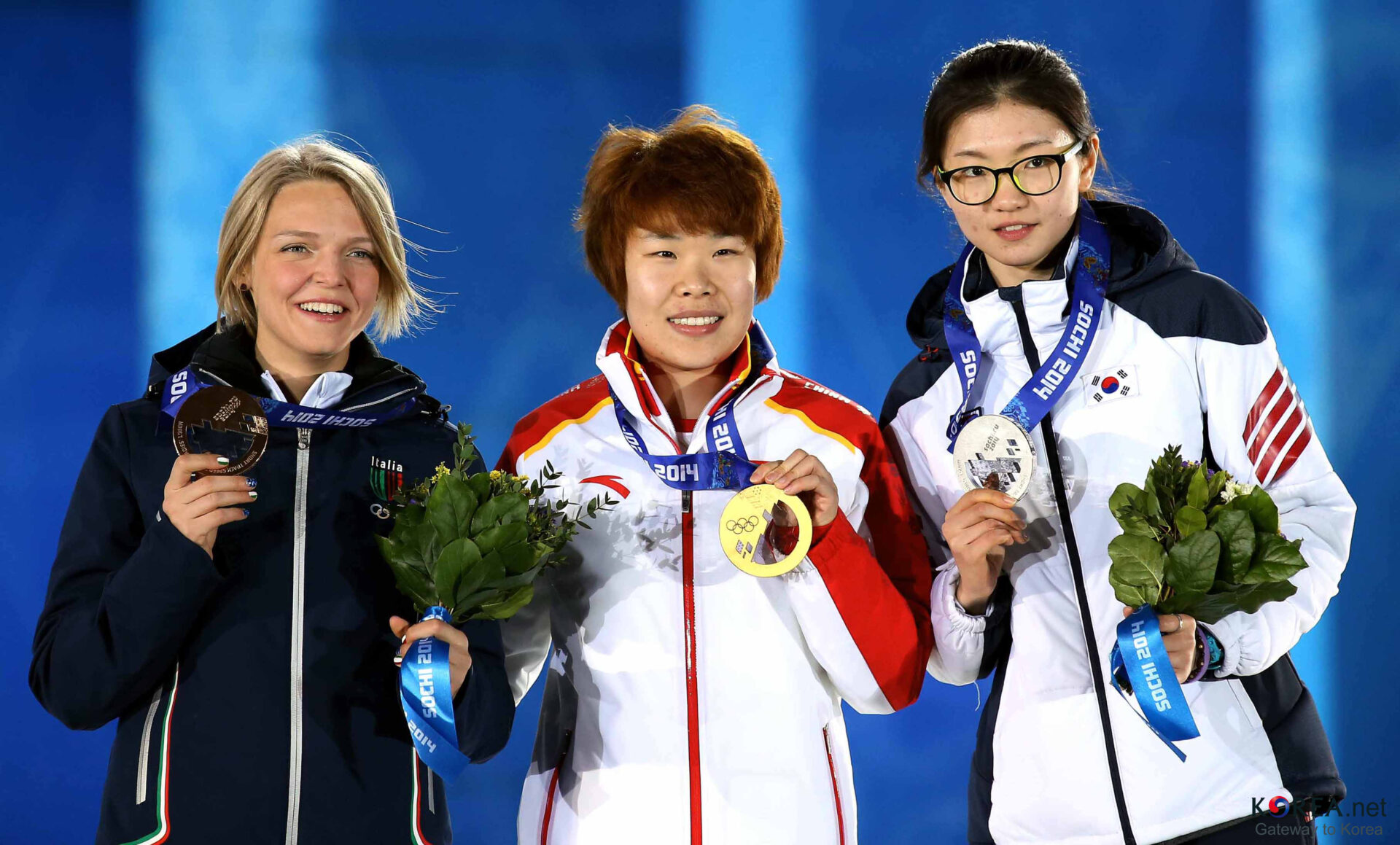
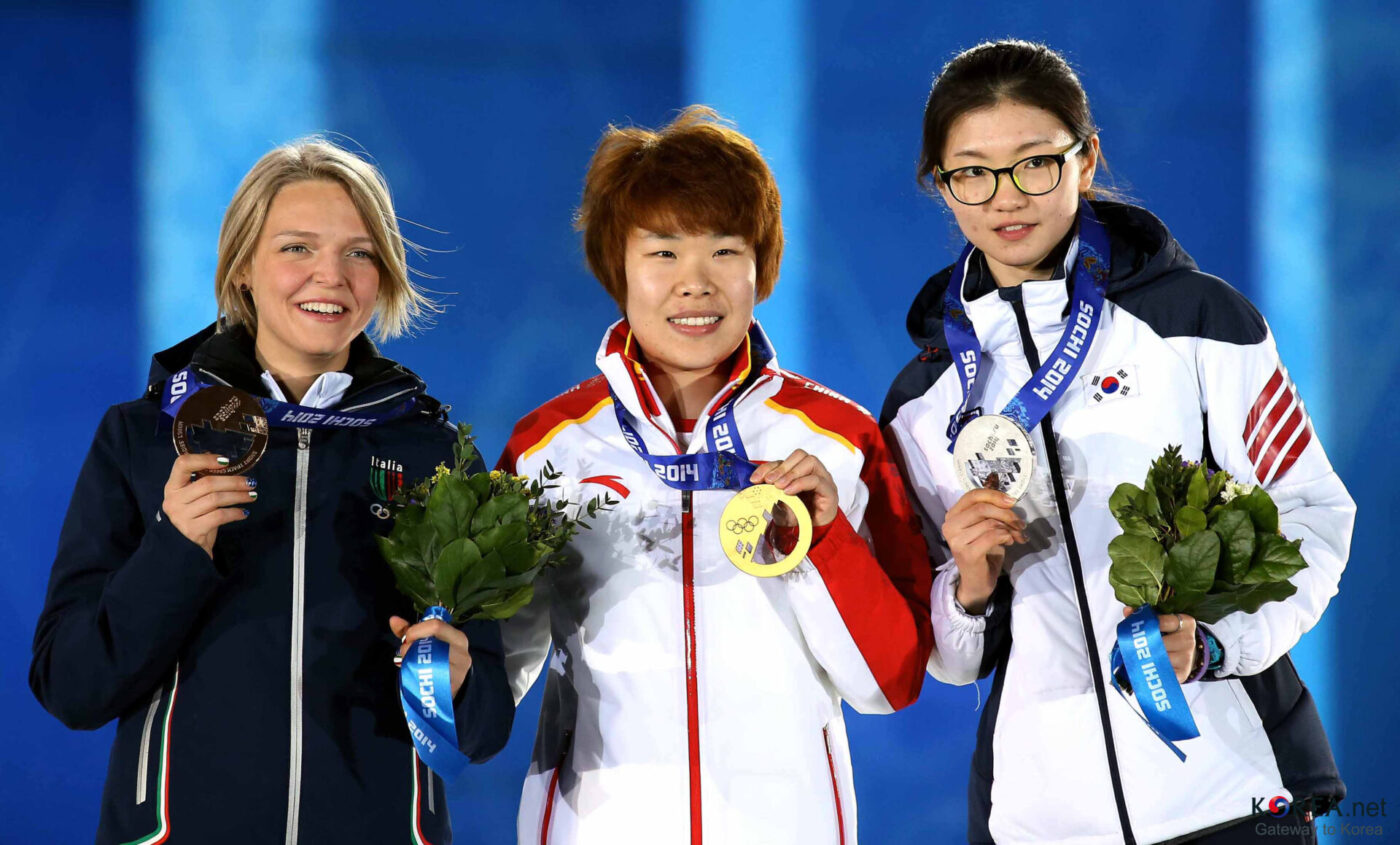
Fontana on the podium at the 2014 Sochi Olympics. Photo: The Korean Olympic Committee. Korea.net / Korean Culture and Information Service (Photographer name), CC BY-SA 2.0, via Wikimedia Commons.
FD: As Italy’s most decorated Winter Olympian, notoriety and media attention inevitably follow. How do you balance personal ambition with the expectations that come with representing Italy? Do you feel that pressure?
AF: The pressure is real, but it doesn’t guide me. I carry Italy with pride—not as a weight but as a responsibility I’ve chosen. Personal ambition is not a contradiction. It’s what allows me to represent my country honestly. Winning demands clarity, and clarity often requires difficult decisions. I’ve learned to stand by them.
FD: You’ll be competing very close to home. How do you imagine that will change the experience compared to past Olympics and World Cups?
AF: It will be deeply emotional, for sure. There will be familiar faces and sounds, and a language that doesn’t need translation. Home amplifies everything—the warmth, but also the intensity. The challenge will be to stay rooted, to let that closeness nourish me rather than overwhelm me.
FD: Looking back on your Olympic journey, what memory feels most meaningful?
AF: The moments after disappointment, when you’re left alone with yourself. When you must decide whether to retreat or to continue. Those moments revealed more about me than any victory ever could. They taught me who I am when nothing is guaranteed.
FD: Women’s sport is gaining visibility, but often unevenly. What still needs to change to better support female athletes beyond their peak competitive years?
AF: There needs to be more continuity. Space for experience to evolve into leadership. Too often, women disappear from sport once competition ends, taking their knowledge with them. Support should extend beyond medals and results. For now, my focus remains on the path ahead—but I believe deeply in what can still be built.
FD: When you think about this phase of your career, what do you hope it has taught you?
AF: That resilience is not stubbornness, but intelligence. That listening to yourself is an act of strength. And that longevity—on the ice and in life—comes from knowing when to persist and when to transform.
This interview has been edited for length and clarity.