The first thing that hits me is the scent. The unmistakable aroma of freshly baked bread wafting down Scopello’s narrow cobbled streets reaches me before I even find the panificio. Its windows are propped wide open, baskets of loaves stacked haphazardly inside, and I watch as a stream of locals trickles out, each one tucking a still-warm package under their arm. There’s a hint of earthy olives and the tang of ripe tomatoes. It’s a sensory signpost to the town’s calling card—and the reason I’m here.
I’ve traveled to the tiny town of Scopello in Trapani on Sicily’s northwestern coast for a sandwich. Which, I know, isn’t hard to find in Italy. Sandwiches are a staple of Italian cuisine. Walk into any alimentari, panetteria, paninoteca, or even Autogrill and you’ll leave with hunks of bread and its relatives stuffed with standard combinations of cheese, meats, and vegetables. Prosciutto-filled piadine in Emilia-Romagna; tomato-studded slabs of focaccia on the Ligurian and Puglian coasts; schiacciata layered with porchetta in Tuscany; a rosetta stuffed with mortadella in Lazio; and pane cunzatu in Sicily.
To anyone from Southern Italy, the pane cunzatu needs no introduction. But for the uninitiated, may I present one of the simplest (and, frankly, best) Italian sandwiches, which delivers more with four ingredients—sheep’s milk cheese, tomatoes, oregano, and a drizzle of extra virgin olive oil, plus maybe a handful of crushed olives or salty anchovies—than many sandwiches manage with a dozen.
Cunzatu in Sicilian dialect (or cunzato elsewhere in Italy) translates to “dressed” or “seasoned”, and that’s exactly what it is: thick slices of bread, “dressed” in Western Sicily’s typical flavors. Traditionally the humble fare of farmers heading out to the fields, pane cunzatu was once known as the “bread of misery”: stale loaves turned into a meal with fragrant herbs and olive oil, two ingredients that were more or less available to everyone. But following Italy’s tradition of turning necessity into something joyful, over time, richer ingredients made their way in—velvety primo sale cheese, salty olives, sharp capers—transforming the once basic bread into a beloved regional classic that’s also drifted into the southern reaches of the mainland.
Scopello, where the sandwich originates, is a tiny, picture-perfect Sicilian village that feels like a step back in time, made up just of honey-hued houses, a sun-dappled piazza with a central stone fountain, and a small baglio (Sicilian farmhouse) offering welcome shade. Located within the Zingaro Nature Reserve, it’s framed between the Tyrrhenian Sea and a vivid mountain backdrop. The heat is always intense, warm breezes punctured only by the scent of ripening fruit and baking bread.
I follow my stomach’s lead and head back to the village’s only bakery. An unassuming panificio with a single display counter, it’s dedicated almost entirely to pane cunzatu—a sandwich so popular that demand remains steady year-round. In summer, it’s the prelude to a day at the beach, easily picked up on the way to the coast to be later clasped between sandy fingers, oil and tomato juice dripping down chins. In the off-season, it’s a dependable comfort the locals turn to. I eat mine on the piazza steps, oil soaking through the paper and sesame seeds tumbling onto my lap.
“Pane cunzatu is a treasure chest,” shares Francesco Cucinotta, a Palermo-based chef. “It brings together the typical flavors of Sicily in one complete meal.” To unravel the layers of this favorite, I’m meeting Francesco and Alice di Prima, a duo dedicated to preserving and sharing the island’s culinary traditions. Graduates of the University of Gastronomic Sciences in Pollenzo, Piedmont, Alice and Francesco turned their love for Sicilian cuisine into a career when they founded the cooking school Alice’s Kitchen in 2023. “Our mission is to preserve age-old Sicilian recipes that have been passed down from our grandmothers,” explains Francesco. “Especially those that risk being lost to tourist-friendly versions of our food.”
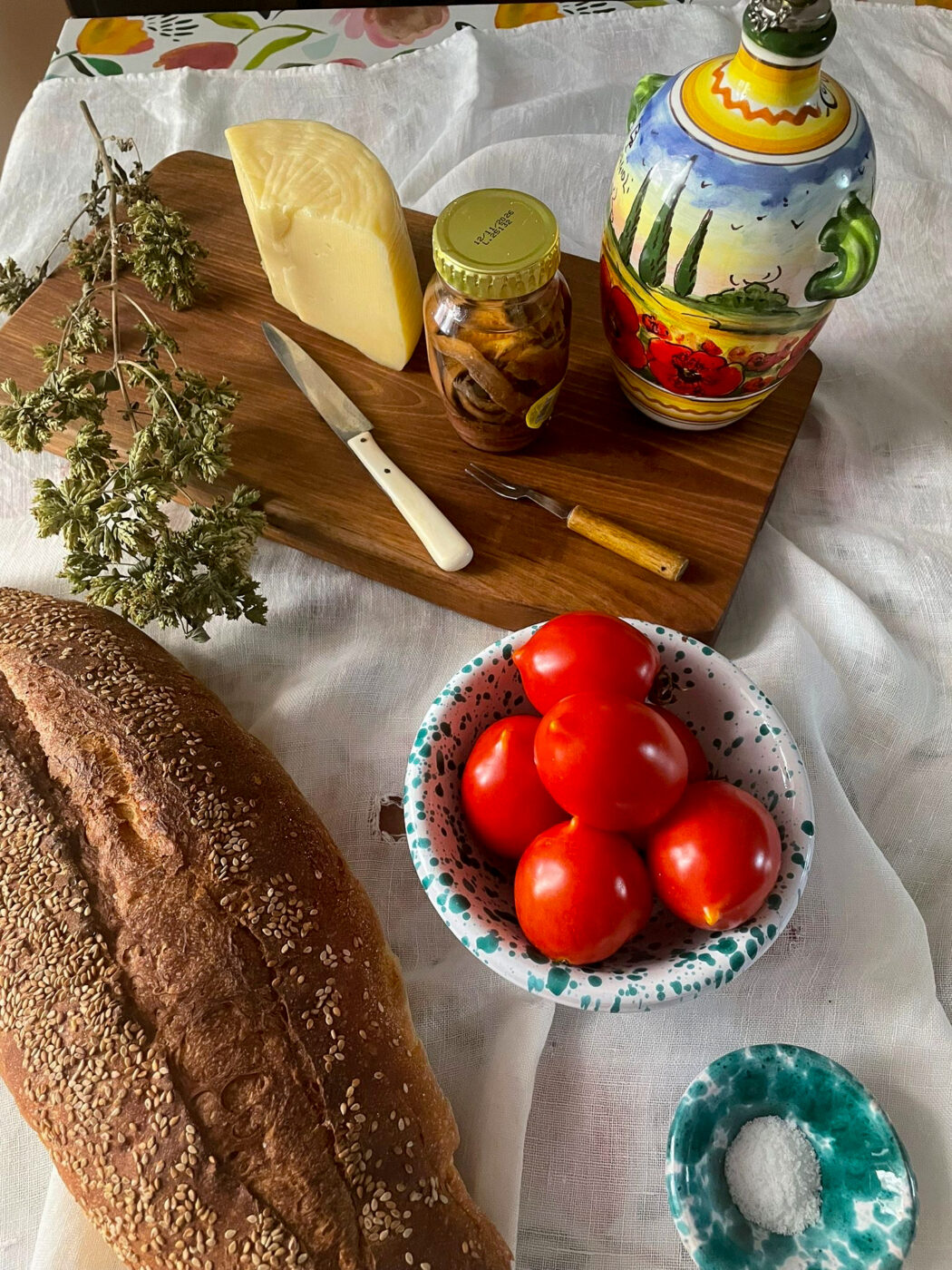
We chat while they begin to prepare the sandwich for me, first slicing a fresh loaf of pane Siciliano in half to reveal a fluffy yellow interior. These classic sourdough loaves are made with semolina flour, baked in a wood-fired oven, and topped with sesame seeds. The two halves get a good glug of extra virgin olive oil—DOP Valli Trapanesi, a fruity combination extracted from Nocellara del Belice and Cerasuola olives—and are pressed together gently to let the oil soak all the way through.
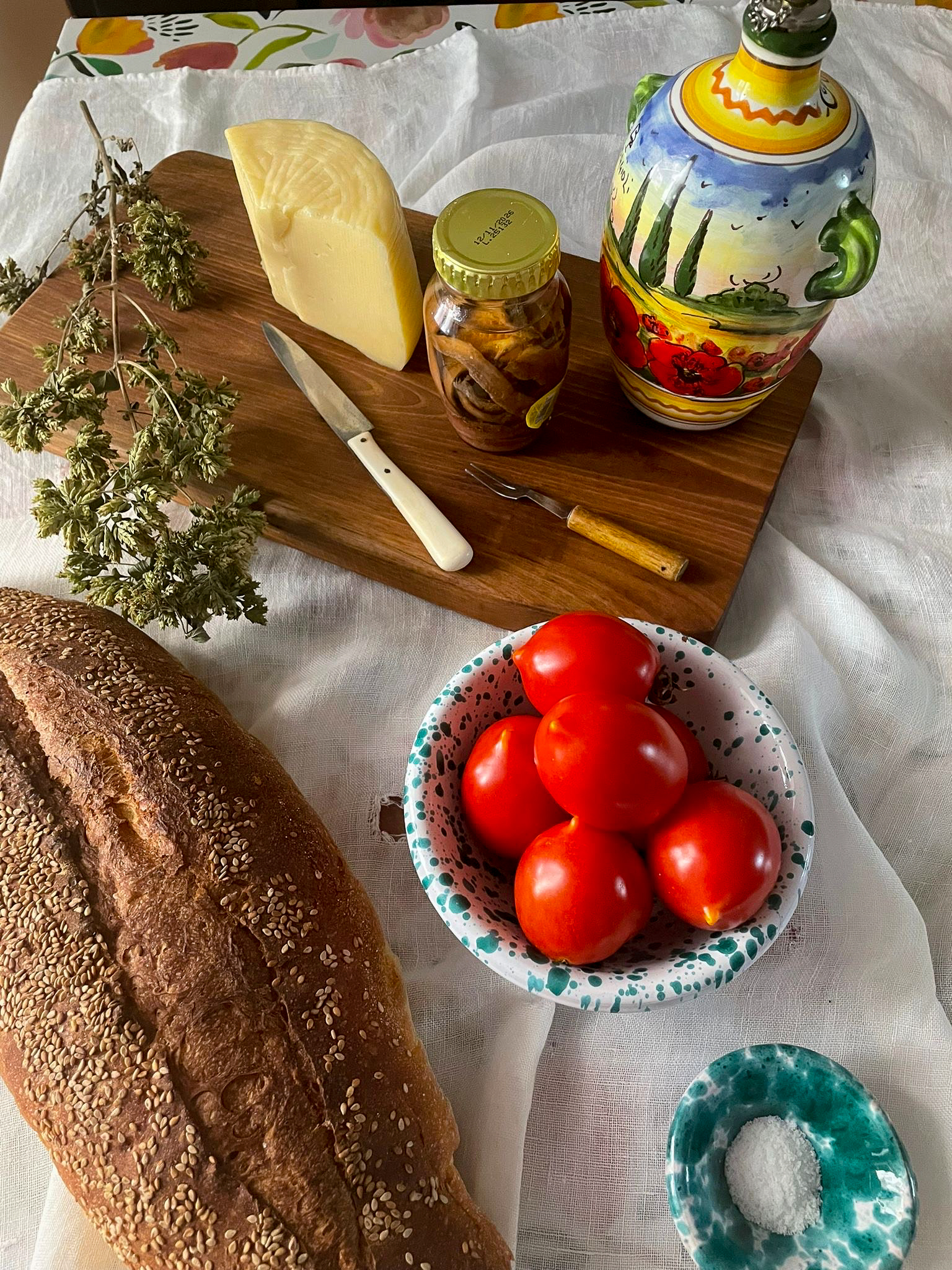
All the makings of a perfect pane cunzatu; Photo by Alice's Kitchen
Alice opens it up and layers in the slices of tomato: specifically the pomodoro siccagno, a variety with pointed ends unique to Sicily and cultivated for their ability to grow without irrigation. “They grow well in the dry, arid soil of Trapani under the heat of the sun,” explains Francesco. “They rely solely on soil moisture and rainwater.” The result is a thick-skinned tomato with a low water content, yielding a deep, intense flavor and a meaty texture. Alice salts them generously.
Then come thick slices of primo sale cheese. Prolific in Trapani, it’s matured for 21 months, so the flavor is somewhere between tuma (less mature, wetter) and pecorino (riper, nuttier). Anchovies, brined or soaked in olive oil, are next. Dried oregano is essential, followed by a twist of black pepper. Finally, the top loaf is pressed gently back into place, sealing everything together into one compact package.
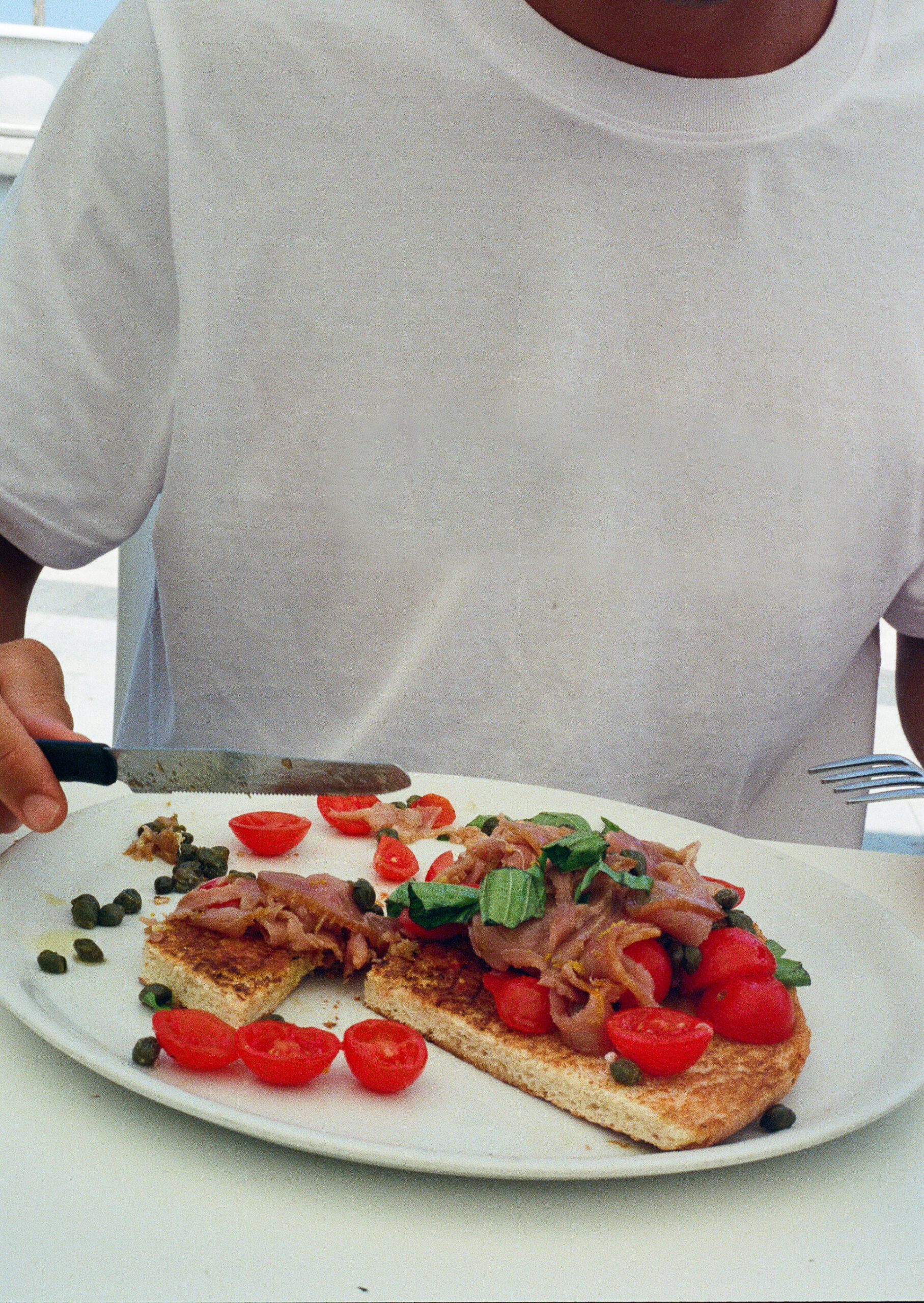
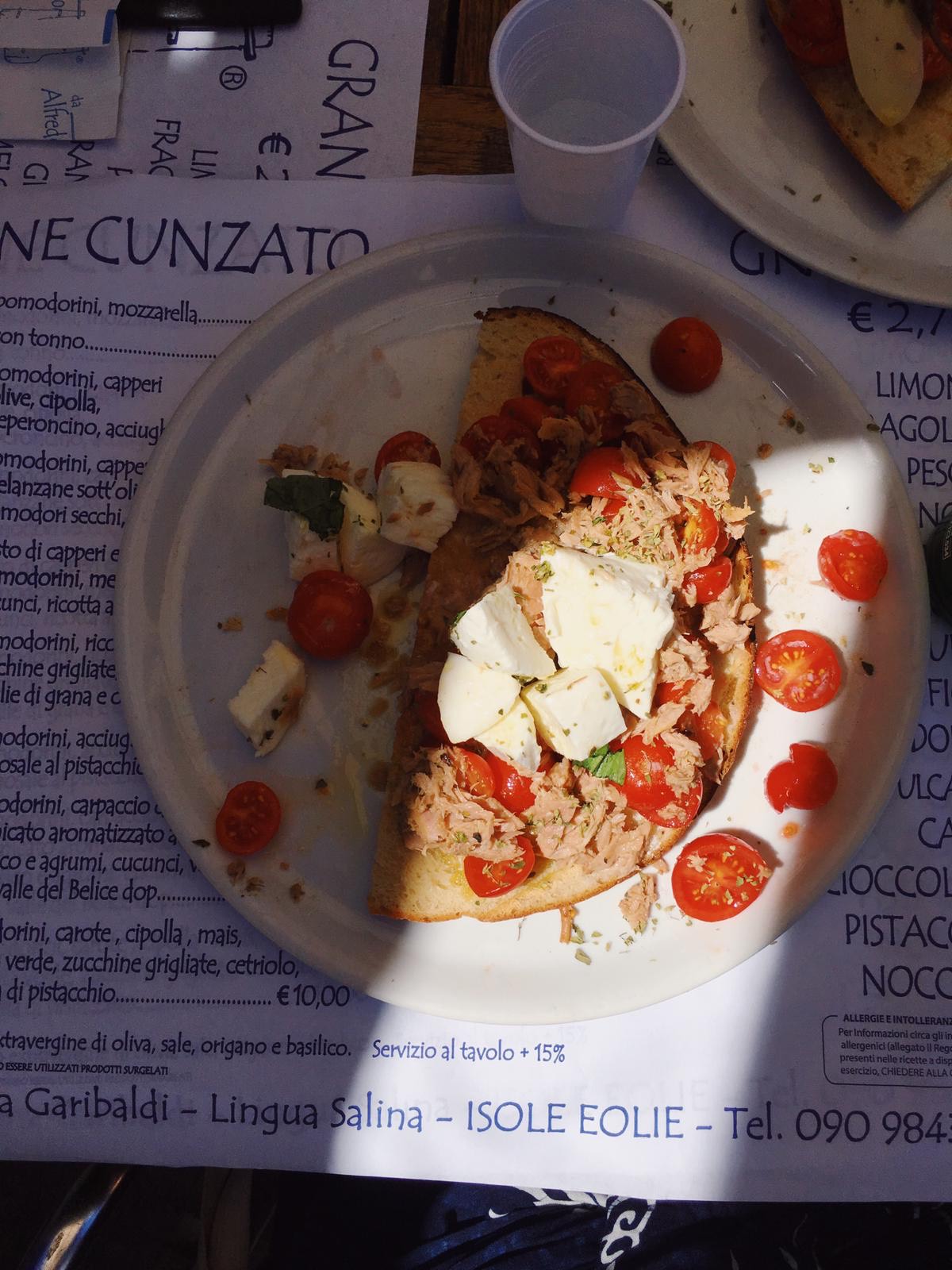
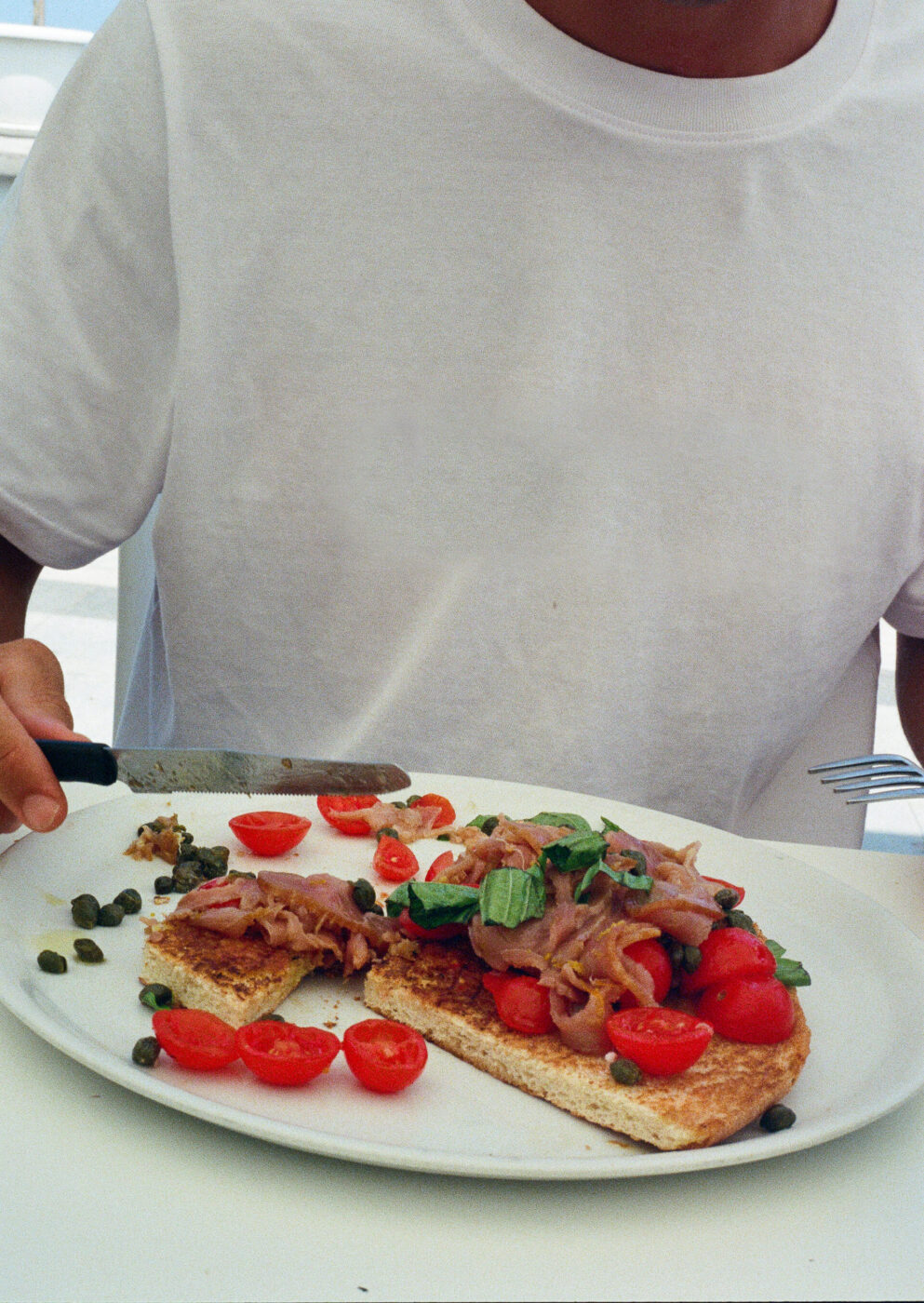
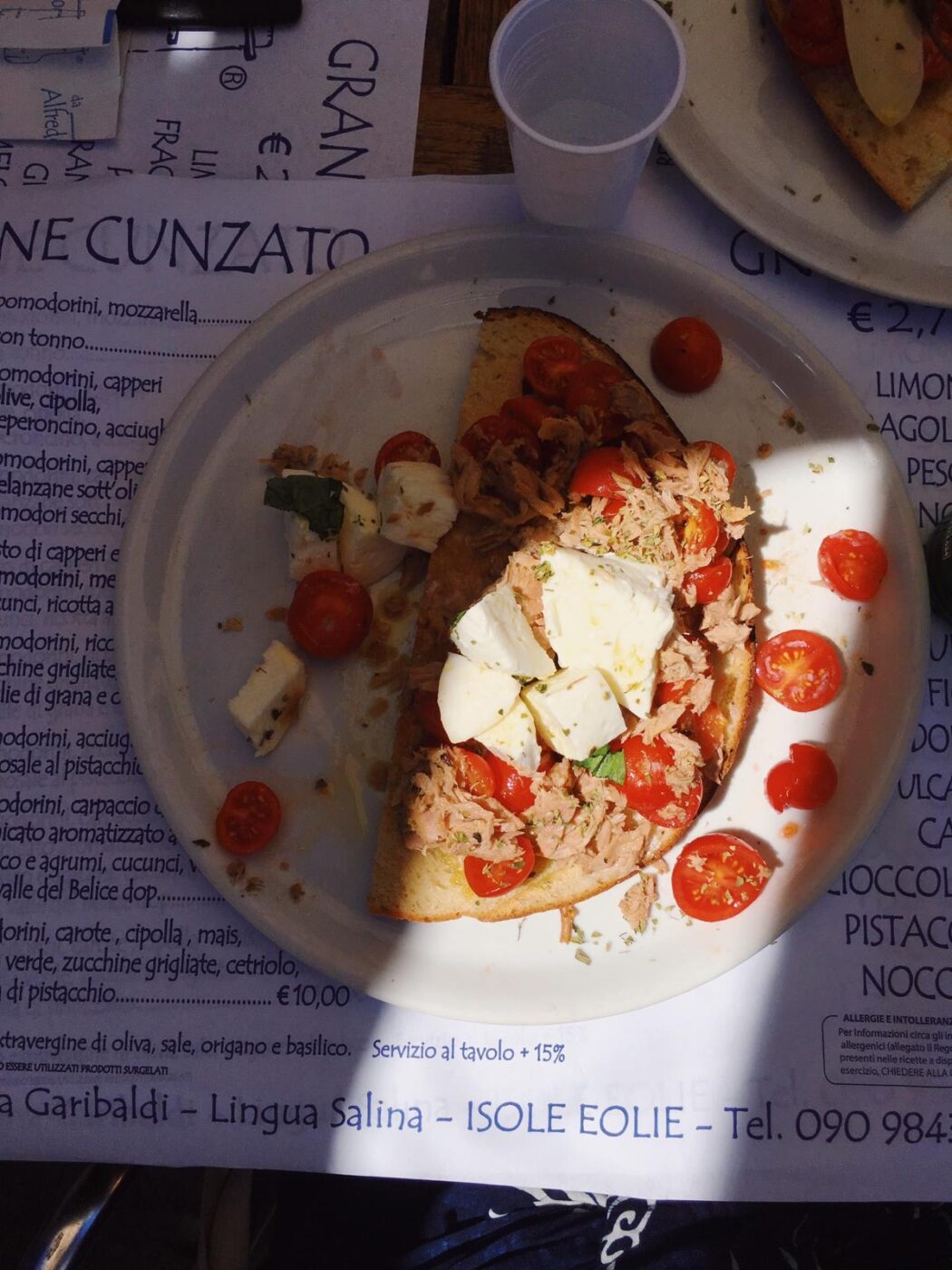
Like everything in Italy, pane cunzatu has its regional dialects. In Palermo, it’s a street food, made with round muffoletta bread, no tomatoes, and thick slices of caciocavallo. On the Aeolian Islands, it’s served bruschetta-style, topped with capers, tuna, and baked ricotta. Catania favors tuma cheese and green olives. In Messina, it’s known as pane la disgraziata (roughly, “the unfortunate one”): bread layered with sundried tomatoes, slabs of fried eggplant, and olives.
I thank Francesco and Alice, and, even if it’s my second of the day, eagerly dig in.
_______