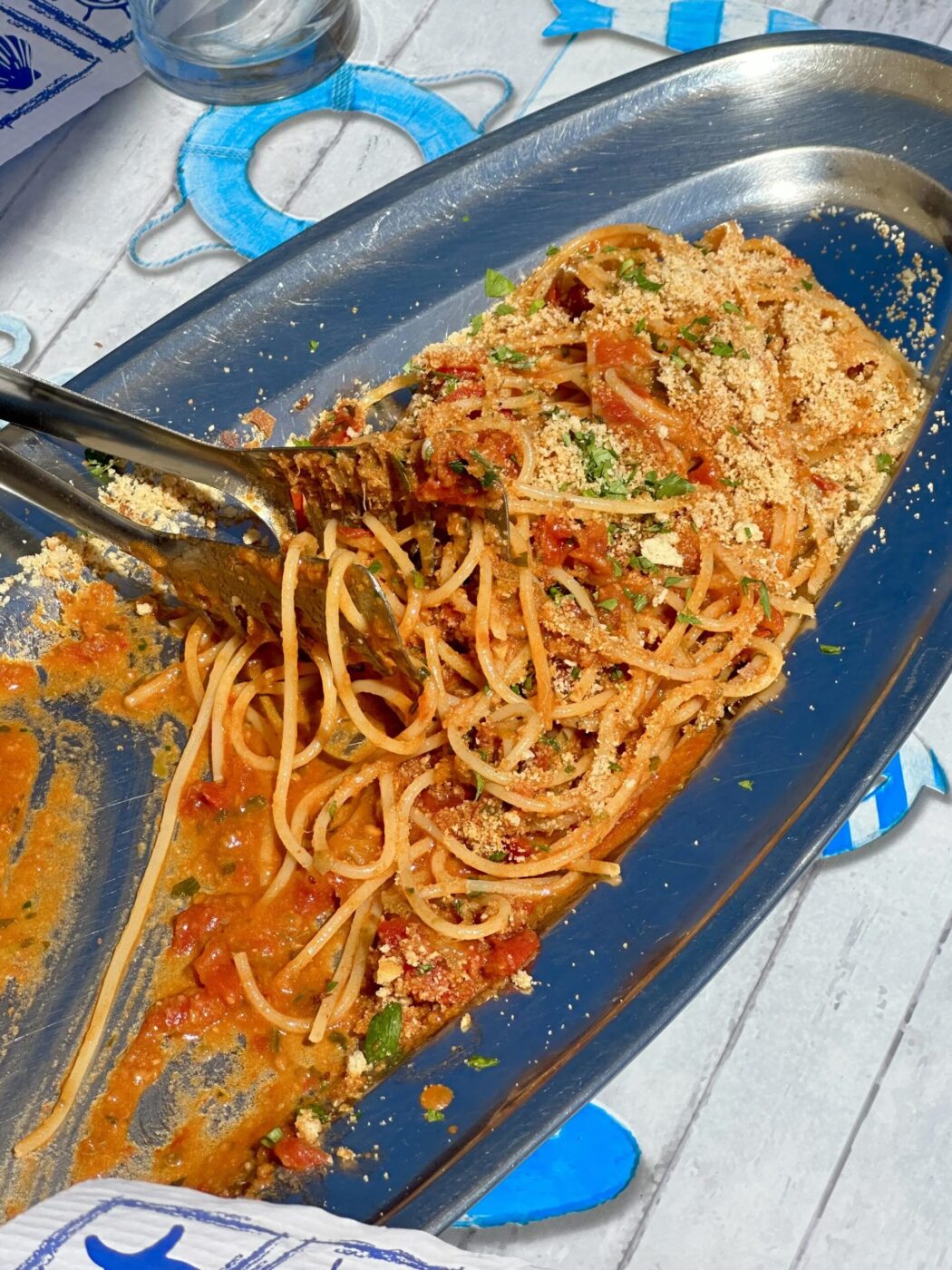
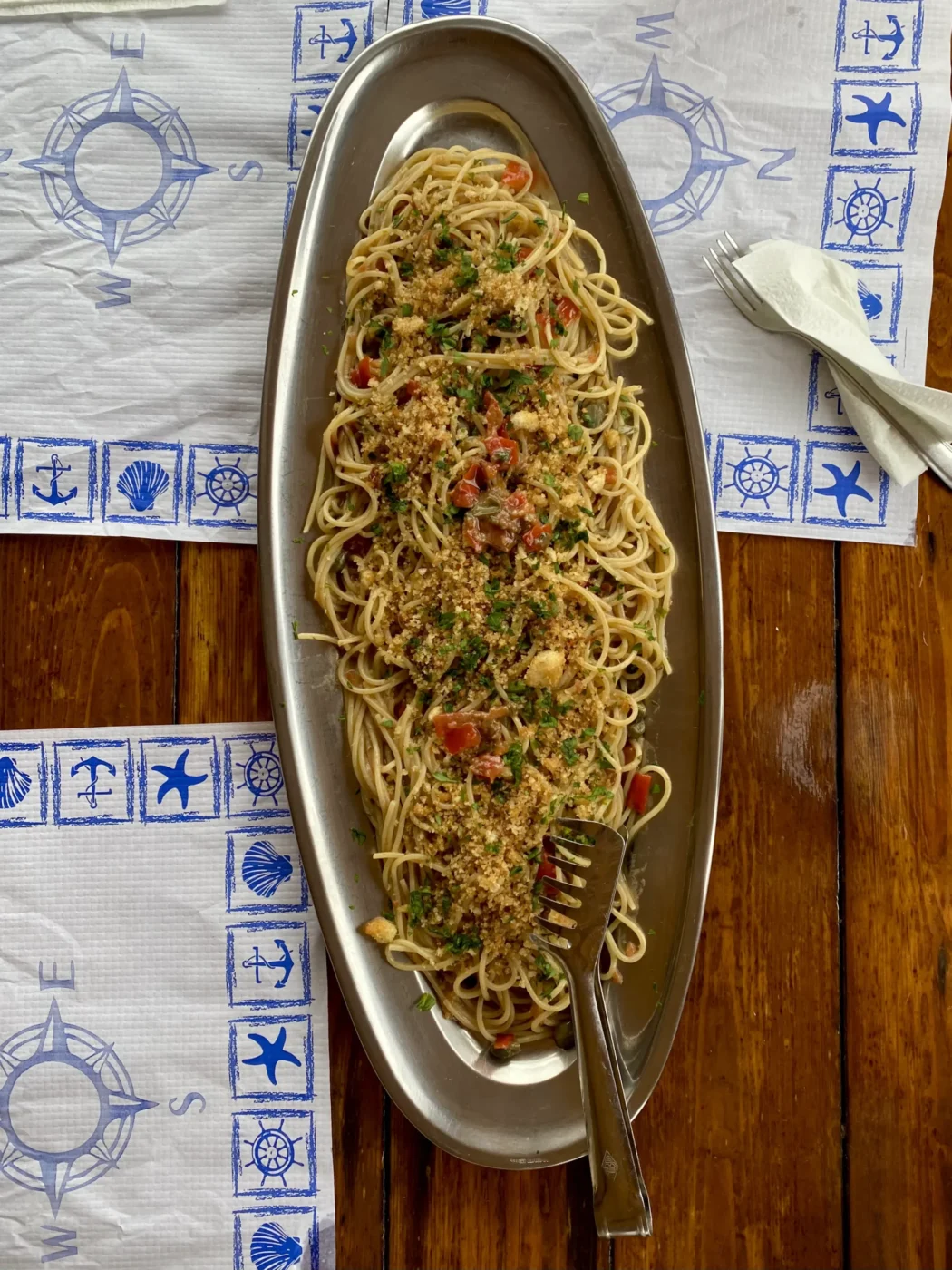
Empty a pantry into a pan and let the ingredients bathe in olive oil. Start with a single clove of garlic and the sharp heat of red chili flakes, then toss in the salt-heavy staples of the Mediterranean: fleshy Gaeta olives, delicate anchovies, and capers. Add thick, canned tomatoes and a spring of oregano, then tangle the sauce with spaghetti or linguine. Finished with fresh parsley, the result is a dish as assertive as its history.
Originating from Naples, this is pasta alla puttanesca.
Most famously associated with “ladies of the night,” the name derives from the Italian puttana, meaning “prostitute.” In English, the blunt translation “whore’s pasta” carries a weaponized, misogynistic sting—a word rooted in centuries of moral policing and social stigma. Yet in Neapolitan dialect, the term is more performative, an exaggerated expression that doesn’t always migrate cleanly between cultures.
So, if the name is more of a mistranslation than a historical reality, how did a simple pantry staple become so inseparable from its scandalous reputation?
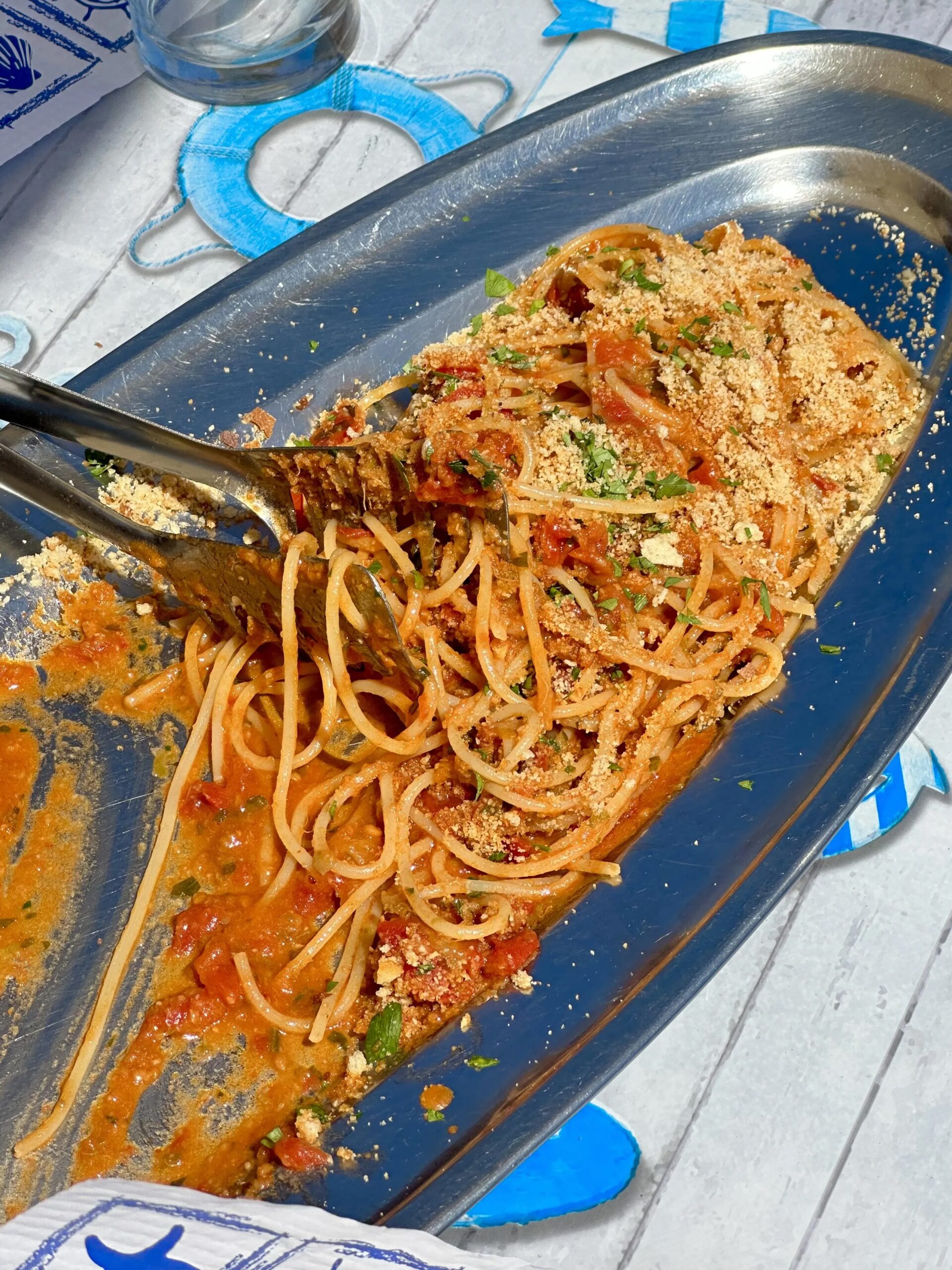
Pasta alla Puttanesca’s Three Myths of Origin
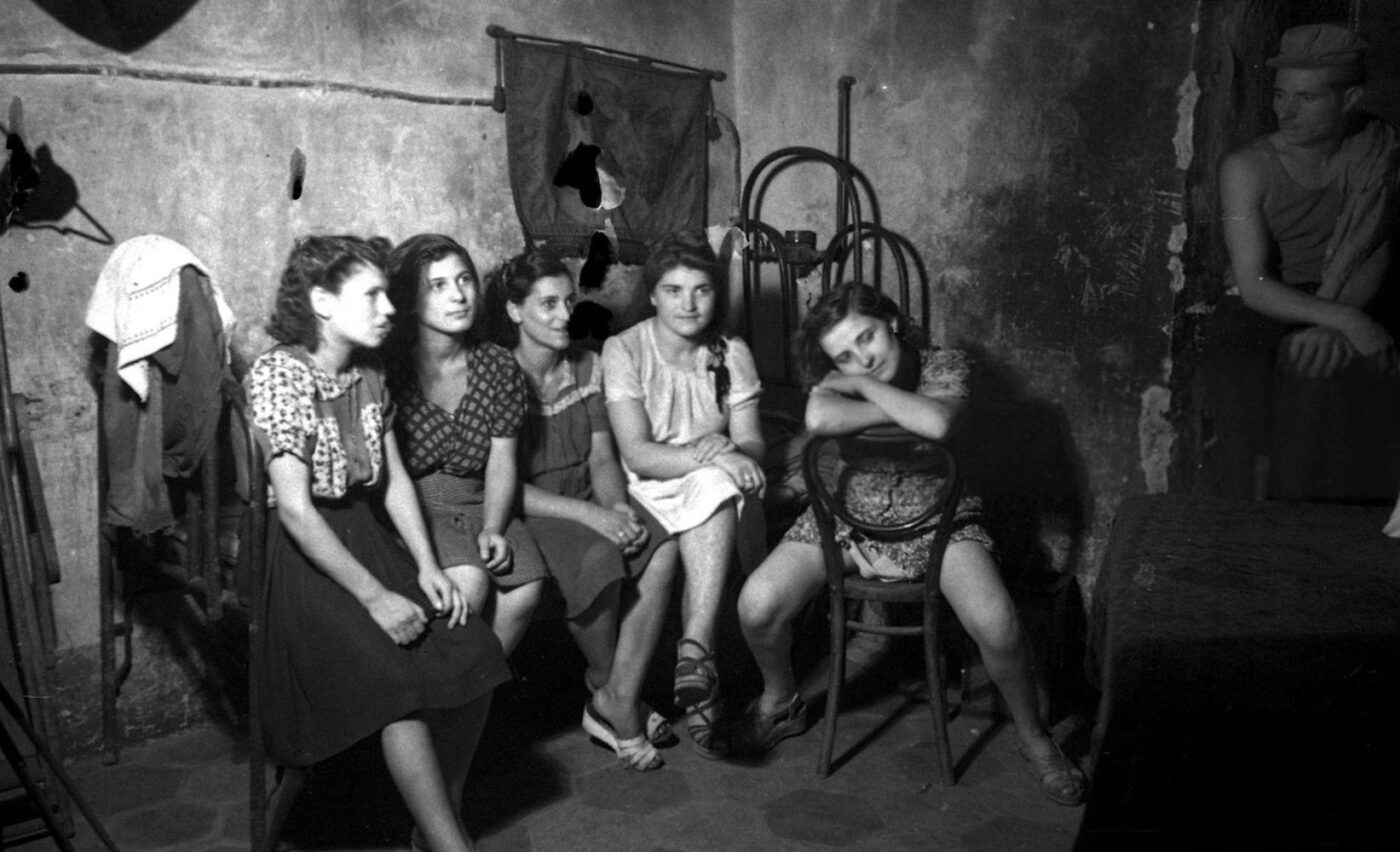
The pasta’s most widely circulated origin story is set in the Quartieri Spagnoli of Naples. Within these narrow, labyrinthine streets, some claim the sauce’s aggressive aroma was used to mask the realities of the brothels, while others suggest a more seductive theory: that the ladies of the night used the pungent scent of garlic and anchovies as a form of olfactory advertisement to lure clients from the cobblestones.
Another origin story comes from the island of Ischia, at the famed restaurant Rancio Fellone. There, chef Sandro Petti was reportedly closing for the night when a group of late-night diners arrived, pleading for a meal. Petti insisted the kitchen was bare, but the guests persisted, shouting, “Dai, facci una puttanata qualsiasi!” In local parlance, a puttanata implies something thrown together carelessly—a “piece of crap”. Petti complied, tossing together what remained in his pantry—tomatoes, olives, and capers—and christened the resulting triumph “spaghetti alla puttanesca.”
Yet, the most logical origin story is also the least theatrical, grounded in the reality of cucina povera—the southern Italian convention of simple cooking born from necessity. The dish is a masterclass in improvisation, utilizing staples that were cured, brined, or bottled to resist scarcity: anchovies packed in oil, salt-cured capers, and olives that keep well no matter the season. In this light, the dish isn’t born of scandal, but of the efficiency of the Italian kitchen, where the most delicious meals are often the ones assembled from what is left over.
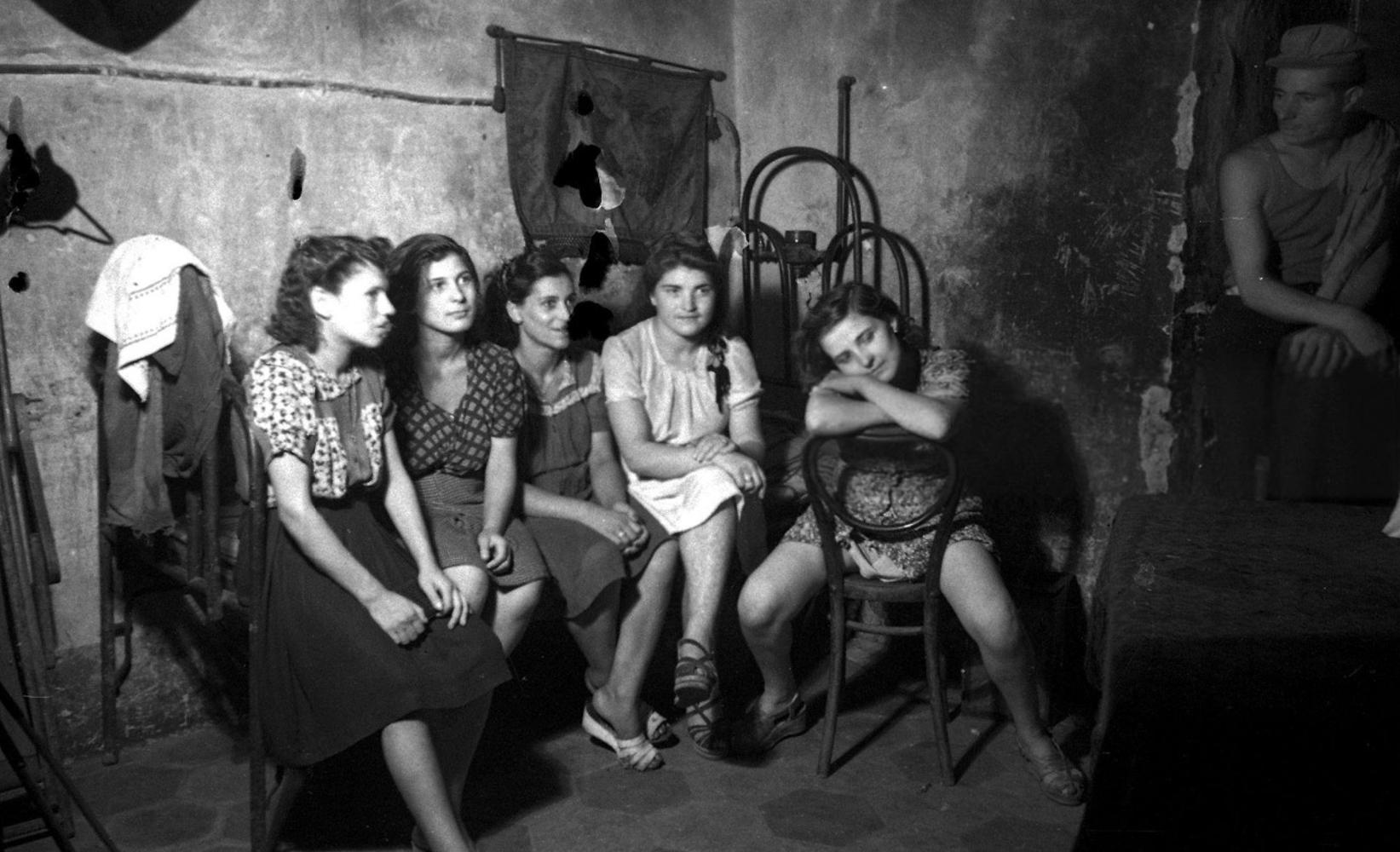
Waiting for customers in a brothel in Naples (1945); Old photoscan, Public domain, via Wikimedia Commons
Puttanesca’s Aftertaste: Decoding the Provocative Name
Across each myth, the same descriptors of the dish recur: simple, quick, easy, and cheap. In a vacuum, these are culinary compliments—praise for Neapolitan ingenuity and the ability to make something of “nothing”. Yet, these words carry a heavier history when applied beyond the kitchen. “Quick” and “easy” have long functioned as coded language for promiscuity, while “cheap” can imply low moral worth rather than low cost. When these four words are used repetitively to describe pasta alla puttanesca, the repetition feels purposeful, echoing a vocabulary used to diminish female sexuality. Until 1958, sex work in Italy was state-regulated; brothels operated legally but were deeply stigmatized, attaching a permanent scandal to the seller while leaving the buyer unscathed.
Some culinary historians argue that puttanesca is merely a playful nod to the dish’s bold, assertive flavors—that the symphony of ingredients is a sensory mirror to the vibrant, “brazen” life of the Spanish Quarter. In this view, the dish becomes a romanticized translation of “whore” into something palatable, perhaps even glamorous. But this erotic framing may be more of an international export than a local inheritance.
When I asked Neapolitan chef Marianna Vitale of Sud Ristorante what the dish means in its hometown today, her answer dismantled the mythology entirely. “The expression ‘puttanesca’ is rarely used [here],” she explained. “The sauce has always simply been called ‘olive e capperi’ [‘olives and capers’]. Few people even know it was born here.”
Vitale notes that the recipe likely evolved from an intermediate name, alla marinara, and only gained its provocative title as it traveled outside Campania in the 1970s. She dismisses the brothel lore as “unauthentic,” suggesting the rebranding was a “commercial strategy”—an evolution of the times tailored for an international appetite.
Conceivably, then, the erotic framing was never purely Neapolitan, but a persona that intensified as the dish traveled, shaped by a global market that prefers a Southern Italy of passion and “food porn.” Pasta alla puttanesca reveals how easily we choose scandal over logic, borrowing the provocation of the sex worker without ever having to bear her stigma. In the end, what endures is not a mistranslation, but a comfortable habit of seasoning our plates with marginalization. Sex, after all, still sells.
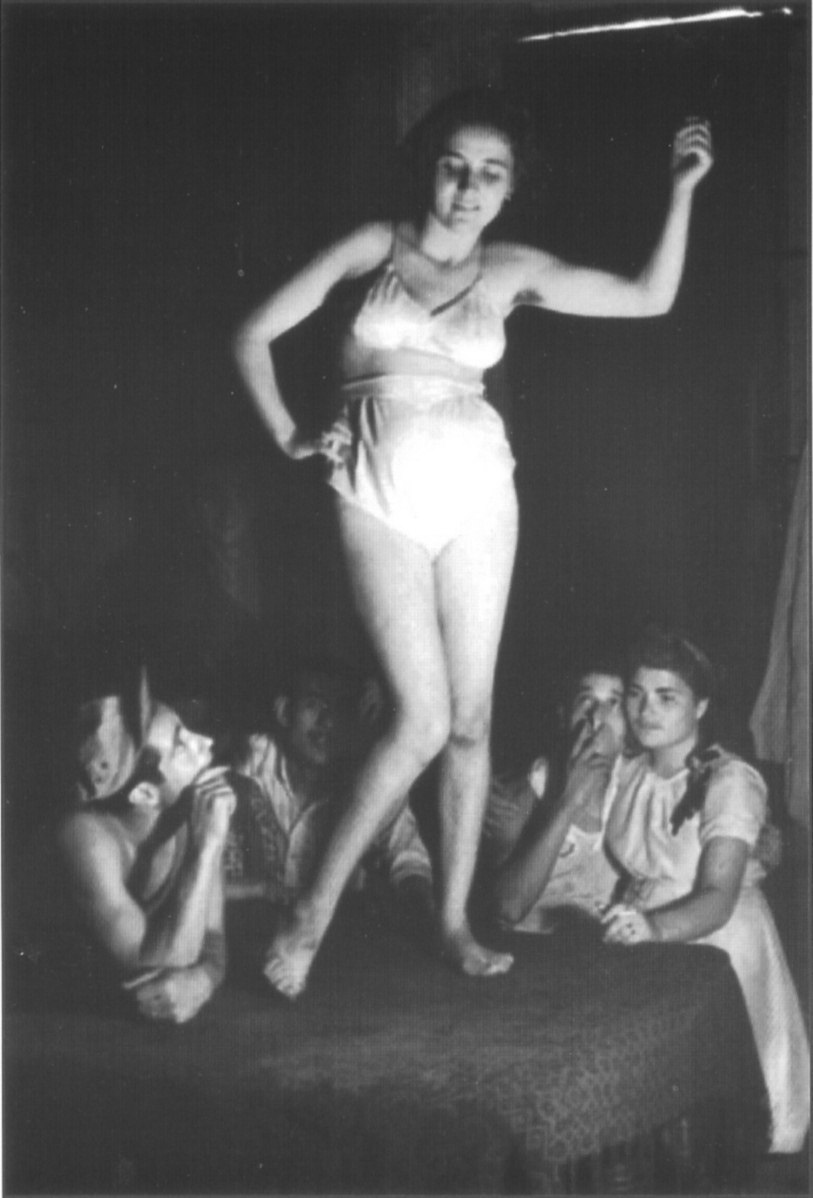
A brothel in Naples (1945); Old photos, Public domain, via Wikimedia Commons
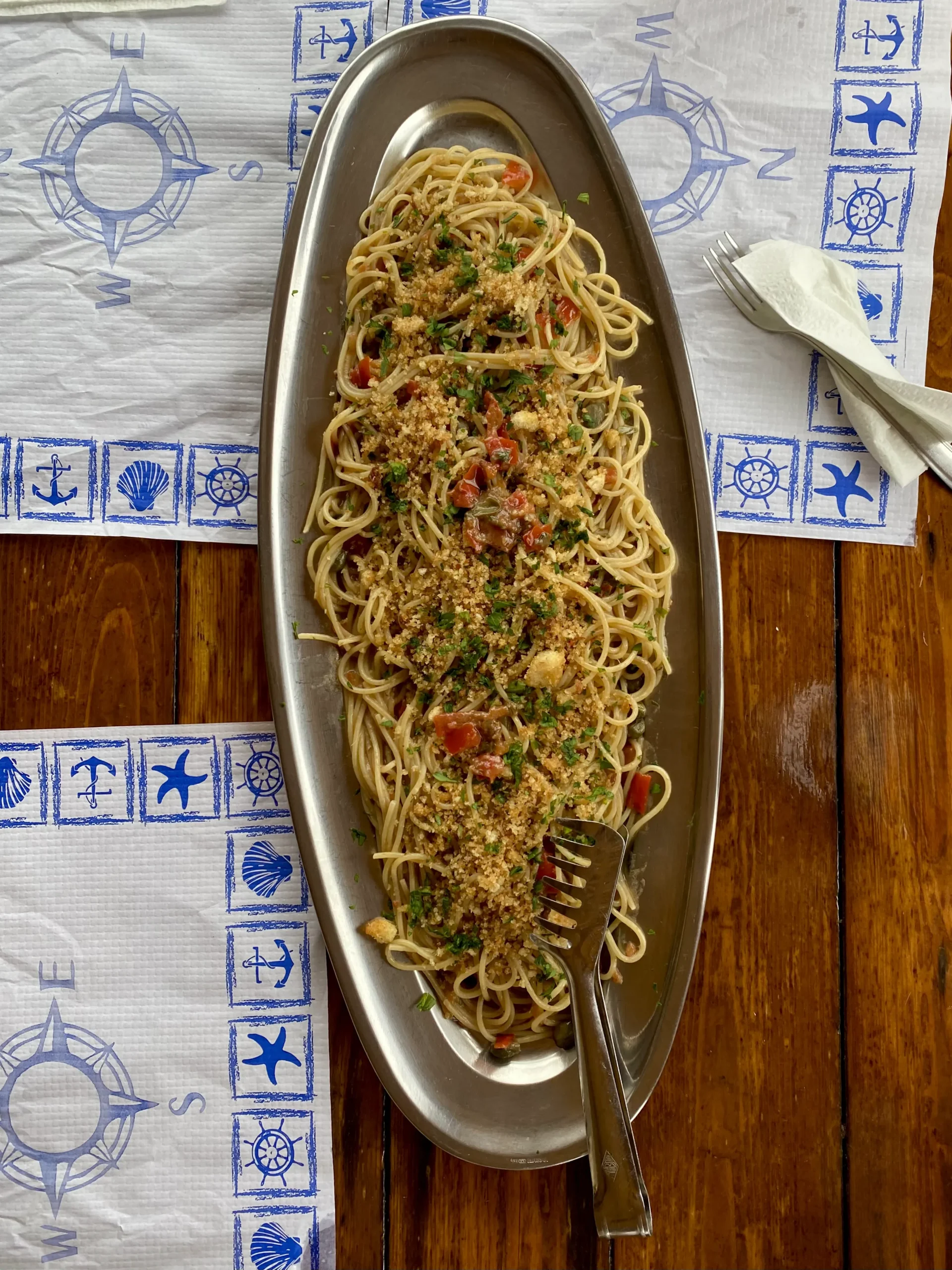


_-_Prostitute_dancing_on_table.jpg)
_-_Prostitute_dancing_on_table.jpg)