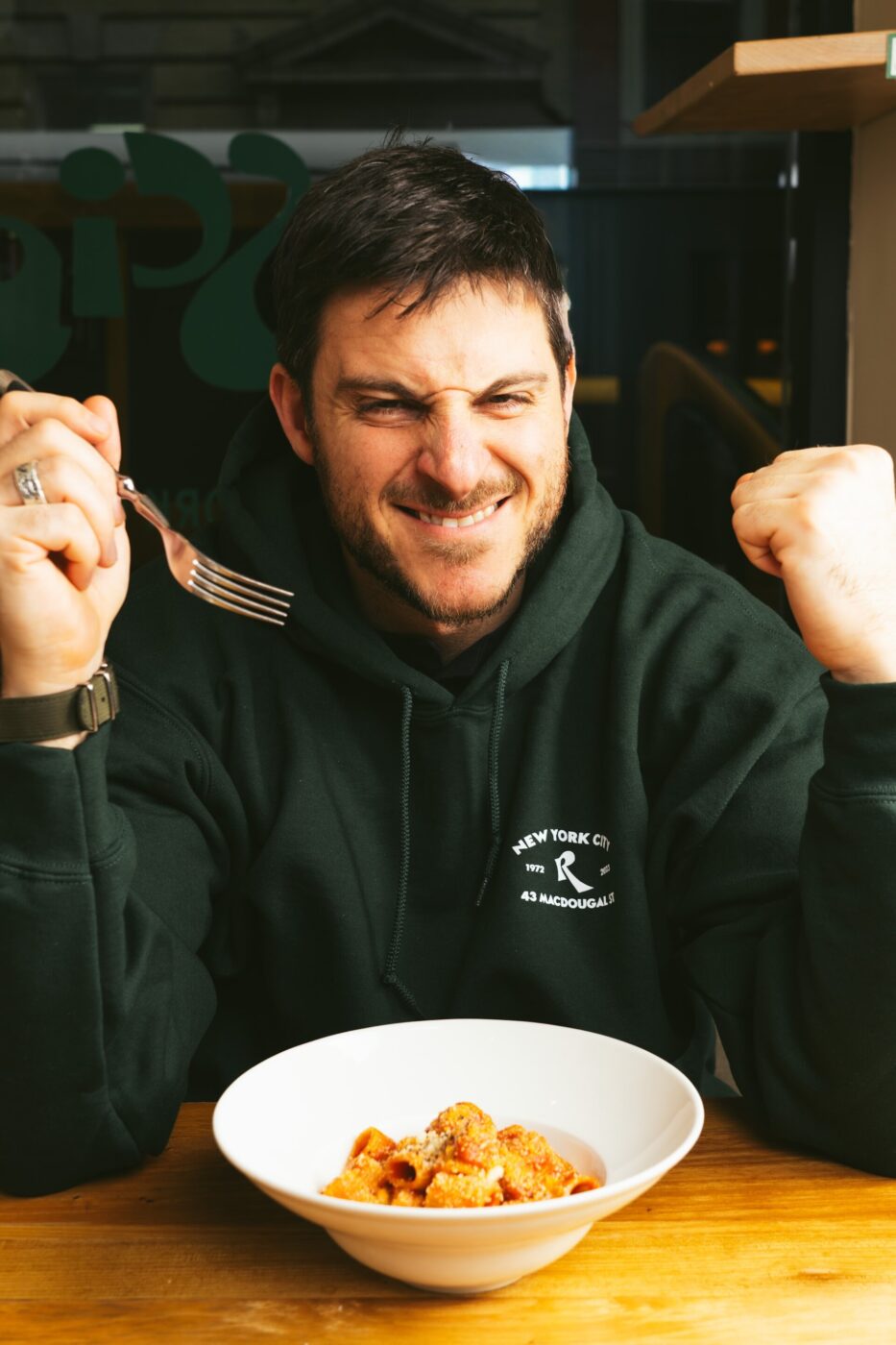
Mattia Moliterni is a man who understands the weight of a legacy. A law graduate turned driving force behind Roscioli’s U.S. expansion, Moliterni has spent the last few years translating one of Rome’s most beloved institutions for a New York audience.
It’s a balancing act of “doing much with very little”—the Roman philosophy of fare tanto con poco—applied to the high-stakes world of New York dining. And, from scaling a global wine club to opening the brand’s first Manhattan outpost in 2023, Moliterni remains curious about finding beauty in how the two cities collide. We sat down with him to talk about the “cultural shock” of American business, the genius of pizza e mortazza, and why New York’s obsession with vodka sauce is the one trend he can’t get behind.
Italy Segreta: Roscioli is a Roman institution with over 50 years of family history. What has been the most challenging part of carrying that legacy into a city as critical as New York?
Mattia Moliterni: The world is much more corporate here; it’s not the same as running a family business in Italy. There is a real cultural barrier between the formality of New York business and the informal nature of how we operate back home. It was a significant culture shock to run a business in this environment.
IS: What was the most surprising discovery about the NYC food scene when you arrived?
MM: It is international to a degree where you can truly discover the entire world within this one city. It’s not just about discovering different countries—you can find every specific region within every country represented here.
IS: Trends in New York move fast. Are there any “Italian” food trends you particularly dislike?
MM: Vodka sauce.
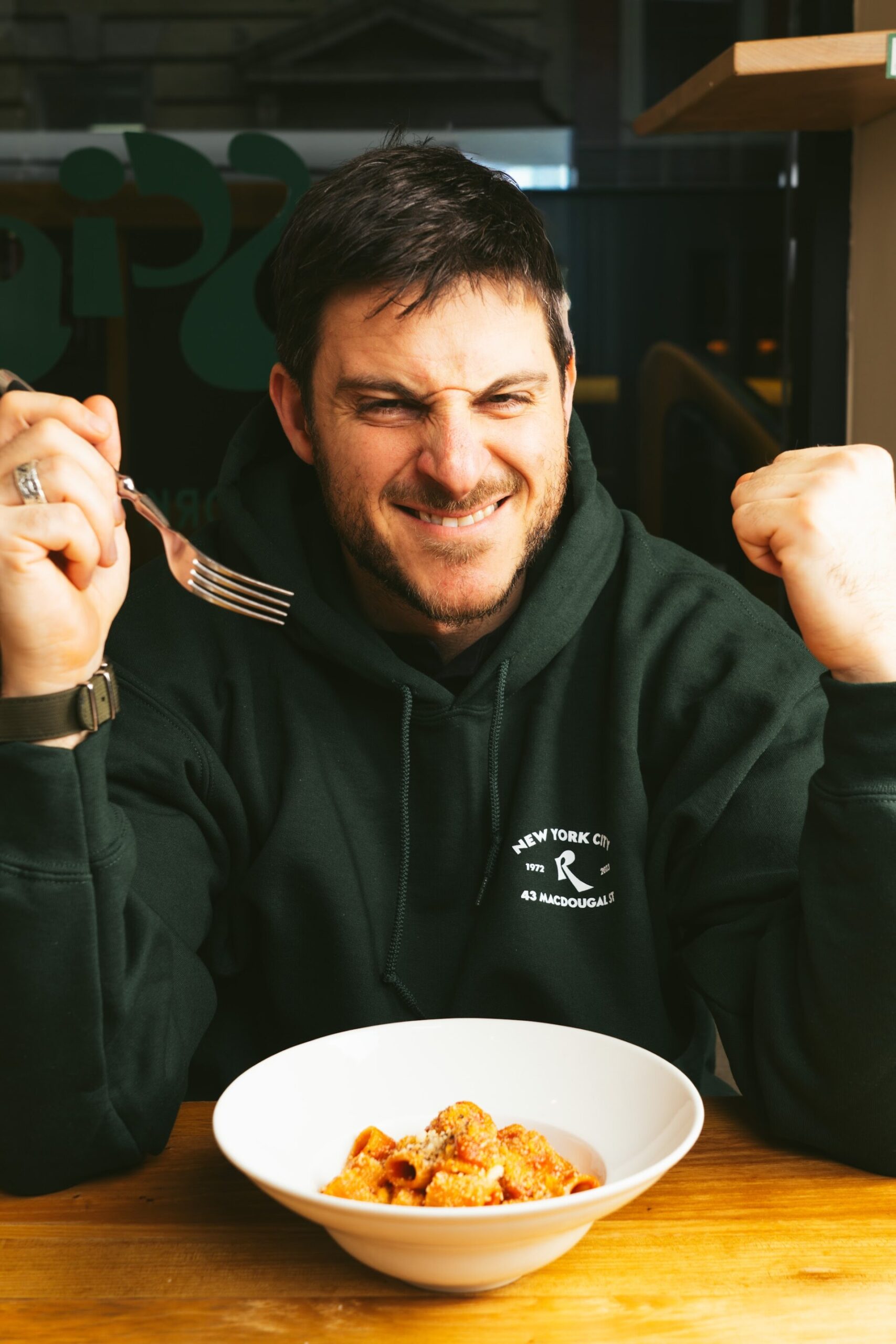
Mattia Moliterni; Courtesy of Roscioli
IS: On the flip side, is there a trend you feel has been a positive adaptation?
MM: I think Italian-American culture is fun; it’s like the cousins we’ve never met. There are also very talented, important American chefs who present their own angle on Italian food. They are passionate about the culture but present it in their own way—whether it’s “authentic” or not, it creates interesting and great food. I’m thinking of people like Nancy Silverton, Nick Curtola with I Cavallini, Don Angie, Stefano Secchi, Dan Richer, or Missy Robbins.
IS: What is the most underrated dish on your current menu?
MM: The lamb tartare.
IS: Is there a specific Italian dish you’re itching to add to the menu?
MM: Maritozzo.
IS: What is the one thing you wish New Yorkers understood better about Italian cuisine?
MM: That it is less rich and more digestible than people think. It’s about preserving the integrity of the ingredients without covering them up with too much manipulation.
IS: What does “authentic” Roman cuisine mean to you personally?
MM: Roman cuisine is about doing a lot with nothing—“fare tanto con poco.” Take pizza e mortazza, for example, or the classic Roman pastas; they are the same few ingredients used with small, intentional twists.
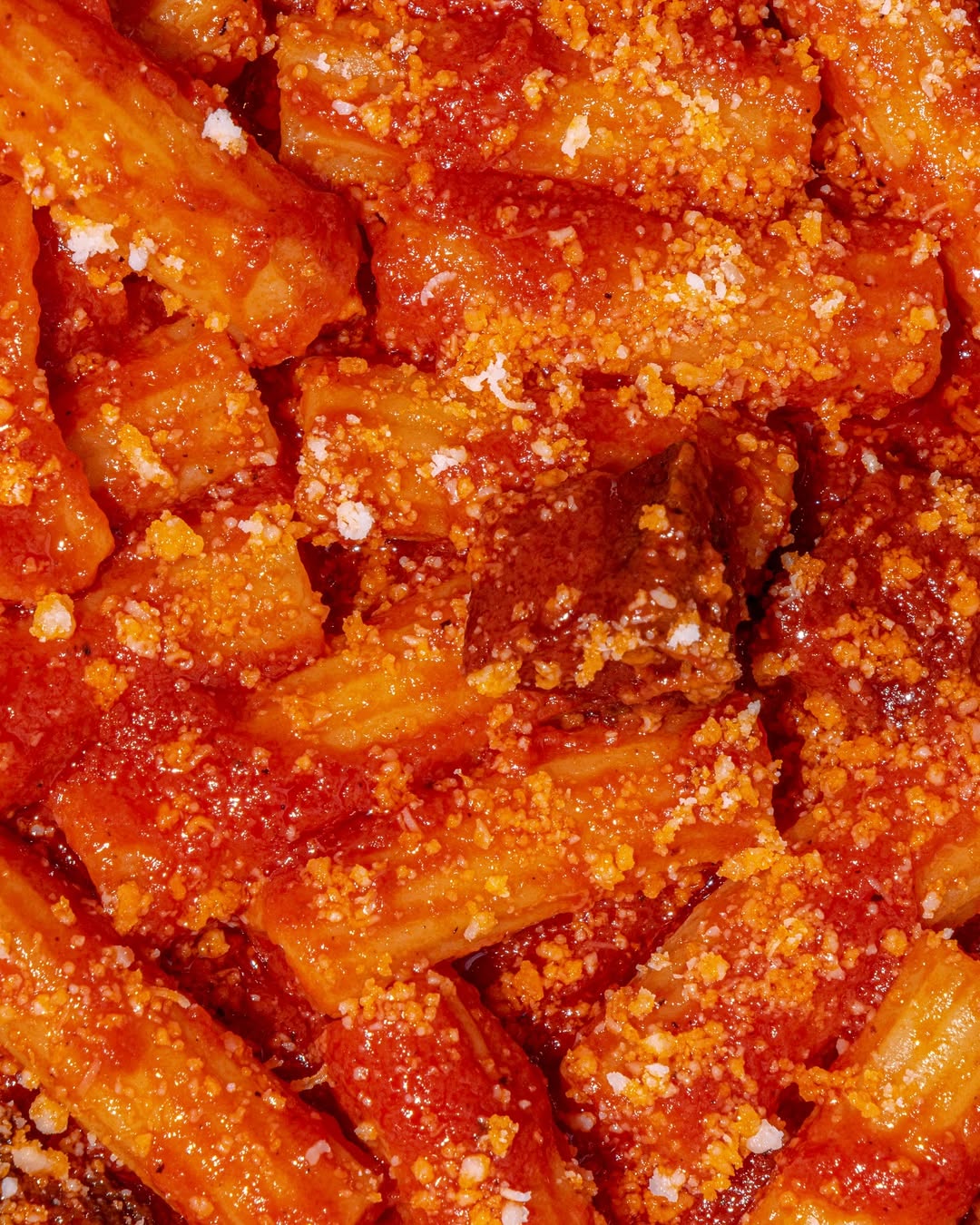
Rigatoni all'amatriciana; Courtesy of Roscioli
IS: Roscioli aside, which NYC spots do you go to for Italian food, and what are you ordering?
MM: Right now, the Ravioli del Plin at I Sodi, or Anthony Mangieri’s pizza [at Una Pizza Napoletana].
IS: Let’s settle some debates. Pecorino Romano or Parmigiano?
MM: Parmigiano. Come on.
IS: Long pasta or short pasta?
MM: Short.
IS: If you could only eat one Roman pasta for the rest of your life?
MM: Amatriciana.
IS: Lastly, what’s on your kitchen soundtrack right now?
MM: Jazzmatazz, Volume 1.
This interview was edited for length and clarity.