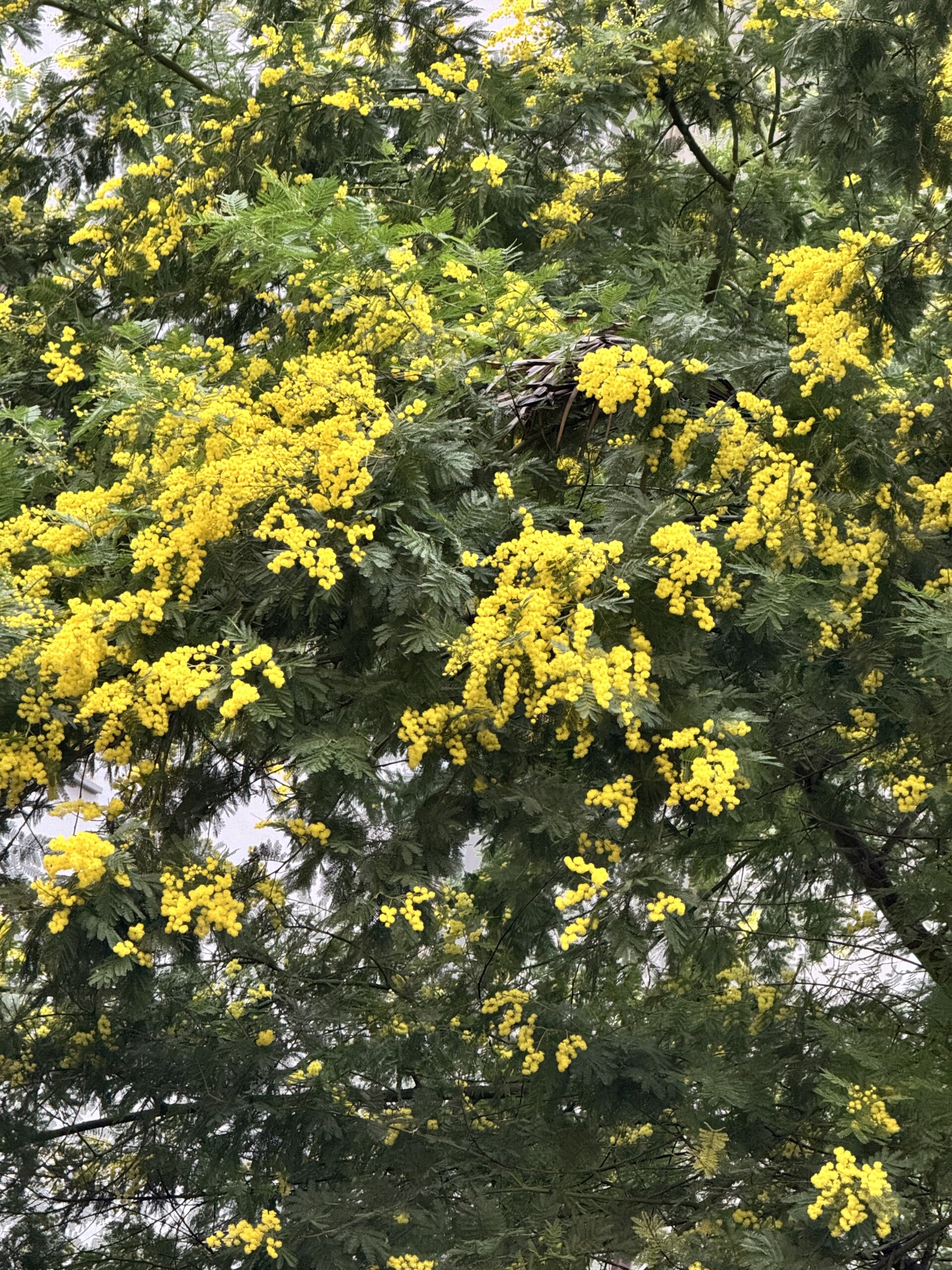
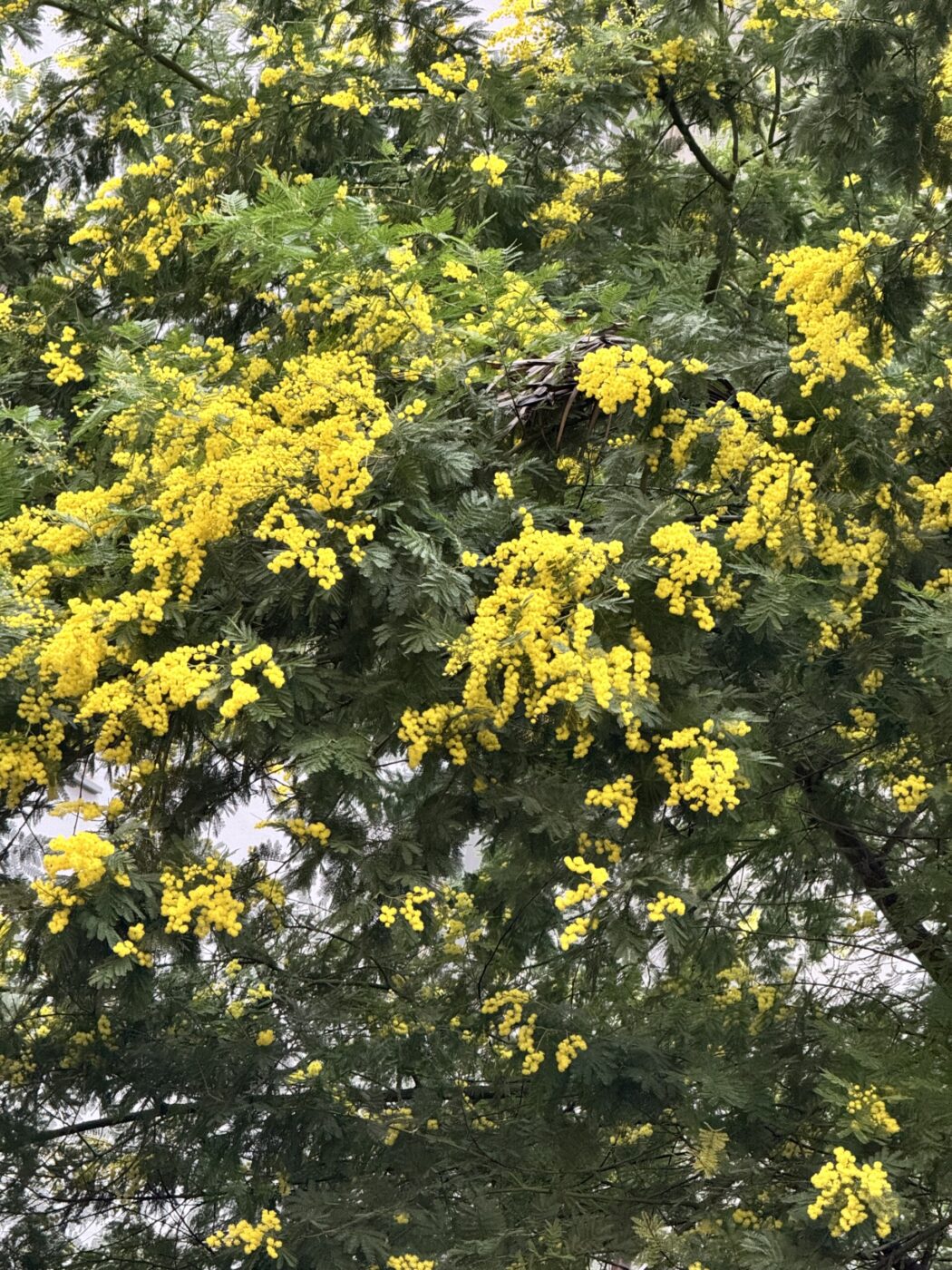
If February is for love, March is for women. At least that’s true for the more than 80 countries that celebrate International Women’s Day. Italy commemorates the day with a symbol all its own: the mimosa. No, not the all-star drink of American brunchtime, but the powdery, pom-shaped flower of the namesake tree from which it stems.
Each spring, Italy is bathed in a golden glow as mimosa blooms flood florist shops and invade supermarkets. Bright yellow sprigs even make their way into handmade crafts brought home by schoolchildren. This cheerful sea of yellow signals La Festa della Donna’s arrival—Women’s Day in Italian, marked with gifts of mimosa for women of all ages.
Florists like Federico Feriano sell around 13 million sprigs of the fragrant, fluffy blossoms each year. Together with his wife, Liliya Shalapa, Feriano runs Veneto’s oldest flower shop, founded in 1900 in Vicenza’s historic downtown. “Flowers speak a language,” he notes. Shalapa concurs, explaining that the humble mimosa conveys solidarity in a celebration of independence, freedom, and expansion of rights. “We are mothers, businesswomen, friends, sisters. We are strong; we have a lot of things to do,” she adds.
No less iconic than the flower itself is the cake it inspires. Dramatic golden domes of torta mimosa tease from behind bakery windows—layers of custard and sponge cake topped off with a layer of crumbled sponge to achieve a unique mimosa-like resemblance. Though its creator, Rieti pastry chef Adelmo Renzi, originally dedicated his 1960s award-winning creation to Sanremo, the “City of Flowers”, its fame soon spread across Italy to become the unofficial culinary symbol of La Festa della Donna.
Beyond cakes and flowers, a variety of cultural initiatives similarly celebrate women with free admission to museums on March 8th—pleasant commemorations for a day with a fiercely revolutionary history.
The origins of International Women’s Day trace back to the early 20th-century labor movement, when, in 1908, 15,000 women marched through New York City demanding better pay, shorter hours, and the right to vote. This momentum led American socialists to establish the first National Women’s Day just one year later.
Similar calls swept across Europe, where German socialist Clara Zetkin put forward an international day, both to recognize women and continue the advancement of equal rights. In 1911, four countries banded together in celebration of the first International Women’s Day, and just six years later, it was Russia’s women-led protest for “bread and peace” that ignited revolution and fixed the date as March 8th for International Women’s Day.
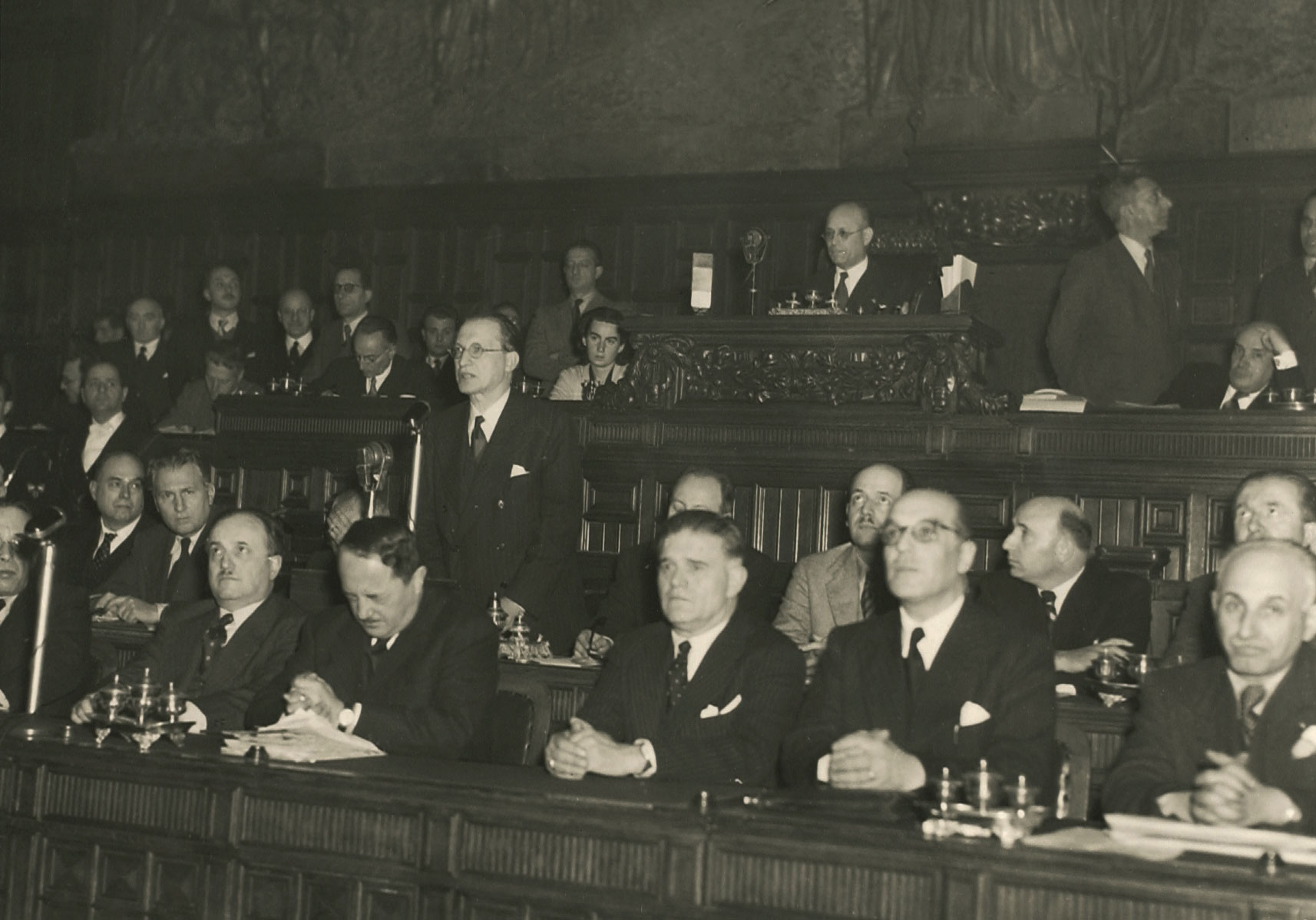
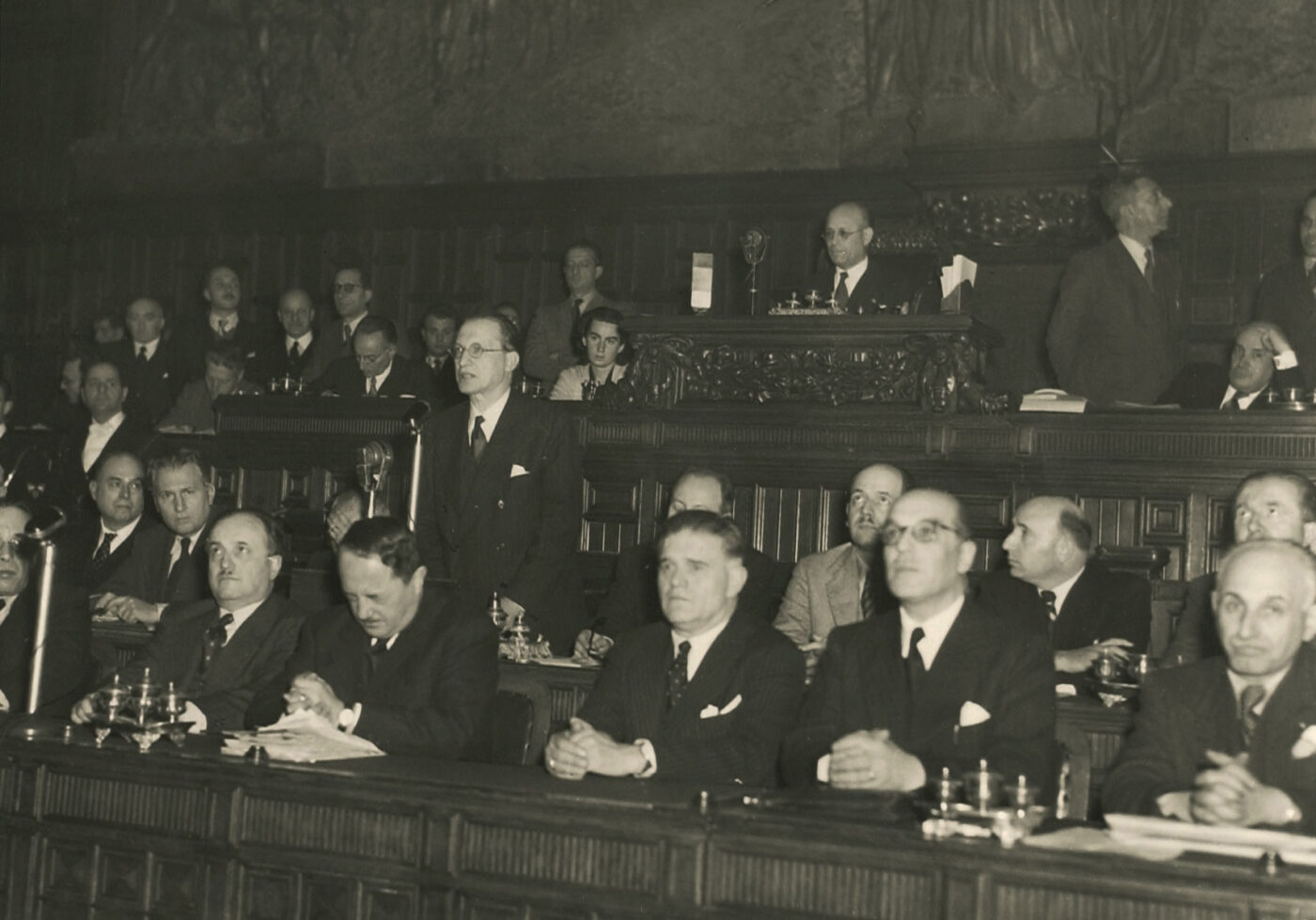
Constituent Assembly of the Italian Republic in 1946; Mattei, the only woman in the room, is seated behind the speaker. dati.camera.it, CC BY-SA 4.0, via Wikimedia Commons
Like those women who stoked the fires of the Russian Revolution, women also played instrumental roles in Italy’s liberation during World War II. Italy’s Resistance drew 100,000 women to its cause—a stunning 40% of total members. “The only time in my life that I put on lipstick was to place a bomb. I was unrecognizable,” partisan Teresa Mattei recalled in an interview years later. A fierce anti-Fascist, Mattei herself joined Italy’s burgeoning resistance, then turned her eyes from sabotage to politics after the war. In 1946, she helped write the Republic’s constitution and became the youngest woman elected to the Constituent Assembly at age 25.
Italy was finally ready to revive its own Women’s Day—now all it needed was a symbol. Some suggested the violet. But the flower’s high cost and limited availability made it unsuitable for a nation still impoverished by war. Mattei instead proposed the mimosa; their flowers litter Italy’s countryside in spring and thrive in harsh conditions, she countered. Delicate blooms testify to women’s sensitive nature, while their hardiness speaks to female fortitude: “It’s a collective flower with all those little flowers put together.”
This year marks 80 years since the mimosa’s adoption as a symbol for La Festa della Donna, but the work for women’s rights is far from over. The 1945 extension of voting rights to women failed to erase long-held patriarchal perceptions deeply entrenched in Italian culture. They tragically manifest in deaths like that of Giulia Cicchettin in 2023; her murder at the hands of an ex-boyfriend sparked national outrage and prompted lawmakers last year to formally recognize femicide as a crime. Elena Cicchettin wrote of her sister’s death, “Femicide is not a crime of passion, it is a crime of power.”
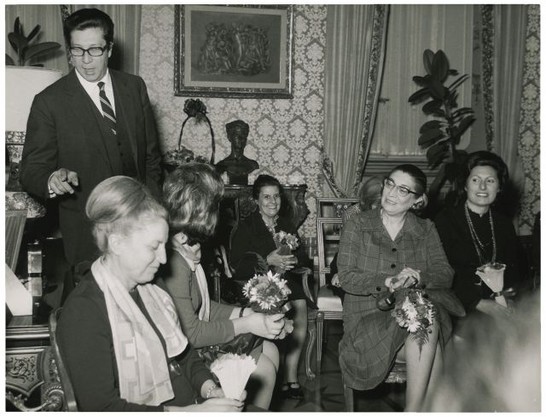
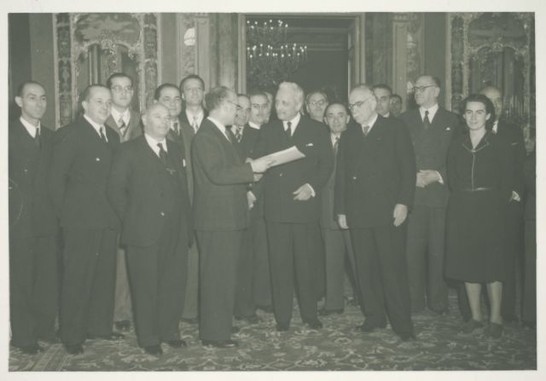
The President of the Chamber of Deputies, Alessandro Pertini, presents flowers to female members of parliament on International Women's Day in 1973; 30 years after the work of Mattei, there are now more women in the room. dati.camera.it, CC BY-SA 4.0, via Wikimedia Commons
This systemic imbalance of power extends into the professional sphere, where Italian women face a different set of hurdles. Employment remains a stark indicator of this gap: only 51% of working-age women are employed compared to 69% of men, according to the Rome Business School.
While these issues are among the most pressing, they represent just a fraction of the work still required to achieve genuine parity. “Progress is not linear,” Italian physician and educator Maria Montessori was known for saying. Each year, the bright, resilient mimosa serves as a reminder that while the path forward is uneven, the march toward equity continues.