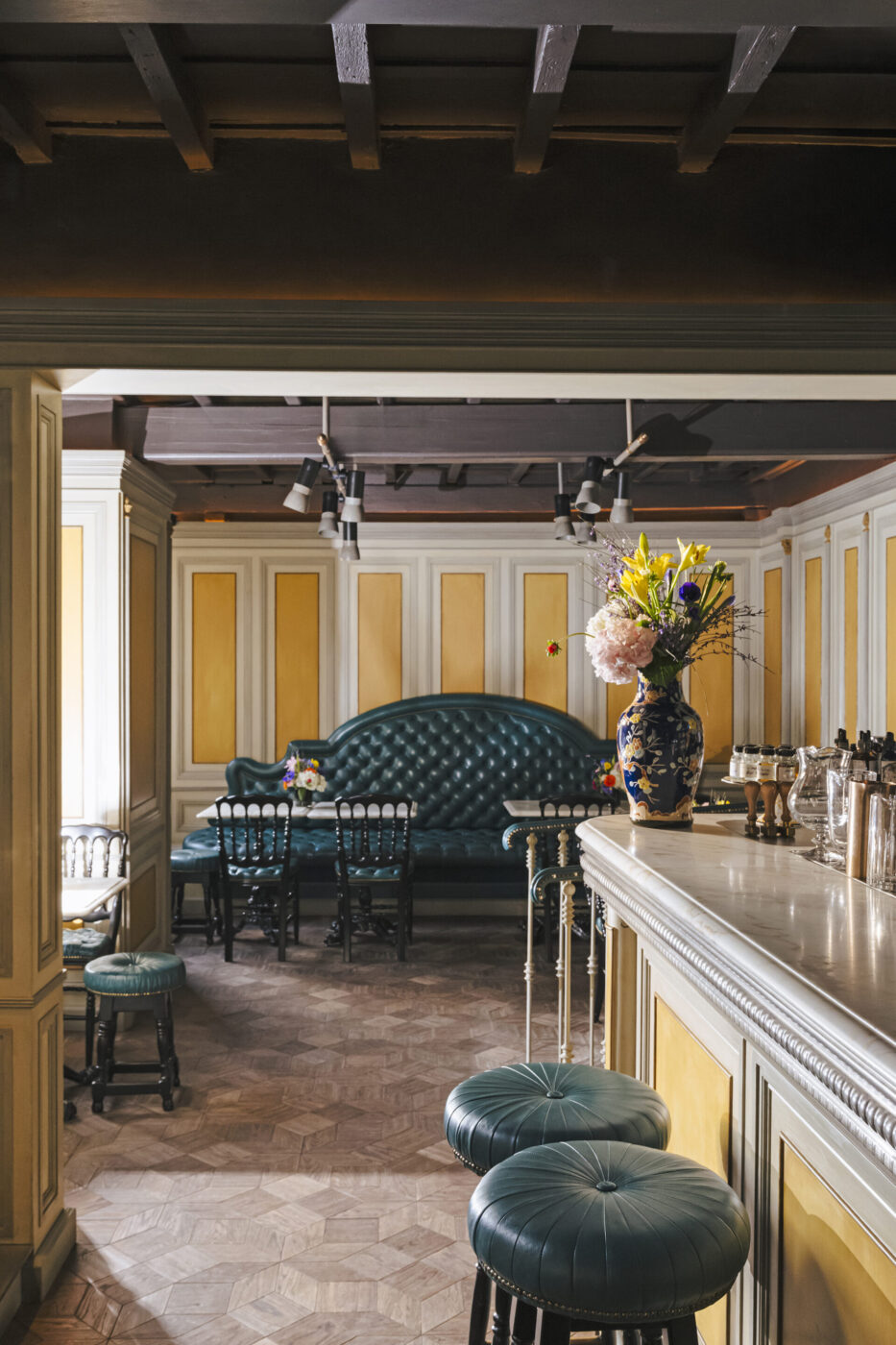
To sit on the terrace of Gucci Giardino as the late afternoon sun hits the rusticated stone of the Palazzo Vecchio is to witness a collision of eras. In Piazza della Signoria—a square traditionally defined by the towering architecture of the Renaissance—Gucci’s all-day café and cocktail bar introduces a different, more contemporary vibe. Once a florist shop, the space has now emerged as a laboratory for the future of Italian mixology. Here, the cocktail menu is built around familiar notes and precise composition, with each drink crafted to create immediate connection while avoiding anything that feels expected—a concept that sits at the core of Gucci Giardino team’s approach.
Under the direction of Bar Manager Martina Bonci, the venue celebrates its fourth anniversary this month, championing a philosophy that prioritizes complexity, seasonality, and storytelling over the high-proof bluntness of the traditional drinking session.
Bonci, an Umbrian native who brings a former athlete’s discipline to the malachite bar, approached mixology with the same mindset found in a professional kitchen. Each new menu starts with a clear theme or seasonal spark that shapes the drinks and allows the team to tell a cohesive story through their creations.
There’s perhaps no better cocktail that embodies this philosophy than the Mémoire di Negroni, the bar’s violet-hued signature. The drink was born from one of Bonci’s first walks through the Florentine streets, where the purple jerseys of the local football club, ACF Fiorentina, caught her eye. Bonci thought: “Why not make a Negroni that reminds you even more of Florence?”
The drink subverts the classic’s crimson by using only clear ingredients—bitter, vermouth, and gin—infused with the butterfly pea flower. When a touch of acidity from yuzu sake is added, the liquid undergoes a ph-driven transformation from deep blue to a vibrant violet. The visually striking cocktail is more delicate, and a touch more citrus-forward, than its predecessor, though it maintains the structural depth prized by Negroni purists.
Florence is the birthplace of both Gucci and the Negroni, and with the bar set in the stunning Piazza della Signoria, Bonci and the team decided to bring these elements together. Their goal was to create a Negroni that felt lighter and easier for everyone to enjoy.
This pursuit is not a watering down of tradition, but a technical feat that allows Gucci Giardino to lead the conversation on the “Low and No” movement currently sweeping the global bar scene. For the bar, the goal is inclusivity. Non-alcoholic drinks here aren’t the usual sugary juices that are often the only options for non-drinkers. Instead, the non-alcoholic and low-alcoholic drinks at Gucci Giardino are crafted with the same care and creativity as the classic cocktails, focusing on texture, balance, and harmony.
A great example of this is the Insolito, an “unusual” tropical turn that pairs Zacapa 23 rum with papaya-infused Campari and coconut water, demonstrating that a lower proof does not mean a lower impact.
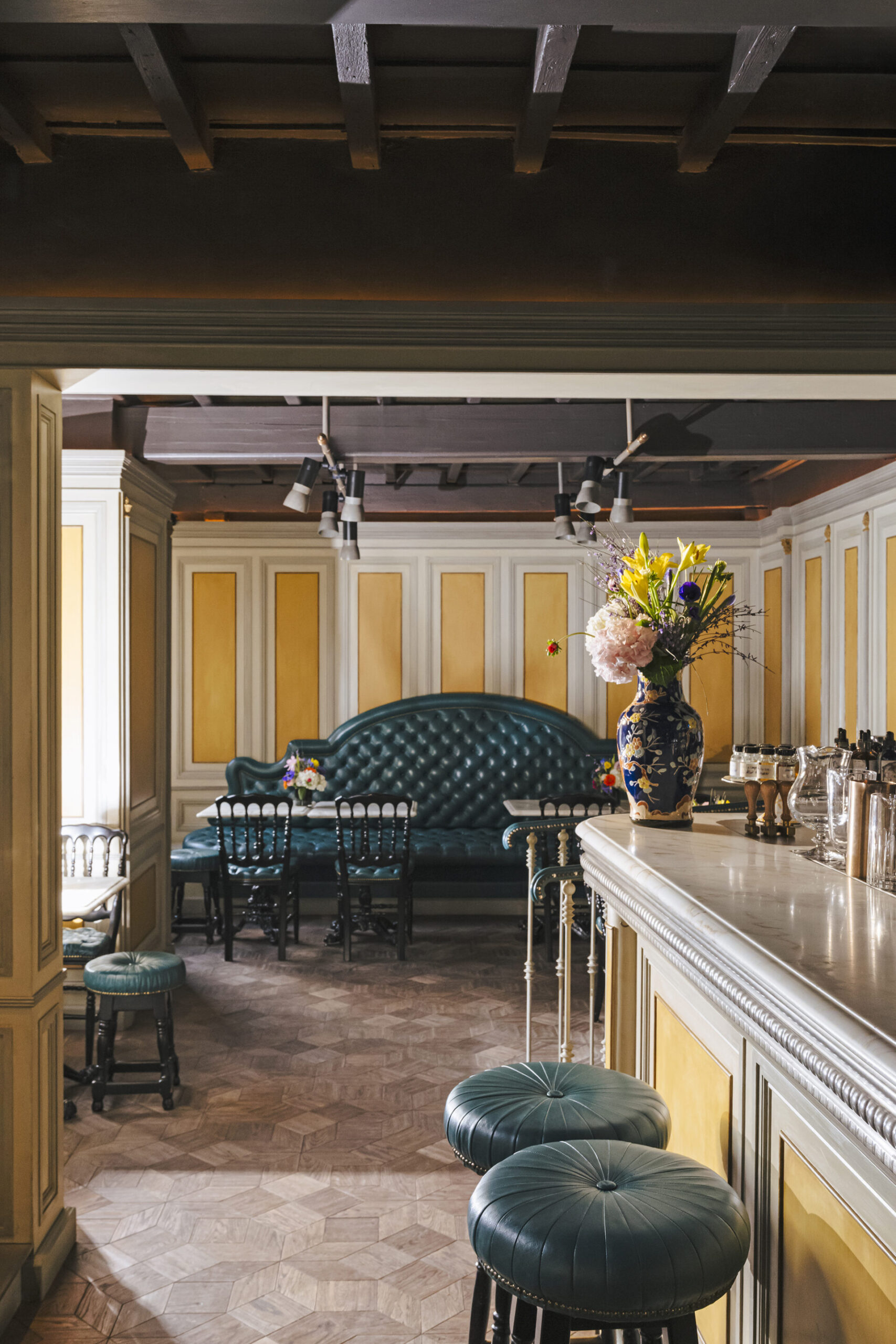
Also central to Gucci Giardino’s elevation of the craft is an adherence to seasonality, a principle that usually goes unconsidered at the classic Italian bar. The Giardino’s offerings include “Seasonal Cocktails” and “Seasonal Mocktails”, the former to feature a Martini, currently in development, that redeems the lemon twist. Using the entire citrus, the bar infuses gin with lemon zest and then takes the parts that are usually thrown away to create a bitter, complex infusion in dry vermouth. The finishing touch is a sartorial sleight of hand that blends olive oil with the citrus-infused spirit remains, freezing it into a fat-wash that lends the cocktail a silky texture.
It’s this marriage of high-concept technique and unpretentious fun that allows the bar to experiment with surprising ingredients that wow while, at the same time, maintaining balance and drinkability. Take the Queen Bee, a personal favorite of Bonci’s, shaped by her belief that everything relies on the strength of the “hive” around her. The drink arrives honeyed but sophisticated—a lush blend of banana-infused bourbon and Greek yogurt milk wash, brightened with mango and topped with a chewy honeycomb garnish. Or the “Chi si ferma è perduto”, which softens the blunt edges of tequila with bergamot and spirulina, an ingredient stripped of its health-food reputation here; the cocktail is sweet, but grounded by an earthy edge. And then there’s the fresh, herbaceous Affari di Famiglia—a favorite of the wait staff—a sort of sour with local Sabatini Gin, mezcal, lemon verbena, lavender, and thyme oil that evokes the aromatic hillsides of Tuscany.
As the sun sets over the piazza and aperitivo time rolls around, the crowd at Gucci Giardino is a mix of global travelers and Florentines who have, after four years, fully accepted the purple Negroni as their own. It seems that in a city defined by its past, Gucci, Bonci, and her “bees” have planted a garden that is firmly rooted in the future.