A meal is a known thing in one of the many warm-lit, creaking trattorias hunched under Bologna’s porticoes. Dimpled paper tablecloths, heavy white napkins. Tortellini plumply floating in broth for a tortellini in brodo, ragù alla bolognese coating broad spools of tagliatelle, thick slabs of lasagne, cotoletta alla bolognese (a veal cutlet fried in butter and topped with prosciutto and Parmigiano), and, ever-present amidst the groaning display, a plate of mortadella—or, to be exact, Mortadella Bologna IGP.
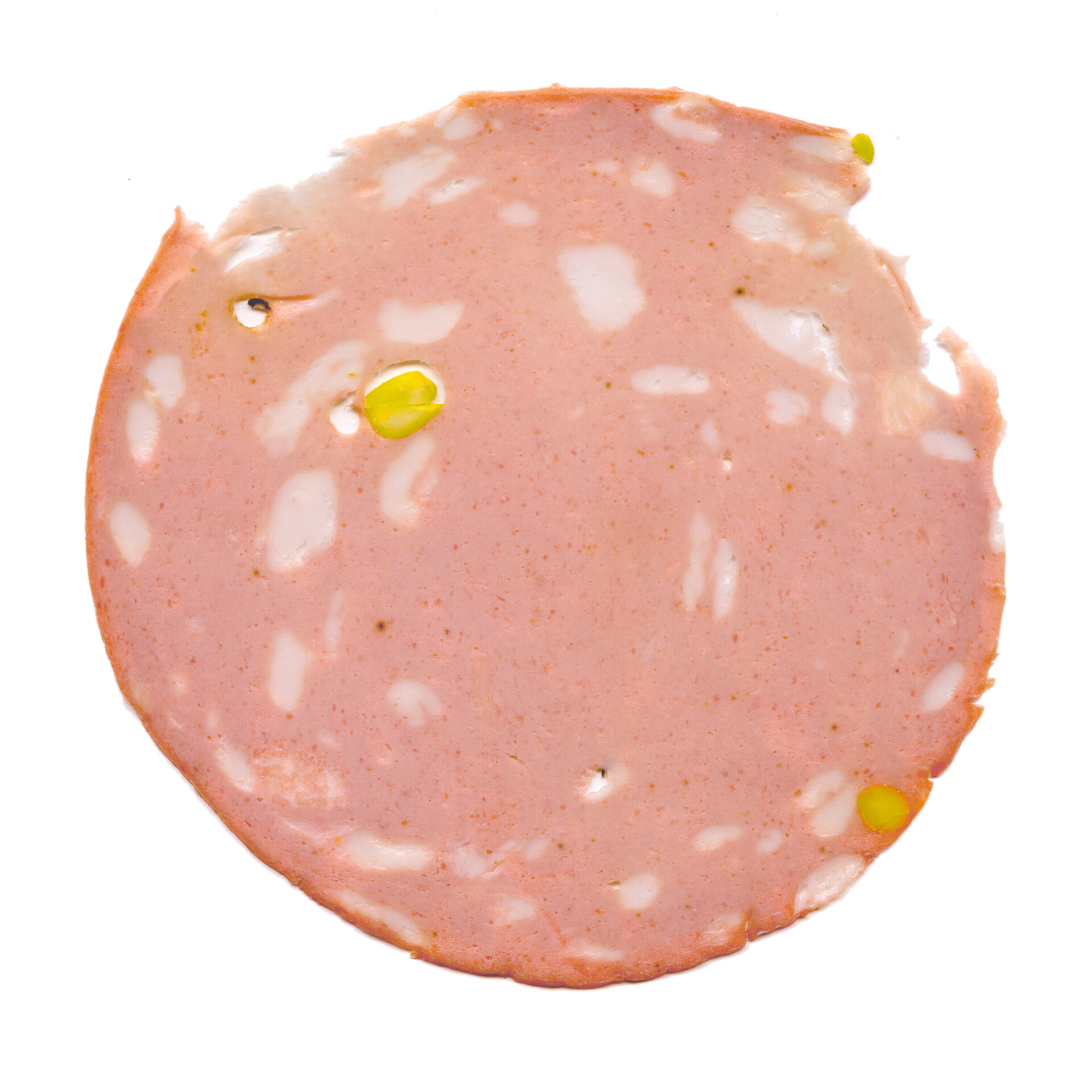
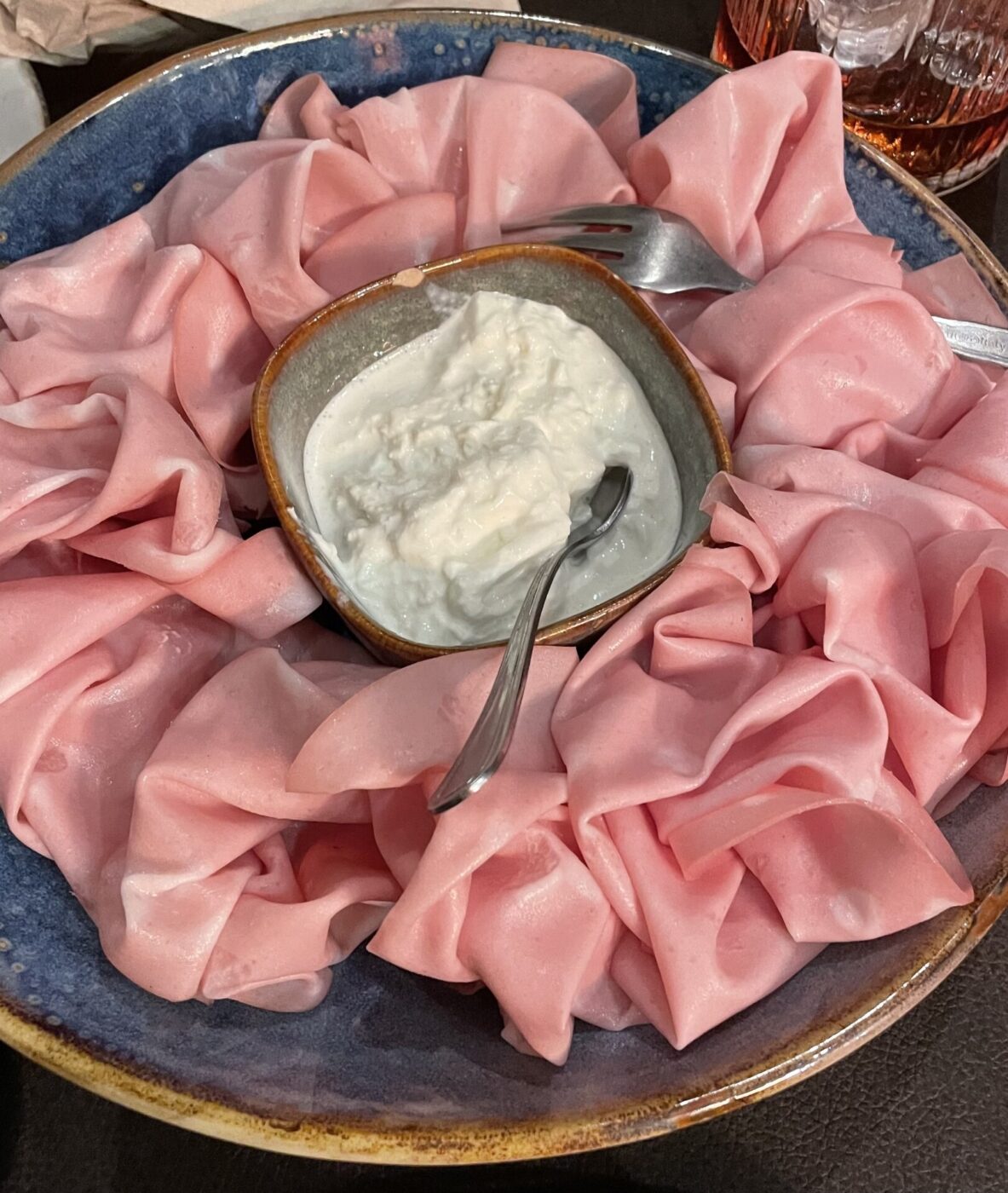
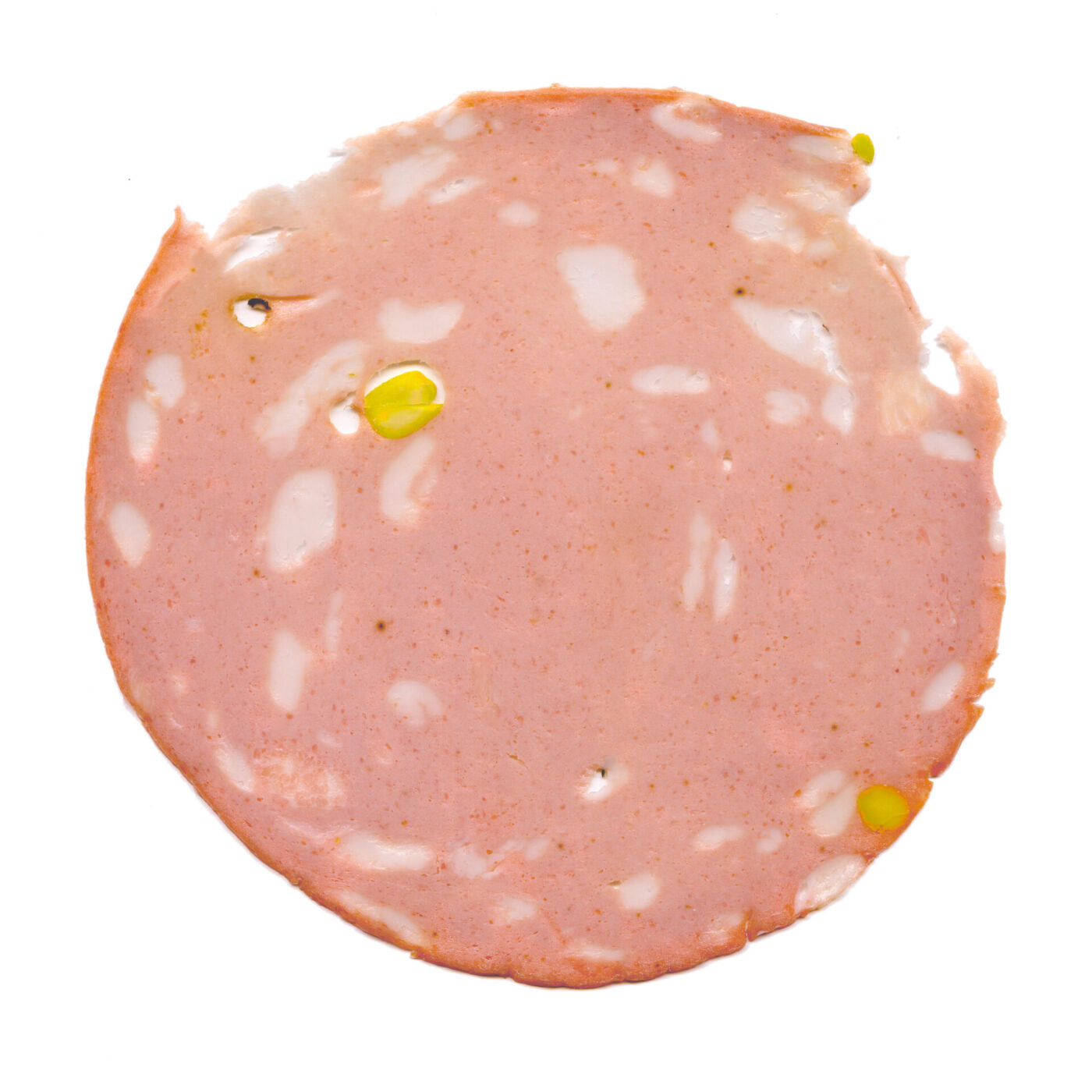
The ham is very pink and stippled white with fat. Here, in one of those trattorias, it pools in proud layers around a plate. Spear a slice with your fork, and if you’re near a window, hold it up to the sky. Legend goes that it should be cut gauze-thin enough as to frame the silhouette of San Luca, Bologna’s hilltop basilica.
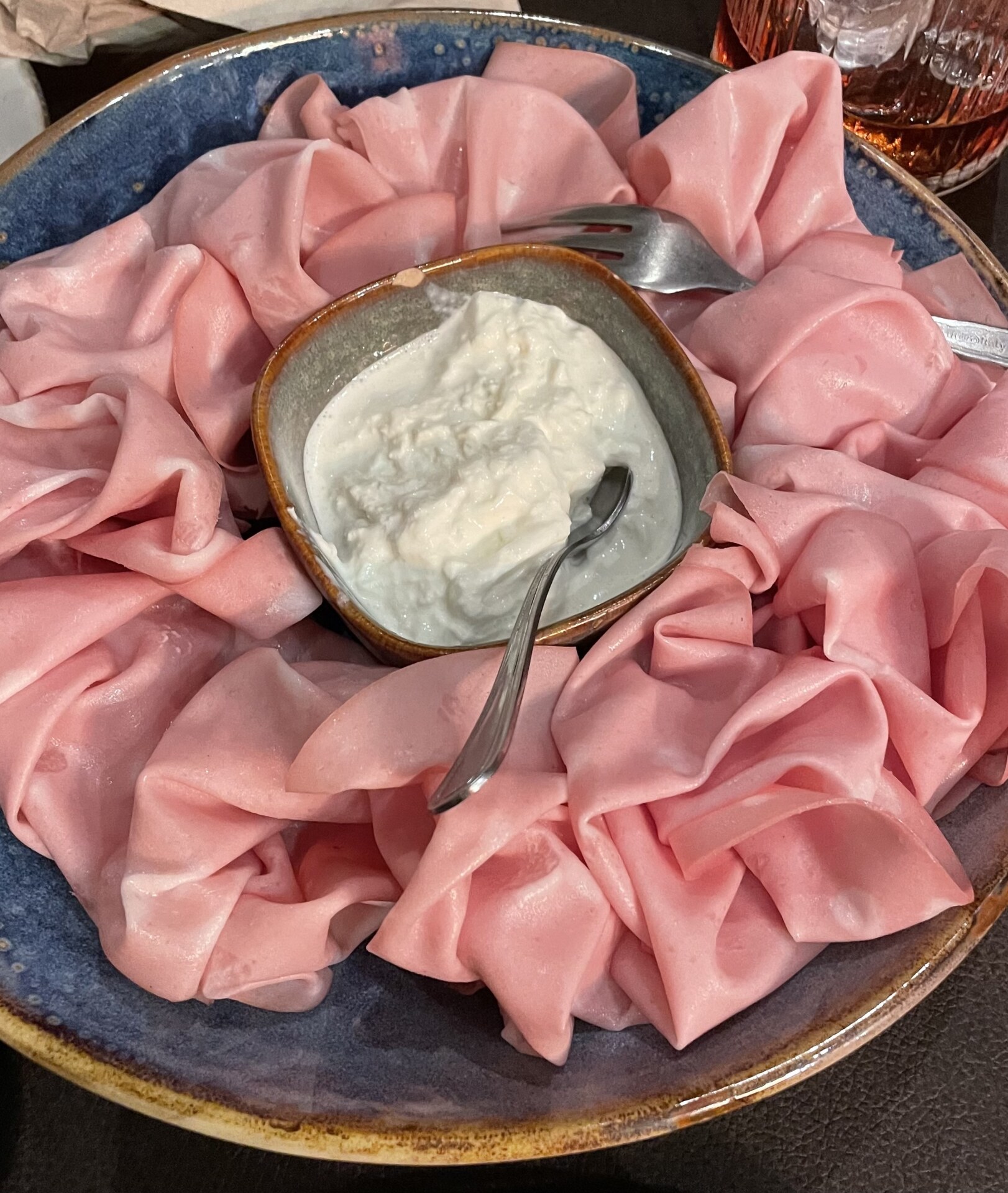
Mortadella plate at Corner Bar in Bologna
Mortadella has become an unexpected figure of international media scrutiny in the last few years. In 2024, The New York Times published an article titled “My Beloved Italian City Has Turned Into Tourist Hell”, citing Bologna’s “mind-numbing, heart-stopping amounts of mortadella” as a symptom of the mass-tourism that has begun to take over the city. The Telegraph highlighted the city’s defence of its “proud cultural heritage” in response to the piece, reporting Bologna mayor Matteo Lepore’s “strong indignation” towards the accusation. The clammer spreads wider still: the Financial Times considered “How mortadella got its mojo back”, another piece by The Telegraph puzzled over whether mortadella is “to love or to loathe”, and The New York Times delineated “How Mortadella Went From Cold Cut to Hot Item”, lauding the appeal of its “millennial-pink hue.” The ham has long-had mimics—the rudimentarily named “Bologna” ham lines the shelves of US supermarkets—but these stories have generated fresh discussion around the quality of mortadella, now so frequently encountered within trend-driven, brightly-lit tourist traps. Mixed up with talk of fads and bastardized dupes, the ham has, by some, been sullied by association. Yet through the noise, “la regina rosa dei salumi” (“the pink queen of cured meats”) sits proudly on those Italian tables still, having borne a leading role in the history of Northern Italian food culture.
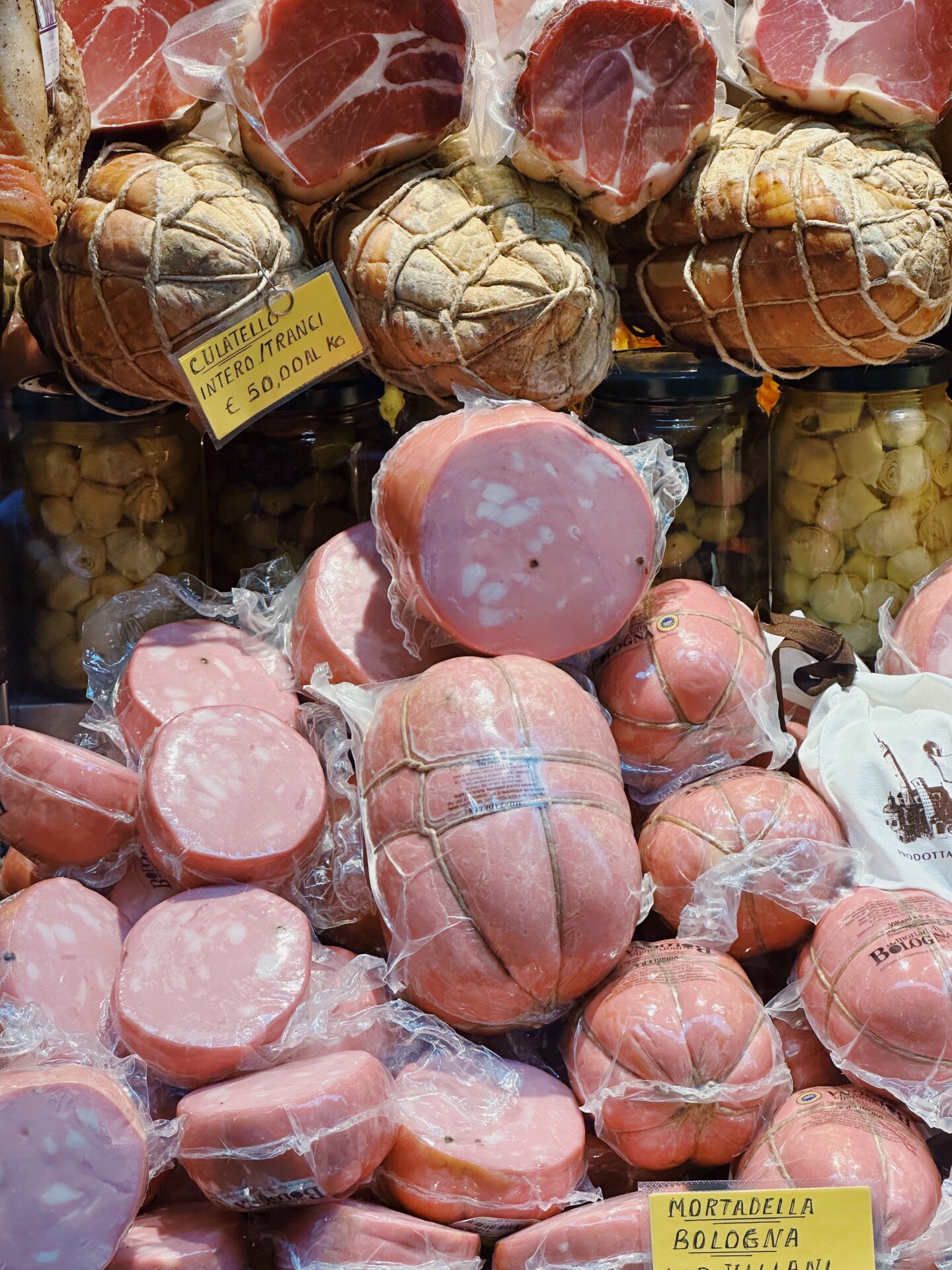
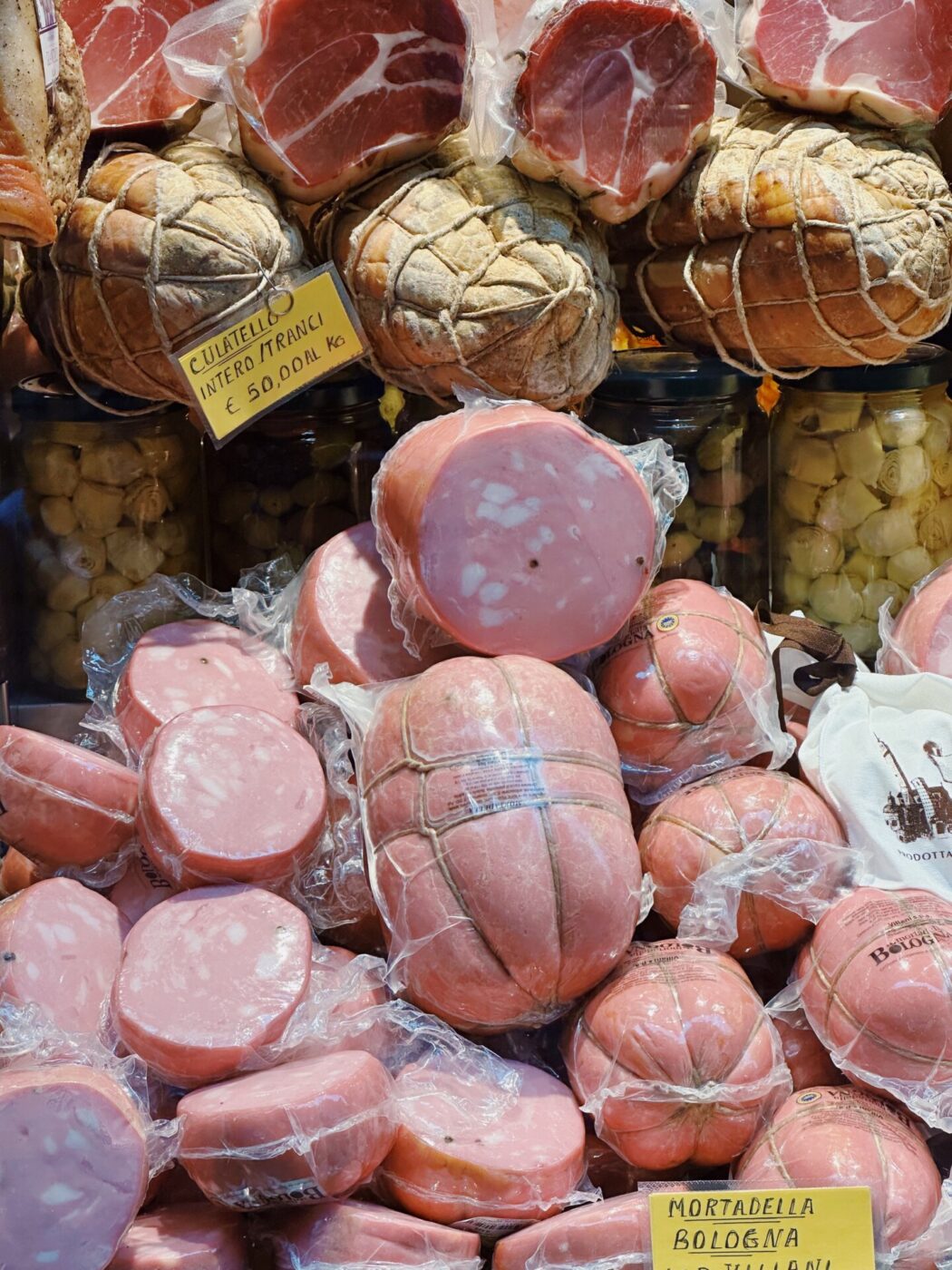
A salumi spread in Bologna
Mortadella as it was originally made is thought to date back to the Roman times. The first known evidence is in the etchings on a Roman Imperial-era stele in the Archaeological Museum of Bologna: one side bears seven grazing piglets, the other a pestle and mortar, a macabre reference to the grinding of the pork meat that made up the first part of the “production” process. From this stems one theory for the ham’s name; mortadella, from the Latin word “mortarium”, or mortar. Another theory suggests the name derives from the Latin “myrtus”, the myrtle berry that the Romans blended into the pork mince for seasoning.
The production of the ham evolved into the Middle Ages, when mortadella was lauded as a luxury food for the wealthy, far pricier than its cousin prosciutto. Its making—getting whole pork shoulders down to a fine paste—was considered akin to an art form, carried out by skillful Bolognese artisans. The city’s link to the ham, thought to have come about from the region’s long tradition of pig farming, can be traced back to the 15th century, when the Visconti of Milan would offer the city a fattened ox in exchange for mortadella. The production method was codified in 1661 by Cardinal Farnese in one of the first declarations of its kind that mirrors the contemporary IGP EU food label. The proclamation stipulated that the ham had to be produced within the city walls, only using pork meat, and stamped with the “Salaroli” seal (the sausage-making guild) in order to be known as mortadella.
The method has remained largely similar since the days of its Medieval officiation, though industrialization cheapened the production process to such a degree that, on its journey to the modern day, mortadella was demoted from luxury item, evolving into an affordable counterpart to the once less prized prosciutto. Pork shoulder is finely ground to a pink pulp and mixed in with lardelli, cubes of fat from the pork neck (which must constitute at least 15%), and then seasoned. Already the ham is unnervingly recognizable, as I discovered touring the Gianni Negrini mortadella factory, peering over the wheeling metallic vats at the mottled paste. It is then neatly stuffed into plump cylindrical casings, slowly cooked in temperatures that reach up to 70°C, and subsequently cooled by misting water in a sprawling, tiled room that feels not unlike a spa. It is left to rest, before being sliced into thin, rumpled folds. It must follow these strict criteria in order to be given the Mortadella Bologna IGP label, proof that the ham has been made according to tradition and to a high quality.
To single out one ham as salient from Italy’s abundant culinary heritage might well be ambitious; but mortadella has left a palpable mark on Italian history and pop culture. Renaissance writer and poet Boccaccio gives mention to “mortadello” in the Decameron; composer Gioacchino Rossini loved the ham so much he bought his own factory; Giuseppe Garibaldi, during his stay on the island of Caprera (off the coast of Sardinia), demanded he be sent mortadella and tortellini. An Early Modern Italian board game, Gioco della Cucagna, comprised of squares representing the food specialities of different Italian cities, had an ultimate prize won by a treble six of the dice: the mortadella of Bologna—its illustration accompanied with the triumphant line: “Viva le mortadelle di Bologna–tira tutti!” (“Long live Bologna mortadella–it’s a crowd pleaser!”). The ham has a long and rich association with Italian cinema, so much so that the Roman Film Festival includes a “Mortadella Day”, celebrating the presence of the regina rosa on the silver screen. It features in a staggering 17 different films, rising to the role of titular protagonist in La Mortadella, the 1971 film starring Sophia Loren; a comic take on the US’s then ban on meat which could carry food-borne diseases, culminating in an indignant Loren refusing to hand the ham over and eating it in the airport’s custom office. (As an aside, the film’s dubious yet excellent US pull quote is: Can a girl from a little sausage factory in Italy find romance and happiness in a pizzeria in New York?) In Caruso Pascoski, Di Padre Polacco (1988), Pascoski embarks on a food-as-politics themed monologue, in which he declares “la mortadella è comunista” (“mortadella is communist”), so much is it a food of the people.
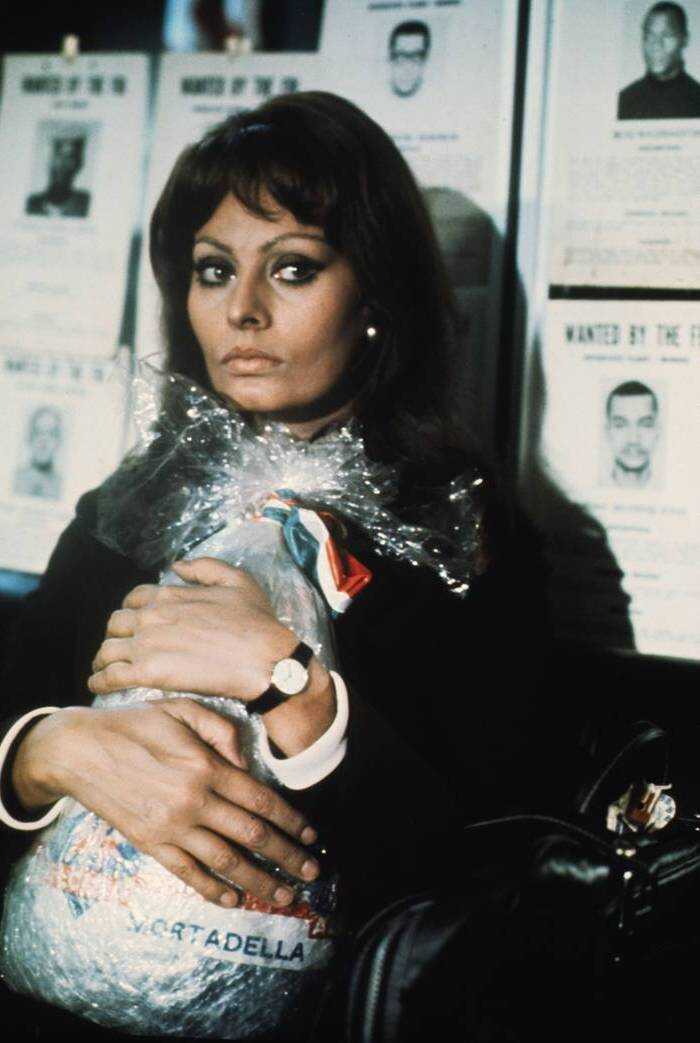
Sophia Loren in La mortadella (1971)
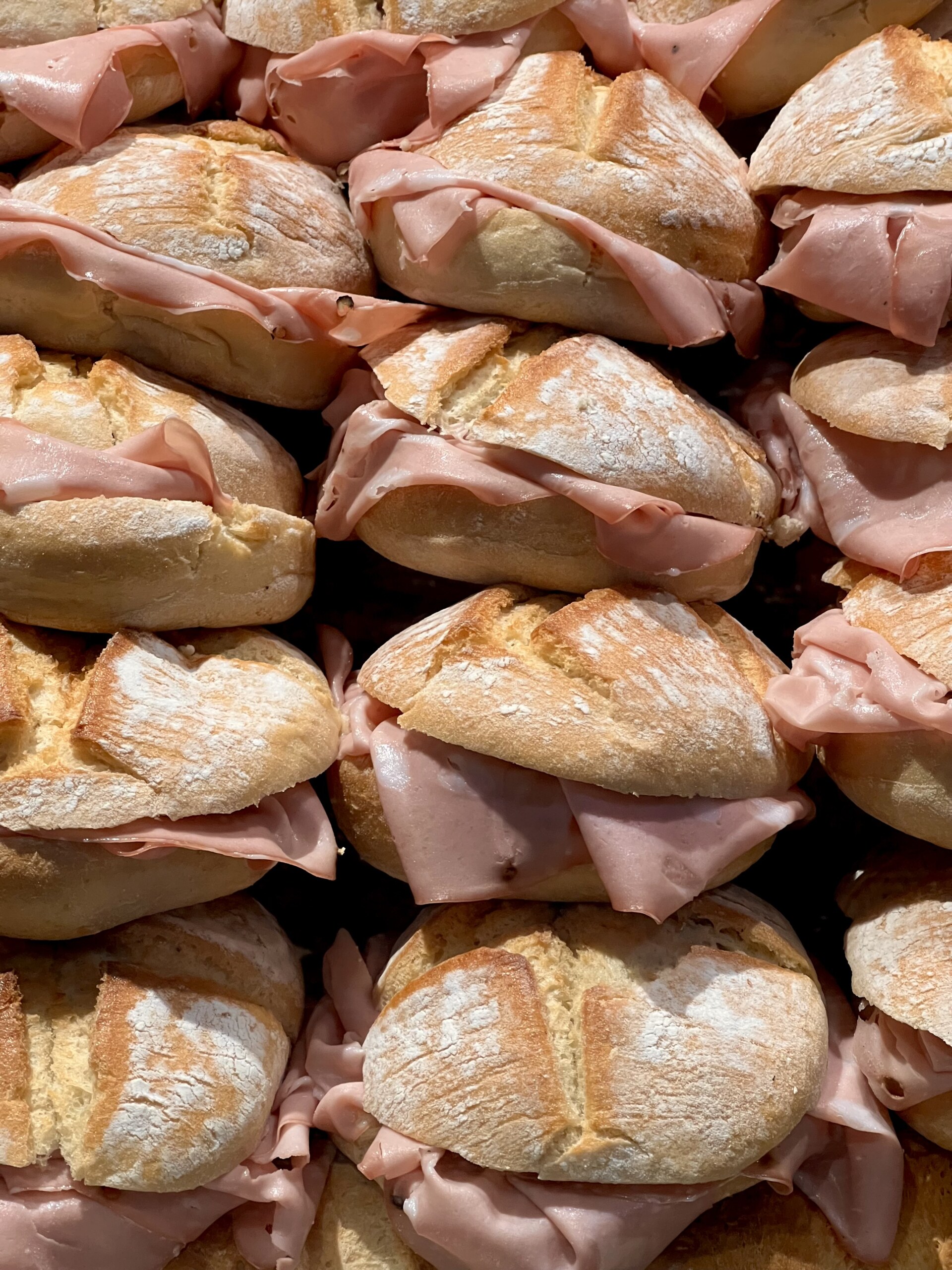
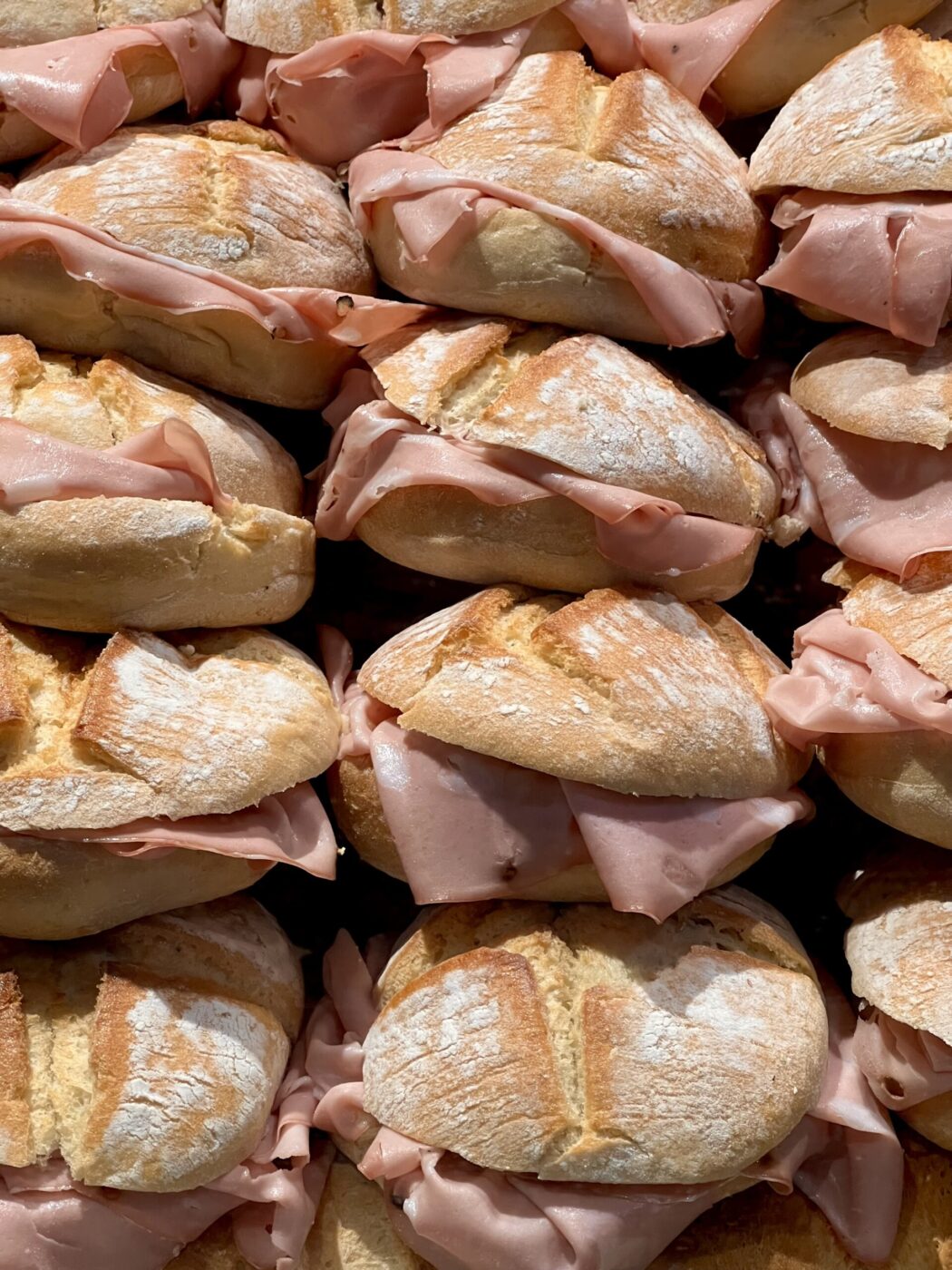
The new-found affordability of the once-extravagantly priced ham turned mortadella into a staple within Italy’s broader cucina povera food tradition. Despite its northern roots, it is eaten across the country, and has taken on regional variation, as is the nation’s custom. Pizza e mortazza is a classic Roman street food that lines the foggy glass counters of local forni; pizza bianca that has been opened and stuffed with “mortazza”, Roman slang for mortadella. Southern regions where pistachios grow, like Sicily, have taken to adding them into the ground meat before cooking, a popular combination that has since spread to the North (though Bolognese traditionalists might scoff). In Bologna, the mortadella rosetta is an undisputed classic; a simple sandwich of mortadella in a light, crusty bread roll, it is the quintessential merenda (tea-time, oft-associated with a child’s after-school snack). During the pandemic, the food sales of two things skyrocketed in Italy: chocolate and mortadella, a comfort-food status perhaps brought about by the ham’s long-standing association with nostalgia and familiarity.
It would be a shame to let recent critiques of Italy’s approach to mass-tourism distract from the proud history and cultural relevance of la regina rosa. The country’s recent accolade, UNESCO’s recognition of Italian national cuisine as an Intangible Cultural Heritage of Humanity, is indicative of the fact that there is little room to “spoil’’ Italian food when produced traditionally (small family businesses should be favored over freshly spawned sandwich shops, and in the case of supermarket dupes, imitation is far from the highest form of flattery). The question of overtourism in Italian cities is one that should be carefully and seriously dealt with, but Bologna’s rejection of those “hellish” allegations seems well-placed; mortadella’s role as a staple of the traditional Italian diet remains unwavering, and when it comes to the future of salumerie, one cannot help but see it through rose-tinted glasses.