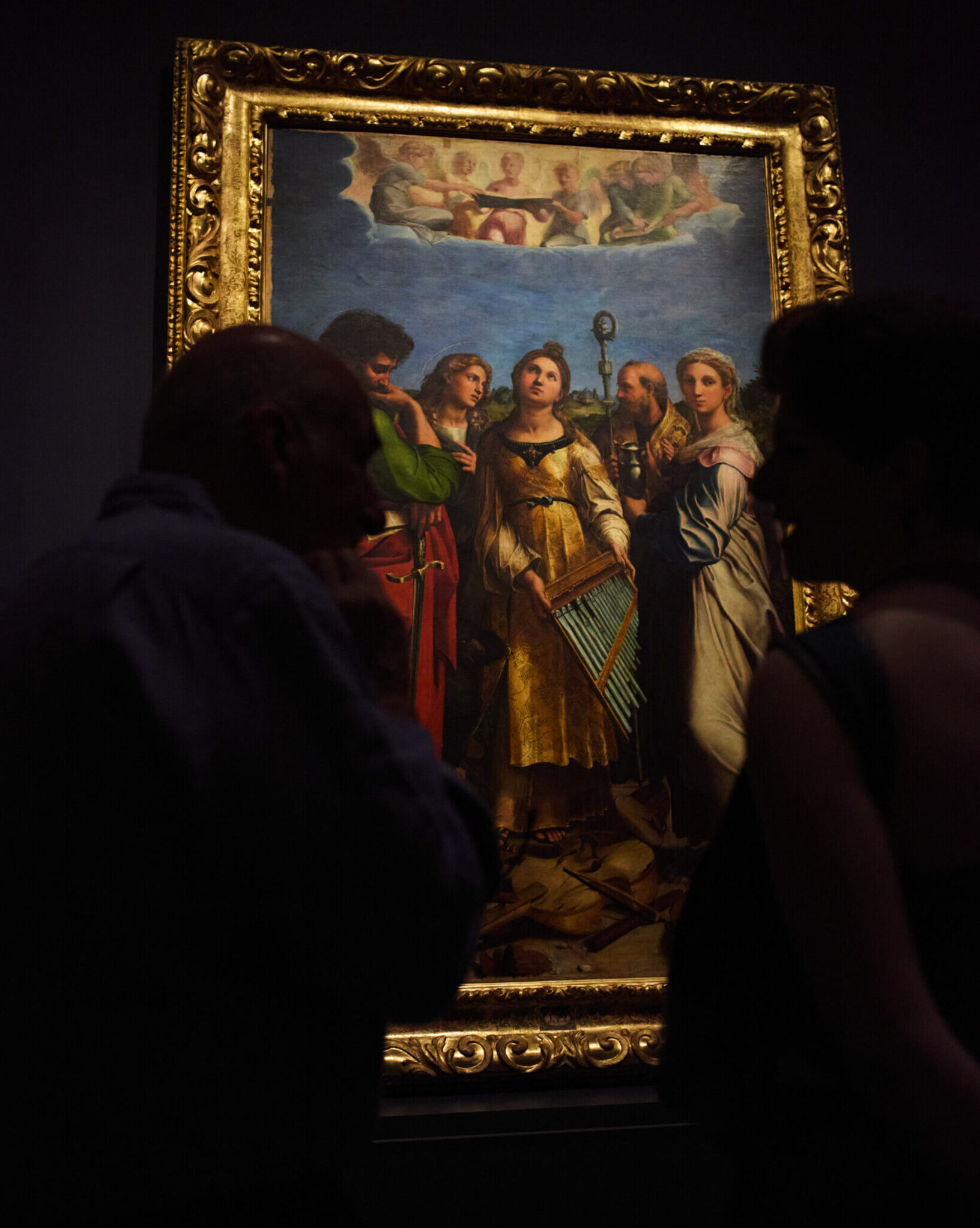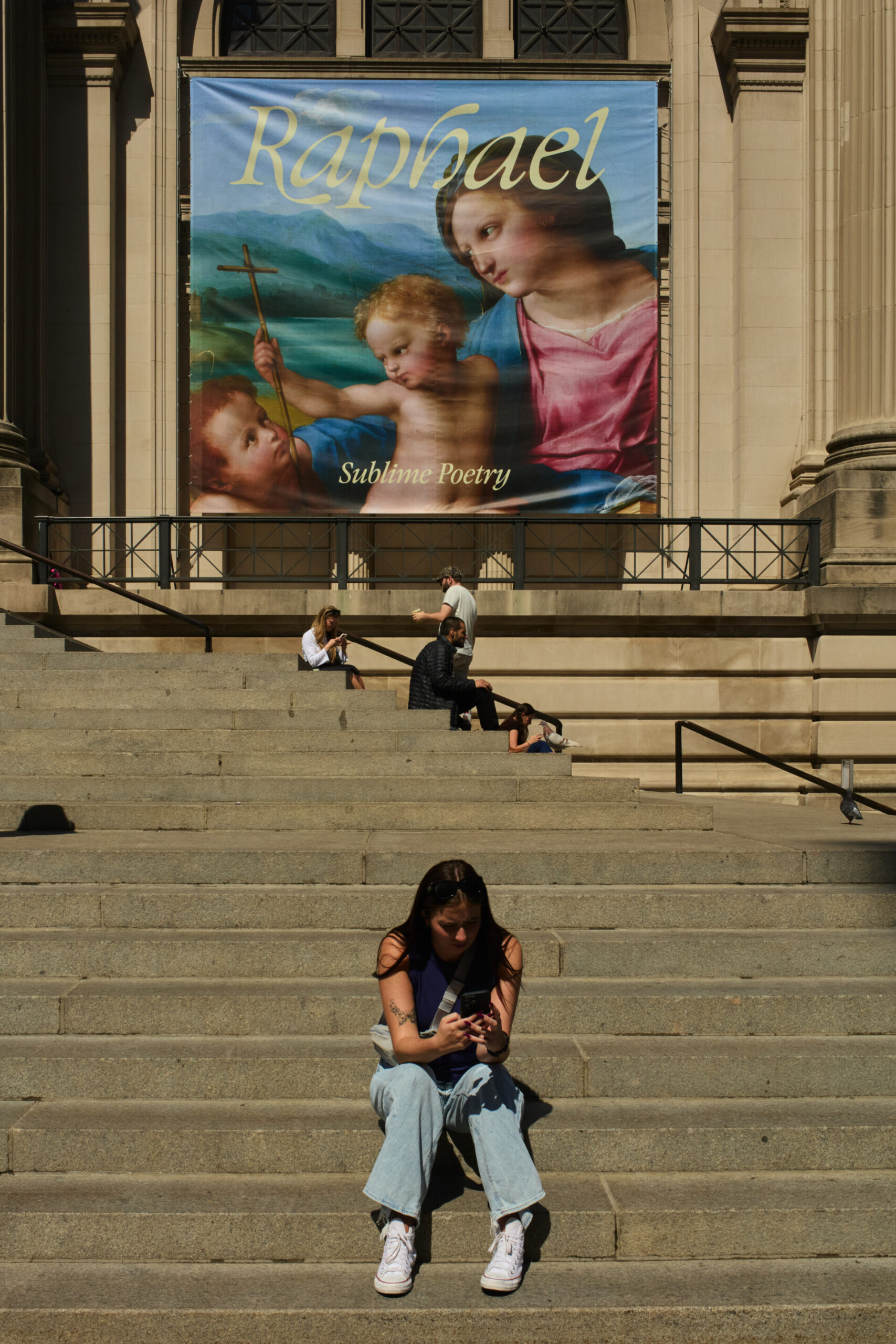
Start spreadin’ the news: A charismatic gentleman by the name of Raphael Sanzio has stolen the spotlight in New York. In terms of stellar guests to hit The Met this year, the “Italian Renaissance Genius,” as the Museum refers to him, must surely top the list. In fact, this is the first comprehensive exhibition dedicated to the artist in the United States, so yes, roll out that red carpet and cloak yourself in the finest velvets. Raphael’s arrival at The Met Fifth Avenue is worth all the fanfare it has received.
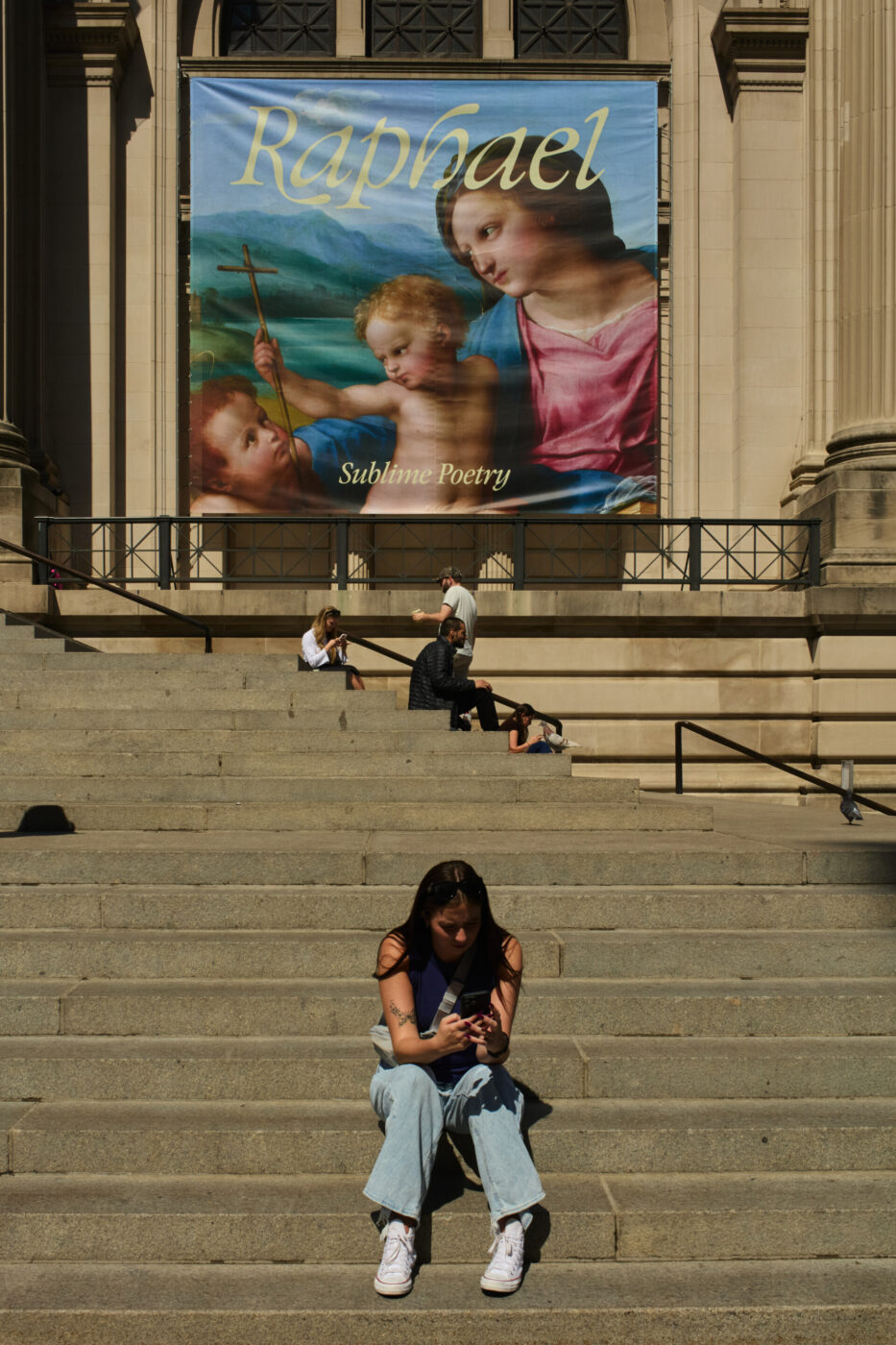
Raphael: Sublime Poetry (March 29th – June 28th, 2026) charts a chronological narrative of the artist’s life and work through over 170 of his drawings, paintings, tapestries, and decorative arts. The show is an “artistic portrait” that takes us from his formative years in Urbino to his development in Florence to the pinnacle of his artistic career at Rome’s papal court. Curated by Carmen C. Bambach, the Marica F. and Jan T. Vilcek Curator in The Met’s Department of Drawings and Prints, the exhibition draws on works from across the globe to help us understand the mind, heart, and hand of Raphael the artist (painter, draftsman, designer, architect, poet, scholar…), as well as Raphael the man.
“In this exhibition, I feel that Raphael is with us through his art in a very immediate way. It’s almost like 500 years have fallen away, and we are right there with him in the process of creation and experimentation,” Bambach shares.
The show has taken Bambach and The Met’s exhibition team roughly seven years to organize, with loans jetting in from private and public collections around the world, including from Accademia Carrara (Bergamo), Palais des Beaux-Arts (Lille), the Louvre (Paris), the British Museum (London), the Prado (Madrid), the Städel Museum (Frankfurt), the Vatican Museums (Rome), and Galleria Nazionale delle Marche in Urbino, Raphael’s birth city.
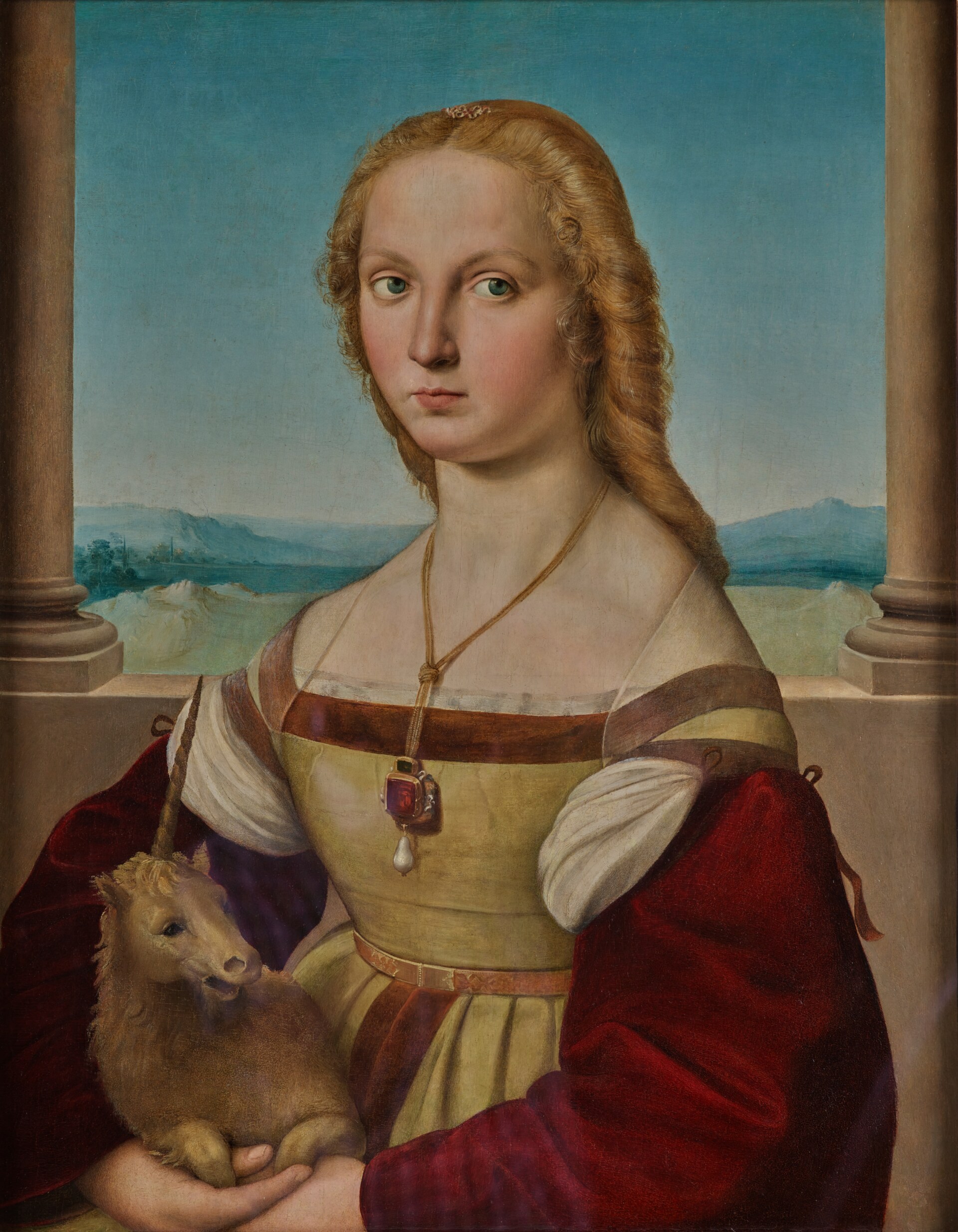
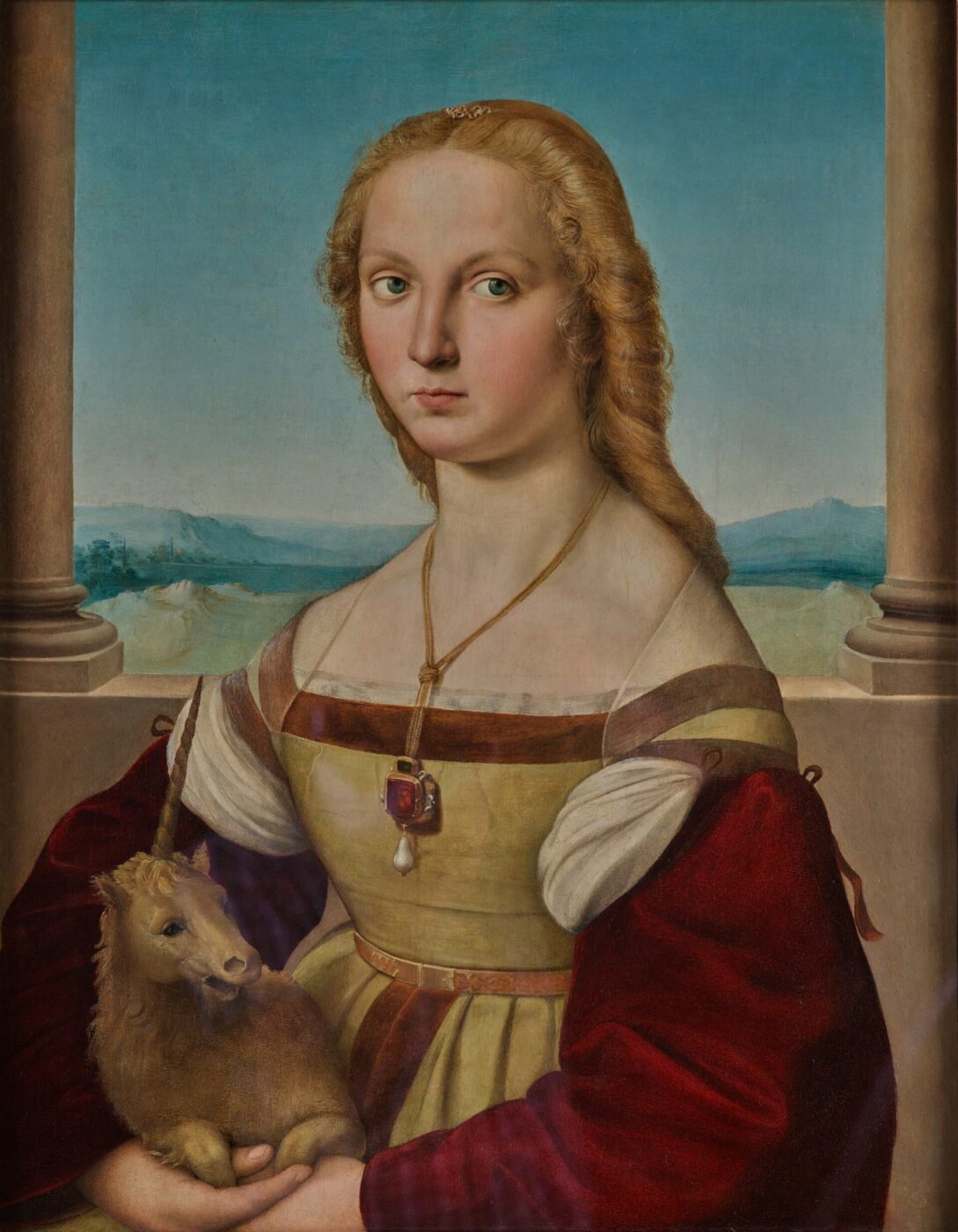
Portrait of a Lady with a Unicorn (1505-6); Image © Galleria Borghese, photo by Mauro Coen
“I felt that Raphael presented a challenge. People know the name Raphael, but I think, especially here in the U.S., it was hard for most people to get beyond just the name or the famous association with the ‘Madonna and Child’ imagery,” Bambach notes.
“There also seemed to be a general perception that Raphael was a less important, less brilliant artist than Leonardo or Michelangelo. This exhibition makes a passionate argument that Raphael is, at the very least, the equal of these two in the Renaissance trilogy. In addition to changing artistic tastes and collectors’ preferences over the centuries, maybe one of the reasons he has been obscured by these other artists is because we haven’t understood him well enough.”
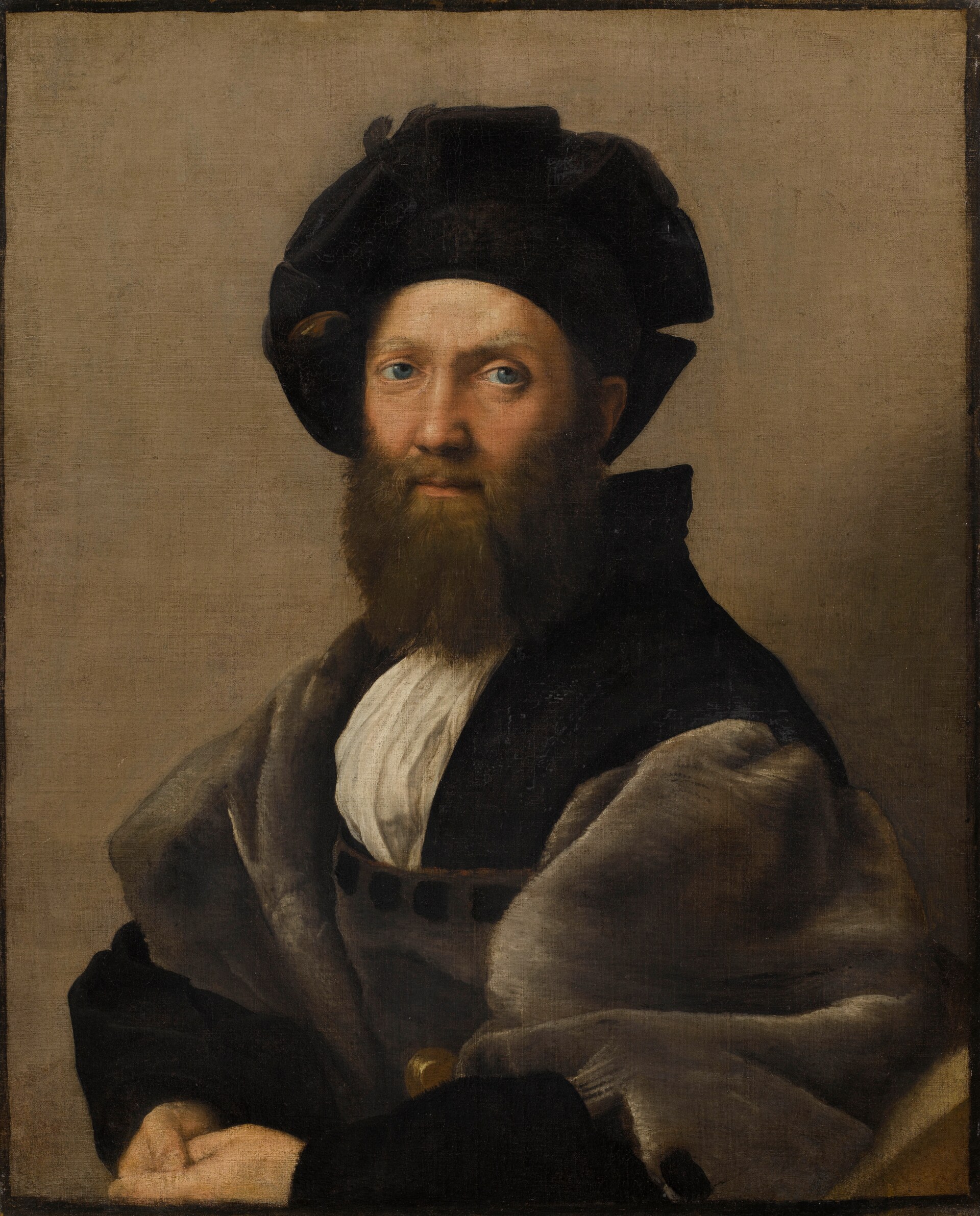
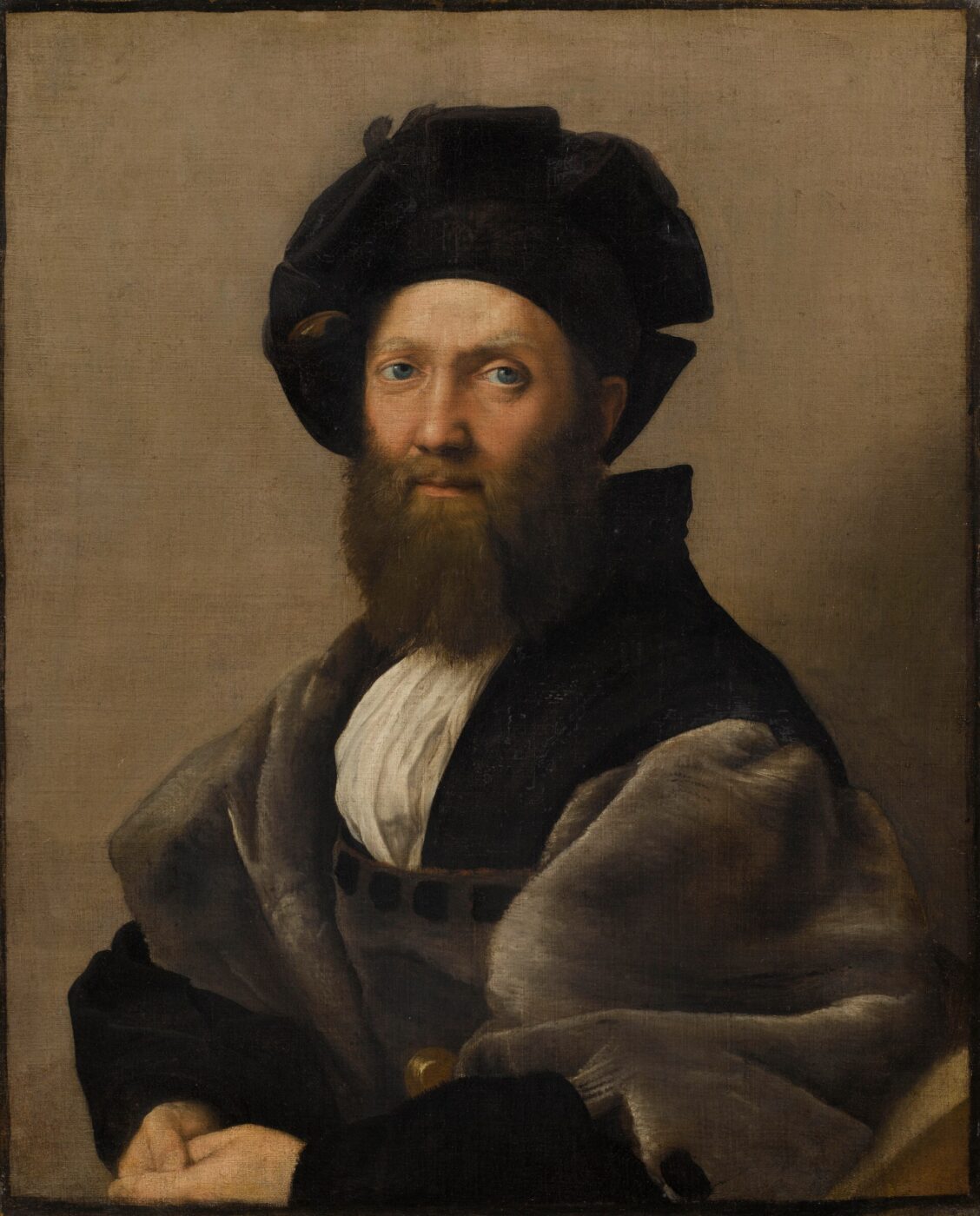
We associate Raphael (Raffaello di Giovanni Santi; 1483–1520) with epithets like the “prince of painters,” an artist whose work endures as the eternal Renaissance ideal of classical beauty and harmony. “Sublime,” in the context of this exhibition, explores the emotional resonance that comes from his technical mastery, the kind that seems to be divinely appointed. He created compositions that many art historians consider to be the epitome of formal visual perfection, balancing light, proportion, color, drama, and serenity in one scene (“hardly the work of human hands,” according to Bambach).
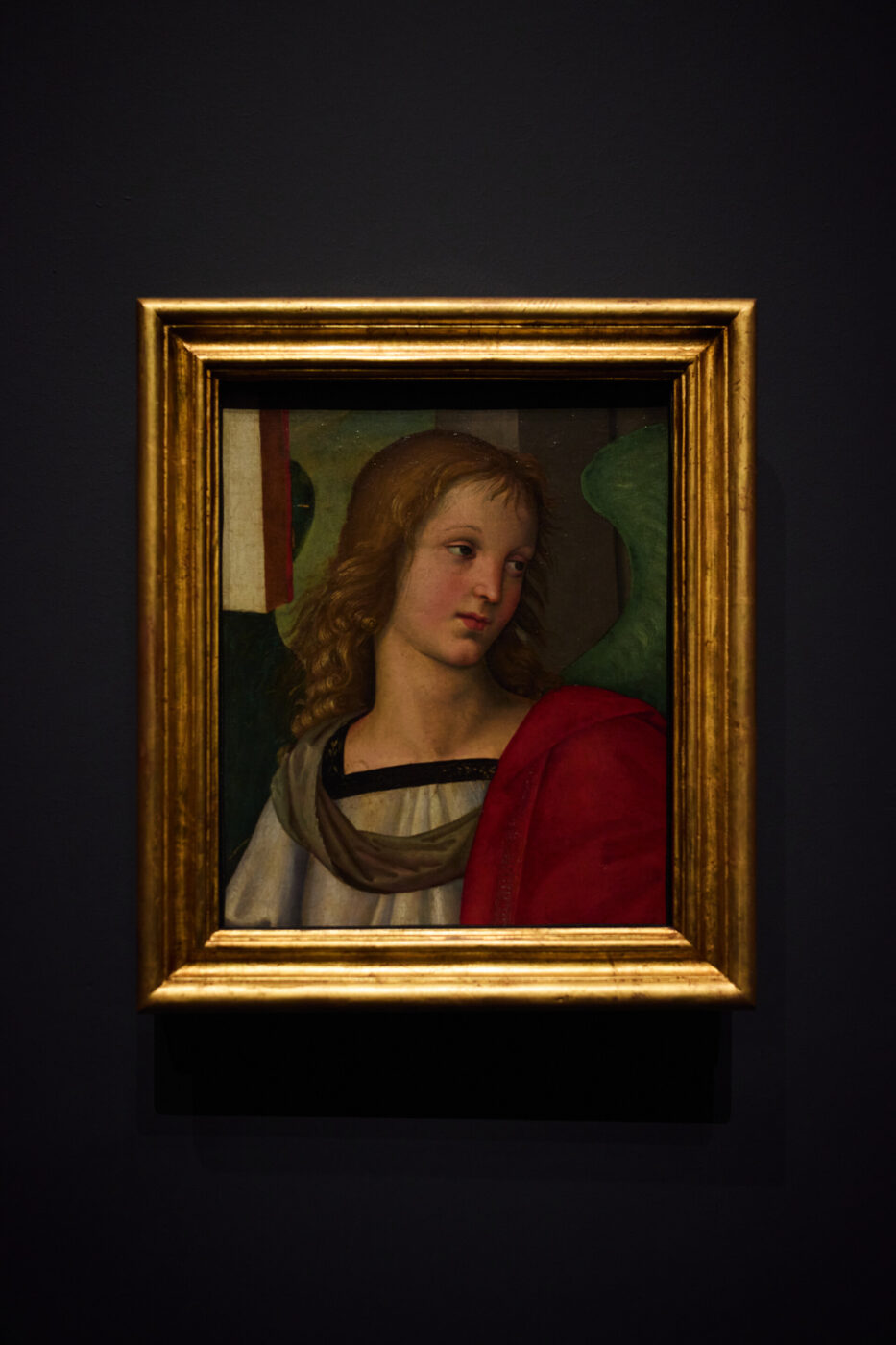
You’d be hard-pressed to find a more “sublime” light than the kind that radiates from Raphael’s portraits. His idealized yet humanistic studies of aristocracy, high-ranking clergy, patrons, and intellectuals present faces and bodies that appear to be lit from within. His figures, particularly the models he sketched for his head studies, impart a kind of serene, universal familiarity that transcends a single identity, place, or time period. He was an Italian who painted Italians. You look into the eyes of his subjects, and they look back at yours—an exchange beyond the two-dimensional—and it’s like recognizing someone you passed on the street in Trastevere yesterday.
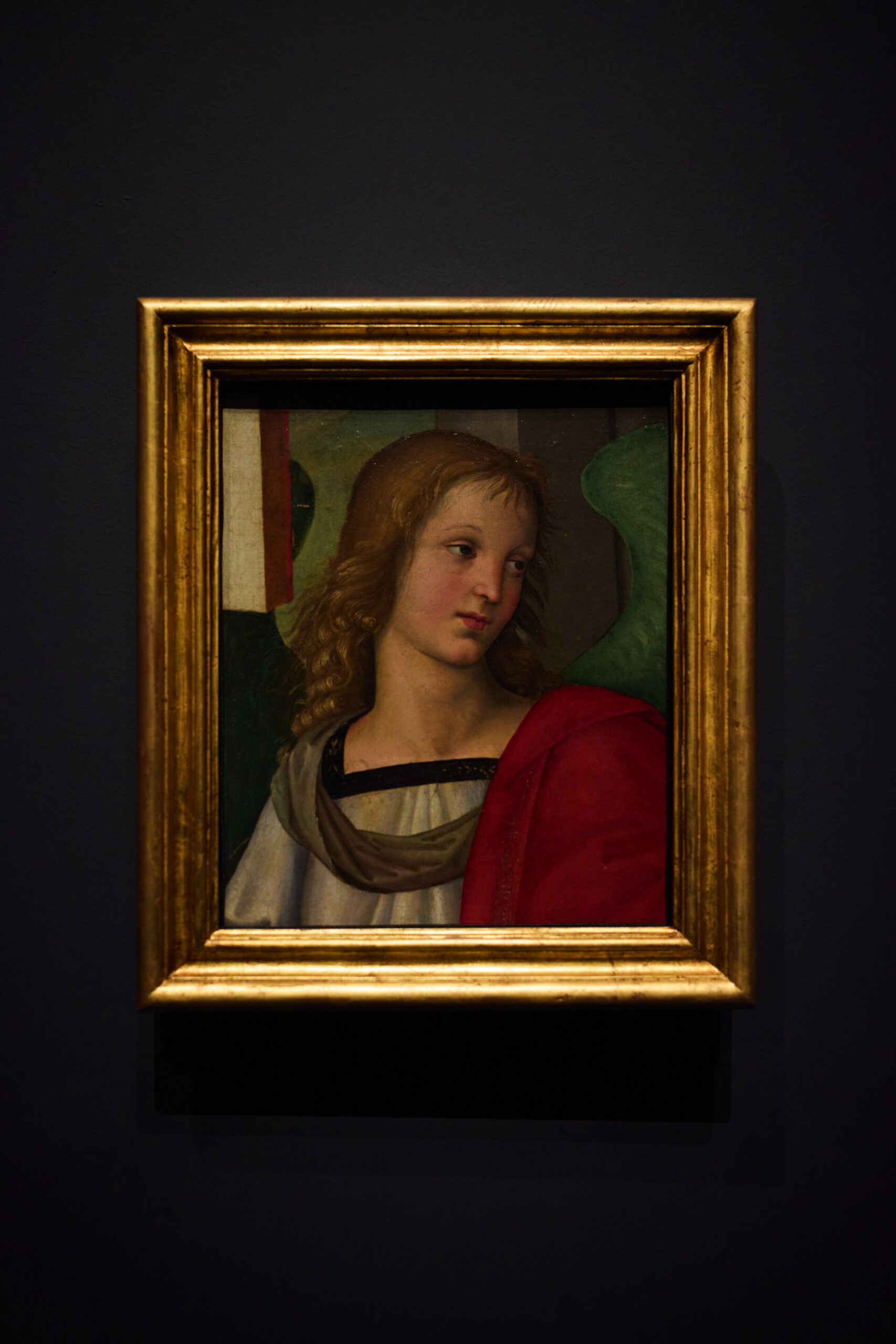
Angel in Bust-Length (Fragment from the Baronci Altarpiece), ca. 1500–1501
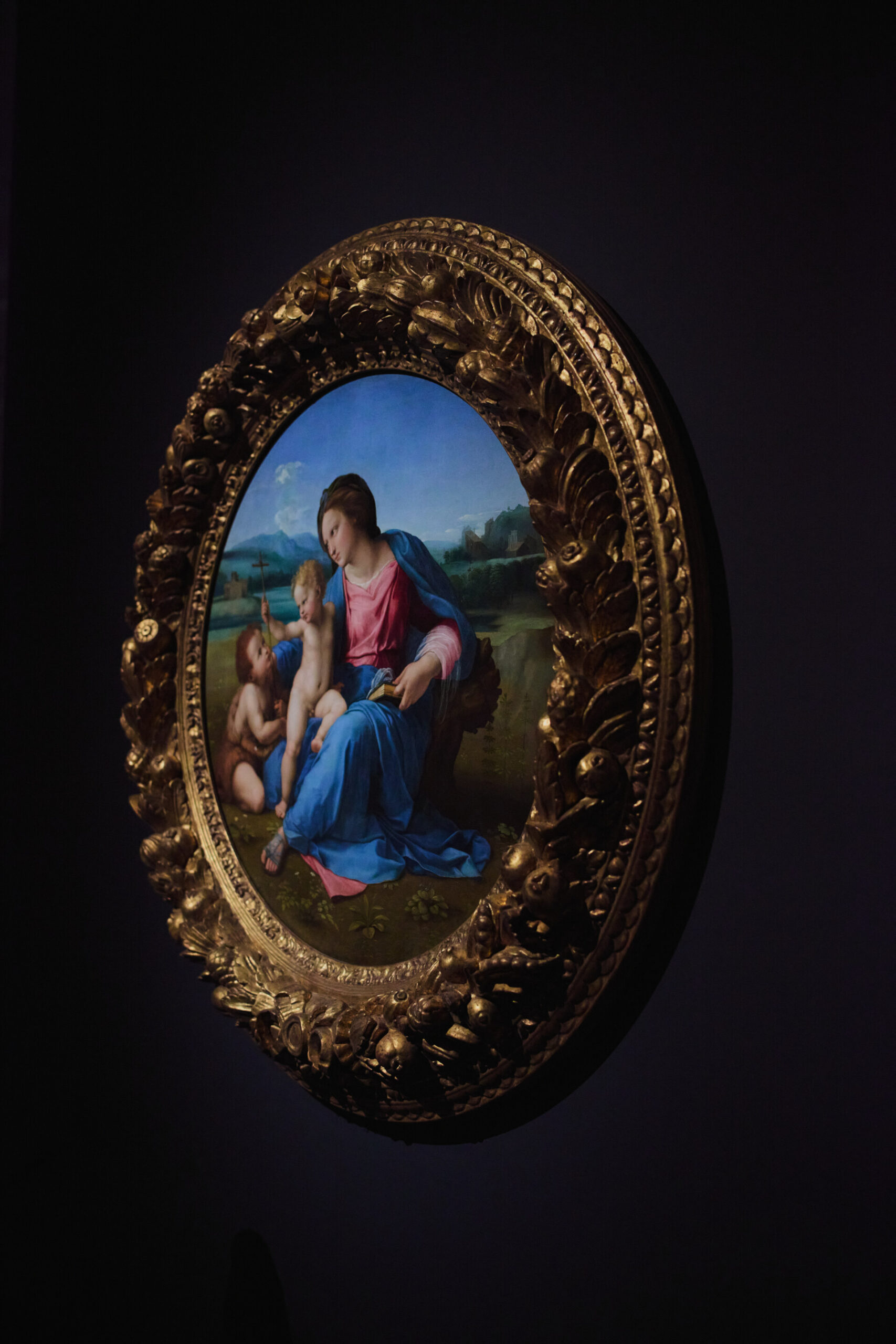
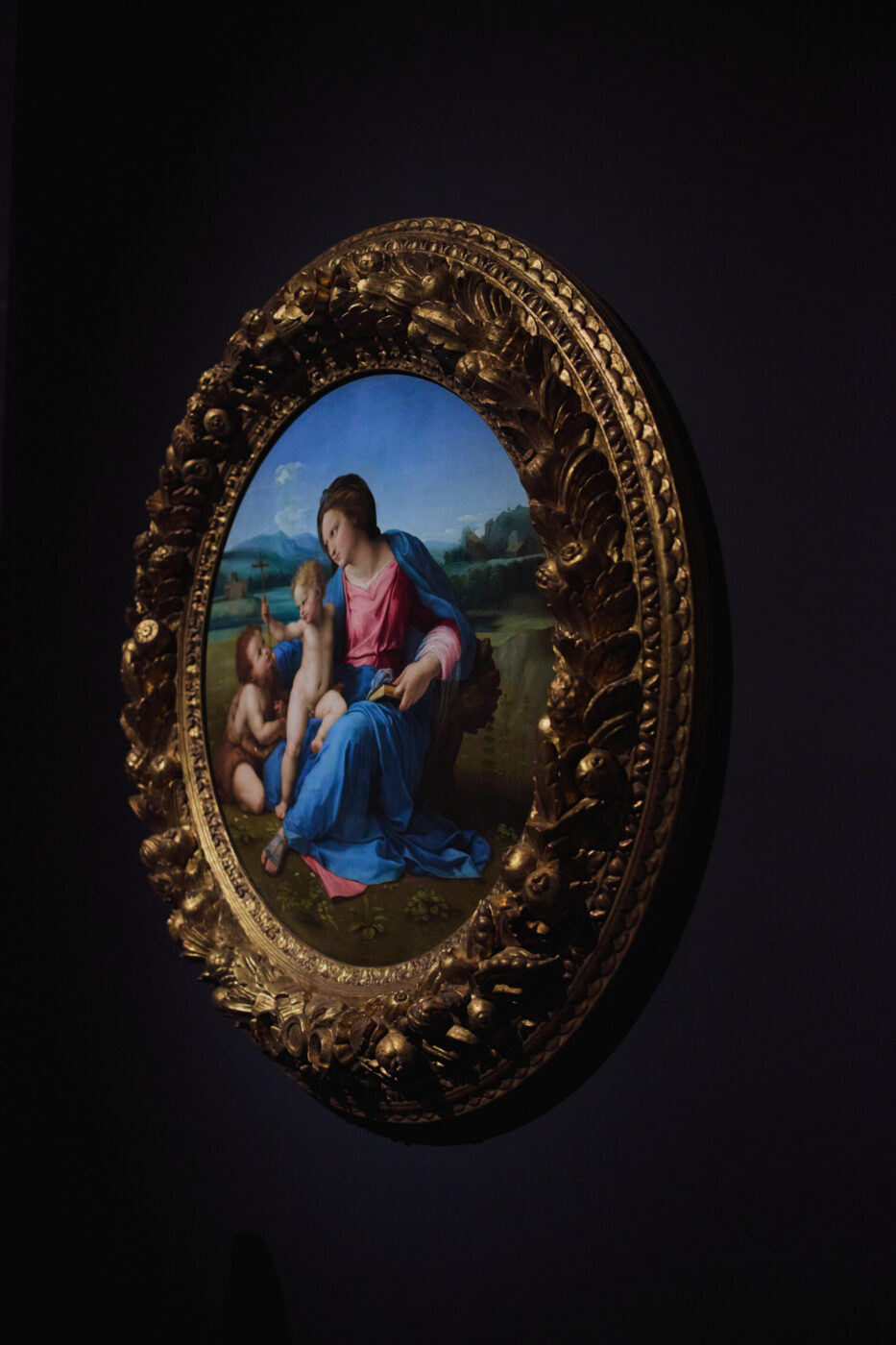
We witness the development of this technique as the exhibition unfolds, from early works Raphael painted in Urbino, including “Saint Sebastian in Half Length” (ca. 1502–3) and “Madonna and Child Enthroned with Saints” (ca. 1504), to those painted later in his career in Florence and Rome, including “The Holy Family with Infant Saint John the Baptist (The Madonna of the Rose)” (ca. 1517–18). Yet, beneath these feats of painterly perfection was an intense process of technical refinement, experimentation, and conceptual thinking that the artist relentlessly pursued away from the spotlight. It’s just that Raphael, being Raphael, always made it look effortless.
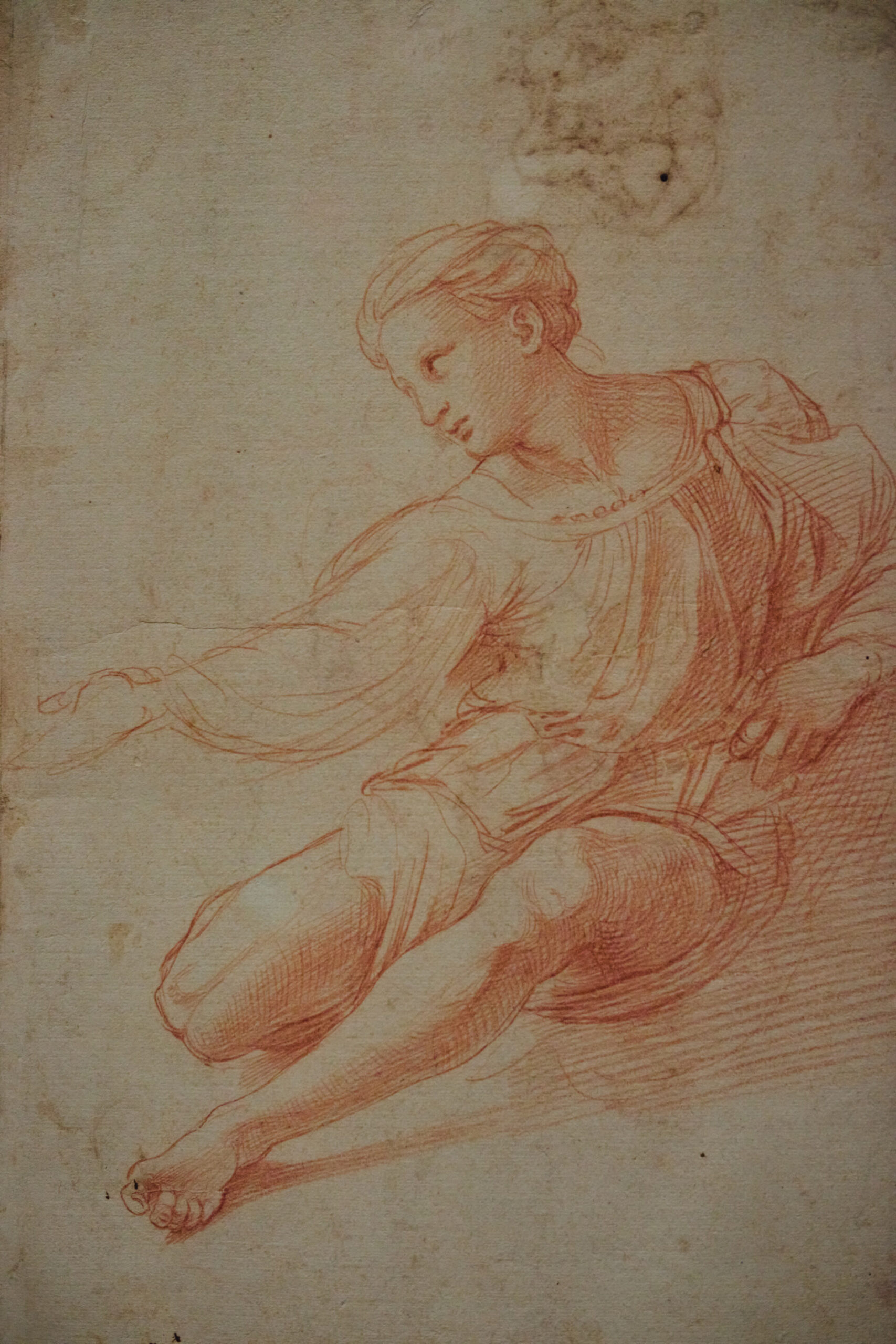
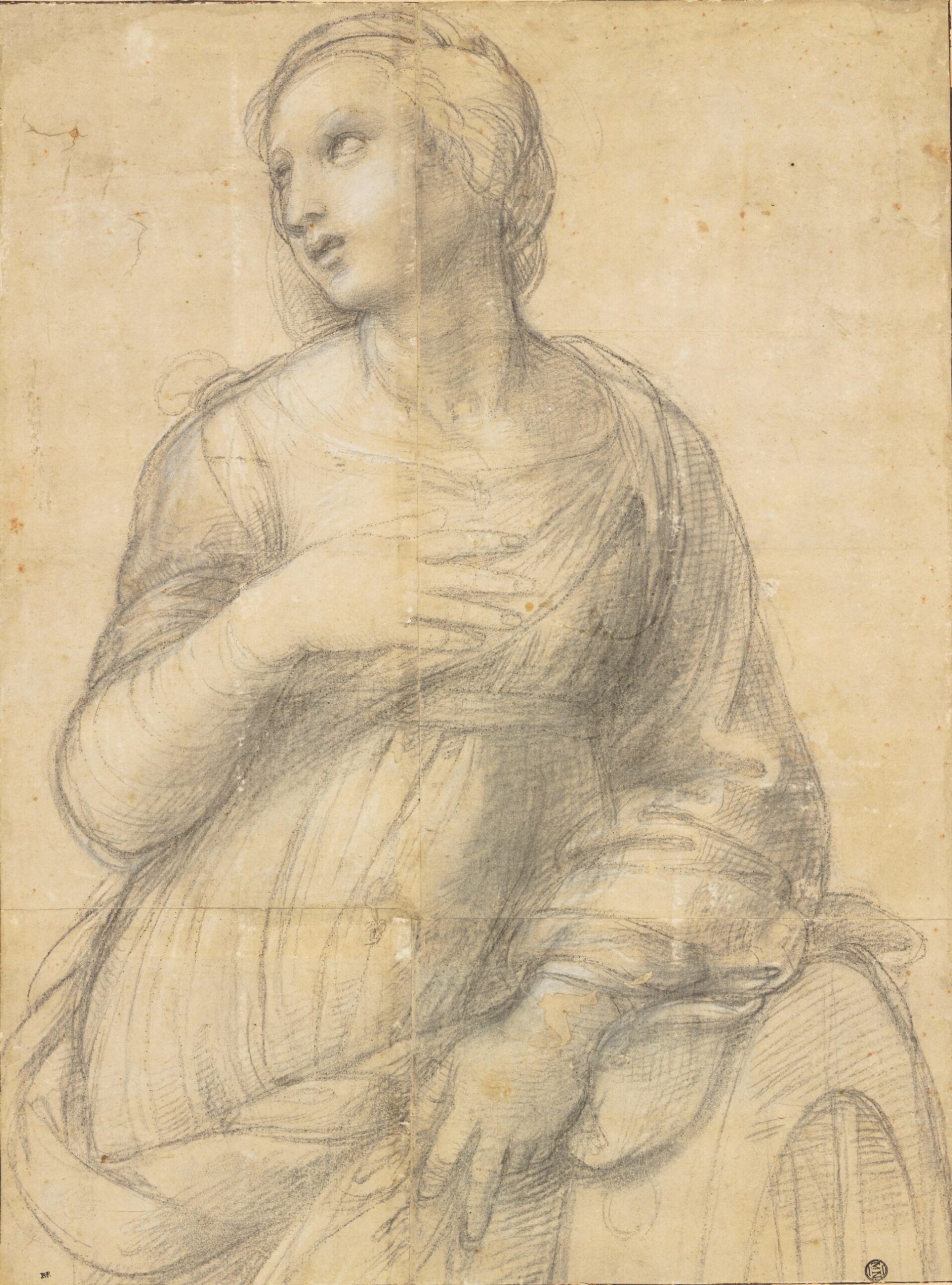
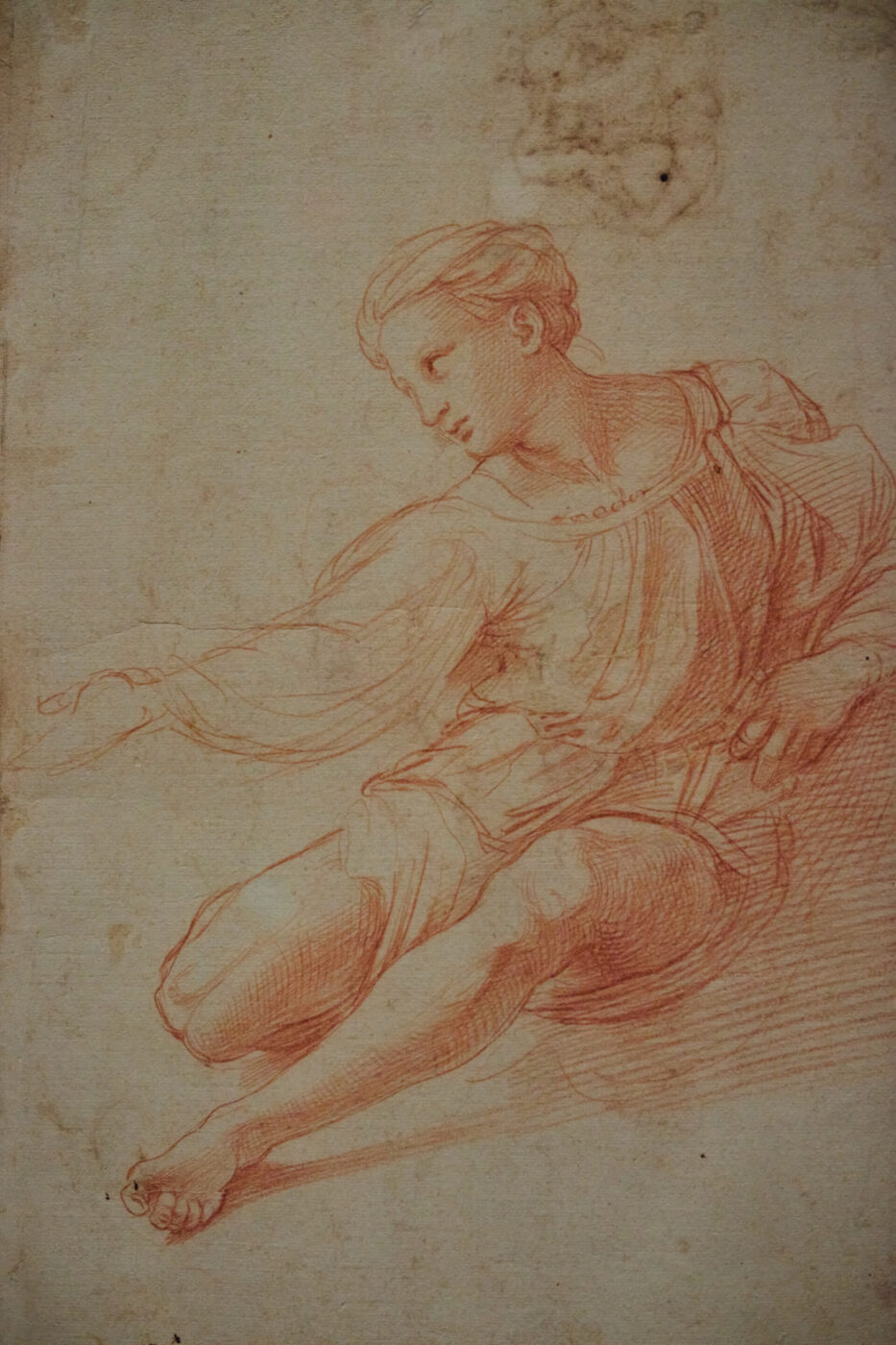
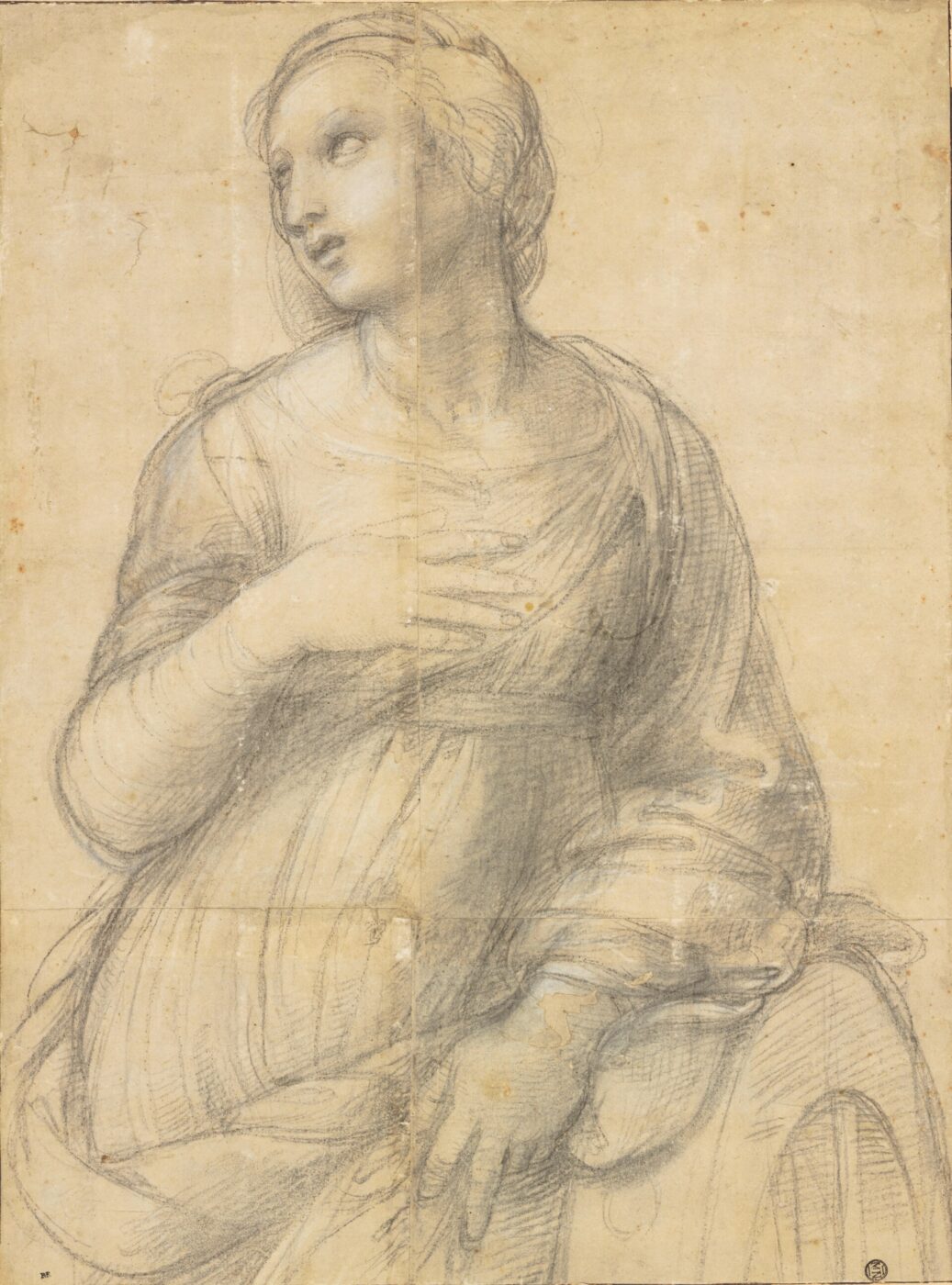
As evidence of this, the exhibition presents a previously unseen curation of the artist’s preparatory drawings and sketches: exploratory works created with chalk and ink on paper that were the technical blueprints for his painted masterpieces. Often included as fillers or secondary material in major exhibitions of Raphael’s work, Bambach instead emphasizes the importance of these gestural studies as a key to understanding the artist’s inner workings. They are organic and spontaneous, as if visual records of the very moment he was overcome by grand artistic revelations. According to Bambach, to look only at Raphael’s completed paintings is to get the artist only “half right.”
“I think the modernity of Raphael emerges when we look at his drawings. That’s where we see an extremely disciplined, hardworking artist who was a genius draftsman. More importantly, we see his design process and willingness to conceptualize painting, drawing, or whatever art form he took on. His drawings are very immediate. We can see him ‘thinking’ on the paper. It’s a very intimate experience,” she notes.
If the fact that you can recognize the face of your Roman or Marchigiano neighbor in a Raphael portrait doesn’t attest to the enduring relevance of his art, consider that he was among Western art’s original multidisciplinary, or “multitasking,” creative professionals. (Let’s also put Raphael’s artistic output into perspective, considering he effectively only had a 20-year career, dying at the age of 37.)
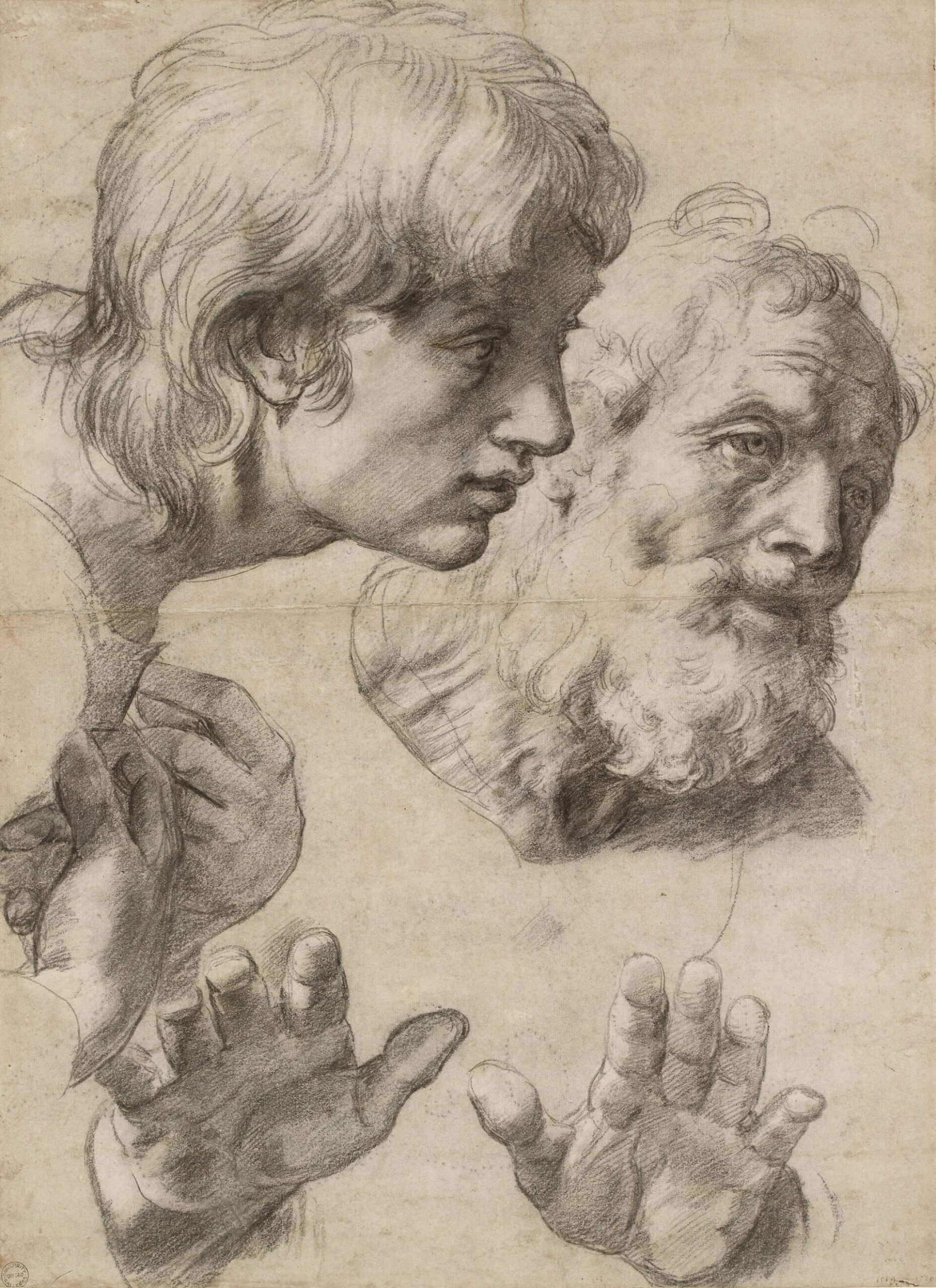
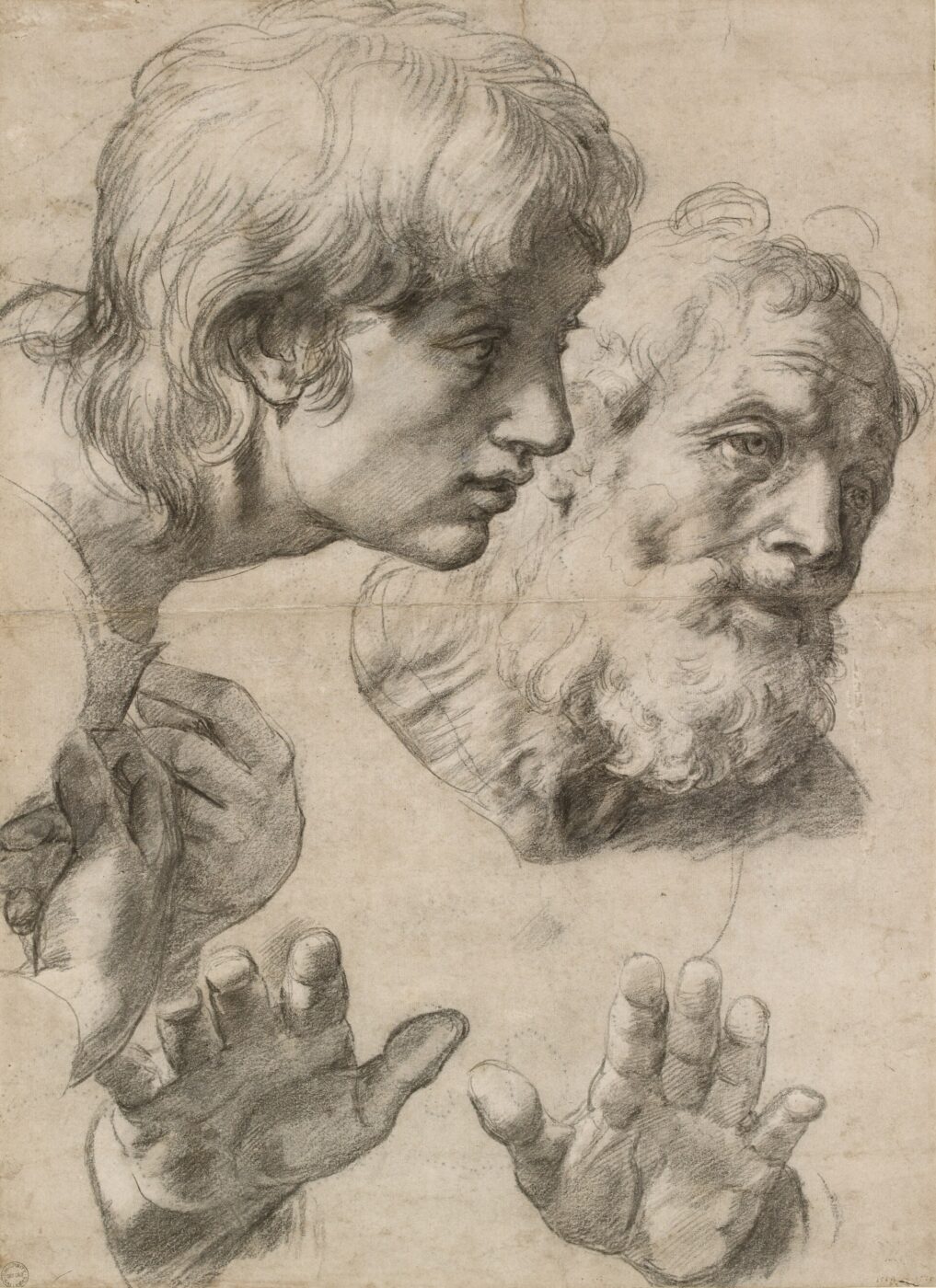
The Head and Hands of Two Apostles (“Auxiliary Cartoon” for the Transfiguration) ca. 1519-20; Image © Ashmolean Museum, University of Oxford
By 1510, busier with more commissions than he could ever manage on his own, Raphael was running his studio like a full-scale enterprise; he conceived the ideas, the drafts, the grand schemes and delegated the production process to a group of up to 50 highly skilled artisans who worked with him. The strategic collaborations he forged with other artists meant he was able both to expand the breadth of work that came into his studio and to complete an astounding amount of it. As Bambach explains, his collaboration with engraver Marcantonio Raimondi, for example, allowed the artist’s designs to be disseminated in multiples, with several versions of the same composition printed at the same time. We knew Raphael was a multitasking genius with a mind like a sponge. But a savvy businessman who was effectively centuries ahead of the game?
“In many ways, I call Raphael an original influencer,” says Bambach. “I know traditional art historians will disapprove of me saying that, but I do think he was an influencer, given what that word signifies today. One, his art has been famous and in favor for so many centuries continuously, and two, equally important, in collaborating with printmakers, he diffused his compositions into multiples. Long before social media, he knew how to disseminate his art.”
You don’t need to be a Renaissance scholar to appreciate that Raphael is a figure embedded in Italy’s cultural consciousness. We were kids when we gazed up at a Raphael painting for the first time, perhaps at the Vatican or the Uffizi, and probably while complaining to a parent of hunger and sore feet. As adults, we are no less astounded by Raphael’s artworks every time we see them. Or at least, we shouldn’t be, providing we haven’t become complacent. Perhaps we have acquired an appetite for them as we have for maritozzi—if not an “everyday” occurrence, a glorious salvation that is always conveniently accessible.
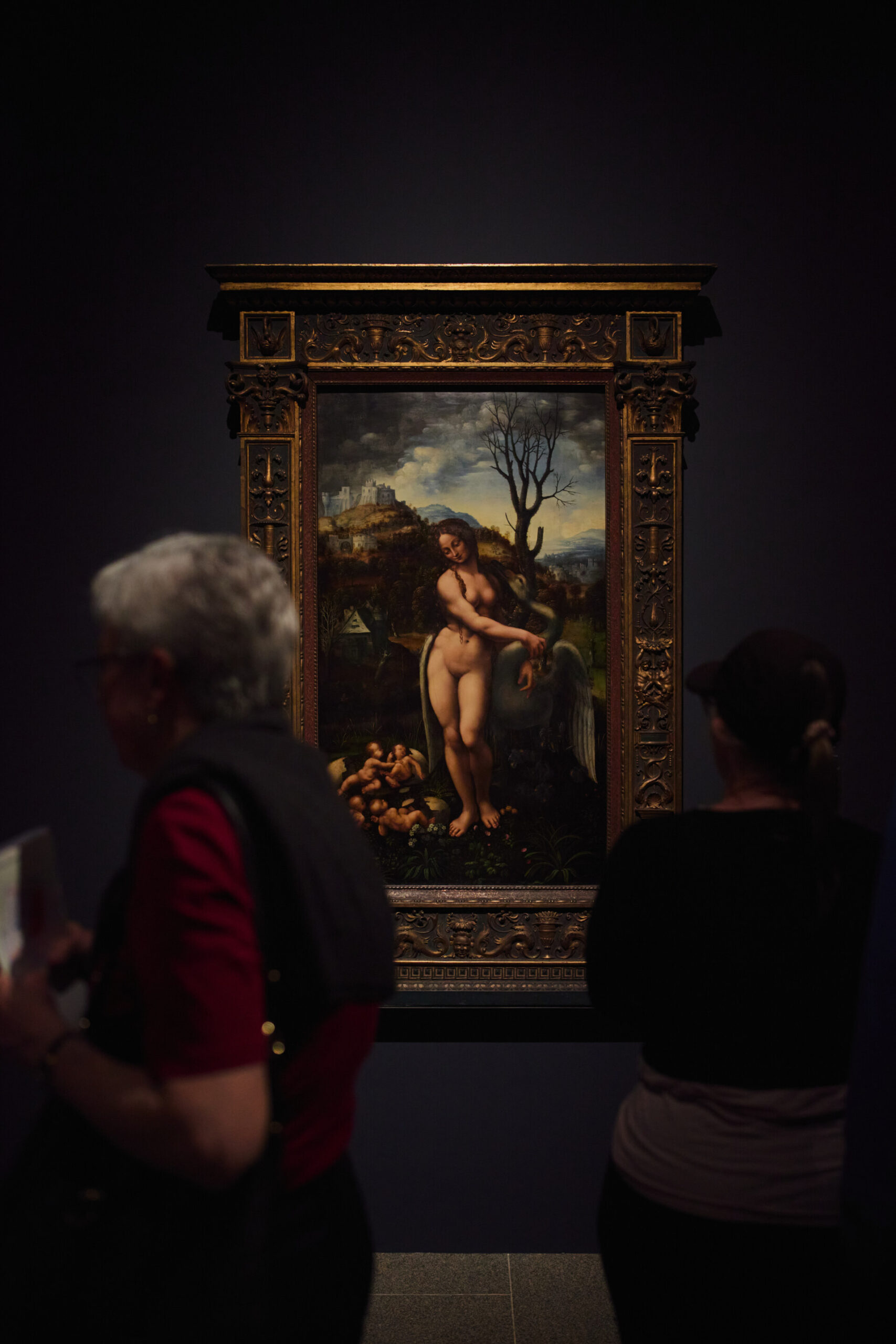
Our young Renaissance hero’s big moment in New York is shaping up to be a moment of collective cultural pride for Italians. The part we didn’t quite expect, though, is that this show at The Met is actually inviting us to see Raphael in a new light, revealing intimate aspects of his life and character not yet seen in major retrospectives and curations of his work staged in Italy over the years.
“Italians obviously grow up with greater exposure to Raphael’s art, and most people are familiar with his major masterpieces. But here in the US, I wanted to create a chronological portrait of an artist through his art, to help people understand his artistic personality and to go beyond stereotypes of his name,” says Bambach.
“I am especially interested in showing the ‘becoming’ of an artist. How did Raphael actually become Raphael?”