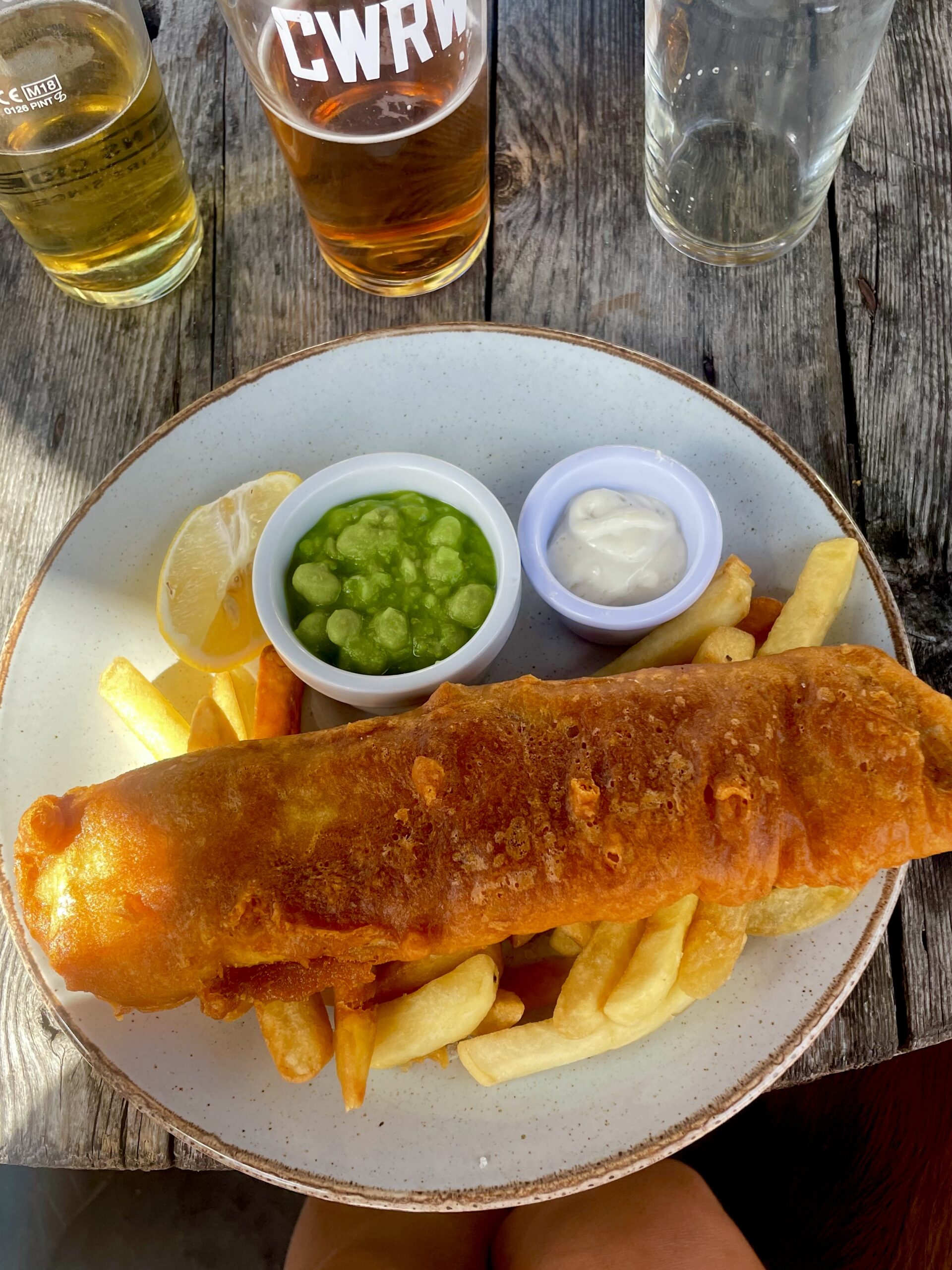
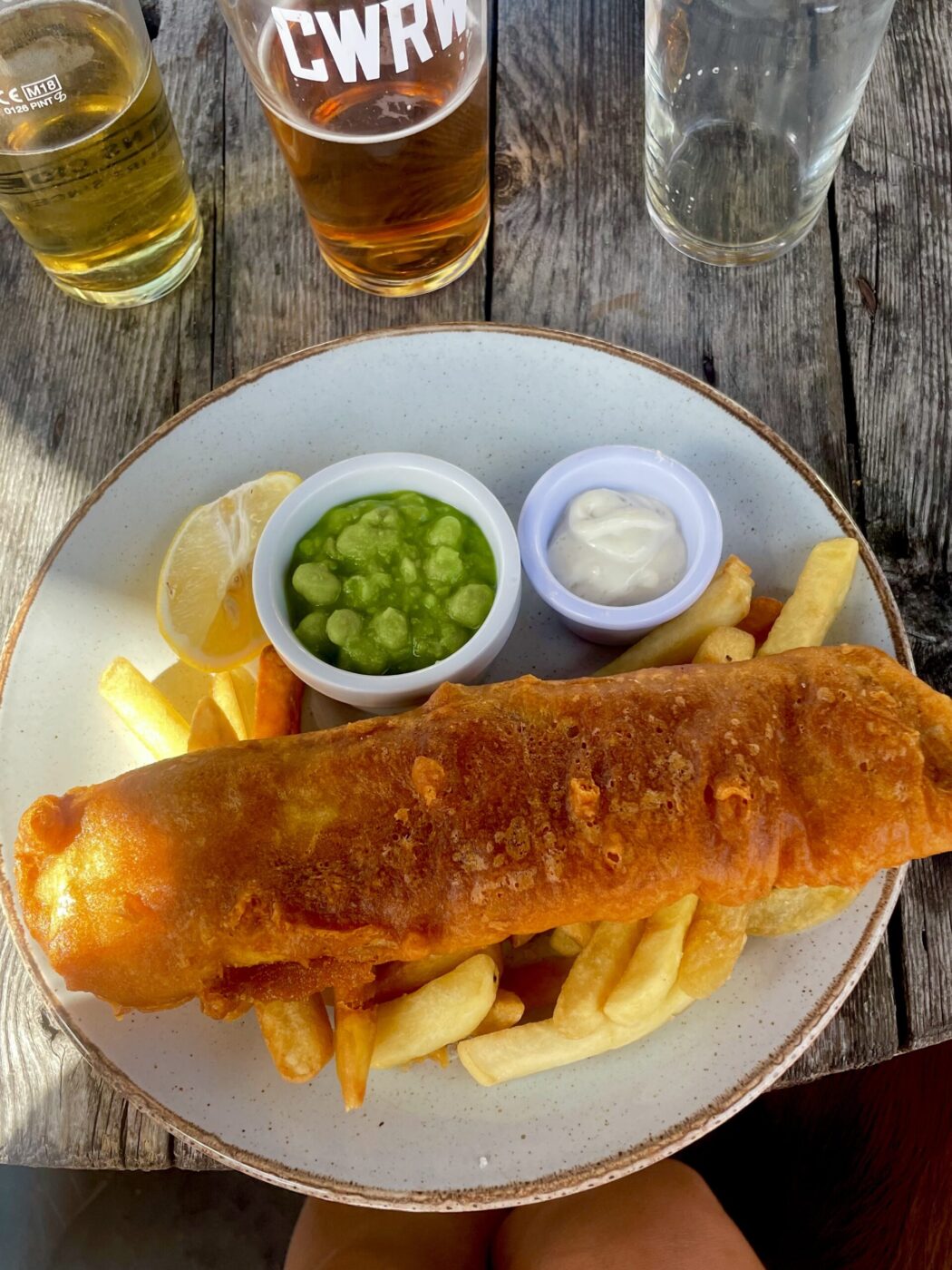
Every Christmas, Easter, and summer during the 1980s and ’90s, my parents would pack up our car and we would set off from Dublin to the West of Ireland to visit my grandmother. Our halfway pitstop on every journey was Luigi’s fish and chip shop. As a child, it never crossed my mind to wonder how a man with that name had ended up in the small town of Longford in the Irish midlands.
It was only when I began to study Italian at university years later that I realized almost all of Ireland’s chippers—affectionately known as the chippaio—were owned and managed by generations of Italian immigrants. Many of my classmates, and later some of my colleagues in the Italian department at University College Dublin, had surnames that I was used to seeing in neon letters accompanied by the intoxicating smell of fried potatoes. Borza, Macari, Aprile, Fusco, Caffola, Di Mascio—the same surnames crop up again and again on chippers across the island of Ireland, and virtually all of them hail from a clutch of isolated hilltop villages in the province of Frosinone, about a two-hour drive south from Rome.
There’s a long history of Italians migrating to Ireland, from stucco-workers who decorated Dublin’s fine Georgian houses in the 18th century to Charles Bianconi, whose horse-drawn carriage service constituted the country’s first public transport system in the early 1800s. A second-generation Irish-Italian man even features as a character in Ireland’s most famous novel, James Joyce’s Ulysses: Joseph Patrick Nannetti, born in Dublin in 1851 to Italian parents, was a Member of Parliament and the Lord Mayor of Dublin from 1906-1907. But it was only after WWII that Italians arrived in large numbers on Ireland’s shores—many not directly from their home villages of Casalattico and Montattico, but rather from Scotland, where others had already settled through chain migration.
Many Italians began their lives in Britain as street musicians or peddlers, selling ice cream in summer and roasted chestnuts in winter. As they prospered, they set up catering establishments and drummed up business by serving the kind of fried fish that English and Scottish palates appreciated. By the early 20th century, Italians dominated the trade in Scotland. While fish and chip shops existed in Ireland before WWII, it was the Italians who made the profession their own.
As they settled, they sent for their wives, brothers, cousins, and extended families. They were desperate to escape the poverty of their war-torn villages near Monte Cassino, which had witnessed some of the fiercest fighting between the Allies and Nazi-Fascists from 1943 to 1945.
By 1973, there were some 4,000 Italians living in Ireland, making them the country’s largest foreign population. This was a time when the pall of mass emigration, rather than immigration, hung over Ireland’s skies. As journalist Cathal O’Shannon noted in the 1970s documentary Life Style: The Italians, produced for the Irish national broadcaster RTÉ, the warm parcel of fish and chips “handed over the counters by dark-skinned men and women [was] the first touch of foreignness to most of us.”
Life in a chipper was grueling. Fourteen- to 15-hour days were the norm, and children as young as 12 were drafted to work the counter, taking orders because, unlike most of their parents, they spoke fluent English.
Thus, the Italians spent their days and nights serving families their Friday fish suppers, or dishing out battered sausages and chips in the small hours to counteract the effects of multiple pints of Guinness. As Brian Reynolds, a former geographer at Trinity College Dublin commented in the 2009 documentary Chippers: The story of the Italian community in Ireland, the Italians “did not have a social life in the evenings; they did not go to the pub because they were there selling their fish and chips so they actually had very, very little contact with the Irish people, which is one of the reasons why the community has remained so integrated for so long.”
This separation wasn’t merely dictated by the clock; that first generation was often wary of allowing their children to socialize with their Irish peers. Giovanna, who was 14 when she moved to Ireland with her family in the late 1960s, recalled that her mother encouraged her to have Italian friends and that she wasn’t allowed to go out with her school friends, in part because young Irish women were deemed to be more promiscuous. In an interview given to a researcher in the early 2000s, she remarked that “young Italian men who came from Italy would go out with Irish women only for sex. […] To get married, they had to find an Italian virgin!” Certainly, until the 1980s, the expectation among most families was clear: Italians were to marry other Italians. Future spouses were typically met at the Club Italiano Dublino’s annual dress dance or at Italian-language Mass.
Forty years on, that insular world has vanished. The third and fourth generations—grandchildren and great-grandchildren of those original chip-shop owners—are now an indivisible blend of Irish and Italian, with little desire to carry on in the family profession. When asked if they wished to inherit the business, Gino Di Mascio’s children responded with a firm “No, thank you.” As he told documentary maker Nino Tropiano in 2009: “I did not insist; I let them do their own thing.”
As new generations were born and raised on Irish soil, the communities intertwined, discovering a natural affinity in their shared Catholic heritage and similar family values. Recent Italian immigrants to Ireland identify a familiar expressive sociability and garrulousness in Irish people that they don’t find elsewhere in northern Europe. Italians lovingly call the Irish the “terroni del nord”—“terrone” being slang for southern Italians, used sometimes disparagingly by northerners but increasingly reclaimed with affection by meridionali. As one member of the Irish-Italian diaspora pithily wrote in the 1990s, “Irishmen are really only Italians who do not mind the rain.”
Generalizations aside, the community’s roots are precise, with the Italian diaspora in Ireland remaining deeply linked to the villages of the Val Comino in Frosinone province. As a tribute to “noble and hospitable Ireland”, the village of Montattico began celebrating St. Patrick’s Day in the 1990s. Villagers hold his statue aloft as he’s paraded through the streets to the sounds of a brass band. In the summer months, the sleepy town of Casalattico, population 524, swells as the Irish-Italians flock back to their ancestral home. Every August, the town plays host to Irish Fest. Locals and tourists can tuck into a full Irish breakfast of rashers, sausages, and black pudding in the morning and fish and chips in the evening, made from imported Irish potatoes, all washed down with pints of the black stuff. It has all the atmosphere of a traditional Italian sagra, just with a Celtic twist.