As Palermo prepares for the upcoming 2026 Festino di Santa Rosalia, scheduled to run from July 10th to 15th, the city finds itself caught in its traditional season of existential inventory. The festival, which reaches its climax on the night of Tuesday, July 14th, is far more than an exuberant display of fireworks and folklore; it is a profound historical reckoning where the 12th-century myth of a runaway noblewoman meets the realities of a modern Mediterranean metropolis. In the Sicilian capital, time is not measured by months or years, but from one Festino to the next—the annual moment when the city and its citizens reckon with themselves, seeking deliverance from contemporary plagues.
The Legend of Rosalia Sinibaldi & The Plague of 1624
The roots of Festino’s devotion stretch back to the 12th century and the aristocratic upper crust of Norman Sicily. The future saint Rosalia Sinibaldi was born to Count Sinibaldo Sinibaldi, a direct descendant of Charlemagne, and Maria Guiscardi, connected to the royal court of Roger II. Raised as a maid of honor to Queen Sibilla, Rosalia’s path toward a strategic, high-society marriage seemed preordained.
Legend dictates, however, that while betrothed to Baldwin, one of the king’s most trusted knights, Rosalia experienced a spiritual awakening. Gazing into a mirror, she saw the reflection of Jesus Christ’s face. Rejecting the arranged marriage and the courtly splendors of the palace, she informed her parents of her intention to take the veil and fled to the Monastery of the Most Holy Savior. Yet the persistent intrusions of her family and her spurned suitor eventually drove her deeper into isolation. Seeking absolute solitude, she retreated first to a remote cave in Santo Stefano di Quisquina and finally to the cliffs of Monte Pellegrino, where she lived out her days as a hermit until her death.
For centuries, Rosalia remained a forgotten figure of the mountain, until 1624, when a devastating outbreak of the plague brought Palermo to its knees. Amid the despair, Vincenzo Bonello, a destitute former soapmaker who had just lost his wife to the disease, climbed Monte Pellegrino with the intention of ending his life. Instead, he was stopped by a vision of Rosalia. The saint promised that the epidemic would vanish, but on one condition: her long-lost mortal remains must be retrieved from the mountain cave and carried in a solemn procession through the city streets.
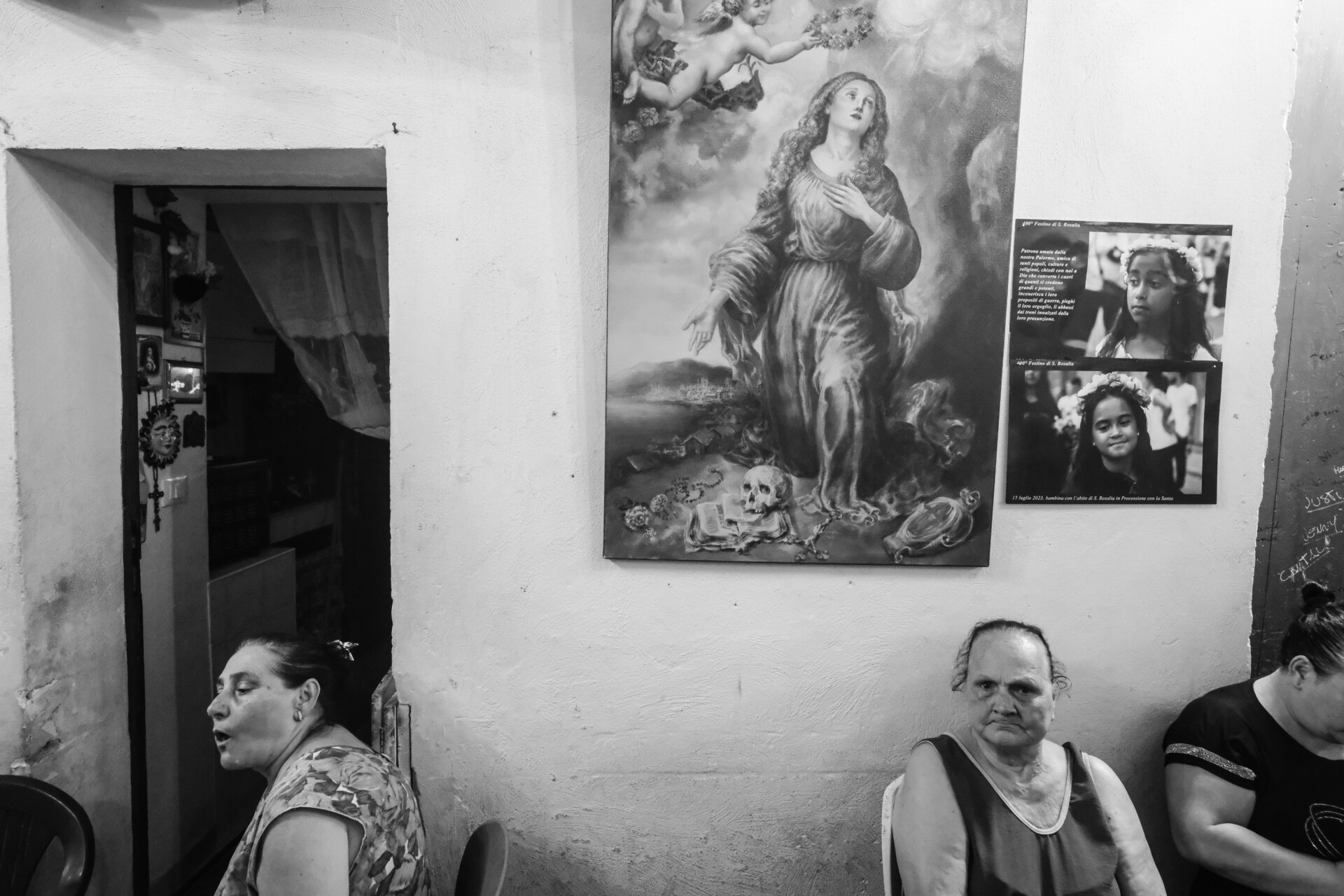
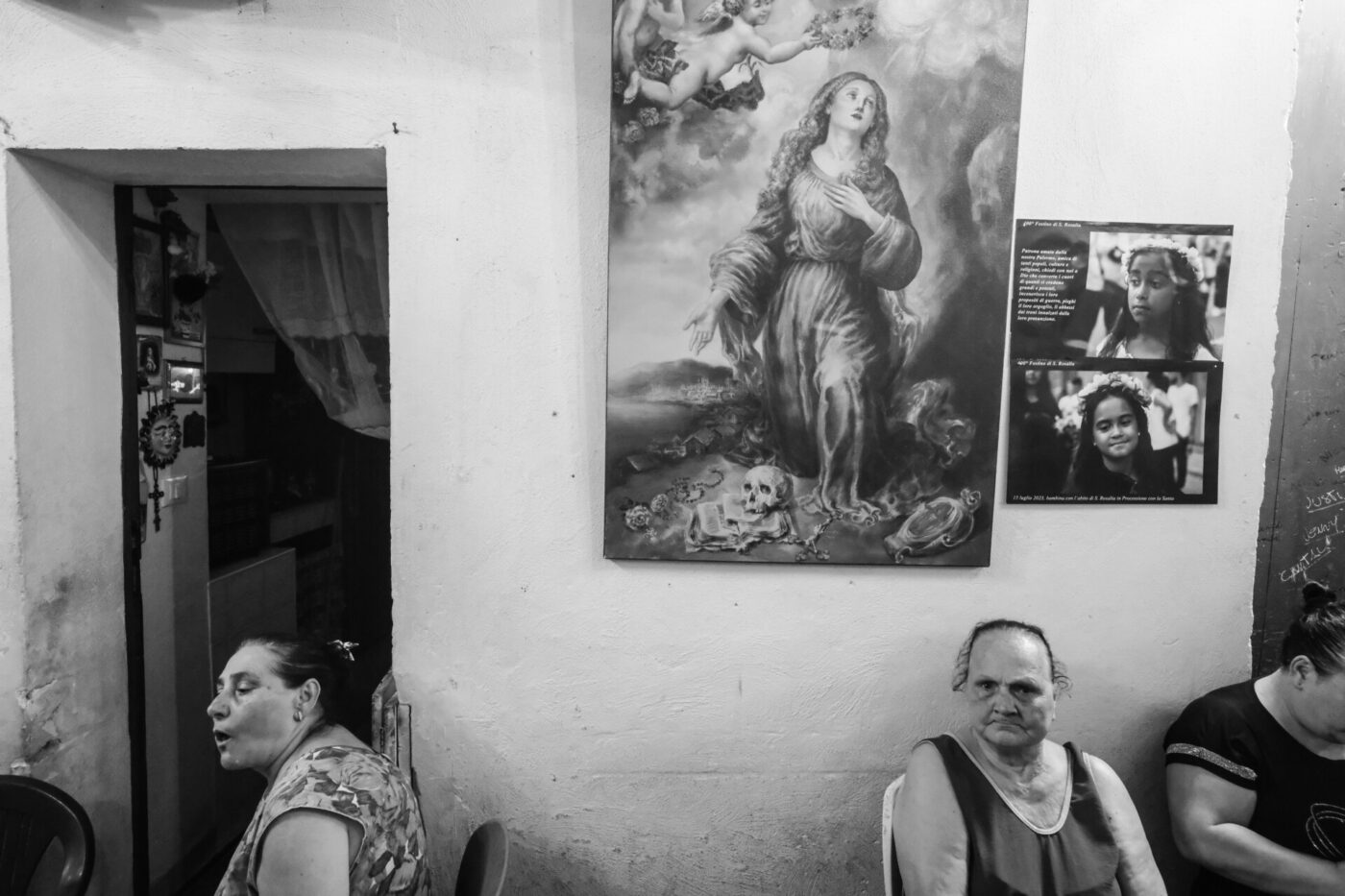
The bones were found, the procession was held, and the plague miraculously receded. From that moment on, Santa Rosalia—affectionately dubbed ’A Santuzza, or the Little Saint—became the protector of the Palermitan populace. Today, her mountaintop cave is a sanctuary lined with thousands of ex-votos, small tokens of silver and handwritten notes left by the faithful. Rosalia is viewed not as a distant deity, but as a saint of flesh and blood—a neighbor, a sister, and a confidante who eradicates class divides and unites the fractured city with a roaring chorus of “Viva Palermo e Santa Rosalia!“
Festino; Photo by Francesco Faraci
Devotion on the Streets of Palermo
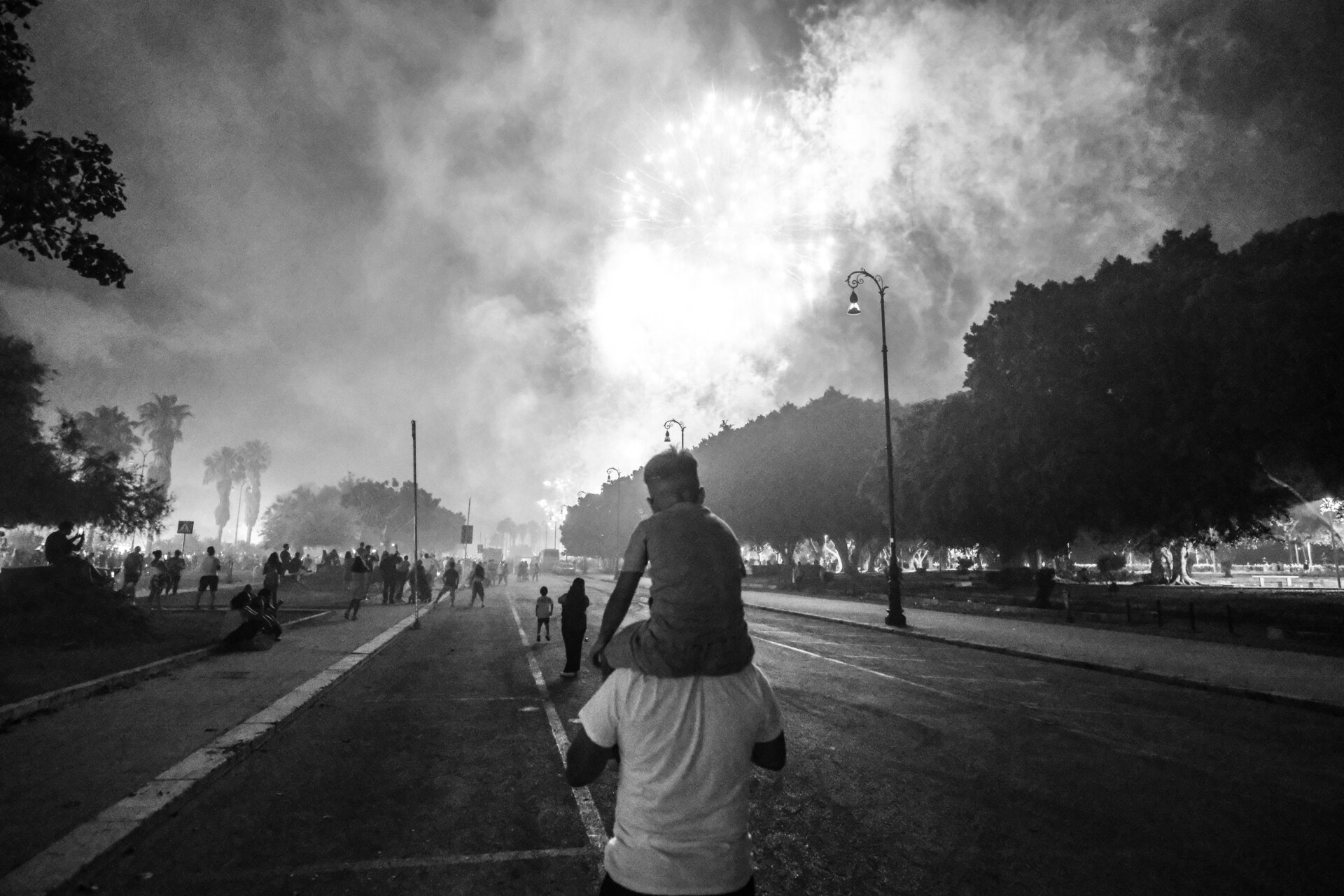
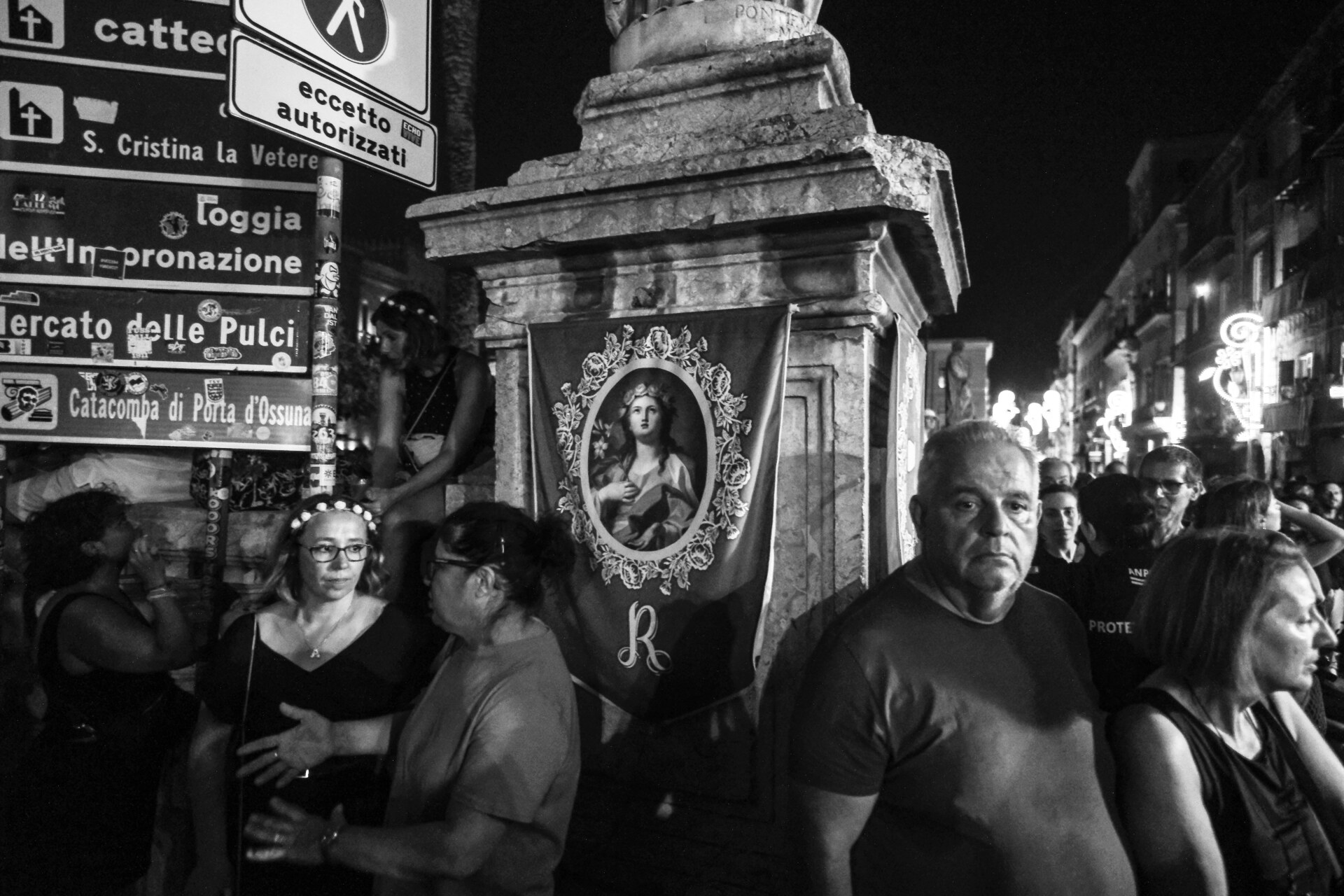
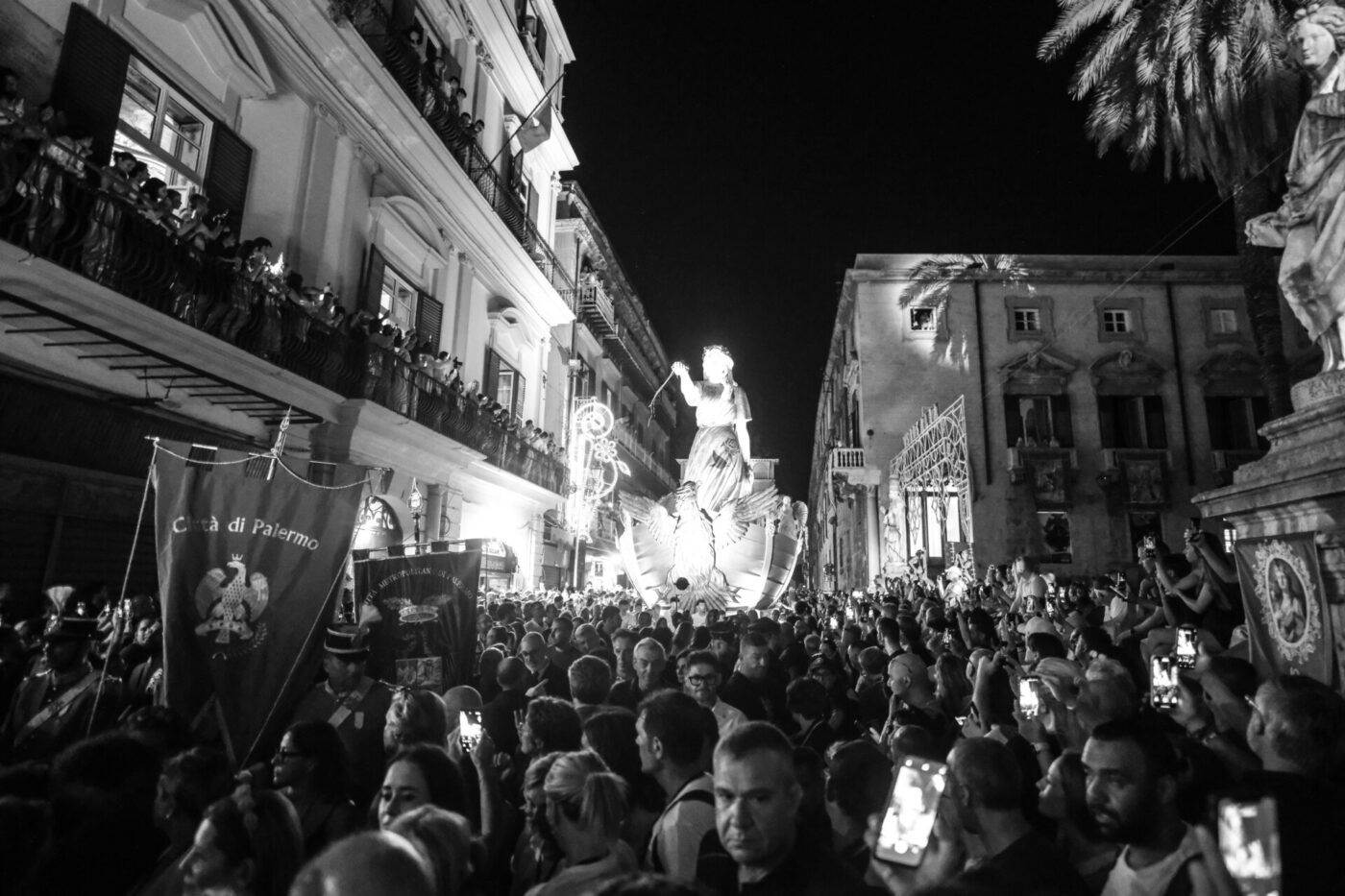
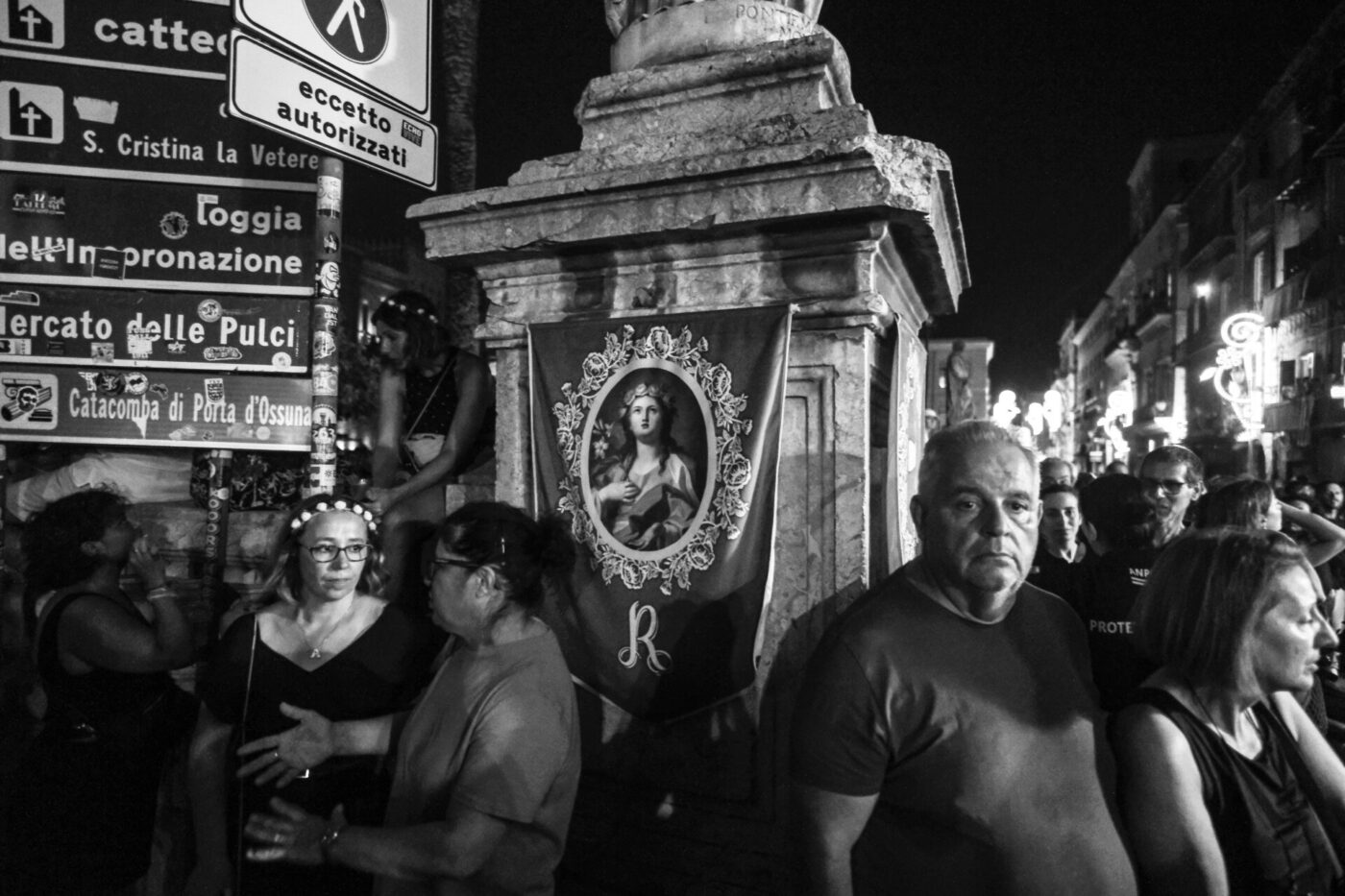
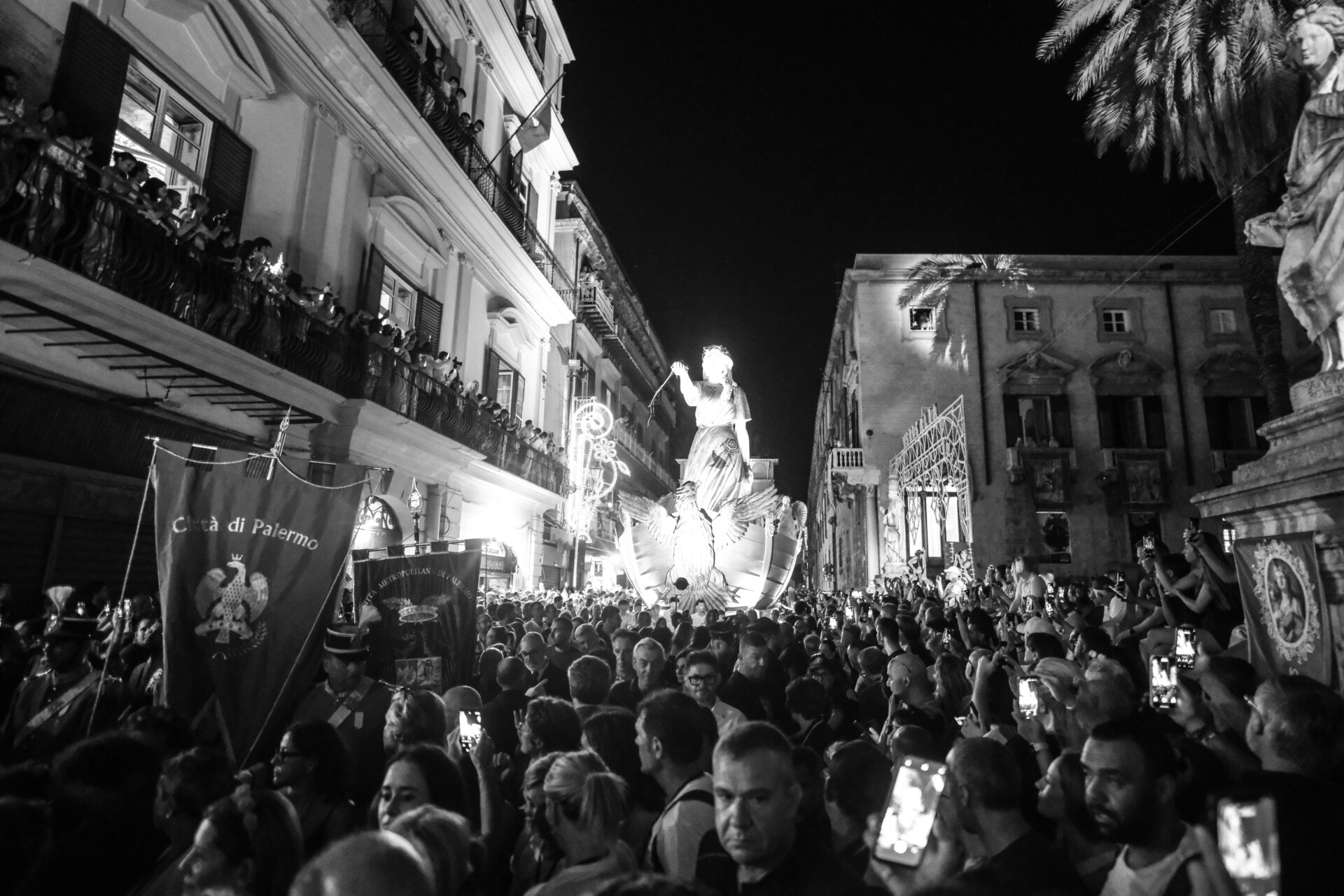
To understand the anticipation surrounding the upcoming 2026 celebrations, one only needs to look back at the sweltering night of last year’s festival between July 14th and 15th. The air through the historic center was thick and heavy, relieved only by fleeting breaths of wind that vanished into a massive crowd of 50,000 onlookers. They stood almost spellbound as the monumental triumphal float, carrying the statue of the saint, edged past the balconies of ancient noble palaces, its towering frame nearly brushing the upper floors where frescoed ceilings and historic marbles offered a glimpse of a bygone era.
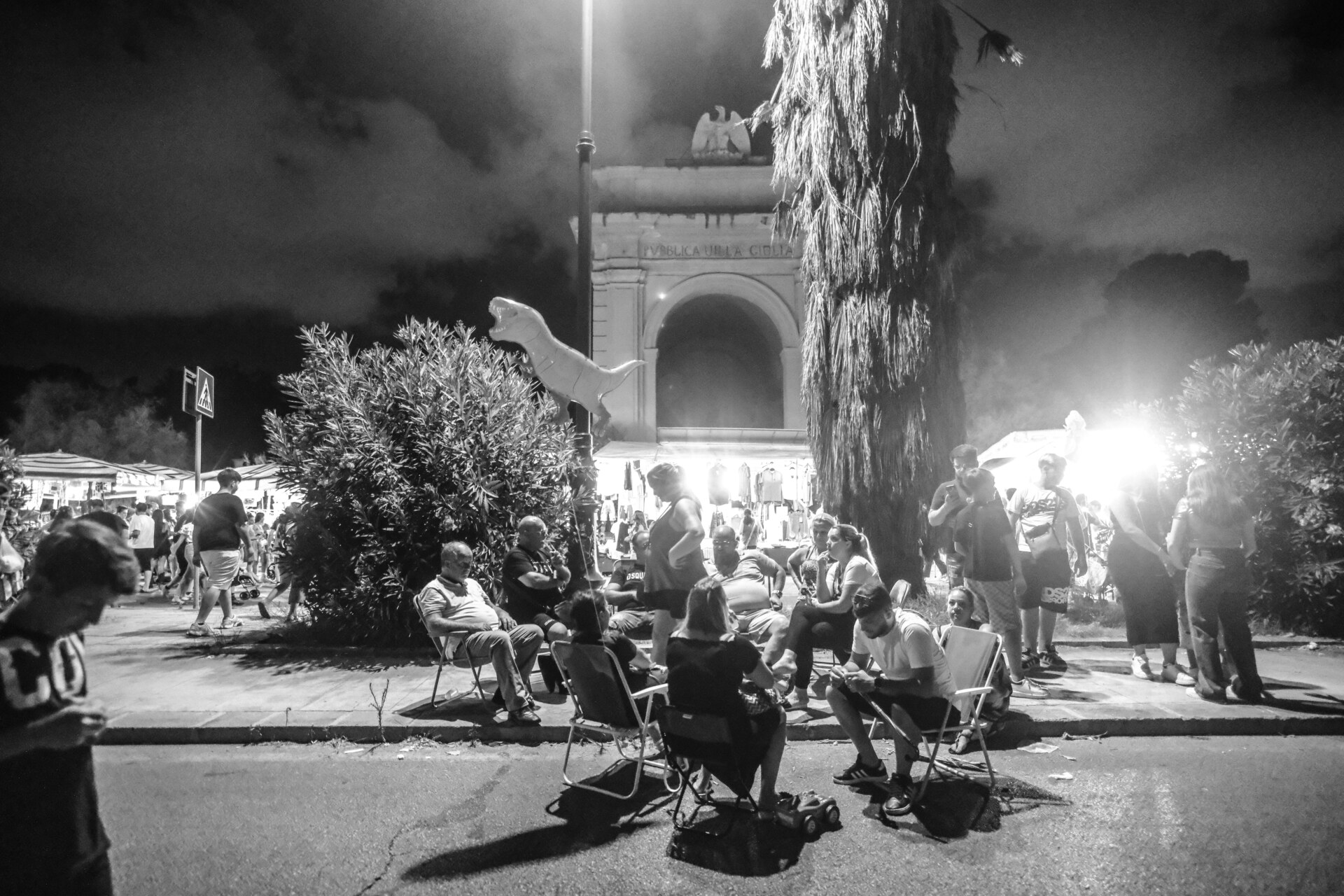
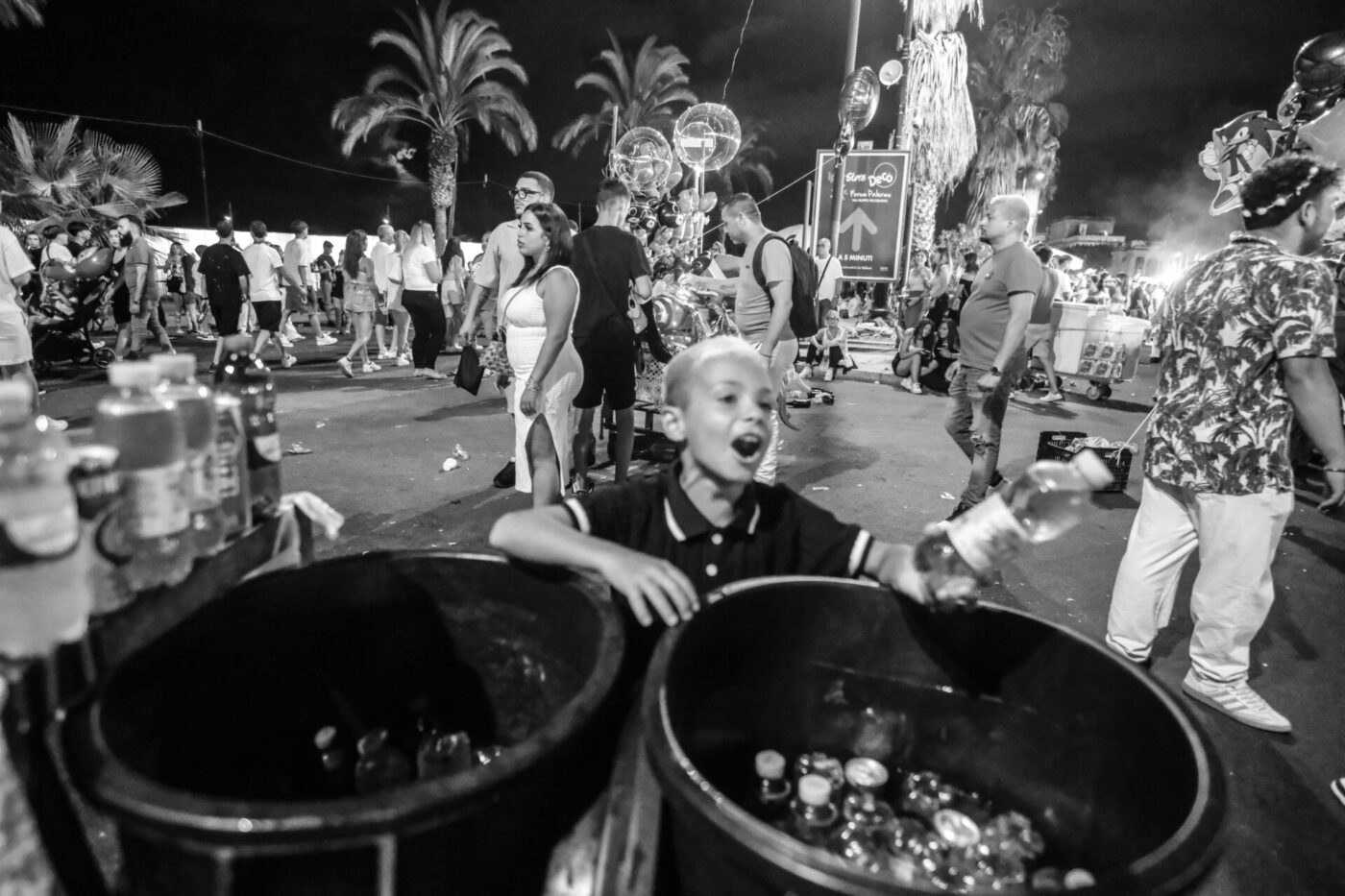
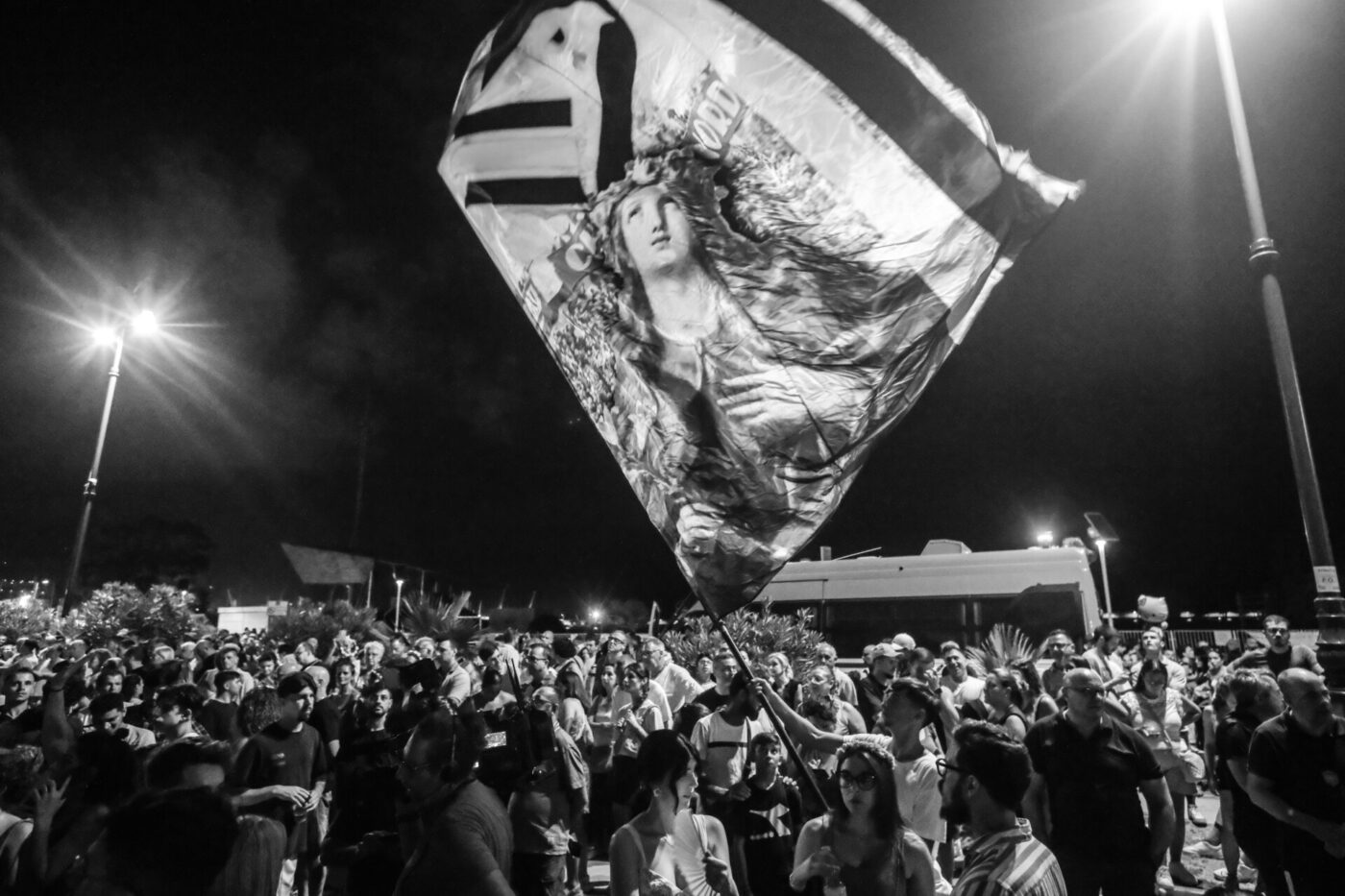
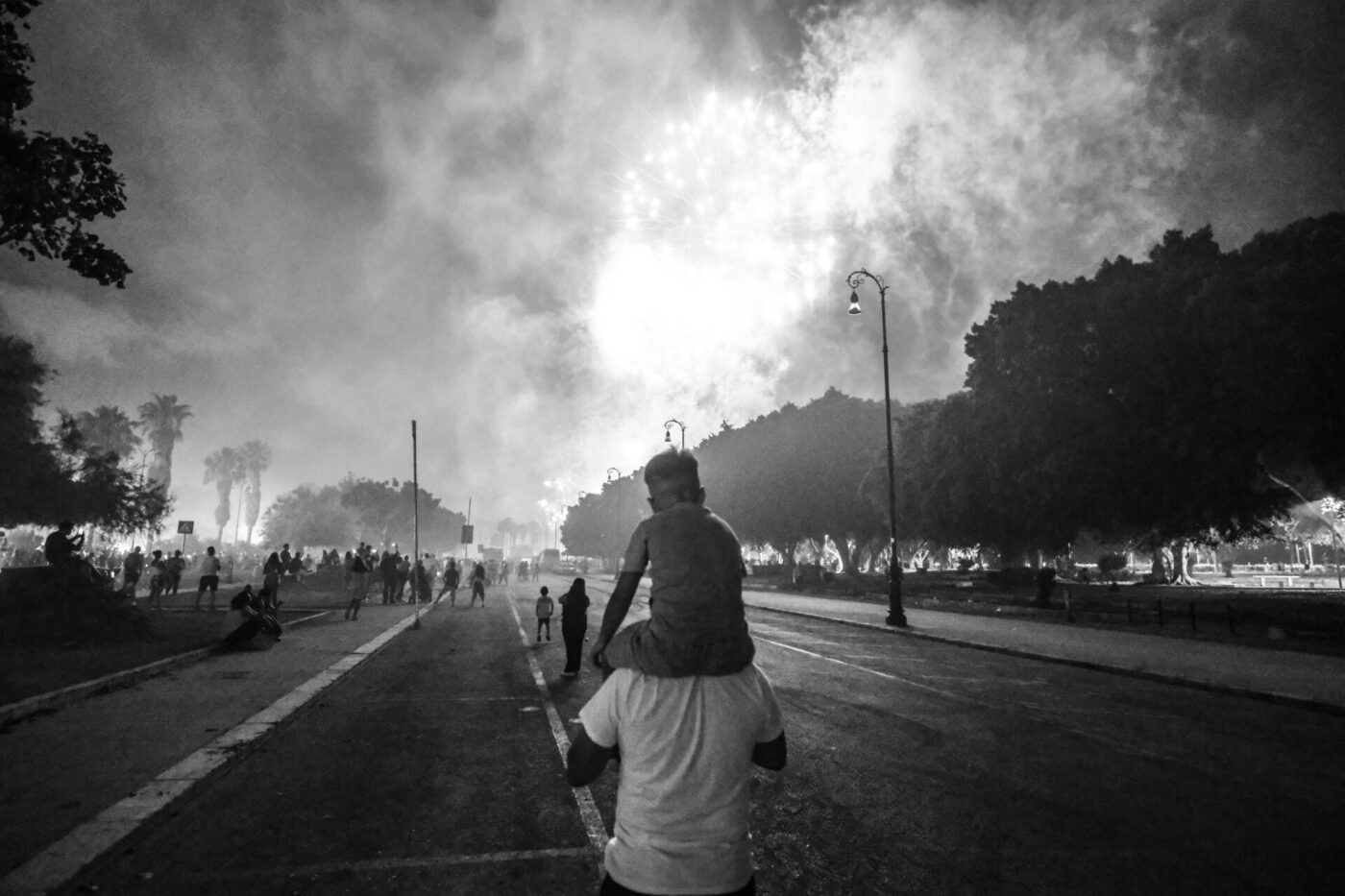
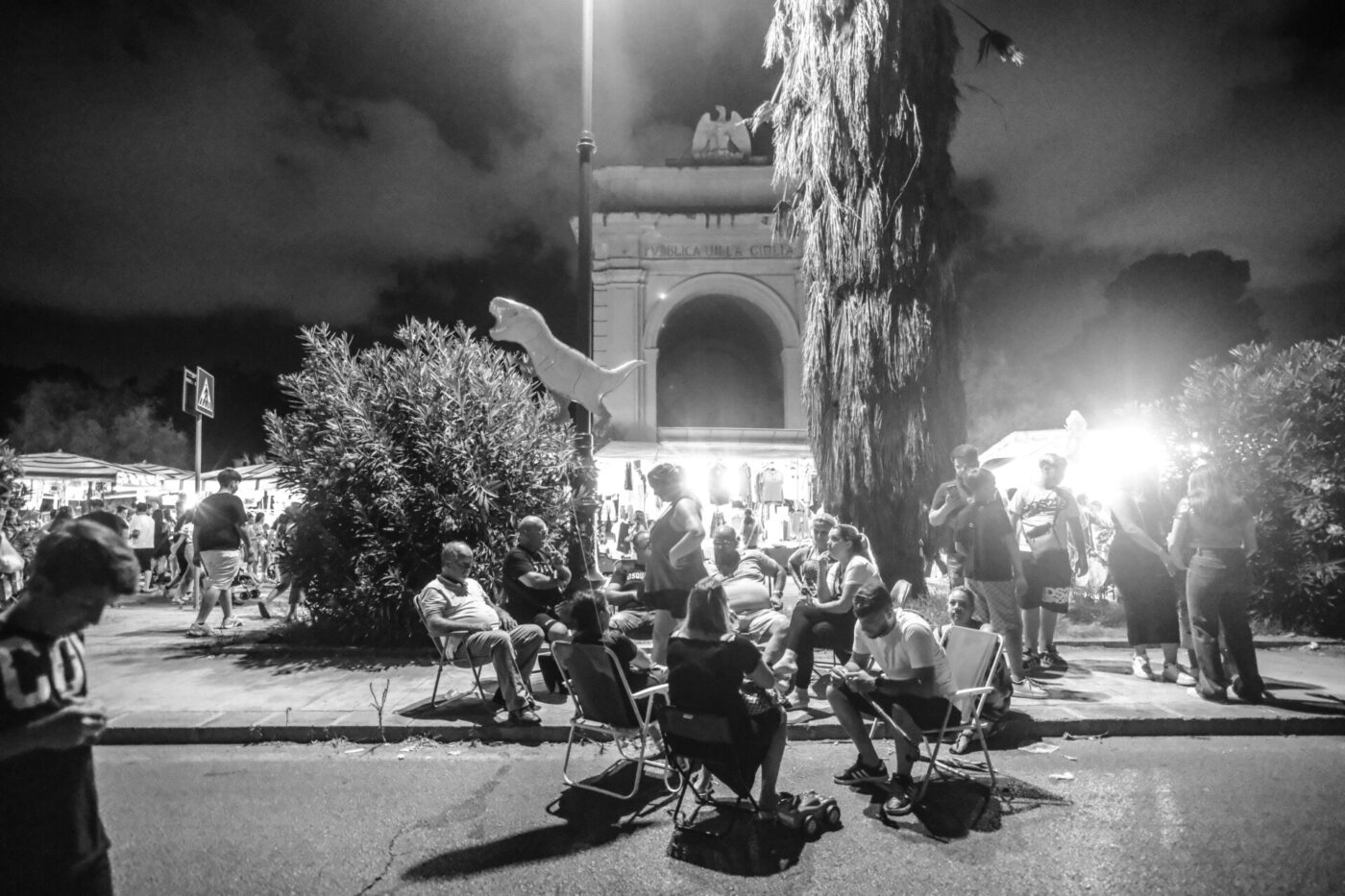
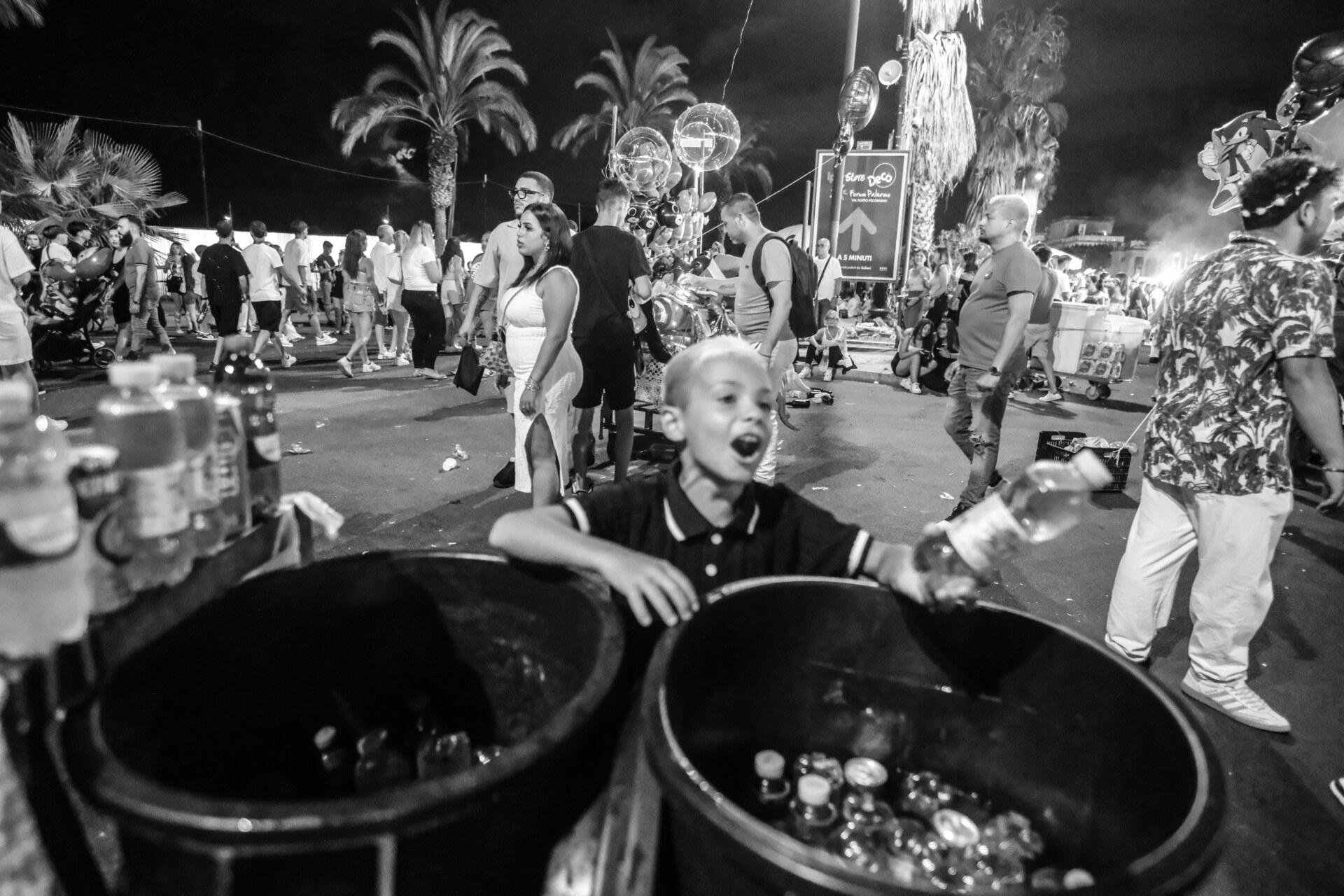
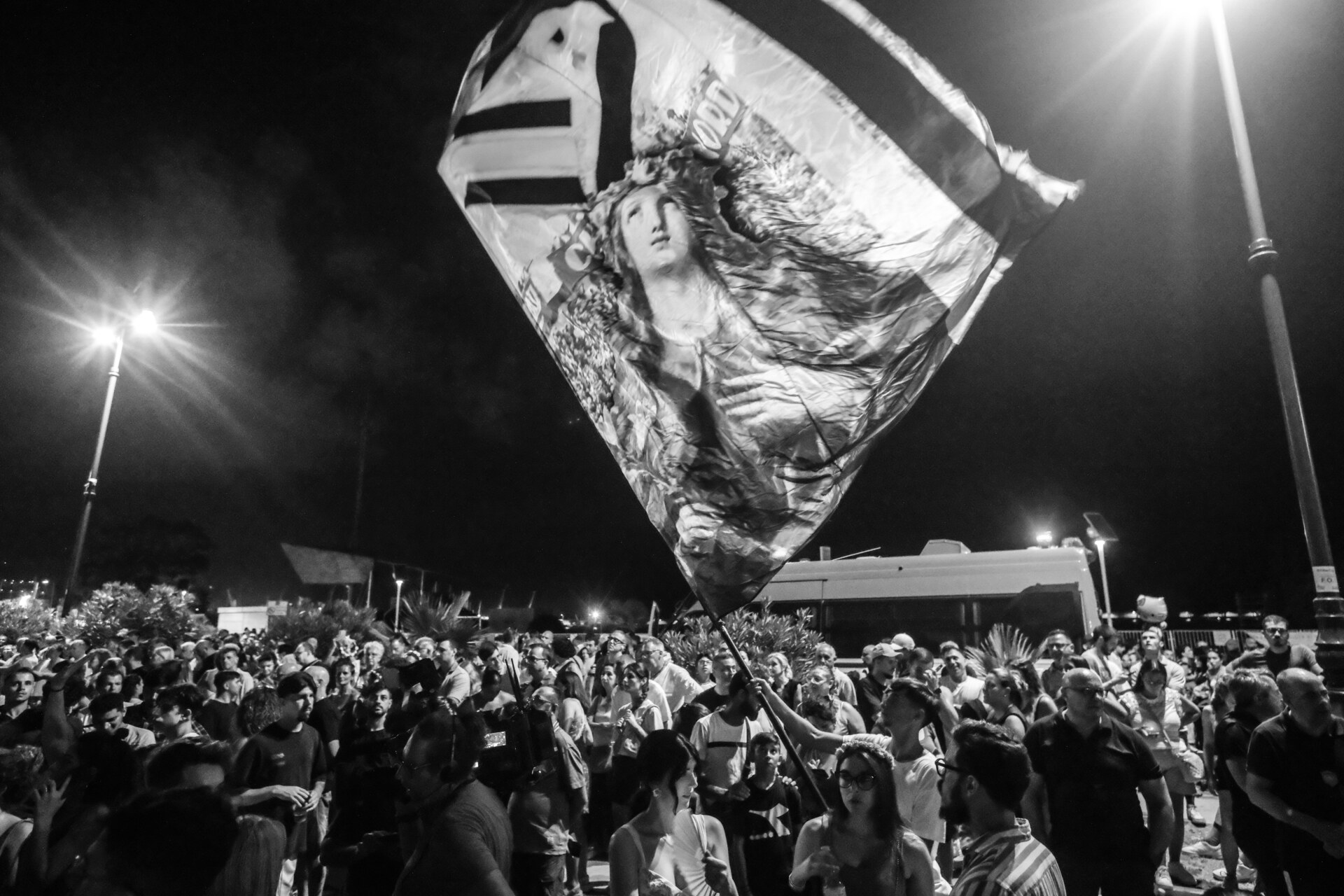
Last year’s procession was a sensory overload of Palermitan life, operating both within and outside the official parade route down the historic Cassaro. The streets were illuminated by the brilliant glow of elaborate light installations and crowded with vendors selling oversized slices of cold watermelon. On makeshift street-corner barbecues, the smoky aroma of stigghiola—veal entrails cooked over open flames—drifted over the crowd, eaten with bare hands amidst the waving flags of the local football team. When the float reached the Quattro Canti, the traditional crossroads of the old city, the mayor climbed aboard to lay a bouquet of flowers at the saint’s feet, a ritual of civic and spiritual convergence before the parade headed down to the sea at the Foro Italico for a midnight display of fireworks.
A Bishop’s Modern Indictment of Contemporary Plagues
Yet, the Festino has always maintained a sharp, contemporary political edge, a reality made clear during last year’s address by the Archbishop of Palermo, Bishop Corrado Lorefice. Speaking to the assembled thousands, Don Corrado delivered a sermon that cut through the celebratory atmosphere, warning that local politics had failed to heal the deeper wounds of Sicily. He drew a direct line between the 17th-century biological plague and the modern social ills afflicting the city, highlighting recent corruption scandals and outbreaks of youth violence.
Most urgently, the Bishop addressed the devastating crack cocaine epidemic that has turned sections of Palermo’s historic center into open-air drug markets, noting the tragic sight of young people wandering the streets in broad daylight like automatons. Don Corrado urged the citizens of Palermo to look through the eyes of Rosalia toward the “existential peripheries”—the marginalized and forgotten—arguing that true civic resurrection must begin at the individual level.
Looking Forward to the 2026 Celebration
Last year’s festival was organized around the central theme of Beauty—conceived as a force capable of creeping into the darkest corners of society to side with the common good. This year, the city is once again preparing to carry the weight of its dual nature: its historic splendor and its deeply rooted systemic shadows.
For a city that seems to live in perpetual anticipation of a miracle, the return of ’A Santuzza remains an indispensable annual anchor—a song of hope and a wish that the future of Palermo will be one freed of the many plagues that besiege it.