The anxious dread had begun weeks before the series even came out, with notifications from Netflix that the new season for Emily in Paris would be arriving on the platform by late December.
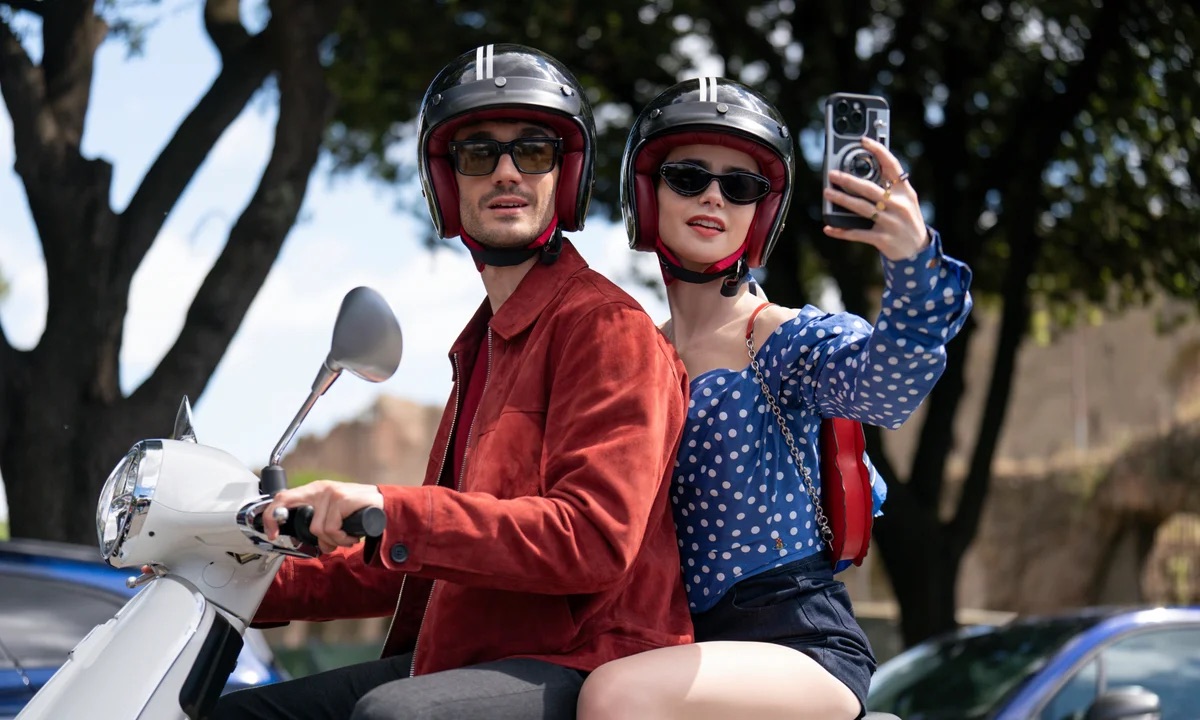
I had been primed from the start to dislike this latest season, in which our enthusiastic, can-do American heroine, Emily, allegedly opens the new Rome office of the Paris-based marketing agency at which she works. I could already envision what we might find—idyllic Vespa rides into the countryside, the charming, rich Italian boyfriend whose family just happened to own one of the country’s most famous luxury brands, truffle-hunting and pasta dinners, long lunches and even longer aperitivi. In this depiction, Italy was a place of never-ending vacation, in which mundanity barely crept into our consciousness.
Of course, knowing the series, this comes as no surprise. In its fifth season, Emily in Paris has attempted to do for the American-woman-living-in-European-city experience what Sex and the City did for being a single thirty-something woman in New York City. That is to say, Emily in Paris offers a manic and clichéd idea of what it might mean to be a young American female professional living in Paris; Emily’s emotional map blips endlessly from euphoria to euphoria with the briefest of dips at melancholy. Worse yet, she experiences these emotions in an endless array of luxurious parties for the best brands, the most famous fashion houses, and at the most scenic spots—among its shooting locations this season were Palo Laziale’s stunning La Posta Vecchia, EUR’s famous Colosseo Quadrato (also known as Palazzo della Civiltà Italiana and Fendi’s headquarters), and Hotel de Russie. And in the case of portraying the cities themselves, the show far too often falls on an Americanized ideal (Rome’s ancient ruins, for example, are simply meant to show the beauty of our imperfections) that seems more at home in an Instagram carousel than in day-to-day life.
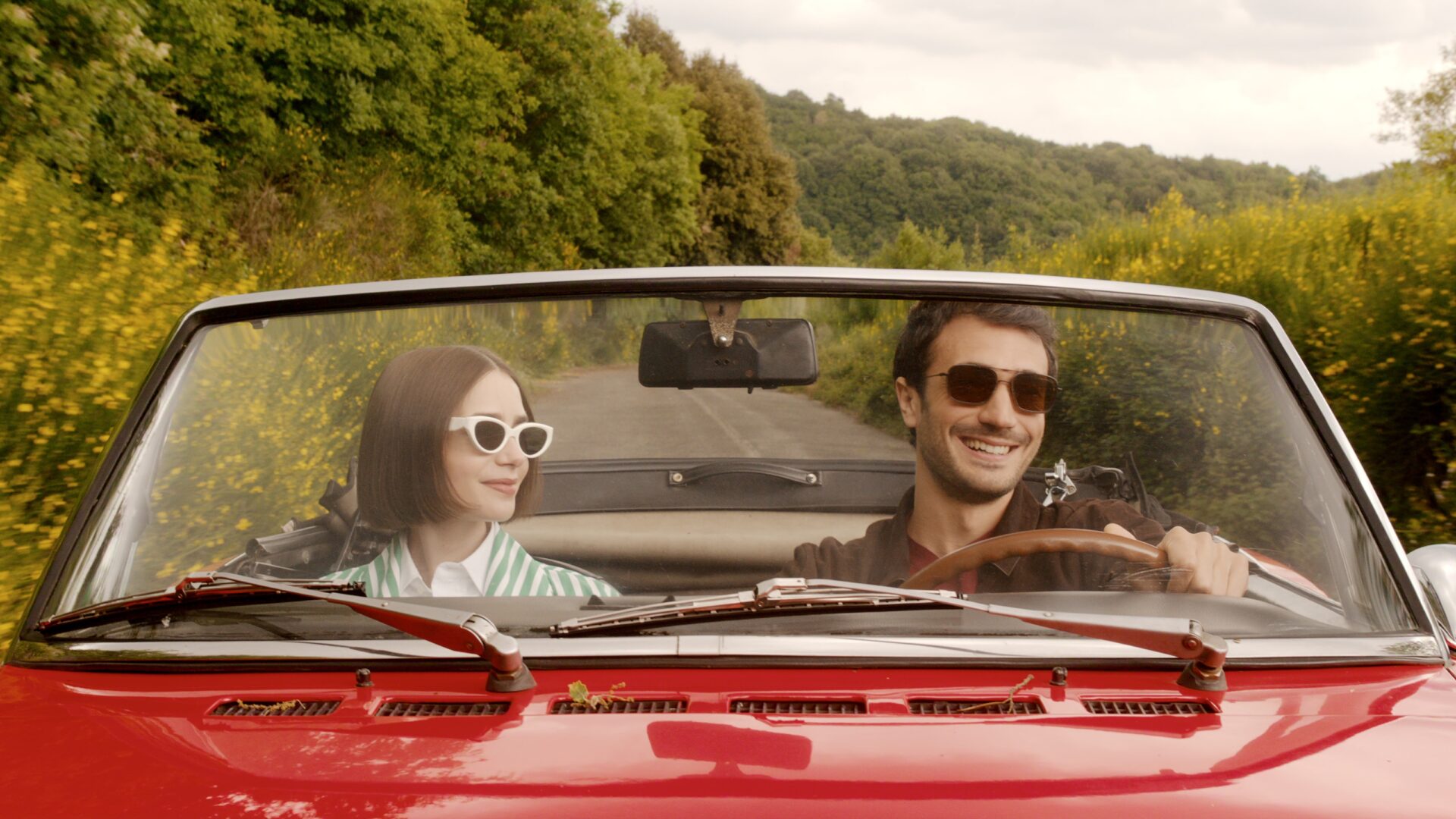
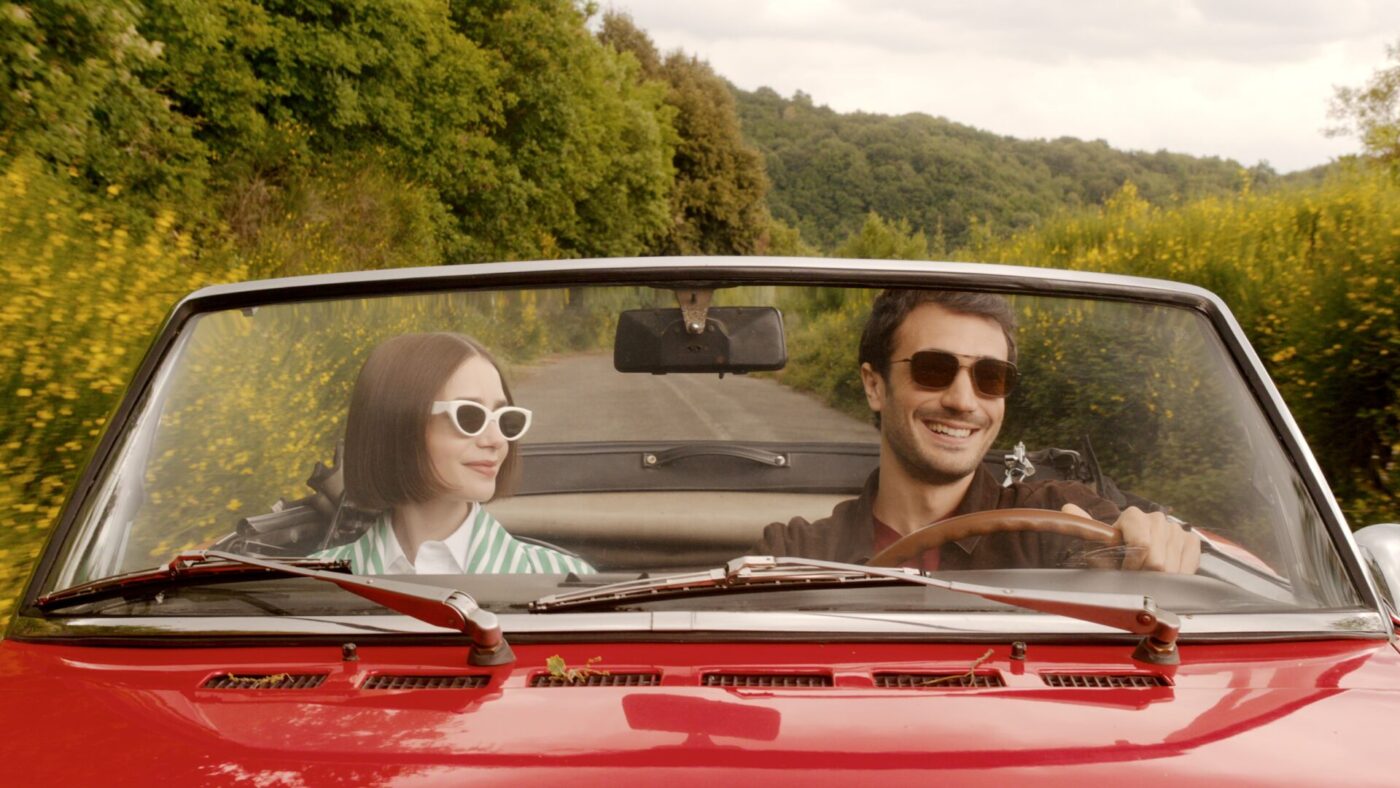
Emily in a sexy vintage convertible with her sexy luxury-scion boyfriend, en route to truffle hunting... on a work day.
Perhaps I sound jealous, a tad too judgmental. I, too, am an American woman working in media and living in Rome. Emily’s milieu is not so far from my reality, and I often get breathless comments from American friends referencing the series: “You’re like Emily in Rome!” It is as if Emily’s fictionalized life has become a stand-in for my own.
The problem is that this is not an individual effect so much as a cultural one. However unrealistic shows like Emily in Paris may be, they do drive tourists to visit these European cities—a 2024 study reported by Le Monde showed that one out of 10 foreign tourists to Paris cited a movie or TV series filmed there as the main reason for their visit. More importantly, 38% of that group specifically named Emily in Paris.
That overtourism is an issue in Italy almost goes without saying—there’s a reason the country has outlawed lockboxes and remote check-ins for short-term rentals while cities like Florence have pursued bans on touristic golf carts in the historic center and loudspeakers used by guides. There are parts of Rome—the Trevi Fountain, the Pantheon, the areas surrounding the Vatican—that have become almost untenable for the average person, so crowded are they with tourists. Shows like Emily in Paris only emphasize the idea that Italy and Rome, in particular, exist merely to be enjoyed. But for the people who actually live here, a hectic morning in the high season can feel like having to walk through the entirety of Disneyland to get to your corporate job.
Despite this context, despite what I’d written in the past, I was ready to throw it all away when I watched the opening scene of the latest season. I admit it—Emily charmed me by beginning her Rome life in the most improbable of improbable ways, at least for this series. Emily was taking the bus.
Of course, this was the chicest, least-crowded bus I’d ever seen in my life, and Emily managed to gingerly tap her phone against the machine to pay, as if Romans had been doing so for centuries. I wondered if she knew that these tap machines were only installed on Rome’s fleet of buses three years ago and that, for decades, bus tickets were largely purchased from local tabaccherie or edicole before boarding. Did she realize how often these machines didn’t work or couldn’t be reached because of the masses of sweaty people congregating? You see, unlike Emily, I was a frequent taker of the bus.
In a poetic touch, Emily leaves her silk scarf on the bus and a young woman calls to her as she gets off: “La tua sciarpa!” As if overtaken by an unseen force, I yelled at the television: “Ma non è una sciarpa, è un foulard,” the difference being that a sciarpa refers to a heavy, woolen-type winter scarf whereas a foulard, a French term adopted into Italian, describes a Hermes-esque scarf to be tied around the neck.
In that moment, I realized that I had a choice: I could watch the season with a clenched jaw, disgruntledly fact-checking each individual detail, or actively choose to surrender to its implausibility. I loosened the muscles in my face and turned the volume up, acknowledging that there had never really been any choice at all.
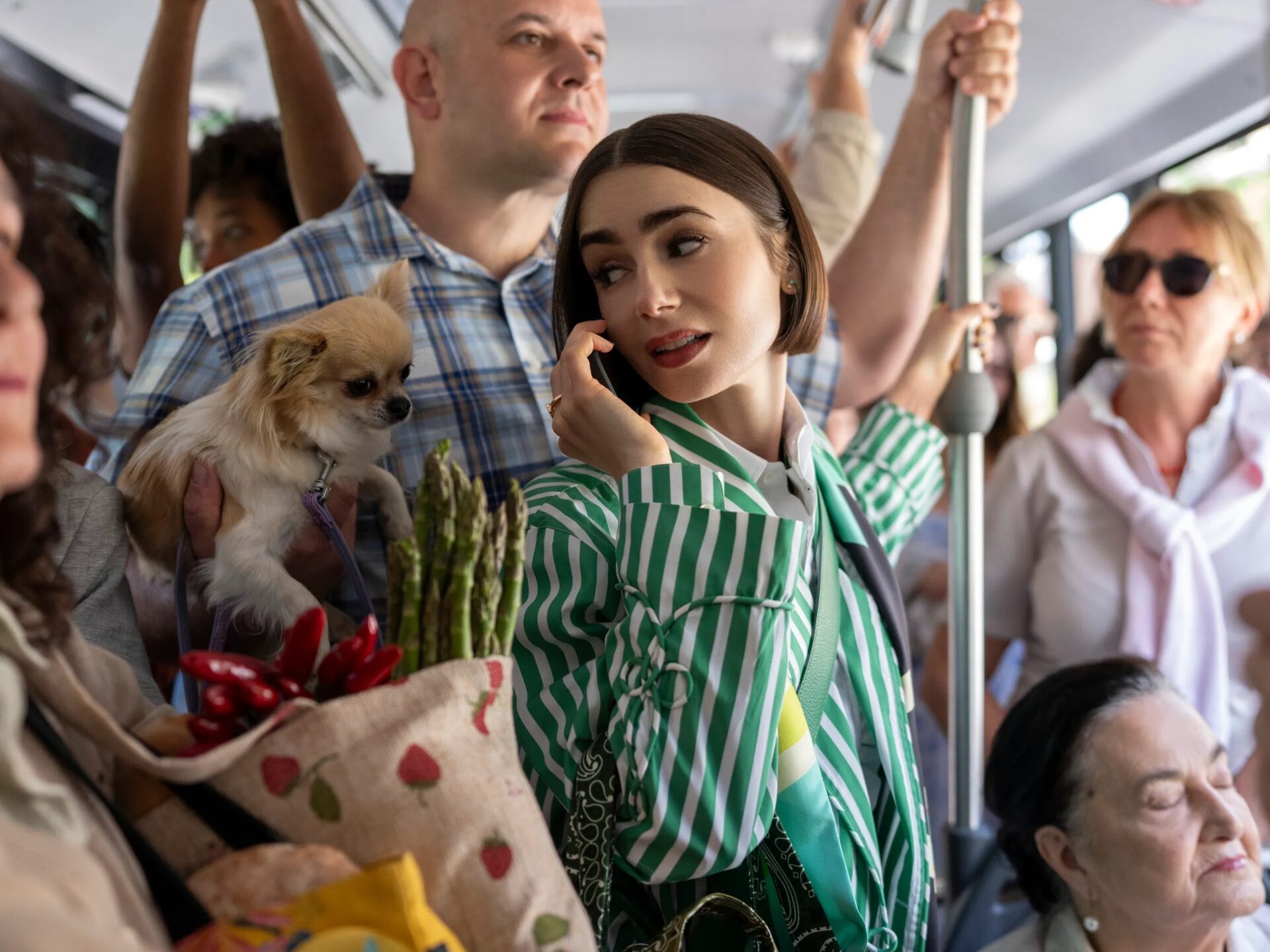
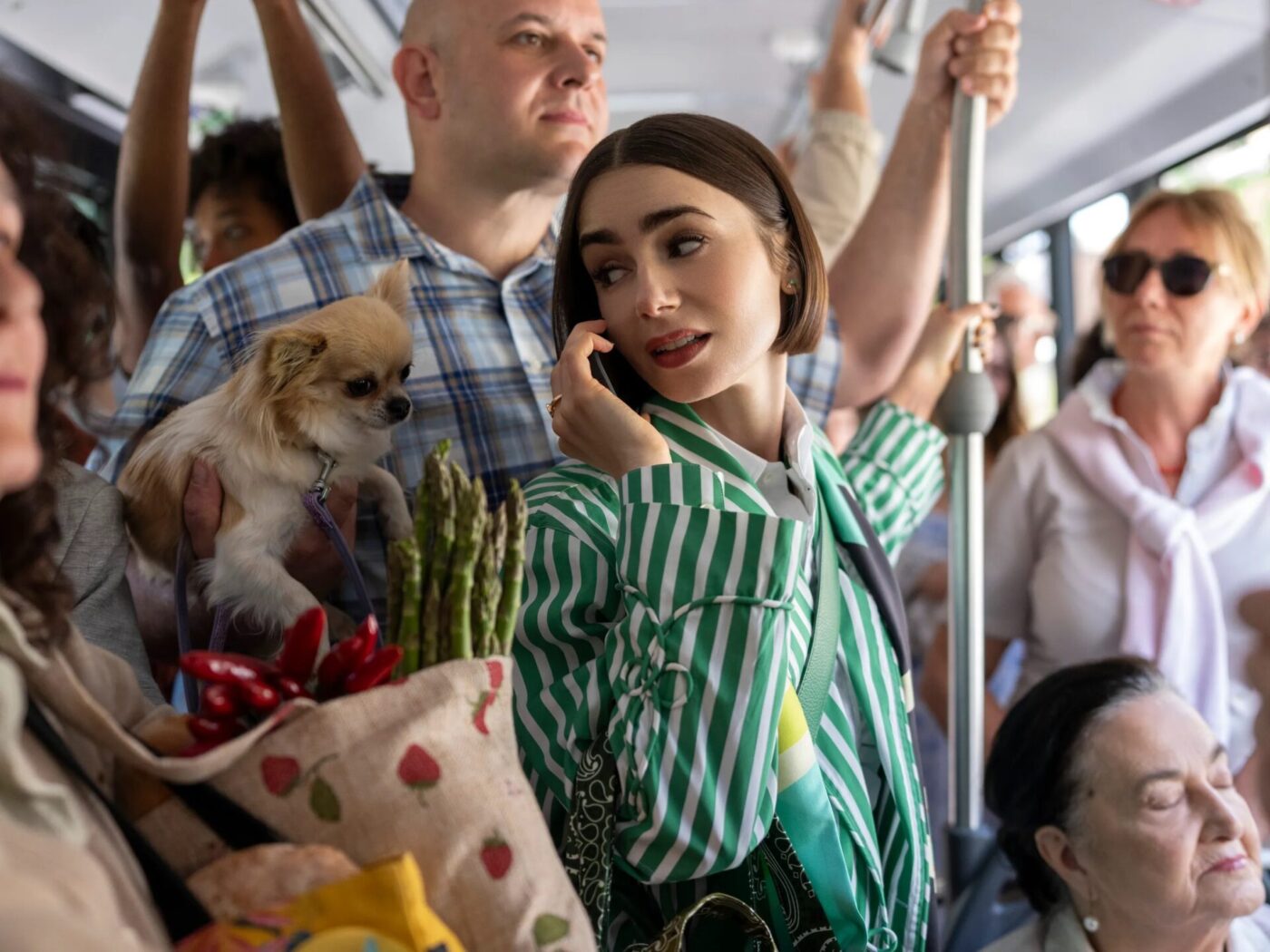
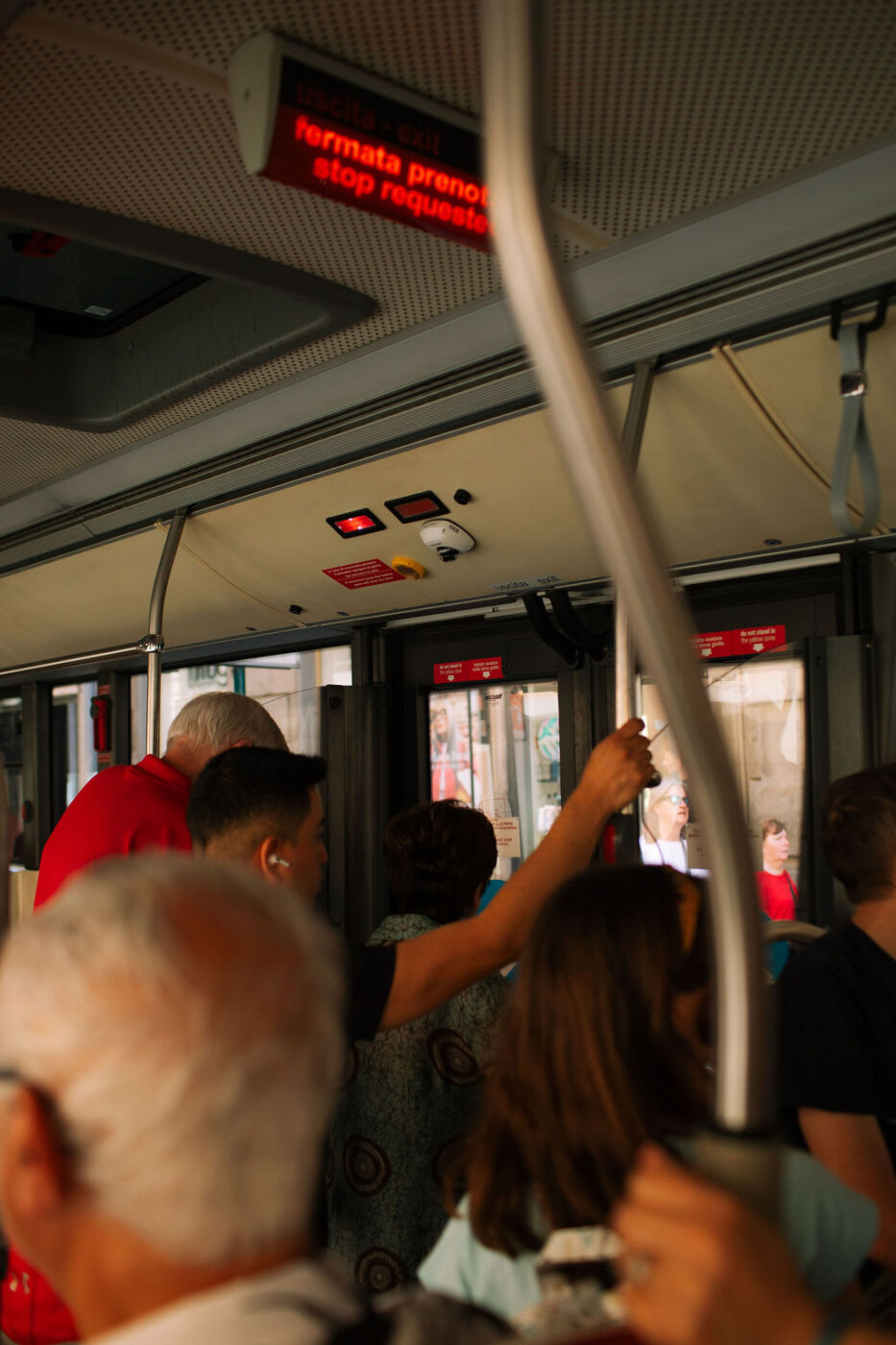
Emily on the bus, next to a glorious bushel of asparagus.
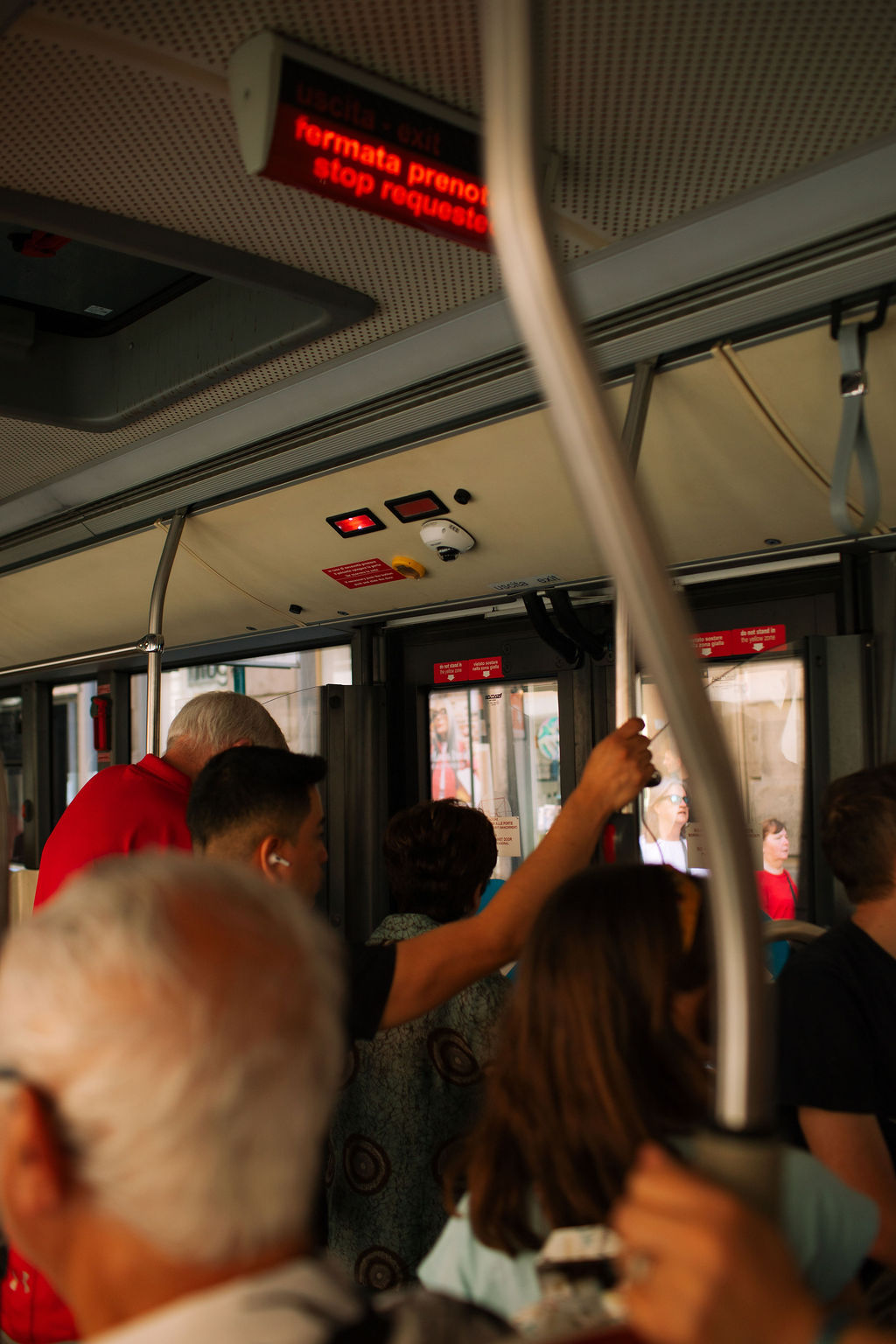
Us on the bus, no bounty in sight. Photo by Emily Rowe.
Of course, surrender is also the lesson Emily is supposed to learn from Rome.
In one particularly telling scene, Emily brings her grandmother’s vintage Fendi purse to a pitch with the Rome-based fashion brand, carefully removing it from the box and conditioning it with leather beeswax beforehand.
In the meeting, Emily lays the bag on the table, angled just vaguely towards the Fendi representative as they discuss the launch of a new product. But when the executive finally catches sight of the obvious ploy, she replies with typical Roman candor: “I’m sorry, my dear, but this is a fake.” The uneven spaces between the stitches and the quality of the clasp are telltale signs.
And Emily, instead of reacting with any kind of shame, spins the entire gaffe into a marketing idea: Fendi should create a bag that looks like a knockoff but is actually real. Emily’s boss, the inimitable Sylvie, is so stunned by how poorly the meeting has gone that she offers Emily some prescient life advice.
“You need to learn that you don’t always have to have the answer,” Sylvie tells her. “Admitting you don’t know something is stronger and more honest.”
For both Sylvie and Emily, Rome is something of a foil, a city that zigs when you want it to zag, that lulls you into thinking that a point of arrival is here only to hit you with a new surprise. After the umpteenth professional failure, even Emily has to accept some level of defeat: “I’m losing my touch—I don’t think my ideas are translating in Rome,” she tells us.
In Rome, we see the usually invincible Emily lost. She doesn’t understand Italian niceties—according to Sylvie, yes doesn’t always mean yes. She’s confronted with her paramour Marcello’s endless parade of model-beautiful exes while his family judges her implicit Americanness. And she incessantly circles her lead client, Antonia, with business propositions, not understanding that the pushiness that is so valorized in America is actually a severe defect in Italy. (Ask me how I know.)
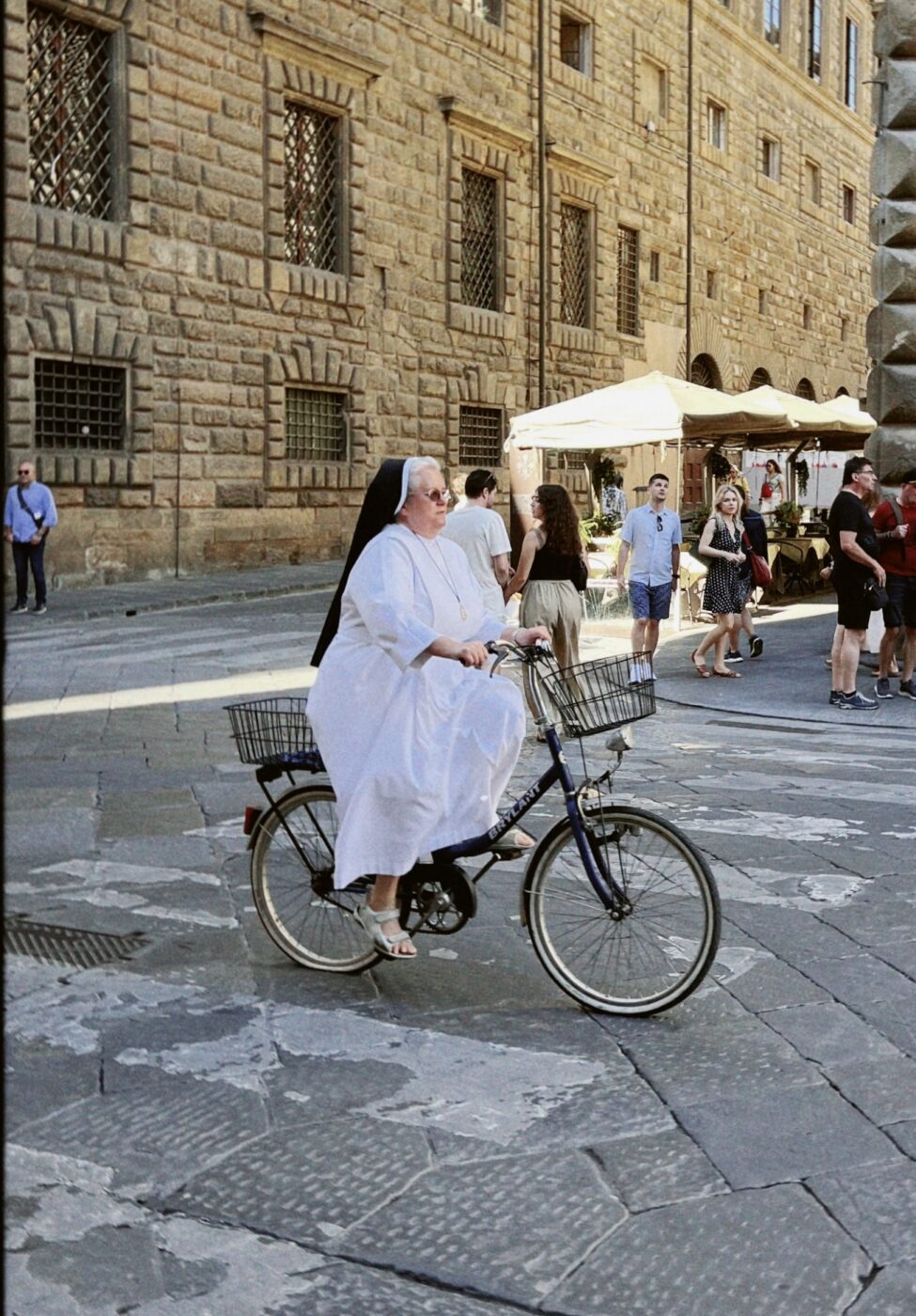
Finally, Emily in Paris has probed past the initial layers of Rome, its aesthetics—long lunches and cobblestone alleys and rooftop bars that overlook ancient ruins. Through various storylines, we encounter themes true to actual daily life here. We see the nuns that manage religious guesthouses where pilgrims can stay the night. We feel the loss when hidden villages go viral on TikTok and become suddenly overwhelmed with tourists. And we meet the nobility who have the title but perhaps not the cash to back up their lifestyle.
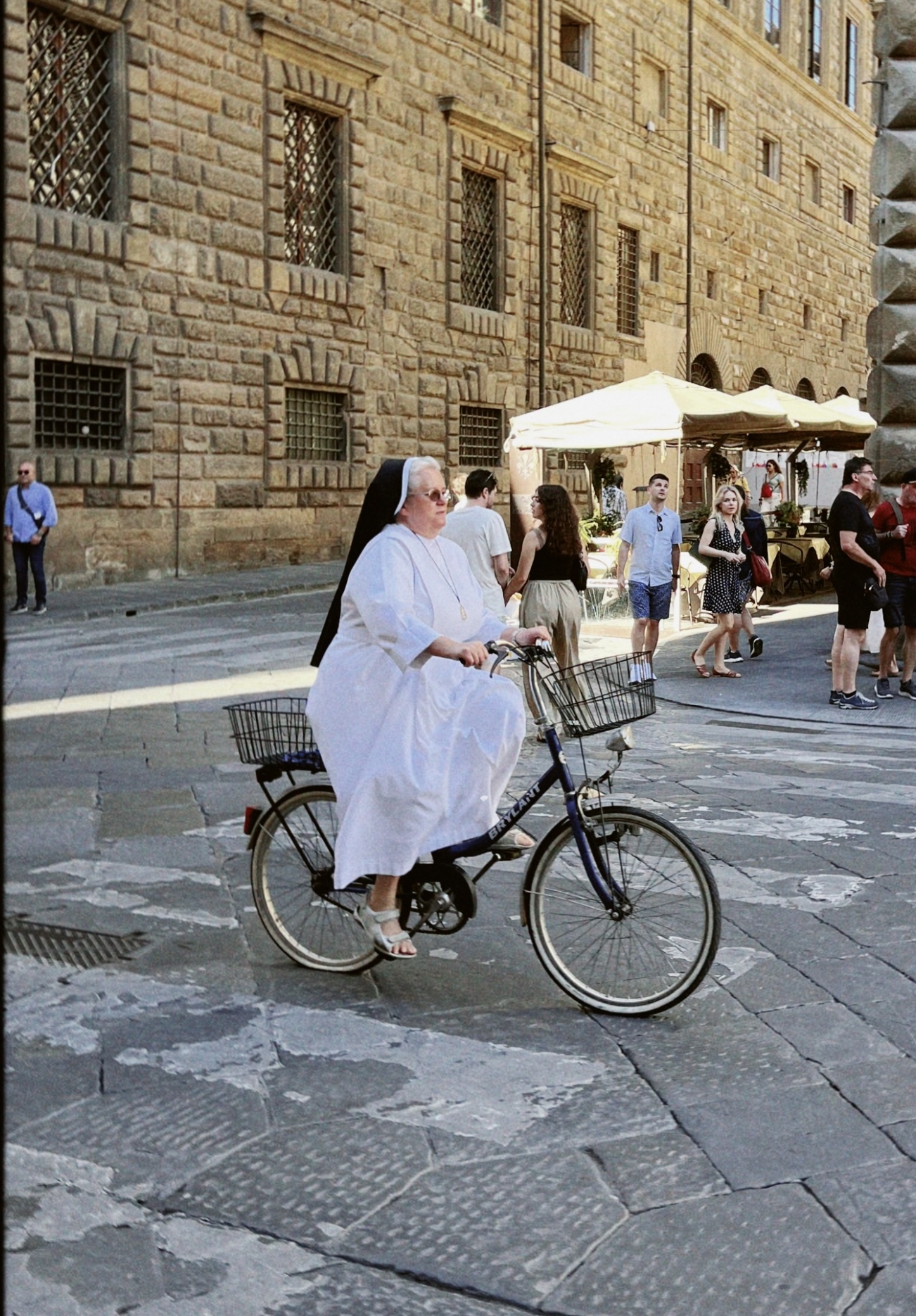
More importantly, we see that Rome is not all beauty, be it physically or mentally. The city has imbued Emily with a different type of assertiveness, the assertiveness that can only be reached when you realize that, as Emily says, you “can’t even get a coffee in the morning without shouting at the barista over a crowd.”
In my experience, Rome is a city that changes you, by pushing you slightly, each and every day. Here, you have two options: give up or give in. At a certain point, overachieving Emily decides to give in, to loosen up, to let things happen rather than orchestrate them in advance.
In this way, Rome forces your hand, because you come to understand that giving in is the only way to survive in this city. I can write this with authority, because I have lived it. This fall, in a season in which I felt confronted with obstacles at every turn and any negative email was sure to send me into tears, I reached a tipping point. The day had been a particularly harrowing one—I had attempted in vain to resolve a bureaucratic issue. I had utilized all of my American strategies: make a list, call this person, try all these agencies. But by day’s end, I felt only further from my desired outcome.
Instead of dissolving into a puddle of panicked sobs, which is my usual way of dealing with stress, a phrase emerged in my head: It will be what it will be. These were words I’d conjured like an incantation thousands of times before but never once believed. This time, I did, probably because I had finally realized that sometimes the only choice you have is to surrender to the maddening logic that is Rome.
Like Emily, Rome had forced me to withstand a certain level of uncertainty, knowing that the bus wouldn’t come, that I might wake up to a transit strike, that something would go wrong and it would inevitably not be the thing I had predicted.
The difference was that the Rome I lived in was actually rooted in the mundane, with blips of fantasy. And while Emily’s fantasy was fun, like eating cotton candy at a state fair, it left me empty, because it was grounded in absolutely nothing at all.