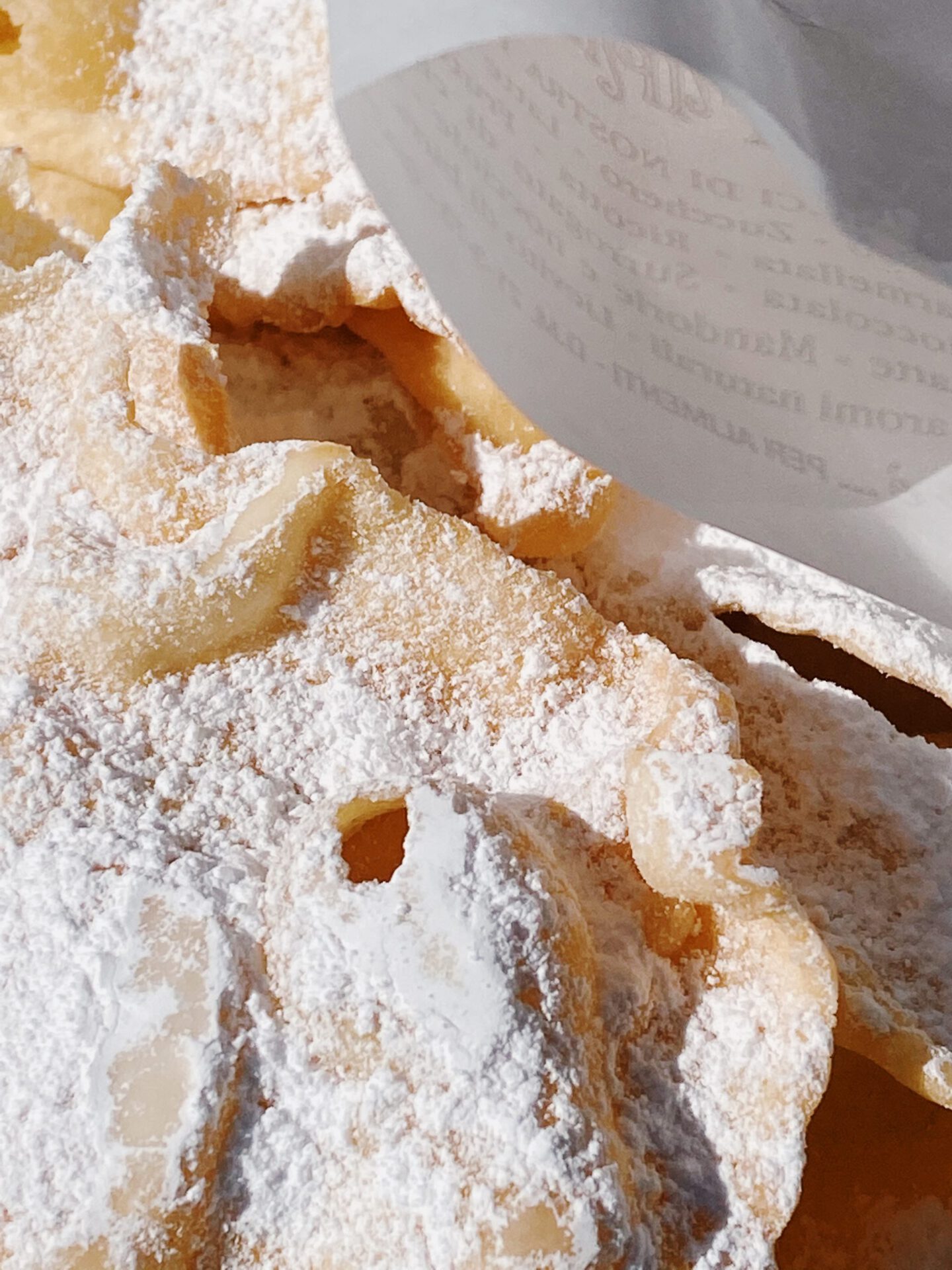
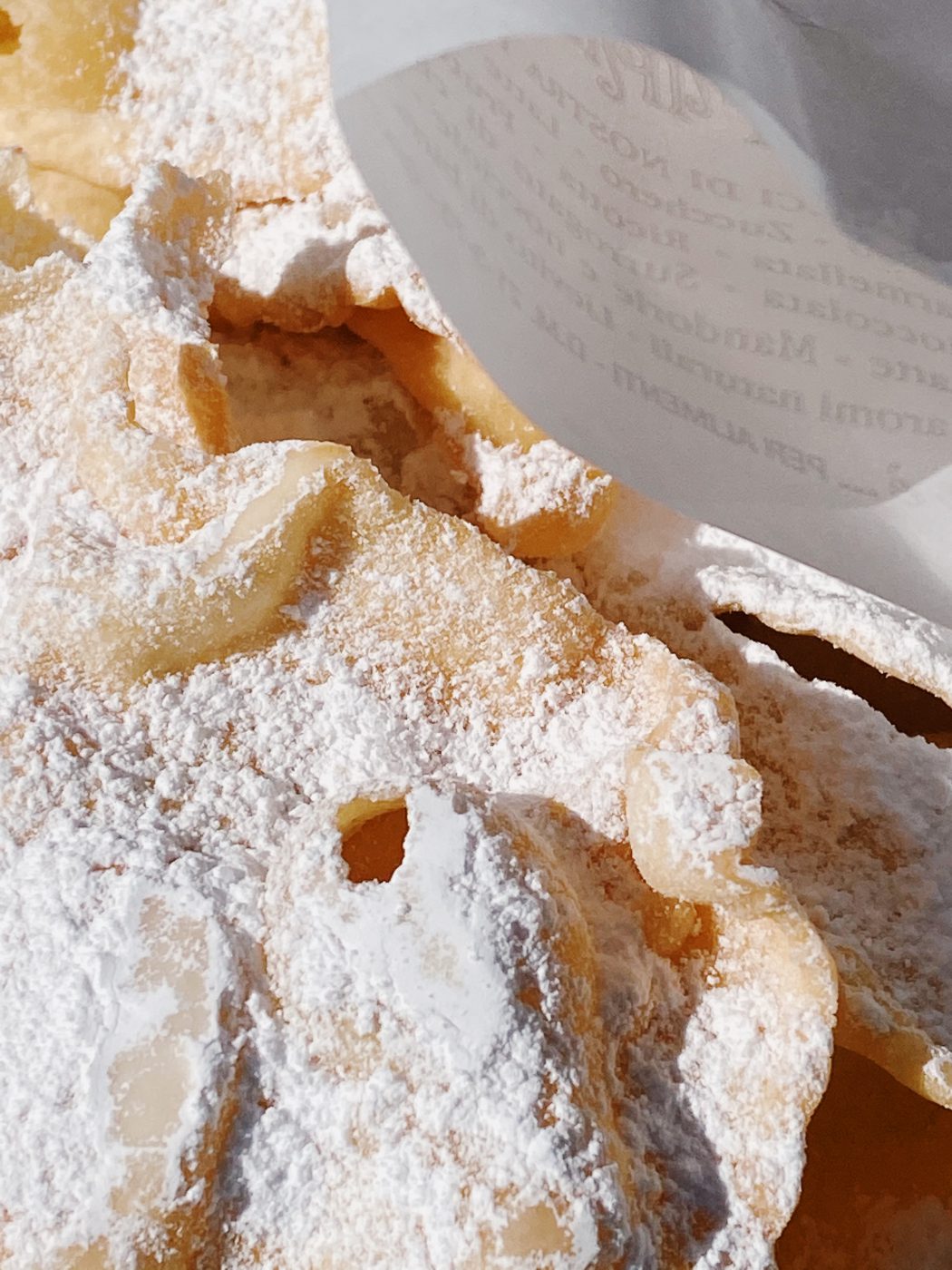
Carnevale in Italy brings with it a treasure trove of fried sweets—and cenci are Tuscany’s star players. Their name—which translates to “rags”—comes from the uneven, twisted shape, with signature frilly edges courtesy of a fluted pastry cutter. The Tuscan recipe calls for the dessert wine Vin Santo, though similar versions (with or without alcohol) are found across Italy under other monikers: frappe in Rome, bugie in Liguria, and chiacchiere in Southern Italy.
You’ll find these strips of fried dough sugar-dusted and heaped in brown bags from vendors and bakeries all Carnevale season, but try your hand at making them yourself, the way many Tuscan families do this time of year. It was one of the first dishes I made with my grandparents, helping by cutting the strips or sprinkling the sugar while they did the frying. There’s a Tuscan saying that sums these treats up perfectly: “il cencio non mente” (“the cencio never lies”)—the powdered sugar on your sweater will always give you away.
Read about the other 19 Carnevale treats you must try over this way.
CENCI DI CARNEVALE
Serves 6
INGREDIENTS
- 280 g 00 flour
- 50 g granulated sugar
- 2 eggs
- 3 tbsp extra virgin olive oil
- Pinch of salt
- Pinch of yeast
- The zest of one orange
- 1/2 glass of Vin Santo
- Powdered sugar, for dusting
- 1 L vegetable (or other) oil, for frying
PREPARATION
- Place the flour in the center of a pastry board in the shape of a mountain. Create a well in the center and slowly add the sugar, eggs, olive oil, salt, yeast, and orange zest.
- Work the ingredients together with your hands, adding just enough Vin Santo to keep the dough moist but together, about 3 tablespoons. Knead the dough as you would pasta dough until it’s smooth, firm, and elastic, at least 10 minutes. Shape into a ball, wrap in a cloth or cling film, and let it rest at room temperature for 30 minutes.
- Using a rolling pin or pasta machine, roll out the dough on a lightly floured pastry board to a thickness of about 2 mm.
- Cut the dough using a fluted pastry cutter into ribbons, about 3 inches in width and the length of a knife.
- Heat the oil in a large pan until 180°C. Fry the ribbons in batches for about 30 seconds per side, checking them often and turning them with tongs, until the dough bubbles and turns golden brown.
- Remove the ribbons from the oil and drain them for a few minutes on paper towels. Dust with powdered sugar, and serve warm.