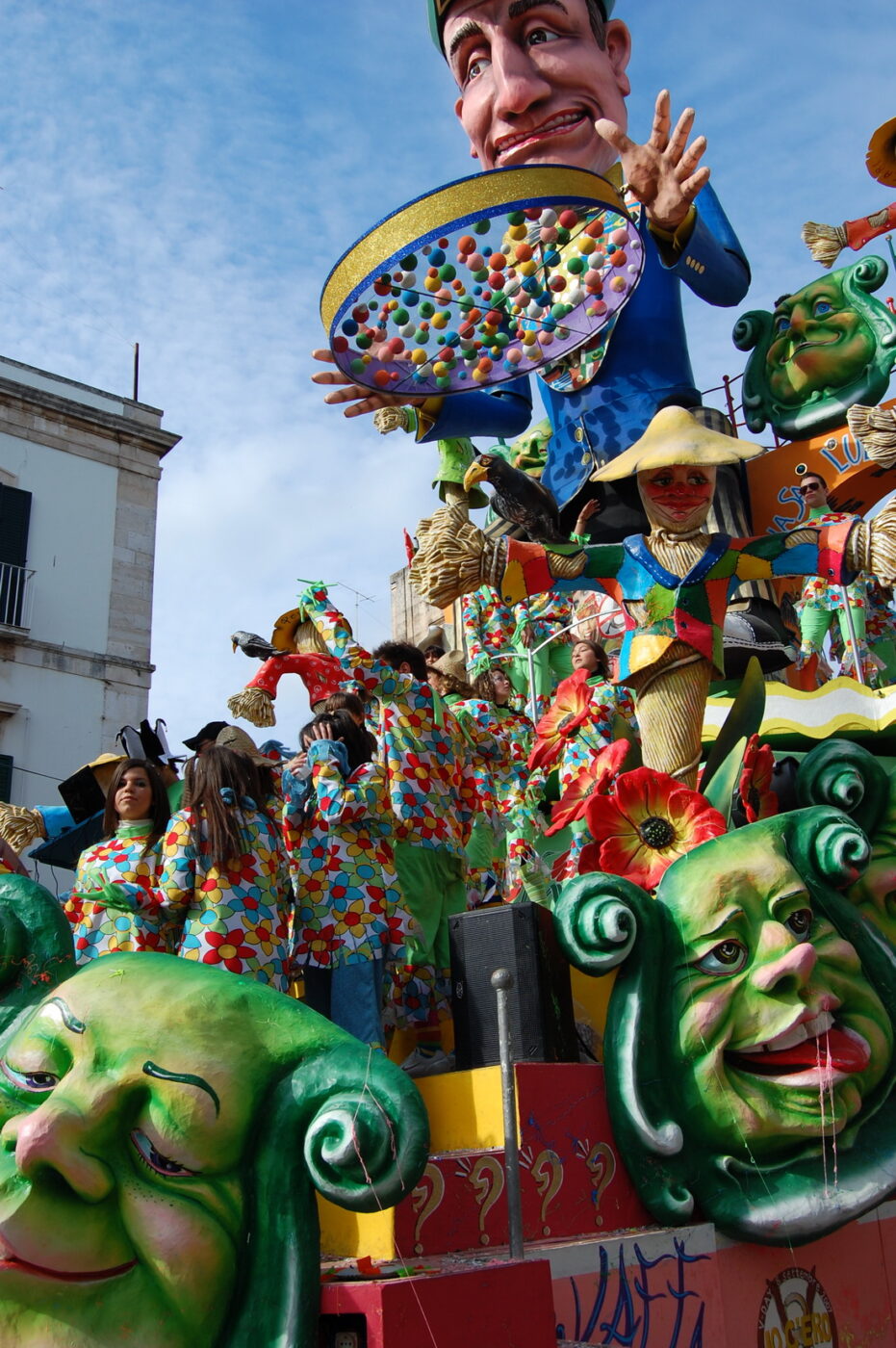
If I close my eyes, I can see it. The main road, the crowds celebrating, and the floats parading through the center of town.
I don’t have many clear memories of my childhood. But this one remains vivid: Carnevale (Carnival). It’s a widespread tradition in Italy that usually brings Venice to mind, but in Puglia—my home region—its symbol is Putignano, a town just 25 minutes from Bari.
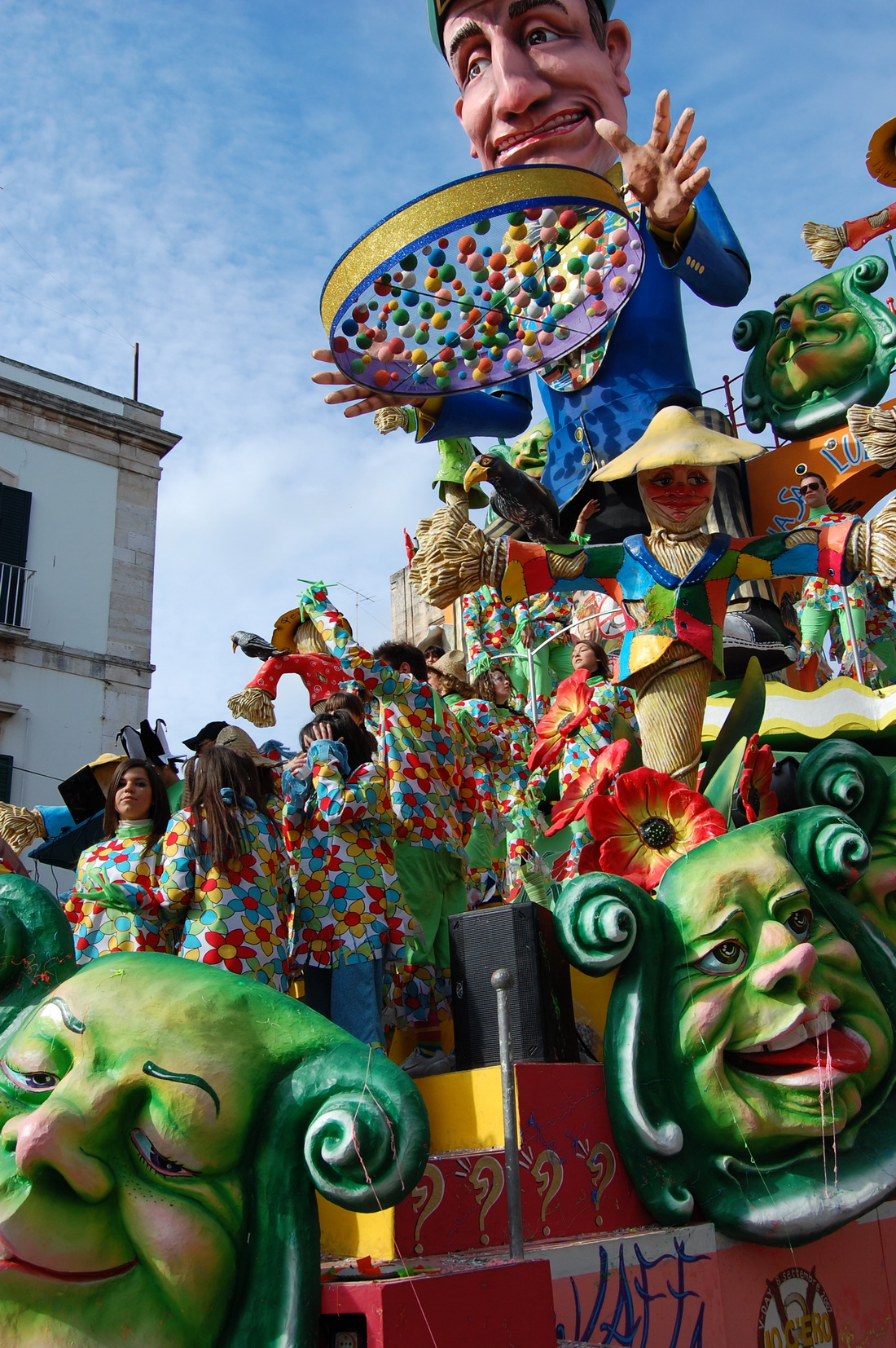
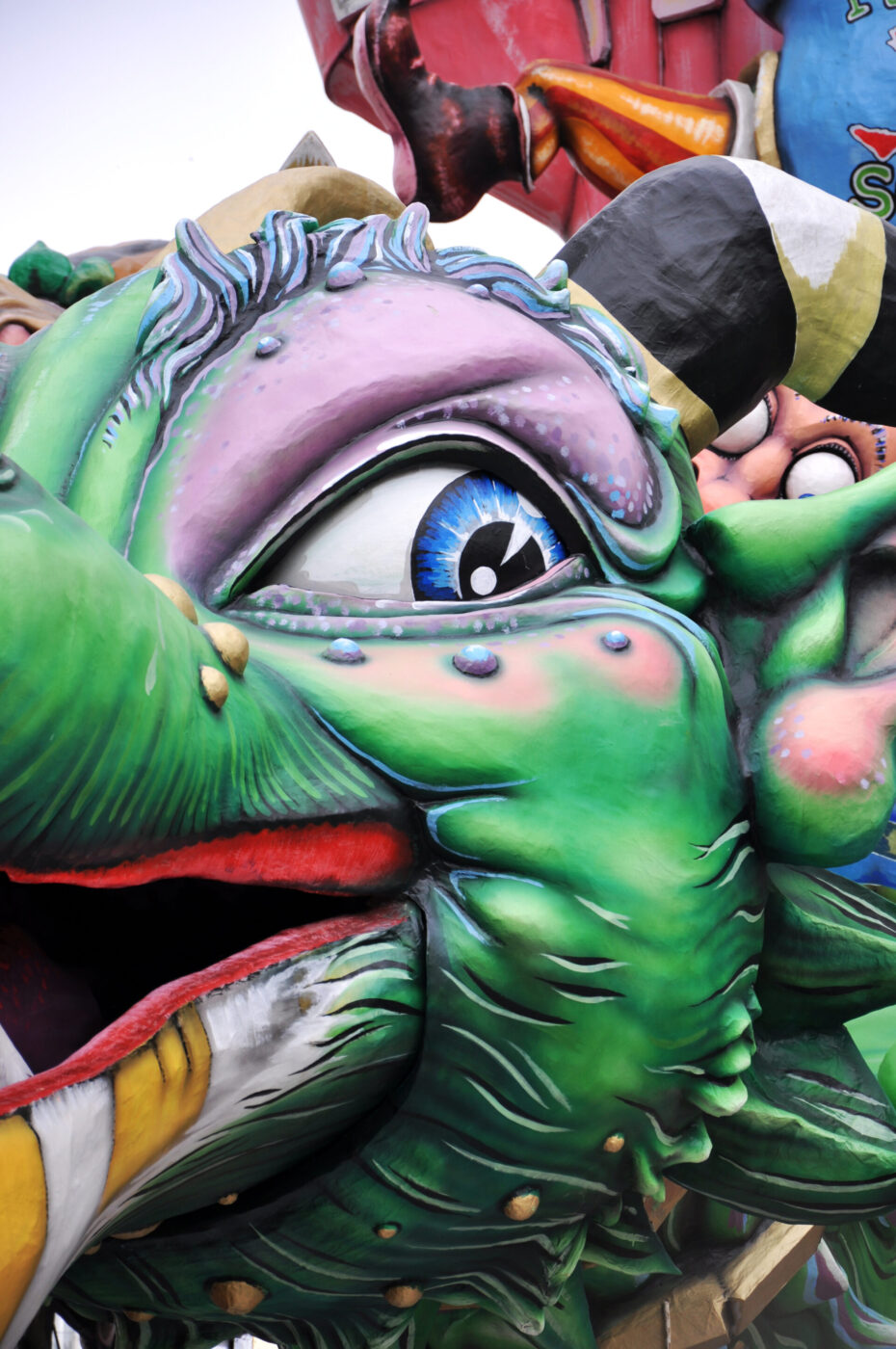
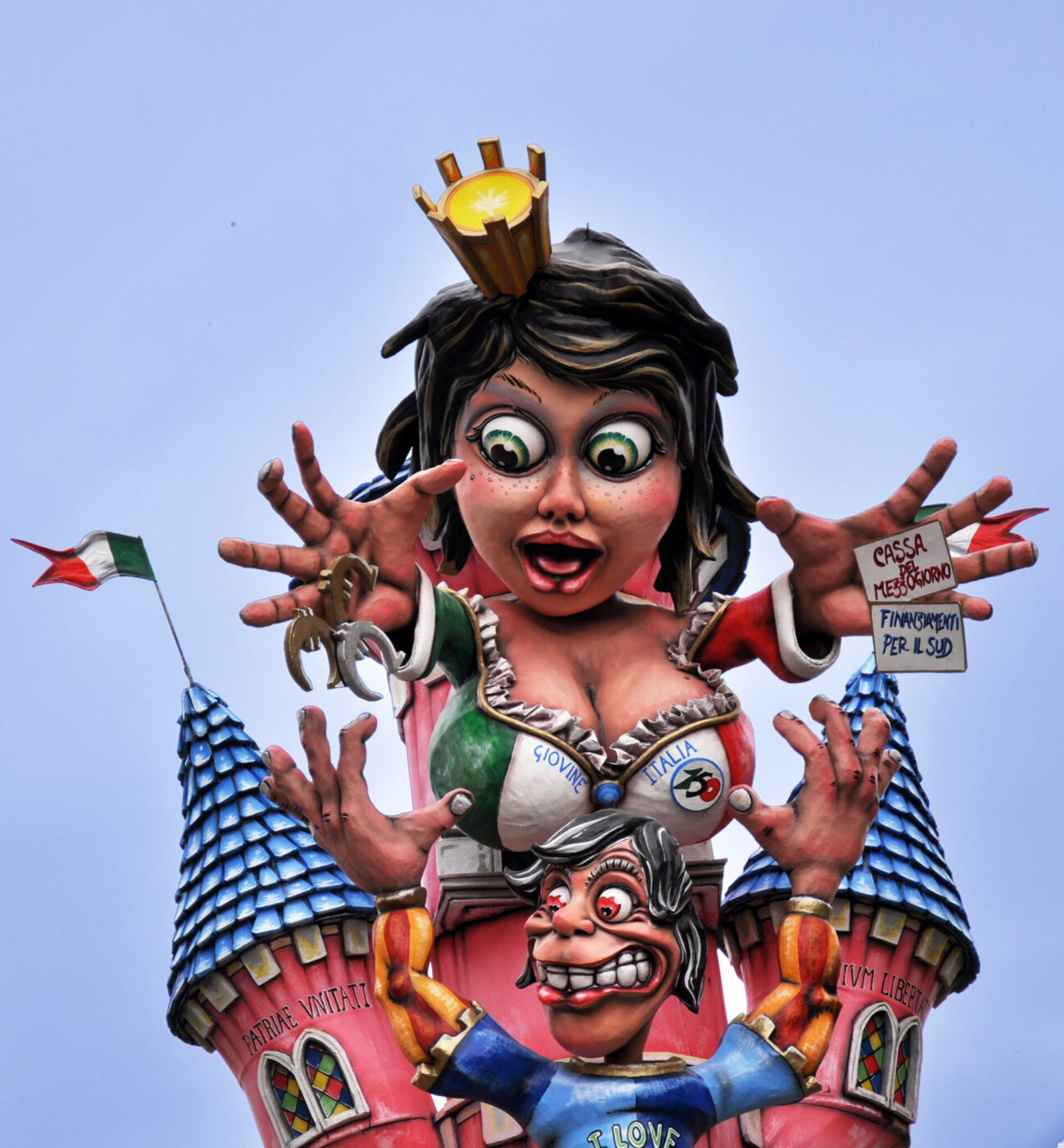
I remember the parades of allegorical floats, crafted from papier-mâché and iron, and their funny, elusive, mysterious figures. But the citizens of Putignano—the Putignanesi—will tell you that Carnevale’s true heart is ritualistic, biting social and political satire. (Floats were actually introduced quite recently, in the early 1900s, though the Putignano Carnival itself is the oldest in Europe; this year marks its 632nd edition.)
I have always associated Carnival with February, but in Putignano, it begins on December 26th with the Festa delle Propaggini (Feast of the Offshoots). This grants the celebration another record: the longest carnival in Italy.
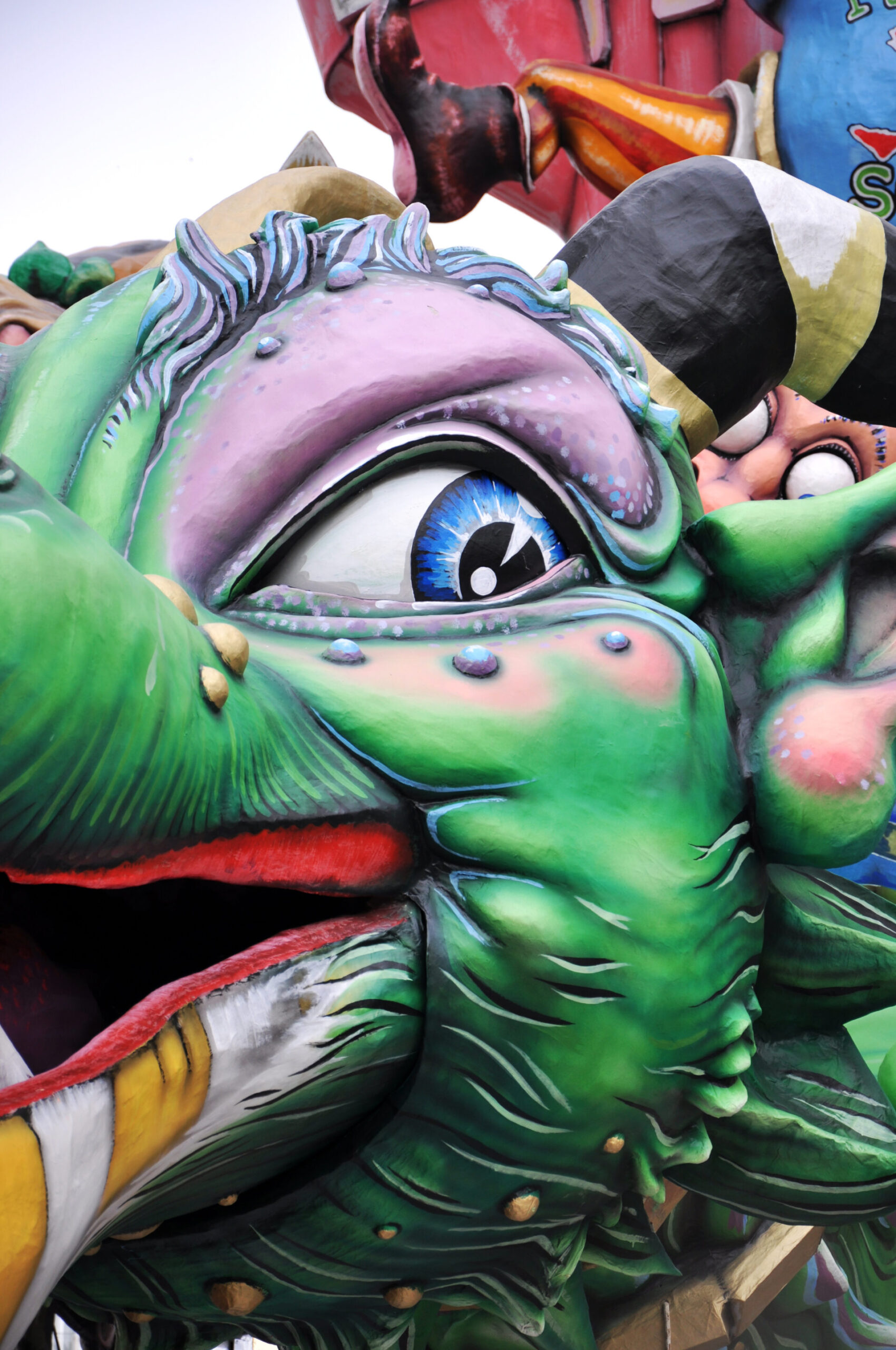
Photo by Sabrina Campagna; CC BY-NC-ND 2.0 via Flickr.
There are various stories about its origin, but the most accepted dates its birth to December 26th, 1394. The relics of Santo Stefano Protomartire were moved from the Abbey of Monopoli to Putignano to save them from a Saracen invasion, and legend has it peasants abandoned their fields, where they were grafting vines using the offshoot technique, to join the procession of Santo Stefano—dancing, singing, and improvising verses in the local dialect. (For the non-botanists among us: an “offshoot” is a technique where a branch is folded and buried to propagate a new stem.)
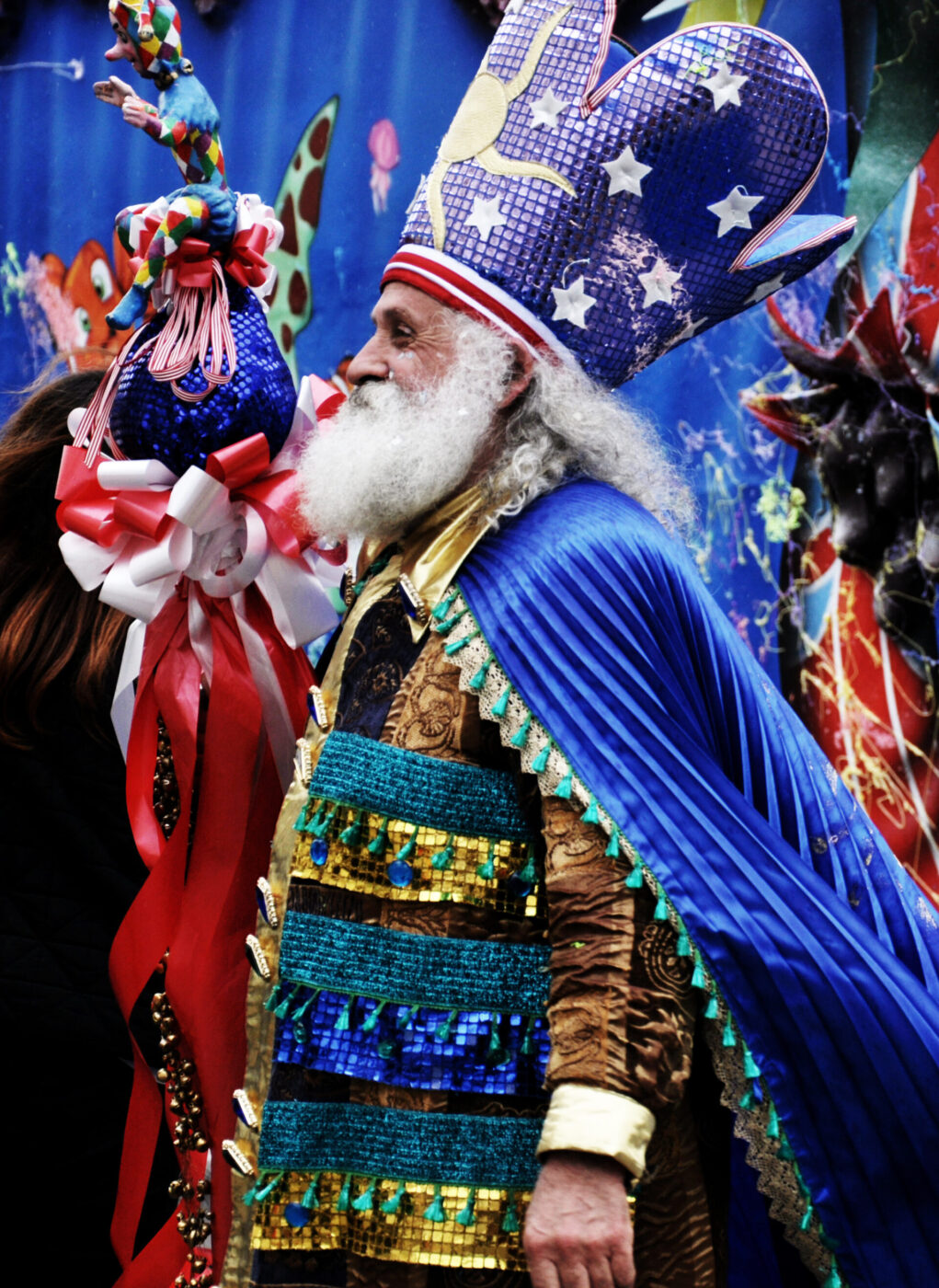
Even today, during the Propaggini, groups of citizens recall this history by parading through the alleys of the historic center in peasant clothes. They challenge each other with cippon—satirical verses in dialect mocking politicians and local figures. At the end of this ritual, created to regain the favor of the gods and chase away evil, everyone gathers in the picturesque Piazza Plebiscito to plant the cèppone. In the Putignanese dialect, this word means both the vine plant and the male sexual organ (because what would Carnival be without a little perversion?). A popular jury then elects the group with the most original verses.
After this opening, a spasmodic wait begins. Starting January 17th—the feast of Sant’Antonio—the city gathers every Thursday to satirize different social groups: priests and nuns, widowers, the “insane” (unmarried bachelors), and finally, the married men—satirically dubbed “cuckolds.” This plays on the classic Italian idiom where “wearing horns” signifies a cheating spouse. On the Thursday dedicated to them, a group of men gathers at 6:30 AM in horned headdresses to visit the home of the “Great Horned of the Year,” a surprise annual choice. The procession concludes in Piazza Plebiscito with a purification rite, where the horns are symbolically cut to ward off infidelity.
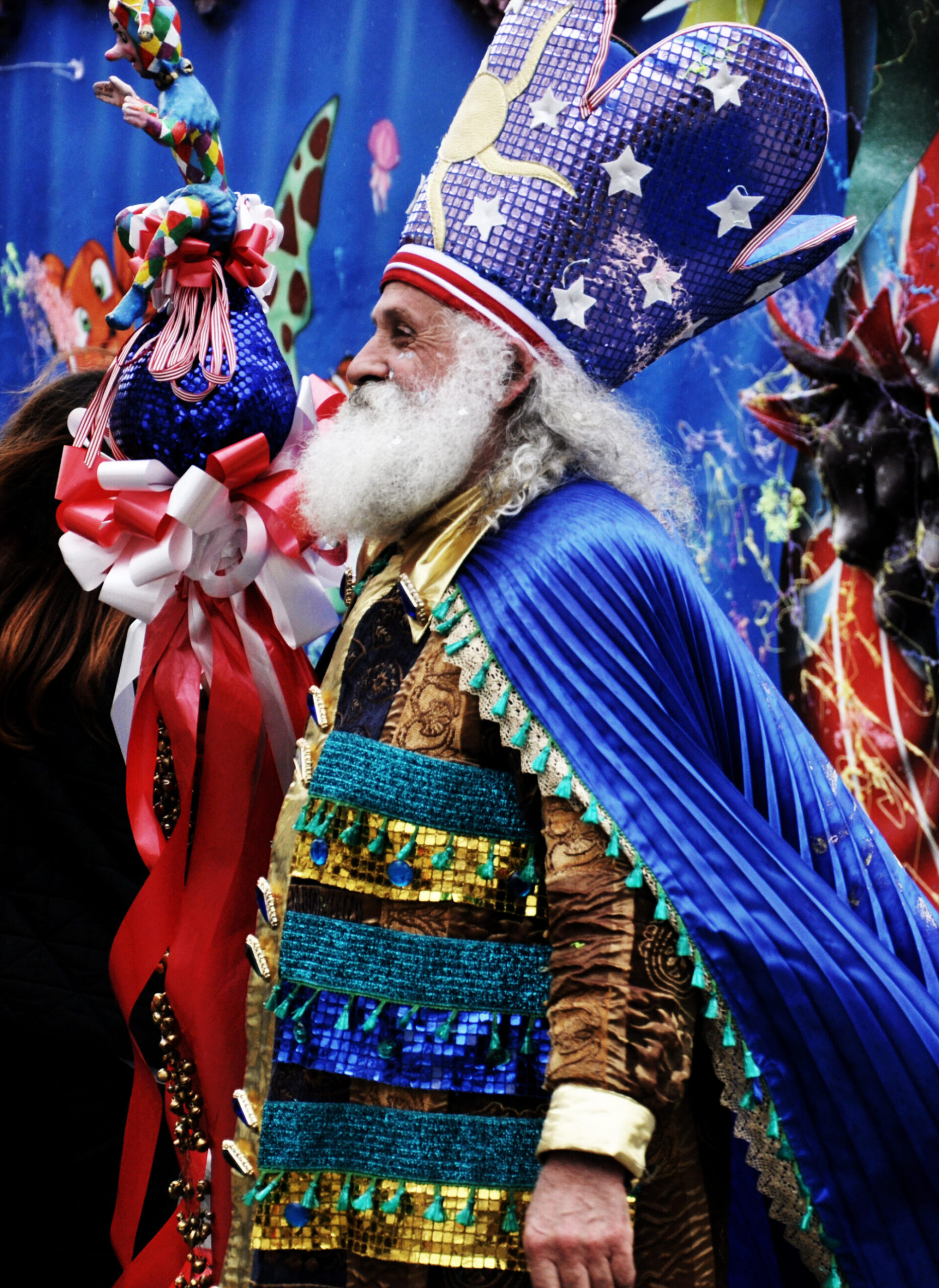
Photo by Sabrina Campagna; CC BY-NC-ND 2.0 via Flickr.
For most Italian children, the famous Carnevale masks are the Arlecchino, Pulcinella, or Pantalone, but for a Puglian child, it’s the Farinella. Named after a flour made of roasted chickpeas and barley, Farinella was a simple baker who, according to legend, saved the city from the Saracens by covering the citizens in the powder to feign disease and scare the invaders away. Mission accomplished. Other accounts suggest he was simply a drunkard. In the 1950s drawing by Mimmo Castellano, Farinella looks more joker than hero: a multicolored patched dress, a red and blue skirt, and a three-pointed hat with bells symbolizing the city’s three hills.
And so, I return to my first memory: the papier-mâché floats. While common in places like Viareggio, in Putignano, local artisans work for at least five months in their workshops to create them. They layer newspaper strips soaked in water and flour glue onto oil-covered plaster casts. Painters then turn these structures into rolling editorials, using intricate craftsmanship to deliver social commentary on everything from local politics to the climate crisis.
The Putignano Carnival ends, like all Italian Carnivals (except Milan’s), on Shrove Tuesday (also known as Martedì Grasso, or Fat Tuesday). A funeral procession marks the transition from festivity to austerity. A papier-mâché pig is paraded through the streets and eventually burned. Historically the deadline for consuming fatty foods, Shrove Tuesday is the final day to devour the likes of chiacchiere—strips of butter, sugar, and egg dough fried and buried under powdered sugar.
Writing this has stirred a specific kind of homesickness. Not just for the fried dough or the floats, but for the collective release of a town that has mastered the art of mockery. Come this February, or next. Come to see a town that, for six centuries, has known exactly how to look darkness in the face and laugh.
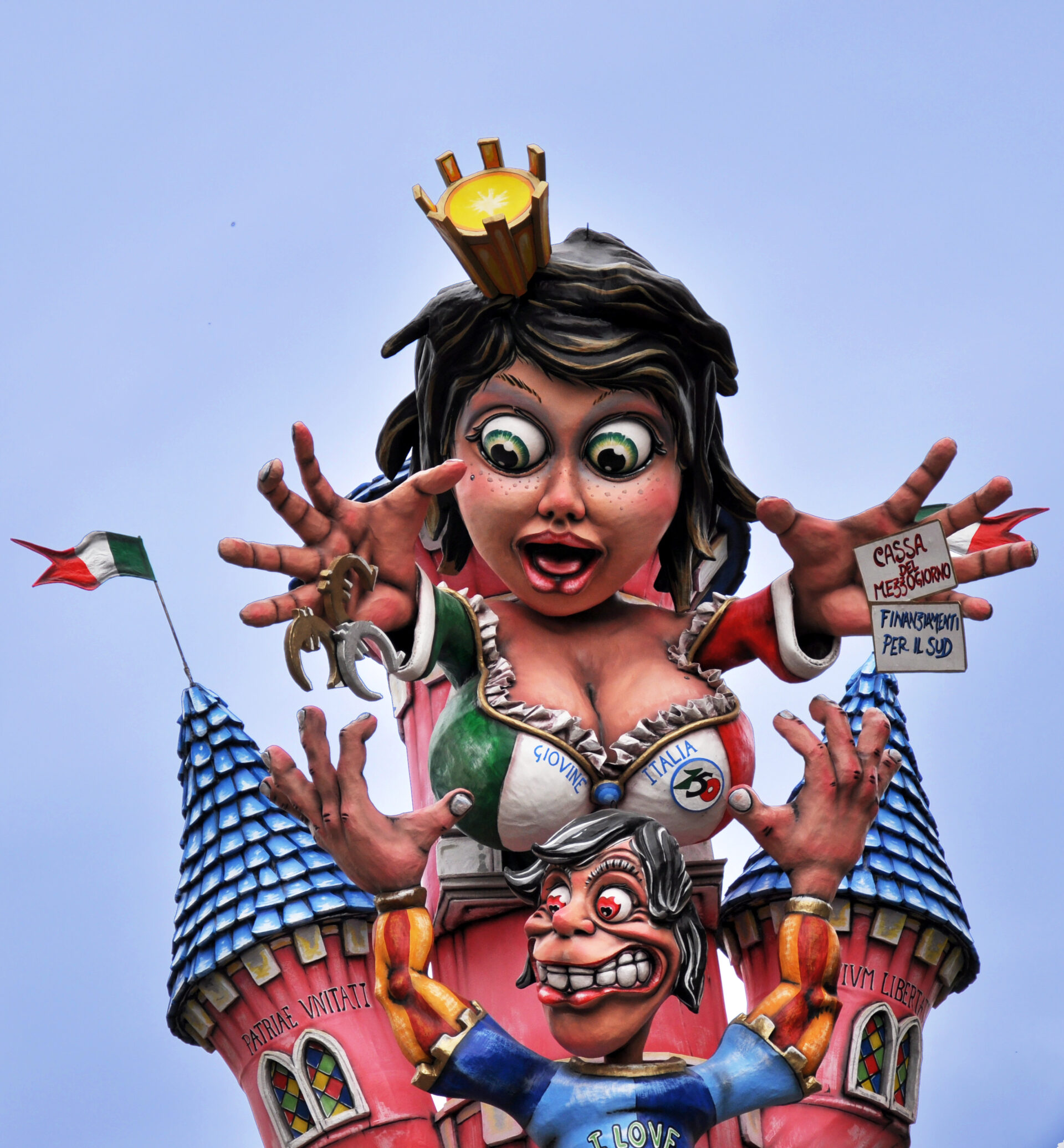
Photo by Sabrina Campagna; CC BY-NC-ND 2.0 via Flickr.