“Decrepit perfection.” That’s how Bella McGoldrick describes Italy; the New Zealand-born, Byron Bay-based artist possesses a rare talent for translating that aesthetic to paper.
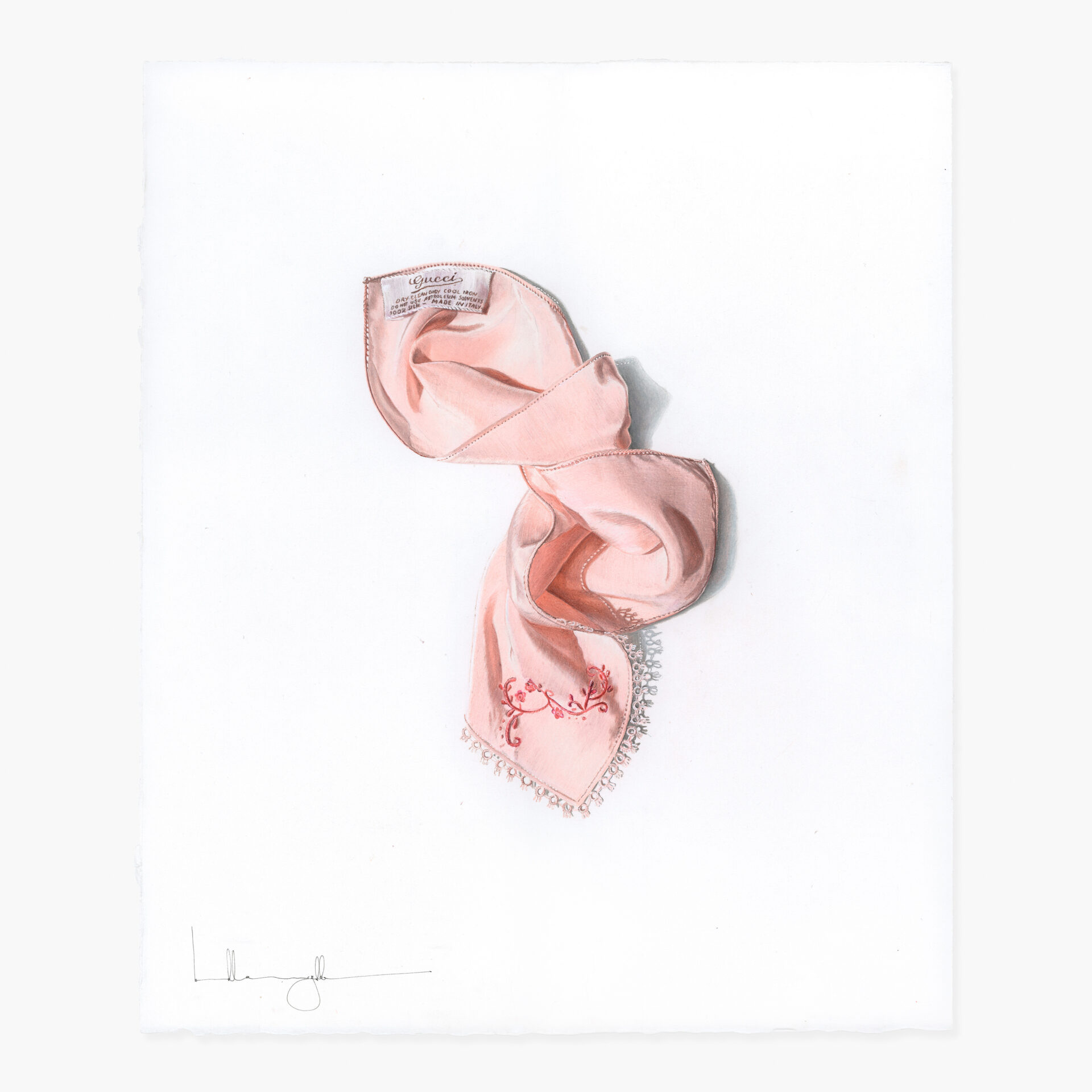
An art nomad who has lived and worked in Barbados, Costa Rica, Lombok, and Mexico, Bella is known for oversized, hyper-realistic works—particularly of food—in pencil and pastel that are so coveted, they sell out on Instagram in a matter of minutes. Her style brings out the beauty of the mundane, even that which is a bit messy, transforming pasta sauce-smeared plates and drippy espresso cups into pieces with the gravity of High Renaissance art.
Connecting via video call, Bella appears on screen with a chic blonde bob, winding down after dinner in Australia while the midday sun hits us here in Florence. Between balancing life with her twins and her studio practice, she traveled to Italy to create her largest collection to date. Titled Ciao, Bella! (a cheeky play on the Italian greeting and her own name), the series of 16 works includes the likes of Napoli, a gloriously gooey margherita pizza, and Puglia, a merenda setup in the namesake region. Here, we talk about the collection, why a baguette is just as important as Michelangelo’s David, and the Italian art of driving.
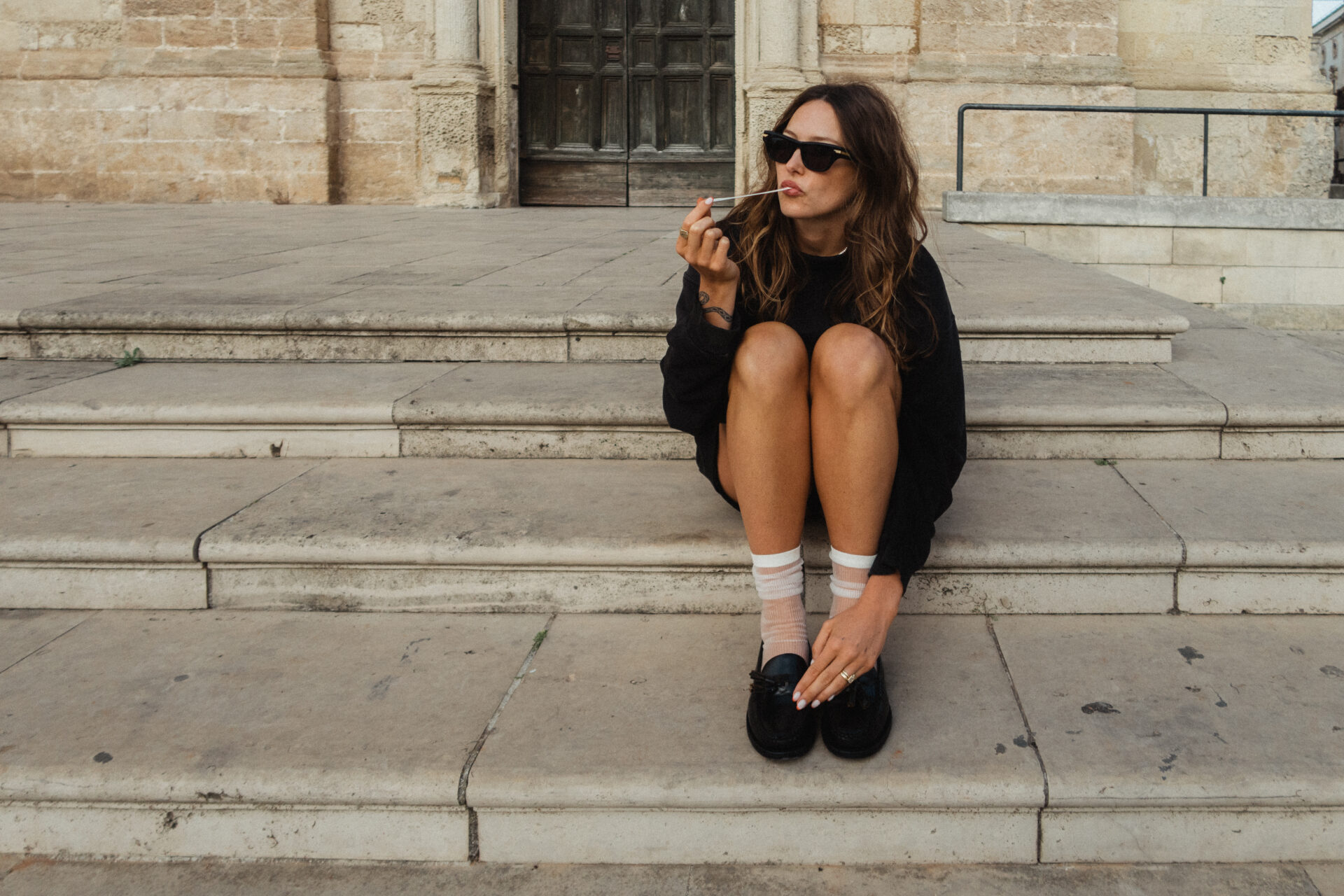
Anna Hirschorn: Let’s start at the beginning. What sparked your love affair with Italy?
Bella McGoldrick: I first went when I was 20, traveling solo with absolutely zero money. I remember being in Venice and just crying because I had never experienced beauty that could literally take my breath away. There is something about the sort of decrepit beauty of Italy that is incomparable.
AH: It’s true, much in Italy is simultaneously so grand and falling apart.
BM: Exactly! And it’s so in use. You go to historical places elsewhere and they’re roped off, but in Italy, you’re sitting in a café that’s been around for thousands of years. You just live the history. The crumbling gives it an authenticity you don’t see anywhere else.
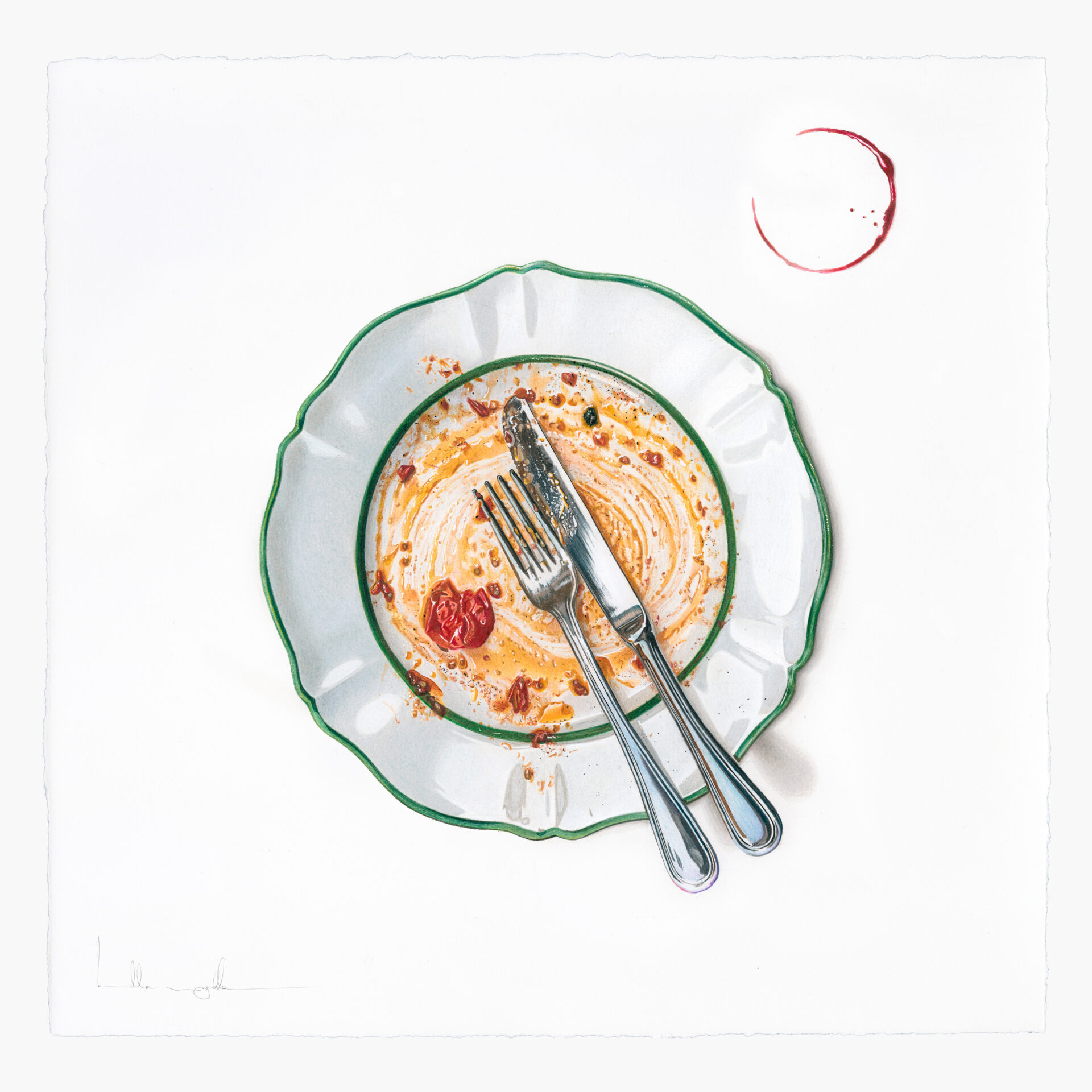
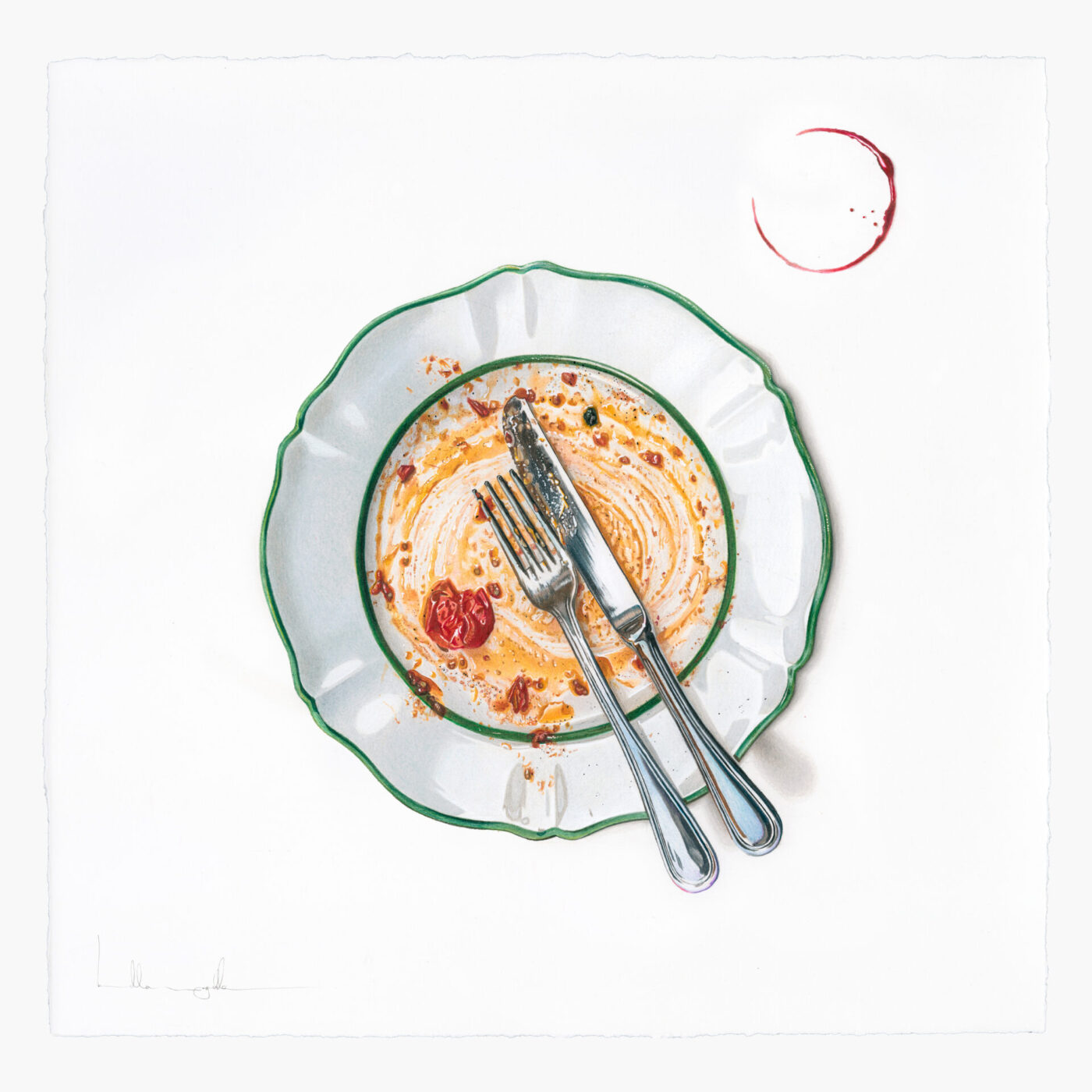
"Salento"
AH: Your work is incredible—at first glance, many think they’re photographs. Do you stumble upon these scenes in the wild, or do you curate them?
BM: I curate them. Composition is the most important part of my work. Sometimes I’ll see something I want to draw in a restaurant, but I’ll have to recreate it at home because the food is melting or the lighting is wrong. I’ve actually had to learn to cook and bake for my art!
AH: Really?
BM: Oh totally. I’ve also had to learn to be a food stylist. For the Salento piece, I was hunting for a specific plate in Florence. I found this heritage store near the Duomo that sold expensive china for “princes and popes.” The owner tried to shoo me away, but I bought one plate, a knife, and a fork. Then we ordered pasta to go, and I set up the scene on my apartment balcony to get the perfect light.
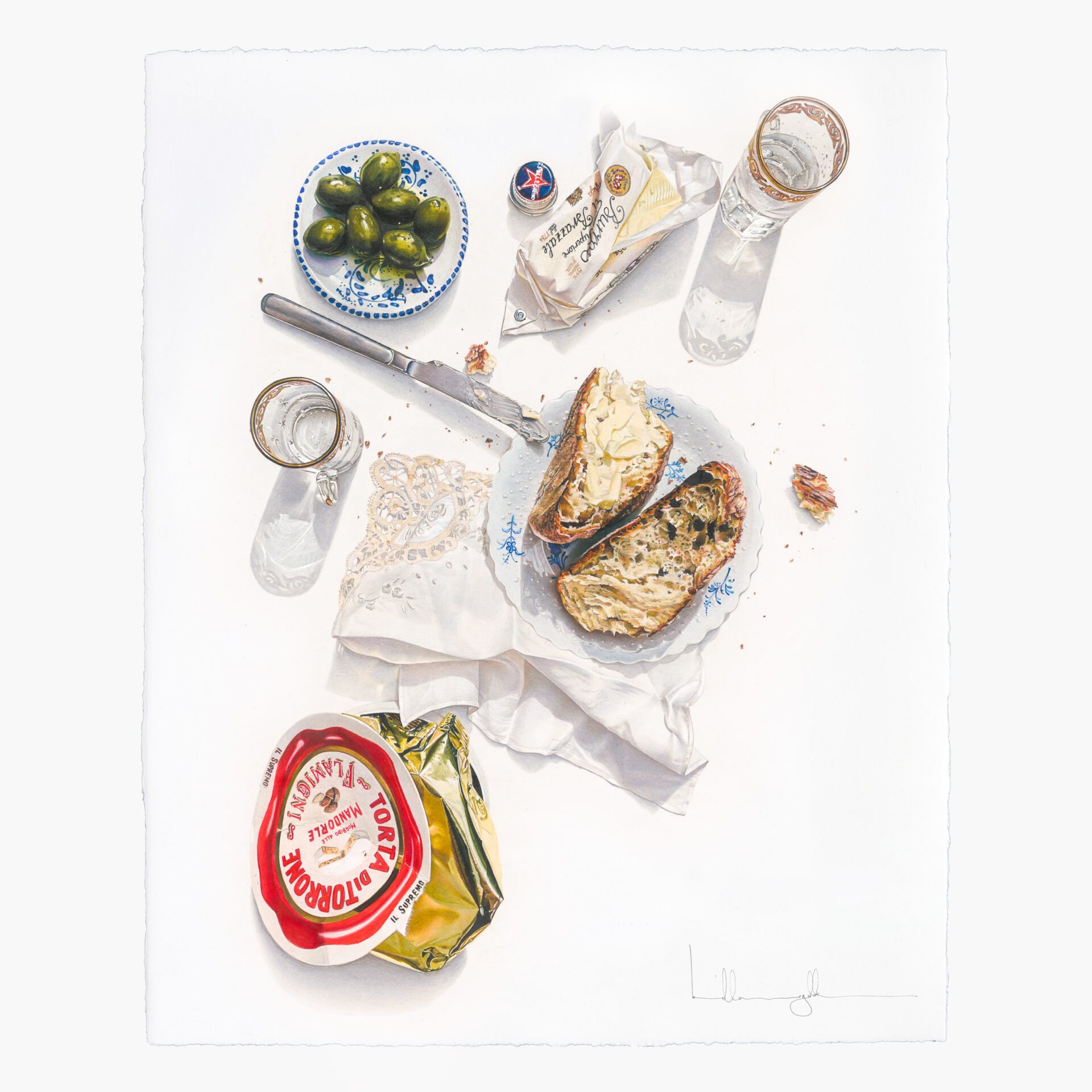
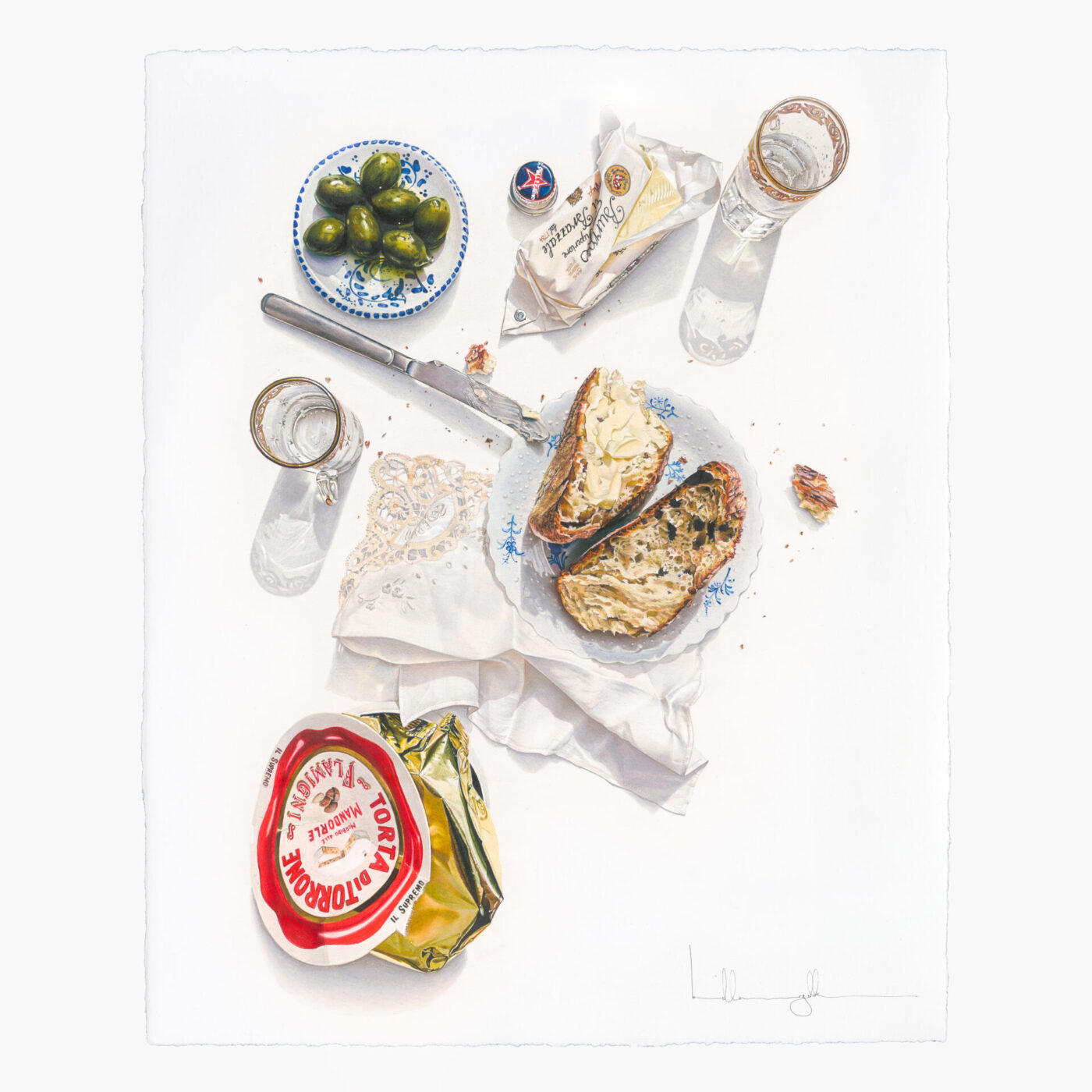
"Puglia"
AH: Puglia was the first one you created for the Ciao, Bella! collection. How did that come about?
BM: I was staying in Galatina in Puglia, and I was really inspired by the quality of ingredients there. It was this feeling that you didn’t need to try too hard; if you have a perfect tomato, you can just eat it as is. It doesn’t need to be overproduced. I wanted to represent that perfection of produce, so I did a table setting of broken bread, San Pellegrino, nougat, and butter. I actually just looked at it again recently, and it’s my favorite piece that I’ve ever done.
AH: What specifically makes it your favorite now?
BM: The thing that I like the most about it is the shadows—they’re kind of pinky and warm. I usually do gray shadows, but for some reason, these ones were a mauve purple. I think they really give you the feeling of the Puglian light.
AH: On the other hand, which piece from Ciao, Bella! was the most challenging?
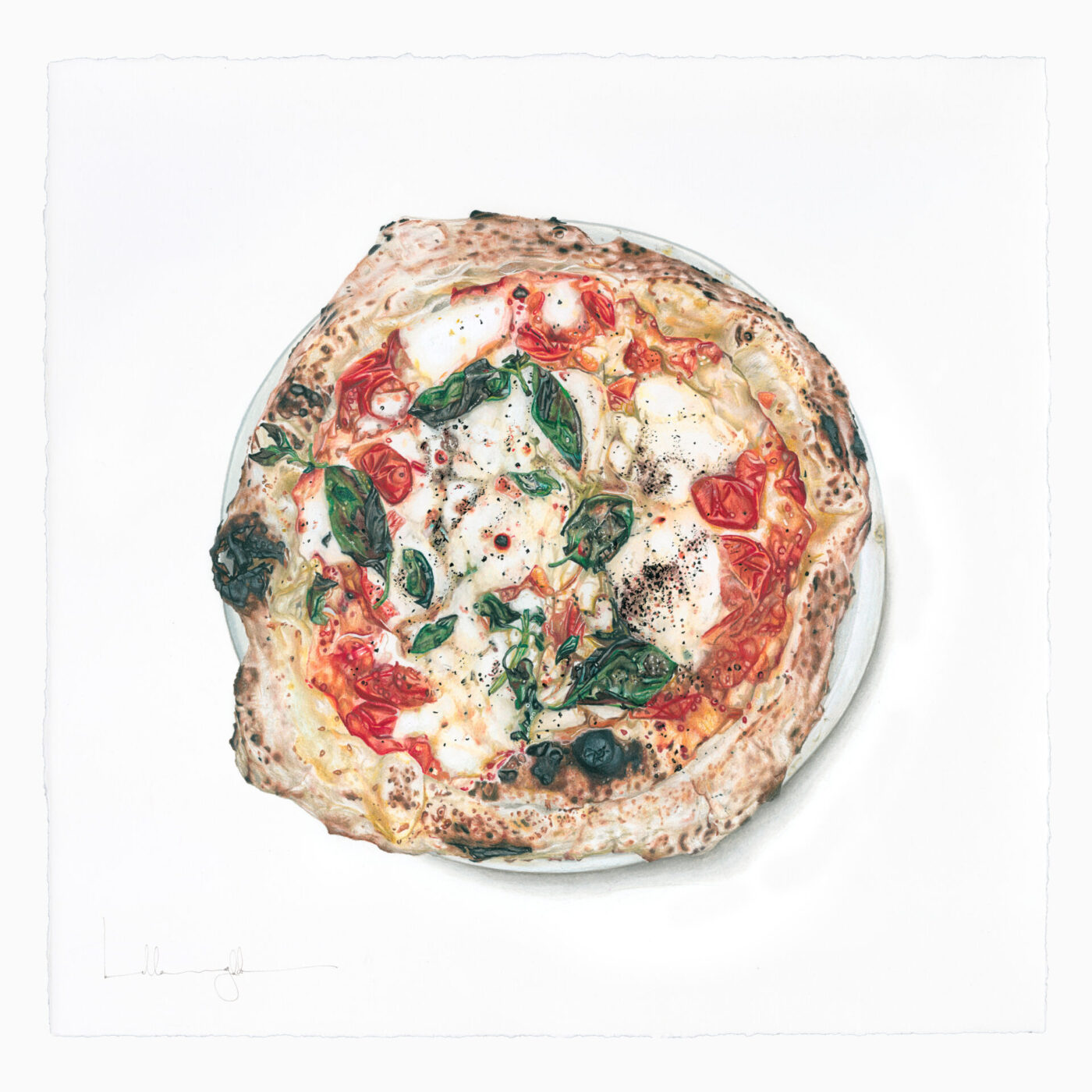
BM: The Napoli piece, for sure. Sometimes, while I’m drawing bread or dough, it looks like s***. Up close, it’s really undefined. Just the little burnt bubbles of the crust or a smear of tomato sauce. As I was going, I was thinking, “I don’t know if this is it; it’s not really working.” It’s only at the end, when it comes together and you can step back, that it becomes visible for what it is. I did that one because the first artwork of mine that ever garnered any sort of attention was a New York slice. I thought a pizza deserved a second go—this time, the Italian version.
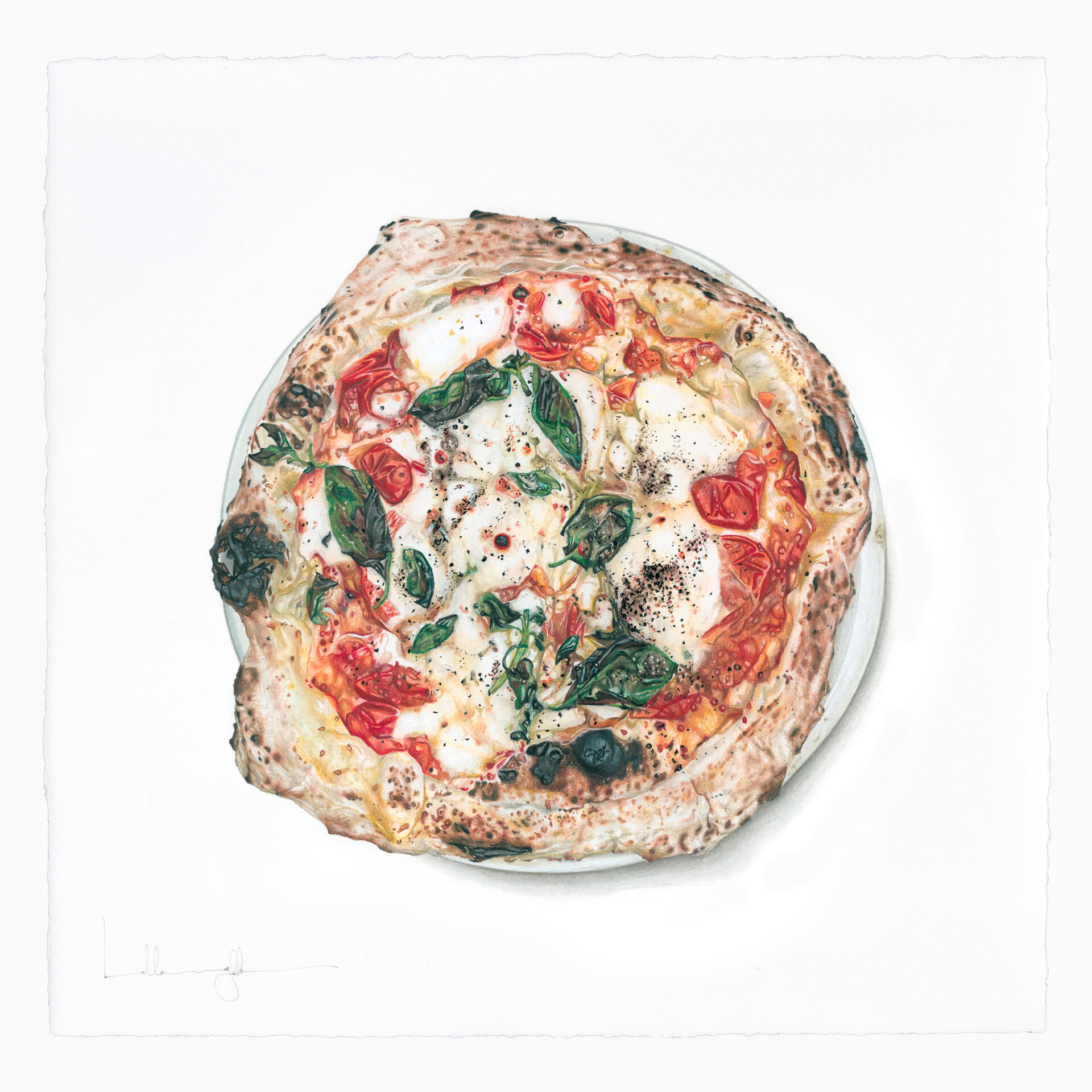
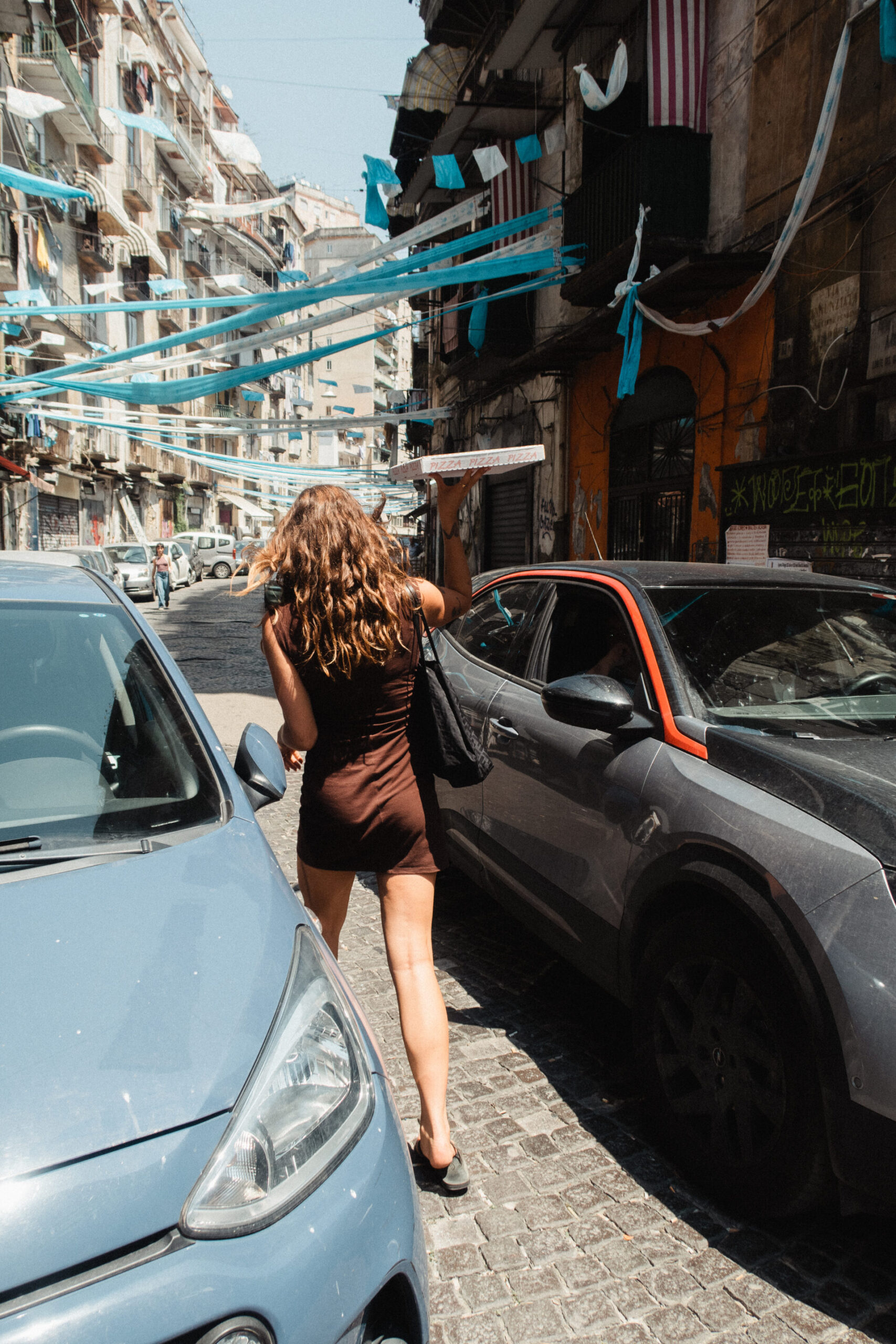
"Napoli"
AH: You’ve mentioned trying to break away from food as a subject, yet you keep coming back to it. What pulls you back?
BM: I’m always saying, “No more food, I’ve done enough!” But I keep getting pulled back because there’s so much emotion and connectivity in it. Food triggers such distinct memories. You remember who you were sharing the meal with, who cooked it, and how you felt. It’s distinct to a specific location—you can only get that flavor there.
AH: One thing I love about your work is that it’s not “perfect.” You include crumbs, smears, and drips. What’s the inspiration behind that quality?
BM: I’m not interested in perfection, even though the photorealistic style can seem “hyper-perfect.” I want to capture a moment. With pieces like Puglia or Salento, it’s about the feeling of finishing a meal. I’m not trying to say, “Look how tasty this pasta is.” I’m trying to say, “Remember what it feels like when you’ve sat at a table for four hours over lunch?” I want to show how objects are used—marks, imperfections, the brown edge of a coffee cup. It gives them a lifespan.
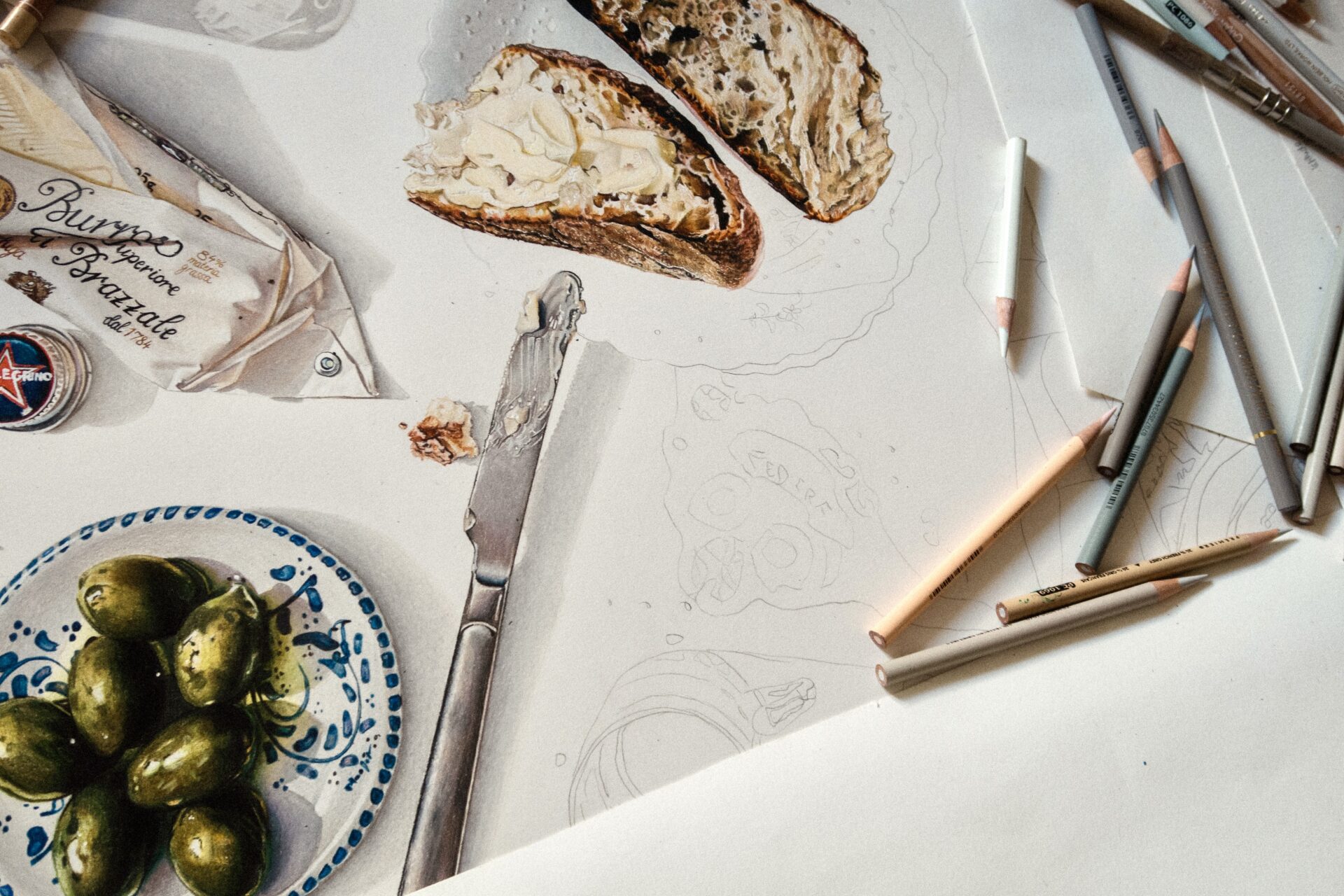
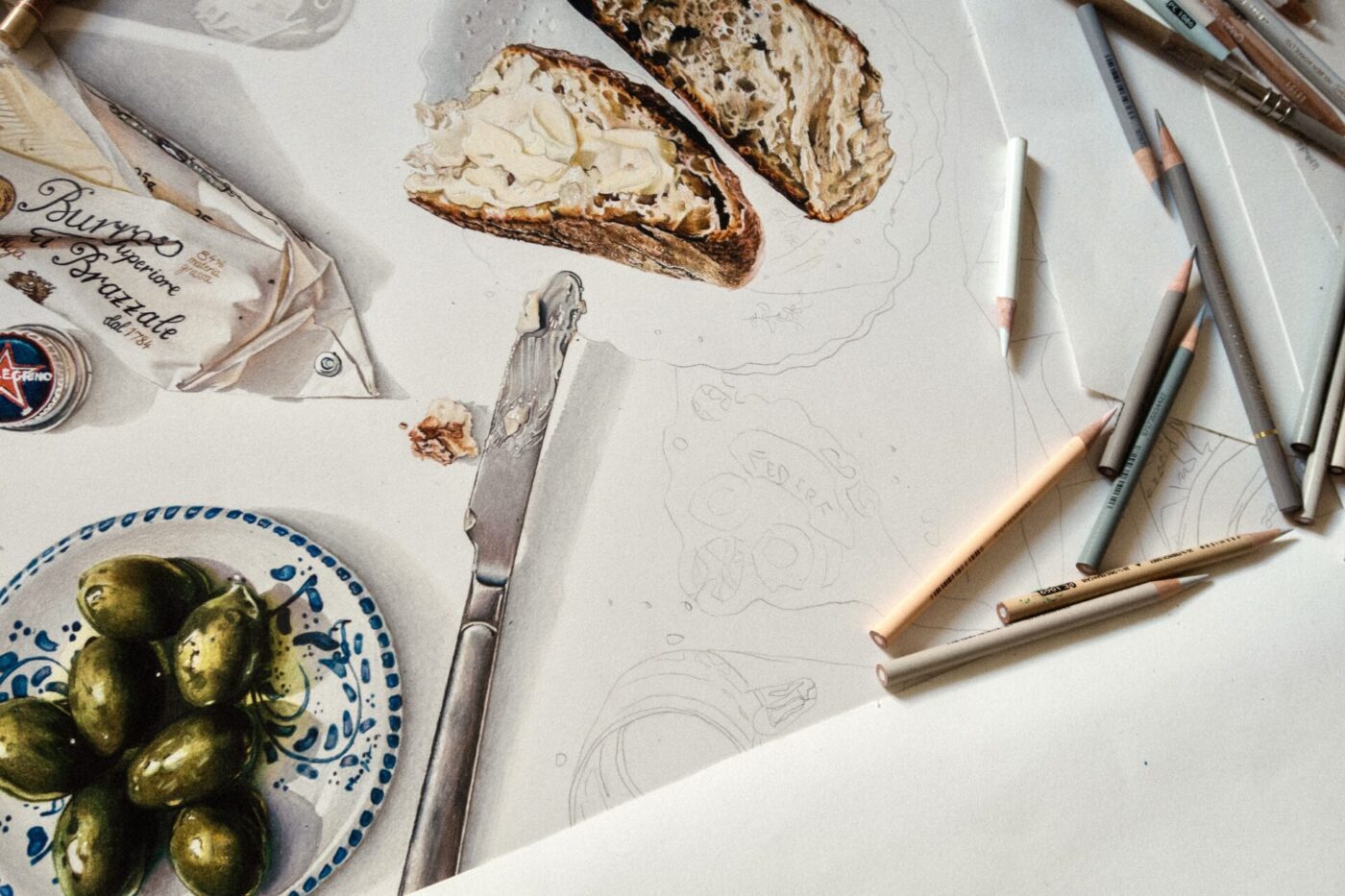
"Puglia" in progress
AH: You wrote something beautiful in the description of the collection: “As Michelangelo aggrandized David, a man now placed above us all, would it be outrageous to compare that with his inspiration I intend to aggrandize the small moments that make a life?” Can you expand on that?
BM: I went to see David, and nothing has ever been so overhyped yet still exceeded my expectations. It represents a man as a figure greater than God. In an incredibly un-humble way, I wanted to emulate that with something like a baguette. I want to take simple, recognizable, everyday objects and give them a significant place—a white background, a perfect frame. We have these rituals, like breaking bread or having coffee, that are ephemeral. My art is a chance to give them a longer life.
AH: Is there a particular emotion you’re trying to share through your Italy collection?
BM: Warmth. I want the feeling of the sun on your shoulders and the smell of tomatoes on the vine. I actually burn a tomato-leaf candle while I work to get into that sensory space! Emotionally, it’s about embodying that Italian pace of life where pleasure is the point.
AH: You’ve said you like to make people “look twice.” Was there anything in Italy that made you look twice?
BM: Two things. First, the focaccia in Puglia—it literally made me stop walking. I had to sit down; it was life-changing. Second, the drivers. Driving from Puglia to Venice, I noticed everyone had their arm hanging out of the car window. It was this “Italian wave,” a signal that even though they were speeding, they were chilling. It’s a very cool, relaxed approach to driving—even if we did get about six speeding tickets trying to keep up with the flow.
AH: What’s your dream project for the future?
BM: I need to live in Rome for at least a month, in a big studio space where I can work and maybe invite other artists for a residency. I want to create a space where we can live that Italian life and create together. It has to happen—Italy is my favorite country in the world.
This interview has been edited for clarity.
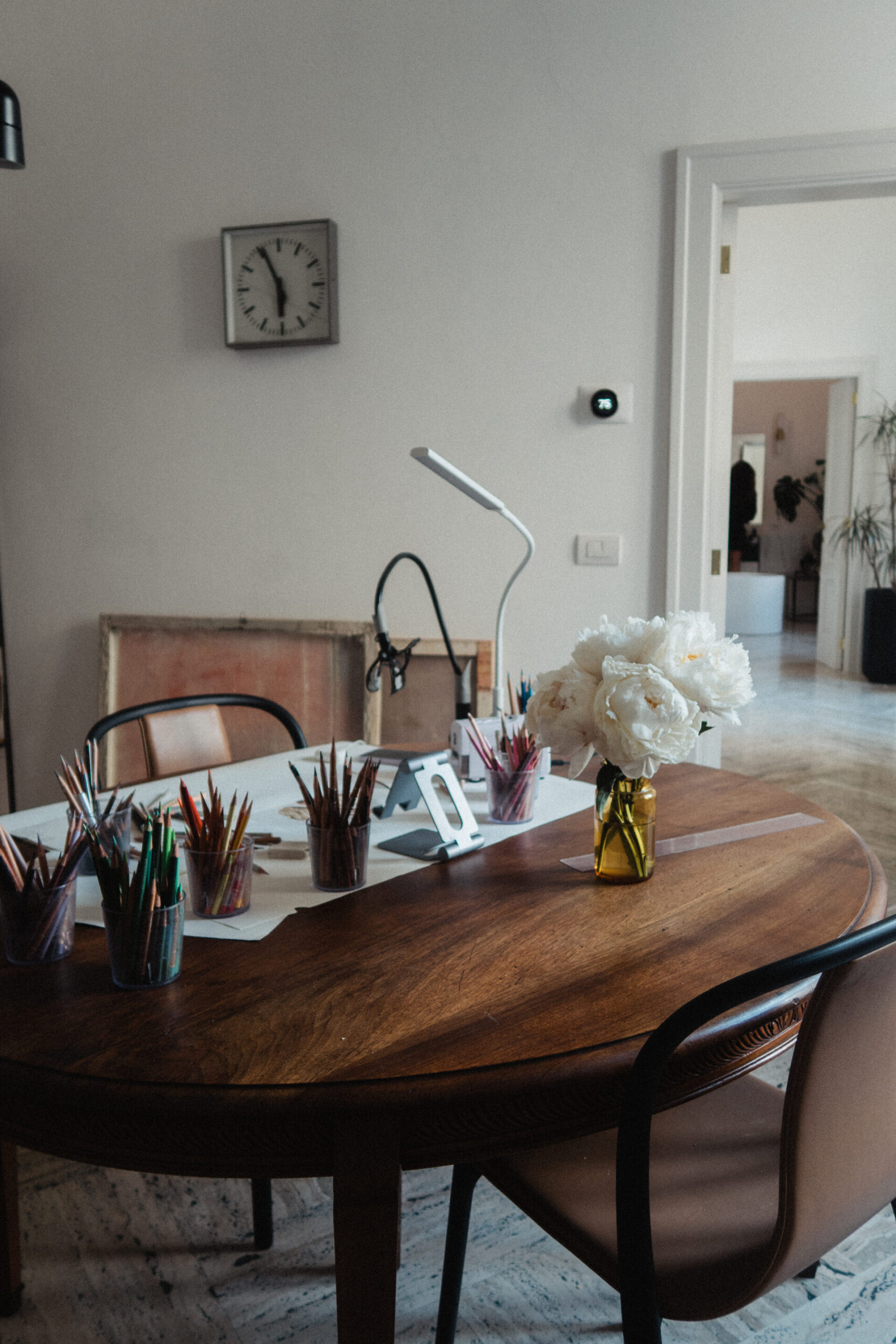
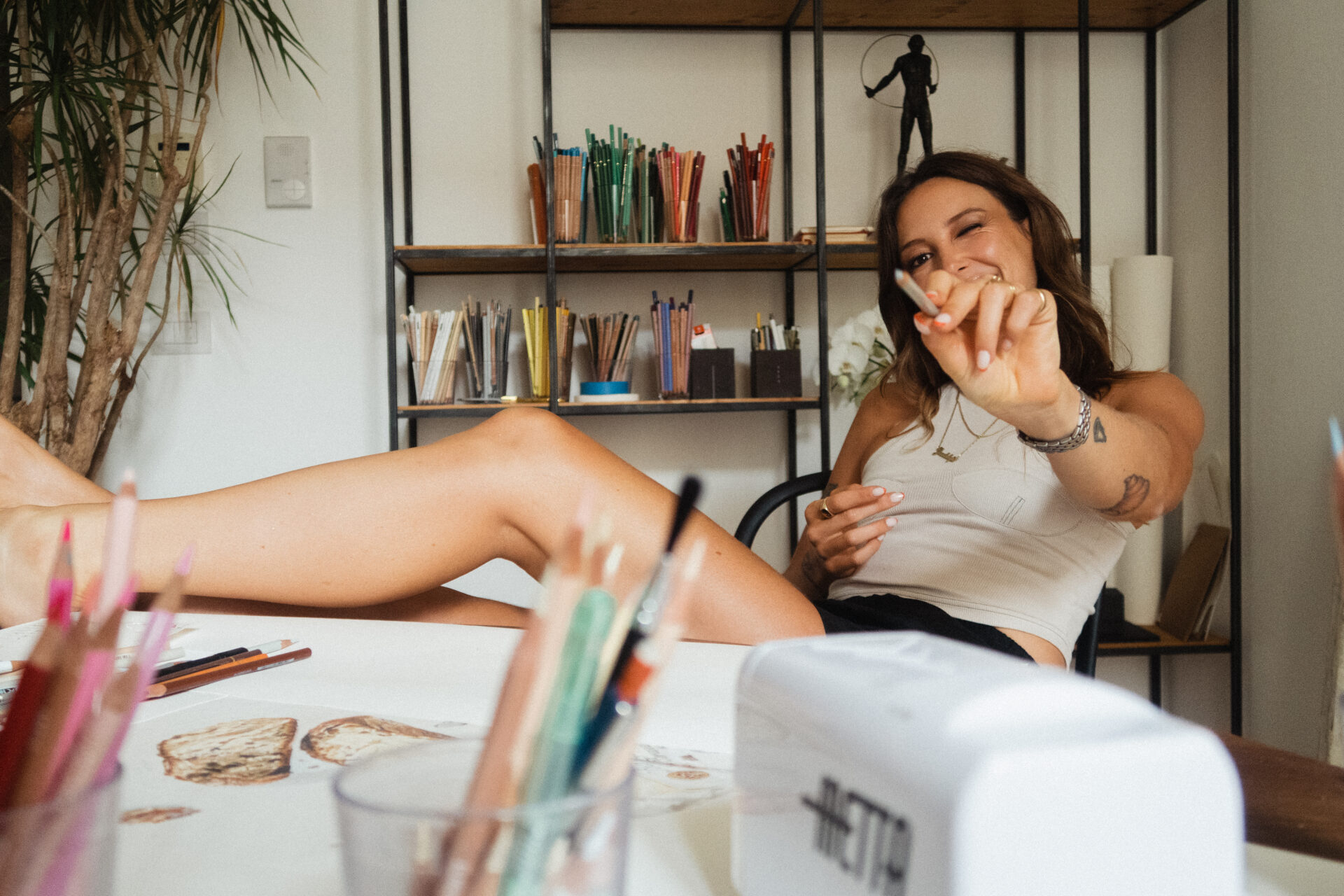
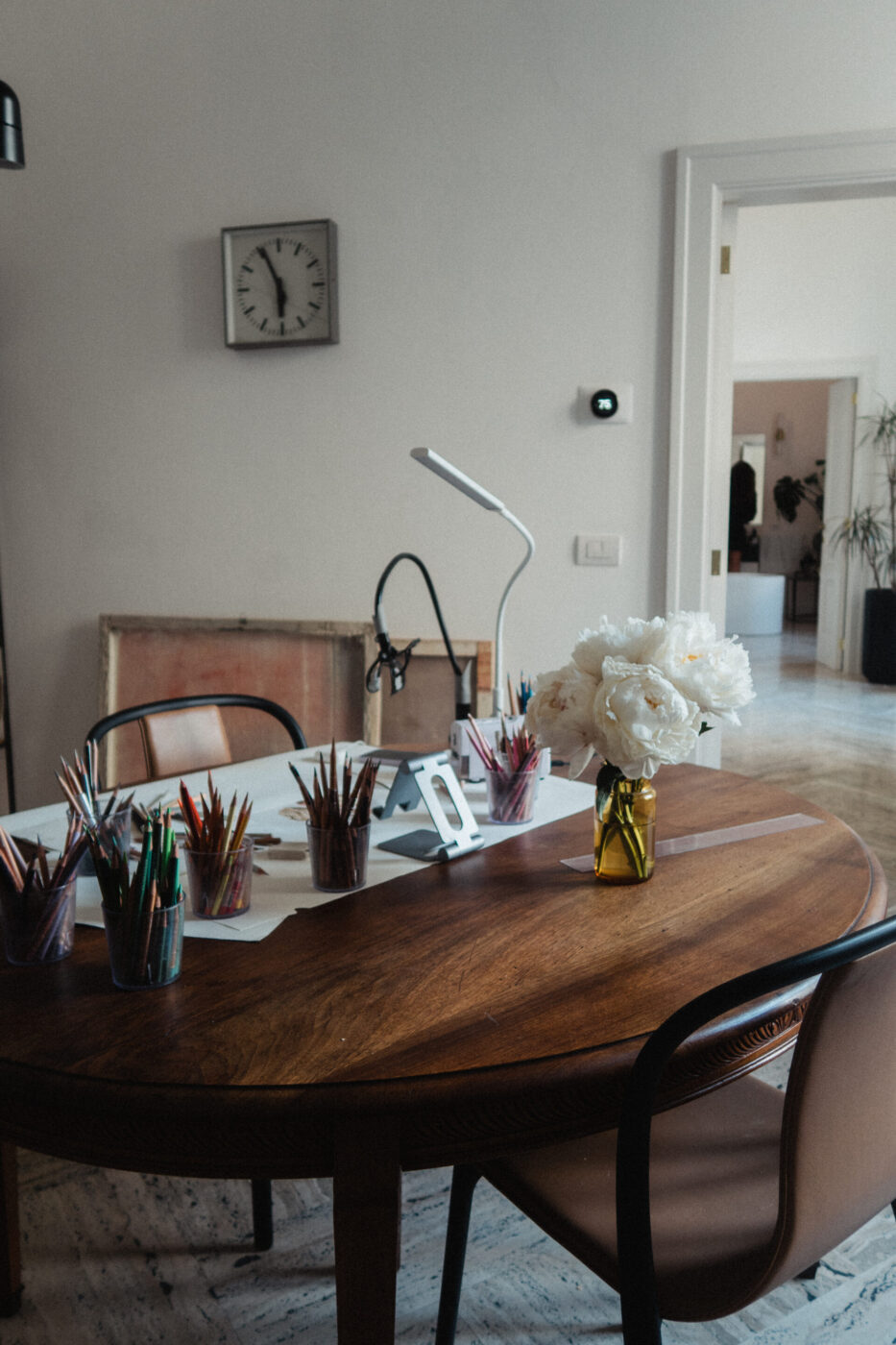
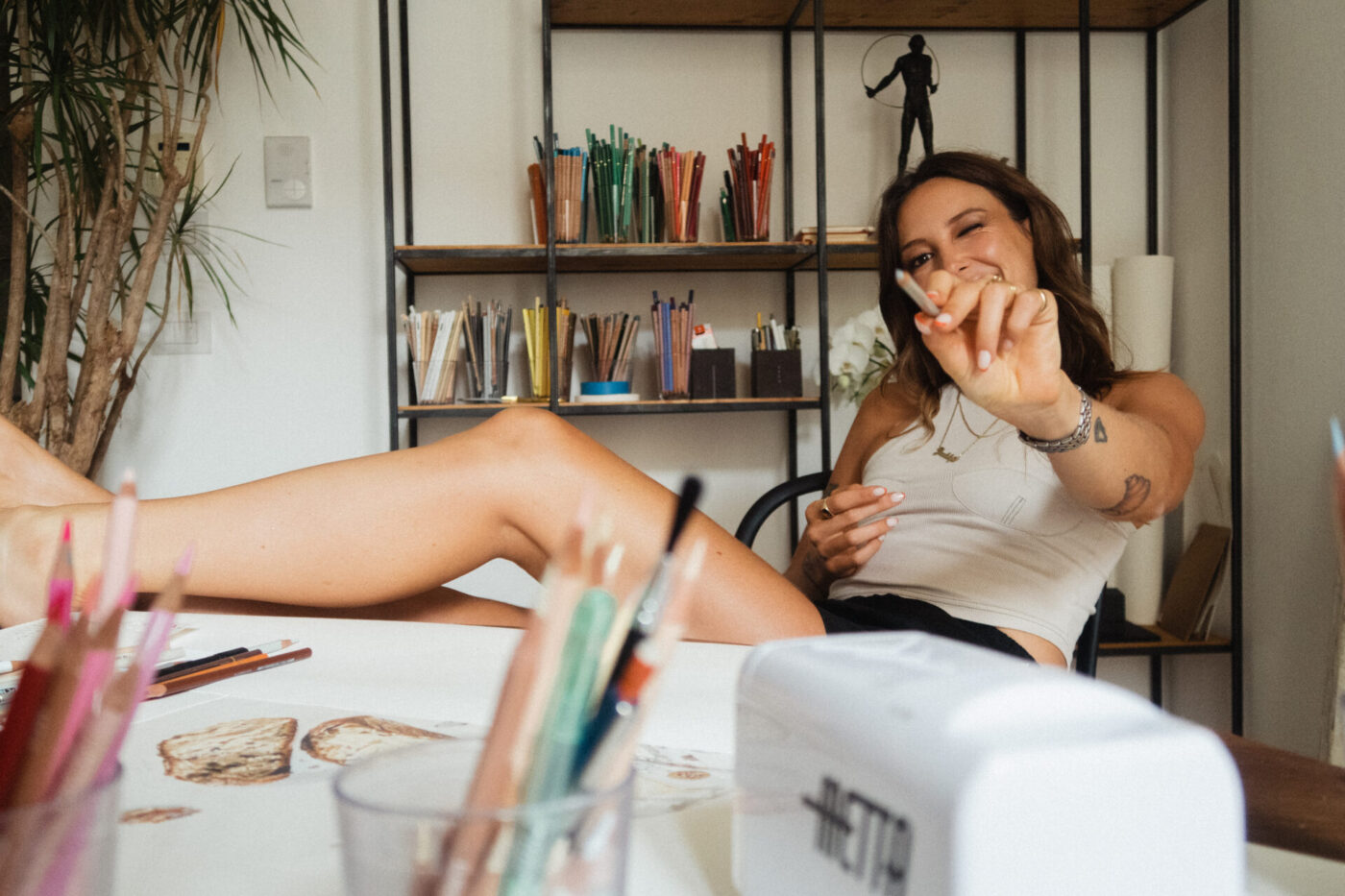
Bella's homey setup