For travelers to Italy, Carnevale typically means shimmering masks, glamorous balls, and elaborate gowns paraded along Venice’s labyrinth of canals. For those of us who live here (and plan their days around meals and merende), it instead evokes images of bubbling deep-fat fryers and platters piled high with sugar-dusted delights. No surprise, this roughly one-month lead-up to Lent, when practicing Christians eat all the meat and sweets they can before several weeks of fasting, is one of the most delicious times to dine not only in Venice, but all the way down the boot.
Italian cuisine is celebrated for resourceful dishes born from frugality, but this philosophy goes out the window during Carnevale, which derives from “carnem levare” (“to remove meat” in Latin) and is all about indulgence. While each region and city has its own specialties, the best-known treats are fried and sweet, though cheesy primi and meaty secondi also make an appearance. Basically, don’t expect any leafy greens or fibrous grains on the typical Carnevale table. Restraint can wait—Ash Wednesday is just around the corner, which means you only have a few weeks to try our 20 favorite Carnevale foods.
CHIACCHIERE
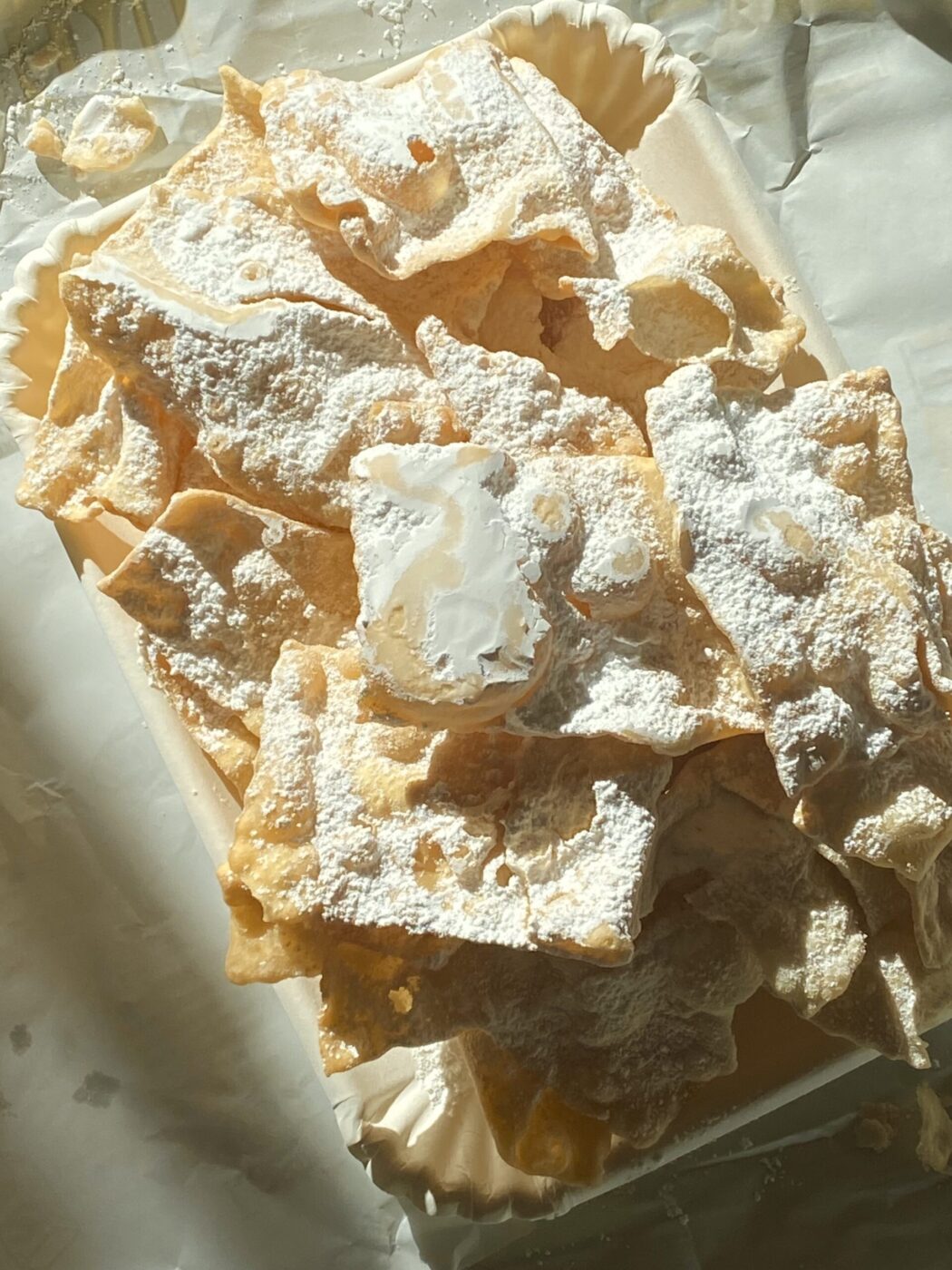
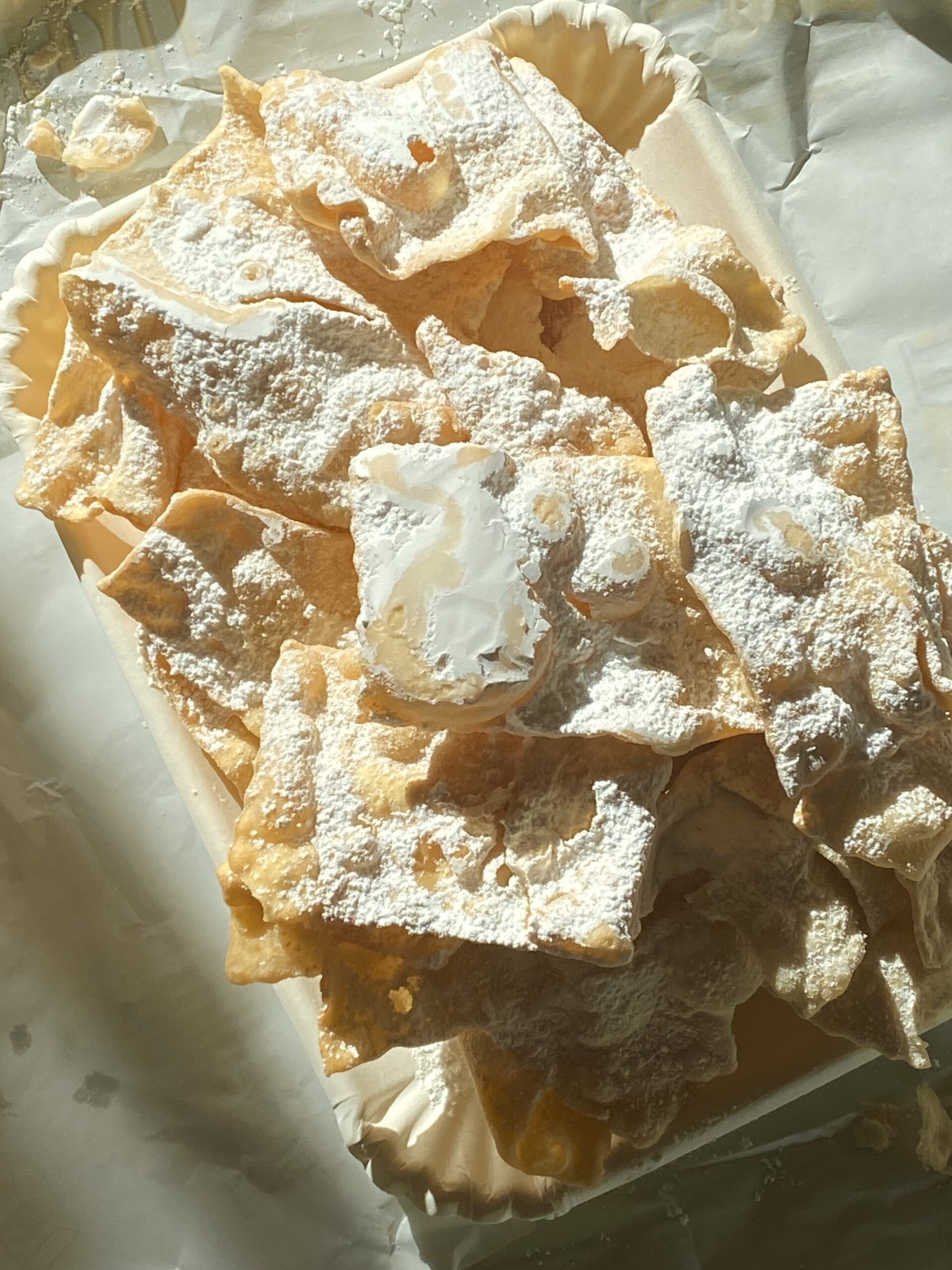
Tuscans call them cenci, Romans call them frappe, and Ligurians call them bugie—but wherever you find these strips of fried dough, they’re light, crisp, and finished with powdered sugar. Recognizable by their frilly edges, which come from the use of a fluted pastry cutter, chiacchiere (“to chatter”), as they’re known throughout Southern Italy, are one of a few Carnevale treats found in bakeries and pastry shops all over Italy. They’re also one of the oldest, originating as honey-dipped frictilia in Ancient Roman Saturnalia celebrations. Buy them in bulk from a greasy paper bag, then tear it open with friends over coffee and a chat (or make your own version!).
Chiacchiere
FRITTELLE DI MELE
Apples have IGP status in Trentino-Alto Adige, where locals aptly celebrate Carnevale with frittelle di mele, or apfelkiachl. These apple fritters start with cored apples (usually Golden or Renetta), which are sliced into rounds for a charming, doughnut-like shape before being battered, fried, and coated in cinnamon sugar. They’re the perfect takeaway treat, but if you’re lucky enough to have them in a sitdown setting, the warm fritters are likely to be served with gelato. Throughout Lombardy, the fritters are made with chopped apples and deservingly called làciàditt, or “finger lickers.”
FRITTELLE DI RISO
Crisp with granulated sugar on the outside and custardy with rice pudding on the inside, Tuscan frittelle di riso might be the Carnevale sweet we look forward to the most—and not just because they’re sold Comment start dangerously close to the Italy Segreta office in Florence. Find these deep-fried bites studded with raisins, filled with crema, or scented with orange zest and a hint of rum, ideally hot from the fryer at the beloved Savelli stand in Siena’s Piazza del Campo. Often called frittelle di San Giuseppe, these Renaissance sweets were originally created in honor of Saint Joseph, who is believed to have been a fritellaio, or fritter maker. Fortunately for anyone with a sweet tooth, this means frittelle di riso stick around until La Festa di San Giuseppe on March 19th instead of disappearing right after Carnevale.
RAVIOLI DOLCI
Carnevale is the season of scherzi (literally, “jests”), and Liguria’s ravioli dolci perfectly encapsulate these weeks of mischief. The Genovese make marzipan treats year-round, forming them into different shapes depending on the holiday but always flavoring them with the region’s Slow Food-recognized bitter orange blossom water. Before Lent, they prank kids by cleverly shaping the aromatic almond paste into ravioli, stuffed with dried or candied fruit, topped with “tomato sauce” jam, and finished with grated white chocolate or marzipan in place of Parmigiano.
GNOCCHI
While Romans carb-load on giovedì gnocchi (gnocchi Thursday) year-round, the Veronese partake in their own potato-themed festivities on the last Friday before Lent: venerdì gnocular. For the Bacanal del Gnoco in Verona’s Piazza San Zeno, volunteers pass out plates of gnocchi with tomato sauce or horse ragù to the public—just as they did for famine-stricken citizens in the 16th century, according to local legend. On your quest to eat gnocchi, keep your eyes out for Papà del Gnoco, who is crowned in an annual election to lead a gnocchi parade while holding a “scepter” (a giant fork spearing a gnocco).
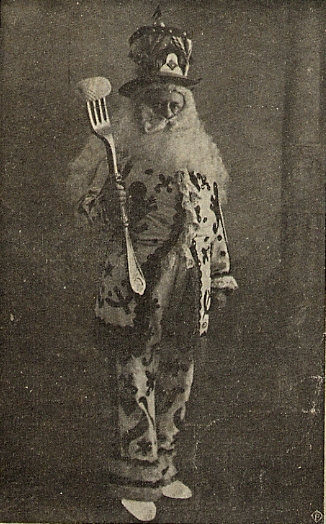
The traditional mask of Verona’s Carnival: the “Papa of Gnocchi.” Photo by Unknown author - http://www.skyscrapercity.com, Public Domain, https://commons.wikimedia.org/w/index.php?curid=31790955
LASAGNA NAPOLETANA
Step aside, lasagne alla bolognese. Neapolitans efficiently figured that the best way to enjoy as much meat and cheese as possible on Fat Tuesday was to stuff it all into lasagna. This Southern Italian specialty eschews Emilia-Romagna’s preferred bechamel and ragù bolognese, but it’s no less substantial, with a comically robust filling of mozzarella, ricotta, hard-boiled eggs, salame, and polpettine fritte (little fried meatballs) folded into tomato sauce.
CASSATELLE
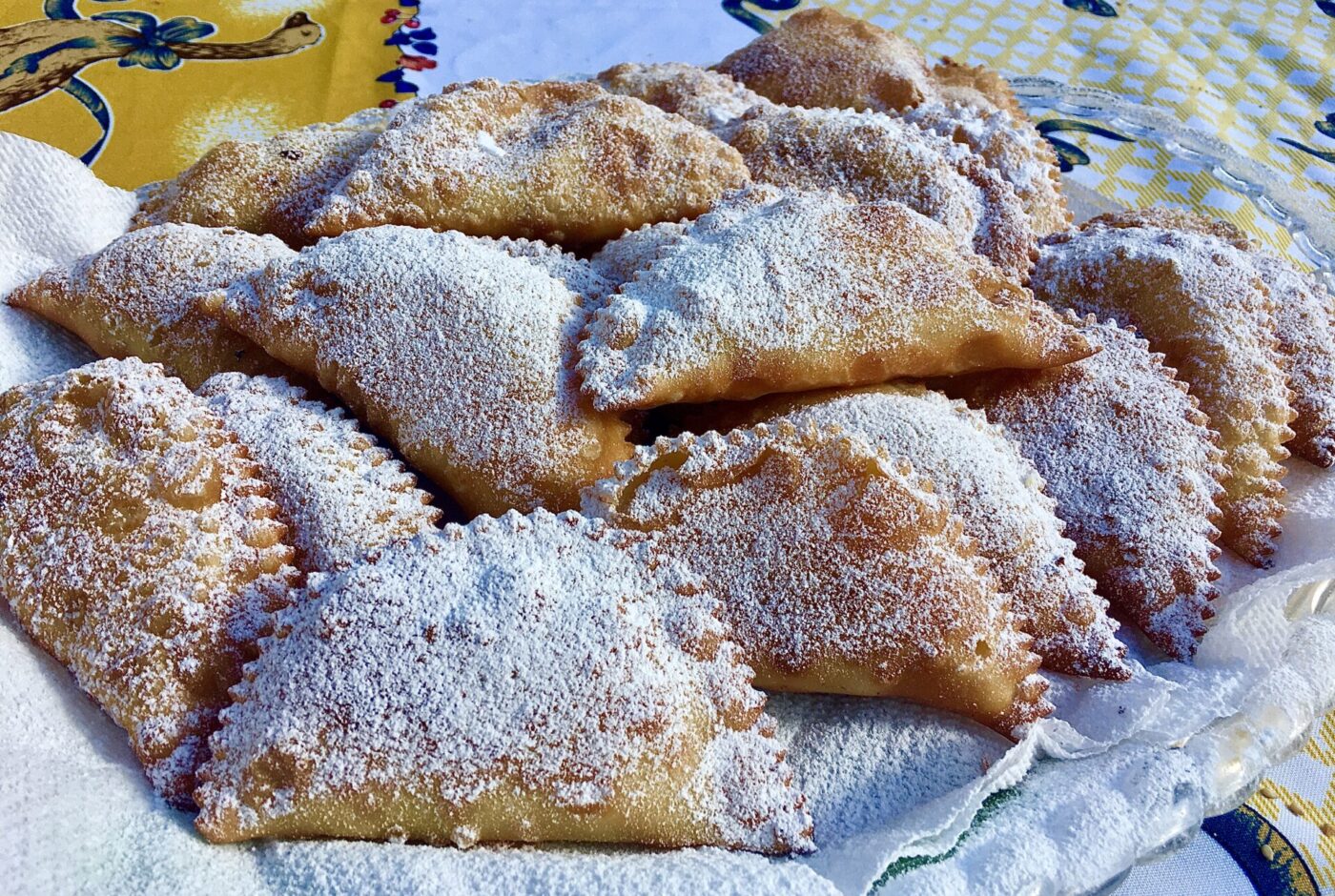
If you’re a fan of cannoli, allow us to point you to their Carnevale cousins, casatelle. These fried Sicilian sweets have several qualities in common, from the marsala in the dough (which makes it extra crisp when fried) to the sheep’s milk ricotta, chocolate, and cinnamon in the filling. They differ, however, in their shape and texture: casatelle are formed into sealed half-moons, which makes the filling go hot and gooey in the fryer. The recipe originated in Trapani, but you’ll find cassatelle all over Sicily—naturally, with many different names and variations.
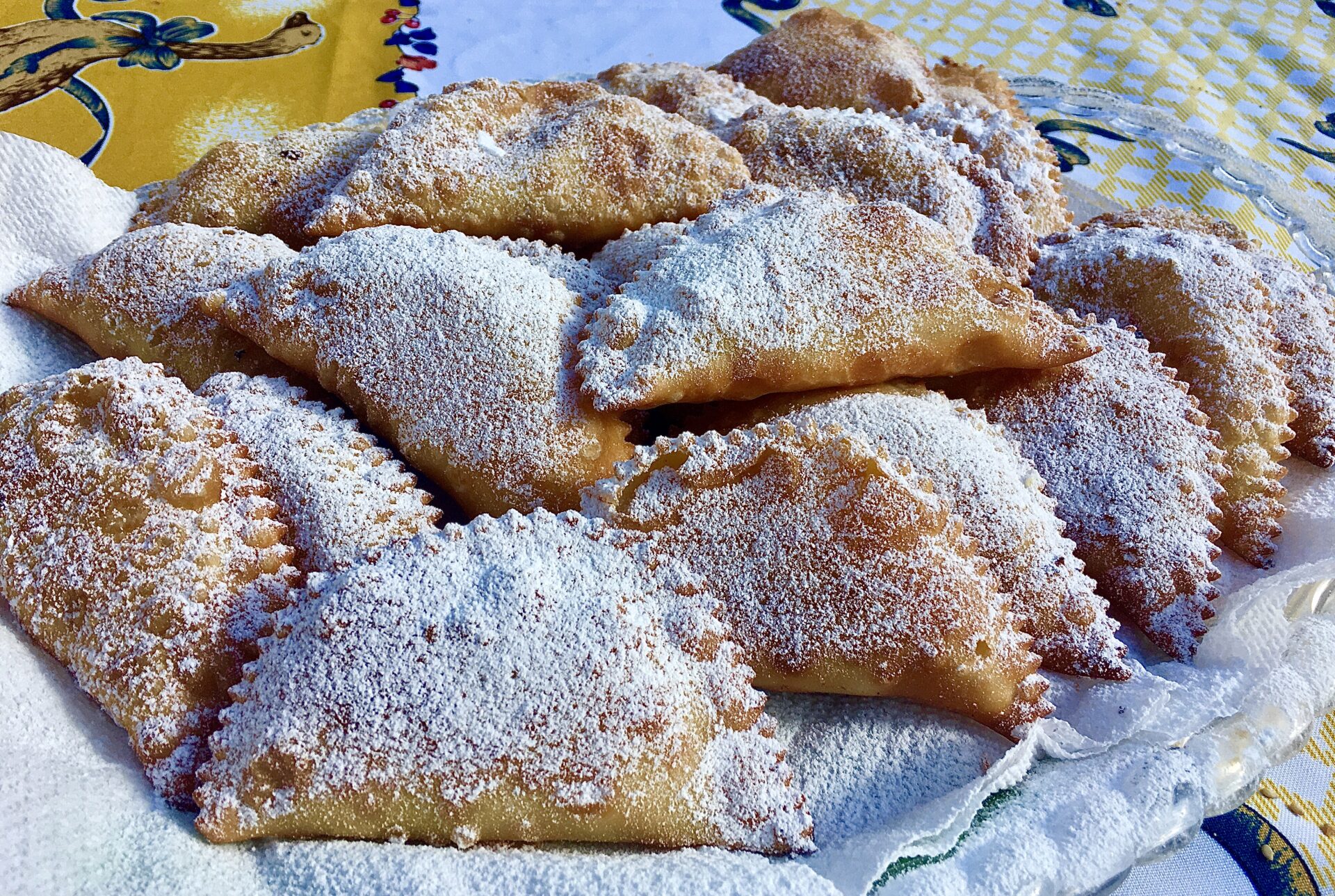
Cassatelle; Photo by Fina Buccellato - Lavoro proprio, CC BY-SA 4.0, https://commons.wikimedia.org/w/index.php?curid=104330110
ARANCINI MARCHIGIANI
Overshadowed by the Sicilian fried rice balls of the same name, Le Marche’s sweet arancini are ready for the pre-Lent spotlight. These pinwheel-shaped treats are named after arancie (oranges) because of their abundance of orange zest, which is combined with sugar and sprinkled over a sheet of leavened dough before it’s rolled into a log and sliced. Akin to cinnamon rolls with orange zest instead of cinnamon, arancini marchigiani are available both baked or fried and dipped in honey.
SCHIACCIATA ALLA FIORENTINA
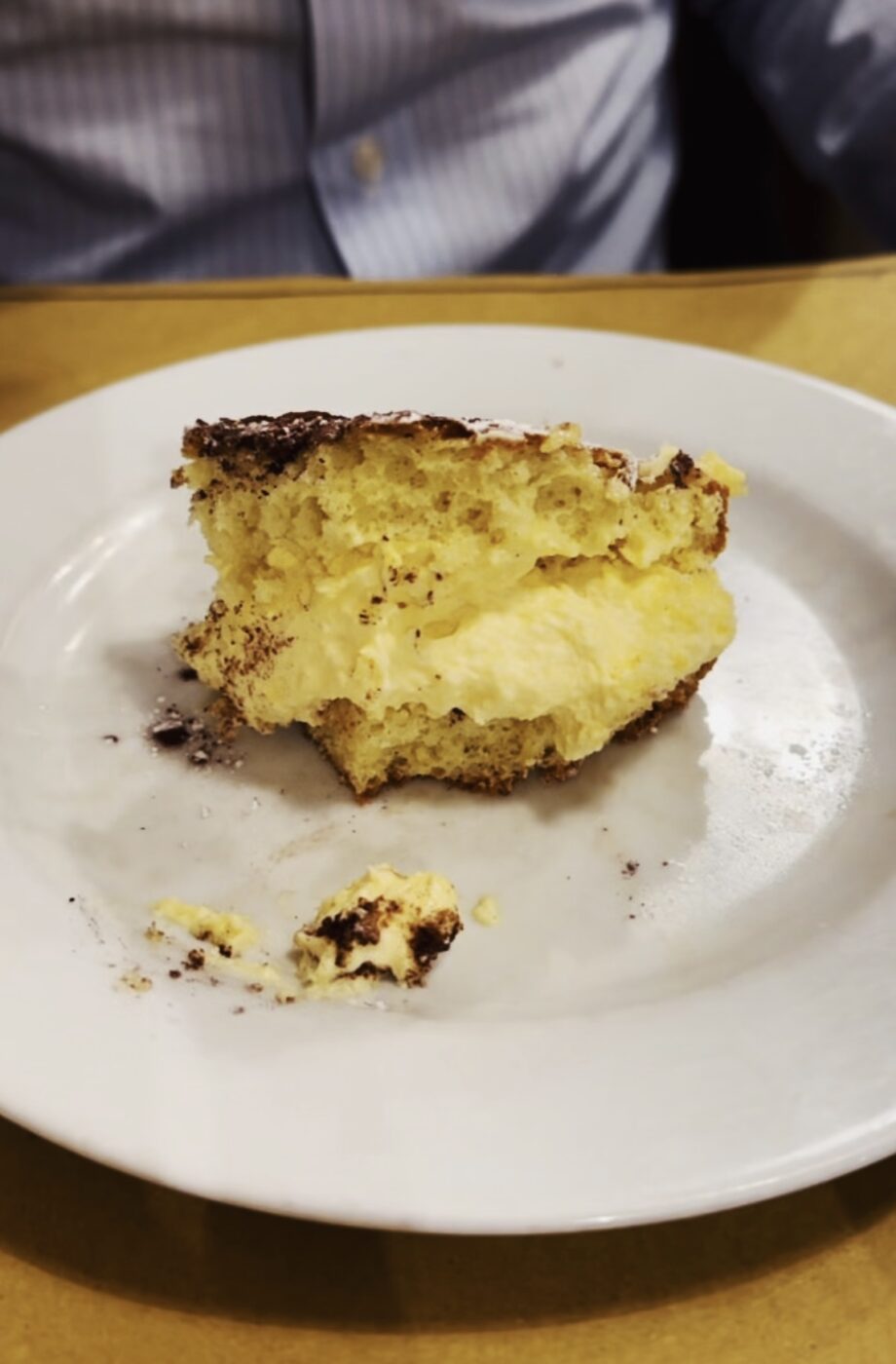
Not to be confused with schiacciata, the addictively salty and oily antidote to flavorless Tuscan bread, this Florentine sheet cake is an instantly recognizable symbol of Carnevale. Flavored with orange and vanilla and usually sandwiching a thick layer of chantilly cream, the cake would be visually unremarkable if not for its trademark finish: a Florentine giglio, dramatically dusted in cacao over a snow-white surface of powdered sugar. Schiacciata alla fiorentina may be a dessert for festivities, but it’s serious stuff in Florence, where it’s the subject of an annual competition between 35 of the city’s most prestigious bakeries (Caffè Gilli won in 2025). In the 1700s, prisoners of Le Murate were granted this cake as a final indulgence before facing the executioner.
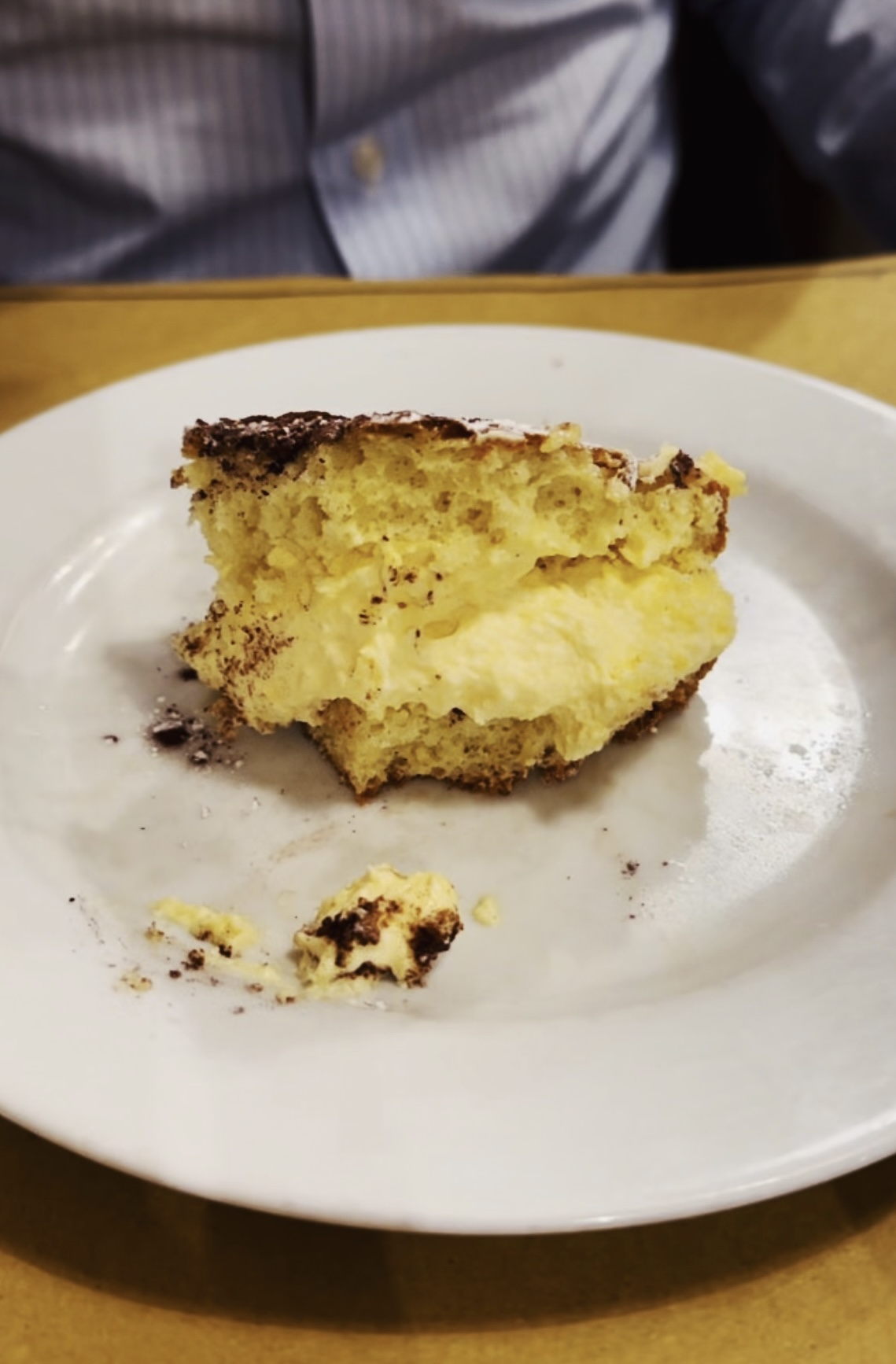
Schiacciata Alla Fiorentina
SANGUINACCIO
Sangue (blood) is in the name, but you won’t find any blood in today’s sanguinaccio, a centuries-old chocolate pudding from Naples. The dessert was traditionally prepared on January 17th—the feast day of St. Anthony the Abbot, a farmer’s saint who is often depicted beside pigs—as a way to use the blood leftover from the winter pig slaughter. Italy banned the sale of pig’s blood in the ’90s, so sanguinaccio now gets its signature dark color and thick texture from dark chocolate, milk, sugar, and starch. Some cooks throw in candied orange and cinnamon, but a side of crunchy chiacchiere is a must.
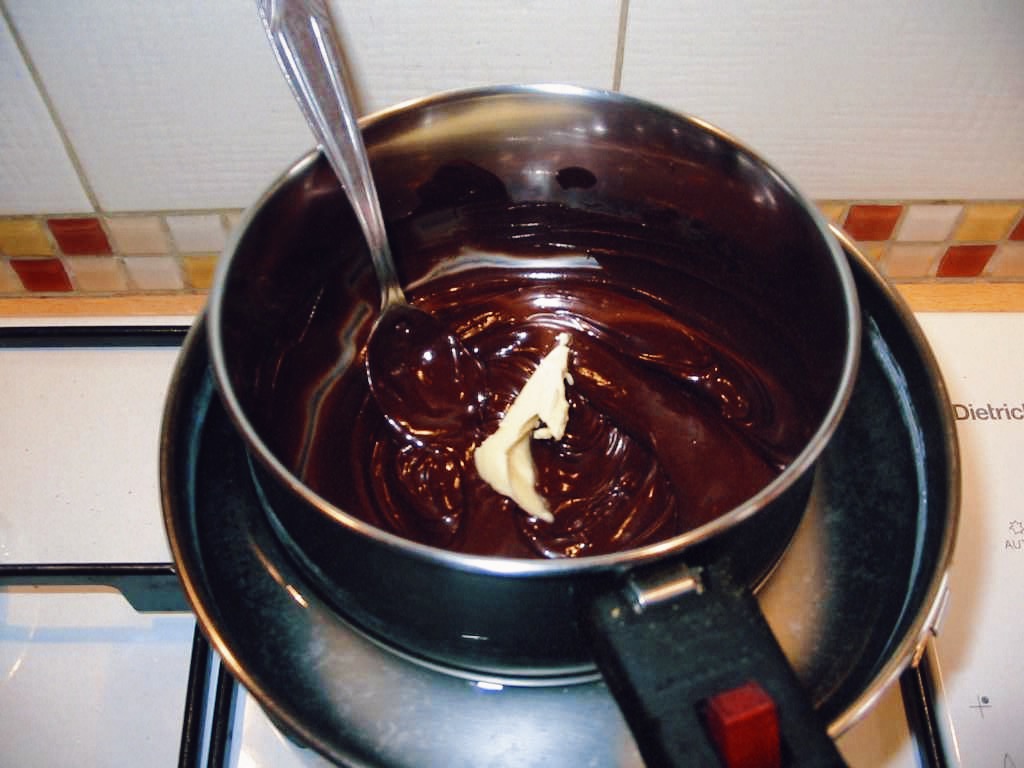
Preparation of Sanguinaccio Dolce
FAGIOLI GRASSI
Called faseuj grass in Piedmontese dialect, fagioli grassi live up to their name of “fatty beans,” which is sadly not a DJ’s name. Born north of Turin in Ivrea, these slow-simmered borlotti beans have a heartwarming origin story, as the church distributed hot plates of fagioli grassi to the needy back in the Middle Ages. Local charities continue the tradition today, though faseuj grass, cooked until creamy with salamelle (fresh pork sausages) and cotiche di maiale (pork rind), are also an excuse to have a pre-Lent pork party with slices of toasted bread for dipping.
STRUFFOLI
Gloriously gaudy, struffoli (also called pignolata and cicerchiata, depending on the region) represent the fanfare of Carnevale on a plate. This iteration of fried dough balls is all about the presentation: a sticky mass (sometimes a pile, sometimes a wreath) of tiny sweets, lacquered with warm honey and embellished with lots of colorful sprinkles and candied cherries—a child’s dream. The dough of flour, eggs, sugar, lard or oil, and fragrant lemon zest and anise liqueur is simple to make, but it takes the patience of a saint to roll it into countless chickpea-sized balls, then fry them in batches until golden brown. This explains why, back in 17th-century Naples, they were prepared as gifts for only the noblest, most charitable families.

Struffoli
ACCIULEDI
Responsible for lorighittas, coricheddos, and all kinds of beautiful creations both sweet and savory, Sardinians have a remarkable talent for making art out of dough. Come Carnevale, they braid strands of simple semolina dough, golden with egg yolks, into acciuledi. These twisty dough bits are cut into short pieces and fried, then finished with a glaze of Sardinian honey and candied orange peel. Essentially, they’re the Gallura region’s more sophisticated version of struffoli.
MIGLIACCIO
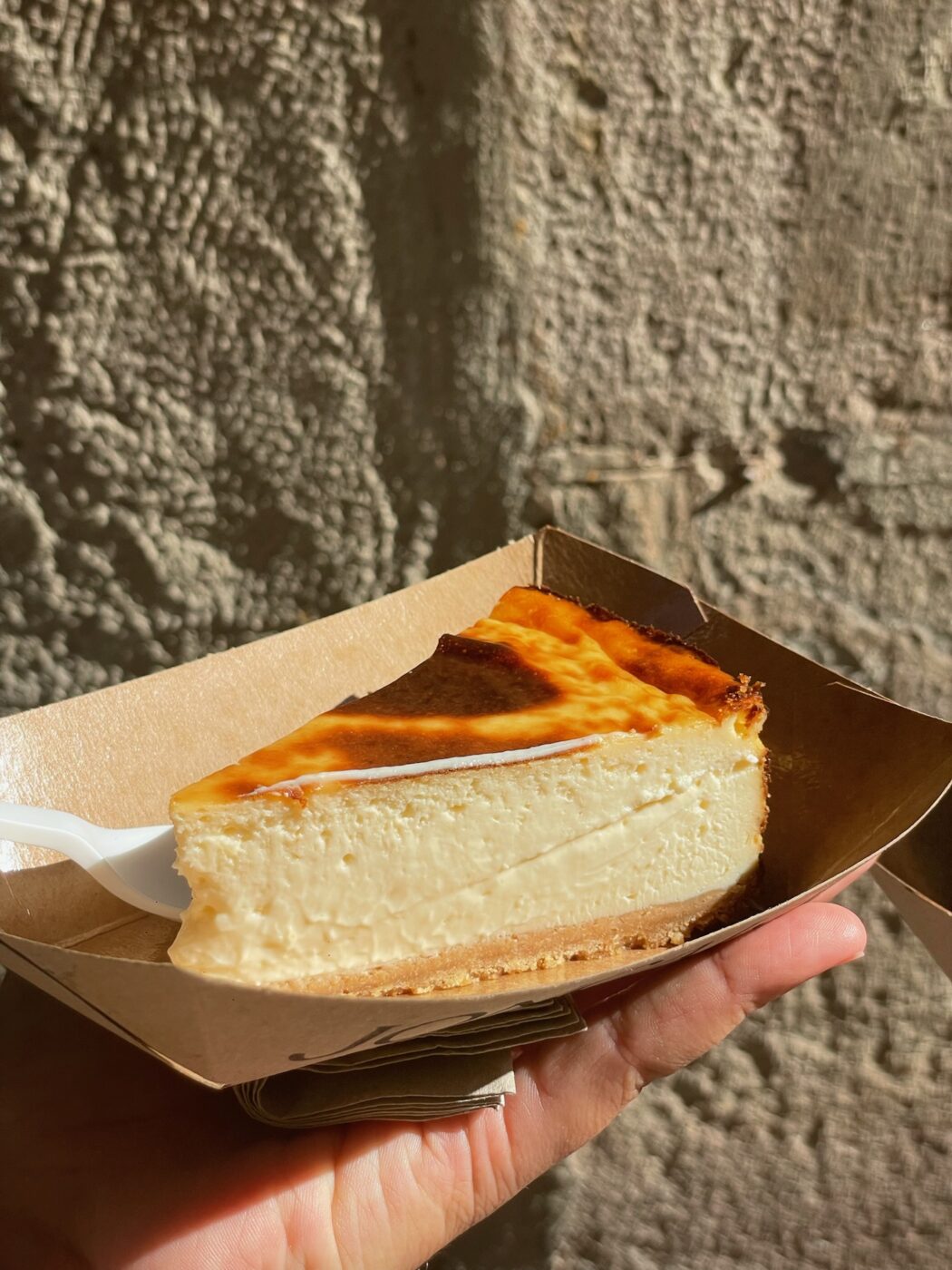
Not your average crustless cheesecake, migliaccio originated in medieval Campania but is made far differently today. Semolina, rather than traditional millet flour and pig’s blood, forms its custardy base, along with ricotta, eggs, butter, and sugar that turn golden in the oven. You’ll likely smell migliaccio before you see it, due to the vanilla and orange peel that perfume the batter.
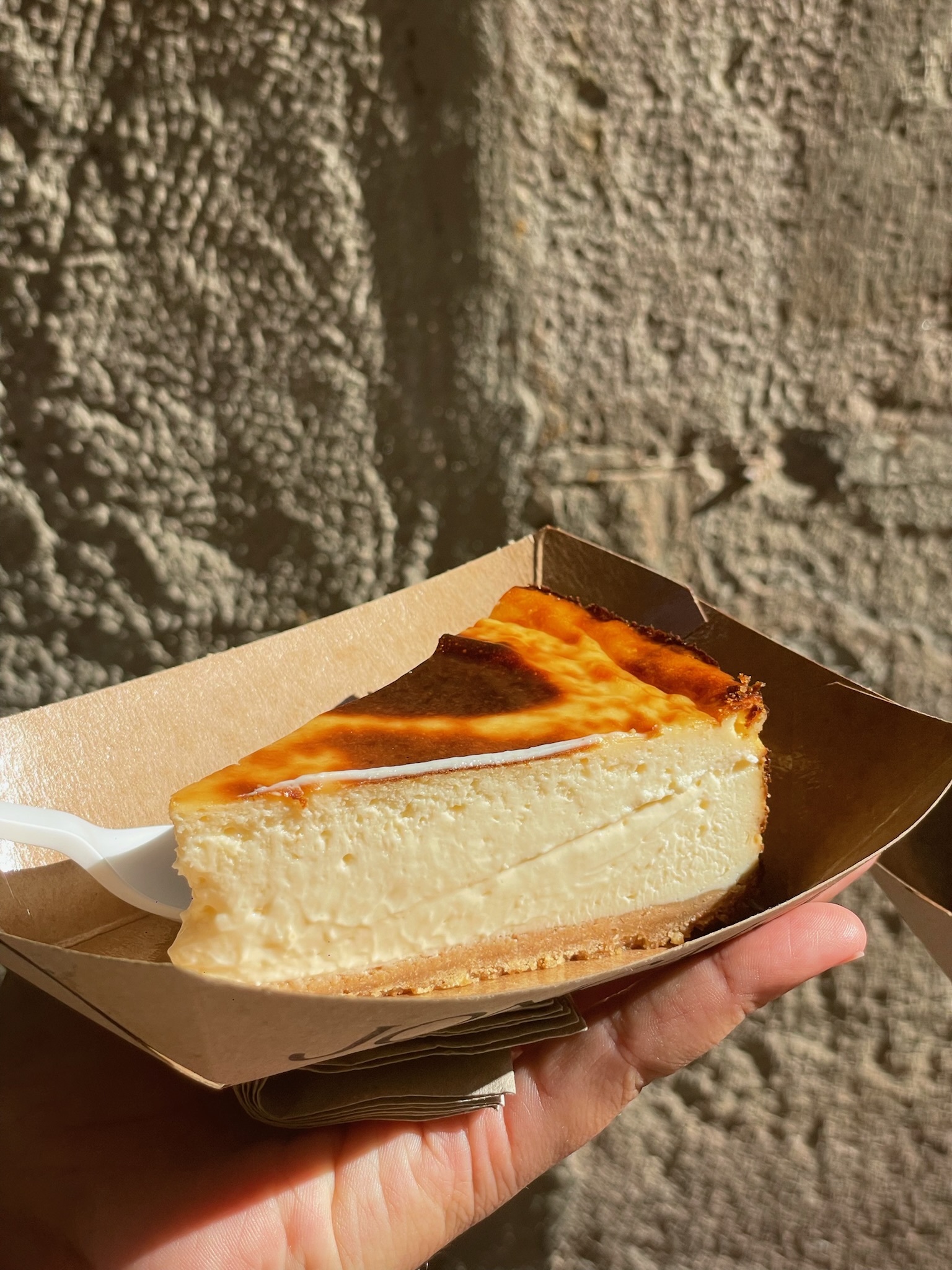
Migliaccio; Photo by Sara Cagle
MIGLIACCIO SALATO
Like its sweet counterpart, migliaccio salato is a semolina- and ricotta-based cake eaten during Carnevale in Naples, but the savory version has all the pork and dairy you’d expect from a Fat Tuesday feast. While no two slices are the same, most versions include smoky scamorza cheese, salty Neapolitan salame, and a generous flurry of Parmigiano or pecorino romano to tie it all together.
STRAUBEN
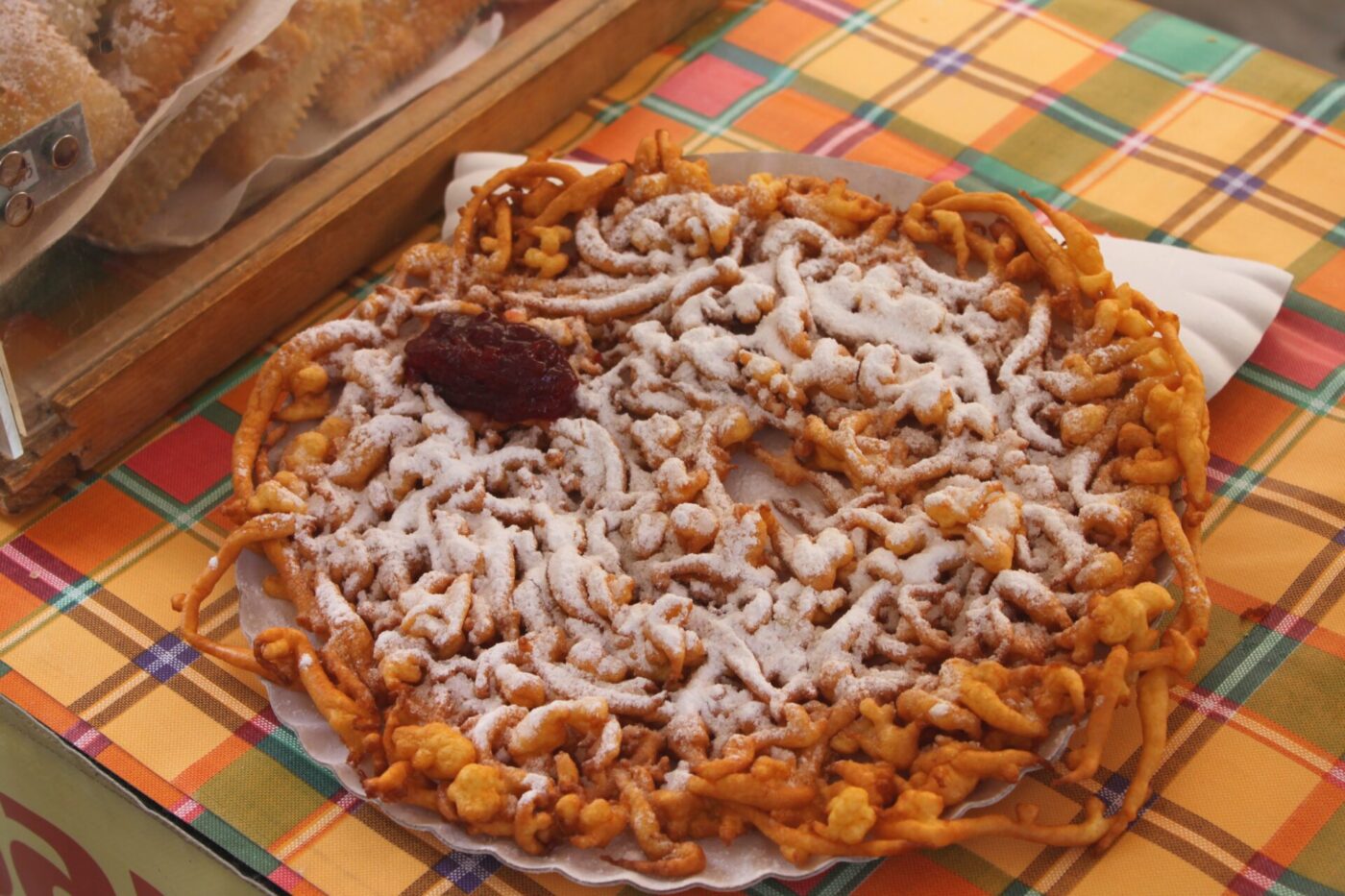
Winning the unofficial award for Most Whimsical Carnevale Snack is strauben, a funnel cake hailing from Trentino-Alto Adige. These spiral-shaped fritters have German-Austrian roots and can only be made with a funnel that is used to pipe the thin batter into hot oil. The cake contains beer and Grappa for crispiness, but you won’t taste either, largely thanks to the powdered sugar and cranberry jam served on top.
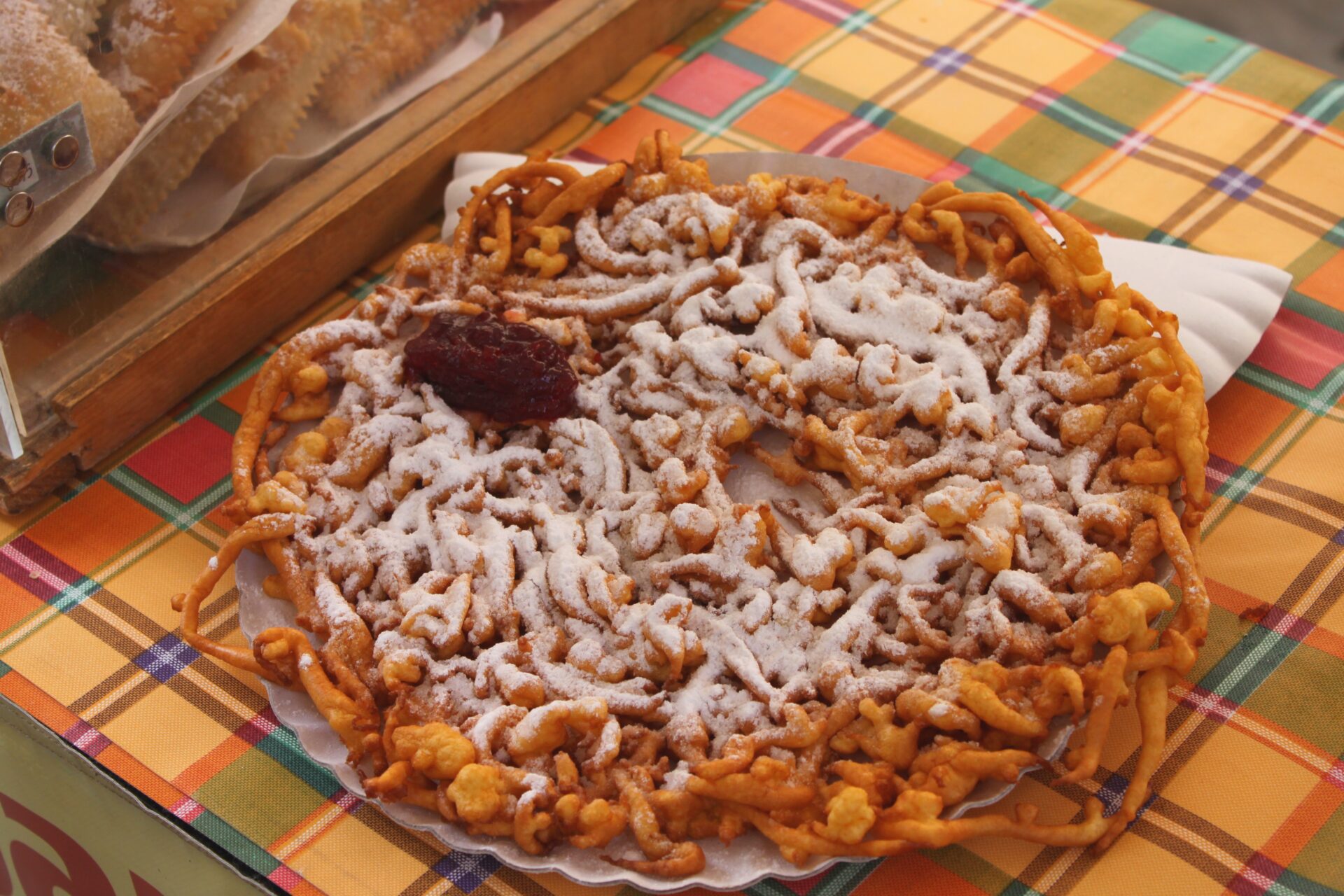
Strauben; Photo by Benreis - Own work, CC BY 3.0, https://commons.wikimedia.org/w/index.php?curid=39776819
CALZONE DI CARNEVALE ALLA BARESE
More resembling a torta salata than a typical calzone made with pizza dough, calzone di Carnevale are seasonal meat pies from Bari. Both the dough and filling contain a small amount of sugar, resulting in an unexpected dolce-salato flavor that varies in sweetness depending on who makes your calzone. The crust also encases a mixture of ricotta and ground veal and pork—plus flavorings such as mortadella, scamorza, and lemon zest—with yet another sprinkle of sugar on the dough before it’s baked.
CASTAGNOLE
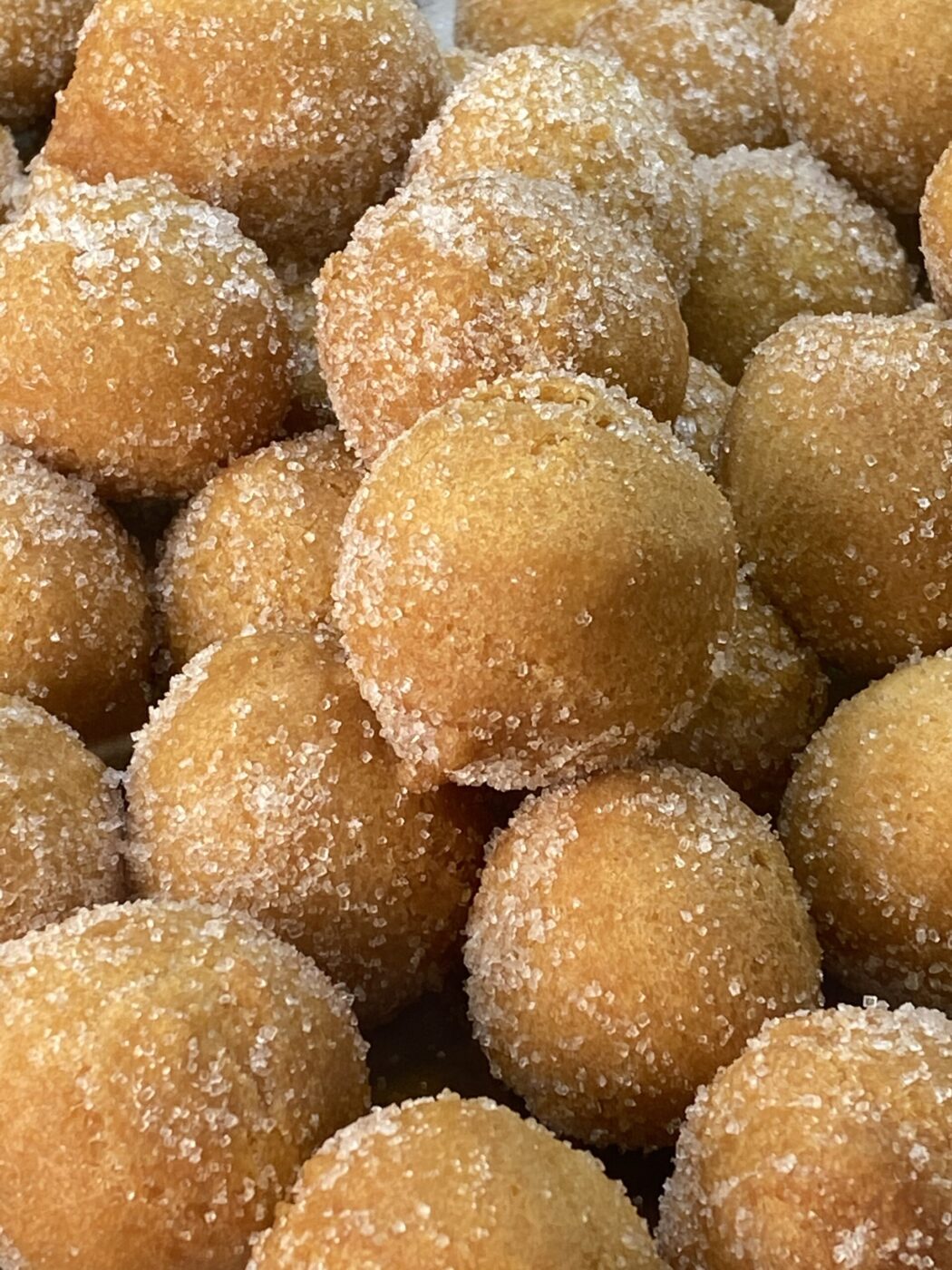
Along with chiacchiere, castagnole are enjoyed all over Italy between January and March. These fried, sugary, bite-sized pieces of leavened dough look similar to frittelle, but with a cakier interior since the butter-enriched dough is made without milk. Resembling chestnuts (“castagne,” hence the name), castagnole come in all sorts of variations: baked instead of fried, filled with ricotta or chocolate-hazelnut spread, or spiked with alchermes.
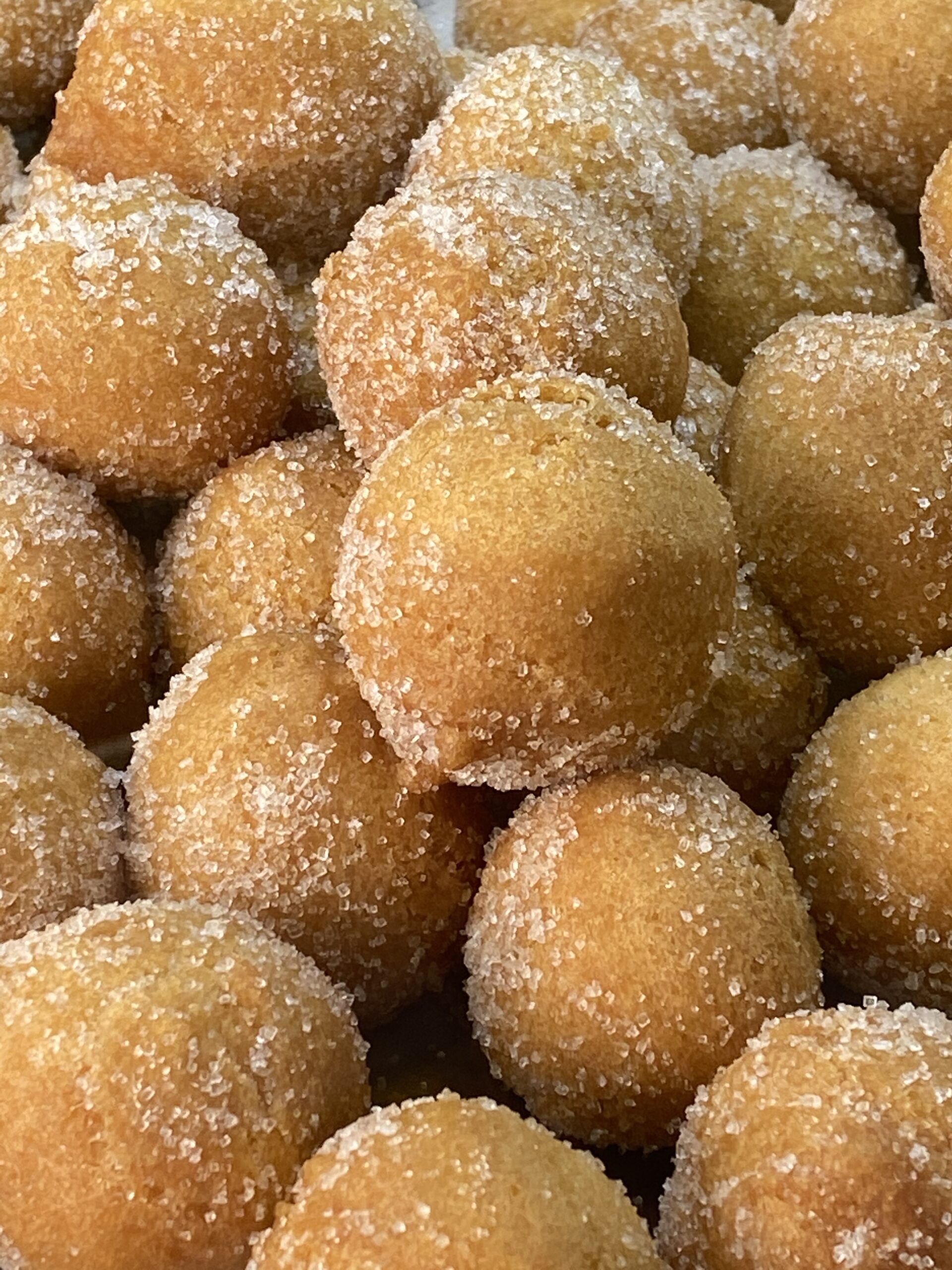
Castagnole
POLPETTE CALABRESE
If you’ll be abstaining from meat for 40 days during Lent, Calabrian meatballs make a worthy last hoorah. Also known as vrasciole and purpetti in dialect, polpette calabrese are, of course, fried, and take advantage of the surplus of pork traditionally available after the winter pig slaughter. Some meatballs star minced pork (and sometimes a touch of ‘nduja), but we prefer the version from Tortora, a soft, potato-based meatball with chewy bits of salsiccia stagionata.
FRITOLE
Venice’s version of the many Carnevale frittelle throughout Italy are called fritole in local dialect. Similar in snackable size and pillowy texture to a doughnut hole, they’re also some of the best frittelle of all, with toothsome raisins and pine nuts that contrast with their silky pastry cream (or, better yet, zabaione) filling. Grab one to eat while watching a Carnevale parade go by, but be aware of hungry seagulls ready to swoop in for a bite.