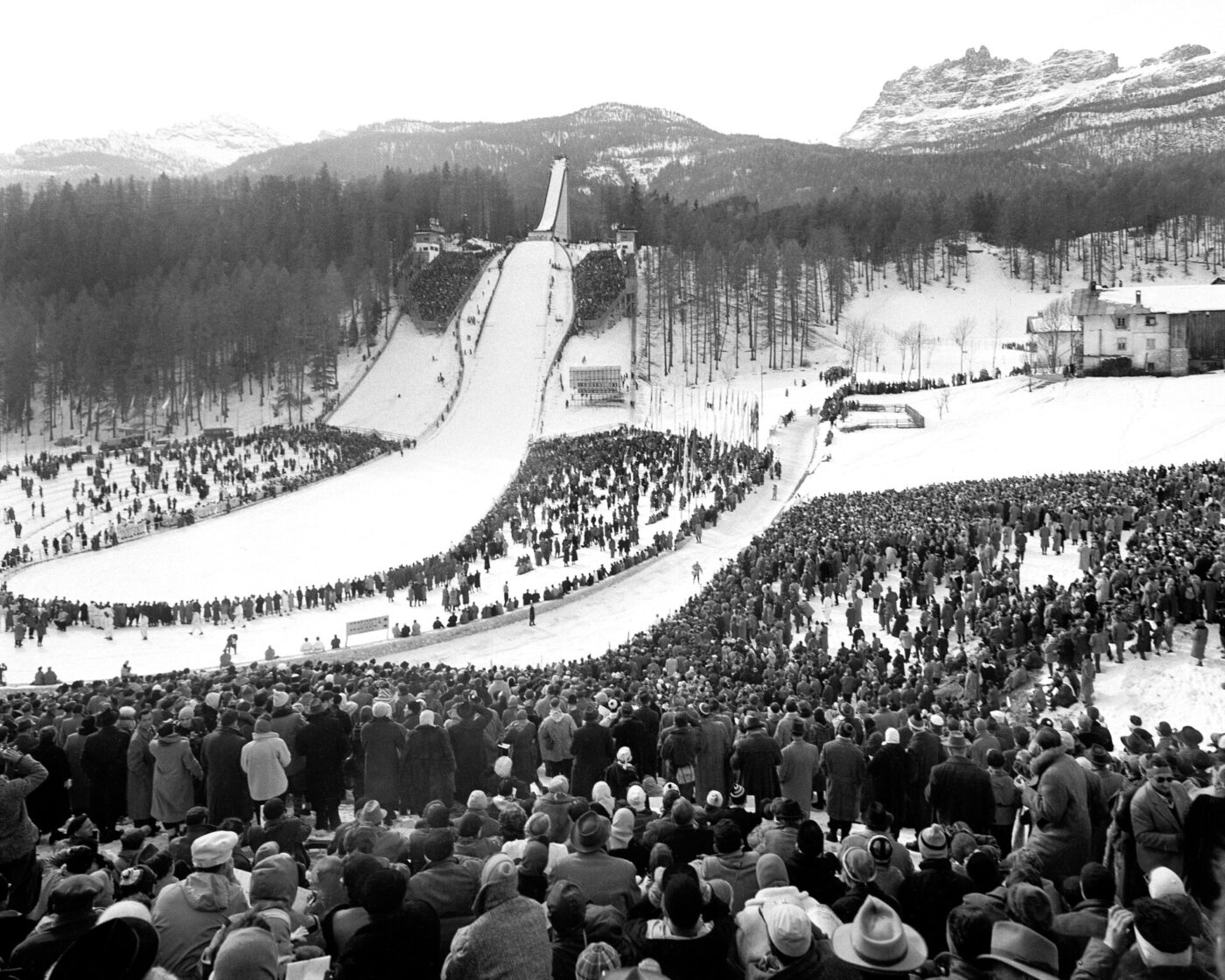
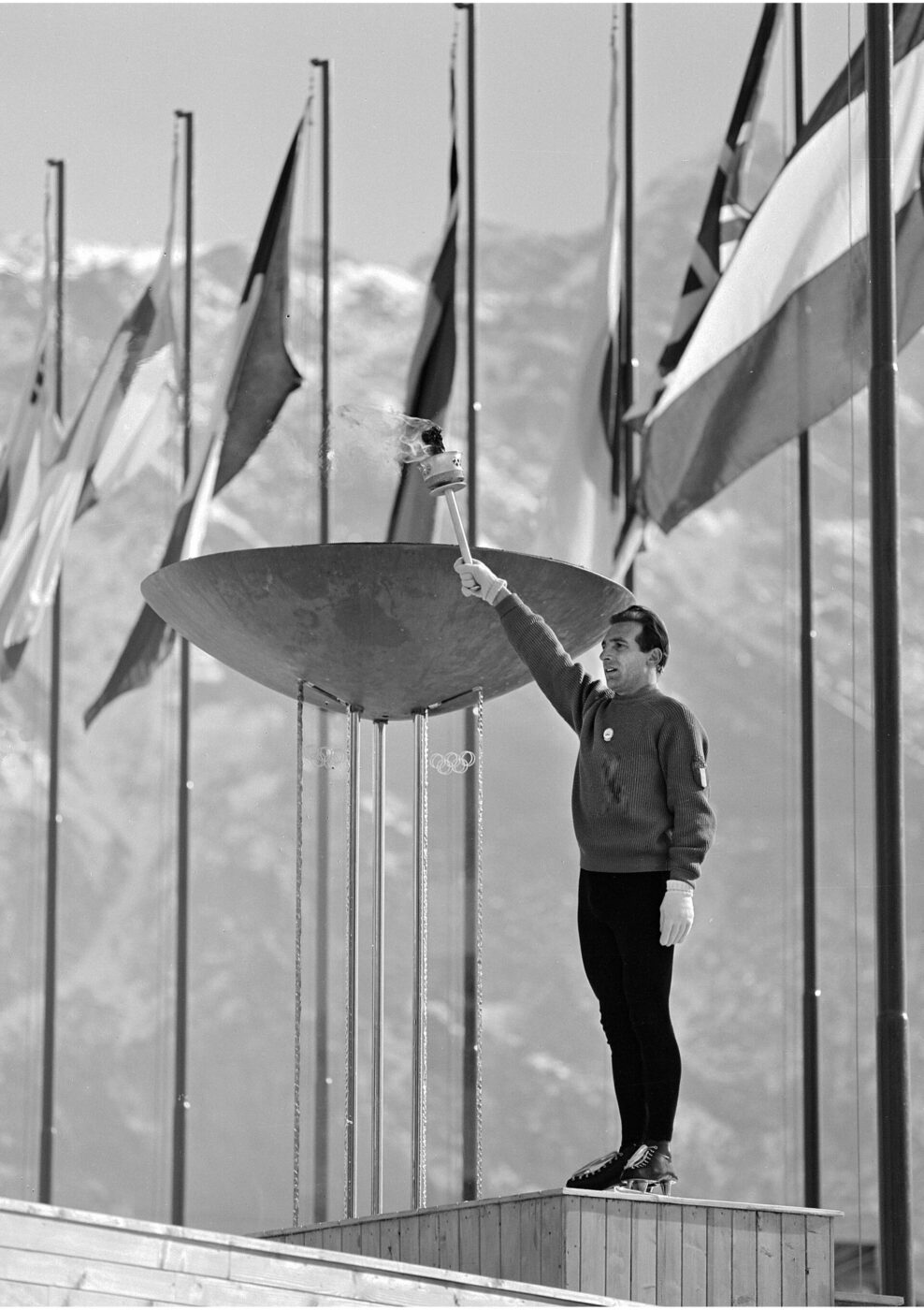
The 2026 Winter Olympics Milano-Cortina are fast approaching, with a start date of February 6th, and already, the memes skewering Italians have begun as reports emerge that the ice hockey arena built for the Games is not yet finished. This year’s Olympics have a unique divide: Milan will host the indoor winter events, while Cortina d’Ampezzo and its surrounding areas will be home to all things outdoor and snowy. That includes events like bobsleigh, Alpine skiing, and, for the first time ever, ski mountaineering.
Italy last hosted the Olympics in 2006 in Turin, and it’s been 70 years since the once storied and enviably chic ski town of Italy’s dolce vita years has seen its own Olympic Games. Cortina was actually set to hold the 1944 Winter Olympics, but those were canceled because of World War II. When the games finally went on about a decade later, in postwar Europe, the Cortina Winter Olympics became a symbol that Italy could once again be a respected member on the world stage, despite fighting the Allied powers under Fascist leader Benito Mussolini. They were even called the “Games of the Renaissance,” per the European Olympic Committees, for displaying the rebirth of Italy.
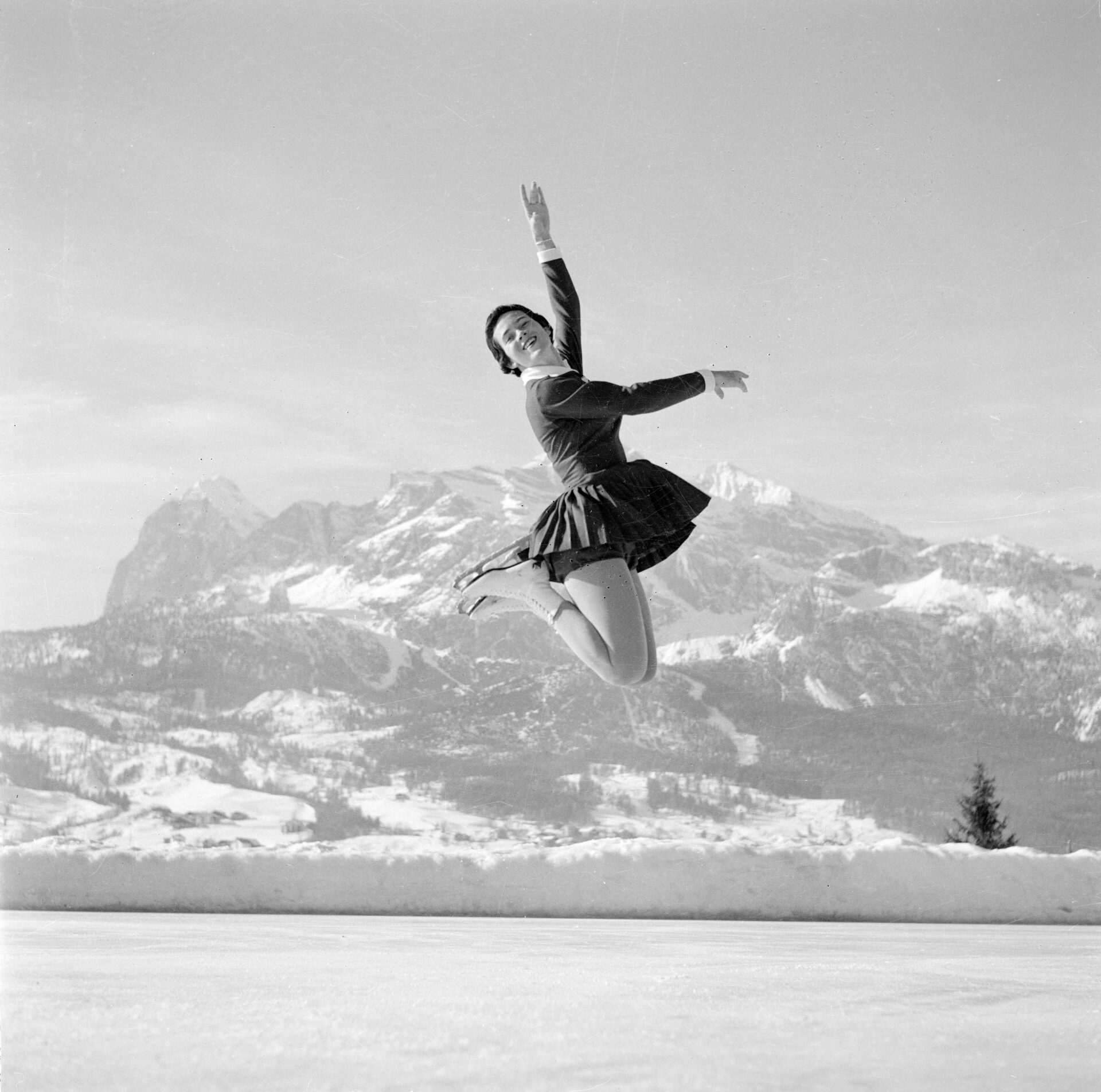
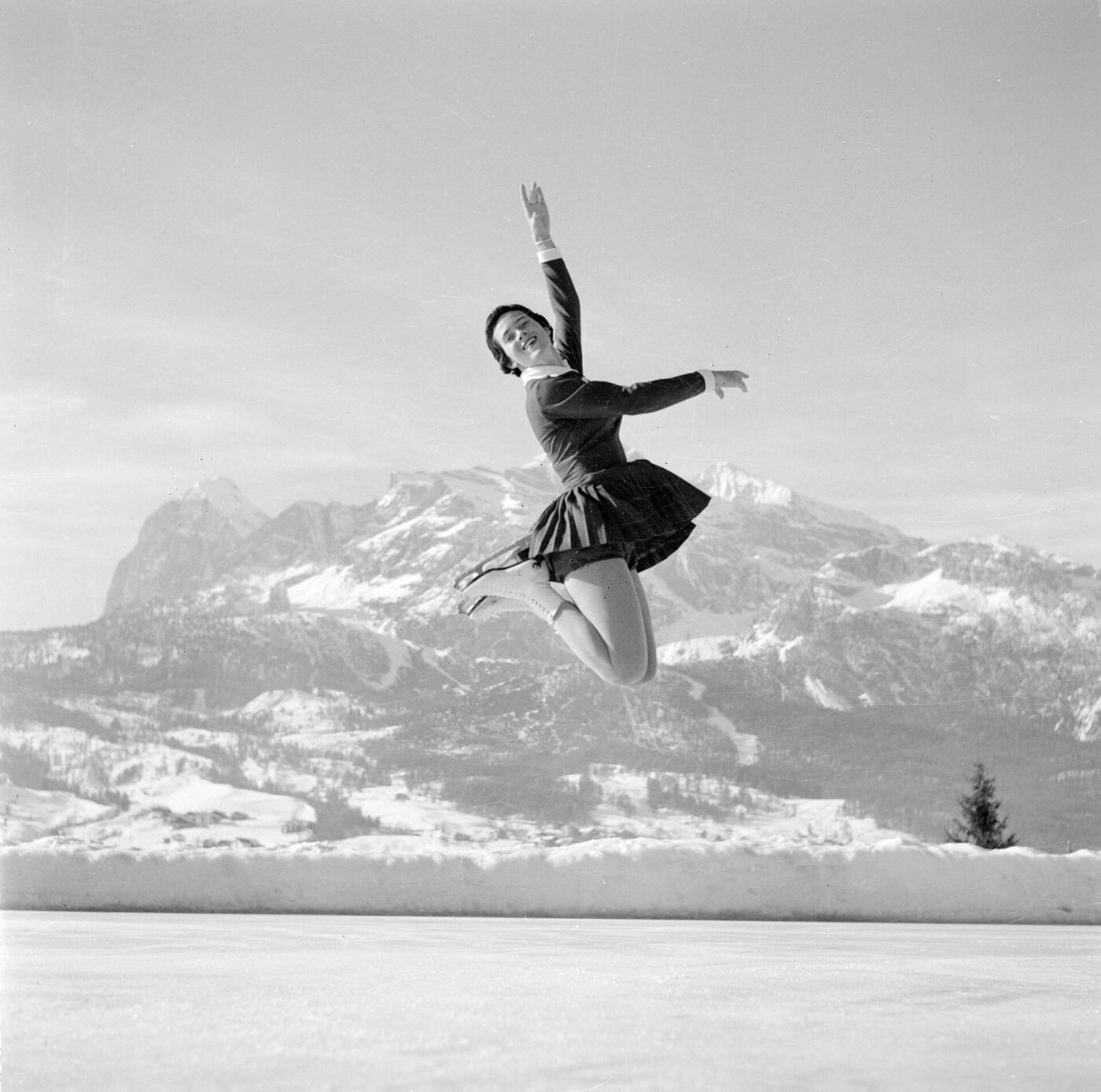
A skater competing during the 1956 Cortina Olympics; Photo © Archivio Foto Zardini
Their visibility was enhanced by the fact that they were the first Olympic Winter Games to be broadcast live, in black and white, to eight European countries, according to the International Olympic Committee. And while rebuilding infrastructure was an ongoing issue in postwar Italy, the Olympic Games helped propel the Italian government to spend money on the area, investing almost two billion lire—or what would be 50 million euro today—in improving the region’s roads.
The 1956 Games also boosted Cortina from an icon of summer tourism to a real celebrity of winter sports, said Cortina’s deputy mayor Roberta Alverà in an interview, due in large part to the Olympics’ televised nature.
“From a small mountain town with more contained tourist numbers, [the Games] ushered in a new phase of growth: between the 1960s and 70s, Cortina reached incredibly high levels of tourism,” Alverà said in an email. “…It was a decisive step, not just for the local economy, but for Cortina’s very identity.”
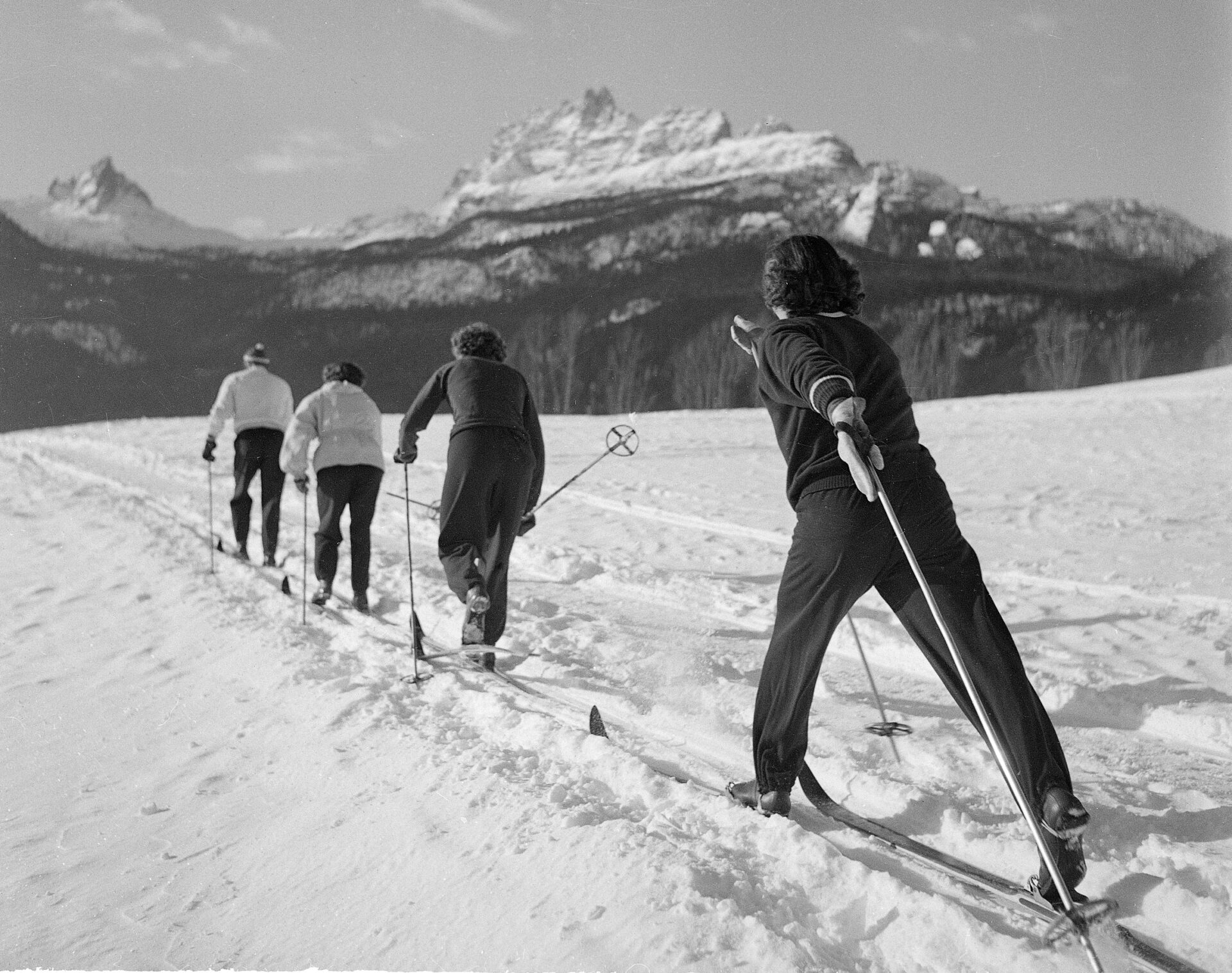
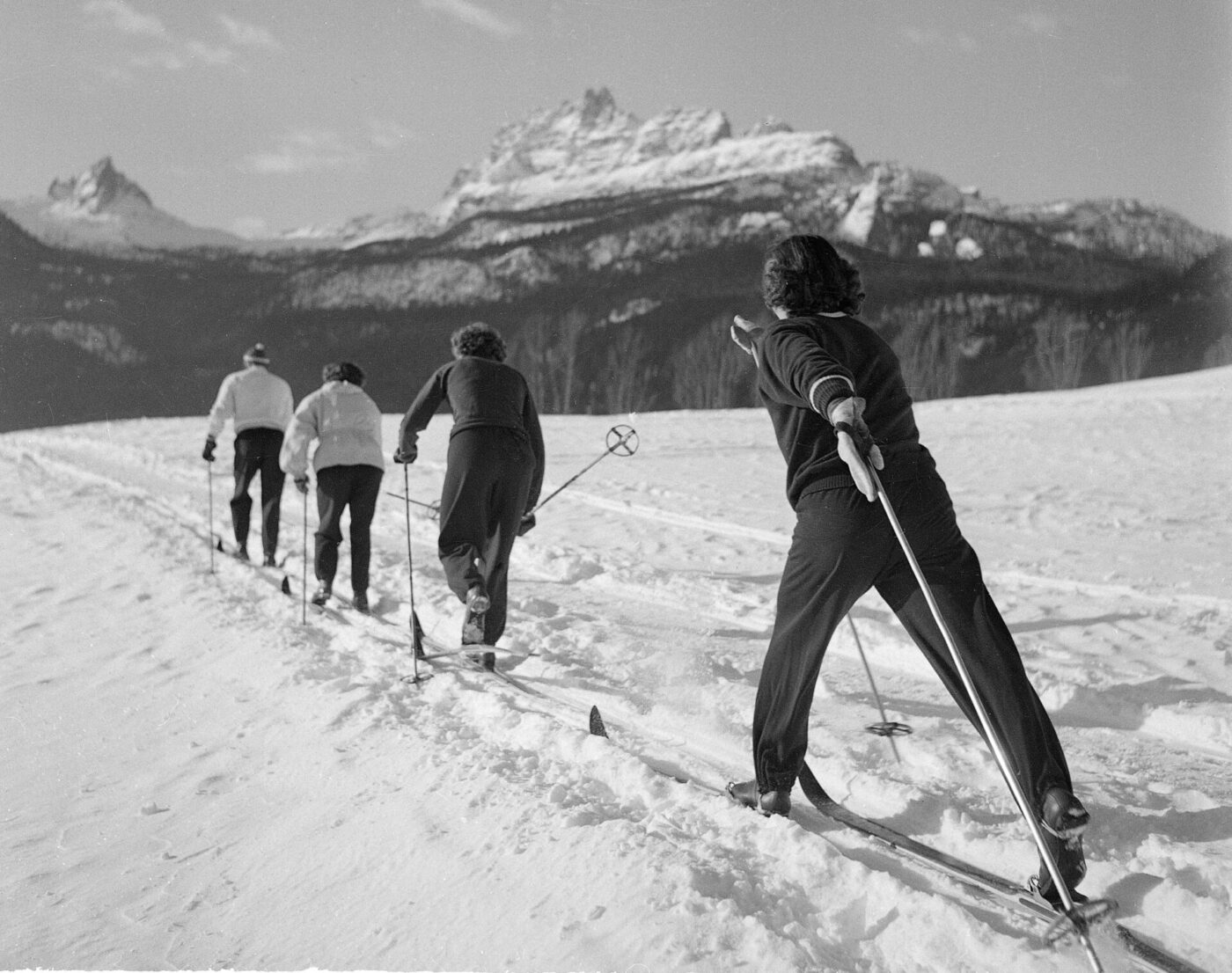
Cross-country skiing in the 1956 Cortina Olympics; Photo © Archivio Foto Zardini
For young athletes who grew up in Cortina, the 1956 Winter Olympics also offered a more intimate sense of homecoming. Sixteen-year-old figure skater and ampezzana Manuela Angeli was one of only 14 Italian women to compete in the Games that year and the first woman from Cortina ever to participate in the Olympics.
Only days before the competition, Angeli had yet to learn whether she would place high enough to participate. The Italian skating championships fell in early January, and the second-place winner would then go on to compete in the Games.
“You can imagine the tension there was,” she shared in an interview with Italy Segreta. “There were five or six of us. I don’t remember anything about that competition—absolutely as if I hadn’t done it at all. I only remember that when I climbed onto the podium, it said two.”
The Olympics marked her first time in front of a global audience and with global competitors.
“I had never competed with all the greats, who, at the time, were mainly American,” she said. “So that was exciting, and also very nerve-wracking.”
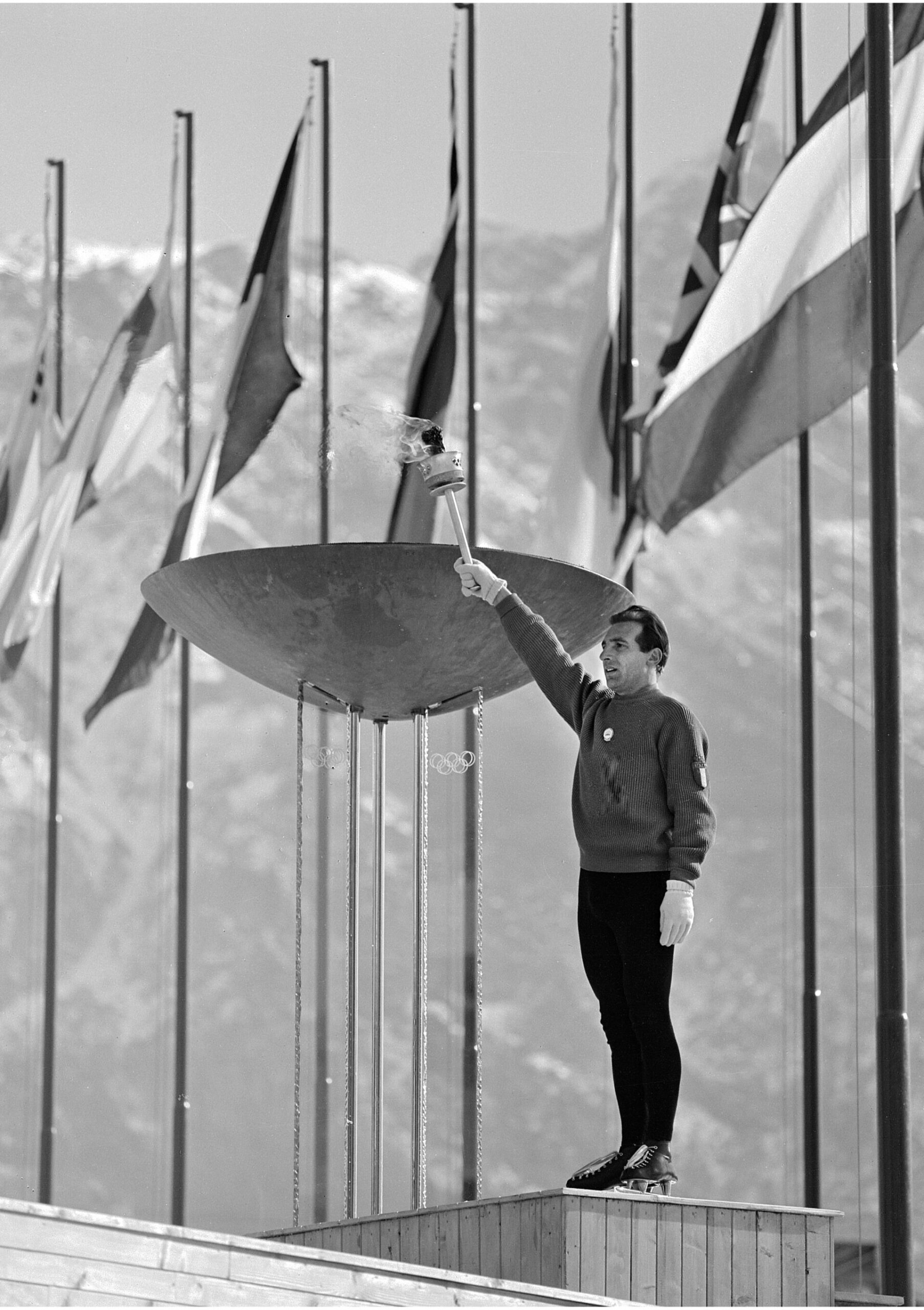
Angeli remembers with clarity the opening ceremony—a parade through Cortina arriving at the Ice Stadium that had been set up for the Games. There, athletes took the Olympic oath and the then Italian president, Giovanni Gronchi, officially opened the Olympics.
“It was very simple, but it was particularly exciting for me because I was from Cortina,” Angeli said. “So people knew me, and along the way, they were calling my name.”
The year would go on to become a historic one in her family. In the spring, her father, Amedeo Angeli, was elected mayor of Cortina d’Ampezzo. But first, Angeli would follow in the familial legacy of competing in the Olympics—her father, too, had competed in bobsled in the 1936 Winter Olympics in Germany’s Garmisch-Partenkirchen.
At the competition itself, Angeli felt like she didn’t skate “particularly well.” In the singles figure skating event, she placed 21st, according to official Olympics results.
“I remember that—I wasn’t satisfied with myself,” she said. “But I don’t have a clear memory.”
But perhaps her main accomplishment was being the first woman from Cortina to participate in the Olympic Games. In that sense, she would still manage to set a record.
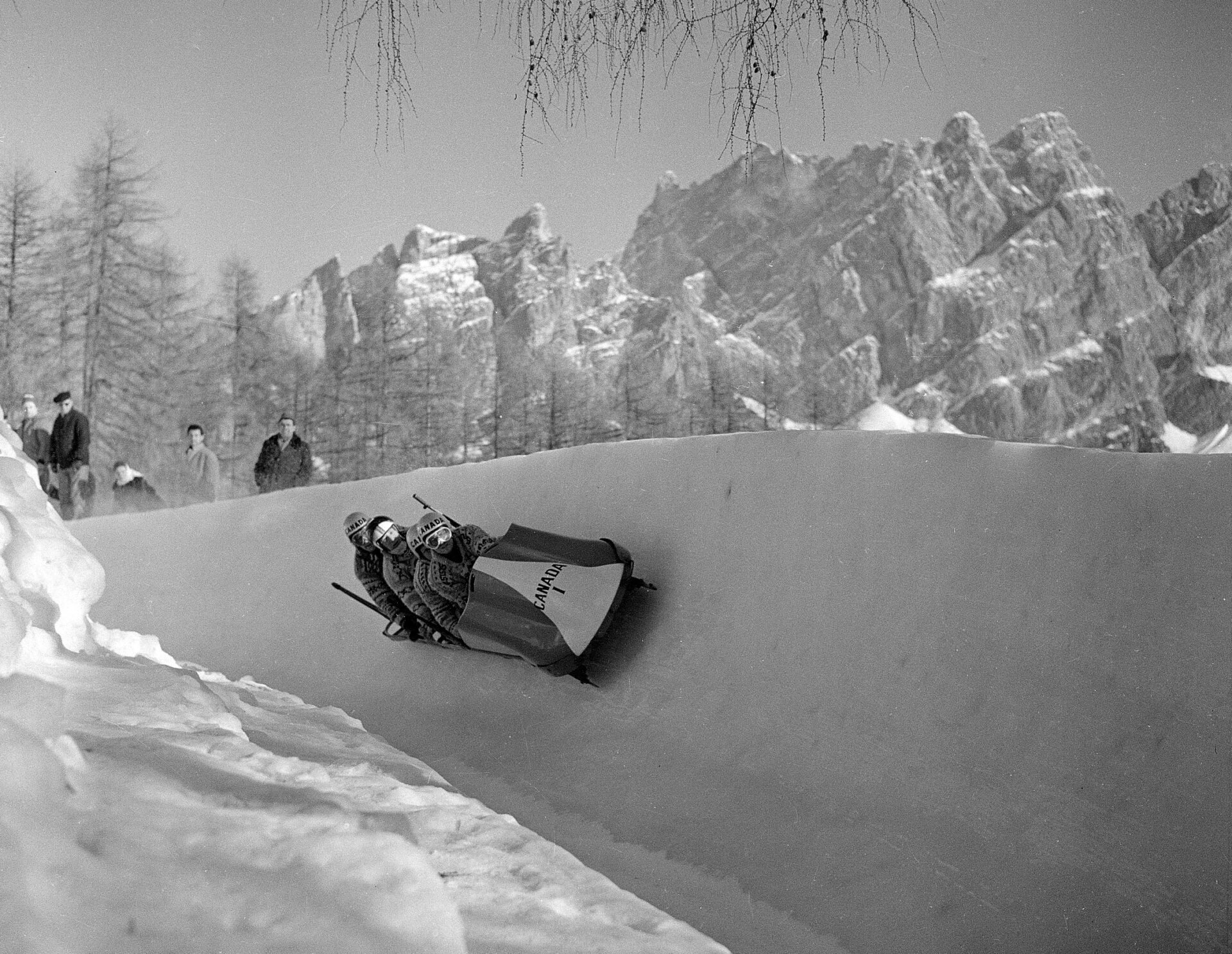
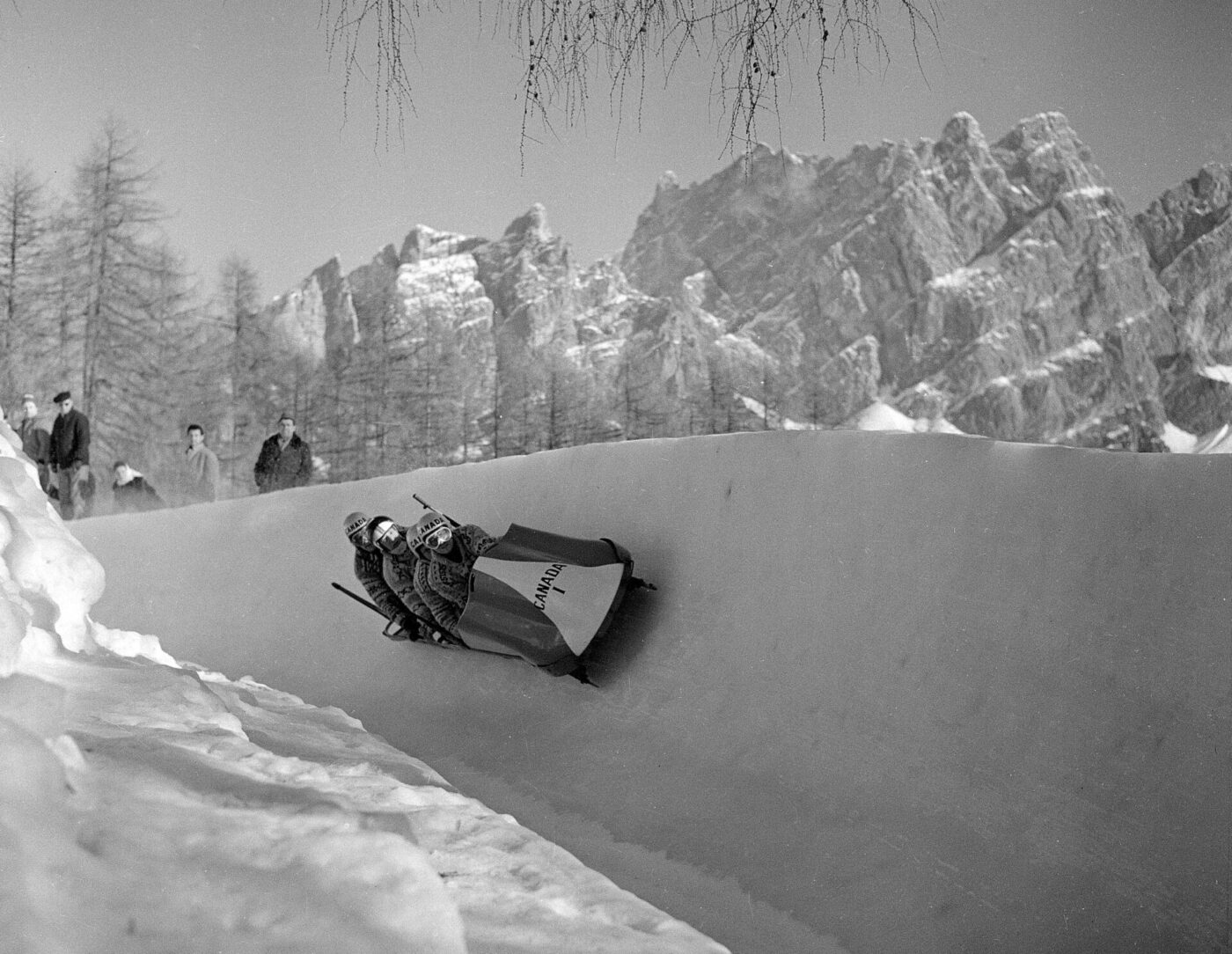
Bobsleigh World Championships in Cortina, 1960; Photo © Archivio Foto Zardini
Another ampezzano would almost compete
Other Olympic greats would find themselves deterred by an injury and unable to compete. Bruno Alberti would go on to rank highly in alpine skiing, in both downhill and giant slalom, in subsequent Olympics. But in 1956, in his hometown, shortly before the Games were to begin, he fell and was injured severely enough that he knew he could not participate.
“You understand that right away,” he said in an interview with Italy Segreta. “It hurts to walk or stand. You definitely can’t ski.”
While he jokingly noted that it wasn’t his tendency to cry after an injury, it was still a setback.
“I felt bad about it because I would have really enjoyed participating,” he said. “Even though other people would have probably won, I might have been able to achieve some results.”
In interviews, Alberti remains eternally humble. Four years later, he would be the flag-bearer for Italy in the 1960 Winter Olympics in Squaw Valley, near California’s Lake Tahoe, placing fifth in the giant slalom and sixth in the downhill.
“When you come in fourth or fifth place, it’s as if you’ve lost everything,” he said, “because first, second, and third place count. …But it was still a good result for me anyway. I was probably a good skier, but not major-league.”
Alberti would remain in his hometown, coach the national men’s ski team in 1956 and 1966 and would go on to become the president and one of the four founders of the Scuola di Sci Azzurra in Cortina. Even now, he often takes to the slopes.
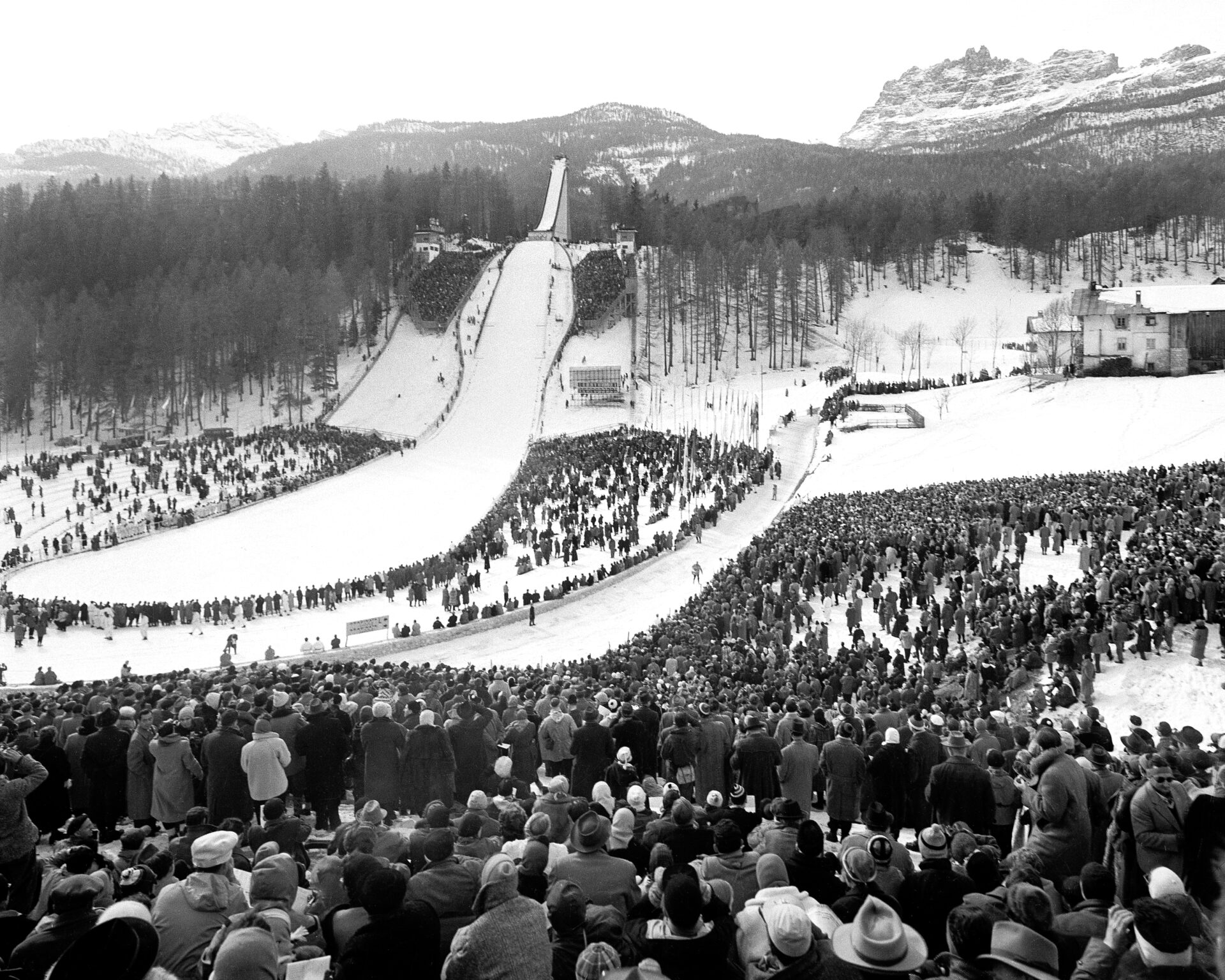
One of the ski jumps that the skiers competed on during the 1956 Olympics in Cortina; Photo © Archivio Foto Zardini
What the Olympics mean to Cortina
In 1956, the Cortina Winter Olympics were more than an economic opportunity for the city—they were a chance for Italy to, in some sense, seek forgiveness.
“It was important that the Games were organized in such a way that the whole world could in some way accept Italy again,” Angeli said. “Italy had lost the war and was therefore no longer considered one of the European powers.”
Today, Angeli wonders how the Olympic Games might impact Cortina’s reputation on the world stage. It used to be that when she would travel to other countries, there was no need to explain where Cortina was—she didn’t have to specify the Dolomites or not far from Venice or close to the Austrian border. Merely saying Cortina was enough.
“Over time, people no longer knew Cortina by name, and I even see that my grandchildren always have to explain where it is,” she said. “At their age, I didn’t need to explain it.”
Alverà cannot help but agree with Angeli’s assessment, noting that Cortina was a “name recognized practically everywhere” after the 1956 Olympic Games. And though there has been a natural decrease in its international fame in the last almost 70 years, she says, today’s Olympic Games perhaps give Cortina the chance to experience a different kind of rebirth, built on a different reputation.
“What the 2026 Milano-Cortina Olympic Games can do—and what is for us one of the most important elements of the Olympic legacy—is precisely to reactivate and reinforce this international reputation, above all for the younger generations, showing Cortina for what it is today,” Alverà said, “a modern place, with renewed infrastructure and services, able to accommodate visitors in a way that is up to all the latest standards.”